

Bathroom Remodeling Guide: Design Ideas, Materials, Costs, and Planning
Bathroom Remodeling Guide Index
- Bathroom Remodeling Overview
- When Homeowners Choose to Remodel a Bathroom
- Types of Bathroom Remodels
- Bathroom Design and Layout Options
- Bathroom Remodeling Materials and Components
- Bathroom Remodeling Features and Upgrades
- Bathroom Installation and Technical Considerations
- Bathroom Remodeling Cost Factors
- Common Bathroom Remodeling Mistakes
- Bathroom Remodeling Planning Checklist
- Related Bathroom Remodeling Topics
- Frequently Asked Questions About Bathroom Remodeling
Bathroom Remodeling Overview
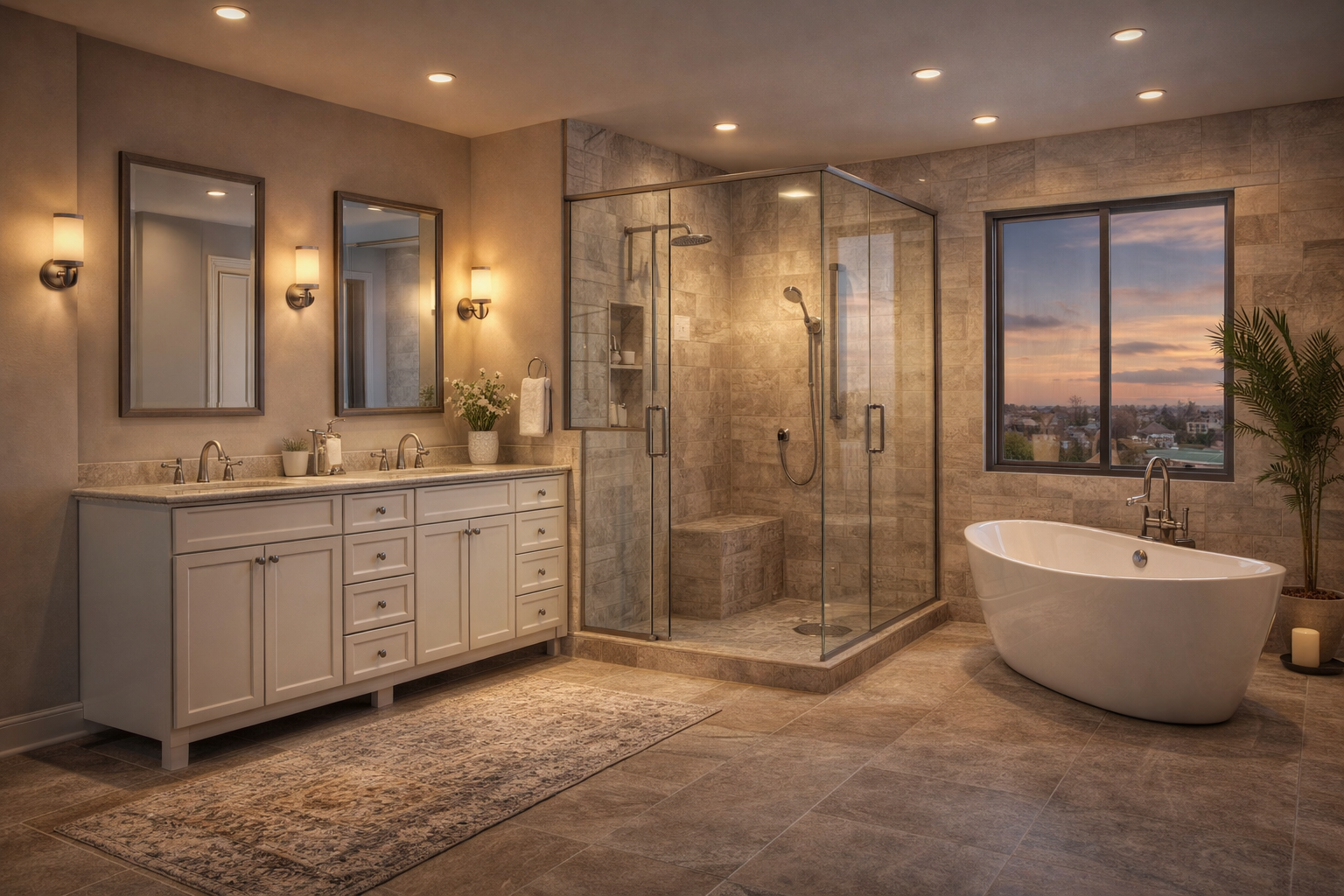
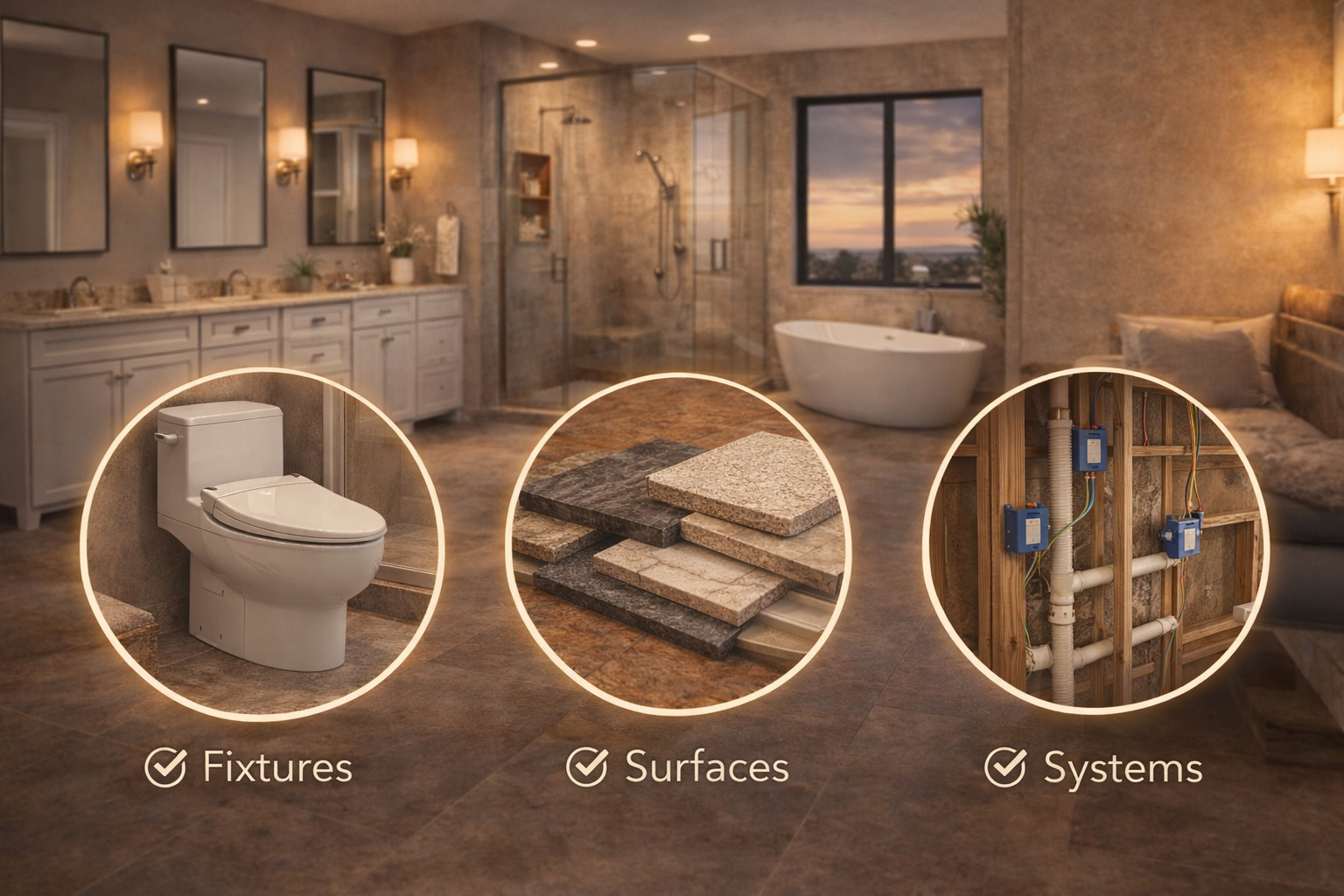
Bathroom remodeling is the process of updating, replacing, or reworking the key surfaces, fixtures, and systems that make a bathroom functional and comfortable. It can range from a simple refresh that improves how the space looks and feels to a full renovation that changes the layout, plumbing, electrical, and ventilation. Most bathroom remodels focus on the shower or tub area, vanity and storage, flooring, lighting, and finishes like tile, paint, and trim.
What Parts Of The Bathroom Get Updated
A typical remodel affects the wet areas and high-wear surfaces first. This often includes replacing the shower or tub surround, updating tile and waterproofing, installing a new vanity and countertop, swapping faucets and fixtures, upgrading lighting, and improving storage. Depending on the scope, it may also include new flooring, improved ventilation, updated electrical outlets and switches, and new mirrors or wall finishes.
Cosmetic Vs Structural Remodels
Some bathroom remodels are mainly cosmetic, such as replacing fixtures, refreshing finishes, and improving lighting without changing the footprint. Other projects are structural or system-focused, like moving a shower, enlarging the space, repairing water damage, or upgrading plumbing and electrical behind the walls. Common variations include tub-to-shower conversions, walk-in tile showers, double vanities, upgraded storage, and layout changes that improve flow and usability.
When Homeowners Choose To Remodel a Bathroom
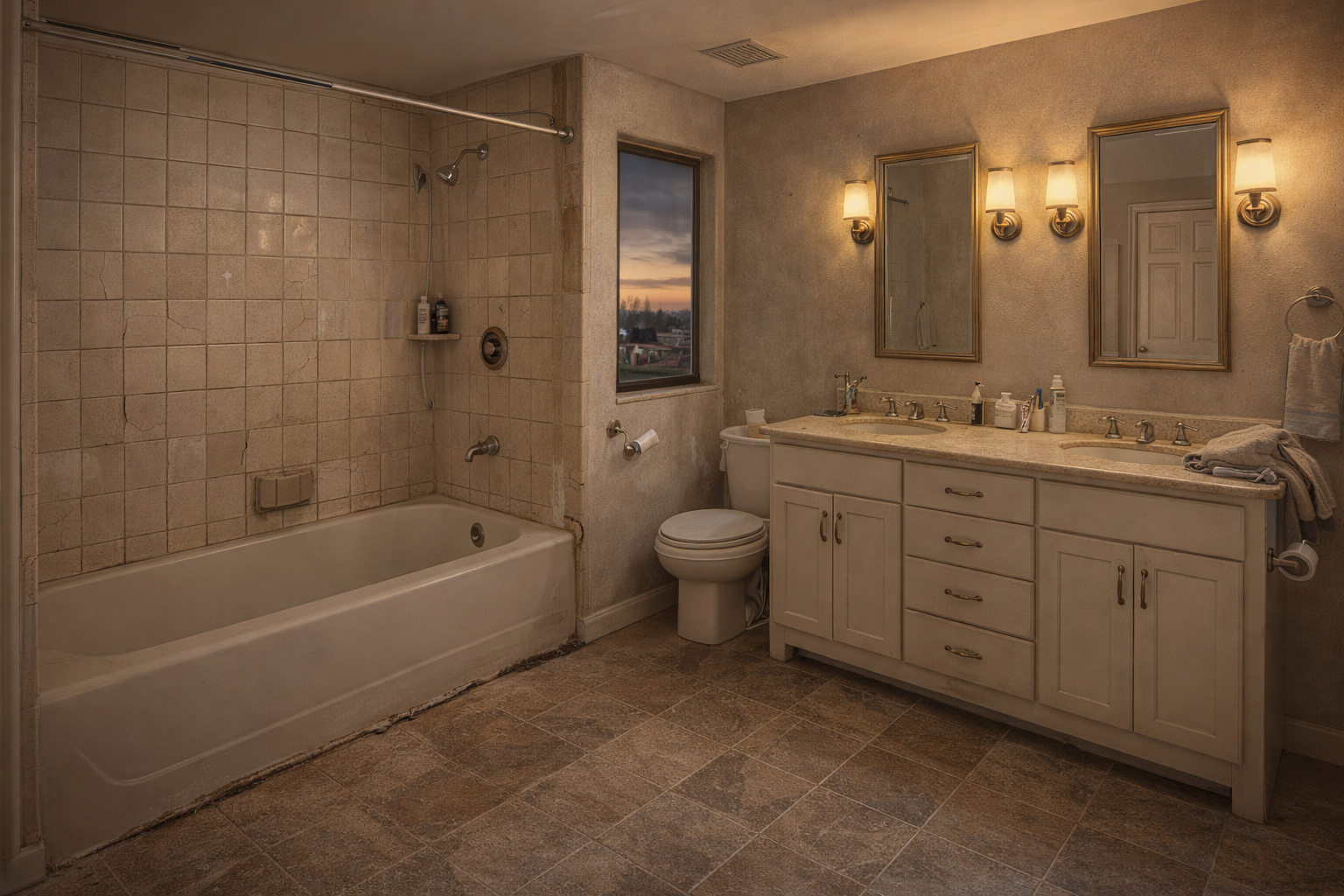
Many homeowners begin thinking about bathroom remodeling when the space no longer feels comfortable, functional, or visually appealing. Because bathrooms are used daily, wear and tear tends to appear quickly in the form of cracked tile, stained grout, outdated fixtures, and worn cabinetry. Over time the room may simply feel old compared to the rest of the home, prompting homeowners to explore updates that improve both appearance and usability.
Common Frustrations and Signs the Bathroom Is Outdated
Outdated bathrooms often show clear signs that it may be time for a remodel. Dim lighting, limited storage, aging plumbing fixtures, and older tubs or showers that are difficult to clean are frequent complaints. Tile colors and finishes from previous decades can also make a bathroom feel dated even when everything still functions. Homeowners may also notice recurring maintenance issues such as loose tiles, water damage, deteriorating caulking, or inefficient ventilation.
Lifestyle Changes That Drive Bathroom Remodeling
Remodeling is also commonly triggered by changes in how the home is used. Growing families may need additional storage or double vanities to accommodate daily routines, while homeowners planning to age in place may want accessibility upgrades such as walk-in showers, wider layouts, or safer flooring. Others remodel simply to modernize the space, increase home value before selling, or create a more relaxing and comfortable environment for everyday use. For layout and clearance planning, many designers reference NKBA planning guidelines.
Types of Bathroom Remodels
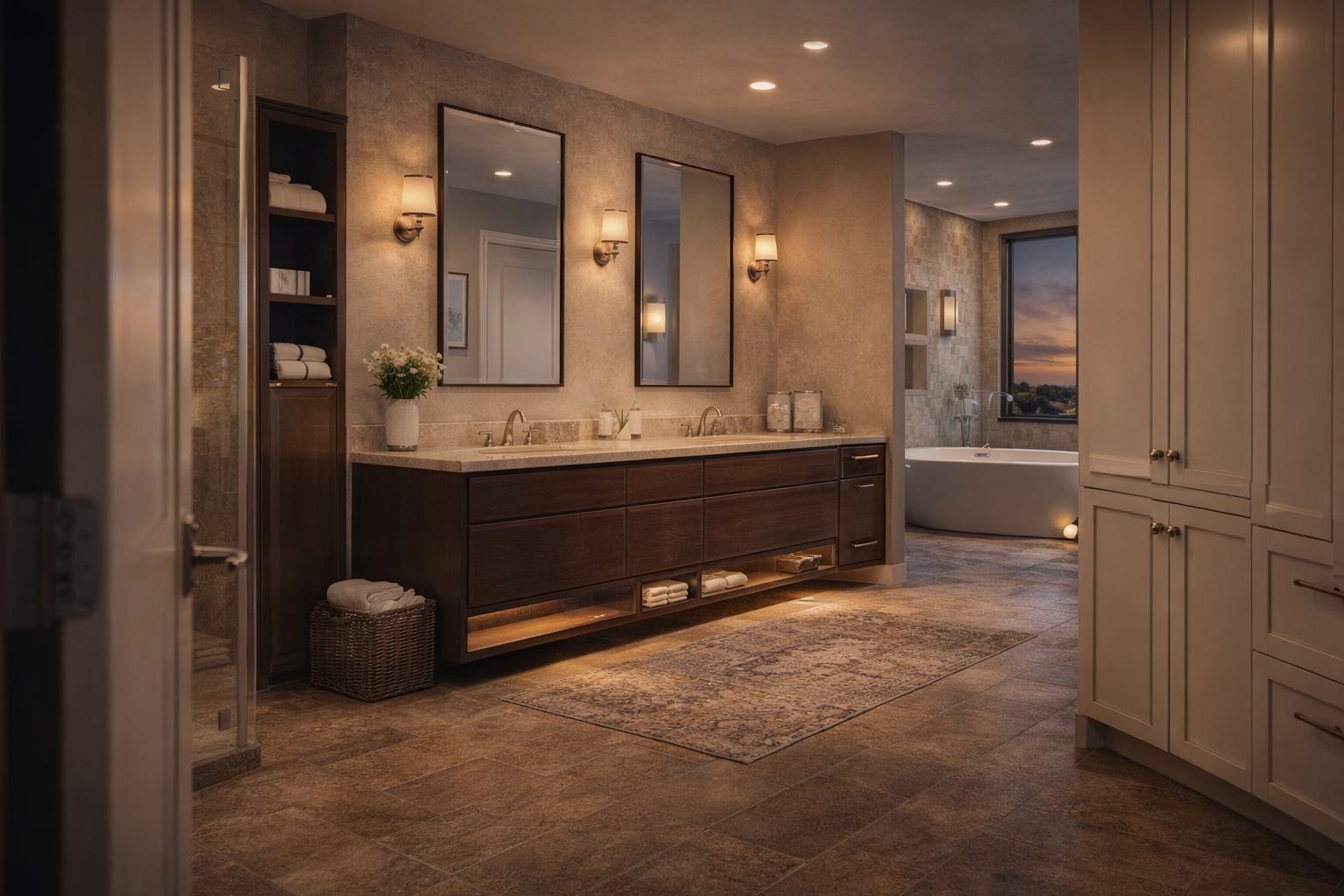
Bathroom remodeling can take many forms depending on the layout of the room, the homeowner’s goals, and the condition of the existing space. Some remodels focus on updating a single feature, while others involve redesigning the entire bathroom. The most common variations include shower upgrades, bathtub installations, vanity replacements, and full layout changes that improve how the room functions. For projects centered on sink cabinets, storage, and countertop layout, a vanity remodel often becomes the main focus.
Shower and Bathtub Remodel Options
One of the most common types of bathroom remodeling centers around the bathing area. Options include walk-in showers that create an open, modern appearance, steam showers designed for spa-like comfort, frameless glass showers that emphasize clean visual lines, and tub-shower combinations that maximize functionality in smaller bathrooms. In some homes, homeowners choose freestanding tubs or soaking tubs as a focal point, while others prefer tub-to-shower conversions to improve accessibility and space efficiency.
Vanity, Storage, and Layout Variations
Other remodels focus on improving storage and daily usability through vanity upgrades, double-sink installations, and improved cabinetry. Some bathrooms benefit from layout changes that reposition fixtures to create better flow or additional storage. Lighting upgrades, new flooring, and tile wall systems are also common variations that dramatically change the look and feel of the room. Each of these options can be explored in more detail through dedicated pages covering specific bathroom remodeling features and design choices. Wall finishes matter too, and bathroom wall panels are one option homeowners compare against tile.
Bathroom Design and Layout Options
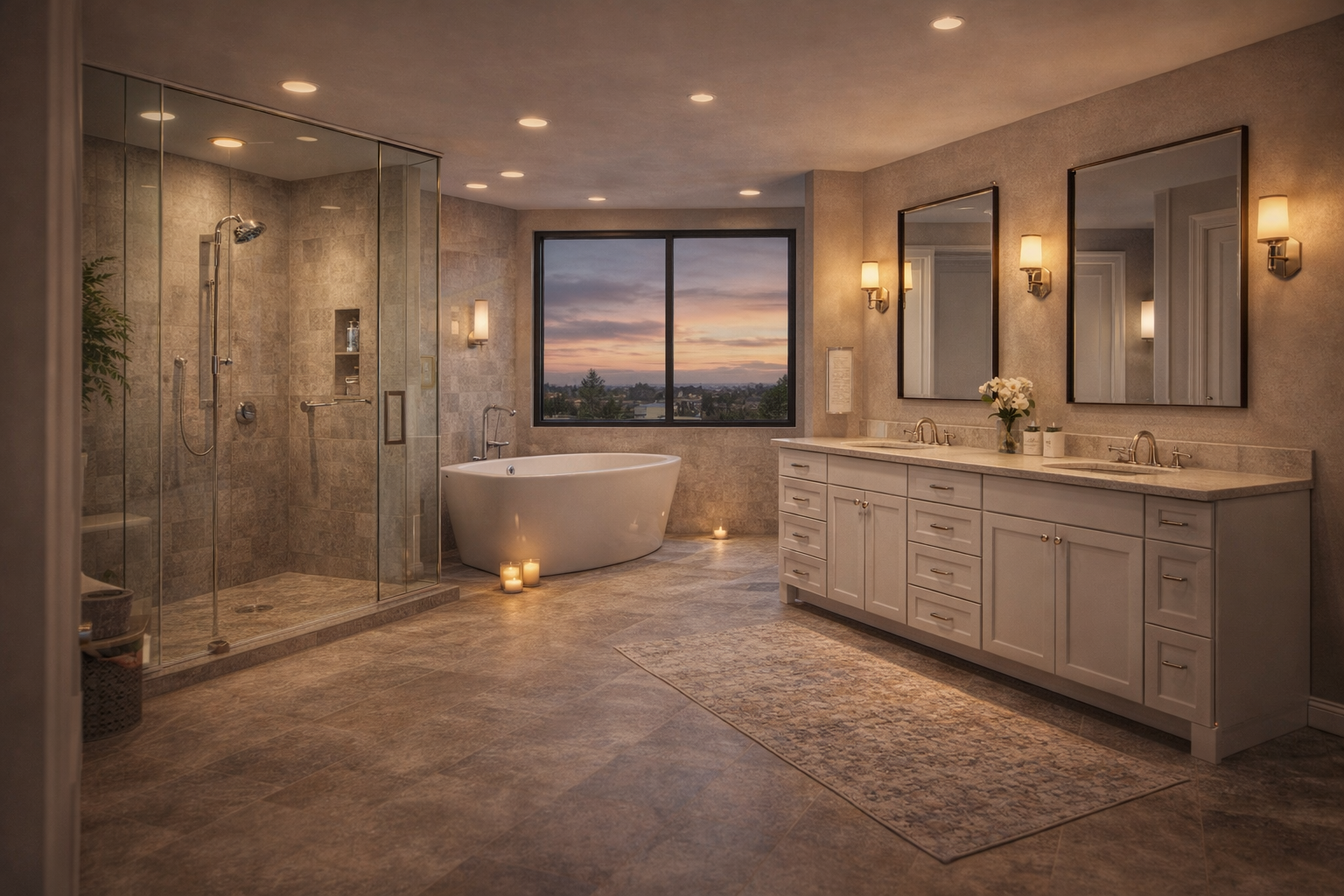
Bathroom remodeling often involves more than simply replacing fixtures. The layout of the room plays a major role in how comfortable, functional, and visually balanced the space feels. Design decisions typically focus on how major features such as the shower, bathtub, vanity, and toilet fit within the available floor plan. In many remodels, small adjustments to spacing or placement can dramatically improve room flow, storage access, and overall usability. Storage planning is a big part of layout efficiency, so bathroom storage deserves its own look during early design decisions. Floor surfaces also shape how the room feels underfoot and how well it holds up, which is why bathroom flooring is worth comparing separately.
Spacing, Symmetry, and Visual Balance
Good bathroom design considers both functionality and visual symmetry. Vanities are often centered with mirrors and lighting to create a balanced focal point, while showers and tubs may be positioned along walls or in alcoves to maximize open floor space. Proper spacing between fixtures helps prevent the room from feeling cramped and ensures that doors, drawers, and walkways remain accessible during daily use.
Small Bathroom vs Large Bathroom Layouts
Layout strategies often differ depending on the size of the bathroom. Smaller bathrooms benefit from space-saving features such as corner showers, wall-mounted toilets, floating vanities, and tub-to-shower conversions that open up the room. Larger bathrooms allow for more flexibility, including double vanities, freestanding tubs, curbless showers, and separated wet and dry zones. Accessibility can also influence layout decisions, with wider walkways, barrier-free showers, and easier entry points improving long-term usability.
Bathroom Remodeling Materials and Components
Bathroom remodeling involves a wide range of materials that affect both the appearance and long-term durability of the space. Because bathrooms are exposed to moisture, humidity, and daily use, materials must be selected with water resistance, maintenance requirements, and lifespan in mind. Tile, stone, engineered panels, cabinetry materials, and plumbing fixtures all contribute to the performance and overall style of the finished room. When the existing floor plan no longer works, bathroom layout changes can have a bigger impact than surface updates alone. The smaller finish details matter as well, and bathroom hardware helps tie the overall style together.
Tile, Stone, and Panel Systems
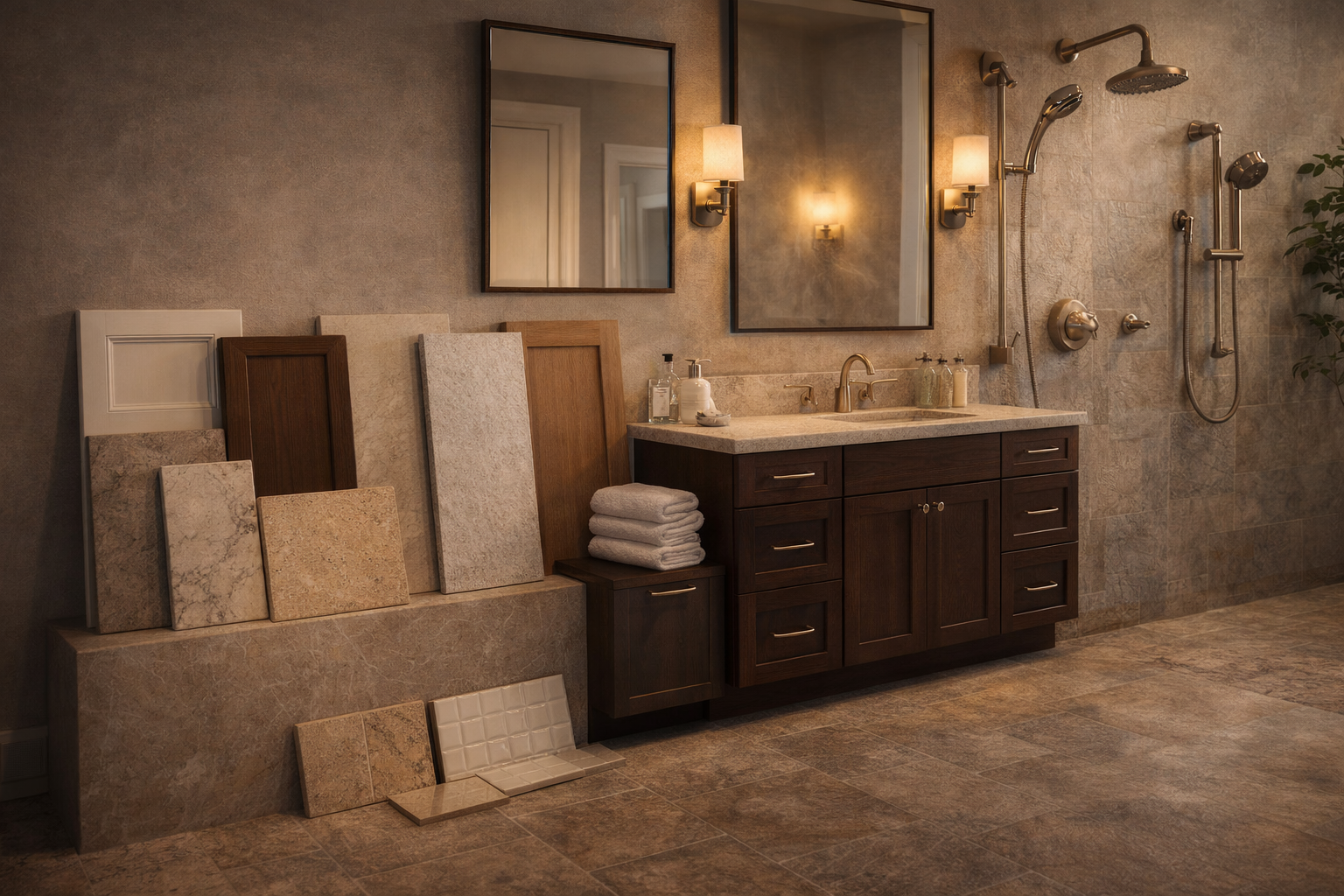
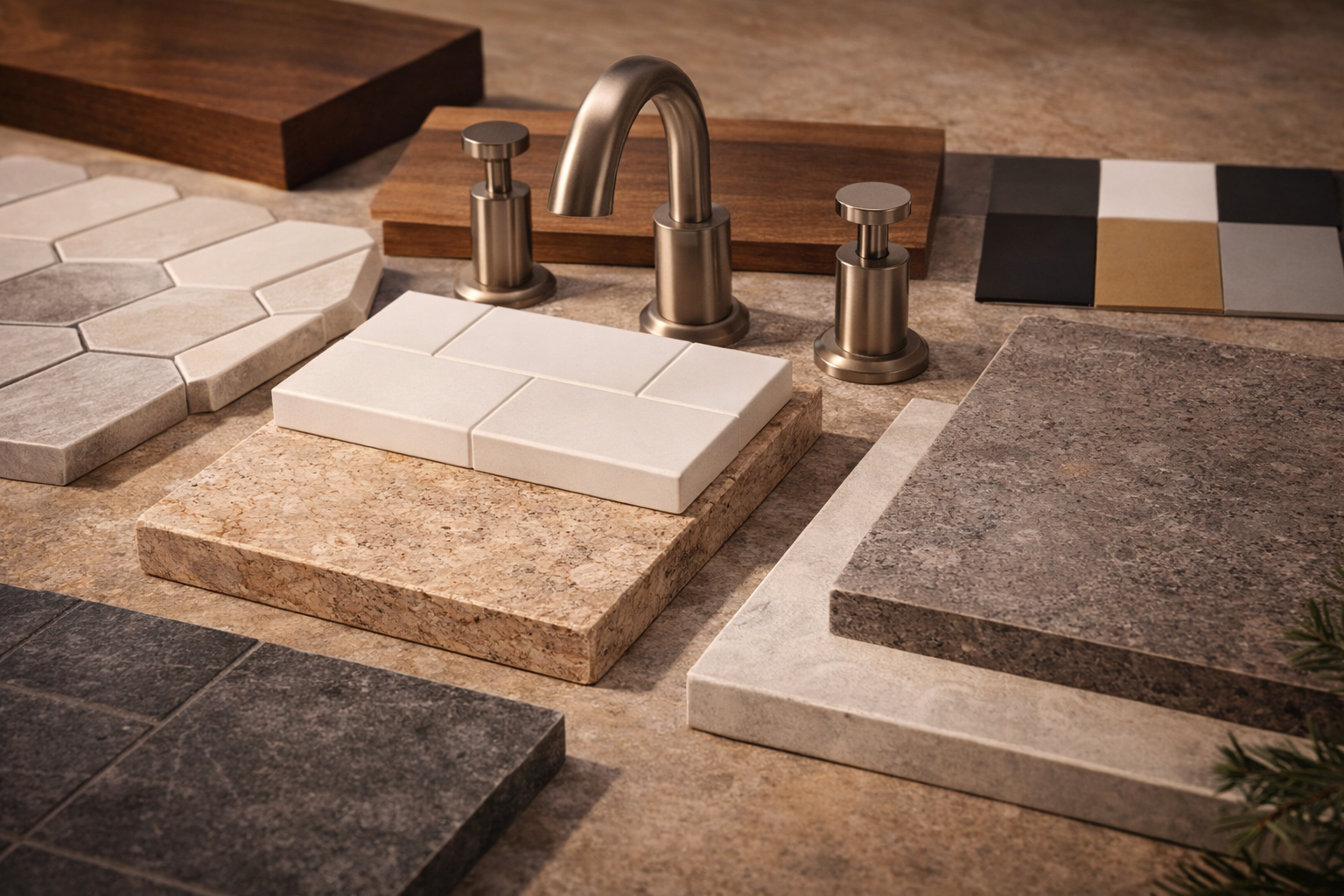
Ceramic and porcelain tile are among the most common materials used in bathroom remodeling due to their durability and water resistance. Porcelain tends to be denser and more resistant to moisture, making it a popular choice for shower walls and flooring. Natural stone such as marble, slate, or travertine offers a high-end appearance but typically requires sealing and additional maintenance. Modern panel systems made from quartz, solid surface, or acrylic provide a seamless alternative that reduces grout lines and simplifies cleaning.
Cabinetry, Fixtures, and Surface Finishes
Vanity cabinets are commonly built from plywood, solid wood, or engineered materials with moisture-resistant finishes. Countertops may be made from quartz, granite, cultured marble, or solid surface materials, each offering different levels of durability and maintenance. Plumbing fixtures such as faucets, shower valves, and hardware are available in finishes like chrome, brushed nickel, matte black, and brass, allowing homeowners to match both modern and traditional design styles while balancing cost and longevity.
Bathroom Remodeling Features and Upgrades
Many bathroom remodels include optional features that improve comfort, convenience, and overall style. These upgrades can transform a basic bathroom into a more functional and relaxing space. Some additions focus on luxury and aesthetics, while others improve everyday usability through better lighting, storage, and technology integration.
Comfort and Luxury Enhancements
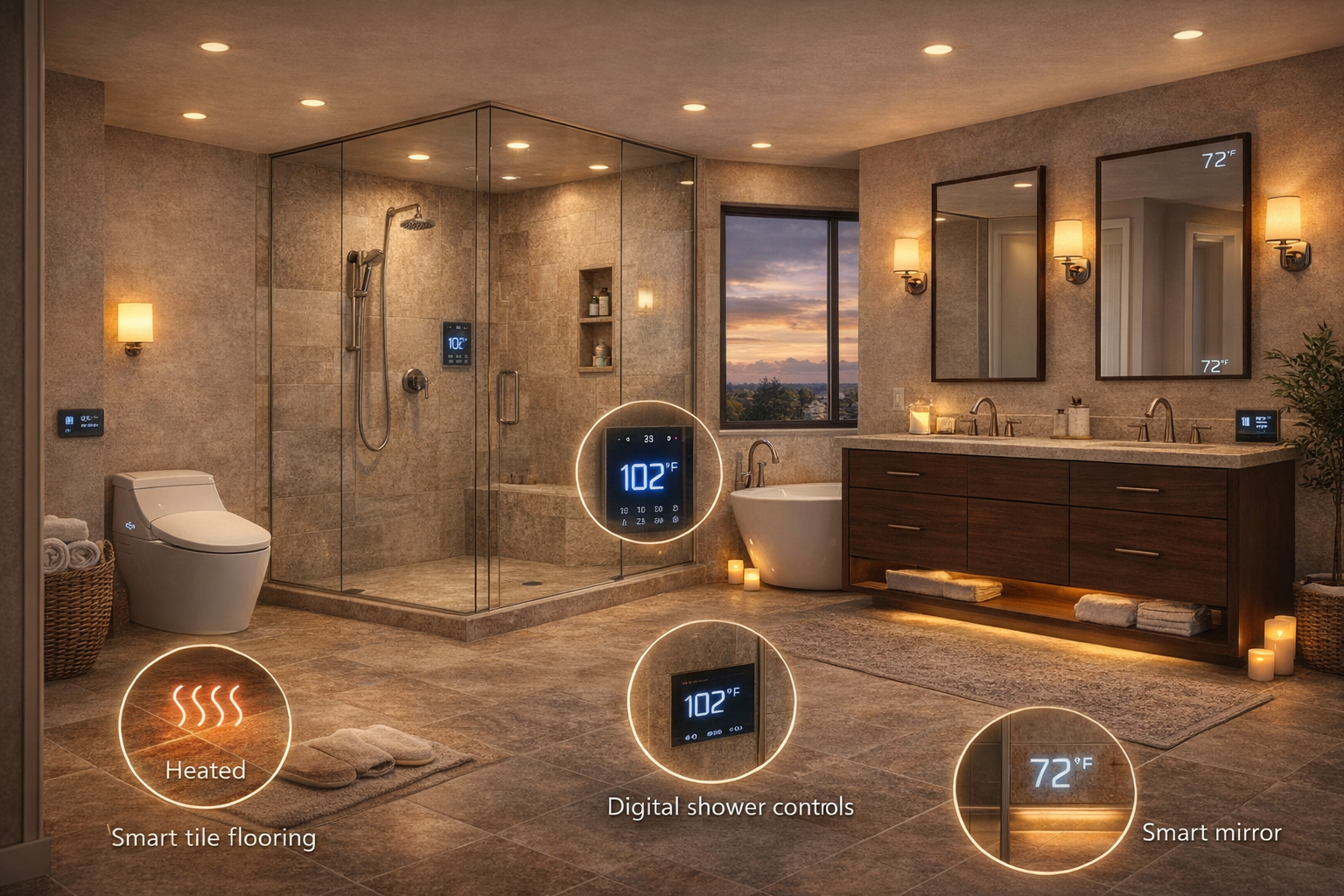
Luxury upgrades often center around the shower and bathing experience. Rain showerheads, body spray systems, and steam showers create a spa-like environment. Heated flooring systems add warmth during colder months and increase comfort underfoot. Freestanding soaking tubs, custom tile work, and frameless glass enclosures are also popular design upgrades that elevate the overall look and feel of the space.
Smart Technology and Functional Improvements
Modern bathroom remodeling can also incorporate smart and functional upgrades. Examples include smart toilets with bidet features, motion-sensing lighting, digital shower controls, and integrated ventilation systems. Built-in shower niches, floating vanities, and custom storage solutions improve organization while maintaining a clean design. These upgrades allow homeowners to personalize their bathroom while increasing long-term comfort and efficiency. Homeowners comparing performance goals can review Energy Saver ventilation guidance.
Bathroom Installation and Technical Considerations
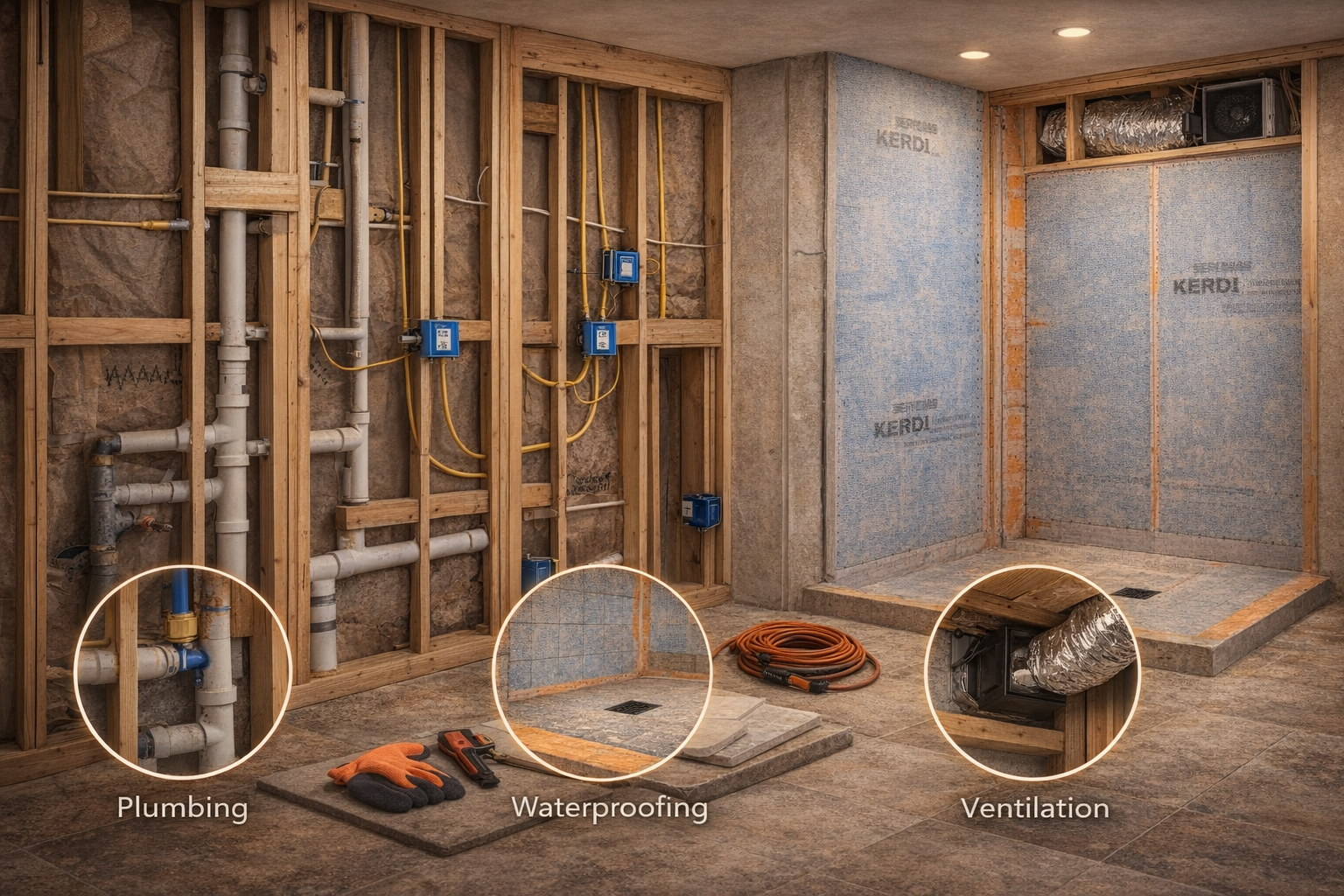
Bathroom remodeling involves several technical systems that must work together properly to prevent water damage and ensure long-term reliability. Behind the finished surfaces are plumbing lines, drainage systems, electrical connections, and structural framing that all need to meet building code requirements. Proper installation is critical because bathrooms are one of the most moisture-prone areas of a home, making waterproofing and ventilation essential parts of the remodeling process. Fixture selection reaches down to the sink and tub trim, so bathroom faucets are another detail that affects both function and finish. Homes that still rely on a tub often need a dedicated bathtub remodel plan for sizing, style, and installation.
Waterproofing and Structural Preparation
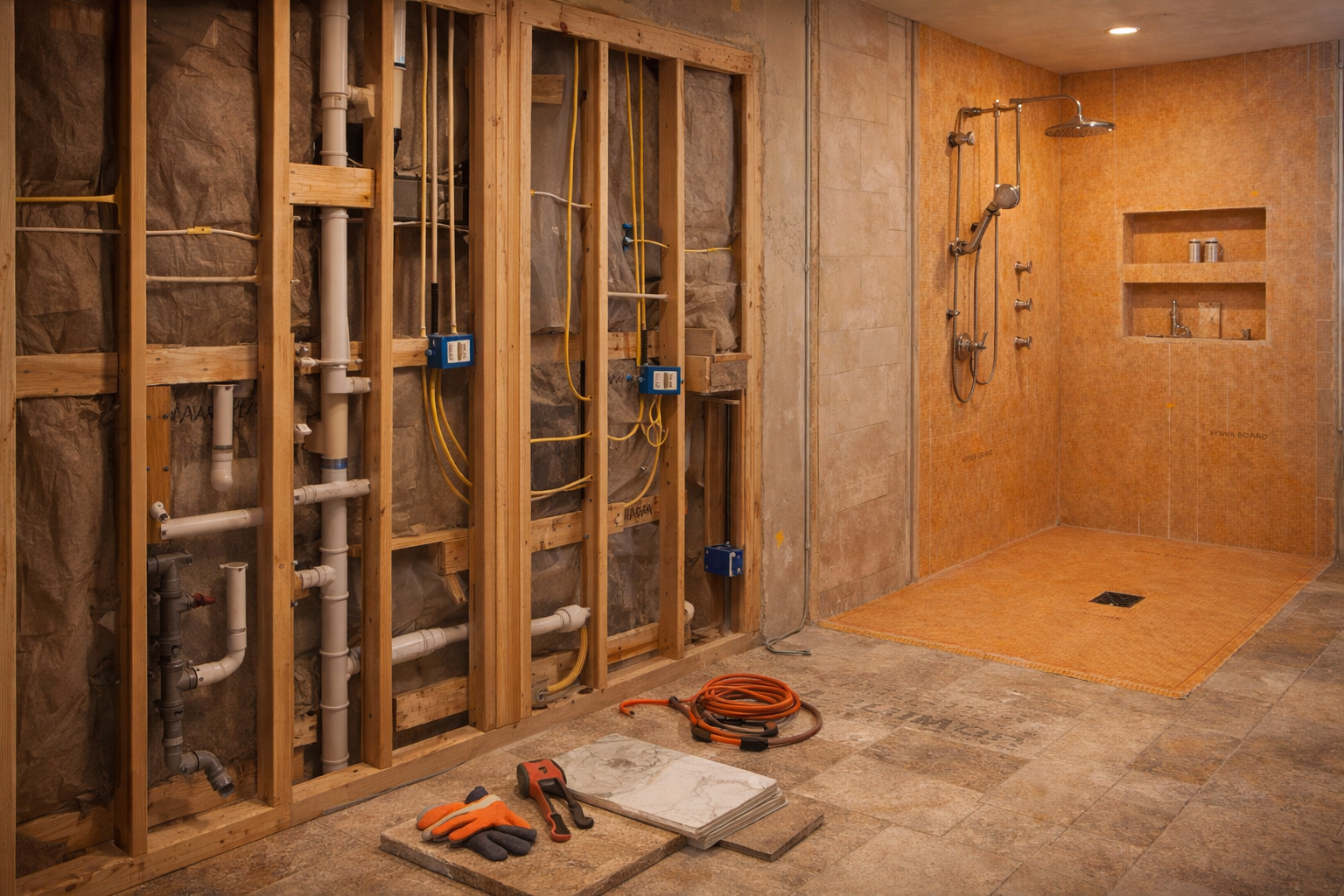
One of the most important technical aspects of bathroom remodeling is waterproofing. Shower and tub areas typically require specialized waterproof membranes installed behind tile or wall panels to prevent moisture from reaching the framing and subfloor. Proper drain placement and slope are also necessary to ensure water flows toward the drain rather than pooling on the surface. In many remodels, contractors also evaluate wall studs, floor structure, and subfloor materials to confirm they can properly support new fixtures and tile installations.
Plumbing, Electrical, and Ventilation Systems
Plumbing location often determines what layout changes are practical during a remodel. Moving a toilet, shower drain, or tub can require additional structural and plumbing work depending on the floor framing and pipe routing. Electrical upgrades may include new lighting circuits, GFCI outlets, heated floor wiring, or dedicated circuits for ventilation systems. Bathroom ventilation fans are especially important because they remove humidity and help prevent mold or moisture damage, making them a key requirement in most modern building codes.
Bathroom Remodeling Cost Factors
The cost of a bathroom remodel can vary widely depending on the size of the space, the materials selected, and the amount of work required behind the walls. Some projects focus on surface updates such as replacing fixtures, flooring, and cabinetry, while others involve structural changes, plumbing relocation, or full layout redesigns. Understanding the main variables that influence cost helps homeowners plan their project and decide which upgrades provide the most value for their goals. Moisture control affects long-term durability, which makes bathroom ventilation an important part of the budget conversation. Finishing details such as bathroom mirrors also influence lighting, storage, and the visual scale of the room.
Size, Materials, and Labor Complexity
Larger bathrooms generally require more materials and labor, which increases overall project scope. Material selections also play a significant role, as options such as natural stone, custom tile work, or premium fixtures can add complexity and installation time. More detailed designs, including custom shower systems, intricate tile patterns, or specialty finishes, often require skilled labor and longer installation timelines compared to standard materials or prefabricated systems.
Plumbing Changes and Custom Upgrades
Projects that involve moving plumbing fixtures, expanding the space, or adding new electrical components tend to require additional work behind the walls. Relocating a shower drain, repositioning a toilet, or installing heated floors can increase both labor and material requirements. Custom features such as built-in storage, frameless glass enclosures, lighting upgrades, and accessibility improvements also influence project complexity and overall investment.
Common Bathroom Remodeling Mistakes
Bathroom remodeling can dramatically improve comfort and home value, but certain design and installation mistakes can lead to frustration, maintenance problems, or costly repairs later. Because bathrooms involve water, moisture, and daily use, small oversights during planning or construction can create long-term issues. Understanding the most common mistakes helps homeowners make better decisions and avoid problems that often appear months or years after the remodel is complete. Poor fixture placement is a common regret, so planning bathroom lighting early can prevent functional problems later.
Design and Layout Mistakes
One common issue occurs when layout planning does not properly consider spacing and usability. Fixtures placed too close together, vanities that restrict door swing, or shower doors that cannot fully open can make the room feel cramped and inconvenient. Choosing materials that look appealing but are not appropriate for bathroom conditions can also create problems, such as using wall tile that becomes slippery on floors or installing surfaces that are difficult to clean or maintain.
Installation and Moisture Protection Errors
Many of the most serious problems stem from installation shortcuts behind finished surfaces. Inadequate waterproofing systems, improper shower pan construction, or poorly sealed tile installations can allow moisture to reach the framing and subfloor. Insufficient ventilation can also lead to humidity buildup, mold growth, and premature material deterioration. Proper planning, high-quality materials, and correct installation techniques are essential to ensure a bathroom remodel performs reliably over time. A full shower remodel also deserves close attention because waterproofing, drainage, and enclosure details have to work together.
Bathroom Remodeling Planning Checklist
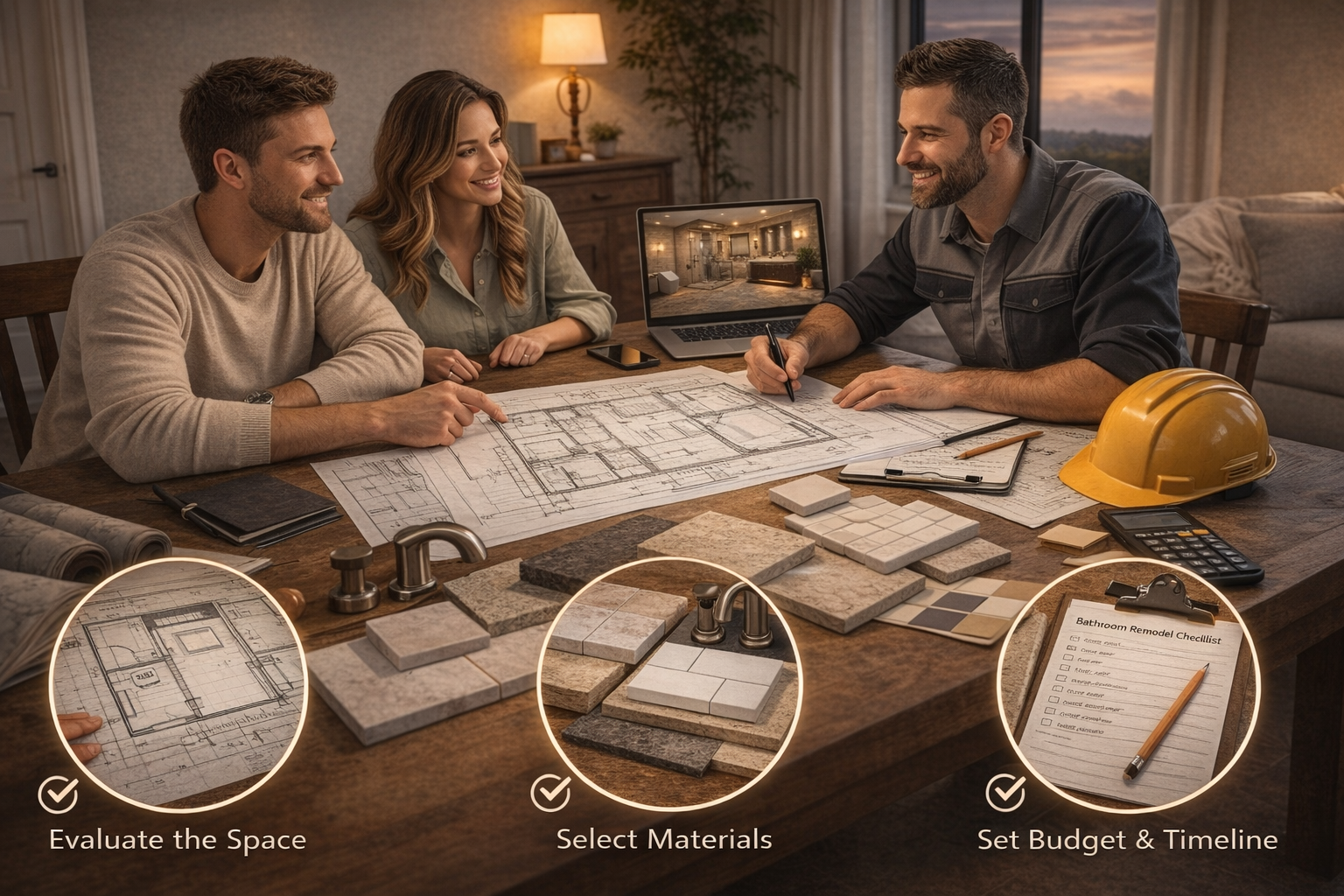
Planning a bathroom remodel is easier when the project is broken into clear steps. Before construction begins, homeowners typically evaluate the current space, identify what problems they want to solve, and determine the overall design direction. A structured planning process helps prevent unexpected delays, ensures materials are selected early, and makes it easier to communicate the vision of the project to contractors or designers.
Evaluate the Space and Define the Layout
The first step is reviewing how the current bathroom functions. Homeowners often consider whether the existing layout works well or if fixtures should be repositioned to improve flow and usability. This stage may involve measuring the room, identifying plumbing locations, determining available storage space, and deciding whether features such as a larger shower, double vanity, or additional lighting would improve daily use.
Select Materials, Features, and Budget Direction
Once the layout direction is clear, the next step involves selecting materials and finishes such as tile, countertops, cabinetry, fixtures, and lighting. Homeowners may also decide which upgrades they want to include, such as heated flooring, custom shower systems, improved ventilation, or additional storage solutions. Establishing general budget expectations during this phase helps prioritize features and ensures the project scope remains aligned with both design goals and practical considerations. Homeowners weighing long-term operating costs often review Energy Saver guidance.
Related Bathroom Remodeling Topics
Bathroom remodeling often connects to several related features and upgrades that help complete the overall design of the space. Exploring these related topics can help homeowners understand how different components work together and identify additional improvements that may enhance the comfort, function, and appearance of the room. These pages provide deeper explanations of specific elements commonly included in bathroom remodel projects.
Bathroom Fixtures and Feature Remodels
Many remodels focus on individual features such as shower upgrades, bathtub replacements, vanity installations, and toilet improvements. Each feature can dramatically influence how the bathroom functions and how the space is used day to day. Topics such as walk-in showers, tub-to-shower conversions, double vanities, and modern toilet systems explore these options in more detail and explain when each type works best. For fixture-specific updates, a toilet remodel can address comfort height, clearance, and modern features.
Supporting Surfaces and System Upgrades
Other related remodeling topics focus on the supporting surfaces and systems that make the bathroom complete. These include bathroom flooring materials, tile wall systems, ventilation improvements, lighting upgrades, and storage solutions. Learning about these categories helps homeowners see how design choices, material selections, and mechanical systems combine to create a well-designed and long-lasting bathroom space.
Local Bathroom Remodeling Guides
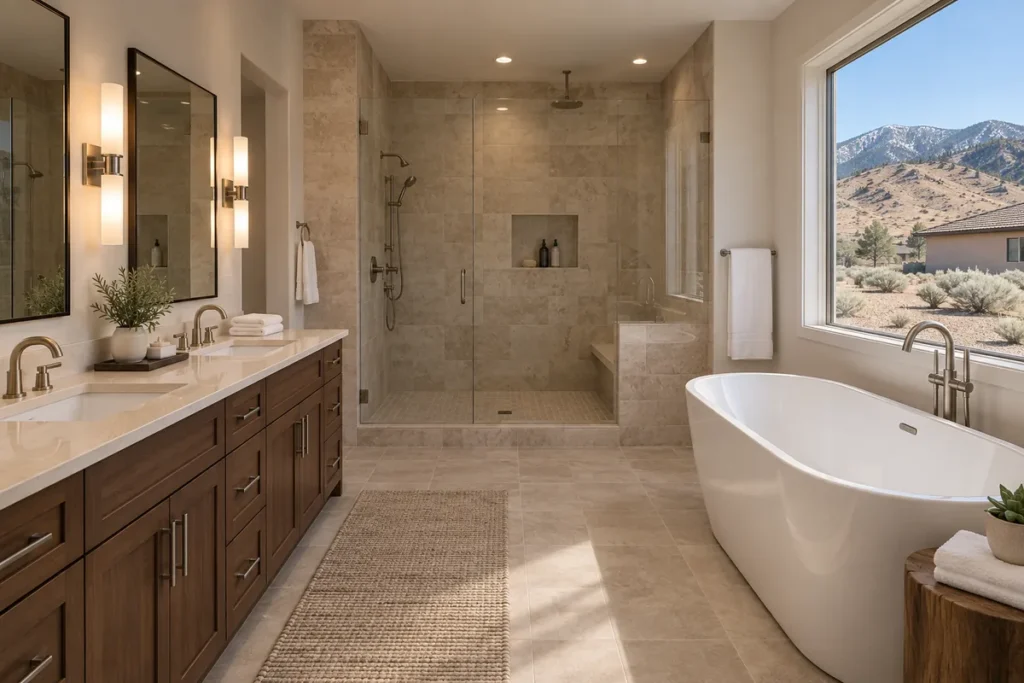
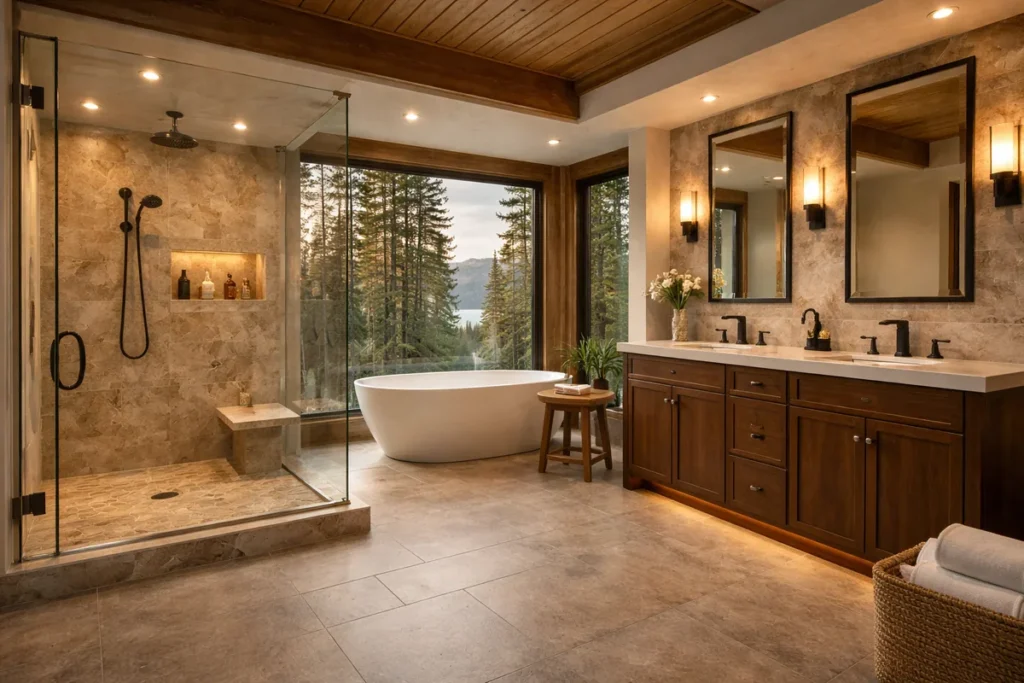
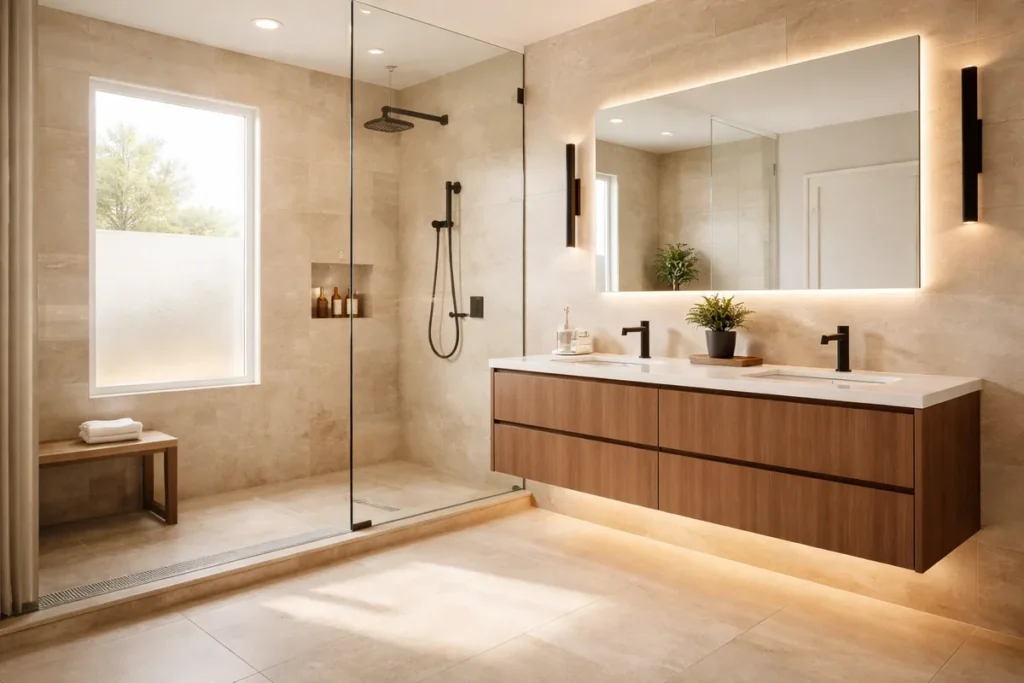
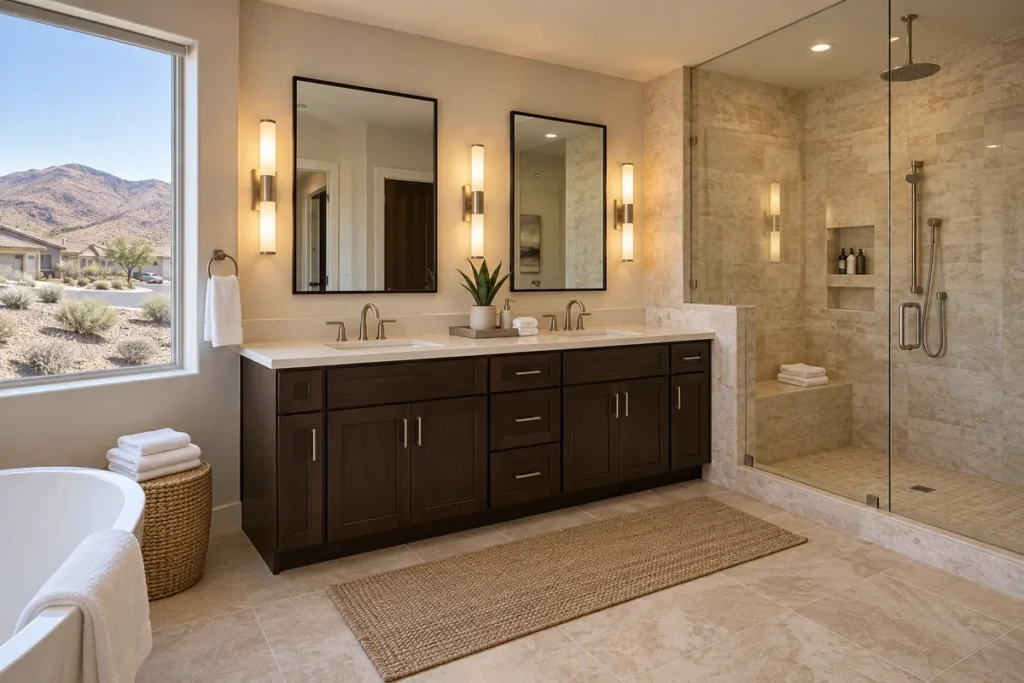
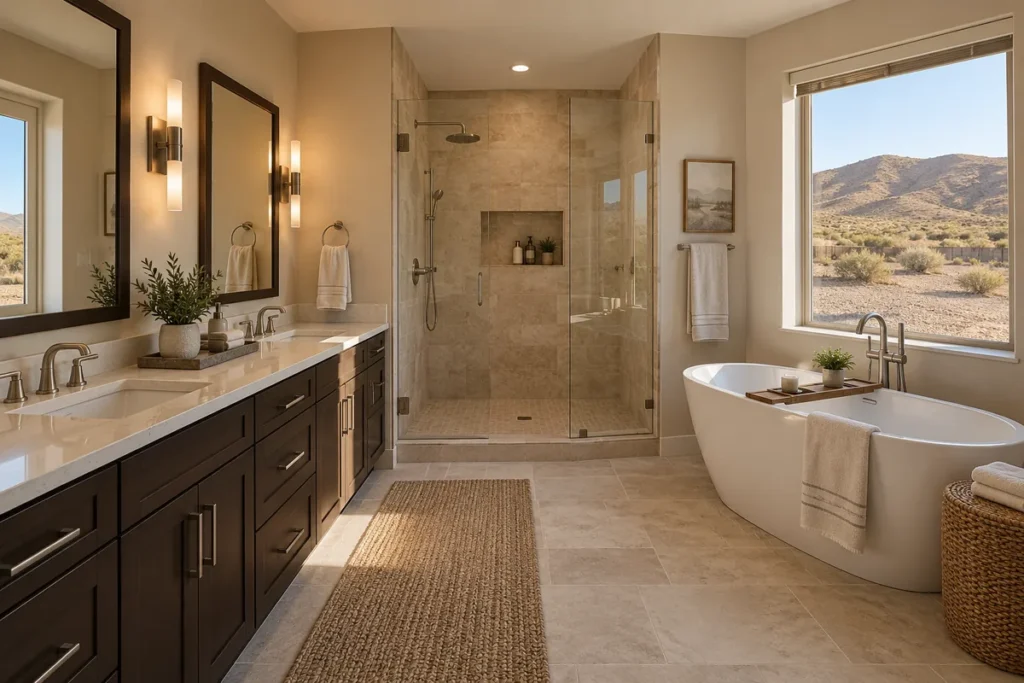
Local guides: Bathroom Remodeling Carson City, Bathroom Remodeling Incline Village, Bathroom Remodeling Las Vegas, Bathroom Remodeling Reno, and Bathroom Remodeling Sparks. Each guide covers the housing stock, water and climate conditions, layouts, finishes, and planning factors in that city.
Frequently Asked Questions About Bathroom Remodeling
Most bathroom remodels take anywhere from a few days to several weeks depending on the size of the space and the complexity of the project. Simple updates like replacing fixtures or a vanity can be completed quickly, while full renovations involving plumbing, tile work, or layout changes take longer.
Bathroom remodeling is one of the most common upgrades that can improve a home’s resale appeal. Updated bathrooms often make homes more attractive to buyers because they improve both functionality and visual appeal. The impact on value depends on design quality, materials used, and overall market conditions.
Yes, many homeowners replace older bathtubs with walk-in showers to create more space and improve accessibility. Tub-to-shower conversions are especially popular in smaller bathrooms or for homeowners planning to age in place.
Proper waterproofing and installation behind the finished surfaces are some of the most critical aspects of a bathroom remodel. Even the most beautiful tile or fixtures can fail if moisture protection and drainage systems are not installed correctly.
Bathroom flooring should be water-resistant, durable, and easy to clean. Porcelain tile, ceramic tile, and some waterproof vinyl flooring systems are common choices because they perform well in high-moisture environments.
Permits may be required when a remodel involves plumbing, electrical changes, or structural modifications. Local building codes determine the exact requirements, and contractors typically help coordinate inspections and approvals when needed.
Yes, design strategies such as walk-in showers, floating vanities, larger mirrors, and improved lighting can make a small bathroom feel more open. Layout adjustments and lighter materials can also improve the sense of space.
Durable materials such as porcelain tile, quartz countertops, and solid wood or plywood cabinetry tend to perform well in bathroom environments. Proper installation and regular maintenance also play a major role in how long materials last.
Proper ventilation and waterproofing are essential for preventing moisture issues. Exhaust fans, sealed tile systems, and moisture-resistant materials help control humidity and reduce the risk of mold growth.
Double vanities are popular in primary bathrooms because they allow two people to use the space at the same time. They also increase storage and improve morning routines for households that share a bathroom.