

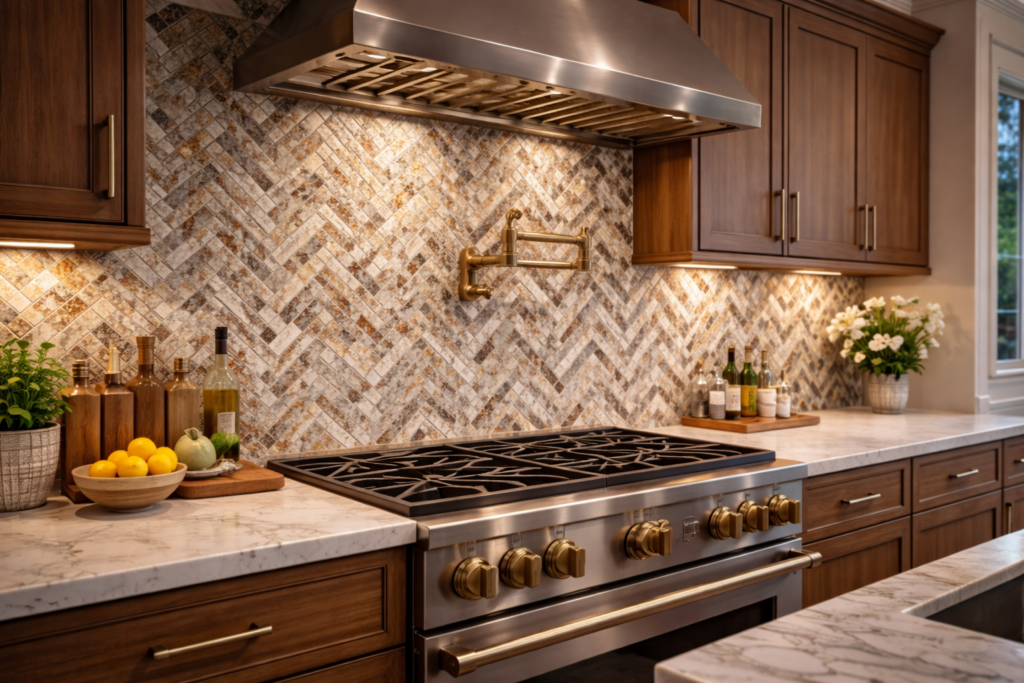
Mosaic Tile Backsplash Guide: Patterns, Materials, Grout, and Cost
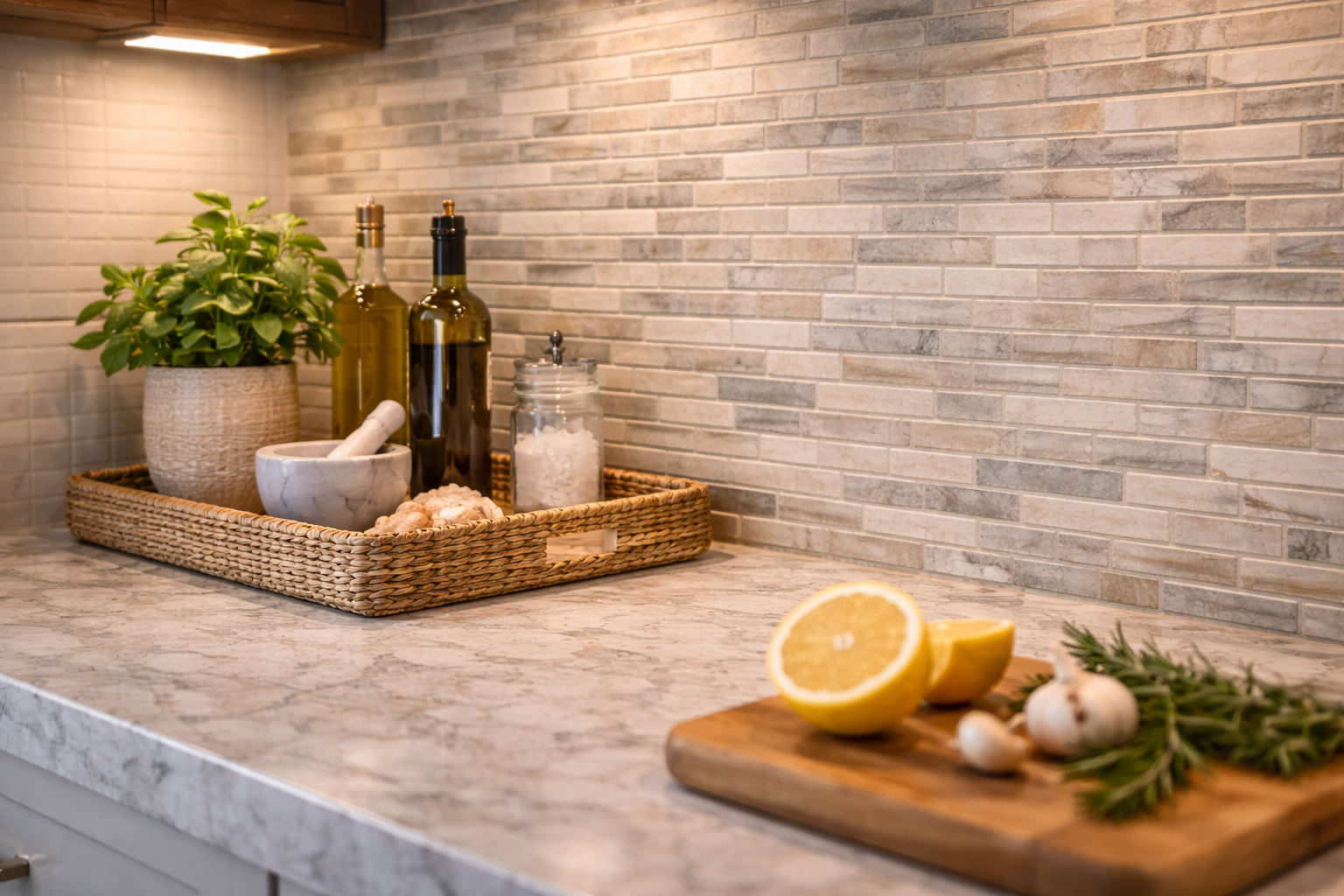
Mosaic Tile Backsplash Guide Index
- Mosaic Tile Backsplash Overview
- What Is a Mosaic Tile Backsplash
- When Does a Mosaic Tile Backsplash Make Sense
- What Materials and Patterns Are Common
- How Do Grout Color and Tile Scale Affect the Look
- What Installation Details Matter Most
- What Are the Pros and Cons of a Mosaic Tile Backsplash
- What Affects Mosaic Tile Backsplash Cost
- What Mistakes Should Homeowners Avoid
- How Should You Plan a Mosaic Tile Backsplash Remodel
- Frequently Asked Questions About Mosaic Tile Backsplashes
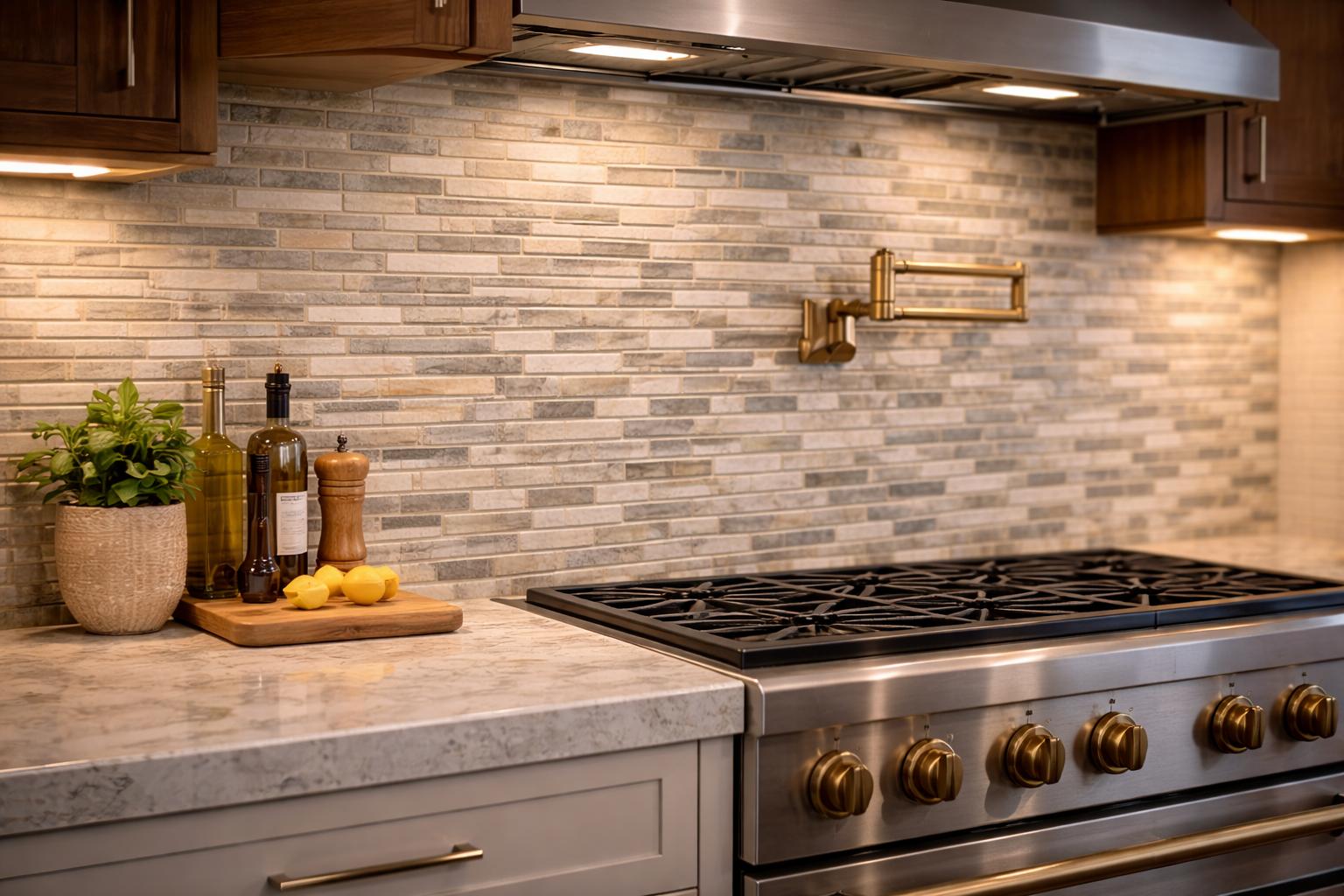
Mosaic Tile Backsplash Overview
A mosaic tile backsplash uses smaller tile pieces to create more pattern, texture, and detail than larger-format tile. In a kitchen remodel, that can bring energy to the wall and give the room a stronger decorative layer, especially when the cabinets and countertops are relatively simple.
Why do homeowners choose mosaic tile backsplashes?
They choose them when they want the backsplash to contribute more personality. Mosaic tile can add shimmer, movement, contrast, or texture, depending on the material and pattern. It can also become a focal feature behind the range or along the main countertop run near the island.
What is the tradeoff compared with simpler backsplash options?
The tradeoff is usually visual intensity and maintenance. Mosaic backsplashes can be more detailed, which is great when the kitchen needs that layer of texture, but it also means more grout joints and more design decisions that need to be balanced carefully.

What Is a Mosaic Tile Backsplash
A mosaic tile backsplash is a backsplash made from small tiles, often mounted on mesh sheets for installation. The tile may be square, rectangular, hexagonal, linear, penny-round, or mixed into more complex patterns. Because the pieces are small, the backsplash can show more detail than a simple subway or large-format tile wall.
How is it different from standard tile?
The smaller tile size creates more joints, more texture, and more opportunities for pattern. That can make the backsplash feel richer and more custom, but it also means the design has to be chosen carefully so the wall does not become too busy for the rest of the kitchen. For layout and clearance planning, many designers reference NKBA planning guidelines.
Can it still feel current instead of dated?
Yes. The key is material and pattern selection. A subtle tonal mosaic, a clean linear glass pattern, or a quiet matte porcelain mosaic can feel very current. The problem is usually not mosaic tile itself but choosing a style that fights the rest of the remodel.
When Does a Mosaic Tile Backsplash Make Sense
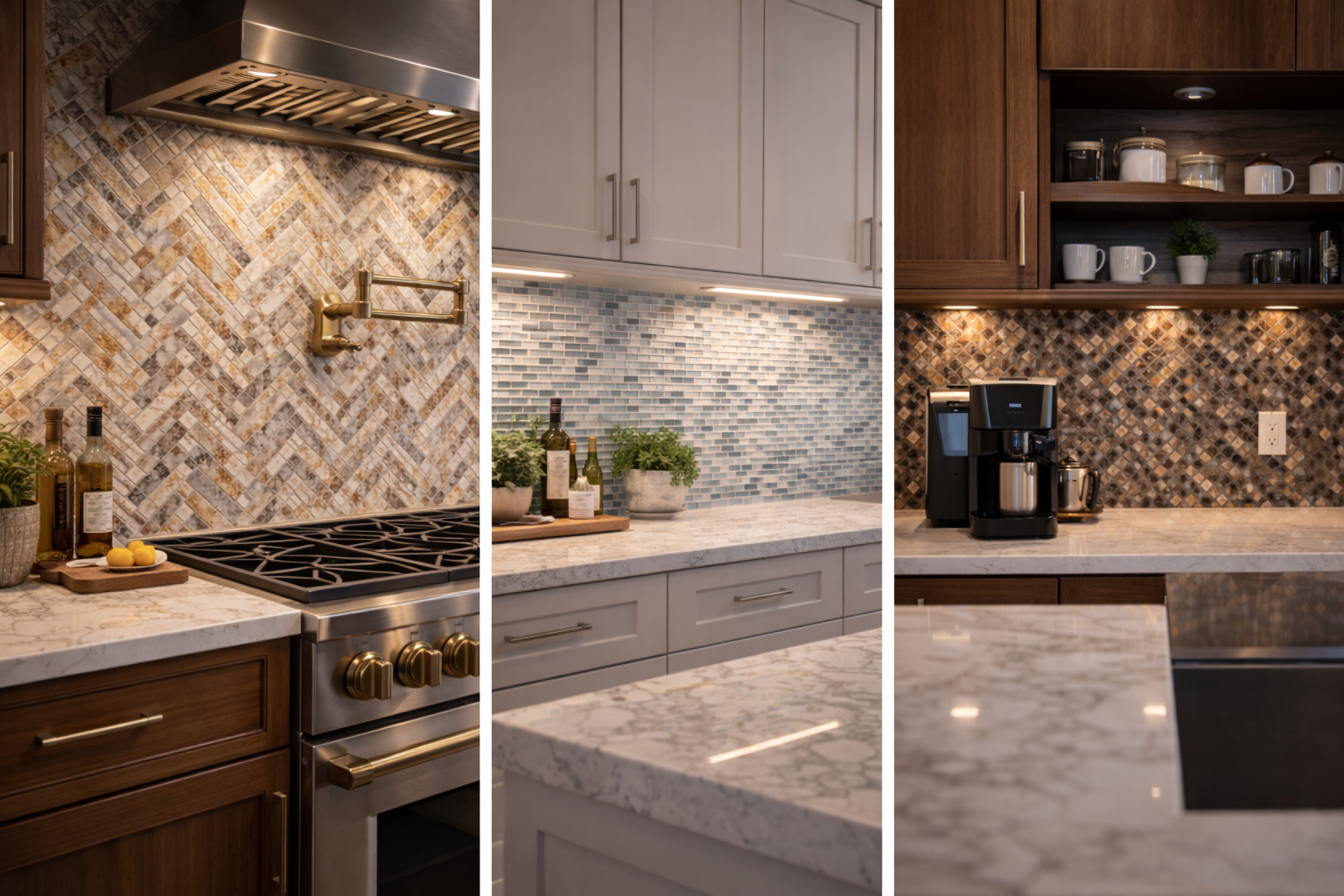
A mosaic tile backsplash makes sense when the kitchen needs more texture, more color, or a more decorative wall treatment. It often works well in kitchens with simpler cabinet fronts, quieter countertops, and enough visual breathing room for the backsplash to take on a more expressive role. Homeowners who want to dig deeper into this feature can review kitchen remodeling.
Is it a good choice for every kitchen?
No. In a kitchen that already has bold stone veining, strong cabinet color, or a busy floor pattern, adding a highly active mosaic can overload the room. The best mosaic choices balance the other materials instead of competing with them.
Where does mosaic tile usually work best?
It often works best on standard backsplash runs, behind the range as a focal section, or in smaller feature areas like a coffee station. The right application depends on how much of the wall should be a design statement versus a quiet background.
What Materials and Patterns Are Common
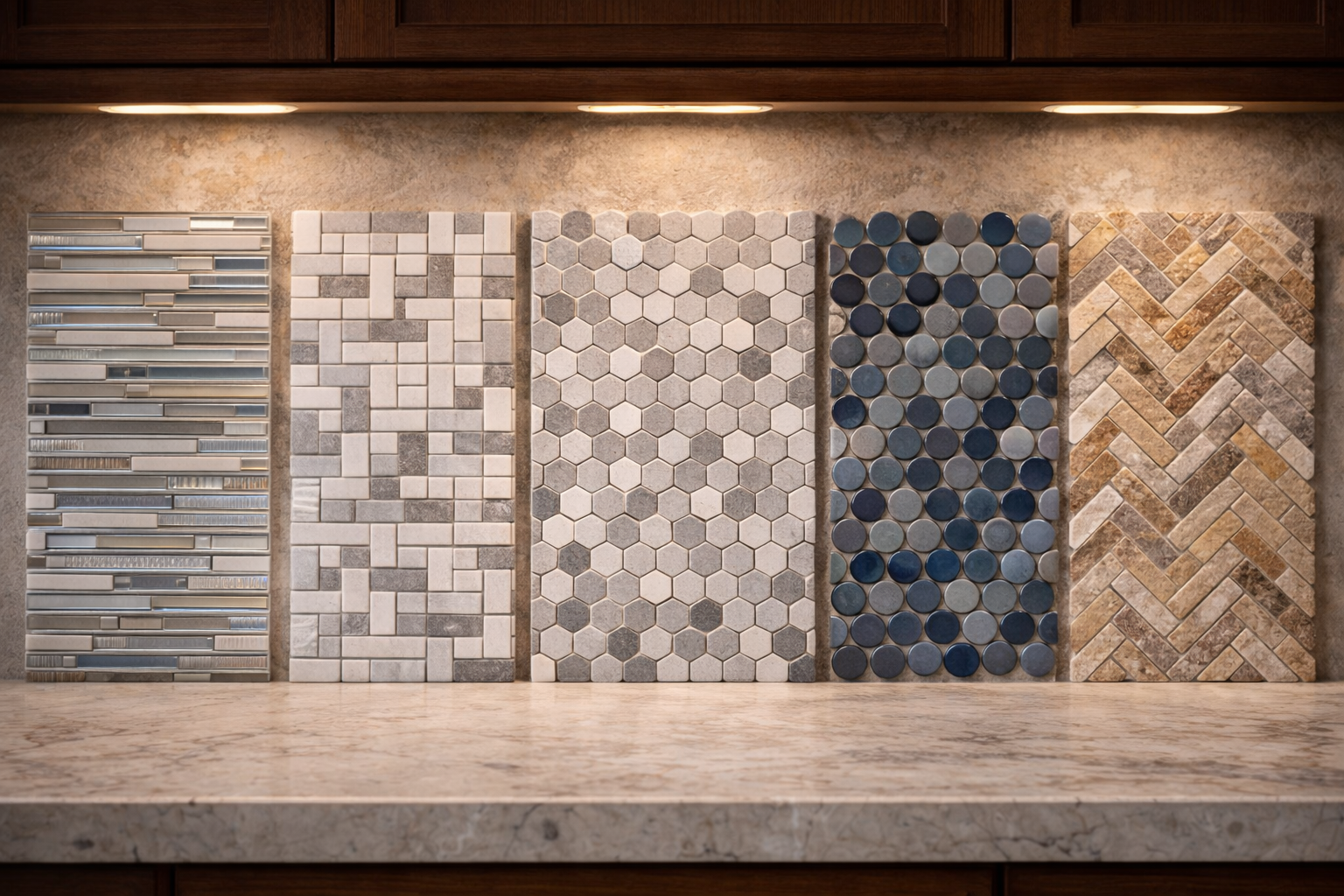
Common mosaic materials include glass, porcelain, ceramic, stone, metal accents, and mixed-material blends. Common patterns include small squares, hexagons, herringbone sheets, stacked linear strips, basketweave, and penny rounds. Each one changes the mood of the kitchen in a different way.
Why does material matter as much as pattern?
Because material affects both the look and the upkeep. Glass can add shine and reflect light, porcelain is often practical and durable, and stone mosaics can bring natural texture but may need more maintenance. The backsplash has to work visually and functionally in a cooking space.
How should homeowners choose a pattern?
They should look at the cabinet style, countertop movement, lighting, and the overall amount of pattern already in the room. A simple kitchen can usually handle a more expressive backsplash. A busy kitchen usually needs a quieter mosaic if mosaic is used at all.
How Do Grout Color and Tile Scale Affect the Look
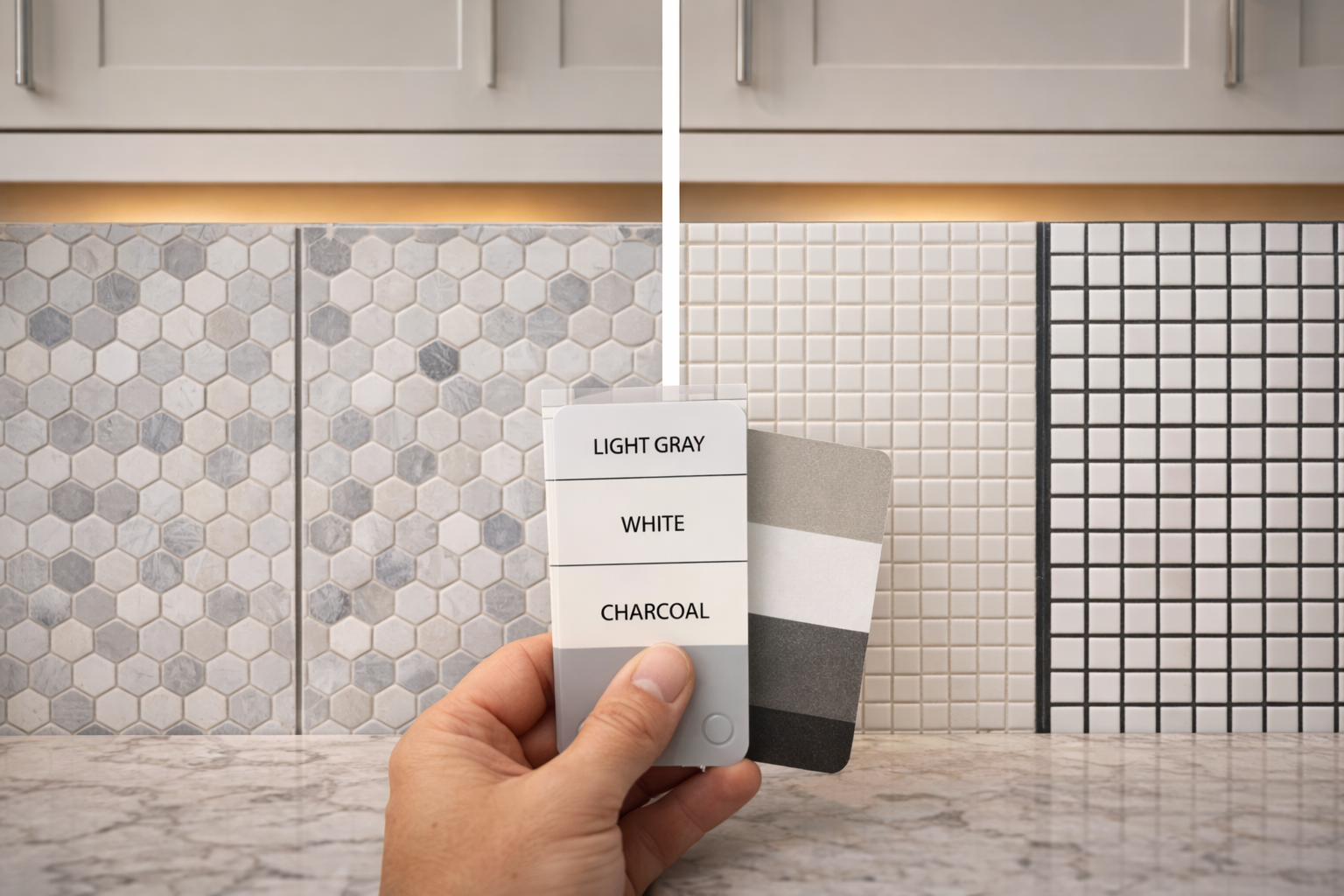
Grout color and tile scale have a big effect on how strong the backsplash pattern feels. Matching grout can soften the lines between small pieces and make the wall feel more blended. Contrasting grout does the opposite by outlining each tile and making the pattern more pronounced.
Why is grout selection so important with mosaic tile?
Because there are many more grout joints than with large tile. That means the grout becomes part of the design, not just a filler between pieces. A wrong grout choice can make the backsplash busier than expected or flatten a pattern that was supposed to have definition. For layout and clearance planning, many designers reference NKBA planning guidelines.
Does tile size change how the whole kitchen feels?
Yes. Very small pieces add more visual texture, while slightly larger mosaics can feel calmer. The smaller the tile, the more active the wall usually becomes, so scale should be chosen in relation to the cabinets, counters, and lighting around it.

What Installation Details Matter Most
Sheet alignment, edge treatment, outlet cuts, grout consistency, and pattern layout all matter. Mosaic tile can look sloppy fast if the sheet lines show, the cuts stack awkwardly near outlets, or the pattern is not balanced at the ends of the run. Homeowners comparing options often look at kitchen backsplash as part of the overall plan.
What should be checked before installation starts?
Tile direction, starting point, edge trim plan, grout color, outlet positions, and how the pattern lands at corners, windows, and cabinet bottoms should all be reviewed first. Good installers dry-plan complex mosaics so the finished wall feels deliberate rather than improvised.
Why do sheet lines become a problem?
Because some sheet-mounted mosaics can reveal the repeat pattern if they are installed carelessly. The installer has to adjust spacing and layout so the wall reads as one finished field instead of a grid of repeated sheets.
What Are the Pros and Cons of a Mosaic Tile Backsplash
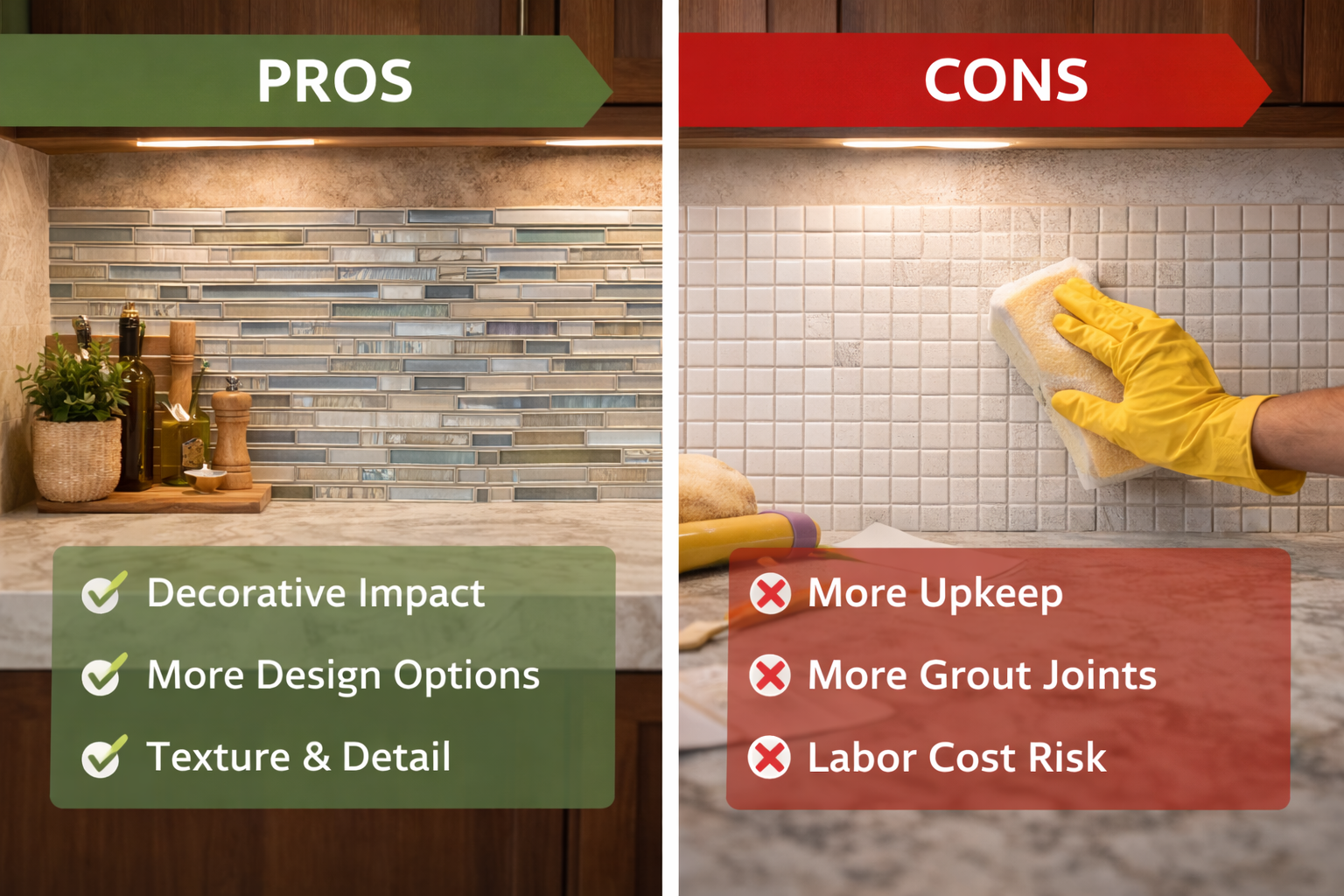
The biggest advantages are texture, pattern, decorative flexibility, and the ability to create a more custom wall treatment. The main drawbacks are more grout joints, potentially higher labor cost, and a greater risk of visual clutter if the selection is too busy for the rest of the kitchen.
Who tends to like mosaic tile most?
Homeowners who want a backsplash with personality and detail tend to like it most. It is especially appealing when the kitchen needs one area with a little more design energy.
Who might prefer another backsplash type?
Someone who wants the easiest cleanup, the quietest wall treatment, or a more minimal look may prefer larger-format tile or a slab backsplash. The right answer depends on whether the wall should stand out or stay understated.
What Affects Mosaic Tile Backsplash Cost
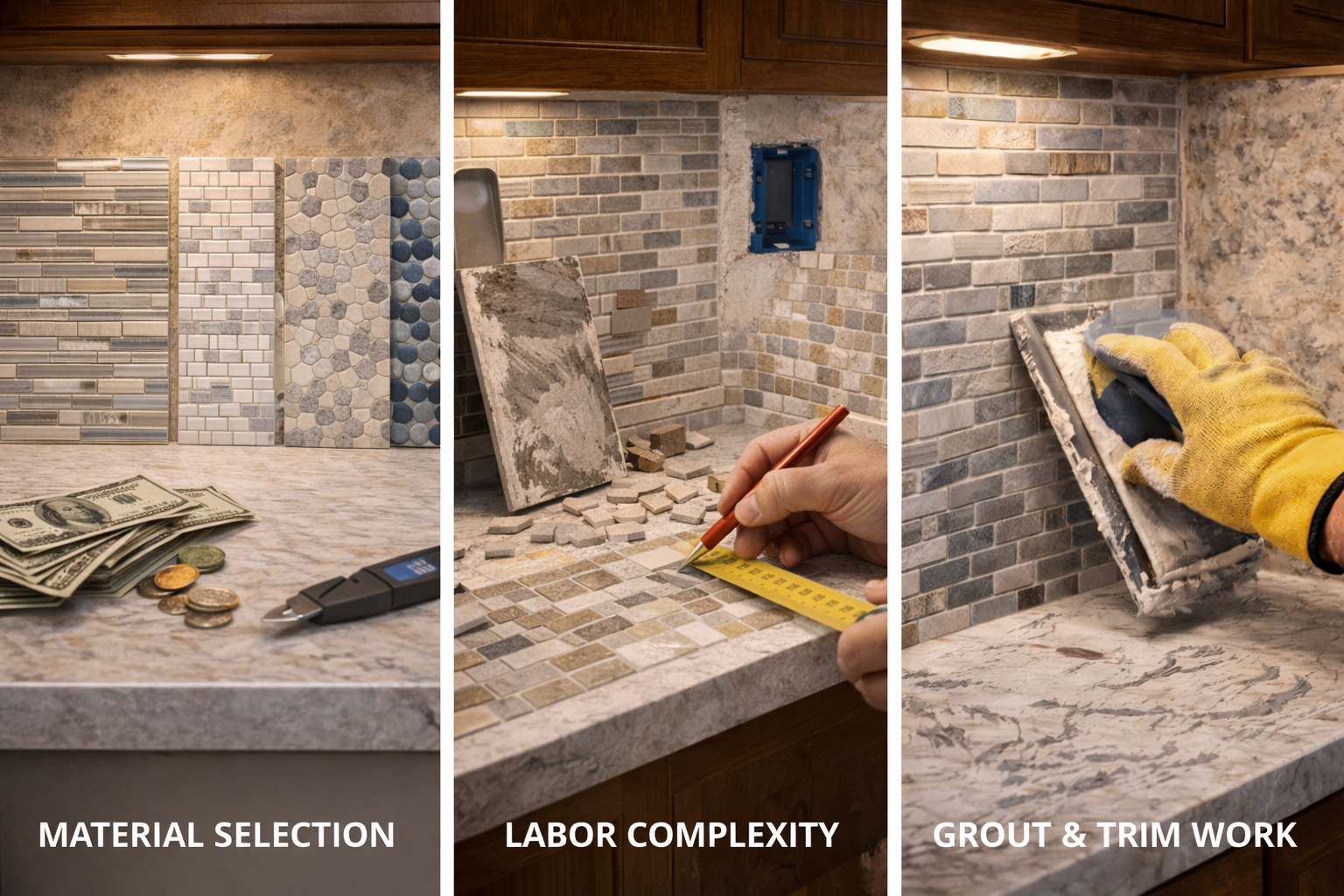
Cost depends on the tile material, pattern complexity, sheet quality, grout choice, trim details, outlet cuts, wall size, and labor. A straightforward porcelain mosaic costs less than a mixed-material decorative mosaic with complex cuts and a lot of detail work around windows and outlets.
What tends to raise cost fastest?
Premium materials, intricate patterns, specialty trims, difficult wall layouts, and labor-heavy installation usually raise cost the most. Even when mosaic comes on sheets, it often still takes more time to install cleanly than larger simple tile. For technical installation guidance, many pros refer to TCNA resources.
How can homeowners manage the budget?
Choosing a simpler mosaic, using it in a focused area, and avoiding unnecessary complexity at the edges can help. It is also smart to spend on a good installer because poor mosaic installation is much more obvious than poor selection alone.
What Mistakes Should Homeowners Avoid
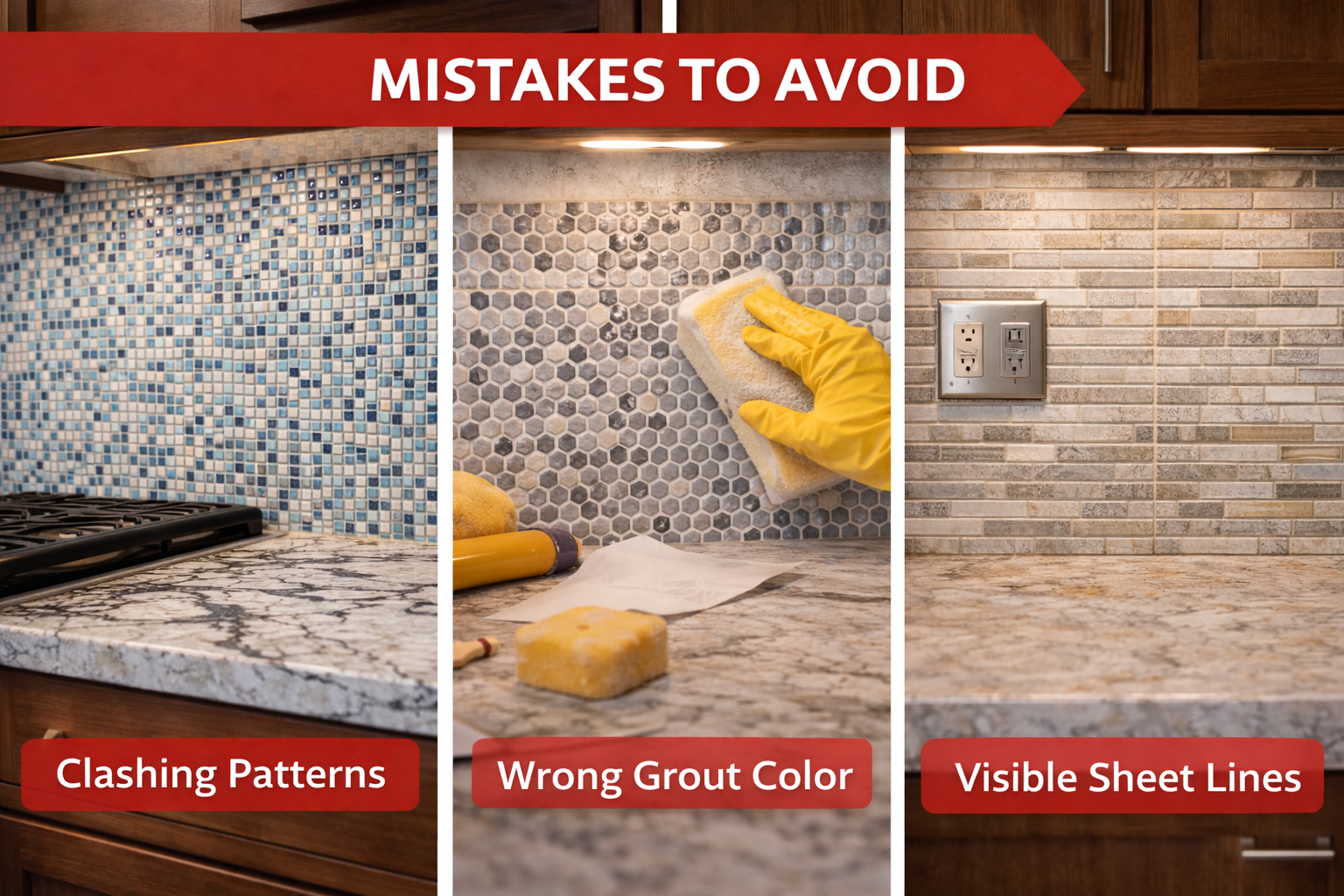
The biggest mistakes usually come from choosing a mosaic that is too busy for the rest of the kitchen or from not thinking enough about grout. Homeowners sometimes fall in love with a showroom sample and do not realize how much more active the wall will feel once the whole backsplash is installed.
What planning mistakes are common?
Ignoring grout color, not reviewing the sheet repeat, and choosing a tile that competes with the countertop are common problems. Another is forgetting that reflective or highly textured mosaics can look different under actual kitchen lighting than they do in a showroom.
What design mistakes show up later?
Backsplashes that feel too busy, grout that darkens the whole wall unexpectedly, and sheet lines that become visible after installation are all problems that can show up once the kitchen is complete. A good mosaic should support the room, not overwhelm it.
How Should You Plan a Mosaic Tile Backsplash Remodel
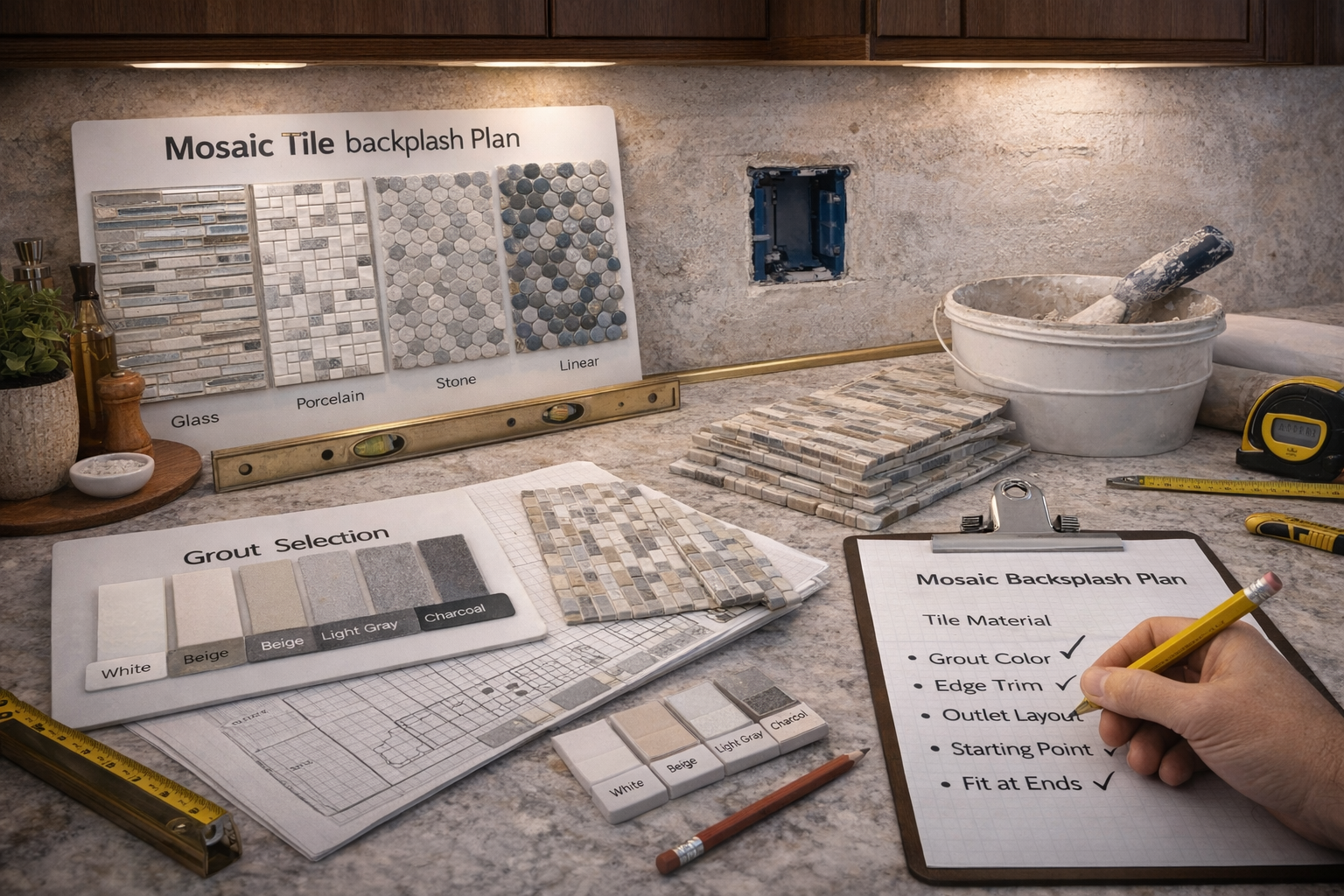
Start by deciding how much visual energy the kitchen actually needs. If the cabinets and counters are quiet, mosaic tile may be a great way to give the room some character. Then review full sheets, not just single pieces, choose the grout carefully, and coordinate the backsplash with the countertops, cabinets, and lighting before installation begins.
What should be finalized before ordering?
Tile material, full sheet pattern, grout color, edge trim, outlet layout, starting point, and how the pattern ends at corners or cabinets should all be decided first. Those details affect both appearance and installation quality.
When is a mosaic tile backsplash the right move?
It is the right move when the remodel wants more texture, more detail, or a more decorative focal wall. Used thoughtfully, mosaic tile can give the kitchen personality without feeling random or overdesigned.
Frequently Asked Questions About Mosaic Tile Backsplashes
A mosaic tile backsplash uses small tiles arranged in sheets or patterns to create a decorative wall surface behind kitchen counters, sinks, or ranges. The smaller pieces allow more texture, color variation, and pattern detail than larger format tile.
They usually choose them for visual interest. Mosaic tile can add texture, contrast, color, and pattern to a kitchen that might otherwise feel too plain or too dominated by large surfaces like cabinets and countertops.
Common options include glass, ceramic, porcelain, stone, metal accents, and mixed-material blends. The right choice depends on the look of the kitchen, how much maintenance the homeowner wants, and the amount of texture desired.
It can be, because there are more grout joints. That does not make it a bad choice, but it does mean cleaning and grout selection matter more than they do with simpler large-format backsplash materials.
Yes, if the pattern, color palette, and finish are chosen carefully. A very busy mosaic may push the kitchen in a more decorative direction, while a subtle linear or tone-on-tone mosaic can still feel clean and current.
That depends on the design goal. Matching grout can soften the pattern and make the backsplash feel more unified, while contrasting grout can make the tile shape stand out more. The right choice depends on how much visual definition the kitchen needs.
It often does. Even when the tile comes mounted on sheets, layout, cuts, alignment, and grout work can take more time than larger straightforward tile installations.
Yes. It is often used there as a focal feature, but the material and maintenance level should make sense for a cooking area where grease and splatter are common.
Common mistakes include choosing a pattern that fights the countertops, using a grout color that makes the wall look too busy, or underestimating how much texture and variation the backsplash adds to the room.
Homeowners who want more texture, personality, and decorative detail in the kitchen are usually a good fit. It works best when the rest of the remodel leaves enough visual breathing room for the backsplash to stand out in a good way.