

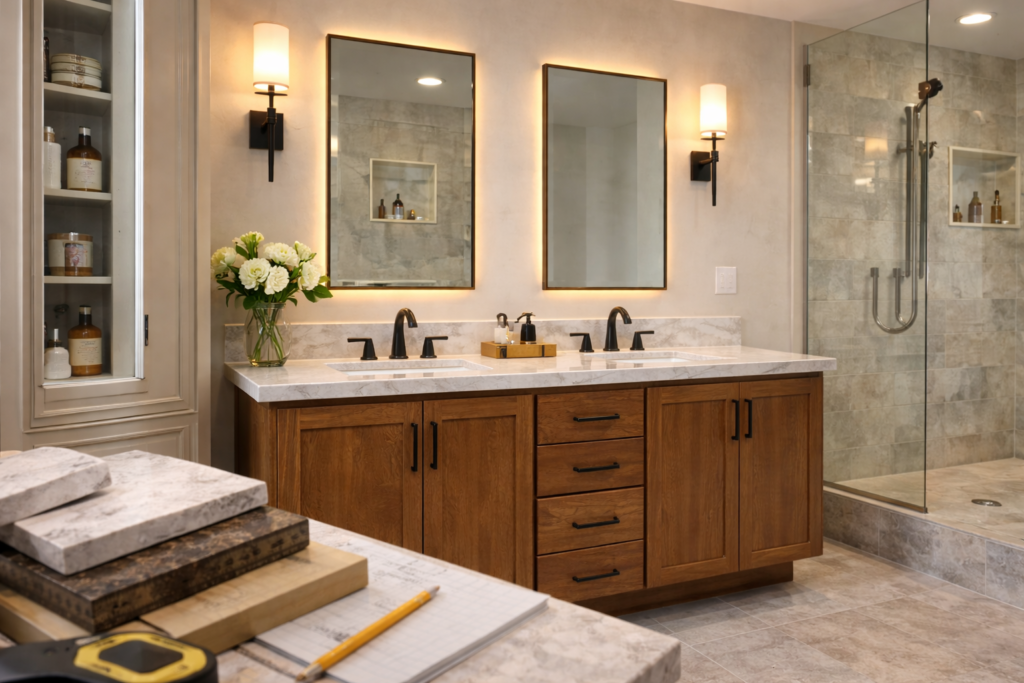
Vanity Remodel Guide: Cabinets, Countertops, Layout, Costs, and Planning
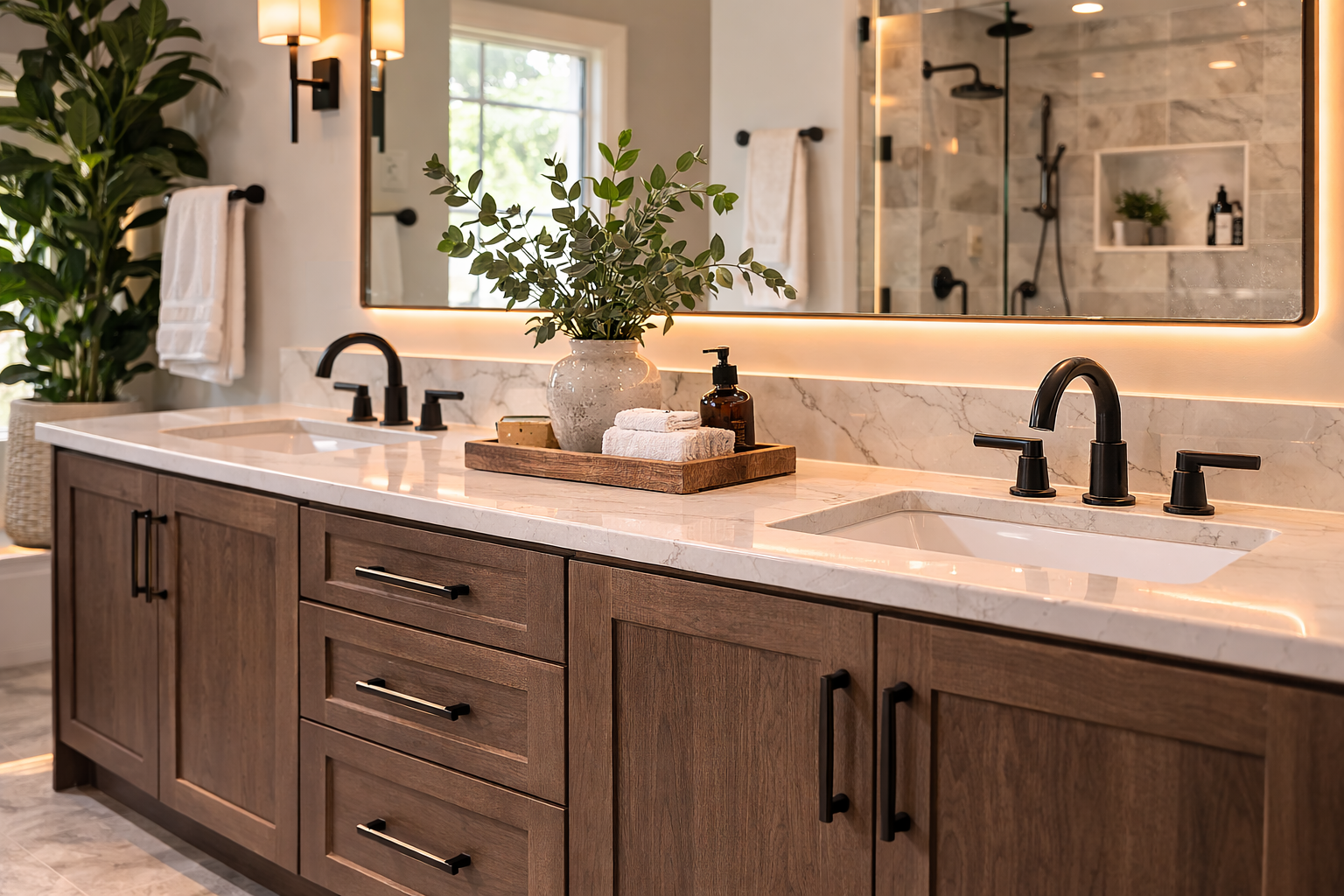
Vanity Remodel Guide Index
- Vanity Remodel Overview
- When Should a Bathroom Vanity Be Remodeled
- What Types of Vanity Remodels Are Common
- How Do Layout and Room Size Affect a Vanity Remodel
- What Materials and Components Are Used in a Vanity Remodel
- What Upgrades Can Be Added During a Vanity Remodel
- What Installation Details Matter in a Vanity Remodel
- What Affects Vanity Remodel Cost
- What Mistakes Should Homeowners Avoid With a Vanity Remodel
- How Should You Plan a Vanity Remodel
- Related Vanity Remodel Topics
- Frequently Asked Questions About Vanity Remodeling

Vanity Remodel Overview
A vanity remodel updates one of the most used parts of the bathroom. In practical terms, that can include replacing the vanity cabinet, changing the countertop, updating sinks and faucets, improving drawer storage, changing mirror size, relocating lighting, and in some cases widening the vanity area so the bathroom works better. Vanity remodeling is often one of the most visible parts of a bathroom remodel because it affects storage, counter space, and how the room looks the moment you walk in.
What Gets Updated During a Vanity Remodel
The work may include the vanity cabinet box, drawer layout, countertop, backsplash, sink bowls, faucets, mirror, sconces or vanity lighting, plumbing trim, and wall repair behind the old vanity. In some remodels, the floor, paint, and trim around the vanity area also need to be updated so the new installation looks built in rather than dropped into an older room.
What Is the Difference Between a Vanity Replacement and a Full Vanity Remodel
A simple vanity replacement swaps the cabinet and top while keeping the same size, plumbing location, and overall wall layout. A full vanity remodel may involve widening the vanity, switching from one sink to two, improving storage, moving lights and mirrors, or changing the plumbing and wall finish around the vanity zone. That broader work usually creates a bigger improvement in both function and appearance.

When Should a Bathroom Vanity Be Remodeled
A bathroom vanity should usually be remodeled when the cabinet is worn out, storage is poor, the countertop is damaged, or the size and layout no longer fit the bathroom. Common warning signs include swollen cabinet bottoms, dated countertops, weak drawer hardware, poor sink spacing, and vanity sizes that leave either too little counter space or too little room to move through the bathroom.
What Signs Show That a Vanity Is Ready to Be Replaced
Clear signs include water damage around the sink base, peeling finishes, warped doors, drawers that do not slide correctly, cracked tops, and sinks or faucets that feel out of scale with the bathroom. In older bathrooms, the vanity may also be too shallow, too low, or too small to support current storage needs. Material selection can also be informed by EPA greener products guidance.
What Remodeling Goals Usually Lead to a Vanity Upgrade
Vanity upgrades are common when a homeowner wants more storage, more counter space, a double sink setup, better lighting around the mirror, or a more current look. They also happen when a larger bathroom remodel makes the old vanity stand out as the one part of the room that no longer fits.
What Types of Vanity Remodels Are Common
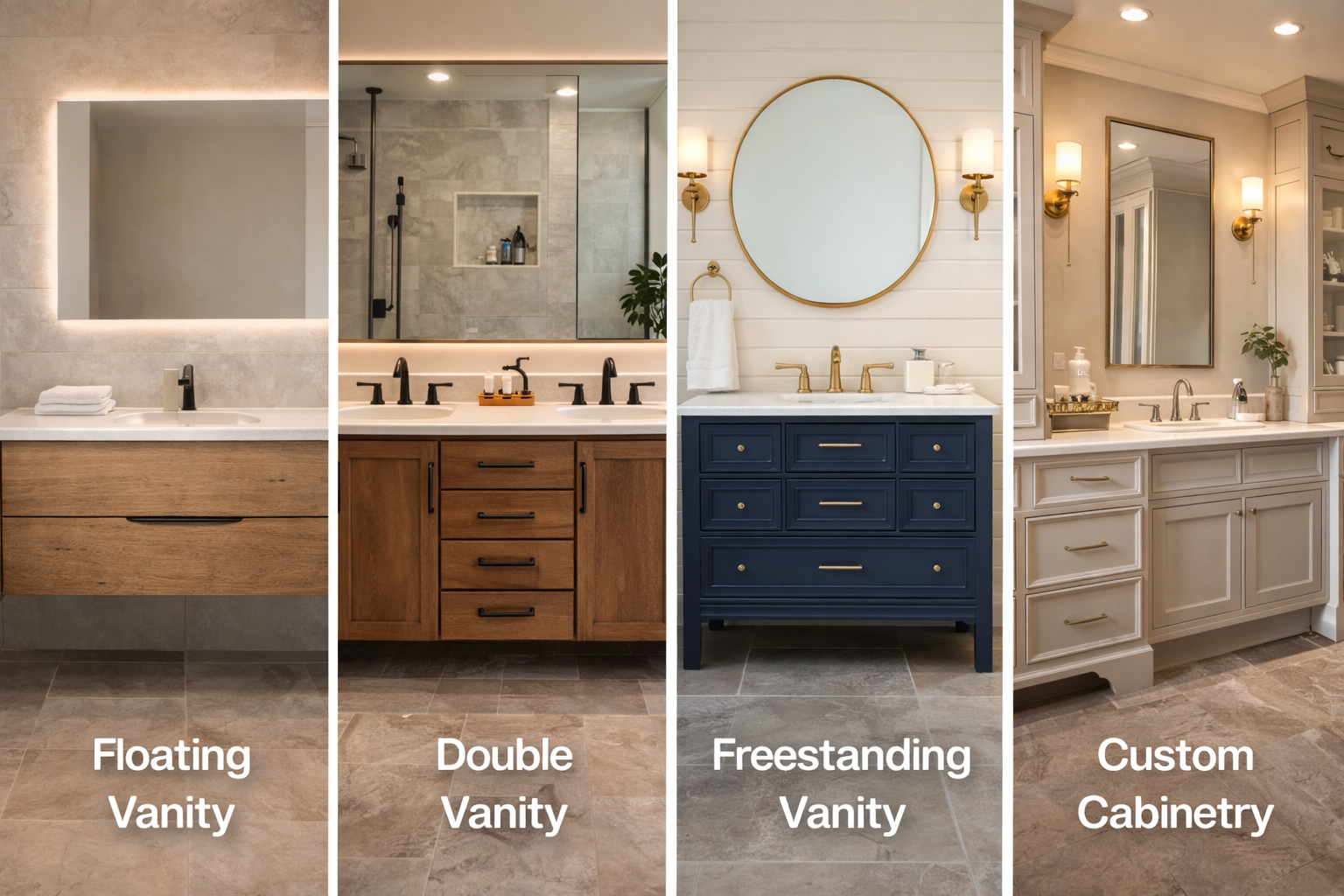
Common vanity remodels include direct replacement vanities, wider single-sink vanities, double-sink vanities, floating vanities, furniture-style vanities, and custom built-in vanity layouts. The right type depends on room size, storage needs, plumbing location, and how the bathroom is used every day. When the remodel includes this feature, double vanity can help homeowners understand the options in more detail.
What Vanity Styles Are Most Common in Remodeling Projects
Freestanding vanities are common because they come in many sizes and can be installed in many bathrooms with limited modification. Floating vanities are popular when a cleaner modern look is the goal or when the bathroom needs to feel more open. Double vanities are common in primary baths where two people use the space regularly.
When Does a Double Vanity Make Sense
A double vanity makes the most sense when the wall is wide enough to support it without cramping the rest of the room and when two people use the bathroom often enough to benefit from separate sinks and counter space. In a smaller bathroom, a better-designed single vanity may work better than forcing in a double sink setup that leaves little room to move.

How Do Layout and Room Size Affect a Vanity Remodel
Layout and room size control how wide the vanity can be, how deep it should be, and whether there is room for one sink or two. The vanity also affects doorway swing, toilet clearance, mirror placement, lighting layout, and how open the bathroom feels. A vanity that is too large can make the room harder to use even if it adds storage. Homeowners comparing performance goals can review Energy Saver ventilation guidance.
Why Does Wall Width Matter So Much for Vanity Design
Wall width determines whether the vanity can expand, whether side splashes make sense, and whether the mirror and lighting can be centered properly. In real remodel work, wall width also affects whether the vanity will crowd an adjacent shower glass panel, toilet, or doorway.
How Does Bathroom Size Change the Best Vanity Strategy
In a smaller bathroom, a shallower or better-organized vanity may be more valuable than a wider one that eats into the walkway. In a larger bathroom, the remodel may support a wider vanity, more drawers, taller mirrors, and better separation between sink areas. The best vanity size is the one that improves use without overwhelming the room.
What Materials and Components Are Used in a Vanity Remodel
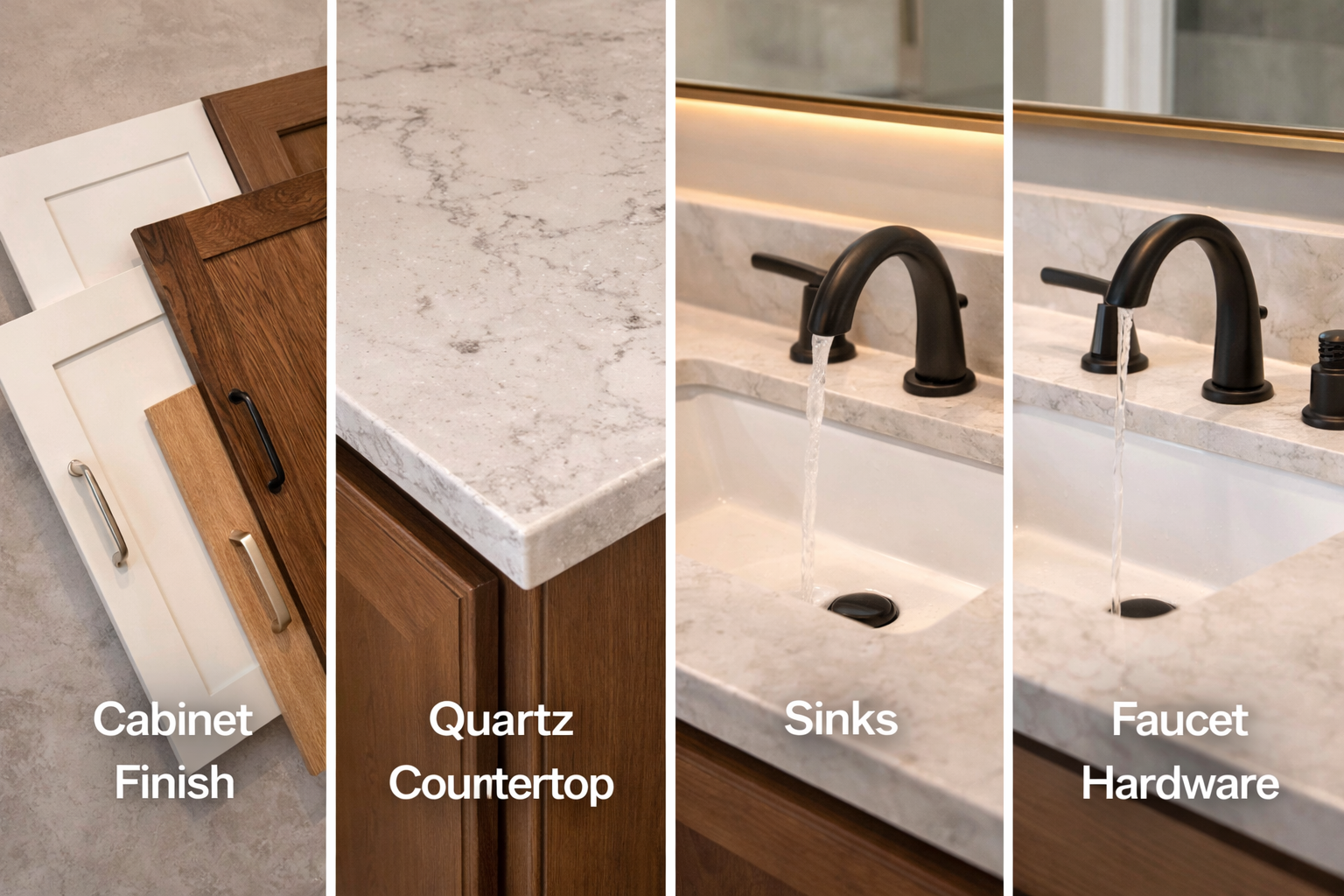
A vanity remodel includes the cabinet, countertop, sink, faucet, mirror, lighting, and often the wall finish around the vanity. Cabinet materials, countertop choices, drawer hardware, and sink type all affect how the vanity performs over time in a humid bathroom environment. Projects with related upgrades often include choices around custom vanity.
What Cabinet and Countertop Materials Are Common in Vanity Remodels
Common vanity cabinet materials include plywood boxes, engineered panels with durable finishes, solid wood face frames, and painted or stained fronts. Common countertop materials include quartz, granite, solid-surface products, cultured marble, and in some bathrooms laminate. Quartz is often chosen because it handles bathroom use well and gives a clean finished look with low maintenance.
What Sink, Faucet, and Mirror Components Usually Change
Undermount sinks, vessel sinks, integrated sink tops, wall mirrors, framed mirrors, and mirrored medicine cabinets are all common choices. Faucet style, spread, finish, and height also matter because they affect how the vanity works and how the countertop stays clean. These details should be chosen as part of one coordinated vanity plan rather than as separate parts.
What Upgrades Can Be Added During a Vanity Remodel
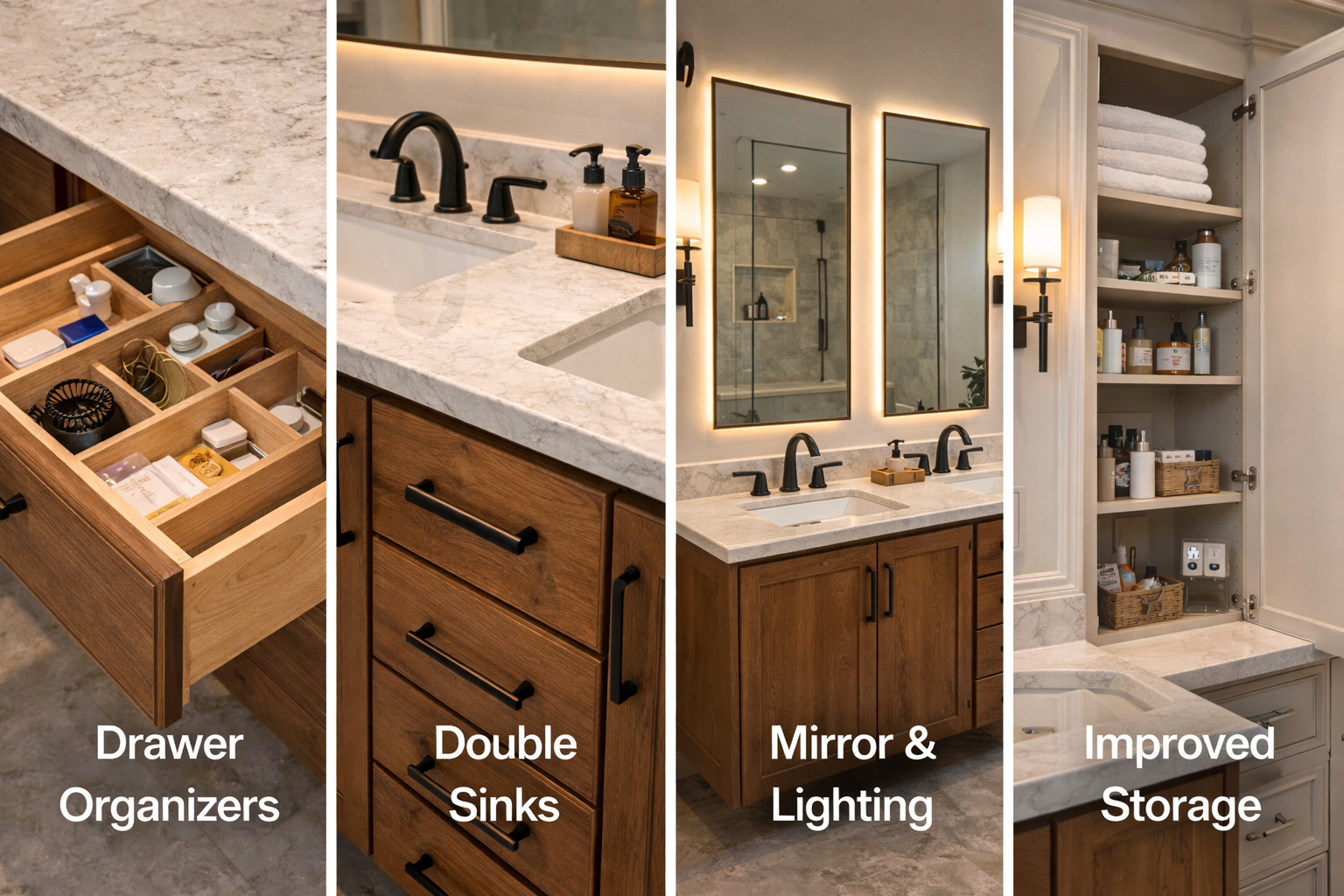
Vanity work is often the best time to add upgrades because the plumbing, lighting, and wall finish around the sink area are already being touched. Common upgrades include better drawer storage, countertop outlets where allowed, taller mirrors, improved vanity lighting, double sinks, medicine cabinets, and more durable countertop materials.
What Functional Upgrades Are Most Useful at the Vanity
Soft-close drawers, divided organizers, taller cabinet drawers, more counter space, and better mirror lighting are some of the most useful upgrades because they improve daily use immediately. These upgrades matter most when the vanity is the main storage and grooming zone in the bathroom.
What Design Upgrades Usually Happen at the Same Time
Vanity remodels often happen alongside new mirrors, lighting, tile backsplash details, faucet changes, and wall paint updates. Once the vanity changes, the surrounding finishes usually need to be refined so the room looks cohesive rather than partially updated.
What Installation Details Matter in a Vanity Remodel
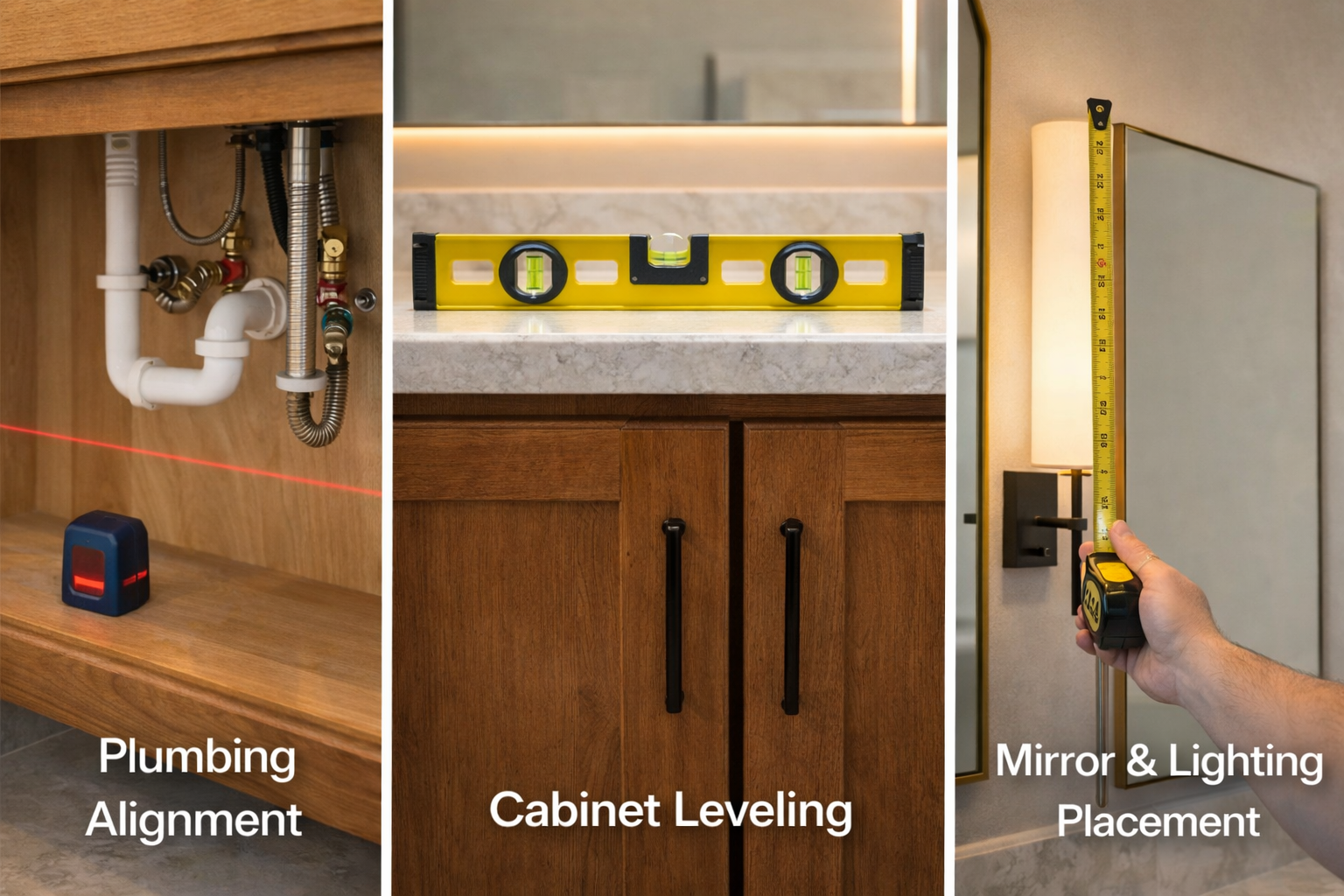
Vanity installation depends on plumbing location, wall flatness, floor level, cabinet height, mirror alignment, and how the countertop fits the wall. Even a well-made vanity can look wrong if it is not level, if the sink is off-center, or if the mirror and lights do not line up with the sink below.
Why Do Plumbing Location and Wall Conditions Matter
Drain and supply locations affect what kind of drawers and cabinet layout will fit under the sink. Wall condition matters because the vanity top, backsplash, mirror, and lighting all have to sit cleanly against the finished wall. In real remodels, slight wall irregularities often show up most clearly once the countertop and mirror go in. Homeowners who want to dig deeper into this feature can review floating vanity.
What Alignment and Clearance Problems Show Up During Installation
Common issues include mirrors not centering over sinks, lights placed too high or too low, drawers conflicting with plumbing, and vanity widths that crowd nearby toilets or doors. These are practical installation details that shape whether the finished vanity feels intentional or awkward.

What Affects Vanity Remodel Cost
Vanity remodel cost usually depends on vanity size, cabinet quality, countertop material, sink count, faucet package, lighting updates, and whether plumbing stays in place or has to move. A direct replacement vanity is very different from a double vanity project that changes lighting, mirrors, plumbing, and storage at the same time.
Which Vanity Choices Usually Raise the Cost
Costs usually rise with custom cabinetry, double sinks, premium quartz or stone tops, larger mirrors, decorative sconces, high-end faucets, and added drawer organization. The more the vanity project shifts from a simple swap to a coordinated redesign of the whole wall, the more labor and material it usually requires.
How Do Labor and Existing Conditions Change the Budget
Labor costs go up when plumbing has to be moved, walls need repair, floors are out of level, or the vanity change triggers updates to lighting, paint, tile, or mirrors. Existing conditions matter because vanity remodeling often exposes issues behind old cabinets that were hidden from view. During remodeling, it also helps to follow EPA indoor air quality best practices.
What Mistakes Should Homeowners Avoid With a Vanity Remodel
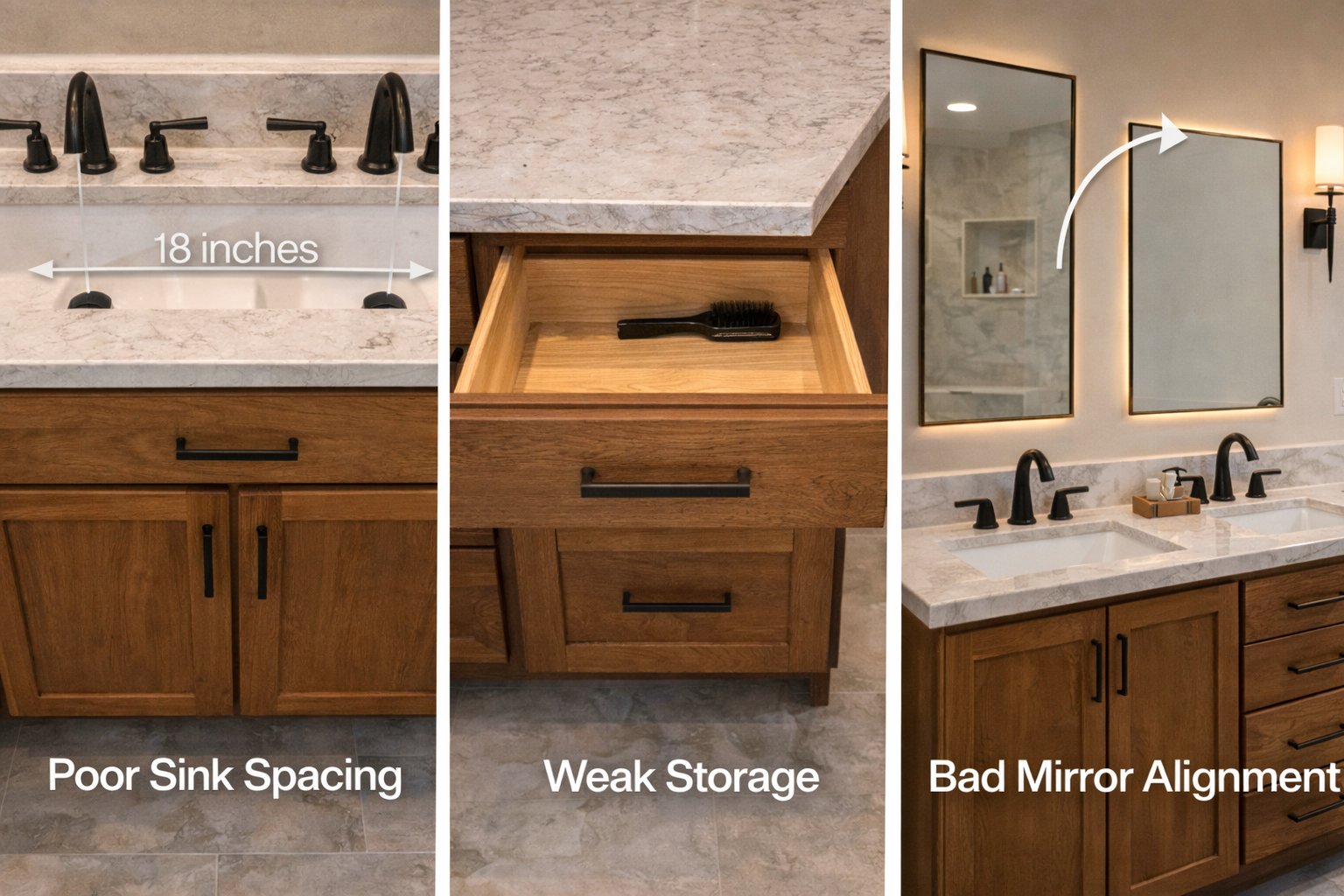
The biggest vanity remodeling mistakes usually happen when size, storage, and sink layout are chosen based only on appearance. A vanity should fit the room, match the plumbing reality, and support daily storage needs. A beautiful vanity that leaves no counter space or poor walking clearance is not a good remodel result. Homeowners comparing options often look at bathroom remodeling as part of the overall plan.
Why Is It a Problem to Choose the Wrong Vanity Size
A vanity that is too small leaves the bathroom short on storage and usable counter space. A vanity that is too large can choke the walkway and make the room feel cramped. Real vanity planning is about balance, not just buying the biggest cabinet that fits on paper.
Why Is It Risky to Ignore Storage and Lighting Around the Vanity
If the remodel only changes the cabinet face without improving drawers, mirror size, and lighting quality, the vanity area may still work poorly every day. A complete vanity plan treats storage, light, mirror placement, and sink spacing as one system.

How Should You Plan a Vanity Remodel
A vanity remodel should be planned by deciding how the bathroom needs to work first, then choosing the cabinet, countertop, sink setup, lighting, and mirror plan around that use. The best plan balances storage, counter space, plumbing reality, room scale, and finish style instead of treating the vanity as a single piece of furniture.
What Should Be Decided Before Vanity Work Starts
Before construction starts, it helps to confirm vanity width, sink count, drawer vs door storage, countertop material, mirror size, lighting style, faucet placement, backsplash needs, and whether plumbing is staying where it is. These decisions affect ordering, rough-in work, and the final look of the sink wall.
How Can a Homeowner Prepare for the Installation Process
Homeowners should be ready for old vanity removal, plumbing shutoff, wall patching, countertop templating where needed, and coordination between cabinet installation, plumbing hookup, mirror placement, and lighting. If the vanity is part of a larger remodel, it also helps to coordinate flooring, paint, and trim work so the finished area looks complete.
Related Vanity Remodel Topics
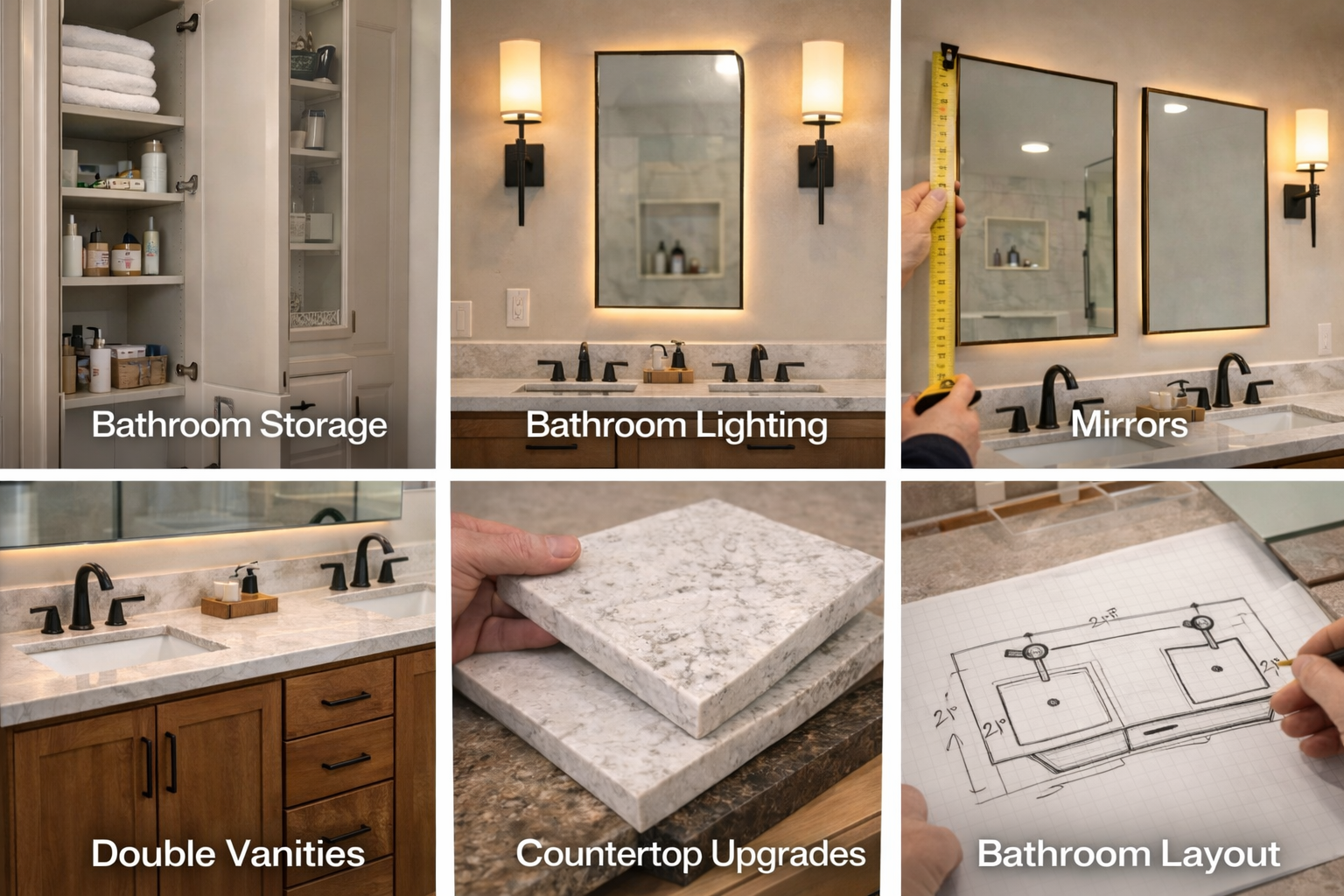
Vanity remodeling overlaps with storage, lighting, mirrors, plumbing trim, and bathroom layout because the vanity wall is one of the main functional zones in the room. Related topics help homeowners decide whether they only need a vanity replacement or whether the project should expand into a larger bathroom upgrade.
Which Vanity-Related Pages Should Connect to This Topic
Strong related pages include bathroom storage, bathroom lighting, double vanities, medicine cabinets, vanity countertops, and bathroom layout changes. Those pages help break down the bigger vanity remodel topic into more specific design and construction choices.
Which Bathroom Remodeling Topics Often Connect to Vanity Work
Vanity work often connects to bathroom flooring, bathroom lighting, storage planning, plumbing fixture updates, and full bathroom remodeling. In real projects, these items overlap because the vanity affects the whole sink wall and how the rest of the room feels.
Frequently Asked Questions About Vanity Remodel
A vanity remodel can include the cabinet, countertop, sink, faucet, mirror, lighting, storage layout, and sometimes plumbing or wall finish updates around the vanity area.
Yes. Many vanity remodels are done on their own, especially when the goal is to improve storage or modernize the sink wall without a full bathroom renovation.
A double vanity usually makes sense when the wall is wide enough and two people use the bathroom often enough to benefit from separate sinks and counter space.
Quartz is a common choice because it is durable and low maintenance, but the best countertop depends on budget, style, and how the bathroom is used.
Drawers are often better for organizing small items and improving access, especially for daily-use storage around the sink.
Yes. Better cabinet design, more drawers, taller vanities, and improved medicine cabinets can all add usable storage without changing the whole bathroom.
Not always. A same-size replacement may keep the plumbing in place, while a larger vanity, double sink setup, or layout change may require plumbing updates.
The timeline depends on whether the project is a direct replacement or a broader upgrade that includes plumbing, lighting, wall repair, and countertop templating.
It can improve the look and function of the bathroom, especially when it replaces a worn, outdated, or poorly designed vanity.
The first step is deciding how much storage, counter space, and sink capacity the bathroom actually needs. That keeps the remodel focused on function as well as style.