


Subway Tile Backsplash Guide: Sizes, Layouts, Grout, and Cost
Subway Tile Backsplash Guide Index
- Subway Tile Backsplash Overview
- What Is a Subway Tile Backsplash
- When Does a Subway Tile Backsplash Make Sense
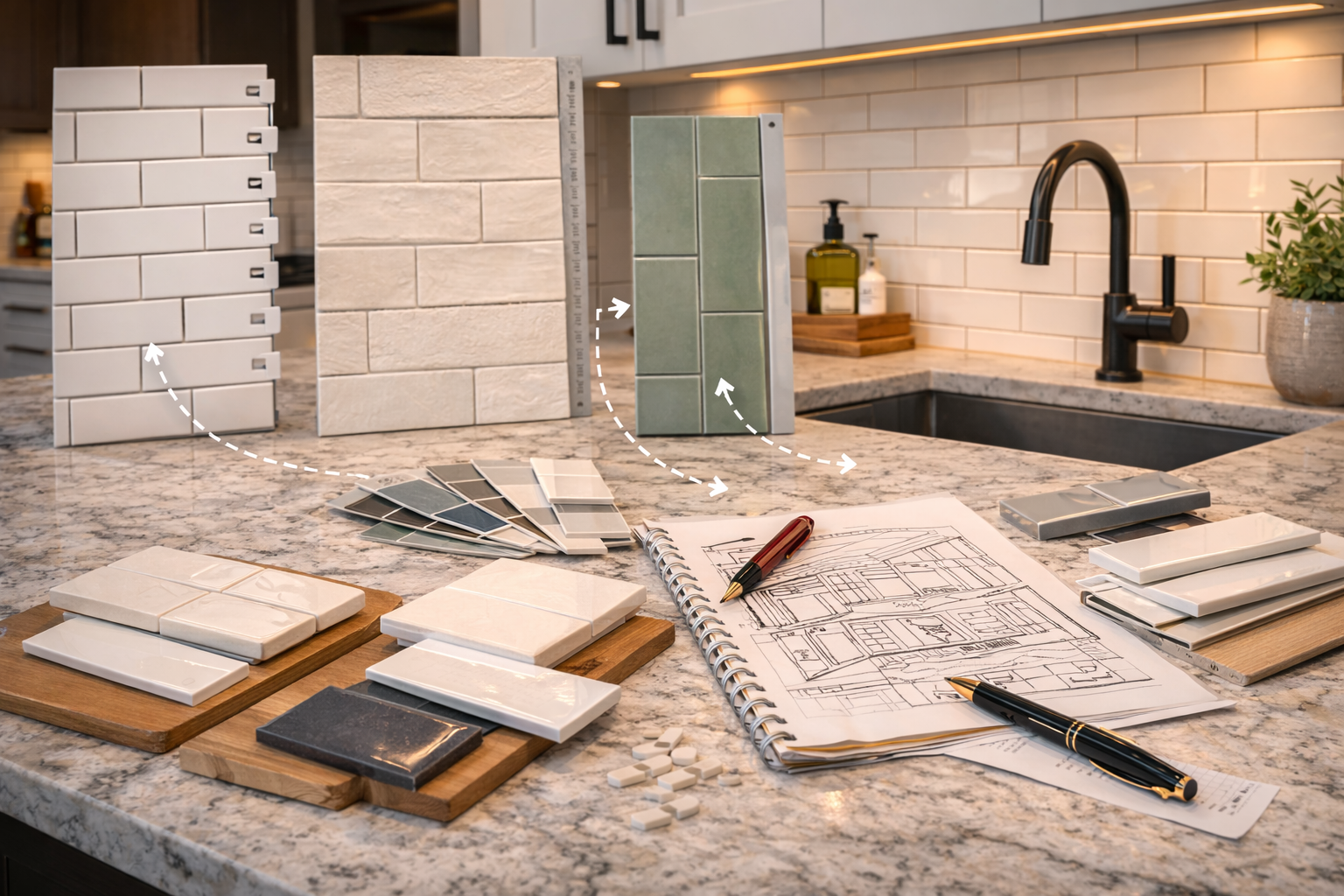
- What Sizes, Colors, and Finishes Are Common
- How Do Layout Pattern and Grout Change the Look
- What Installation Details Matter Most
- What Are the Pros and Cons of a Subway Tile Backsplash
- What Affects Subway Tile Backsplash Cost
- What Mistakes Should Homeowners Avoid
- How Should You Plan a Subway Tile Backsplash Remodel
- Frequently Asked Questions About Subway Tile Backsplashes
Subway Tile Backsplash Overview
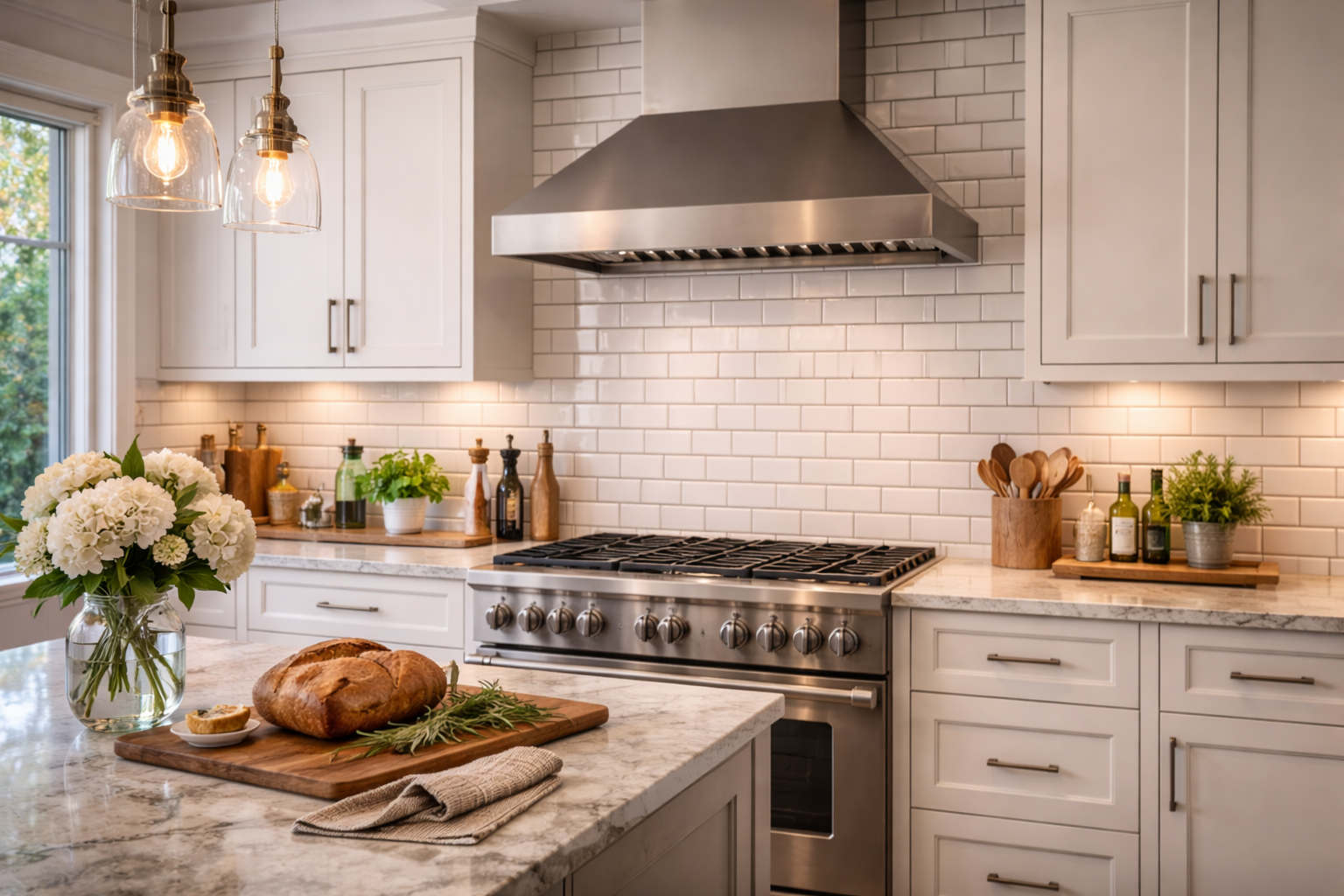
A subway tile backsplash is one of the most common backsplash choices in kitchen remodeling because it is flexible, practical, and easy to coordinate with many design styles. It can look classic, clean, or surprisingly current depending on the tile size, finish, grout, and layout pattern chosen.
Why do homeowners keep choosing subway tile?
They choose it because it is reliable. Subway tile works with shaker cabinets, flat panel cabinets, stone counters, quartz counters, painted islands, wood tones, and a wide range of kitchen layouts. It gives the wall structure without forcing the whole room into a narrow design direction.
What is the tradeoff compared with more decorative backsplash materials?
The tradeoff is that subway tile can feel simpler and more familiar than a full-slab backsplash. That is often a strength, not a weakness, but homeowners looking for a strong statement wall may want more texture, color, or a different material. The right choice depends on whether the backsplash should quietly support the room or take center stage.

What Is a Subway Tile Backsplash
A subway tile backsplash uses rectangular tiles that are commonly installed in a running bond pattern, though other layouts are also possible. The classic look is familiar, but the style has expanded well beyond basic white 3×6 ceramic tile. Today it includes larger formats, handmade textures, matte finishes, and different layout directions. During remodeling, it also helps to follow EPA indoor air quality guidance.
How is subway tile different from other backsplash tile?
The rectangular format creates a cleaner and more structured look than many mosaics, but with more rhythm and detail than a slab backsplash. It sits comfortably in the middle, which is one reason it works in so many remodels.
Can it still feel fresh instead of generic?
Yes. A subway backsplash can feel very fresh when the size, glaze, grout, and layout are chosen carefully. The problem is usually not the tile type itself but using default choices without thinking through the rest of the kitchen.
When Does a Subway Tile Backsplash Make Sense
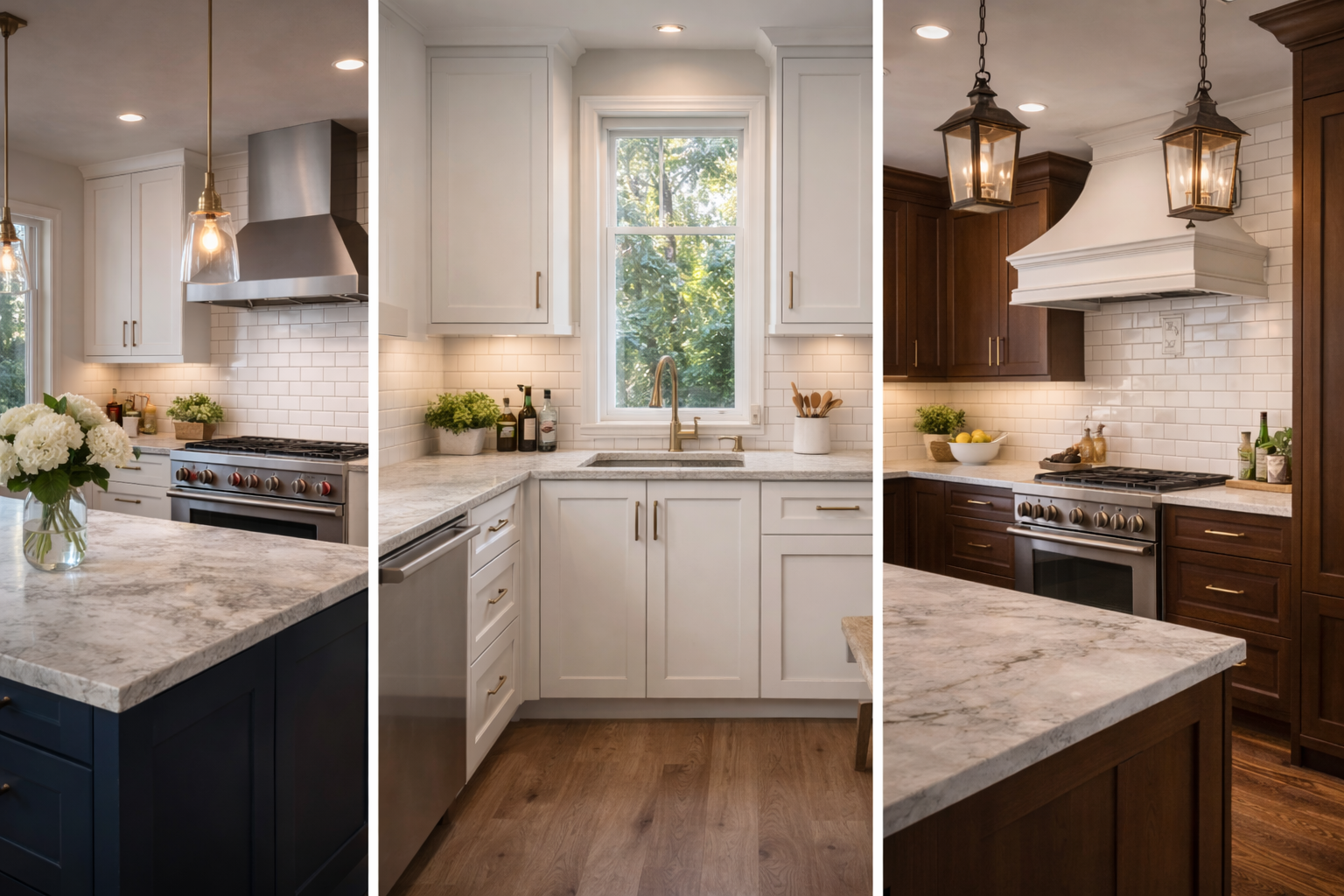
A subway tile backsplash makes sense when the remodel needs a backsplash that is versatile and easy to coordinate. It works especially well when the kitchen already has stronger statement materials like dramatic counters, bold island color, or distinctive lighting and needs the wall treatment to stay supportive instead of competitive. In many projects, kitchen remodeling becomes an important part of how the kitchen functions day to day.
Is it a good choice for small kitchens?
Usually, yes. Subway tile can keep the wall feeling orderly and bright without making the room look crowded. Lighter colors and simpler grout choices often help a small kitchen feel cleaner and more open.
When might another backsplash type be better?
If the remodel needs stronger texture, richer color, or a more custom focal wall, mosaic tile or slab may make more sense. Subway tile is best when the kitchen benefits from clarity and flexibility rather than heavy visual drama.
What Sizes, Colors, and Finishes Are Common
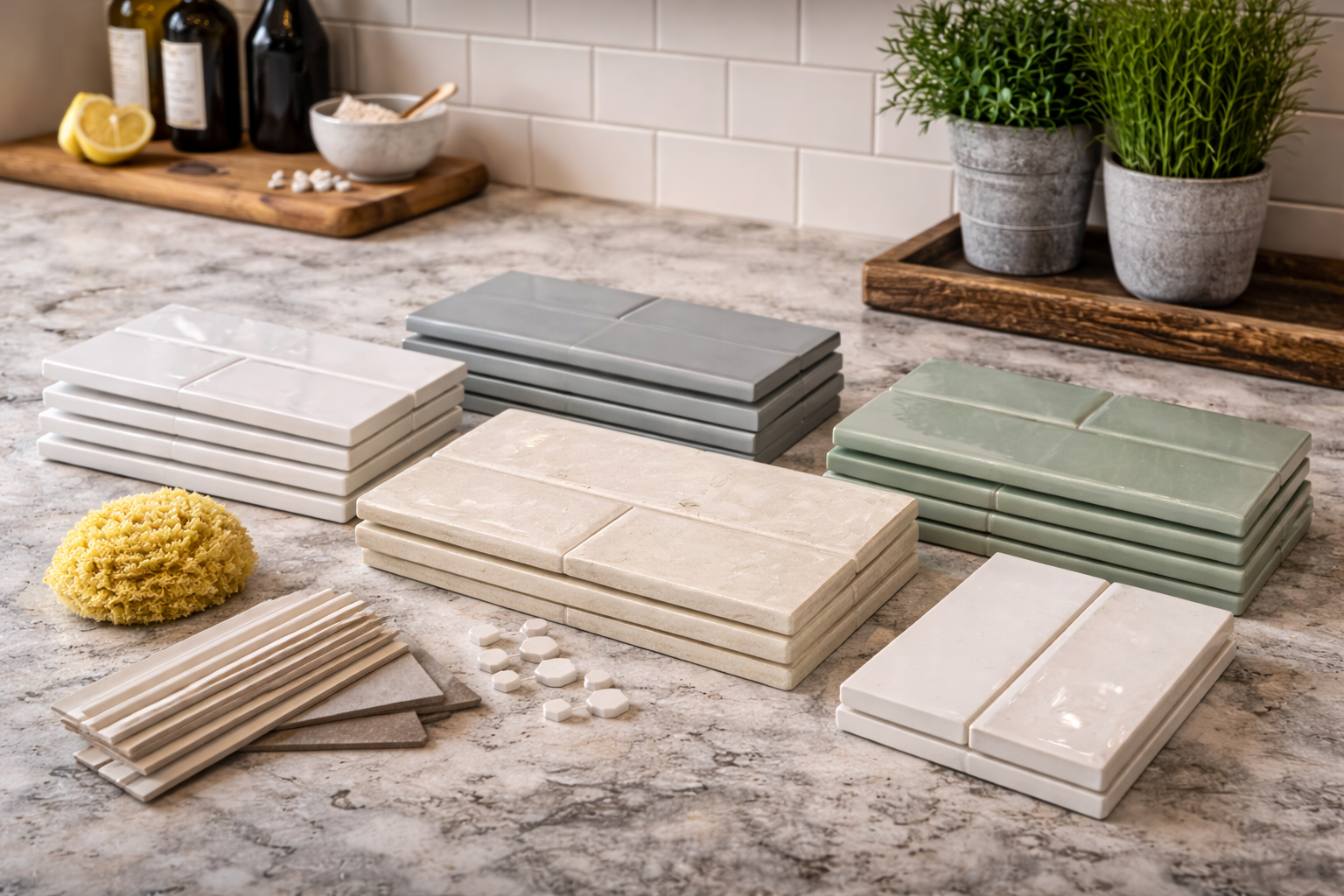
The classic subway tile size is 3×6, but many kitchens now use 2×8, 3×12, 4×12, and other longer formats. White remains common, but subway tile also comes in soft gray, warm beige, green, blue, black, and many handmade-look glazes. Glossy surfaces reflect more light, while matte finishes feel softer and more modern. When comparing stone surfaces, it can help to review Natural Stone Institute guidance.
How does size change the look?
Smaller subway tiles feel more classic and familiar. Larger and longer formats often feel cleaner and more current because there are fewer grout lines and the wall reads as less busy. The best size depends on cabinet scale, countertop movement, and how much pattern the backsplash should create.
Why does finish matter so much?
Because the finish changes how light plays across the wall. A glossy white tile can brighten the kitchen and feel crisp, while a matte handmade-look tile can feel softer and more textured. The finish should support the rest of the kitchen, not fight it.
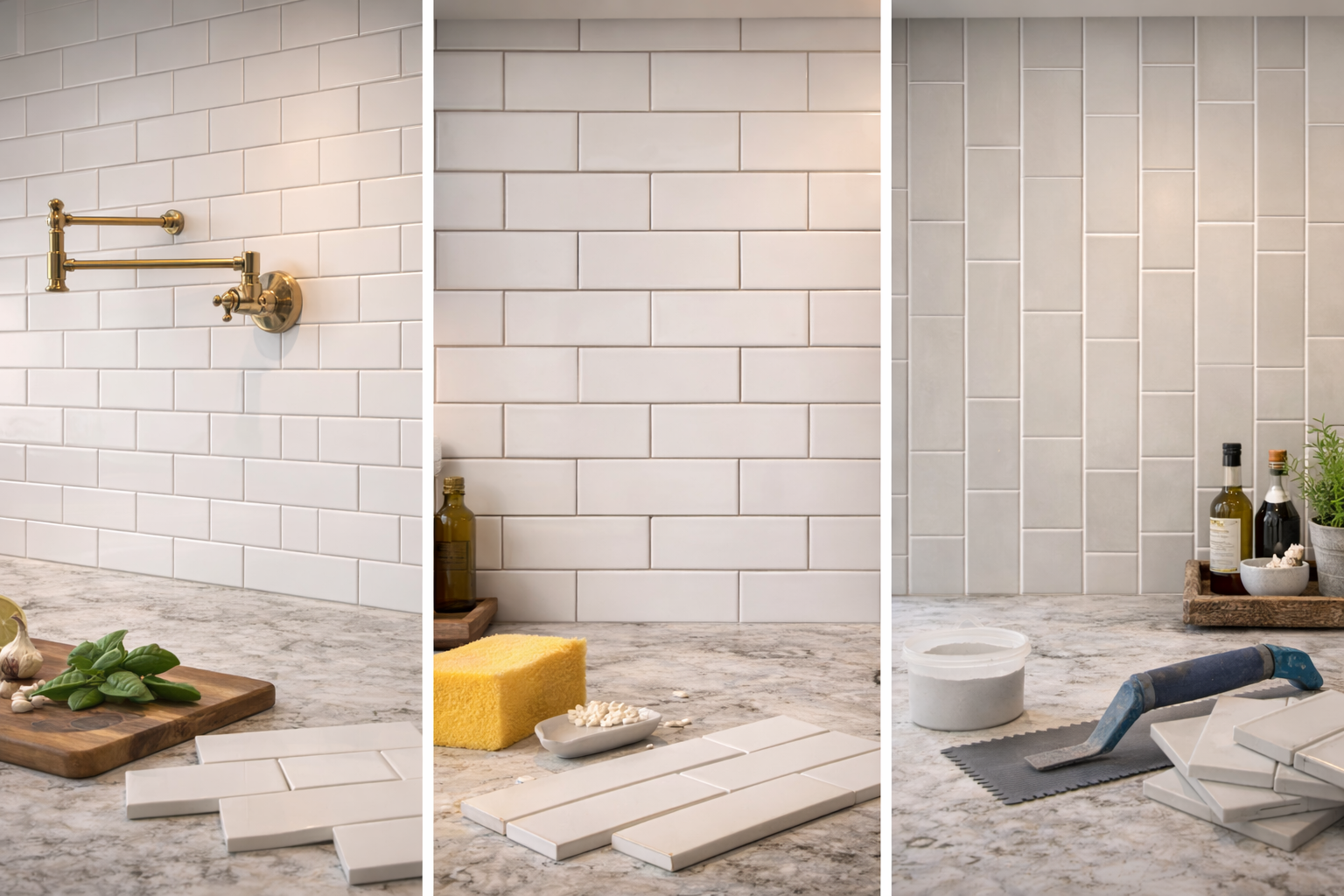
How Do Layout Pattern and Grout Change the Look
Layout pattern and grout choice can change subway tile more than most homeowners expect. A classic running bond feels traditional and familiar. A stacked pattern feels cleaner and more modern. Vertical layouts can feel taller and more design-forward, especially with longer rectangular tiles.
What does grout color do?
Matching grout softens the pattern and lets the backsplash fade into the room more quietly. Contrasting grout highlights every tile and makes the layout more pronounced. That can look great when the goal is definition, but it can also make the wall busier than expected if the kitchen already has other strong elements.
Why should layout be decided early?
Because layout affects edge conditions, outlet cuts, trim choices, and how the tile meets cabinets, counters, and windows. The wall should be designed as a full composition, not treated as a last-minute surface finish.

What Installation Details Matter Most
Starting point, pattern alignment, edge treatment, outlet cuts, and grout consistency all matter. Subway tile may look simple, but poor installation shows up quickly in crooked lines, sliver cuts, and uneven grout joints. The cleaner the tile style, the more obvious alignment issues become.
What should be checked before installation starts?
Tile layout, grout color, trim details, starting point, and how the pattern lands at corners, windows, cabinet bottoms, and range hoods should all be reviewed first. A good installer plans those details before setting the first tile so the finished wall looks balanced.
Why do trim and edge details matter?
Because they finish the wall. Exposed tile ends, returns, and outside edges need a clean solution. Whether that means a metal edge trim, a bullnose piece, or another finish detail depends on the tile line and the kitchen style. For a closer look at this part of the project, homeowners can explore kitchen backsplash.
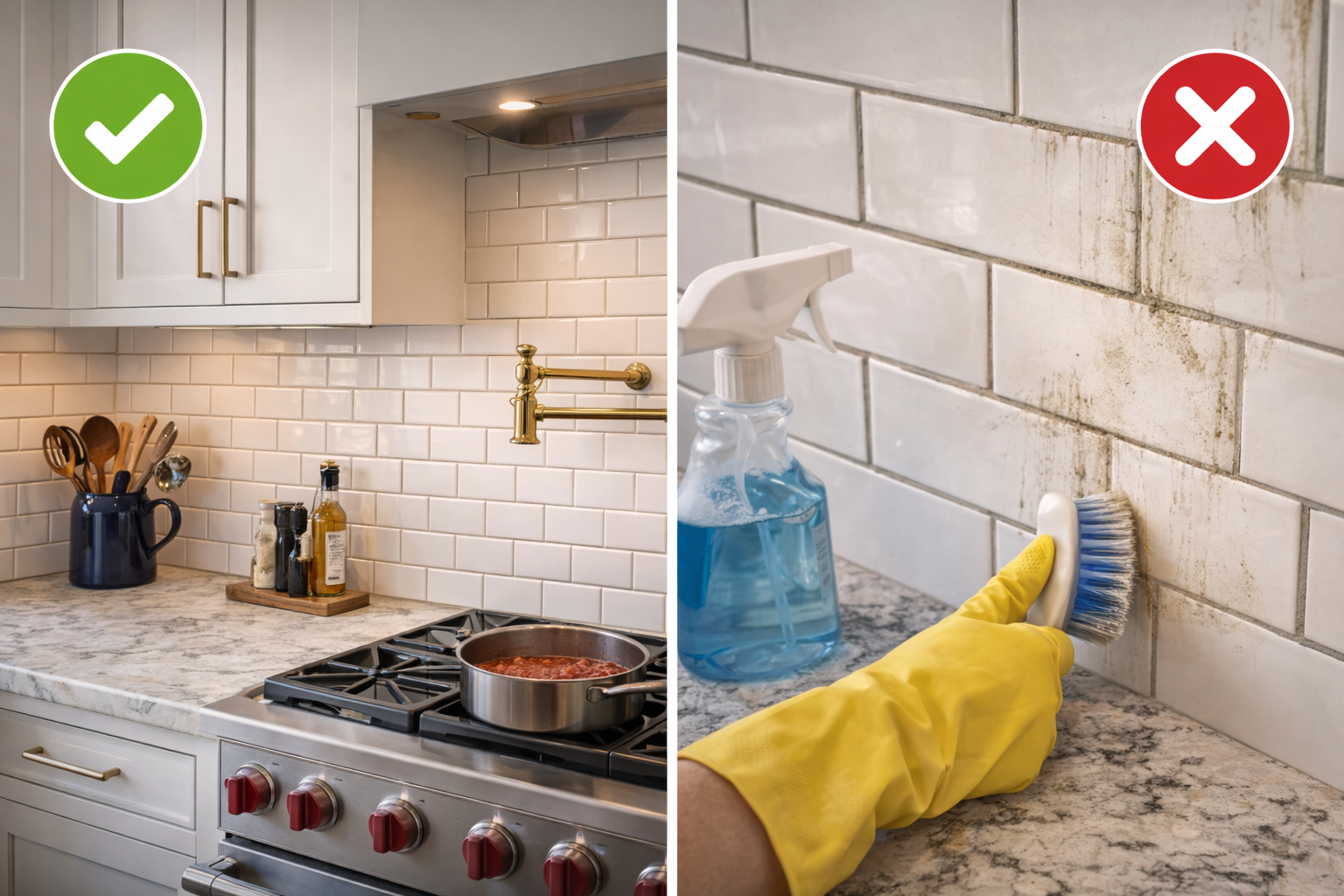
What Are the Pros and Cons of a Subway Tile Backsplash
The biggest advantages are versatility, broad style compatibility, moderate cost range, and straightforward maintenance. The main drawbacks are that it can feel too safe for homeowners wanting a stronger statement, and it still has grout lines that need maintenance and cleaning.
Who tends to like subway tile most?
Homeowners who want a dependable backsplash that works with many other finishes tend to like it most. It is especially useful when the remodel needs a wall treatment that will age well and not lock the kitchen into a narrow trend.
Who might prefer something else?
Someone who wants a more dramatic focal wall, fewer grout lines, or a more textured decorative surface may prefer slab or mosaic tile. The right answer depends on how much personality the backsplash itself needs to carry.
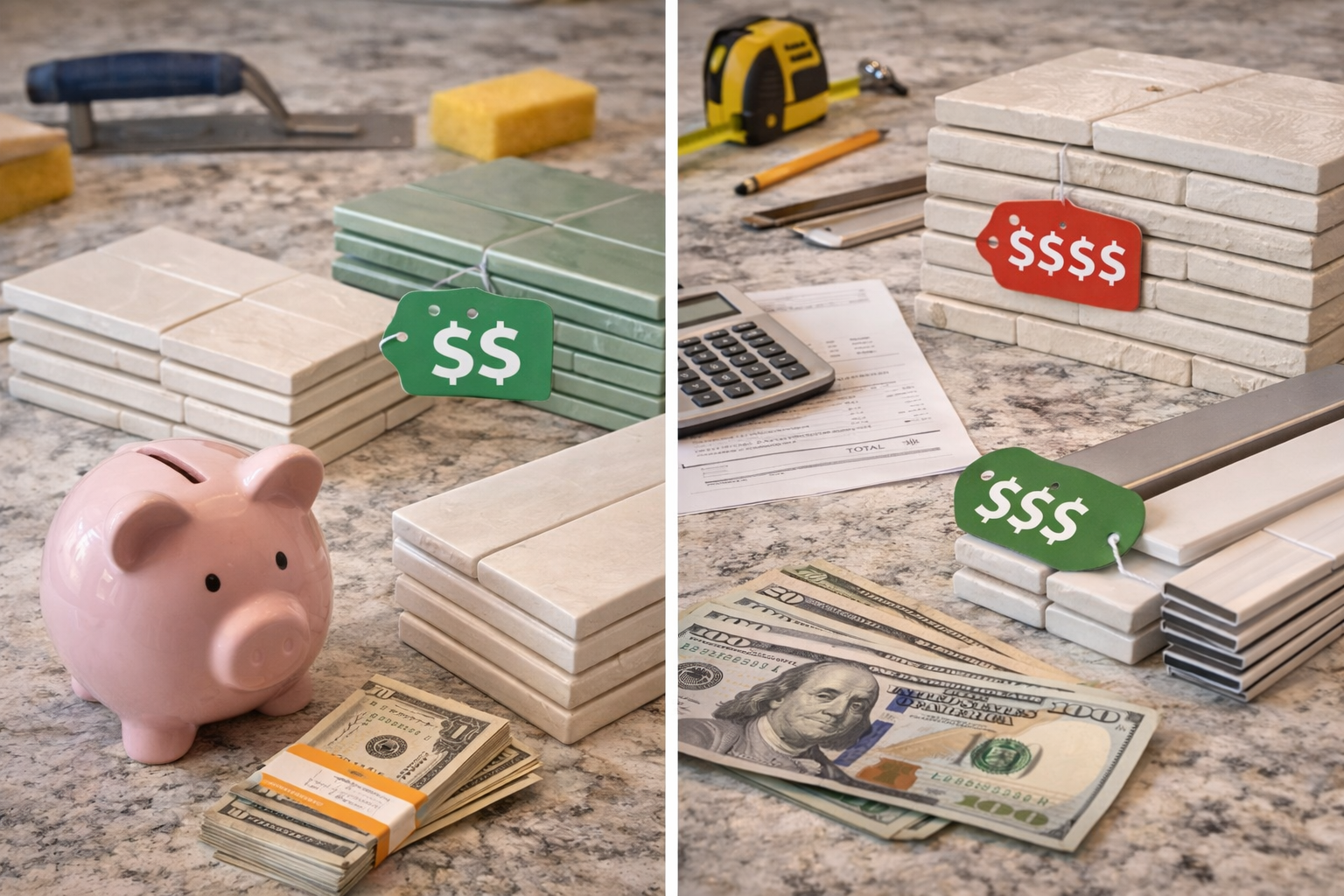
What Affects Subway Tile Backsplash Cost
Cost depends on tile material, size, finish, grout choice, layout complexity, edge trim, outlet cuts, and labor. Basic ceramic subway tile in a simple running bond pattern costs less than handmade-look tile in a custom layout with specialty trim details and lots of cut work. Material selection can also be informed by EPA greener products guidance.
What tends to raise cost fastest?
Premium tile lines, handmade surfaces, herringbone or vertical layouts, specialty edge pieces, and difficult walls with many cuts usually increase cost the most. Labor can vary more than homeowners expect depending on the pattern and finish details.
How can homeowners manage the budget?
Using a simpler layout, standard tile size, and straightforward trim approach can keep costs in check. It is also smart to spend on good layout and installation because even basic subway tile looks much better when it is set carefully.
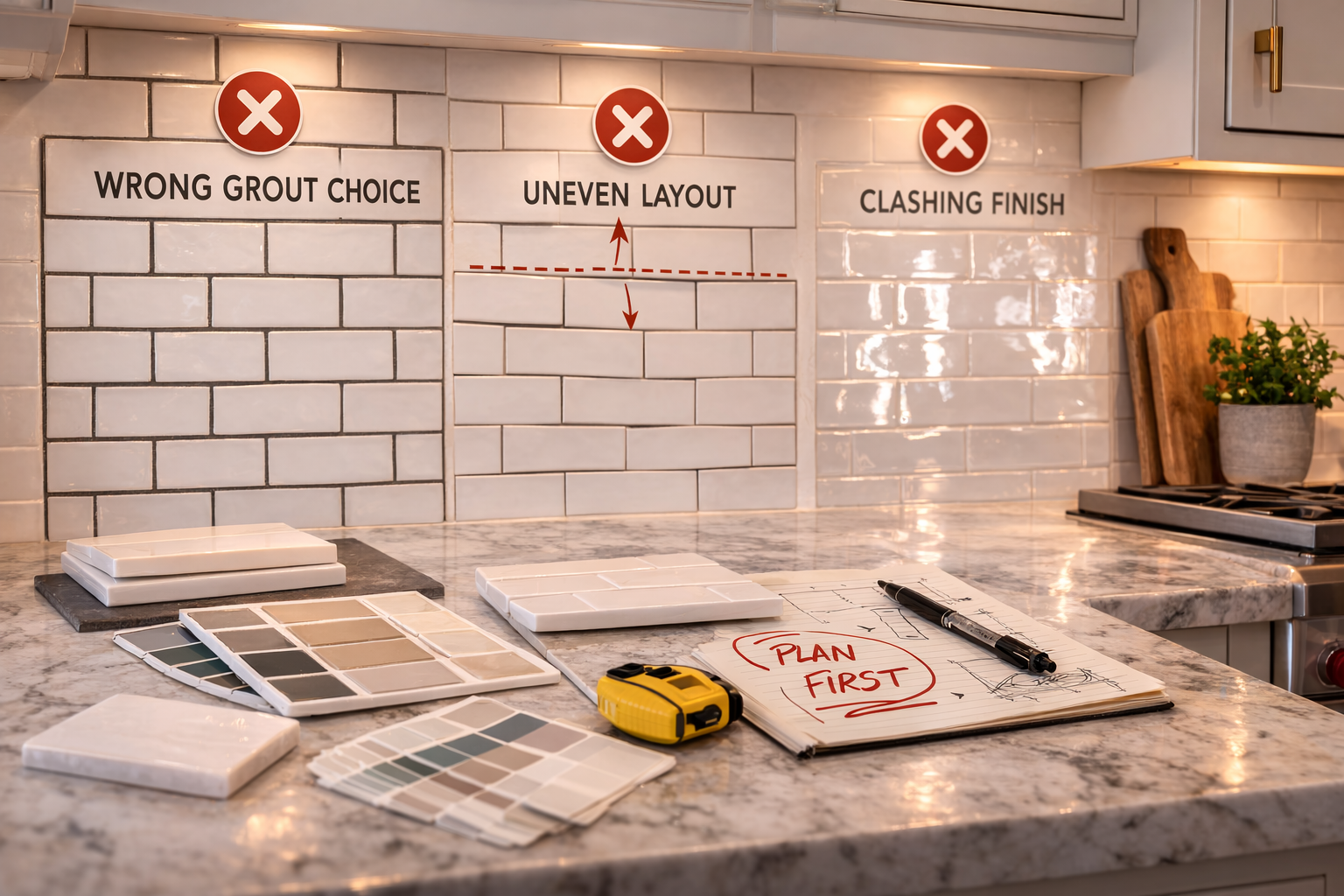
What Mistakes Should Homeowners Avoid
The biggest mistakes usually come from treating subway tile like an automatic default without thinking through size, finish, grout, and layout. Homeowners sometimes assume any white subway tile will work the same way, but small changes in those details can make the backsplash feel very different once installed.
What planning mistakes are common?
Choosing the grout too late, not reviewing the layout pattern, ignoring edge details, and picking a tile size that does not fit the cabinet scale are common mistakes. Another is not testing the tile under the kitchen’s actual lighting before ordering.
What design mistakes show up later?
Backsplashes that feel too flat, too busy, or too cold compared with the rest of the kitchen are common issues. A good subway backsplash should feel intentional, not generic, and that comes down to the small choices around it.
How Should You Plan a Subway Tile Backsplash Remodel
Start by deciding whether the backsplash should be quiet and supportive or more defined and visible. Then choose the tile size, finish, grout color, and layout pattern based on the cabinet style, countertop movement, and lighting in the room. Those decisions matter more than the label subway tile by itself.
What should be finalized before ordering?
Tile size, finish, layout pattern, grout color, edge trim, outlet plan, and how the tile will stop at cabinets, windows, and open edges should all be decided first. That keeps the installation cleaner and the final result more intentional.
When is a subway tile backsplash the right move?
It is the right move when the remodel wants a backsplash with broad appeal, clean structure, and design flexibility. Used well, subway tile can feel timeless without feeling lazy, which is why it stays so useful across different kitchen styles.
Frequently Asked Questions About Subway Tile Backsplash
A subway tile backsplash uses rectangular tiles, often in a running bond pattern, to create a clean and familiar wall finish behind kitchen counters and work areas. It is one of the most common backsplash styles because it is versatile and easy to adapt to different kitchen designs.
It works with many cabinet styles, countertop materials, and kitchen layouts. Subway tile can look classic, transitional, or current depending on the tile size, finish, color, grout, and installation pattern.
No. White is the most familiar option, but subway tile also comes in warm neutrals, greens, blues, grays, blacks, and many other colors. Matte, glossy, handmade-look, and textured versions are also common.
The classic size is 3×6, but larger formats like 4×12 and slimmer modern proportions are also common. The right size depends on the scale of the kitchen and whether the backsplash should feel more traditional or more current.
That depends on the look you want. Matching grout creates a softer and quieter backsplash, while contrasting grout highlights the brick pattern more clearly. The right choice depends on how much definition the wall should have.
Yes. A longer tile, clean stacked layout, subtle grout, and simple finish can push subway tile in a more modern direction. It is a flexible format, not just a traditional one.
Yes, especially compared with more textured or more heavily patterned backsplash materials. There are still grout lines to clean, but overall it is considered a practical and manageable backsplash option.
It often falls in a moderate range, but cost depends on the tile quality, pattern layout, trim details, grout, and labor. Handmade or designer subway tile can cost much more than basic ceramic versions.
Running bond is the classic pattern, but stacked, vertical stack, herringbone, and offset variations are also common. The layout pattern changes the style more than many homeowners expect.
Homeowners who want a dependable, versatile, and widely compatible backsplash are usually a good fit. It works especially well when the kitchen needs a wall finish that feels clean without overpowering the rest of the remodel.