
Flat Panel Cabinets Guide: Style, Construction, Cost, and Planning

Flat Panel Cabinets Guide Index
- Flat Panel Cabinets Overview
- What Are Flat Panel Cabinets
- Where Do Flat Panel Cabinets Fit Best
- What Materials and Finishes Are Used
- How Are Flat Panel Cabinets Built
- What Storage Upgrades Work Well With Flat Panels
- What Installation Details Matter Most
- What Affects Flat Panel Cabinet Cost
- What Mistakes Should Homeowners Avoid
- How Should You Plan a Flat Panel Cabinet Remodel
- Frequently Asked Questions About Flat Panel Cabinets

Flat Panel Cabinets Overview
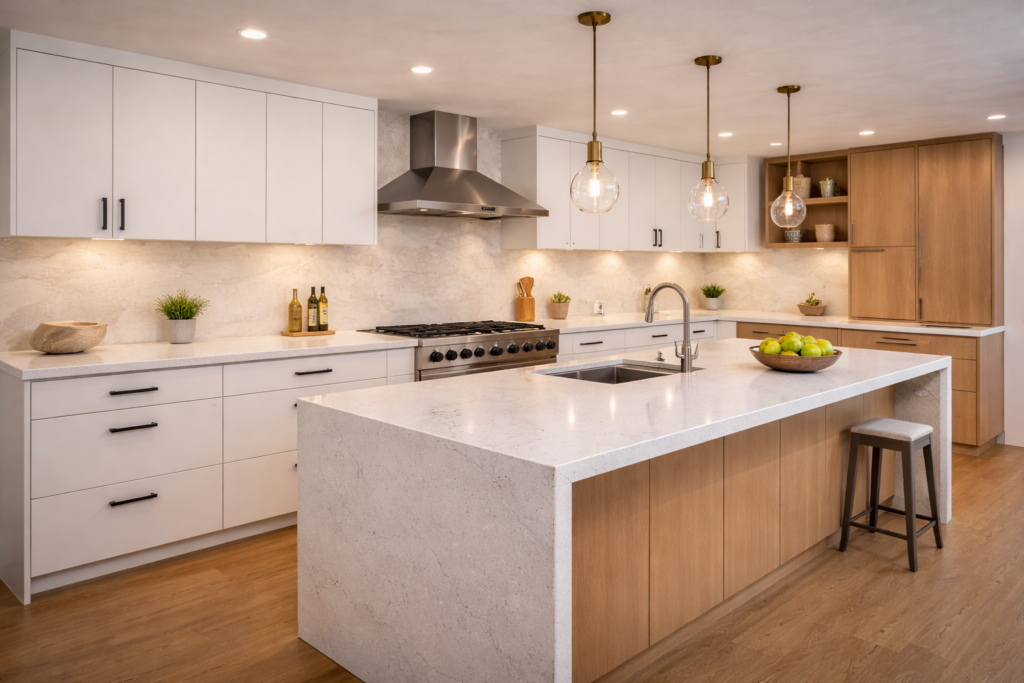
Flat panel cabinets use smooth door and drawer fronts with minimal surface detail. In a kitchen remodel, that matters because the cabinet faces set the tone for the whole room. If you want a cleaner look, easier wipe-downs, and a style that works well with modern appliances, simple backsplash patterns, and streamlined countertops, flat panel cabinets are usually a strong fit.
Why do homeowners choose flat panel cabinets?
They choose them when they want the kitchen to look less busy. A raised door profile, bead detail, or ornate edge treatment can add character, but it also adds more lines to every cabinet run. Flat panels simplify the room, which helps when the kitchen already has other visual elements like strong veining in stone, dramatic lighting, or a bold backsplash tile.
What do they change in everyday use?
The practical difference is not just appearance. Smooth doors are easier to clean, especially around cooking areas where grease and dust build up. They also pair well with deep drawers, full-height pantry storage, and hidden organizational hardware, so the finished kitchen can feel cleaner both visually and functionally.
What Are Flat Panel Cabinets
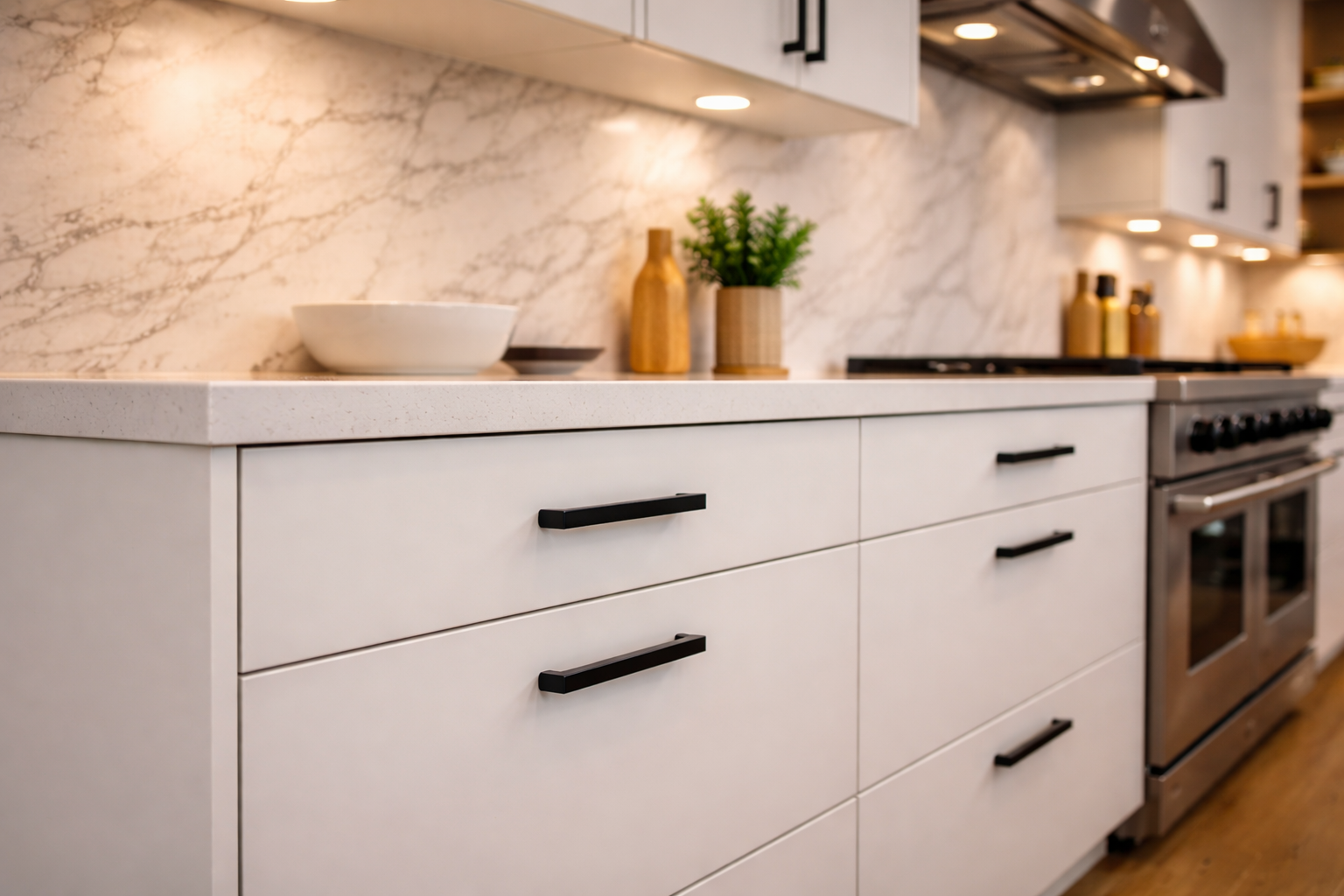
Flat panel cabinets are cabinet doors and drawer fronts with a smooth center surface and little to no decorative contour. In many product lines, they are essentially slab doors. Some brands offer a slightly eased edge, while others keep the profile nearly square for a sharper modern look.
How are they different from shaker cabinets?
A shaker door has a frame around a recessed center panel. A flat panel cabinet removes that frame look and gives you a more continuous face. If your goal is a cleaner wall of cabinetry with fewer shadow lines, flat panels usually deliver that better than shaker doors.
Do they only work in modern kitchens?
No. They are common in modern kitchens, but the final look depends on the finish, hardware, and layout. White painted flat panels with slim brushed nickel pulls feel very different from walnut veneer flat panels with black edge pulls. The same door style can lean modern, Scandinavian, transitional, or even warm contemporary depending on the surrounding selections. For layout and clearance planning, many designers reference NKBA planning guidelines.
Where Do Flat Panel Cabinets Fit Best
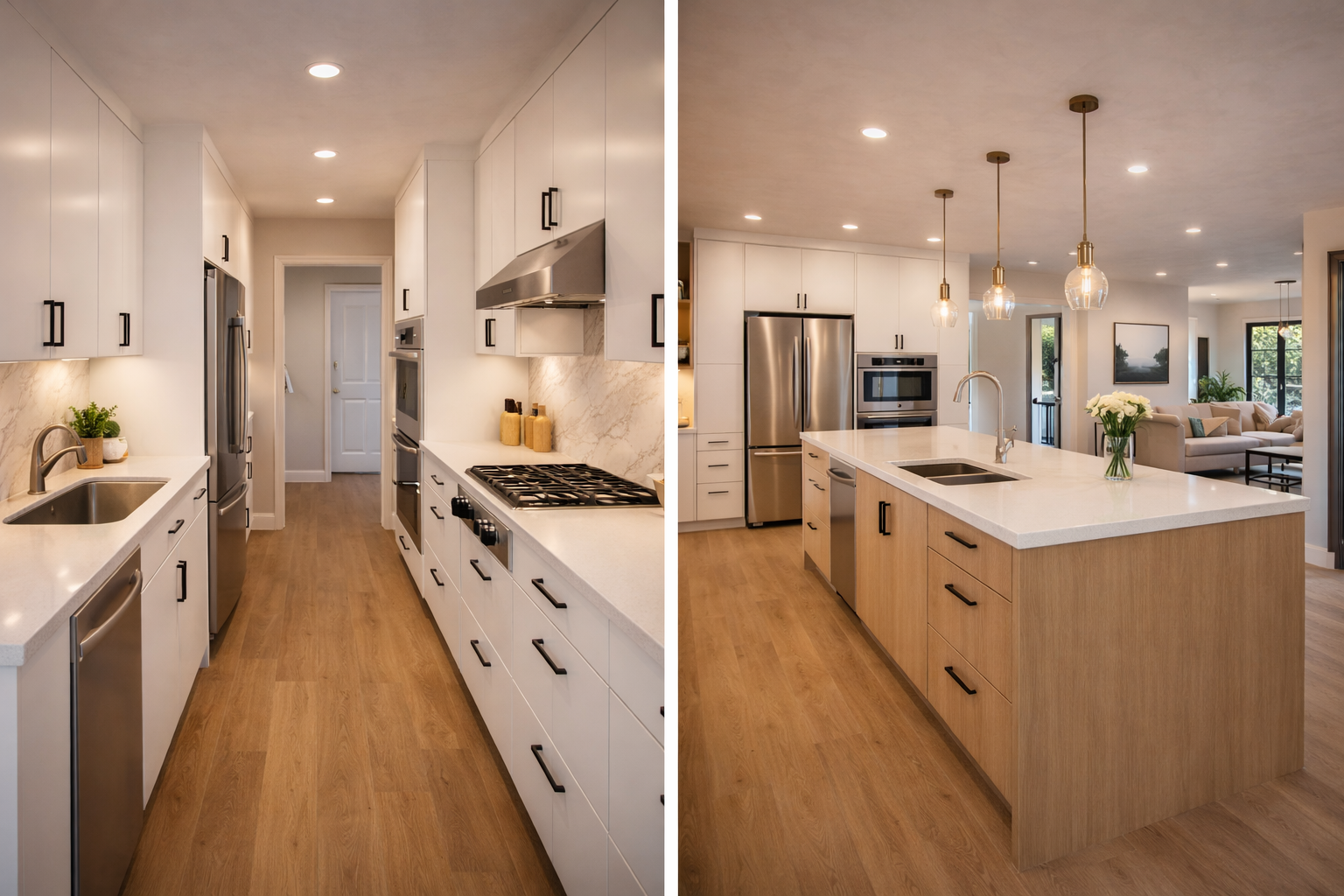
Flat panel cabinets fit best in kitchens where the remodel is trying to reduce visual clutter and improve clean lines. That can be a small galley kitchen, a one-wall apartment kitchen, or a large open-concept space with a long island. They also work well when the cabinets extend to the ceiling because the simple faces keep tall runs from feeling too heavy. Homeowners who want to dig deeper into this feature can review kitchen remodeling.
Are they a good choice for small kitchens?
Often, yes. In a small kitchen, extra door detail can make the room feel crowded. Flat fronts, lighter finishes, and good drawer organization can help the kitchen read as more open. That is especially useful when the layout has limited natural light or the room connects directly to living space.
What design combinations work well with them?
They pair well with quartz countertops, full-height slab backsplashes, under-cabinet lighting, panel-ready appliances, and simple open shelving accents. If you want the countertop edge, hood design, or flooring pattern to stand out, flat panel cabinets give those other materials more room to do the talking.
What Materials and Finishes Are Used
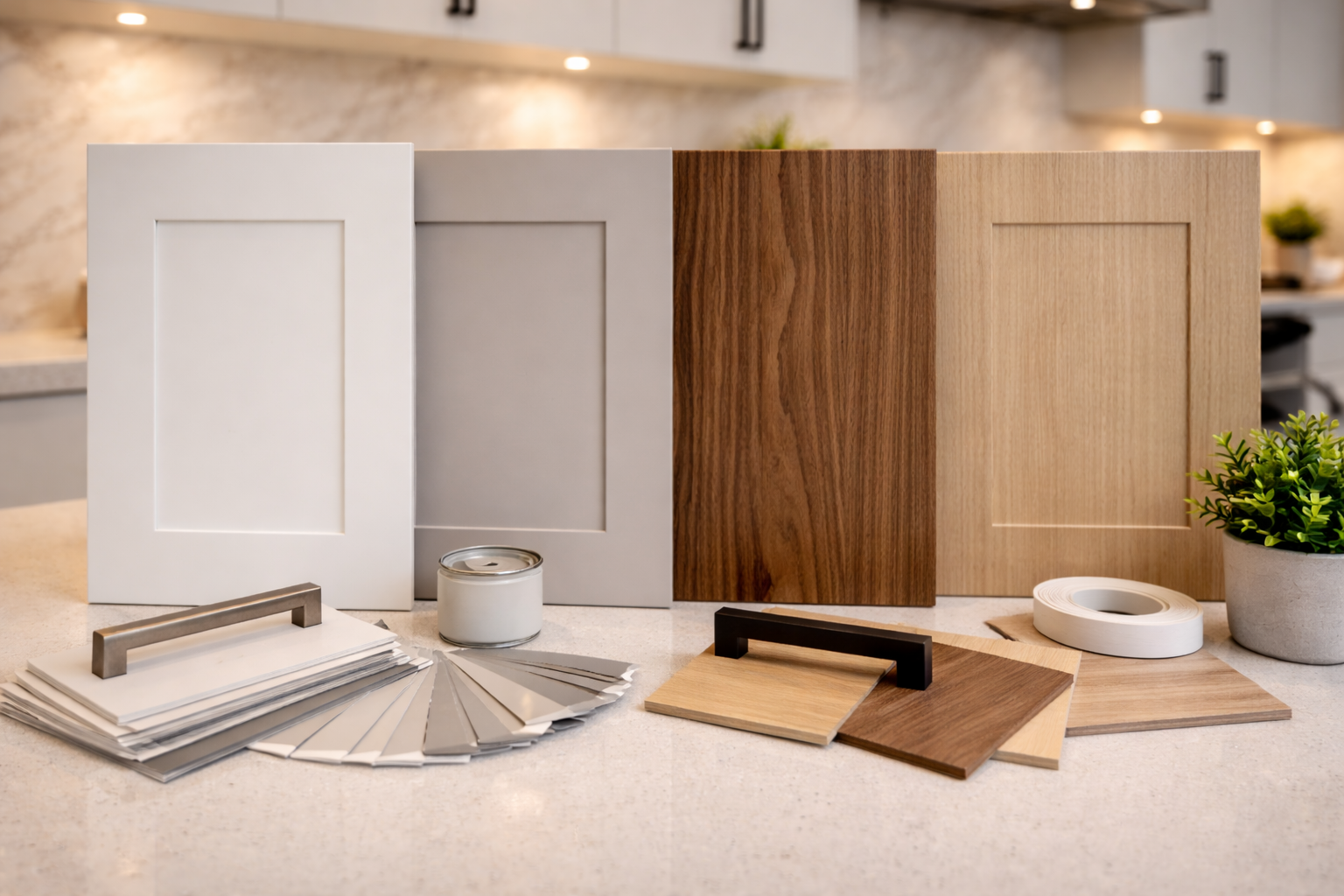
The door style is only part of the decision. Flat panel cabinets can be built with painted MDF, wood veneer over engineered cores, plywood-based components, laminate faces, thermofoil finishes, or solid wood in some premium lines. The right material depends on whether the kitchen needs a painted look, a wood grain appearance, a lower price point, or better resistance to humidity and wear.
When does painted MDF make sense?
Painted MDF is common when the goal is a smooth painted finish without wood grain telegraphing through the surface. It is often used for white, gray, greige, and other solid paint colors. It can look very clean, but edge protection and finish quality matter because dents and chips are more noticeable on a flat face. During remodeling, it also helps to follow EPA indoor air quality guidance.
When are wood veneer or laminate options better?
Wood veneer works when you want visible grain, such as white oak, walnut, or rift-cut styles. Laminate can be a practical choice for durability and consistency, especially in heavily used kitchens. Thermofoil can lower cost in some lines, but it is worth asking how it performs near ovens, dishwashers, and other heat sources.

How Are Flat Panel Cabinets Built
Good flat panel cabinets rely on more than the door face. Cabinet box material, joinery, drawer construction, hinge quality, and finish consistency all matter. Because the style is simple, poor alignment stands out fast. Uneven reveals, crooked doors, chipped edges, and mismatched grain are easier to notice on flat panels than on more decorative door styles.
Why does precision matter more with this style?
Because there is less profile detail to distract the eye. On a shaker door, the frame creates more visual breaks. On a flat panel kitchen, every reveal line between doors and drawers becomes part of the finished look. That means the installer needs tight spacing, level runs, and careful adjustment after the cabinets are set.
What construction details should be checked before ordering?
Ask about box thickness, back panel strength, drawer slide rating, hinge brand, shelf thickness, and whether the finish is sprayed, laminated, or wrapped. It is also smart to check how exposed end panels, refrigerator panels, and filler strips will be finished so the kitchen looks consistent once everything is installed.

What Storage Upgrades Work Well With Flat Panels
A flat panel remodel is usually a good time to improve storage, not just replace doors. Since the style already leans simple and efficient, it pairs naturally with drawer-heavy base cabinets, pull-out tray storage, waste pull-outs, spice pull-outs, deep pot drawers, tray dividers, appliance garages, and full-height pantry systems. Homeowners comparing options often look at cabinet remodel as part of the overall plan.
Which upgrades actually improve daily use?
Wide drawers for pots and pans, rollout shelves in lower cabinets, dedicated trash and recycling pull-outs, and better pantry access are the upgrades most homeowners notice right away. Those changes reduce bending, improve visibility, and make the kitchen easier to keep organized.
Should upper cabinets be reduced or removed?
Sometimes. In some remodels, homeowners replace part of an upper cabinet run with a window, a vent hood feature wall, or open shelving. Flat panel base cabinets and tall pantry storage can still keep the room functional, but the layout has to be measured carefully so storage is not lost where it is needed most.
What Installation Details Matter Most
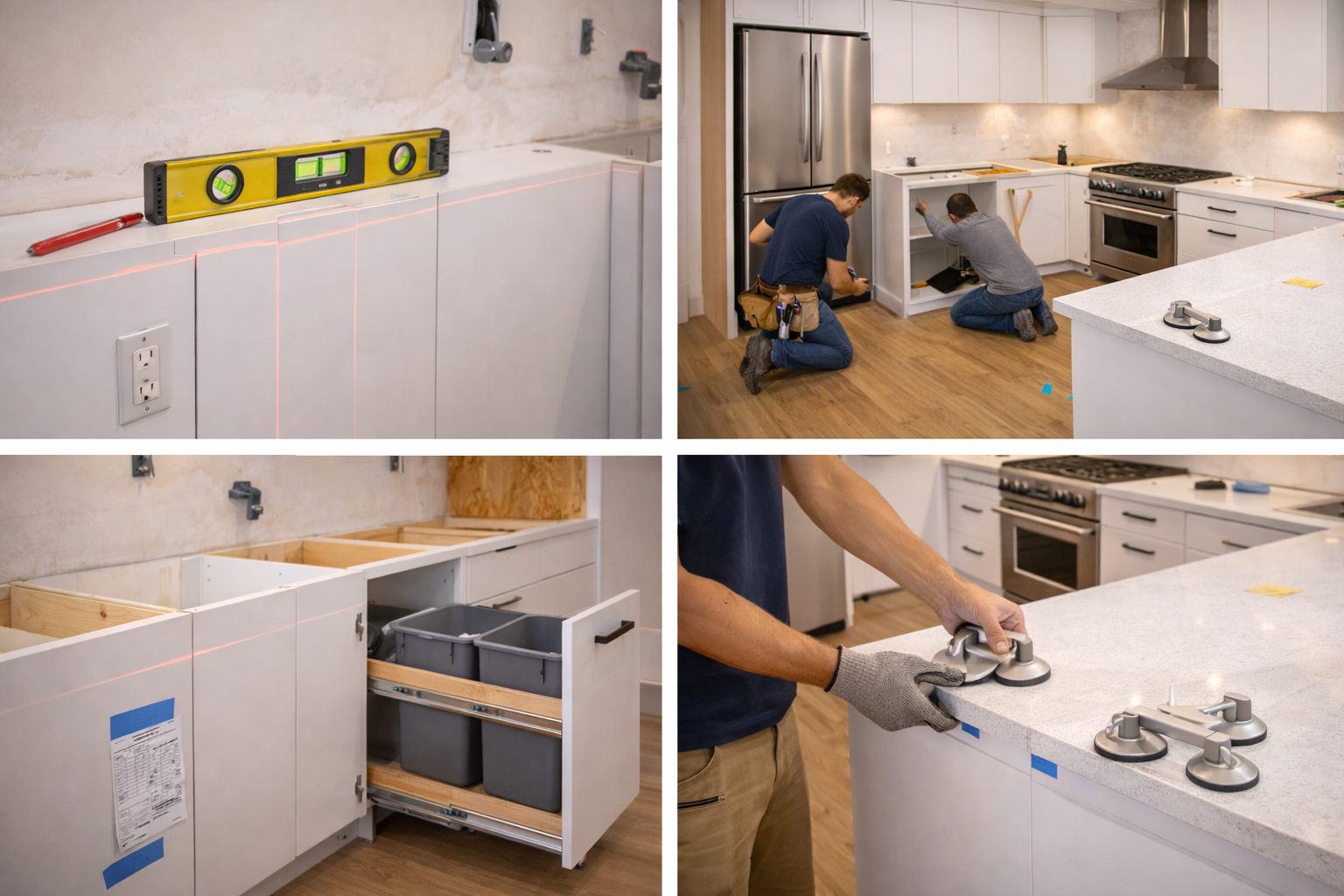
Installation quality has a huge effect on how flat panel cabinets look. The clean style depends on straight lines and consistent spacing. Before installation starts, the contractor should confirm floor level conditions, wall straightness, appliance dimensions, vent hood clearances, lighting rough-ins, and countertop support points.
What can go wrong if the prep work is sloppy?
Cabinet runs can stair-step, reveals can drift, appliance openings can end up too tight, and end panels can land out of plane with door fronts. If countertops are templated before the cabinet layout is fully dialed in, that can create bigger fit problems later. Flat panel kitchens reward precision and punish shortcuts.
Why should countertop and cabinet work be coordinated together?
Because edge thickness, overhangs, waterfall panels, backsplash alignment, and appliance panels all depend on the final cabinet positions. In a slab-style kitchen, the visual effect often comes from long, uninterrupted lines, so cabinet installation, countertop templating, and finish trim all need to work off the same final layout.
What Affects Flat Panel Cabinet Cost
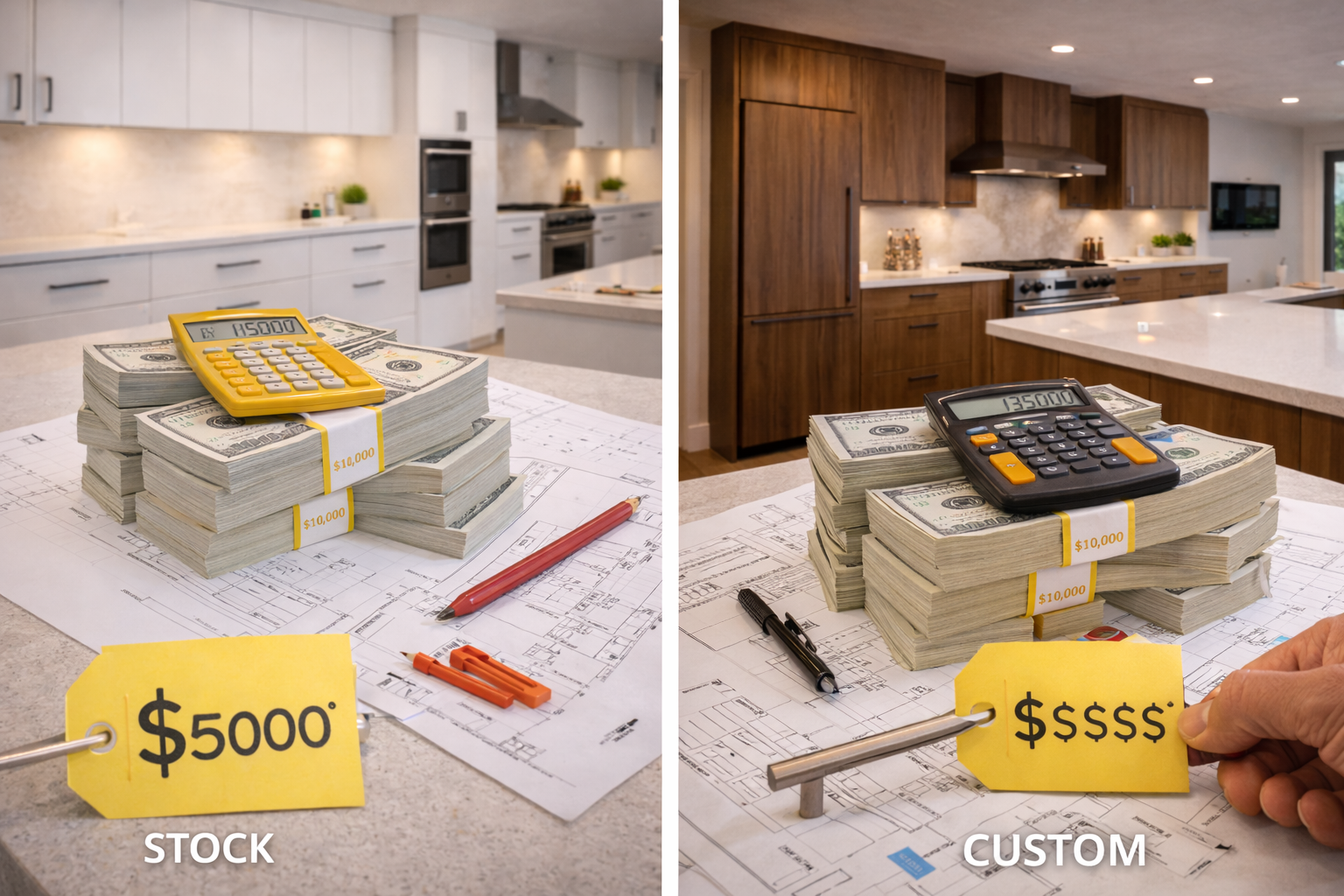
Cost depends on cabinet line, box construction, finish type, door material, hardware, customization, and how much the kitchen layout changes. A stock painted flat panel package costs less than a custom veneer system with integrated pulls, tall appliance panels, and built-in organization throughout. Material selection can also be informed by EPA greener products guidance.
Which choices tend to raise the budget fastest?
Custom sizing, premium wood veneers, specialty finishes, integrated hardware, interior accessories, and major layout changes usually drive cost up. If the remodel also moves plumbing, electrical, gas lines, or structural elements, the cabinet budget becomes only one part of the total kitchen price.
How can homeowners control cost without losing the look?
One practical approach is to keep the layout close to the existing footprint, use standard cabinet widths where possible, and spend on the features that get used every day, مثل better drawers and pantry storage. Another is to use a simpler perimeter finish and reserve a more premium treatment for the island or a single focal run.

What Mistakes Should Homeowners Avoid
The biggest mistakes usually come from under-planning. Homeowners sometimes choose a flat panel door because they like the look online, then overlook storage function, finish maintenance, appliance fit, or how the cabinet color will interact with the rest of the room.
What selection mistakes are common?
Choosing a dark matte finish without considering fingerprints, picking thermofoil near high heat without asking about durability, or selecting minimal hardware that is uncomfortable in daily use are all common missteps. Another is ignoring how exposed side panels and fillers will look once the kitchen is fully assembled.
What planning mistakes show up after installation?
Poorly located outlets, lighting that leaves work surfaces dim, shallow drawers where deep storage was needed, and pantry doors that conflict with traffic paths are common examples. The cleaner the cabinet style, the more obvious those planning errors feel once the kitchen is complete.

How Should You Plan a Flat Panel Cabinet Remodel
Start by deciding what problem the remodel needs to solve. That could be worn-out cabinets, poor storage, a dated style, or a layout that wastes space. From there, measure the kitchen carefully, decide whether the layout stays or changes, and narrow down materials, finish direction, hardware style, and storage features before ordering anything.
What should be decided before cabinets are ordered?
Appliance sizes, hood style, countertop thickness, backsplash plan, sink location, lighting layout, and whether the cabinets will stop at the ceiling all affect the cabinet design. Finalizing those pieces early prevents expensive changes later and helps the cabinet package fit the kitchen the first time.
When is professional guidance most useful?
It matters most when the project includes layout changes, mixed finishes, custom panels, integrated appliances, or structural work. A good kitchen remodel plan treats cabinets as part of a larger system, not as isolated boxes. That coordination is what turns flat panel cabinets from a style choice into a kitchen that actually works well every day.
Frequently Asked Questions About Flat Panel Cabinets
In most kitchen remodeling conversations, yes. Flat panel cabinets usually refer to slab-style doors with a smooth center panel and simple edges. Some manufacturers use the terms interchangeably, while others reserve slab for a completely unadorned door with no frame detail at all.
No. They are common in modern kitchens, but they also work in transitional spaces depending on the finish, hardware, wood species, and surrounding details. White flat panel cabinets with simple pulls feel different from walnut flat panels with integrated edge hardware.
Common options include MDF for painted finishes, plywood veneer for stained wood looks, solid wood in some lines, and thermofoil on lower-cost products. The right choice depends on budget, durability needs, and whether you want paint, laminate, or real wood grain.
Yes, one reason homeowners choose them is the smooth face. There are fewer grooves and profile details collecting grease and dust than on ornate raised-panel doors, so day-to-day wipe-downs are simpler.
Sometimes. If the existing cabinet boxes are square, structurally sound, and the layout already works, refacing may be possible. If drawers are failing, boxes are damaged, or the kitchen needs better storage layout, full replacement usually makes more sense.
That depends on the style direction. Long bar pulls, small tab pulls, edge pulls, and push-to-open hardware are all common. The best choice balances appearance with daily comfort, especially on drawers and tall pantry doors.
Not always. Price depends more on cabinet construction, finish quality, brand, box material, drawer hardware, and customization than on the door style alone. A custom flat panel cabinet package can cost more than a stock shaker package, but the reverse can also be true.
Yes. Their clean lines can help a small kitchen feel less busy. Pairing flat panel doors with lighter finishes, full-height cabinets, and better drawer organization can make a compact kitchen feel more open and usable.
The main issues are chipping at edges, visible fingerprints on darker matte finishes, and poor seam quality on thermofoil doors. During planning, it helps to ask how the finish is applied, how edges are protected, and how touch-ups are handled.
The timeline depends on whether you are only changing cabinets or also moving plumbing, electrical, flooring, and countertops. A straightforward cabinet swap is faster than a full kitchen rebuild, but measuring, ordering, demolition, installation, and countertop templating still need to be coordinated carefully.