

Kitchen Remodeling: Complete Guide to Planning, Design, Materials, and Costs

Kitchen Remodeling Guide Index
- Kitchen Remodeling Overview
- When Homeowners Choose Kitchen Remodeling
- Types of Kitchen Remodels
- Kitchen Design and Layout Options
- Kitchen Materials and Components
- Kitchen Features and Upgrades
- Kitchen Installation and Technical Considerations
- Kitchen Remodeling Cost Factors
- Common Kitchen Remodeling Mistakes
- Kitchen Remodeling Planning Checklist
- Related Kitchen Remodeling Topics
- Frequently Asked Questions About Kitchen Remodeling
Kitchen Remodeling Overview
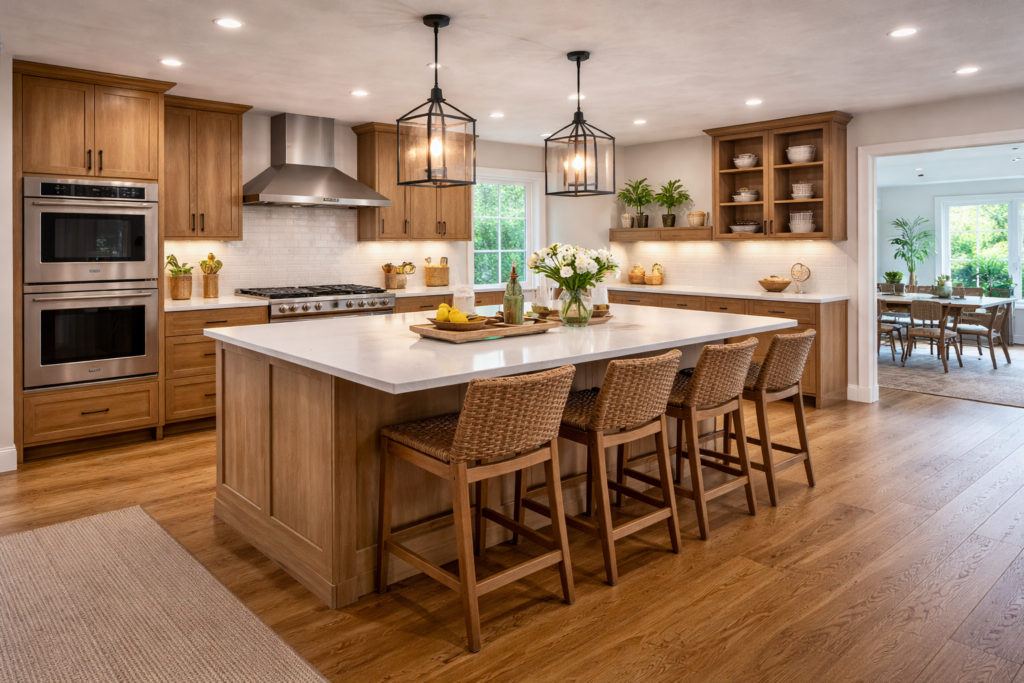
Kitchen remodeling is the process of updating, replacing, or redesigning the core surfaces, fixtures, and systems that make a kitchen functional and comfortable for daily use. Because the kitchen is one of the most heavily used rooms in a home, remodeling often focuses on improving layout, storage, workflow, and the overall look of the space. A remodel may range from a light refresh that replaces finishes and fixtures to a full renovation that changes the structure, layout, plumbing, electrical, and appliance configuration.
What Parts Of The Kitchen Get Updated
Most kitchen remodels focus on the key components that define how the room functions. This commonly includes replacing cabinets, upgrading countertops, installing new appliances, improving lighting, updating flooring, and modernizing the sink and plumbing fixtures. Many projects also add or redesign a kitchen island, improve pantry storage, update backsplashes and wall finishes, and introduce more efficient lighting and electrical outlets to support modern cooking and entertaining needs.
Cosmetic Vs Structural Kitchen Remodels
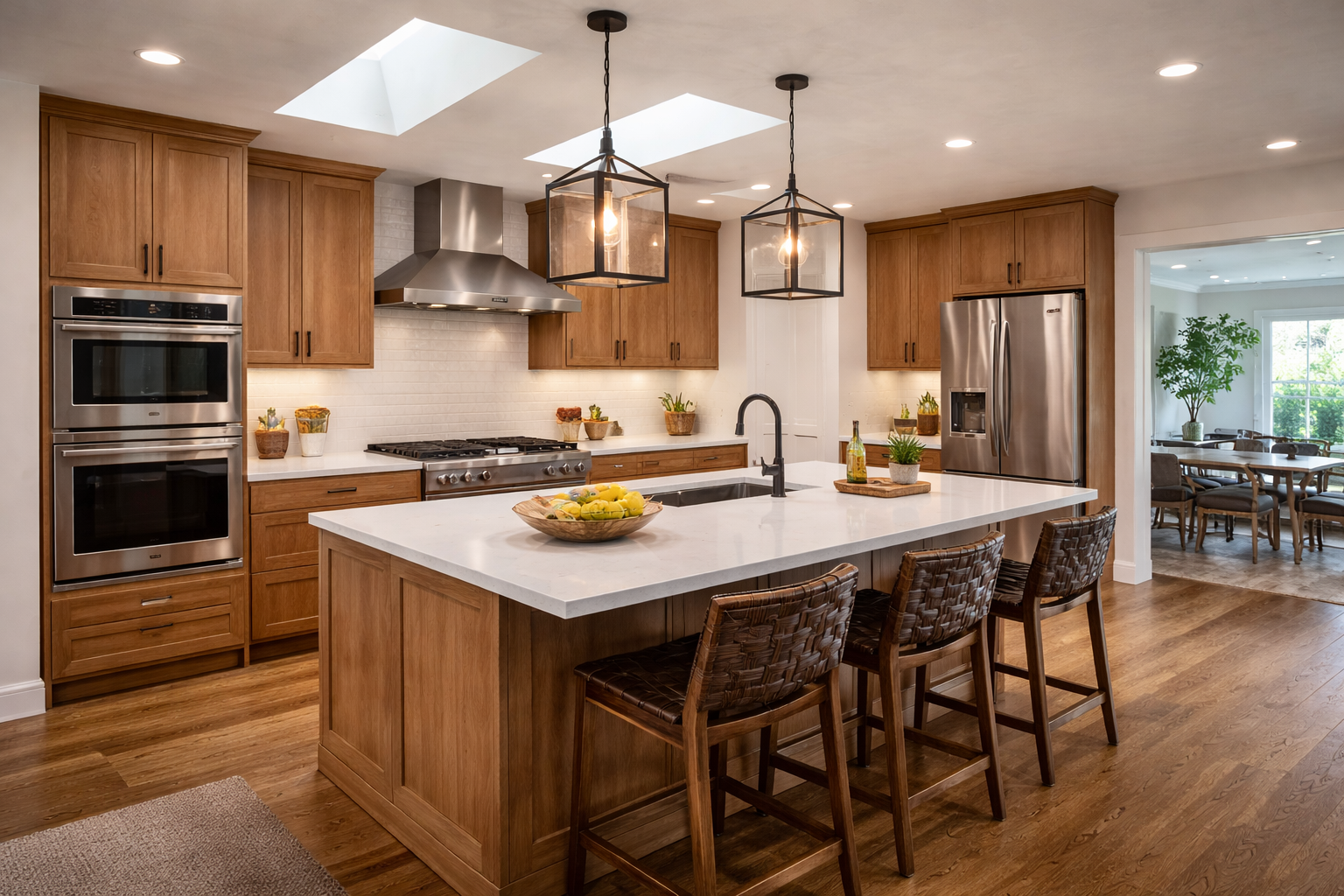
Some kitchen remodels are primarily cosmetic and focus on improving appearance without changing the structure of the room. These projects often include new cabinet doors or refacing, updated countertops, modern lighting, and new appliances. Other kitchen renovations are more structural and involve moving walls, changing the layout, relocating plumbing or electrical lines, or expanding the space to improve workflow. Common variations include open-concept kitchen layouts, larger kitchen islands, upgraded cabinetry systems, high-end appliances, and redesigned storage solutions that improve efficiency and organization.
When Homeowners Choose Kitchen Remodeling
Many homeowners begin considering a kitchen remodel when the space no longer works well for their daily routines. Kitchens see constant use, and over time cabinets wear down, appliances become outdated, lighting becomes insufficient, and layouts may feel cramped or inefficient. While the room may still function, it often becomes clear that the design no longer matches the homeowner’s lifestyle or expectations for comfort and usability.
Common Frustrations In Older Kitchens
Outdated kitchens often suffer from limited counter space, poor storage, dim lighting, and inefficient layouts that make cooking or entertaining more difficult. Older cabinets may lack modern storage solutions, appliances may be inefficient or mismatched, and worn countertops or flooring can make the entire room feel dated. These frustrations typically build over time until homeowners decide it is more practical to remodel than continue working around the limitations.
Lifestyle Changes That Lead To Remodeling
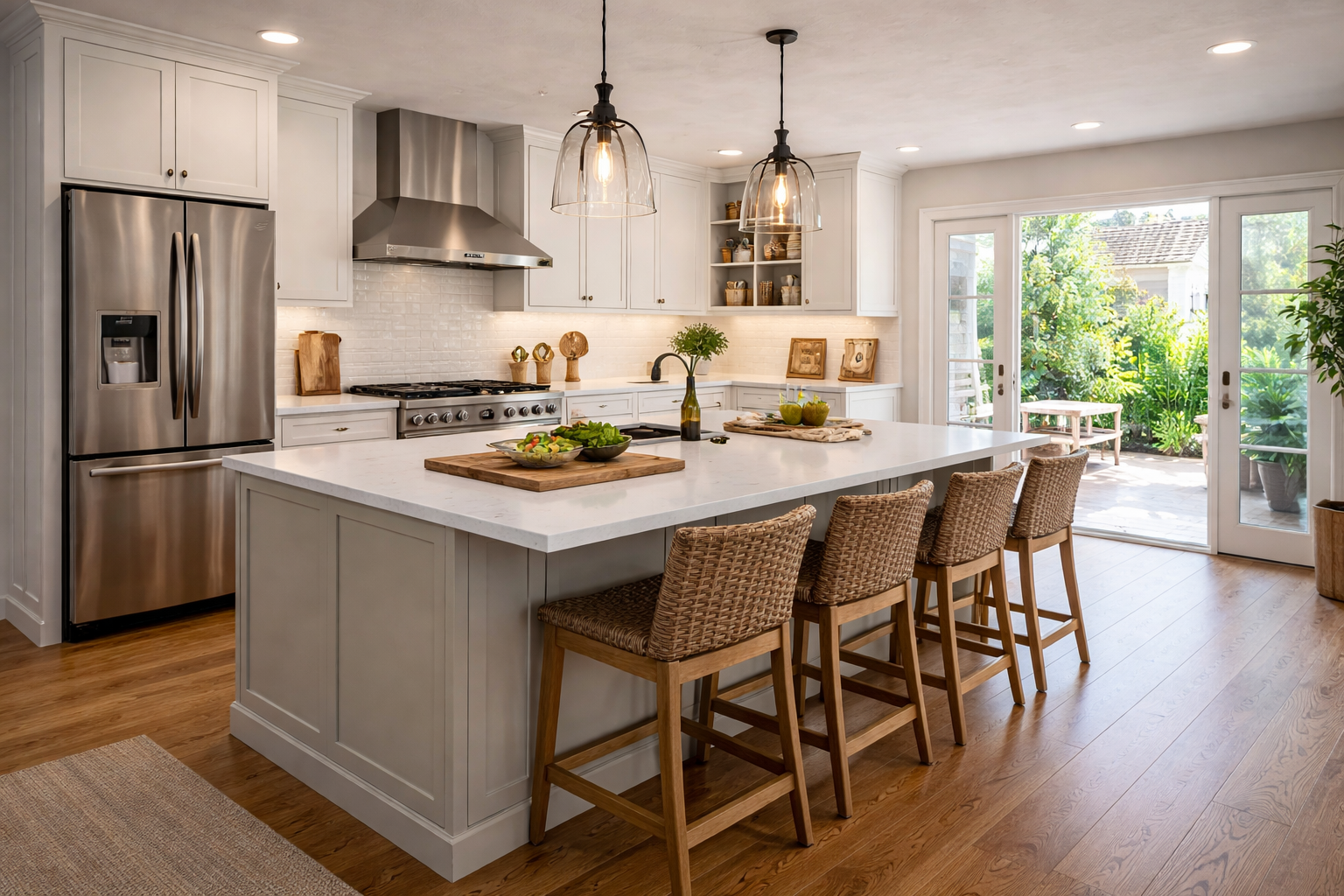
Kitchen remodels are also commonly triggered by lifestyle changes. Families may need more seating, better storage, or larger preparation areas as their needs grow. Homeowners may want a more open layout for entertaining, a larger island for gathering, or updated appliances that support modern cooking habits. In many cases, remodeling is also motivated by a desire to modernize the space, improve resale value, or simply create a kitchen that feels more comfortable, organized, and enjoyable to use every day. During remodeling, it also helps to follow EPA indoor air quality guidance. Homeowners comparing options often look at kitchen island remodel as part of the overall plan.
Types Of Kitchen Remodels
Kitchen remodels can take many forms depending on the size of the space, the layout of the home, and the goals of the homeowner. Some projects focus on improving the appearance of existing cabinets and finishes, while others involve redesigning the entire layout to improve workflow, storage, and usability. Understanding the different types of kitchen remodels can help homeowners decide which approach best fits their needs, budget, and the structure of the home.
Layout-Based Kitchen Remodels
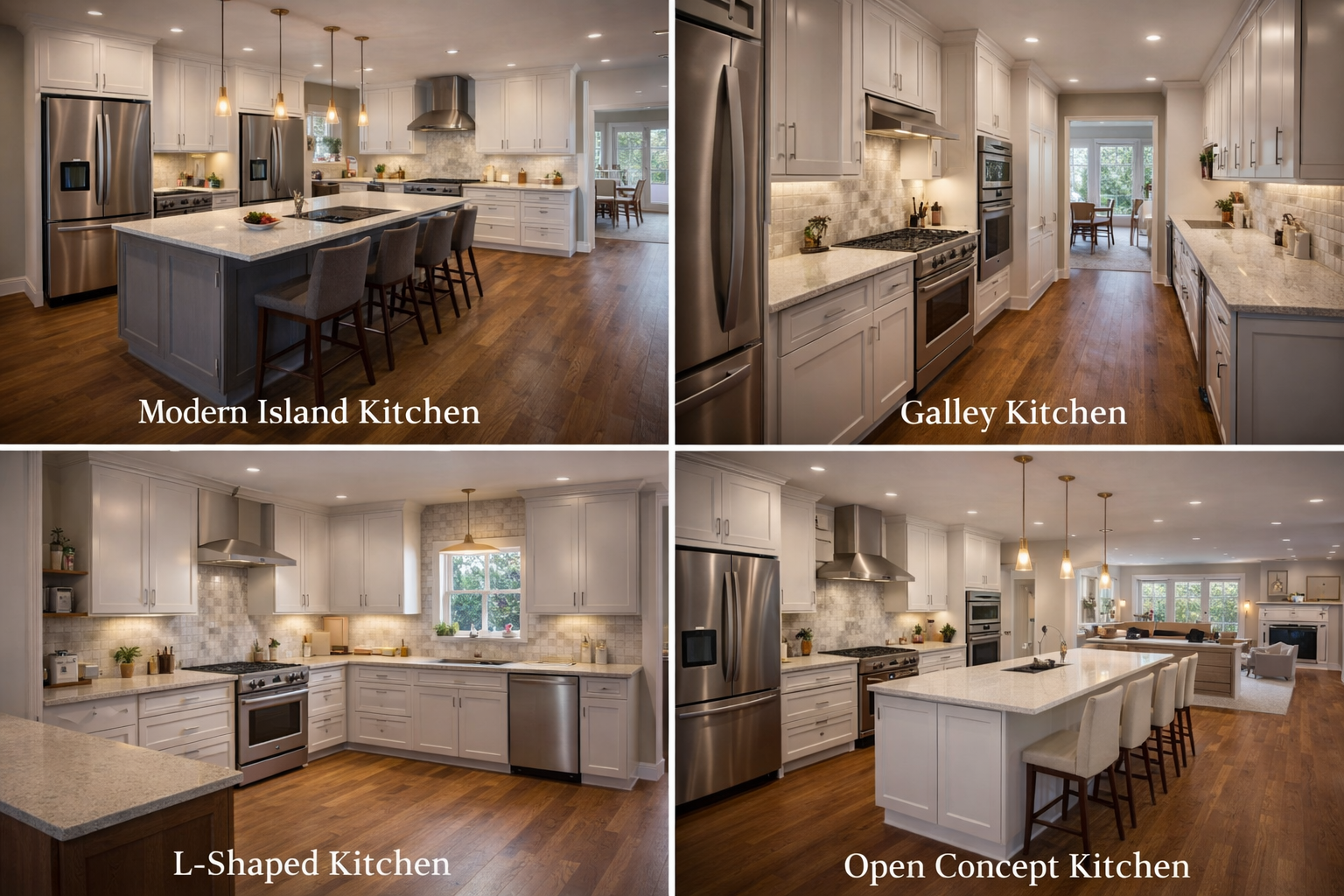
Many remodels focus on changing or optimizing the kitchen layout. Common layouts include L-shaped kitchens, U-shaped kitchens, galley kitchens, and open-concept designs that connect the kitchen with nearby living areas. Some remodels also introduce or expand a kitchen island to provide additional prep space, seating, and storage. Layout-focused renovations work best when homeowners want to improve workflow, increase counter space, or create a more open environment for cooking and entertaining.
Cabinet And Surface Focused Remodels
Other kitchen remodels focus primarily on replacing cabinets, countertops, and finishes while keeping the existing layout. These projects often include new cabinetry, updated countertops, modern backsplashes, upgraded sinks and fixtures, and improved lighting. This approach works well when the kitchen layout already functions well but the materials and finishes are outdated or worn. It can provide a dramatic visual upgrade without the complexity of structural changes.
Kitchen Design And Layout Options
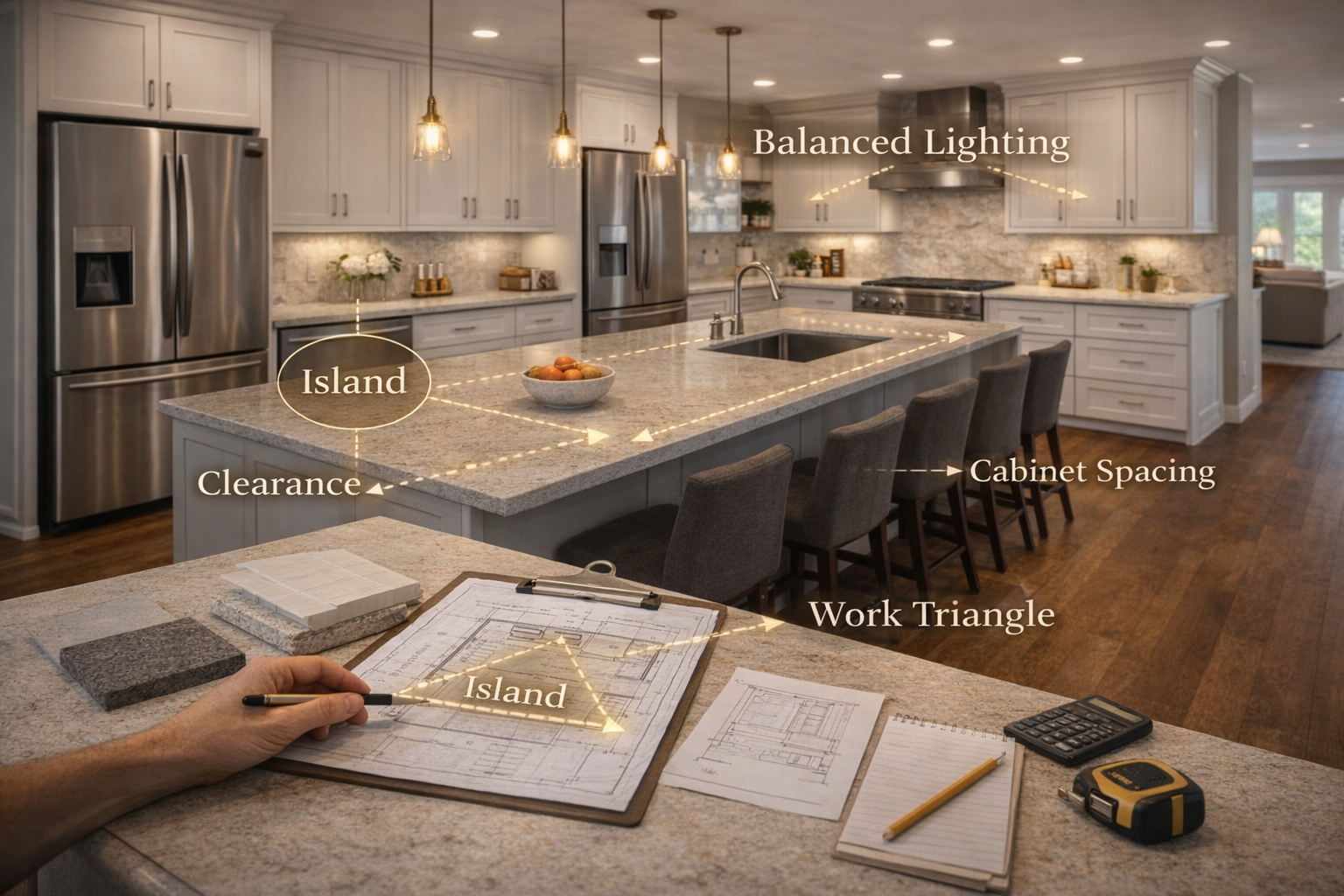
Kitchen design is heavily influenced by layout, movement, and the relationship between cooking, cleaning, and storage areas. A well-designed kitchen balances these zones so the space feels comfortable and efficient rather than crowded or disconnected. Designers often focus on the “kitchen work triangle,” which positions the stove, sink, and refrigerator in a way that allows easy movement between tasks. Whether a kitchen is large or compact, thoughtful layout planning helps create a space that flows naturally and supports daily routines. Homeowners comparing options often look at kitchen lighting as part of the overall plan.
Layout Flow And Spacing Considerations
Kitchen layouts must consider clear walking paths, appliance spacing, and adequate preparation areas. Islands require enough clearance around them for comfortable movement, while galley and L-shaped kitchens must ensure there is room to open appliances and cabinets without blocking pathways. Proper spacing between countertops, sinks, and cooking areas also helps maintain an efficient workflow. When designed well, the layout allows multiple people to use the kitchen at the same time without crowding or interfering with each other’s tasks.
Small Kitchen Vs Large Kitchen Design
Smaller kitchens often prioritize compact layouts, vertical storage, and space-saving appliances to maximize functionality without overwhelming the room. Open shelving, lighter finishes, and efficient cabinet organization can help small kitchens feel larger and more accessible. Larger kitchens, on the other hand, may include extended islands, multiple prep areas, larger pantries, and expanded seating zones. In both cases, the goal is to create visual balance and accessibility so the kitchen remains practical, comfortable, and visually connected to the surrounding living space.

Kitchen Materials And Components
Kitchen remodels involve a wide range of materials that affect both the durability and visual style of the space. Because kitchens experience heavy daily use, material selection plays a major role in how long surfaces last and how easy they are to maintain. Cabinets, countertops, flooring, backsplashes, and appliance finishes all contribute to the performance and appearance of the room. Choosing the right materials helps balance durability, cleaning requirements, design preferences, and overall budget. Material selection can also be informed by EPA greener products guidance. Homeowners who want to dig deeper into this feature can review kitchen backsplash.
Cabinet And Countertop Materials
Cabinets are commonly built from solid wood, plywood, or engineered wood products, each offering different levels of durability and cost. Solid wood cabinets provide long-term strength and can be refinished, while engineered materials often provide a more budget-friendly option with consistent finishes. Countertops are frequently made from quartz, granite, laminate, butcher block, or solid surface materials. Quartz is known for durability and low maintenance, granite offers natural stone variation, laminate provides affordability, and butcher block creates a warm, natural aesthetic that requires regular sealing.
Backsplashes, Flooring, And Finishes
Backsplashes and flooring add both protection and design character to a kitchen. Ceramic and porcelain tile backsplashes are popular because they resist moisture and are easy to clean. Natural stone backsplashes provide a more textured look but may require sealing. Flooring materials commonly include tile, luxury vinyl plank, hardwood, and engineered wood. Tile and vinyl offer excellent water resistance and durability, while hardwood provides warmth and a classic appearance. The combination of these materials helps determine the kitchen’s overall style, maintenance needs, and long-term performance.

Kitchen Features And Upgrades
Kitchen remodels often include optional upgrades that improve comfort, convenience, and the overall experience of using the space. While the core remodel focuses on cabinets, surfaces, and layout, many homeowners choose to enhance their kitchen with additional features that add functionality or visual impact. These upgrades can range from improved lighting and storage to advanced appliances and modern smart-home technology. In many projects, kitchen flooring becomes an important part of how the bathroom functions day to day.
Functional And Comfort Upgrades
Many kitchen upgrades focus on making the space easier and more enjoyable to use. Popular improvements include larger kitchen islands with seating, under-cabinet lighting that improves visibility on countertops, and deep drawers that make it easier to access cookware and utensils. Pull-out pantry systems, built-in trash and recycling drawers, soft-close cabinet hardware, and improved task lighting can significantly improve daily convenience while keeping the kitchen organized and efficient.
Luxury Features And Smart Technology
Higher-end kitchen remodels may introduce luxury features and smart technology that enhance both cooking and entertaining. Examples include professional-grade appliances, integrated refrigerators, touchless faucets, and smart ovens that connect to mobile devices. Some kitchens incorporate beverage stations, dedicated coffee bars, wine storage, or hidden appliance garages that keep countertops clear. These upgrades allow homeowners to personalize their kitchen while adding modern convenience and a more refined design.

Kitchen Installation And Technical Considerations
Behind the visible finishes of a kitchen remodel are several structural and mechanical systems that must be carefully planned and installed. Cabinets, appliances, plumbing, electrical circuits, and ventilation systems all need to work together within the structure of the home. Professional contractors typically evaluate wall framing, floor structure, existing plumbing locations, and electrical capacity before construction begins to ensure the new kitchen layout can be safely supported. For a closer look at this part of the project, homeowners can explore kitchen pantry storage.
Plumbing, Electrical, And Appliance Requirements
Kitchen remodels often involve relocating or upgrading plumbing and electrical systems. Sinks, dishwashers, refrigerators with water lines, and pot fillers require proper plumbing placement and drainage connections. Electrical upgrades may include additional outlets, dedicated circuits for major appliances, under-cabinet lighting, and improved task lighting. Modern kitchens frequently require more electrical capacity than older homes were originally designed for, so panel upgrades or circuit expansions may sometimes be necessary.
Structural And Code Considerations
Some kitchen remodels involve structural changes such as removing walls to create an open-concept layout or expanding the kitchen footprint. In these cases, contractors must determine whether walls are load-bearing and may need to install beams or supports to maintain structural integrity. Building codes also regulate electrical outlet spacing, ventilation for cooking appliances, and safety features such as GFCI outlets near water sources. Following these requirements helps ensure the kitchen remodel is safe, durable, and compliant with local construction standards.

Kitchen Remodeling Cost Factors
The cost of a kitchen remodel can vary widely depending on the size of the space, the materials selected, and the complexity of the work involved. Some projects focus mainly on replacing finishes such as cabinets, countertops, and flooring, while others involve structural changes, appliance upgrades, and relocation of plumbing or electrical systems. Understanding the factors that influence cost helps homeowners plan a remodel that fits their goals and budget.
Size, Materials, And Labor Complexity
The overall size of the kitchen and the amount of material required can significantly affect the scope of a remodel. Larger kitchens require more cabinetry, countertop surface area, flooring, and lighting fixtures. Material selections also influence cost, as options like natural stone countertops, custom cabinetry, or premium appliances typically require higher investment than standard materials. Labor complexity also increases when installations involve intricate tile work, custom millwork, or specialized appliance integration. When comparing stone surfaces, it can help to review Natural Stone Institute guidance. Projects with related upgrades often include choices around kitchen appliances.
Plumbing, Electrical, And Custom Features
Additional cost considerations often arise when plumbing or electrical systems need to be moved or upgraded. Relocating sinks, adding a kitchen island with plumbing, installing new circuits for appliances, or upgrading ventilation systems can add complexity to the project. Custom features such as built-in storage solutions, large islands, designer lighting, or integrated appliances may also increase the scope of work. These variables together determine the overall effort required to complete the remodel.
Common Kitchen Remodeling Mistakes
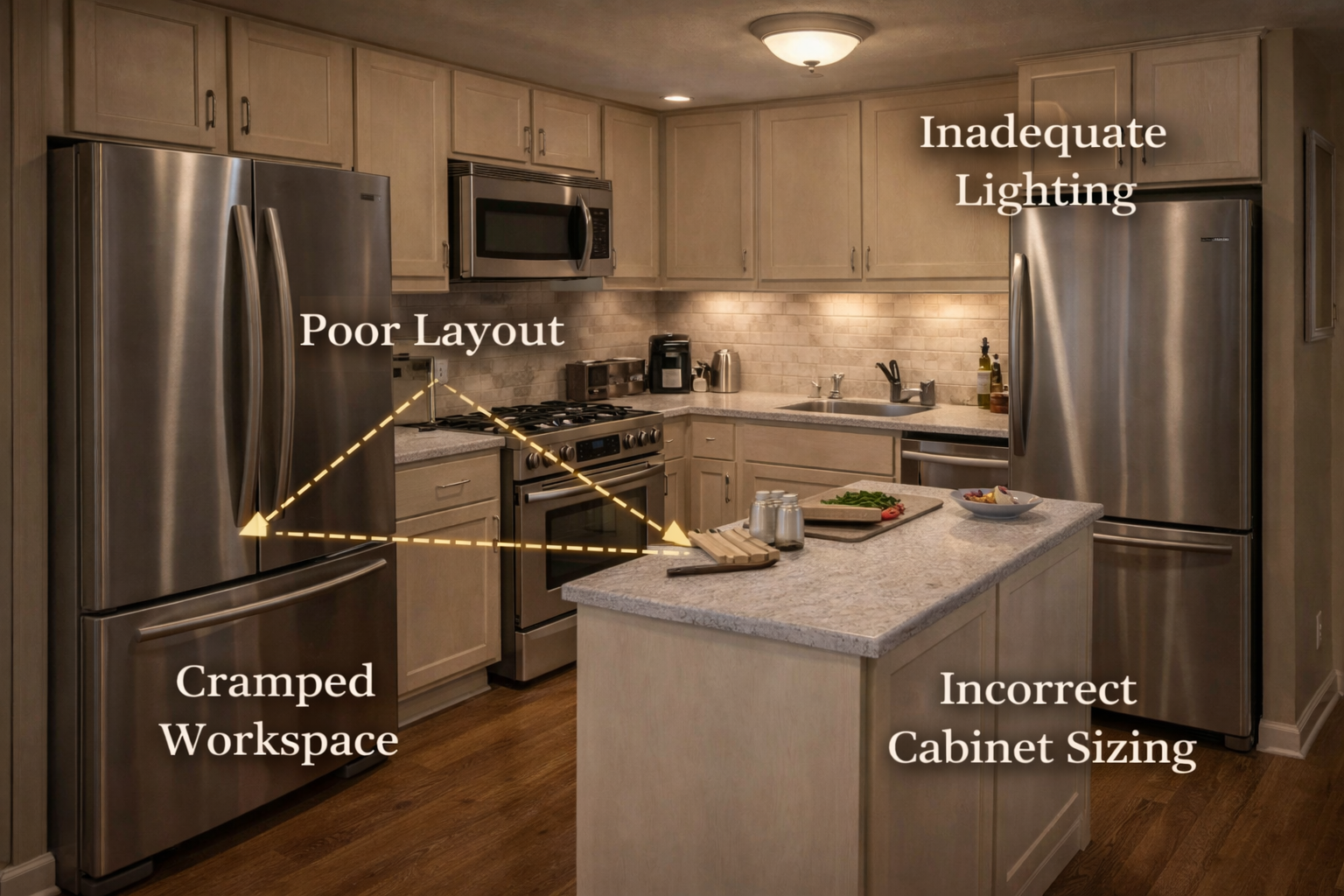
Kitchen remodels involve many decisions about layout, materials, appliances, and construction details. Without careful planning, homeowners can end up with a kitchen that looks good but does not function well day to day. Common mistakes often occur when layout flow is overlooked, materials are selected only for appearance, or installation shortcuts are taken during construction. Understanding these potential issues can help homeowners avoid costly corrections and create a kitchen that performs well for years.
Design And Layout Mistakes
One of the most common problems in kitchen remodels is poor layout planning. If the spacing between the sink, stove, and refrigerator is inefficient, the kitchen may feel awkward to use. Islands that are too large or placed too close to cabinets can block walkways and create congestion. Another common issue is insufficient counter space or poor lighting placement, which can make food preparation more difficult. Proper planning ensures the kitchen maintains clear pathways and balanced work zones. This decision often connects directly to kitchen sink remodel, especially when the goal is a more complete remodel.
Material And Installation Mistakes
Choosing the wrong materials for high-use areas can lead to long-term maintenance problems. For example, flooring that is not moisture resistant or countertops that scratch easily may wear out quickly in a busy kitchen. Installation shortcuts can also cause issues, such as improperly supported countertops, poorly aligned cabinetry, or inadequate ventilation for cooking appliances. Taking time to select durable materials and ensuring professional installation helps prevent problems that may otherwise appear after the remodel is complete.
Kitchen Remodeling Planning Checklist
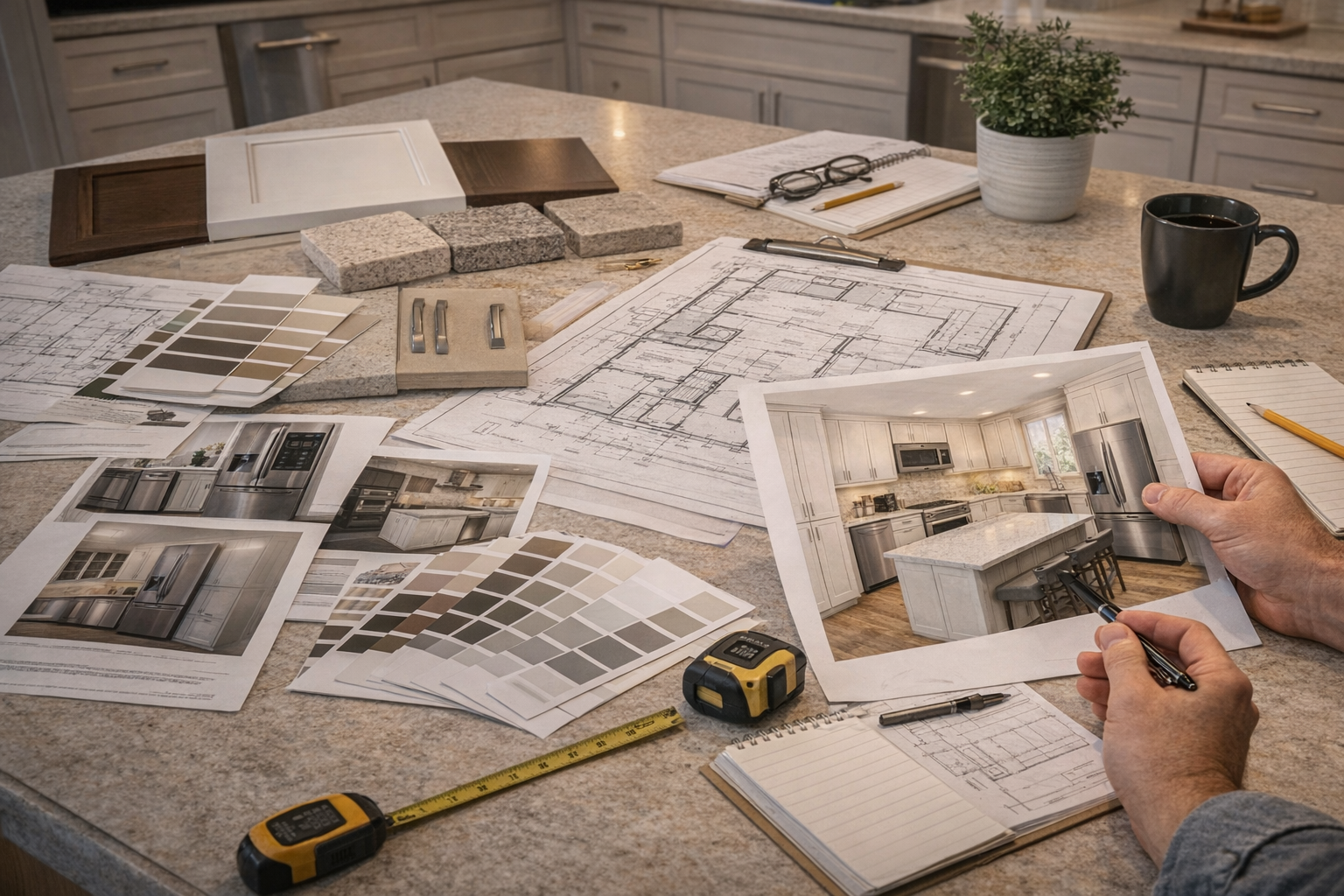
Planning a kitchen remodel involves more than choosing finishes or appliances. A successful project begins with understanding how the current kitchen functions and identifying what needs to improve. By organizing decisions early in the planning process, homeowners can reduce surprises during construction and ensure the remodel supports both daily use and long-term goals for the home. Another detail worth comparing during planning is countertop remodel.
Evaluate The Existing Kitchen Space
Start by looking at how the current kitchen is used. Consider whether the layout provides enough preparation space, storage, and room for movement. Take note of areas where cabinets are difficult to reach, appliances feel cramped, or lighting is insufficient. Evaluating these issues helps determine whether the remodel should focus on cosmetic updates or a larger layout redesign.
Define Layout, Materials, And Project Scope
Once the needs of the space are clear, the next step is defining the layout and selecting materials. This often includes choosing cabinet styles, countertop materials, flooring, and backsplash finishes that match the home’s design. Homeowners should also decide whether plumbing or electrical changes are required, what appliances will be included, and which upgrade features—such as islands, improved storage, or lighting enhancements—should be part of the project. Establishing these elements early also helps set realistic expectations for budget and project scope.

Related Kitchen Remodeling Topics
Kitchen remodeling often involves several individual components that work together to create the final space. Many of these elements have their own design options, materials, and installation considerations. Exploring related remodeling topics can help homeowners better understand each part of the kitchen and make more informed decisions when planning upgrades or renovations. When the remodel includes this feature, cabinet remodel can help homeowners understand the options in more detail.
Core Kitchen Remodel Components
Several major features define the structure and functionality of a kitchen remodel. Cabinet remodeling focuses on storage layout, door styles, and organization systems. Countertop upgrades introduce materials such as quartz, granite, or butcher block that affect durability and aesthetics. Kitchen islands add preparation space and seating, while appliance upgrades improve cooking performance and energy efficiency. Each of these components can be explored further to understand the available options and design considerations.
Supporting Kitchen Design Elements
Other related upgrades help complete the kitchen environment and improve how the space feels and functions. Backsplashes protect walls while adding design texture and color. Lighting upgrades improve visibility and create layered lighting for cooking, preparation, and ambiance. Kitchen flooring influences durability and maintenance, while pantry and storage solutions help organize food and cooking tools. These supporting elements work together with the main kitchen components to create a balanced and well-designed remodel.
Local Kitchen Remodeling Guides
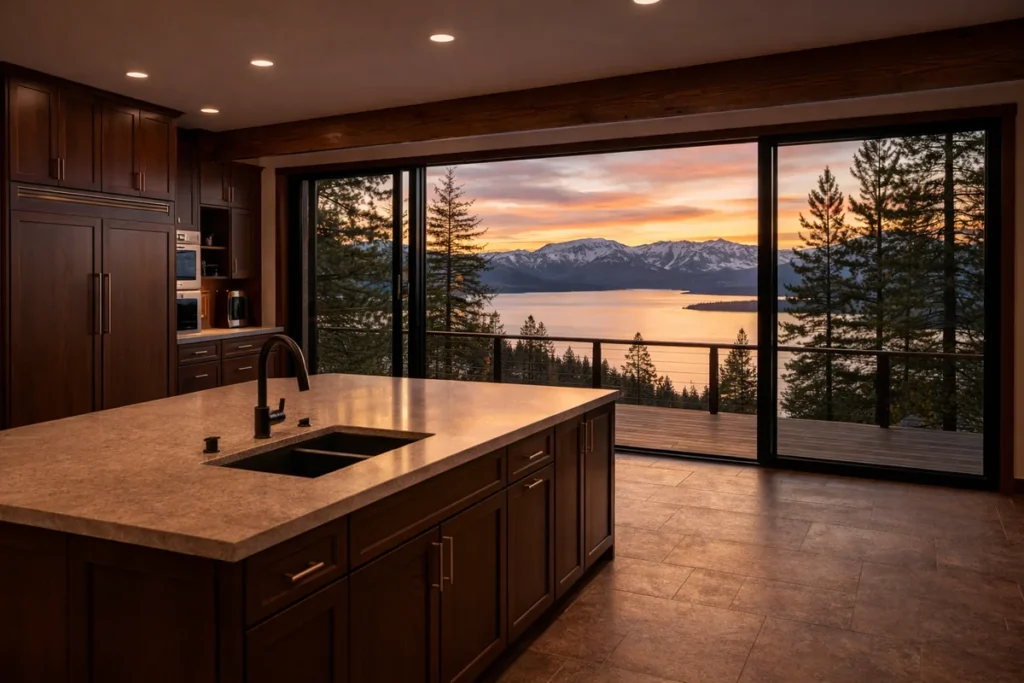
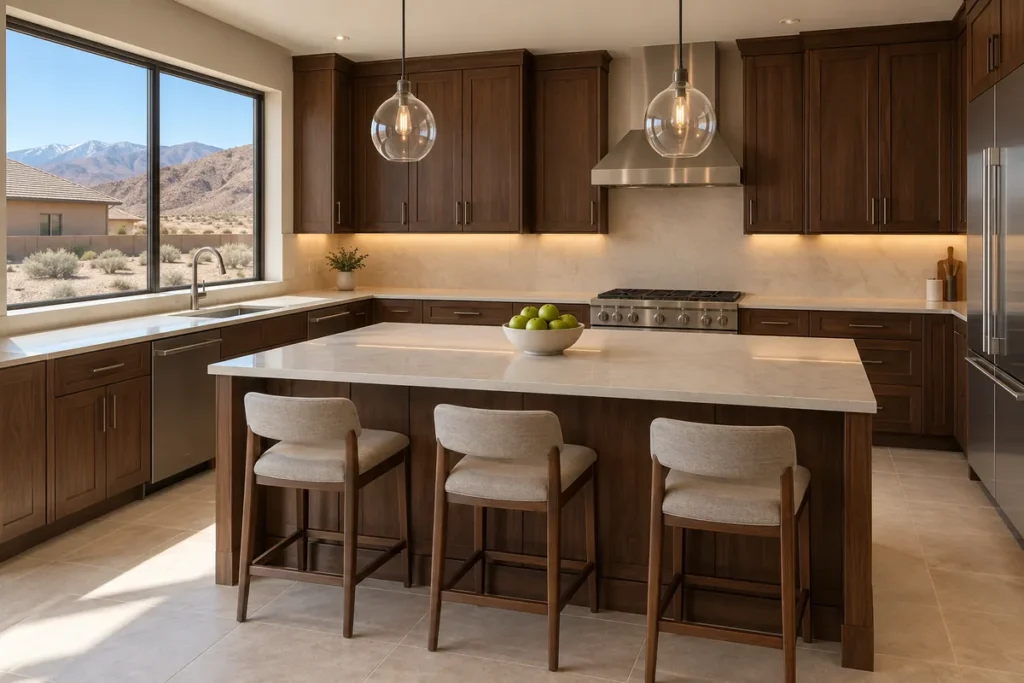
Local guides: Kitchen Remodeling Incline Village and Kitchen Remodeling Reno. Each guide covers the housing stock, layouts, materials, and planning factors for kitchens in that city.
Frequently Asked Questions About Kitchen Remodeling
A kitchen remodel can include layout changes, cabinets, countertops, appliances, lighting, plumbing, flooring, backsplash installation, and overall design updates. The scope depends on whether the project is cosmetic or a full renovation involving structural and mechanical upgrades.
Kitchen remodeling costs vary widely depending on size, materials, and project complexity. Smaller updates may cost a few thousand dollars, while full kitchen remodels with custom cabinetry, layout changes, and high-end finishes can reach significantly higher investment levels.
Most kitchen remodels take anywhere from a few weeks to several months depending on the scope of work. Simple upgrades can be completed quickly, while full remodels involving design planning, permits, and construction phases take longer to complete.
Kitchen remodeling is one of the most impactful upgrades for improving home value and buyer appeal. Updated kitchens often help homes sell faster and more competitively, especially when the design, layout, and materials align with modern expectations.
Cabinetry is typically the most expensive part of a kitchen remodel, often followed by countertops and labor. Custom cabinets, layout changes, and high-end materials can significantly increase the overall project cost.
Yes, many kitchen remodels keep the existing layout to reduce costs and simplify construction. Updating cabinets, countertops, lighting, and finishes can dramatically improve the space without moving plumbing or electrical systems.
A kitchen remodel typically follows a sequence of planning, design, demolition, structural work, plumbing and electrical rough-in, cabinetry installation, countertops, backsplash, flooring, and final fixtures. Proper sequencing helps prevent delays and ensures quality results.
Modern kitchens focus on efficient layouts, durable materials, smart storage solutions, quality lighting, and functional work zones. Features like kitchen islands, soft-close cabinetry, and integrated appliances are commonly prioritized.
Permits are often required when a kitchen remodel involves electrical, plumbing, or structural changes. Local building codes determine the exact requirements, and contractors typically handle permitting and inspections when needed.
Planning a kitchen remodel starts with defining goals, setting a budget, and evaluating the existing layout. From there, homeowners select materials, design features, and work with professionals to create a plan that balances functionality, aesthetics, and long-term value.