

Shower Tile Guide: Materials, Layout, Costs, and Planning

Shower Tile Guide Index
- Shower Tile Overview
- When Should Shower Tile Be Updated
- What Types of Shower Tile Are Common
- How Do Layout and Room Size Affect Shower Tile
- What Materials and Components Are Used in Shower Tile Work
- What Upgrades Can Be Added With Shower Tile
- What Installation Details Matter in Shower Tile Work
- What Affects Shower Tile Cost
- What Mistakes Should Homeowners Avoid With Shower Tile
- How Should You Plan Shower Tile
- Related Shower Tile Topics
- Frequently Asked Questions About Shower Tile

Shower Tile Overview
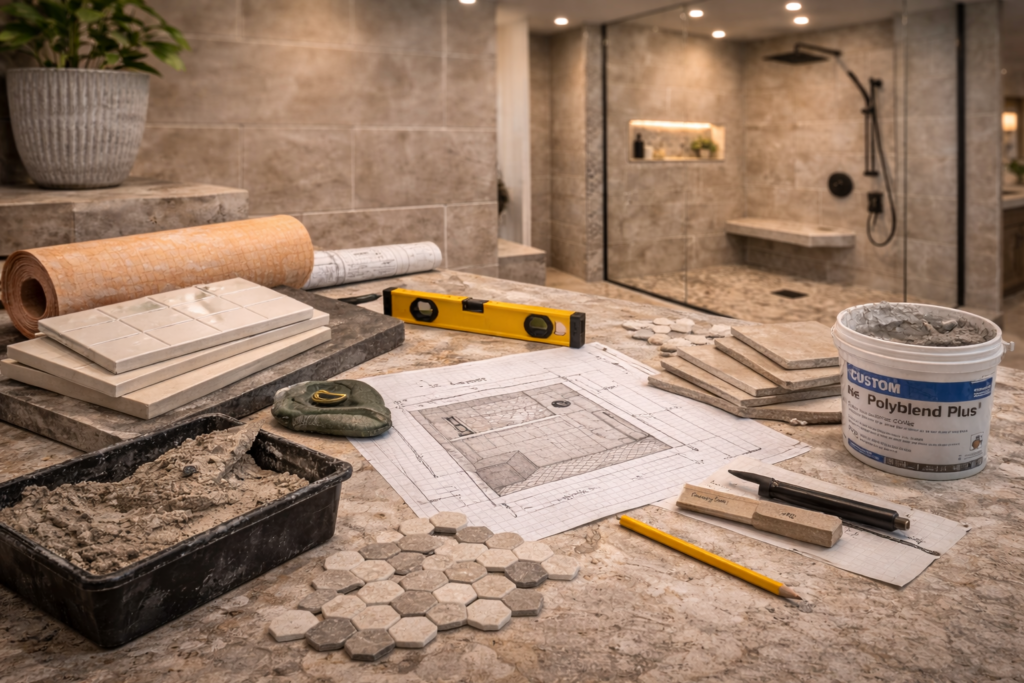
Shower tile shapes the look of the shower, but it also has to work as part of a waterproof system that holds up under constant moisture. In practical remodel work, shower tile means more than picking a color or pattern. It involves tile size, grout joints, waterproofing behind the tile, trim details, slope at the floor, and how the tile layout works with the shower niche, valve, and glass enclosure.
What Gets Updated During a Shower Tile Project
The work may include wall tile, shower floor tile, grout, tile trim, waterproofing membrane, backer board, thinset, niche details, and the way the tile meets the shower pan or shower curb. In some remodels, the tile layout also changes the visual balance of the whole shower and the bathroom around it.
What Is the Difference Between Changing Shower Tile and Rebuilding the Shower
Changing shower tile can refer to updating the visible finish, but in many real shower remodels the tile work also requires rebuilding the waterproofing, backing, and shower surface below it. That is why shower tile often overlaps with a larger shower rebuild instead of acting like a simple surface-only upgrade.
When Should Shower Tile Be Updated
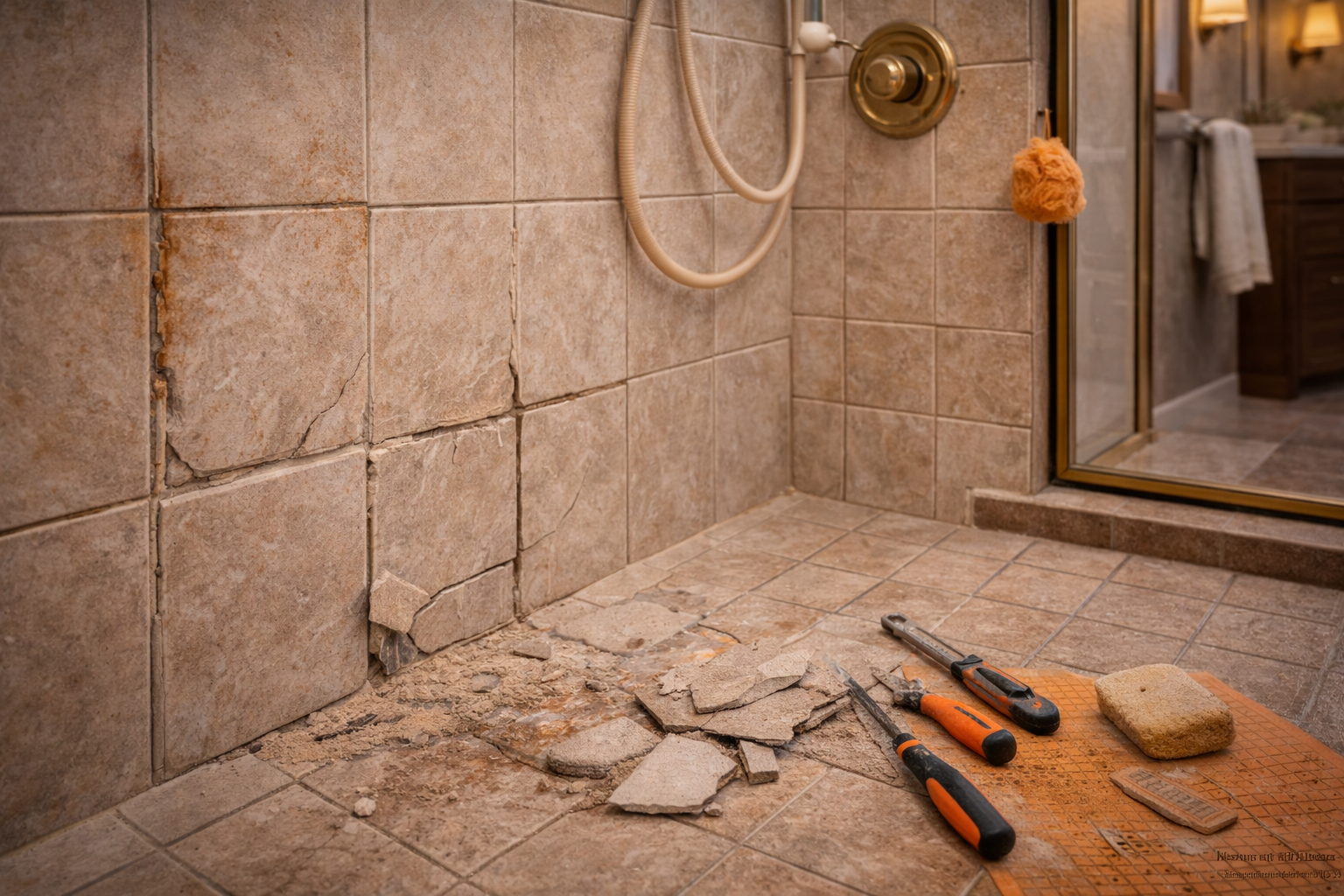
Shower tile should usually be updated when the finish is outdated, damaged, hard to clean, or part of a shower system that is no longer holding up well. Common signs include cracked tile, missing grout, stained surfaces, loose tile, recurring mildew, or a shower that simply looks older than the rest of the bathroom after other improvements have been made. During remodeling, it also helps to follow EPA indoor air quality best practices.
What Signs Show That Shower Tile Is Failing
Clear signs include cracked grout, loose or hollow-sounding tile, water staining, broken corners, repeated mildew around joints, and areas where caulk failure keeps returning. In older showers, the tile may still be attached but the waterproofing behind it may no longer be reliable.
What Remodeling Goals Usually Lead to New Shower Tile
Shower tile is often updated when the goal is a cleaner look, easier maintenance, a more modern shower design, or a better match with new glass, new plumbing trim, or a full bathroom remodel. It is also common when the old shower was built with tile and grout layouts that no longer fit current design expectations.
What Types of Shower Tile Are Common
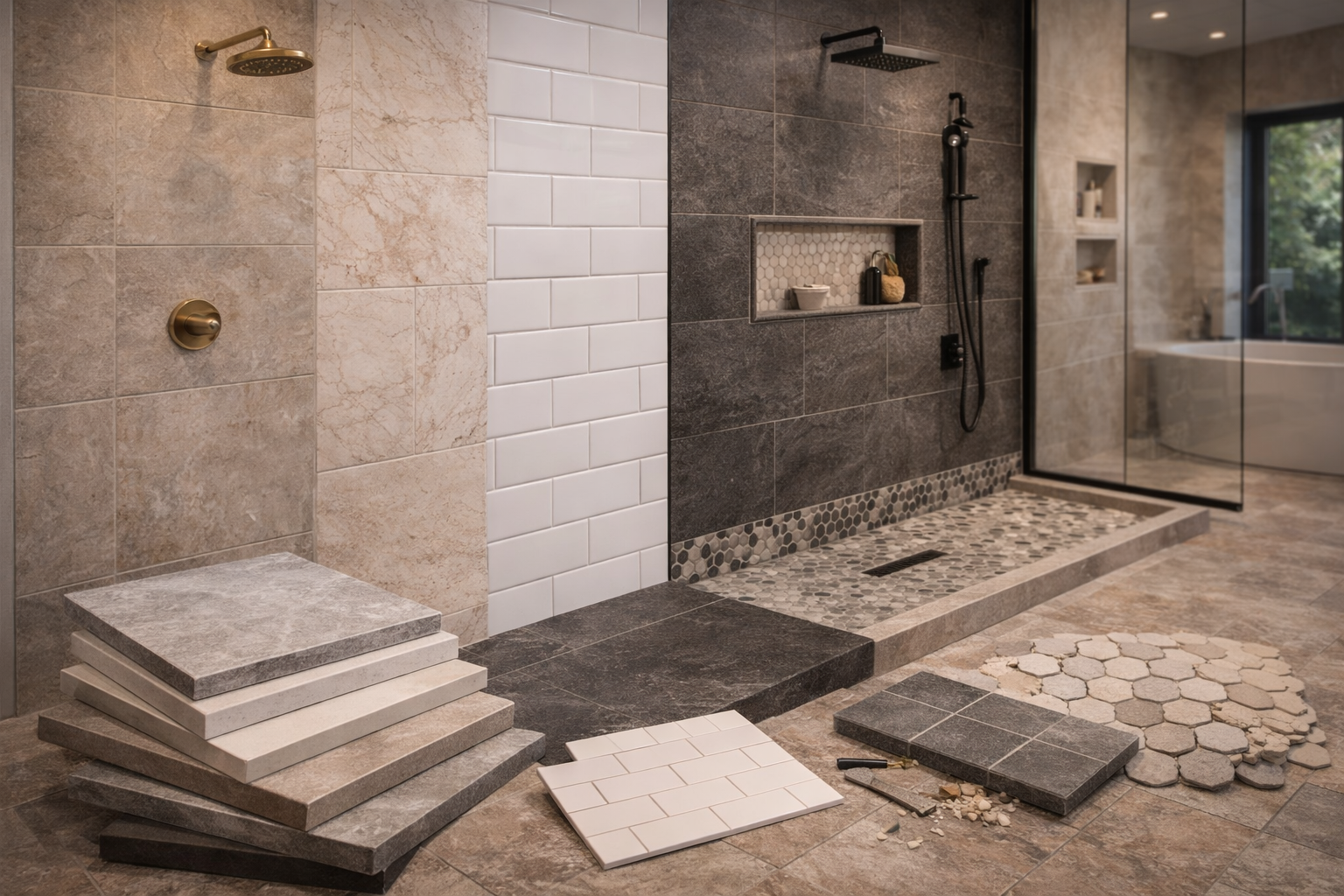
Common shower tile types include porcelain tile, ceramic tile, mosaic tile, large-format wall tile, subway tile, textured tile, and in some projects natural stone. The right tile depends on water exposure, cleaning preference, slip resistance needs on the floor, and the design goals of the shower. Projects with related upgrades often include choices around bathroom remodeling.
What Shower Tile Styles Are Most Common in Remodeling Projects
Large-format porcelain tile is common on shower walls because it reduces grout lines and creates a cleaner look. Mosaic tile is common on shower floors because smaller pieces can follow the slope more easily and provide more grip. Subway tile remains common in many showers because it is familiar, versatile, and fits many design styles.
When Does One Tile Type Make More Sense Than Another
Large wall tile often makes more sense when the goal is cleaner lines and lower grout maintenance. Mosaic tile makes more sense where the surface has to follow a slope or where more traction is needed underfoot. The best choice depends on the part of the shower being tiled and how the shower will be used.
How Do Layout and Room Size Affect Shower Tile
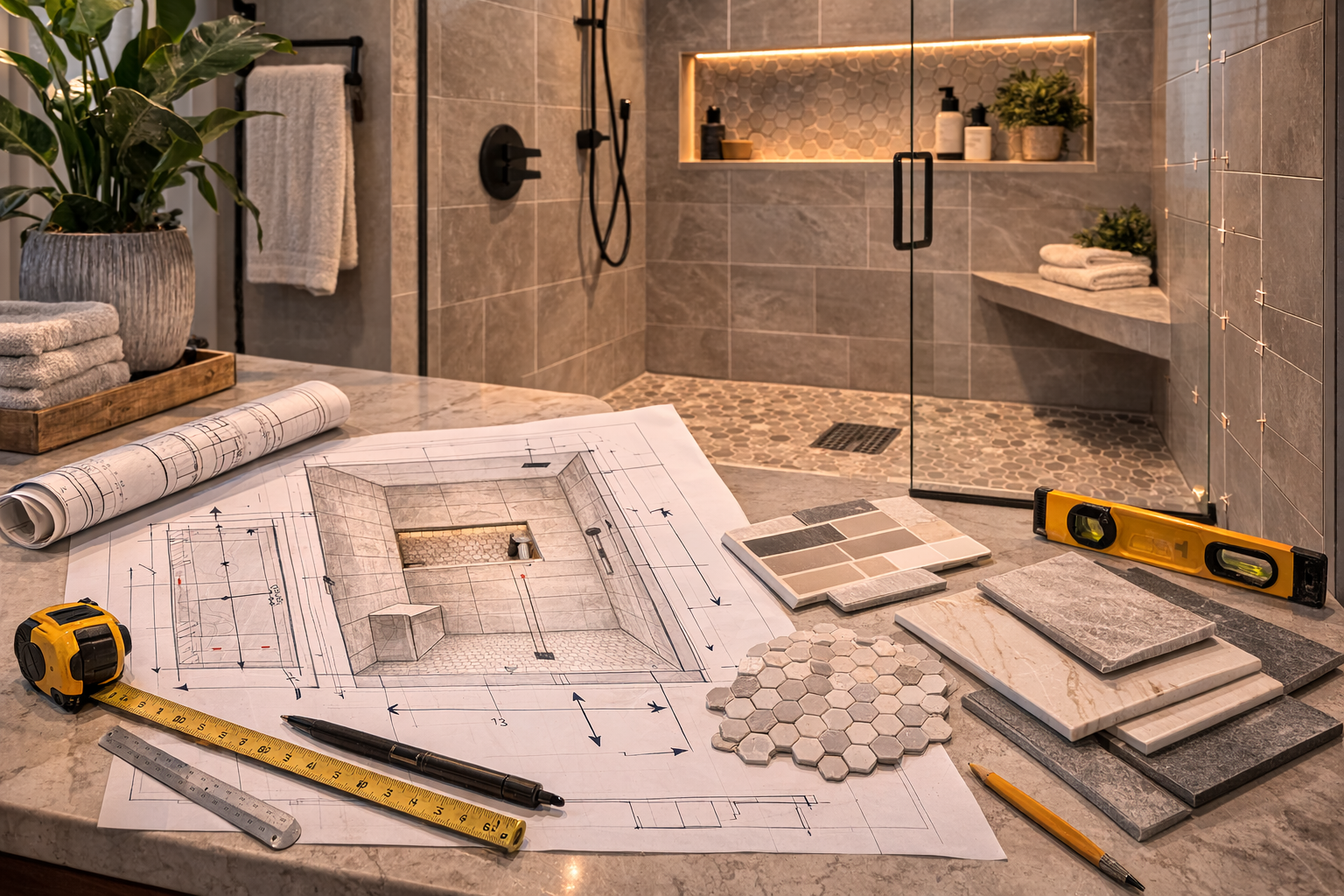
Layout and room size affect how shower tile should be sized, spaced, and detailed. A tile pattern that looks good in a large shower may look busy or chopped up in a smaller one. The tile layout also has to work around niches, benches, drain positions, shower valves, and the line where the glass will sit.
Why Does Tile Layout Matter So Much in a Shower
Tile layout matters because the eye notices cuts, grout line alignment, niche edges, and how cleanly the tile finishes at corners and trim. In practical remodel work, a well-planned layout can make basic tile look much better, while a poorly planned layout can make expensive tile look rushed.
How Does Shower Size Change the Best Tile Strategy
In a smaller shower, large wall tile may help the space feel calmer and less busy if the cuts are planned well. In a larger shower, the layout may support more dramatic tile patterns, accent walls, or feature niches. The best tile strategy depends on the proportions of the shower and not just the tile sample itself.
What Materials and Components Are Used in Shower Tile Work
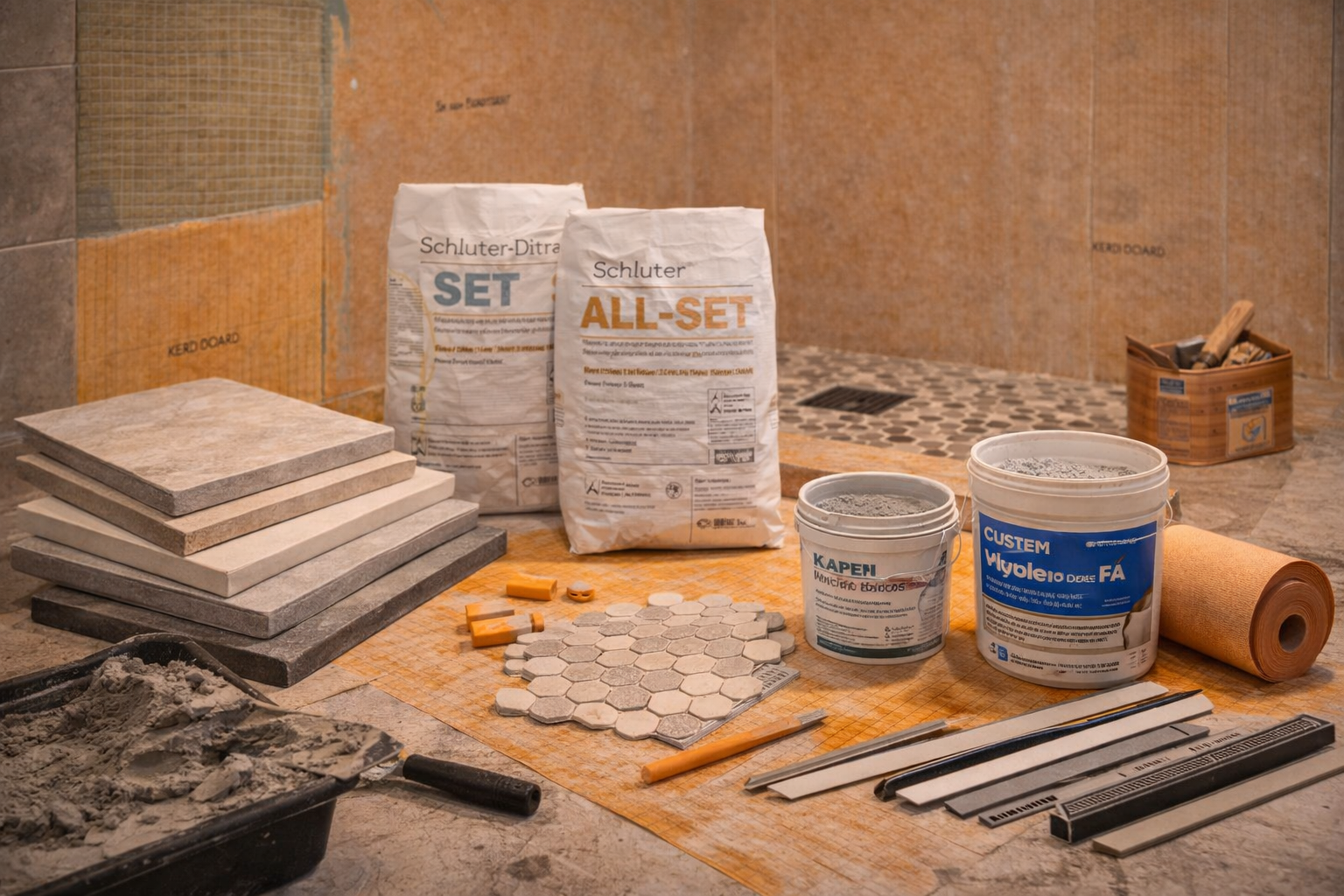
Shower tile work uses more than the tile itself. A full tile system may include waterproofing membrane, backer board, thinset mortar, grout, trim pieces, sealants, and substrate preparation that supports the tile over time. The visible tile only performs well if the system behind it is built correctly.
What Tile and Grout Materials Are Common in Shower Work
Porcelain and ceramic tile are common on shower walls, while mosaic tile is common on shower floors. Grout type also matters because different grouts offer different maintenance and stain-resistance performance. The tile and grout should be chosen together rather than as separate afterthoughts. When comparing stone surfaces, it can help to review Natural Stone Institute guidance.
What Supporting Materials Matter Behind the Tile
Waterproofing membranes, backer board, mortar, sealants, and tile trim matter because they support the tile and protect the structure behind it. Shower tile is not just decoration. It is the visible surface of a system that has to manage water every day.
What Upgrades Can Be Added With Shower Tile
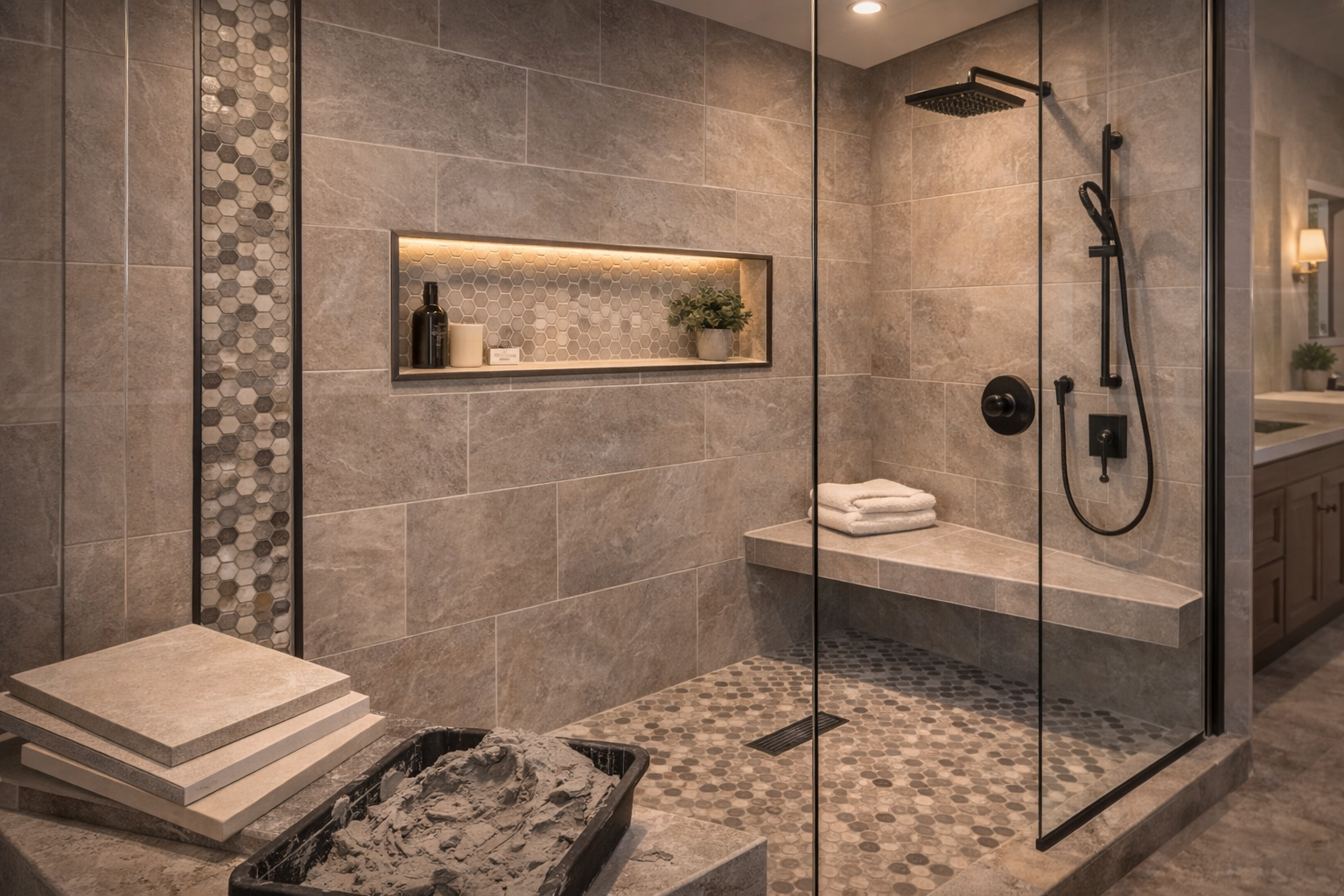
Shower tile work is often the best time to add upgrades that improve both function and appearance. Common upgrades include recessed niches, benches, accent strips, large-format tile layouts, contrasting floor tile, premium edge trim, and better coordination with frameless glass and plumbing trim.
What Functional Upgrades Are Most Useful With Shower Tile
Functional upgrades often include niches placed at usable heights, tile choices that reduce cleaning difficulty, slip-friendly floor tile, and trim details that make corners and edges more durable. These upgrades matter because the shower has to work well in daily use, not just look finished in a photo.
What Design Upgrades Usually Happen at the Same Time
Shower tile projects often include feature walls, niche tile accents, matching floor and wall transitions, upgraded grout color choices, and more refined coordination with glass and plumbing hardware. Once the shower tile changes, the rest of the shower design often needs to be tightened up too.
What Installation Details Matter in Shower Tile Work
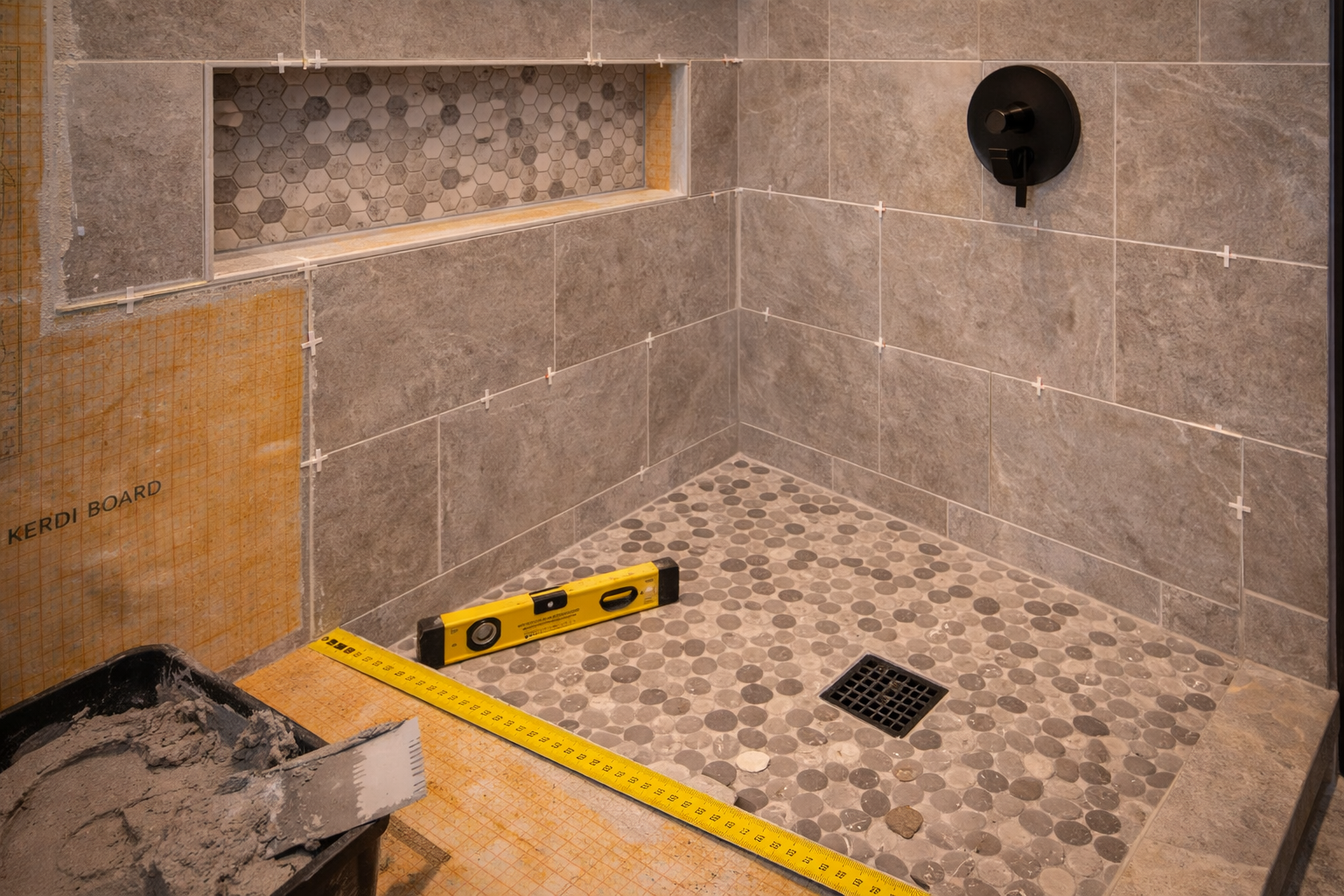
Shower tile installation depends on waterproofing, substrate prep, floor slope, corner alignment, grout spacing, and how the tile layout lands around the niche, drain, and valve. If the hidden prep is wrong, the tile may fail even if the surface looks good at first. Homeowners who want to dig deeper into this feature can review shower remodel.
Why Do Waterproofing and Slope Matter So Much
The shower has to direct water correctly and keep that water from reaching the structure behind the tile. Waterproofing and slope are what make the shower work over time. If they are wrong, the tile installation can fail regardless of the tile quality.
What Alignment and Finish Problems Show Up During Installation
Common issues include crooked grout lines, poorly placed tile cuts, corners that do not line up, floor tile that does not meet the drain cleanly, and niche layouts that feel off-center. These are practical details that strongly affect whether the finished shower looks clean and professional.
What Affects Shower Tile Cost
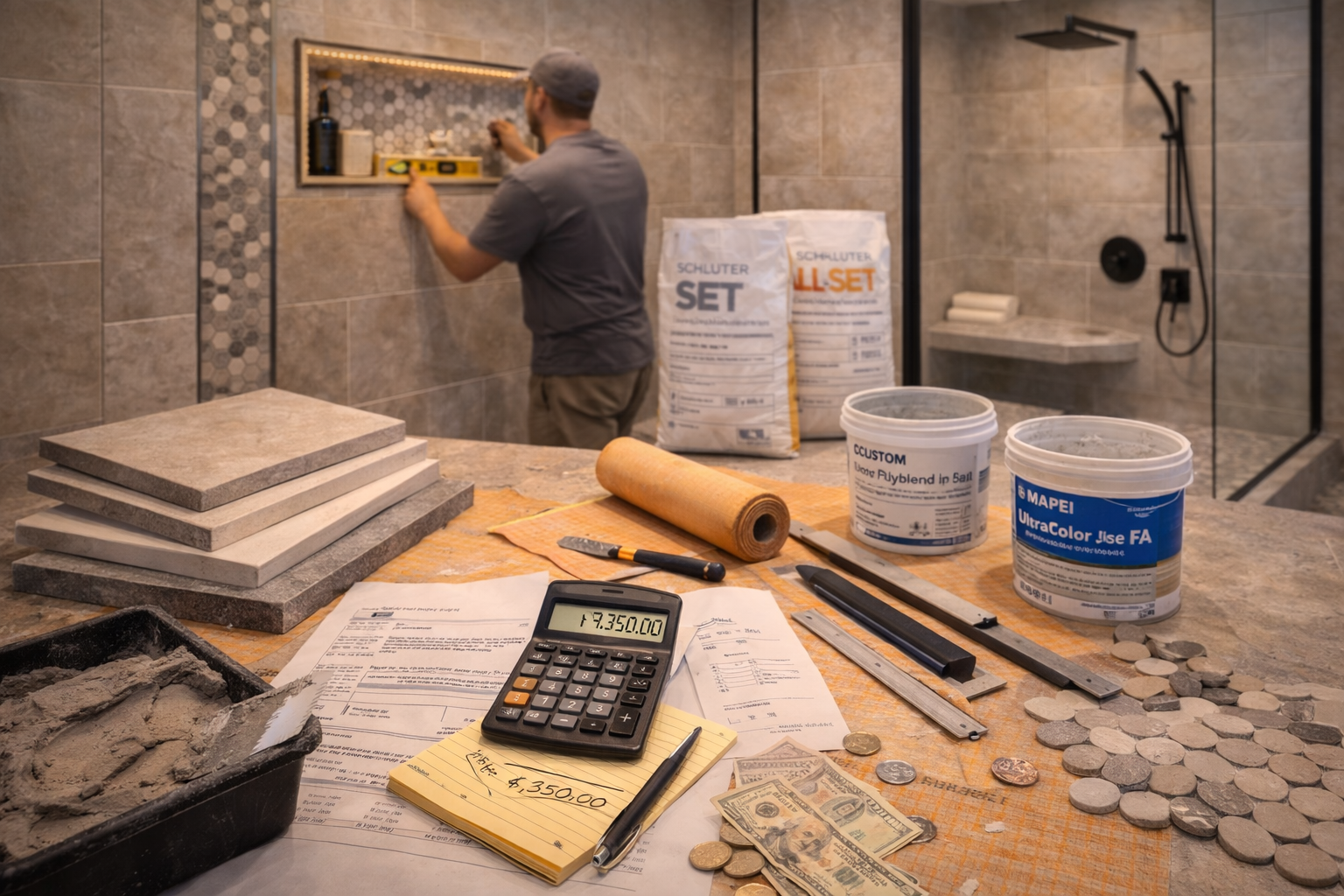
Shower tile cost usually depends on the tile material, tile size, layout complexity, waterproofing method, trim details, and labor required to install it cleanly. A simple tile layout with standard wall tile is very different from a shower with multiple niches, mosaic floors, feature walls, and detailed trim work.
Which Shower Tile Choices Usually Raise the Cost
Costs usually rise with natural stone, specialty tile, large-format tile that needs more precise handling, custom patterns, accent walls, premium grout, and more detailed niche and trim work. The more complex the layout and finish package becomes, the more labor it usually needs.
How Do Labor and Existing Conditions Change the Budget
Labor costs go up when the shower has to be rebuilt, the walls are out of square, the substrate needs correction, or the waterproofing and prep are more involved than expected. Existing conditions matter because many tile problems start behind the finished surface, not in the tile itself.
What Mistakes Should Homeowners Avoid With Shower Tile
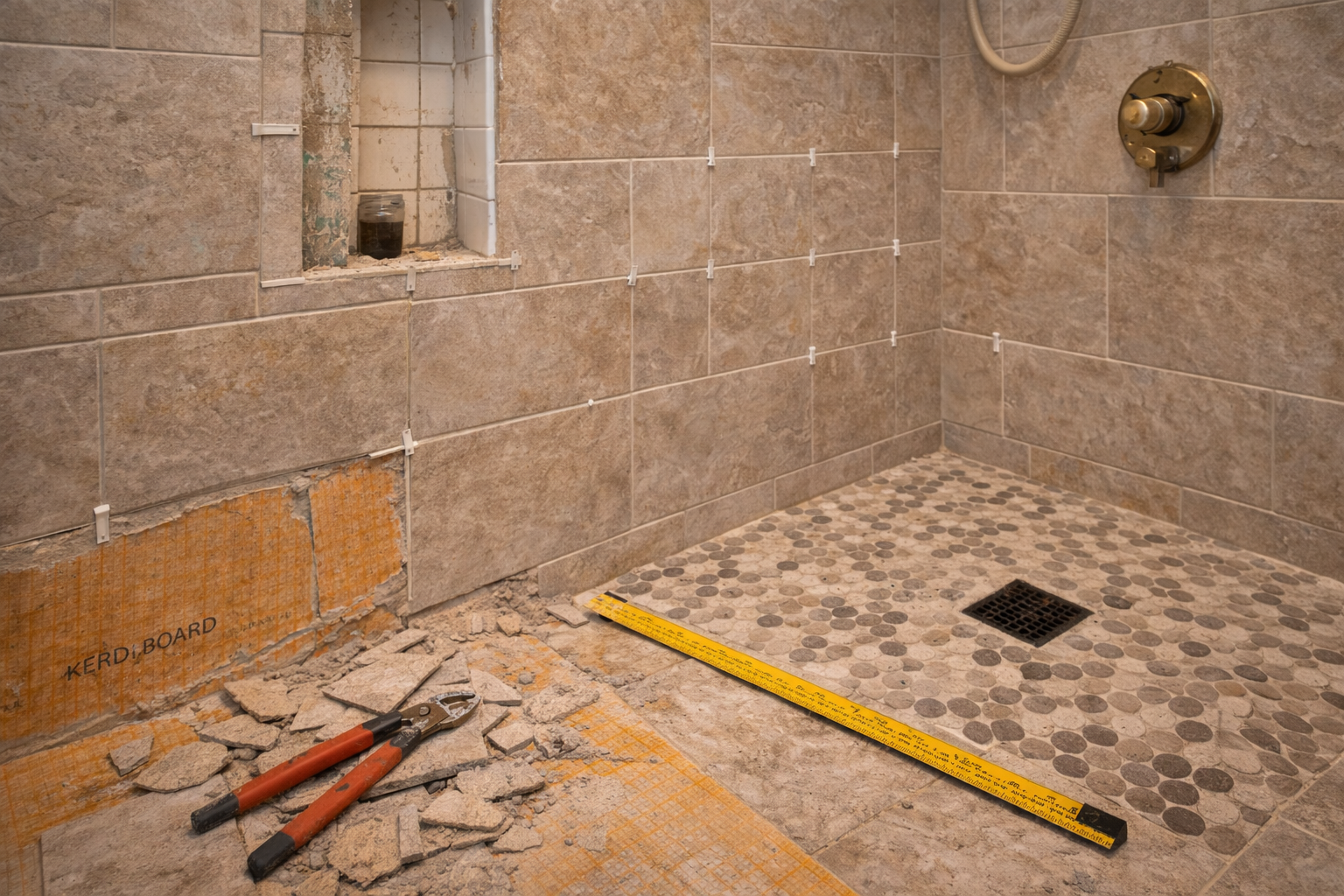
The biggest shower tile mistakes usually happen when the tile is chosen for appearance alone without enough attention to waterproofing, maintenance, and the overall layout. A tile that looks good in a showroom can still perform poorly if it creates too much grout, needs too much upkeep, or sits on a poorly built shower structure.
Why Is It a Problem to Focus on Tile Looks Without Checking Maintenance
Some tiles and patterns create more grout joints, more cleaning, and more long-term upkeep than homeowners expect. A good shower tile plan should match the households tolerance for maintenance as much as its design preferences.
Why Is It Risky to Ignore the System Behind the Tile
Tile is only the visible layer. If the waterproofing, slope, or substrate prep are wrong, the shower can fail behind the surface even when the tile itself still looks acceptable. That is why shower tile planning has to include construction, not just color and pattern. Homeowners weighing long-term operating costs often review Energy Saver guidance.
How Should You Plan Shower Tile
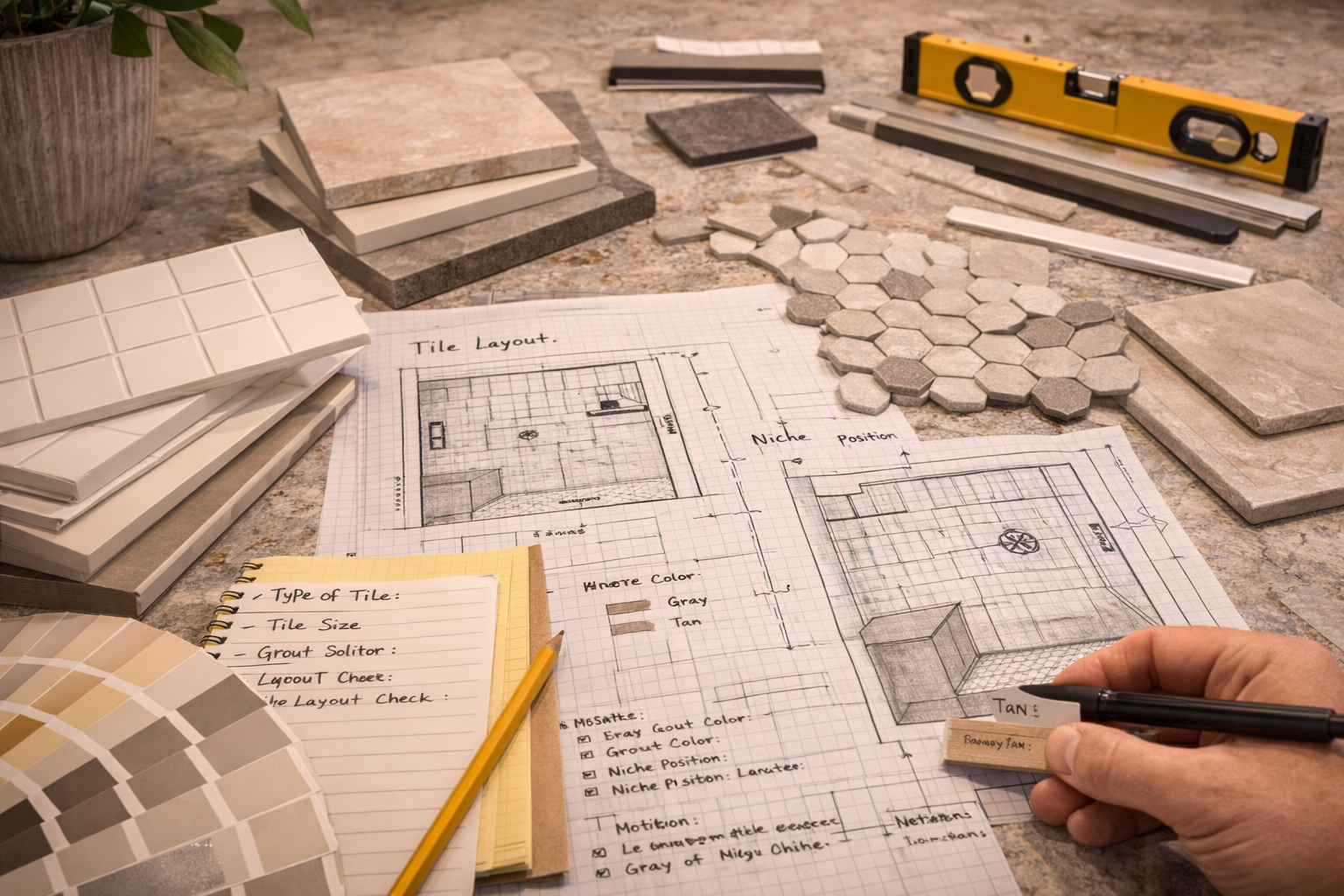
Shower tile should be planned by deciding how the shower will be built, how much maintenance the homeowner wants, and what tile layout fits the shower size and style best. The best plan balances waterproofing, layout, tile size, floor traction, niche detail, and finish coordination instead of treating the tile as a last-minute decorative layer.
What Should Be Decided Before Shower Tile Work Starts
Before construction starts, it helps to confirm tile type, tile size, wall vs floor tile choices, grout color, trim style, niche layout, drain detail, and whether the shower will use a framed, frameless, or more open glass setup. These decisions affect both the structure and the look of the finished shower.
How Can a Homeowner Prepare for the Installation Process
Homeowners should be ready for demolition, waterproofing work, tile lead times, layout review, and the time needed for careful installation and curing. Shower tile work usually goes better when the layout and materials are resolved before the installer begins rather than being changed during the build.

Related Shower Tile Topics
Shower tile projects overlap with shower remodeling, waterproofing, shower glass, niches, benches, and bathroom layout planning because tile affects both the look and the function of the whole shower. Related topics help homeowners compare whether they need only new tile or a broader shower rebuild.
Which Shower Tile-Related Pages Should Connect to This Topic
Strong related pages include shower remodels, frameless glass showers, walk-in showers, shower niches, waterproofing systems, and shower pan design. Those topics help break down the design and construction choices that shape a successful tile shower.
Which Bathroom Remodeling Topics Often Connect to Shower Tile Work
Shower tile work often connects to flooring, bathroom ventilation, layout changes, and full bathroom remodeling. In practical remodels, these pieces overlap because the shower is one of the most finish-sensitive and water-exposed parts of the room.
Frequently Asked Questions About Shower Tile
Porcelain tile is a common choice because it is durable, water-resistant, and available in many sizes and finishes.
Porcelain is often preferred because it is denser and typically handles moisture very well, but the right choice depends on the product and the application.
The best tile size depends on the shower size, layout, and design goals. Large-format tile is common on walls because it reduces grout lines and creates a cleaner look.
Smaller tile and mosaics are common on shower floors because they follow the slope more easily and can provide better traction.
Some materials and grout types may need sealing, while others may not. The answer depends on the tile and grout products being used.
Sometimes, but many shower tile projects also involve rebuilding the waterproofing and backing because problems behind the tile often need to be corrected too.
Proper waterproofing and drainage are some of the most important parts because they protect the structure behind the finished tile.
The timeline depends on the size of the shower, the condition of the existing structure, the tile layout, and the amount of waterproofing and prep work required.
It can improve appeal when the tile is well chosen and the shower looks clean, current, and properly built as part of the remodel.
The first step is deciding how the shower will be built and waterproofed, then choosing a tile layout and material that fit that construction plan.