

Floating Vanity Guide: Design, Storage, Costs, and Planning

Floating Vanity Guide Index
- Floating Vanity Overview
- When Does a Floating Vanity Make Sense
- What Types of Floating Vanities Are Common
- How Do Layout and Room Size Affect a Floating Vanity
- What Materials and Components Are Used in a Floating Vanity
- What Upgrades Can Be Added to a Floating Vanity
- What Installation Details Matter in a Floating Vanity
- What Affects Floating Vanity Cost
- What Mistakes Should Homeowners Avoid With a Floating Vanity
- How Should You Plan a Floating Vanity
- Related Floating Vanity Topics
- Frequently Asked Questions About Floating Vanities

Floating Vanity Overview
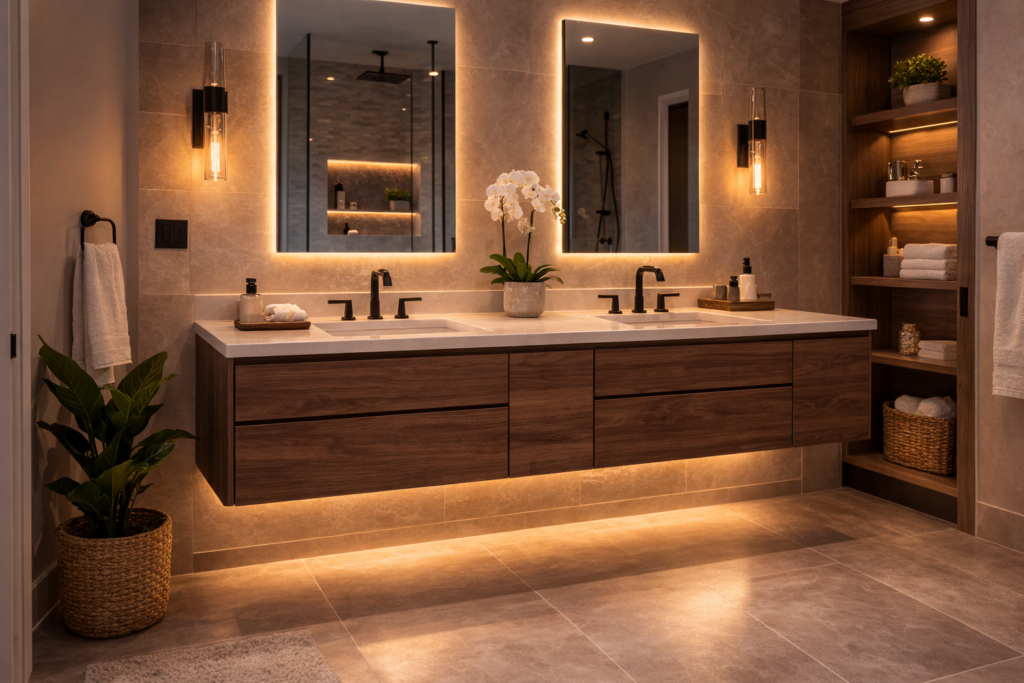
A floating vanity is a wall-mounted vanity that leaves the floor visible underneath instead of running all the way down to the finished floor like a standard cabinet. In practical remodel work, that can mean opening the wall for better blocking, planning the plumbing height carefully, coordinating mirror and lighting placement, and deciding how much storage the vanity needs while still keeping the cleaner open look that floating vanities are known for. A floating vanity changes both the style and the way the bathroom feels in use.
What Gets Updated During a Floating Vanity Project
The work may include the wall-mounted vanity cabinet, countertop, sink, faucet, blocking inside the wall, drain and supply alignment, mirror placement, vanity lighting, and finish details where the cabinet meets the wall. In some remodels, the flooring and base trim plan also change because the open space below the vanity becomes more visible.
What Is the Difference Between a Floating Vanity and a Standard Vanity
A standard vanity transfers its weight to the floor and usually hides the space below the cabinet. A floating vanity is mounted to the wall structure and keeps the floor area open below it. That open space can make the bathroom feel larger and easier to clean, but it also puts more importance on wall support, plumbing planning, and cabinet design.

When Does a Floating Vanity Make Sense
A floating vanity makes sense when the bathroom needs to feel more open, when easier floor cleaning matters, or when the remodel is aiming for a cleaner modern look. It can also make sense in smaller bathrooms where showing more floor area helps the room feel less crowded, as long as the vanity still provides enough usable storage. When the remodel includes this feature, bathroom remodeling can help homeowners understand the options in more detail.
What Bathroom Conditions Usually Point to a Floating Vanity
Common conditions include tight floor space, a bathroom that feels visually heavy, a modern design direction, and a sink wall where a wall-mounted cabinet can open up the room. Floating vanities are also useful when the floor finish is a major design feature and the remodel wants more of it visible.
When Is a Floating Vanity Not the Best Choice
A floating vanity is usually not the best choice when maximum enclosed storage is the top priority, when the wall structure makes mounting more complicated, or when the style of the bathroom fits a more traditional furniture-style vanity better. In some bathrooms, a standard vanity simply gives more storage per inch.
What Types of Floating Vanities Are Common
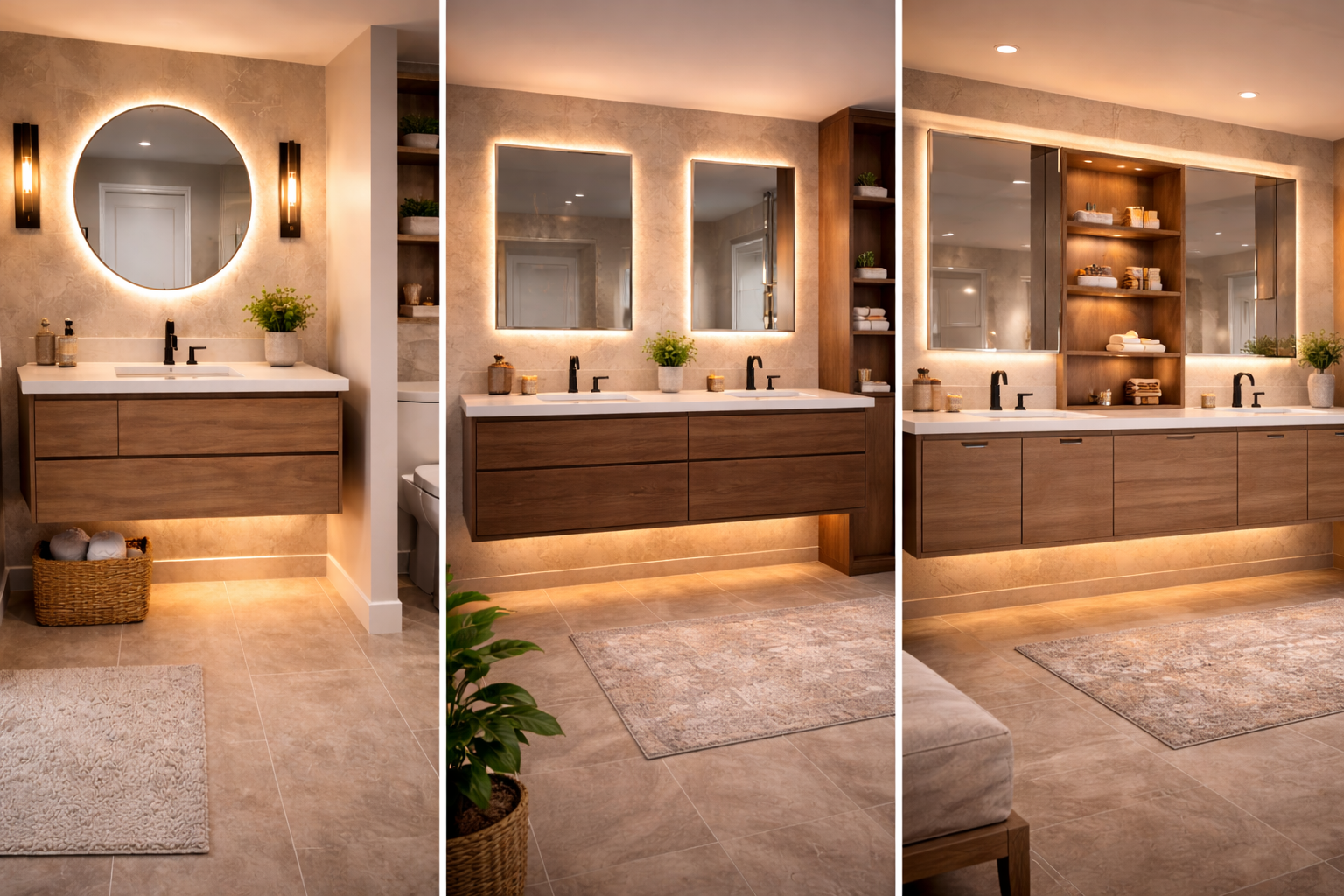
Common floating vanity types include single-sink floating vanities, double-sink floating vanities, custom wall-mounted vanities, drawer-based floating vanities, and floating vanities combined with tower storage or open shelf details. The right type depends on room size, storage goals, and the overall style of the remodel.
What Floating Vanity Styles Are Most Common in Remodeling Projects
Single-sink floating vanities are common in smaller bathrooms where the goal is to save visual space. Double-sink floating vanities are common in wider primary baths where the owner wants a cleaner modern look without giving up two sink stations. Drawer-based floating vanities are especially common because drawers make better use of the limited cabinet volume.
When Does a Custom Floating Vanity Make More Sense
A custom floating vanity makes more sense when the wall width is unusual, the storage needs are specific, or the cabinet has to be built around exact mirror, lighting, and plumbing conditions. Custom work is also common when the vanity wall is a major design feature in a higher-end bathroom remodel. Homeowners weighing long-term operating costs often review Energy Saver guidance.
How Do Layout and Room Size Affect a Floating Vanity
Layout and room size affect how wide the floating vanity can be, how much storage it can hold, and how much open floor area remains visible below it. A floating vanity should improve the room visually without shrinking the sink wall into something that no longer works well every day after layout changes.
Why Does Open Floor Visibility Matter in a Floating Vanity Design
The visible floor space under the cabinet is one of the main reasons homeowners choose a floating vanity. That open area can make a small bathroom feel less crowded and can give a larger bathroom a cleaner, more modern look. The effect works best when the cabinet is sized well and mounted at a height that feels intentional rather than awkward.
How Does Bathroom Size Change the Best Floating Vanity Strategy
In a smaller bathroom, the best floating vanity strategy may focus on one sink, slimmer depth, and enough drawer storage to keep the countertop clear. In a larger bathroom, the remodel may support a wider floating vanity, double sinks, and more dramatic wall-to-wall visual balance. The best strategy depends on whether the room needs openness, storage, or both.
What Materials and Components Are Used in a Floating Vanity
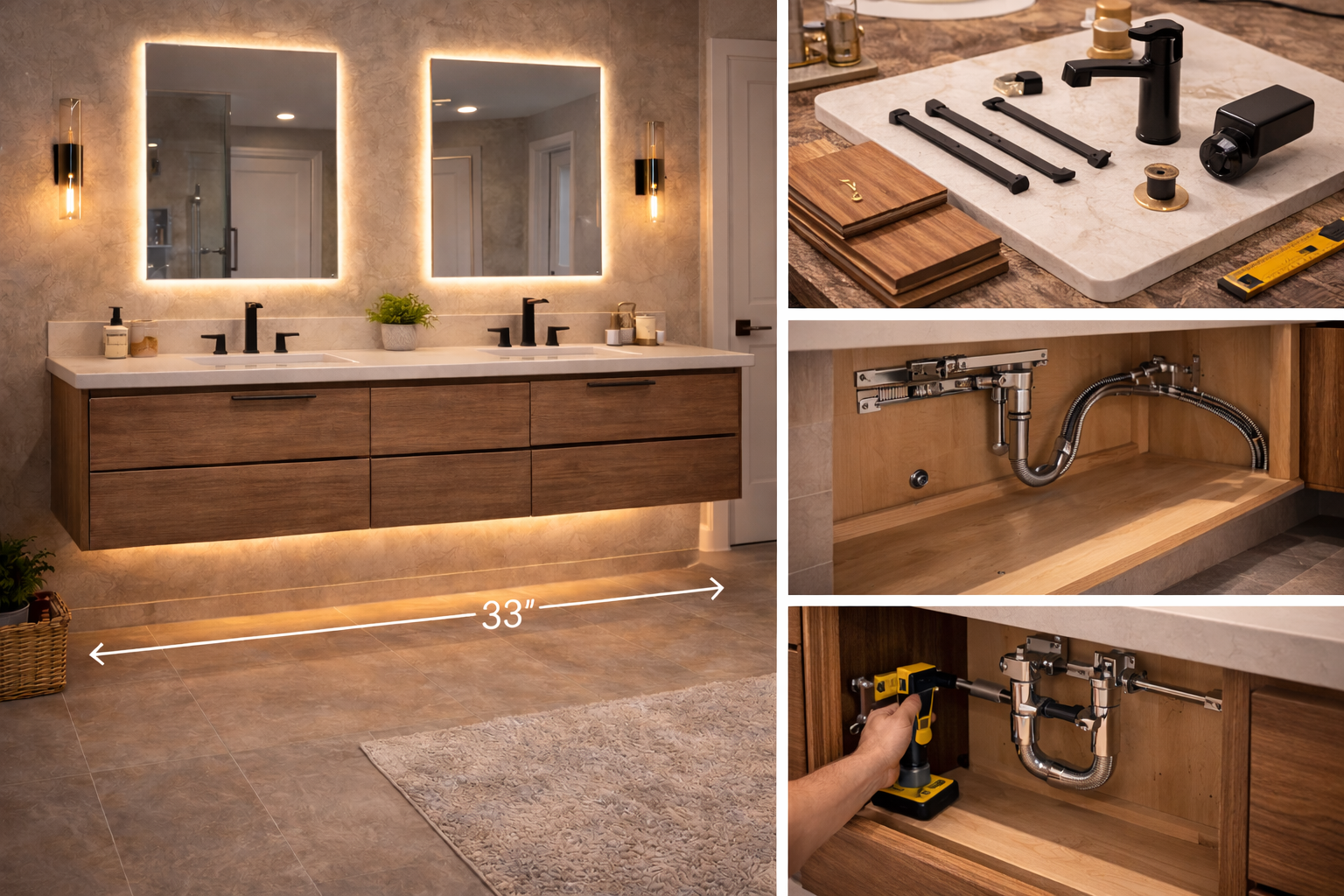
A floating vanity uses cabinet materials, countertop materials, sink and faucet parts, wall mounting hardware, internal blocking, and finish details that all have to work together. Because the cabinet is wall-mounted, both the visible materials and the hidden support system matter to the success of the remodel. During remodeling, it also helps to follow EPA indoor air quality guidance.
What Cabinet and Countertop Materials Are Common in Floating Vanities
Common cabinet materials include plywood or engineered cabinet boxes with durable painted, laminated, or wood veneer finishes. Common countertops include quartz, solid-surface materials, and stone. Quartz is popular because it performs well in bathrooms and gives a clean edge profile that fits the look of many floating vanity designs.
What Hardware and Plumbing Components Usually Change
Floating vanity projects often involve hidden mounting systems, heavy-duty brackets or support methods, drawer hardware, sink drains, supply lines, and trap placement designed around the wall-mounted cabinet. These components matter because a floating vanity depends on careful support and efficient use of the cabinet interior.
What Upgrades Can Be Added to a Floating Vanity
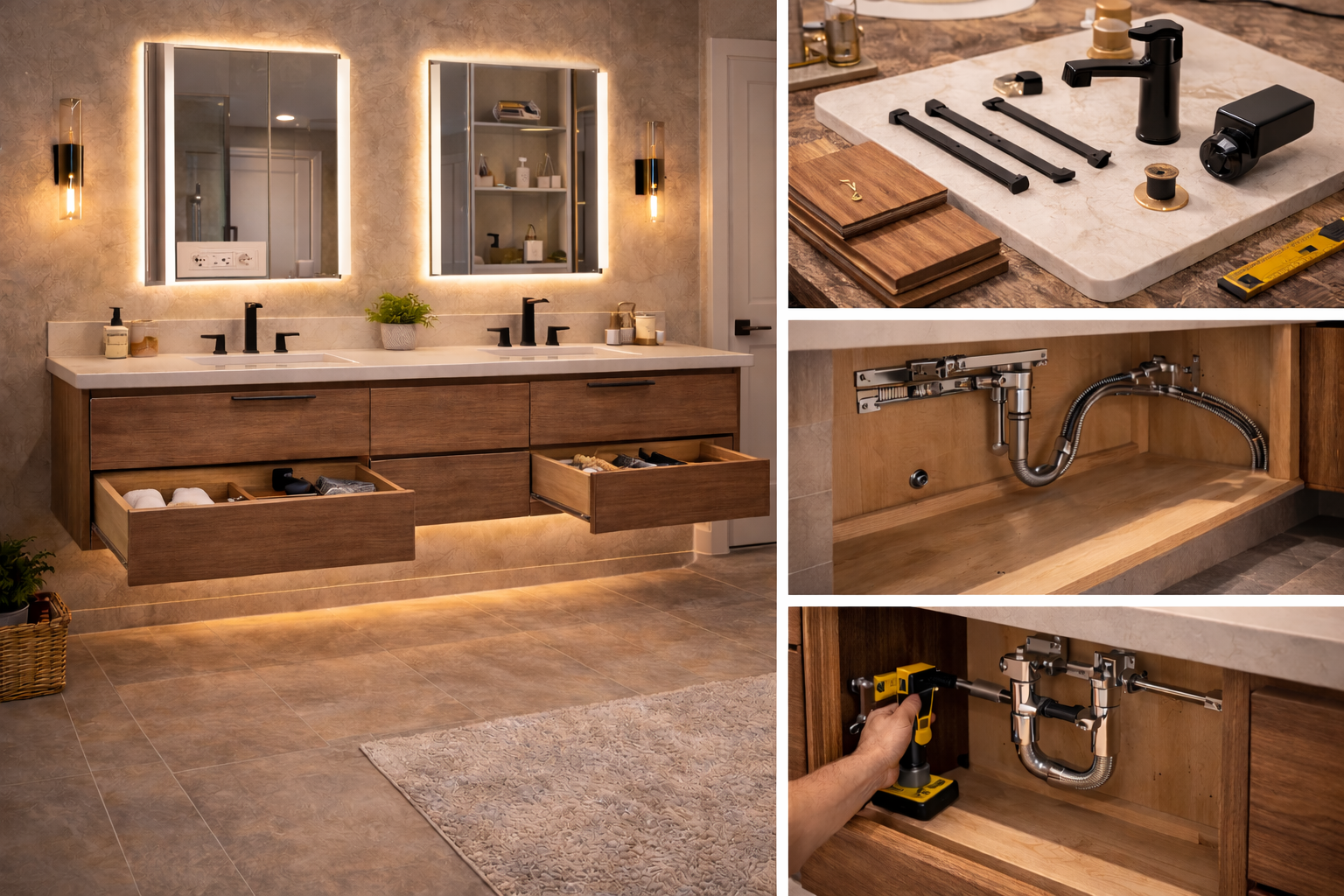
Floating vanity work is often the best time to add upgrades that reinforce the clean modern look while improving function. Common upgrades include under-vanity lighting, drawer organizers, mirrored medicine cabinets, wider drawers, custom sink spacing, integrated outlets where appropriate, and stronger mirror lighting.
What Functional Upgrades Are Most Useful in a Floating Vanity
Functional upgrades often include full-extension drawers, divided storage, lighting that serves the sink wall properly, and cabinet layouts that work around the plumbing without wasting the rest of the interior. Because floating vanities often have less cabinet volume than floor-based vanities, the storage layout matters even more.
What Design Upgrades Usually Happen at the Same Time
Floating vanity projects often include clean slab fronts, under-cabinet lighting, larger mirrors, sconces, more refined countertops, and updated wall finishes behind the vanity. These design upgrades help the vanity look intentional and integrated rather than like a regular cabinet hung off the wall.
What Installation Details Matter in a Floating Vanity
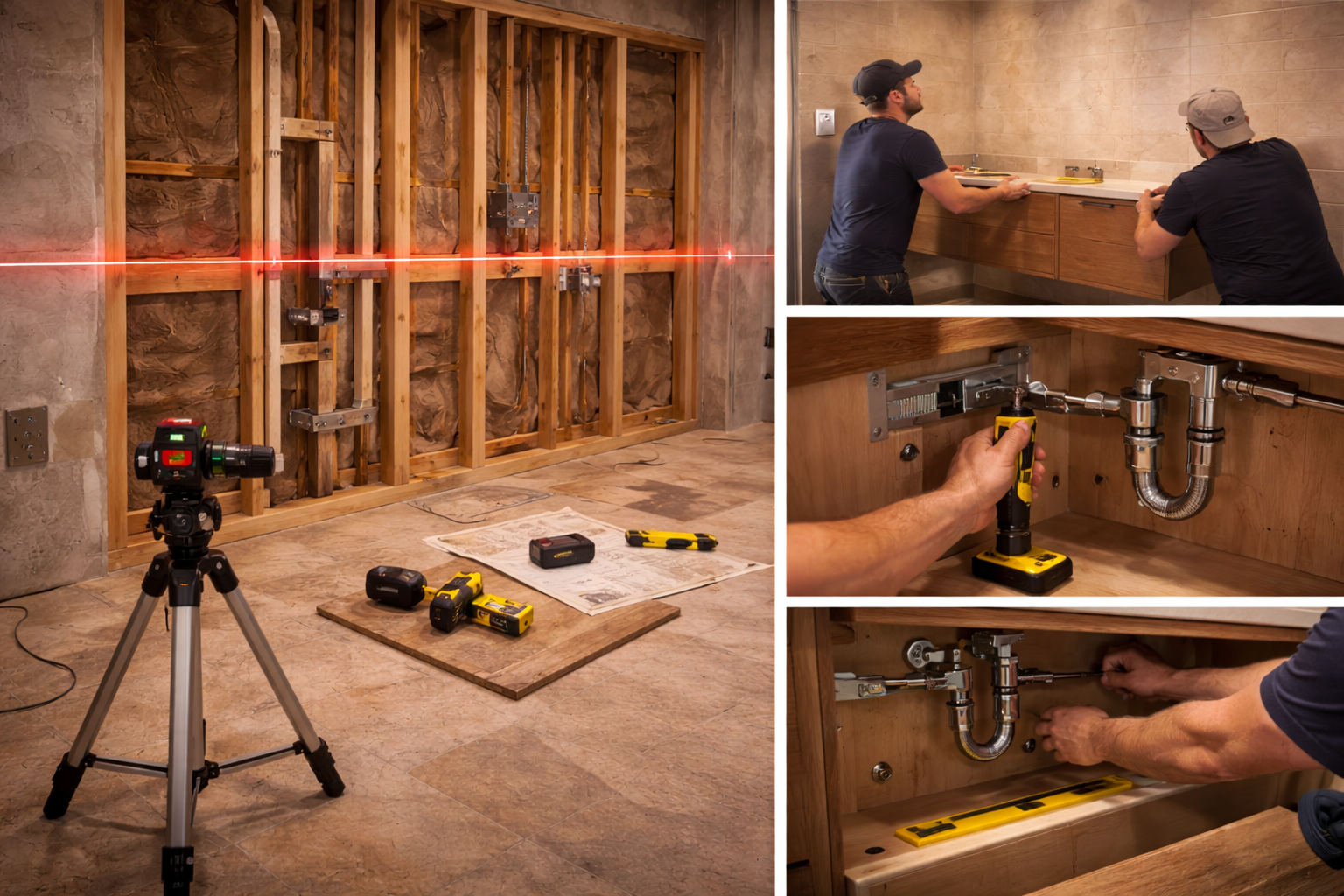
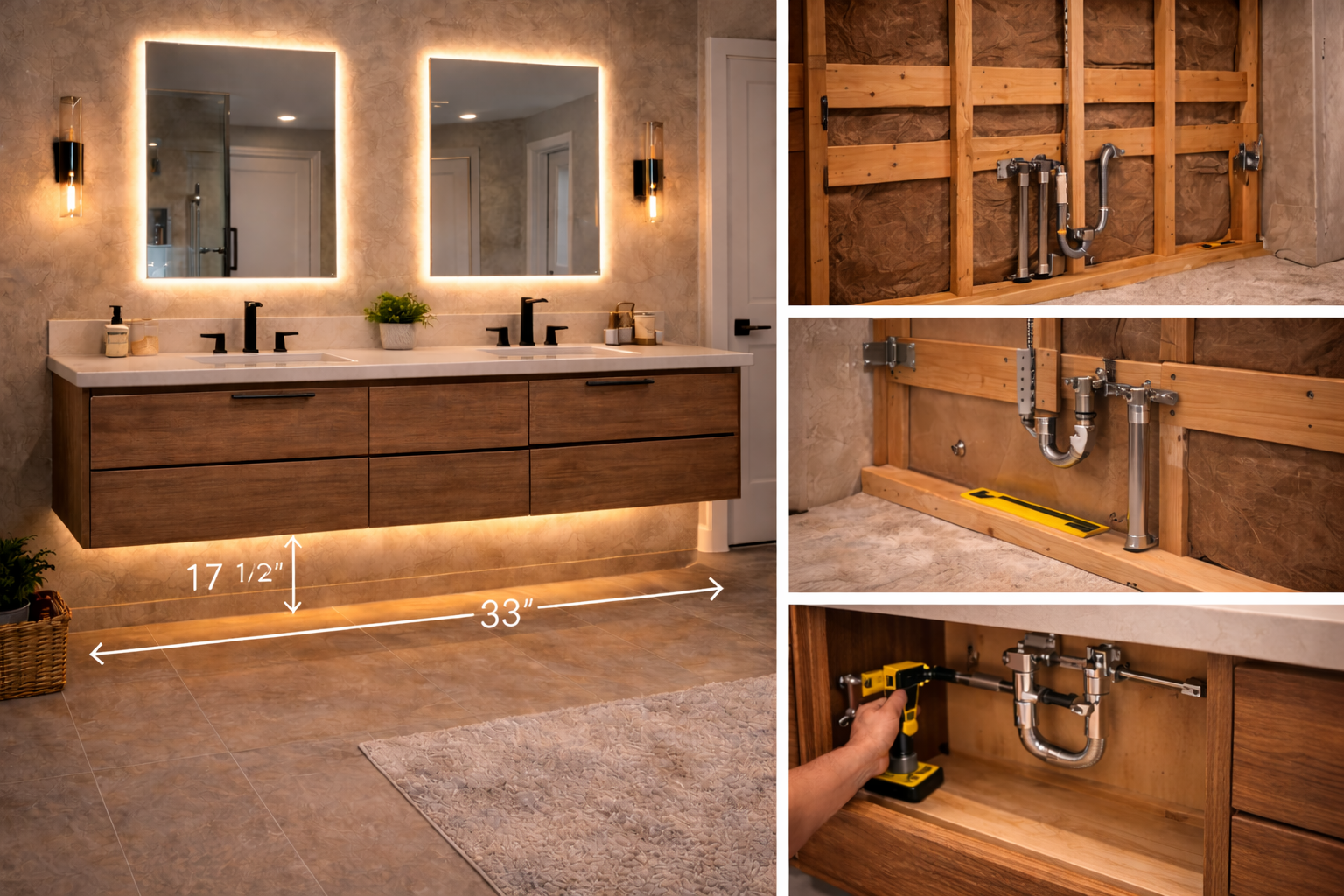
Floating vanity installation depends on wall blocking, cabinet support, mounting height, plumbing location, and how the countertop and sink align once the cabinet is fixed in place. These details matter more than they do with a floor-mounted vanity because the wall is carrying the cabinet instead of the floor.
Why Do Wall Blocking and Mounting Method Matter So Much
The cabinet has to be anchored to a wall structure that can carry the vanity, countertop, sink, and the daily load of use over time. If the wall blocking is weak or the mounting is wrong, the vanity may shift or fail. In practical remodel work, this is one of the main reasons floating vanity projects need careful framing and measurement. Projects with related upgrades often include choices around vanity remodel.
What Height, Plumbing, and Alignment Problems Show Up During Installation
Common issues include mounting the vanity too high or too low, plumbing that lands in the wrong place for the drawers, and mirrors or lights that do not align well once the cabinet is installed. These details shape whether the floating vanity feels clean and intentional or simply difficult to use.
What Affects Floating Vanity Cost
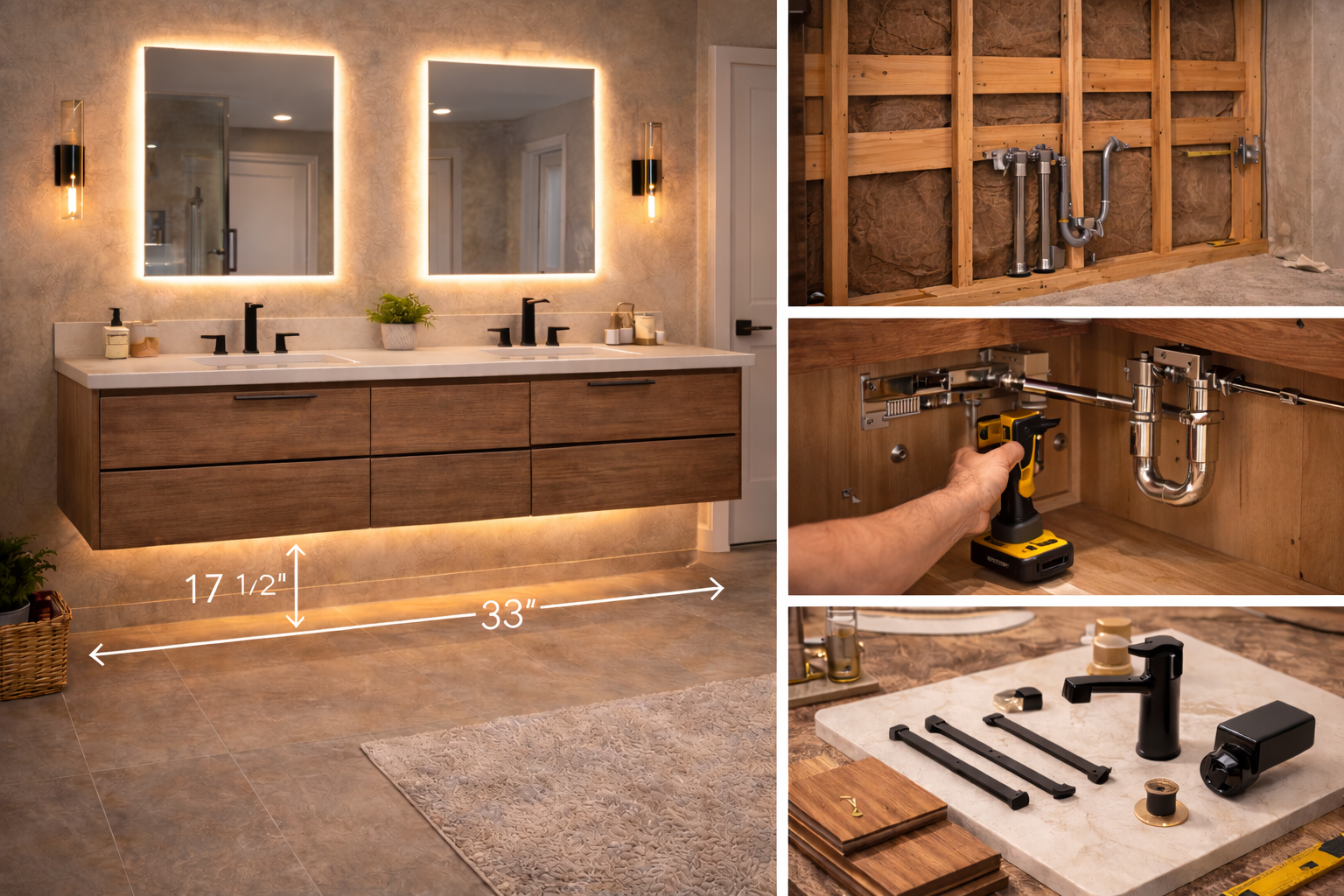
Floating vanity cost usually depends on vanity size, cabinet quality, mounting requirements, countertop material, storage design, and whether the plumbing and wall structure need modification. A floating vanity can cost more than a standard vanity when the wall support, cabinet design, and installation detail become more complex. For layout and clearance planning, many designers reference NKBA planning guidelines.
Which Floating Vanity Choices Usually Raise the Cost
Costs usually rise with custom cabinetry, double sinks, premium countertops, under-vanity lighting, specialty finishes, stronger wall prep, and more detailed mirror and lighting upgrades. The more tailored and feature-rich the vanity becomes, the more labor and coordination it usually requires.
How Do Labor and Existing Conditions Change the Budget
Labor costs go up when the wall needs opening for blocking, the plumbing needs to move, the floor or wall finish around the vanity changes, or the floating vanity is part of a larger sink wall rebuild. Existing conditions matter because wall-mounted work depends on what is actually behind the finished wall.
What Mistakes Should Homeowners Avoid With a Floating Vanity
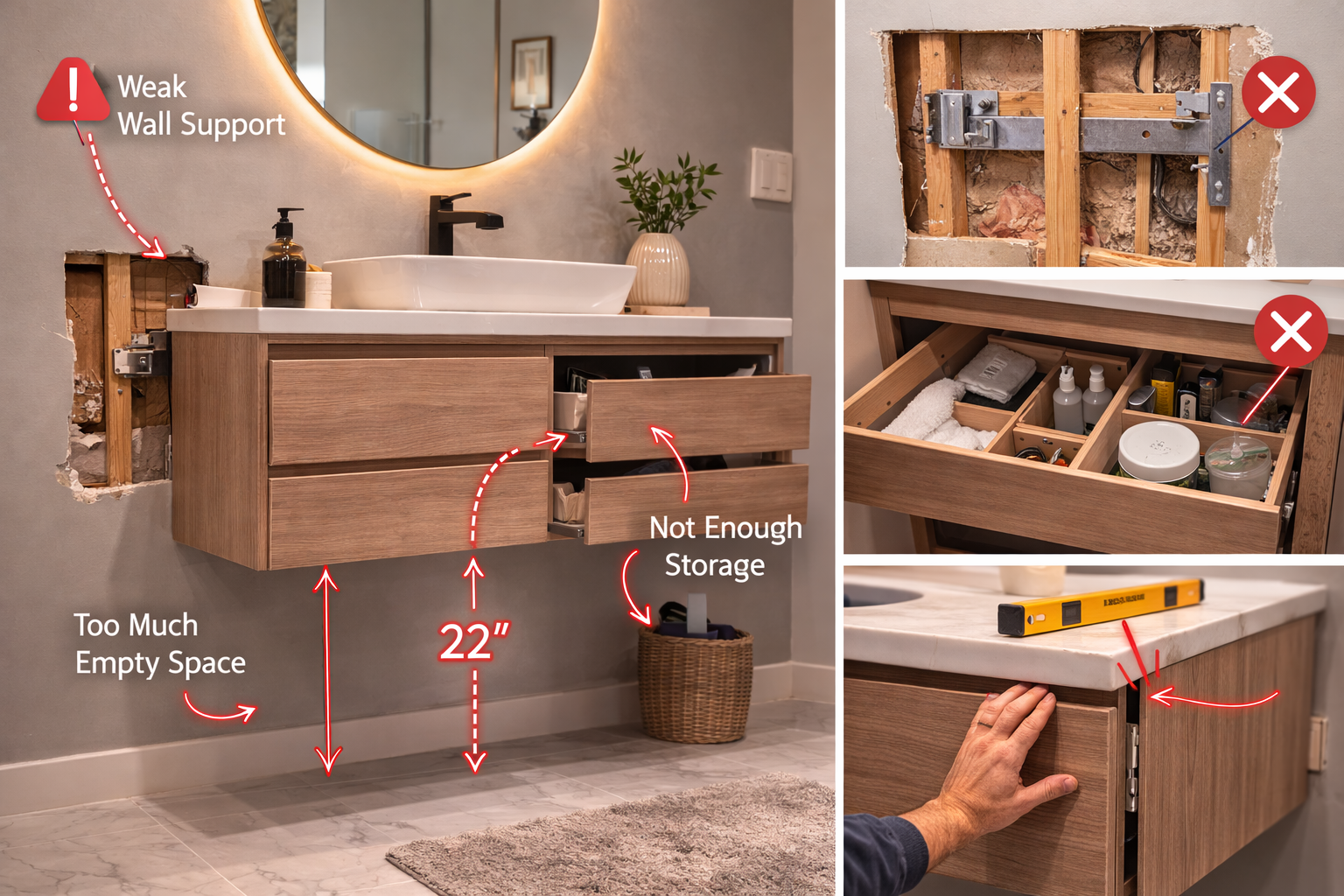
The biggest floating vanity mistakes usually happen when the look is prioritized without checking how the cabinet will be supported, how much storage it really offers, and whether the bathroom style actually fits a floating design. A floating vanity should improve the room, not just follow a trend.
Why Is It a Problem to Choose a Floating Vanity Without Enough Storage
Floating vanities can look lighter, but they often have less enclosed volume than a floor-mounted vanity of similar width. If the storage need is high and the cabinet is too small or poorly organized, the bathroom may end up cleaner visually but worse in daily use.
Why Is It Risky to Ignore the Wall Structure
A floating vanity depends on a strong wall connection. If blocking, framing, or mounting hardware are treated casually, the vanity may not perform the way it should over time. This is one of the main reasons floating vanity projects need real planning rather than just a style decision.
How Should You Plan a Floating Vanity
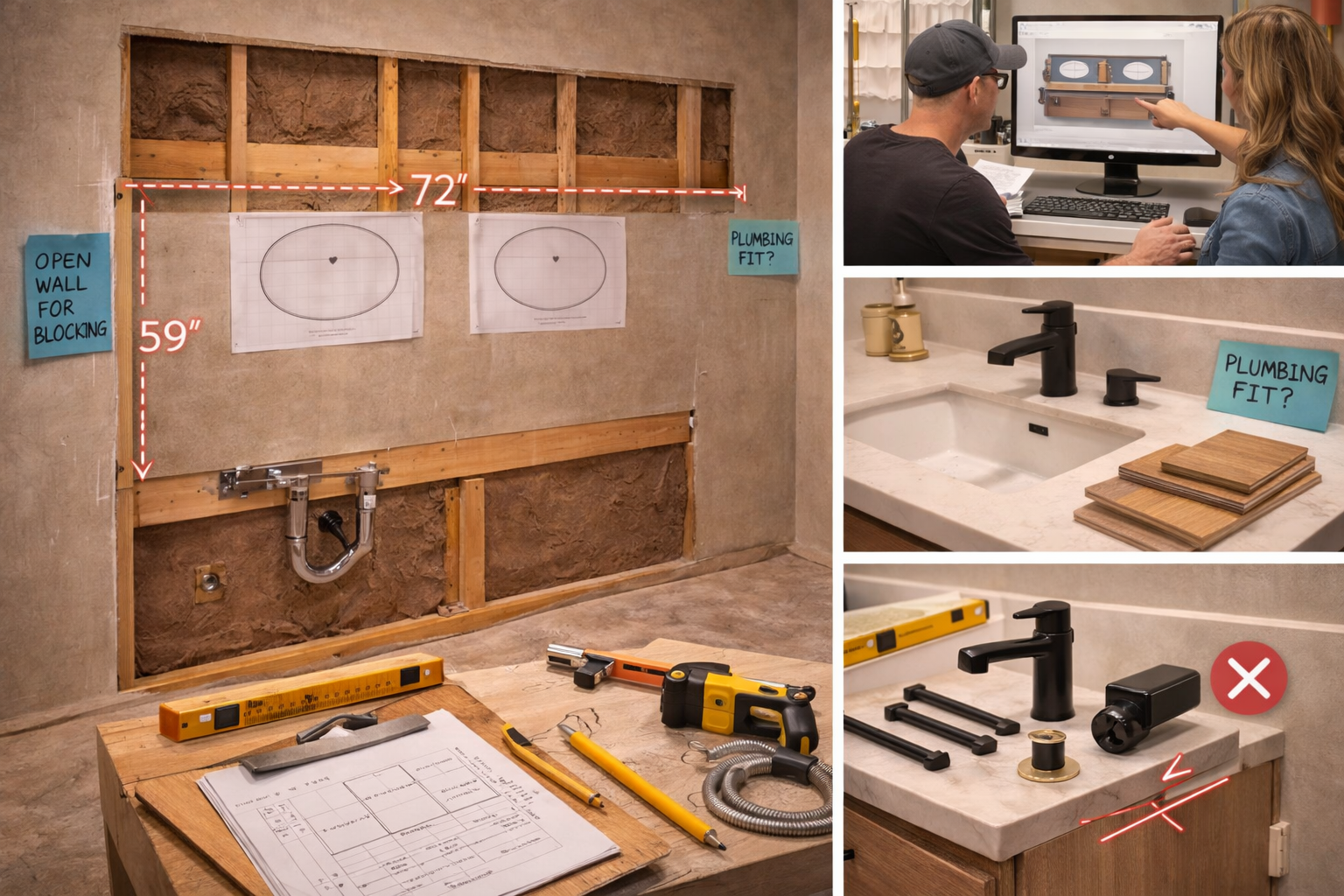
A floating vanity should be planned by measuring the wall carefully, deciding how much storage the bathroom actually needs, and confirming that the wall structure and plumbing can support the cabinet design. The best plan balances open visual space with practical storage, sink use, and mirror lighting.
What Should Be Decided Before Floating Vanity Work Starts
Before construction starts, it helps to confirm vanity width, cabinet depth, mounting height, sink count, drawer priorities, countertop material, mirror size, lighting layout, and whether the wall needs opening for blocking. These decisions affect fabrication, framing, plumbing, and final installation.
How Can a Homeowner Prepare for the Installation Process
Homeowners should be ready for site measurement, possible wall opening, fabrication lead times, plumbing coordination, countertop templating, and careful sequencing of the vanity, mirrors, and lights. Floating vanity work usually rewards more planning because the cabinet depends heavily on exact wall conditions.
Related Floating Vanity Topics
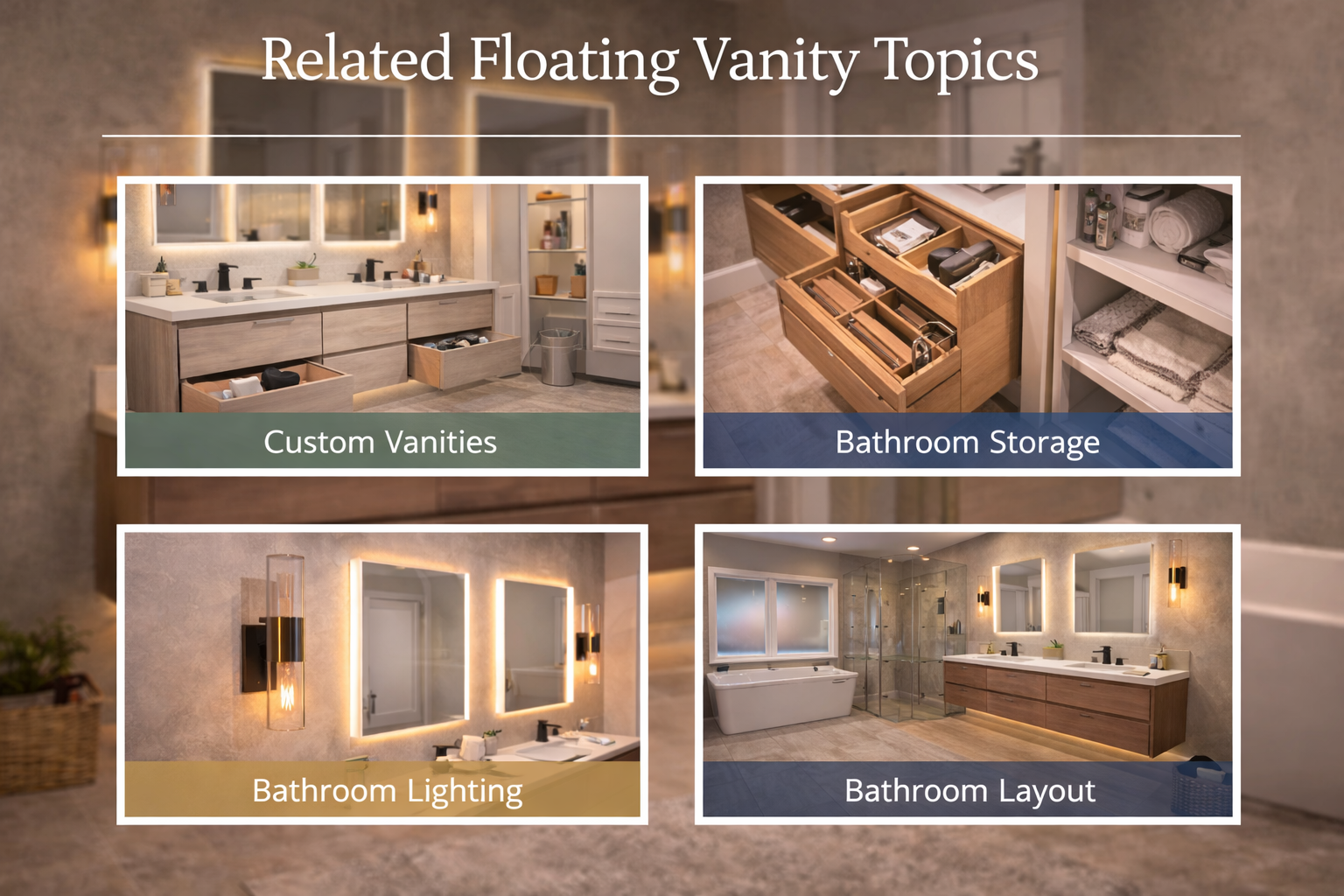
Floating vanity projects overlap with custom vanities, bathroom storage, bathroom lighting, mirror planning, and bathroom layout because all of those pieces shape how the sink wall works. Related topics help homeowners compare whether they need a floating vanity specifically or just a better vanity plan overall.
Which Floating Vanity-Related Pages Should Connect to This Topic
Strong related pages include custom vanity, double vanity, vanity remodels, bathroom storage, and bathroom lighting. Those topics help break down the design and function choices that shape a successful floating vanity project.
Which Bathroom Remodeling Topics Often Connect to Floating Vanity Work
Floating vanity work often connects to flooring, lighting, mirror planning, layout changes, and full bathroom remodeling. In practical remodels, these parts overlap because the sink wall is one of the main visual and functional zones in the room.
Frequently Asked Questions About Floating Vanity
A floating vanity is a wall-mounted vanity that leaves the floor visible underneath instead of resting on the floor like a standard vanity.
People often choose floating vanities to create a cleaner modern look, show more floor area, and make the bathroom feel more open.
They can, depending on the design. A floating vanity often has less enclosed volume than a floor-mounted vanity of the same width, so the drawer layout matters more.
Yes, but the cabinet and wall support have to be designed for the load. The support system matters as much as the countertop material.
They can work well in small bathrooms because the visible floor area can help the room feel more open, as long as the vanity still provides enough useful storage.
Yes. Floating vanities usually need proper blocking or a strong wall mounting system to support the cabinet, countertop, sink, and daily use.
Yes. Some wider floating vanities are built for double-sink layouts, especially in larger bathrooms or custom projects.
The timeline depends on whether the vanity is stock or custom and whether the wall, plumbing, or lighting need to be changed during the remodel.
It can improve appeal when it fits the style of the bathroom and gives the room a cleaner, more updated look.
The first step is measuring the wall and confirming that the bathroom has enough storage and the right wall structure to support the vanity design.