

Kitchen Pantry Storage Guide: Layout, Organization, Costs, and Planning

Kitchen Pantry Storage Guide Index
- Kitchen Pantry Storage Overview
- When Should Kitchen Pantry Storage Be Updated
- What Types of Kitchen Pantry Storage Are Common
- How Do Layout and Kitchen Size Affect Pantry Storage
- What Materials and Components Are Used in Kitchen Pantry Storage
- What Upgrades Can Be Added During a Pantry Storage Remodel
- What Installation Details Matter in Kitchen Pantry Storage
- What Affects Kitchen Pantry Storage Cost
- What Mistakes Should Homeowners Avoid With Kitchen Pantry Storage
- How Should You Plan Kitchen Pantry Storage
- Related Kitchen Pantry Storage Topics
- Frequently Asked Questions About Kitchen Pantry Storage
Kitchen Pantry Storage Overview
Kitchen pantry storage controls how dry goods, canned items, snacks, small appliances, and bulk supplies are organized and accessed every day. In practical remodel work, pantry storage means more than adding a few extra shelves. It involves shelf depth, cabinet height, pull-out access, zone planning, and how the pantry supports the rest of the kitchen workflow instead of becoming a clutter trap.
What Gets Updated During a Pantry Storage Remodel
The work may include pantry cabinets, tall storage units, pull-out trays, adjustable shelving, interior organizers, door storage, lighting, and in some kitchens the position of the pantry zone itself beside nearby cabinet runs. In larger remodels, pantry storage updates may also affect adjacent cabinet runs and appliance placement because the goal is to improve the whole storage plan.
What Is the Difference Between Adding Pantry Shelves and Reworking Pantry Storage
Adding shelves increases storage volume, but it does not always improve access or organization. Reworking pantry storage means deciding where food, bulk items, cookware, serving pieces, and small appliances should go, then designing the pantry so those items are easier to reach and easier to manage over time.
When Should Kitchen Pantry Storage Be Updated
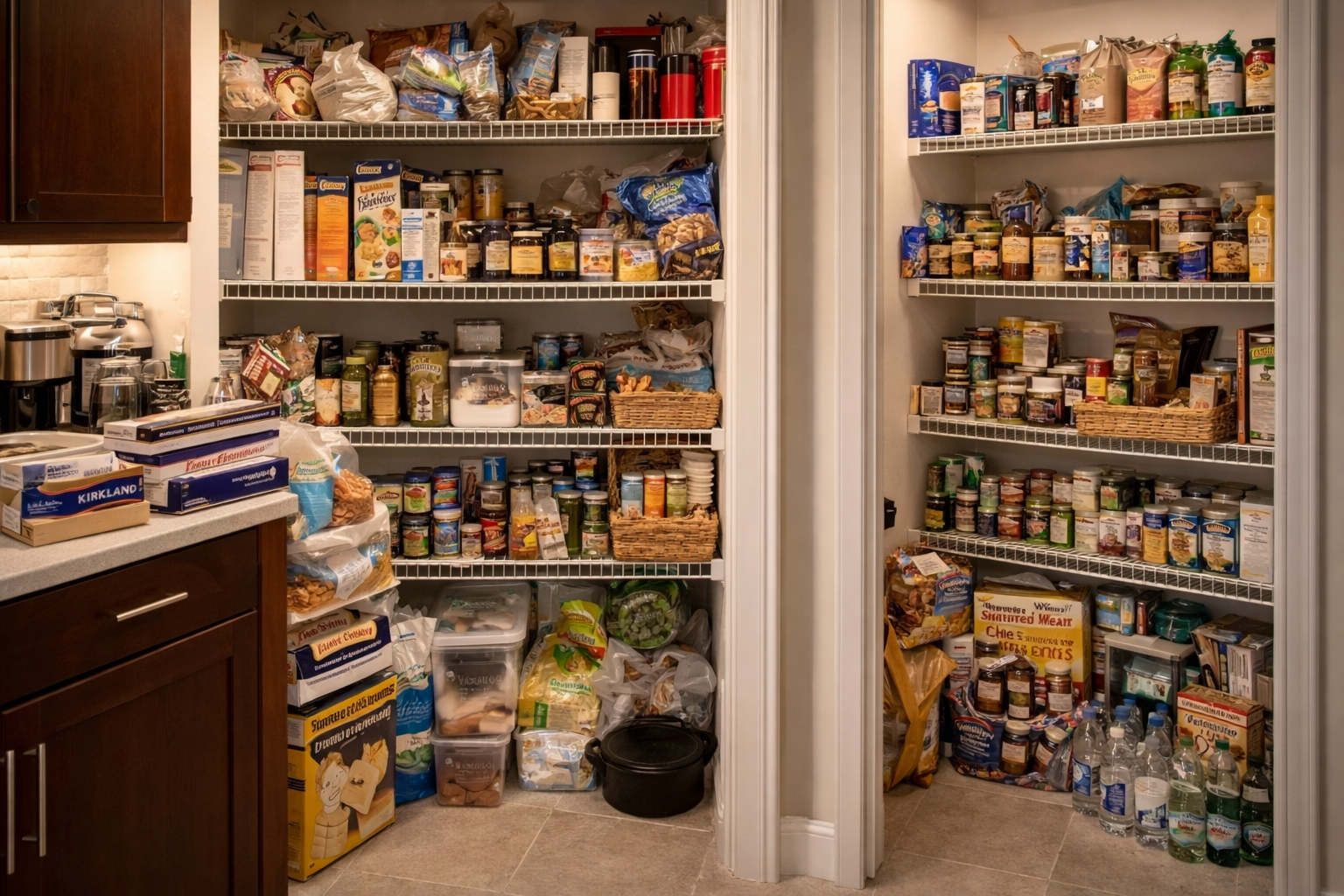
Kitchen pantry storage should usually be updated when the pantry is crowded, hard to access, poorly organized, or simply not matched to the households real storage needs. Common signs include lost items at the back of deep shelves, not enough room for bulk items, pantry overflow on countertops, and food storage that no longer works with the rest of the kitchen. Homeowners comparing performance goals can review Energy Saver ventilation guidance.
What Signs Show That Pantry Storage Is Not Working Well
Clear signs include deep shelves where items disappear, wasted vertical space, stacked products that are hard to see, not enough storage for large packages, and pantry areas that force the homeowner to move too many things just to reach one item. In some kitchens, the problem is not total storage volume but the lack of a useful layout.
What Remodeling Goals Usually Lead to Pantry Storage Upgrades
Pantry storage upgrades are common when homeowners want a cleaner kitchen, better bulk food organization, more hidden small appliance storage, or stronger connection between pantry storage and the main prep zone. They also happen when a kitchen remodel reveals that the pantry is the weakest part of the layout.
What Types of Kitchen Pantry Storage Are Common
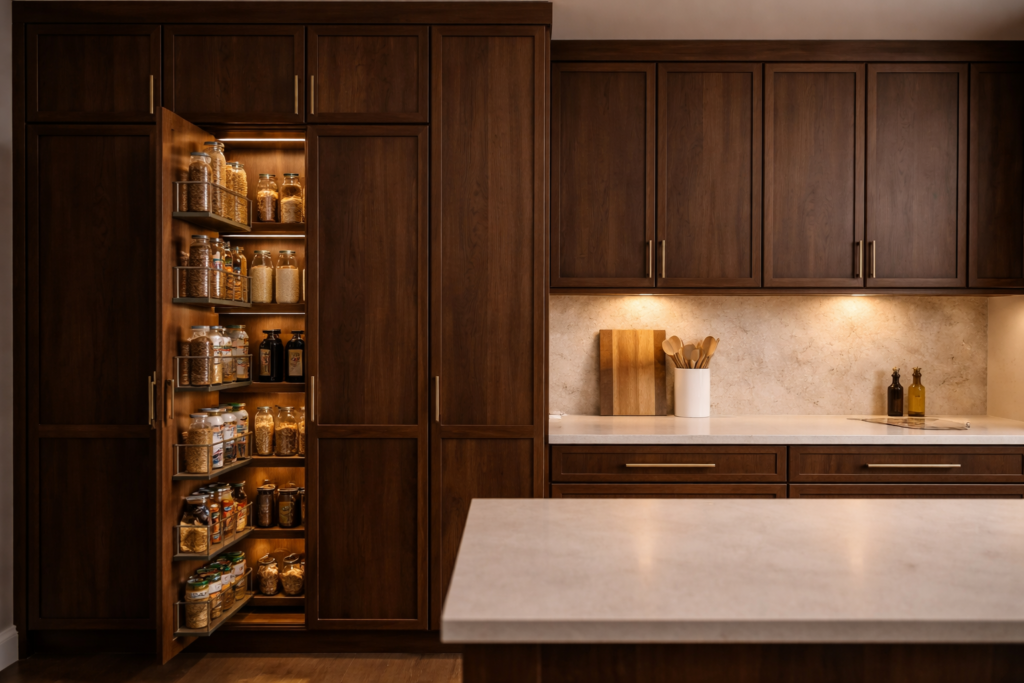
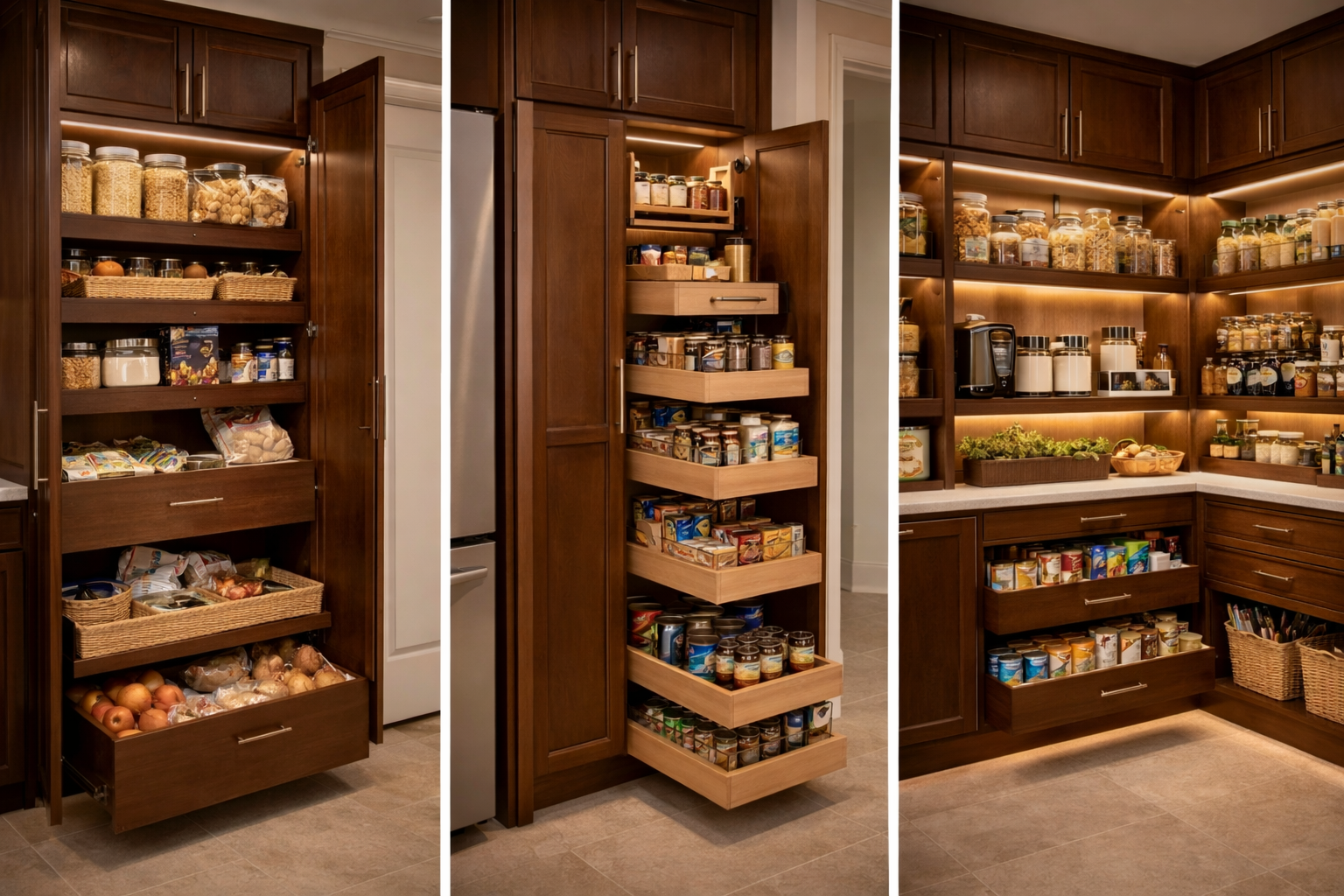
Common pantry storage types include tall pantry cabinets, pull-out pantry units, walk-in pantry shelving, reach-in pantry cabinets, built-in food storage walls, and pantry drawer systems designed for dry goods and packaged items. The right type depends on kitchen remodeling size, storage habits, and how much of the kitchen footprint can be dedicated to pantry space.
What Pantry Storage Styles Are Most Common in Remodeling Projects
Tall pantry cabinets are common because they give substantial closed storage without needing a separate room. Pull-out pantry systems are common when access is more important than raw shelf count. Walk-in pantries are common when the kitchen has the square footage to support a larger dedicated storage zone.
When Does One Pantry Type Make More Sense Than Another
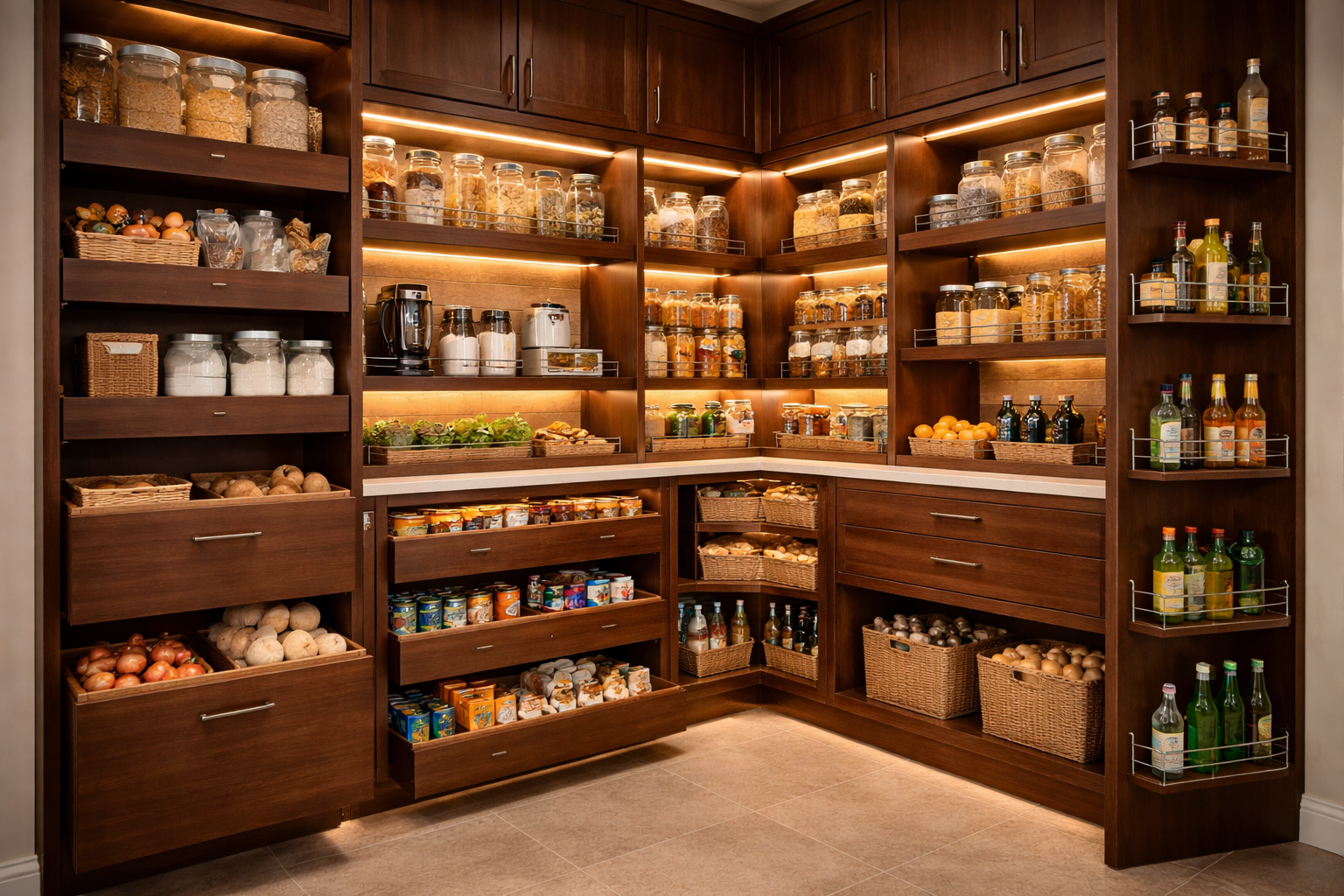
A tall cabinet pantry may make more sense when the kitchen needs compact, integrated storage close to the work zone. A walk-in pantry may make more sense when the household stores more bulk food, appliances, or serving items and the kitchen has enough room to support it. The best pantry type depends on actual storage habits instead of copying a one-size-fits-all plan.
How Do Layout and Kitchen Size Affect Pantry Storage
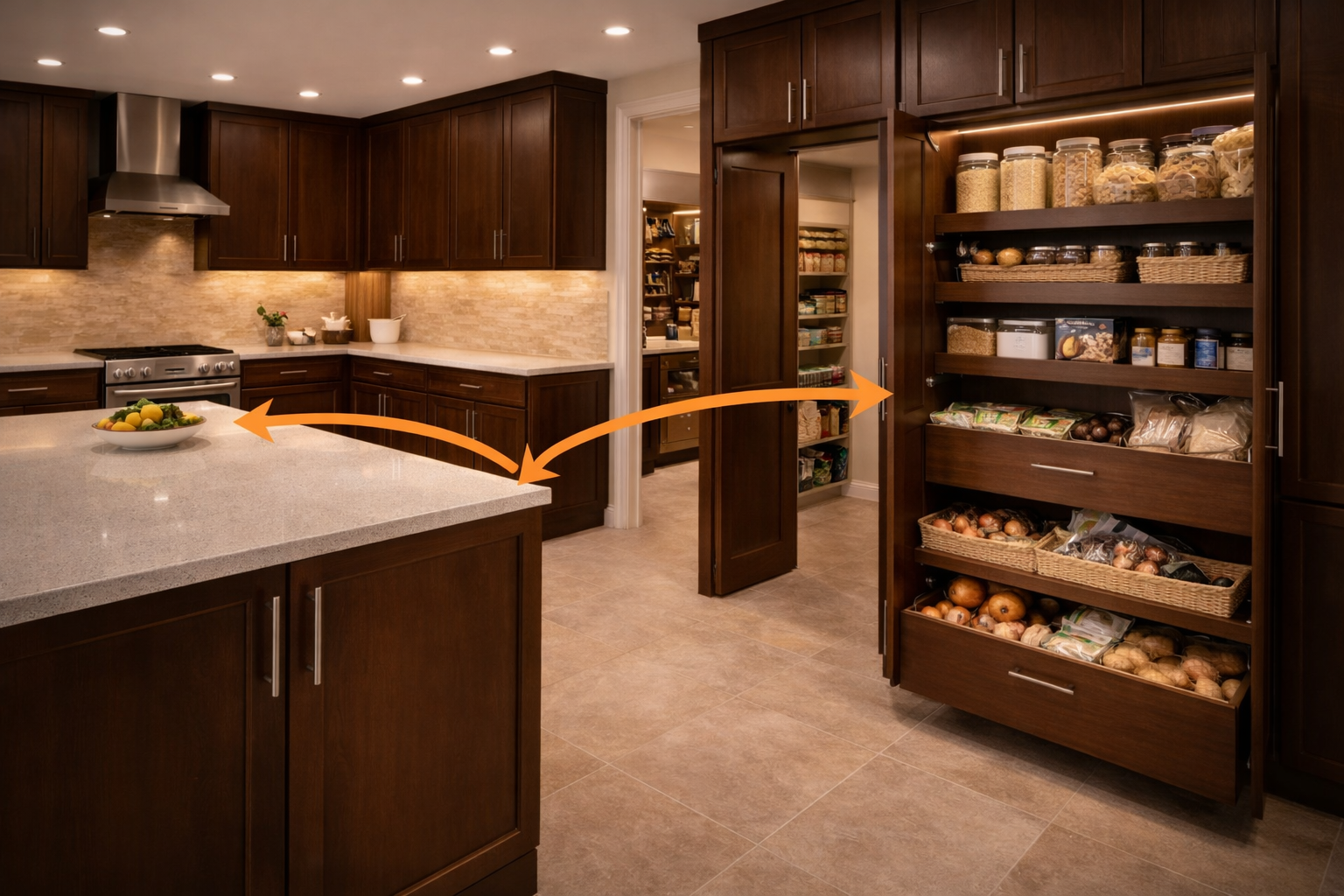
Layout and kitchen size affect how much pantry storage can be added, where it should go, and how easy it is to use. Pantry storage has to work with the cooking and prep zones, not just occupy empty wall space. A pantry that is too far from the main work area or too deep to access easily can create as many problems as it solves.
Why Does Pantry Location Matter So Much in a Kitchen
Pantry location affects how quickly ingredients can move from storage to prep space and how smoothly the kitchen works during everyday use. In practical remodel work, pantry storage should support the way the kitchen is used rather than forcing extra walking or awkward reach every time ingredients are needed.
How Does Kitchen Size Change the Best Pantry Strategy
In a smaller kitchen, the best pantry strategy may focus on tall cabinet storage, pull-out systems, and more efficient vertical organization. In a larger kitchen, the remodel may support a broader pantry wall or a walk-in pantry with clearer circulation back to the island that separates bulk storage from the main cabinet runs. The best strategy depends on the kitchens scale and the households storage habits.
What Materials and Components Are Used in Kitchen Pantry Storage
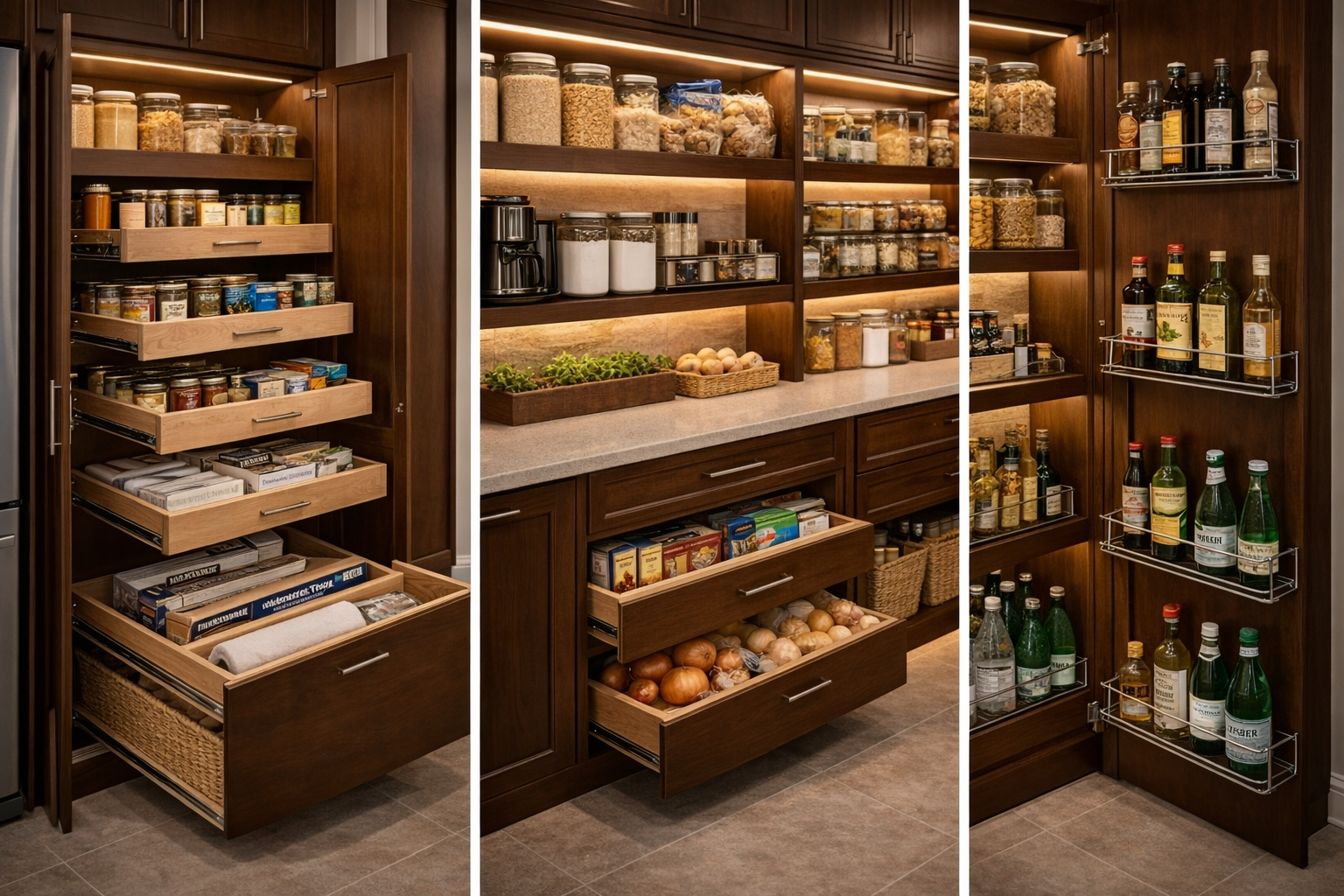
Kitchen pantry storage uses cabinet boxes, shelves, drawer hardware, pull-out systems, dividers, baskets, and door hardware that all have to work together under regular daily use. The visible cabinet style matters, but pantry performance depends just as much on shelf strength, interior layout, and how easily items can be reached.
What Shelf and Cabinet Materials Are Common in Pantry Projects
Common materials include plywood or engineered cabinet boxes, adjustable shelving systems, pull-out wood or metal trays, and organizers sized for dry goods, cans, and small appliances. Pantry storage should be built to carry real household weight instead of only looking clean in an empty showroom. Material selection can also be informed by EPA greener products guidance.
What Organizer and Access Components Usually Matter Most
Pull-out shelves, tiered storage, deep drawers, door racks, divided bins, and adjustable shelving matter because pantry problems are often access problems rather than simple lack of space. These components help homeowners see and use what they actually store instead of burying it at the back of fixed shelves.
What Upgrades Can Be Added During a Pantry Storage Remodel
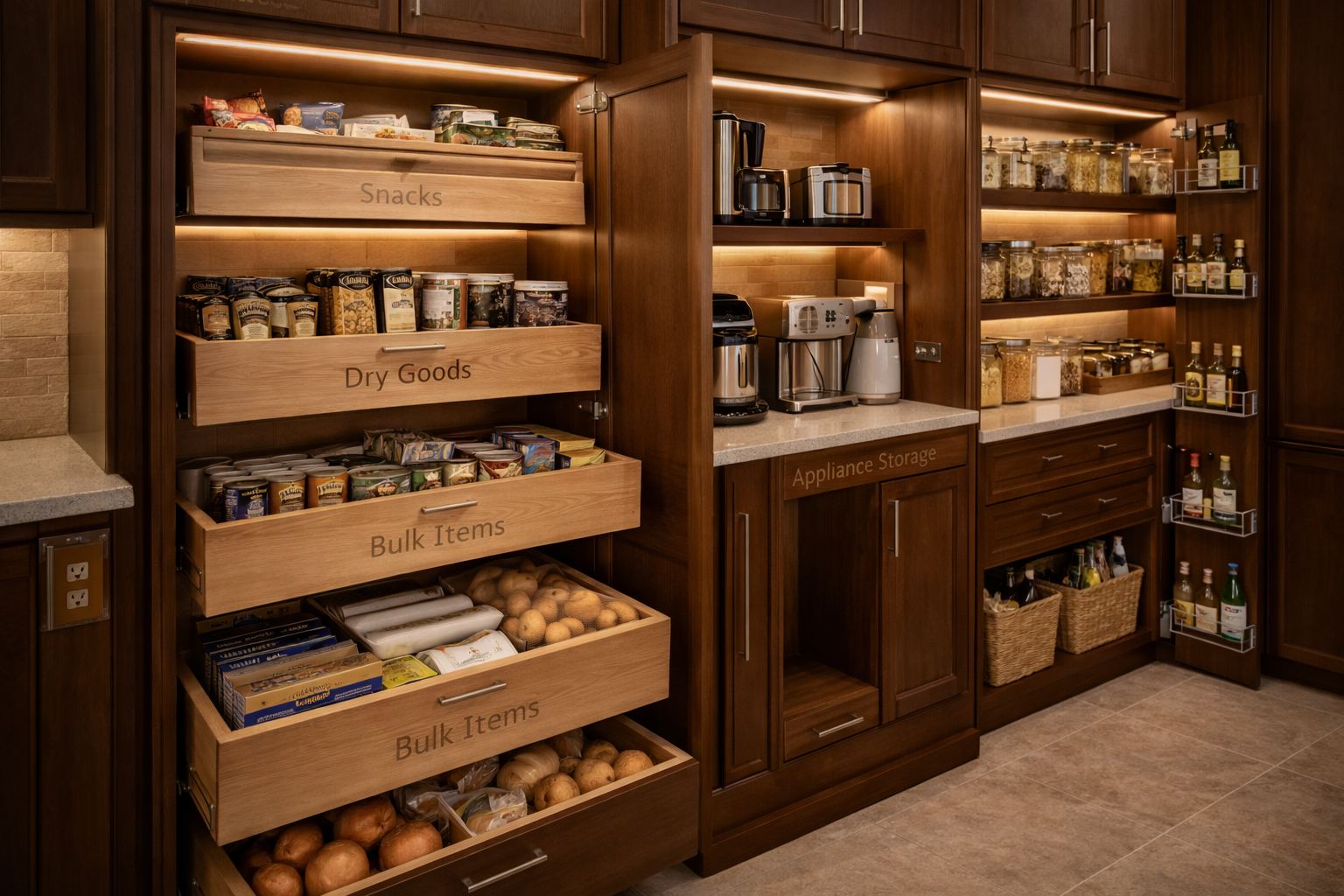
Pantry work is often the best time to add upgrades that improve both storage volume and daily use. Common upgrades include pull-out trays, integrated labels or zones, better pantry lighting, dedicated appliance storage, hidden charging or outlet access for small appliances, and more flexible shelf adjustment.
What Functional Upgrades Are Most Useful With Pantry Storage
Functional upgrades often include easier access to heavy or frequently used items, stronger organization for snacks and dry goods, and better visibility so food does not get lost at the back of the shelves. These upgrades matter because pantry storage is supposed to reduce kitchen clutter and save time during cooking.
What Design Upgrades Usually Happen at the Same Time
Pantry upgrades often include better door style coordination, cleaner cabinet fronts, more integrated pantry walls, and stronger connection to the rest of the kitchens cabinet finish and storage strategy. Once pantry storage is improved, it usually becomes a more deliberate part of the kitchens design.
What Installation Details Matter in Kitchen Pantry Storage
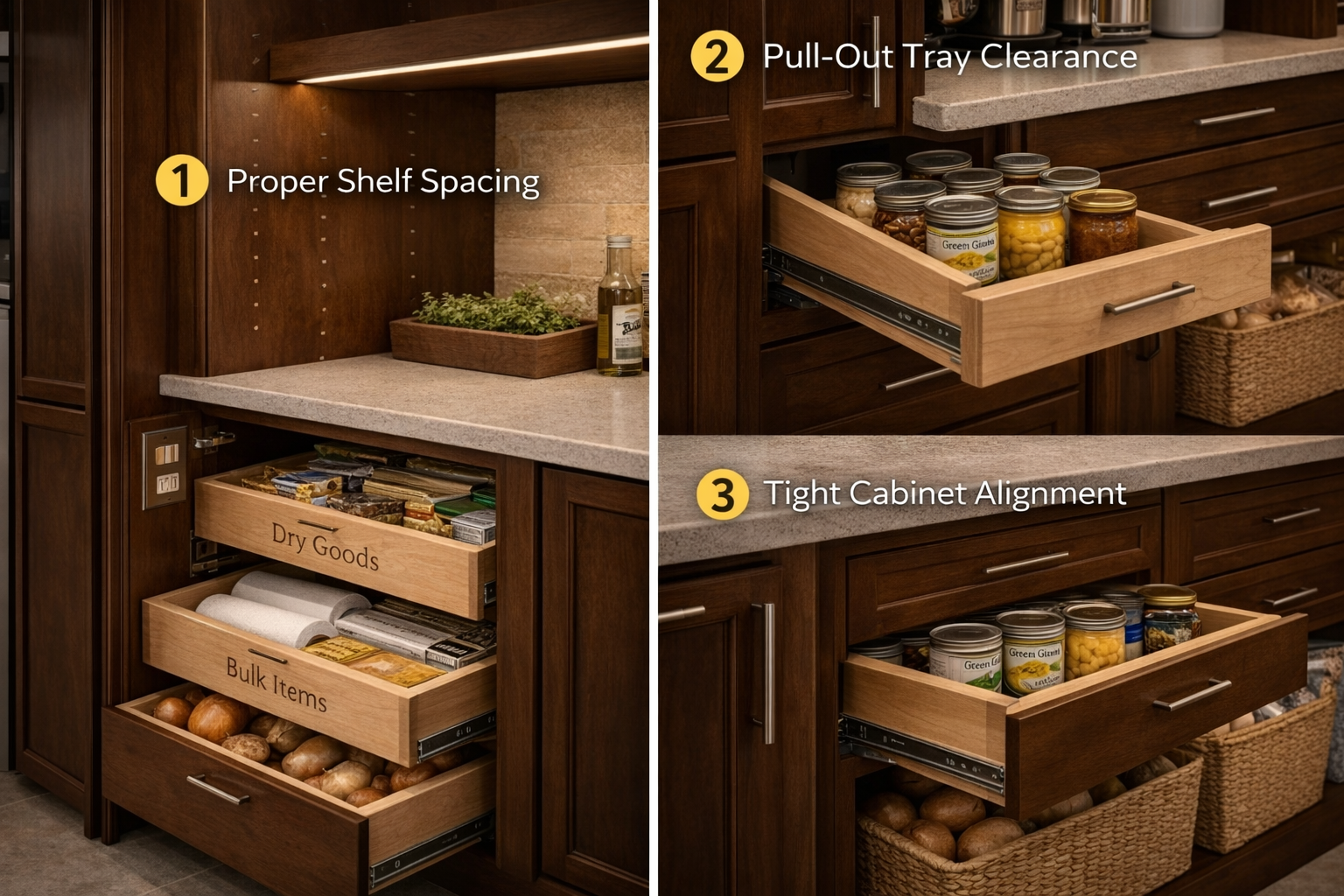
Kitchen pantry storage installation depends on cabinet alignment, shelf spacing, pull-out clearance, door swing, and how the pantry integrates with nearby counters, appliances, and work zones. Pantry storage has to fit the room physically and function logically instead of just adding more boxes.
Why Do Shelf Depth and Access Matter So Much
If shelves are too deep, items get lost and storage efficiency drops even when the pantry looks large on paper. Good pantry installation balances storage capacity with actual reach and visibility so the space works under daily use. For water-use considerations, homeowners can review WaterSense guidance.
What Fit and Function Problems Show Up During Installation
Common issues include shelves that are too deep or too high, pull-outs that conflict with door swing, pantry units that feel disconnected from the rest of the kitchen, and storage zones that look good in a drawing but work badly once filled with real groceries. These practical issues strongly affect how useful the pantry feels after the remodel.

What Affects Kitchen Pantry Storage Cost
Kitchen pantry storage cost usually depends on the pantry type, the amount of cabinetry, the quality of pull-out systems, the number of organizers, and whether the pantry is being integrated into a larger kitchen layout change. A simple cabinet pantry costs far less than a fully custom walk-in or pull-out heavy pantry design.
Which Pantry Choices Usually Raise the Cost
Costs usually rise with walk-in pantry builds, custom pull-out systems, heavier-duty organizers, tall pantry walls, more cabinet customization, and upgraded pantry lighting above finished flooring. The more specialized and access-focused the storage becomes, the more the project usually costs.
How Do Labor and Existing Conditions Change the Budget
Labor costs go up when walls, openings, or adjacent cabinets need changing, when pantry doors or electrical work have to be adjusted, or when the pantry is being added to a kitchen that did not originally plan for that storage zone. Existing conditions matter because pantry storage has to work with the actual room layout, not just a storage wish list.
What Mistakes Should Homeowners Avoid With Kitchen Pantry Storage
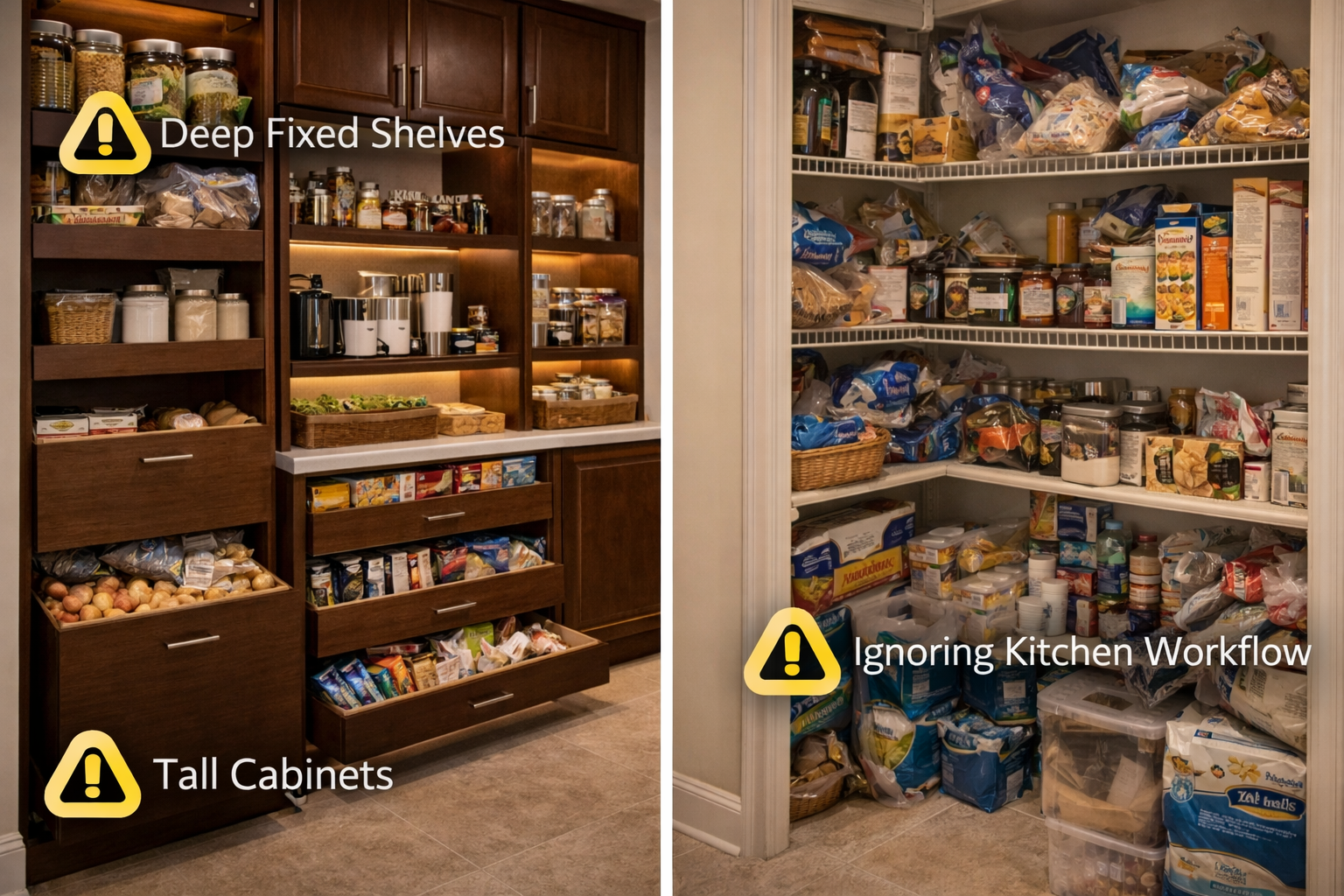
The biggest pantry storage mistakes usually happen when the storage is designed around empty shelves instead of the real items the household actually uses. Pantry storage should make ingredients and supplies easier to find, easier to rotate, and easier to keep off the counters.
Why Is It a Problem to Add More Shelves Without Thinking About Access
More shelves do not automatically mean better storage. Deep fixed shelves can bury food, waste space, and make the pantry more frustrating than before. Better access often matters more than more raw shelf count.
Why Is It Risky to Ignore the Rest of the Kitchen Workflow
A pantry should support the kitchens prep and cooking zones. If it is located awkwardly or organized without regard to how ingredients move through the room, the added storage may still slow the kitchen down instead of improving it.

How Should You Plan Kitchen Pantry Storage
Kitchen pantry storage should be planned by deciding what needs to be stored, how often it is used, and how the pantry should support prep, cooking, and overflow appliance storage. The best plan balances capacity, access, visibility, and kitchen workflow instead of trying to maximize shelf count alone.
What Should Be Decided Before Pantry Work Starts
Before construction starts, it helps to confirm pantry type, shelf depth, shelf adjustability, pull-out needs, door style, lighting, and how bulk food, small appliances, and everyday ingredients should be divided into zones. These choices affect the whole storage design.
How Can a Homeowner Prepare for the Installation Process
Homeowners should be ready to review what they actually store, how much of it needs immediate access, and whether the pantry should function more like a food wall, a utility zone, or a dedicated walk-in storage area. Pantry remodels go best when they are designed around real household habits instead of empty-cabinet assumptions.
Related Kitchen Pantry Storage Topics
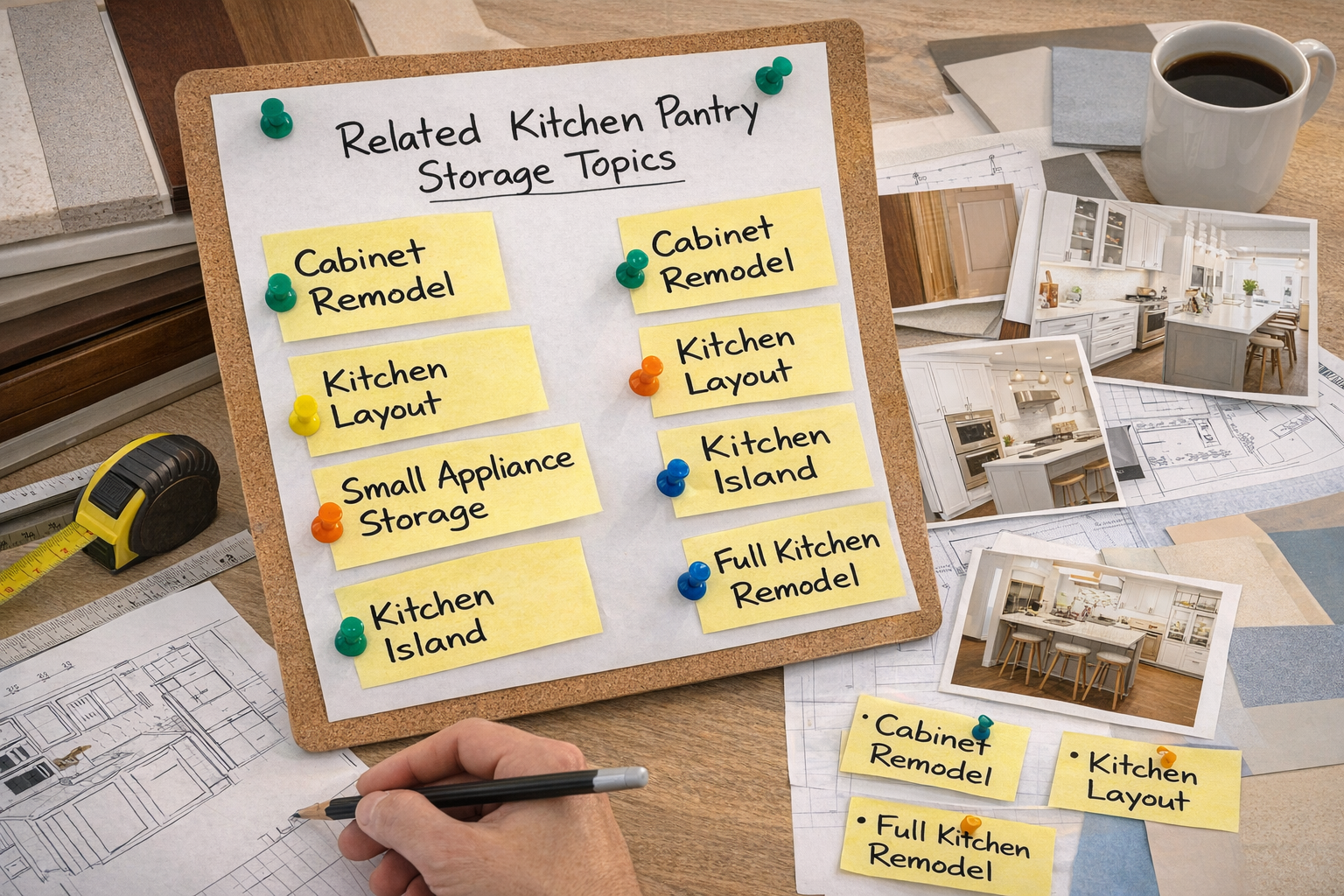
Kitchen pantry storage projects overlap with cabinet remodeling, kitchen layout changes, small appliance planning, and full kitchen remodeling because pantry storage affects how the whole kitchens storage system works together. Related topics help homeowners compare whether they need a pantry-only upgrade or a broader storage redesign.
Which Kitchen Pantry Storage-Related Pages Should Connect to This Topic
Strong related pages include cabinet remodels, kitchen layout changes, kitchen island remodels, kitchen appliances, and countertop remodels. Those pages help break down the storage, workflow, and utility choices that shape a pantry plan that actually works.
Which Kitchen Remodeling Topics Often Connect to Pantry Work
Pantry work often connects to cabinets, countertops, appliances, islands, and full kitchen remodeling. In practical remodels, these parts overlap because pantry storage affects where everything else in the kitchen can live and how smoothly the room functions.