

Marble Countertops Guide: Stone Types, Care, Installation, and Cost

Marble Countertops Guide Index
- Marble Countertops Overview
- What Are Marble Countertops
- Where Do Marble Countertops Work Best
- What Types of Marble Are Common in Kitchens
- How Should Marble Countertops Be Sealed and Maintained
- What Installation Details Matter Most
- What Are the Pros and Cons of Marble Countertops
- What Affects Marble Countertop Cost
- What Mistakes Should Homeowners Avoid
- How Should You Plan a Marble Countertop Remodel
- Frequently Asked Questions About Marble Countertops

Marble Countertops Overview
Marble countertops are chosen for their natural veining, depth, and softer stone character. In a kitchen remodel, marble usually brings a more refined and classic look than many manufactured surfaces. It can work beautifully, but it needs to be selected with open eyes because it behaves differently from quartz and other lower-maintenance options.
Why do homeowners choose marble countertops?
They choose them for the look first. Real marble has variation, movement, and depth that many homeowners find hard to match with engineered surfaces. In the right kitchen, that natural character can make the room feel more custom and more timeless.
What is the tradeoff compared with more durable surfaces?
The tradeoff is maintenance and wear. Marble can etch from acids, stain if spills sit too long, and scratch more easily than some harder materials. For some homeowners that patina is part of the appeal. For others, it becomes a frustration if they expected the stone to stay pristine without effort.
What Are Marble Countertops
Marble countertops are natural stone surfaces cut from marble slabs and fabricated to fit the kitchen. They come in different colors, veining patterns, and finishes, with polished and honed surfaces being the most common. Because marble is a natural material, no two slabs are exactly alike. Another detail worth comparing during planning is kitchen remodeling.
How are they different from quartz countertops?
Quartz is engineered and generally more resistant to staining and etching. Marble is natural and typically shows more variation and a softer, more organic character. That beauty is a big reason people choose it, but it comes with more care requirements.
What finish options are common?
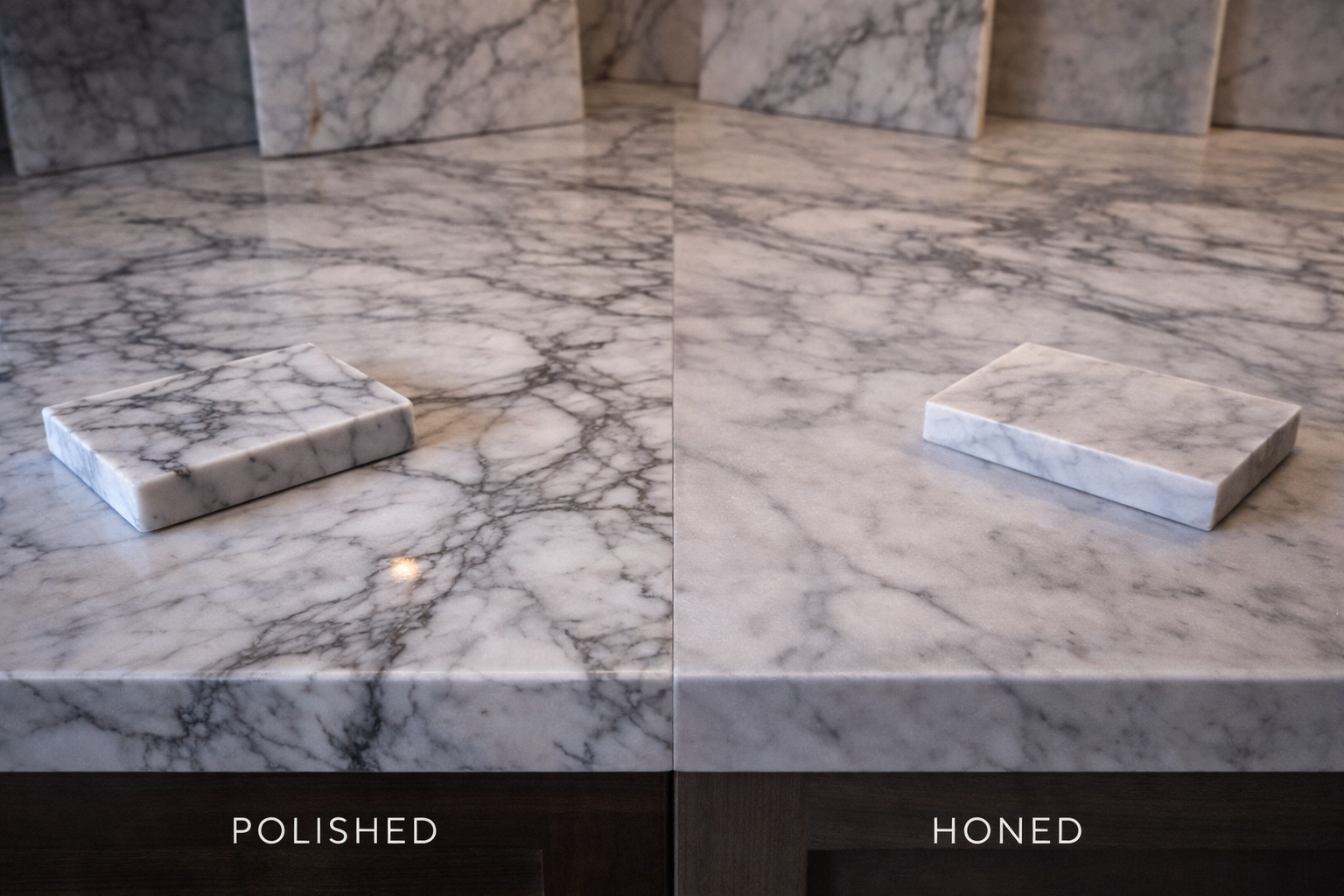
Polished marble has a shinier, more reflective surface, while honed marble has a softer matte finish. Honed marble is popular in kitchens because it can make wear patterns less obvious, though it is still not immune to etching and stains.
Where Do Marble Countertops Work Best
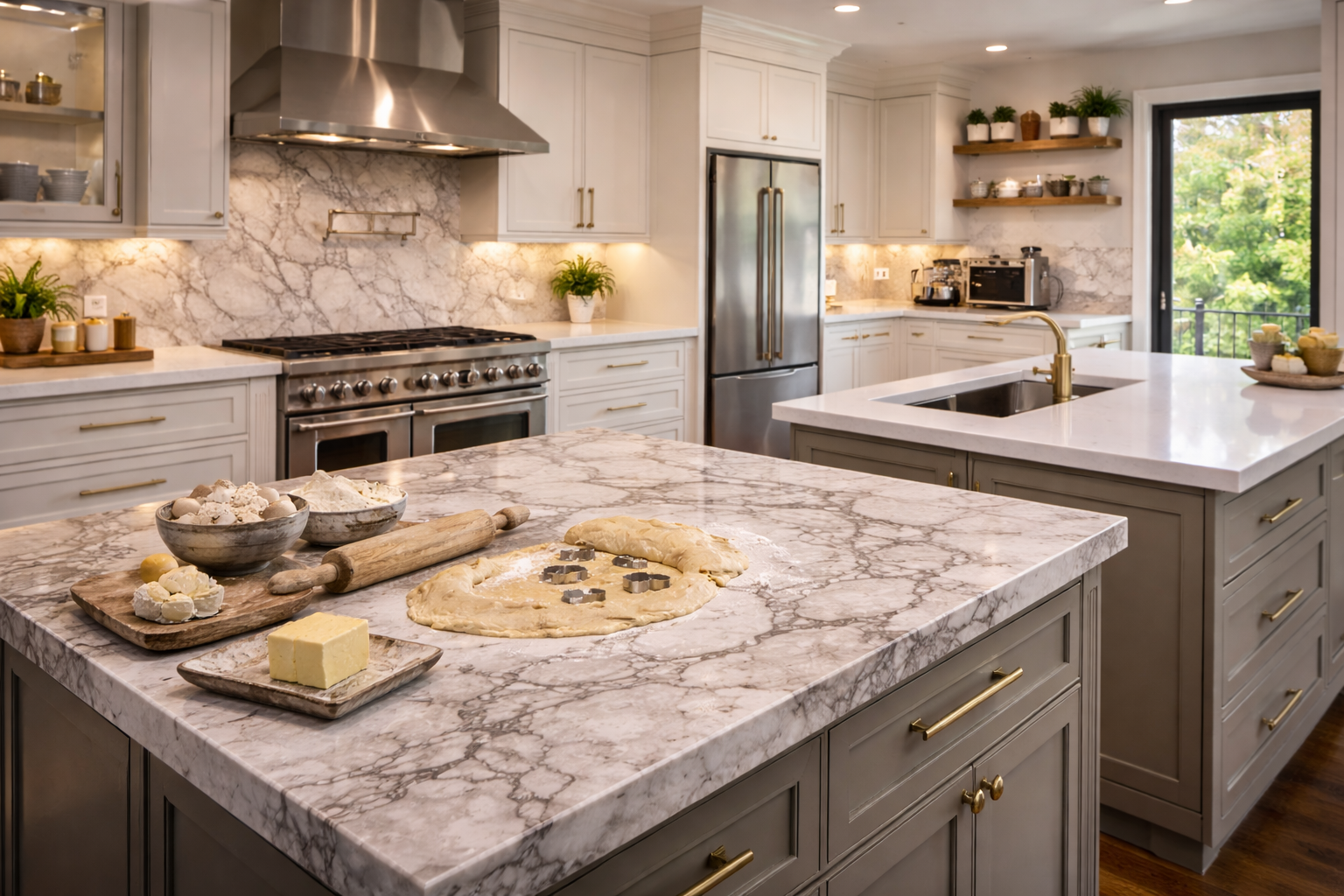
Marble can work well in full kitchens, islands, baking zones, coffee areas, and lower-impact surfaces depending on the household. It is especially attractive for baking areas because the stone stays relatively cool. In many remodels, homeowners choose marble on an island or feature zone and use a tougher material on heavy prep runs.
Is marble a good choice for the whole kitchen?
It can be, but that depends on lifestyle. A household that cooks heavily with lots of acidic ingredients and wants a low-maintenance surface may not be happy with full-kitchen marble. A homeowner who loves the look and understands the wear pattern may be perfectly happy using it throughout.
Does mixed-material design make sense with marble?
Often, yes. Marble on an island or baking station paired with quartz on the perimeter can give the kitchen the beauty of natural stone without putting the most sensitive material everywhere. That approach works well when the remodel wants both performance and character. During remodeling, it also helps to follow EPA indoor air quality guidance.
What Types of Marble Are Common in Kitchens
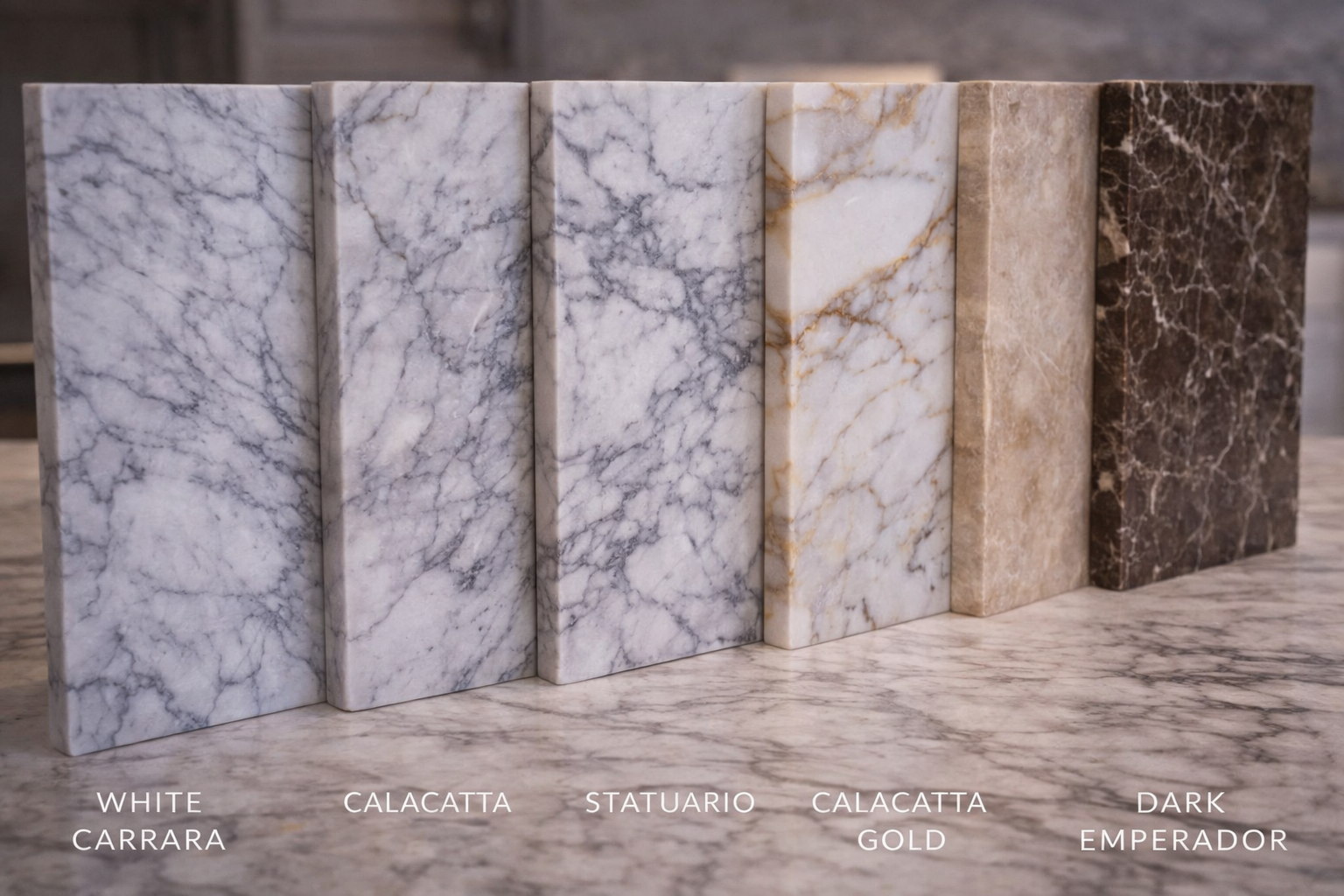
White and light gray marbles are among the most common choices in kitchens, especially slabs with soft gray veining or more dramatic movement. Some kitchens use warmer-toned or darker marbles depending on cabinet color and overall style. The exact slab matters more than the general category because each piece has its own pattern and personality.
Why is slab selection so important?
Because the slab controls the whole look of the countertop. One marble may feel quiet and elegant, while another feels bold and high-contrast. Homeowners should view the actual slab, not just a small sample, especially when the island or backsplash will showcase a large area of stone.
How does finish affect the final look?
A polished finish makes the veining pop more and reflects more light. A honed finish feels softer and more understated. In remodel terms, the finish changes both the look and how everyday wear will show once the kitchen is in use.
How Should Marble Countertops Be Sealed and Maintained
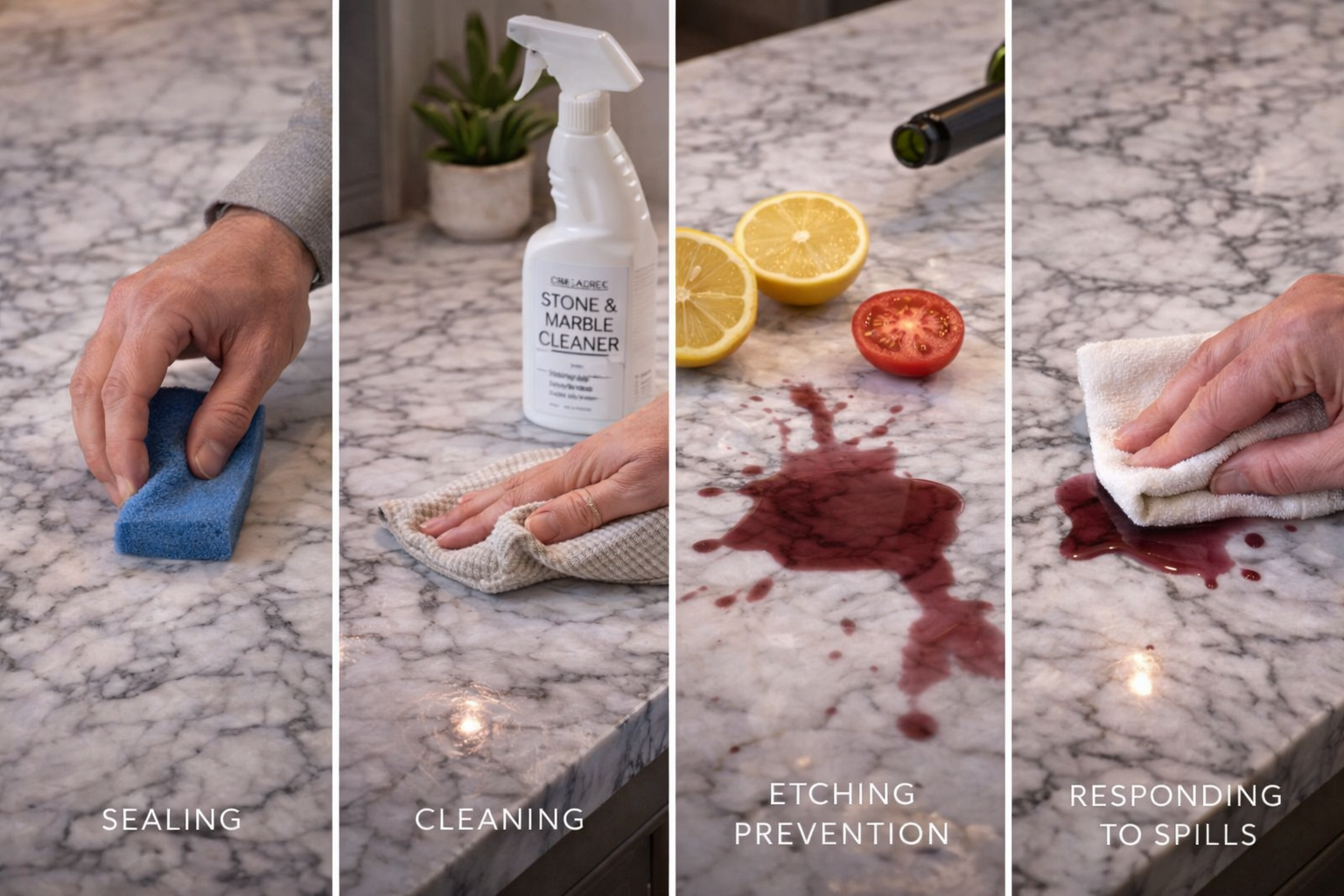
Marble should be sealed as part of the countertop installation and then maintained according to how the kitchen is used. The exact sealing schedule depends on the stone and finish, but the bigger point is that sealing helps with stain resistance, not with everything. Marble can still etch if acidic liquids sit on the surface. Homeowners weighing long-term operating costs often review Energy Saver guidance.
What should homeowners expect day to day?
They should expect to wipe spills promptly, use gentle cleaners, avoid harsh chemicals, and pay attention around sinks, coffee stations, wine prep, citrus, vinegar, and tomato-based foods. Marble rewards care, but it does not behave like a worry-free engineered surface.
Why do people confuse staining and etching?
Because both change the appearance of the stone. A stain discolors the material, while an etch changes the finish where acid has reacted with the surface. Understanding that difference helps homeowners set realistic expectations about what sealers can and cannot do.
What Installation Details Matter Most
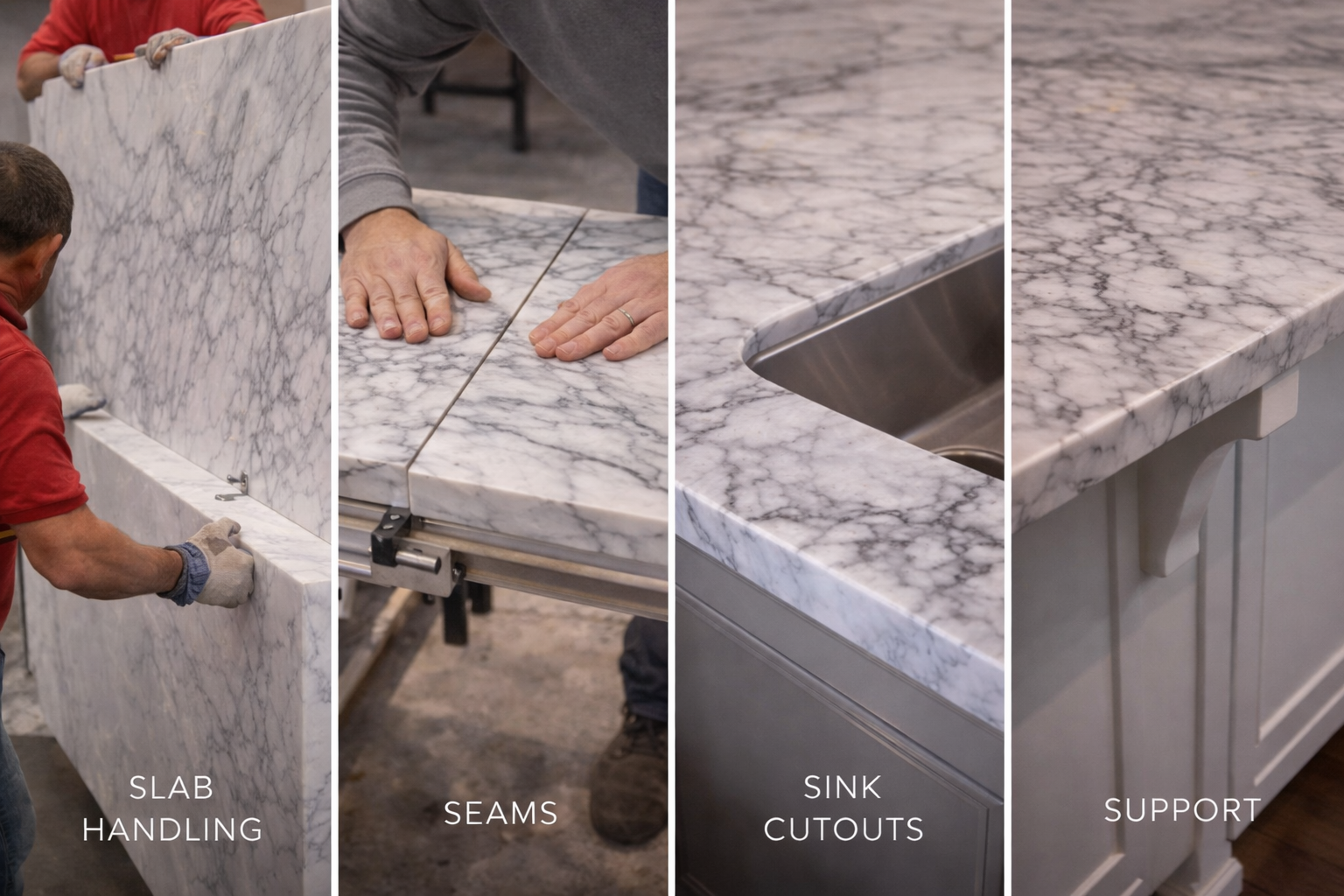
Installation details matter because marble is heavy, valuable, and often visually prominent. Slab support, seam placement, sink cutouts, overhangs, and edge profiles all need to be planned carefully before fabrication and installation. A beautiful slab can lose impact fast if the seams land badly or the edge detail feels wrong for the kitchen.
What should be decided before fabrication?
Edge profile, sink type, faucet locations, seam layout, backsplash approach, overhang support, and slab orientation should all be confirmed first. If the slab has dramatic veining, the fabricator should also plan how the pattern will read across the finished pieces.
Why does edge and seam planning matter so much?
Because marble is usually chosen for appearance as much as function. A poor seam location, awkward miter, or edge that clashes with the cabinet style can weaken the whole remodel. The installation needs to support the character of the stone, not fight it. When the remodel includes this feature, countertop remodel can help homeowners understand the options in more detail.
What Are the Pros and Cons of Marble Countertops
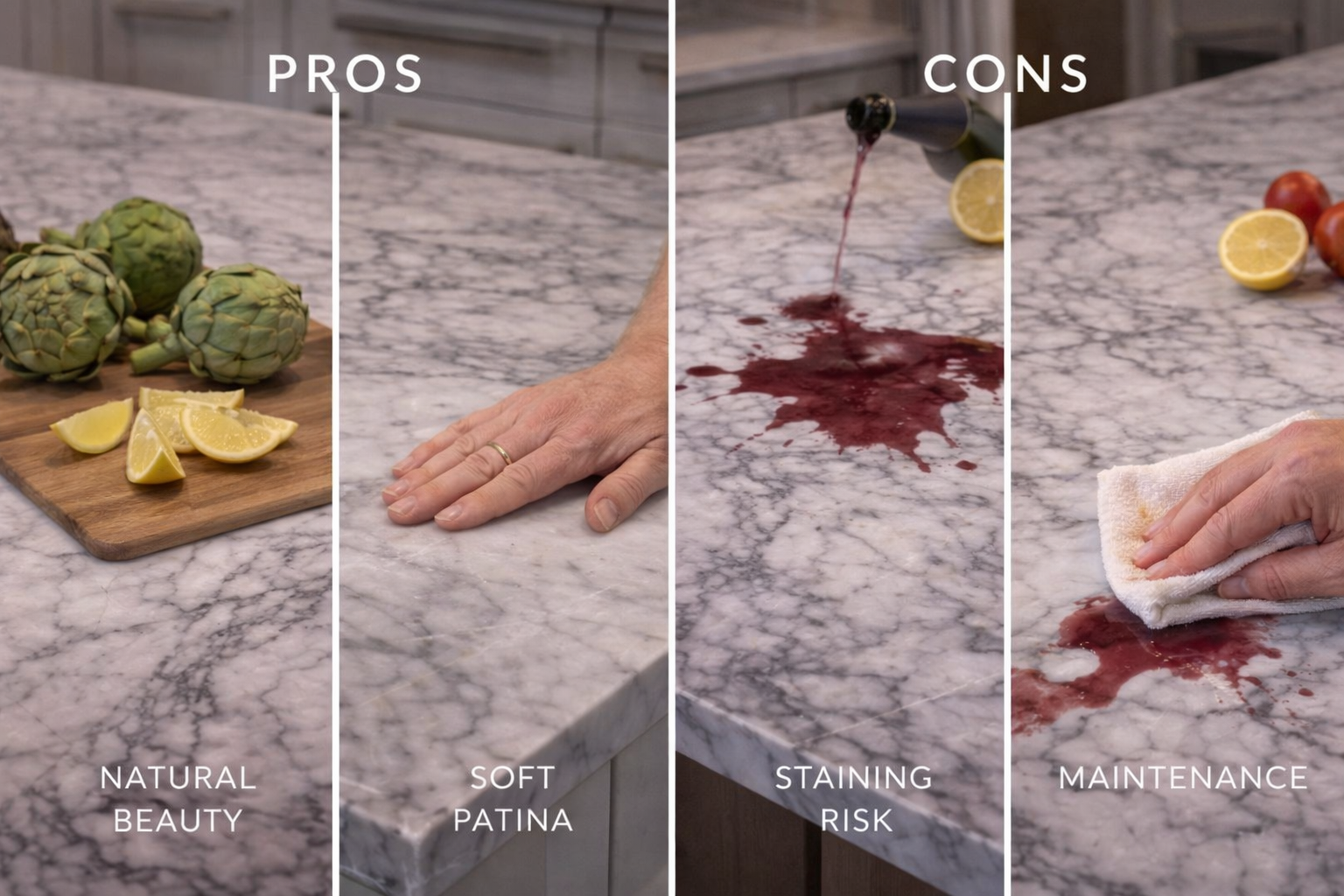
The biggest advantages are natural beauty, variation, cool surface temperature, and a more classic stone look. The main drawbacks are etching, staining risk, scratching, and the need for more attentive care. Whether those tradeoffs are worth it depends on how the kitchen is used and how the homeowner feels about visible aging.
Who tends to love marble most?
Homeowners who appreciate natural materials and are not bothered by some patina tend to love it most. If the goal is a kitchen with character rather than laboratory-level perfection, marble can be a strong fit.
Who might be happier with another material?
Someone who wants the easiest upkeep, cooks heavily with acidic foods, or gets frustrated by surface changes may be happier with quartz, quartzite, or another material that is more forgiving in daily use. Material selection can also be informed by EPA greener products guidance.
What Affects Marble Countertop Cost
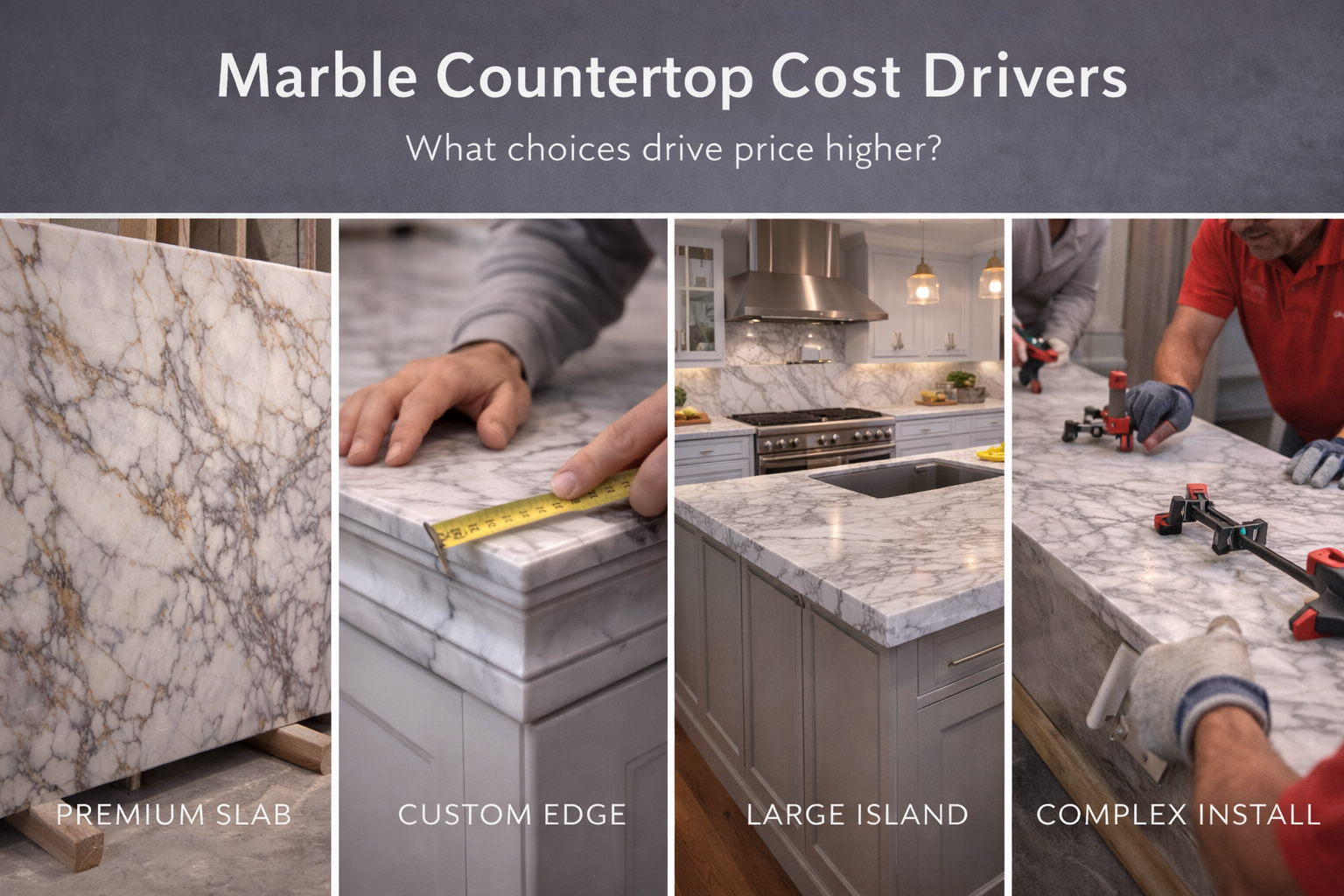
Cost depends on marble type, slab rarity, veining, finish, thickness, edge detail, cutouts, seam complexity, island size, backsplash scope, and installation labor. A simple straight-run marble counter costs less than a large island with premium slab selection, custom edge work, and careful veining alignment.
What choices increase cost the fastest?
Rare slabs, large islands, dramatic veining, thicker edges, full-height backsplashes, complex fabrication, and difficult installations usually raise cost quickly. Material waste can also increase cost when the slab layout must preserve a specific visual pattern.
How can homeowners manage the budget?
Using marble selectively, choosing a quieter slab, simplifying the edge profile, or mixing materials in different kitchen zones can all help. The key is deciding where marble adds the most value instead of assuming it has to be used everywhere.
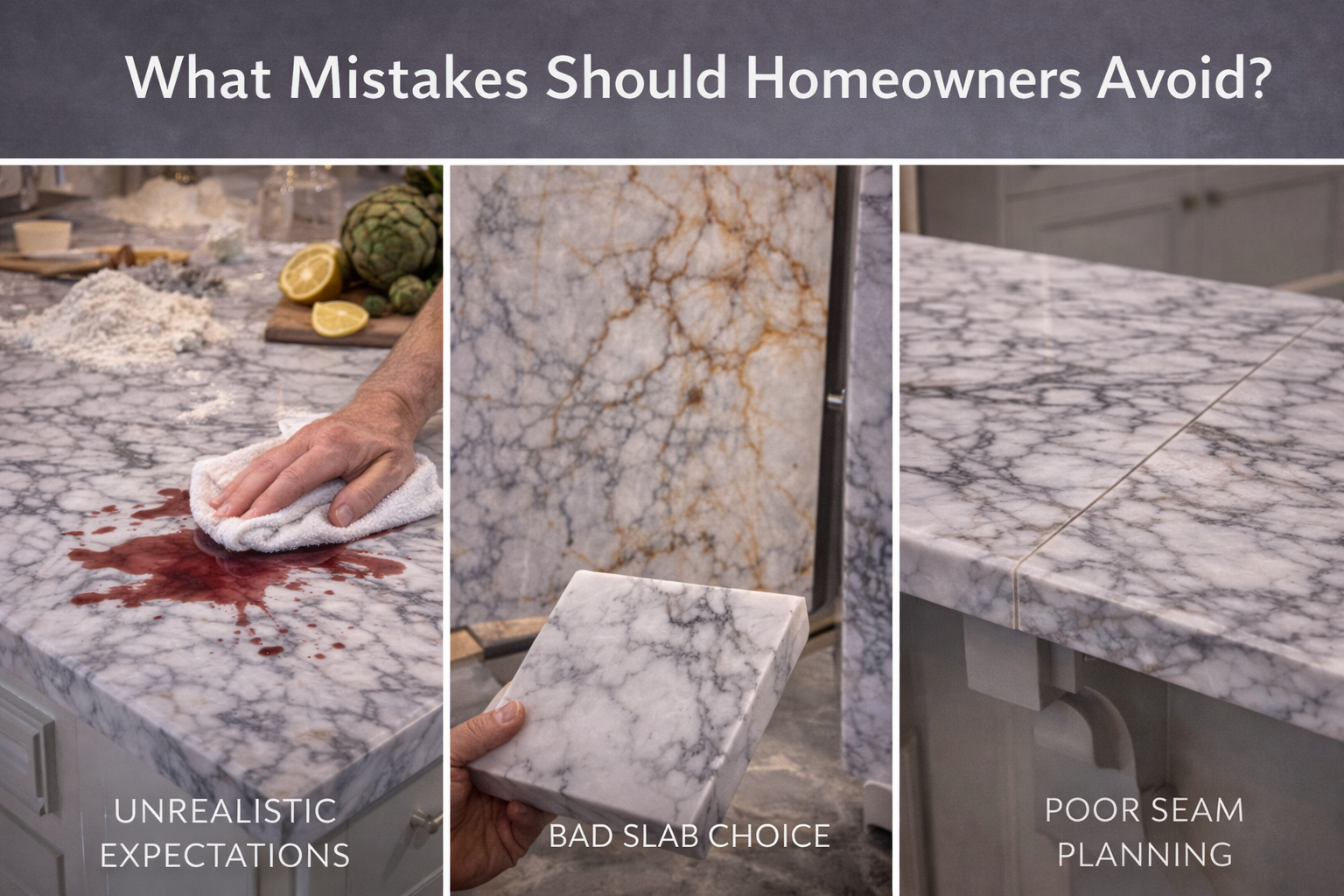
What Mistakes Should Homeowners Avoid
The biggest mistakes usually come from choosing marble for the look without understanding how it behaves. Homeowners sometimes assume sealing makes it maintenance-free or expect the surface to look untouched years later despite heavy daily use.
What planning mistakes are common?
Skipping the discussion about etching, choosing a slab from a tiny sample, ignoring seam layout, or using marble in the most abuse-prone areas without thinking through maintenance are common mistakes. Another is pairing a delicate slab with a household that wants zero upkeep.
What design mistakes show up later?
Stone that clashes with cabinet undertones, overly busy veining in a visually busy kitchen, or edge details that feel too formal for the room can become obvious after installation. Marble works best when the slab is chosen as part of the whole remodel, not as an isolated luxury item.
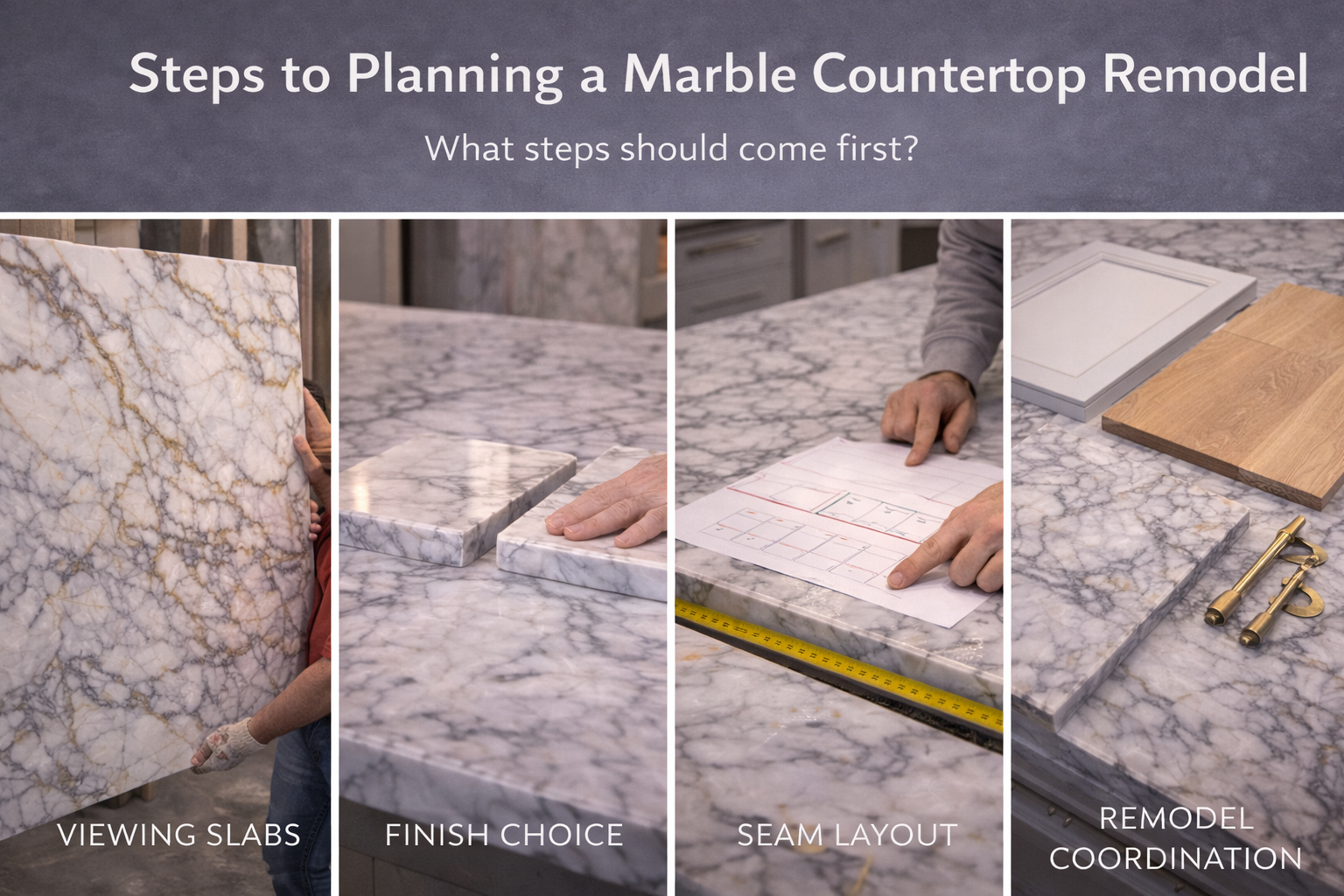
How Should You Plan a Marble Countertop Remodel
Start by deciding where marble makes sense in the kitchen and how much maintenance the household is willing to accept. Then view full slabs, choose the finish, confirm edge profile and seam layout, and coordinate the stone with cabinets, backsplash, flooring, and lighting before fabrication begins.
What should be finalized before ordering?
Cabinet dimensions, sink type, faucet locations, slab selection, finish, edge profile, backsplash scope, seam plan, and support conditions should all be decided first. Those choices affect both the look and long-term performance of the countertop.
When is marble the right move?
It is the right move when the remodel wants real natural stone character and the homeowner is comfortable with the care that comes with it. Used thoughtfully, marble can make a kitchen feel richer and more timeless than many lower-maintenance alternatives.
Frequently Asked Questions About Marble Countertops
They can be a beautiful choice for kitchens, especially when homeowners value natural stone character and are comfortable with maintenance. Marble is softer and more reactive than quartz, so it is usually best for people who accept that the surface may develop patina over time.
The biggest downside is that marble can etch, stain, and scratch more easily than many other countertop materials. Acidic foods, standing liquids, and daily wear can change the surface appearance, especially in heavily used kitchens.
Yes. Sealing helps reduce staining, but it does not make marble maintenance-free. Sealers slow absorption, yet marble can still etch from acidic substances because etching is a surface reaction, not just a stain issue.
Staining happens when a substance penetrates the stone and leaves discoloration. Etching happens when an acidic material reacts with the marble surface and dulls or changes the finish. Sealer can help with staining, but it does not stop etching.
White and light gray marbles with soft or bold veining are the most common, but marble also comes in darker tones and warmer variations. The right selection depends on cabinet color, lighting, and how much pattern the kitchen needs.
They can scratch more easily than quartz or granite because marble is a softer natural stone. Minor marks may blend into the surface over time, but homeowners who want the cleanest low-wear look often choose another material.
Yes. Some homeowners use marble only on an island, baking station, or lower-use area while pairing it with a more durable countertop on heavy prep runs. That mixed-material approach can preserve the look of marble while reducing maintenance headaches.
Many people like marble for baking because the surface stays cool, which can be useful for pastry work. That does not automatically make it the best full-kitchen choice, but it can be a strong fit for a dedicated baking zone.
Cost depends on marble type, slab availability, thickness, veining, edge detail, cutouts, island size, installation complexity, and local labor. Premium slabs and large islands with dramatic pattern matching usually raise the cost fastest.
Homeowners who love natural stone, accept variation and wear, and want a surface with real character are usually the best fit. People who want the lowest-maintenance countertop often prefer quartz or another more forgiving material.