

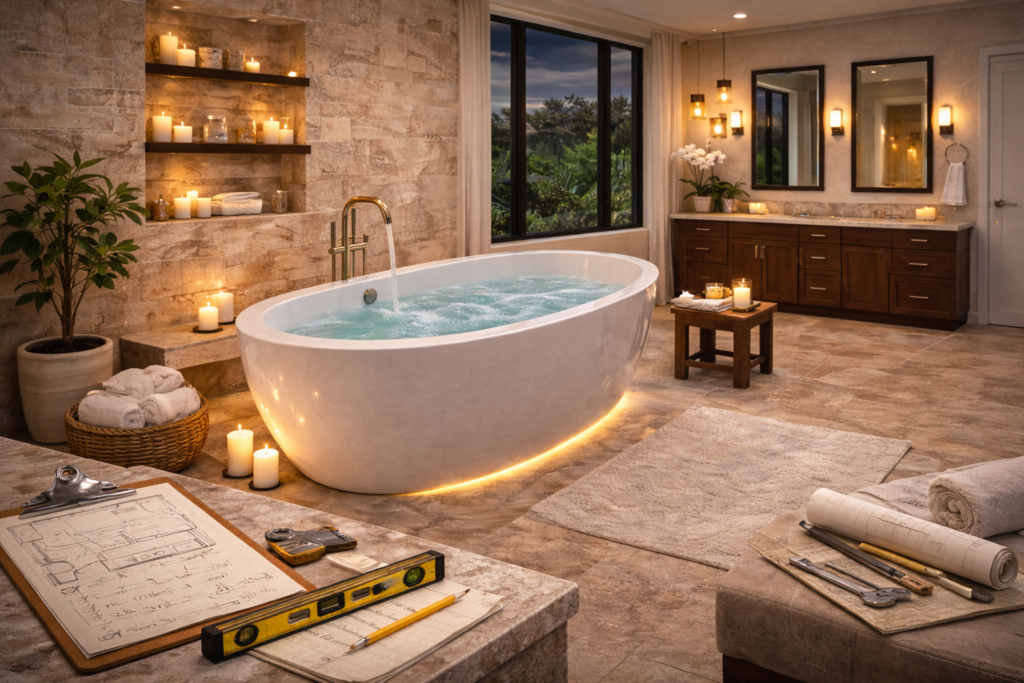
Soaking Tub Guide: Design, Layout, Costs, and Planning

Soaking Tub Guide Index
- Soaking Tub Overview
- When Does a Soaking Tub Make Sense
- What Types of Soaking Tubs Are Common
- How Do Layout and Room Size Affect a Soaking Tub
- What Materials and Components Are Used With a Soaking Tub
- What Upgrades Can Be Added With a Soaking Tub
- What Installation Details Matter With a Soaking Tub
- What Affects Soaking Tub Cost
- What Mistakes Should Homeowners Avoid With a Soaking Tub
- How Should You Plan a Soaking Tub
- Related Soaking Tub Topics
- Frequently Asked Questions About Soaking Tubs
Soaking Tub Overview
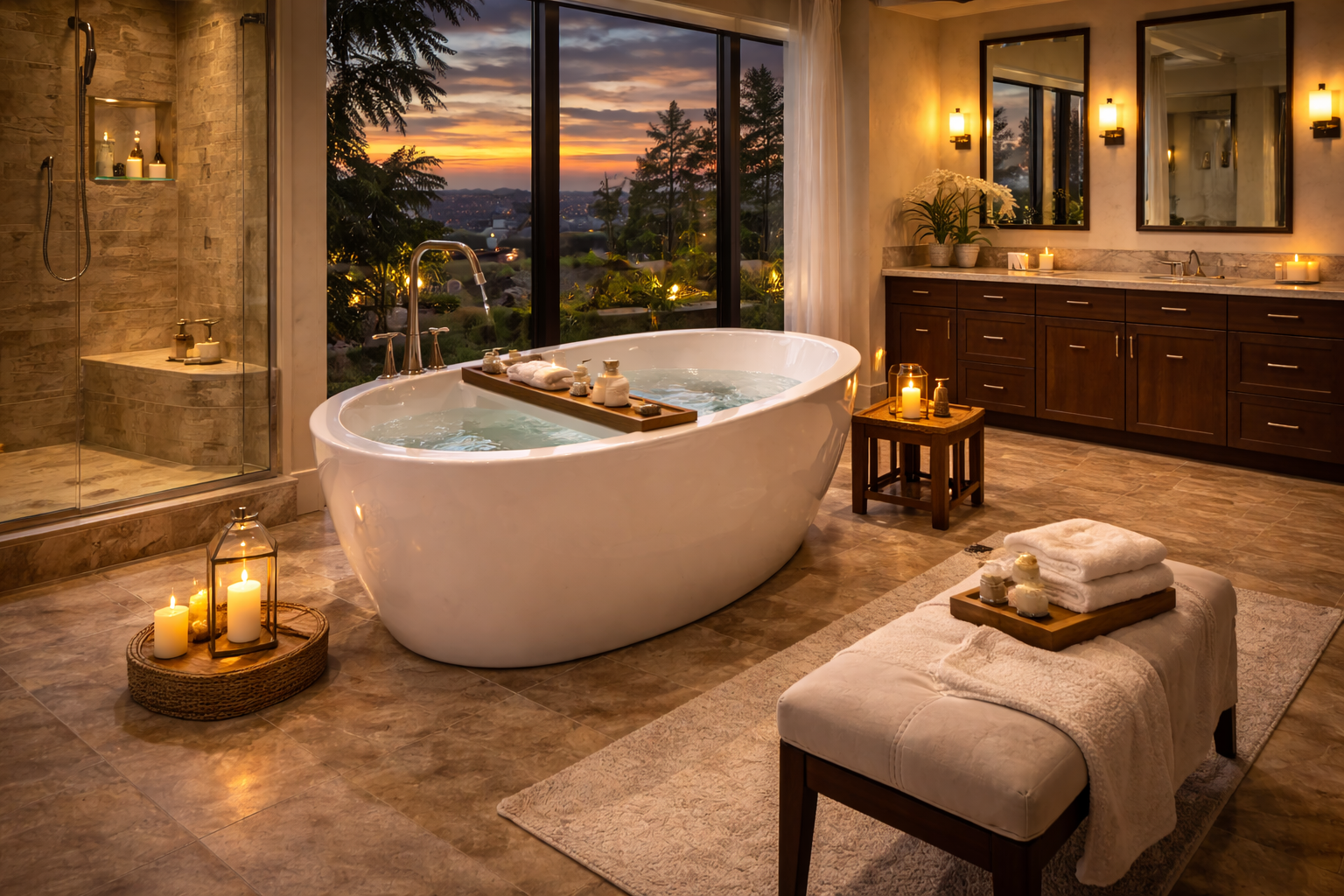
A soaking tub is designed for deeper, more comfortable bathing than a standard tub. In practical remodel work, that usually means planning for a tub that holds more water, has a deeper interior, and often becomes a more prominent feature in the bathroom layout. Soaking tubs are chosen when the goal is comfort and relaxation rather than a basic bath-shower combination.
What Gets Updated During a Soaking Tub Project
The work may include the tub itself, drain and overflow, filler or faucet, surrounding floor or wall finish, nearby storage or shelf details, and sometimes changes to the room layout if the soaking tub has a larger footprint than the old tub. In some bathrooms, the shower and vanity area also change to make the new tub fit better in the overall plan.
What Is the Difference Between a Soaking Tub and a Standard Bathtub
A standard bathtub is often designed around basic bathing utility and may be shallower or more compact. A soaking tub is usually deeper and shaped for longer, more relaxed bathing. That difference changes the comfort level, the water volume, and sometimes the amount of space the tub needs in the bathroom.
When Does a Soaking Tub Make Sense
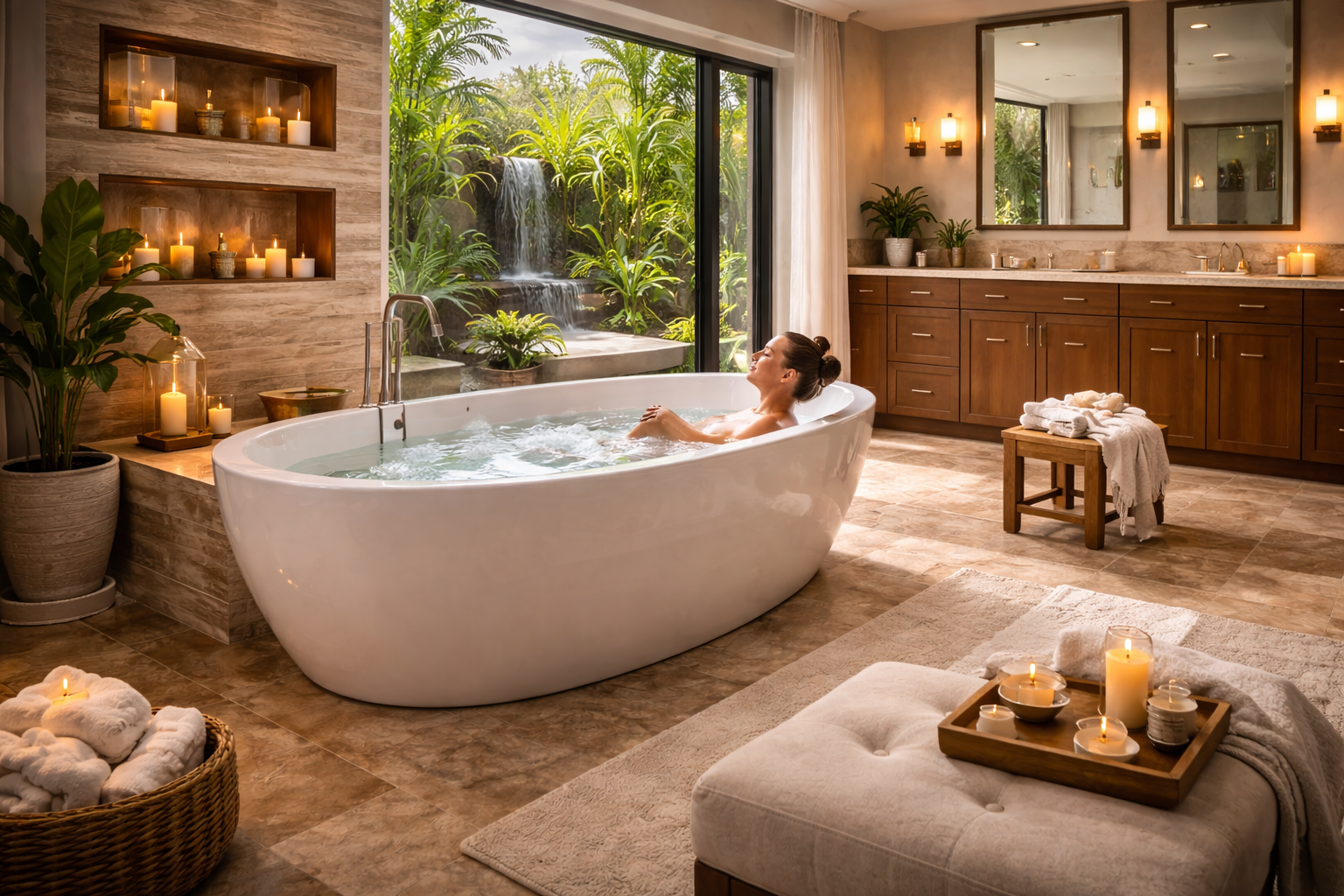
A soaking tub makes sense when the homeowner actually enjoys baths and the bathroom has enough room to support a tub designed around comfort. It is most common in primary bathrooms where the tub is meant to be used regularly and where the layout can support a more comfort-focused bathing area. For layout and clearance planning, many designers reference NKBA planning guidelines.
What Bathroom Conditions Usually Point to a Soaking Tub
Common conditions include enough floor space for a deeper tub, a bathroom design that supports a dedicated bathing zone, and a household that values a comfortable soak instead of just keeping a tub for resale or occasional use. A soaking tub also makes more sense when the room already has or can support a separate shower.
When Is a Soaking Tub Not the Best Choice
A soaking tub is usually not the best choice when the bathroom is very tight, when storage or shower space would suffer too much, or when the household rarely takes baths. In some remodels, the better choice is a simpler tub or a layout that prioritizes a larger shower instead.
What Types of Soaking Tubs Are Common
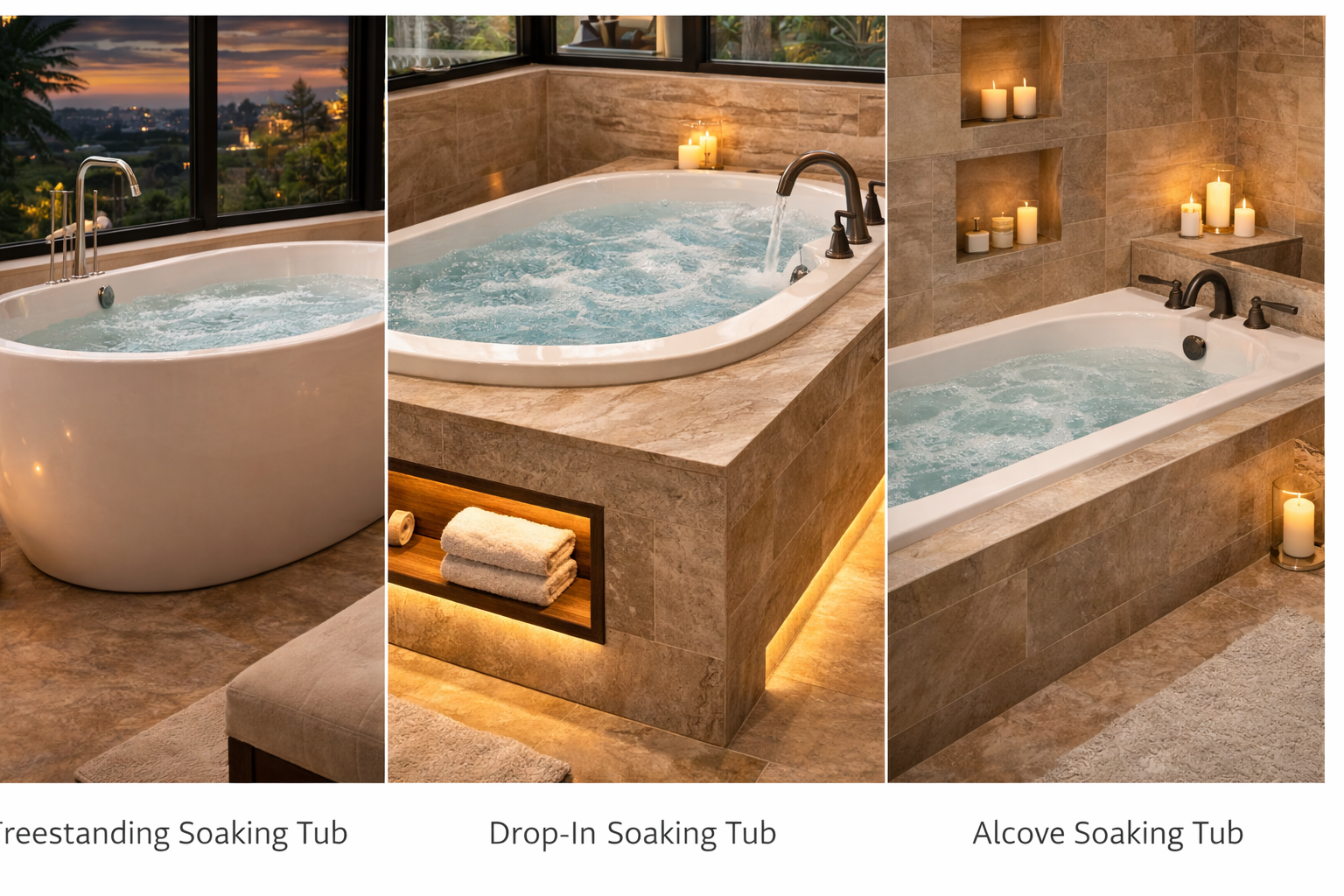
Common soaking tub types include freestanding soaking tubs, drop-in soaking tubs, alcove soaking tubs, oval tubs, slipper tubs, and Japanese-inspired deep soaking tubs. The right type depends on room size, desired bathing depth, installation style, and the visual direction of the remodel.
What Soaking Tub Styles Are Most Common in Remodeling Projects
Freestanding soaking tubs and oval deep tubs are common because they fit many primary bathroom designs and clearly communicate a comfort-focused upgrade. Deeper alcove tubs are also used when the homeowner wants soaking comfort without giving up the efficiency of a more built-in layout. In many projects, bathroom remodeling becomes an important part of how the bathroom functions day to day.
When Does One Soaking Tub Style Make More Sense Than Another
A freestanding soaking tub may make more sense when the room has the space to treat the tub as a feature. A built-in soaking tub may make more sense when the remodel wants deeper bathing comfort while keeping the layout tighter and easier to clean around. The best choice depends on the room, not just the style trend.
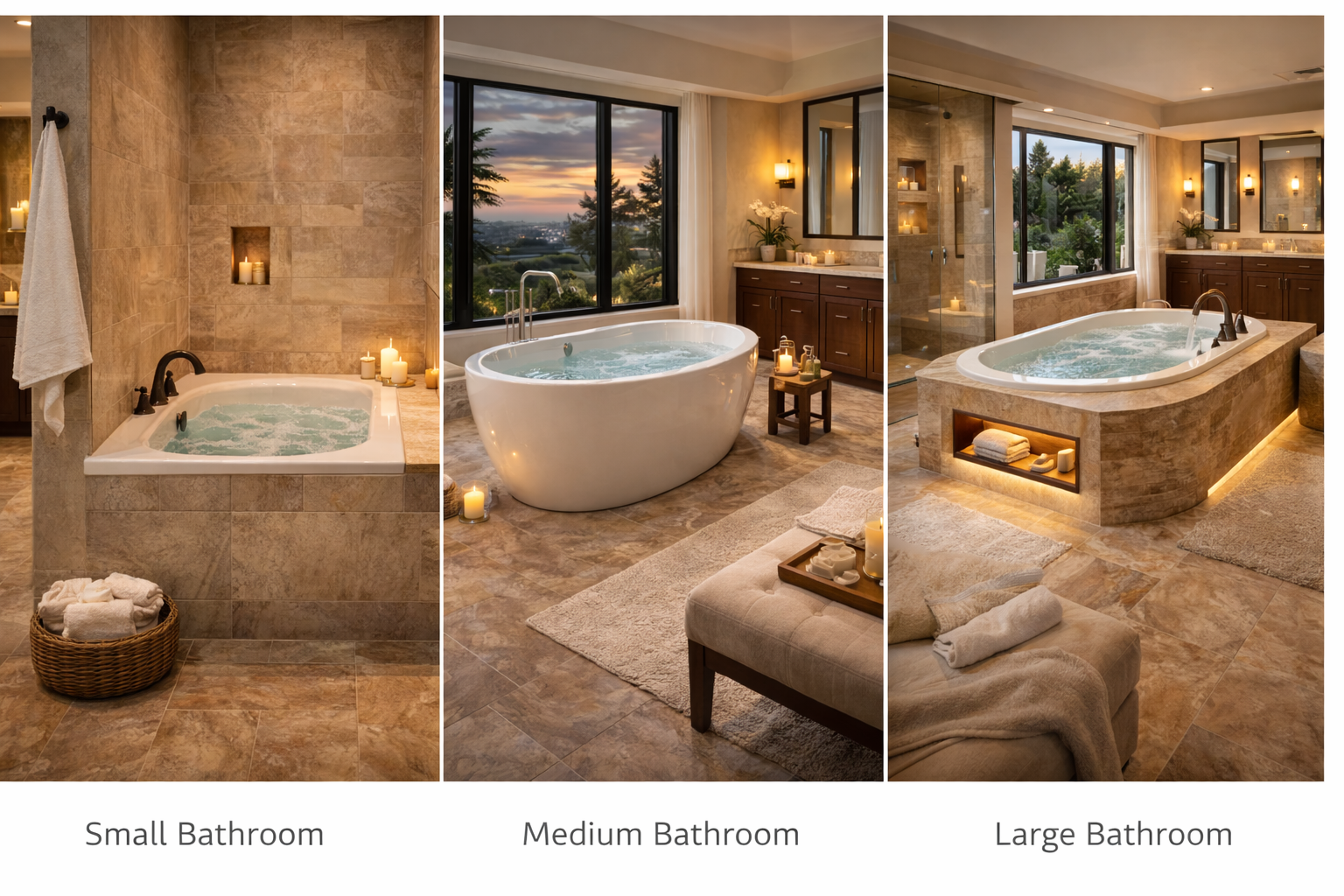
How Do Layout and Room Size Affect a Soaking Tub
Layout and room size affect how the soaking tub fits into the bathroom and whether the comfort upgrade is worth the space it takes. A soaking tub usually needs enough room around it or enough surrounding layout support so the bathroom still functions well once the deeper tub is in place.
Why Does Tub Depth and Floor Space Matter So Much
A soaking tub is chosen for a more immersive bath, which means the tub often has more visual and physical presence than a standard tub. If the room is too tight, the deeper tub may improve bathing comfort but make the overall bathroom harder to move through and balance.
How Does Bathroom Size Change the Best Soaking Tub Strategy
In a larger bathroom, a soaking tub may become part of a more luxurious open bathing zone. In a smaller bathroom, the best strategy may be a compact deep tub or a built-in soaking model that keeps the floor plan more efficient. The best solution depends on how much space the room can give up without hurting the rest of the layout.
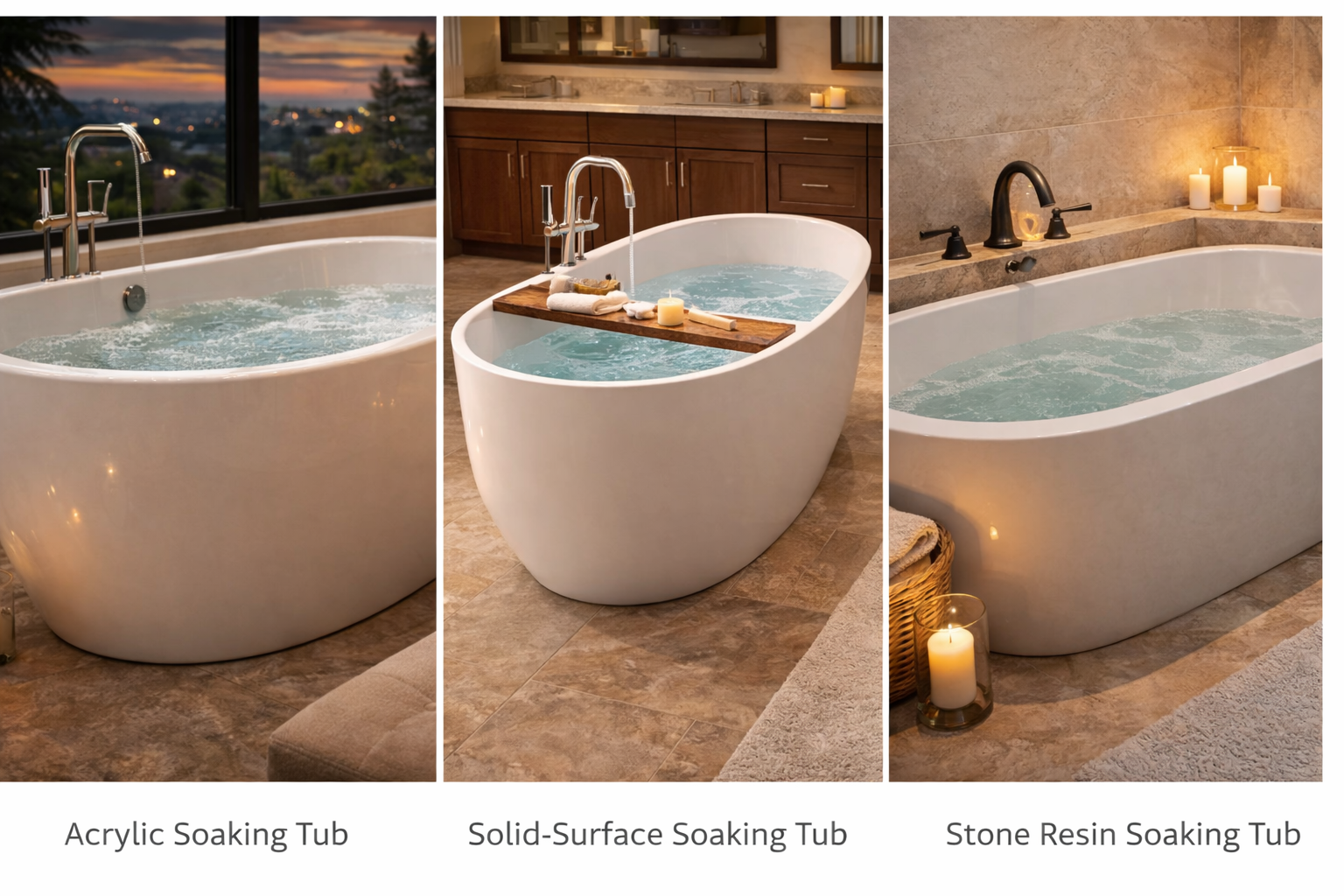
What Materials and Components Are Used With a Soaking Tub
A soaking tub project uses the tub shell, drain and overflow, filler or faucet trim, surrounding floor and wall finishes, and sometimes a deck, platform, or freestanding filler depending on the tub style. The material choices affect comfort, weight, maintenance, and how the tub fits the rest of the remodel.
What Soaking Tub Materials Are Common
Common soaking tub materials include acrylic, solid-surface composites, stone resin, cast iron, and occasionally enameled steel depending on the style. Acrylic is common because it is lighter and widely available, while solid-surface and stone-resin tubs are often chosen when a heavier, more sculpted look is preferred. When comparing stone surfaces, it can help to review Natural Stone Institute guidance.
What Plumbing and Finish Components Usually Change
Soaking tub projects often include new drains, overflow hardware, updated tub fillers, floor or wall finish changes, and nearby trim improvements that help the tub area feel complete. Depending on the layout, the remodel may also change nearby lighting or storage so the bathing area supports the soaking experience better.
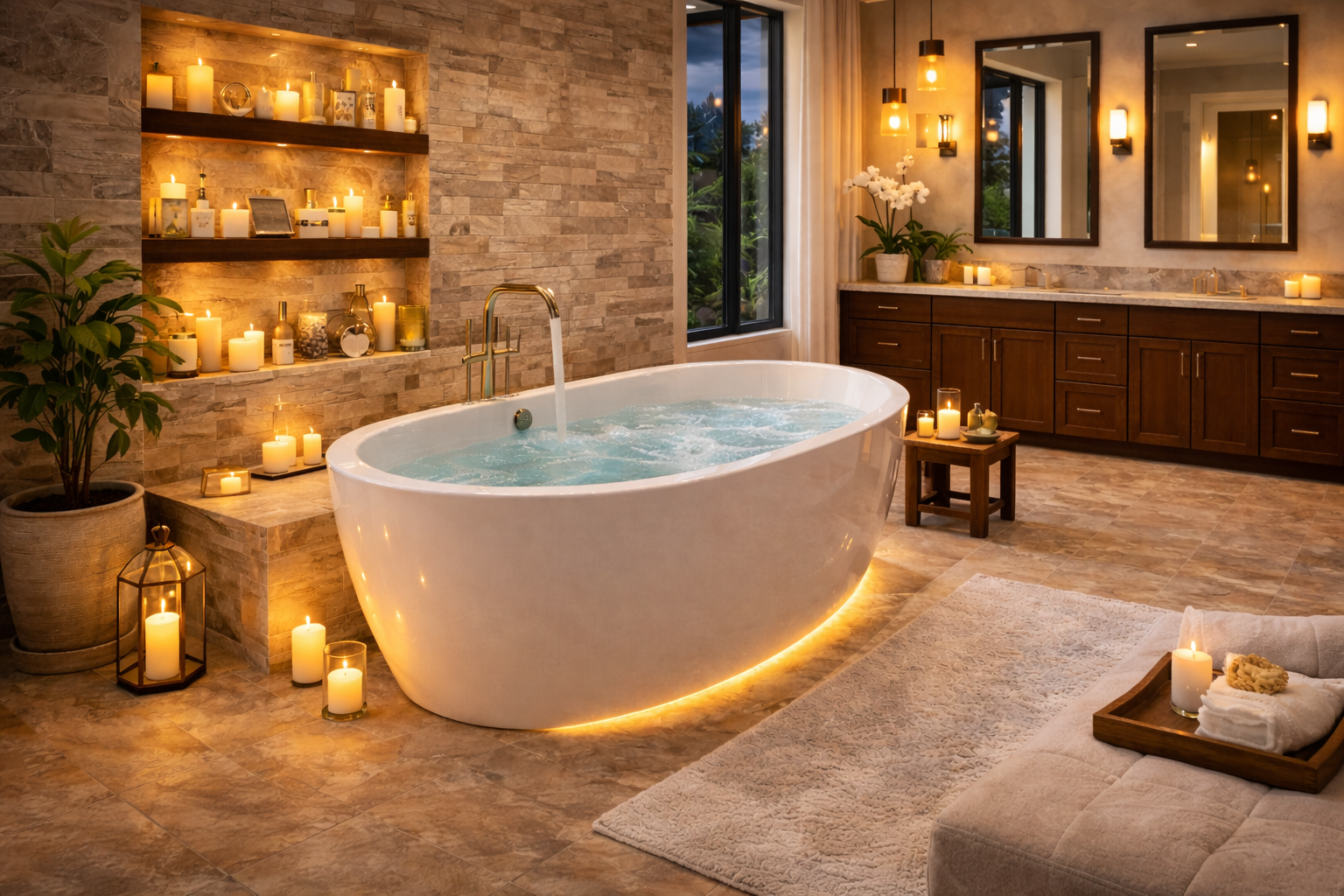
What Upgrades Can Be Added With a Soaking Tub
Soaking tub work is often the best time to add upgrades that support comfort and a better bathing experience. Common upgrades include premium fillers, better nearby lighting, shelving for bath products, a feature wall, improved window trim, and stronger connection between the tub area and the rest of the bathroom finishes. For a closer look at this part of the project, homeowners can explore bathtub remodel.
What Functional Upgrades Are Most Useful Around a Soaking Tub
Functional upgrades often include easier filler placement, better access to towels and bath items, improved lighting, and finishes that are easier to clean around the tub. These upgrades matter because a soaking tub should feel comfortable to use and not just look good in the room.
What Design Upgrades Usually Happen at the Same Time
Soaking tub projects often include upgraded flooring, accent walls, decorative lighting, and more refined trim details around windows or tub walls. Once the tub becomes more comfort-focused, the surrounding finishes usually need to support that same feeling.
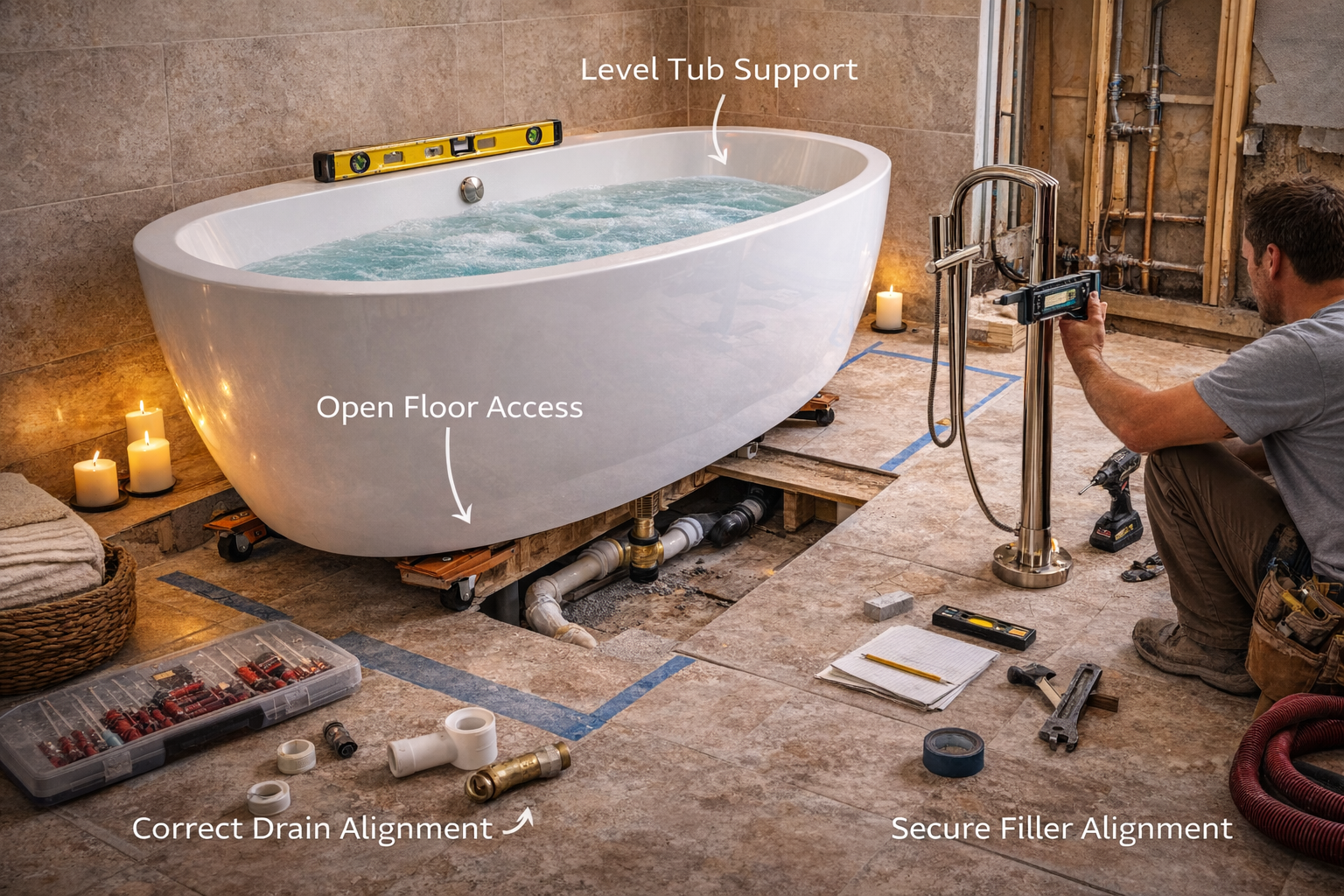
What Installation Details Matter With a Soaking Tub
Soaking tub installation depends on tub support, drain position, filler location, floor level, and whether the room gives enough usable access around the tub. Because soaking tubs are often deeper and sometimes heavier than standard tubs, the floor and the installation method matter more than many homeowners expect. During remodeling, it also helps to follow EPA indoor air quality guidance.
Why Do Drain Position and Tub Support Matter So Much
The tub has to sit level, drain correctly, and feel solid when full of water and in use. If the support below the tub is wrong or the drain connection is poorly aligned, the finished installation can create problems that are hard to correct later.
What Placement and Access Problems Show Up During Installation
Common issues include tubs set too close to nearby walls, filler placement that feels awkward, floor conditions that prevent a clean install, and not enough room to clean or move comfortably around the tub. These details shape whether the soaking tub feels like a real upgrade or just a larger fixture placed into the room.

What Affects Soaking Tub Cost
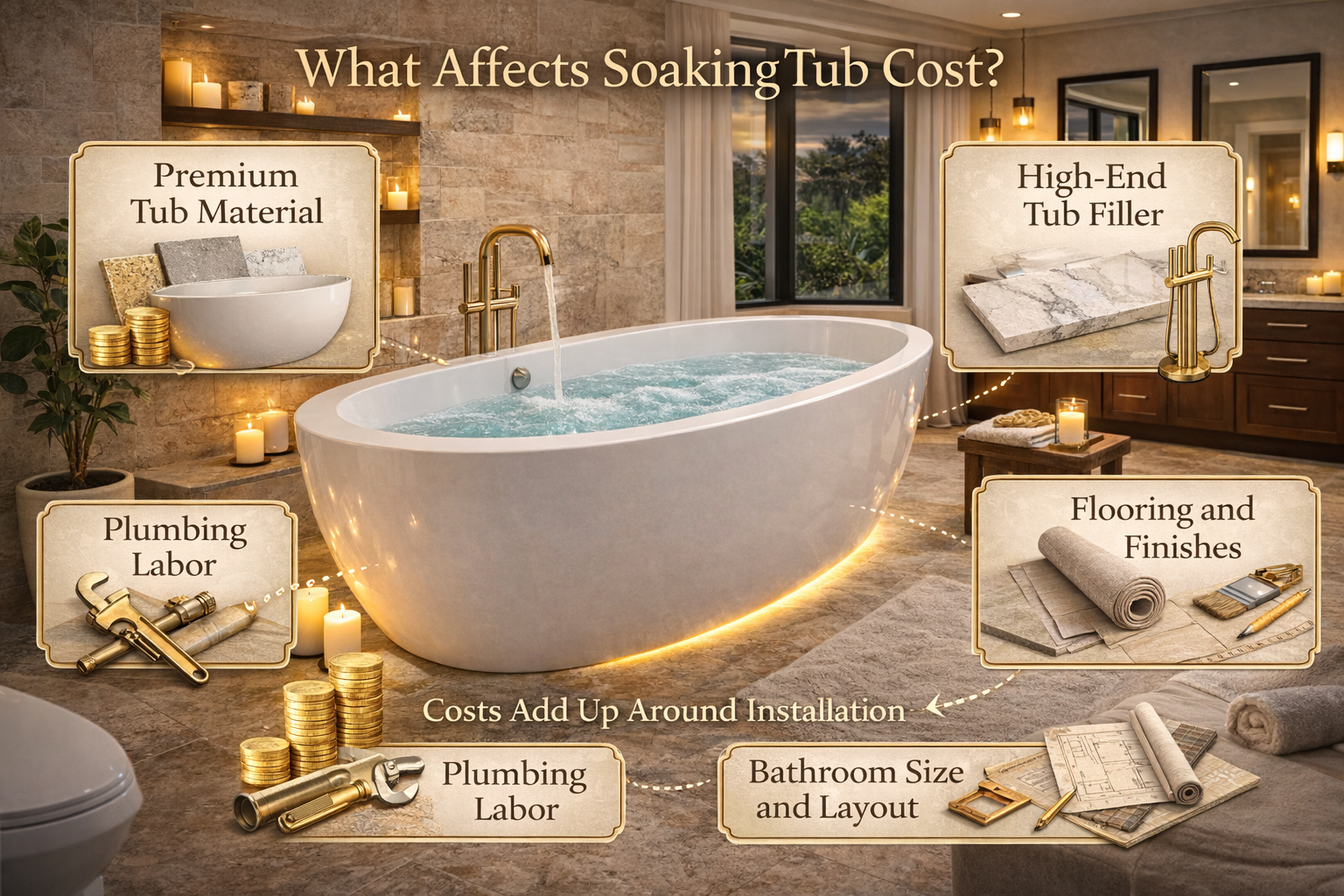
Soaking tub cost usually depends on tub material, tub size, filler type, plumbing work, surrounding finish updates, and whether the room layout has to change to support the new tub properly. A deeper soaking tub can cost more than a basic replacement because the tub itself, the installation, and the surrounding design often become more substantial.
Which Soaking Tub Choices Usually Raise the Cost
Costs usually rise with premium materials, larger tub sizes, freestanding designs, sculptural forms, premium fillers, and layout changes that give the tub a more prominent role in the room. The more the project shifts from a direct replacement toward a comfort-focused feature installation, the more the budget usually grows.
How Do Labor and Existing Conditions Change the Budget
Labor costs go up when the layout changes, the plumbing needs to move, the floor or wall finishes are being rebuilt, or the tub material is heavy and harder to install. Existing conditions matter because deeper comfort tubs often expose whether the room really supports the new layout well.
What Mistakes Should Homeowners Avoid With a Soaking Tub
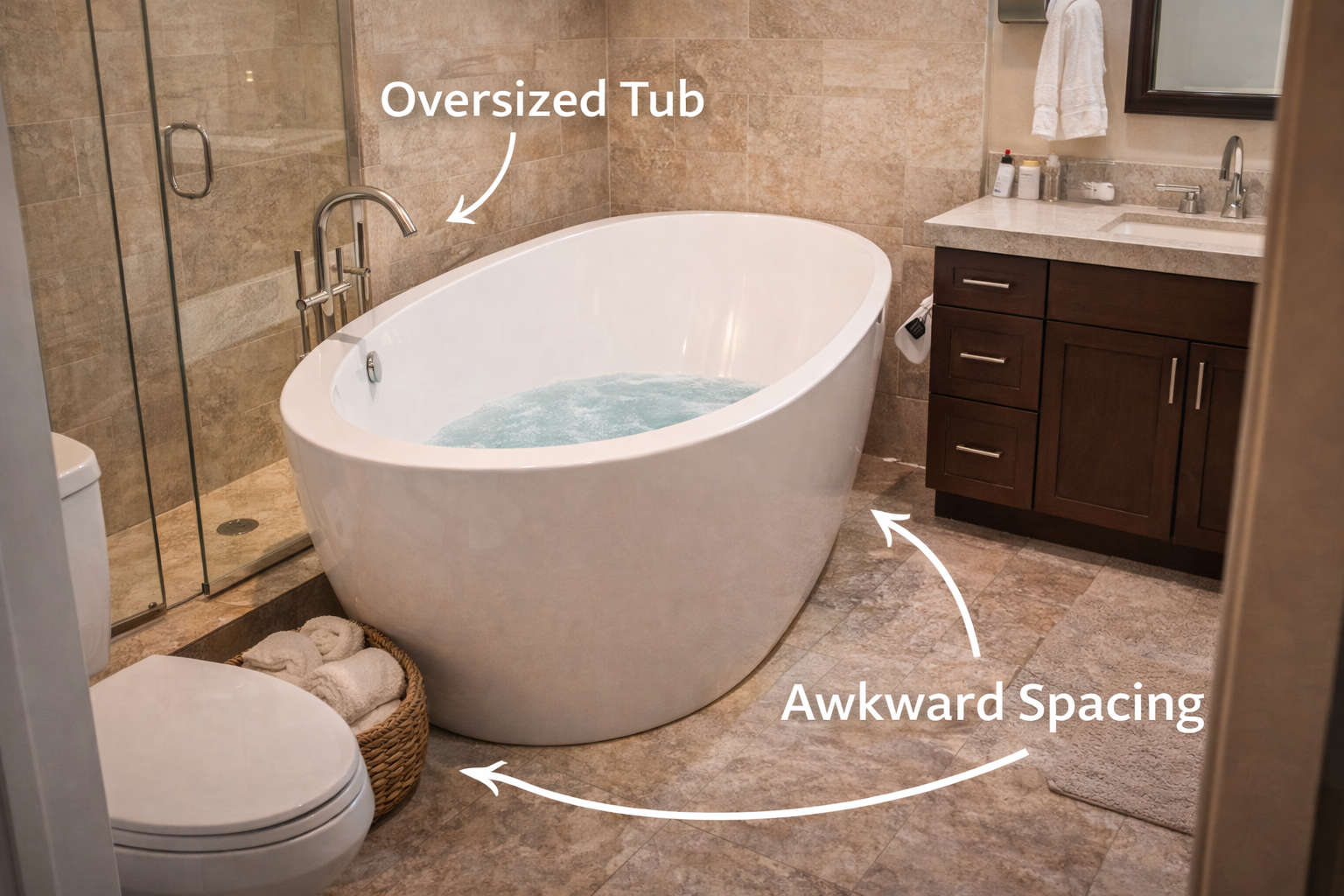
The biggest soaking tub mistakes usually happen when the tub is chosen for the idea of luxury without checking whether the room and the household actually support it. A soaking tub should fit the space, the bathing habits of the household, and the rest of the bathroom layout.
Why Is It a Problem to Choose a Soaking Tub That Is Too Large
If the tub is too large, it can crowd the bathroom, reduce storage or shower space, and make the room less practical every day. A soaking tub should feel like an upgrade, not a tradeoff that hurts the rest of the room.
Why Is It Risky to Ignore the Overall Bathroom Layout
A deeper tub changes the visual and physical balance of the bathroom. If the surrounding shower, vanity, lighting, and storage are not considered at the same time, the tub can feel disconnected from the rest of the remodel.
How Should You Plan a Soaking Tub
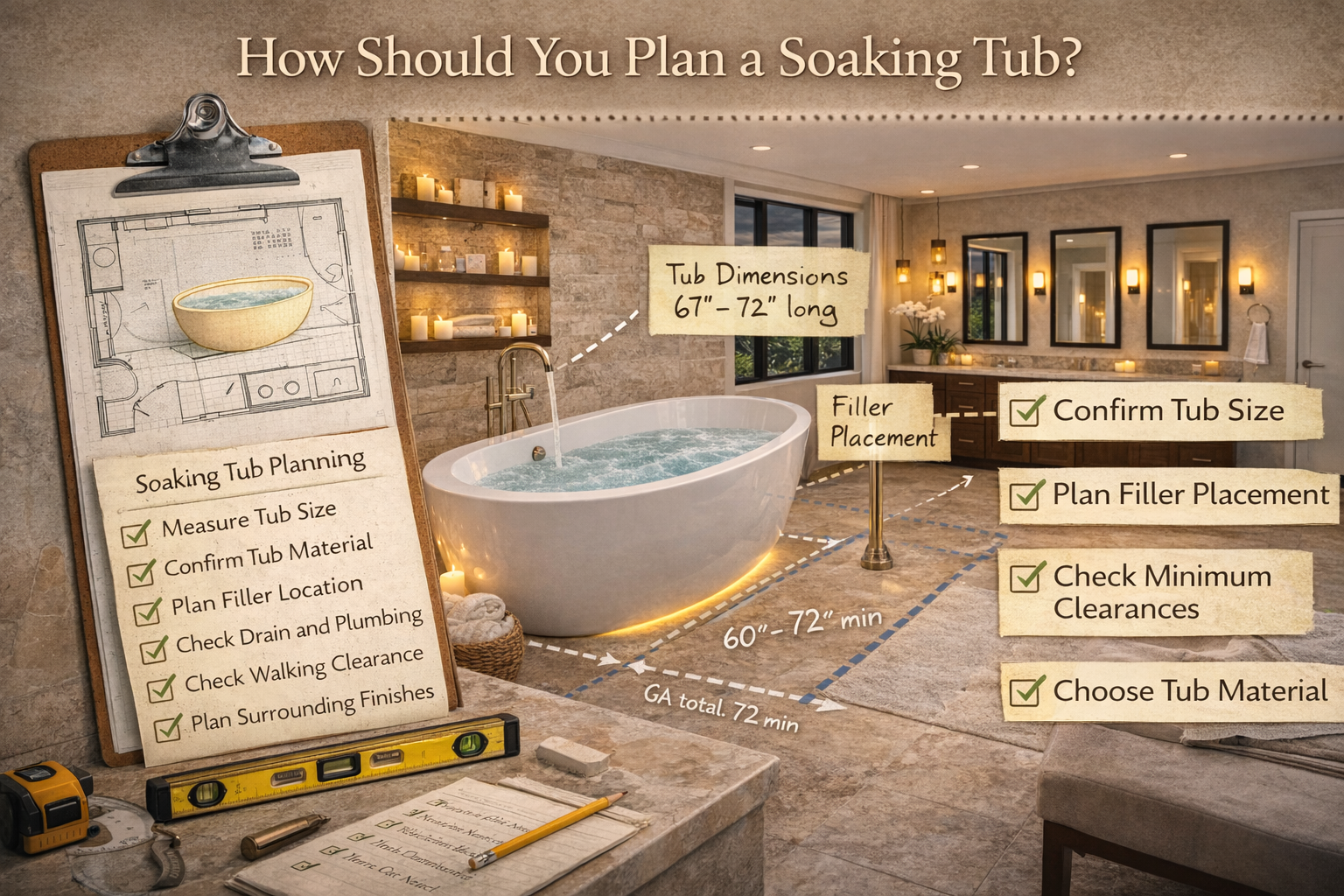
A soaking tub should be planned by measuring the room carefully, deciding how much space the tub can take without hurting the rest of the bathroom, and matching the tub type to how the household actually uses the room. The best plan balances comfort, layout, plumbing, and appearance instead of treating the tub as a stand-alone luxury item.
What Should Be Decided Before Soaking Tub Work Starts
Before construction starts, it helps to confirm tub size, tub material, filler location, drain location, surrounding finish materials, walking clearances, and whether the bathroom still has enough space for the rest of the fixtures to work comfortably. These decisions affect the whole remodel sequence.
How Can a Homeowner Prepare for the Installation Process
Homeowners should be ready for plumbing coordination, delivery of a large tub body, floor and wall protection, and careful sequencing of the tub installation with fillers, trim, and nearby finish work. Soaking tub projects usually go better when the whole bathroom is designed around the tub early instead of reacting to it later.
Related Soaking Tub Topics
Soaking tub projects overlap with bathtub remodeling, freestanding bathtubs, bathroom layout changes, and full bathroom remodeling because the tub affects how the whole room feels and functions. Related topics help homeowners compare whether a soaking tub is the right way to improve the bathroom.
Which Soaking Tub-Related Pages Should Connect to This Topic
Strong related pages include bathtub remodels, freestanding bathtubs, jetted bathtubs, bathroom layout changes, and luxury bathroom upgrades. Those topics help break down the design and use decisions that shape whether a soaking tub fits the remodel well.
Which Bathroom Remodeling Topics Often Connect to Soaking Tub Work
Soaking tub work often connects to flooring, lighting, vanity planning, layout changes, and full bathroom remodeling. In practical remodels, these pieces overlap because the tub becomes part of the larger comfort and design plan for the room.
Frequently Asked Questions About Soaking Tubs
A soaking tub is a bathtub designed for deeper, more comfortable bathing than a standard tub.
They can be worth it when the household actually enjoys baths often enough to use the added comfort and depth.
A soaking tub is usually deeper and designed for a more immersive bath, while a standard tub is often more basic in shape and depth.
Yes. Many soaking tubs are freestanding, although there are also soaking tubs in built-in and drop-in styles.
They often do, especially when the tub has a larger body or needs more visual and physical space around it to work well in the room.
They can be, depending on the tub size, material, and whether the bathroom layout or plumbing needs to change to support them.
It can improve appeal when the bathroom has the size and style to support a comfort-focused tub feature, especially in a primary bath.
The timeline depends on whether the project is a direct tub replacement or part of a larger remodel with layout and finish changes.
Some can, but soaking tubs are most often used in bathrooms that also have a separate shower and enough space to support both well.
The first step is measuring the room and deciding whether the bathroom has enough space to support the tub without hurting the rest of the layout.