


Kitchen Appliances Guide: Selection, Installation, Costs, and Planning

Kitchen Appliances Guide Index
- Kitchen Appliances Overview
- When Should Kitchen Appliances Be Updated
- What Types of Kitchen Appliances Are Common in Remodeling
- How Do Layout and Kitchen Size Affect Appliance Selection
- What Components Are Used in Kitchen Appliance Installation
- What Upgrades Can Be Added During a Kitchen Appliance Remodel
- What Installation Details Matter With Kitchen Appliances
- What Affects Kitchen Appliance Cost
- What Mistakes Should Homeowners Avoid With Kitchen Appliances
- How Should You Plan Kitchen Appliances in a Remodel
- Related Kitchen Appliance Topics
- Frequently Asked Questions About Kitchen Appliances
Kitchen Appliances Overview
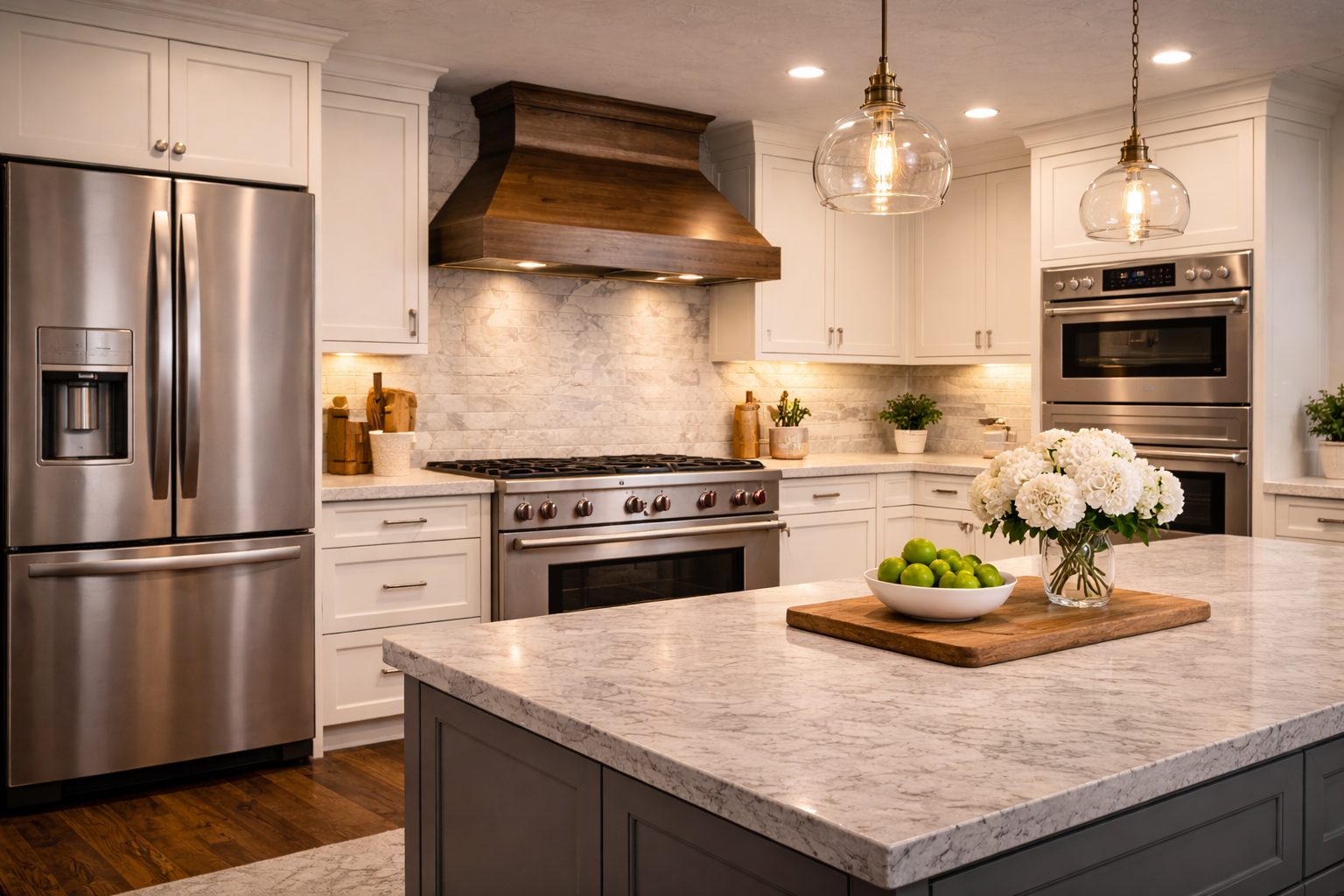
Kitchen appliances are some of the most important working parts of the kitchen because they affect cooking, food storage, cleanup, and how the layout functions every day. In practical remodel work, appliance planning means more than picking brands. It means making sure the refrigerator, range, dishwasher, microwave, hood, and any specialty appliances actually fit the kitchen layout, cabinet plan, electrical needs, and plumbing connections.
What Gets Updated During a Kitchen Appliance Remodel
The work may include the appliances themselves, appliance openings, cabinet spacing, electrical circuits, gas line planning where needed, water lines, venting for the hood, and trim or panel details around built-in units. In some kitchens, appliance upgrades also drive changes to cabinet layout, countertop cutouts, and workflow zones across the whole room.
What Is the Difference Between Replacing Appliances and Replanning Appliance Layout
Replacing appliances keeps the kitchen working in roughly the same way while updating the machines. Replanning appliance layout goes further and may change the refrigerator location, cooktop and oven arrangement, dishwasher position, or ventilation approach so the kitchen works better overall. That bigger planning step often matters more than the appliance brand name alone.
When Should Kitchen Appliances Be Updated
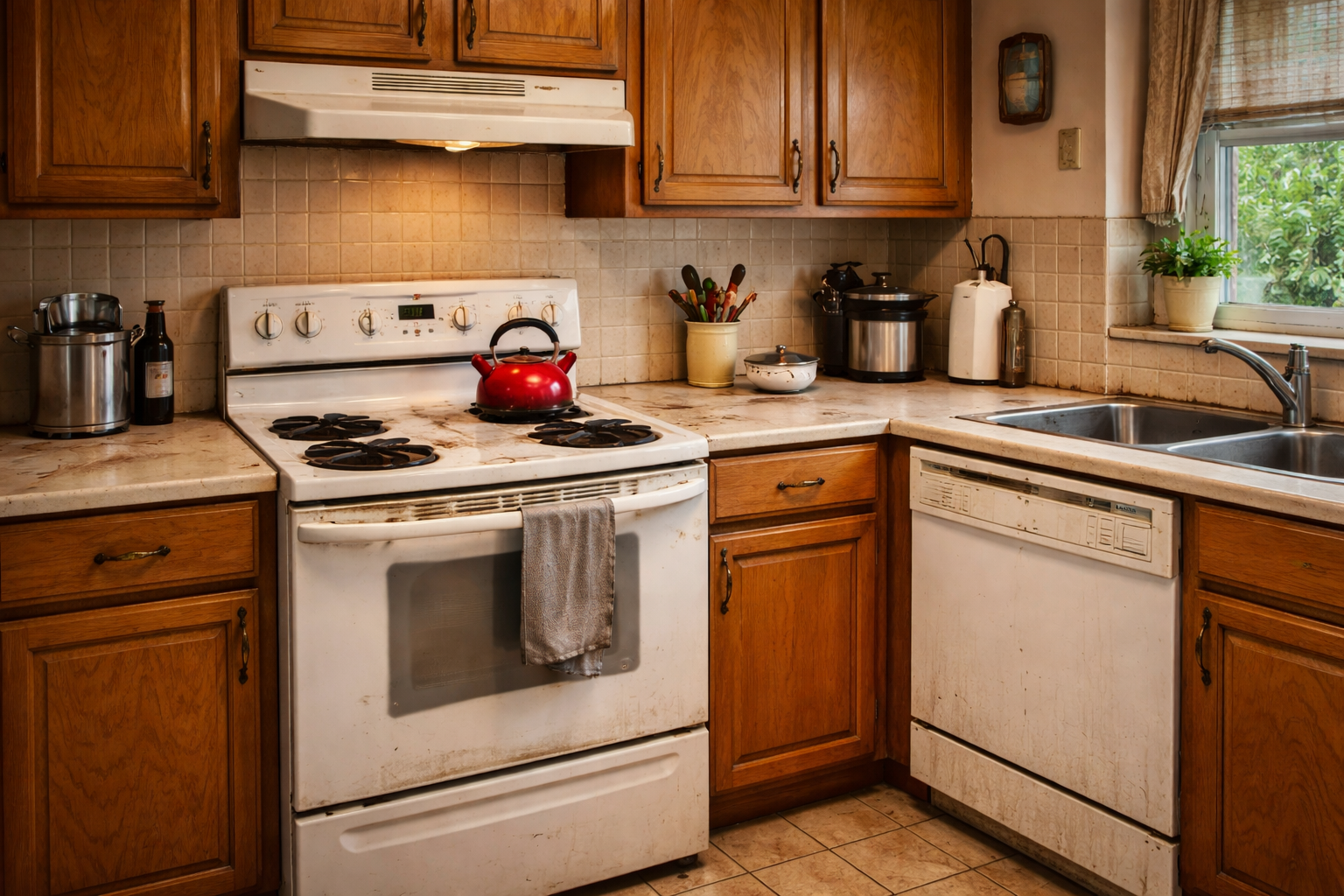
Kitchen appliances should usually be updated when they are worn out, inefficient, the wrong size for the kitchen, or no longer fit how the household cooks and cleans. Common signs include unreliable performance, mismatched appliance sizes, weak ventilation, poor refrigerator location, and older appliances that make a remodeled kitchen feel unfinished. Homeowners comparing options often look at kitchen remodeling as part of the overall plan.
What Signs Show That Kitchen Appliances Are Ready for Updating
Clear signs include repeated repair issues, poor cooking performance, insufficient refrigerator space, noisy or inefficient dishwashers, and appliance finishes that no longer match the rest of the kitchen. In many remodels, appliance openings also reveal that the old layout was built around older sizes or different cooking habits.
What Remodeling Goals Usually Lead to Appliance Upgrades
Appliance upgrades are common when homeowners want better cooking performance, more storage, more efficient cleanup, a cleaner built-in look, or a kitchen layout that supports modern daily use. They are also common when cabinet and countertop work make the old appliances the weakest part of the room.
What Types of Kitchen Appliances Are Common in Remodeling
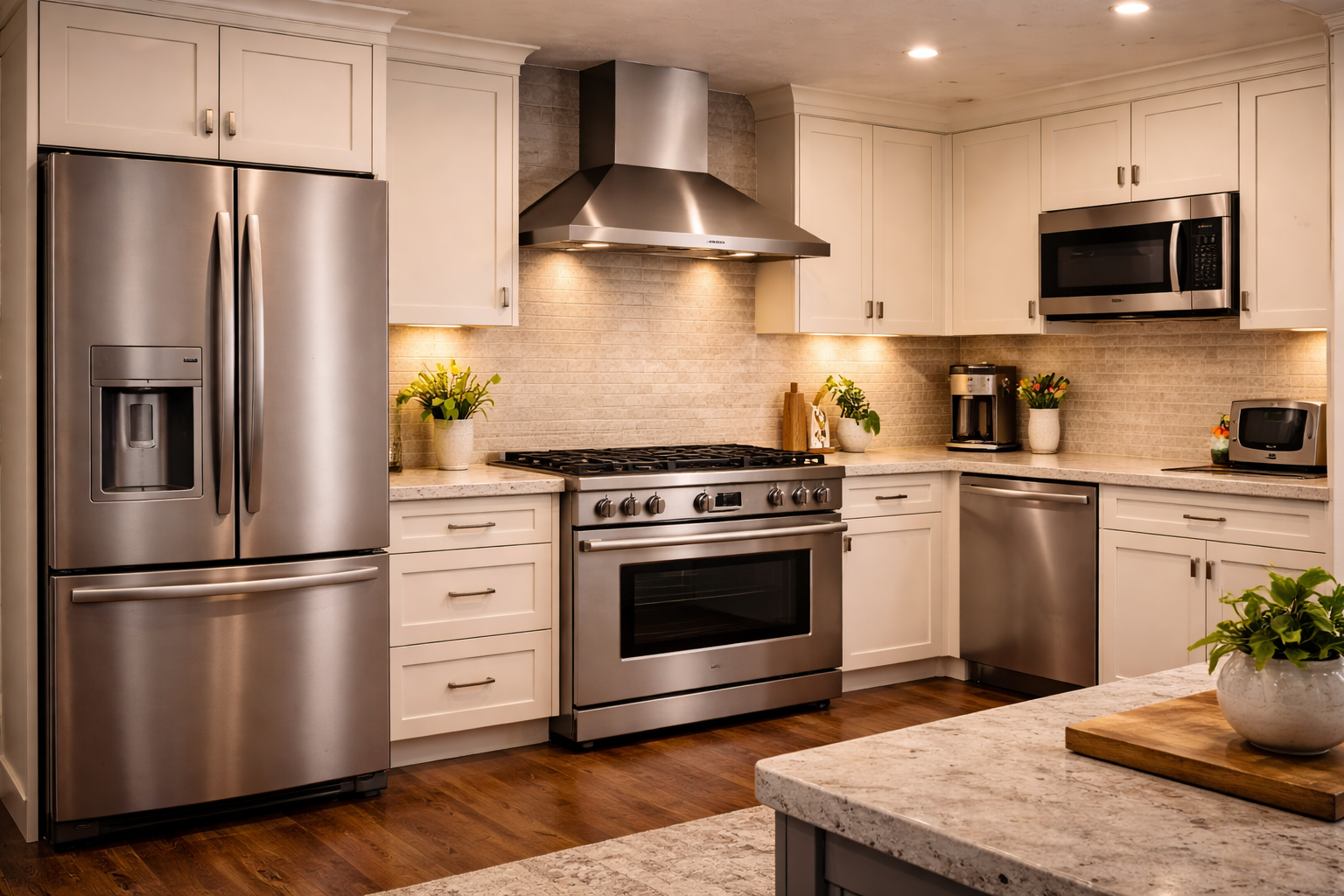
Common appliances in kitchen remodels include refrigerators, ranges, cooktops, wall ovens, microwaves, range hoods, dishwashers, beverage fridges, wine storage units, and ventilation systems. The right appliance mix depends on cooking style, household size, available space, and whether the remodel is focused on everyday function or a more premium kitchen setup.
What Appliance Types Are Most Common in Kitchen Remodels
Refrigerators, ranges or cooktops, dishwashers, and range hoods are the most common foundation appliances because they shape the core food storage, cooking, and cleanup functions of the kitchen. Microwave placement also matters because it affects both convenience and cabinet layout.
When Does One Appliance Setup Make More Sense Than Another
A standard range may make more sense when the kitchen needs a simple and efficient cooking setup. A cooktop with separate wall ovens may make more sense when the layout supports it and the household wants more flexible oven placement. The best setup depends on real cooking habits, not just showroom appearance.
How Do Layout and Kitchen Size Affect Appliance Selection
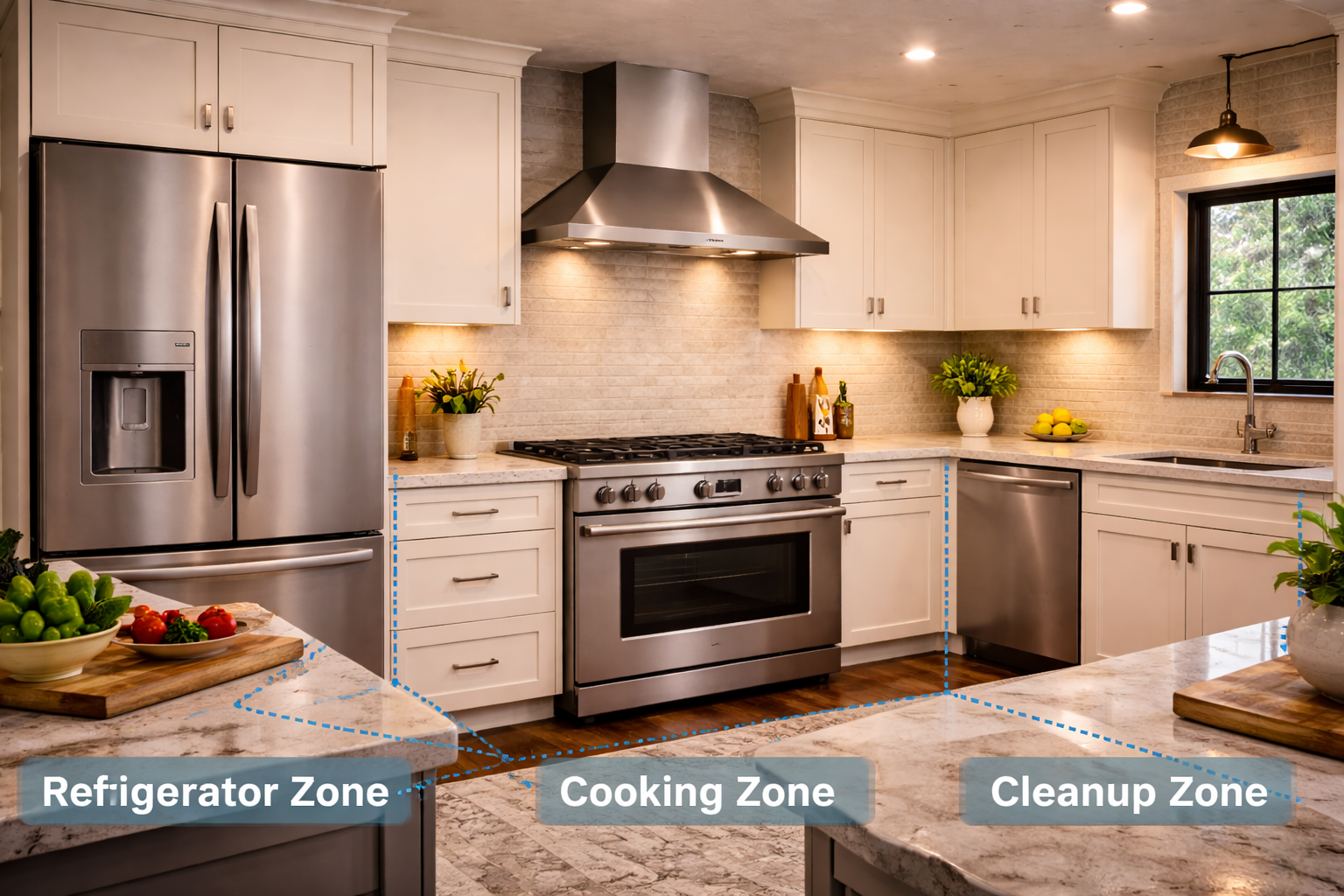
Layout and kitchen size affect where appliances should go, how large they can be, and how well they support the kitchens workflow. A good appliance plan keeps cold storage, prep space, cooking, and cleanup working together instead of forcing the user to cross the room constantly to finish a simple task across worn flooring. For broader planning considerations, it can help to review Energy Saver design guidance.
Why Does Appliance Placement Matter So Much in a Kitchen
Appliance placement affects how efficiently the kitchen works. Refrigerator location affects prep flow, dishwasher location affects cleanup, and range and hood placement affect cooking safety and ventilation. In practical remodel work, better appliance placement often improves the kitchen more than cosmetic changes alone.
How Does Kitchen Size Change the Best Appliance Strategy
In a smaller kitchen, the best appliance strategy may focus on efficient standard-size appliances, strong workflow, and avoiding oversized units that eat up valuable cabinet and counter space. In a larger kitchen, the remodel may support wider refrigeration, double ovens, larger hood systems, and more specialized appliances. The best strategy depends on what the room can support without hurting function.
What Components Are Used in Kitchen Appliance Installation
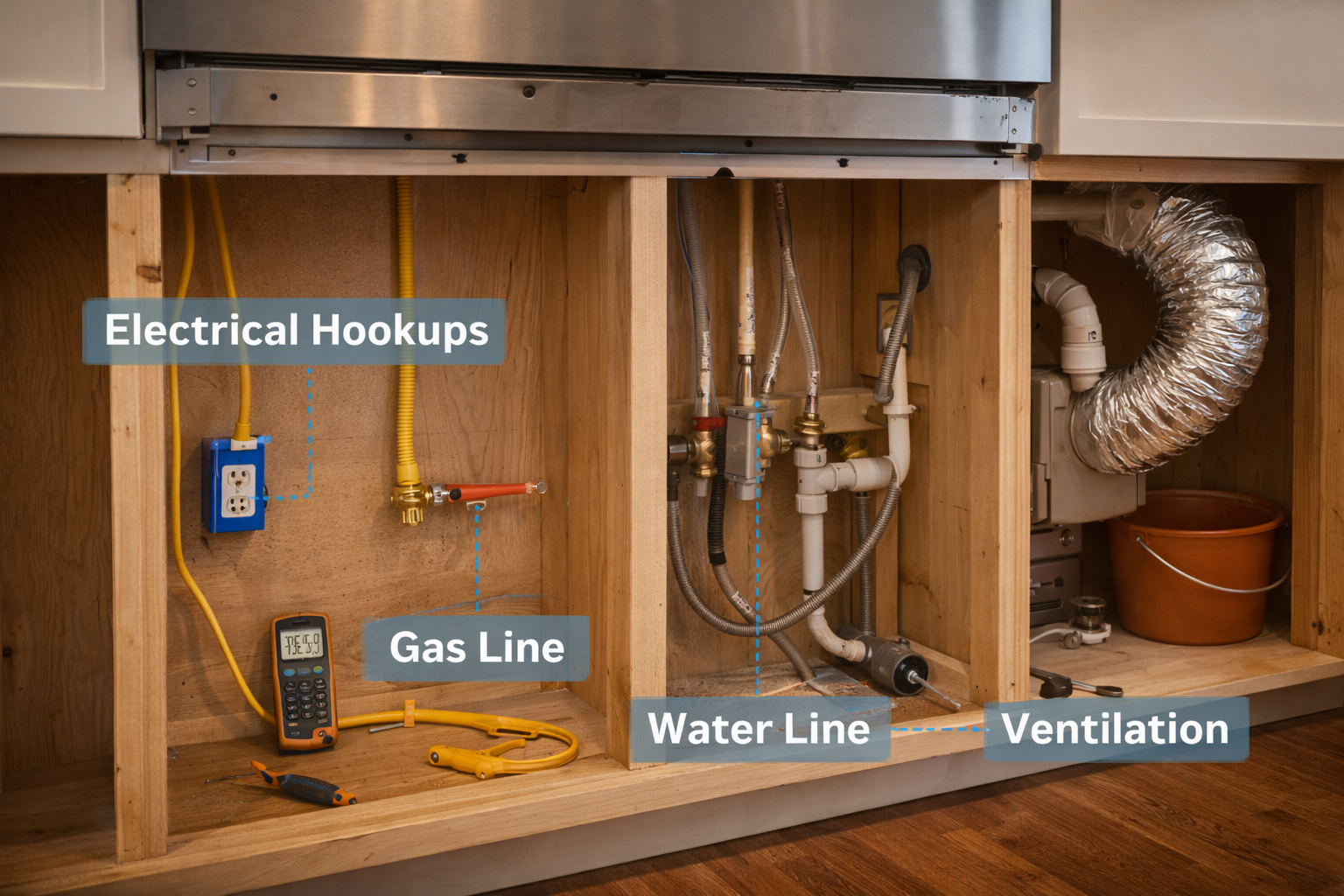
Kitchen appliance installation uses more than the appliances themselves. The remodel may involve electrical circuits, gas lines, water lines, drain connections, venting systems, anti-tip devices, built-in trim kits, cabinet panels, and support framing that all have to work together. The visible appliance is only one part of the installation.
What Plumbing, Gas, and Electrical Components Are Common
Common components include dedicated appliance circuits, gas supply lines for ranges where used, refrigerator water lines, dishwasher supply and drain connections, microwave circuits, and venting for range hoods. These connections are what make the appliance setup functional in real everyday use.
What Cabinet and Finish Components Usually Matter Most
Appliance panels, filler strips, built-in trim kits, cabinet spacing, toe-kick details, and countertop cutouts all matter because the appliances have to fit the cabinets and surrounding surfaces cleanly. These details often decide whether the kitchen feels custom or simply assembled.
What Upgrades Can Be Added During a Kitchen Appliance Remodel
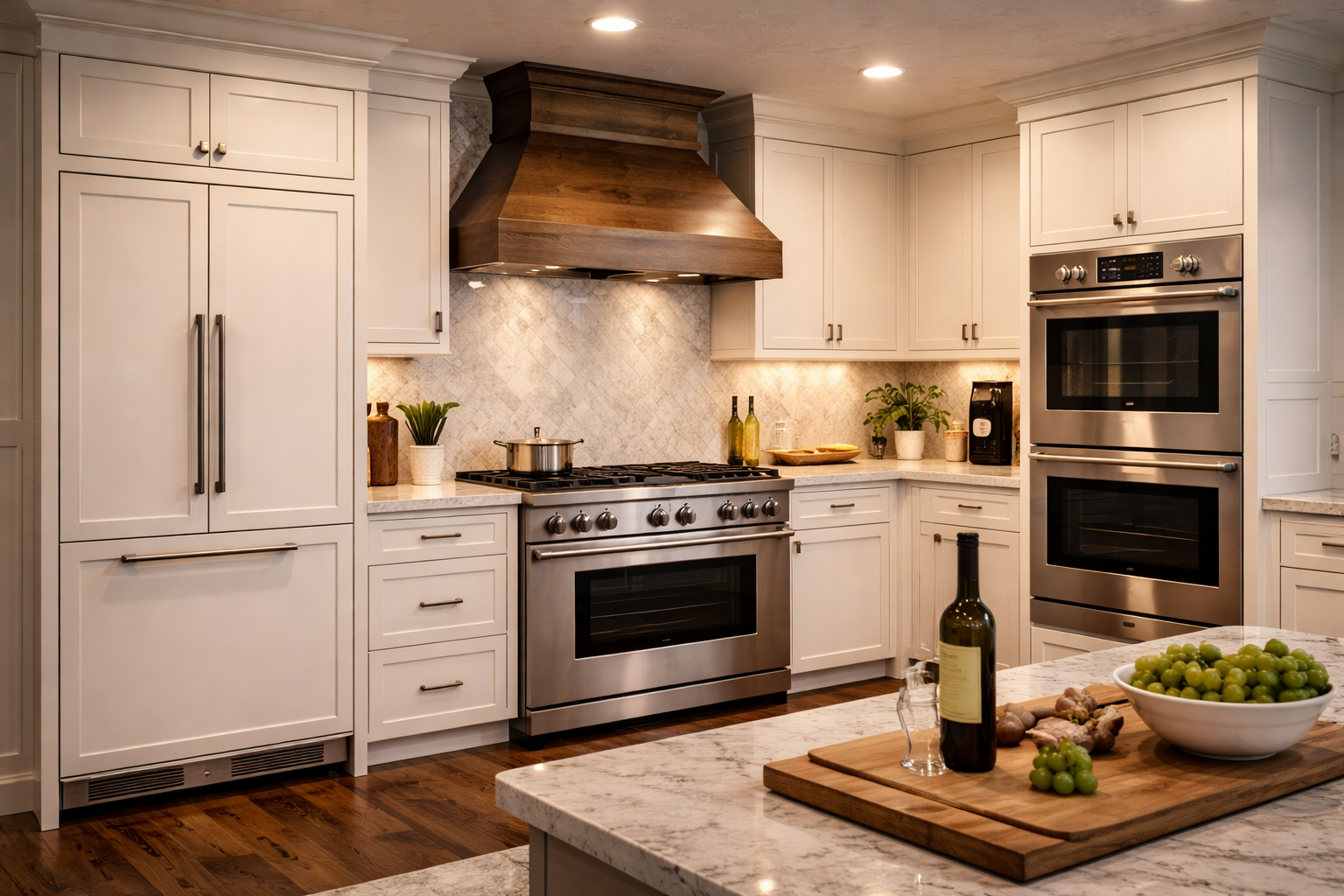
Appliance work is often the best time to add upgrades that improve performance and visual consistency together. Common upgrades include panel-ready appliances, better hood ventilation, built-in microwave placement, beverage refrigeration, improved dishwasher location, and stronger cabinet integration around the appliance zone.
What Functional Upgrades Are Most Useful With Kitchen Appliances
Functional upgrades often include better refrigerator capacity, quieter dishwashers, stronger ventilation, more practical oven placement, and improved workflow between prep, cook, and cleanup zones. These upgrades matter because the kitchen should work more smoothly after the remodel, not just look newer.
What Design Upgrades Usually Happen at the Same Time
Appliance upgrades often happen alongside cabinet changes, panel-ready finishes, updated countertops, larger islands, and better lighting. Once the appliances change, the surrounding kitchen details usually need to align with the new look and size requirements. For technical installation guidance, many pros refer to TCNA resources.
What Installation Details Matter With Kitchen Appliances
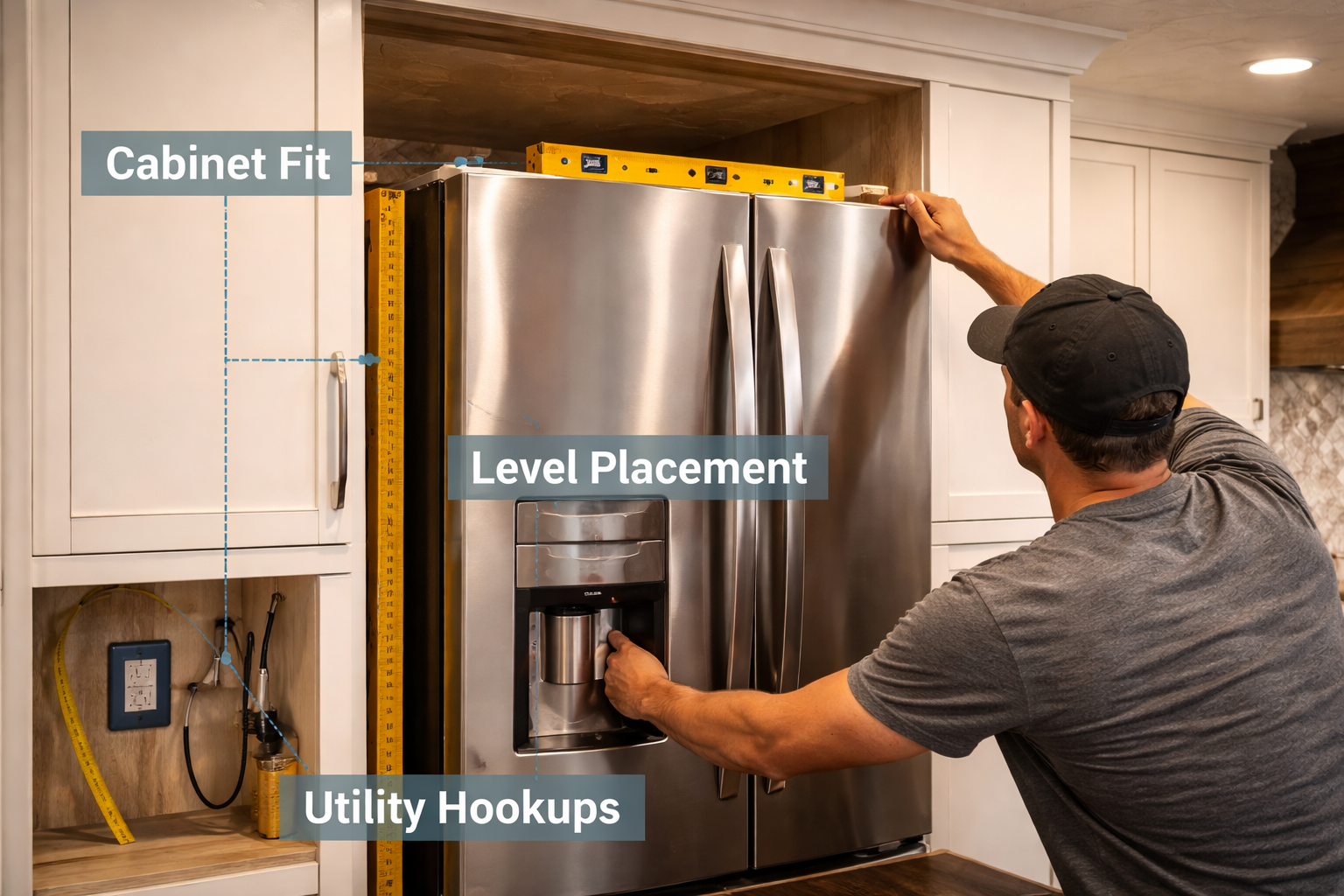
Kitchen appliance installation depends on correct cabinet openings, utility connections, ventilation, level placement, and service clearance. Even high-end appliances can become frustrating if the refrigerator doors do not clear properly, the dishwasher crowding is wrong, or the range hood is undersized for the cooking setup.
Why Do Utility Connections and Cabinet Openings Matter So Much
Appliances need the right power, water, gas, and venting setup to perform properly. The cabinet openings around them also have to match the real appliance dimensions and service clearances. These are the details that make the difference between a kitchen that works well and one that always feels slightly off.
What Fit and Performance Problems Show Up During Installation
Common issues include refrigerator doors that hit nearby walls, dishwashers that interfere with sink use, ranges with poor ventilation planning, and built-in appliances that do not align cleanly with surrounding cabinetry. These are practical issues that affect the kitchen every day.
What Affects Kitchen Appliance Cost
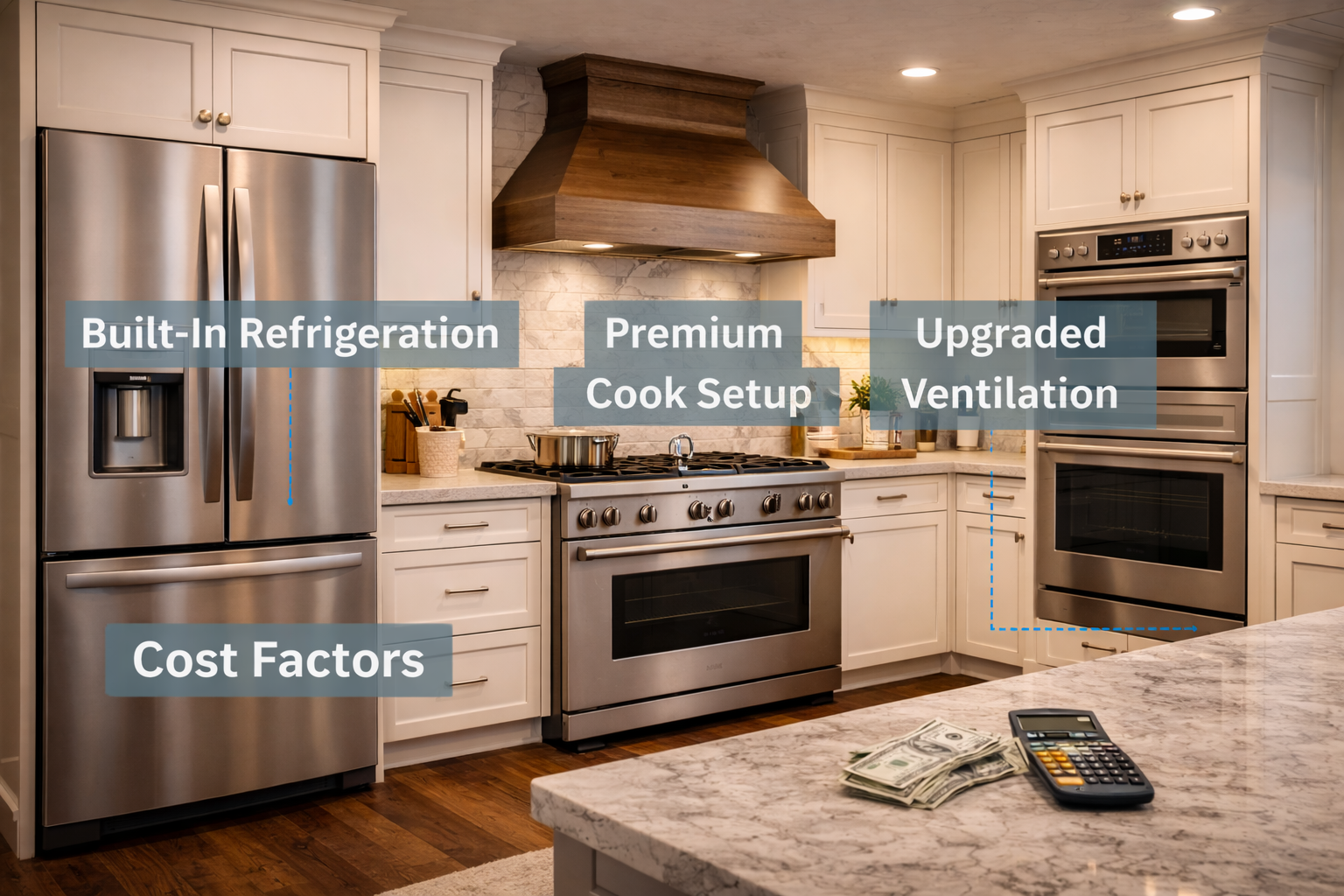
Kitchen appliance cost usually depends on the appliance categories selected, the number of built-in or specialty units, utility upgrades, cabinet integration, and the level of finish around the appliances. A simple replacement package costs far less than a built-in appliance plan with custom panels, upgraded venting, and layout changes.
Which Appliance Choices Usually Raise the Cost
Costs usually rise with built-in refrigeration, separate cooktop and wall oven layouts, premium ventilation systems, specialty beverage units, panel-ready appliances, and smart appliance features. The more integrated and design-driven the appliance plan becomes, the more the cost usually climbs.
How Do Labor and Existing Conditions Change the Budget
Labor costs go up when electrical circuits need upgrading, gas or water lines need changing, venting is more involved, or the cabinets and counters need custom modification to fit the new appliances. Existing conditions matter because many older kitchens were not built for current appliance sizes or performance expectations.
What Mistakes Should Homeowners Avoid With Kitchen Appliances
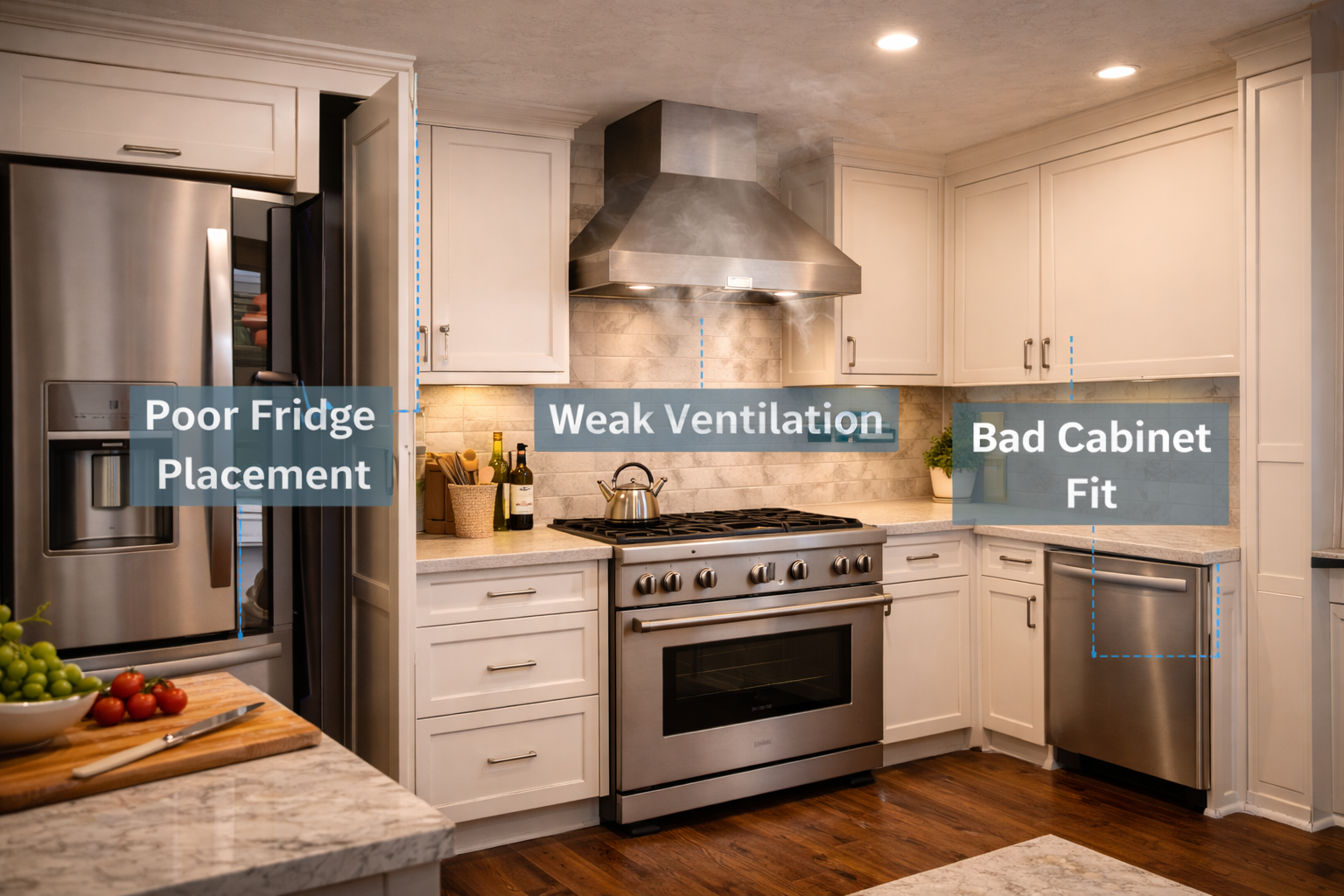
The biggest kitchen appliance mistakes usually happen when the appliances are selected before the layout and utility needs are planned properly. The kitchen should be built around how the appliances function in the room, not around product hype or isolated spec sheets.
Why Is It a Problem to Pick Appliances Before Planning the Layout
An appliance that looks impressive on its own can still create workflow problems if it blocks prep space, forces awkward door swings, or requires cabinet and utility changes that the kitchen was never designed to support. Planning the layout first helps avoid those problems.
Why Is It Risky to Ignore Ventilation and Utility Needs
Appliances rely on more than plug-in power. Ventilation, gas, water, drainage, and cabinet clearance all matter. If those systems are not planned carefully, the new appliance package may cost more to fix later than it would have to plan correctly up front.
How Should You Plan Kitchen Appliances in a Remodel
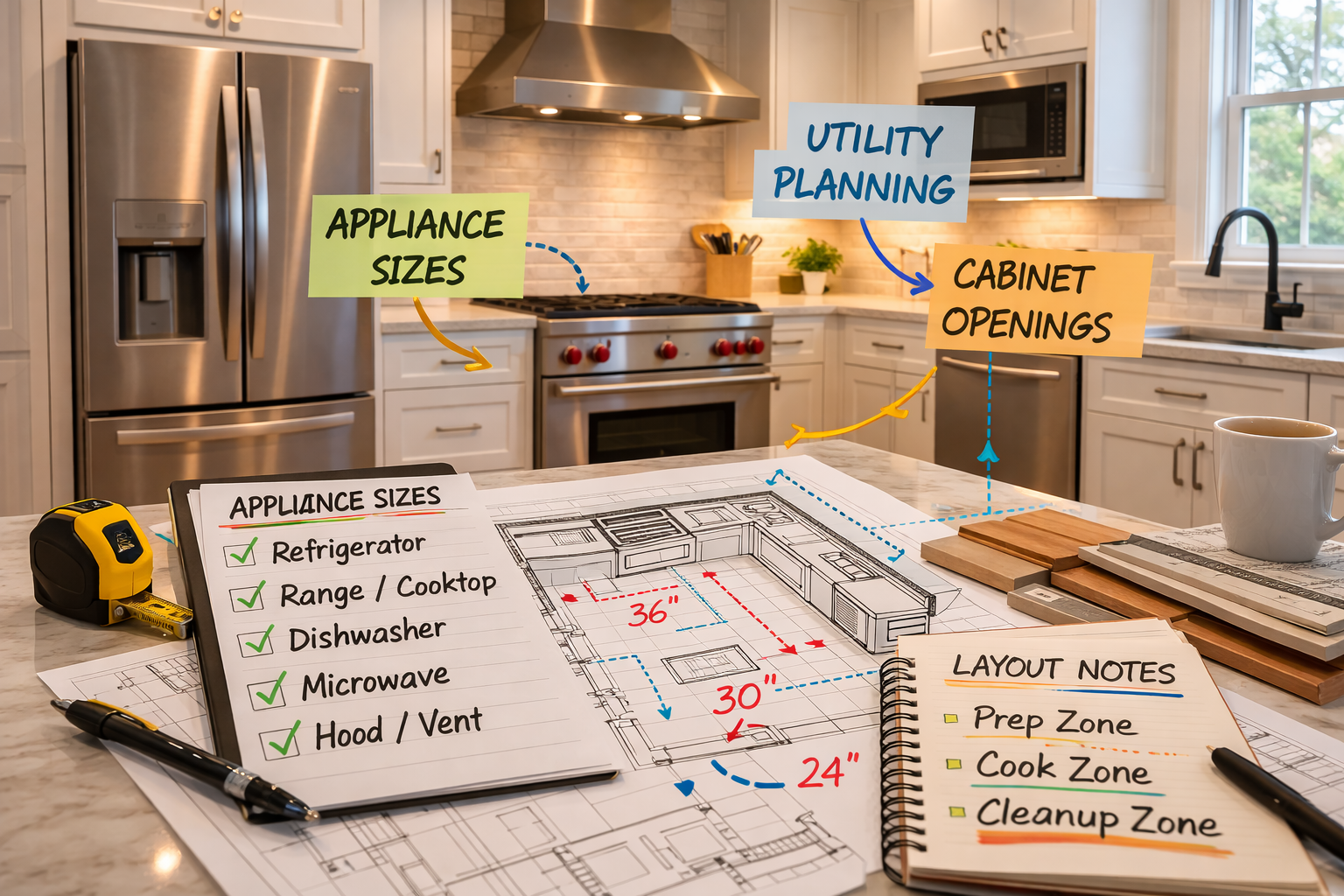
Kitchen appliances should be planned by deciding how the household cooks, stores food, and cleans up first, then matching the appliance package to the kitchen layout and utility conditions. The best plan balances appliance performance, kitchen flow, cabinet fit, and installation requirements instead of choosing the appliance package in isolation.
What Should Be Decided Before Appliance Work Starts
Before construction starts, it helps to confirm appliance sizes, appliance style, panel-ready vs standard finish direction, ventilation needs, water and gas connections, cabinet opening dimensions, and how the appliance zones support prep, cooking, and cleanup. These choices affect the whole kitchen plan.
How Can a Homeowner Prepare for the Installation Process
Homeowners should be ready for delivery timing, utility checks, appliance dimension verification, cabinet and panel coordination, and final hookup planning for water, gas, power, and ventilation. Appliance projects usually go best when the cabinets and utilities are built around the actual units instead of rough assumptions. Homeowners comparing performance goals can review Energy Saver ventilation guidance.
Related Kitchen Appliance Topics
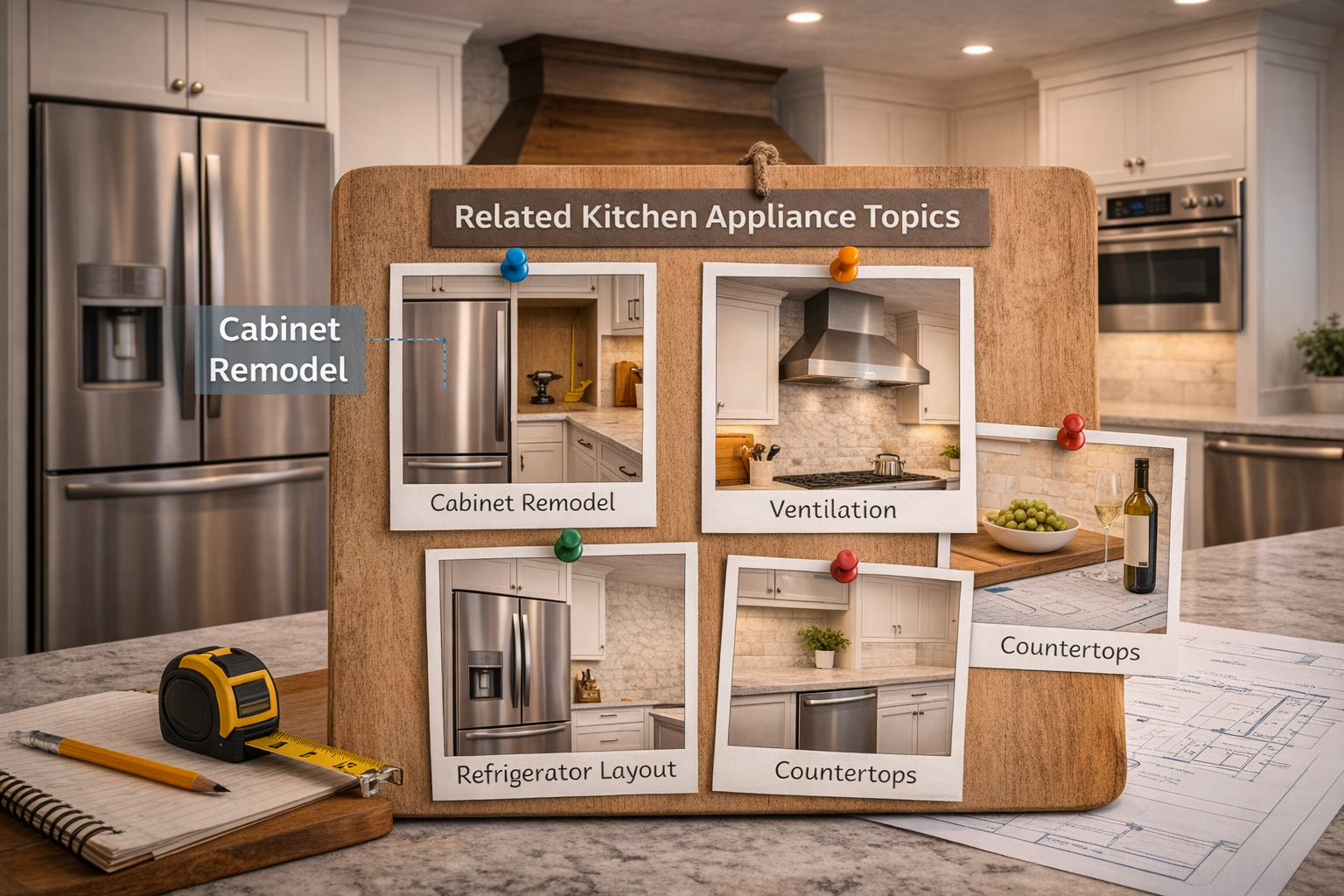
Kitchen appliance projects overlap with cabinet remodeling, kitchen layout changes, countertop work, ventilation planning, and full kitchen remodeling because appliance size and placement affect how the whole kitchen functions. Related topics help homeowners compare whether they need an appliance update only or a broader kitchen redesign.
Which Kitchen Appliance-Related Pages Should Connect to This Topic
Strong related pages include cabinet remodels, countertop remodels, kitchen layout changes, pantry design, and ventilation or hood planning. Those pages help break down the storage, workflow, and installation decisions that shape a good appliance plan.
Which Kitchen Remodeling Topics Often Connect to Appliance Work
Appliance work often connects to cabinets, countertops, islands, lighting, flooring, and full kitchen remodeling. In practical remodels, these pieces overlap because appliance placement affects almost every part of the kitchen plan.
Frequently Asked Questions About Kitchen Appliances
Refrigerators, cooking appliances, dishwashers, and ventilation systems are some of the most important because they shape food storage, cooking, and cleanup every day.
Major appliance sizes and types should usually be confirmed early because cabinets, openings, and utility planning often depend on them.
Yes. Appliance sizes and placement often shape cabinet layout, prep space, and workflow across the whole kitchen.
Sometimes. It depends on the appliance type, the existing utility setup, and whether the remodel is changing the appliance layout.
They can be worth it when the kitchen design and budget support a more integrated look and the household values that cleaner finish level.
The timeline depends on delivery, utility readiness, cabinet fit, and whether the appliances are simple replacements or part of a larger kitchen build.
Yes. Ventilation is especially important when ranges, cooktops, or higher-output cooking setups are being upgraded.
Sometimes, but the existing cabinets still need to fit the new appliance sizes and opening requirements correctly.
They can improve appeal when they fit the quality and layout of the kitchen and support better everyday function.
The first step is deciding how the kitchen needs to function, then matching the appliance package to the layout, storage plan, and utility conditions.