

Steam Shower Guide: Design, Installation, Costs, and Planning

Steam Shower Guide Index
- Steam Shower Overview
- When Does a Steam Shower Make Sense
- What Types of Steam Showers Are Common
- How Do Layout and Room Size Affect a Steam Shower
- What Materials and Components Are Used in a Steam Shower
- What Upgrades Can Be Added With a Steam Shower
- What Installation Details Matter in a Steam Shower
- What Affects Steam Shower Cost
- What Mistakes Should Homeowners Avoid With a Steam Shower
- How Should You Plan a Steam Shower
- Related Steam Shower Topics
- Frequently Asked Questions About Steam Showers
Steam Shower Overview
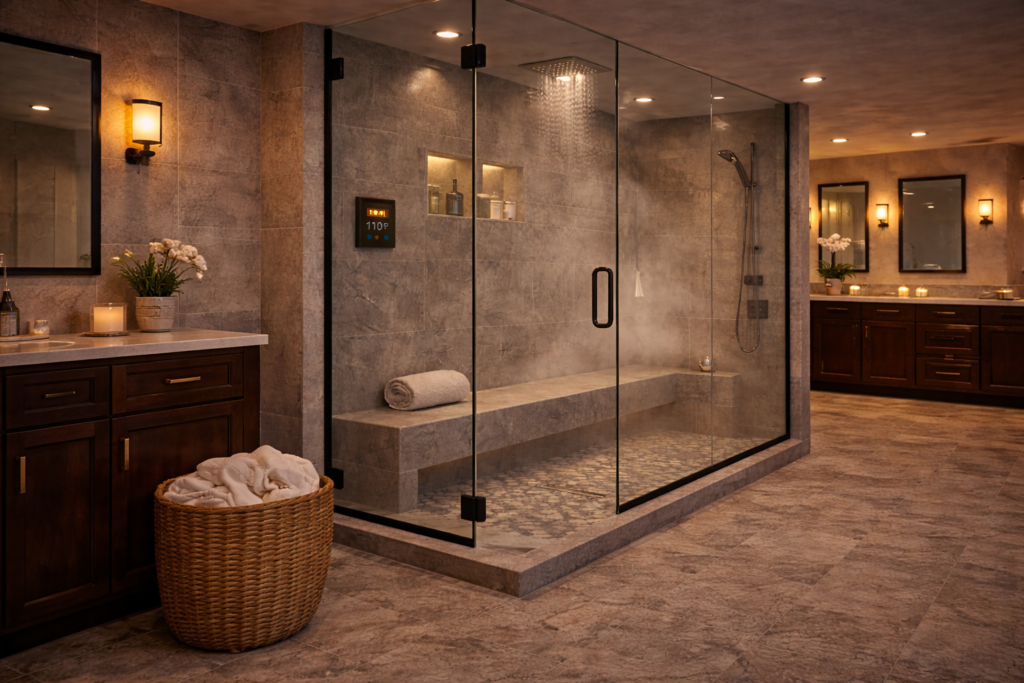
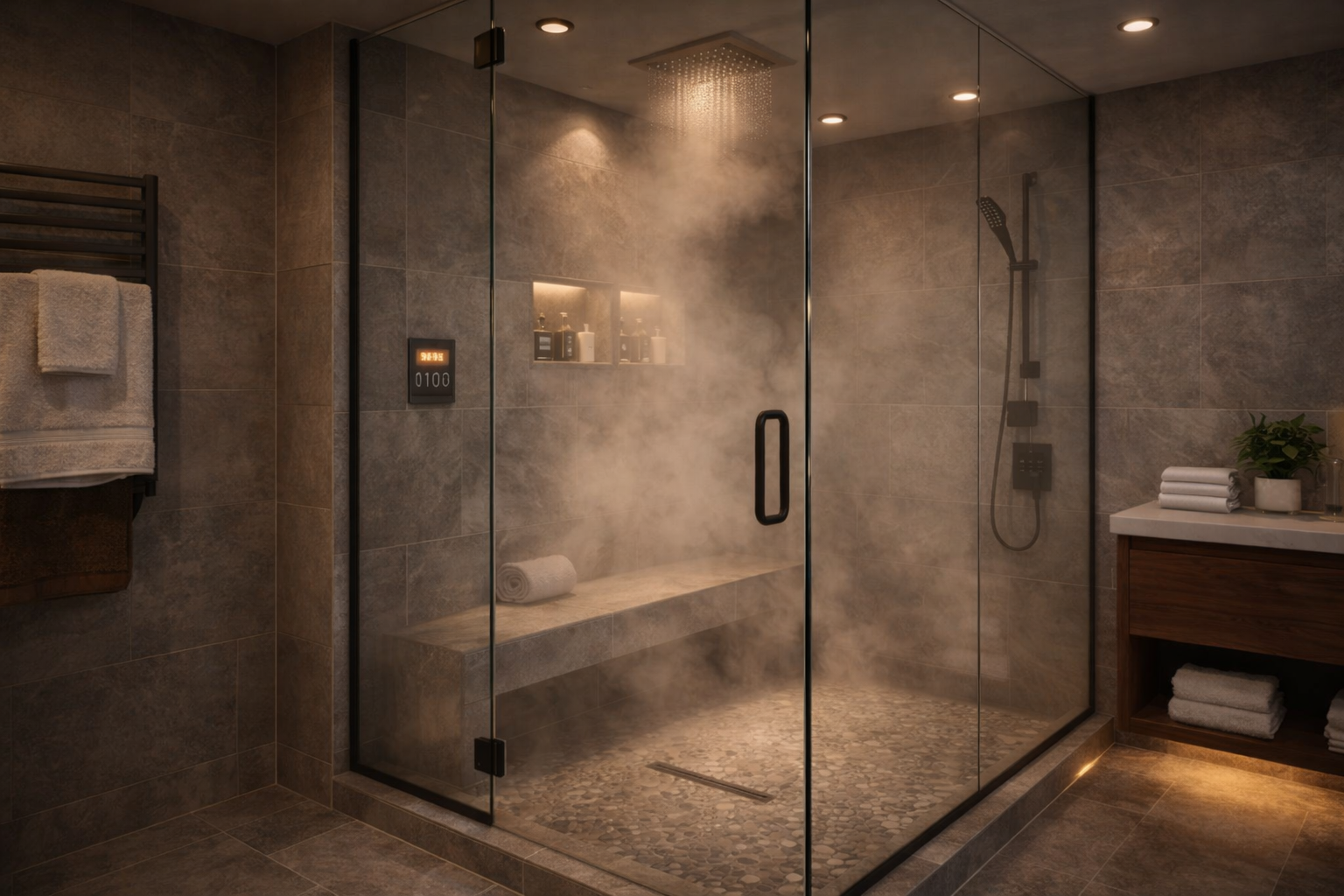
A steam shower is a shower built to contain steam and deliver it through a generator system for a sauna-like bathing experience. In practical remodel work, that means the shower needs a tight enclosure, moisture-resistant materials, correct ceiling and wall detailing, a steam generator, and controls that are planned into the layout from the start. A true steam shower is more than a regular shower with hot water. It is a different kind of system that has to be built for heat and vapor containment.
What Gets Updated During a Steam Shower Project
The work may include the shower enclosure, steam generator, controls, steam head location, bench seating, lighting, ventilation planning, tile or panel materials, waterproofing, and the way the door and glass enclosure seal the space. In some remodels, the ceiling shape and room layout also change because a steam shower has stricter construction needs than a standard shower.
What Is the Difference Between a Steam Shower and a Standard Shower
A standard shower is built to handle liquid water and normal bathroom humidity. A steam shower is built to contain concentrated steam and heat for repeated use. That difference changes the enclosure, ventilation, waterproofing, controls, and the amount of detail required during installation.
When Does a Steam Shower Make Sense
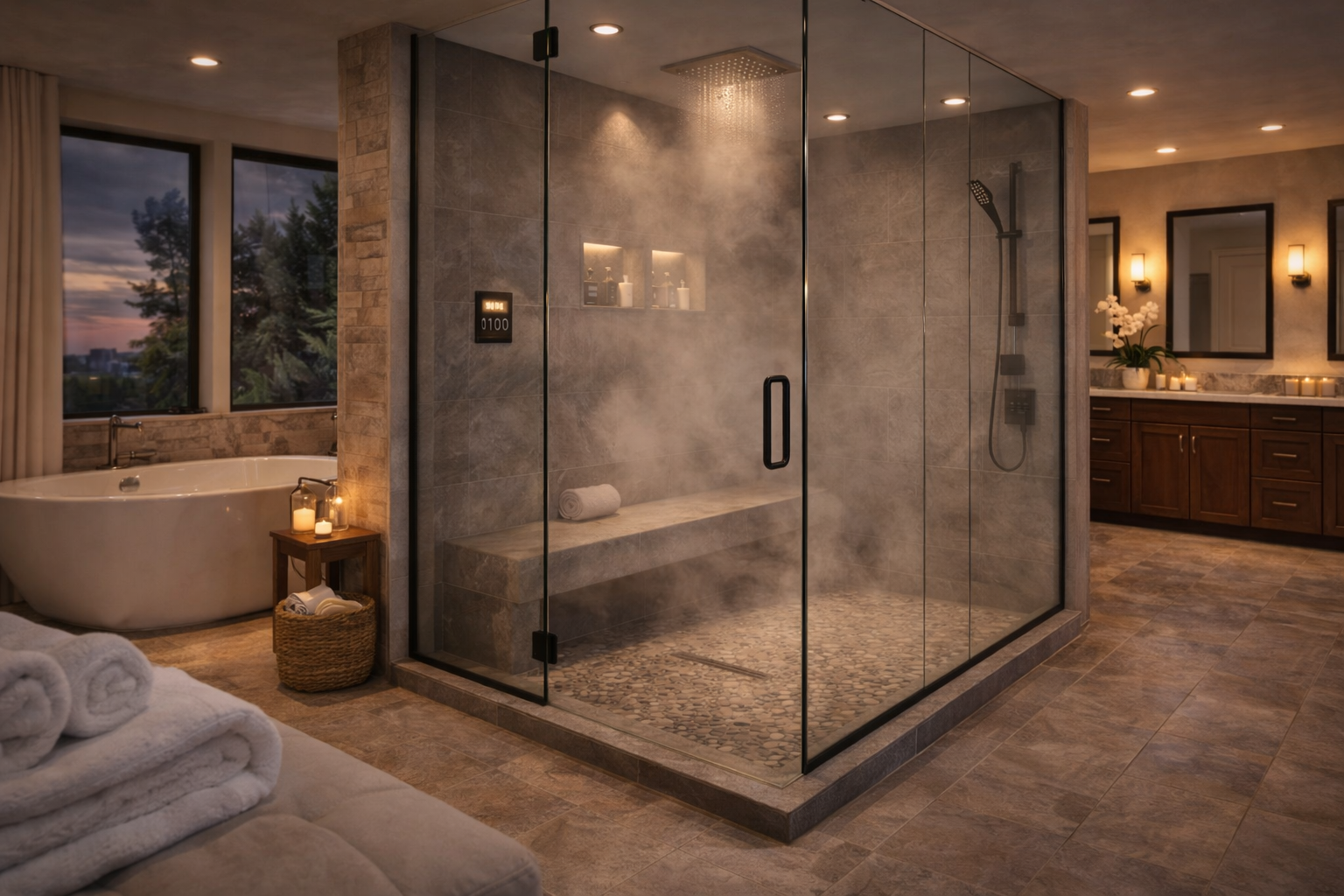
A steam shower makes sense when the homeowner wants a spa-style bathing feature and the bathroom can support the extra enclosure, generator, and moisture-control requirements. It is most common in higher-end primary bathroom remodels where the shower is a major comfort feature rather than a basic utility space.
What Bathroom Conditions Usually Point to a Steam Shower
Common conditions include enough room for an enclosed shower, a remodeling budget that supports a more advanced shower build, and a homeowner who will actually use the steam function enough to justify the extra construction and equipment. A steam shower also makes more sense when the bathroom already supports a premium layout and finish level. For layout and clearance planning, many designers reference NKBA planning guidelines.
When Is a Steam Shower Not the Best Choice
A steam shower is usually not the best choice when the bathroom is too small, the budget is tight, or the household is unlikely to use the steam feature often. It is also not the best choice when the shower enclosure cannot be built tightly enough to contain steam properly.
What Types of Steam Showers Are Common
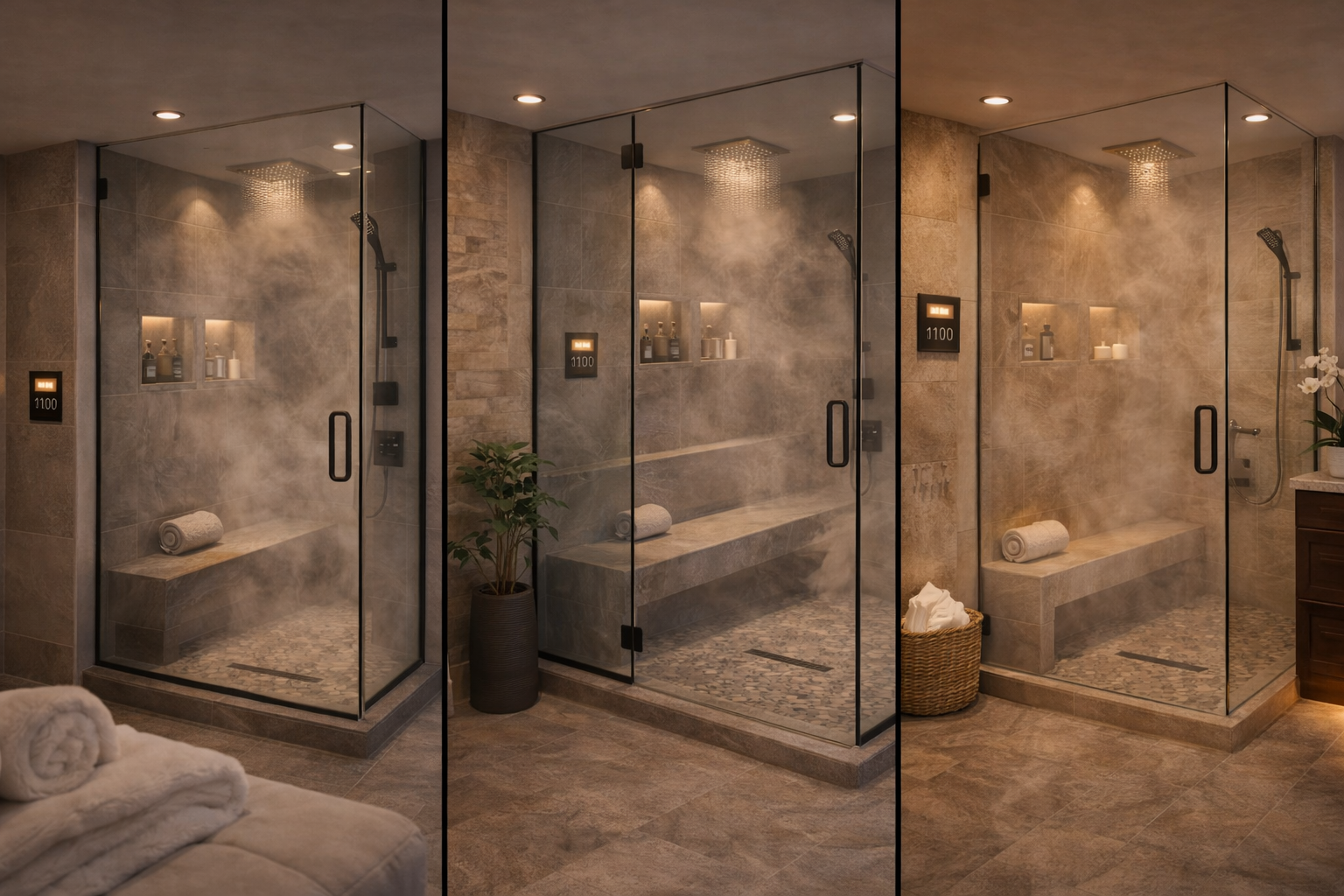
Common steam shower types include fully enclosed steam showers with frameless glass, tile steam showers with built-in benches, larger luxury steam shower rooms, and compact steam shower enclosures designed to fit inside a primary bathroom remodel. The right type depends on shower size, enclosure style, and how much of the bathroom is being redesigned around the steam feature. Homeowners comparing options often look at bathroom remodeling as part of the overall plan.
What Steam Shower Styles Are Most Common in Remodeling Projects
Fully enclosed tile steam showers with glass doors and bench seating are common because they give the steam system a contained space and still look integrated with a higher-end bathroom remodel. In some bathrooms, the steam shower is a compact enclosure. In others, it becomes a more substantial spa-style zone.
When Does One Steam Shower Type Make More Sense Than Another
A smaller enclosed steam shower may make more sense when the bathroom needs to add steam without giving up too much floor space. A larger steam enclosure may make more sense when the remodel is already creating a more luxurious bathing zone and the homeowner wants more interior comfort features such as benches or upgraded lighting.

How Do Layout and Room Size Affect a Steam Shower
Layout and room size affect how efficiently the steam shower works and how comfortable it is to use. A steam shower needs enough room to sit and move comfortably, but it also has to remain enclosed enough to hold steam effectively. The room around the steam shower also needs to support glass, ventilation, and the rest of the bathroom layout. For layout and clearance planning, many designers reference NKBA planning guidelines.
Why Does Enclosure Size Matter So Much in a Steam Shower
Enclosure size matters because a steam shower has to balance comfort with steam containment. If the enclosure is oversized for the generator or poorly proportioned, the system may not feel as effective. If it is too small, the shower may feel tight and uncomfortable even if the steam is strong.
How Does Bathroom Size Change the Best Steam Shower Strategy
In a larger bathroom, the steam shower may be built as a more complete spa-like zone with a bench, premium lighting, and a stronger glass enclosure. In a smaller bathroom, the best strategy may be a compact enclosed steam shower that contains steam efficiently without overwhelming the rest of the room.
What Materials and Components Are Used in a Steam Shower
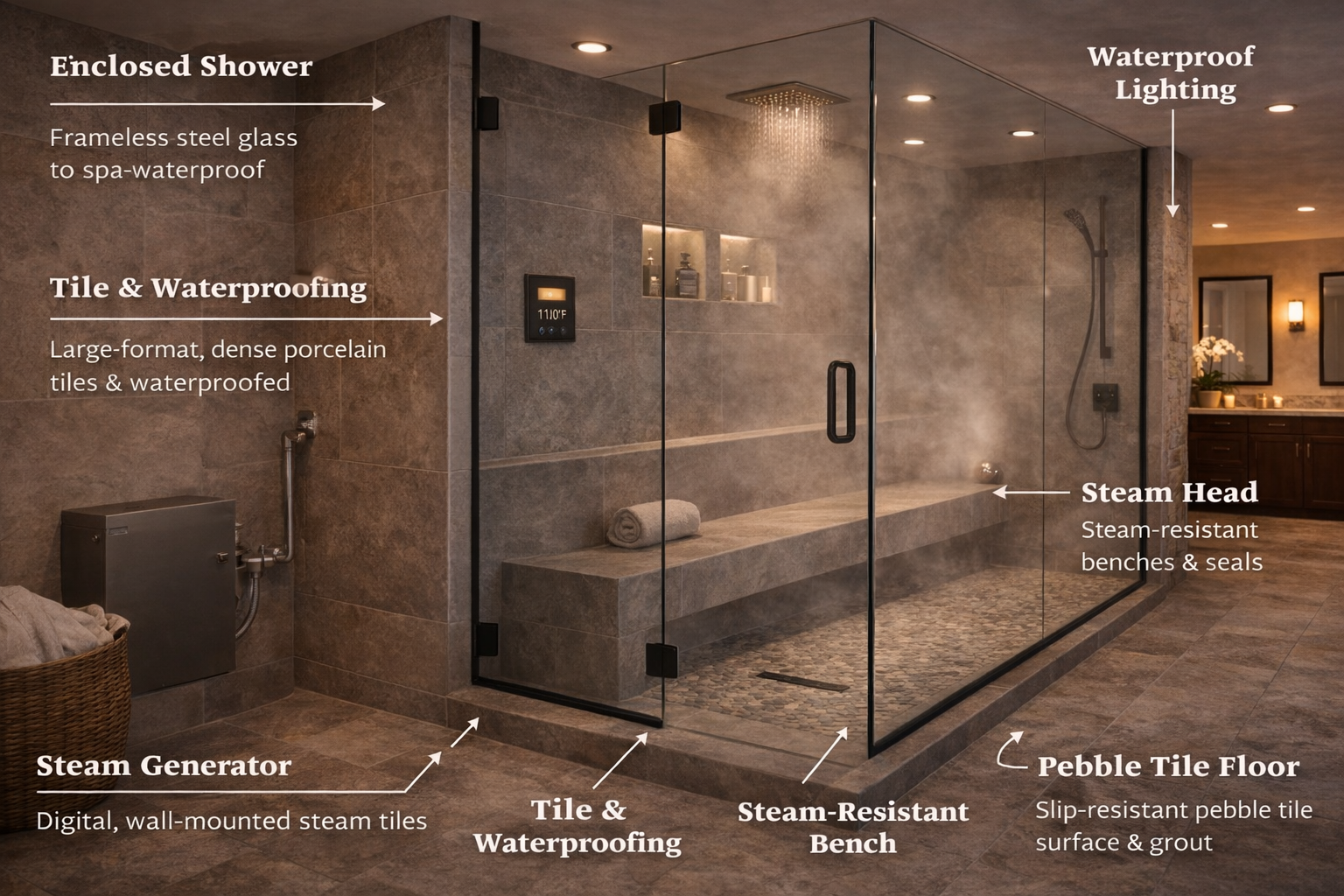
A steam shower uses the shower enclosure, steam generator, steam head, control panel, waterproofing system, tile or panel finish, glass door, and supporting ventilation details that all have to work together. The materials chosen have to stand up to repeated heat, moisture, and condensation in a much more concentrated way than a regular shower.
What Finish Materials Are Common in Steam Showers
Porcelain tile, dense stone-look surfaces, sealed glass enclosures, and moisture-resistant benches are common because they handle heat and vapor better than more delicate materials. The finish materials need to work not just for appearance, but also for repeated steam exposure and easier maintenance.
What Mechanical and Control Components Usually Change
Steam shower projects often involve a steam generator, digital or wall-mounted controls, a steam head, seating, upgraded lighting, glass seals, and dedicated enclosure details. These components are what turn a normal shower into a working steam system.
What Upgrades Can Be Added With a Steam Shower
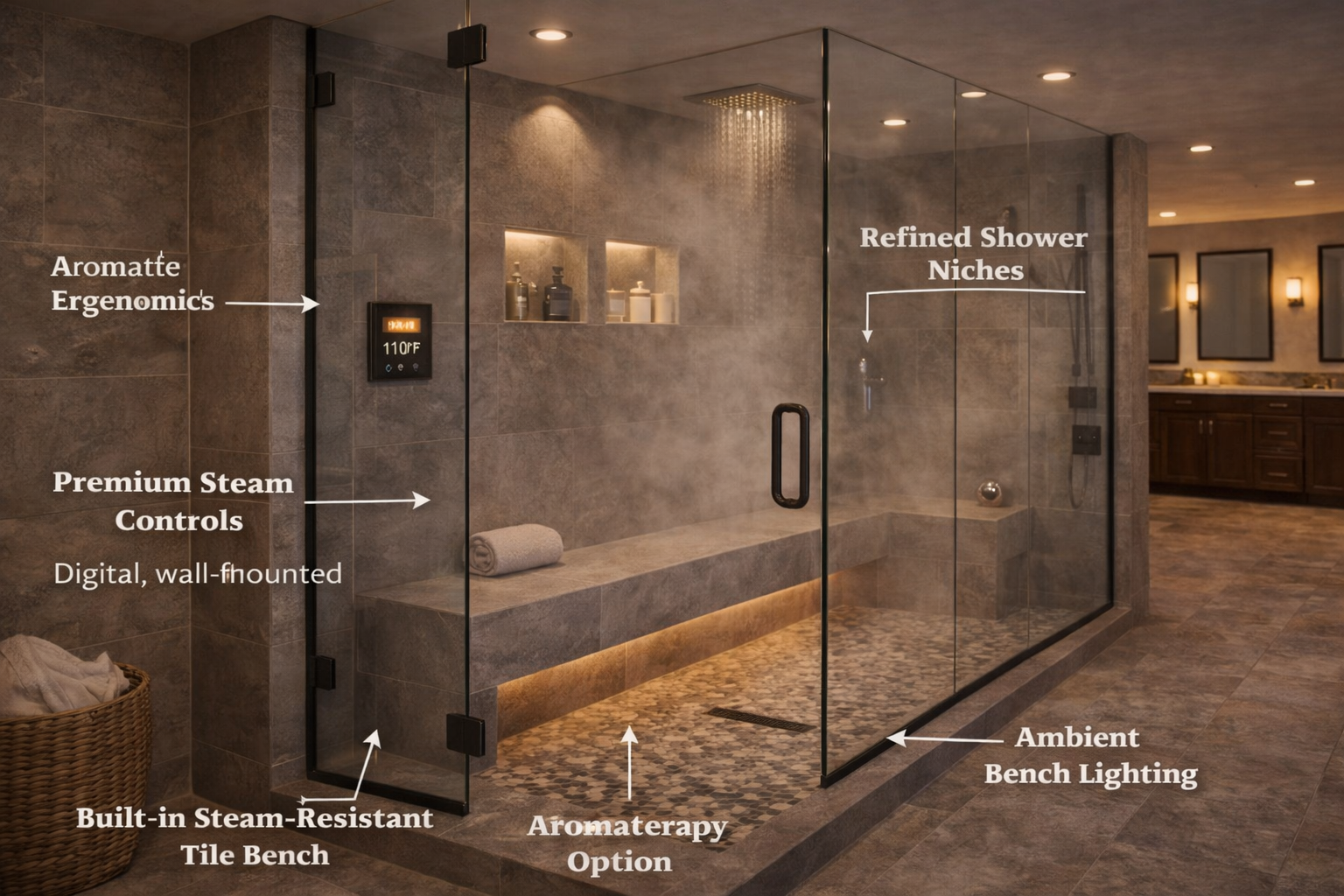
Steam shower work is often the best time to add upgrades that improve comfort and the overall spa-like feel of the bathing area. Common upgrades include built-in benches, upgraded lighting, aromatherapy features where supported, premium control systems, stronger ventilation planning outside the enclosure, and more refined tile details. During remodeling, it also helps to follow EPA indoor air quality guidance.
What Functional Upgrades Are Most Useful in a Steam Shower
Functional upgrades often include a well-placed bench, easier-to-use controls, better enclosure sealing, and lighting that supports the steam environment safely. These upgrades matter because a steam shower has to feel comfortable and easy to use, not just technically capable of producing steam.
What Design Upgrades Usually Happen at the Same Time
Steam shower projects often include larger-format tile, better bench detailing, upgraded glass, more refined niches, and cleaner lighting design. Once the shower is being built as a steam enclosure, the surrounding finishes usually need to match that higher construction level.
What Installation Details Matter in a Steam Shower
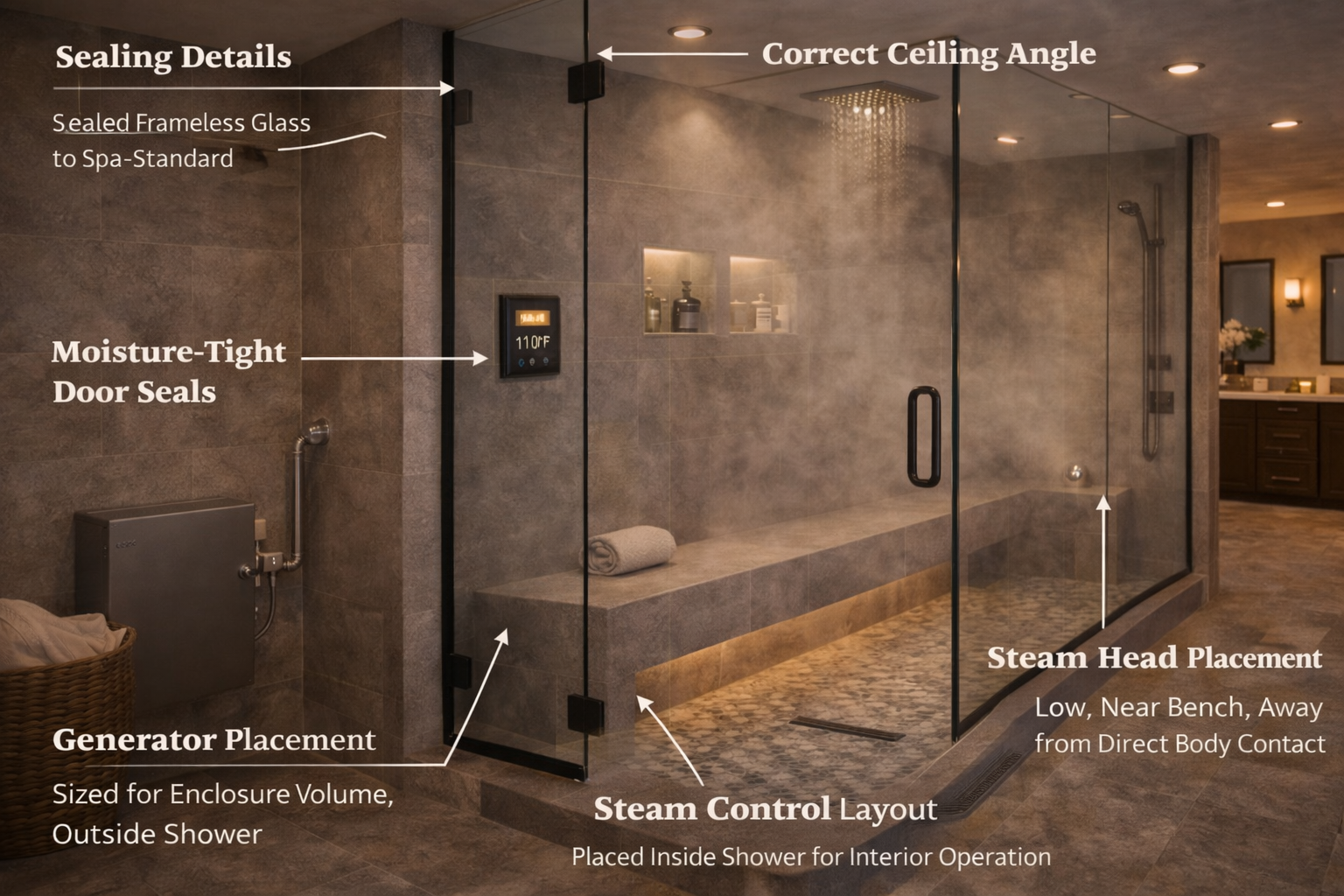
Steam shower installation depends on generator sizing, enclosure sealing, waterproofing, control placement, steam head location, and the way the shower ceiling and glass work together. These details matter because even a small mistake in sealing or system planning can affect how well the steam shower performs. In many projects, shower remodel becomes an important part of how the bathroom functions day to day.
Why Do Sealing and Generator Planning Matter So Much
A steam shower only works well if the steam stays in the enclosure and the generator is sized to the volume of that enclosure. If the enclosure leaks steam or the generator is mismatched, the result can be weak performance and a more frustrating user experience.
What Ceiling, Door, and Glass Problems Show Up During Installation
Common issues include poor glass sealing, doors that let too much steam escape, ceilings that are not planned well for moisture and condensation, and steam head placement that feels awkward. These are practical build issues that affect whether the shower works like a real steam enclosure or just a hot shower with extra equipment.

What Affects Steam Shower Cost
Steam shower cost usually depends on enclosure size, generator system, glass design, finish materials, control package, and how much the shower structure needs to change to support steam use properly. A steam shower costs more than a standard shower because the construction and equipment are both more specialized.
Which Steam Shower Choices Usually Raise the Cost
Costs usually rise with larger enclosed showers, premium generators and controls, upgraded glass, more refined benches and niches, premium tile, and more extensive layout or ventilation changes. The more spa-like and feature-rich the enclosure becomes, the more the cost usually climbs.
How Do Labor and Existing Conditions Change the Budget
Labor costs go up when the shower has to be rebuilt from scratch, the enclosure needs major custom glass, the generator location is harder to support, or the room needs stronger moisture-control planning. Existing conditions matter because steam showers depend on the whole shower shell being built well.
What Mistakes Should Homeowners Avoid With a Steam Shower
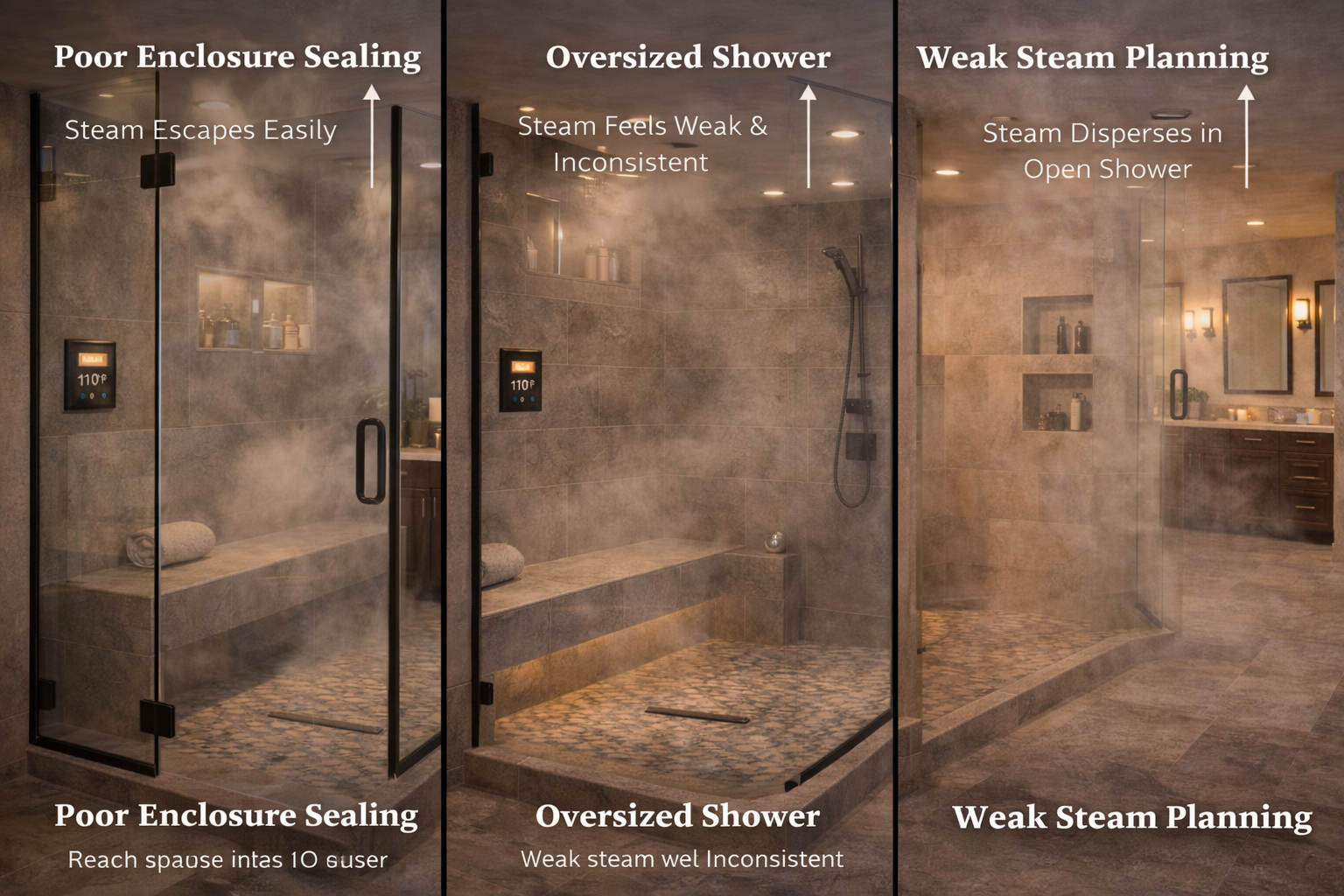
The biggest steam shower mistakes usually happen when the steam feature is added without building the enclosure and the supporting details around it correctly. A steam shower should be treated as a system, not as a simple add-on to a regular shower design.
Why Is It a Problem to Add Steam Without a Proper Enclosure
If the enclosure is not sealed and planned correctly, the steam will escape too easily and the system will never perform the way the homeowner expects. The shower may still look attractive, but the steam feature will feel weak or inconsistent.
Why Is It Risky to Ignore Real Usage and Maintenance
A steam shower adds more equipment, more moisture concentration, and more construction complexity than a standard shower. If the homeowner does not really want or use the steam feature, the added cost and maintenance may not be worth it.

How Should You Plan a Steam Shower
A steam shower should be planned by deciding how often the feature will really be used, measuring the enclosure carefully, and confirming the generator, glass, tile, and ventilation details before the build begins. The best plan treats the steam shower as a complete system instead of just a premium shower accessory.
What Should Be Decided Before Steam Shower Work Starts
Before construction starts, it helps to confirm enclosure size, generator location, control type, steam head placement, bench design, glass layout, tile material, and the way the enclosure will seal and handle moisture. These decisions affect the full construction sequence and the real performance of the steam shower.
How Can a Homeowner Prepare for the Installation Process
Homeowners should be ready for generator planning, custom glass lead times, careful waterproofing, equipment coordination, and finish work that is more detailed than a standard shower. Steam shower projects usually go best when the design and technical details are resolved before the enclosure is built.
Related Steam Shower Topics
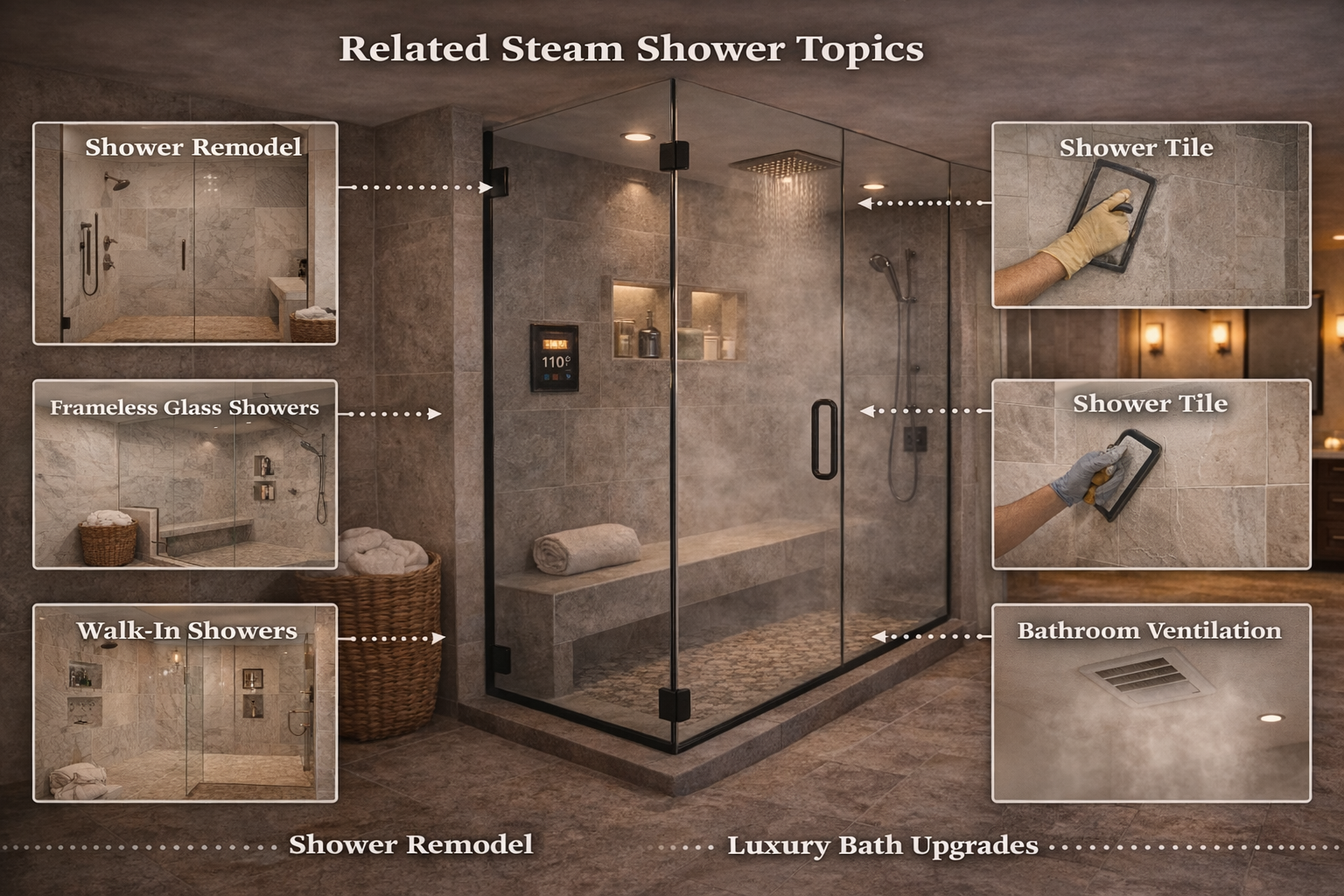
Steam shower projects overlap with shower remodeling, frameless glass showers, ventilation planning, waterproofing, and luxury bathroom upgrades because the steam enclosure depends on all of those elements working together. Related topics help homeowners compare whether a steam shower is the right kind of premium upgrade for the bathroom.
Which Steam Shower-Related Pages Should Connect to This Topic
Strong related pages include shower remodels, frameless glass showers, shower tile, walk-in showers, and bathroom ventilation. Those topics help break down the construction and finish choices that shape whether a steam shower is a good fit.
Which Bathroom Remodeling Topics Often Connect to Steam Shower Work
Steam shower work often connects to flooring, lighting, ventilation, layout changes, and full bathroom remodeling. In practical remodels, those pieces overlap because the steam shower affects how the whole bathing area is designed and built.
Frequently Asked Questions About Steam Shower
A steam shower is a shower enclosure built to contain steam generated by a dedicated steam system.
They can be worth it when the homeowner wants and will regularly use a spa-style steam feature and the bathroom can support the extra construction and equipment.
A regular shower is built for water use, while a steam shower is built to contain steam and heat through a dedicated enclosure and generator system.
Yes. Ventilation planning around a steam shower matters because the bathroom still has to manage moisture well after the steam session is complete.
Not always. The shower has to be rebuilt or detailed properly to contain steam, support the equipment, and handle the moisture load correctly.
Yes. A true steam shower uses a steam generator sized for the enclosure.
They can require more attention than a standard shower because they add more equipment and expose the enclosure to more concentrated heat and moisture.
The timeline depends on the enclosure size, generator setup, waterproofing, tile work, and glass fabrication needed for the project.
It can improve appeal in the right bathroom, especially when it fits a larger luxury-focused primary bath remodel.
The first step is deciding whether the bathroom and the homeowner use pattern justify building a fully enclosed steam-ready shower system.