

Bathroom Flooring Guide: Materials, Installation, Costs, and Planning
Bathroom Flooring Guide Index
- Bathroom Flooring Overview
- When Should Bathroom Flooring Be Replaced
- What Types of Bathroom Flooring Are Used in Remodeling
- How Do Floor Layout and Room Size Affect Bathroom Flooring
- What Materials Are Used for Bathroom Flooring
- What Upgrades Can Be Added During a Bathroom Flooring Remodel
- What Installation Details Matter in Bathroom Flooring Work
- What Affects Bathroom Flooring Cost
- What Mistakes Should Homeowners Avoid With Bathroom Flooring
- How Should You Plan Bathroom Flooring in a Remodel
- Related Bathroom Flooring Topics
- Frequently Asked Questions About Bathroom Flooring
Bathroom Flooring Overview
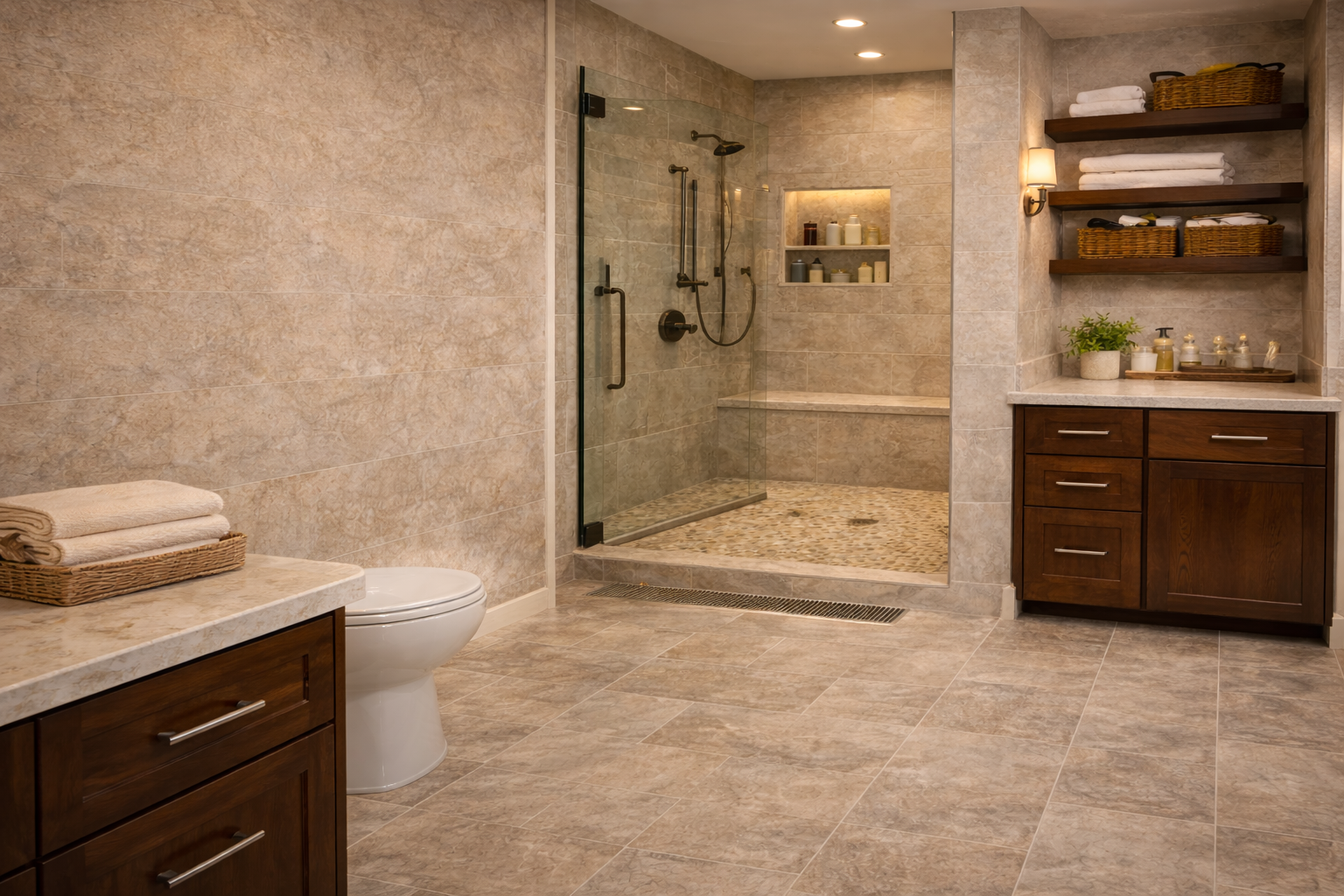
Bathroom flooring has to handle water, humidity, daily foot traffic, cleaning products, and constant movement between wet and dry areas. In a real remodel, flooring work often means removing old finish material, checking the subfloor for damage, correcting height transitions, installing underlayment or waterproofing layers where needed, and finishing the surface with tile, waterproof vinyl, stone, or another bathroom-rated material. The floor is not just a style choice. It also affects durability, maintenance, and how safely the room works.
What Gets Updated During a Bathroom Flooring Remodel
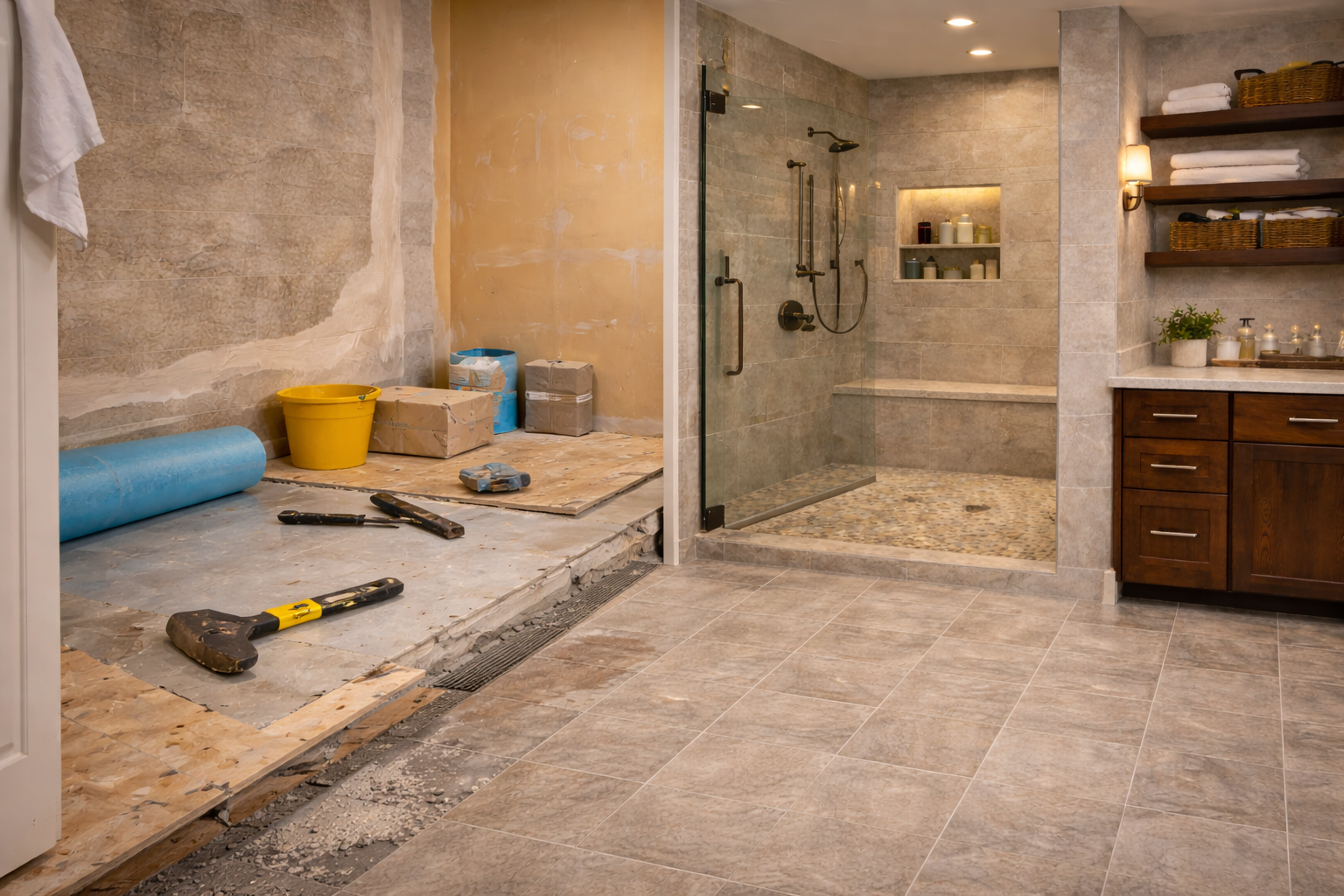
The work may include demolition of old tile or vinyl, subfloor repair, leveling, underlayment installation, waterproofing details, new floor tile or plank material, trim changes, toilet reset, and transition pieces at the doorway. In some bathrooms, flooring work is also coordinated with a vanity replacement, tub or shower remodel, and baseboard or wall finish repair so the room is rebuilt as one clean system instead of in disconnected pieces.
What Is the Difference Between Replacing the Surface and Rebuilding the Floor System
Replacing the surface means removing the visible finish material and installing a new one over a sound base. Rebuilding the floor system goes deeper and may involve repairing a soft subfloor, correcting deflection, flattening the floor for tile, changing underlayment thickness, or improving waterproofing around the tub, shower, and toilet. The deeper work is what often determines whether the new bathroom floor lasts.
When Should Bathroom Flooring Be Replaced
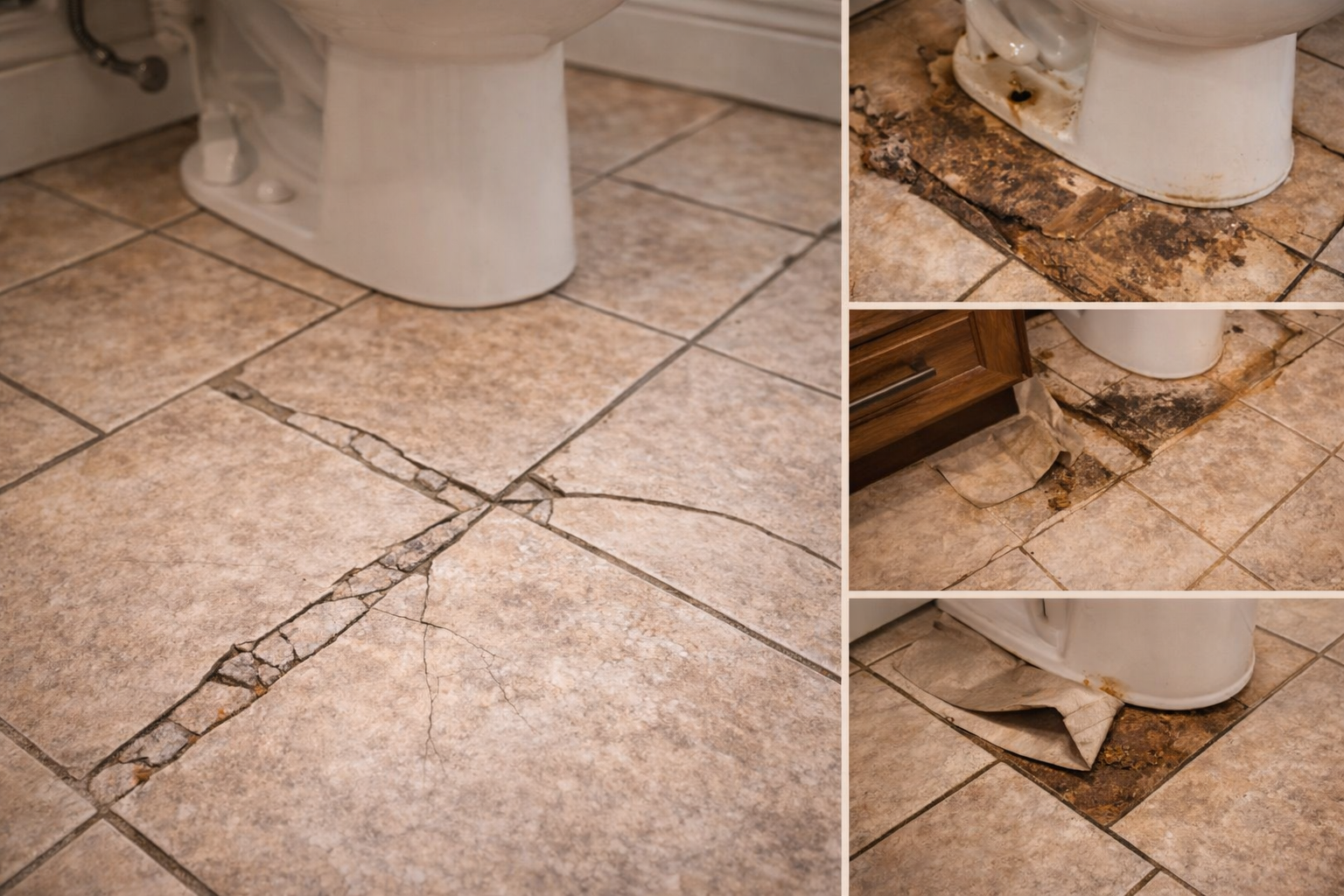
Bathroom flooring should usually be replaced when the surface is worn out, the grout or seams are failing, the floor feels soft, or the material no longer fits the rest of the remodel. Common warning signs include cracked tile, loose tile, swollen vinyl edges, stained grout, water damage around the toilet, and uneven areas that hold water or make the room feel poorly built. During remodeling, it also helps to follow EPA indoor air quality guidance.
What Signs Show That Bathroom Flooring Is Failing
Clear signs include tile that sounds hollow, grout that repeatedly cracks, flooring that shifts underfoot, moisture staining near the tub or vanity, and visible damage around plumbing penetrations. In older bathrooms, a soft spot near the toilet flange or tub edge can point to a subfloor problem below the visible finish.
What Remodeling Situations Usually Trigger a Flooring Upgrade
Bathroom flooring is often replaced during a full bathroom remodel, a vanity upgrade, a tub or shower replacement, or when an older floor makes the rest of the room look unfinished. It is also common to update the floor when the homeowner wants a cleaner material with better water resistance or a more current look than old sheet vinyl or dated tile.
What Types of Bathroom Flooring Are Used in Remodeling
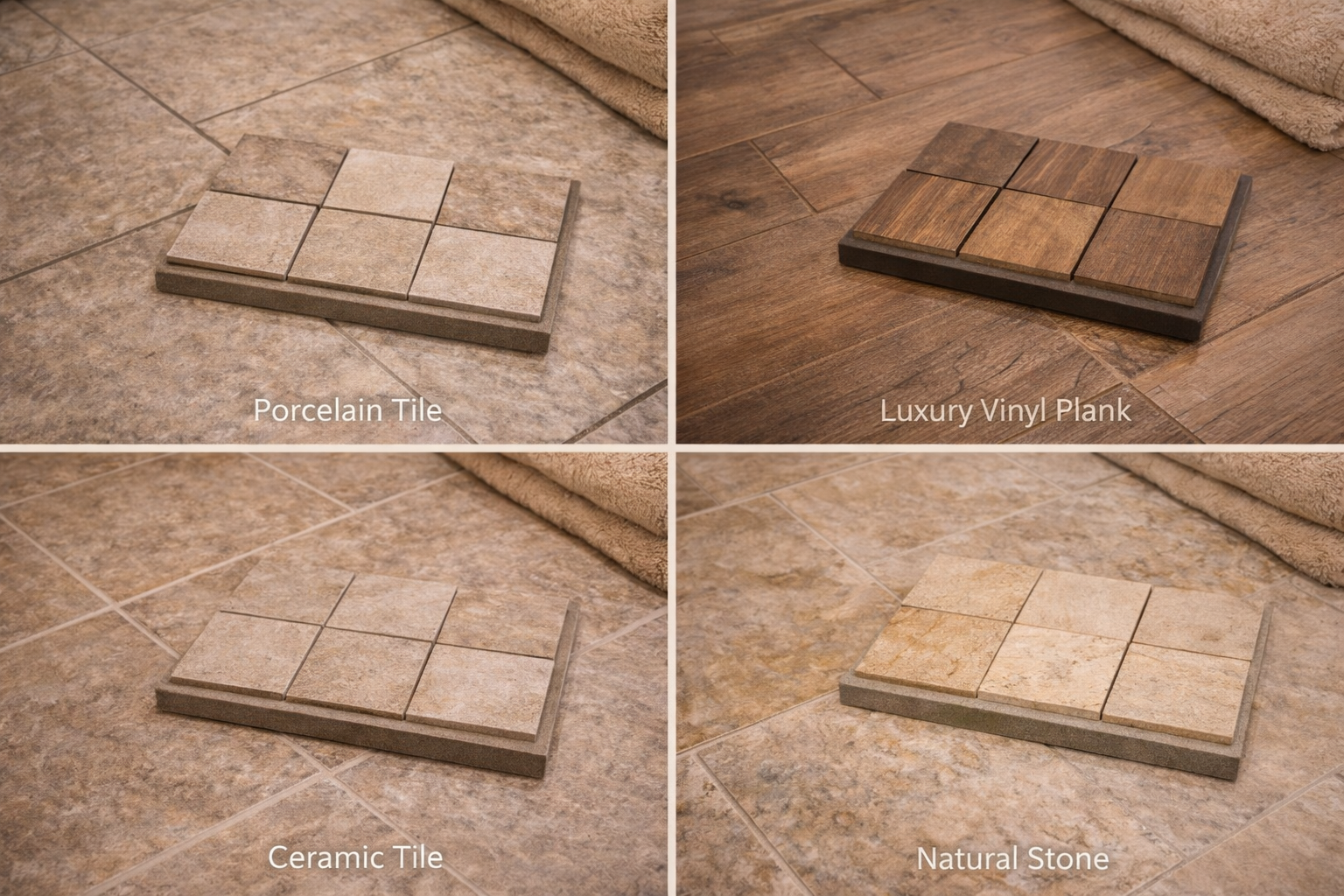
Bathroom remodels commonly use porcelain tile, ceramic tile, luxury vinyl plank, luxury vinyl tile, natural stone, and in some cases sheet vinyl products designed for wet areas. The right material depends on water exposure, maintenance expectations, budget, and whether the floor needs to tie into a larger design plan in the rest of the bathroom. Flooring choices also work best when they are matched to the bigger goals of bathroom remodeling.
What Flooring Materials Are Most Common in Bathrooms
Porcelain tile is one of the most common choices because it is dense, water-resistant, and available in many sizes and finishes. Ceramic tile is also common and can work well depending on the product. Luxury vinyl flooring is often chosen when the homeowner wants a softer feel underfoot or a faster installation. Natural stone is used when the remodel calls for a higher-end look, but it usually brings more maintenance and sealing requirements.
When Does One Bathroom Flooring Type Make More Sense Than Another
Tile usually makes the most sense when long-term water resistance and durability are top priorities. Vinyl products can make sense when the remodel needs a lower-maintenance or budget-conscious finish with easier installation. Stone is usually chosen when appearance is the main driver and the homeowner is comfortable with added maintenance. The best option depends on the room and the household, not just the sample board.
How Do Floor Layout and Room Size Affect Bathroom Flooring
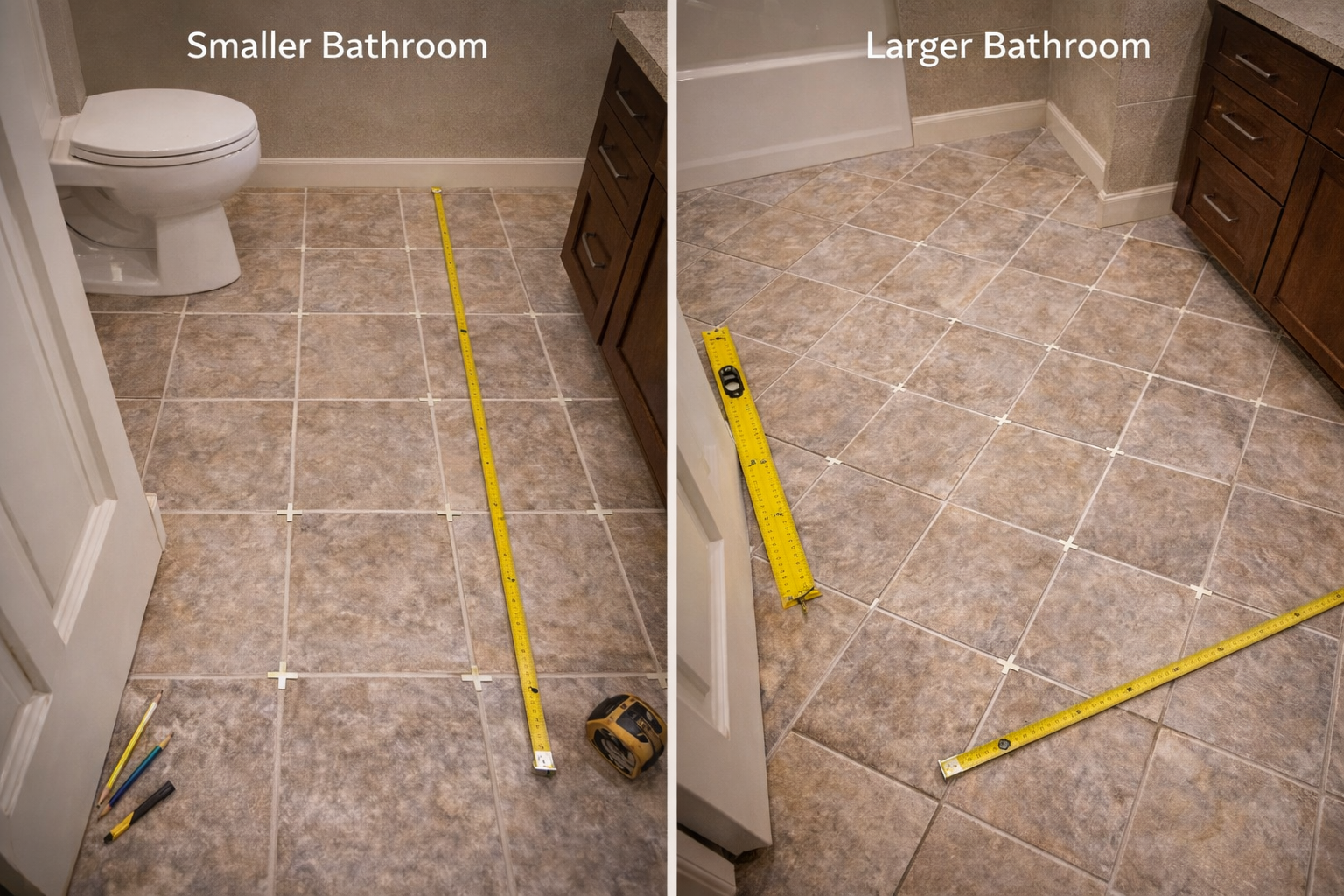
Floor layout affects where cuts land, how the material looks at the doorway, and how clean or busy the bathroom feels once the room is finished. Room size also matters because a small bathroom can feel crowded with the wrong tile scale or pattern, while a larger bathroom may need bigger-format tile or stronger layout planning to avoid looking chopped up.
How Does Tile Size and Layout Change the Look of the Bathroom
Larger tile can make the floor feel calmer and reduce grout joints, while smaller tile or mosaics can add traction and pattern but usually create more grout maintenance. Layout decisions such as straight-set tile, offset patterns, diagonal runs, and centered layouts affect how the eye reads the room. In practical remodel work, the layout also affects waste, labor time, and where awkward cuts fall around the toilet, vanity, and tub.
Why Do Doorways, Transitions, and Fixture Locations Matter
Doorways and transitions matter because they affect how the new bathroom floor meets adjacent rooms and whether the finished height creates a trip edge. Fixture locations matter because the tile or plank layout has to work around the toilet flange, vanity toe-kick, tub apron, and shower threshold. Good planning prevents the room from ending up with small slivers of material in highly visible spots.
What Materials Are Used for Bathroom Flooring
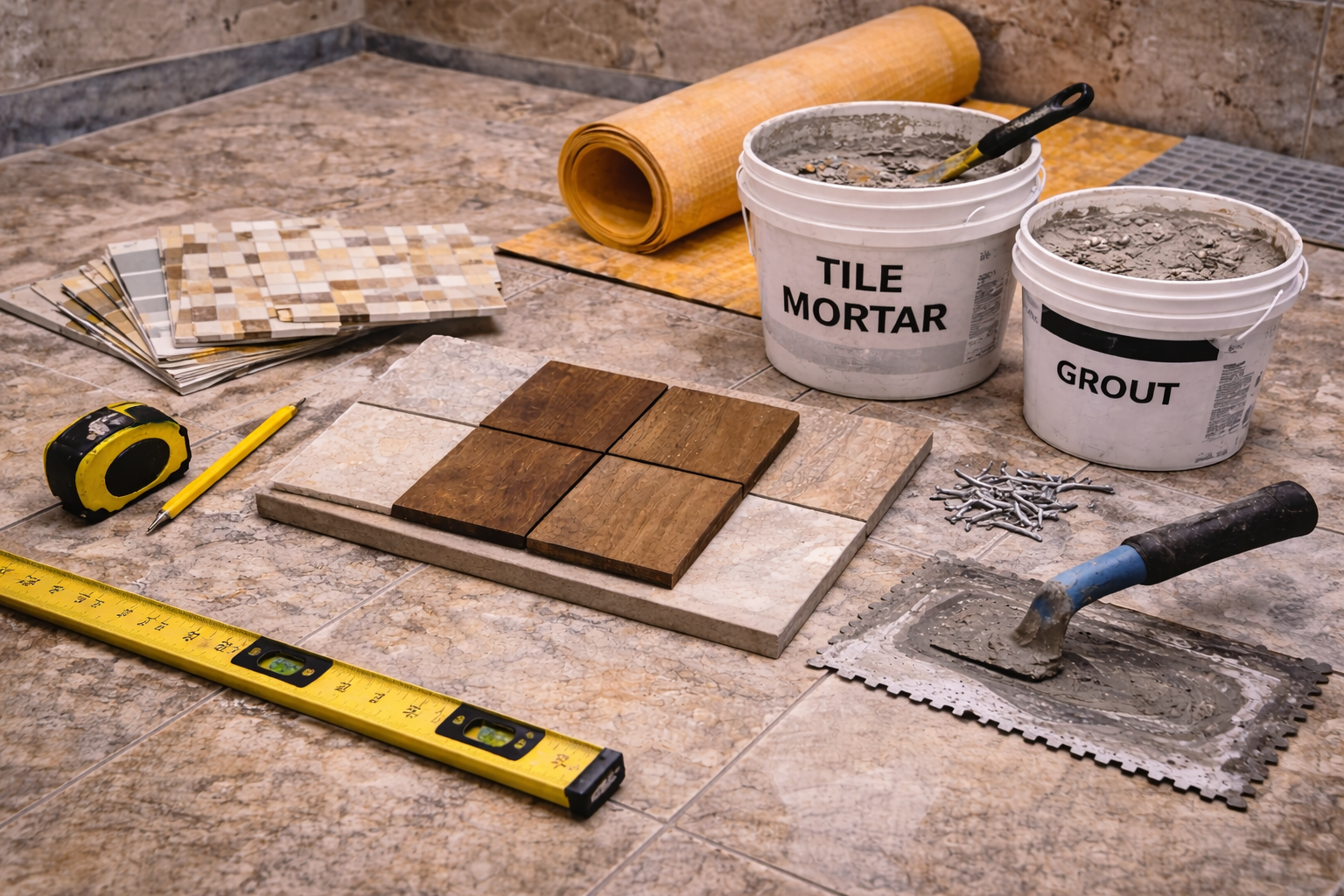
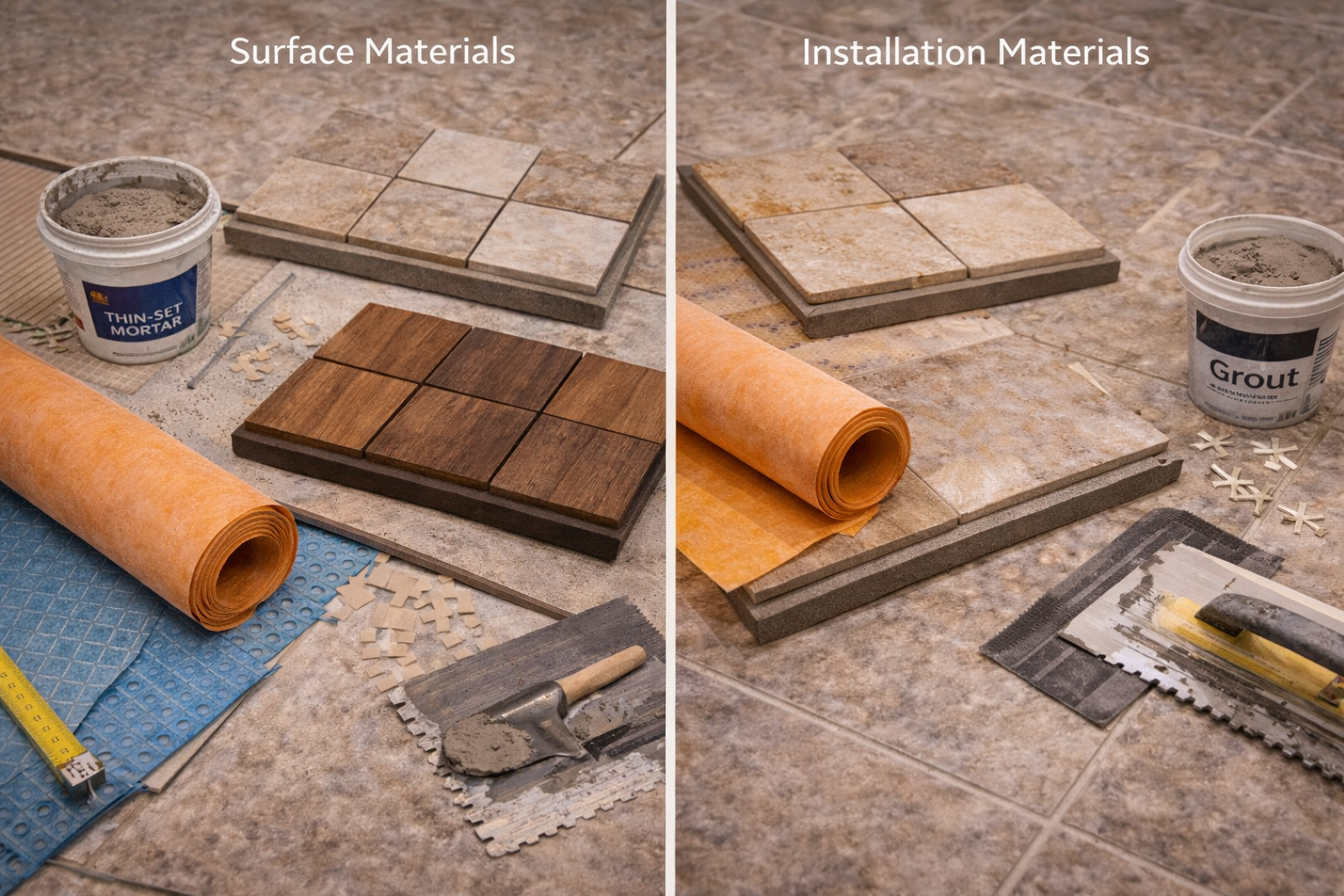
Bathroom flooring is built from more than the visible finish material. A complete floor system may include the subfloor, patching compounds, underlayment, uncoupling membrane, waterproofing details, setting mortar, grout, trim pieces, and the final floor surface. The visible floor only performs well if the layers below it are right for the material being installed.
What Surface Materials Are Common on Bathroom Floors
Common surface materials include porcelain tile, ceramic tile, luxury vinyl plank, luxury vinyl tile, sheet vinyl, and natural stone such as marble or slate. Each one has a different feel underfoot, different seam or grout requirements, and a different level of maintenance. In some remodels, slip resistance is as important as appearance, especially in bathrooms used by children or older adults. When comparing stone surfaces, it can help to review Natural Stone Institute guidance.
What Installation Materials Matter Under the Surface
Below the surface, the remodel may need cement backer board, an uncoupling membrane, self-leveling compound, thinset mortar, grout, waterproof sealants, and transition strips. These materials matter because they support the finish floor, help control movement, and reduce the chance of cracked tile, loose edges, or water-related failure at the seams and penetrations.
What Upgrades Can Be Added During a Bathroom Flooring Remodel
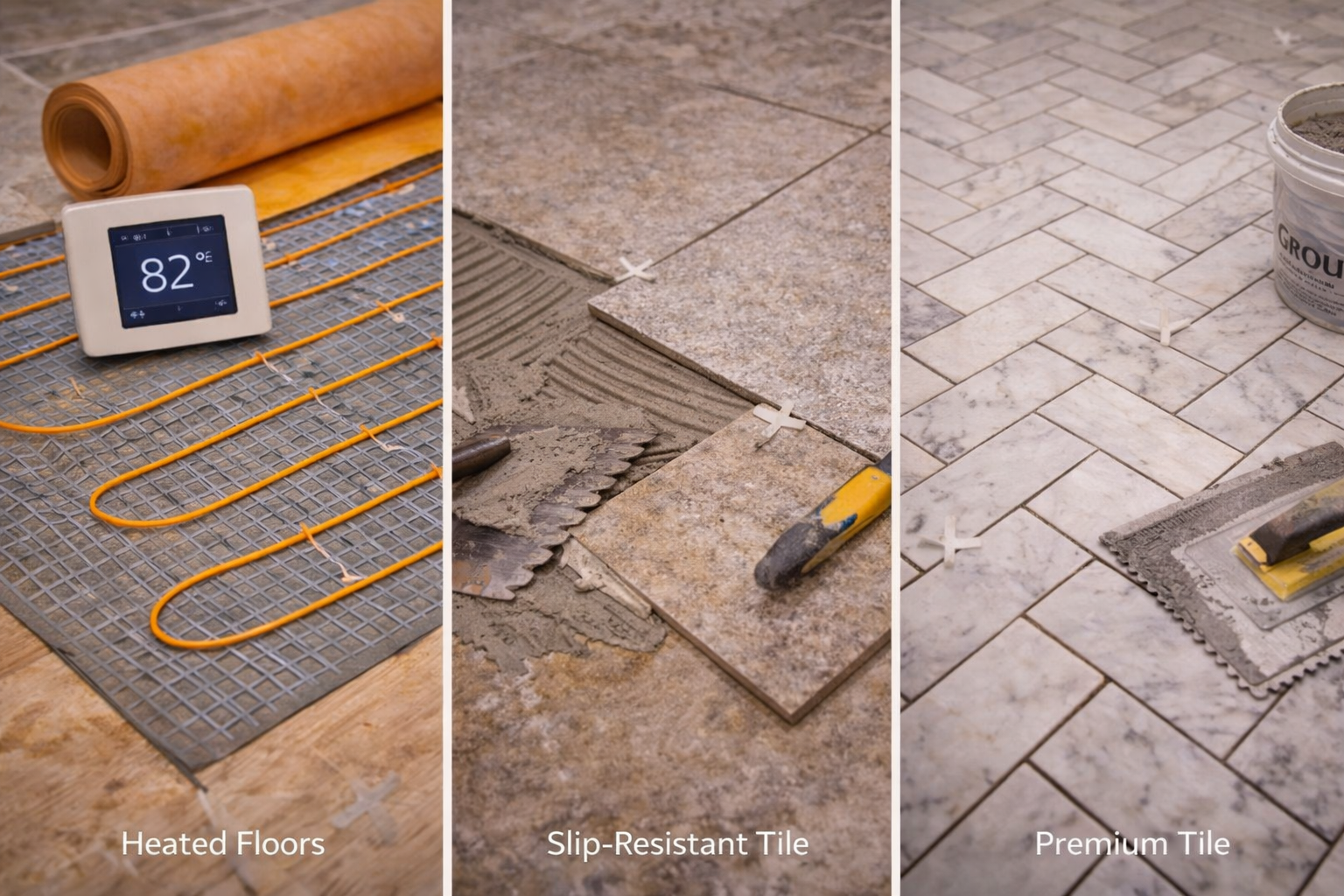
Flooring work is often the best time to add upgrades because the floor is already open and the room is already being rebuilt. Common upgrades include heated floor systems, improved waterproofing details, better slip-resistant tile, floor transition improvements, stronger underlayment, and more intentional tile layouts that make the bathroom feel cleaner and more custom.
What Comfort and Design Upgrades Are Common for Bathroom Floors
Popular comfort upgrades include electric radiant floor heat, larger-format tile with fewer grout joints, and flooring that ties better into the tub, shower, and vanity finishes. Design upgrades may also include herringbone patterns, running-bond layouts, decorative borders, or tile selections that better fit the style of the rest of the remodel.
What Functional Upgrades Improve Performance
Functional upgrades include slip-resistant surfaces, better waterproofing near the tub and shower, stronger substrate preparation, and improved transitions at doorways and thresholds. These upgrades matter because bathroom floors take repeated moisture and traffic, and the hidden preparation usually determines how the surface performs over time.
What Installation Details Matter in Bathroom Flooring Work
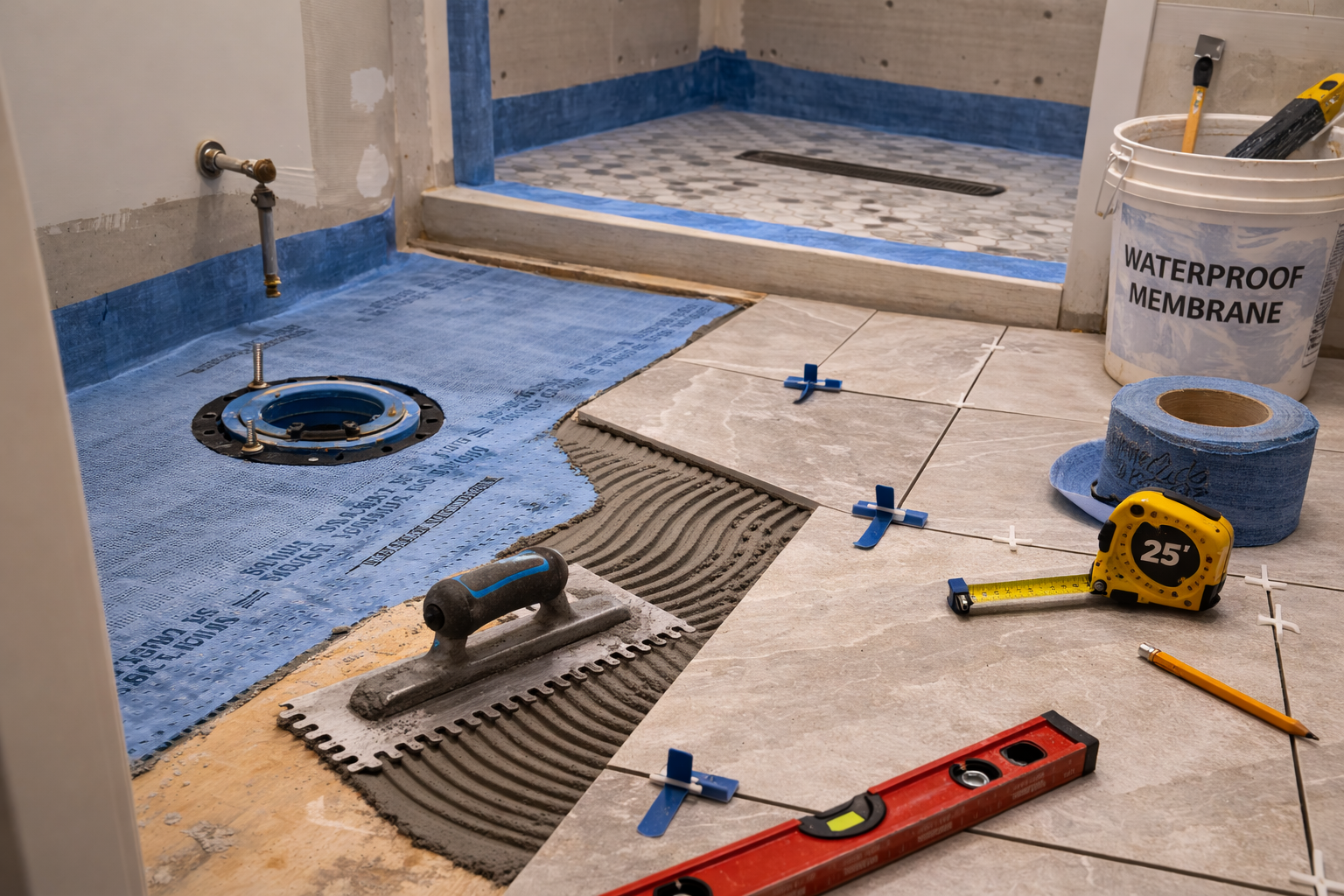
Bathroom flooring installation depends on what is below the finished surface just as much as the flooring material itself. The installer has to deal with subfloor condition, flatness, height buildup, toilet flange position, waterproofing around wet areas, and the correct setting method for the chosen material. If those details are ignored, the finished floor can crack, flex, trap water, or fail around the edges.
Why Do Subfloor Prep and Flatness Matter So Much
Tile and many rigid flooring materials need a stable, properly prepared base. If the subfloor is soft, uneven, or moving too much, the finished floor may crack or come loose. In practical remodel work, prep often involves fastening loose areas, patching damage, flattening dips, and choosing the right underlayment system before the first tile or plank goes down.
What Waterproofing and Plumbing Details Need Attention
Common trouble spots include the toilet flange, tub edge, shower threshold, and the points where the floor meets walls or trim. These areas need clean transitions and proper sealing details. During demolition, contractors may also find water damage around the toilet or tub that has to be corrected before the new floor goes in.
What Affects Bathroom Flooring Cost
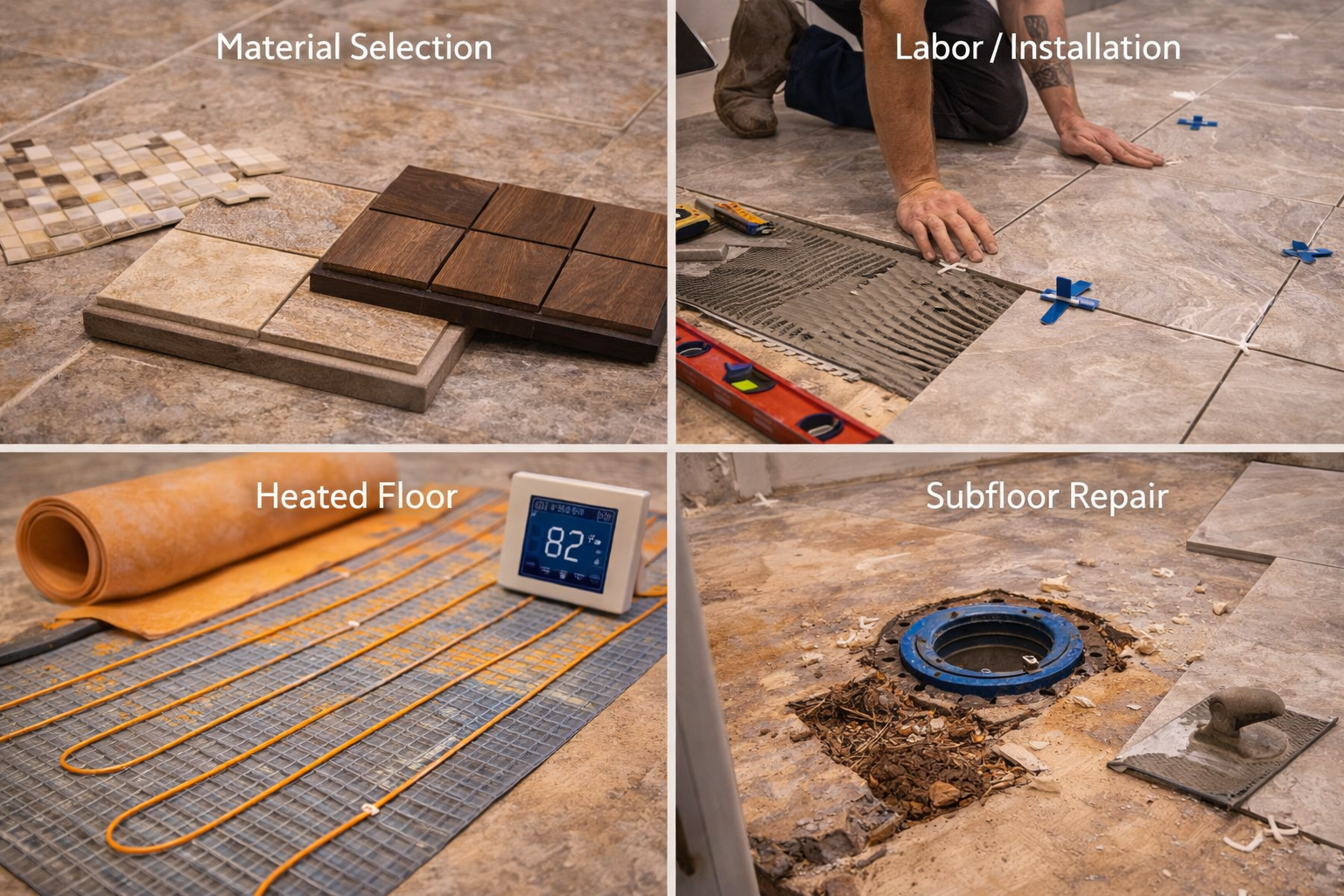
Bathroom flooring cost usually depends on the material selected, the amount of prep work required, the room size, and how much labor the pattern and installation details demand. Replacing a small bathroom floor with simple tile or vinyl is very different from installing heated floors, fixing a damaged subfloor, and laying a detailed tile pattern around multiple fixtures.
Which Material Choices Usually Raise the Cost
Costs usually rise with natural stone, premium porcelain tile, detailed tile layouts, mosaic work, heated floor systems, and specialty trim pieces. Budget-friendly options often include standard-format tile or simpler vinyl products, but the total cost still depends on labor and prep, not just the material price on its own. For broader planning considerations, it can help to review Energy Saver design guidance.
How Do Labor and Existing Conditions Change the Budget
Labor costs go up when demolition reveals rot, when the subfloor needs repair, when the floor must be flattened, or when the toilet and vanity have to be removed and reset. The budget also changes when the project includes waterproofing upgrades, doorway transition changes, or coordination with a larger bathroom remodel happening at the same time.
What Mistakes Should Homeowners Avoid With Bathroom Flooring
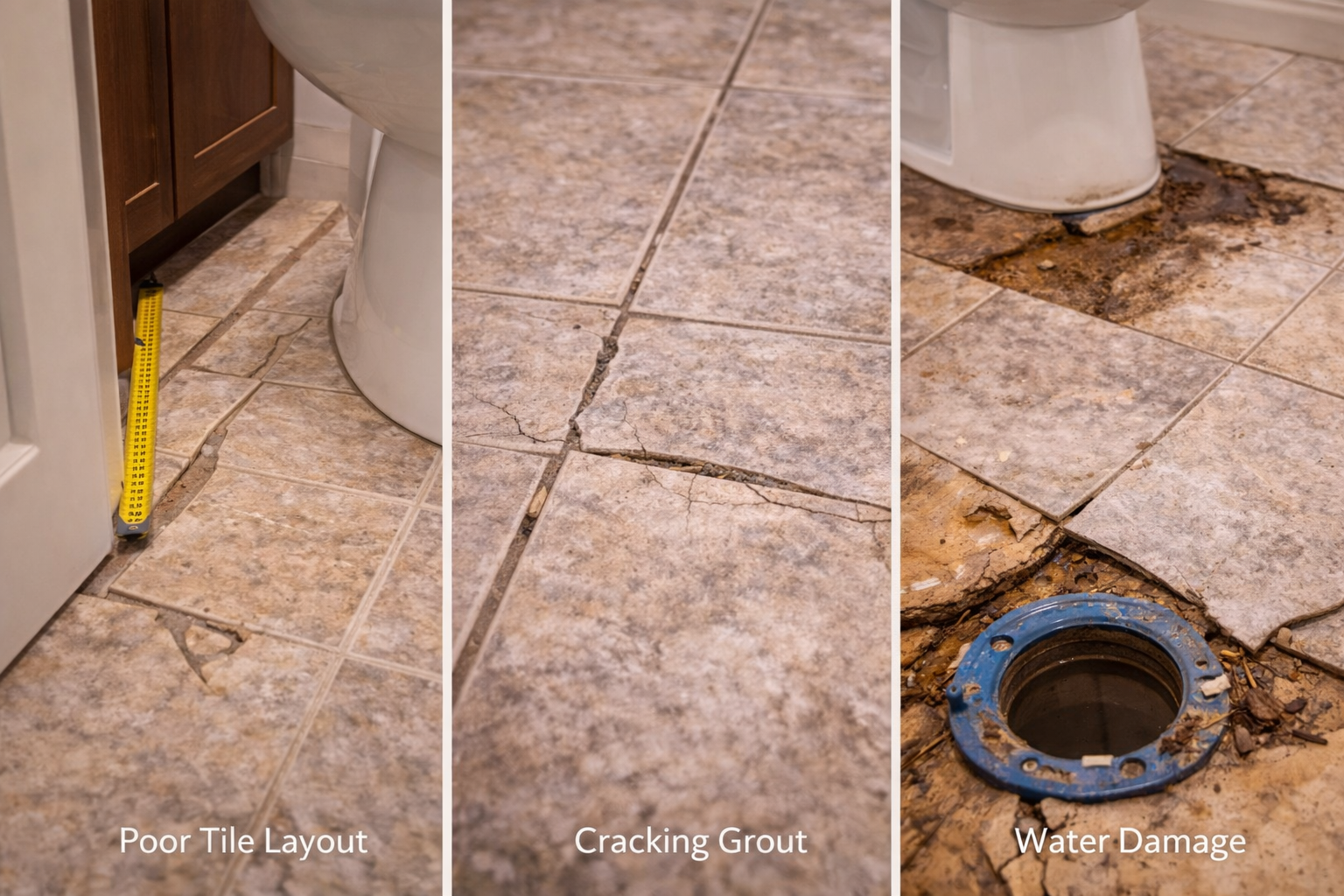
The most common bathroom flooring mistakes happen when the material is chosen for looks alone and the prep work below it is treated like an afterthought. A floor can look good on install day and still fail early if the subfloor is weak, the tile layout is poorly planned, or the bathroom keeps holding moisture where it should not.
Why Is Choosing Flooring Without Thinking About Maintenance a Problem
Some materials and patterns create more upkeep than the homeowner expects. Small tile with heavy grout lines, polished surfaces that show water spots, and natural stone that needs sealing can all add maintenance. A good flooring plan should match the bathroom’s actual use and the homeowner’s cleaning expectations.
Why Is It Risky to Underestimate Prep and Layout Work
Prep and layout determine whether the finished floor looks intentional and stays sound over time. If the installer rushes through subfloor repair, height transitions, spacing, or cuts around fixtures, the floor may end up with cracked grout, awkward slivers of tile, uneven joints, or movement that shortens the life of the remodel.
How Should You Plan Bathroom Flooring in a Remodel
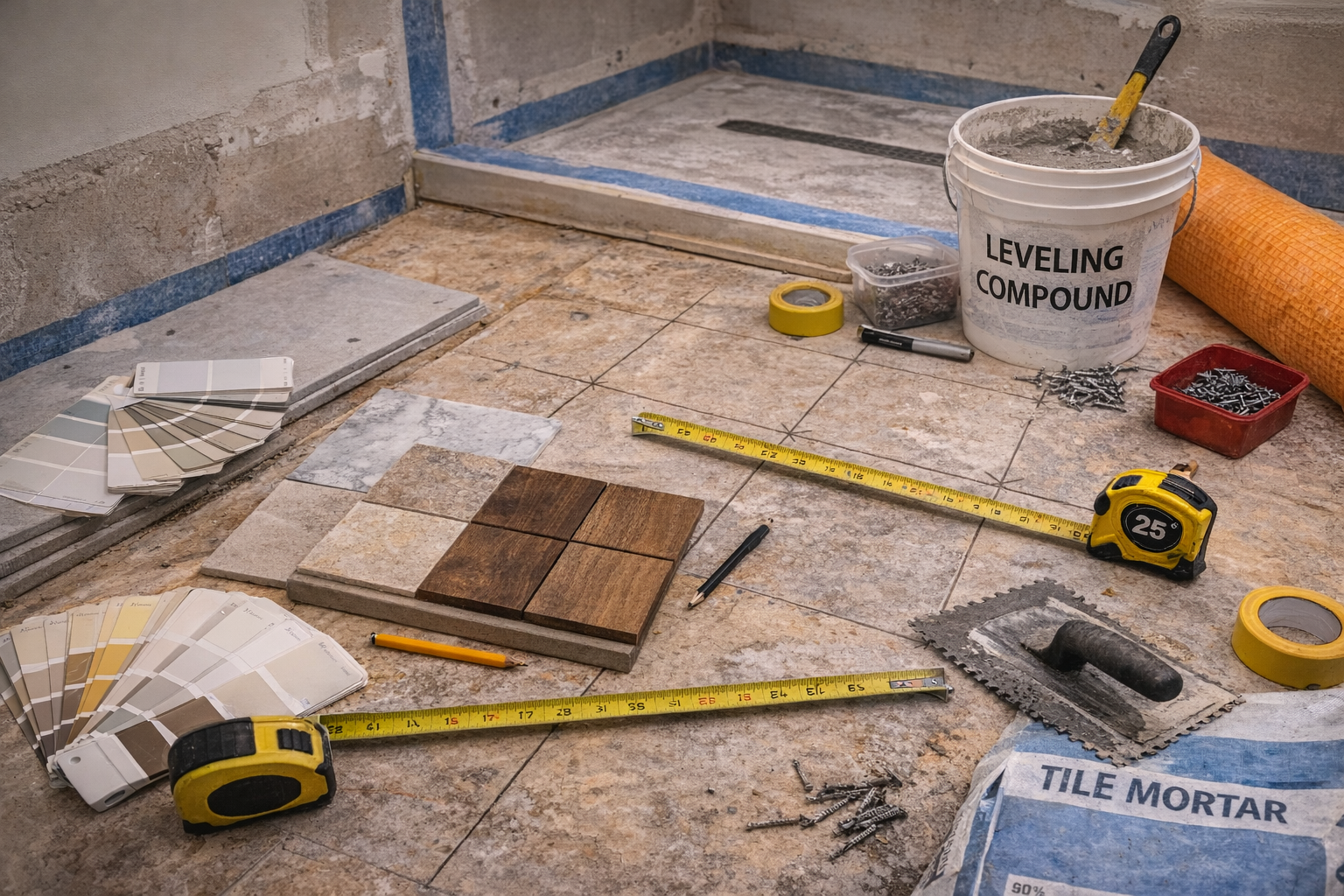
Bathroom flooring should be planned by starting with the actual condition of the room, not just the finish material you want to see at the end. The best plan accounts for subfloor condition, water exposure, floor height, fixture locations, doorway transitions, and how the material will connect to the rest of the bathroom finishes. Good planning prevents expensive corrections later.
What Should Be Decided Before Flooring Work Starts
Before the work starts, it helps to confirm the flooring material, layout direction, tile or plank size, grout color, transition details, toilet reset needs, and whether the floor needs heat or waterproofing upgrades. Those decisions affect labor, material ordering, and the construction sequence for the room.
How Can a Homeowner Prepare for the Installation Process
Homeowners should be ready for demolition dust, fixture removal, temporary bathroom downtime, and possible hidden repair work after the old floor comes up. If the flooring is part of a larger remodel, it also helps to coordinate the schedule with tile work, vanity installation, toilet reset, and trim or paint touch-up so the floor is not damaged by later work.

Related Bathroom Flooring Topics
Bathroom flooring connects to several other remodeling topics because the floor ties into the tub, shower, vanity, toilet, and doorway transitions. Related topics help homeowners decide whether they only need a new finish floor or whether the project should expand into a larger bathroom upgrade.
Which Flooring-Related Pages Should Connect to This Topic
Strong related pages include tile bathroom flooring, heated bathroom floors, slip-resistant bathroom flooring, waterproof bathroom flooring, shower floor tile, and subfloor repair. Those pages make it easier to go deeper on specific material and installation questions without crowding one page.
Which Bathroom Remodeling Topics Often Connect to Flooring Work
Flooring work often connects to tub and shower remodeling, toilet replacement, vanity installation, waterproofing, and full bathroom remodeling. In real jobs, these areas overlap because the floor height, finish materials, and installation sequence all need to work together.
Frequently Asked Questions About Bathroom Flooring
Porcelain tile is one of the most common choices because it handles moisture well and holds up over time. Other good options can include ceramic tile and some waterproof vinyl products depending on the bathroom and the goals of the remodel.
Tile usually offers stronger long-term water resistance and durability, while vinyl can be easier to install and softer underfoot. The better choice depends on budget, maintenance expectations, and how the bathroom is used.
Yes. Bathroom flooring can be replaced on its own if the surrounding fixtures and finishes are staying in place. The final scope depends on whether the toilet, vanity, or trim needs to be removed to install the new material correctly.
Some bathrooms benefit from improved waterproofing details, especially near the tub, shower, and toilet. The exact need depends on the floor system, room layout, and whether the remodel is only cosmetic or includes deeper repair work.
Cracked tile is often caused by movement in the floor structure, poor subfloor prep, incorrect underlayment, or installation problems. A cracked tile floor can be a surface issue, but it can also point to a deeper structural or prep problem below.
They can be worth it when comfort is a priority and the remodel is already opening up the floor system. Heated floors are especially popular in colder climates and in bathrooms where tile is being installed anyway.
The timeline depends on the room size, the material being installed, and how much prep work is needed. A simple vinyl or tile replacement moves faster than a job that includes subfloor repair, waterproofing, and detailed tile layout.
Yes. Uneven bathroom floors are often corrected during remodeling with patching compounds, underlayment changes, or subfloor repairs. Leveling is often necessary before tile or rigid materials can be installed properly.
Slip resistance depends on the material and the specific finish. Some textured tile and bathroom-rated flooring products provide better traction than polished surfaces, especially when the floor gets wet.
It can improve the appearance and usability of the bathroom, especially when it replaces worn, outdated, or damaged flooring. The strongest impact usually comes when the flooring fits the quality and style of the rest of the remodel.