

Freestanding Bathtub Guide: Design, Layout, Costs, and Planning

Freestanding Bathtub Guide Index
- Freestanding Bathtub Overview
- When Does a Freestanding Bathtub Make Sense
- What Types of Freestanding Bathtubs Are Common
- How Do Layout and Room Size Affect a Freestanding Bathtub
- What Materials and Components Are Used With a Freestanding Bathtub
- What Upgrades Can Be Added With a Freestanding Bathtub
- What Installation Details Matter With a Freestanding Bathtub
- What Affects Freestanding Bathtub Cost
- What Mistakes Should Homeowners Avoid With a Freestanding Bathtub
- How Should You Plan a Freestanding Bathtub
- Related Freestanding Bathtub Topics
- Frequently Asked Questions About Freestanding Bathtubs
Freestanding Bathtub Overview
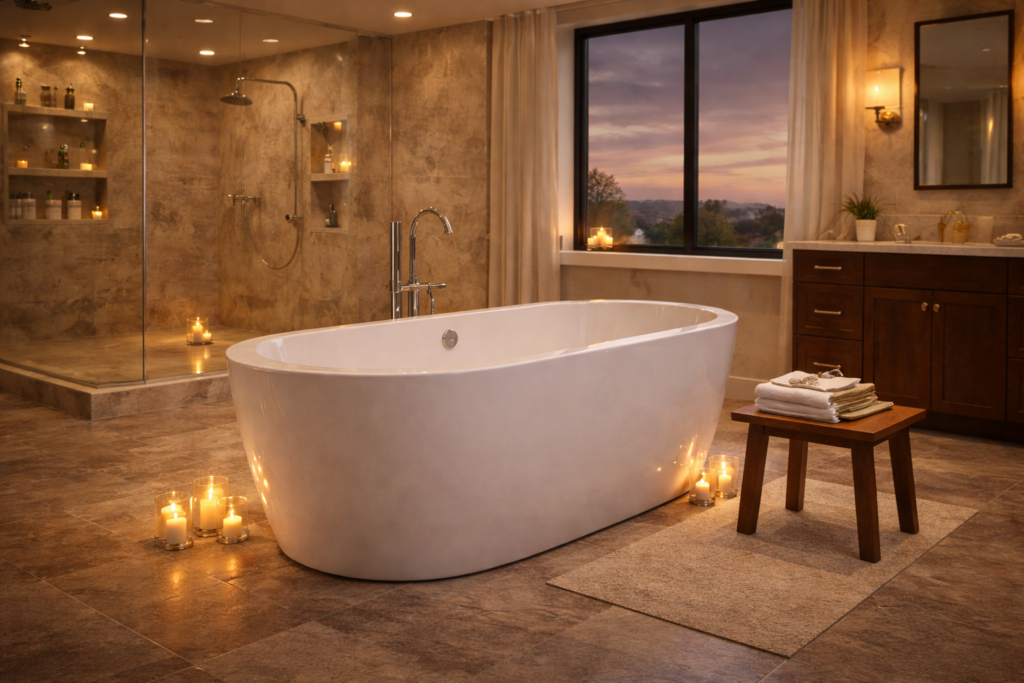
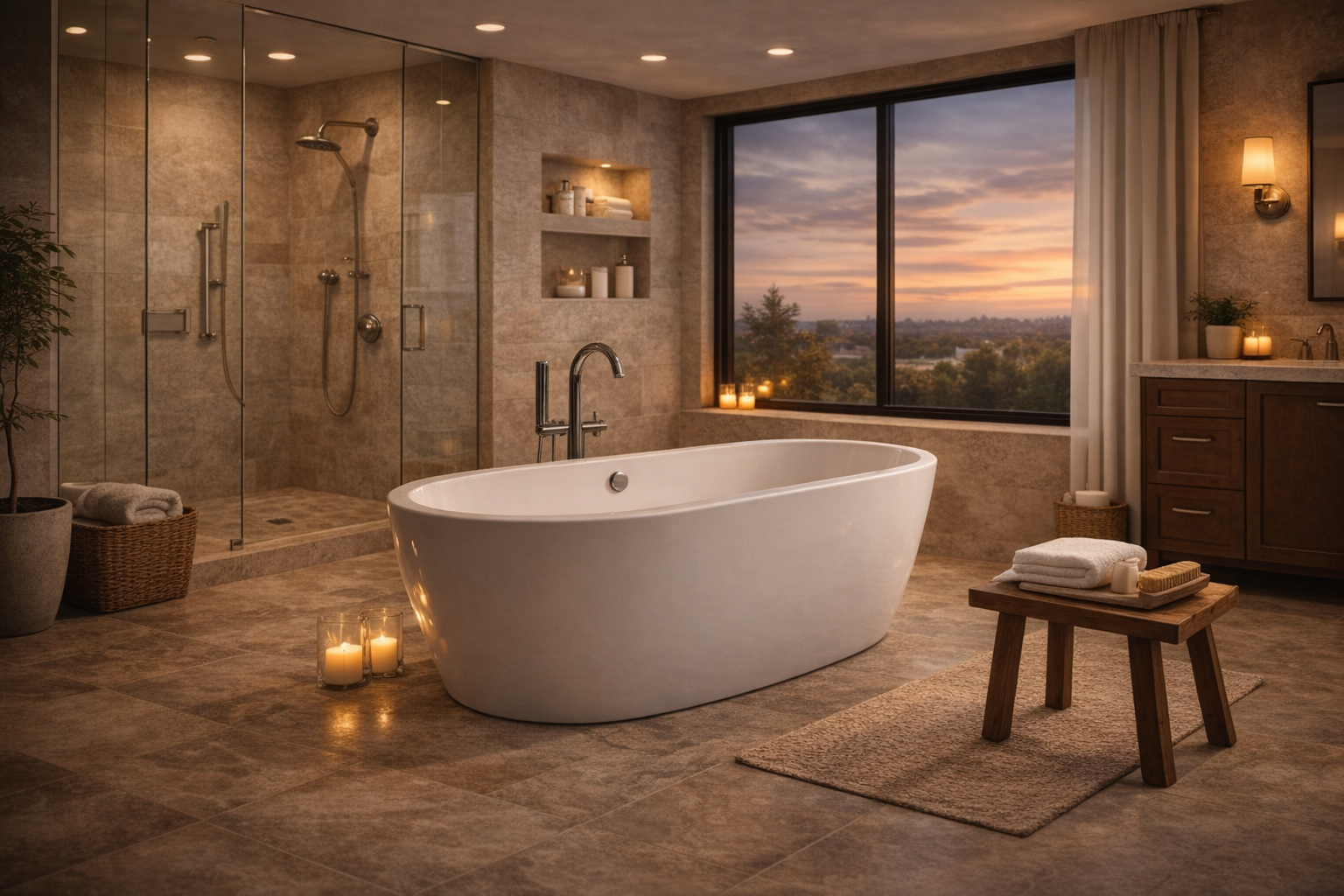
A freestanding bathtub is a tub that stands on its own instead of being built into an alcove or deck surround. In practical remodel work, that means the tub becomes a visible feature from multiple sides, which changes how the floor, plumbing, spacing, and cleaning access need to be planned. Freestanding bathtubs are usually chosen when the bathroom has enough open space to treat the tub as a design feature instead of hiding it against three walls.
What Gets Updated During a Freestanding Bathtub Project
The work may include the tub itself, drain location, floor-mounted or wall-mounted filler, floor finish under and around the tub, plumbing rough-in, wall or window trim near the tub, and surrounding lighting or layout details that affect how the tub is used. In some remodels, the tub area also becomes part of a larger redesign of the whole bathroom layout.
What Is the Difference Between a Freestanding Tub and a Standard Built-In Tub
A built-in tub usually sits against walls or inside a surround that hides most of the tub body. A freestanding tub stays visible around much more of its perimeter, so the room has to support it visually and physically. That open exposure changes both the design and the installation requirements.
When Does a Freestanding Bathtub Make Sense
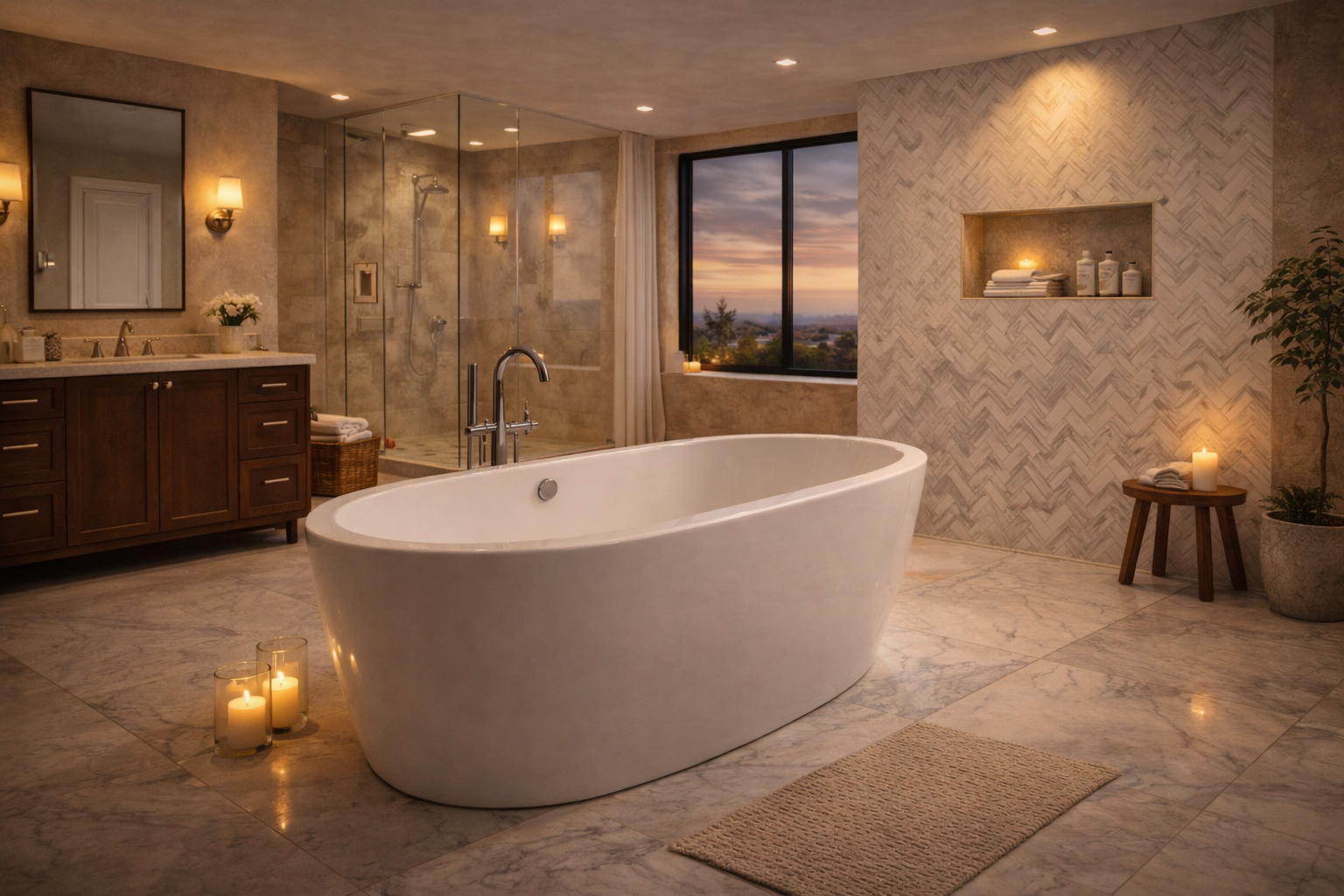
A freestanding bathtub makes sense when the bathroom has enough floor space around the tub, when the remodel is aiming for a more open and upscale look, or when the tub is meant to be a focal point rather than just a utility fixture. It is most common in primary bathrooms where there is enough room to walk around the tub comfortably.
What Bathroom Conditions Usually Point to a Freestanding Tub
Common conditions include a larger bathroom footprint, enough clearance around the tub location, and a layout where the tub can sit under a window, in an open zone, or near a feature wall without blocking movement through the room. A freestanding tub also makes more sense when the household actually uses a bathtub often enough to justify giving it premium floor space. For layout and clearance planning, many designers reference NKBA planning guidelines.
When Is a Freestanding Bathtub Not the Best Choice
A freestanding tub is usually not the best choice in a small bathroom where it would crowd the layout, reduce storage, or make cleaning awkward. It is also not the best choice when the household needs the tub to double as a regular shower unless the room has a separate well-planned shower zone.
What Types of Freestanding Bathtubs Are Common
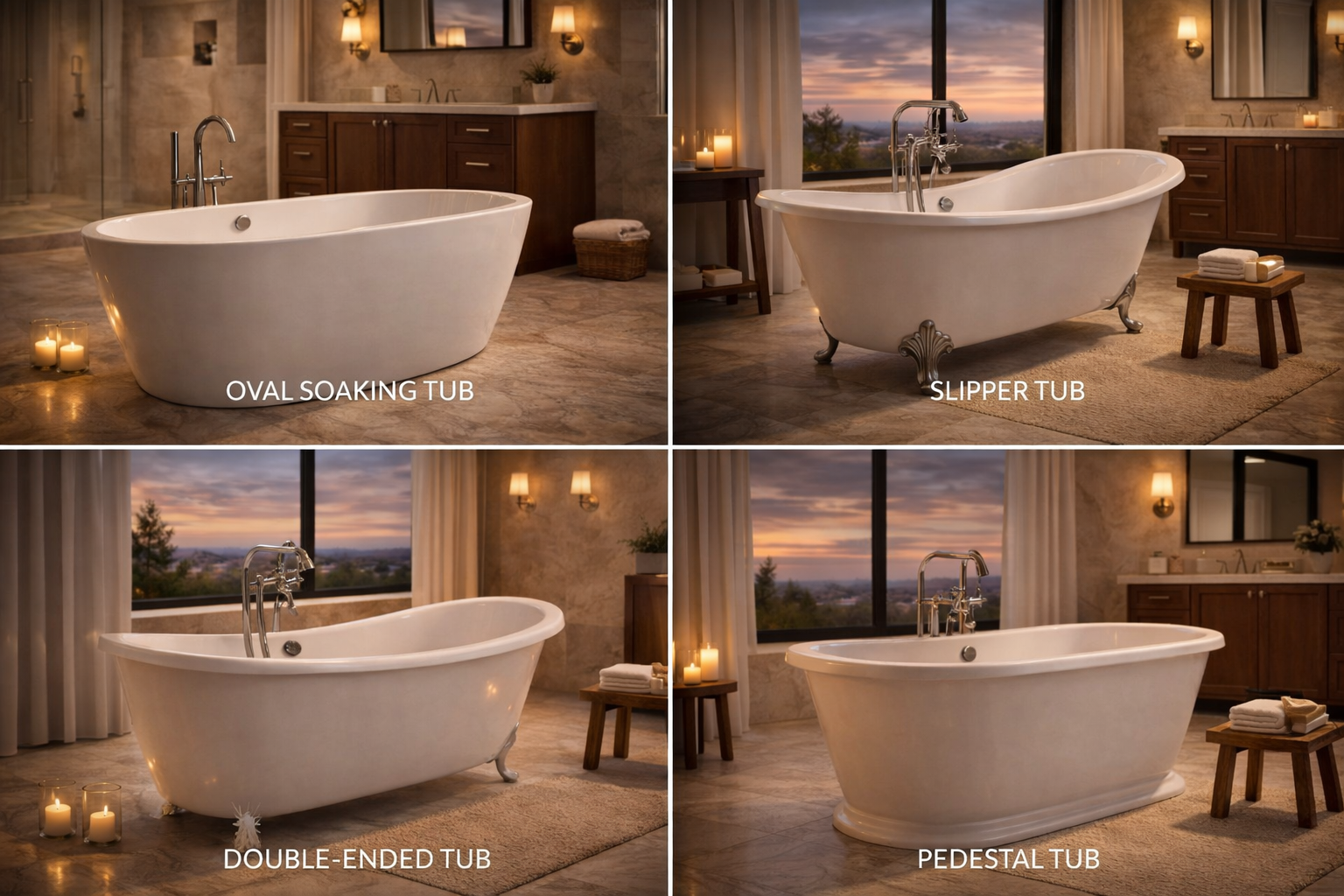
Common freestanding bathtub types include oval soaking tubs, slipper tubs, double-ended tubs, clawfoot-inspired tubs, pedestal-base tubs, and modern sculptural tubs. The right type depends on bathroom style, desired soaking depth, cleaning access, and how much open space the room can support. When the remodel includes this feature, bathroom remodeling can help homeowners understand the options in more detail.
What Freestanding Bathtub Styles Are Most Common in Remodeling Projects
Oval soaking tubs and clean modern sculptural tubs are common because they fit many contemporary bathroom remodels. Slipper tubs are popular when the goal is a more decorative or traditional look. Double-ended tubs are often chosen when centered bathing comfort matters more than one fixed reclining side.
When Does One Freestanding Tub Shape Make More Sense Than Another
Tub shape matters because it affects visual mass, soaking comfort, faucet placement, and how much room is left around the tub. A longer oval tub may work best in a wide room, while a more compact shape may be necessary when the bathroom wants the freestanding look without sacrificing too much open floor area.
How Do Layout and Room Size Affect a Freestanding Bathtub
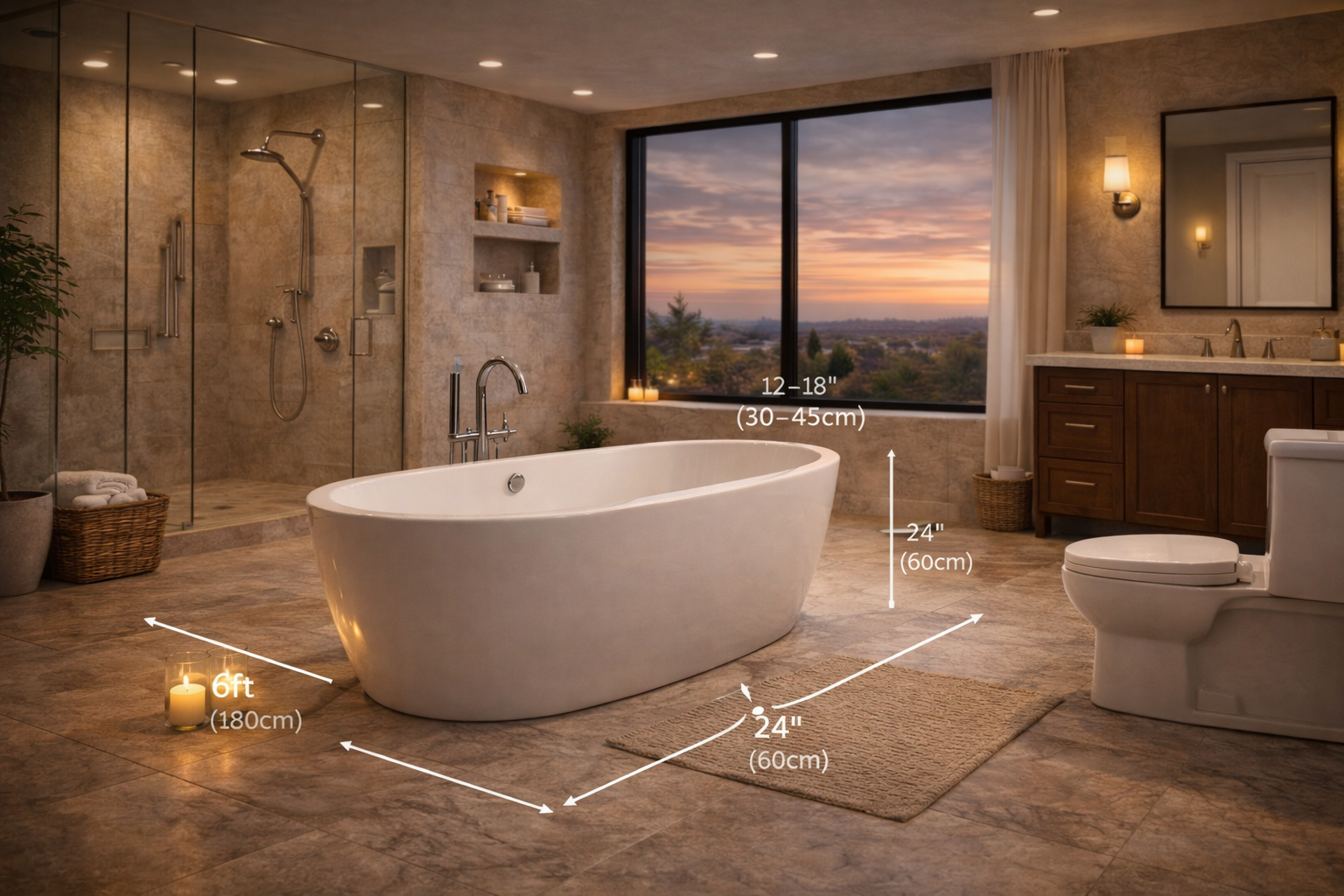
Layout and room size control whether a freestanding bathtub will feel intentional or just oversized. The tub needs enough open space around it to look balanced, enough walking clearance to keep the room usable, and a layout that still leaves room for the shower, vanity, and toilet to function well.
Why Does Clearance Around the Tub Matter So Much
Clearance matters because a freestanding tub is meant to be seen from more than one side and often needs cleaning access around it. If the tub is squeezed too tightly between walls or fixtures, the design loses much of the reason it was chosen in the first place and the bathroom can feel cramped.
How Does Bathroom Size Change the Best Freestanding Tub Strategy
In a larger bathroom, the tub may become part of an open bathing zone with more space around it and a more dramatic visual impact. In a smaller bathroom, the best strategy may be a compact freestanding tub or a decision to skip the freestanding look in favor of a more practical built-in model. The room size should decide the tub strategy, not the other way around.
What Materials and Components Are Used With a Freestanding Bathtub
A freestanding bathtub project uses more than the tub shell alone. The remodel may involve the tub material, drain assembly, overflow, floor-mounted or wall-mounted filler, shutoff and supply planning, floor finish, and nearby trim or moisture-resistant wall details depending on the location of the tub in the room. Homeowners comparing performance goals can review Energy Saver ventilation guidance.
What Freestanding Tub Materials Are Common
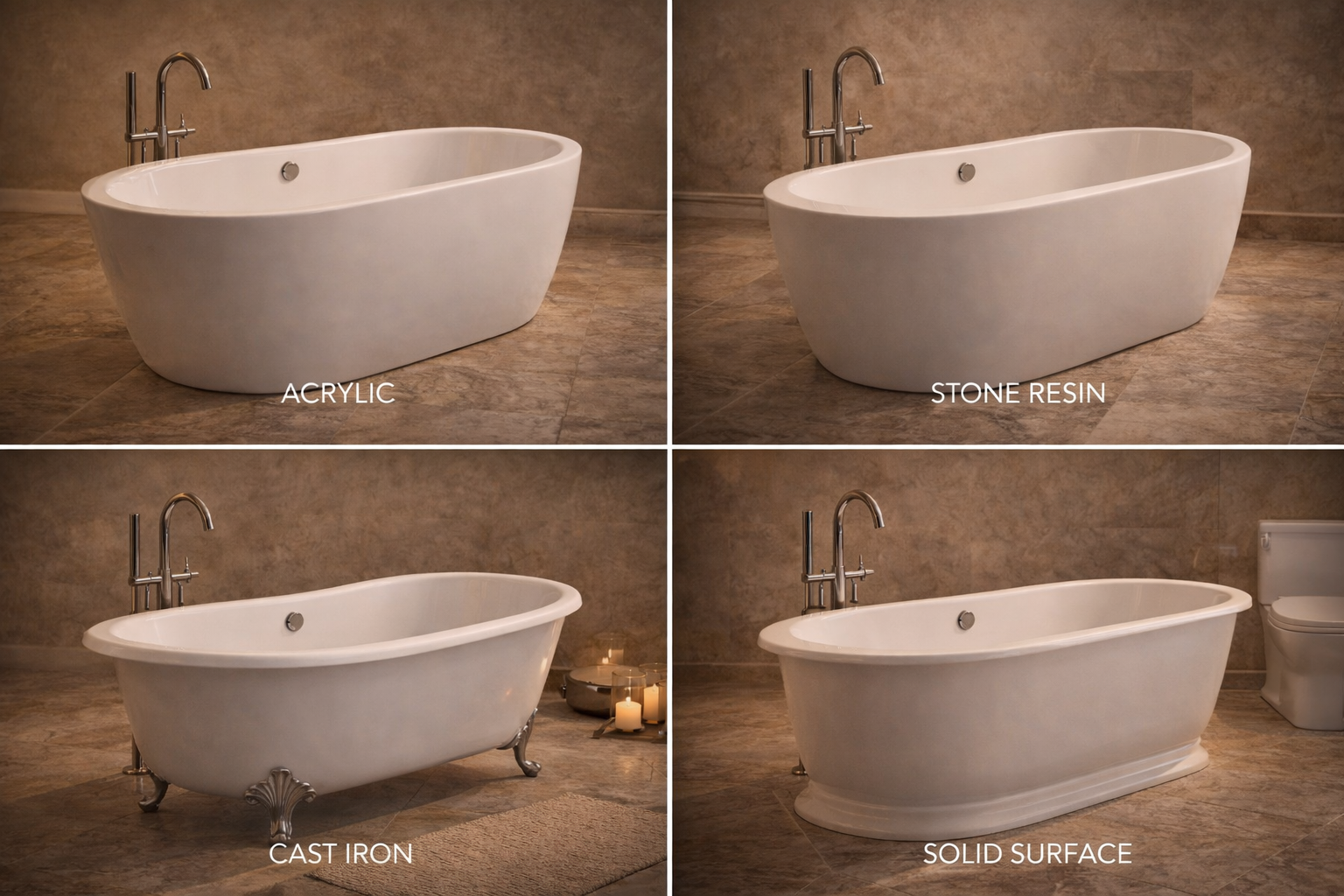
Common materials include acrylic, cast iron, solid-surface composites, stone resin, and in some cases enameled steel. Acrylic is common because it is lighter and easier to install, while solid-surface and stone-resin tubs are often chosen when a more substantial and upscale feel is important. Cast iron is durable but much heavier and more demanding to move into place.
What Plumbing and Finish Components Usually Change
Freestanding tubs often require a floor-mounted tub filler, updated drain positioning, and more careful floor finishing because the flooring stays visible around the whole tub. Depending on the layout, wall finishes, windows, and trim near the tub may also need to be planned more carefully because the tub is not tucked into a hidden alcove.
What Upgrades Can Be Added With a Freestanding Bathtub
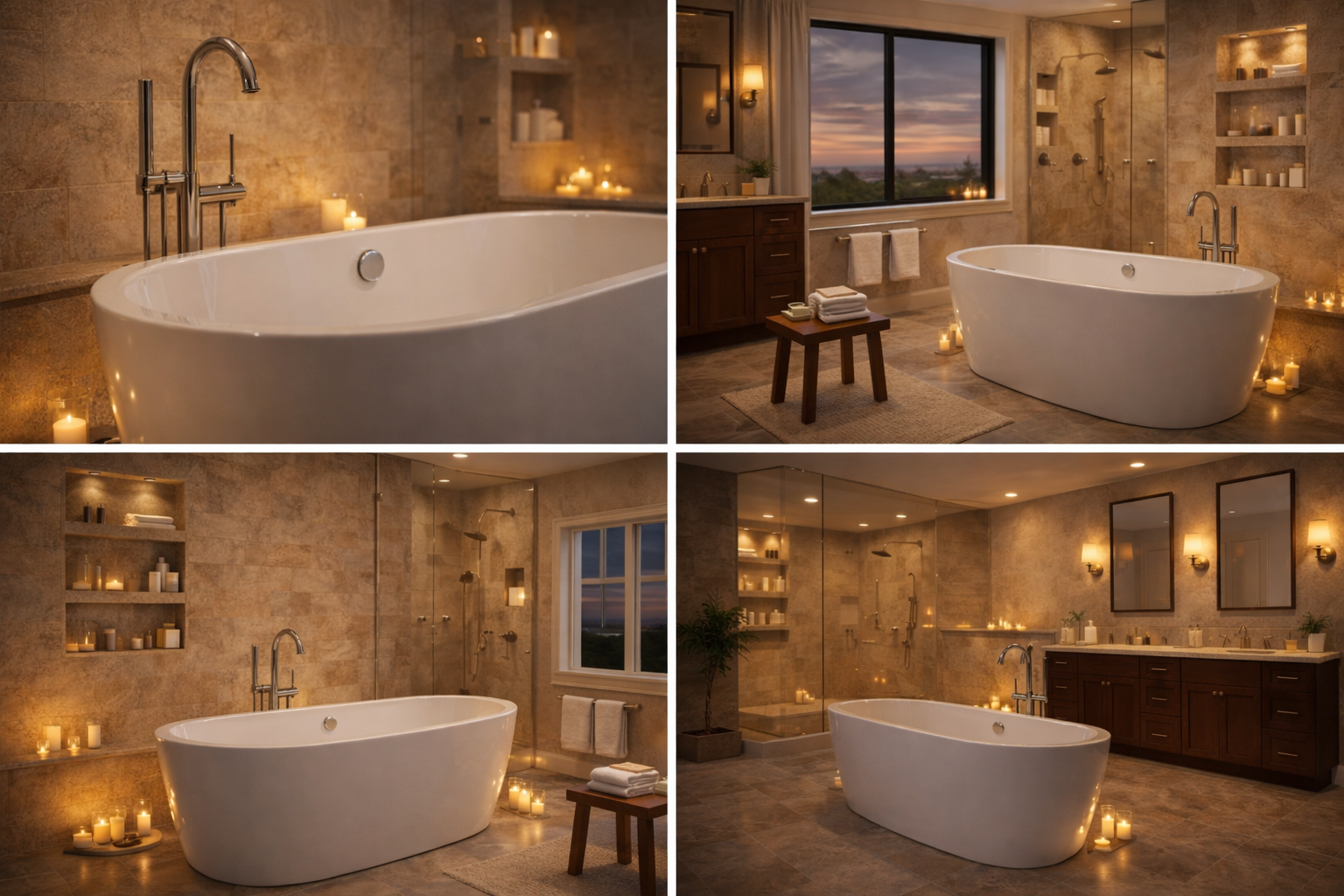
Freestanding tub work is often the best time to add upgrades that support both comfort and presentation. Common upgrades include premium floor-mounted fillers, accent lighting, feature wall finishes, nearby shelving, under-window trim details, and better integration with the shower and vanity layout around the tub zone.
What Functional Upgrades Are Most Useful Around a Freestanding Tub
Functional upgrades often include a better filler location, more useful access to towels or bath products, improved lighting, and better floor planning around the tub. These upgrades matter because a freestanding tub can look beautiful and still be inconvenient if the surrounding zone is not practical to use.
What Design Upgrades Usually Happen at the Same Time
Freestanding tub projects often include accent walls, upgraded window trim, larger-format flooring, decorative lighting, and changes to the shower or vanity so the whole bathroom feels coordinated around the tub. Once the tub becomes a focal point, the surrounding finishes usually need to rise to that level too. Projects with related upgrades often include choices around bathtub remodel.
What Installation Details Matter With a Freestanding Bathtub
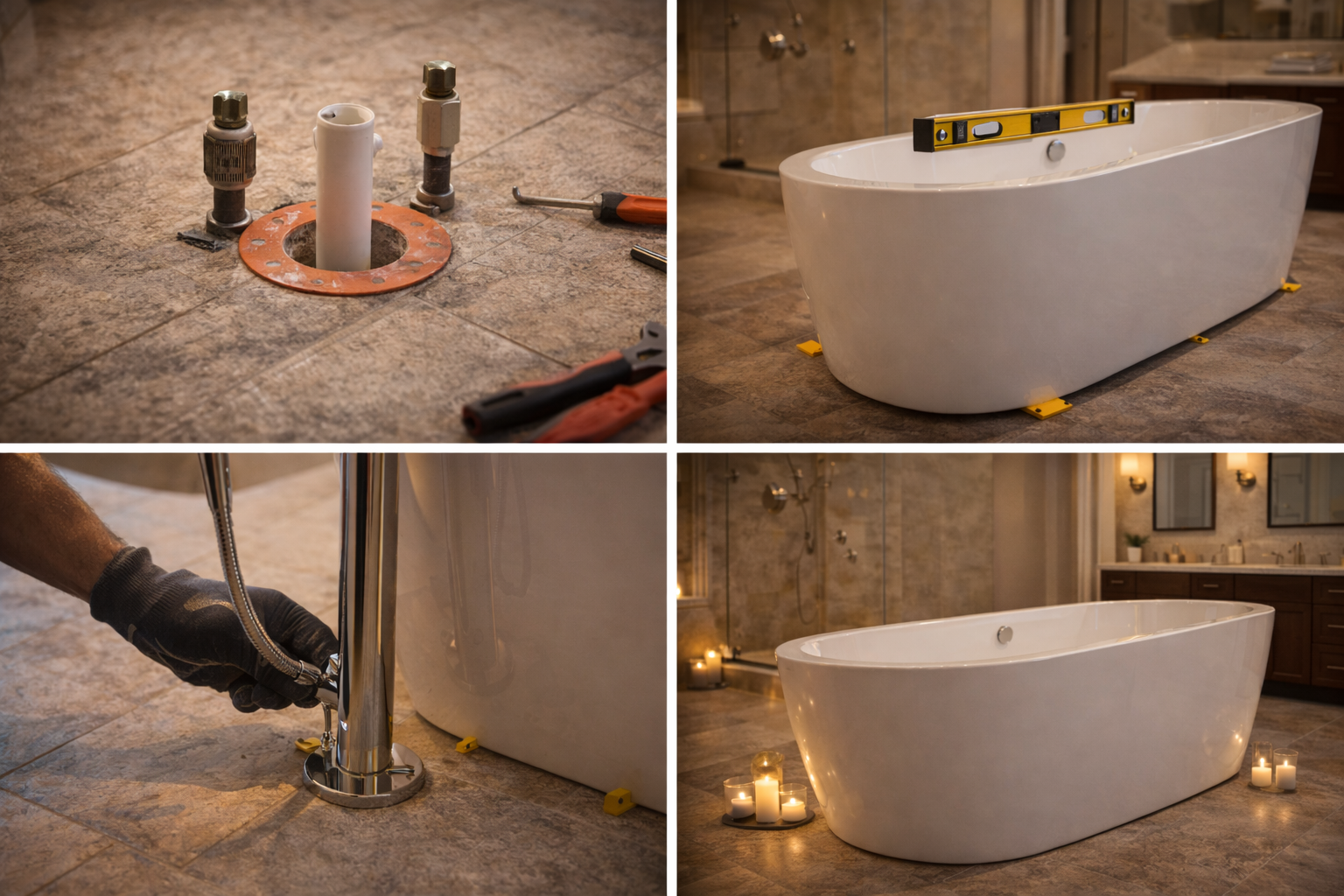
Freestanding bathtub installation depends on floor plumbing position, tub leveling, filler location, floor finish quality, and whether the room gives enough access around the tub to use and clean it properly. Because the tub is exposed from more sides, installation mistakes are harder to hide than they are with an alcove tub. During remodeling, it also helps to follow EPA indoor air quality guidance.
Why Do Plumbing Position and Floor Finish Matter So Much
The drain and filler positions have to line up cleanly with the tub and the final floor finish. Once the tub is set, there is usually much less room to hide sloppy floor cuts or poorly planned supply placement. These are practical details that shape whether the tub looks intentional and well built.
What Placement and Access Problems Show Up During Installation
Common issues include tubs placed too close to walls, filler placement that blocks entry, floors that are not level enough for the tub to sit cleanly, and not enough room to clean around the tub body. These are some of the biggest reasons freestanding tubs need careful planning before install day.
What Affects Freestanding Bathtub Cost
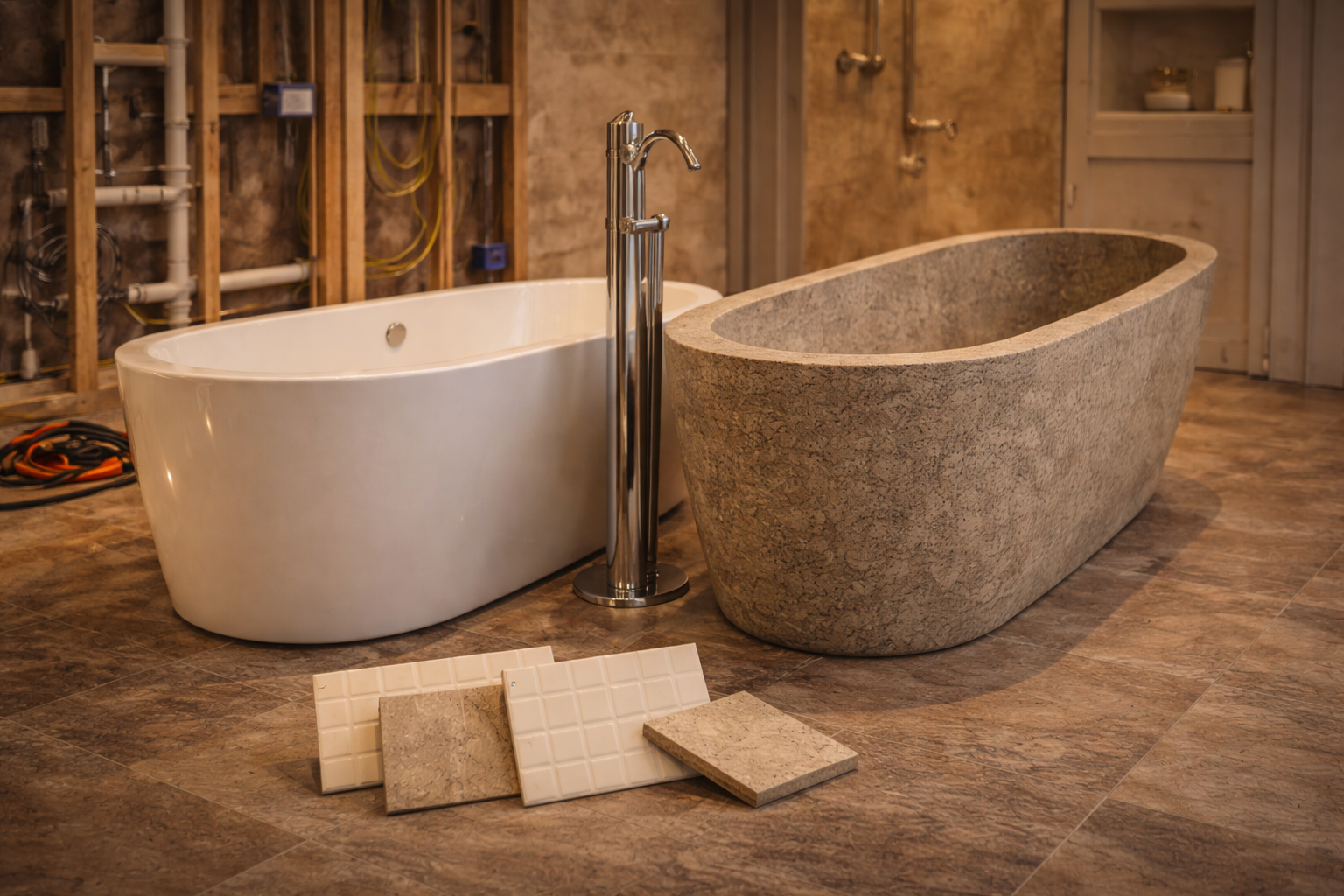
Freestanding bathtub cost usually depends on tub material, tub size, filler type, plumbing complexity, floor finish work, and whether the bathroom layout needs to change to support the tub properly. A simple acrylic tub replacement is very different from a larger freestanding installation with floor-mounted plumbing and upgraded surrounding finishes.
Which Freestanding Tub Choices Usually Raise the Cost
Costs usually rise with heavier tubs, premium materials, sculptural designs, floor-mounted fillers, custom floor work, and larger layout changes around the tub zone. The tub itself matters, but the surrounding construction often changes the budget just as much.
How Do Labor and Existing Conditions Change the Budget
Labor costs go up when the floor plumbing needs to move, the structure needs reinforcement, the room layout changes, or the floor finish has to be rebuilt around the new tub position. Existing conditions matter because freestanding tubs depend heavily on the final room layout being right.
What Mistakes Should Homeowners Avoid With a Freestanding Bathtub
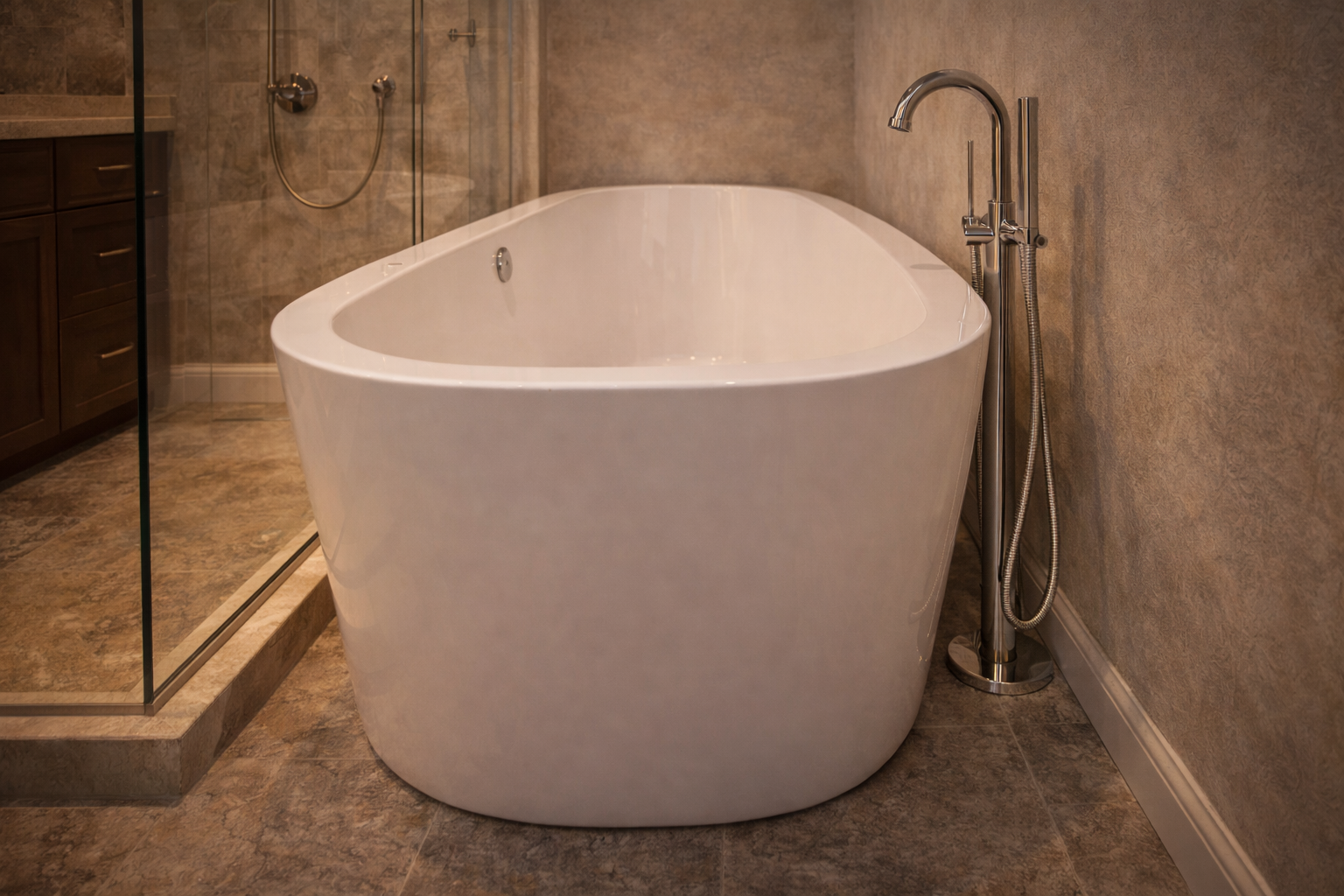
The biggest freestanding bathtub mistakes usually happen when the tub is chosen for appearance without checking whether the bathroom can support it well. A freestanding tub should fit the room, the plumbing plan, and the way the household actually uses the bathroom.
Why Is It a Problem to Force a Freestanding Tub Into a Tight Room
If the room is too tight, the tub can crowd walkways, reduce storage, make cleaning harder, and leave the bathroom feeling less functional than before. A freestanding tub needs breathing room to look and work the way it should.
Why Is It Risky to Ignore Plumbing and Filler Placement
The filler and drain have to be planned early because they affect both the look and the usability of the tub. Poor filler placement can make entry awkward, while poor drain planning can complicate the installation and the finished floor layout.
How Should You Plan a Freestanding Bathtub
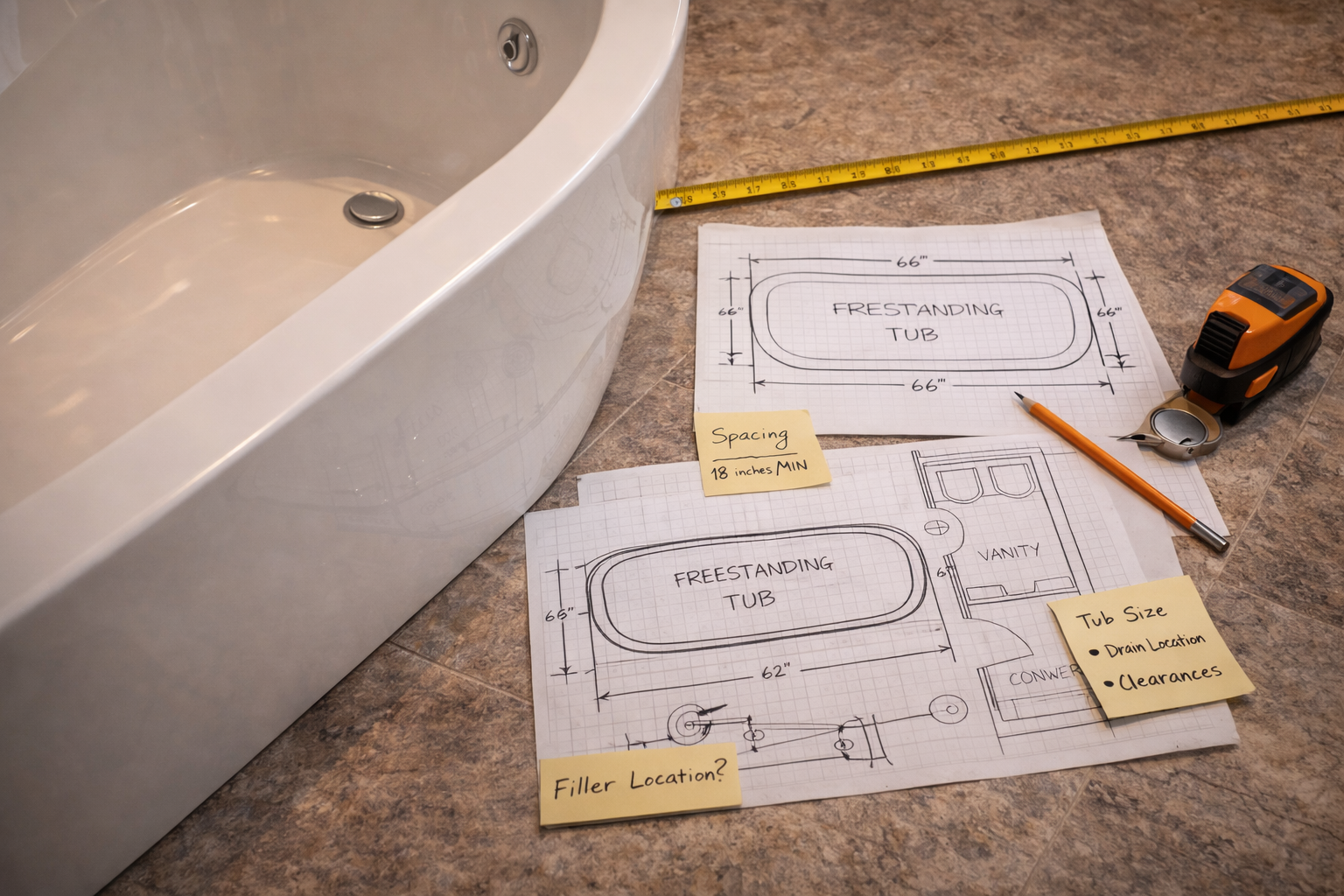
A freestanding bathtub should be planned by measuring the room carefully, deciding how much clearance the tub needs, and confirming where the drain and filler will go before the final floor is finished. The best plan balances soaking comfort, open space, cleaning access, and how the tub fits with the rest of the bathroom.
What Should Be Decided Before Freestanding Tub Work Starts
Before construction starts, it helps to confirm tub size, tub material, filler type, drain location, walking clearances, surrounding finish materials, and whether the bathroom still has enough room for the vanity, shower, and storage after the tub is in place. These decisions affect plumbing, flooring, and the whole room layout.
How Can a Homeowner Prepare for the Installation Process
Homeowners should be ready for floor plumbing coordination, delivery planning for a large tub body, careful final floor protection, and installation sequencing around fillers, trim, and surrounding finishes. Freestanding tub projects usually go better when the whole room is planned around the tub early instead of trying to fit it in at the end.
Related Freestanding Bathtub Topics
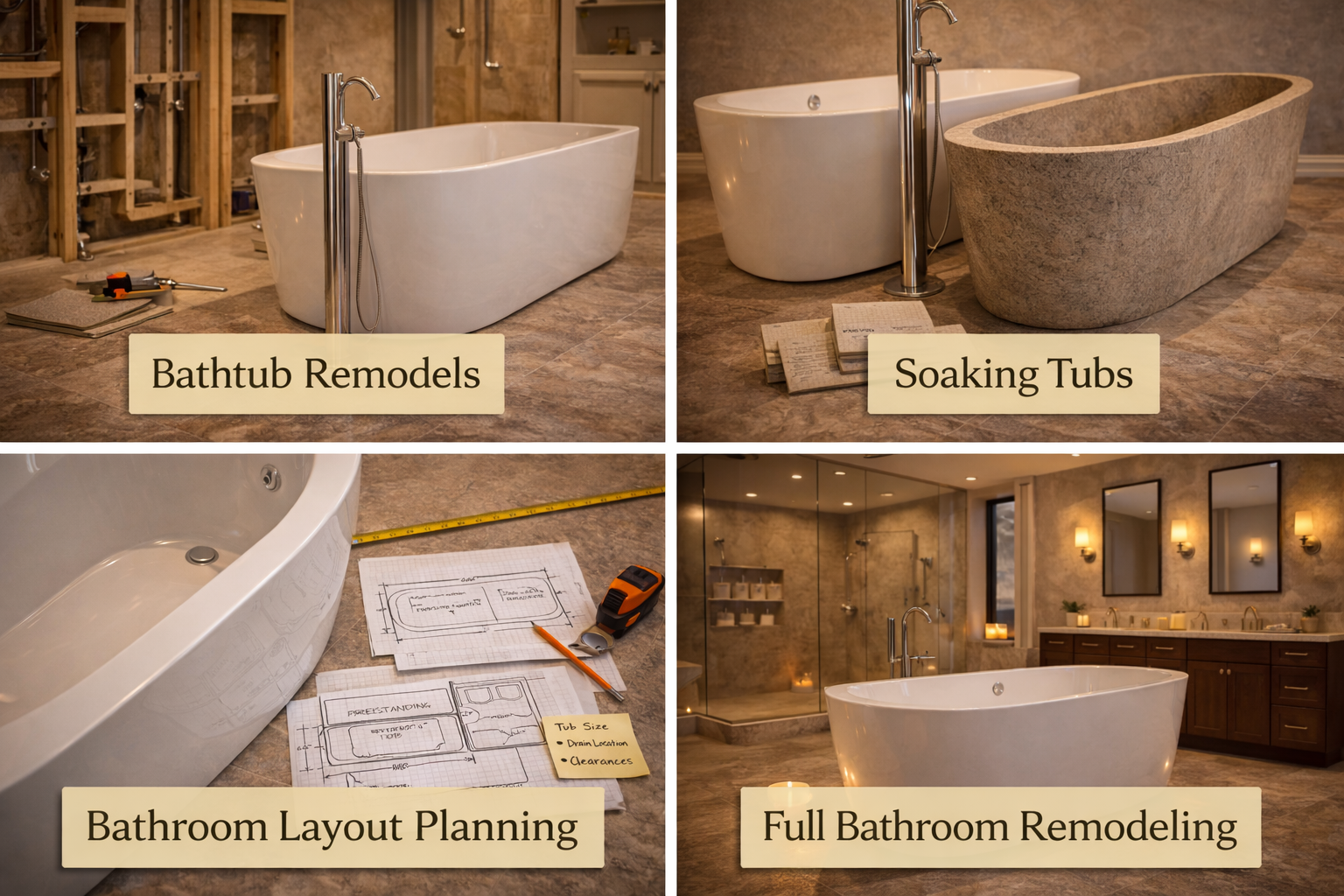
Freestanding bathtub projects overlap with bathtub remodeling, soaking tubs, bathroom layout changes, floor-mounted fillers, and full bathroom remodeling because the tub affects the whole room around it. Related topics help homeowners compare whether they need a freestanding tub specifically or a different bathtub approach.
Which Freestanding Bathtub-Related Pages Should Connect to This Topic
Strong related pages include bathtub remodels, soaking tubs, bathtub replacement, bathroom layout changes, and custom bathroom design. Those topics help break down the decisions that shape whether a freestanding tub is the right choice.
Which Bathroom Remodeling Topics Often Connect to Freestanding Tub Work
Freestanding tub work often connects to flooring, lighting, vanity planning, layout changes, and full bathroom remodeling. In practical remodels, these pieces overlap because the tub becomes a visual and spatial anchor in the room.
Frequently Asked Questions About Freestanding Bathtubs
A freestanding bathtub is a bathtub that stands on its own instead of being installed inside an alcove or deck surround.
They work best in bathrooms with enough space around them, but the best answer depends on the tub size and the room layout. In many smaller bathrooms, a built-in tub may still be the more practical choice.
It can, but most freestanding tubs are used in bathrooms that also have a separate shower. A freestanding tub is usually better as a dedicated soaking fixture than as a daily shower-tub combination.
Acrylic is common because it is lighter and easier to install, while stone-resin and solid-surface tubs are often chosen for a heavier, more upscale feel. The best material depends on budget, weight, and design goals.
It often needs different plumbing planning than a built-in tub, especially when the filler comes through the floor and the tub sits away from the wall.
They can be if the tub is placed too close to surrounding walls or fixtures. Proper spacing makes a big difference in how easy the area is to clean.
It can improve appeal when it fits the room and the style of the remodel, especially in primary bathrooms where a feature tub is expected or appreciated.
The timeline depends on whether the room already supports the tub location or whether plumbing, floor work, and layout changes are needed before installation.
Yes. Freestanding tubs are common in modern bathrooms, especially when paired with clean lines, open space, and simple surrounding finishes.
The first step is measuring the room and confirming that the tub will have enough clearance, proper plumbing support, and a location that still lets the rest of the bathroom function well.