

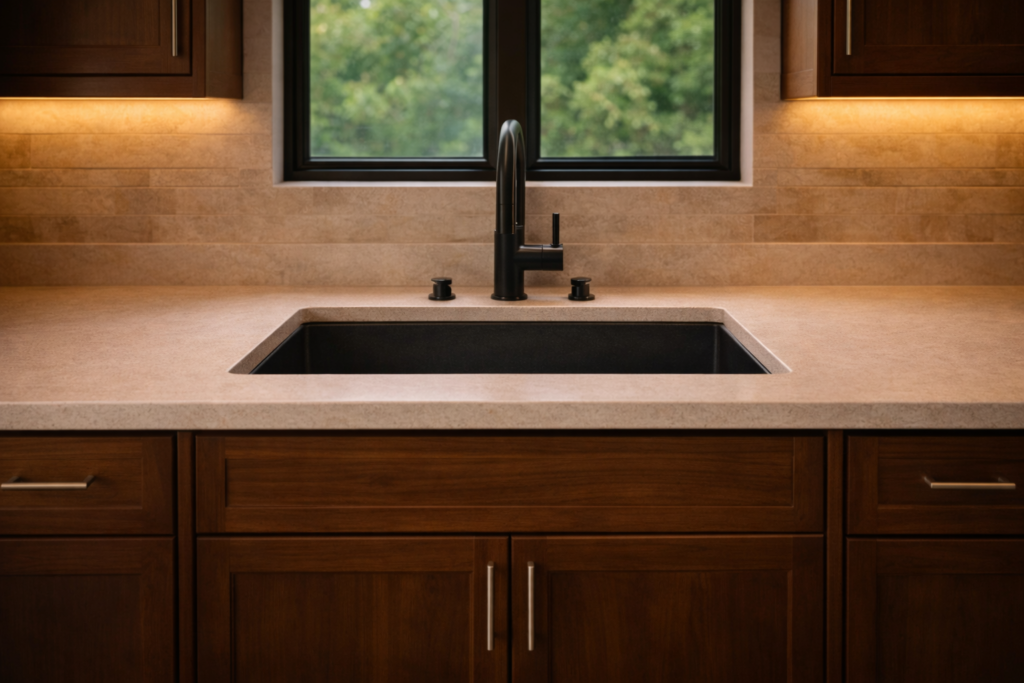
Kitchen Sink Remodel Guide: Sink Types, Installation, Costs, and Planning
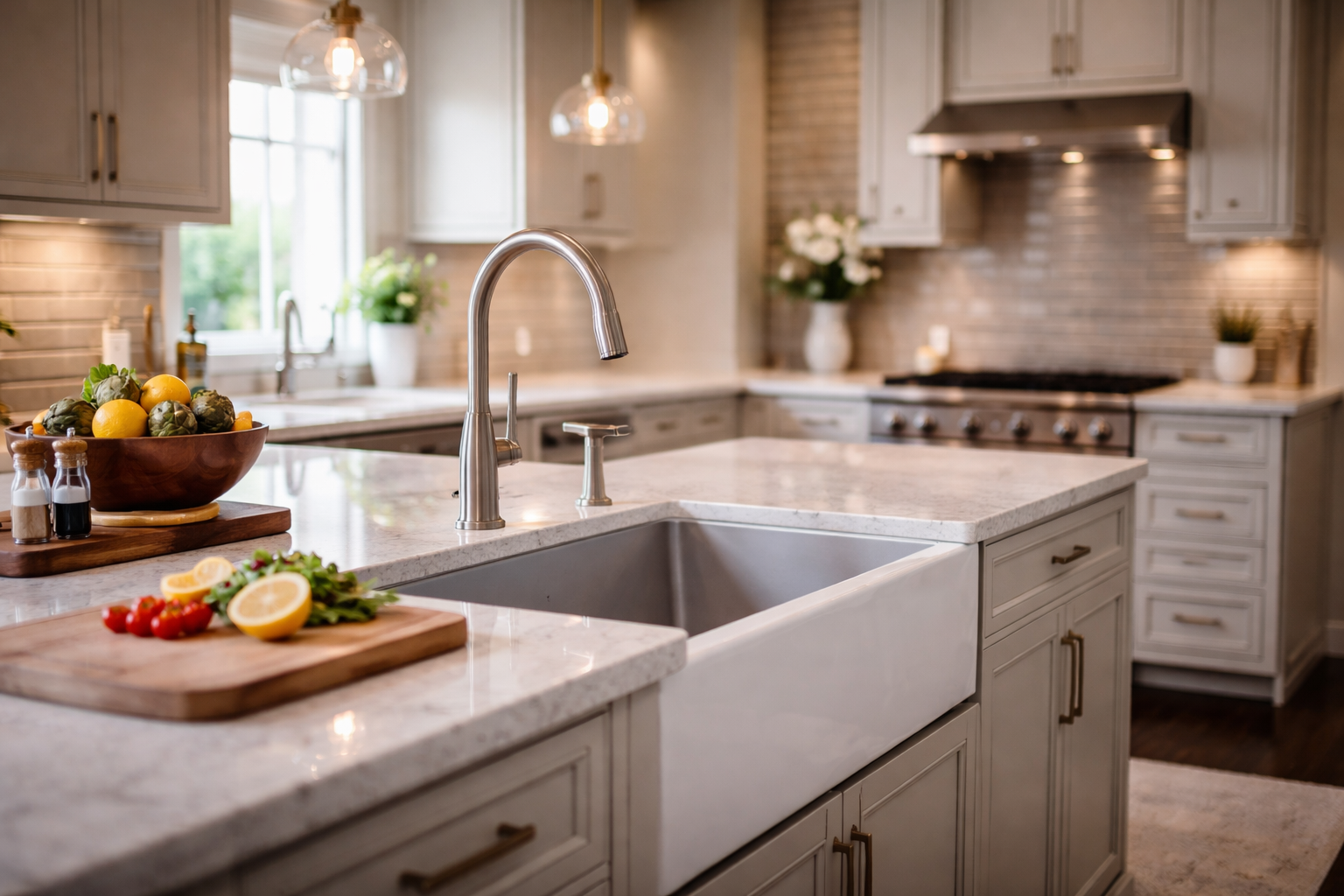
Kitchen Sink Guide Index
- Kitchen Sink Remodel Overview
- When Should a Kitchen Sink Be Remodeled
- What Types of Kitchen Sink Remodels Are Common
- How Do Layout and Kitchen Size Affect a Kitchen Sink Remodel
- What Materials and Components Are Used in a Kitchen Sink Remodel
- What Upgrades Can Be Added During a Kitchen Sink Remodel
- What Installation Details Matter in a Kitchen Sink Remodel
- What Affects Kitchen Sink Remodel Cost
- What Mistakes Should Homeowners Avoid With a Kitchen Sink Remodel
- How Should You Plan a Kitchen Sink Remodel
- Related Kitchen Sink Remodel Topics
- Frequently Asked Questions About Kitchen Sink Remodeling

Kitchen Sink Remodel Overview
A kitchen sink remodel changes one of the most heavily used work points in the kitchen. In practical remodel work, that can include changing the sink bowl size or shape, moving the faucet or accessory layout, updating the drain and supply connections, and making sure the sink works better with the surrounding countertop, cabinet storage, and dishwashing workflow. A sink remodel affects cleanup, prep, and how comfortable the main work area feels every day.
What Gets Updated During a Kitchen Sink Remodel
The work may include the sink itself, faucet, drain basket, garbage disposal connection, water supply lines, sink cutout or mounting style, and the cabinet space below the sink. In some kitchens, the project also changes the countertop, backsplash, or sink location if the remodel is trying to improve workflow rather than just replace the fixture.
What Is the Difference Between Replacing a Sink and Reworking the Sink Area
Replacing a sink changes the bowl and fixture while keeping the main sink zone similar. Reworking the sink area goes further and may involve changing bowl configuration, faucet style, sink placement, cabinet storage below, or the amount of counter landing space around the sink. That broader approach often improves daily function more than the bowl change alone, especially beside the island.
When Should a Kitchen Sink Be Remodeled
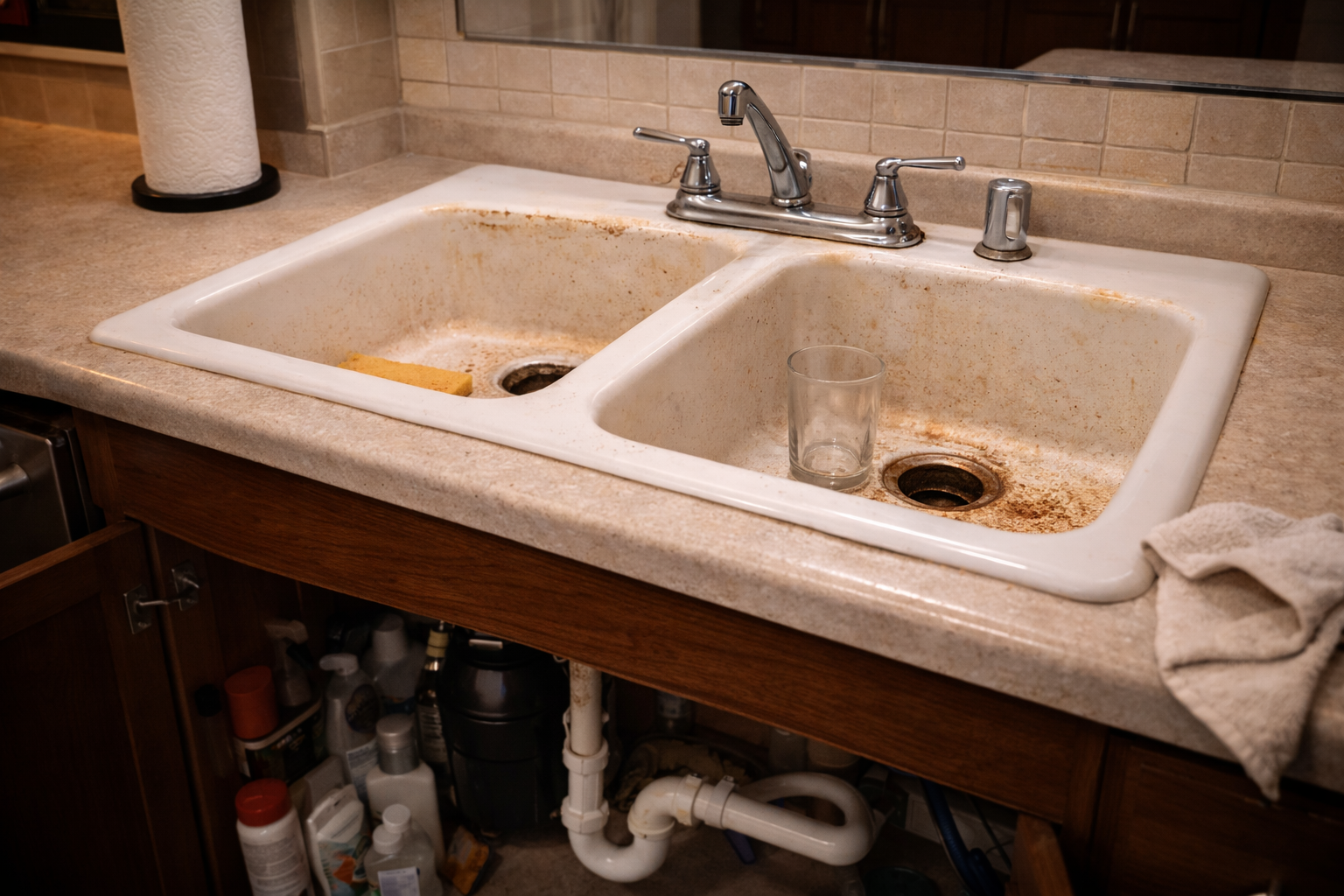
A kitchen sink should usually be remodeled when the basin is worn, too small, difficult to use, or no longer fits the rest of the kitchens workflow. Common warning signs include a scratched or stained sink, faucet placement that splashes poorly, not enough basin depth, or a sink setup that does not work well with modern dishwashing and prep habits.
What Signs Show That a Kitchen Sink Is Ready for Remodeling
Clear signs include rust or heavy wear, chips around the sink edge, recurring leaks, outdated faucet hardware, sink basins that are too shallow or too divided, and under-sink areas that feel wasted or constantly crowded. In some kitchens, the sink still works but no longer fits the size or flow of the upgraded counters and cabinets around it. Homeowners weighing long-term operating costs often review Energy Saver guidance.
What Remodeling Goals Usually Lead to Sink Upgrades
Sink upgrades are common when homeowners want a larger basin, better cleanup flow, stronger faucet performance, improved garbage disposal integration, or a more modern look that fits the cabinet and countertop remodel around it. They also happen when the old sink is simply the weakest part of an otherwise improved kitchen.
What Types of Kitchen Sink Remodels Are Common
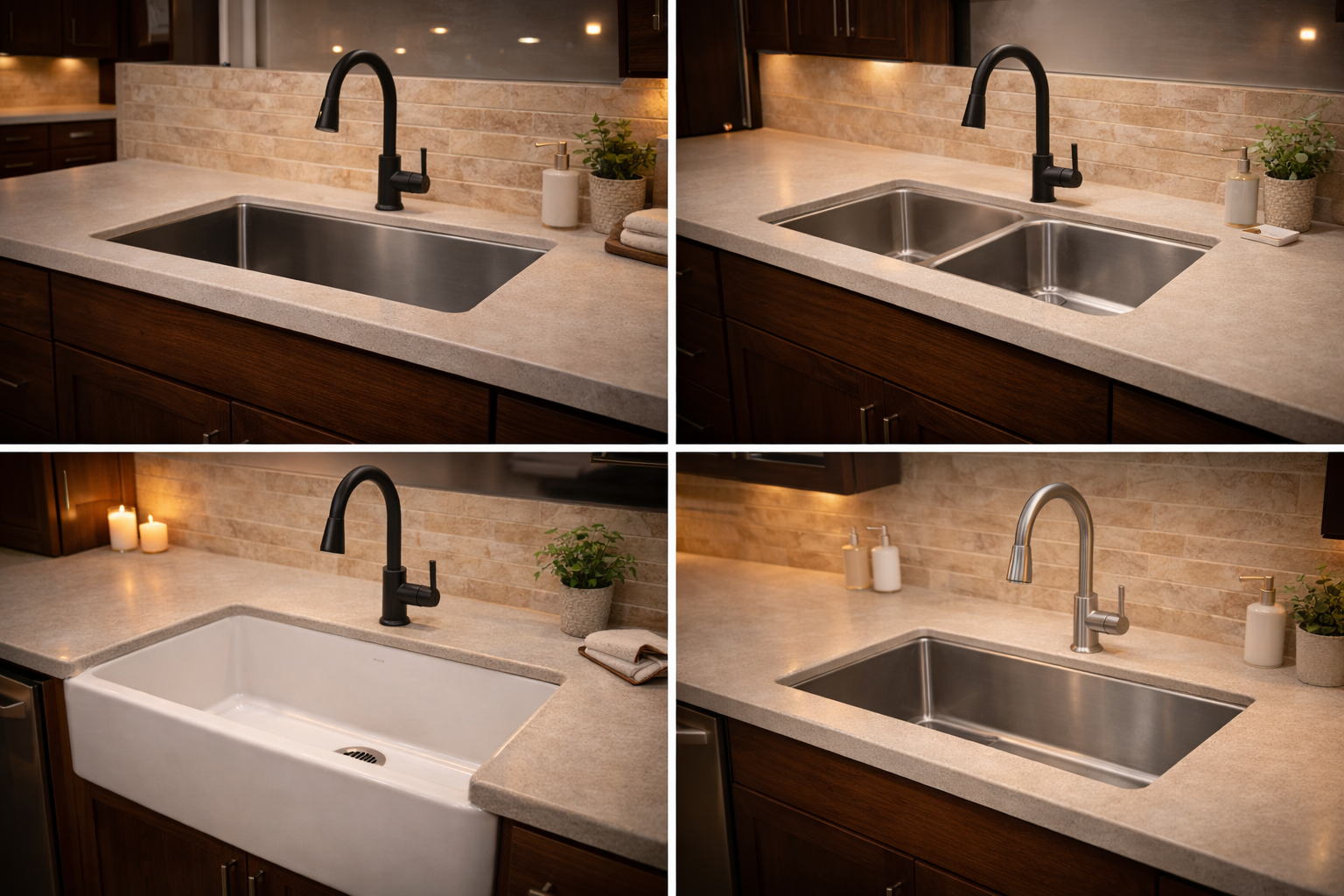
Common kitchen sink remodels include single-bowl sink upgrades, double-bowl sink replacements, farmhouse apron-front sinks, undermount sink installations, drop-in sink replacements, and sink-area reconfigurations tied to countertop changes. The right type depends on prep habits, cleanup style, counter space, and the cabinet setup below the sink. If this sink project is part of a larger update, homeowners can explore kitchen remodeling for broader planning ideas.
What Kitchen Sink Styles Are Most Common in Remodeling Projects
Single-bowl sinks are common because they handle large pots and pans more easily and support simpler cleanup. Double-bowl sinks are still common when the homeowner wants separation between washing and rinsing tasks. Farmhouse sinks are common when the design wants a stronger visual feature at the sink wall.
When Does One Sink Style Make More Sense Than Another
A single large basin may make more sense when the kitchen handles oversized cookware often or the owner wants fewer dividers in the way. A divided sink may make more sense when multitasking and bowl separation still matter in the households daily use. The best sink type depends on how the kitchen is really used, not just what is currently fashionable.
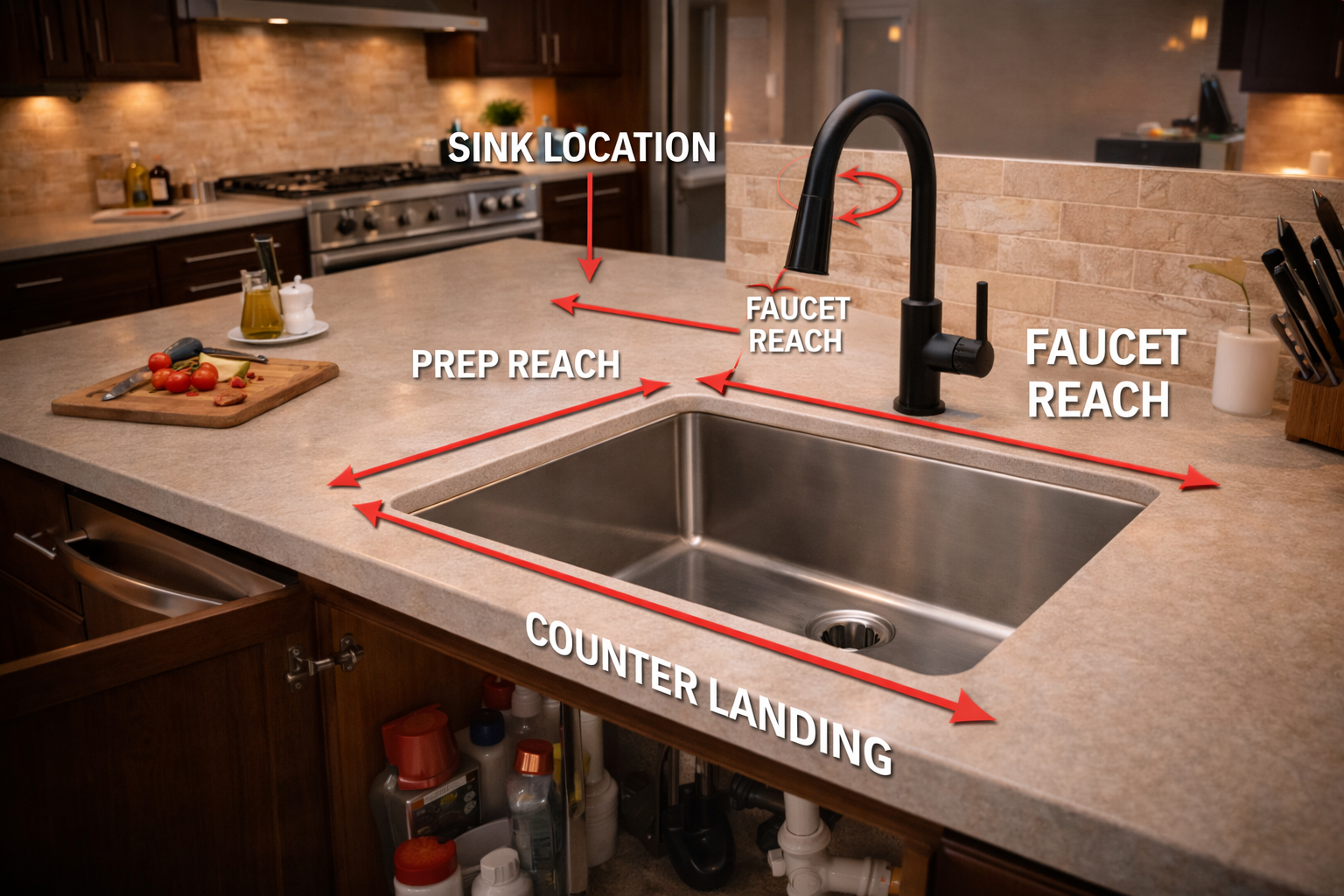
How Do Layout and Kitchen Size Affect a Kitchen Sink Remodel
Layout and kitchen size affect where the sink should sit, how much landing space it needs, and how well it connects to prep and cleanup zones. A sink remodel should improve workflow rather than simply swap one fixture for another in the same awkward position. During remodeling, it also helps to follow EPA indoor air quality best practices.
Why Does Sink Location Matter So Much in a Kitchen
Sink location affects prep flow, dishwasher loading, access to trash storage, and how easily the main work surface can be cleaned and reset above finished flooring. In practical remodel work, a better sink position can improve the whole kitchen even if the room size does not change.
How Does Kitchen Size Change the Best Sink Strategy
In a smaller kitchen, the best sink strategy may focus on a more efficient bowl layout and better use of the surrounding counter space. In a larger kitchen, the remodel may support a larger prep sink zone, more landing space, or stronger coordination between the sink, island, and cooking areas. The best strategy depends on how the room is used every day.
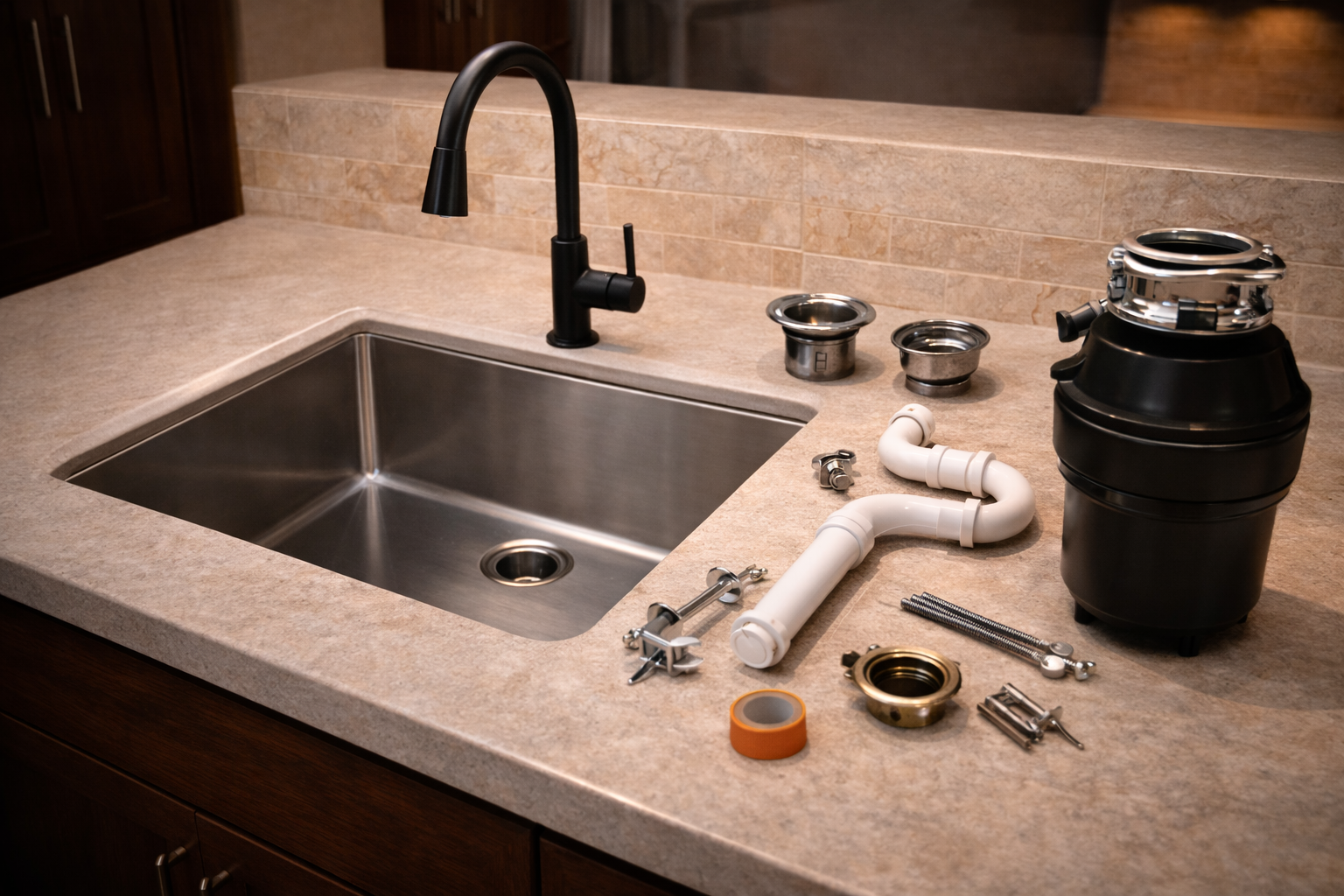
What Materials and Components Are Used in a Kitchen Sink Remodel
A kitchen sink remodel uses more than the sink bowl itself. The project may involve sink material, faucet hardware, mounting clips, drain assembly, disposal connection, water lines, shutoff valves, and the countertop cutout or support details that make the whole sink zone work.
What Sink Materials Are Common in Kitchen Remodels
Common sink materials include stainless steel, fireclay, cast iron with enamel, composite granite, and other kitchen-rated sink materials. Stainless steel is especially common because it is practical, durable, and fits many kitchen styles. Fireclay and composite options are often chosen when the design wants a more specific visual finish or heavier sink presence.
What Plumbing and Mounting Components Usually Matter Most
Faucet placement, drain baskets, supply lines, shutoff valves, disposal compatibility, and the difference between undermount and drop-in installation all matter because they affect how the sink performs and how easy the area is to keep clean. These details often matter more than the bowl finish alone.

What Upgrades Can Be Added During a Kitchen Sink Remodel
Sink work is often the best time to add upgrades that improve cleanup, prep, and storage all at once. Common upgrades include pull-down faucets, deeper single bowls, sink accessories, workstation-style ledges, garbage disposal updates, better under-sink storage, and stronger coordination between the sink and dishwasher zones.
What Functional Upgrades Are Most Useful in a Sink Remodel
Functional upgrades often include a larger basin, better faucet reach, stronger disposal setup, improved under-sink organization, and more usable landing space around the sink. These upgrades matter because the sink is one of the kitchens highest-traffic work areas.
What Design Upgrades Usually Happen at the Same Time
Kitchen sink remodels often include updated countertops, backsplash changes, faucet finish upgrades, and cleaner sink edge details. Once the sink changes, the surrounding surfaces usually need to align with the new finish level and workflow. For technical installation guidance, many pros refer to TCNA resources.
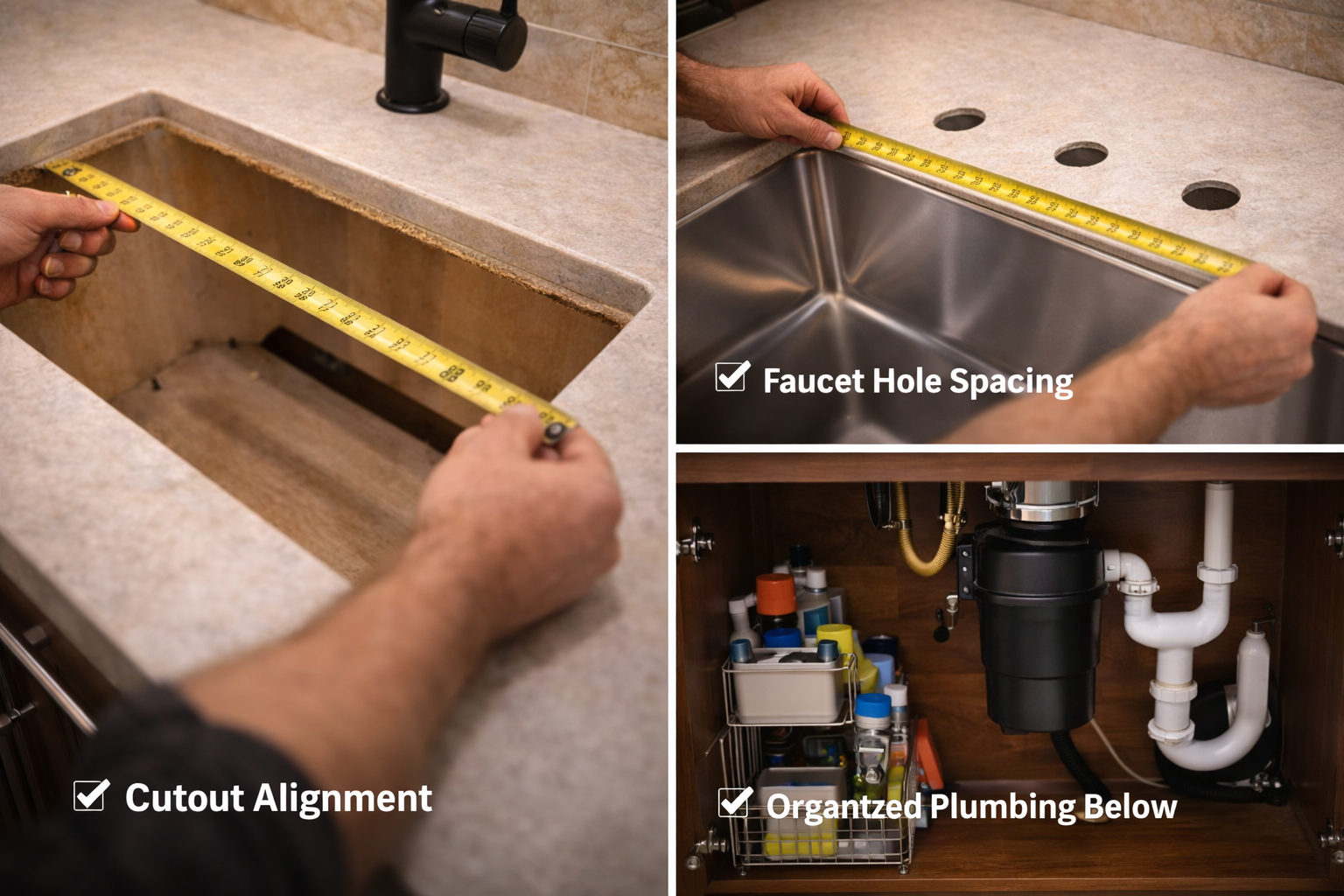
What Installation Details Matter in a Kitchen Sink Remodel
Kitchen sink installation depends on sink cutout accuracy, faucet spacing, under-sink plumbing alignment, mounting support, and how the sink meets the countertop and cabinet below. Even a high-quality sink can feel wrong if the faucet splashes poorly, the cutout is off, or the plumbing underneath is left awkward and cramped.
Why Do Cutout Accuracy and Plumbing Alignment Matter So Much
The sink has to fit the counter correctly and connect cleanly to the drain and supply lines below. Poor cutout sizing or poor drain alignment can create installation problems that affect both appearance and daily use.
What Fit and Function Problems Show Up During Installation
Common issues include faucets that sit too close to the backsplash, sinks that reduce too much landing space, disposal connections that crowd the cabinet, and undermount installations that are not finished cleanly. These are practical details that shape whether the sink zone works smoothly every day.
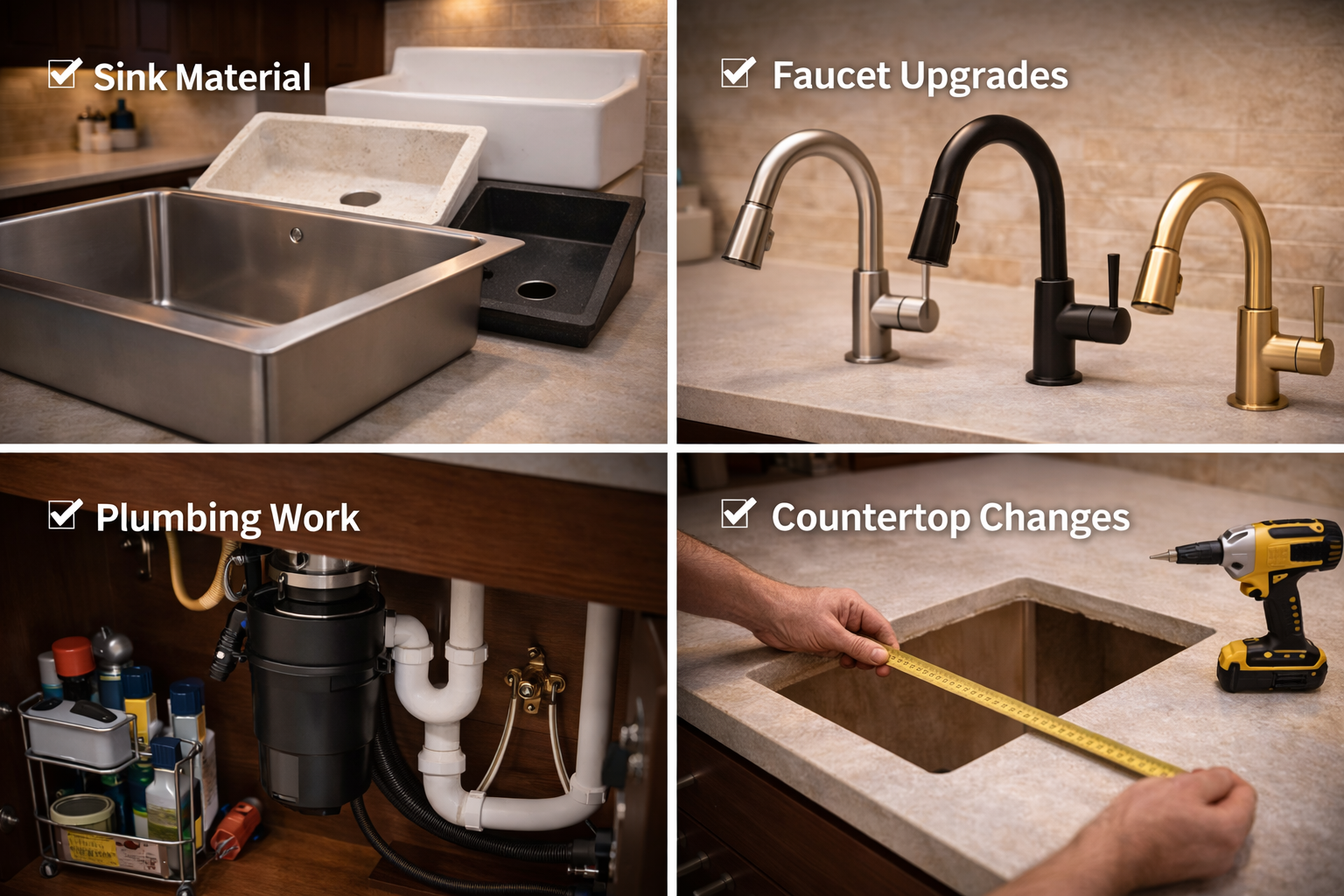
What Affects Kitchen Sink Remodel Cost
Kitchen sink remodel cost usually depends on sink material, sink size, faucet package, mounting style, disposal compatibility, and whether the project includes countertop or plumbing changes around the sink zone. A simple drop-in sink replacement costs far less than a larger undermount or farmhouse sink remodel tied to counter changes.
Which Sink Choices Usually Raise the Cost
Costs usually rise with farmhouse sinks, premium composite or fireclay sinks, workstation features, high-end faucet packages, undermount installations, and projects that require countertop changes or more involved plumbing adjustment. The more custom the sink zone becomes, the more the cost usually grows.
How Do Labor and Existing Conditions Change the Budget
Labor costs go up when the countertop cutout needs major revision, the sink cabinet needs reinforcement or rework, shutoff valves need replacement, or the drain and disposal setup are harder to adjust than expected. Existing conditions matter because the sink touches countertop, cabinet, plumbing, and cleanup flow all at once.

What Mistakes Should Homeowners Avoid With a Kitchen Sink Remodel
The biggest kitchen sink mistakes usually happen when the sink is chosen for looks alone without enough thought about basin size, faucet reach, landing space, and under-sink function. The sink zone should make prep and cleanup easier, not simply look more current.
Why Is It a Problem to Choose Sink Style Before Sink Function
A sink that looks impressive may still be frustrating if it is too shallow, too divided, or badly matched to the way the household washes cookware and dishes. In practical remodel work, the best sink is the one that supports daily kitchen use first and style second.
Why Is It Risky to Ignore the Space Around and Below the Sink
The sink affects counter landing space, dishwasher access, trash planning, and everything that has to fit inside the sink cabinet. If those surrounding details are ignored, the sink zone can still feel awkward after the remodel is finished.
How Should You Plan a Kitchen Sink Remodel
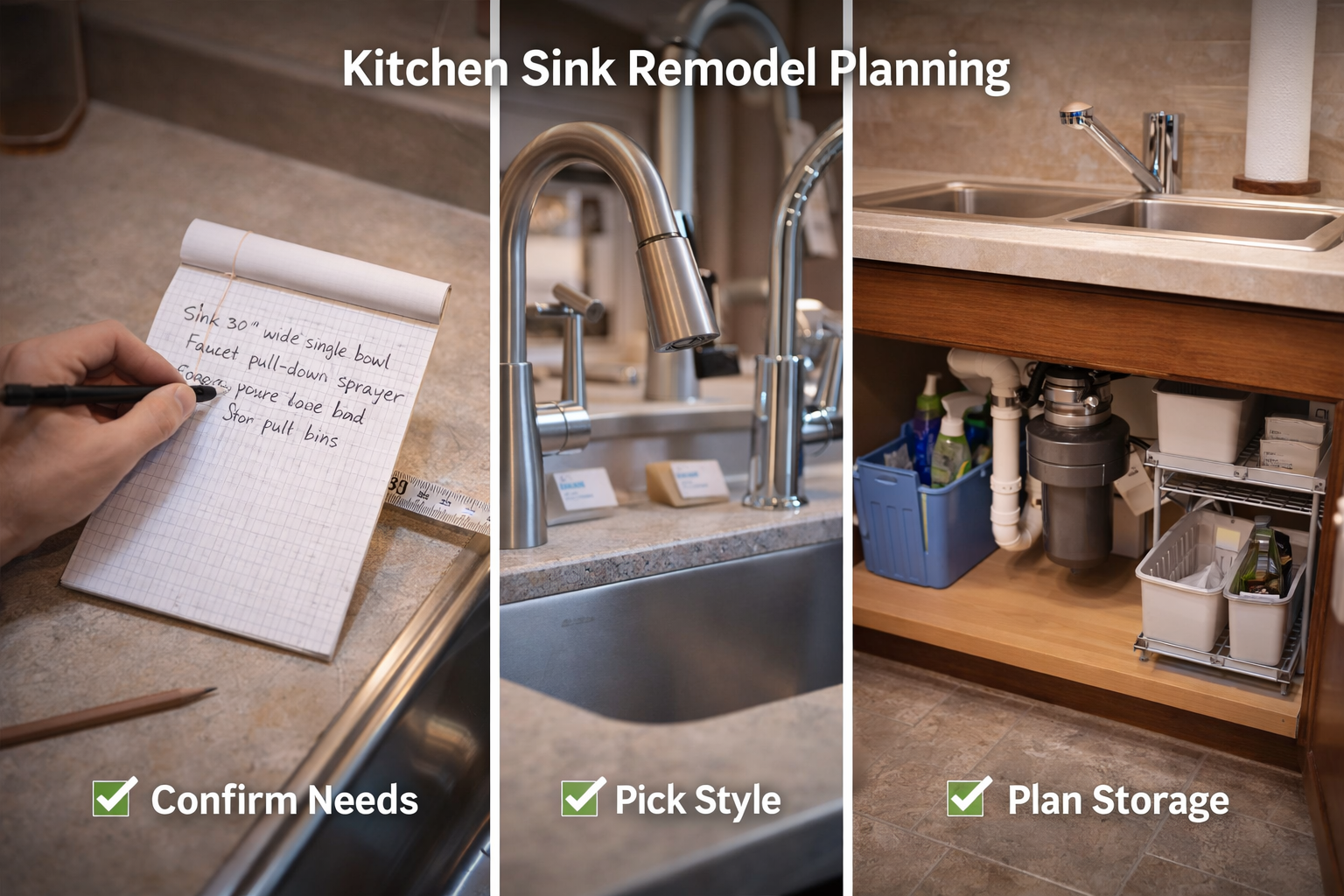
A kitchen sink remodel should be planned by deciding how the household uses the sink every day, then matching bowl style, faucet type, counter space, and under-sink storage to that use. The best plan balances cleanup, prep, plumbing, and surrounding storage instead of choosing the sink as a stand-alone feature.
What Should Be Decided Before Sink Work Starts
Before construction starts, it helps to confirm sink material, bowl style, faucet type, mounting method, disposal plan, under-sink storage needs, and whether the countertop or sink location is changing. These decisions affect the plumbing, the countertop cutout, and how the whole sink zone works.
How Can a Homeowner Prepare for the Installation Process
Homeowners should be ready for plumbing shutoff, possible countertop changes, disposal or faucet updates, and the reorganization of the cabinet below the sink once the new setup is in place. Sink remodels usually go best when the function of the whole sink zone is planned before the new bowl is ordered.
Related Kitchen Sink Remodel Topics
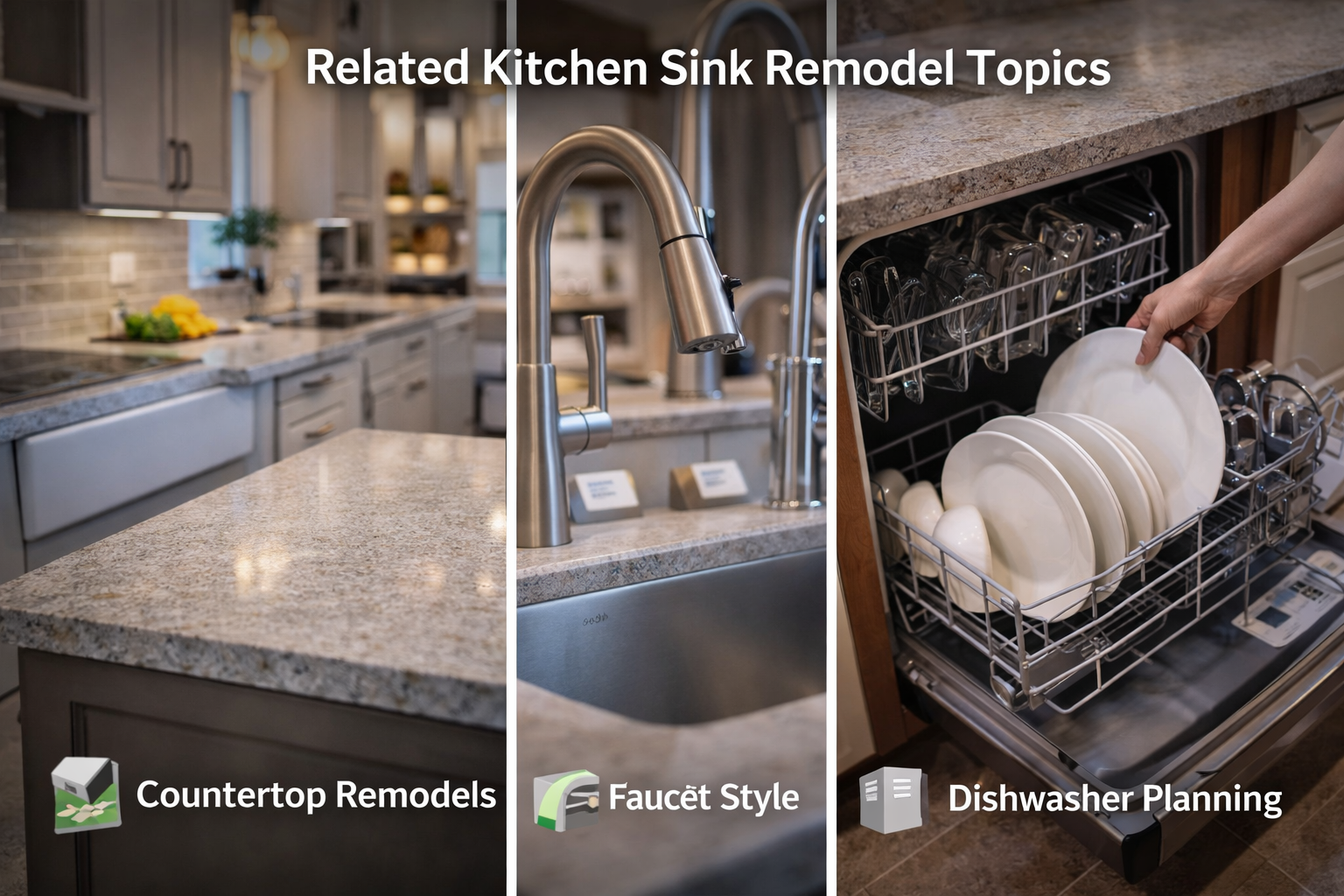
Kitchen sink remodels overlap with countertop remodeling, faucet upgrades, dishwasher planning, under-sink storage, and full kitchen remodeling because the sink is one of the main work zones in the kitchen. Related topics help homeowners compare whether they need only a new sink or a broader update to the whole cleanup and prep area.
Which Kitchen Sink Remodel-Related Pages Should Connect to This Topic
Strong related pages include countertop remodels, kitchen appliances, cabinet remodels, kitchen lighting, and kitchen layout changes. Those pages help break down the storage, utility, and work-zone decisions that shape a successful sink remodel.
Which Kitchen Remodeling Topics Often Connect to Sink Work
Sink work often connects to counters, cabinets, dishwashers, disposals, lighting, and full kitchen remodeling. In practical remodels, these parts overlap because the sink sits at the center of cleanup and prep flow.
Frequently Asked Questions About Kitchen Sink Remodeling
A kitchen sink remodel can include the sink bowl, faucet, drain setup, disposal connection, mounting style, under-sink plumbing, and sometimes countertop or storage changes around the sink zone.
A kitchen sink is often replaced when it is worn out, leaks, does not fit the kitchens workflow, or no longer supports the way the household cooks and cleans.
That depends on how the kitchen is used. Single bowls are often better for large cookware, while double bowls can help with separated washing and rinsing tasks.
Yes. Better sink size, better faucet placement, and better use of the cabinet below can improve cleanup and prep flow noticeably.
Sometimes. It depends on the sink type, mounting style, and whether the existing cutout works for the new sink design.
Durability depends on the material and how the kitchen is used, but stainless steel and some heavier composite options are common durable choices.
The timeline depends on whether the remodel is a simple sink swap or part of a larger countertop, cabinet, and plumbing update.
Yes. Many sink remodels are the right time to update the disposal and the plumbing setup below the sink as part of one coordinated project.
It can improve both function and appeal when the sink zone feels cleaner, more useful, and better integrated with the rest of the kitchen.
The first step is deciding how the household uses the sink every day so the bowl style, faucet, mounting, and storage plan support that use properly.