
Waterfall Island Guide: Materials, Layout, Support, and Cost

Waterfall Island Guide Index
- Waterfall Island Overview
- What Is a Waterfall Island
- When Does a Waterfall Island Make Sense
- What Materials Work Best for a Waterfall Island
- How Do Seams and Veining Affect the Finished Look
- What Layout and Seating Details Matter Most
- What Installation Details Matter With a Waterfall Island
- What Affects Waterfall Island Cost
- What Mistakes Should Homeowners Avoid
- How Should You Plan a Waterfall Island Remodel
- Frequently Asked Questions About Waterfall Islands

Waterfall Island Overview
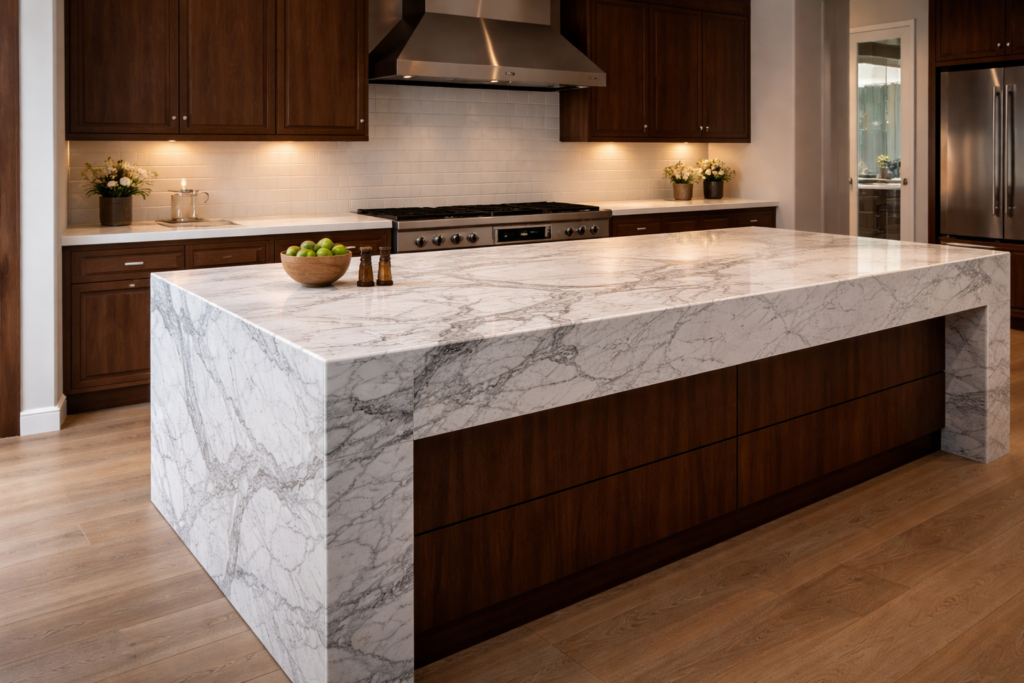
A waterfall island uses countertop material that continues down the side of the island instead of stopping at the top edge. In a kitchen remodel, that detail can turn the island into the main visual feature of the room, especially in open-concept spaces where the island is visible from living and dining areas.
Why do homeowners choose a waterfall island?
They choose it when they want the island to feel more architectural and less like a standard cabinet box with a top set on it. A waterfall edge can make stone or quartz look more substantial and can help the island read like a finished furniture piece.
What is the tradeoff compared with a standard island?
The tradeoff is mostly cost and complexity. Waterfall islands require more slab material, more fabrication, and tighter installation quality. The look can be striking, but it needs to be planned carefully so it feels intentional rather than like an expensive detail added without a broader design reason.
What Is a Waterfall Island
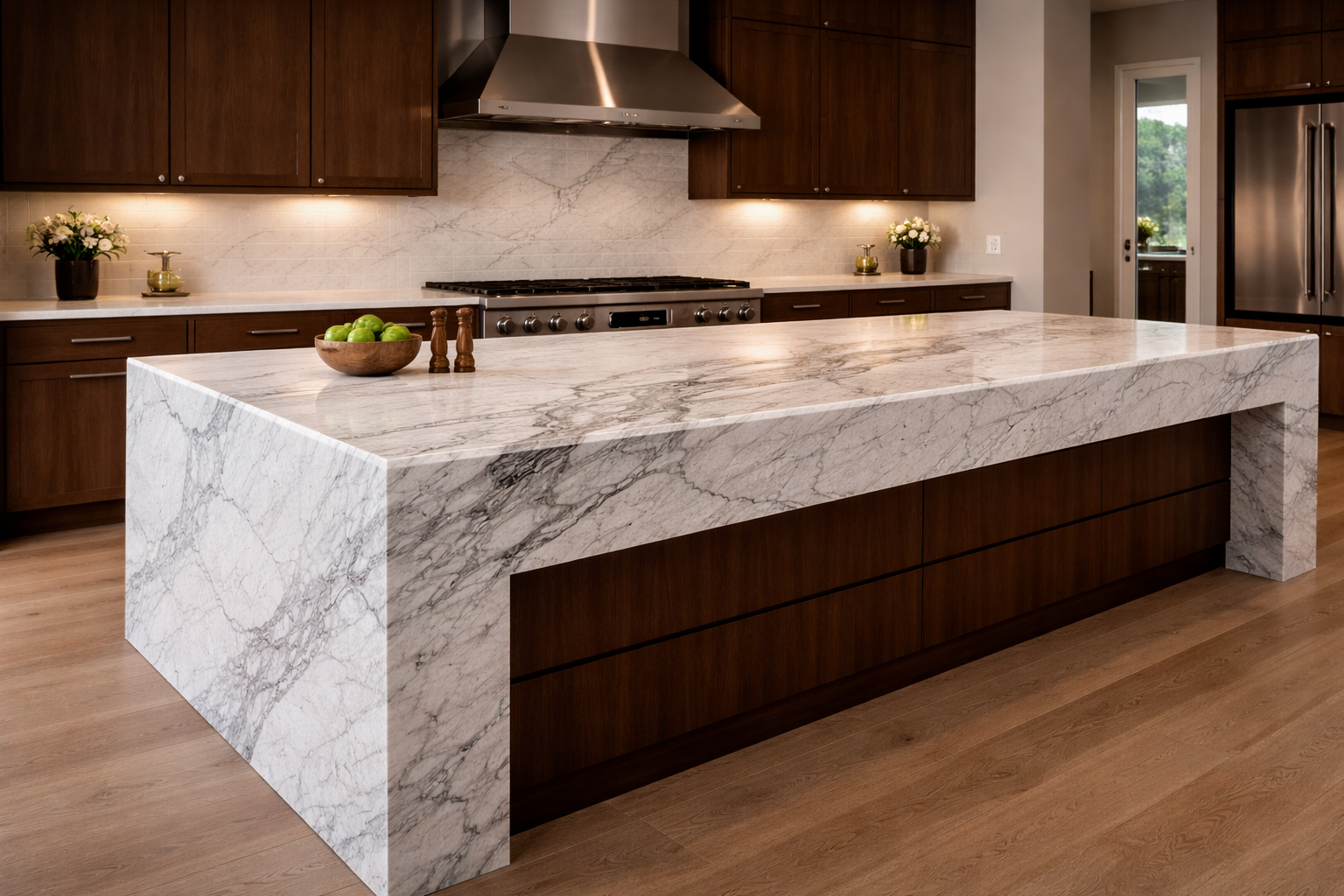
A waterfall island is an island where the countertop material wraps vertically down one or both ends of the island. That vertical slab hides the cabinet end and creates a cleaner, more monolithic appearance. Depending on the material and layout, the waterfall can be dramatic and bold or relatively subtle. For water-use considerations, homeowners can review WaterSense guidance.
Does it always go on both sides?
No. Some kitchens use a waterfall on only one exposed end, especially when the other side is hidden by cabinetry, walls, or circulation conditions. Other islands use both ends for a more symmetrical and high-impact look.
Is it only a design feature?
Mostly, but not entirely. It does visually protect the cabinet end and can help define the island as a focal point. Still, the main reason homeowners choose it is the finished appearance rather than a major functional change.
When Does a Waterfall Island Make Sense
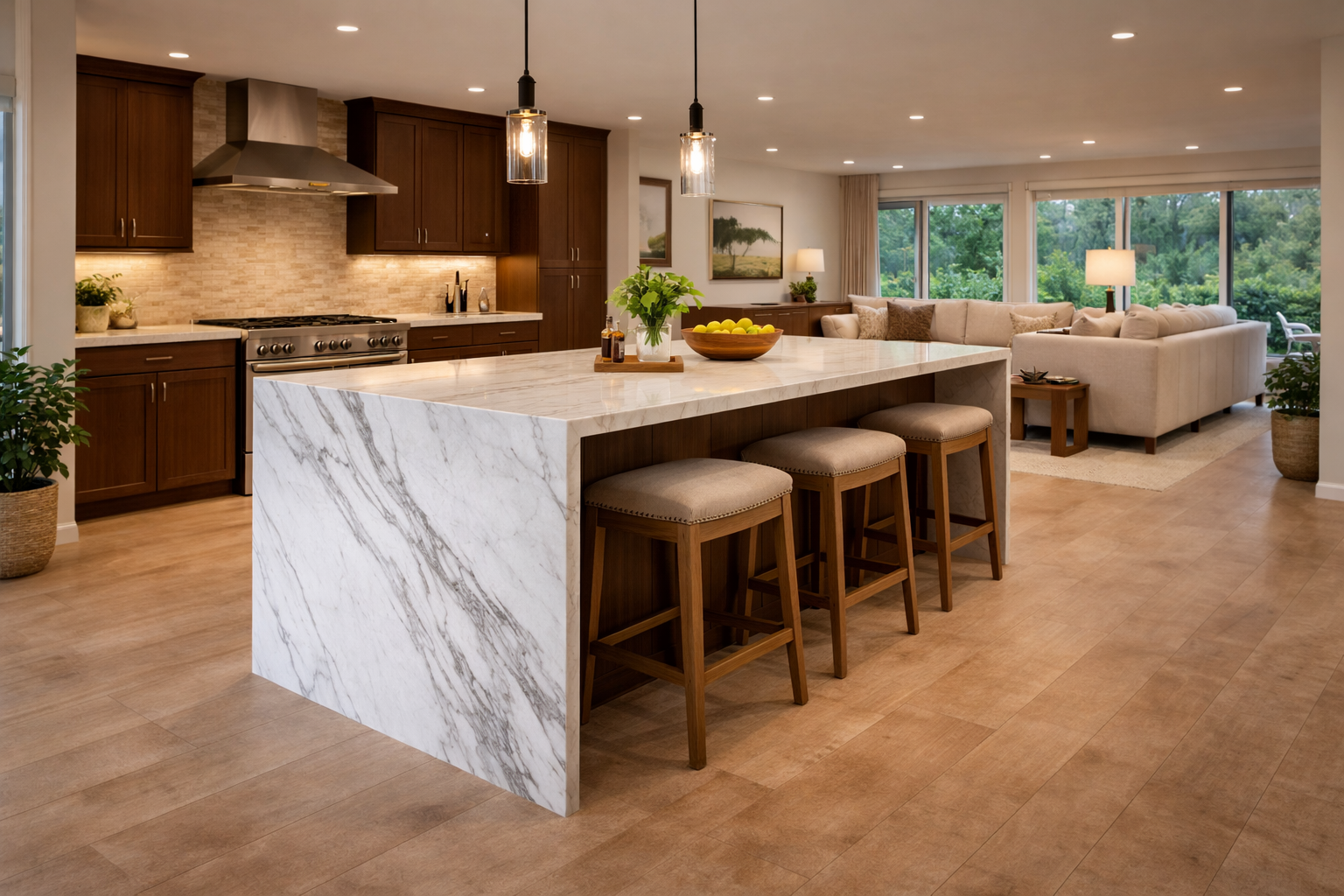
A waterfall island makes sense when the island is a central feature of the kitchen and the remodel wants a stronger visual statement. It often works well in open layouts, modern kitchens, and kitchens where the island is large enough to justify a more architectural treatment. Another detail worth comparing during planning is kitchen remodeling.
Does it work only in modern kitchens?
No. It is most common in modern and contemporary kitchens, but it can also work in transitional kitchens if the slab choice, cabinet style, and surrounding finishes are handled carefully. A softer veining pattern or a quieter material can make the look feel less stark.
When might it not be the right move?
If the island is small, the budget is tight, or the surrounding kitchen design is very traditional, a waterfall edge may feel out of place or simply not worth the extra cost. In some kitchens, a simpler island design creates a better balance.
What Materials Work Best for a Waterfall Island
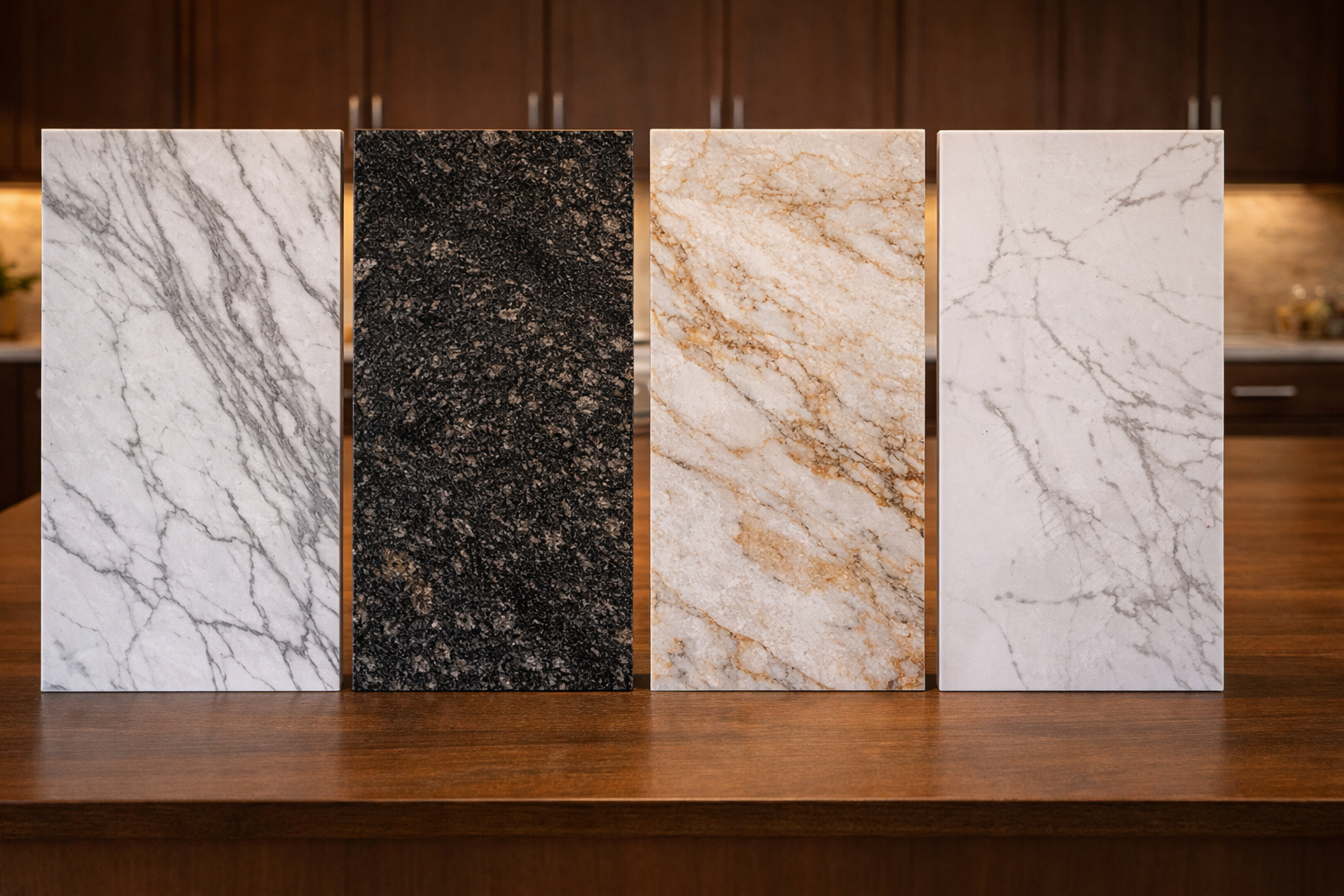
Quartz, quartzite, granite, marble, and porcelain slabs are all common choices for waterfall islands. The best material depends on the look of the slab, how visible the island will be, how much maintenance the homeowner wants, and how important veining or pattern continuity is to the finished design.
Why does slab pattern matter more on a waterfall edge?
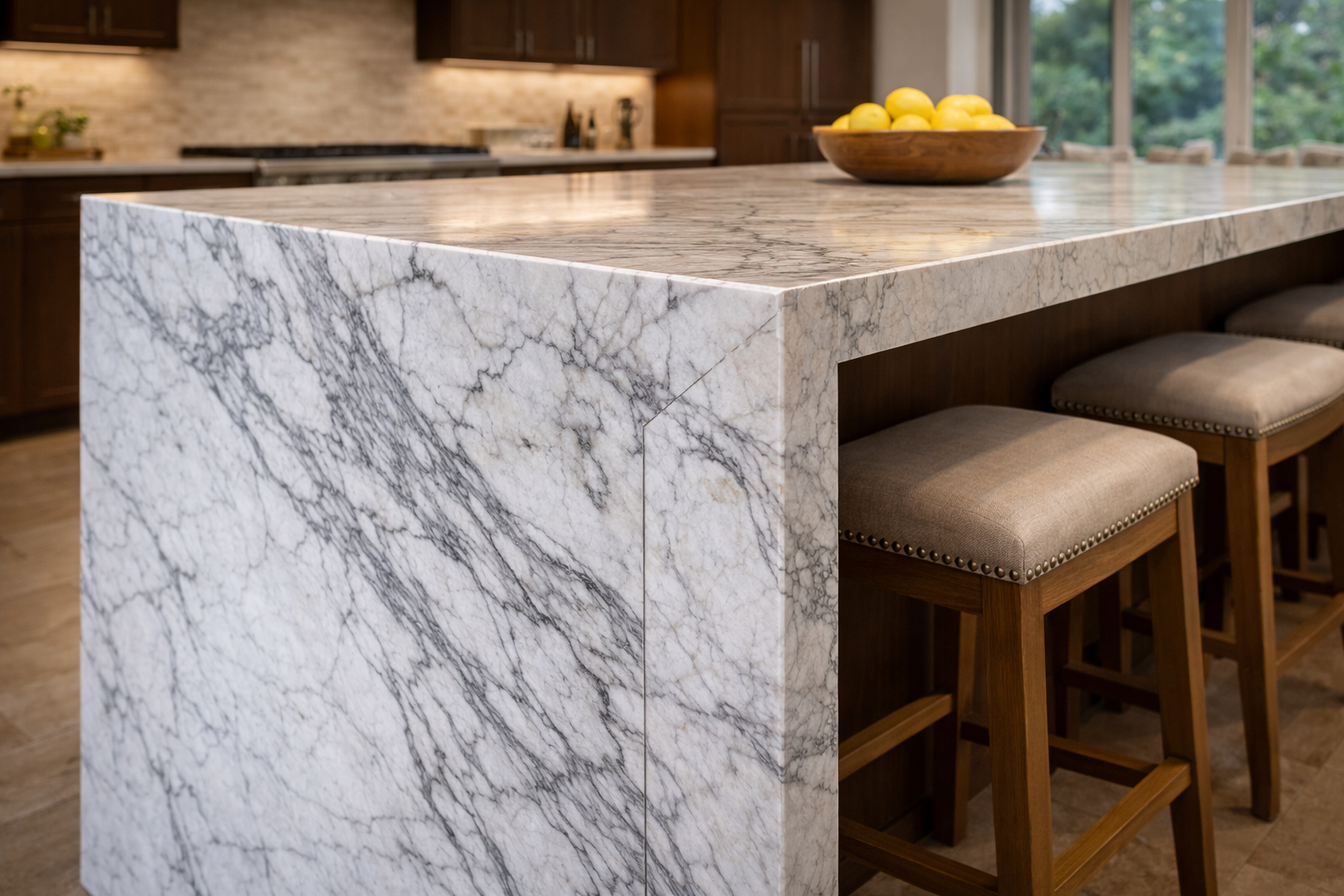
Because the vertical side panel puts more of the material on display. A plain surface can create a clean, quiet look, while a dramatic veined slab can turn the island into the focal point of the whole kitchen. Either approach can work, but the slab needs to fit the room.
Are some materials harder to use than others?
Yes. Fragile materials, heavily veined slabs, and very large pieces can increase fabrication and installation difficulty. Porcelain can offer a clean modern look, while natural stone can bring more variation, but each material has different handling and edge-detail requirements.
How Do Seams and Veining Affect the Finished Look
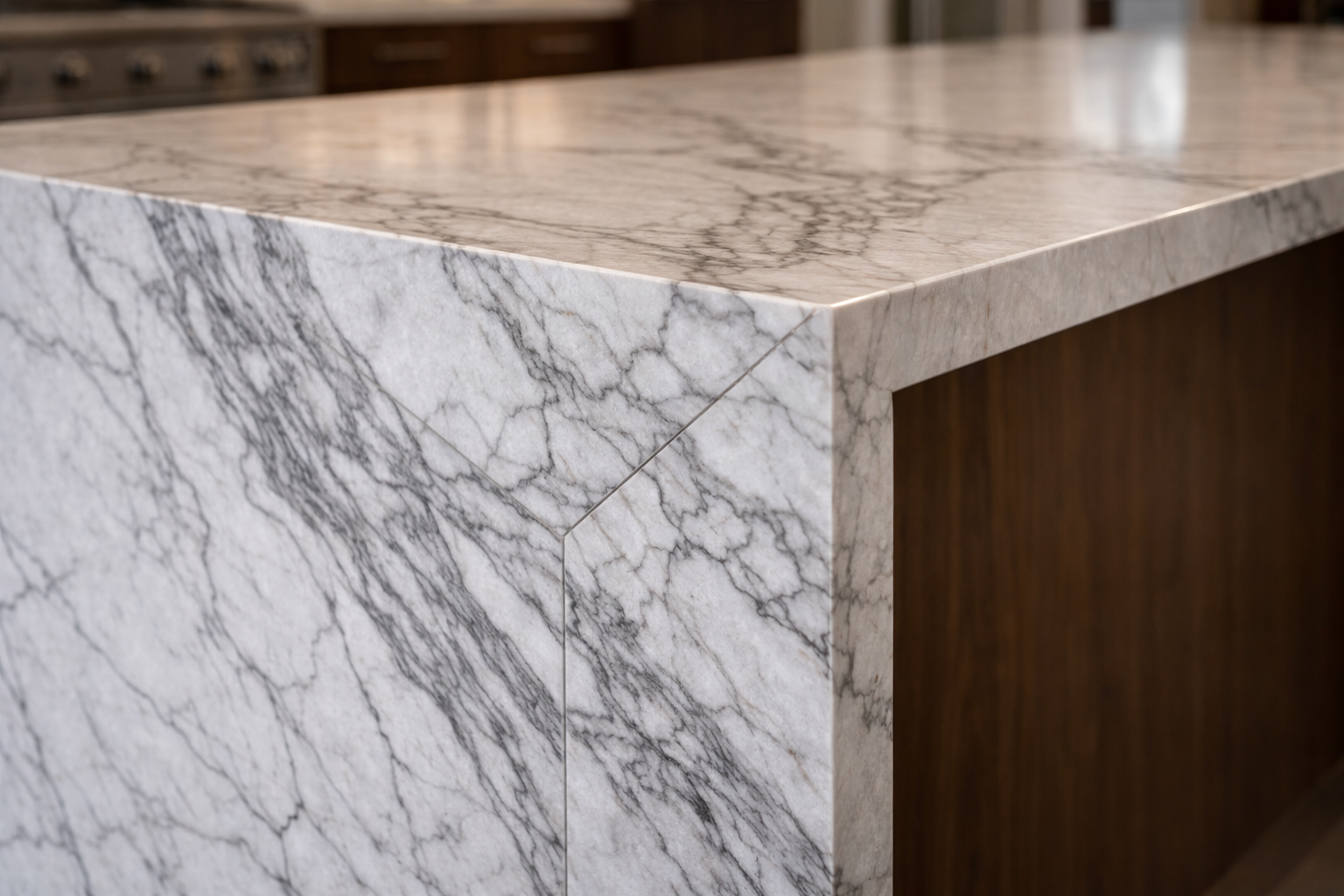
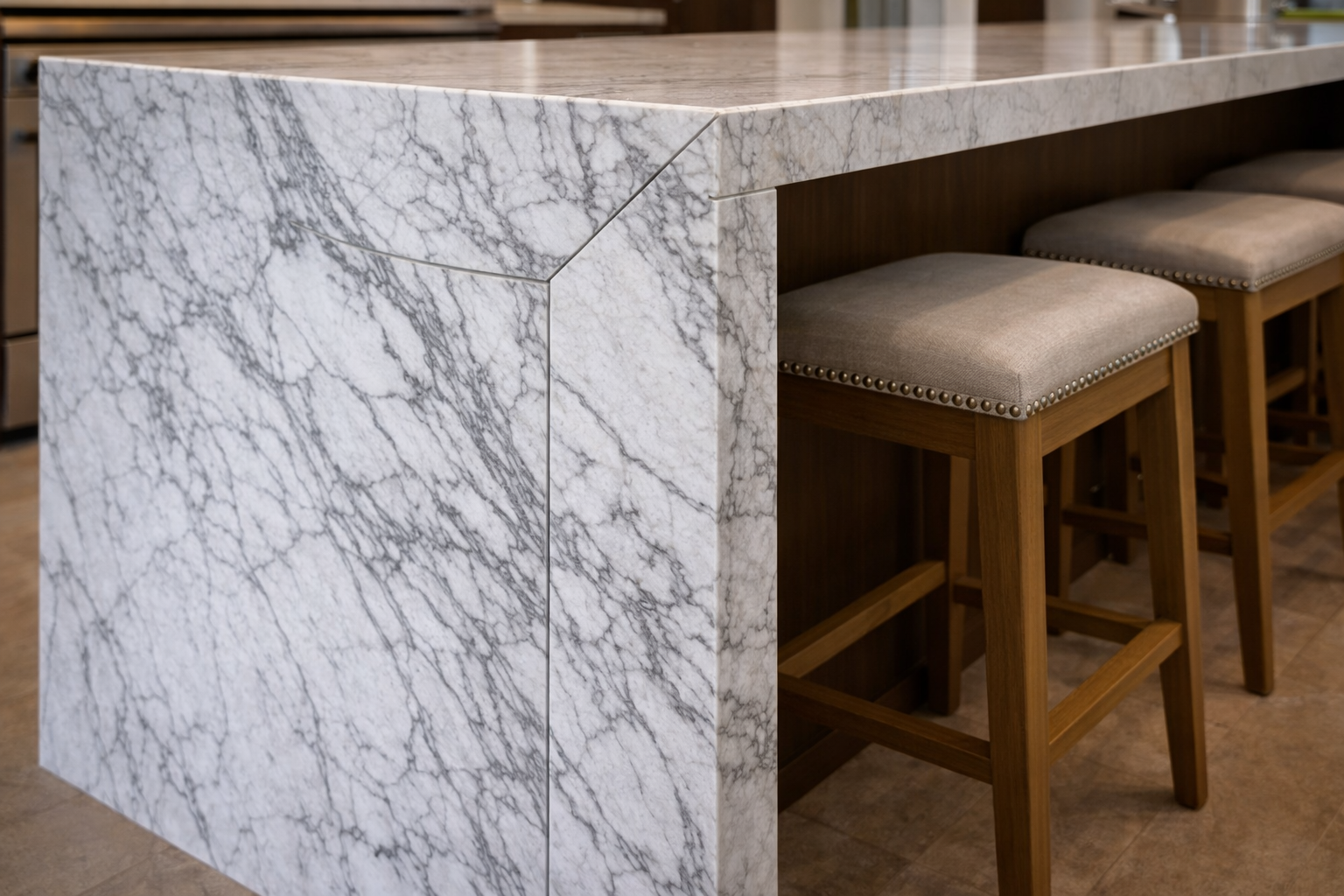
Seam placement and pattern alignment make a huge difference in whether a waterfall island looks polished. If the slab has visible veining, the fabricator and installer need to decide whether the pattern will continue down the side, whether a mitered edge will be used, and how noticeable the seam should be from normal viewing angles.
What is bookmatching or vein matching?
It is the process of cutting and aligning the material so the pattern flows intentionally from the horizontal top to the vertical side panel. That can make the island look much more refined, especially with dramatic quartz or natural stone patterns.
Can a waterfall island still look good without dramatic veining?
Absolutely. A quieter slab can make the island feel clean and solid without drawing too much attention to itself. The goal is not always to show off the seam. In some kitchens, subtlety works better than drama. When the remodel includes this feature, kitchen island remodel can help homeowners understand the options in more detail.
What Layout and Seating Details Matter Most
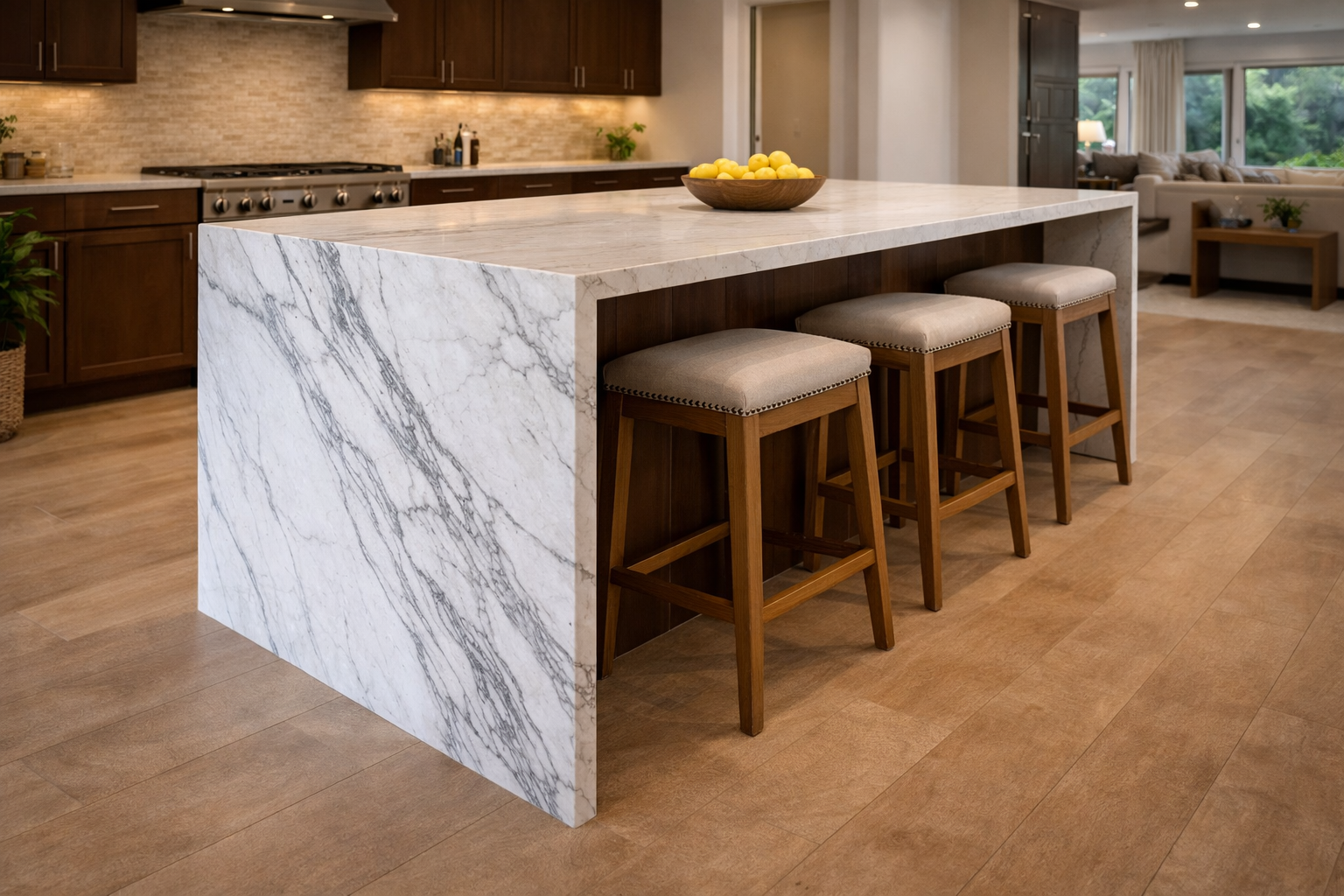
A waterfall panel changes how the island functions at the ends, so seating and clearance need to be planned carefully. If stools are meant to wrap around the island ends, a full-height slab can block that. If the kitchen needs the island ends open for circulation, a waterfall on both sides may make the layout feel heavier. For layout and clearance planning, many designers reference NKBA planning guidelines.
How does a waterfall edge affect seating?
It can reduce flexibility, especially if the seating plan depends on side access or wraparound stool placement. Many waterfall islands work best with seating on one long side only, where knee space and overhang can be controlled more cleanly.
Why does island size matter?
Because a waterfall detail tends to feel more appropriate on a larger island where the slab has room to read as a real design feature. On a very small island, the added material and visual weight can overwhelm the kitchen instead of improving it.
What Installation Details Matter With a Waterfall Island
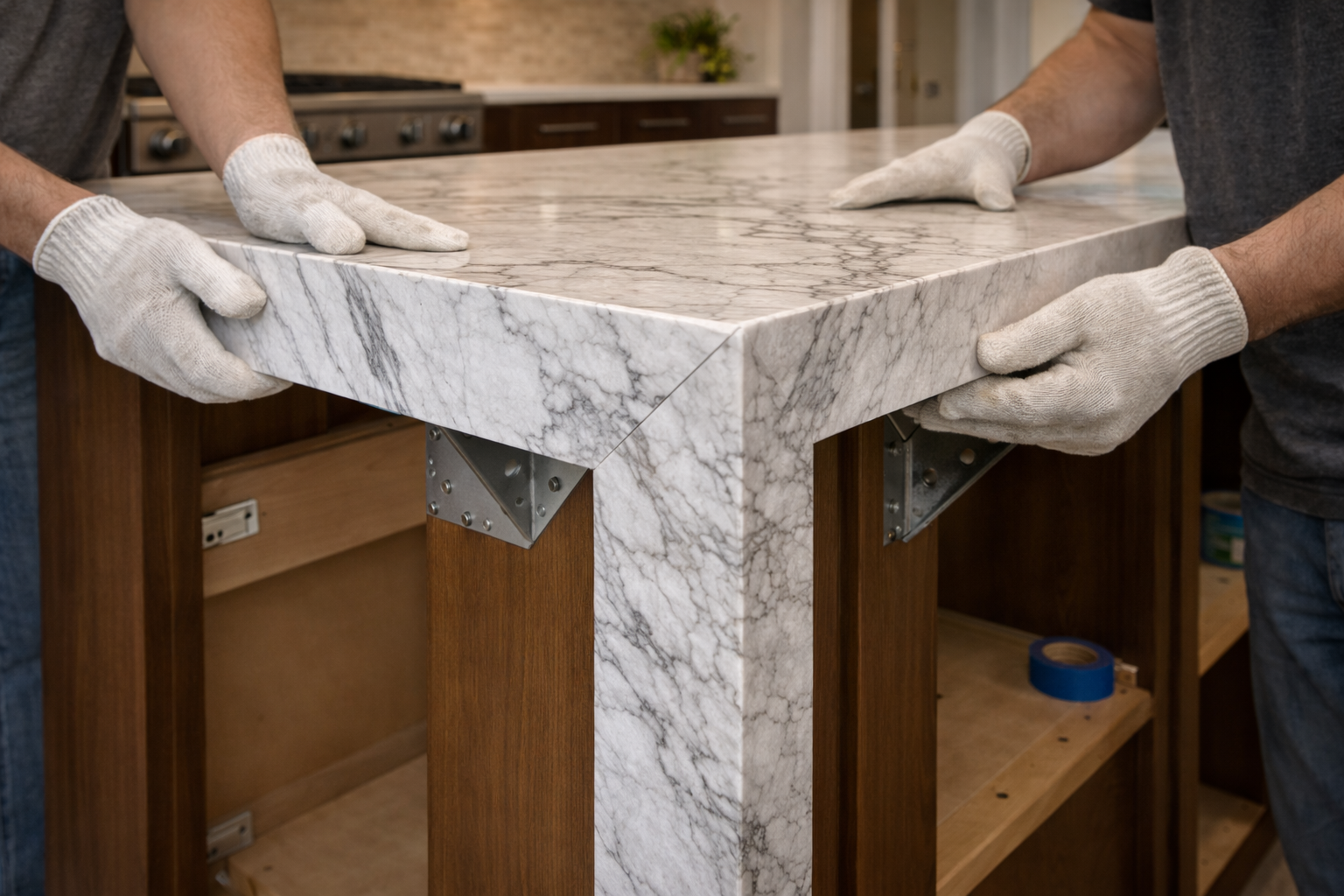
Waterfall islands need good cabinet preparation, strong support, careful slab handling, and very accurate installation. The cabinet structure has to be ready for the added material, and the floor conditions need to be checked so the vertical slab lands cleanly and safely.
What should be checked before fabrication?
Final island dimensions, seating overhangs, cabinet panel details, floor level, slab layout, and any required support or bracing should all be finalized first. If the island includes outlets or decorative end details, those need to be coordinated before the slab work is cut.
Why do installation errors stand out so much?
Because the whole point of the detail is clean continuity. If the seam is sloppy, the slab is out of plane, or the edge alignment is off, the eye goes straight to it. Waterfall islands reward precision more than many standard countertop installs.
What Affects Waterfall Island Cost
Cost depends on slab material, island size, number of waterfall sides, edge thickness, seam treatment, veining alignment, fabrication method, and installation complexity. A simple quartz waterfall on one exposed end costs less than a large bookmatched natural stone island with two waterfall sides and detailed seating coordination.
What drives cost up fastest?
Premium slabs, double waterfalls, large islands, complex veining layouts, thicker edges, and difficult installations usually raise cost the most. Waste can also increase cost because waterfall pieces may require more slab area than a standard island top.
How can homeowners control the budget?
Using the waterfall detail on one end only, choosing a simpler slab pattern, or reserving the feature for a single focal island instead of multiple surfaces can help. It is often better to do one waterfall detail well than to stretch the budget and compromise the material or installation quality. Material selection can also be informed by EPA greener products guidance.
What Mistakes Should Homeowners Avoid
The biggest mistakes usually come from choosing the detail for trend value without thinking about scale, seating, or slab layout. Homeowners sometimes fall in love with a photo online and do not realize how much the final look depends on island size, material selection, and fabrication quality.
What planning mistakes are common?
Ignoring stool clearance, choosing a dramatic slab without discussing seam layout, or adding waterfall sides where they block circulation are common mistakes. Another is not reviewing how the slab pattern will look from the main viewing angles in the room.
What design mistakes show up later?
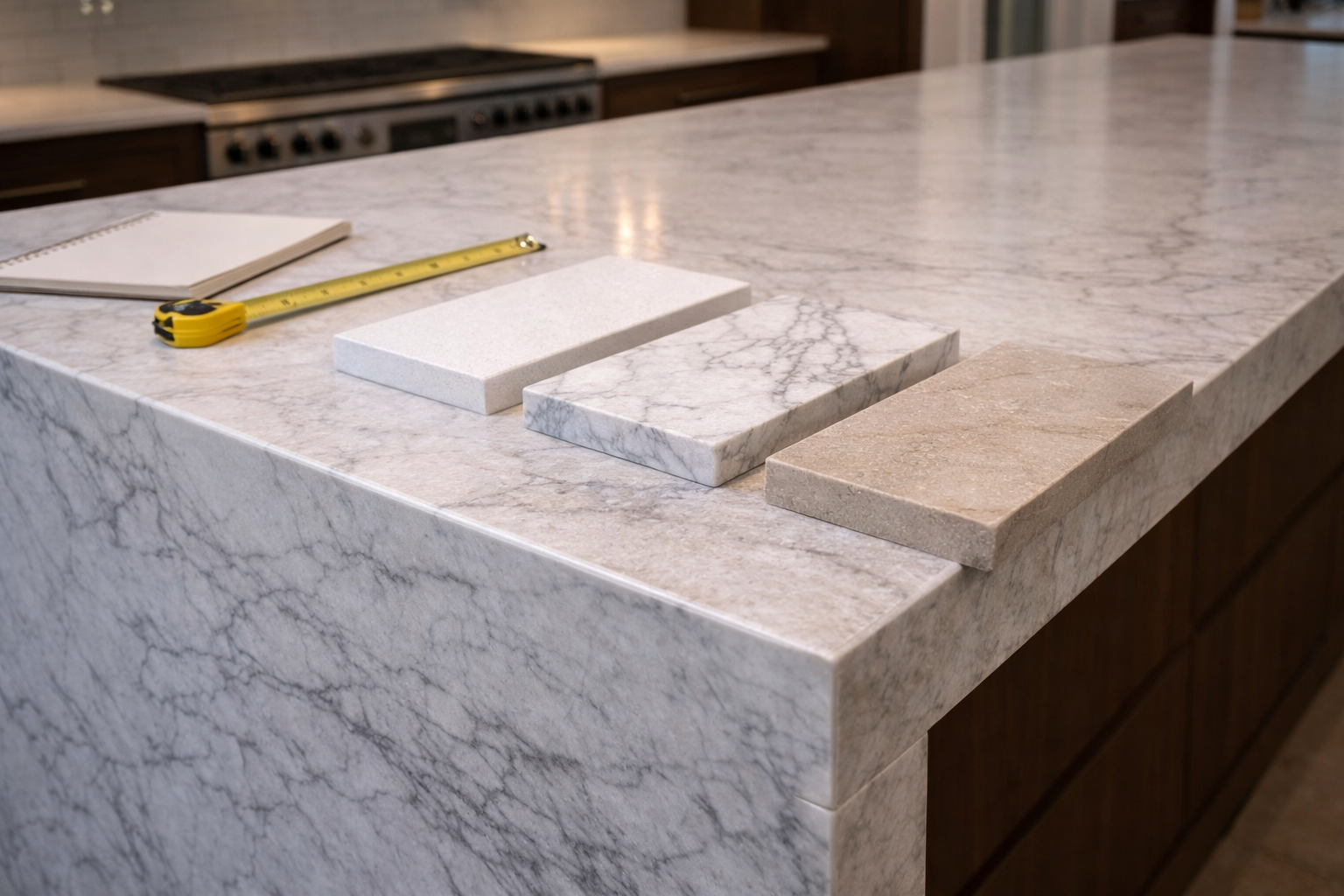
Waterfall edges that feel too heavy for the room, seams that interrupt the veining awkwardly, or panels that clash with cabinet or flooring tones can become obvious once the kitchen is complete. The feature works best when it fits the whole remodel, not just the countertop sample board.
How Should You Plan a Waterfall Island Remodel
Start by deciding what role the island plays in the kitchen. If it is the visual centerpiece, a waterfall edge may make sense. Then confirm island size, seating layout, slab material, edge detail, seam approach, and installation requirements before the material is ordered.
What should be finalized before fabrication?
Cabinet dimensions, overhangs, support conditions, outlet locations, seating plan, slab orientation, and whether the waterfall runs on one or both sides should all be resolved first. Those details affect both appearance and cost.
When is a waterfall island the right move?
It is the right move when the island deserves to be a focal point and the budget can support doing the detail well. Used thoughtfully, a waterfall island can give the kitchen a cleaner and more custom feel, especially in open layouts where the island is visible from several directions.
Frequently Asked Questions About Waterfall Islands
A waterfall island is a kitchen island where the countertop material continues down one or both sides of the island to the floor. Instead of stopping at the edge of the countertop, the surface wraps vertically to create a continuous slab look.
They usually choose it for the visual impact. A waterfall edge can make the island feel more sculptural, more modern, and more like a furniture centerpiece in an open kitchen layout.
Quartz, quartzite, granite, marble, porcelain slabs, and some other large-format countertop materials are common. The best material depends on the kitchen style, durability needs, veining pattern, and budget.
No. Some islands use a waterfall panel on one exposed end only, while others use matching panels on both ends. The right approach depends on the island layout, visibility, and budget.
No. They are strongly associated with modern design, but they can also work in transitional kitchens if the cabinet style, slab selection, and surrounding finishes are balanced carefully.
Yes, usually. They require additional slab material, more fabrication, more careful seam planning, and more installation labor than a standard island with only a horizontal countertop surface.
Sometimes. The island structure has to support the countertop properly, especially if the slab is heavy or the design includes overhangs. Support planning matters before fabrication and installation begin.
Yes, but the seating design has to be coordinated with the waterfall panel. In some layouts, a full waterfall edge limits knee space or changes where stools can fit comfortably.
Bookmatching is a layout technique where the slab pattern is cut and aligned so the veining flows intentionally from the top down the side panel. It is not required, but it can make the finished island look much more refined.
Material selection, slab size, edge thickness, number of waterfall sides, seam treatment, veining alignment, installation difficulty, and island size all affect cost. Premium veined materials and large single-piece looks usually raise the price fastest.