

Kitchen Layout Changes Guide: Planning, Workflow, Costs, and Design
Kitchen Layout Changes Guide Index
- Kitchen Layout Changes Overview
- When Should a Kitchen Layout Be Changed
- What Types of Kitchen Layout Changes Are Common
- How Do Room Size and Existing Plumbing Affect Kitchen Layout Changes
- What Materials and Components Are Involved in Kitchen Layout Changes
- What Upgrades Can Be Combined With Kitchen Layout Changes
- What Construction Details Matter in Kitchen Layout Changes
- What Affects Kitchen Layout Change Cost
- What Mistakes Should Homeowners Avoid With Kitchen Layout Changes
- How Should You Plan Kitchen Layout Changes
- Related Kitchen Layout Topics
- Frequently Asked Questions About Kitchen Layout Changes
Kitchen Layout Changes Overview
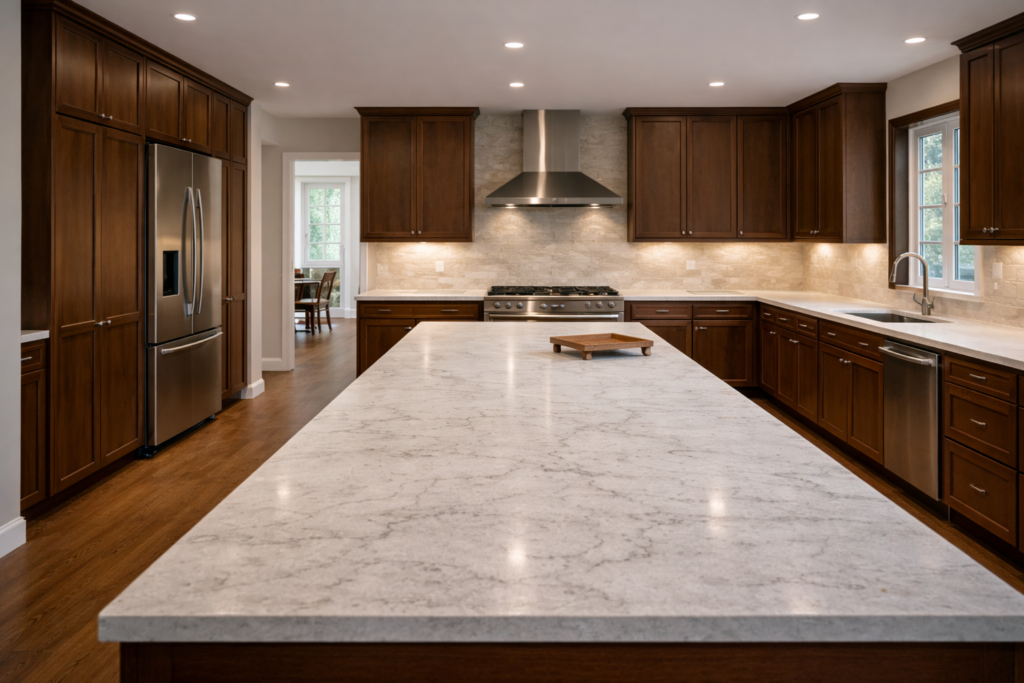
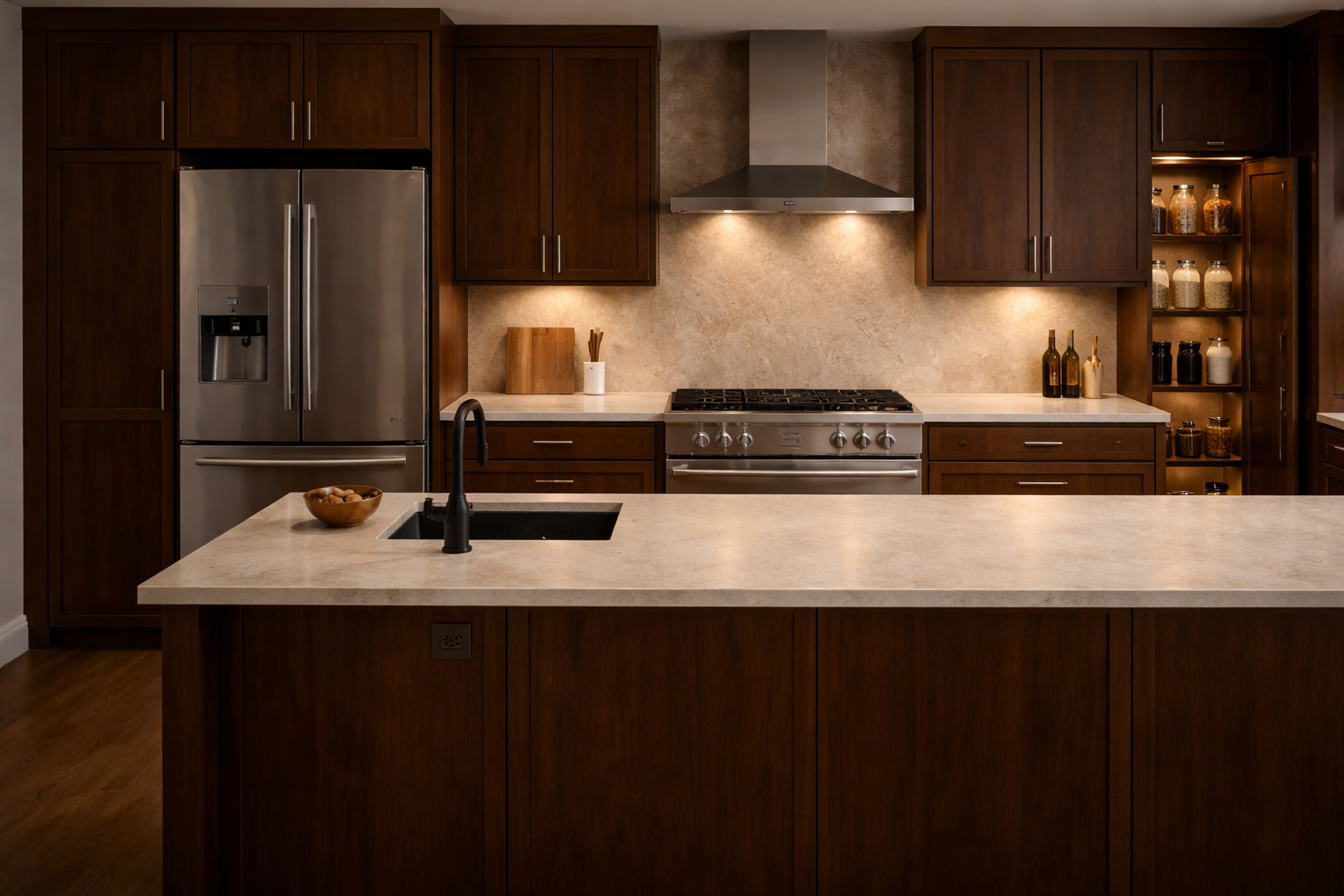
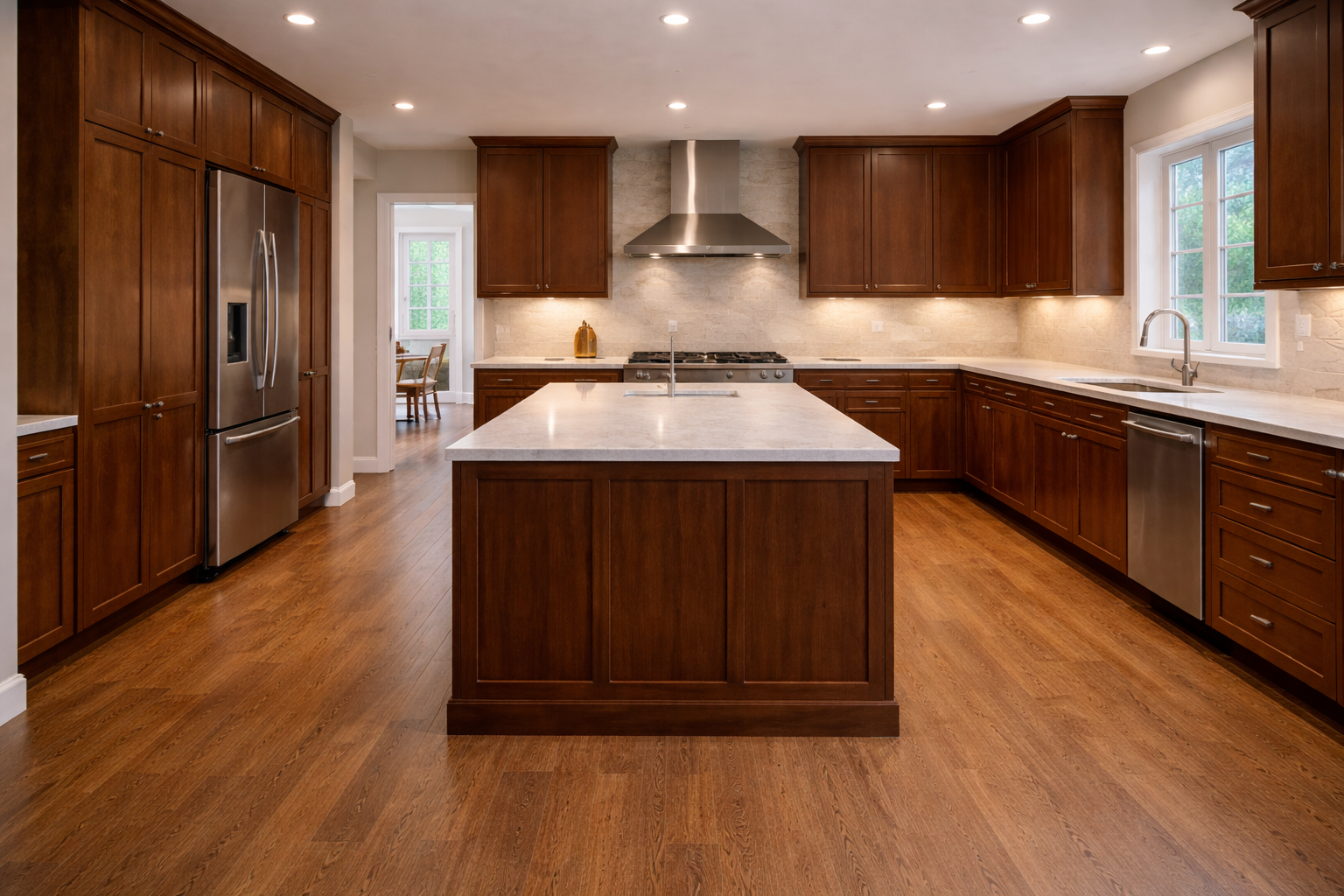
Kitchen layout changes involve moving the major work zones so the kitchen functions better than it did before. In practical remodel work, that can mean changing where the sink goes, reworking the refrigerator position, opening more prep space, relocating the island, or rebuilding cabinet runs so the kitchen supports cooking, storage, cleanup, and traffic flow more efficiently. Layout changes usually affect cabinets, appliances, plumbing, electrical, and the way the whole kitchen feels to use every day.
What Gets Changed During a Kitchen Layout Remodel
The work may include cabinet run changes, appliance relocation, island repositioning, sink moves, new work zones, pantry adjustments, lighting relocation, and flooring or ceiling work tied to the new layout. In many kitchens, layout changes also require countertop changes, backsplash changes, and more refined planning around how people move through the room.
What Is the Difference Between a Surface Update and a Kitchen Layout Change
A surface update changes finishes while keeping most of the room working in the same way. A layout change alters where the main kitchen functions happen, which often means moving storage, water, appliances, and prep zones. That larger change is what can make the kitchen feel dramatically different instead of simply newer.
When Should a Kitchen Layout Be Changed
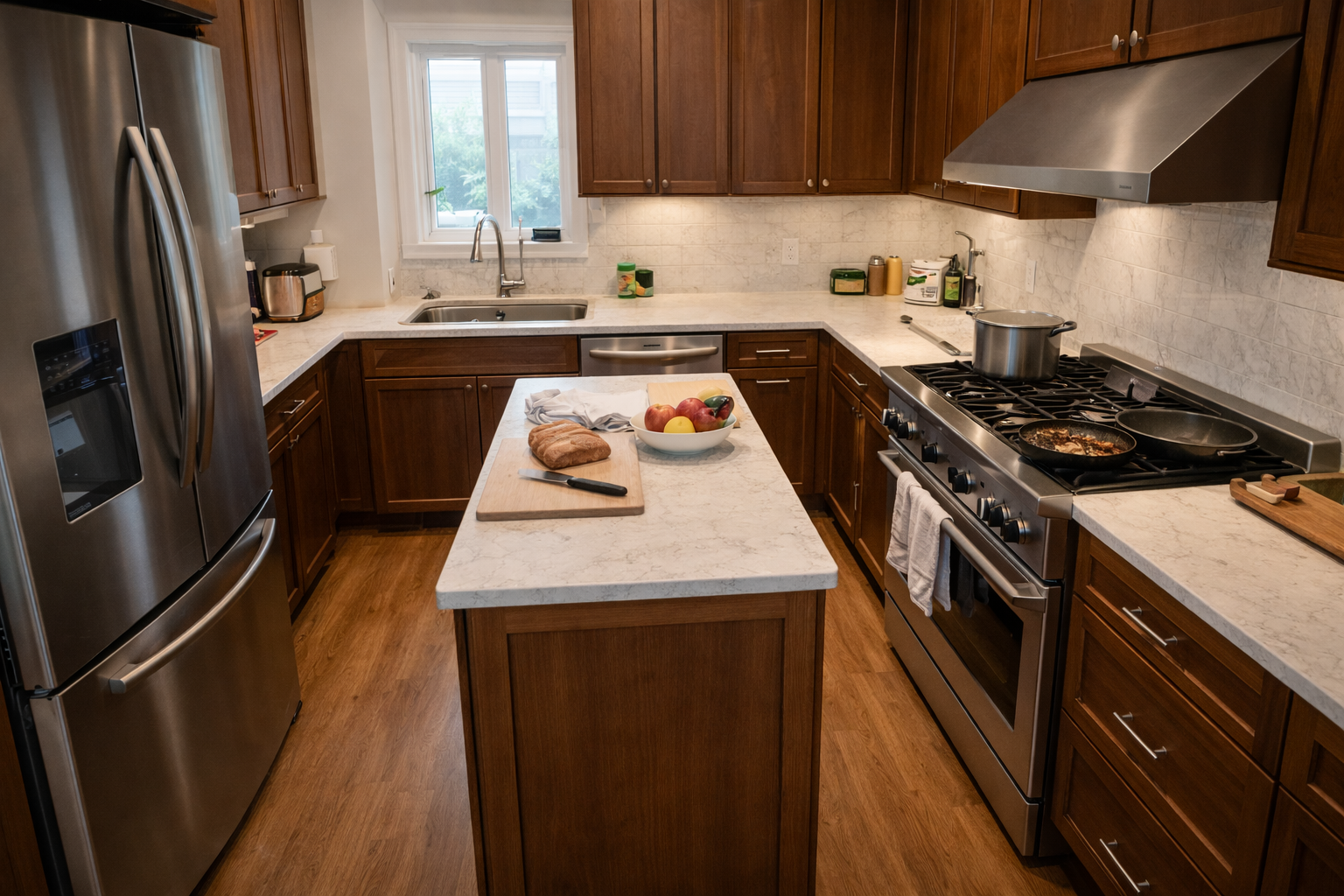
A kitchen layout should usually be changed when the room no longer supports the way the household cooks, stores food, or moves through the space. Common signs include poor prep space, an island that blocks the room, a refrigerator in the wrong place, a sink and range that fight each other, or storage that forces too much extra walking.
What Signs Show That the Current Kitchen Layout Is Not Working
Clear signs include tight walkways, prep surfaces in the wrong spots, poor appliance spacing, a kitchen triangle that feels awkward, and cabinets that do not support the way the household uses dishes, pantry items, and cookware. In many homes, the kitchen may have plenty of square footage but still function badly because the layout was never planned well. Material selection can also be informed by EPA greener products guidance.
What Remodeling Goals Usually Lead to Layout Changes
Layout changes are common when homeowners want a more open kitchen, better prep flow, larger islands, stronger pantry storage, more seating, or better connection between the kitchen and nearby living space. They also happen when a full remodel reveals that surface upgrades alone would not solve the real functional problems.
What Types of Kitchen Layout Changes Are Common
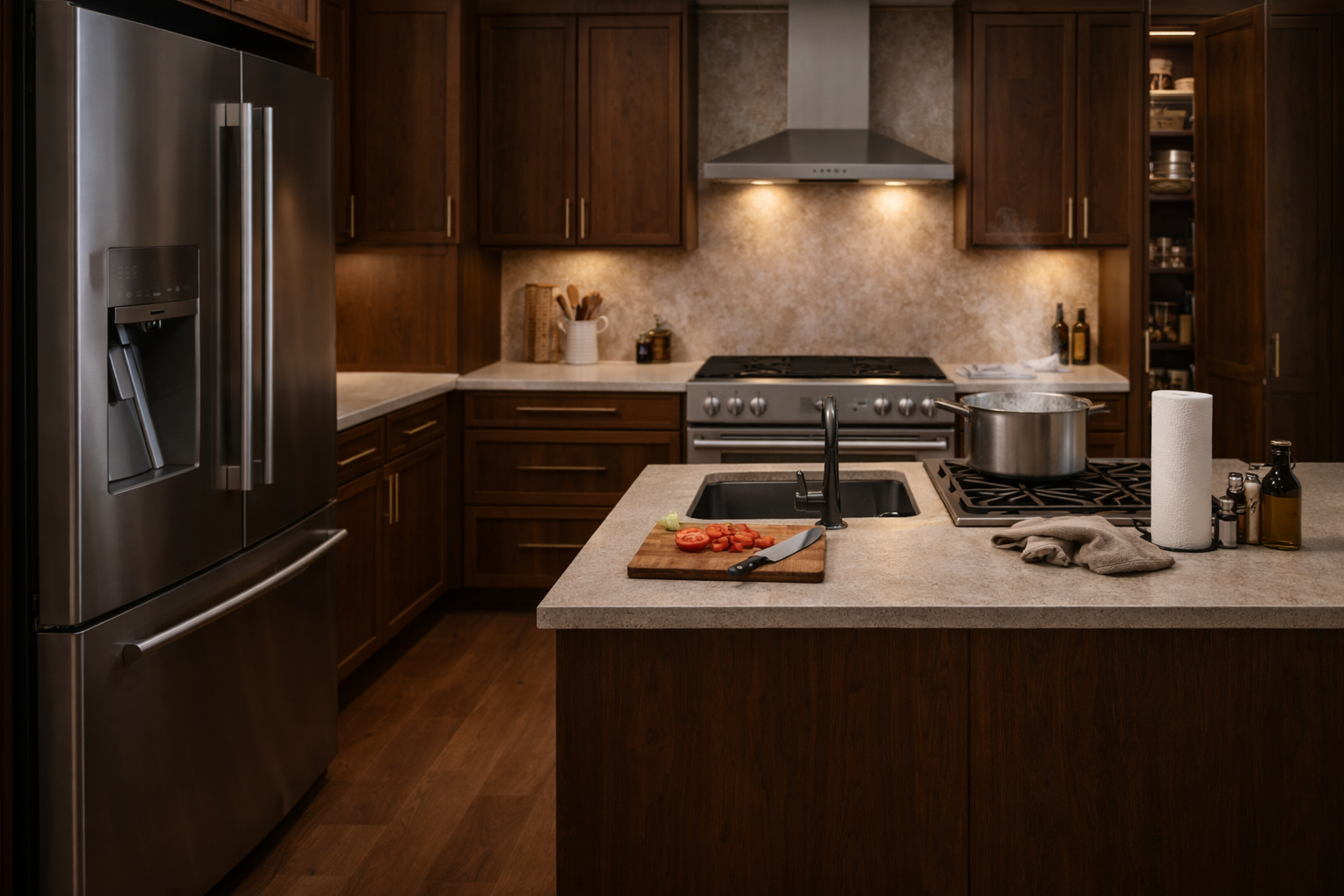
Common kitchen remodeling layout changes include moving the sink, shifting the refrigerator, adding or enlarging an island, opening walls to create more flow, changing from a closed kitchen to a more open plan, and reworking cabinet and appliance positions to create stronger prep and cleanup zones. The right type depends on how the kitchen is used and where the current layout is failing.
What Kitchen Layout Changes Are Most Common in Remodeling Projects
Island additions or enlargements are common because they can add prep space, storage, and seating at the same time. Appliance reconfiguration is also common when the refrigerator, range, or sink are placed awkwardly. In some kitchens, removing a wall or opening the plan is the most important change because it reshapes the whole room.
When Does One Layout Change Make More Sense Than Another
A smaller appliance shift may make more sense when the kitchen already has the right footprint but uses it poorly. A larger structural change may make more sense when the room is boxed in, the aisles are wrong, or the kitchen needs stronger connection to adjacent spaces. The best layout change depends on the real problems, not just a trend image.
How Do Room Size and Existing Plumbing Affect Kitchen Layout Changes
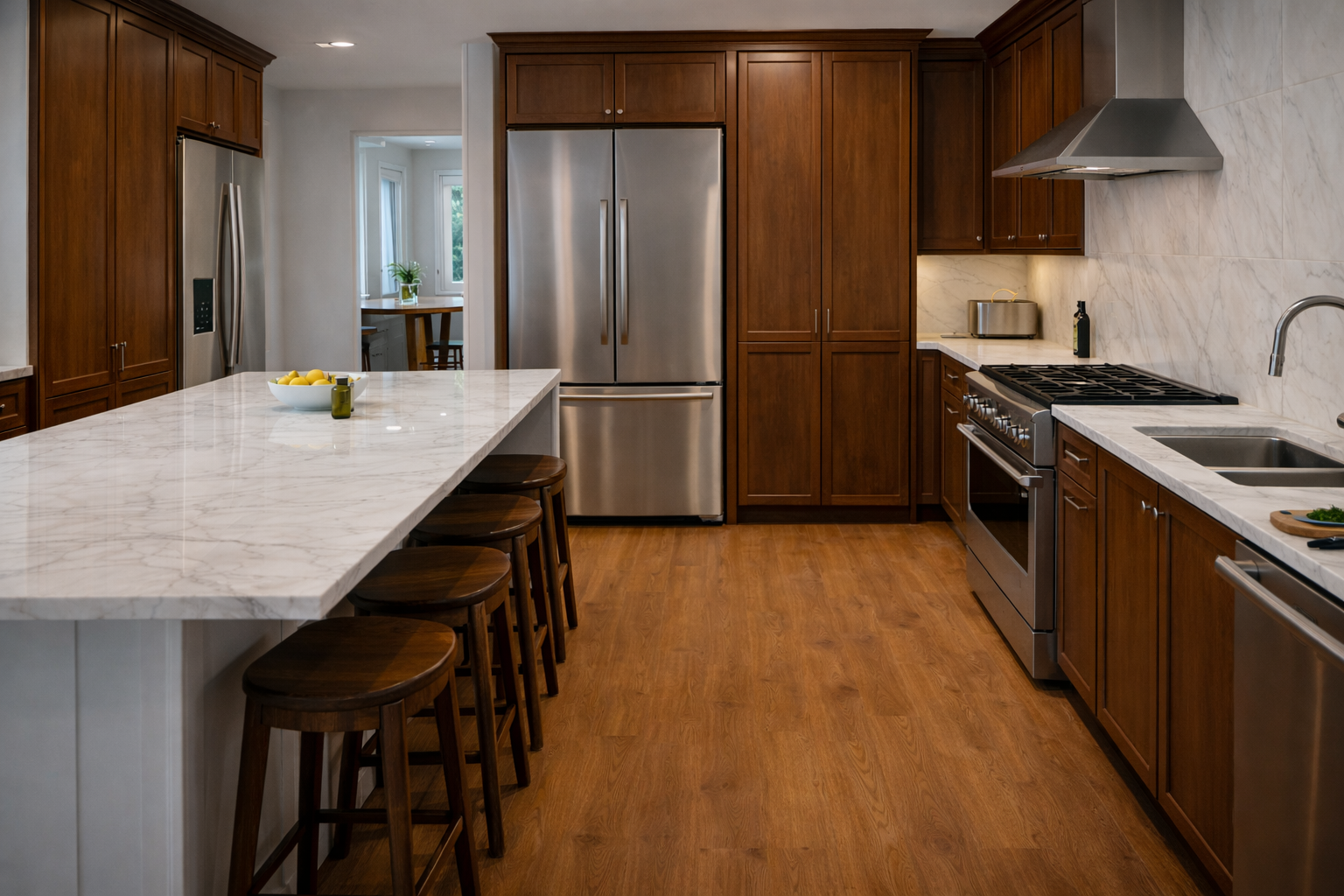
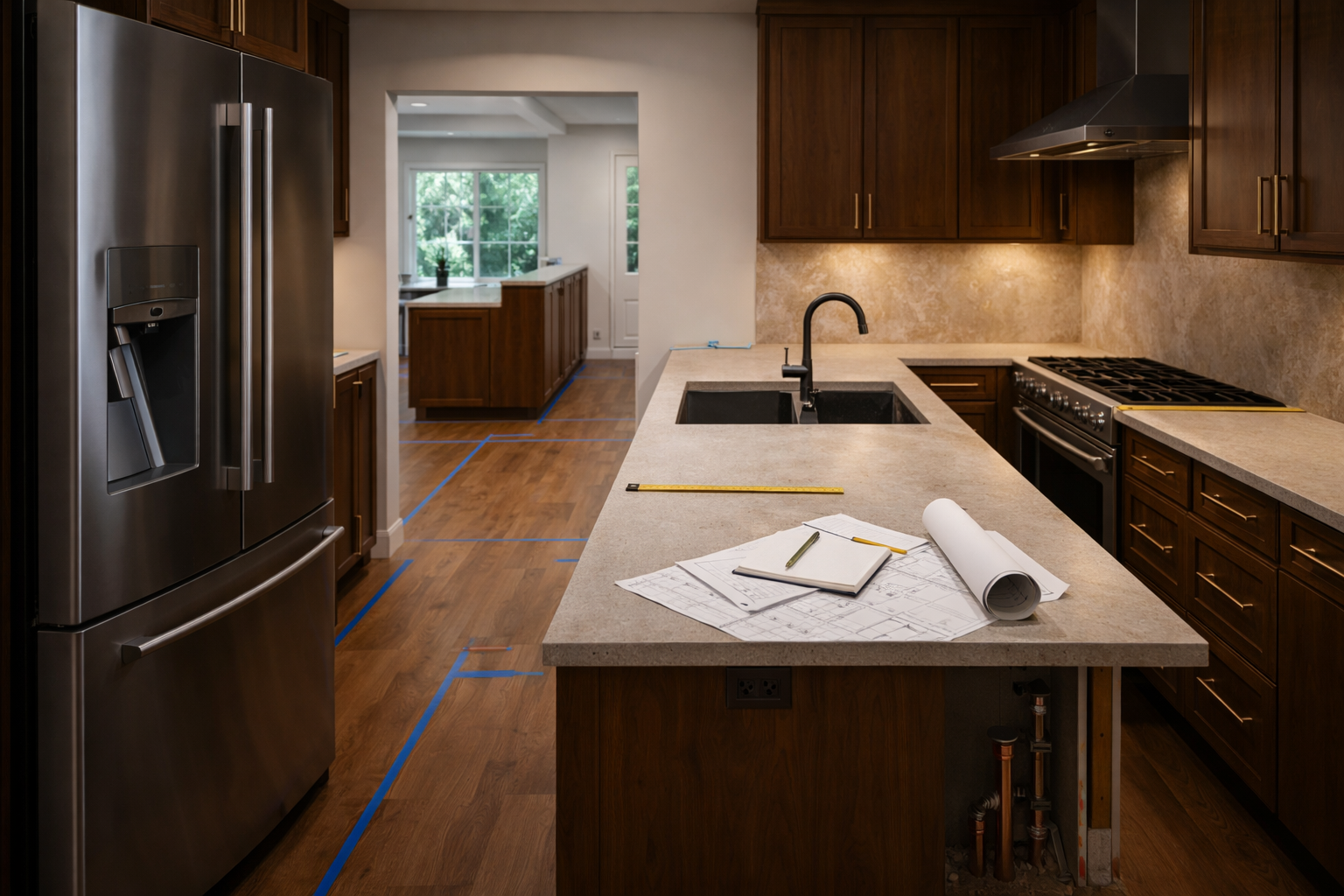
Room size sets the physical limits of a kitchen layout, but existing plumbing and utilities often determine how expensive a layout change will be. A larger room gives more flexibility for islands and separate zones, while a smaller room may need more careful planning to improve workflow without simply moving problems around.
Why Do Existing Plumbing and Utility Locations Matter So Much
Moving a sink, dishwasher, or gas range can require more labor than changing cabinet positions alone because water, drainage, gas, and electrical all have to move with the new layout. These utility changes often shape what is practical in a layout remodel and what should stay closer to where it already is.
How Does Room Shape Affect the Best New Layout
A long narrow kitchen behaves differently from a square open kitchen or an L-shaped kitchen. Some rooms benefit from a galley-style efficiency upgrade, while others benefit from an island or a stronger pantry wall. The layout has to fit the geometry of the room instead of copying a plan that worked somewhere else.
What Materials and Components Are Involved in Kitchen Layout Changes
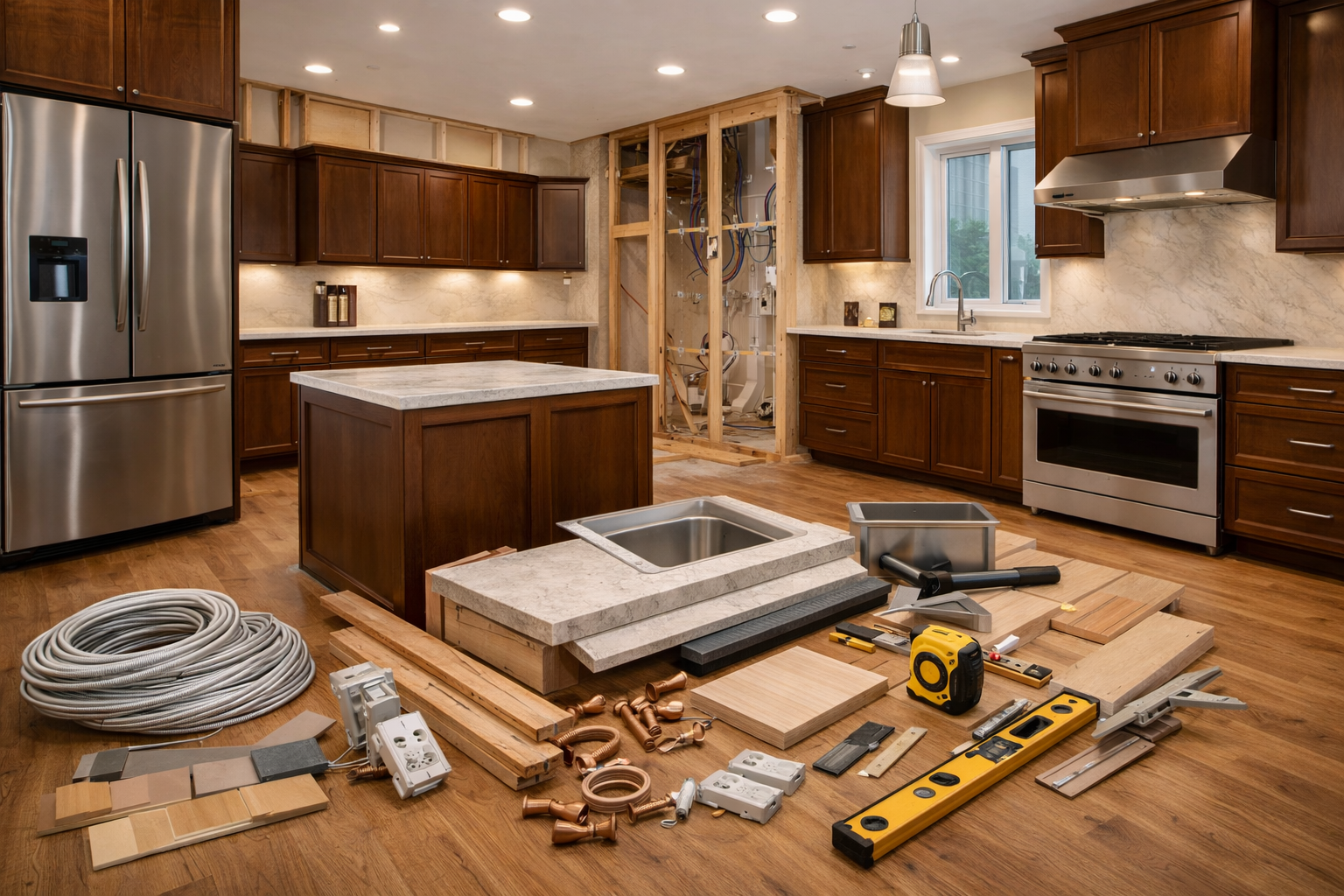
Kitchen layout changes involve more than cabinet movement. The remodel may require new cabinets, counters, flooring adjustments, appliance relocation, plumbing fittings, electrical runs, lighting repositioning, drywall repair, and in some cases framing or structural work. The visible layout only works if the hidden systems are rebuilt to support it properly.
What Construction Materials Are Common in Kitchen Layout Change Projects
Common materials include cabinet boxes, countertop materials, framing lumber, plumbing fittings, electrical cable, drywall, trim, flooring patch materials, and support components for islands or appliance walls. The exact list depends on how much of the kitchen is being rebuilt. When comparing stone surfaces, it can help to review Natural Stone Institute guidance.
What Fixtures and Finish Components Usually Change
Appliances, sinks, faucets, lighting fixtures, pantry storage, island details, backsplash materials, and countertop transitions often change during a layout remodel because the old finishes and fixtures no longer fit the new plan. Layout work usually touches more of the room than homeowners expect at first.
What Upgrades Can Be Combined With Kitchen Layout Changes
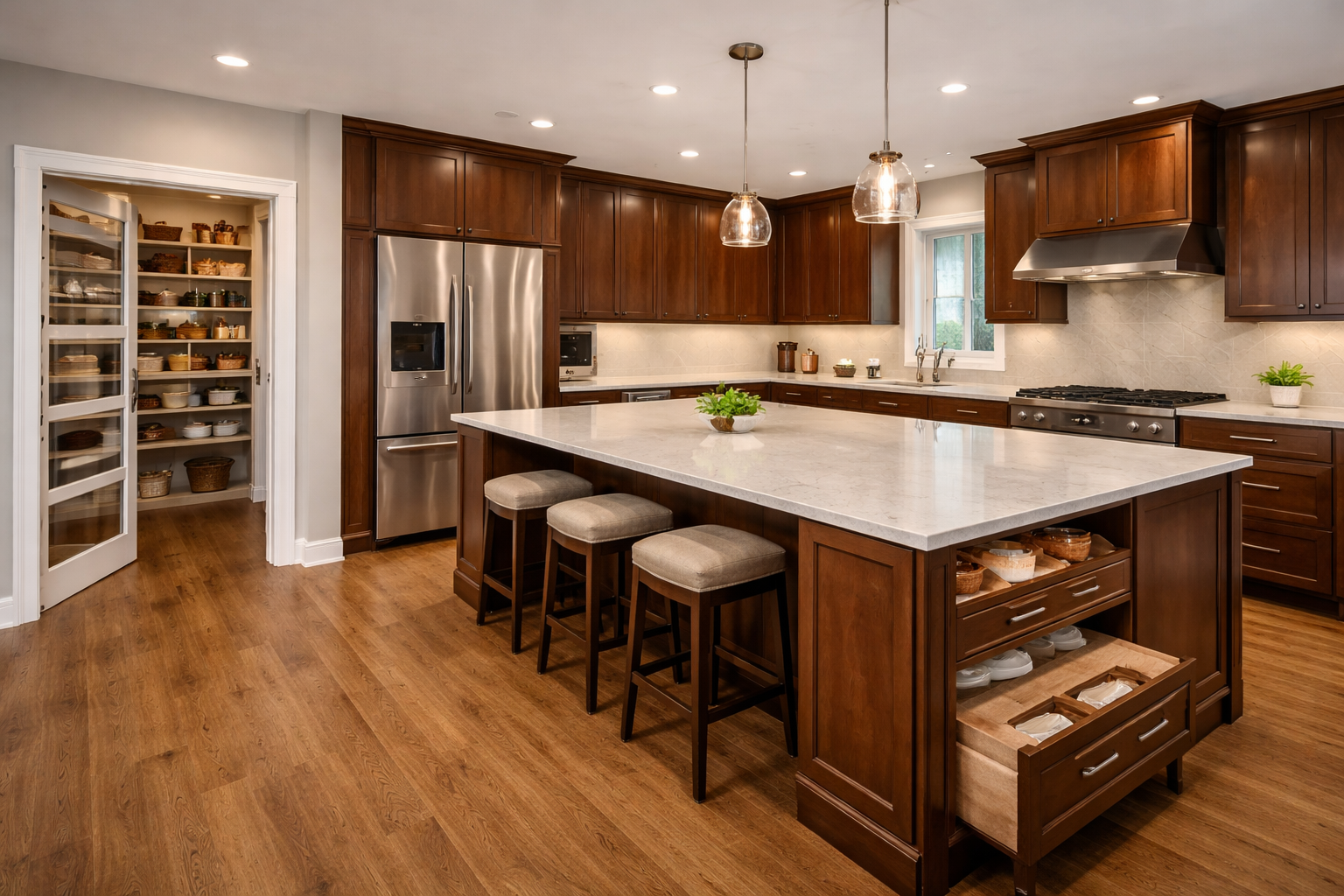
Layout work is often the best time to combine other upgrades because the kitchen is already being re-planned at a structural level. Common upgrades include larger islands, better pantry systems, stronger task lighting, improved appliance placement, deeper drawer storage, better seating zones, and stronger connection to nearby living or dining spaces.
What Functional Upgrades Work Best With Layout Changes
Functional upgrades include better prep zones, more useful pantry access, stronger work triangle flow, easier cleanup paths, and seating that does not block the kitchen. These are the improvements that often make the new layout feel worth the disruption of the remodel.
What Design Upgrades Usually Happen at the Same Time
Kitchen layout changes often happen alongside cabinet upgrades, countertop replacement, backsplash updates, island redesign, and better lighting. Once the room is being reorganized, the surrounding surfaces usually need to be brought up to the same finish level too.
What Construction Details Matter in Kitchen Layout Changes
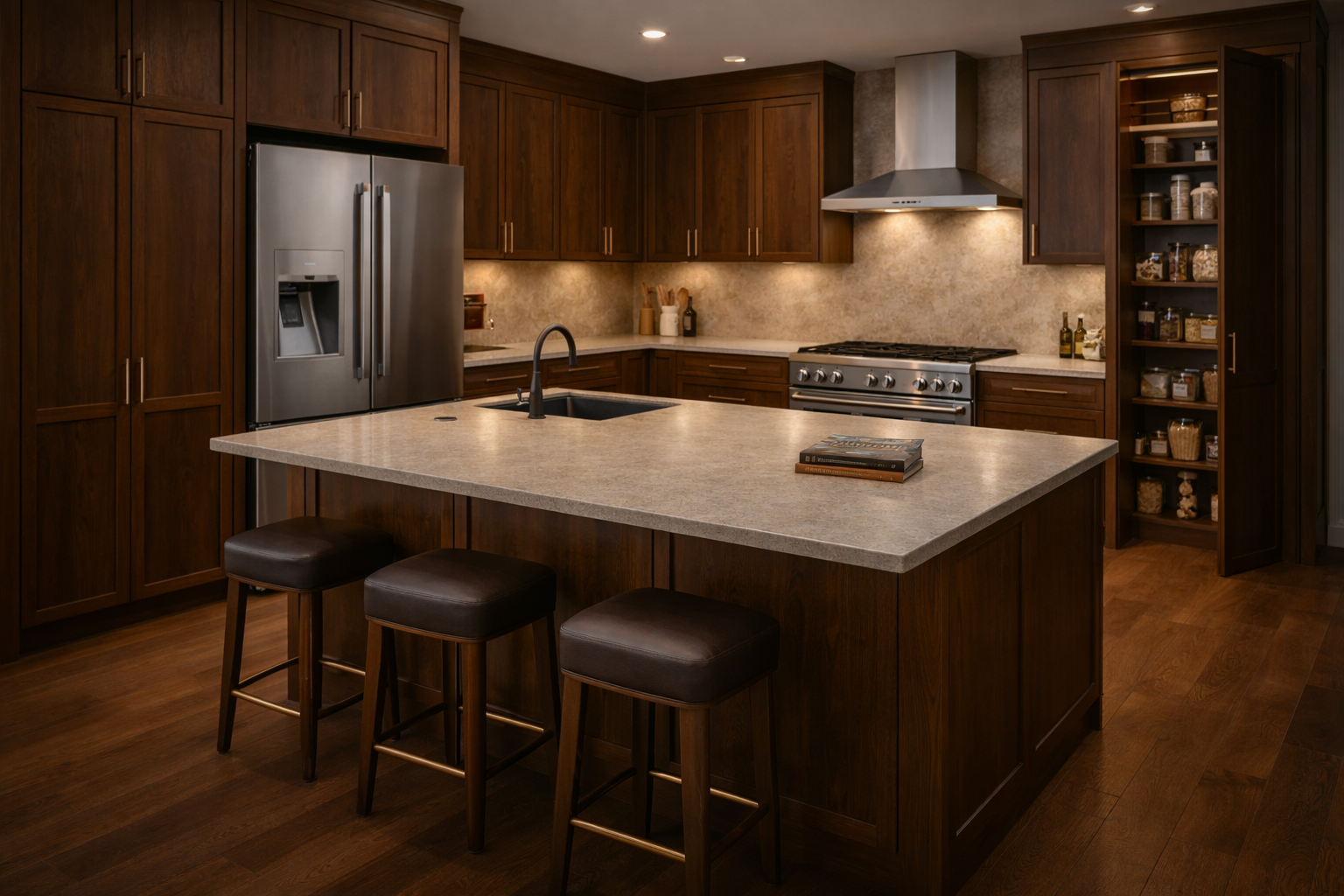
Construction details matter because kitchen layout changes often affect the hidden systems first. The remodel has to account for plumbing reroutes, electrical and lighting shifts, appliance rough-in requirements, cabinet support, flooring repairs, and in some kitchens structural work tied to walls or beams. For broader planning considerations, it can help to review Energy Saver design guidance.
Why Do Utility Moves and Structural Changes Matter So Much
Utility moves change labor and cost quickly because the kitchen is one of the most system-heavy rooms in the house. Structural changes matter because removing or altering walls can affect how the whole space is supported. These are the details that make layout work more than a cabinet shuffle.
What Fit and Clearance Problems Show Up During Construction
Common issues include aisles that end up tighter than planned, appliance doors that conflict, islands that are too large for the room, and prep zones that lose function after the layout changes. These practical problems usually show up when the layout was not checked against real measurements early enough.
What Affects Kitchen Layout Change Cost
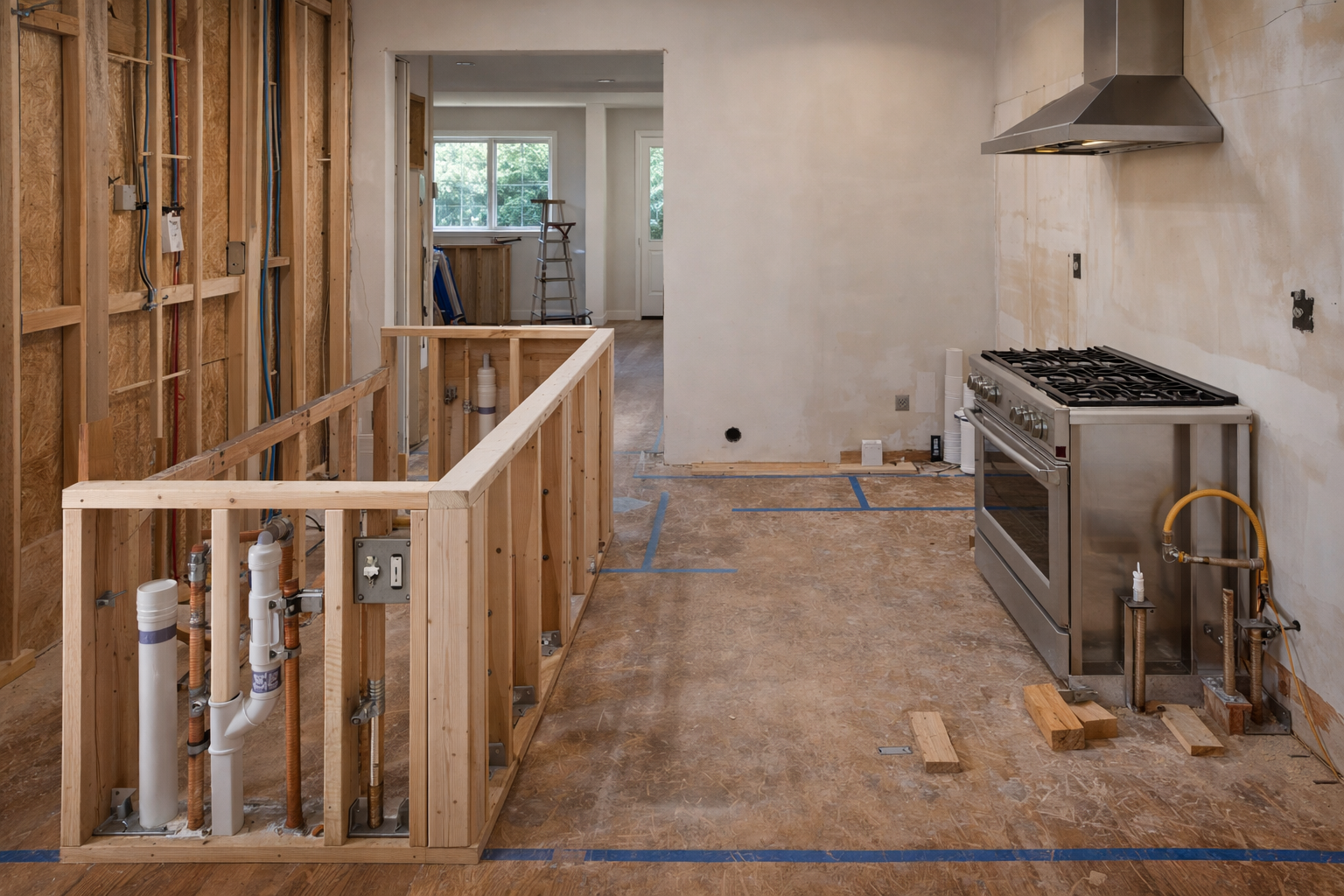
Kitchen layout change cost usually depends on how many utilities move, how much cabinet and countertop work changes with them, whether walls or ceilings need rebuilding, and how much of the kitchen is being reworked instead of refreshed. A layout change almost always costs more than a surface-only remodel because it affects more of the rooms hidden systems.
Which Layout Changes Usually Raise the Cost the Most
Costs usually rise with sink moves, island additions, wall removal, larger appliance shifts, structural changes, and more custom cabinetry needed to support the new plan. The more systems the layout touches, the more the budget usually grows.
How Do Labor and Existing Conditions Change the Budget
Labor costs go up when the kitchen reveals outdated utilities, walls that need more correction, floor areas that need patching, or layouts that are harder to rework than the plan suggested. Existing conditions matter because real walls, floors, and utility paths often shape the cost more than the design sketch does.
What Mistakes Should Homeowners Avoid With Kitchen Layout Changes
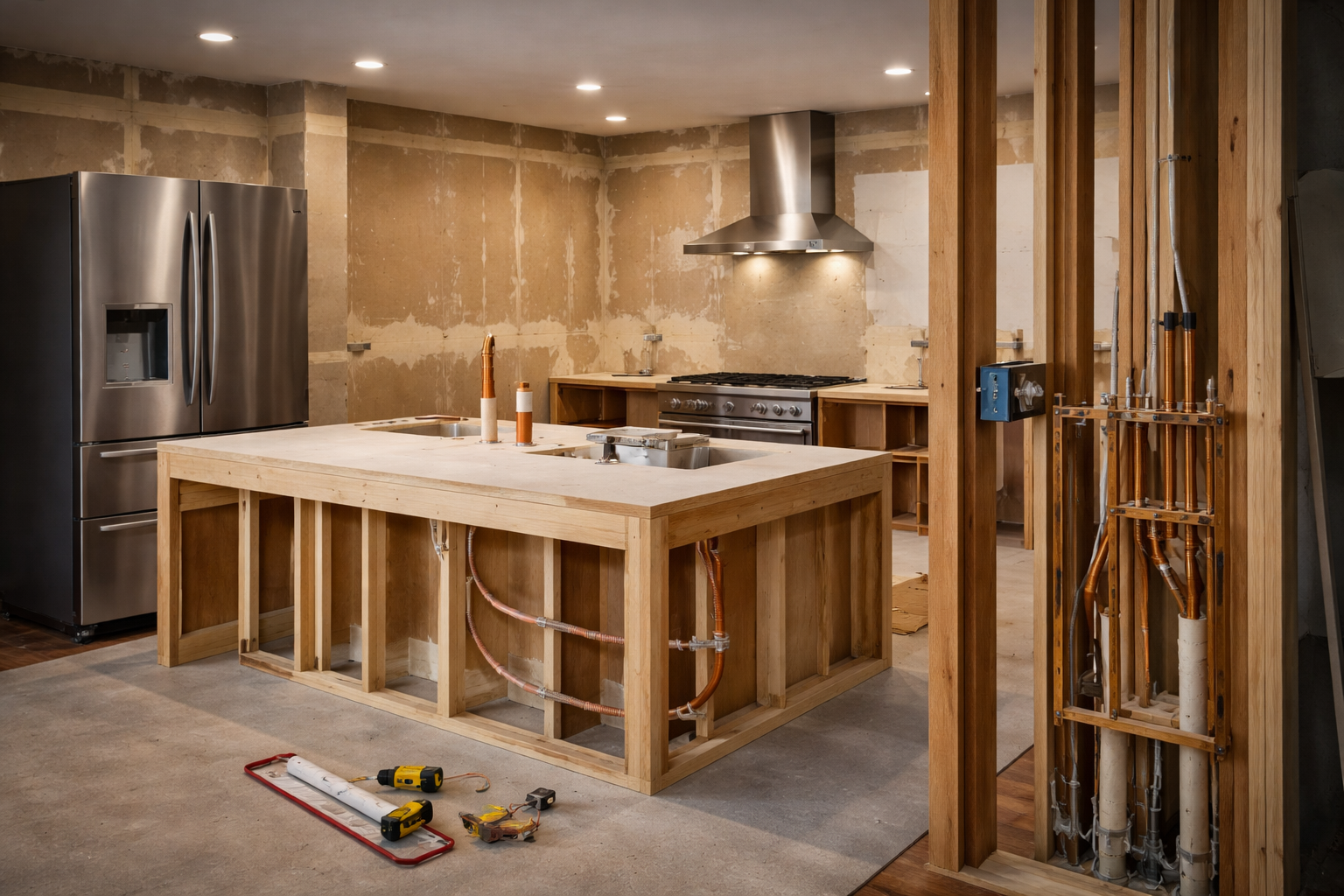
The biggest kitchen layout mistakes usually happen when the new plan is built around appearances instead of the real way the household uses the kitchen. A layout should improve prep, cooking, storage, cleanup, and movement through the room. If it only looks better on paper but still works badly, the remodel misses the point.
Why Is It a Problem to Design Around Looks Instead of Workflow
A large island, dramatic range wall, or open plan can still fail if prep space lands in the wrong place or traffic cuts through the work zones. Real kitchen planning starts with use and then moves toward the design expression.
Why Is It Risky to Underestimate the Hidden Work
Moving utilities, reworking walls, adjusting cabinets, and patching floors often involve more labor than homeowners expect at the beginning. If that hidden work is not respected early, the budget and the schedule can both drift quickly.
How Should You Plan Kitchen Layout Changes
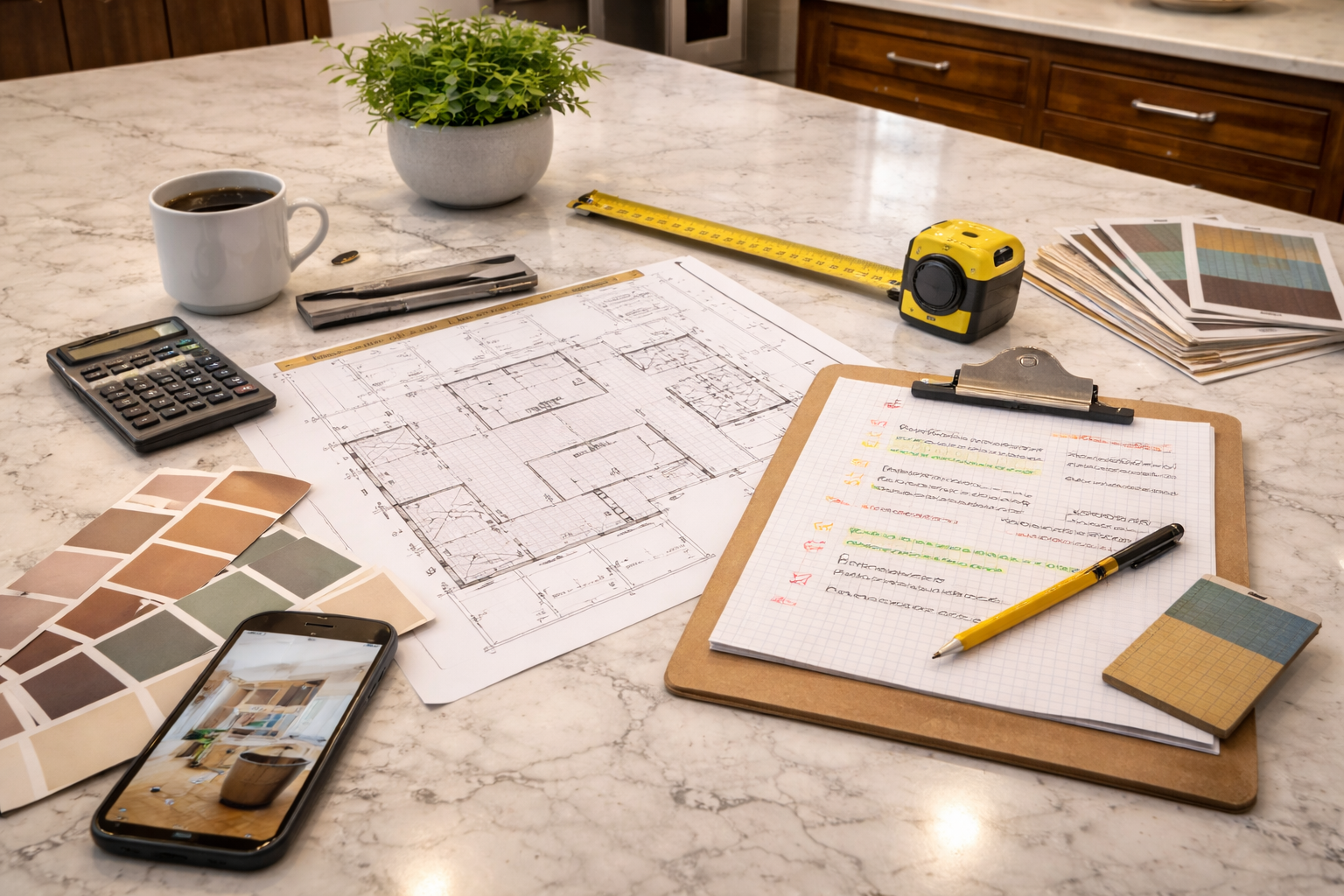
Kitchen layout changes should be planned by measuring the room carefully, identifying the real workflow problems, and deciding which moves actually solve those problems instead of simply changing the look of the room. The best plan balances prep flow, appliance spacing, storage, traffic movement, and utility reality instead of focusing on one visual feature alone.
What Should Be Decided Before Layout Work Starts
Before construction starts, it helps to confirm which appliances are moving, where the prep and cleanup zones should be, how the island should function, what pantry storage is needed, and whether any plumbing or structural changes are worth the added cost. These choices affect the entire remodel plan.
How Can a Homeowner Prepare for the Construction Process
Homeowners should be ready for demolition, rough utility work, temporary kitchen disruption, and the possibility of hidden repairs once walls or floors are opened. Layout changes usually create more disruption than cosmetic kitchen updates because more of the room is being rebuilt from the inside out.
Related Kitchen Layout Topics
Kitchen layout work overlaps with cabinet remodeling, island redesign, appliance planning, pantry upgrades, and full kitchen remodeling because the layout controls how all of those systems work together. Related topics help homeowners compare whether they need a full layout change or a smaller targeted improvement.
Which Kitchen Layout-Related Pages Should Connect to This Topic
Strong related pages include cabinet remodels, kitchen island remodels, kitchen appliances, pantry design, and countertop remodeling. Those pages help break down the layout, storage, and utility decisions that shape a successful kitchen plan.
Which Kitchen Remodeling Topics Often Connect to Layout Work
Layout work often connects to flooring, lighting, countertops, cabinets, appliances, and full kitchen remodeling. In practical remodels, these pieces overlap because the layout defines how the rest of the kitchen should be built around daily use.
Frequently Asked Questions About Kitchen Layout Changes
A kitchen layout change makes sense when the current kitchen does not support good prep flow, appliance spacing, storage, or movement through the room.
Sometimes. It depends on whether the sink, dishwasher, refrigerator water line, or gas appliances are changing position as part of the new plan.
They can be very worthwhile when the current layout is the main reason the kitchen feels frustrating to use. Fixing workflow can matter more than changing finishes alone.
Some of the most common changes include adding or enlarging an island, moving appliances, and improving prep and storage flow between the sink, range, and refrigerator.
Yes. Better cabinet planning, improved appliance placement, and stronger workflow can improve a small kitchen without changing the footprint.
No. Some layout changes involve walls, but many improve the kitchen by reworking cabinets, appliances, and islands within the same general room size.
The timeline depends on how much utility, cabinet, structural, and finish work is involved in the new plan.
Yes. Better pantry placement, stronger drawer planning, and smarter cabinet zones often improve storage as part of a layout change.
It can improve both appeal and function, especially when the new layout clearly solves common frustrations in the old kitchen.
The first step is identifying exactly what does not work in the current layout so the remodel solves real problems instead of moving them around.