

Kitchen Island Remodeling Guide: Layout, Storage, and Design Ideas

Kitchen Island Guide Index
- Kitchen Island Remodel Overview
- When Should a Kitchen Island Be Remodeled
- What Types of Kitchen Island Remodels Are Common
- How Do Layout and Kitchen Size Affect a Kitchen Island Remodel
- What Materials and Components Are Used in a Kitchen Island Remodel
- What Upgrades Can Be Added During a Kitchen Island Remodel
- What Installation Details Matter in a Kitchen Island Remodel
- What Affects Kitchen Island Remodel Cost
- What Mistakes Should Homeowners Avoid With a Kitchen Island Remodel
- How Should You Plan a Kitchen Island Remodel
- Related Kitchen Island Remodel Topics
- Frequently Asked Questions About Kitchen Island Remodeling
Kitchen Island Remodel Overview
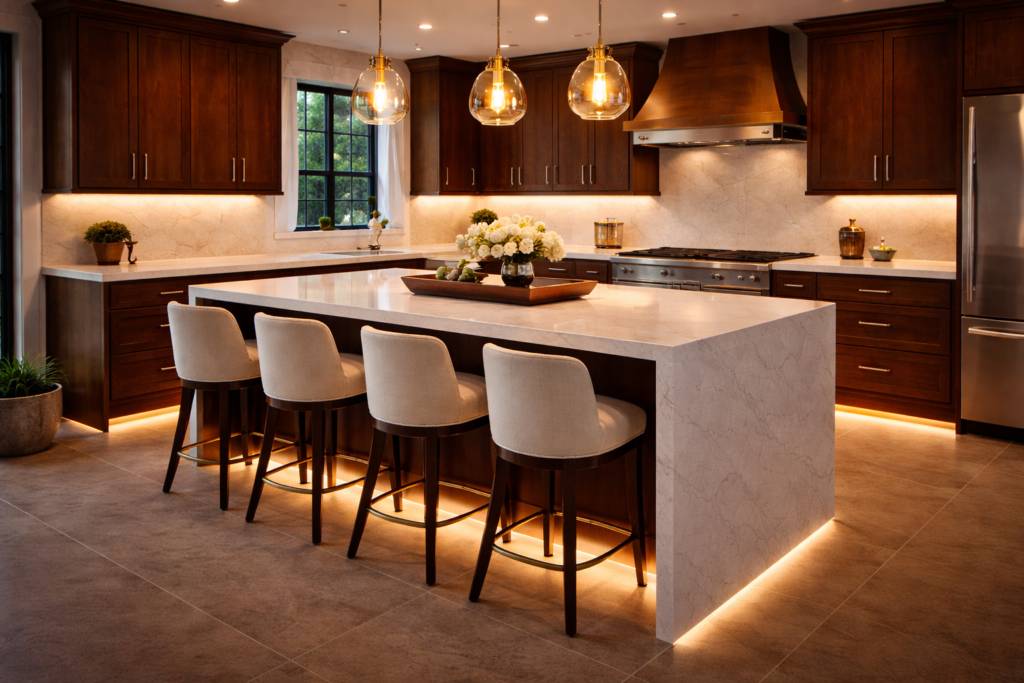
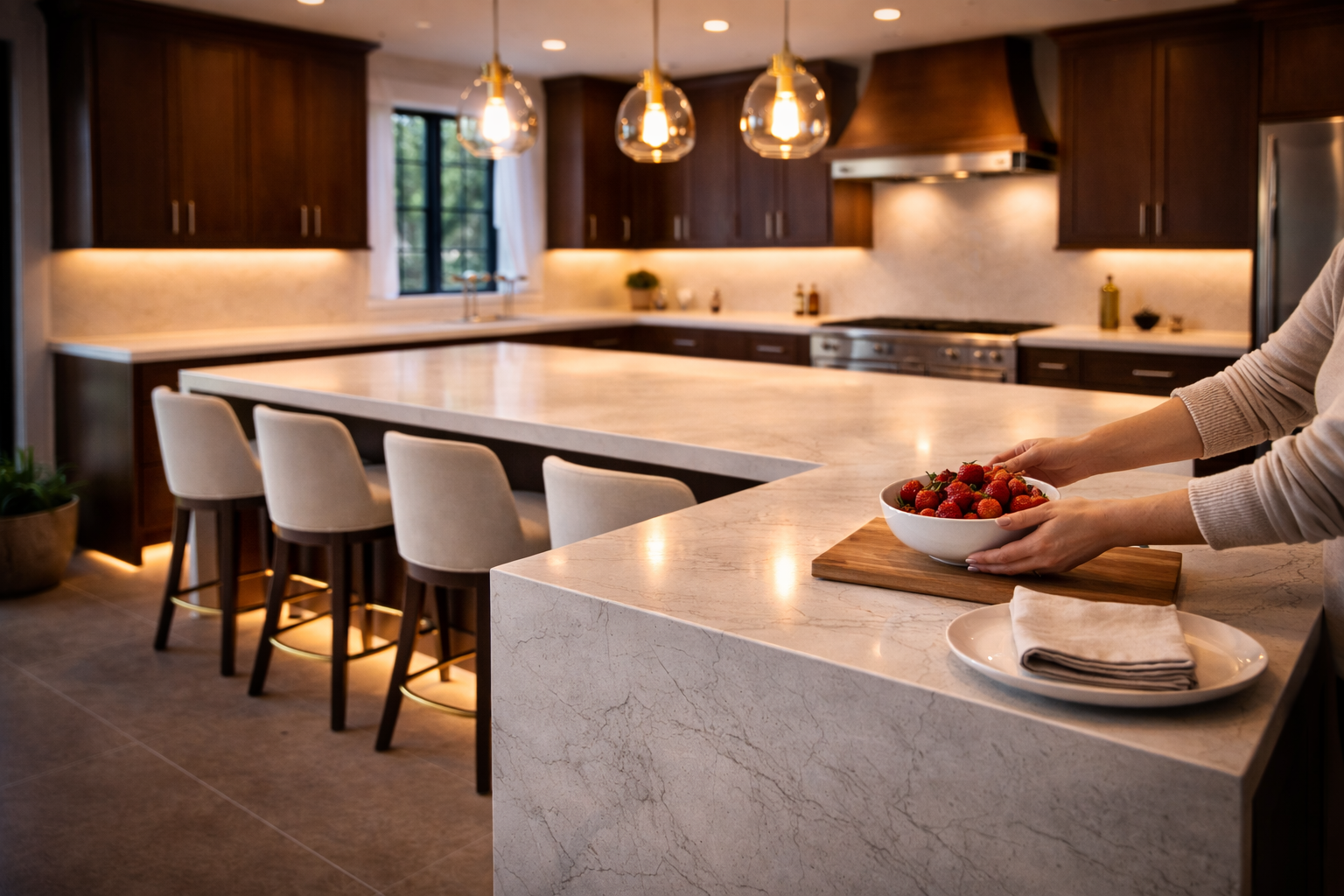
A kitchen island remodel changes one of the most flexible work zones in the kitchen. In practical remodel work, that can include changing island size, adding storage, adding seating, reworking the countertop shape, improving appliance placement, and adjusting the island so it supports prep, serving, storage, and circulation better than before. A kitchen island is not just extra counter space. It often becomes the center of how the kitchen functions every day.
What Gets Updated During a Kitchen Island Remodel
The work may include the island cabinet layout, countertop, seating overhang, storage features, lighting above the island, appliance cutouts where relevant, electrical additions, and the way the island fits the surrounding walkways. In some kitchens, the remodel may also change flooring transitions or how the island lines up with the sink, range, or pantry area and nearby cabinet runs.
What Is the Difference Between Updating an Island and Rebuilding the Island Layout
Updating an island may involve changing finishes, replacing the countertop, or adding storage accessories while keeping the basic footprint similar. Rebuilding the island layout goes further and may involve changing the islands size, shape, orientation, seating plan, or utility hookups so it serves the kitchen more effectively.
When Should a Kitchen Island Be Remodeled
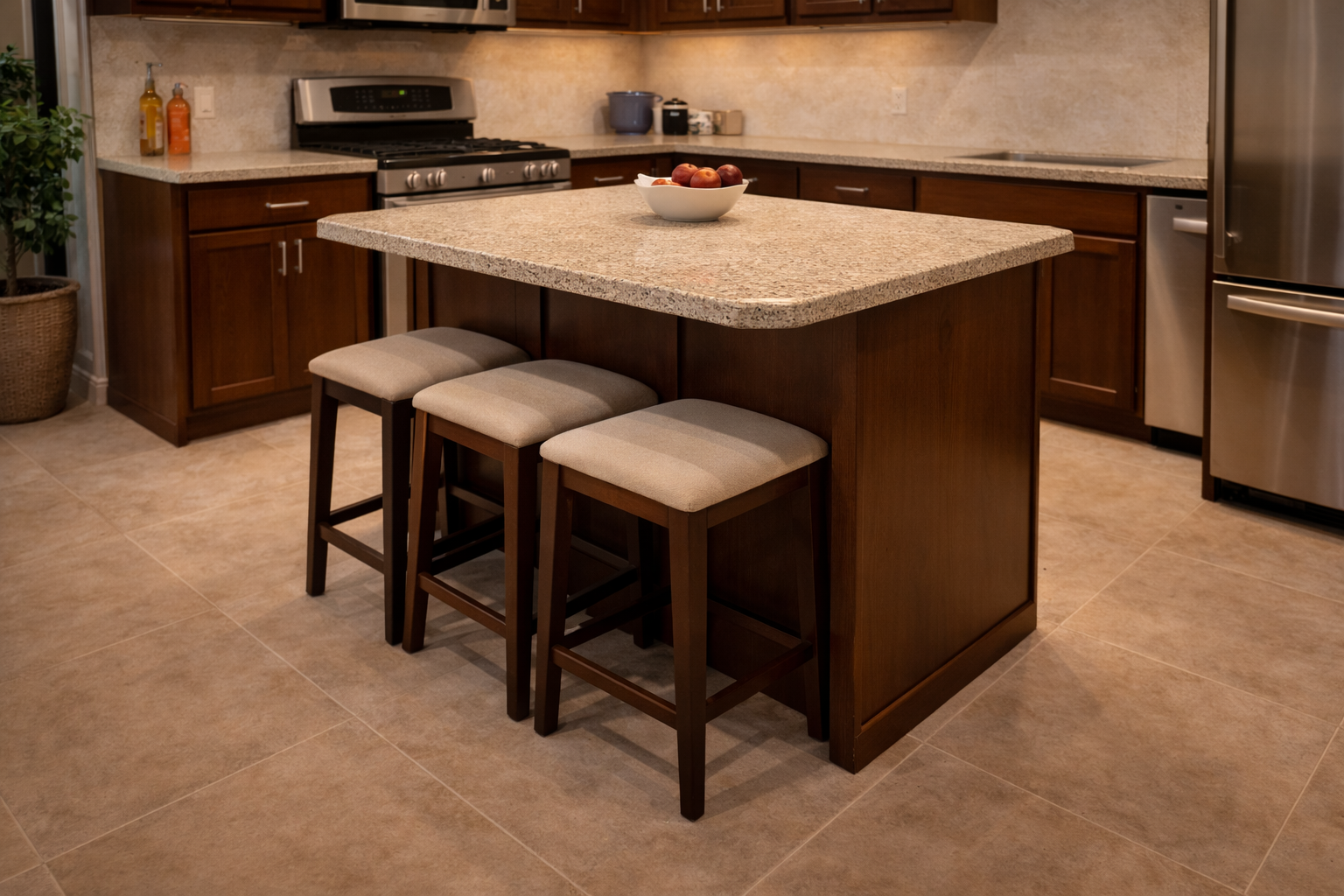
A kitchen island should usually be remodeled when it does not support the way the kitchen is used or when its size, storage, or seating setup is creating more problems than benefits. Common signs include awkward walkways, wasted cabinet space, not enough prep room, poor seating overhang, and an island that does not connect well to the rest of the kitchen layout. For layout and clearance planning, many designers reference NKBA planning guidelines.
What Signs Show That a Kitchen Island Is Not Working Well
Clear signs include people bumping into each other in the aisles, stools crowding traffic flow, cabinets that are hard to access, an island that is too small to prep on comfortably, or an island so large that it blocks movement. In many kitchens, the island exists but is not actually helping the workflow the way it should.
What Remodeling Goals Usually Lead to Kitchen Island Upgrades
Island upgrades are common when homeowners want more prep space, more seating, better hidden storage, a cleaner focal point in the room, or a stronger connection between cooking, serving, and gathering zones. They also happen when the rest of the kitchen has been improved and the island no longer matches the layout or finish level around it.
What Types of Kitchen Island Remodels Are Common
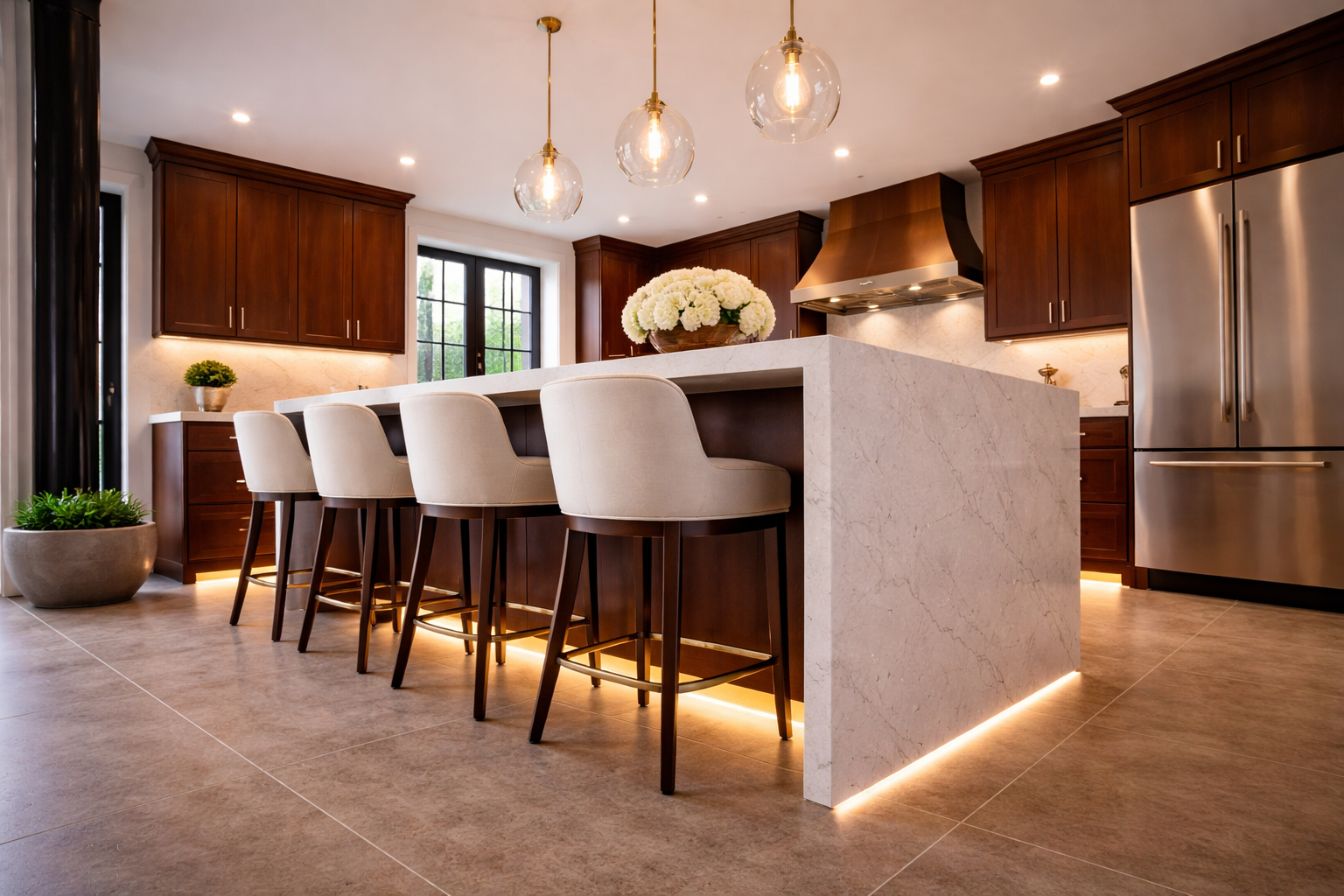
Common kitchen island remodels include larger prep islands, seating islands, storage-focused islands, islands with sinks or cooktops, waterfall island upgrades, and islands rebuilt to better connect with surrounding cabinet and appliance zones. The right type depends on room size, household use, and how central the island is to the kitchen workflow. Another detail worth comparing during planning is seating island.
What Kitchen Island Styles Are Most Common in Remodeling Projects
Prep-and-seating islands are common because they support both daily work and informal gathering. Storage-heavy islands are common when the kitchen needs more drawer and cabinet capacity. More design-focused remodels may add waterfall edges or cleaner paneling to make the island a stronger visual anchor in the room.
When Does One Island Type Make More Sense Than Another
A prep-focused island may make more sense when the kitchen needs stronger work surface and task storage. A seating island may make more sense when the island is expected to support meals, conversation, or homework. The best type depends on what the household really wants the island to do every day.
How Do Layout and Kitchen Size Affect a Kitchen Island Remodel
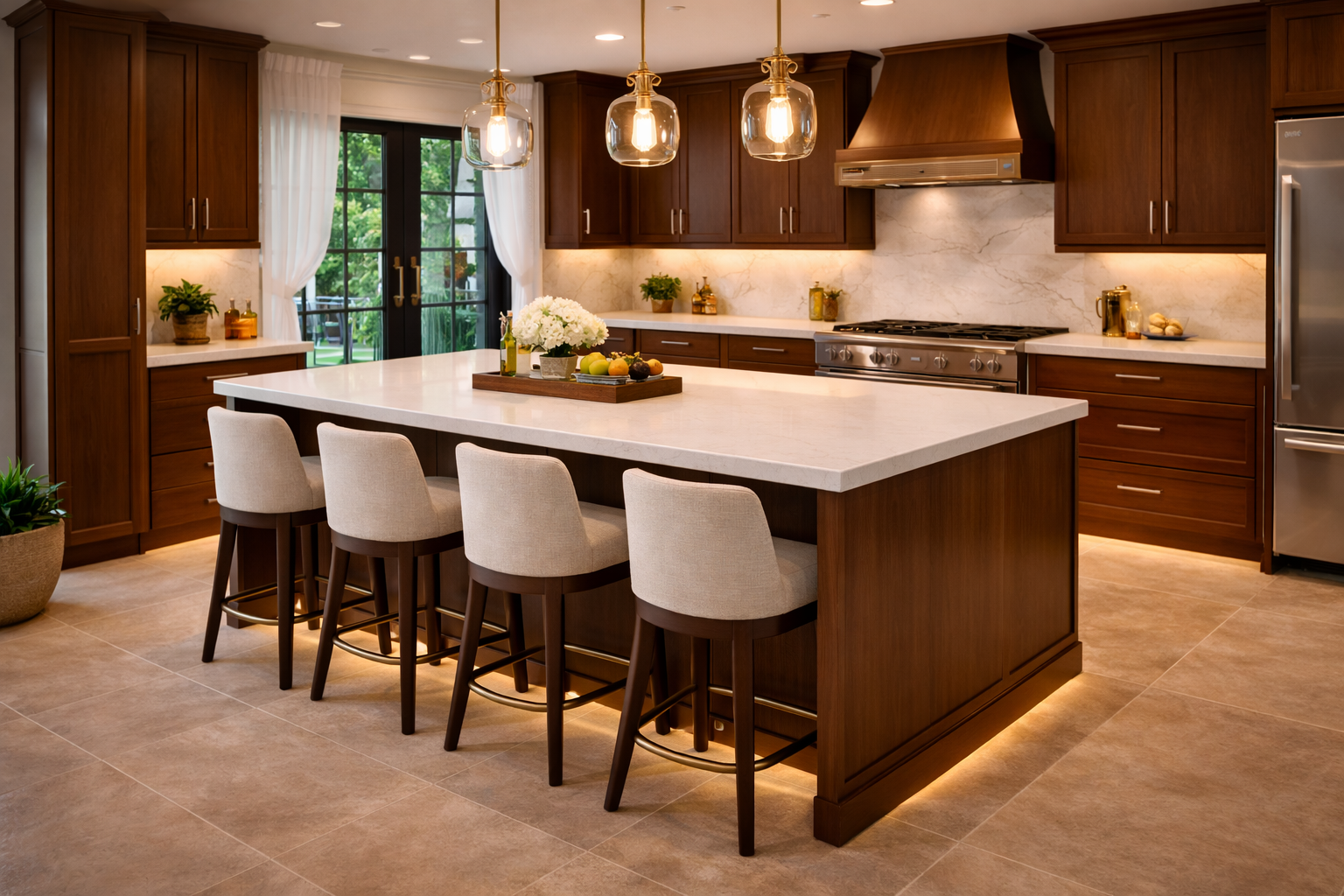
Layout and kitchen size affect whether the island improves the room or simply gets in the way. An island has to leave enough aisle space, work with appliance door swings, support seating if used for that purpose, and still allow the sink, range, and refrigerator zones to function well around it.
Why Do Aisle Width and Island Size Matter So Much
If the aisles are too tight, the island can make the whole kitchen feel crowded and frustrating. If the island is too small, it may not offer enough prep or seating value to justify the space it takes. In practical remodel work, island proportions and aisle spacing are what determine whether the island is truly useful. When the remodel includes this feature, prep island can help homeowners understand the options in more detail.
How Does Kitchen Size Change the Best Island Strategy
In a smaller kitchen, the best island strategy may focus on a compact prep island or may even mean skipping the island if it hurts circulation too much. In a larger kitchen, the remodel may support a wider island with more seating, deeper storage, or specialty zones. The best strategy depends on real room dimensions and real kitchen use.
What Materials and Components Are Used in a Kitchen Island Remodel
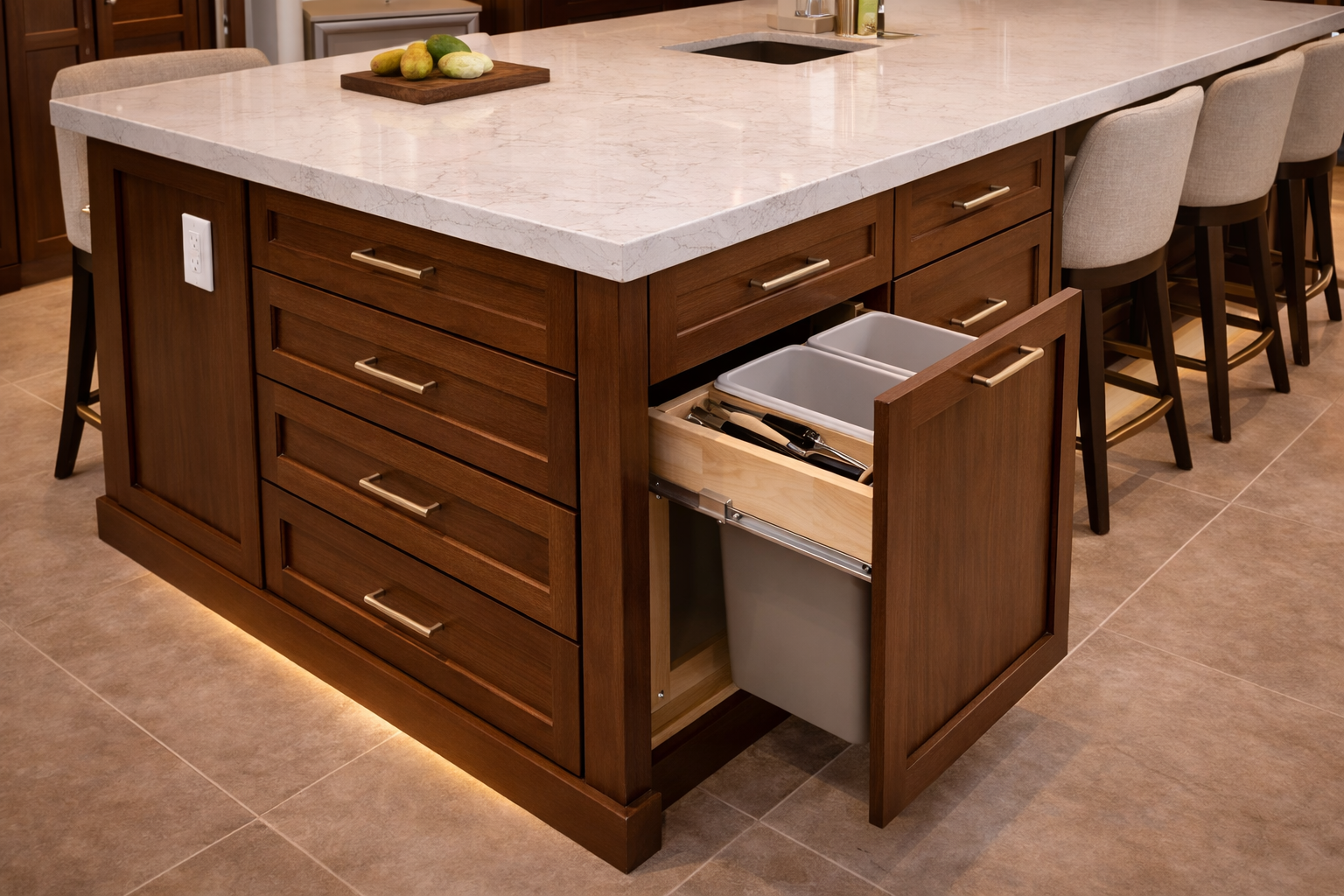
A kitchen island remodel uses cabinet boxes, drawers, panels, countertop materials, trim, support details, seating overhang structure, lighting coordination, and sometimes plumbing or electrical components depending on the design. The island works best when the visible finish and the hidden support are planned together.
What Cabinet and Countertop Materials Are Common in Island Projects
Common island cabinet materials include plywood or engineered cabinet boxes, painted or stained panel finishes, and drawer-focused storage layouts. Common countertop materials include quartz, granite, butcher block, and other surfaces chosen to coordinate with the rest of the kitchen while still giving the island its own role in the design. For layout and clearance planning, many designers reference NKBA planning guidelines.
What Seating, Storage, and Utility Components Usually Matter Most
Deep drawers, island panels, overhang supports, outlet placement, hidden trash options, and any sink or cooktop cutouts matter because they determine how useful the island is in daily life. These details often affect the islands success more than its color or door style alone.
What Upgrades Can Be Added During a Kitchen Island Remodel
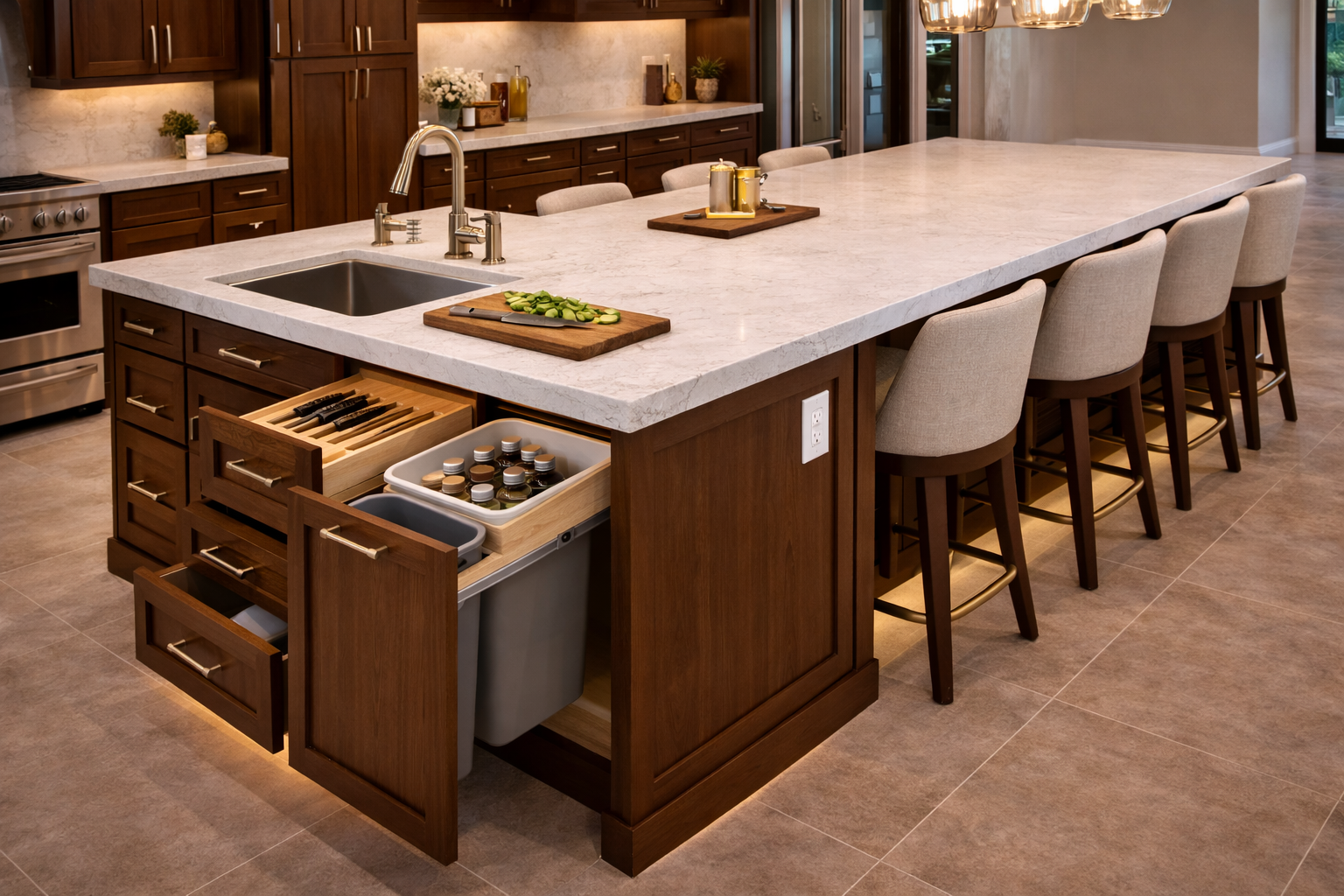
Island work is often the best time to add upgrades that improve prep, storage, and gathering use all at once. Common upgrades include deeper drawers, built-in trash pullouts, seating overhang improvements, prep sinks, outlet placement, pendant lighting coordination, waterfall countertop edges, and more useful end-panel or display details.
What Functional Upgrades Are Most Useful in a Kitchen Island
Functional upgrades often include stronger prep surface, better hidden storage, more practical stool spacing, and features that reduce extra walking between the island and the rest of the kitchen. These upgrades matter because the island should support real daily work, not just fill empty floor space.
What Design Upgrades Usually Happen at the Same Time
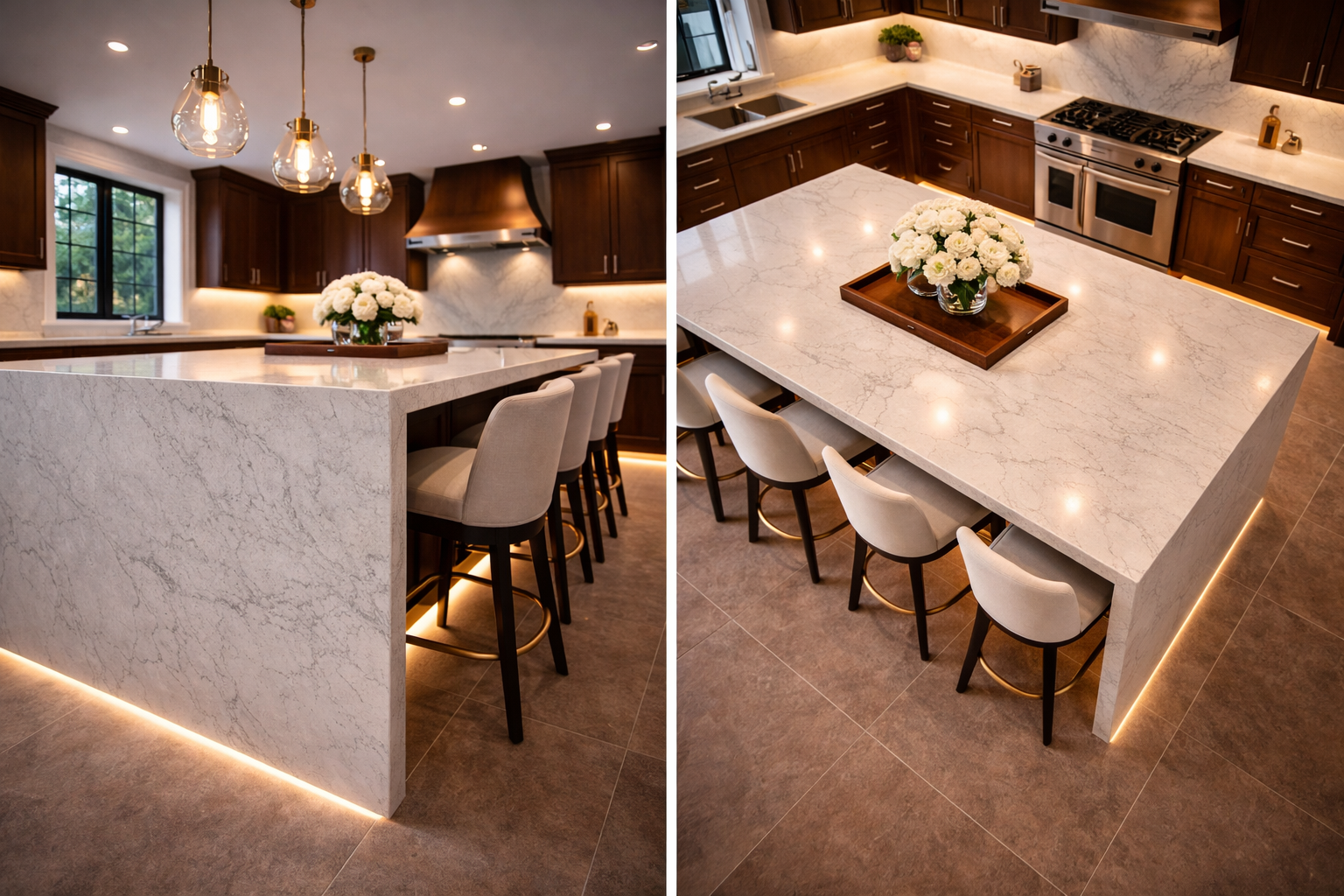
Kitchen island remodels often include updated paneling, stronger countertop detailing, improved pendant lighting, coordinated cabinet colors, and cleaner trim or waterfall edges. Once the island becomes a central feature, the finish details usually become more important too.
What Installation Details Matter in a Kitchen Island Remodel
Kitchen island installation depends on floor level, cabinet alignment, overhang support, utility rough-ins, and how the island fits within the surrounding walkways and appliance clearances. Even a well-designed island can feel wrong if it is set too far off center, does not allow enough knee room, or conflicts with nearby appliances. Projects with related upgrades often include choices around waterfall island.
Why Do Alignment and Support Matter So Much
Islands are often seen from all sides, so cabinet alignment, paneling, and overhang support are very noticeable. Support matters because larger countertops and seating areas may need reinforcement that should not feel temporary or exposed.
What Fit and Utility Problems Show Up During Installation
Common issues include overhangs without enough support, outlets placed awkwardly, aisles that end up tighter than planned, and island cabinets that do not line up well with the surrounding kitchen. These practical installation details strongly affect whether the island feels custom and well integrated.
What Affects Kitchen Island Remodel Cost
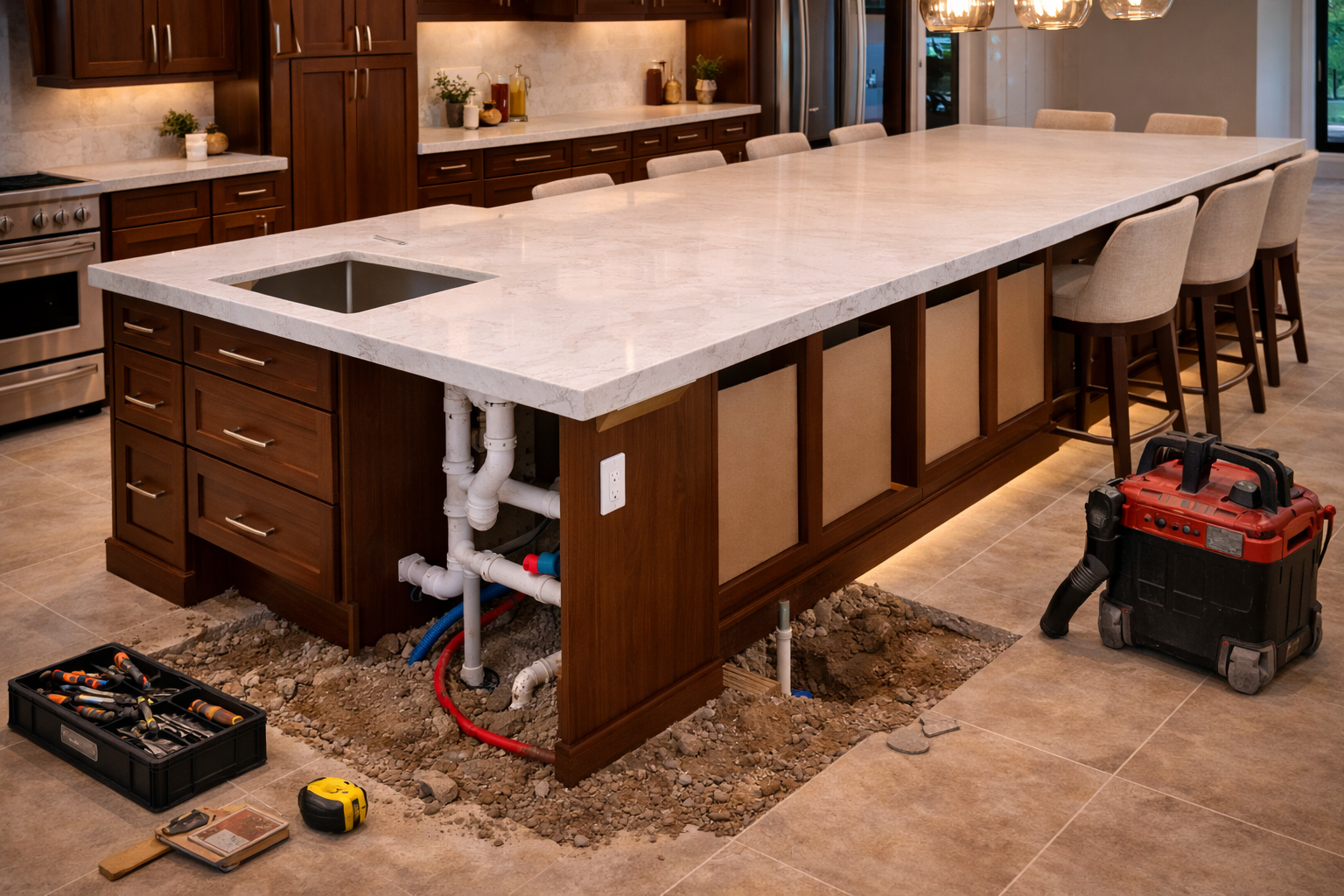
Kitchen island remodel cost usually depends on island size, cabinet complexity, countertop material, seating design, utility additions, and how much the surrounding kitchen layout changes to support the new island. A simple island refresh costs far less than a full island rebuild with sinks, outlets, and custom finishes.
Which Island Choices Usually Raise the Cost
Costs usually rise with larger islands, custom cabinetry, waterfall countertops, prep sinks, appliance cutouts, deeper storage systems, and more elaborate panel and trim details. The more the island becomes a major feature and utility hub, the more the cost usually climbs. For water-use considerations, homeowners can review WaterSense guidance.
How Do Labor and Existing Conditions Change the Budget
Labor costs go up when flooring needs patching, utility lines need to be added or moved, the island shape changes significantly, or the kitchen layout needs more correction to make the new island fit properly. Existing conditions matter because an island has to work with the real room around it, not just the design drawing.
What Mistakes Should Homeowners Avoid With a Kitchen Island Remodel
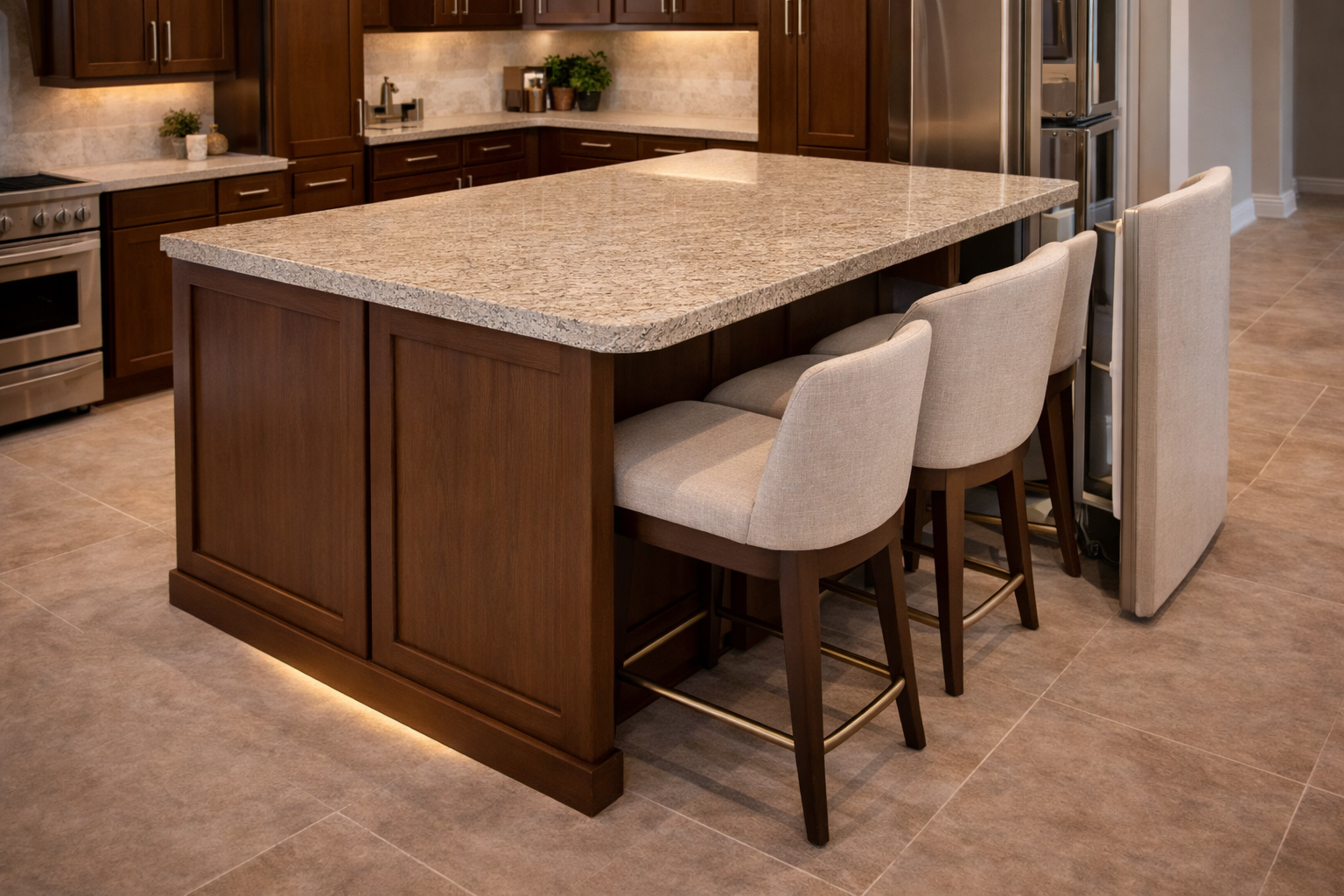
The biggest kitchen island mistakes usually happen when the island is made larger or more decorative without checking whether it still supports the kitchens daily workflow. A beautiful island is not successful if it blocks movement, crowds stools, or leaves the prep zone less practical than before. Homeowners who want to dig deeper into this feature can review kitchen remodeling.
Why Is It a Problem to Build an Oversized Island
An oversized island can make the room harder to move through, interfere with appliance doors, and reduce how usable the kitchen feels during cooking and cleanup. Bigger is only better when the room has enough space to support it.
Why Is It Risky to Ignore What the Island Is Actually Supposed to Do
Some islands need to focus on prep, some on seating, some on storage, and some on a combination of all three. If the remodel never defines that purpose clearly, the island can end up doing several things poorly instead of one or two things well.
How Should You Plan a Kitchen Island Remodel
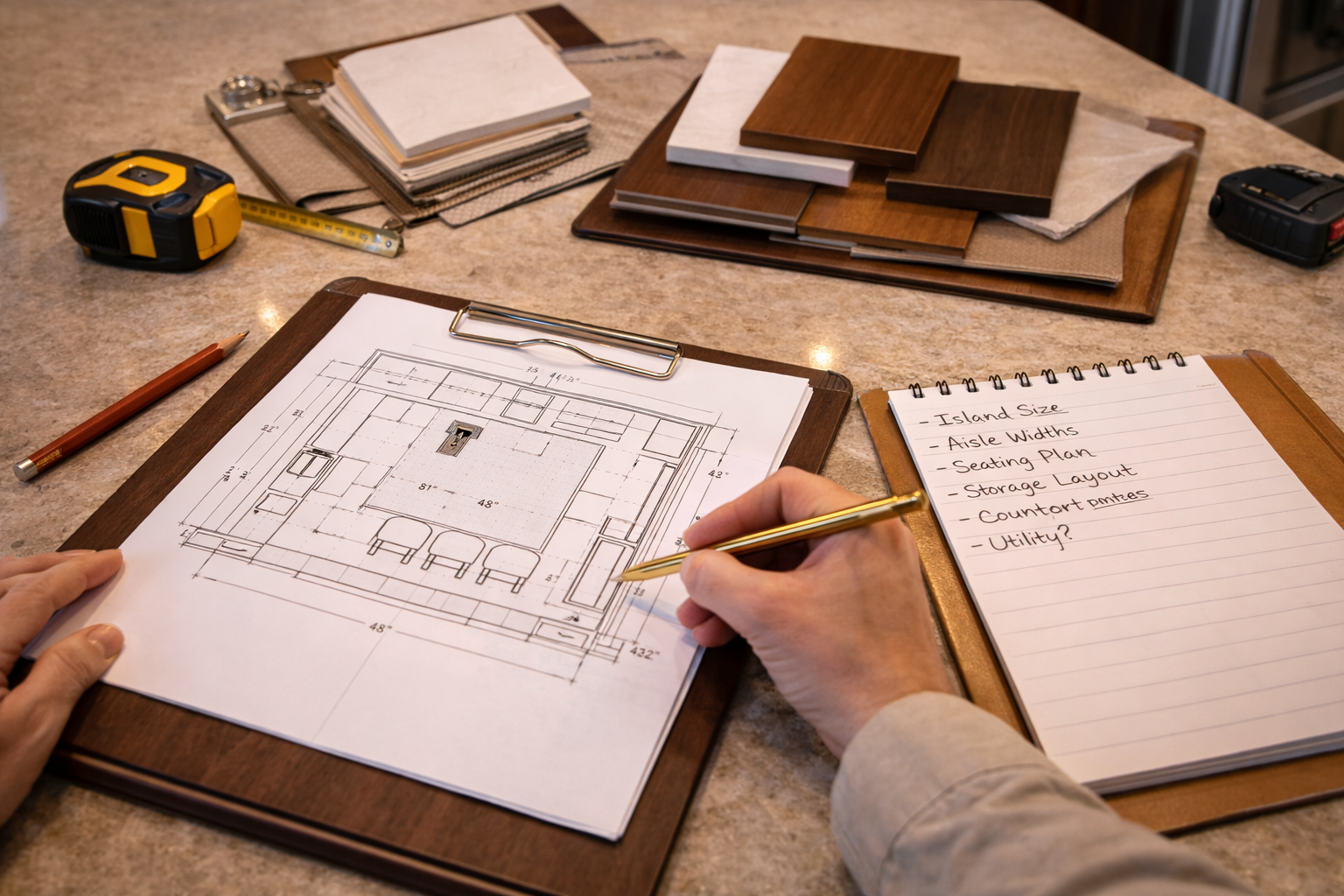
A kitchen island remodel should be planned by deciding what the island needs to do first, then matching its size, storage, seating, and utility details to the kitchen around it. The best plan balances prep function, seating comfort, circulation, countertop use, and design impact instead of treating the island like a default feature that every kitchen should have.
What Should Be Decided Before Island Work Starts
Before construction starts, it helps to confirm island size, seating count, stool spacing, storage layout, countertop material, utility needs, and whether the island should serve prep, cleanup, gathering, or all of those at once. These decisions affect the layout, cabinet order, and installation approach.
How Can a Homeowner Prepare for the Installation Process
Homeowners should be ready for demolition, cabinet and countertop sequencing, possible floor repair, utility rough-ins, and coordination between island placement, pendant lighting, and surrounding cabinets. Island projects usually go best when the dimensions and function are settled before fabrication begins.
Related Kitchen Island Remodel Topics
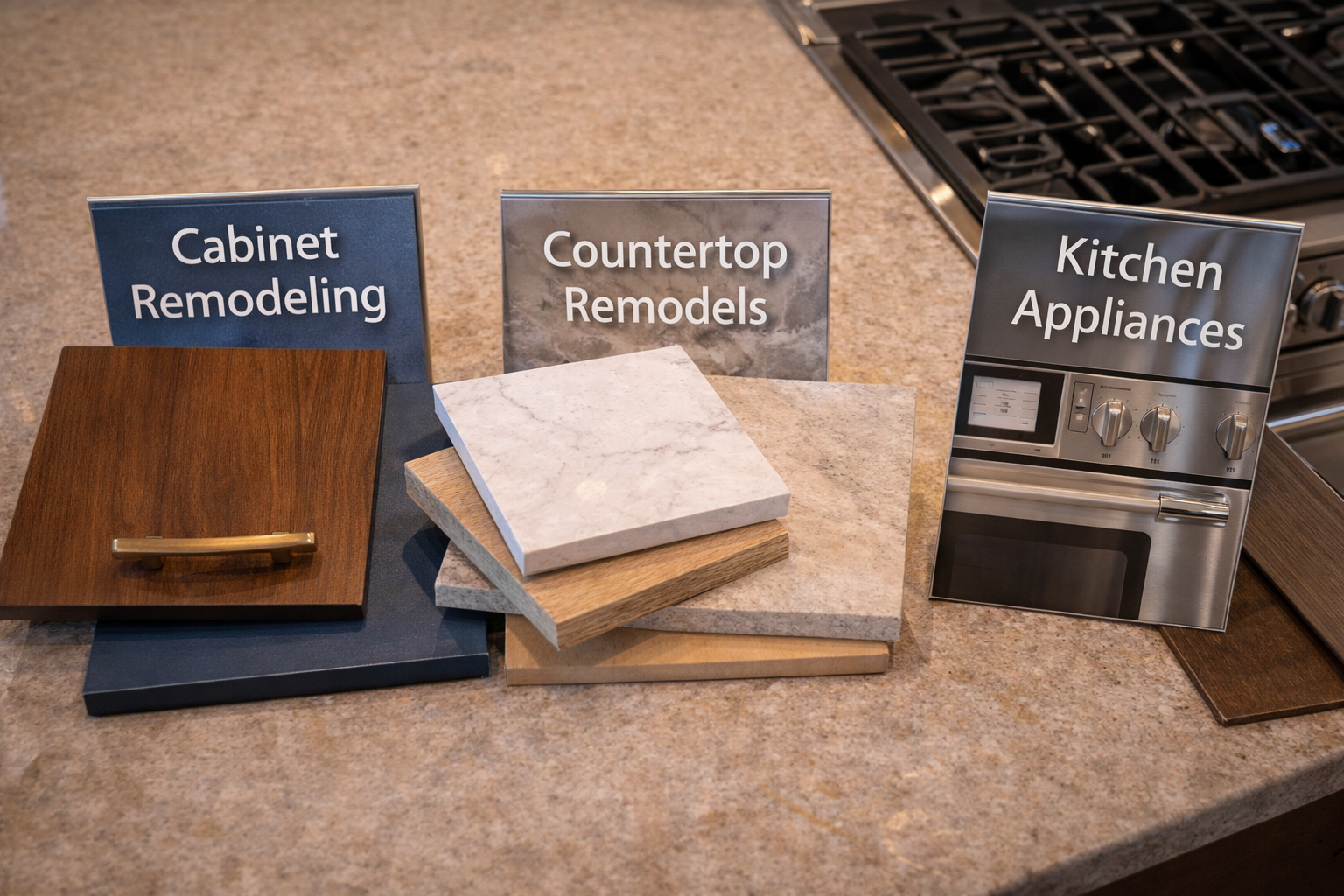
Kitchen island remodels overlap with cabinet remodeling, countertop work, appliance planning, lighting, and full kitchen remodeling because the island often sits at the center of how the room looks and functions. Related topics help homeowners compare whether they need a bigger island, a better island, or a broader kitchen redesign.
Which Kitchen Island Remodel-Related Pages Should Connect to This Topic
Strong related pages include cabinet remodels, countertop remodels, kitchen appliances, kitchen lighting, and kitchen layout changes. Those pages help break down the storage, surface, and workflow decisions that shape a successful island plan.
Which Kitchen Remodeling Topics Often Connect to Island Work
Island work often connects to cabinets, counters, flooring, lighting, and full kitchen remodeling. In practical remodels, these pieces overlap because the island is often the main center of movement and work in the kitchen.
Frequently Asked Questions About Kitchen Island Remodeling
A kitchen island remodel can include cabinet changes, countertop changes, storage upgrades, seating changes, utility additions, and layout adjustments around the island.
A kitchen island is often remodeled when it no longer supports the kitchens workflow, lacks storage, crowds the room, or does not fit the look of the rest of the remodel.
The exact space depends on the kitchen layout, appliances, and whether the island includes seating, but good aisle planning is critical for a functional island design.
Yes. A well-planned island can add drawers, cabinets, trash pullouts, and specialty storage that improve everyday kitchen use.
It can, if the room has enough space and the household will actually use the seating regularly. Not every island needs stools to be successful.
Yes. Many islands include prep sinks or cleanup sinks, but the layout and plumbing have to support them properly.
No. An island helps only when the kitchen has enough room for it and the island improves function instead of blocking movement.
The timeline depends on whether the project is a surface refresh or a larger rebuild involving cabinets, counters, flooring, and utilities.
It can improve kitchen appeal and function when the island is sized and designed well for the room.
The first step is deciding what the island needs to do every day so the layout, storage, and seating choices support that purpose.