

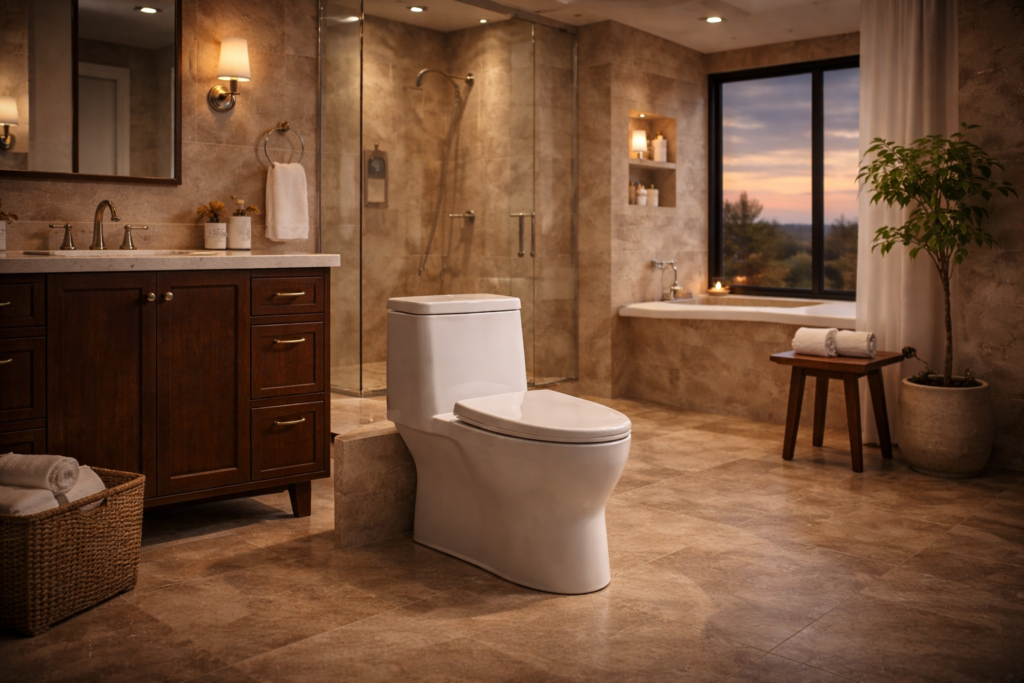
Toilet Remodel Guide: Replacement, Layout, Costs, and Planning

Toilet Remodel Guide Index
- Toilet Remodel Overview
- When Should a Toilet Be Remodeled
- What Types of Toilet Remodels Are Common
- How Do Layout and Room Size Affect a Toilet Remodel
- What Materials and Components Are Used in a Toilet Remodel
- What Upgrades Can Be Added During a Toilet Remodel
- What Installation Details Matter in a Toilet Remodel
- What Affects Toilet Remodel Cost
- What Mistakes Should Homeowners Avoid With a Toilet Remodel
- How Should You Plan a Toilet Remodel
- Related Toilet Remodel Topics
- Frequently Asked Questions About Toilet Remodeling
Toilet Remodel Overview
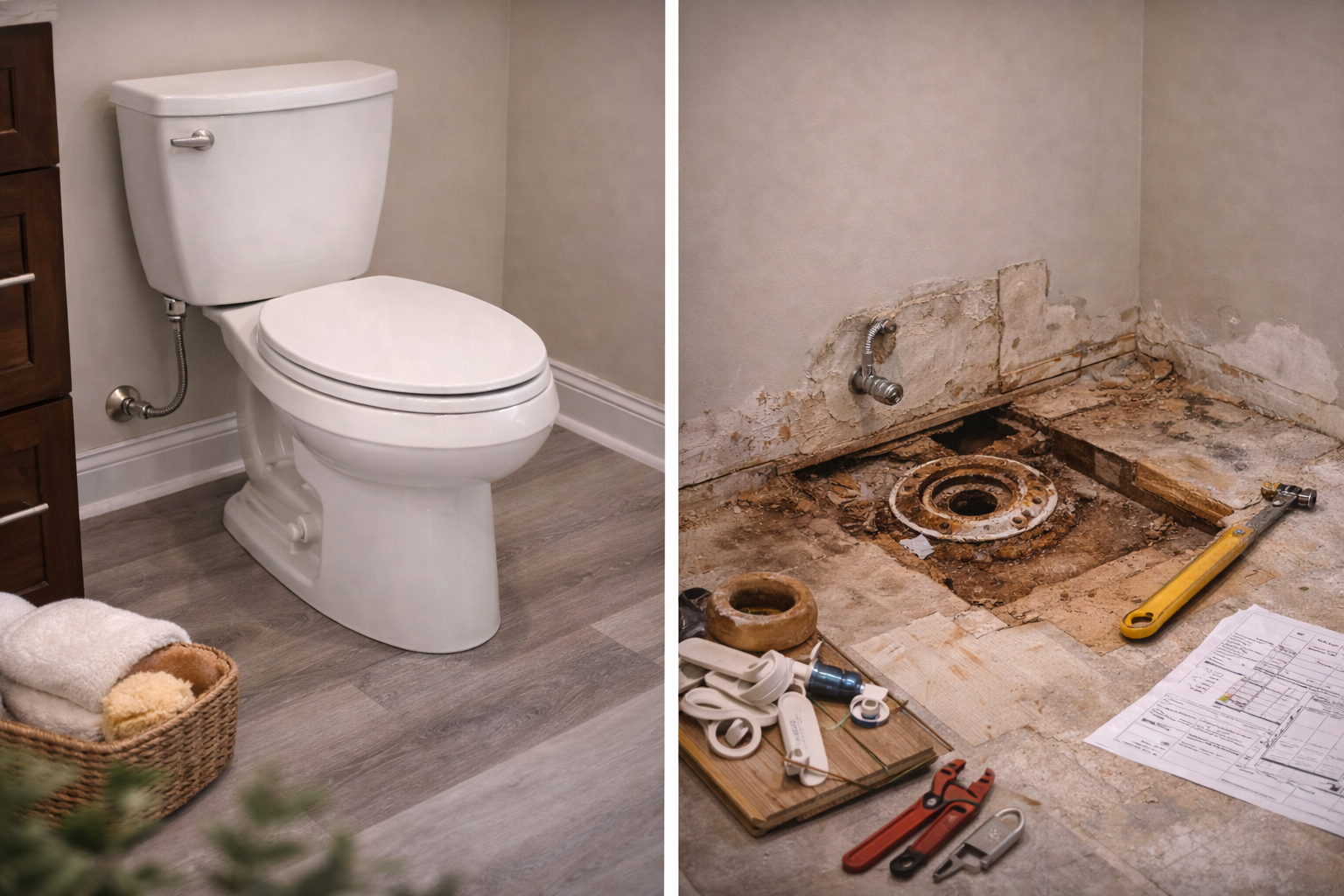
A toilet remodel is more than swapping one toilet for another. In practical remodel work, it can include replacing the toilet, resetting the flange, repairing damaged flooring around the base, changing the rough-in location, improving clearance, upgrading the shutoff valve, and coordinating the toilet area with new flooring, base trim, and wall finishes. In some bathrooms, toilet remodeling is a quick replacement. In others, it is part of a larger layout and plumbing update.
What Gets Updated During a Toilet Remodel
The work may include the toilet itself, wax ring or seal system, flange, shutoff valve, supply line, floor repair around the base, bolt caps, nearby trim, and sometimes the wall finish behind the tank. In a larger remodel, the toilet area may also change because of new flooring, vanity movement, or a layout change that affects clearances.
What Is the Difference Between Replacing a Toilet and Remodeling the Toilet Area
A simple toilet replacement keeps the same location and usually focuses on the fixture, seal, and reconnecting the water line. A toilet remodel goes further and may involve improving clearance, correcting flange height, changing flooring, moving the toilet location, or updating the surrounding finishes so the area works and looks better.
When Should a Toilet Be Remodeled
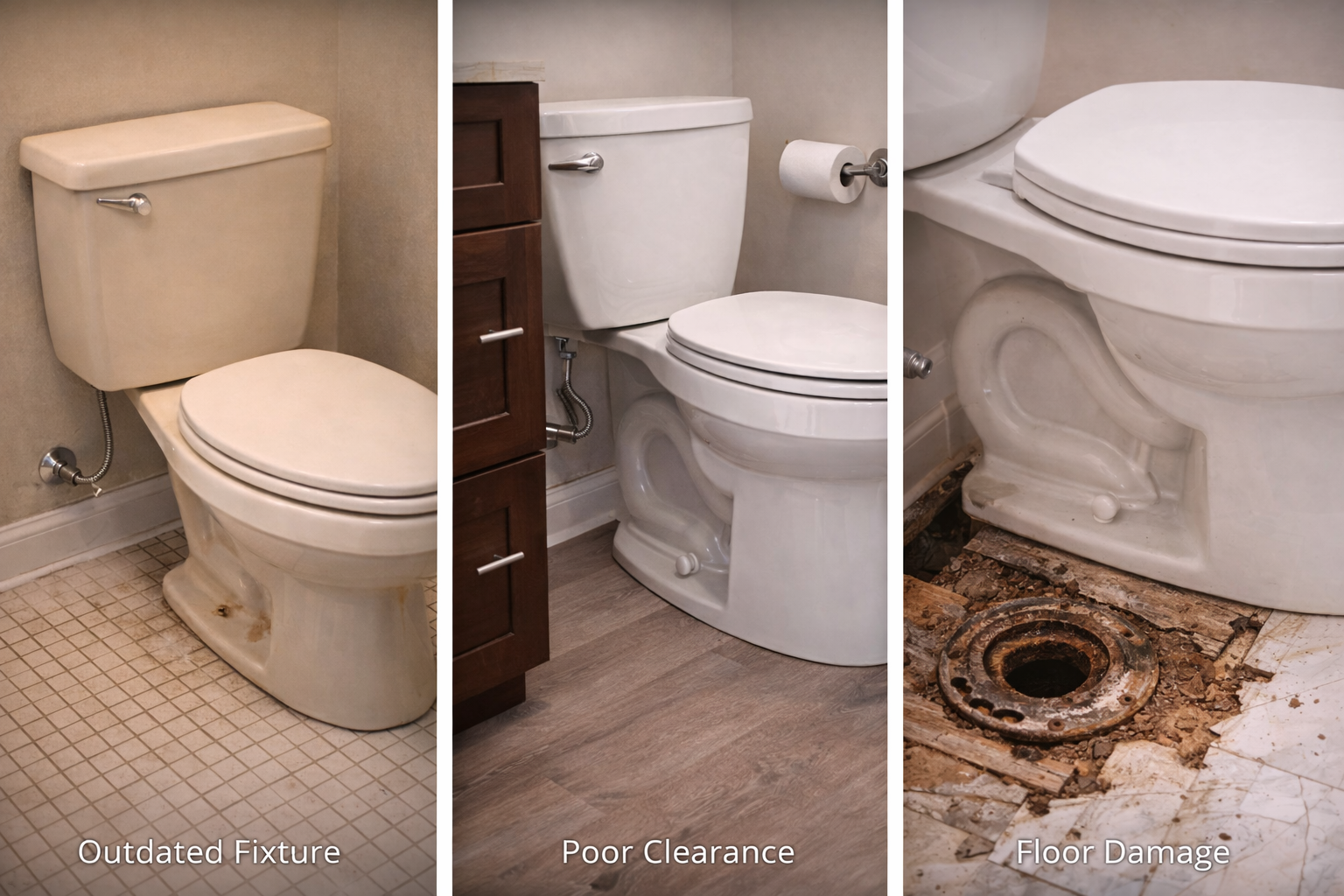
A toilet should usually be remodeled when the fixture is outdated, leaking, rocking, using too much water, or sitting in an area with poor clearance and worn flooring. Common warning signs include repeated leaks at the base, stains around the toilet footprint, an unstable bowl, weak flush performance, or a toilet location that feels crowded and awkward inside the bathroom. Homeowners comparing performance goals can review Energy Saver ventilation guidance.
What Signs Show That a Toilet Area Is Ready for Remodeling
Clear signs include a rocking toilet, cracked base, floor damage near the flange, recurring leaks, outdated appearance, and a shutoff valve or supply line that should have been updated long ago. In older bathrooms, the toilet area may also feel too tight because the room was not designed around current comfort or code expectations.
What Remodeling Goals Usually Lead to a Toilet Upgrade
Toilet upgrades are common when a homeowner wants a more efficient fixture, better comfort height, easier cleaning, improved clearance, or a toilet that fits a larger bathroom remodel. They also come up when flooring work or layout changes make it practical to update the toilet area at the same time.
What Types of Toilet Remodels Are Common
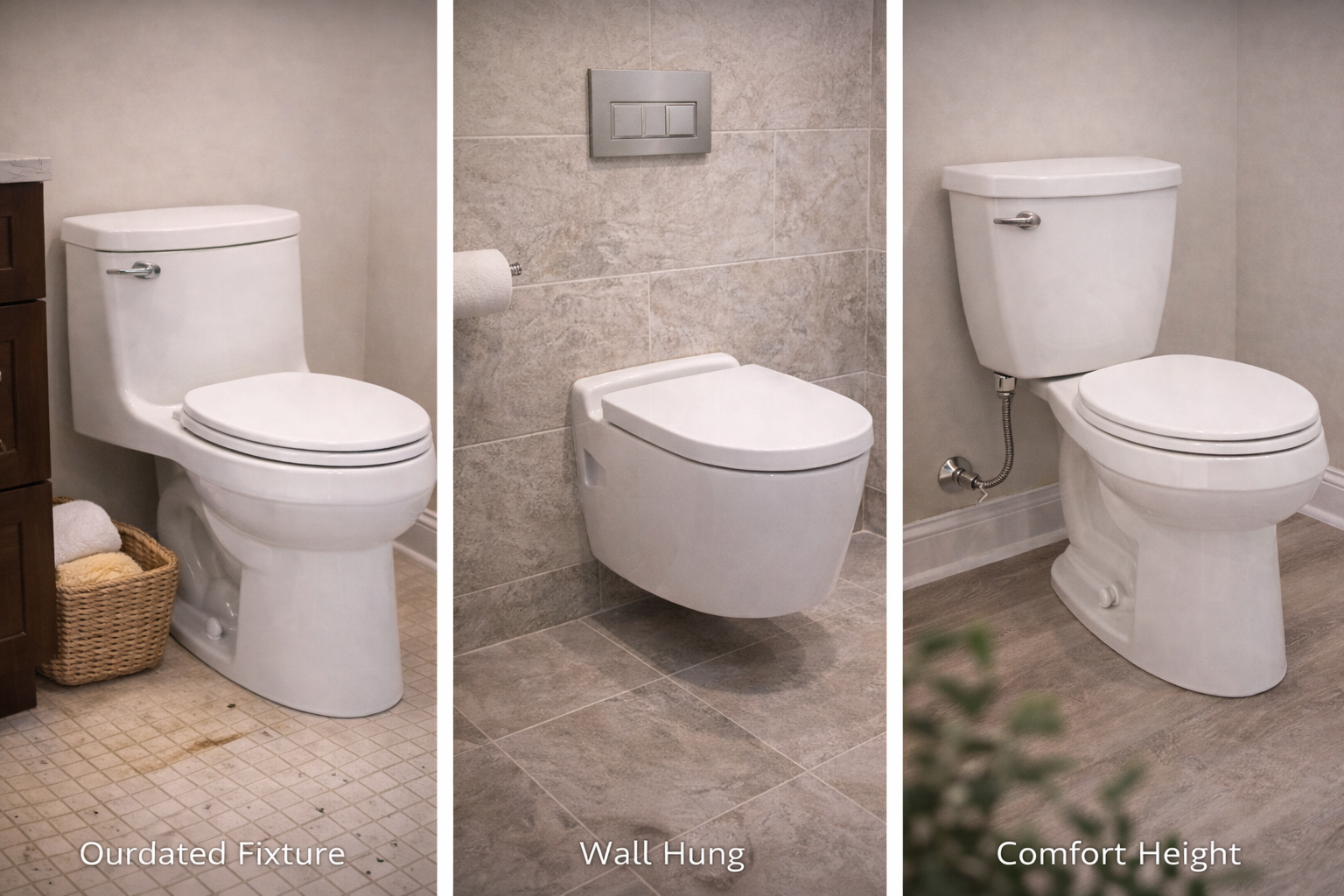
Common toilet remodels include standard toilet replacement, comfort-height toilet upgrades, one-piece toilet installs, skirted toilet upgrades, bidet-seat compatible toilet replacements, and in some higher-end projects wall-hung toilet systems. The right option depends on room size, budget, plumbing layout, and cleaning preferences.
What Toilet Types Are Most Common in Remodeling Projects
Two-piece and one-piece floor-mounted toilets are the most common because they fit standard plumbing and are widely available. Comfort-height models are popular when easier sitting and standing is important. Skirted toilets are often chosen for easier cleaning and a cleaner look around the base.
When Does a More Specialized Toilet Setup Make Sense
Specialized setups such as wall-hung toilets or integrated bidet-style systems make sense when the remodel is already changing the wall structure, plumbing, or overall bathroom design enough to support them. In a simpler remodel, a high-quality floor-a wall mounted toilet often gives the best balance of cost and function.
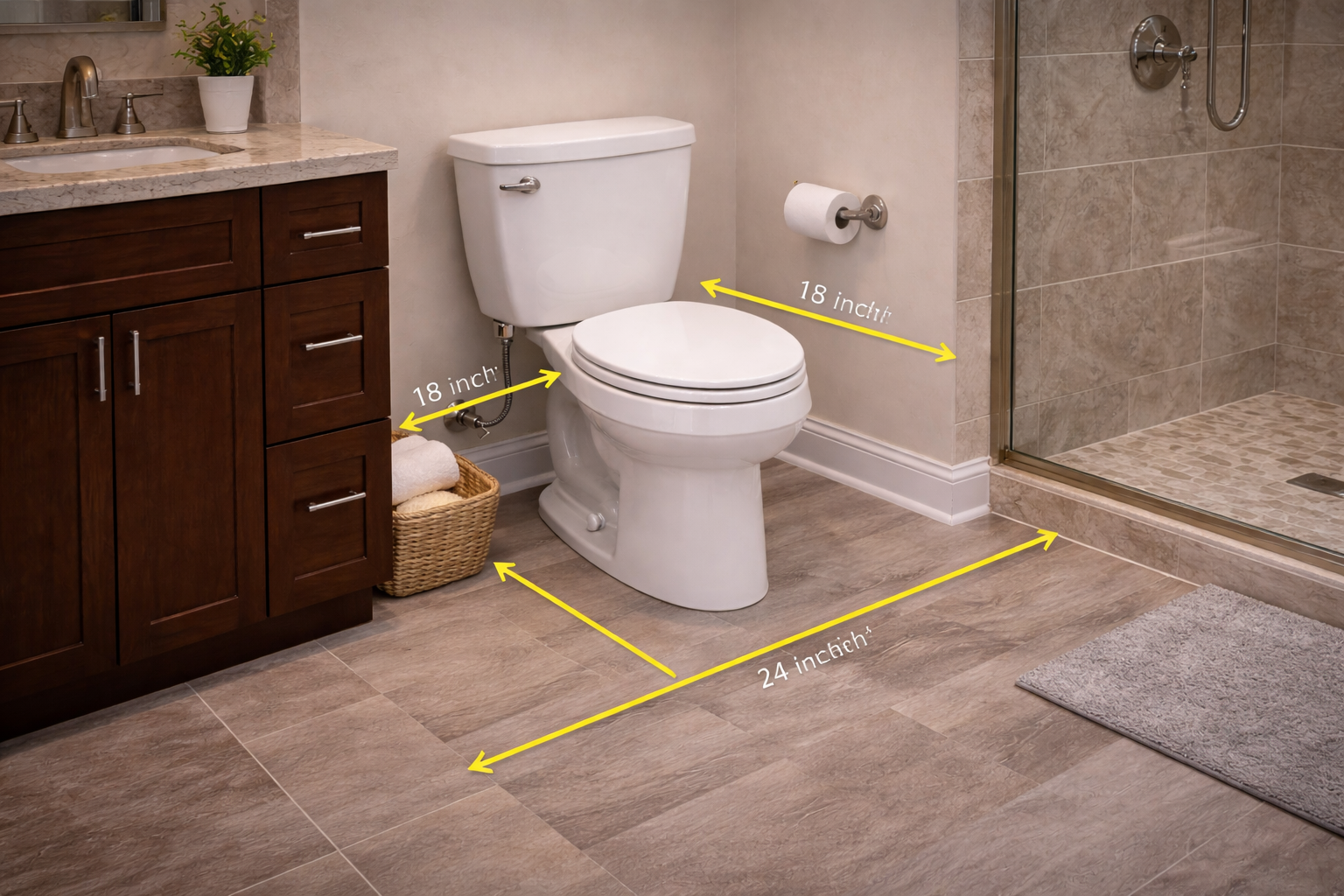
How Do Layout and Room Size Affect a Toilet Remodel
Layout and room size affect how much clearance the toilet has, whether the fixture feels cramped, and whether the toilet can be moved to improve the bathroom. Even when the toilet stays in the same place, the amount of space around it affects comfort, cleaning access, and how the room flows. For layout and clearance planning, many designers reference NKBA planning guidelines.
Why Do Toilet Clearances Matter So Much
Clearances matter because the toilet has to feel usable, not squeezed between a vanity, wall, or tub. In practical remodel work, the spacing around the toilet is one of the clearest signs of whether the bathroom layout is comfortable or badly planned.
How Does Bathroom Size Change the Best Toilet Strategy
In a smaller bathroom, a more compact toilet or better nearby layout may improve function without moving plumbing. In a larger bathroom, the remodel may allow better separation between the toilet and other fixtures. The best toilet setup is the one that improves use without wasting space or forcing awkward spacing elsewhere in the room.
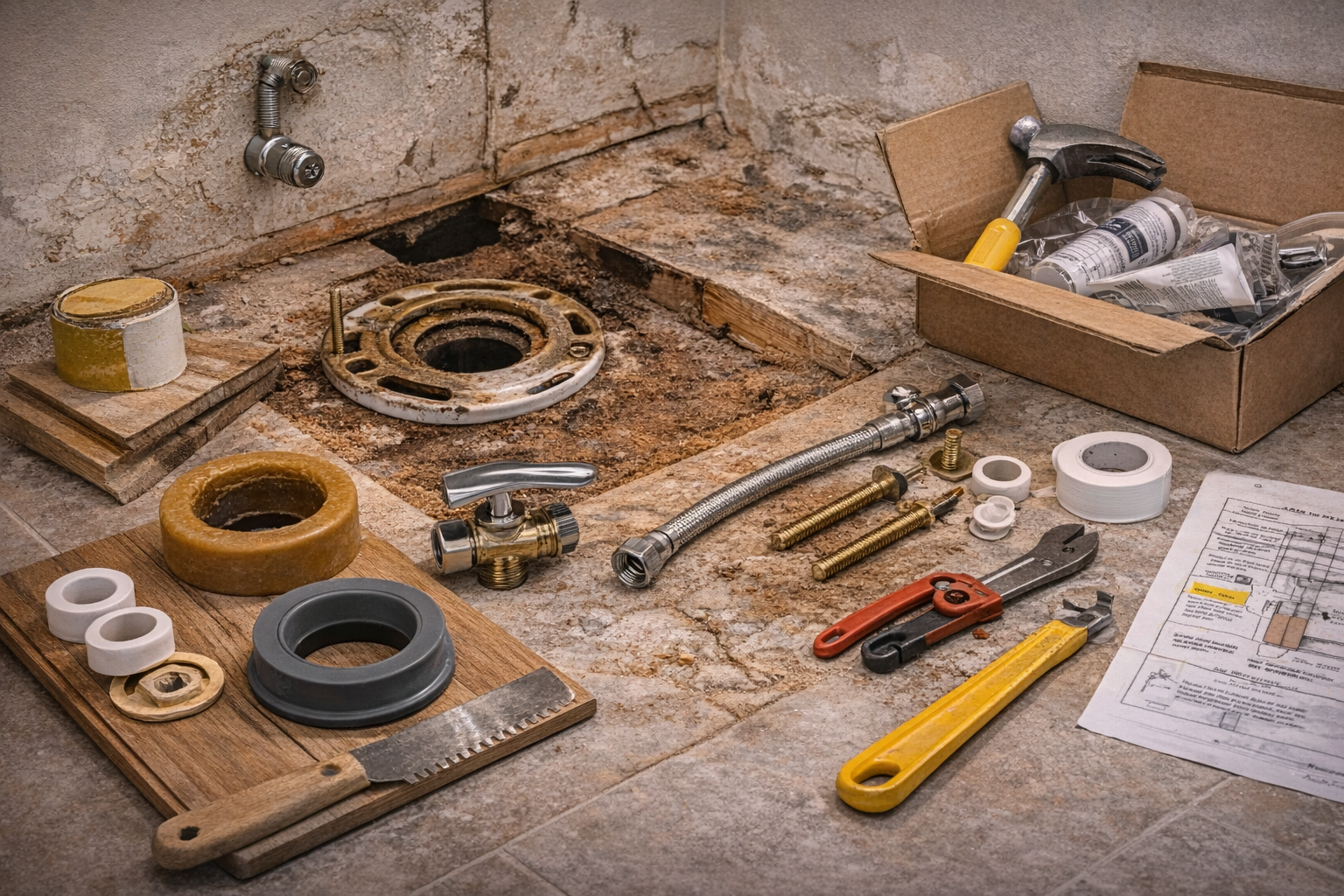
What Materials and Components Are Used in a Toilet Remodel
A toilet remodel uses more than the visible fixture. The job may involve the toilet flange, closet bolts, wax ring or no-wax seal, shutoff valve, supply line, floor patching materials, trim details, and sometimes plumbing fittings if the location is changing. The fixture only performs well if the connection below it is sound. Homeowners who want to dig deeper into this feature can review smart toilet.
What Plumbing and Installation Parts Matter Most
The flange, seal, shutoff valve, and supply line are some of the most important parts because they determine whether the toilet sits securely and stays leak free. If the flange is broken or sitting at the wrong height after flooring changes, the toilet may never seal correctly until that is fixed.
What Finish Materials Usually Change Around the Toilet
Flooring, base trim, caulk lines, wall paint, and sometimes small wall tile or trim details around the toilet often change during a remodel. These finish materials matter because toilet replacement often exposes old flooring outlines or damaged trim that should not be left in place after the new fixture goes in.
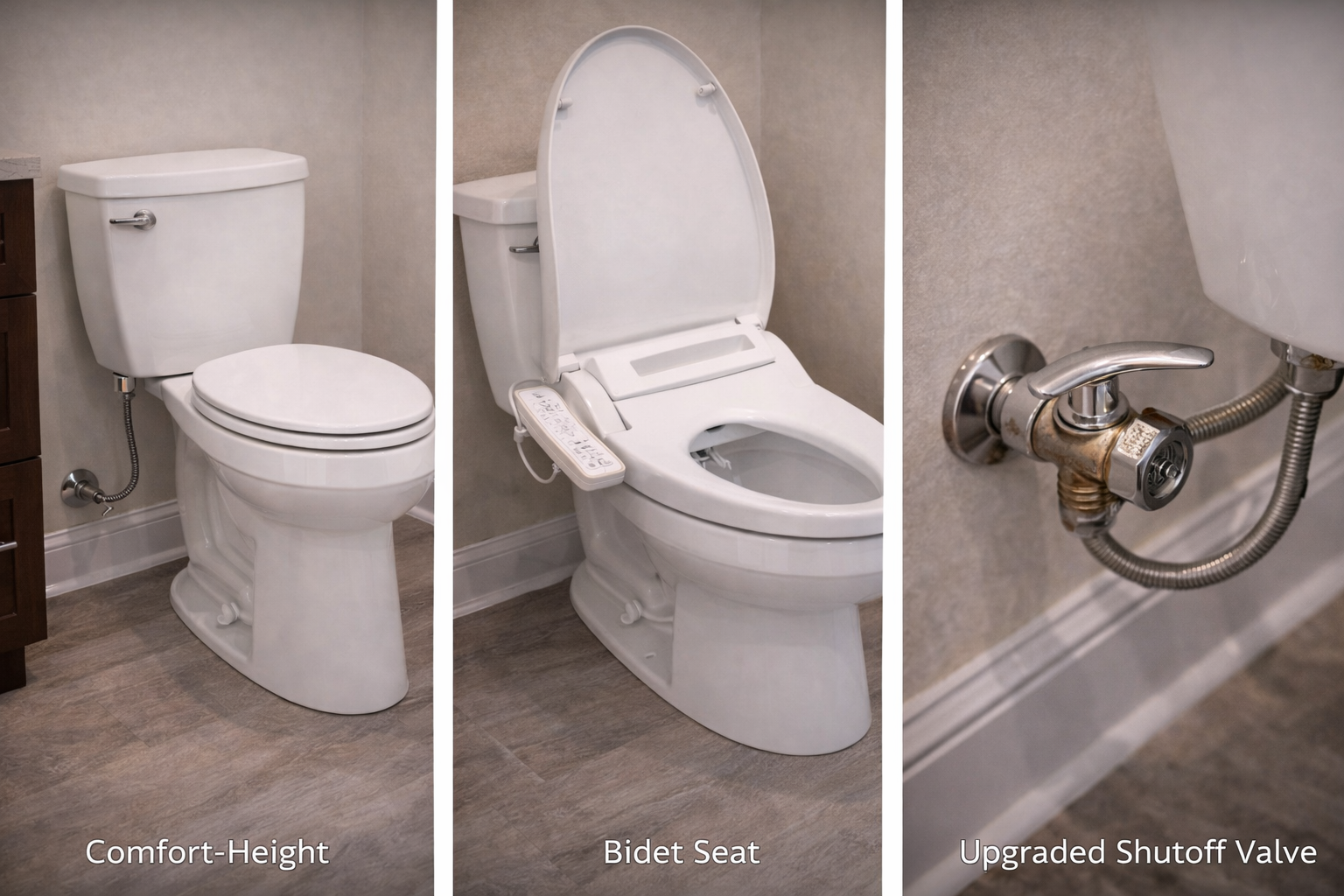
What Upgrades Can Be Added During a Toilet Remodel
Toilet work is often the best time to add upgrades that improve comfort, efficiency, and daily use. Common upgrades include comfort-height bowls, better flushing performance, soft-close seats, bidet seats, upgraded shutoff valves, and layout changes that make the toilet area easier to use and clean. For water-use considerations, homeowners can review WaterSense guidance.
What Functional Upgrades Are Most Useful at the Toilet
Comfort-height fixtures, better flush systems, soft-close seats, and shutoff valve updates are some of the most useful upgrades because they improve daily use immediately. In family bathrooms or accessibility-focused remodels, these details often matter more than decorative changes.
What Design or Technology Upgrades Usually Happen at the Same Time
Toilet remodels can also include skirted bowls, cleaner base profiles, bidet seats, and in some cases wall-hung systems or hidden-tank setups. These upgrades are more common when the whole bathroom is being modernized and the toilet area is being redesigned rather than simply replaced.
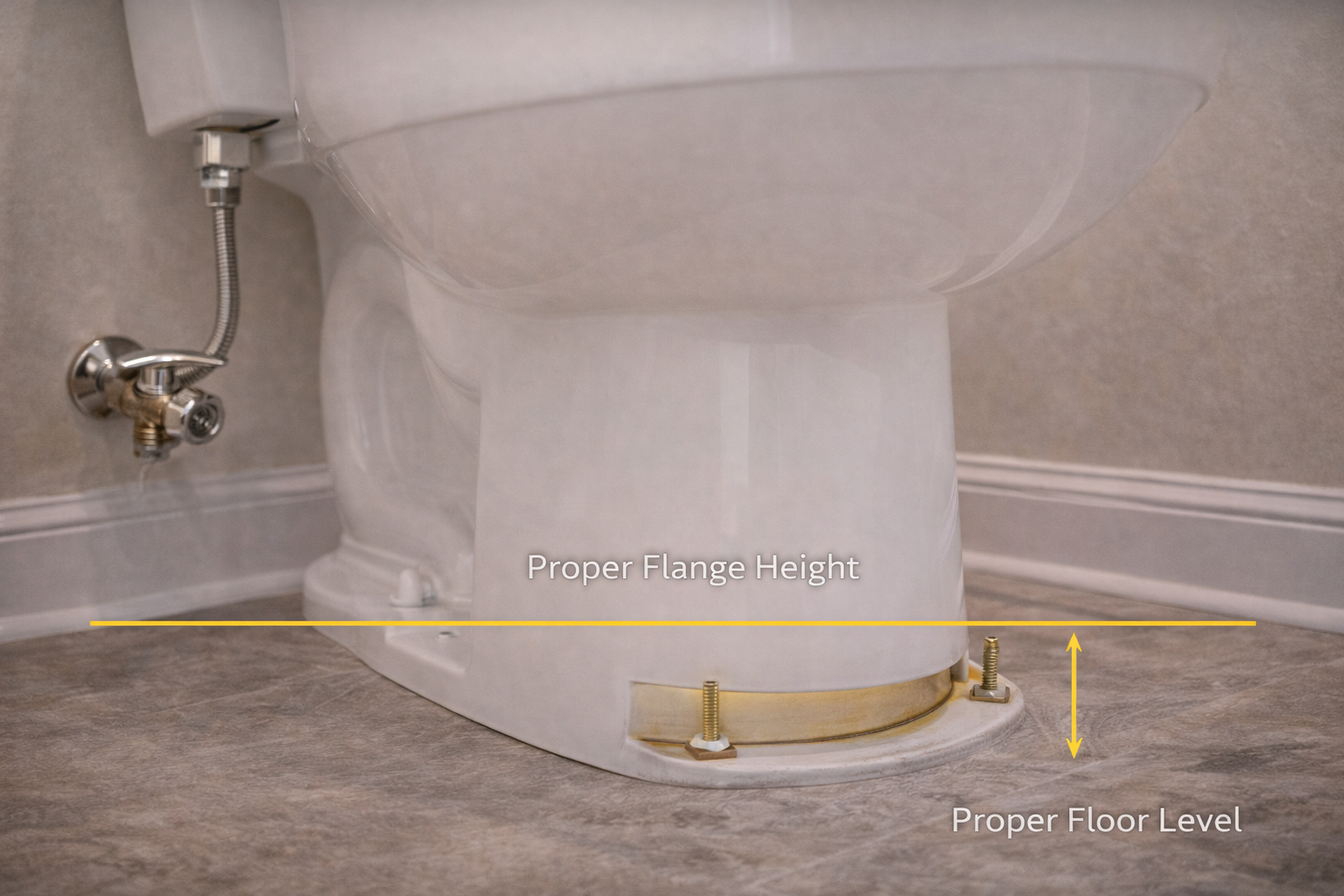
What Installation Details Matter in a Toilet Remodel
Toilet installation depends on flange condition, floor height, fixture alignment, supply connection, and whether the toilet sits flat and seals correctly to the floor. If any of those details are wrong, the toilet may rock, leak, or develop problems around the base even when the new fixture itself is fine.
Why Do Flange Height and Floor Conditions Matter So Much
Flange height has to match the finished floor correctly so the seal can compress the right way. If new flooring changes the height and the flange is left too low or too high, the toilet may not seal properly. Floor condition also matters because a toilet installed on an uneven or damaged surface is more likely to move and fail.
What Placement and Connection Problems Show Up During Installation
Common issues include old shutoff valves that should be replaced, supply lines that no longer match the new toilet, flange bolts in poor condition, and rough-in measurements that limit which toilet styles fit. These are practical details that affect whether the new toilet is a clean upgrade or a frustrating callback later.
What Affects Toilet Remodel Cost
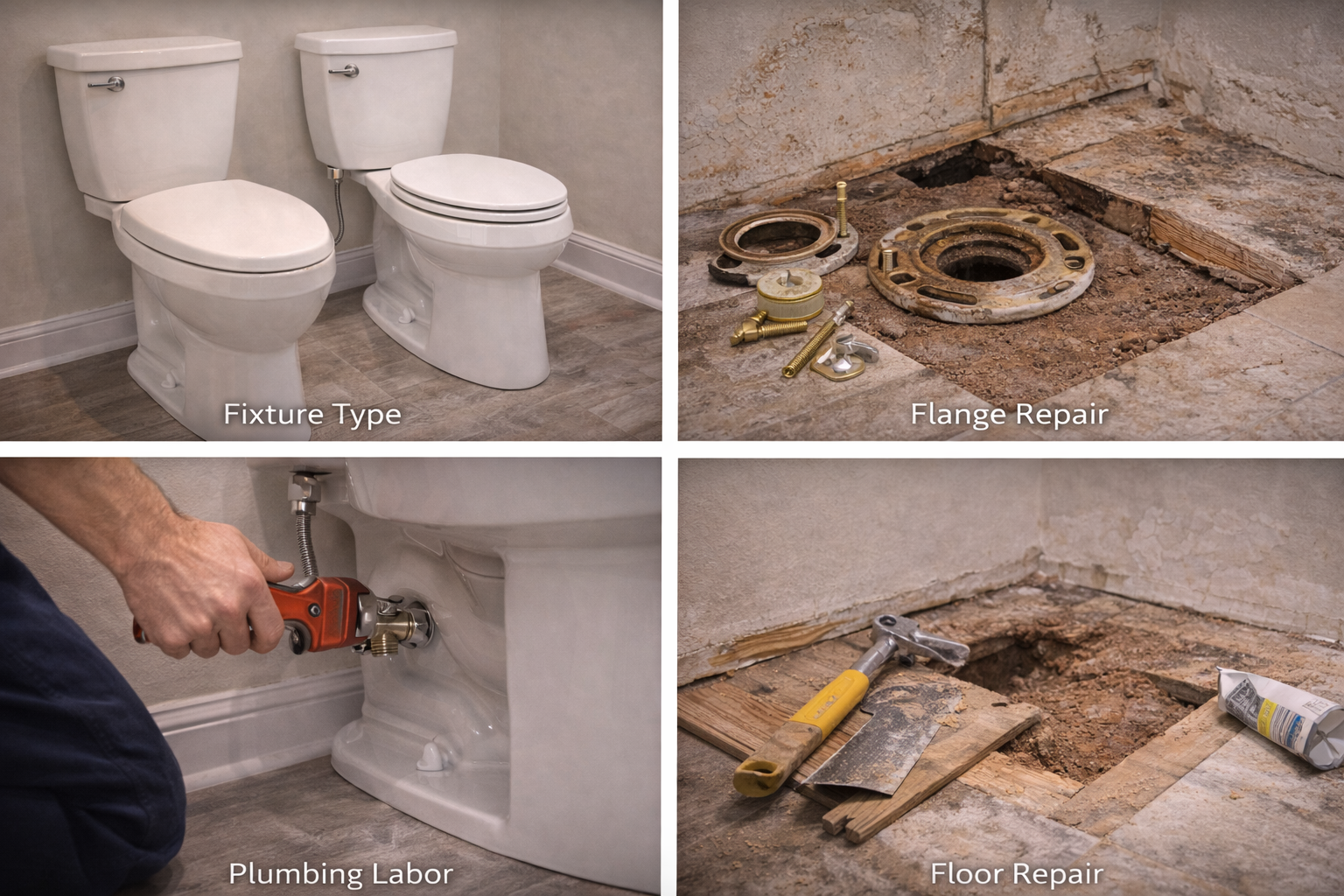
Toilet remodel cost usually depends on the fixture chosen, whether the toilet location stays the same, the condition of the flange and floor, and whether the remodel includes nearby finish work. A direct toilet replacement is very different from a project that repairs floor damage, updates plumbing parts, and moves the toilet to improve layout. Homeowners comparing options often look at bathroom remodeling as part of the overall plan.
Which Toilet Choices Usually Raise the Cost
Costs usually rise with one-piece or specialty toilets, bidet-compatible setups, wall-hung systems, comfort upgrades, and projects that involve moving the toilet rough-in. The fixture price matters, but labor and repair work around the fixture often matter just as much.
How Do Labor and Existing Conditions Change the Budget
Labor costs go up when the flange is damaged, the floor needs repair, the shutoff valve needs replacement, or the toilet move requires plumbing changes. Existing conditions matter because many toilet problems are hidden under the old base until the fixture is removed.
What Mistakes Should Homeowners Avoid With a Toilet Remodel
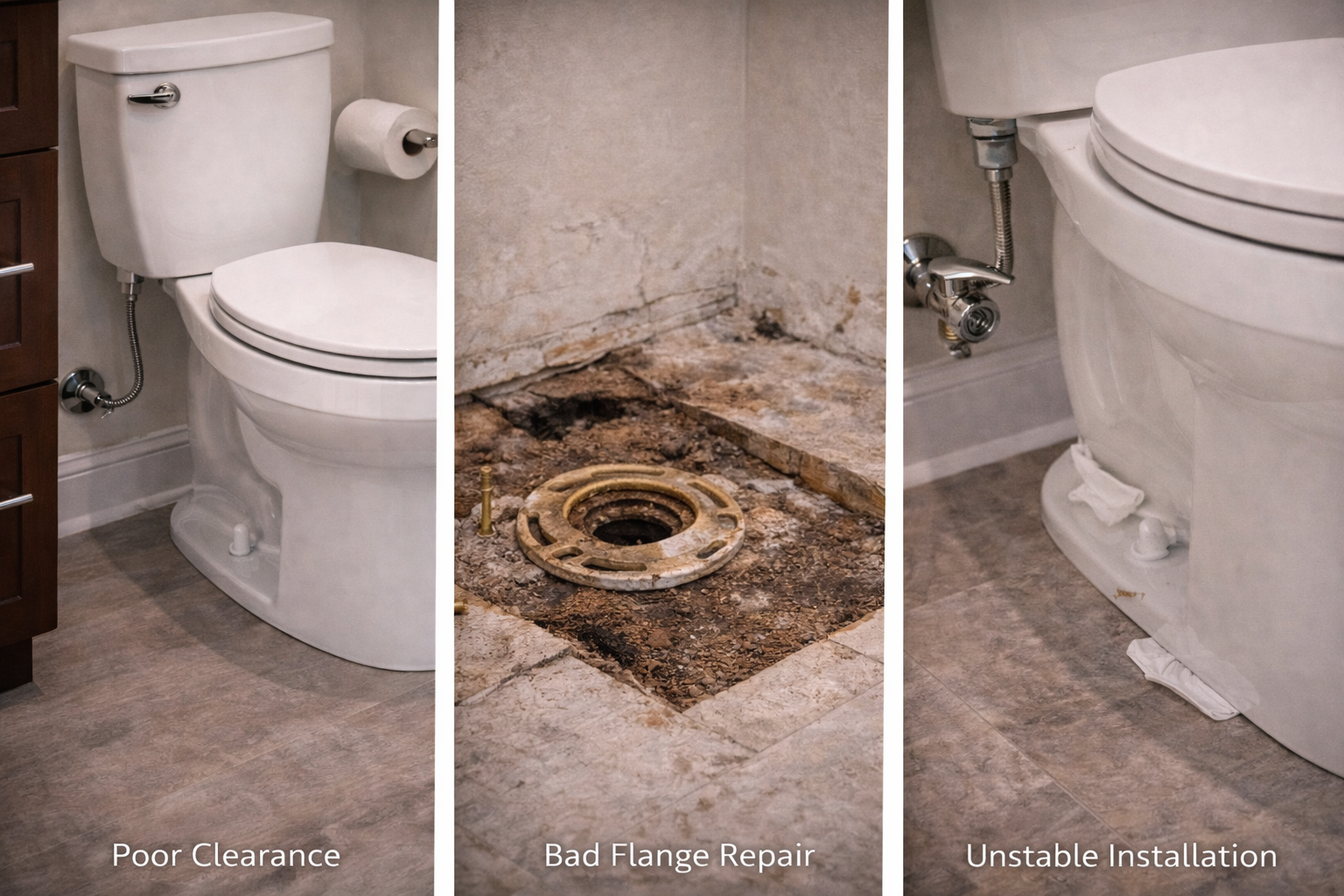
The biggest toilet remodeling mistakes usually happen when the fixture is changed without fixing the connection and finish issues around it. A new toilet does not solve a damaged flange, soft floor, bad shutoff valve, or poor layout by itself.
Why Is It a Problem to Replace the Toilet Without Checking the Floor and Flange
If the flange is broken or the floor is damaged, the toilet may leak or rock even after a brand-new fixture is installed. Practical toilet remodeling starts by checking what is under the old toilet, not just choosing the next bowl and seat.
Why Is It Risky to Ignore Comfort and Clearance
A toilet area that is too tight, too low, or poorly placed can stay uncomfortable even after the remodel. If the project is already improving the bathroom, it makes sense to fix spacing and usability problems at the same time instead of keeping the same awkward setup.
How Should You Plan a Toilet Remodel
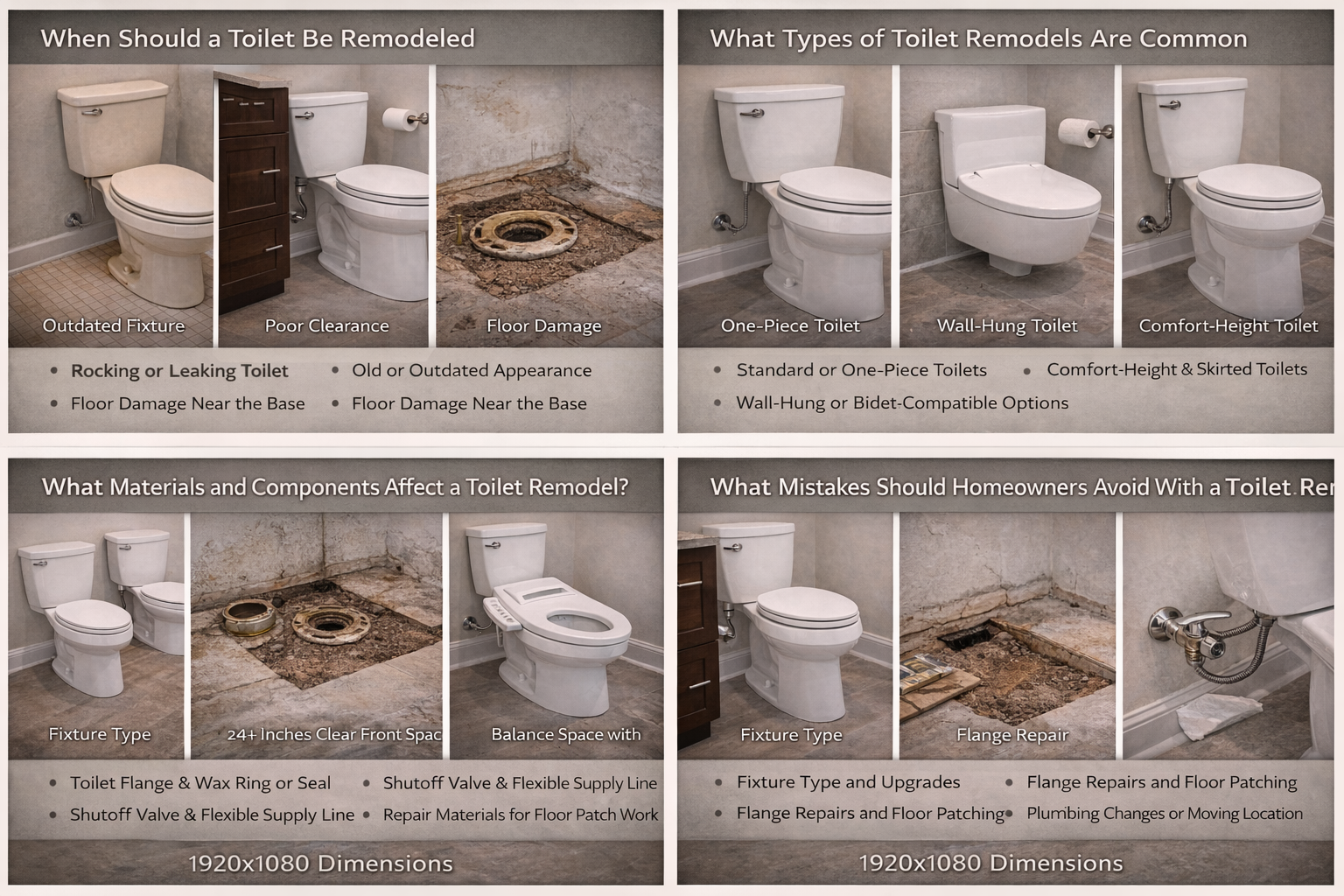
A toilet remodel should be planned by checking the existing rough-in, flange condition, floor condition, and bathroom clearance before choosing the new fixture. The best plan matches the toilet type, height, and performance to the room rather than treating the toilet as a simple last-minute purchase.
What Should Be Decided Before Toilet Work Starts
Before construction starts, it helps to confirm the rough-in size, bowl shape, fixture height, flush performance, shutoff condition, floor finish around the toilet, and whether the remodel is keeping the same location or moving the toilet for better use of the room.
How Can a Homeowner Prepare for the Installation Process
Homeowners should be ready for toilet removal, temporary bathroom downtime, possible flange or floor repair, and reconnection of the water supply. If the toilet project is part of a larger bathroom remodel, it also helps to coordinate it with flooring, trim, paint, and other plumbing fixture work so the final area looks complete.
Related Toilet Remodel Topics
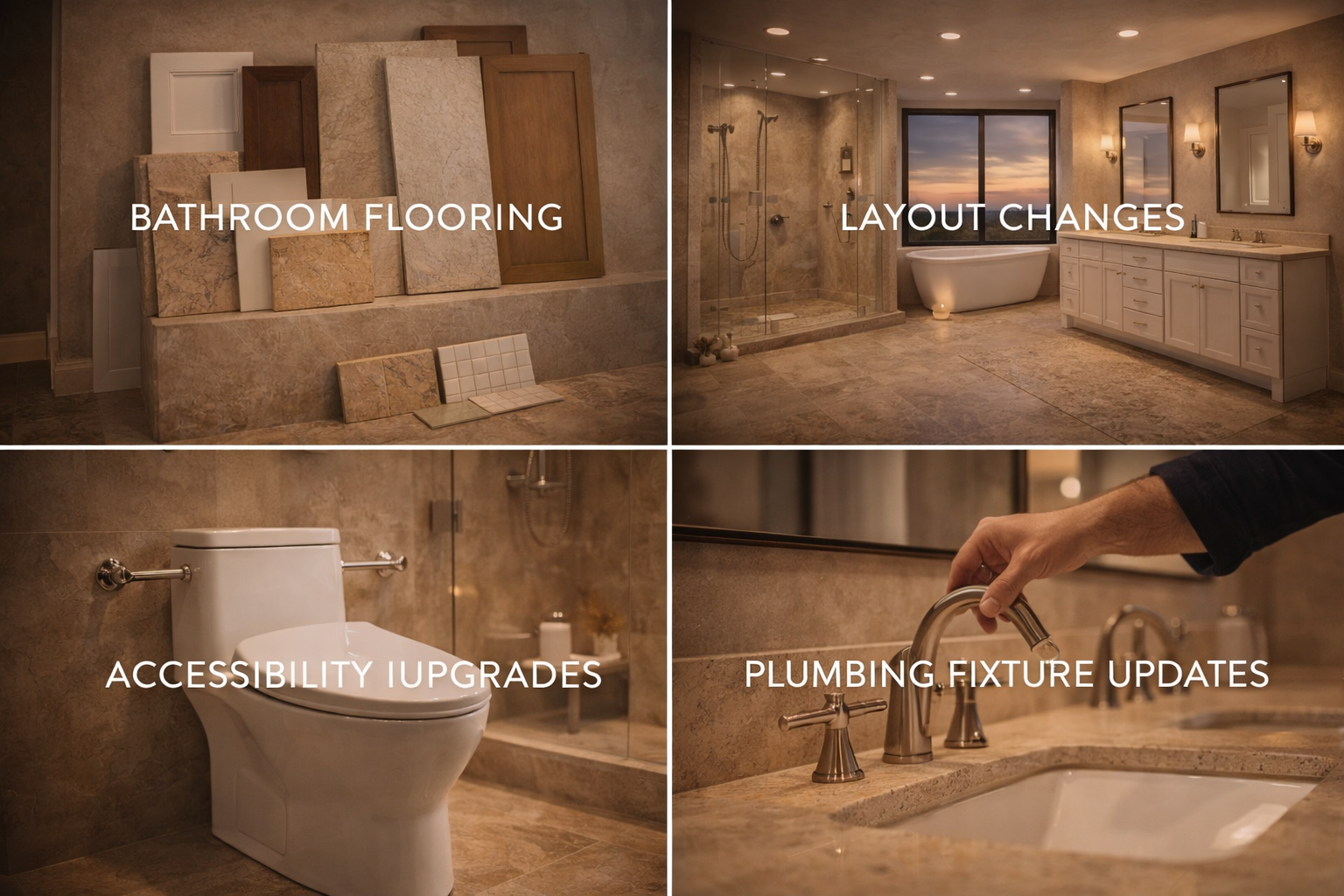
Toilet remodeling overlaps with bathroom flooring, bathroom layout changes, plumbing fixture updates, accessibility planning, and full bathroom remodeling because the toilet area affects comfort, clearance, and how the room functions every day. Related topics help homeowners compare whether they only need a toilet replacement or a more complete rework of the area.
Which Toilet-Related Pages Should Connect to This Topic
Strong related pages include bathroom layout changes, bathroom flooring, accessibility upgrades, bidet seats, and plumbing fixture remodeling. Those topics help break down the more specific decisions that come up when the toilet area is being updated.
Which Bathroom Remodeling Topics Often Connect to Toilet Work
Toilet work often connects to bathroom flooring, vanity remodels, layout changes, accessibility upgrades, and full bathroom remodeling. In practical projects, these pieces overlap because floor height, fixture spacing, and plumbing details all work together around the toilet area.
Frequently Asked Questions About Toilet Remodel
A toilet remodel can include the fixture, flange repair, supply line, shutoff valve, floor repair, nearby trim, and in some cases plumbing or layout changes around the toilet area.
Signs include rocking, leaking, repeated clogging, poor flush performance, cracks, and visible floor damage around the base.
Yes. A toilet can be moved, but doing so often requires plumbing changes that make the project more involved than a direct replacement.
A secure flange connection, good floor condition, and proper installation are some of the most important parts because they determine whether the toilet stays stable and leak free.
They often are, especially when easier sitting and standing are important for the people using the bathroom every day.
Not always. Many toilet replacements reuse the existing rough-in and water supply, but damaged parts may still need repair or replacement.
A simple replacement can move quickly, while a remodel that includes floor repair, flange correction, or plumbing relocation takes longer.
Yes. Better height, better clearance, and improved placement can make the toilet area easier and safer to use.
It can improve bathroom function and appearance, especially when the old fixture was outdated, inefficient, or poorly installed.
The first step is checking the current toilet location, rough-in size, and floor condition so the new fixture and any related repairs are planned correctly.