
Countertop Remodel Guide: Materials, Installation, Costs, and Planning
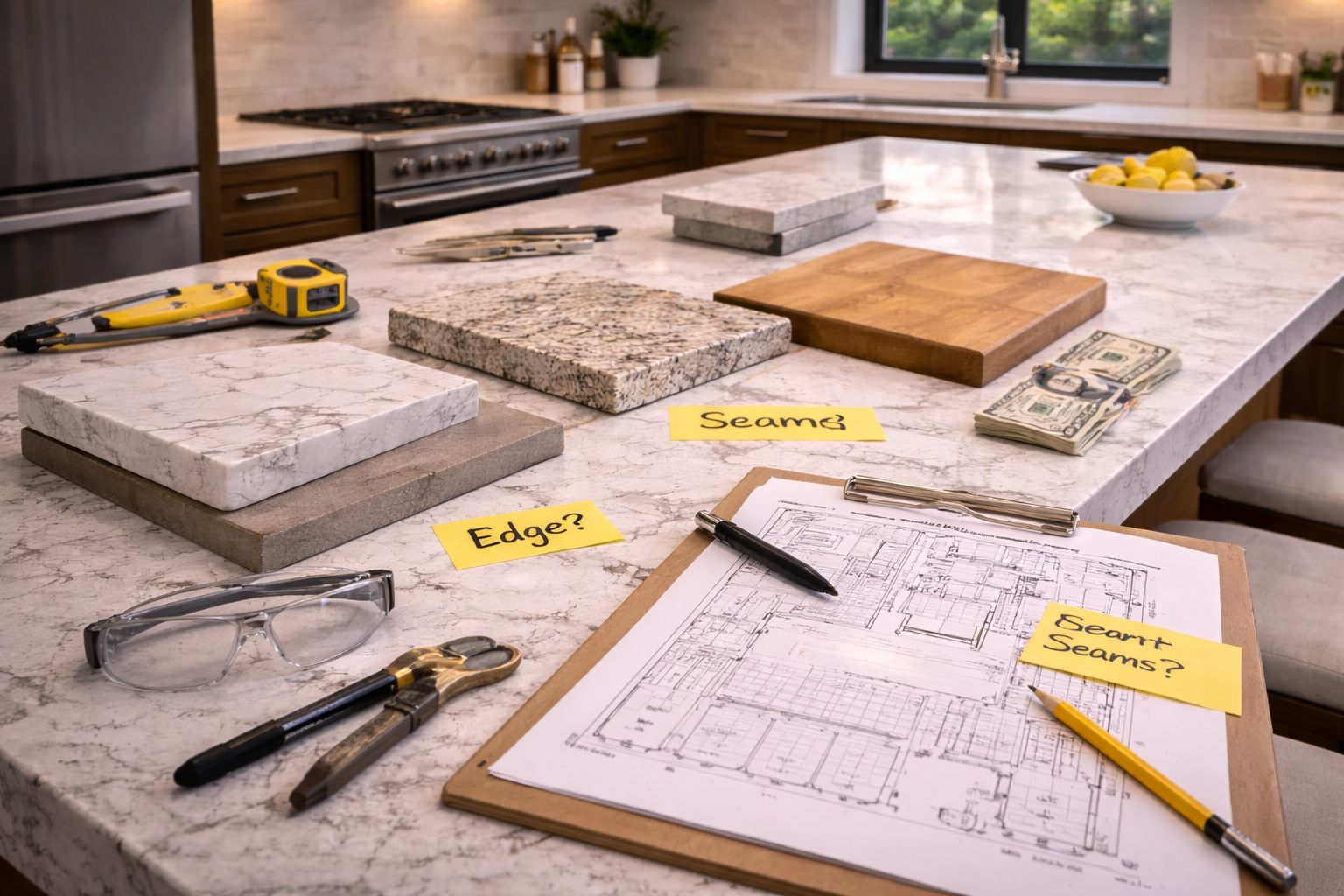
Countertop Guide Index
- Countertop Remodel Overview
- When Should Kitchen Countertops Be Remodeled
- What Types of Countertop Remodels Are Common
- How Do Layout and Kitchen Size Affect a Countertop Remodel
- What Materials and Components Are Used in a Countertop Remodel
- What Upgrades Can Be Added During a Countertop Remodel
- What Installation Details Matter in a Countertop Remodel
- What Affects Countertop Remodel Cost
- What Mistakes Should Homeowners Avoid With a Countertop Remodel
- How Should You Plan a Countertop Remodel
- Related Countertop Remodel Topics
Countertop Remodel Overview
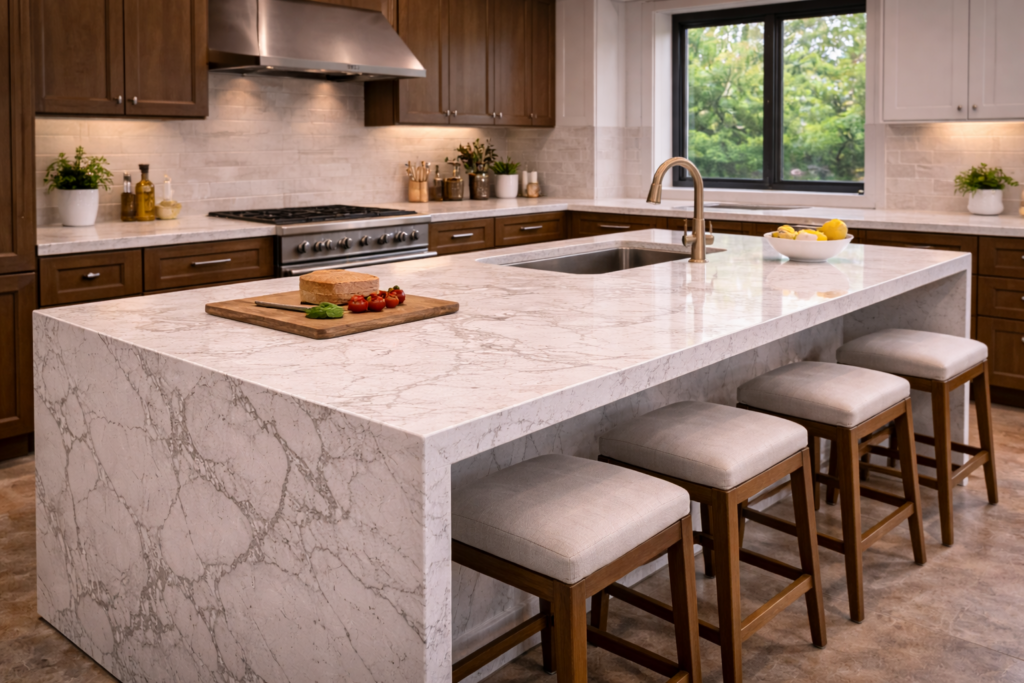
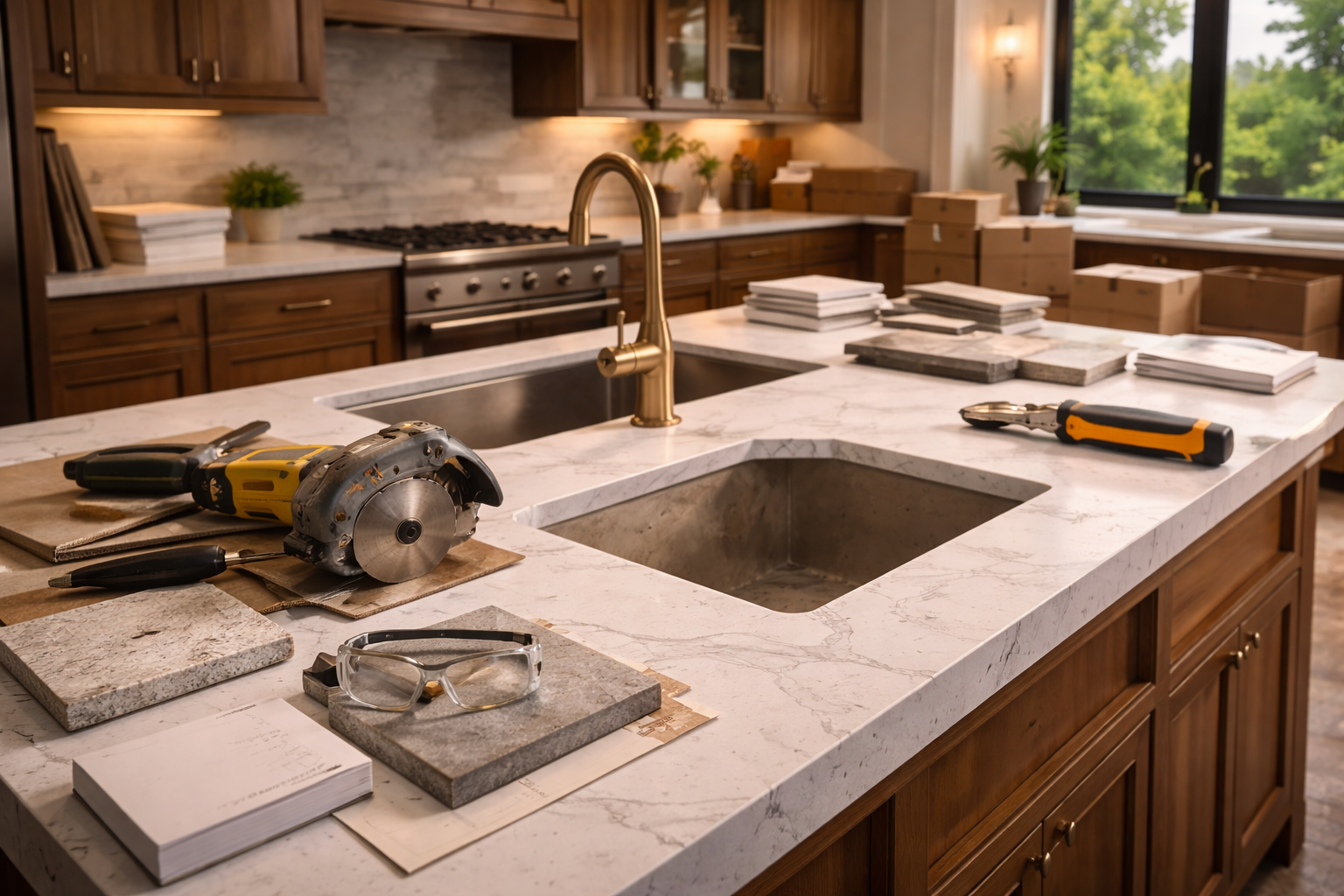
A countertop remodel changes one of the most used work surfaces in the kitchen. In practical remodel work, that can include replacing the countertop material, changing the sink cutout, updating the backsplash edge, coordinating appliance and cabinet alignment, and rebuilding the work surface so it fits the way the kitchen is actually used. Countertop remodeling affects not only style but also prep space, cleaning ease, and how durable the kitchen feels day to day.
What Gets Updated During a Countertop Remodel
The work may include the countertop slab or surface, sink cutout, faucet holes, backsplash transitions, seam locations, support details, and the way the new countertop meets the cabinets, walls, and appliances. In some kitchens, the remodel also includes a new sink, faucet, cooktop opening, or island overhang change because the new countertop gives the best chance to update those details at the same time.
What Is the Difference Between Replacing a Countertop and Reworking the Countertop Layout
Replacing a countertop keeps the basic surface layout similar while changing the material or finish. Reworking the countertop layout goes further and may involve changing overhangs, sink position, island shape, edge details, or the way the surface supports prep, seating, and appliance zones. That deeper work can improve function more than material alone.
When Should Kitchen Countertops Be Remodeled
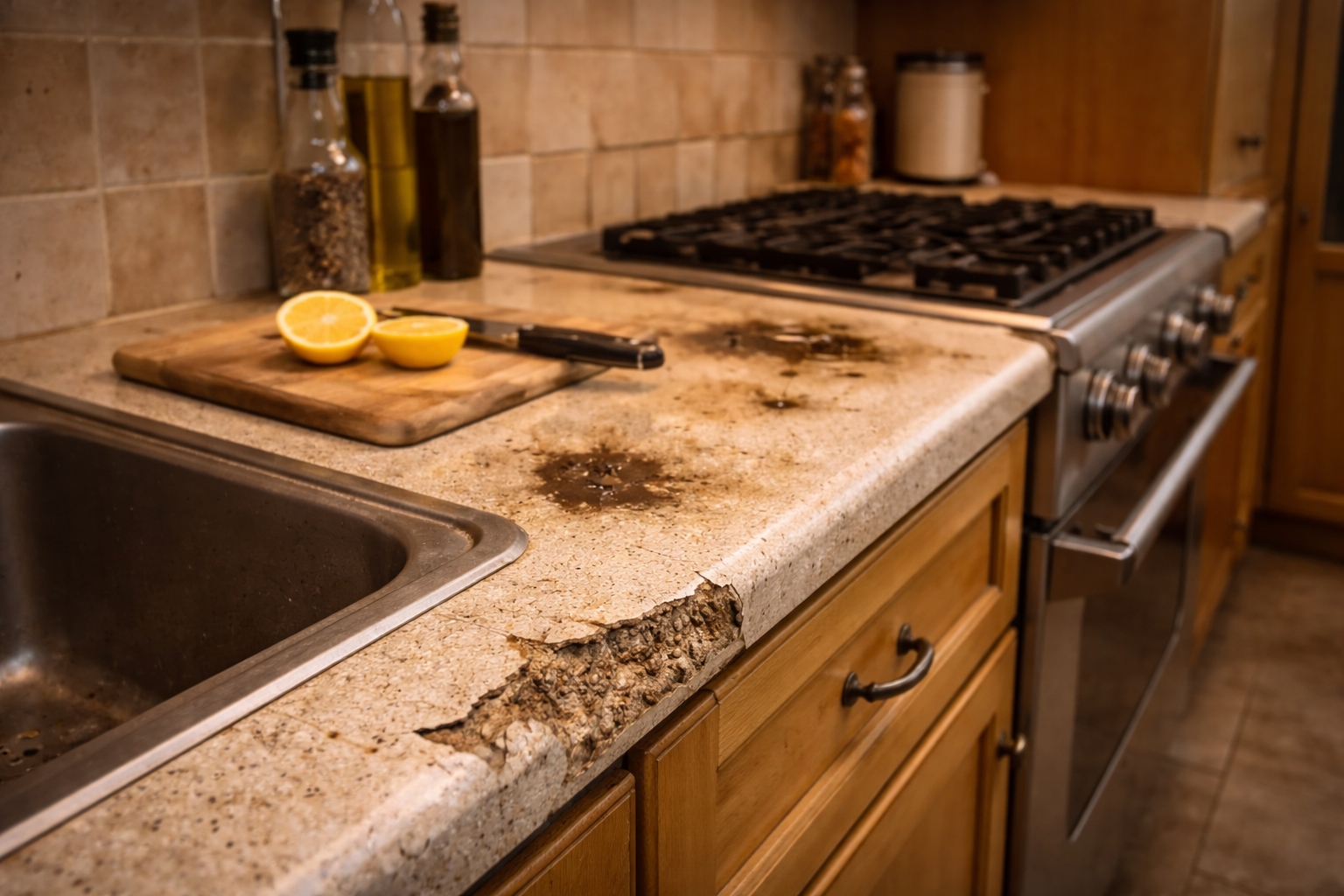
Kitchen countertops should usually be remodeled when the surface is damaged, outdated, hard to maintain, or no longer works well with the rest of the kitchen layout. Common warning signs include chipped edges, burn marks, staining, seam failure, poor sink fit, and surfaces that no longer match newer cabinets, appliances, or the kitchen design direction. Homeowners weighing long-term operating costs often review Energy Saver guidance.
What Signs Show That Kitchen Countertops Are Ready for Remodeling
Clear signs include cracked surfaces, worn laminate edges, grout lines that stay stained on tile countertops, sink areas with water damage, and surfaces that have lost too much usable function because of poor cutout placement or awkward seams. In some kitchens, the countertop still works physically but makes the whole room feel dated.
What Remodeling Goals Usually Lead to Countertop Upgrades
Countertop upgrades are common when homeowners want better durability, a cleaner look, more usable prep space, easier cleaning, or a kitchen that feels more current and better tied together with the cabinets and backsplash. They also happen when a cabinet remodel makes the old counter no longer worth keeping.
What Types of Countertop Remodels Are Common
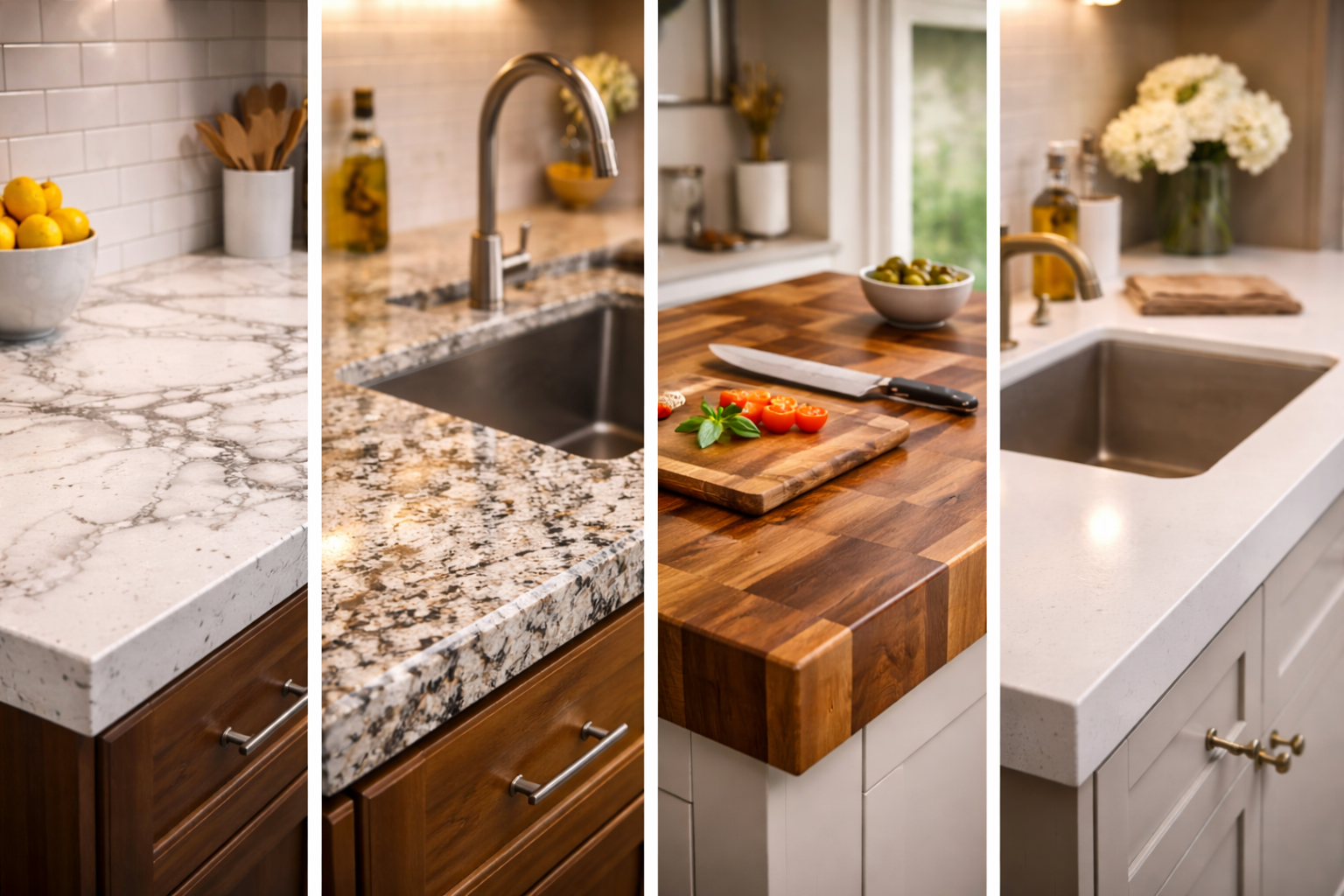
Common countertop remodels include full countertop replacement, island countertop changes, sink and counter reconfiguration, waterfall edge upgrades, and material-specific upgrades such as quartz, granite, butcher block, laminate, or solid-surface replacements. The right type depends on budget, kitchen layout, and how much of the surrounding kitchen is also changing. This decision often connects directly to quartz countertops, especially when the goal is a more complete remodel.
What Countertop Remodel Styles Are Most Common in Kitchen Projects
Full slab replacement is common when the old surface is worn out or the style needs a major update. Island surface upgrades are common when the kitchen island is becoming a more important prep or seating zone. More design-focused remodels may add larger overhangs, cleaner backsplash transitions, or a stronger edge profile to change how the kitchen feels.
When Does One Countertop Remodel Type Make More Sense Than Another
A straightforward replacement may make more sense when the cabinet layout already works and the surface simply needs better performance or a cleaner finish. A more involved countertop remodel may make more sense when the sink, island, or prep areas need to be reworked at the same time to improve how the kitchen functions.
How Do Layout and Kitchen Size Affect a Countertop Remodel
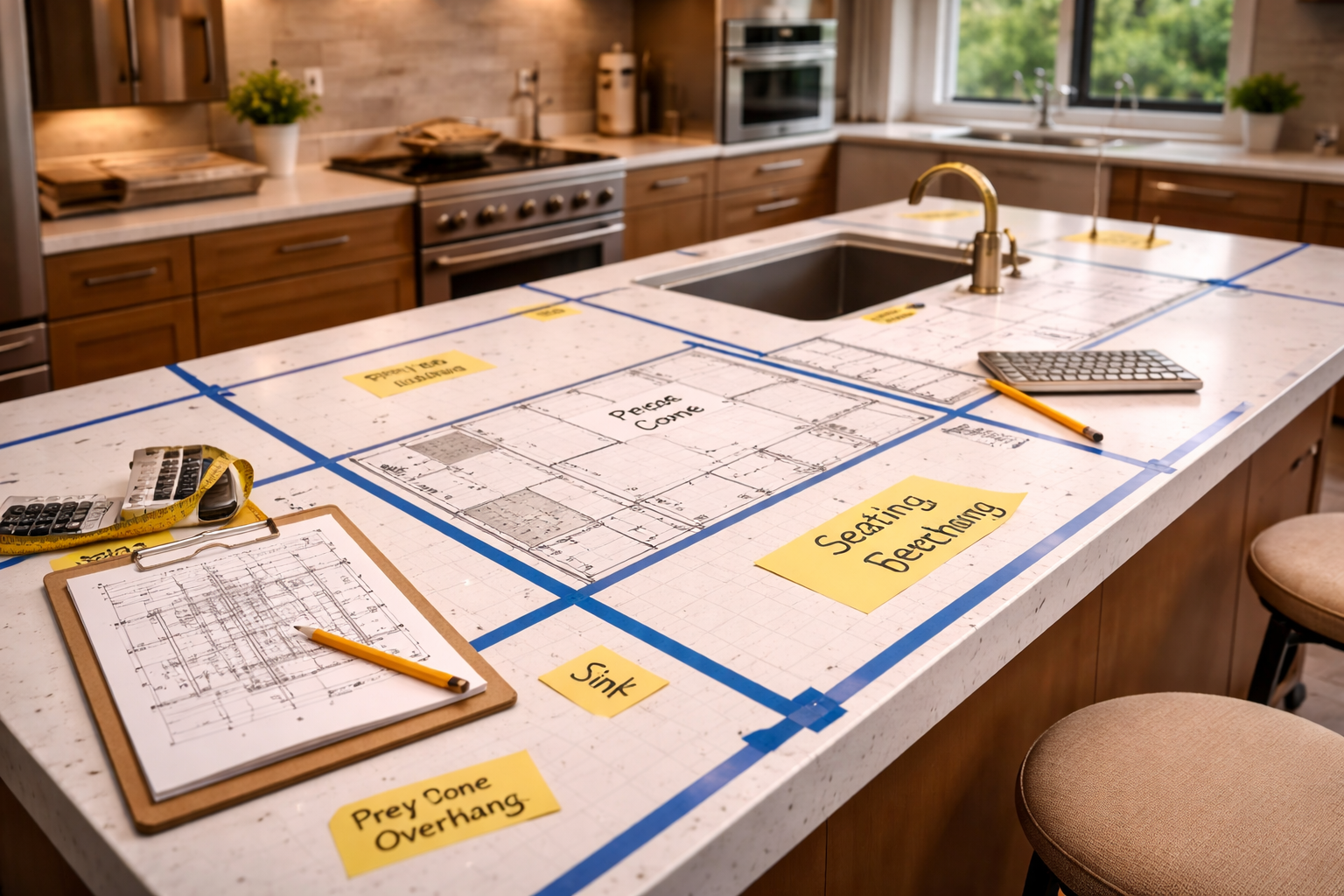
Layout and kitchen size affect how much usable surface the countertops can provide and where that surface matters most. A countertop plan should support prep space, sink use, appliance spacing, and any seating or serving functions tied to the island or peninsula. For broader planning considerations, it can help to review Energy Saver design guidance.
Why Does Countertop Layout Matter So Much in a Kitchen
Countertop layout affects where prep happens, where small appliances sit, how close the sink is to the main work surface, and whether the kitchen feels smooth or cramped during daily use. In practical remodel work, a better countertop layout can make the whole kitchen easier to work in even if the footprint stays similar.
How Does Kitchen Size Change the Best Countertop Strategy
In a smaller kitchen, the best countertop strategy may focus on protecting uninterrupted prep space and avoiding unnecessary seams or cluttered sink placement. In a larger kitchen, the remodel may support more island surface, wider landing areas near appliances, and more dedicated prep and serving zones. The best strategy depends on how the household really uses the kitchen.
What Materials and Components Are Used in a Countertop Remodel
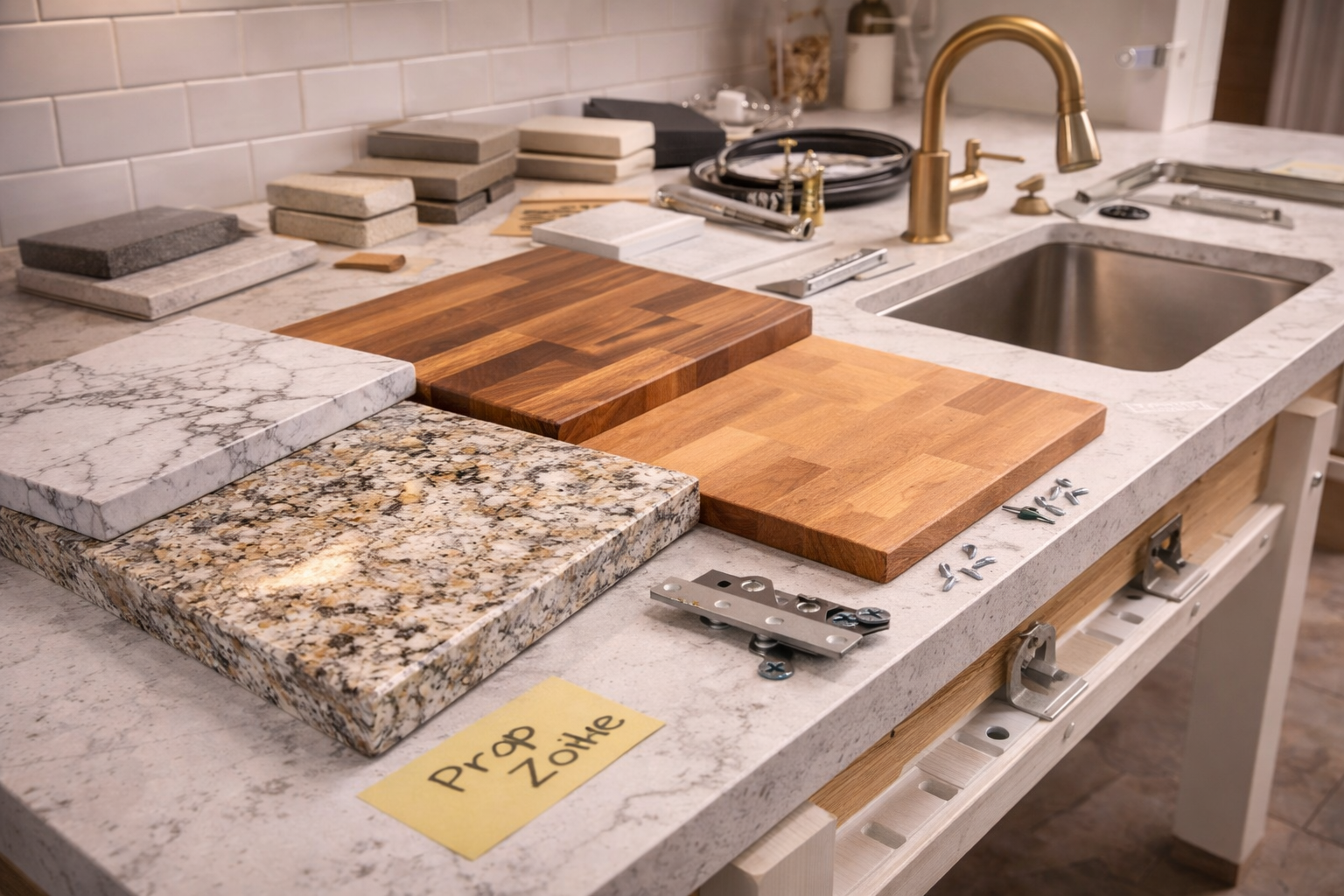
A countertop remodel uses more than the surface material alone. The project may involve slab material, sink and faucet cutouts, edge details, seams, sink mounting style, backsplash transitions, support under overhangs, and finish details around walls and appliances. The visible surface is only part of the finished system. Another detail worth comparing during planning is marble countertops.
What Countertop Materials Are Common in Kitchen Remodels
Common materials include quartz, granite, butcher block, laminate, solid-surface products, and in some kitchens tile or porcelain surfaces. Quartz is especially common because it is durable, low maintenance, and widely available in many colors and patterns. Granite is still common when a natural stone look is the priority.
What Sink, Edge, and Support Components Usually Matter Most
Undermount sink support, faucet hole placement, seam positioning, edge profile, backsplash height, and any island overhang support matter because they shape how the countertop looks and performs in real use. These are practical details that often matter more than the stone color alone.

What Upgrades Can Be Added During a Countertop Remodel
Countertop work is often the best time to add upgrades that improve both appearance and function. Common upgrades include larger island overhangs, waterfall edges, better sink placement, deeper prep zones, matching backsplash materials, under-mount sink upgrades, and cleaner transition details where the counter meets the wall.
What Functional Upgrades Are Most Useful in a Countertop Remodel
Functional upgrades often include more continuous prep space, better sink location, improved overhang design, stronger support where needed, and easier-to-clean surfaces around the sink and cooktop. These upgrades matter because the countertop is one of the kitchens main working zones.
What Design Upgrades Usually Happen at the Same Time
Countertop remodels often include better backsplash coordination, updated edge profiles, integrated sink choices, cleaner seam planning, and more refined island detailing. Once the countertop changes, the visual quality of the surrounding surfaces becomes much more noticeable. Material selection can also be informed by EPA greener products guidance.
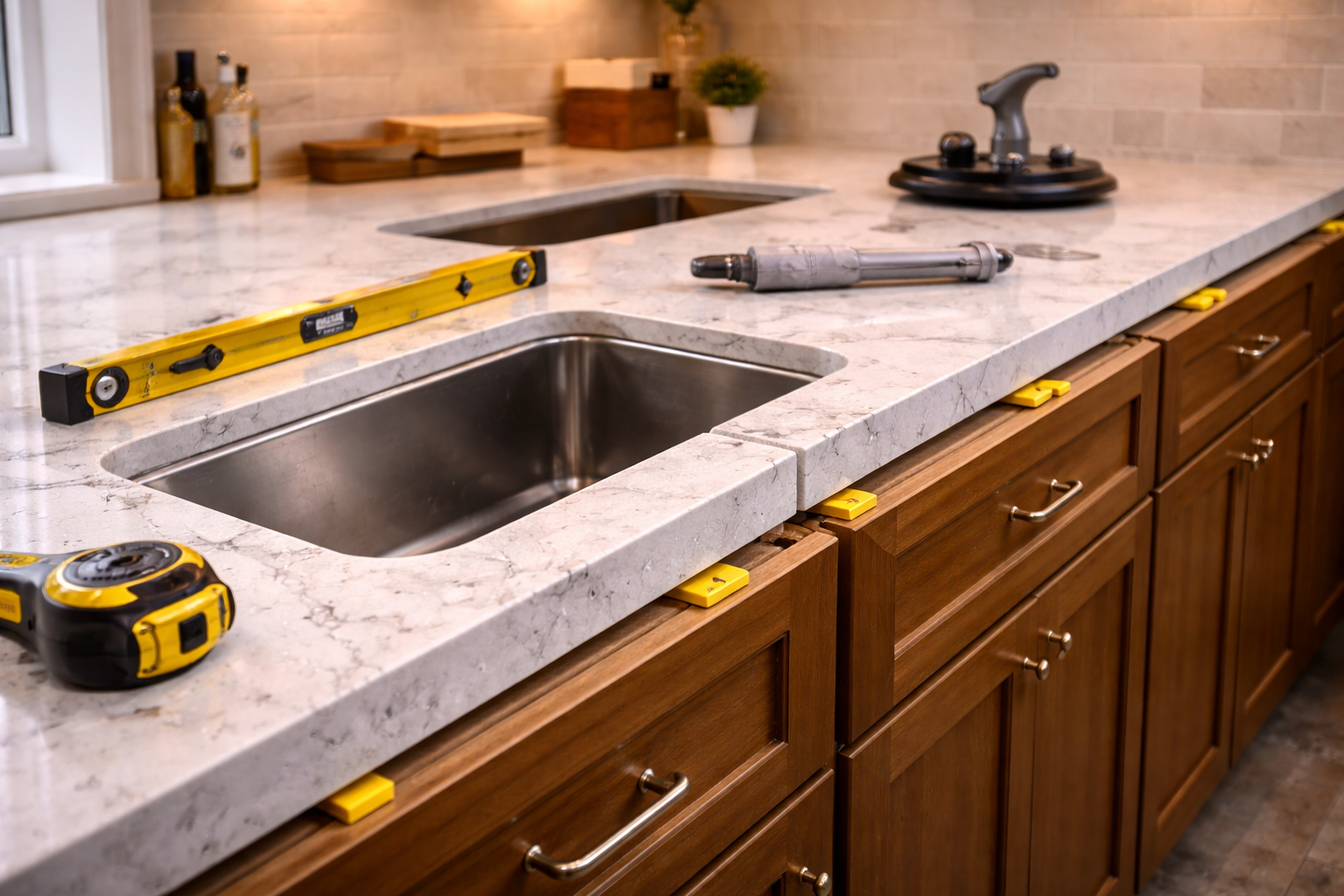
What Installation Details Matter in a Countertop Remodel
Countertop installation depends on cabinet level, seam placement, sink support, wall fit, edge alignment, and how the slabs or sections are handled during templating and placement. Even a premium countertop material can look wrong if the cabinets are off, the seams are poorly planned, or the sink cutout is handled badly.
Why Do Cabinet Level and Templating Matter So Much
Countertops depend on the cabinets below them being level and stable. Templating matters because the slab or sections have to fit the actual wall shape, sink opening, appliance spacing, and seam plan. In practical remodel work, these are the details that separate a clean finished installation from one that always looks slightly off. When the remodel includes this feature, butcher block countertops can help homeowners understand the options in more detail.
What Fit and Finish Problems Show Up During Installation
Common issues include awkward seams, sink cutouts that do not align well, wall gaps that need too much filler, unsupported overhangs, and backsplash transitions that feel patched in. These practical details shape whether the countertop feels premium once it is installed.
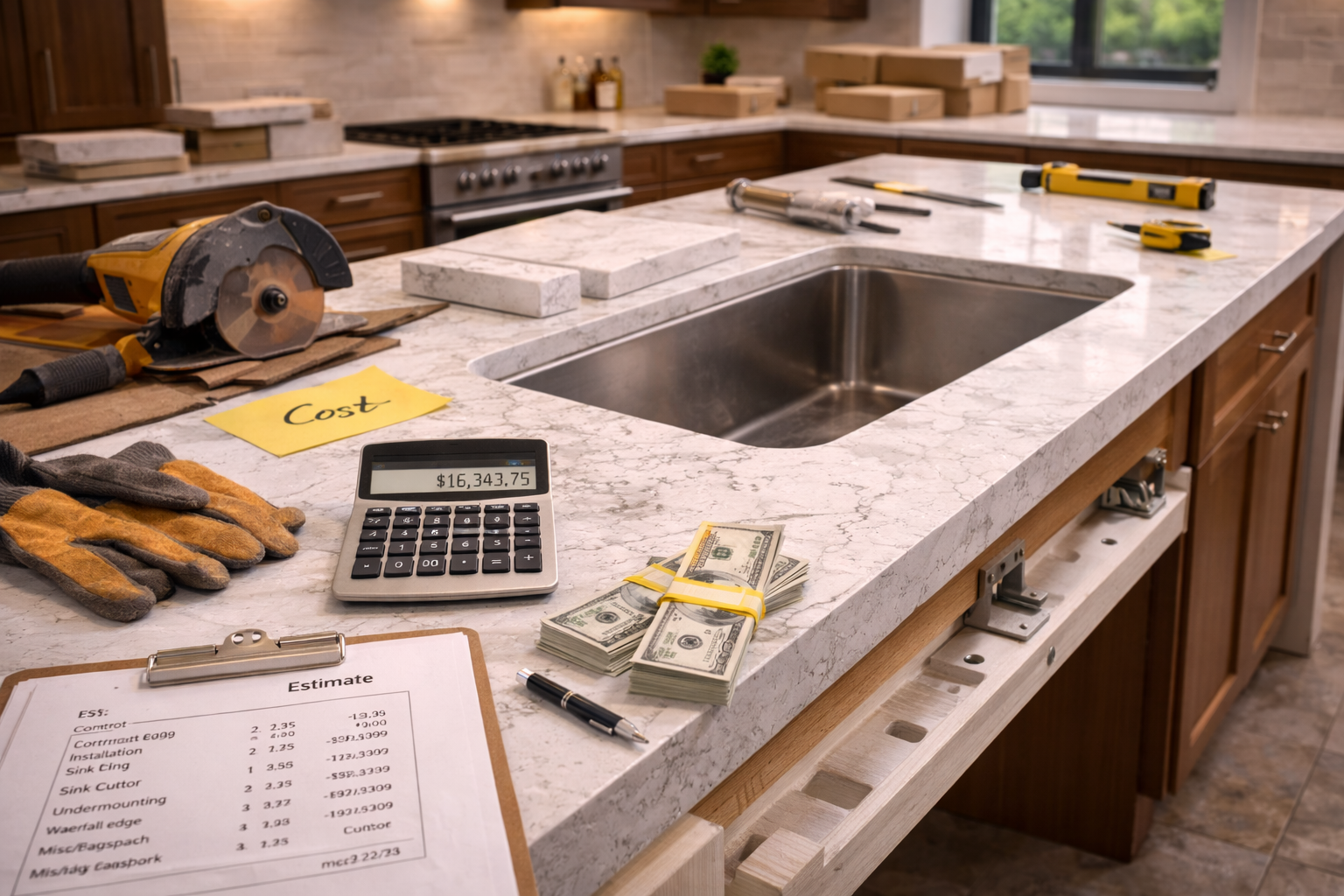
What Affects Countertop Remodel Cost
Countertop remodel cost usually depends on the material chosen, slab size, edge detail, seam complexity, sink cutouts, backsplash work, and how much of the kitchen needs to change around the surface. A simple laminate replacement is very different from a large quartz island with waterfall edges and a new sink setup. Projects with related upgrades often include choices around granite countertops.
Which Countertop Choices Usually Raise the Cost
Costs usually rise with premium quartz or natural stone, larger slab requirements, waterfall edges, custom sink cutouts, thicker edge details, and more elaborate backsplash coordination. The more the countertop becomes a design feature instead of a simple surface, the more the cost usually climbs.
How Do Labor and Existing Conditions Change the Budget
Labor costs go up when cabinets need leveling, walls are out of square, sink or appliance cutouts are more complex, or the existing conditions force more prep before the new countertop can be installed cleanly. Existing conditions matter because the countertop sits at the intersection of cabinets, walls, plumbing, and appliances.

What Mistakes Should Homeowners Avoid With a Countertop Remodel
The biggest countertop remodeling mistakes usually happen when the surface material is chosen before the layout, sink plan, and real kitchen workflow are worked out. A beautiful countertop does not fix a kitchen with weak prep space, poor seam placement, or awkward sink and appliance relationships.
Why Is It a Problem to Focus on Stone or Color Before Layout
The countertop has to support how the kitchen works. If the material is chosen without planning seam placement, prep areas, sink location, and backsplash integration, the final result can still feel frustrating to use even if the slab itself looks impressive.
Why Is It Risky to Ignore the Details Around the Surface
Sink mounting, backsplash transition, overhang support, edge profile, and seam positioning all affect how the countertop performs and looks. These details are what make the difference between a surface that just looks new and one that actually feels well planned.
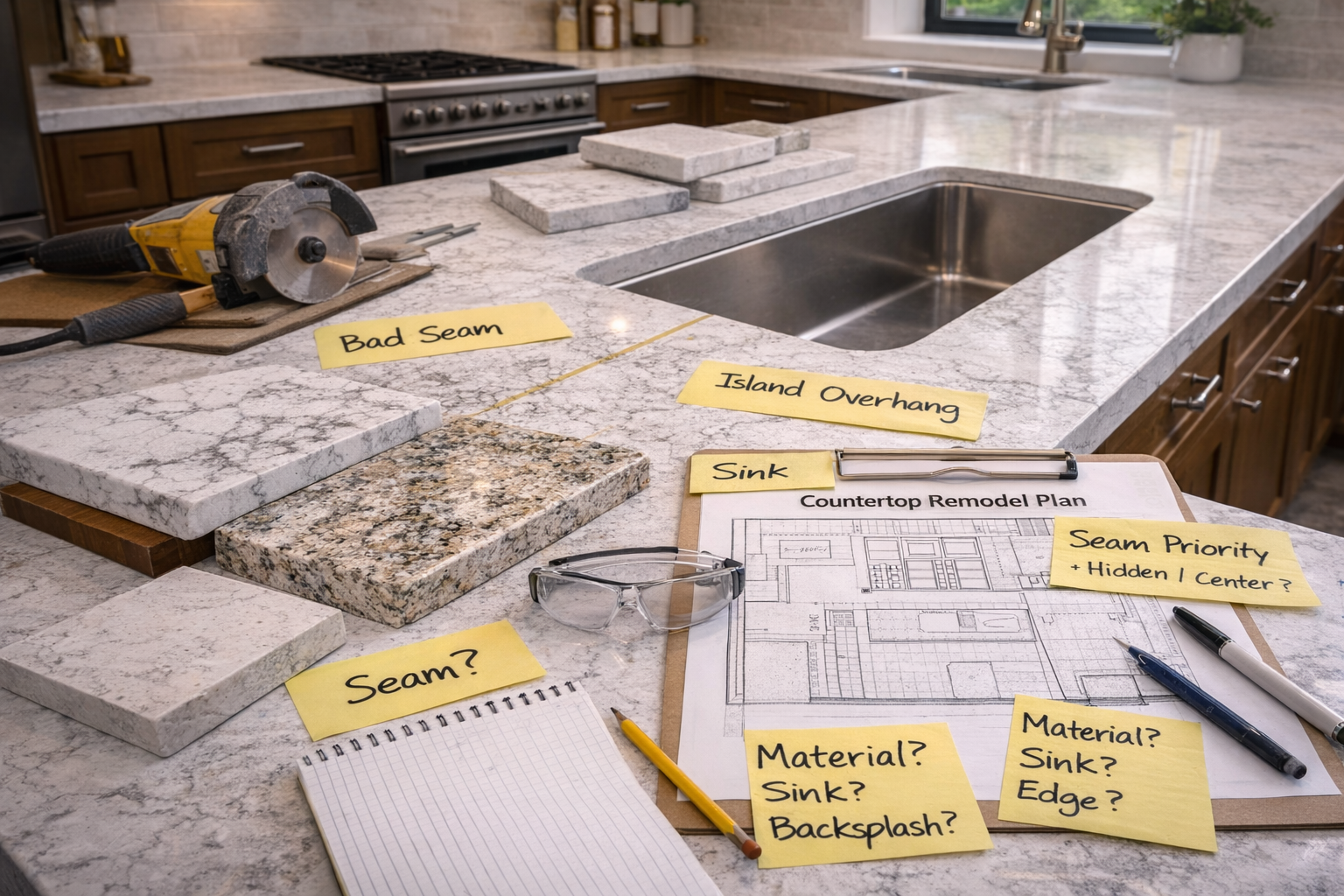
How Should You Plan a Countertop Remodel
A countertop remodel should be planned by deciding what the main work surfaces need to do, how the sink and island should function, and which material best fits the maintenance and design goals of the household. The best plan balances function, material performance, sink and backsplash details, and installation reality instead of choosing the slab first and figuring out the rest later.
What Should Be Decided Before Countertop Work Starts
Before construction starts, it helps to confirm countertop material, edge detail, sink type, faucet hole plan, island overhang needs, backsplash approach, seam priorities, and whether the surrounding cabinets are staying the same or being changed. These decisions affect fabrication, installation, and the finished kitchen layout. Homeowners who want to dig deeper into this feature can review kitchen remodeling.
How Can a Homeowner Prepare for the Installation Process
Homeowners should be ready for templating, sink and faucet coordination, cabinet prep, appliance clearance checks, and the timing of countertop install relative to backsplash and final plumbing hookup. Countertop projects usually go best when the whole surface plan is resolved before fabrication begins.

Related Countertop Remodel Topics
Countertop remodeling overlaps with cabinet remodeling, backsplash design, sink upgrades, island planning, and kitchen layout because the countertop sits at the center of how the kitchen works and looks. Related topics help homeowners compare whether they need only new countertops or a broader kitchen update.
Which Countertop Remodel-Related Pages Should Connect to This Topic
Strong related pages include cabinet remodels, backsplash remodeling, kitchen island remodeling, sink upgrades, and kitchen layout changes. Those pages help break down the design and function decisions that shape a successful countertop remodel.
Which Kitchen Remodeling Topics Often Connect to Countertop Work
Countertop work often connects to cabinets, appliances, lighting, flooring, and full kitchen remodeling. In practical remodels, these pieces overlap because the countertop touches almost every other visual and functional zone in the kitchen.
Local guides: Reno
Frequently Asked Questions About Countertop Remodels
A countertop remodel can include the surface material, sink cutouts, faucet holes, backsplash transitions, seam planning, and sometimes sink or island updates tied to the new surface.
Countertops are often replaced when they are damaged, outdated, difficult to maintain, or no longer fit the way the kitchen is being used and remodeled.
Durability depends on the material and how it is used, but quartz and some natural stone products are common choices for long-term performance in kitchens.
Not always, but many countertop remodels include a sink upgrade because the countertop replacement is the easiest time to change sink style or mounting type.
Yes. Better prep space, better sink placement, and more practical island or landing zones can all improve function along with the new surface.
The timeline depends on the material, templating, fabrication, installation complexity, and whether the cabinets or sink setup are also changing.
That depends on the goals of the remodel. Quartz is popular for low maintenance and consistency, while granite appeals to homeowners who prefer a natural stone surface.
Yes. Many countertop remodels keep the existing cabinets if they are level, stable, and still fit the planned layout well.
It can improve kitchen appeal and function, especially when the new surface fits the quality and style of the rest of the remodel.
The first step is deciding how the work surfaces need to function, then choosing the material and layout details that best support that use.