

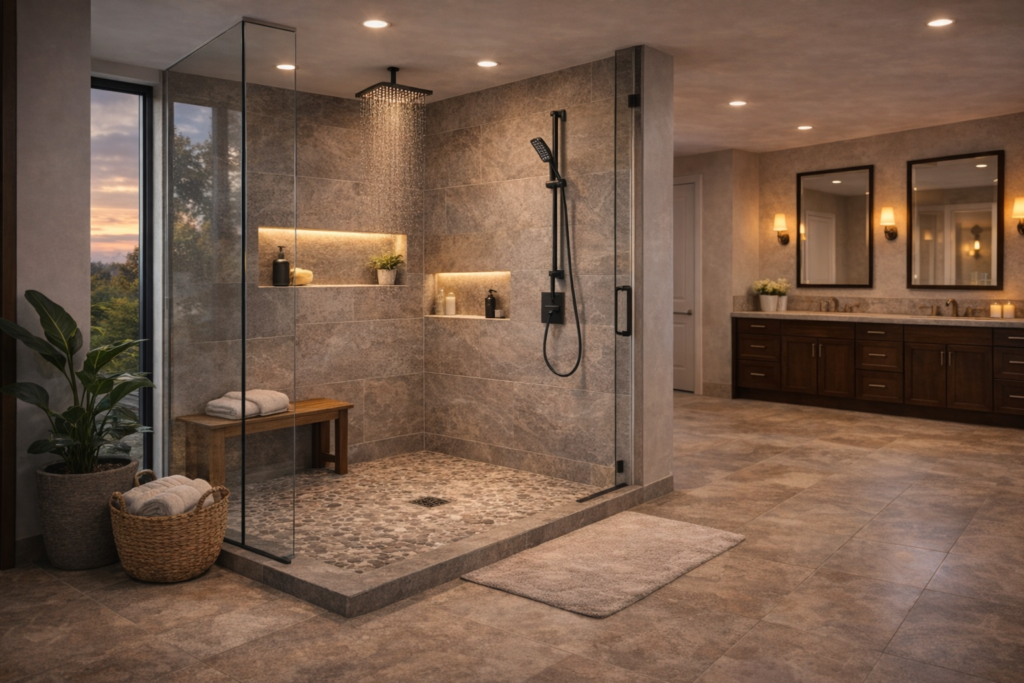
Walk-In Shower Guide: Design, Layout, Costs, and Planning
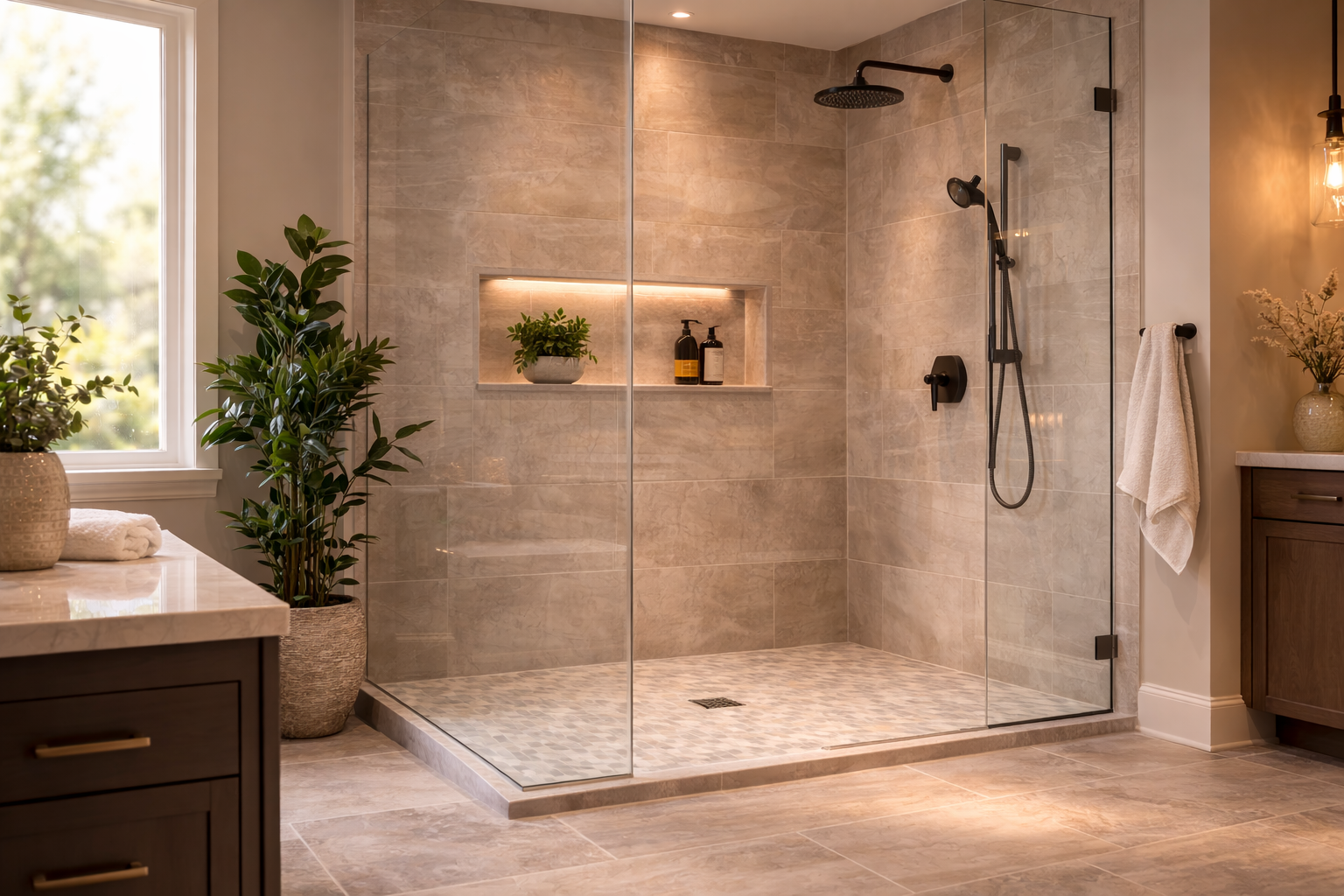
Walk-In Shower Guide Index
- Walk-In Shower Overview
- When Does a Walk-In Shower Make Sense
- What Types of Walk-In Showers Are Common
- How Do Layout and Room Size Affect a Walk-In Shower
- What Materials and Components Are Used in a Walk-In Shower
- What Upgrades Can Be Added With a Walk-In Shower
- What Installation Details Matter in a Walk-In Shower
- What Affects Walk-In Shower Cost
- What Mistakes Should Homeowners Avoid With a Walk-In Shower
- How Should You Plan a Walk-In Shower
- Related Walk-In Shower Topics
- Frequently Asked Questions About Walk-In Showers
Walk-In Shower Overview
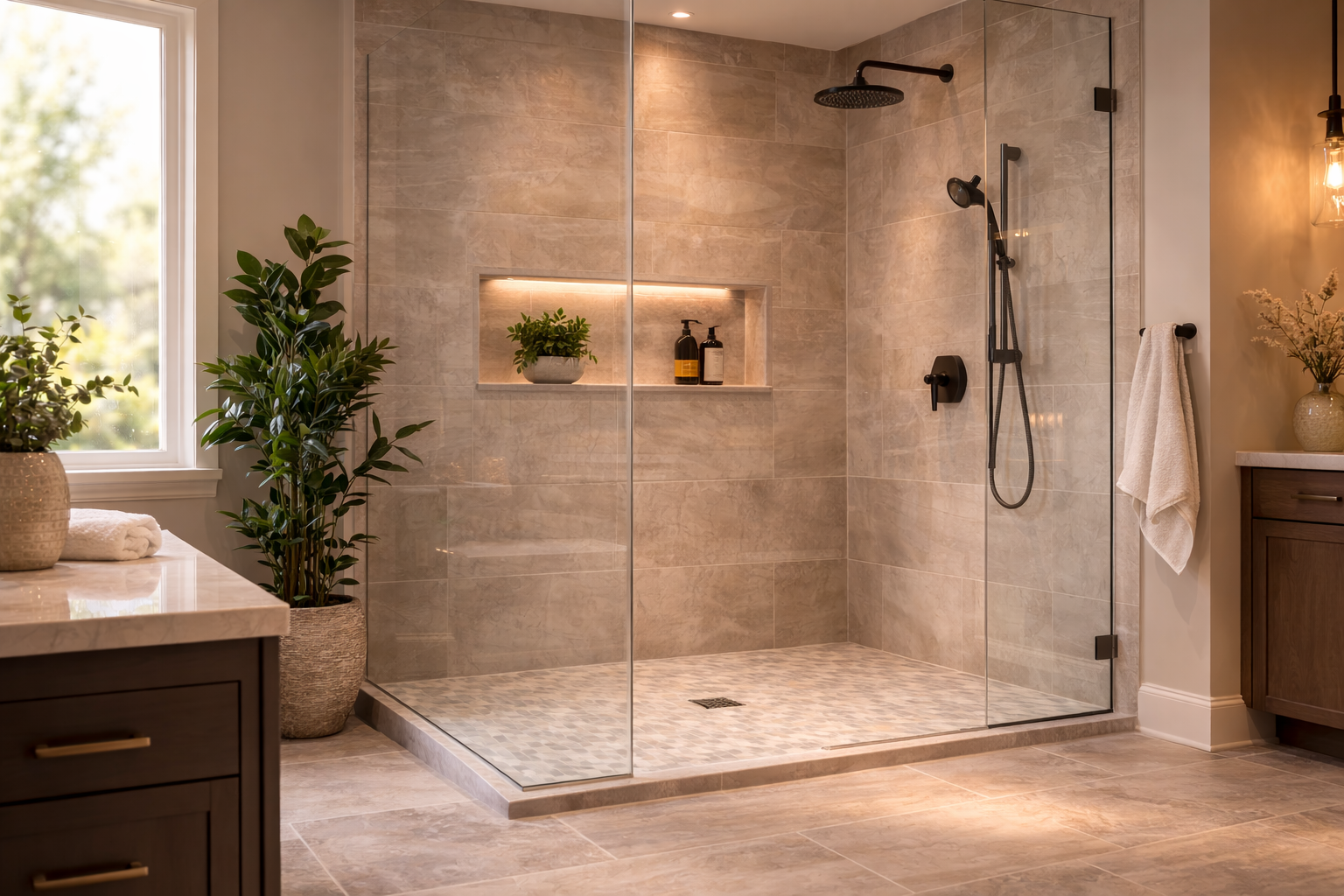
A walk-in shower is a shower designed for easier entry and a more open bathing experience than a traditional enclosed tub-shower setup. In practical remodel work, that usually means planning the shower opening, floor slope, drainage, waterproofing, wall finishes, and how the shower will contain water without feeling closed in. Walk-in showers are often chosen because they improve daily use, make the room feel more open, and can support better accessibility than a standard tub.
What Gets Updated During a Walk-In Shower Project
The work may include shower footprint changes, new waterproofing, shower floor and wall finishes, drain placement, shower valve and trim, glass panels where needed, niche or bench additions, and the surrounding bathroom layout if the old bathing area is being rebuilt. In many bathrooms, the walk-in shower becomes the main feature of the whole remodel.
What Is the Difference Between a Walk-In Shower and a Standard Shower
A standard shower may be more enclosed, may sit inside a tub, or may feel tighter because of the way the entry and surrounding walls are built. A walk-in shower is designed around easier entry, a more open feel, and often a larger or more accessible showering area. That difference changes both the layout and the day-to-day experience.
When Does a Walk-In Shower Make Sense
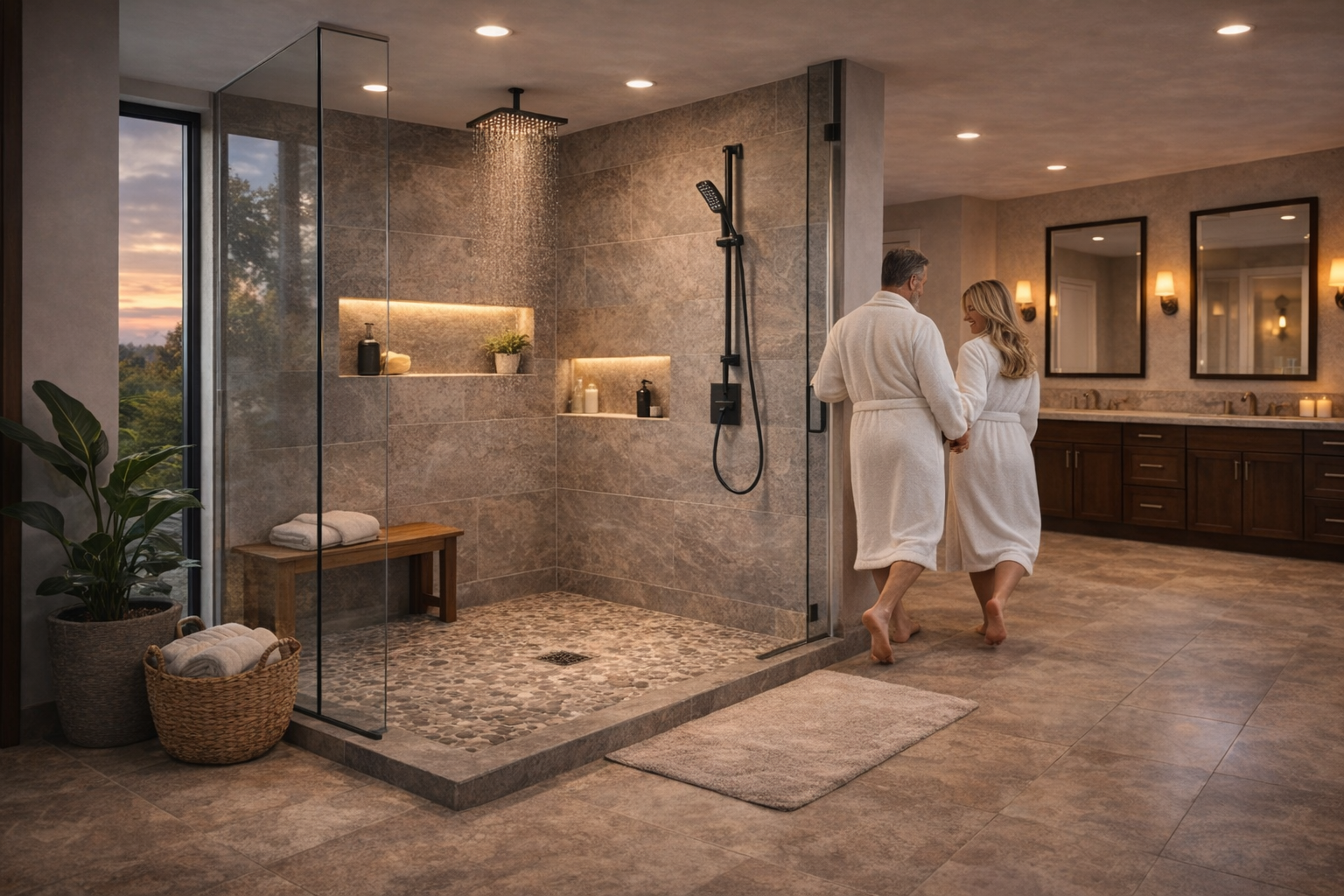
A walk-in shower makes sense when the bathtub is not needed, when easier shower access matters, or when the bathroom would work better with a more open shower layout. It is especially common in primary bathrooms where showering is the main daily use and where a tub no longer provides enough value to justify its footprint. Another detail worth comparing during planning is bathroom remodeling.
What Bathroom Conditions Usually Point to a Walk-In Shower
Common conditions include a cramped tub area, a need for easier entry, a bathroom remodel focused on a more modern open feel, and a layout where removing the tub can create a better daily-use shower. A walk-in shower also makes more sense when the household wants a bathing space that feels cleaner and less confined.
When Is a Walk-In Shower Not the Best Choice
A walk-in shower may not be the best choice when the home still needs a bathtub for children, bathing habits, or resale flexibility, or when the room cannot support a shower layout that contains water well without feeling awkward. In some homes, keeping at least one tub elsewhere is still the smarter plan.
What Types of Walk-In Showers Are Common
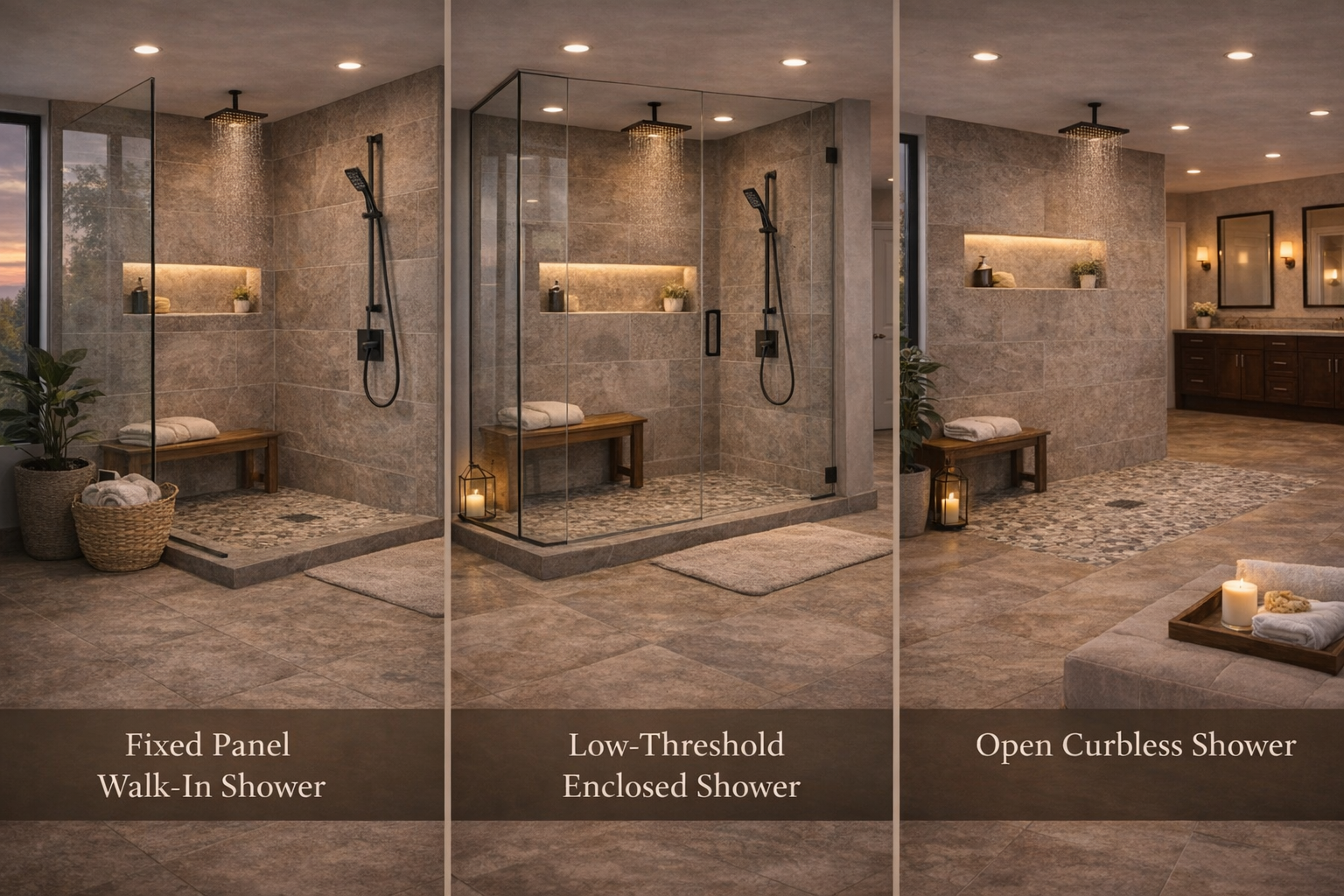
Common walk-in shower types include fixed-panel walk-in showers, low-threshold enclosed showers, curbless showers where the structure allows, and larger tile walk-in showers with benches or niches. The right type depends on room size, water containment needs, accessibility goals, and the design level of the remodel.
What Walk-In Shower Styles Are Most Common in Remodeling Projects
Fixed glass panel walk-in showers and larger enclosed tile showers are common because they balance openness with practical splash control. Low-threshold showers are also common when the goal is easier entry without completely removing all barrier detail.
When Does One Walk-In Shower Type Make More Sense Than Another
A more open walk-in shower may make more sense when the room is large enough and the shower layout naturally controls splash. A more enclosed walk-in shower may make more sense when the bathroom is smaller or when stronger water containment matters more than maximum openness. The best choice depends on the way the shower will actually be used.
How Do Layout and Room Size Affect a Walk-In Shower
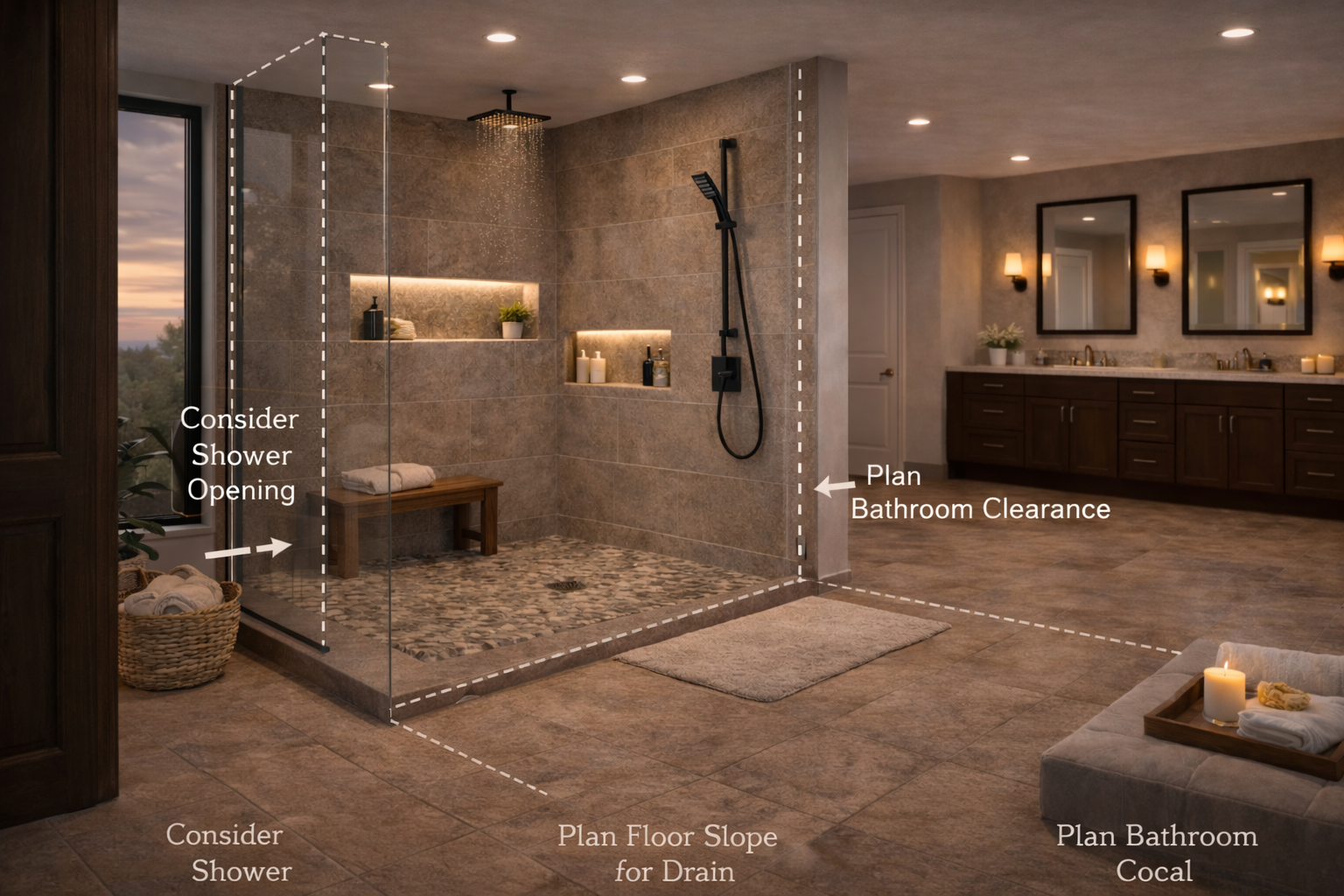
Layout and room size affect how open the shower can be, where the entry should go, and how much room the rest of the bathroom keeps once the shower is installed. A walk-in shower should improve movement and access without creating splash problems or crowding nearby fixtures.
Why Does Shower Opening and Footprint Matter So Much
The opening has to feel easy to enter while still controlling water. The footprint matters because the shower floor, drain, and spray pattern all influence where water will go during normal use. These details are what separate a practical walk-in shower from one that only looks good in pictures.
How Does Bathroom Size Change the Best Walk-In Shower Strategy
In a smaller bathroom, a carefully planned walk-in shower can make the room feel more usable if the opening, glass, and drain are handled well. In a larger bathroom, the remodel may support a wider walk-in layout, bench seating, or more elaborate glass planning. The best strategy depends on how much room the bathroom can give to the shower without losing balance elsewhere. For broader planning considerations, it can help to review Energy Saver design guidance.
What Materials and Components Are Used in a Walk-In Shower
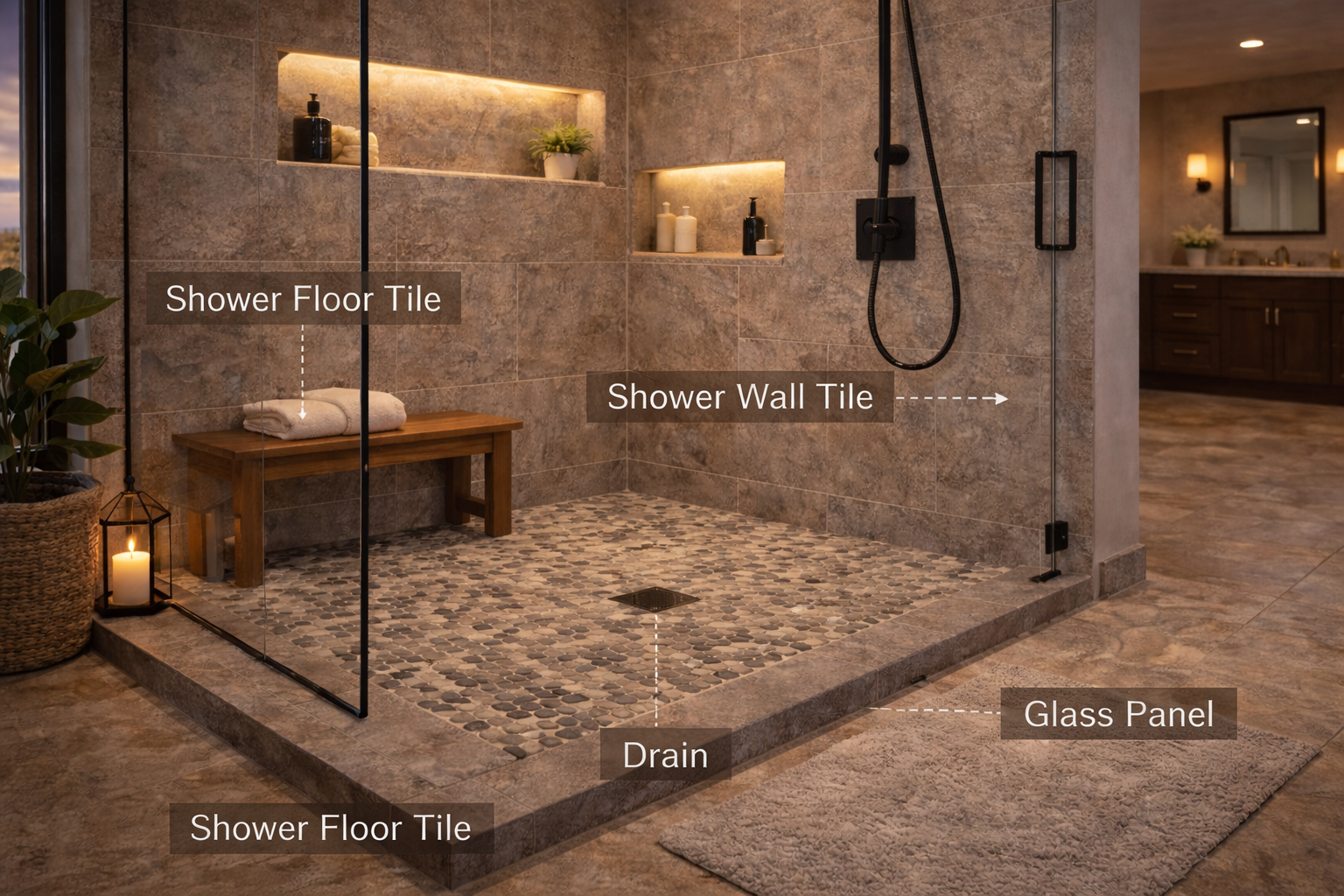
A walk-in shower uses more than tile and glass alone. The remodel may involve a shower base or sloped floor system, waterproofing membrane, wall tile or panels, drain, glass panel or door hardware, valve and trim, and bench or niche details that all have to work together.
What Floor and Wall Materials Are Common in Walk-In Showers
Common materials include porcelain tile, ceramic tile, mosaic floor tile, stone-look panels, acrylic wall systems, and composite shower panels depending on the design goals and maintenance preference. The floor and walls should be chosen as one system instead of mixed without a plan.
What Glass, Drain, and Trim Components Usually Change
Walk-in shower projects often involve a new drain style, frameless glass panels, upgraded trim kits, hand showers, niche details, and cleaner edge treatments. These parts shape how the shower performs and how refined it looks once the remodel is complete.
What Upgrades Can Be Added With a Walk-In Shower
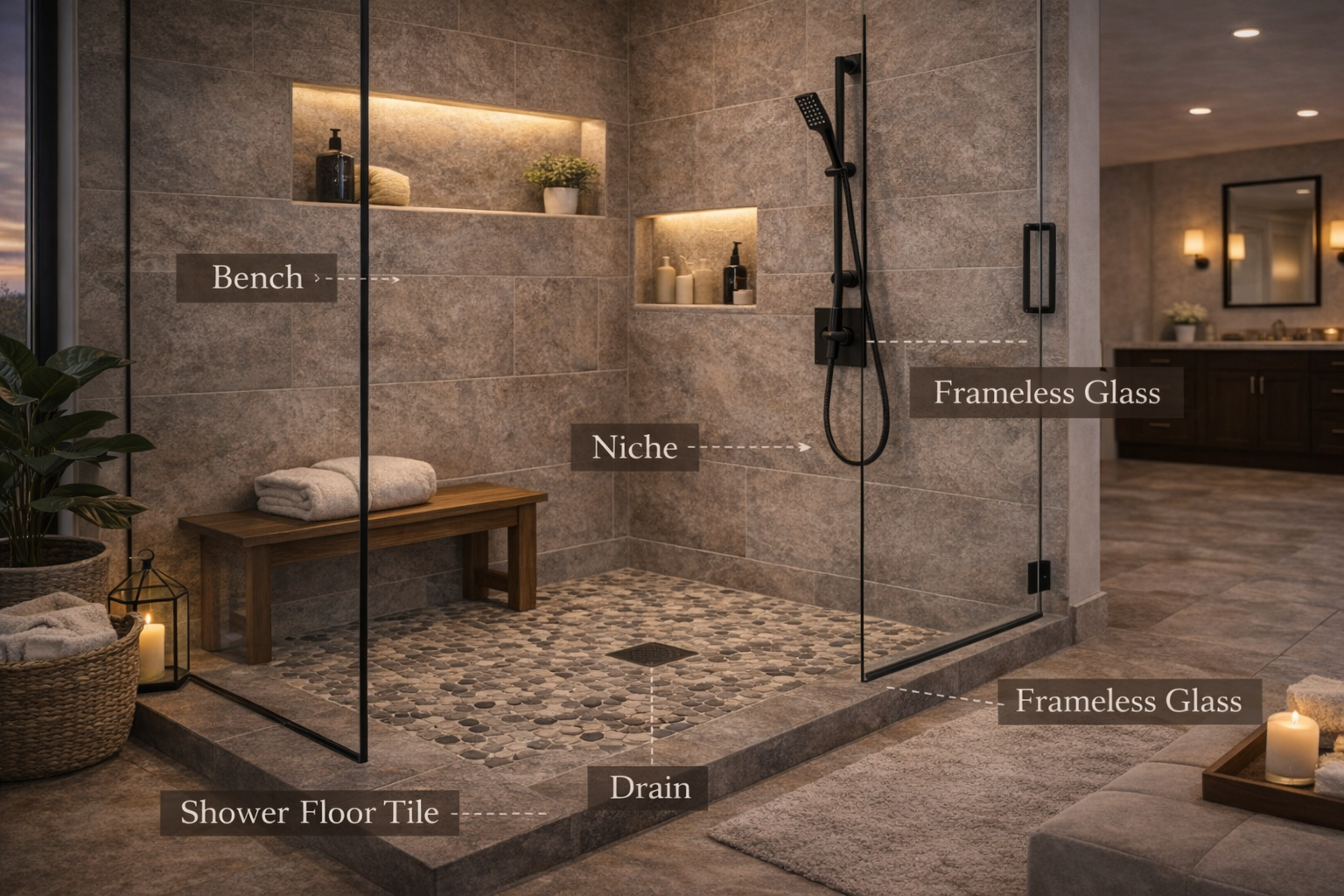
Walk-in shower work is often the best time to add upgrades that improve comfort, function, and accessibility. Common upgrades include benches, niches, frameless glass, hand showers, rain heads, better lighting, slip-friendly flooring, and support blocking for future grab bars.
What Functional Upgrades Are Most Useful in a Walk-In Shower
Functional upgrades often include easier entry, well-placed niches, hand showers, better drainage, and features that support safer movement and easier cleaning. These upgrades matter because the walk-in shower is usually being chosen to improve daily use, not just appearance.
What Design Upgrades Usually Happen at the Same Time
Walk-in shower projects often include larger tile, upgraded glass, cleaner trim details, improved lighting, and better coordination with the rest of the bathroom finishes. Once the shower becomes more open and visible, the surrounding design usually needs to become more intentional too.
What Installation Details Matter in a Walk-In Shower
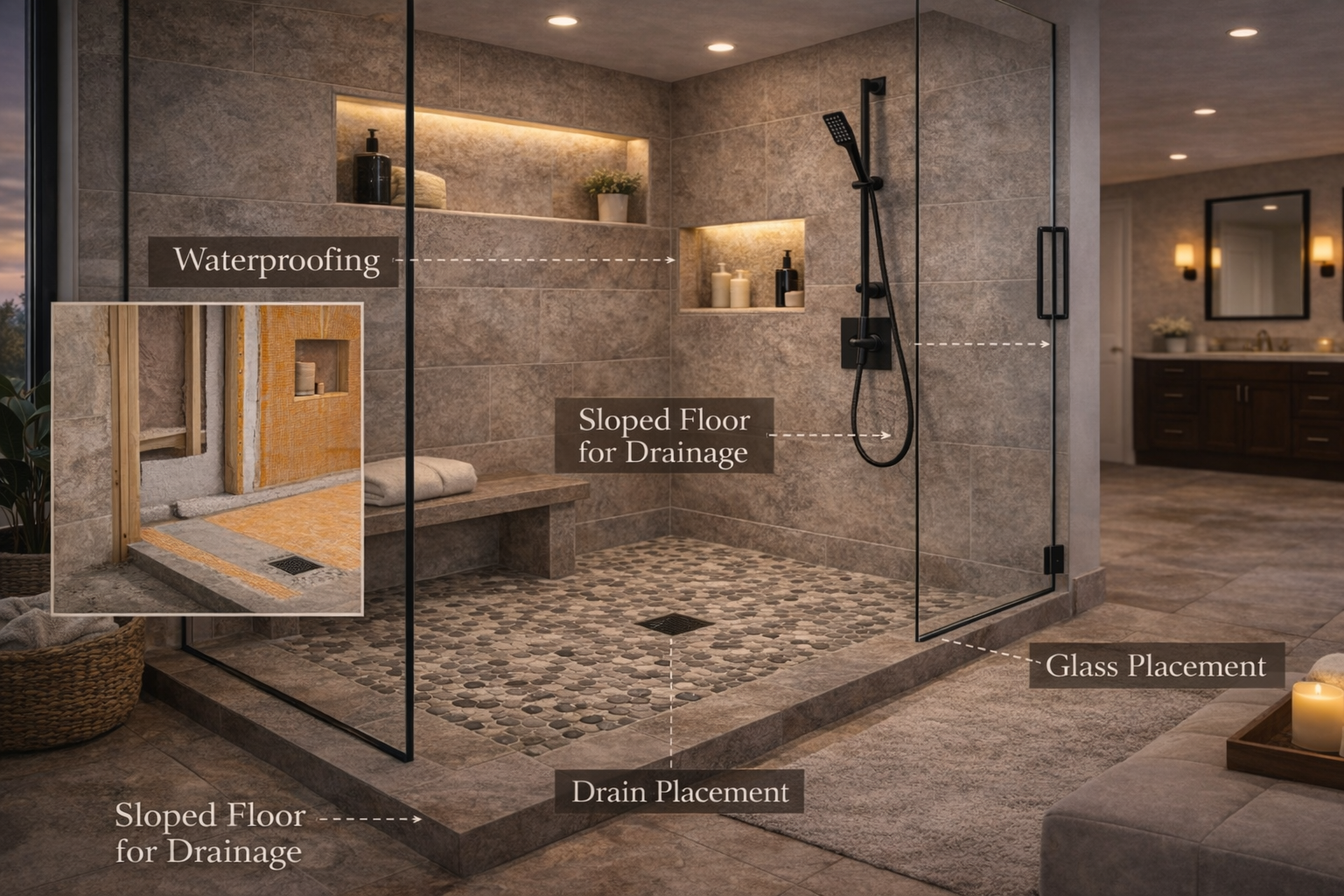
Walk-in shower installation depends on waterproofing, floor slope, drain placement, shower entry design, and how the glass or wall surfaces are detailed to control water. If those details are wrong, the shower may look open and modern but still perform poorly in normal use. When the remodel includes this feature, shower remodel can help homeowners understand the options in more detail.
Why Do Waterproofing and Water Containment Matter So Much
A walk-in shower has to manage water carefully because the design often reduces or rethinks the barriers used in older tub-shower layouts. Waterproofing and water containment are what make the shower work in real daily use instead of just in the design sketch.
What Entry, Drain, and Glass Problems Show Up During Installation
Common issues include poor floor slope, glass panels placed in the wrong spot, openings that allow too much splash, and transitions that feel unfinished or awkward. These practical build details strongly affect whether the shower feels clean and easy to use.
What Affects Walk-In Shower Cost
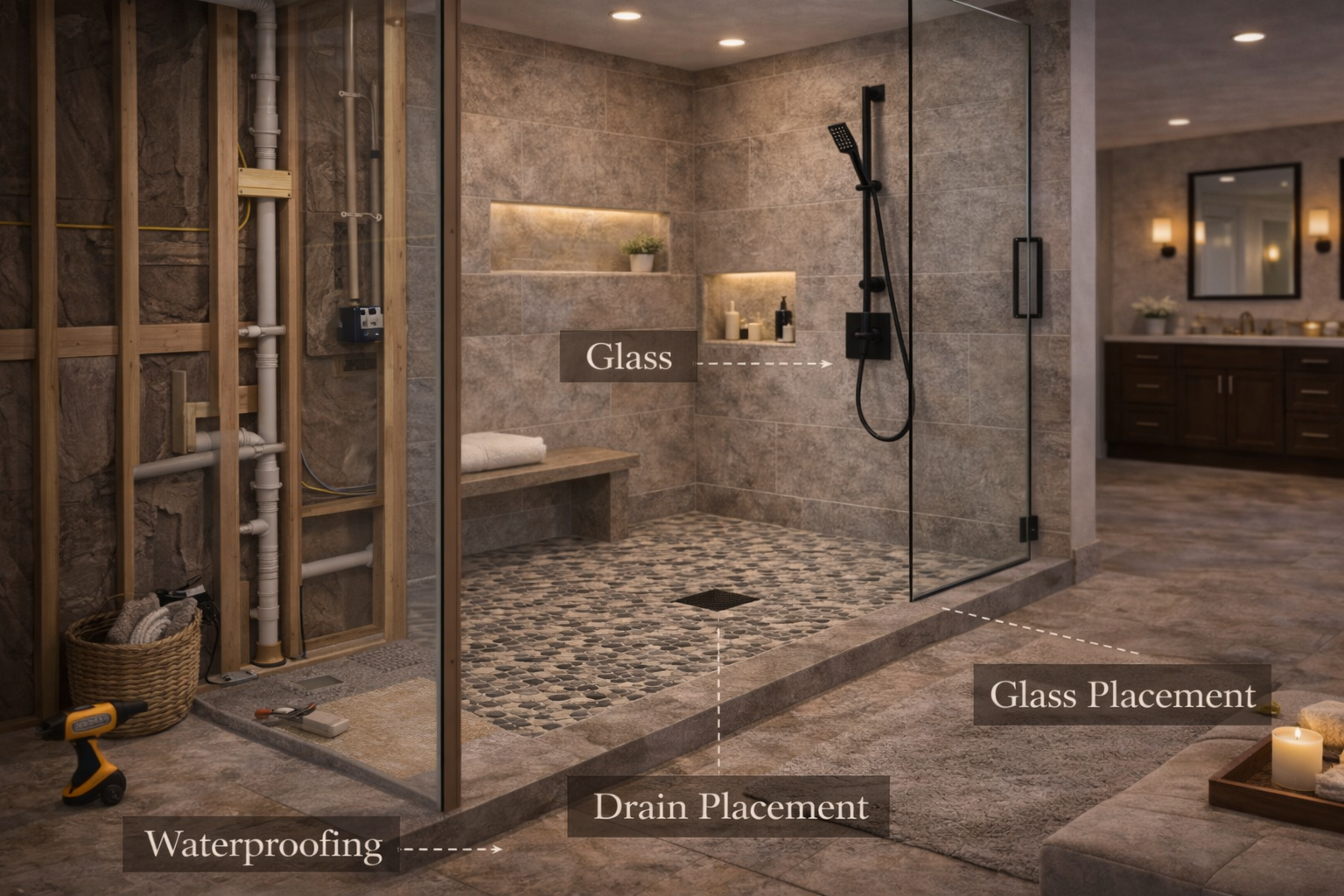
Walk-in shower cost usually depends on shower size, floor and wall materials, glass design, waterproofing method, drain work, and how much of the old bathroom has to be rebuilt to support the new layout. A simple walk-in conversion is very different from a fully custom walk-in tile shower with frameless glass.
Which Walk-In Shower Choices Usually Raise the Cost
Costs usually rise with frameless glass, custom tile, bench seating, niche work, curbless-style details, premium trim packages, and more complex drain planning. The more the project moves toward a custom shower experience, the more the cost usually grows.
How Do Labor and Existing Conditions Change the Budget
Labor costs go up when demolition reveals water damage, plumbing changes are needed, the floor structure needs correction, or the room requires more detailed waterproofing and finish work than expected. Existing conditions matter because many bathrooms are not originally built for the kind of open shower layout a walk-in design needs. During remodeling, it also helps to follow EPA indoor air quality guidance.
What Mistakes Should Homeowners Avoid With a Walk-In Shower
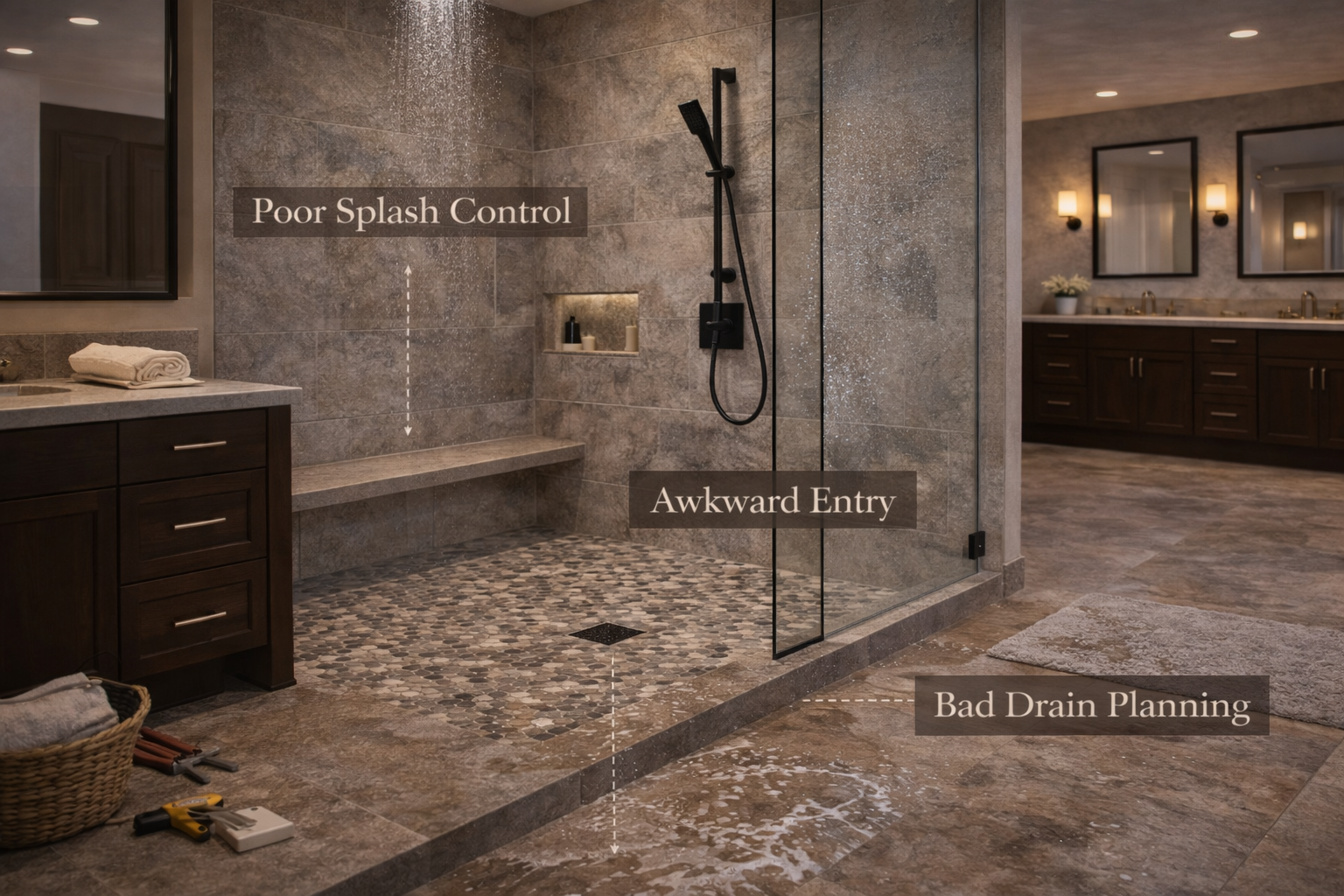
The biggest walk-in shower mistakes usually happen when openness is prioritized without enough planning for water control, layout, and how the shower will be used every day. A walk-in shower should feel easier and cleaner to use, not just more open to look at.
Why Is It a Problem to Design a Walk-In Shower Without Thinking About Splash
A very open shower may look appealing, but if the spray pattern, panel layout, and floor slope are not planned well, water can leave the shower area too easily. Practical walk-in design has to solve that problem before the shower is built.
Why Is It Risky to Ignore the Whole Bathroom Layout
A walk-in shower changes how the whole room feels. If the entry, glass, vanity spacing, lighting, and nearby storage are not considered at the same time, the shower may improve one part of the room while making another part worse.
How Should You Plan a Walk-In Shower
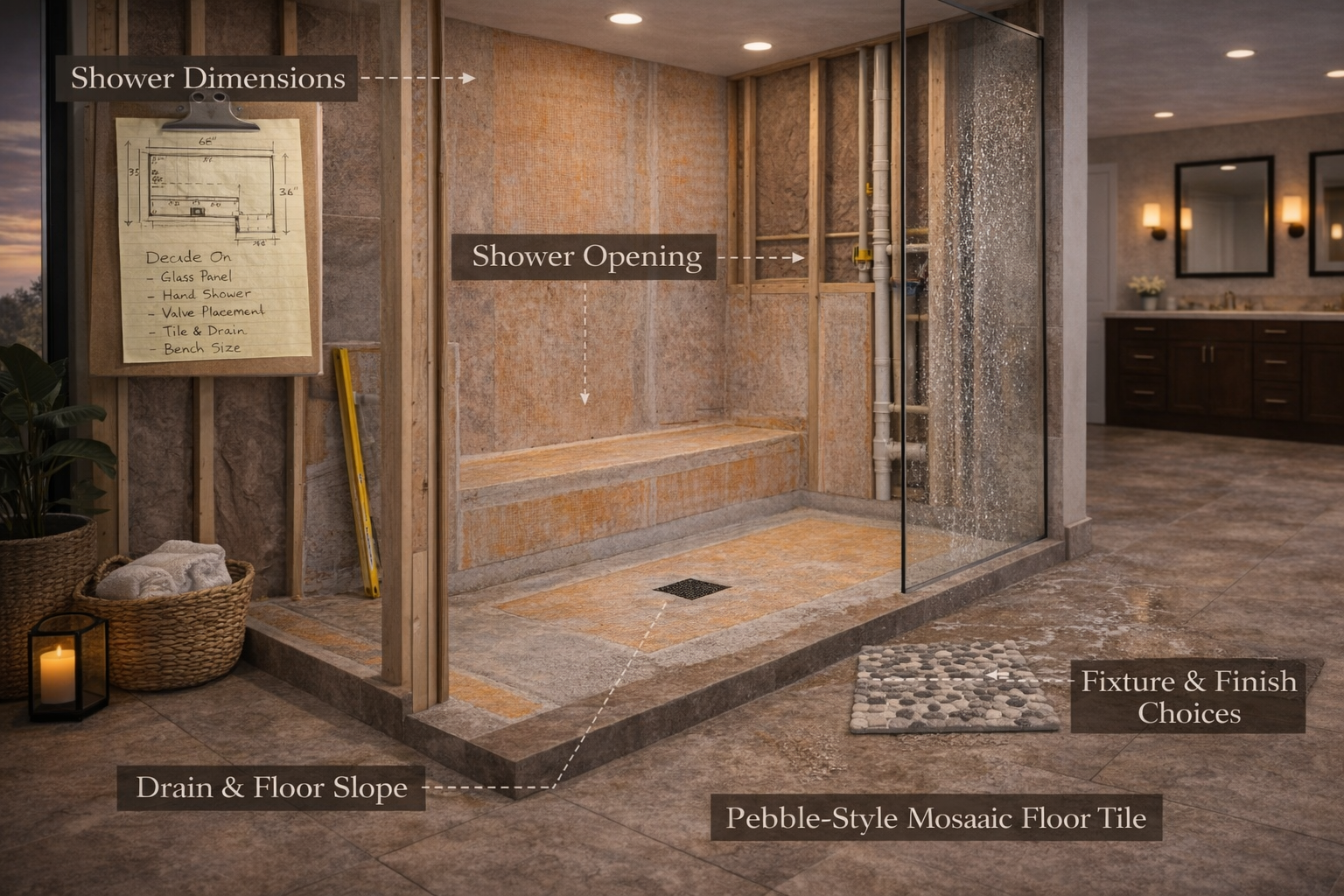
A walk-in shower should be planned by deciding how open the shower should be, how much access is needed, and how the room can support the new layout without losing water control or comfort. The best plan balances access, drainage, materials, glass layout, and overall bathroom function instead of treating the shower like a style-only decision.
What Should Be Decided Before Walk-In Shower Work Starts
Before construction starts, it helps to confirm shower size, threshold style, floor finish, drain layout, opening or glass design, valve and hand-shower location, and whether any accessibility features should be built in now. These decisions affect the whole build sequence and the final usability of the shower. For layout and clearance planning, many designers reference NKBA planning guidelines.
How Can a Homeowner Prepare for the Installation Process
Homeowners should be ready for demolition, waterproofing, plumbing updates, possible hidden repairs, tile or panel installation, and final glass measuring if custom glass is part of the project. Walk-in showers usually go best when the entire layout is resolved before the old bathing area is removed.
Related Walk-In Shower Topics
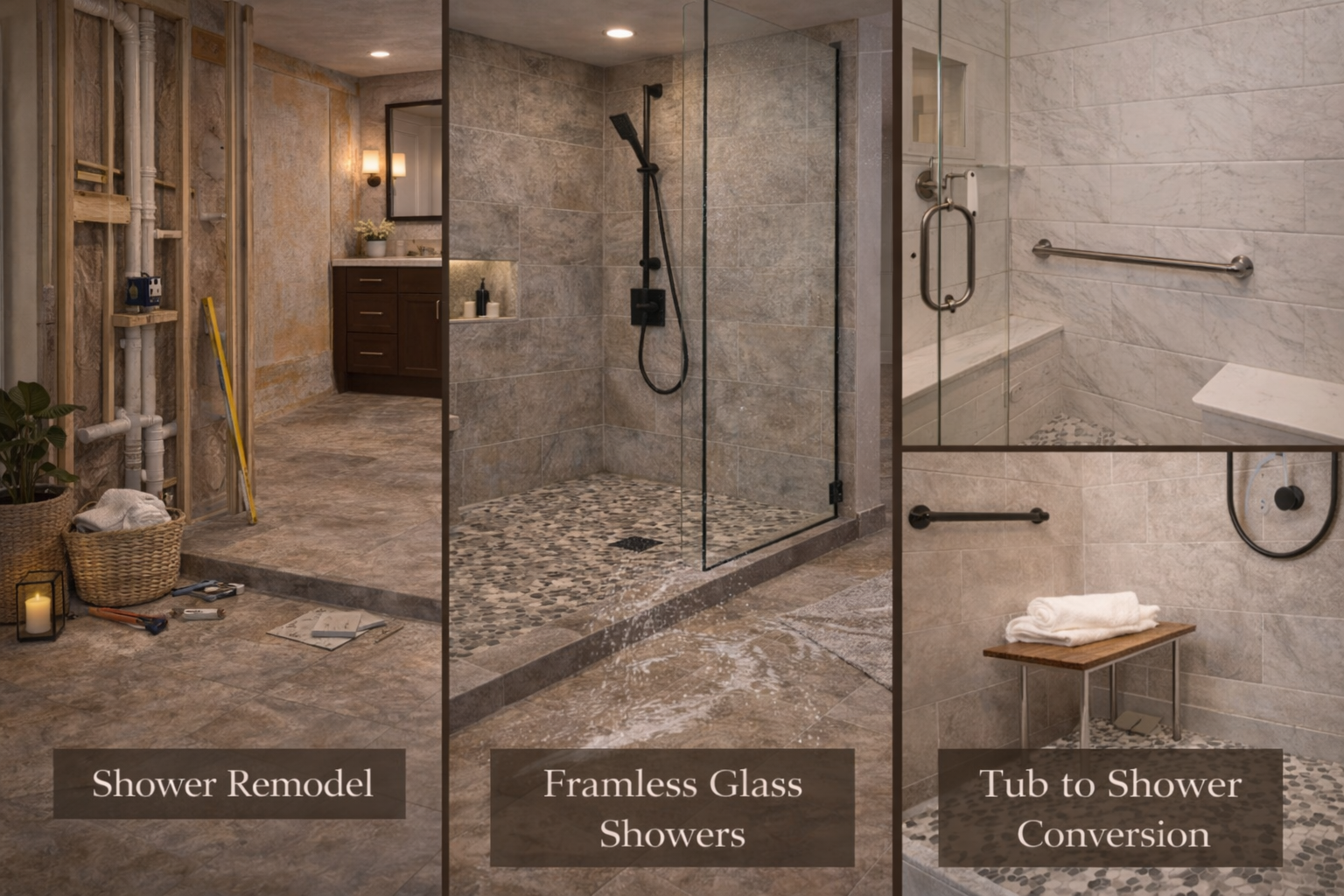
Walk-in shower projects overlap with shower remodeling, frameless glass showers, shower tile, tub-to-shower conversion, and accessibility planning because the walk-in layout affects how the whole bathroom works. Related topics help homeowners compare whether a walk-in shower is the right solution for the room and the household.
Which Walk-In Shower-Related Pages Should Connect to This Topic
Strong related pages include shower remodels, frameless glass showers, tub-to-shower conversions, shower tile, and accessibility upgrades. Those pages help break down the layout, finish, and construction choices that shape a successful walk-in shower.
Which Bathroom Remodeling Topics Often Connect to Walk-In Shower Work
Walk-in shower work often connects to flooring, ventilation, lighting, bathroom layout changes, and full bathroom remodeling. In practical remodels, these parts overlap because the shower is one of the main spaces that defines how the bathroom functions every day.
Local guides: Reno
Frequently Asked Questions About Walk-In Shower
A walk-in shower is a shower designed for easier entry and a more open bathing experience than a traditional tub-shower setup.
It often makes sense when the bathtub is rarely used, easier shower access is needed, or the bathroom works better with a more open shower layout.
Yes. Many walk-in showers improve access by reducing barriers and making entry easier than a standard tub or high-threshold shower.
Not always. Some walk-in showers use fixed glass panels, while others are more open depending on the layout and splash control plan.
Yes. In many small bathrooms, a walk-in shower can make the room feel easier to use if the opening, drain, and water control are planned carefully.
The cost depends on the materials, glass design, drain work, and how custom the shower becomes. Some are straightforward and others are more involved.
They need proper waterproofing just like any shower, and in some cases water containment planning is even more important because of the more open layout.
The timeline depends on whether the project is a simple conversion or a more custom shower rebuild with tile, glass, and plumbing changes.
It can improve appeal when it fits the bathroom layout and the needs of the household, especially in primary bathrooms where daily shower use matters most.
The first step is deciding how open the shower should be and whether the room can support the layout, drainage, and access the design requires.