

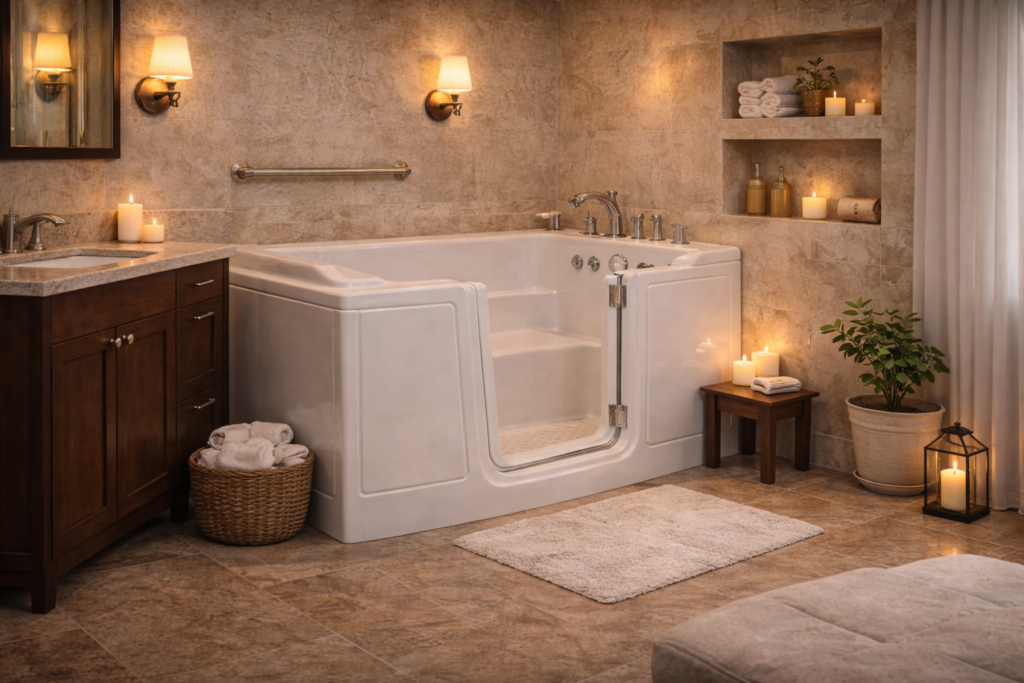
Walk-In Bathtub Guide: Safety, Features, Costs, and Planning
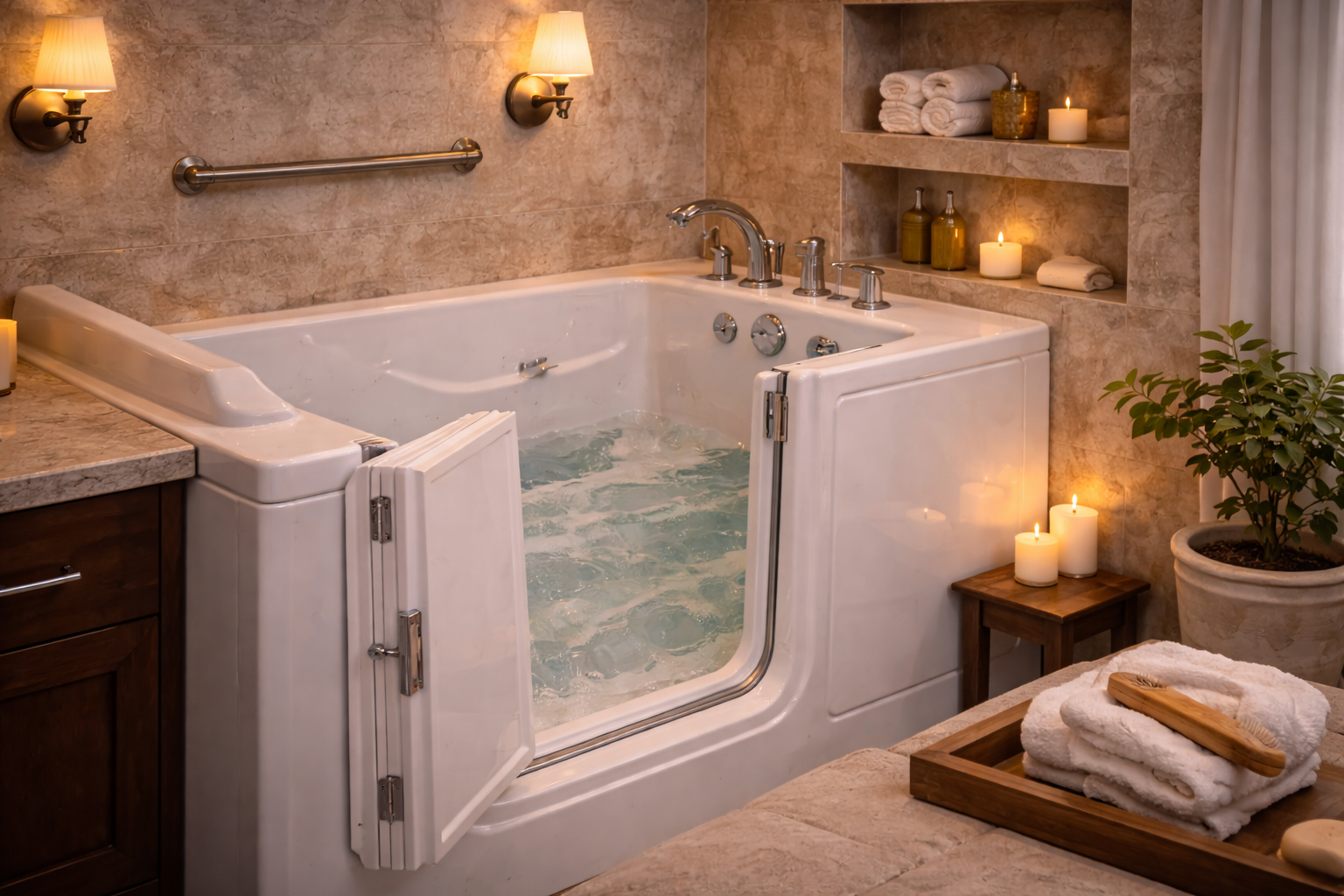
Walk-In Bathtub Guide Index
- Walk-In Bathtub Overview
- When Does a Walk-In Bathtub Make Sense
- What Types of Walk-In Bathtubs Are Common
- How Do Layout and Room Size Affect a Walk-In Bathtub
- What Materials and Components Are Used With a Walk-In Bathtub
- What Upgrades Can Be Added With a Walk-In Bathtub
- What Installation Details Matter With a Walk-In Bathtub
- What Affects Walk-In Bathtub Cost
- What Mistakes Should Homeowners Avoid With a Walk-In Bathtub
- How Should You Plan a Walk-In Bathtub
- Related Walk-In Bathtub Topics
- Frequently Asked Questions About Walk-In Bathtubs
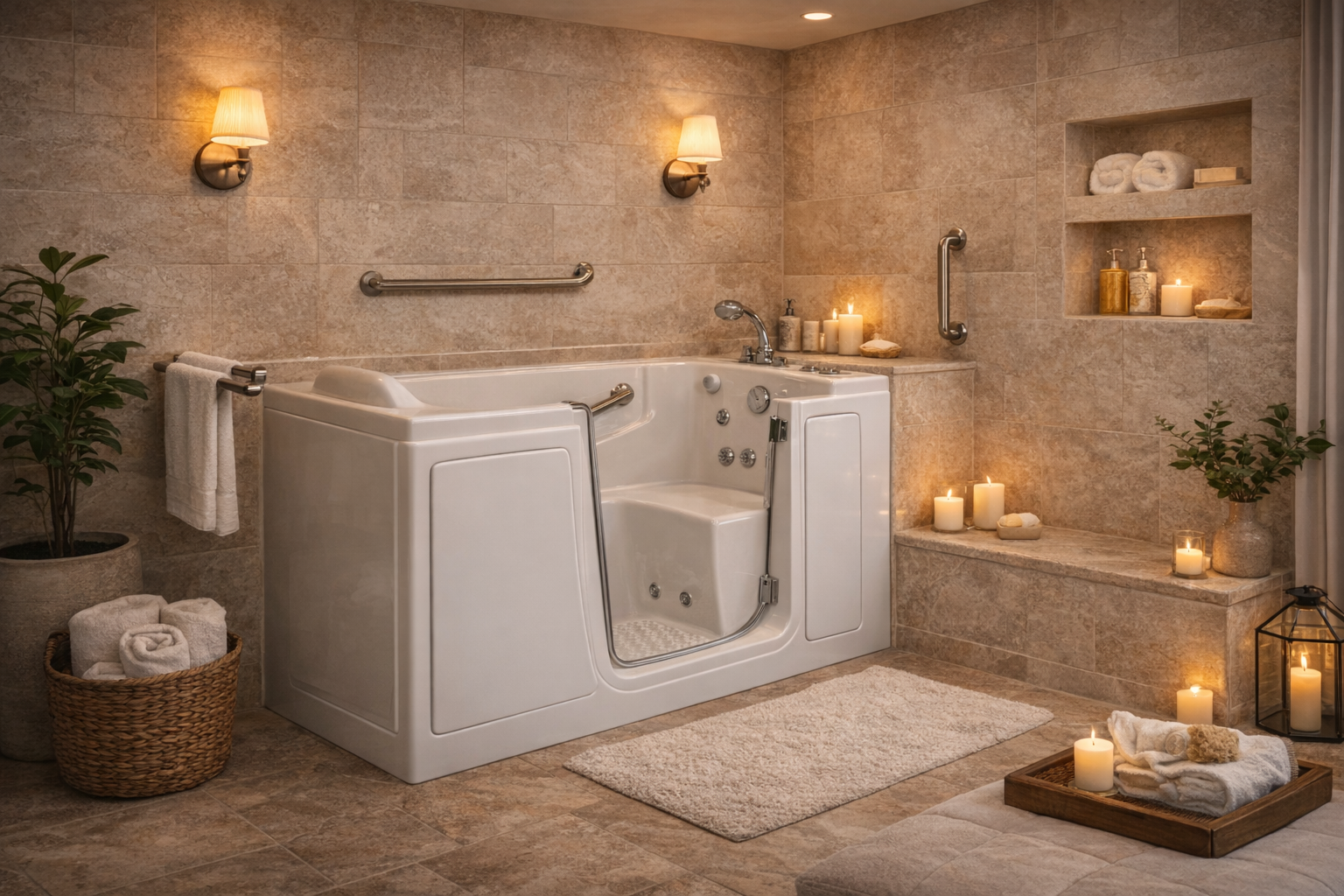
Walk-In Bathtub Overview
A walk-in bathtub is designed to make bathing safer and easier for people who need lower-step entry, seated bathing, or more support getting in and out of the tub. In practical remodel work, installing a walk-in tub usually means planning for the tub size, door swing or entry direction, faucet and hand-shower placement, wall support for grab bars, and the amount of room the user needs around the tub. Walk-in bathtubs are chosen more for safety and comfort than for decorative appeal alone.
What Gets Updated During a Walk-In Bathtub Project
The work may include the tub itself, tub door, seat, grab bars, hand shower, filler controls, drain system, wall support, and nearby floor or wall finish changes. In some remodels, the surrounding layout also changes because a walk-in tub may need more approach space or different plumbing and valve placement than a standard tub.
What Is the Difference Between a Walk-In Tub and a Standard Bathtub
A standard bathtub usually requires stepping over the tub wall to get in. A walk-in bathtub uses a lower entry door and a built-in seat so the user can step in more safely and bathe in a seated position. That difference changes the safety level, the bathing process, and the installation details.
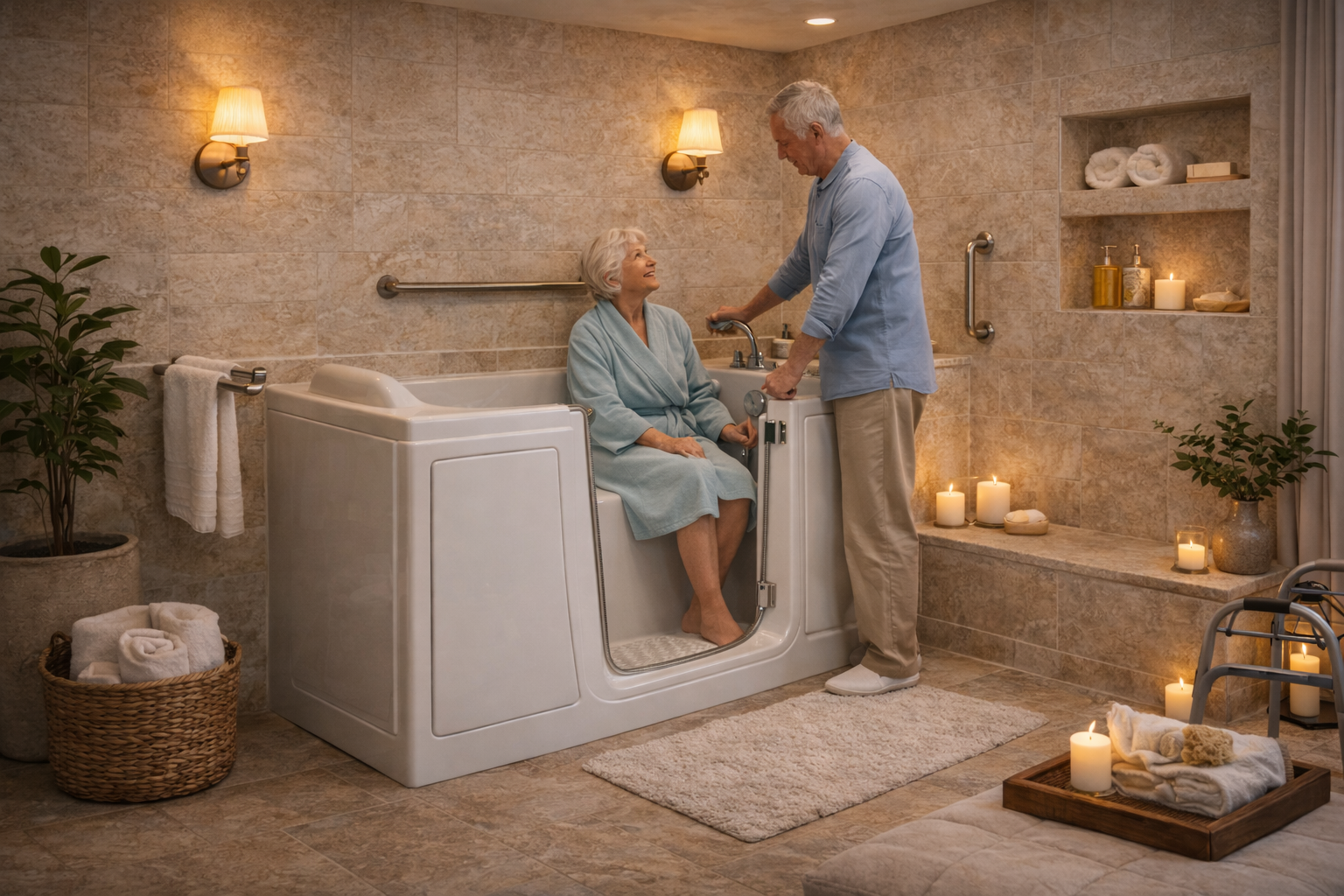
When Does a Walk-In Bathtub Make Sense
A walk-in bathtub makes sense when the homeowner wants safer access, easier seated bathing, or better support in and around the tub area. It is most common in aging-in-place remodels, mobility-focused remodels, and bathrooms where the current tub has become too hard or too risky to use safely. This decision often connects directly to bathroom remodeling, especially when the goal is a more complete remodel.
What Bathroom Conditions Usually Point to a Walk-In Tub
Common conditions include difficulty stepping over a tub wall, concerns about balance, the need for grab support, and a remodel focused on long-term usability. A walk-in tub also makes more sense when the household still wants a tub but needs one designed around easier entry and seated comfort.
When Is a Walk-In Bathtub Not the Best Choice
A walk-in tub is usually not the best choice when the household does not need the accessibility features, when a low-threshold shower would solve the problem better, or when the bathroom is too tight to support the tub footprint and approach space comfortably.
What Types of Walk-In Bathtubs Are Common
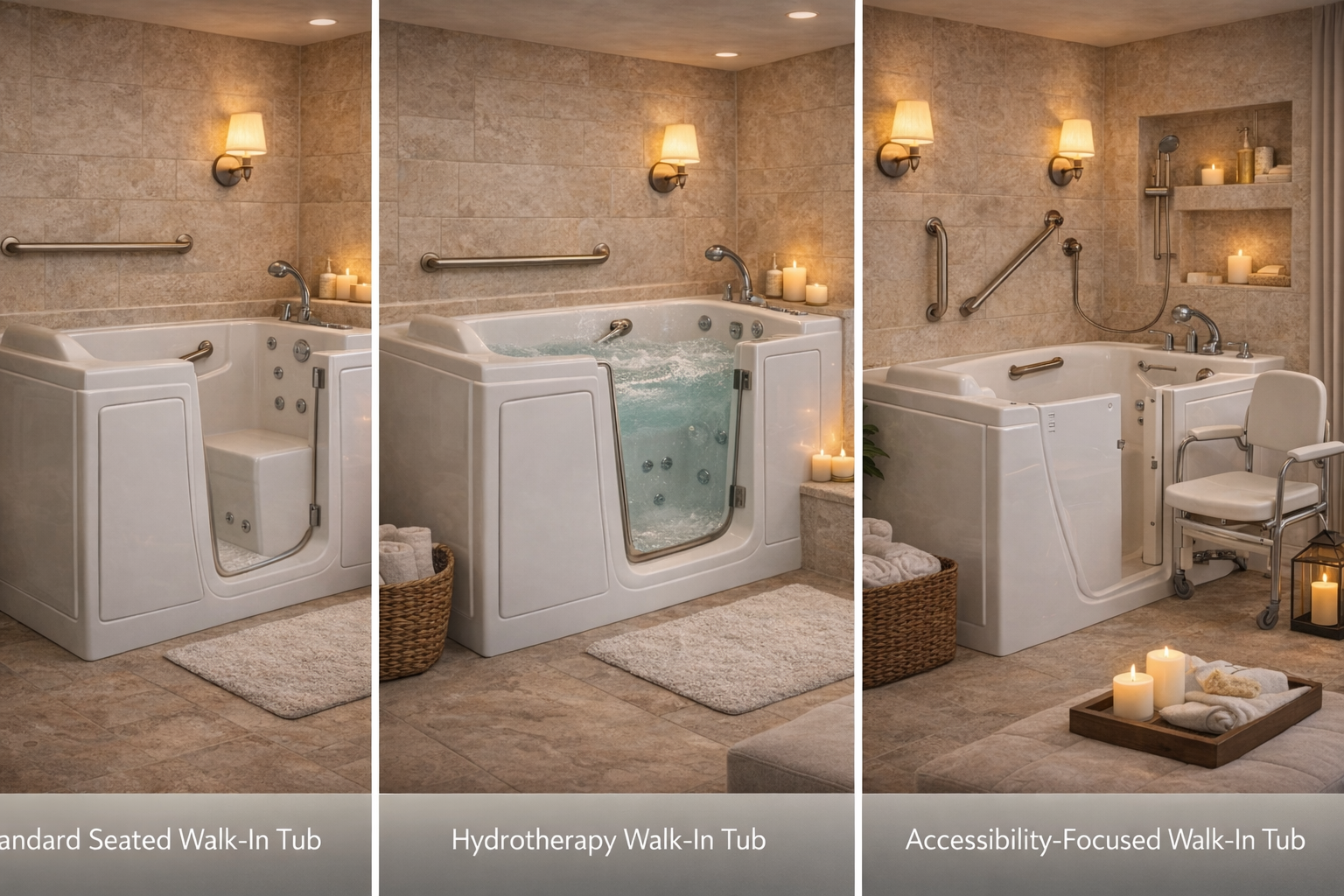
Common walk-in bathtub types include standard seated walk-in tubs, soaking walk-in tubs, hydrotherapy or jetted walk-in tubs, air jet walk-in tubs, and larger accessibility-oriented models with wider doors or more internal room. The right type depends on mobility needs, room size, and whether the tub is being chosen for safety alone or also for comfort features. During remodeling, it also helps to follow EPA indoor air quality guidance.
What Walk-In Tub Styles Are Most Common in Remodeling Projects
Standard seated walk-in tubs are common because they focus on safe entry and basic bathing. Hydrotherapy and air-jet models are common when the homeowner also wants massage-style comfort features. Larger walk-in models are often chosen when transfer space, seat height, or mobility support is a major part of the project.
When Does One Walk-In Tub Type Make More Sense Than Another
A simpler walk-in tub may make more sense when the main goal is safe entry and ease of use. A jetted or air-powered walk-in tub may make more sense when the household also wants a therapeutic bathing experience. The best choice depends on the user needs rather than a one-size-fits-all feature list.
How Do Layout and Room Size Affect a Walk-In Bathtub
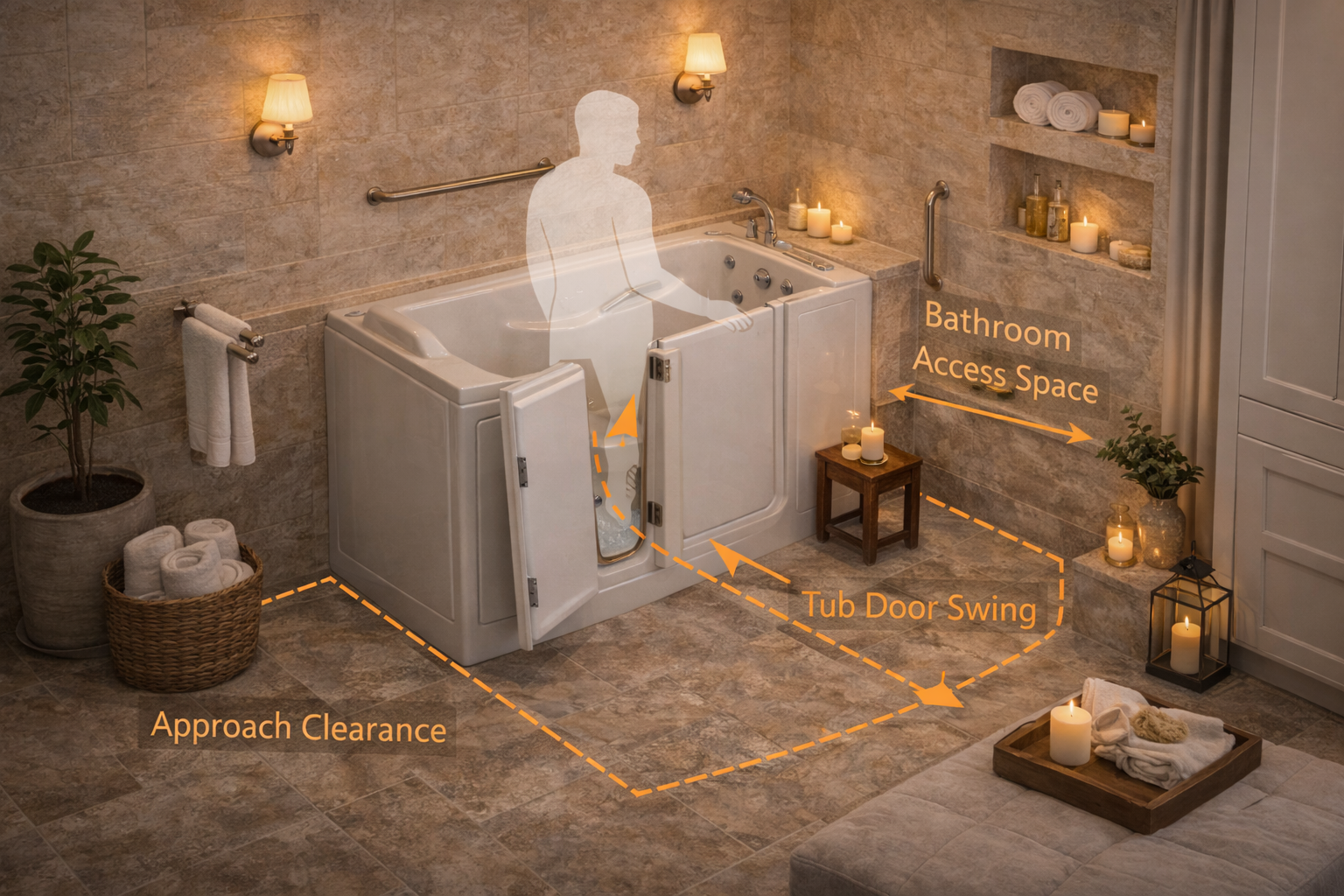
Layout and room size matter because a walk-in bathtub has to support safe entry, seated bathing, and enough approach space around the unit. The room has to allow for the tub body, door access, fixture placement, and safe movement around the tub without crowding the rest of the bathroom.
Why Does Approach Space Matter So Much for a Walk-In Tub
Approach space matters because the user needs room to step in, sit down, and move around the tub safely. A walk-in tub that is installed in a tight corner without enough clearance may reduce the safety benefit that made the tub worth choosing in the first place.
How Does Bathroom Size Change the Best Walk-In Tub Strategy
In a larger bathroom, the remodel may support a walk-in tub with better side clearance, more storage, and a better overall bathing zone. In a smaller bathroom, the best strategy may be a more compact walk-in model or a different accessibility solution if the tub would crowd the room too much.
What Materials and Components Are Used With a Walk-In Bathtub
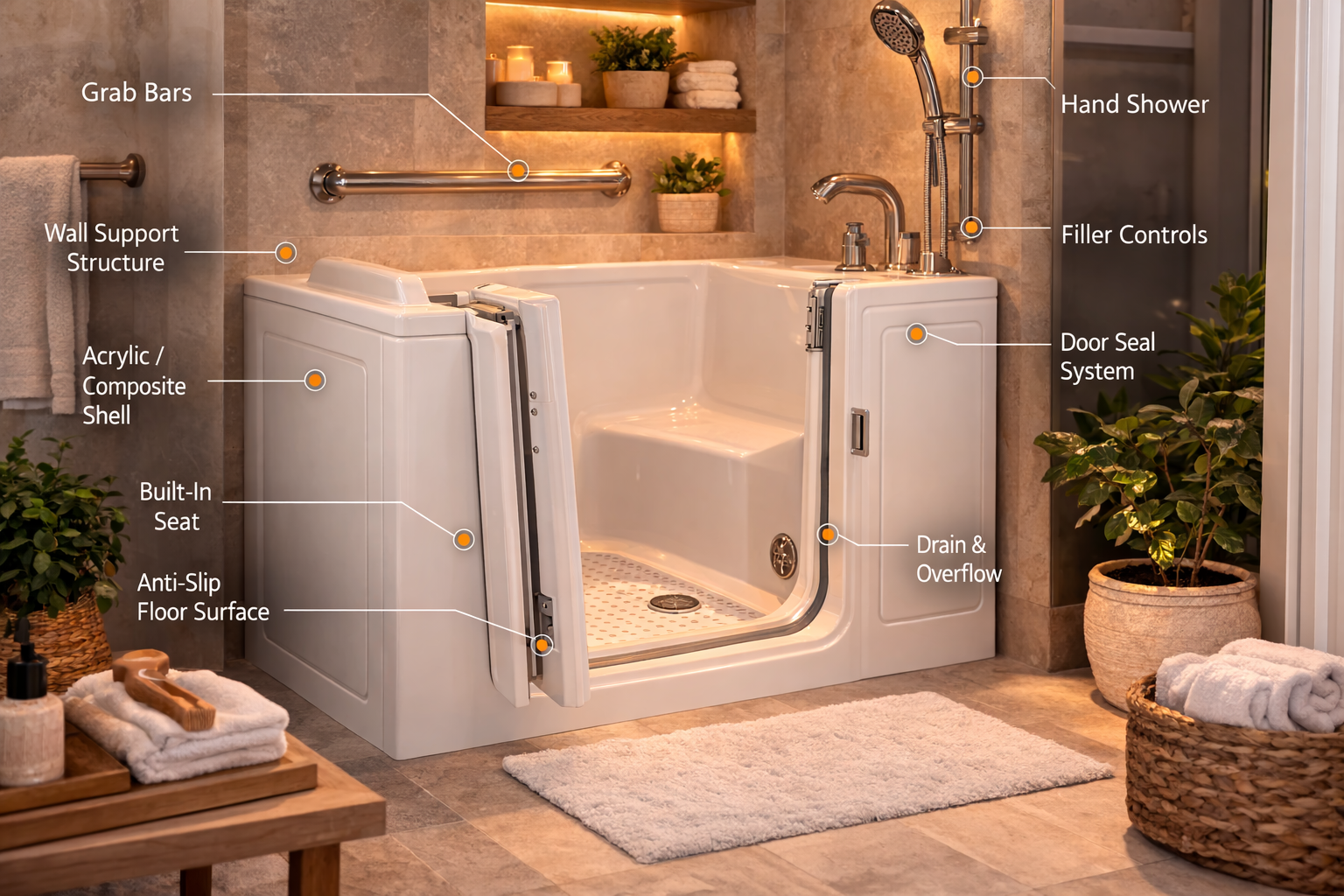
A walk-in bathtub project uses the tub shell, door seal system, built-in seat, drain components, filler and hand-shower controls, grab bars, and often nearby wall support or finish materials that help the bathing area work safely. The visible tub is only part of the system. The safety and sealing components matter just as much.
What Walk-In Tub Materials Are Common
Acrylic and composite tub shells are common because they support molded seat forms and are practical for accessibility-focused tub designs. The finish materials around the tub may also need to support easier cleaning and safer use in a wet area.
What Safety and Plumbing Components Usually Change
Walk-in tub projects often involve the tub door, seat design, grab bars, anti-slip floor surface, hand shower, drain and overflow, and in some cases faster-drain systems or comfort features such as jets. Depending on the layout, the surrounding wall support and plumbing controls may also need to be repositioned for easier use. For water-use considerations, homeowners can review WaterSense guidance.
What Upgrades Can Be Added With a Walk-In Bathtub
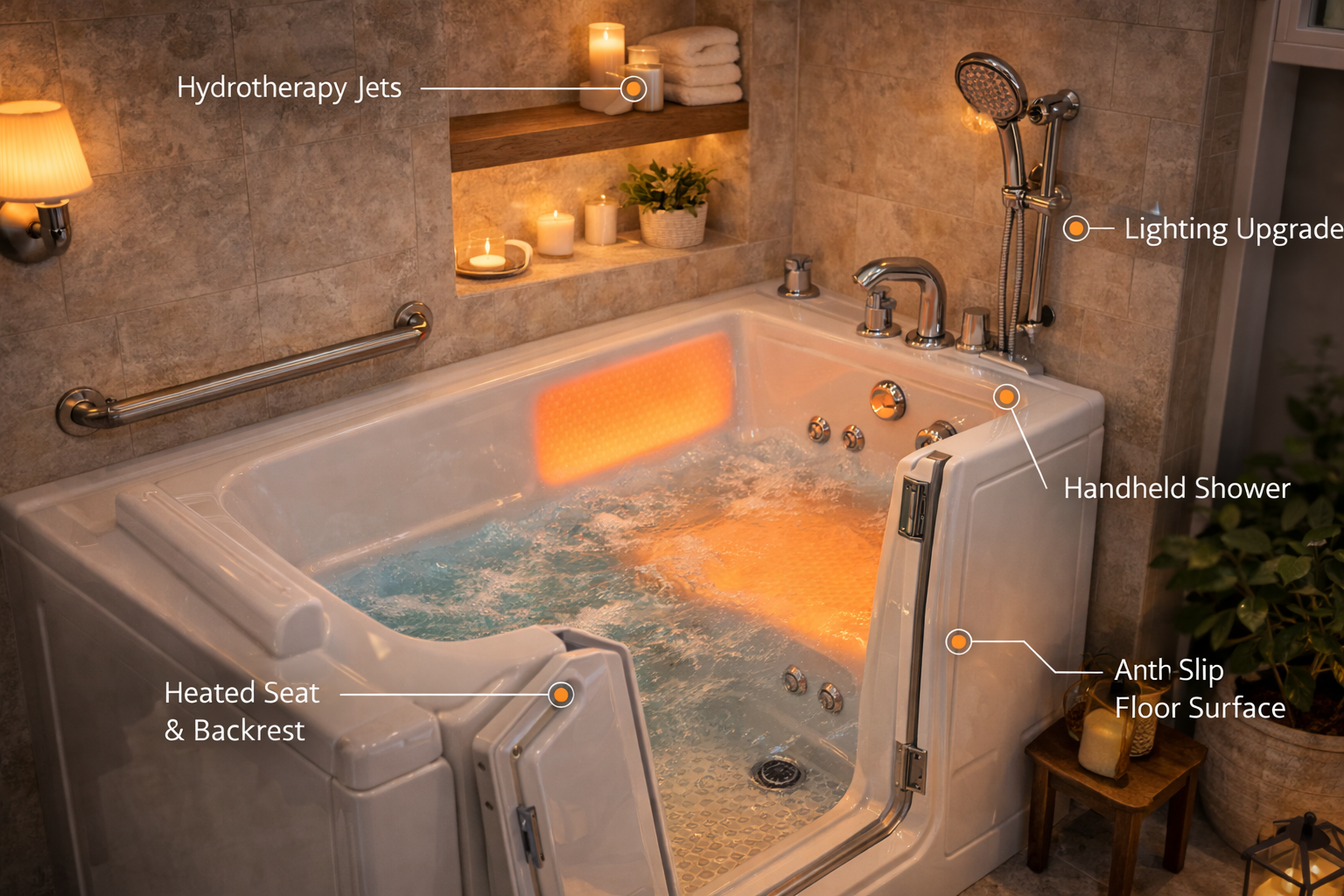
Walk-in tub work is often the best time to add upgrades that improve safety and comfort together. Common upgrades include hydrotherapy jets, air jets, heated seats or backrests, handheld shower controls, better grab-bar placement, and improved lighting around the bathing area.
What Functional Upgrades Are Most Useful Around a Walk-In Tub
Functional upgrades often include easier-to-reach controls, stronger hand-shower placement, additional grab support, and lighting that makes entry and use safer. These upgrades matter because the tub is being selected to improve usability, not just to replace one bathing fixture with another.
What Comfort Upgrades Usually Happen at the Same Time
Comfort-focused upgrades may include hydrotherapy features, warmer seating surfaces, easier neck or arm support, and nearby storage or ledges for bathing products. These upgrades are more useful when they support the actual user instead of just adding features that make the tub more complicated.
What Installation Details Matter With a Walk-In Bathtub
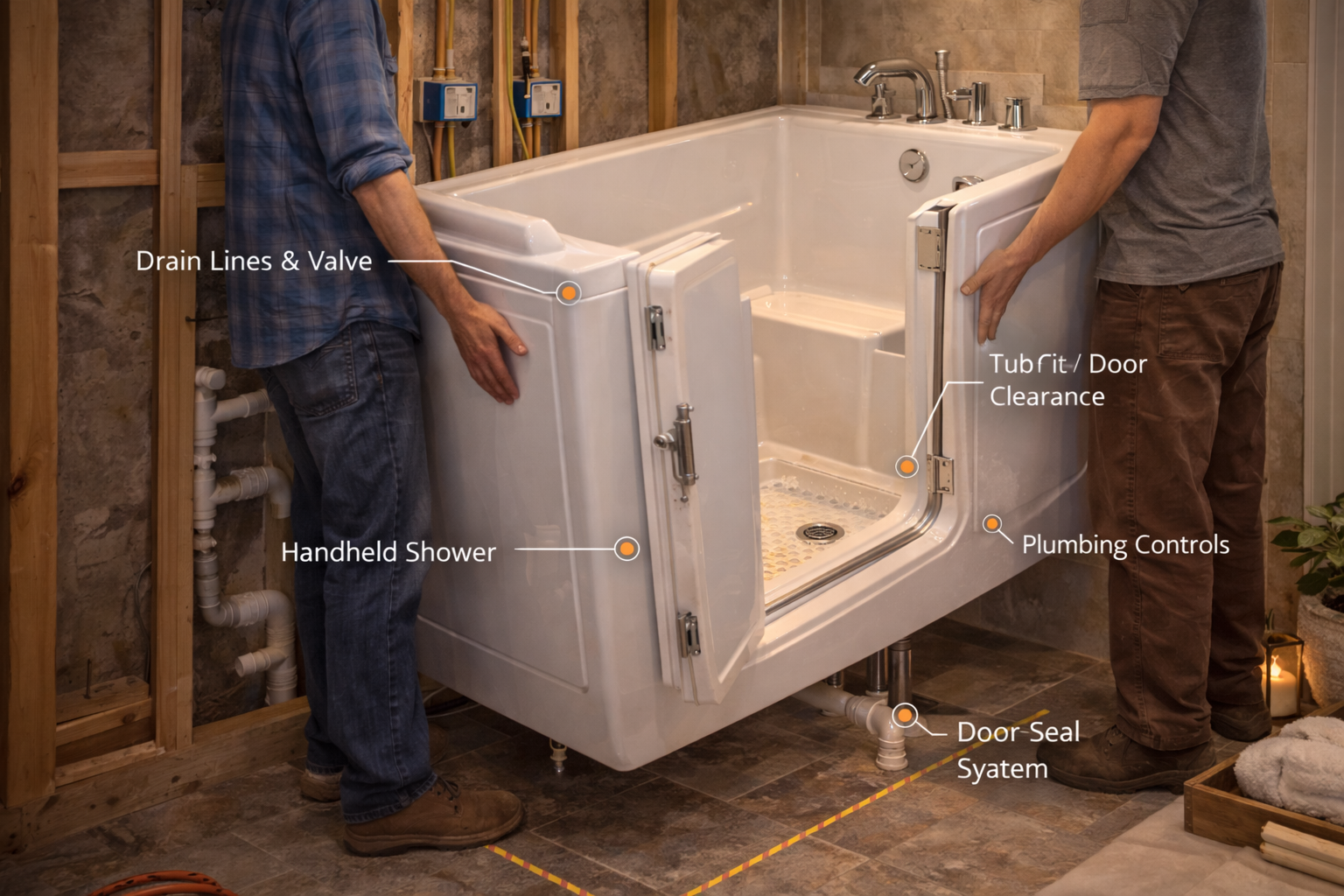
Walk-in bathtub installation depends on safe placement, drain performance, wall support, plumbing control location, and how the tub fits the user access path through the room. Because the tub is chosen for safety and accessibility, the installation details matter even more than they would in a standard bathtub project.
Why Do Drain Performance and Wall Support Matter So Much
A walk-in tub has to drain reliably and the surrounding wall has to support the fixtures and grab features used around it. If the tub takes too long to drain or the wall support is poorly planned, the user experience can become frustrating or unsafe.
What Placement and Access Problems Show Up During Installation
Common issues include not leaving enough room for entry and exit, placing controls awkwardly, poor grab-bar support planning, and forcing the tub into a bathroom that is too tight for the user to move comfortably. These are practical issues that can undermine the whole purpose of the remodel if they are ignored. Another detail worth comparing during planning is bathtub remodel.
What Affects Walk-In Bathtub Cost
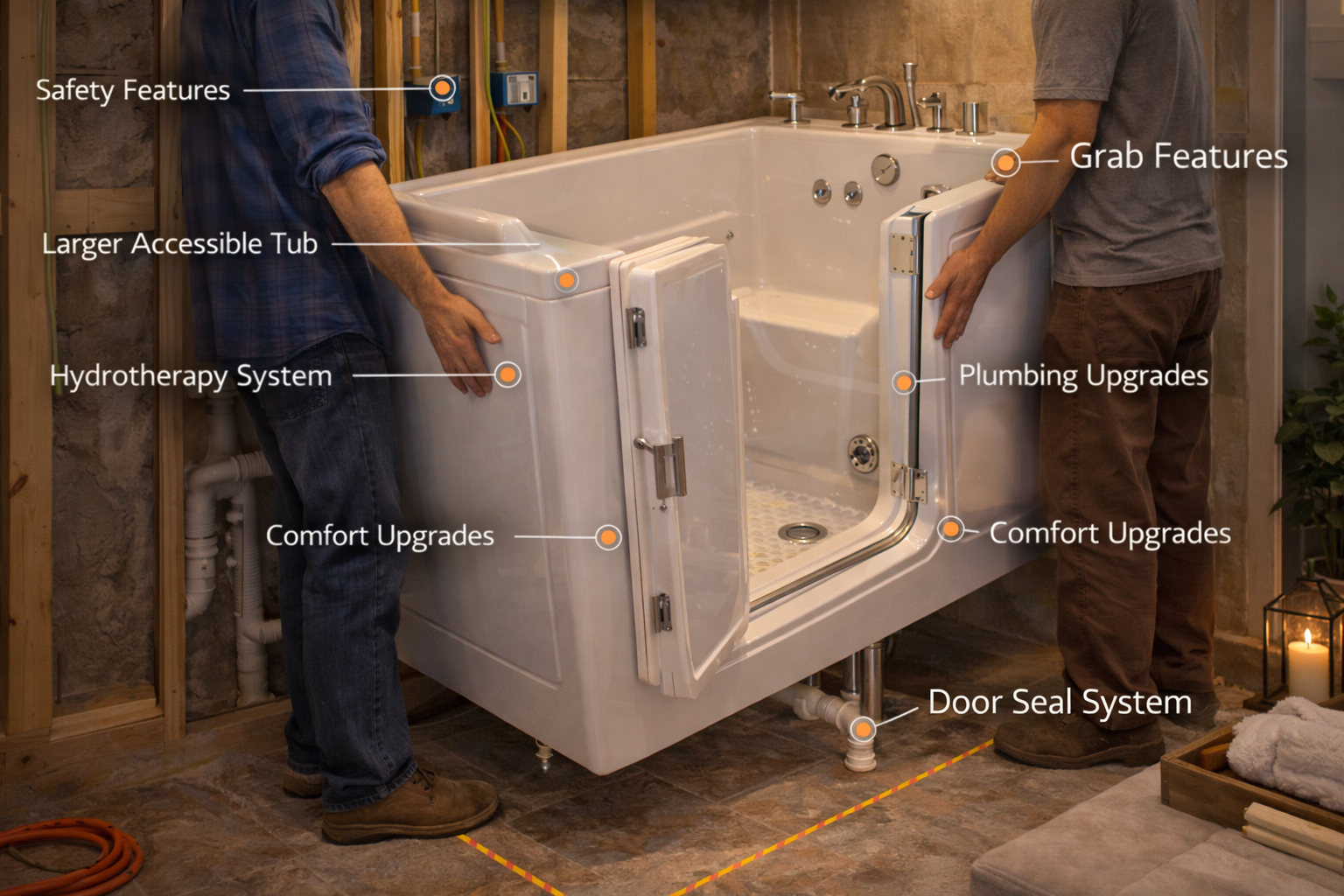
Walk-in bathtub cost usually depends on the tub type, safety and comfort features, plumbing work, surrounding finish changes, and whether the bathroom layout needs to change to support the tub correctly. A walk-in tub often costs more than a basic bathtub replacement because the product and the installation are more specialized.
Which Walk-In Tub Choices Usually Raise the Cost
Costs usually rise with larger accessible tub models, hydrotherapy systems, comfort upgrades, better drain systems, extra grab features, and more extensive plumbing or layout changes. The more specialized the safety and bathing features become, the more the project usually costs. Efficiency planning may also benefit from ENERGY STAR guidance.
How Do Labor and Existing Conditions Change the Budget
Labor costs go up when the bathroom needs wall reinforcement, plumbing relocation, electrical work for upgraded features, or layout changes to create safe approach space. Existing conditions matter because many bathrooms were not originally designed around accessibility goals.
What Mistakes Should Homeowners Avoid With a Walk-In Bathtub
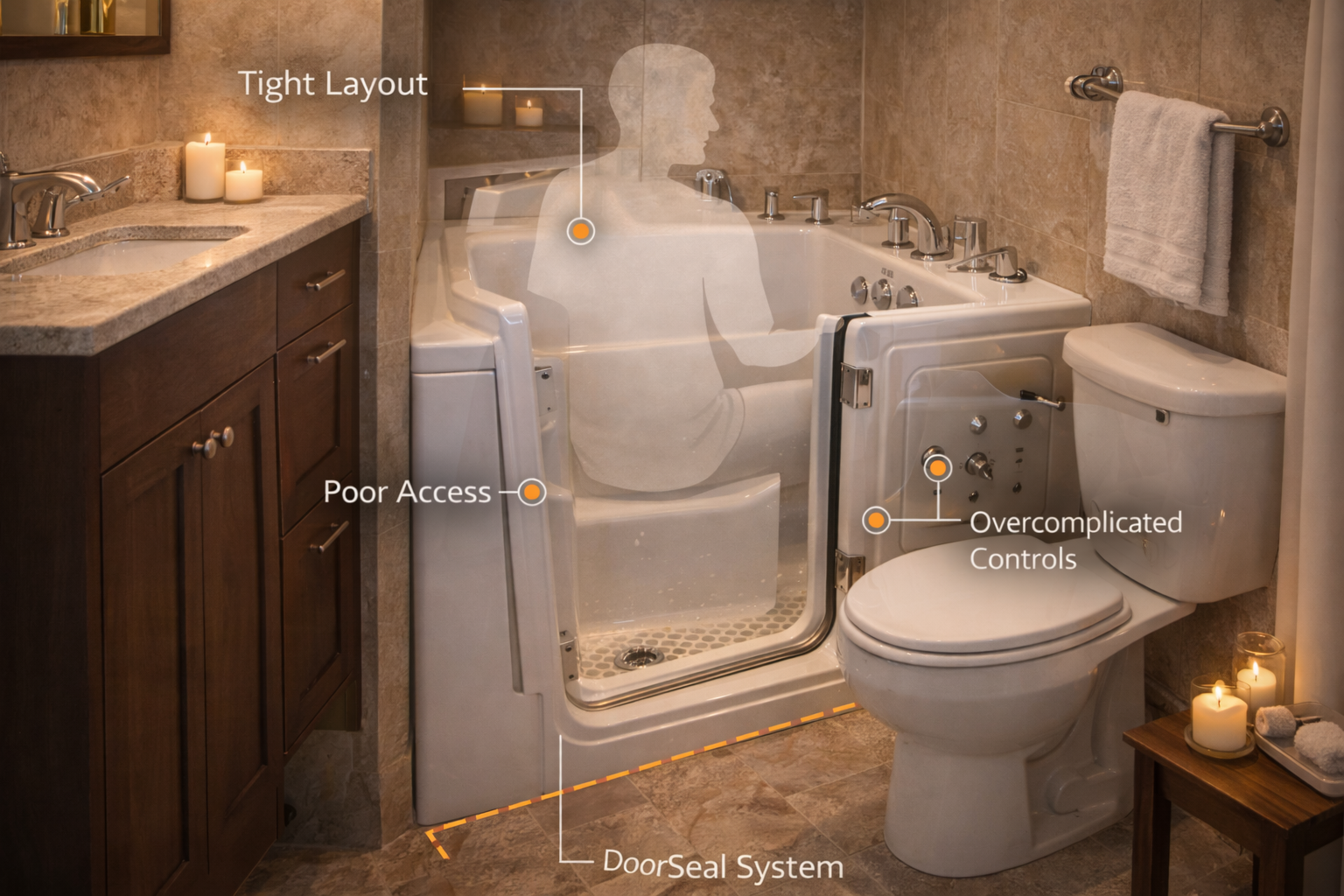
The biggest walk-in bathtub mistakes usually happen when the tub is chosen without fully matching it to the users actual mobility, comfort, and bathroom layout needs. A walk-in tub should make the bathroom easier and safer to use, not just add a specialty fixture.
Why Is It a Problem to Choose a Walk-In Tub Without Checking the User Needs
Different users need different seat heights, support features, entry widths, and control layouts. If the tub is chosen without thinking about the actual person using it, the remodel may still leave important safety or comfort problems unresolved.
Why Is It Risky to Ignore the Overall Bathroom Layout
A walk-in tub has to fit into the room in a way that still supports safe movement, nearby storage, and easy access to the rest of the bathroom. If the layout becomes too tight, the accessibility benefits may be reduced.
How Should You Plan a Walk-In Bathtub
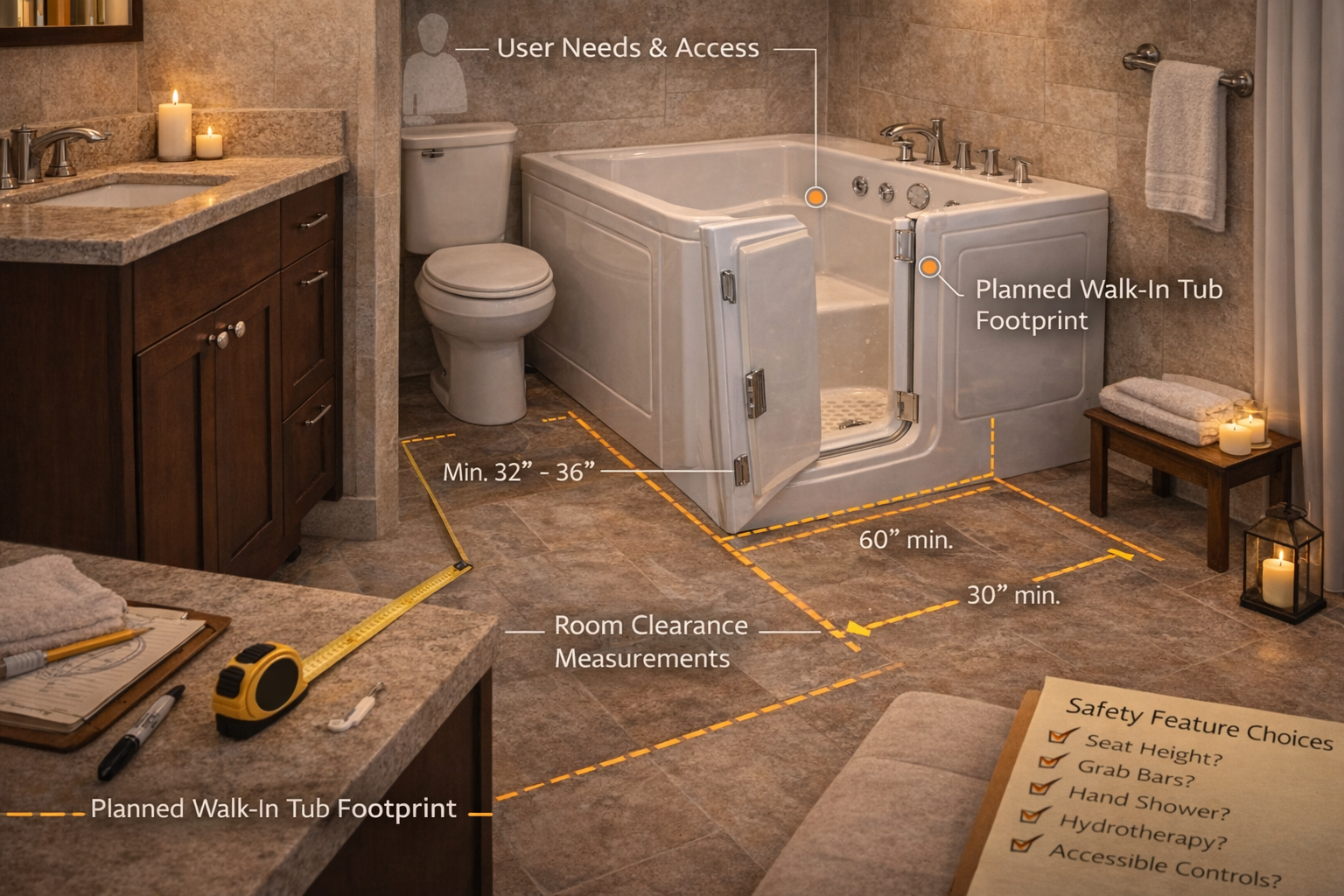
A walk-in bathtub should be planned by looking at the users real mobility needs, measuring the bathroom carefully, and deciding whether the room can support the tub with safe approach and usable spacing. The best plan balances safety, comfort, bathing preference, and room layout instead of choosing features in isolation.
What Should Be Decided Before Walk-In Tub Work Starts
Before construction starts, it helps to confirm tub size, seat style, feature package, control placement, grab support, drain setup, and whether the surrounding bathroom layout still works with the new tub in place. These decisions affect the plumbing, finishes, and the real usability of the room.
How Can a Homeowner Prepare for the Installation Process
Homeowners should be ready for plumbing coordination, possible wall support upgrades, layout adjustments, and careful planning around approach space and bathing access. Walk-in tub projects usually go better when the tub is planned around the user first and the room second, not the other way around.
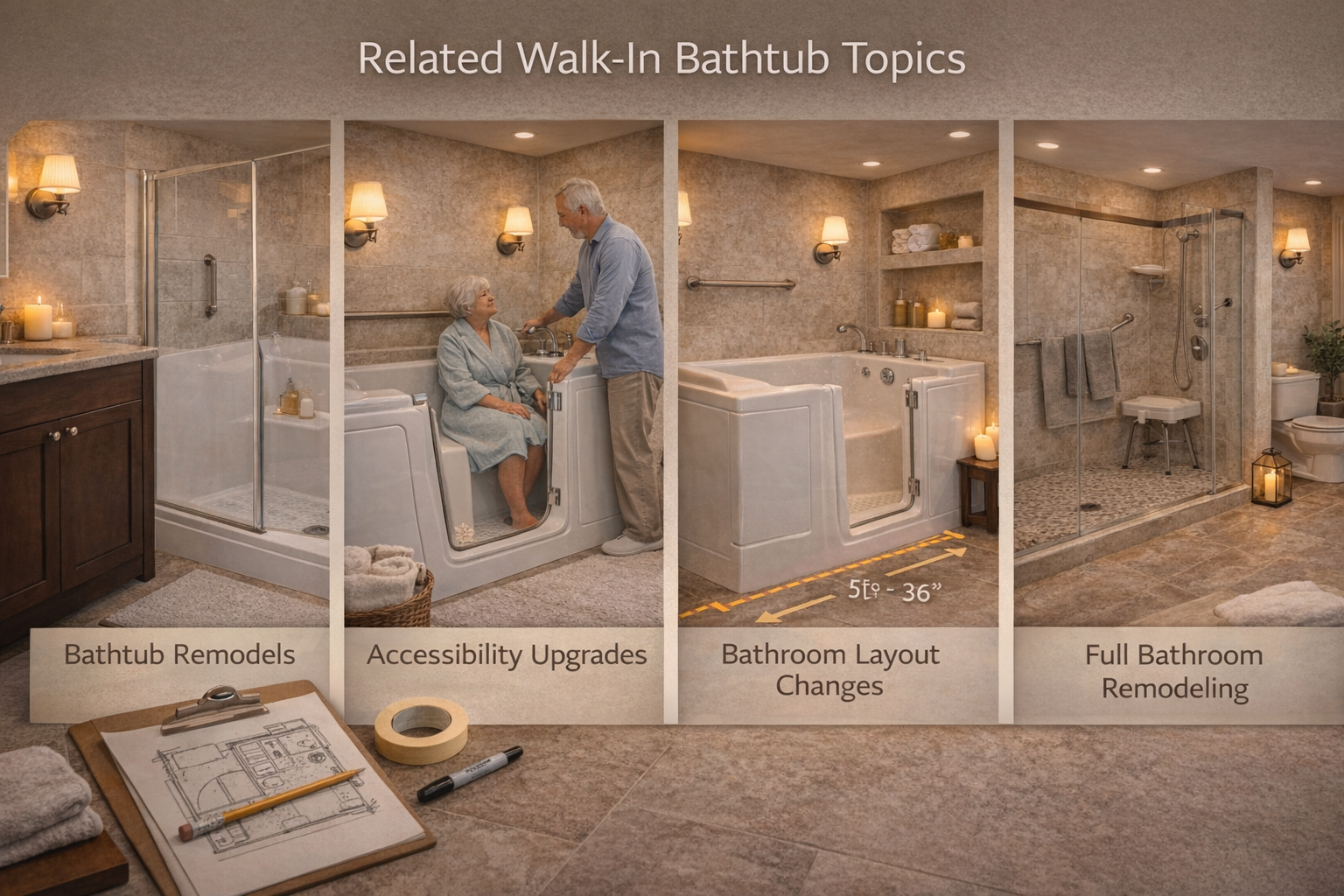
Related Walk-In Bathtub Topics
Walk-in bathtub projects overlap with bathtub remodeling, accessibility upgrades, bathroom layout changes, and full bathroom remodeling because the tub affects safety, room function, and the design of the bathing area. Related topics help homeowners compare whether a walk-in tub is the right accessibility solution for the bathroom.
Which Walk-In Bathtub-Related Pages Should Connect to This Topic
Strong related pages include bathtub remodels, bathtub replacement, accessibility upgrades, bathroom layout changes, and safer bathing design topics. Those pages help break down the safety and layout decisions that shape whether a walk-in tub is the right fit.
Which Bathroom Remodeling Topics Often Connect to Walk-In Tub Work
Walk-in tub work often connects to flooring, lighting, layout changes, grab-bar planning, and full bathroom remodeling. In practical remodels, these pieces overlap because the bathing area has to work as one coordinated system.
Frequently Asked Questions About Walk-In Bathtubs
A walk-in bathtub is a bathtub with a lower entry door and built-in seating designed for safer, easier bathing.
Walk-in bathtubs are often considered by homeowners who want safer access, easier seated bathing, or better long-term usability in the bathroom.
No. They are common in aging-in-place remodels, but they may also be useful for people with mobility concerns, balance issues, or other accessibility needs.
They can, depending on the model. The bathroom needs enough space for the tub body and safe approach around it.
Yes. Some walk-in tubs include hydrotherapy or air-jet features in addition to the safety-focused tub design.
They often need plumbing planning that matches the tub design, and some models may also involve electrical work for upgraded features.
Yes. Many walk-in tub projects replace an existing standard tub when the goal is to improve safety and accessibility.
The timeline depends on the tub model, the existing bathroom conditions, and whether layout or plumbing changes are needed.
It can add value for the right buyer or household, especially when safety and long-term usability are important. Its value depends on how well it fits the bathroom and the market.
The first step is deciding what safety and usability problem the tub is meant to solve, then measuring the room to confirm the space supports it properly.