

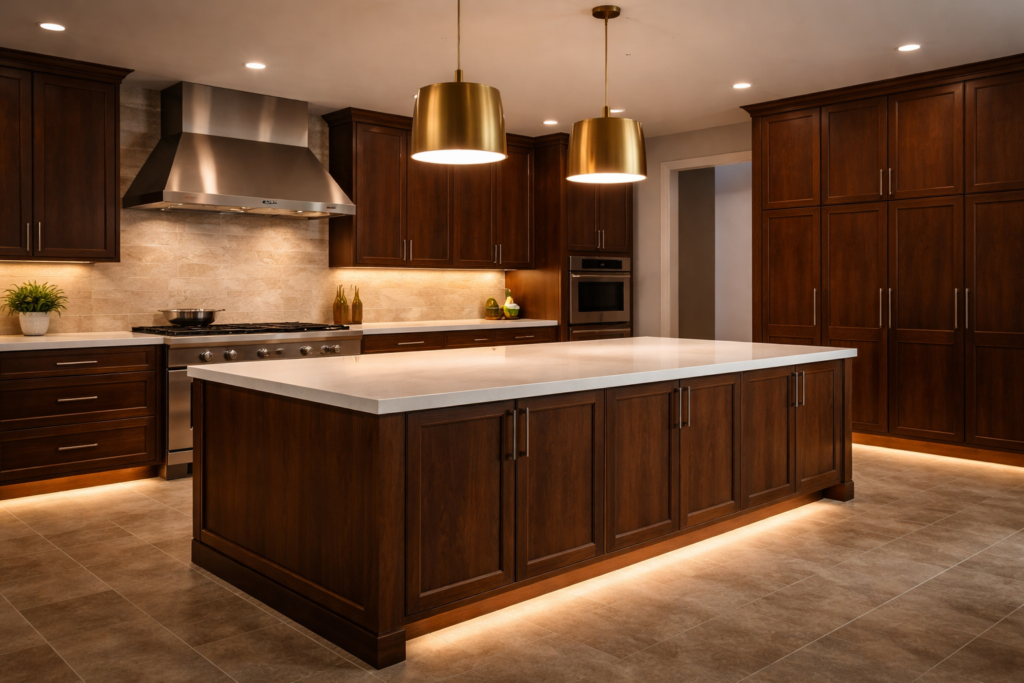
Prep Island Guide: Designing a Kitchen Island for Cooking and Workflow

Prep Island Guide Index
- Prep Island Overview
- What Is a Prep Island
- When Does a Prep Island Make Sense
- What Layout Features Make a Prep Island Work Well
- Should a Prep Island Include a Sink
- What Storage Works Best in a Prep Island
- What Installation Details Matter Most
- What Affects Prep Island Cost
- What Mistakes Should Homeowners Avoid
- How Should You Plan a Prep Island Remodel
- Frequently Asked Questions About Prep Islands

Prep Island Overview
A prep island is designed to make kitchen work easier. Instead of treating the island as only a place to sit or display decorative items, the remodel uses it as an active work zone for chopping, staging ingredients, setting out tools, and supporting the main cooking flow.
Why do homeowners want a prep island?
They want more usable workspace in the center of the kitchen where multiple tasks can happen at once. A well-designed prep island can give one person room to chop and stage ingredients while someone else uses the range or cleanup zone, which makes the kitchen feel more efficient during everyday cooking.
What makes a prep island different from a decorative island?
The difference is function. A decorative island may focus on looks, seating, or broad open surface area, while a prep island is planned around workflow. Storage, outlet placement, sink decisions, and traffic clearances all need to support real food prep instead of just appearance.
What Is a Prep Island
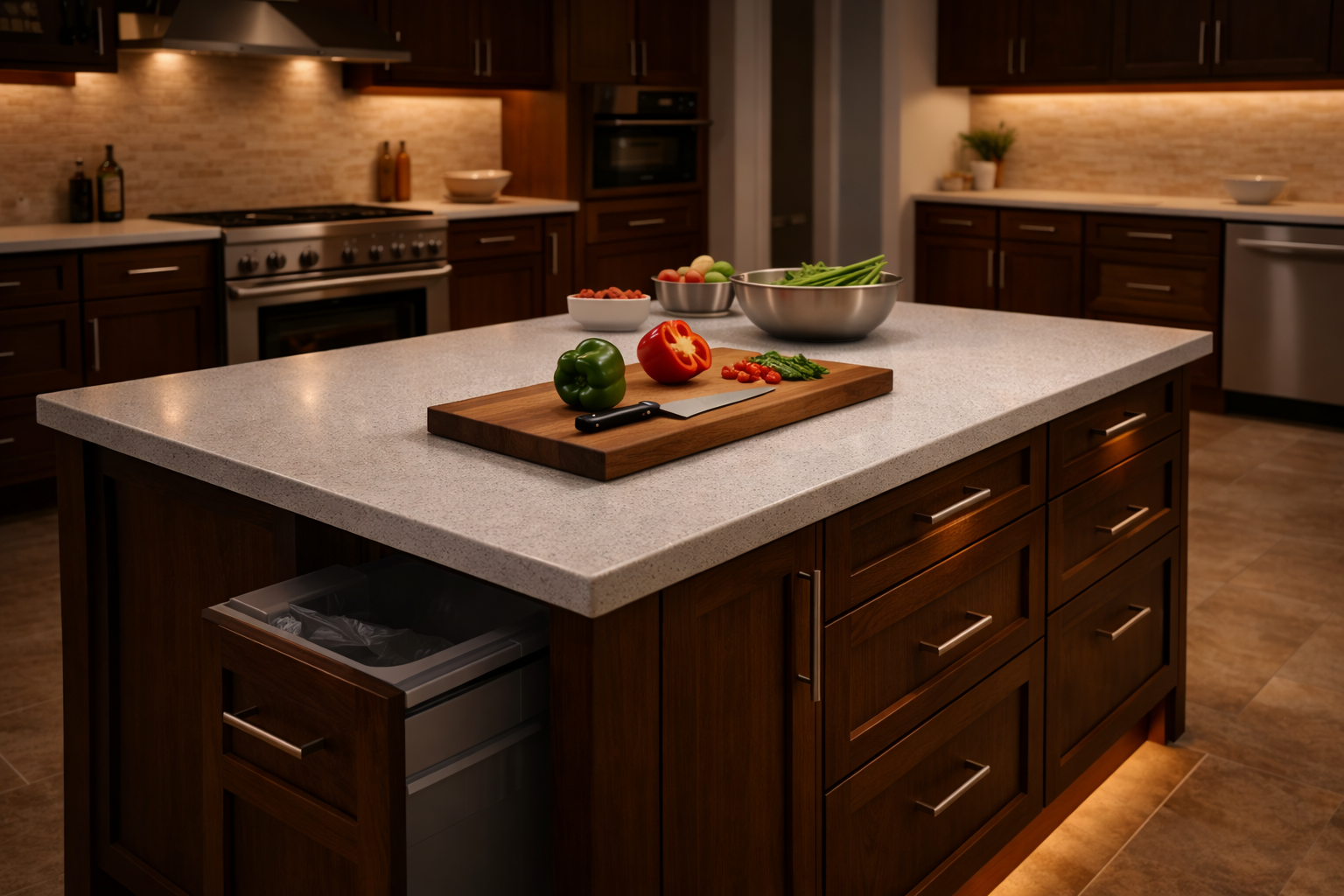
A prep island is a kitchen island that prioritizes food preparation. It usually includes generous counter space, storage for prep tools, and access to trash, knives, bowls, cutting boards, and small appliances. In some kitchens, it also includes a prep sink or specialty storage that supports cooking tasks directly. During remodeling, it also helps to follow EPA indoor air quality guidance.
Does every prep island need special features?
No. Some prep islands work well with nothing more than a large uninterrupted top and smart drawer storage below. Others benefit from a sink, electrical outlets, towel storage, or pull-out waste bins. The right features depend on how the kitchen is used, not on a fixed checklist.
Can a prep island still look stylish?
Absolutely. A prep-focused island can still anchor the room visually. The best kitchen remodels combine function and appearance so the island works hard without looking like an afterthought.

When Does a Prep Island Make Sense
A prep island makes sense when the kitchen has enough room to support it without crowding walkways, appliance swings, or cabinet access. It is especially useful in kitchens where the perimeter counters are limited, the household cooks often, or the layout needs a central surface that connects storage, prep, and cooking zones. Homeowners comparing options often look at kitchen remodeling as part of the overall plan.
Is it useful in a larger kitchen?
Very often, yes. In a larger kitchen, a prep island can shorten movement between the refrigerator, sink, pantry, and range. It gives the room a true work center instead of forcing all prep to happen along one wall.
Can it work in a smaller kitchen?
Sometimes, but only if the scale is right. A narrow island with good drawers can add a lot of function, but an oversized island in a tight kitchen can choke circulation and make the whole room harder to use. The measurements have to come first.
What Layout Features Make a Prep Island Work Well
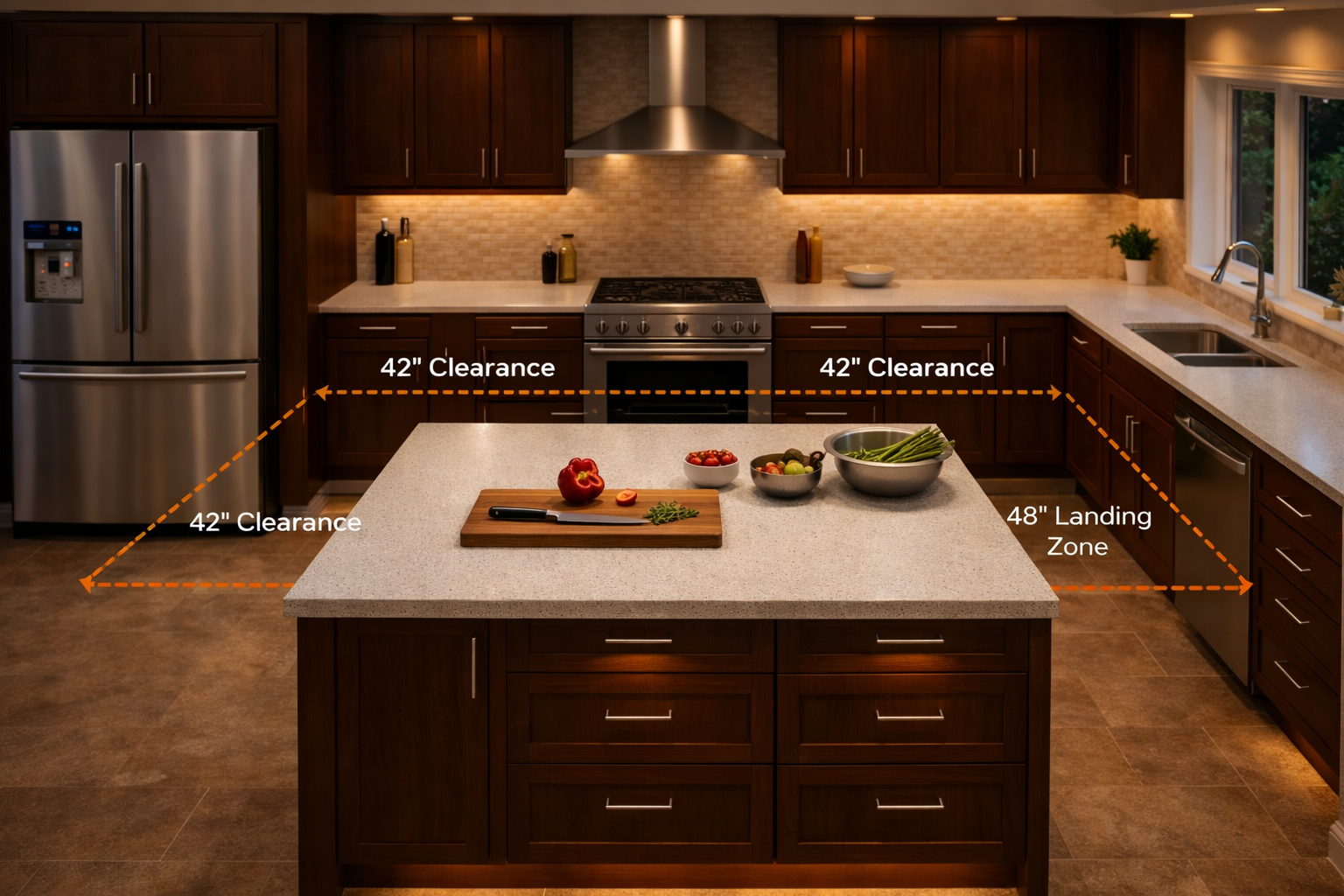
A good prep island needs enough surrounding clearance, useful landing space, and a size that matches the kitchen. It should not block appliance doors or force people to squeeze past each other during cooking. The island should also sit where it actually supports the workflow between refrigeration, washing, prepping, and cooking.
What size should the work surface be?
That depends on the kitchen, but the main goal is preserving uninterrupted prep space. If the island is too short or broken up by too many features, it stops working as a true prep surface. In many remodels, one large clean section of countertop is more useful than several small sections split by sinks or seating cut-ins.
How does seating affect the layout?
Seating can work, but it changes the island’s job. If stools and overhangs take too much room, the island can lose the very prep space it was meant to provide. A good design decides early whether the island is mainly for work, mainly for gathering, or trying to balance both roles.

Should a Prep Island Include a Sink
A prep sink can make a prep island more useful, but it is not always the right move. In the right kitchen, it shortens the distance between washing produce and chopping ingredients. In the wrong kitchen, it breaks up the countertop and leaves too little landing space for real prep work. In many projects, kitchen island remodel becomes an important part of how the bathroom functions day to day.
When does a prep sink help most?
It helps most when the island is large enough to keep a strong work surface on both sides of the sink and when the kitchen has enough plumbing access to add it cleanly. It is also useful in kitchens where multiple people cook at once and the main sink is often busy.
When is it better to skip the sink?
If the island is modest in size, if the budget is tight, or if the main goal is one big uninterrupted surface, skipping the sink is often smarter. Adding plumbing and cutting the top can reduce both workspace and budget flexibility.
What Storage Works Best in a Prep Island
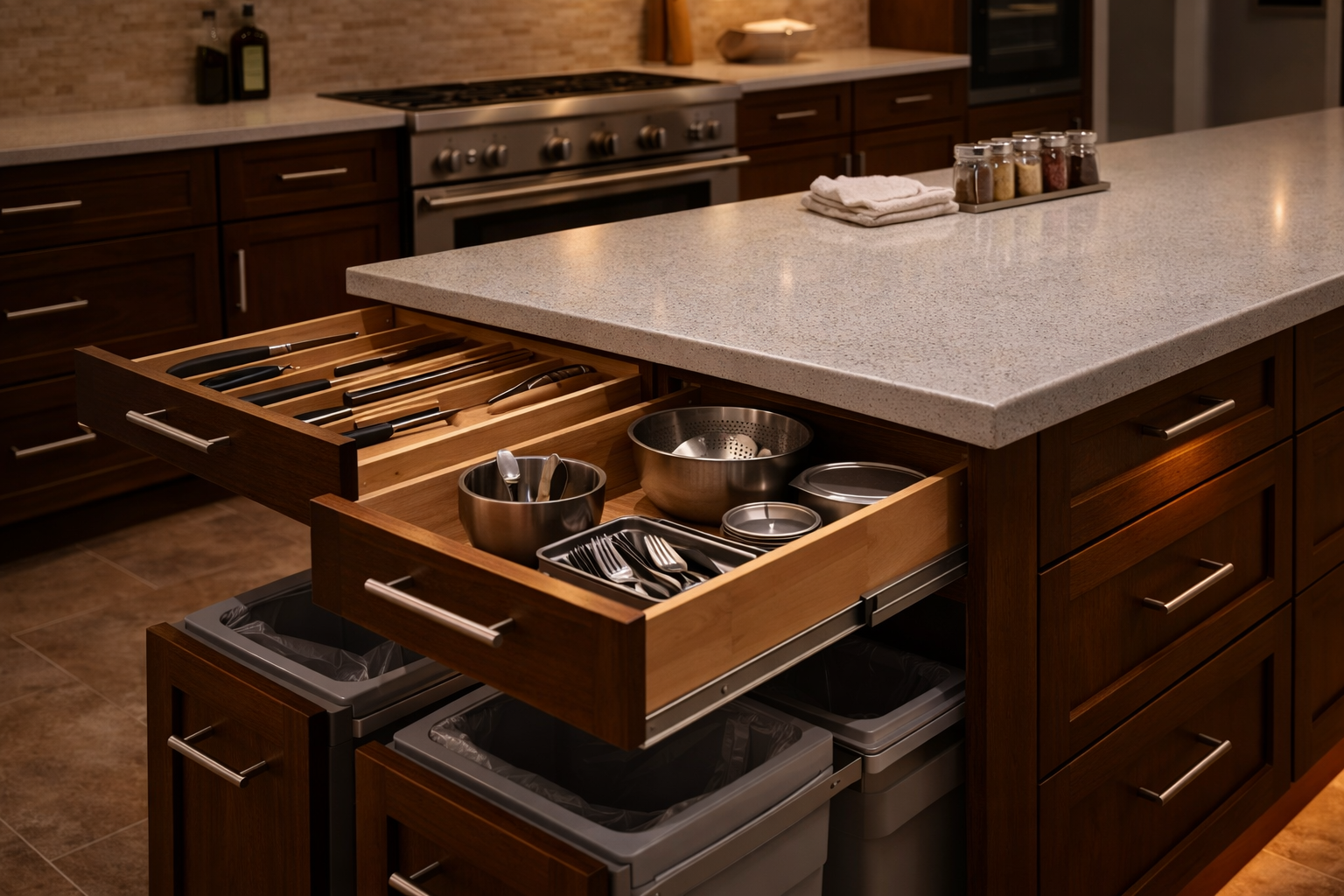
The best prep island storage supports the tasks that happen there every day. Deep drawers for mixing bowls and cookware, shallow drawers for knives and utensils, trash pull-outs, towel storage, cutting board slots, and storage for small prep appliances are all common choices.
Which storage upgrades are most useful?
Drawers usually outperform doors because they make tools easier to reach without crouching into the cabinet. A trash pull-out near the prep zone is another upgrade homeowners notice immediately because it makes cleanup faster while cooking.
Should both sides of the island be used for storage?
Often, yes. One side may hold working storage for the cook, while the back side can hold less frequently used items, decorative shelving, or seating support depending on the layout. The best arrangement depends on how the island faces the room and how much depth is available. For layout and clearance planning, many designers reference NKBA planning guidelines.
What Installation Details Matter Most
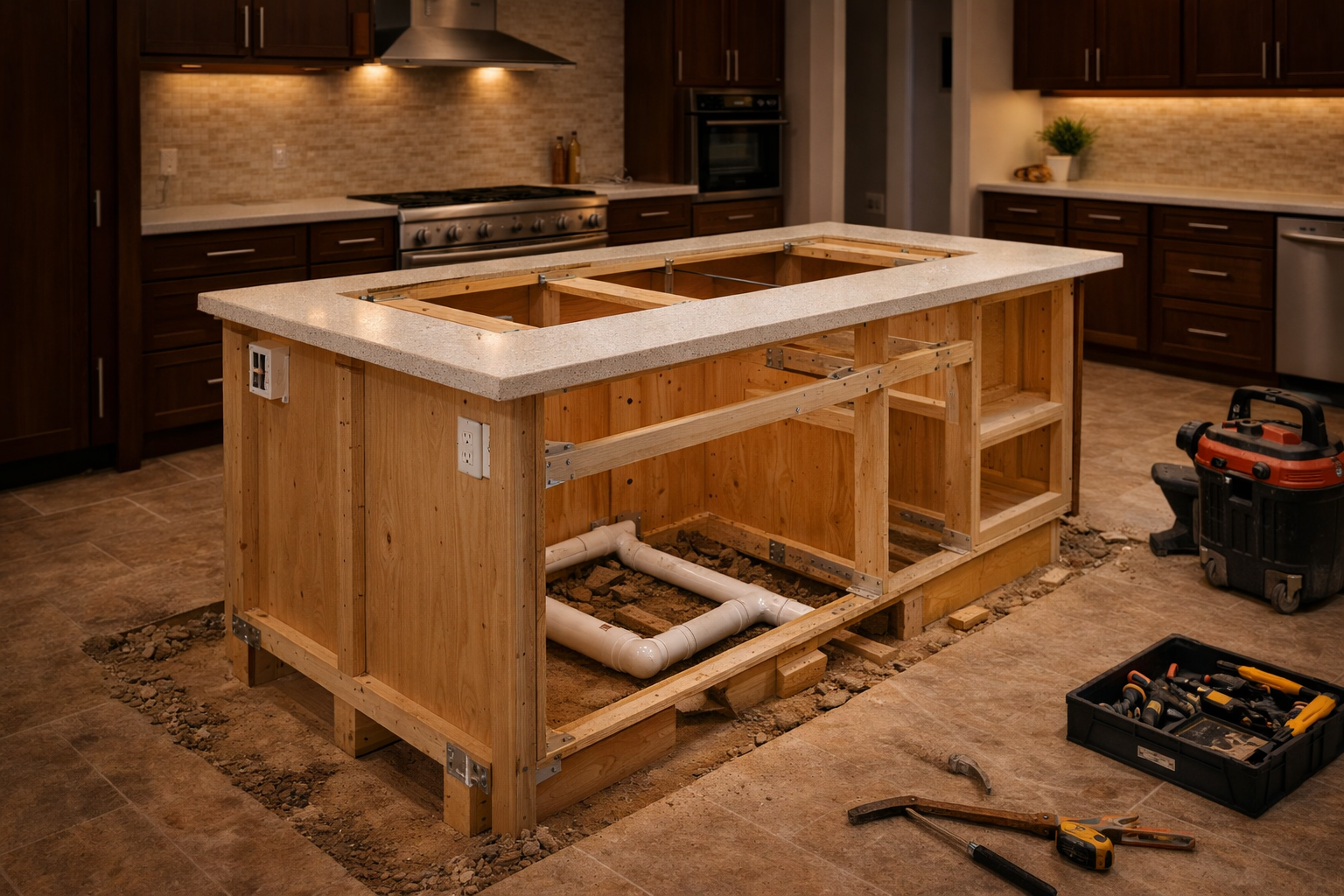
Prep islands often involve more than cabinets and a countertop. Electrical planning, floor patching, plumbing for a sink, venting considerations in some layouts, lighting placement, and support for counter overhangs all need to be thought through before installation starts.
What should be checked before construction begins?
Floor level, island size, walkway clearances, outlet locations, lighting alignment, and any required plumbing or framing changes should all be confirmed early. If the island includes seating, overhang support and knee space should also be reviewed before fabrication.
Why do installation details affect how usable the island feels?
Because small mistakes show up every day. A poorly placed outlet, a cramped stool overhang, drawers that hit appliances, or a sink that steals too much prep room can turn a good idea into an awkward feature. Good prep islands are measured around real use, not just floor-plan drawings.
What Affects Prep Island Cost
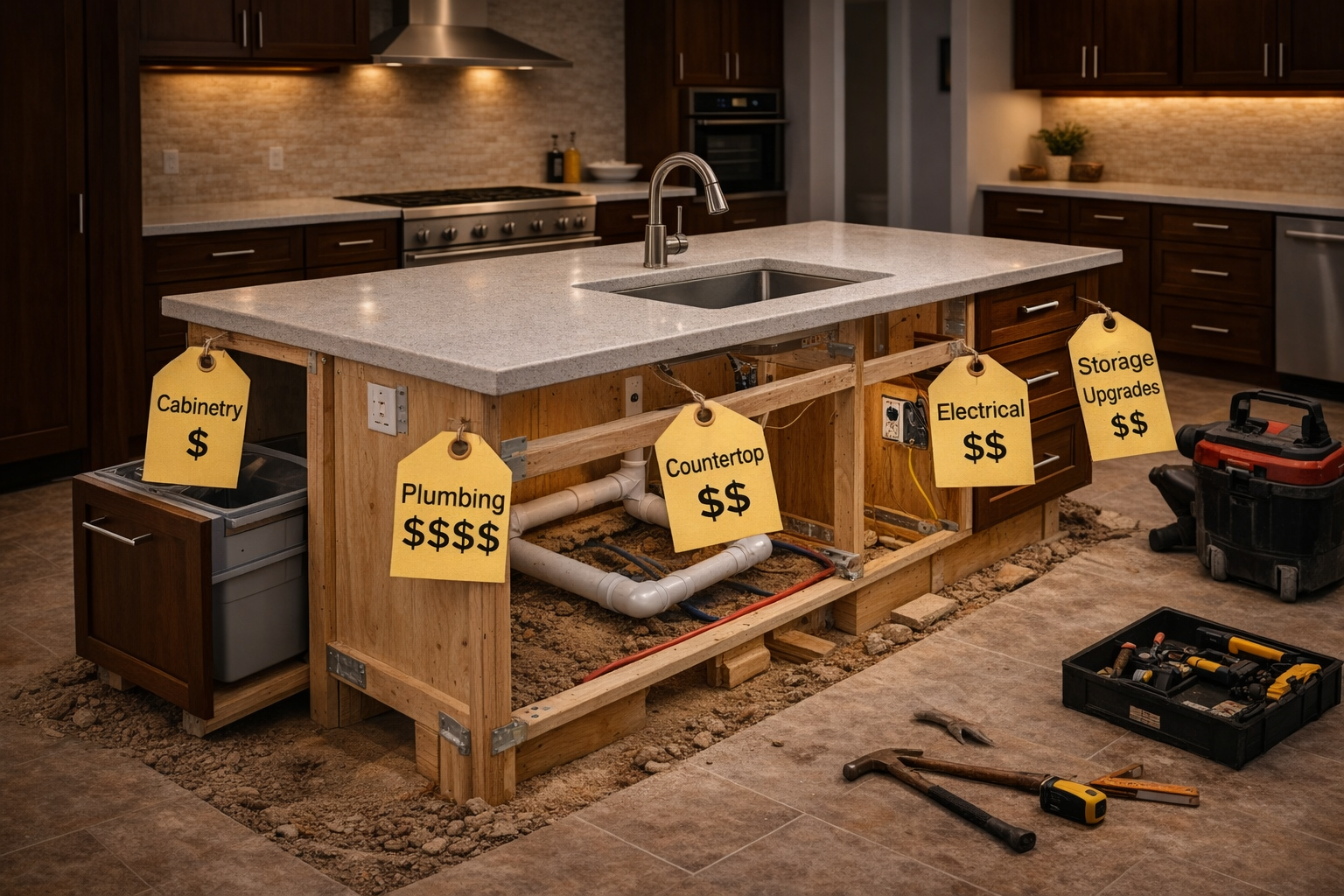
Cost depends on island size, cabinet construction, countertop material, storage features, electrical work, plumbing, decorative panels, seating details, and how much the kitchen layout changes to make space for the island. A simple rectangular island with drawers costs less than a large custom island with a sink, premium stone, paneled ends, and multiple utility connections. Material selection can also be informed by EPA greener products guidance.
What drives the price up fastest?
Sinks, plumbing, custom cabinetry, large slab countertops, premium finishes, and complex panel details usually increase cost quickly. So does moving flooring or changing the surrounding kitchen layout to create enough clearance.
How can homeowners control cost?
One of the best ways is to decide what the island must do versus what would merely be nice to have. Keeping the island focused on prep, using straightforward cabinetry, and avoiding unnecessary extras can preserve function without overspending.
What Mistakes Should Homeowners Avoid
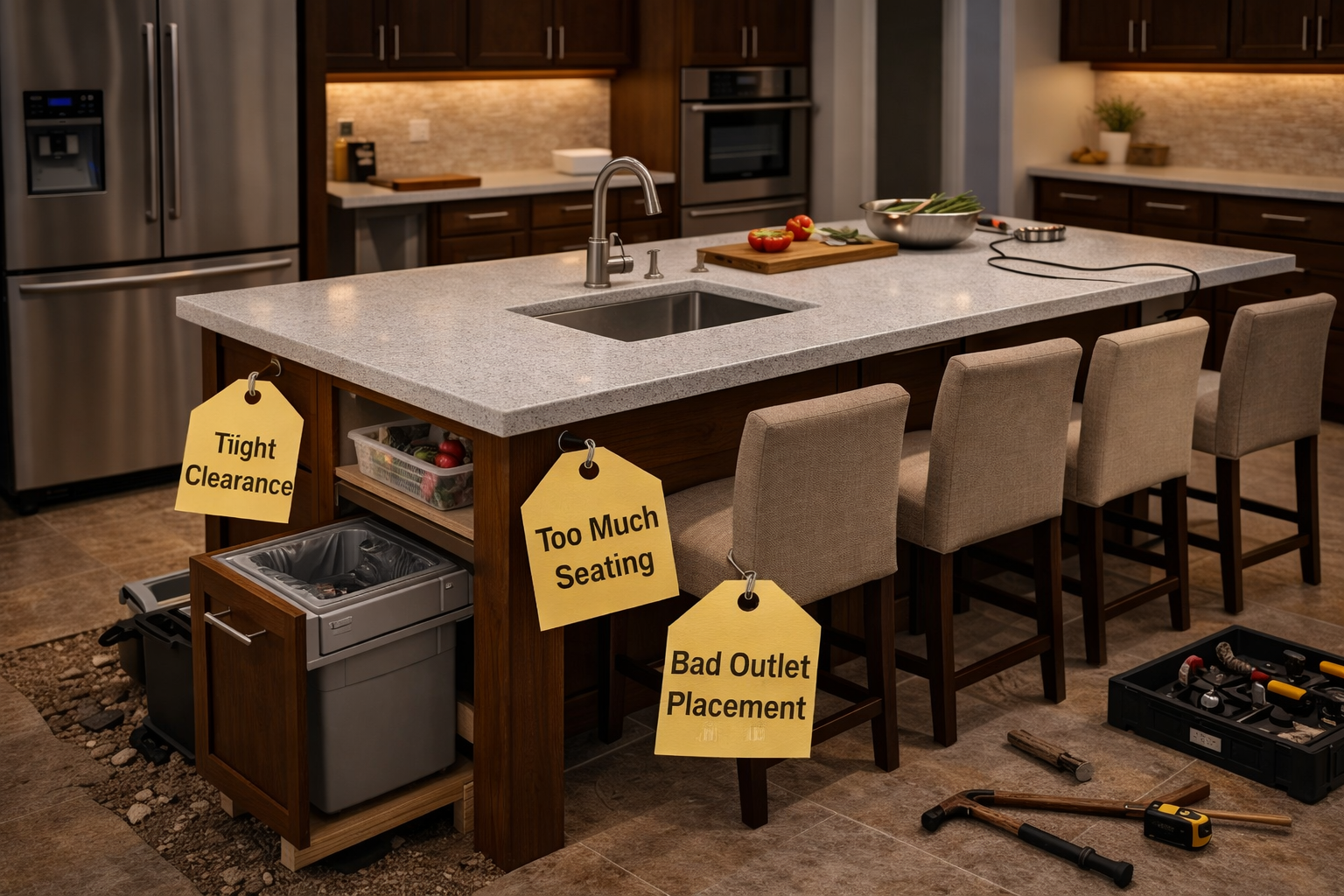
The biggest mistakes usually come from making the island too big, giving away too much prep space to seating, or adding features that do not fit the room. Homeowners sometimes try to turn one island into a prep center, dining table, cleanup zone, and showpiece all at once, which can weaken every function.
What planning mistakes are common?
Ignoring clearances, overloading the top with a sink and cooktop, forgetting where trash should go, or adding outlets as an afterthought are common issues. Another is designing the island around appearance only and not around how cooking actually happens in the kitchen.
What design mistakes show up after installation?
Awkward stool spacing, drawers that conflict with appliances, insufficient task lighting, and not enough uninterrupted counter space are problems that become obvious once the kitchen is in daily use. A prep island should make cooking smoother, not more complicated.
How Should You Plan a Prep Island Remodel
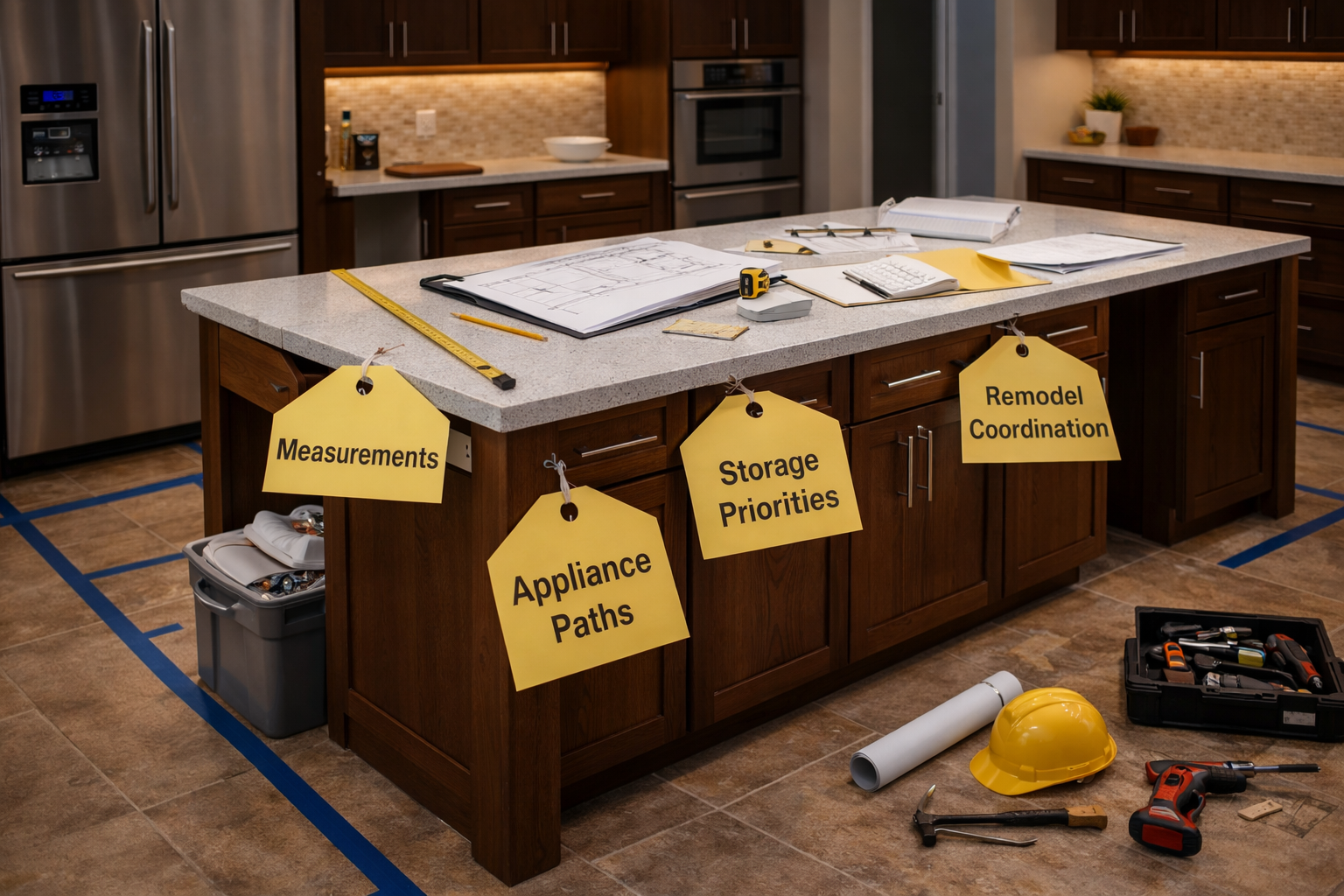
Start by defining what the island needs to do. If the answer is prep work, then protect prep space first and let other features earn their place. From there, measure the kitchen carefully, map the walking paths, decide on storage needs, and determine whether a sink, outlets, or seating help the island or only complicate it.
What should be finalized before ordering?
Cabinet size, countertop material, overhang depth, sink decisions, electrical locations, lighting placement, and walkway clearances should all be resolved before fabrication. Those choices affect how comfortable and useful the island will feel once it is installed.
When is a prep island the right move?
It is the right move when the kitchen needs a dedicated workspace that improves cooking flow. Done well, a prep island can become the most useful surface in the room because it is planned around actual work instead of being treated as only a visual centerpiece.
Frequently Asked Questions About Prep Islands
A prep island is a kitchen island designed primarily for food preparation instead of mainly seating or display. It usually focuses on clear counter space, strong work flow, accessible storage, and sometimes a prep sink, trash pull-out, or nearby appliance support.
A regular island can serve many purposes, including seating, storage, cleanup, or decorative focal-point use. A prep island is more work-oriented, so the design usually prioritizes usable workspace, prep tools, circulation, and task lighting over casual gathering features.
Sometimes. A prep sink can make sense when the island is the main work zone and there is enough room to maintain clear landing space. In smaller kitchens, however, a sink can break up the surface too much and reduce the value of the island as a prep counter.
Yes, but seating should not undermine the island’s main purpose. In many remodels, a prep island works best with limited seating on one side while preserving enough uninterrupted work surface for chopping, staging, and meal assembly.
Deep drawers, trash pull-outs, utensil storage, sheet pan dividers, mixer storage, towel pull-outs, and open shelves for cookbooks or baskets are all common. The best storage depends on what tasks happen at the island every day.
The exact number depends on the kitchen layout and appliance locations, but the island needs enough clearance for traffic flow, cabinet doors, appliance doors, and comfortable movement while cooking. Tight clearances can make even a nice-looking island frustrating to use.
Only if the room can handle it without creating crowding. In some kitchens, a narrow island adds useful storage and workspace. In others, it blocks flow and makes the kitchen feel tighter than it should.
Quartz, natural stone, butcher block, and other durable surfaces can all work depending on the design and how the island will be used. The best material depends on maintenance expectations, stain resistance, heat exposure, and whether the island is a heavy-duty work zone.
Often, yes. If the island supports mixers, blenders, charging, or small appliances, electrical planning matters. Outlet placement should be handled early so the island works well without awkward last-minute solutions.
Cost depends on island size, cabinet construction, countertop material, storage features, plumbing, electrical work, seating details, panel finishes, and whether the remodel changes flooring or overall kitchen layout to accommodate the island.