

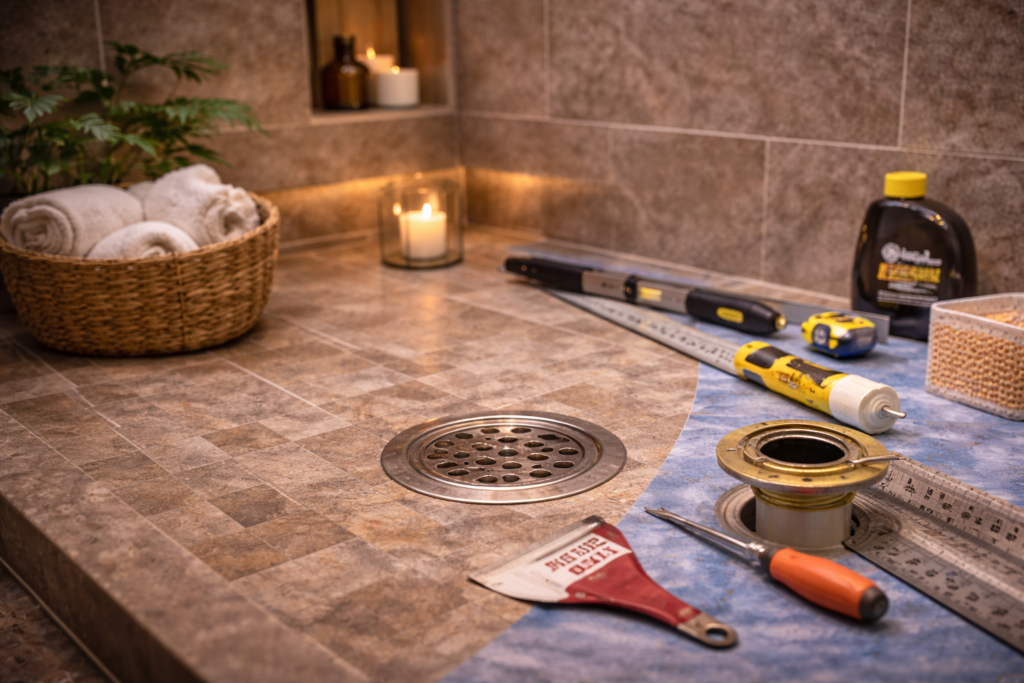
Shower Drain: Types, Installation & Costs
Shower Drain Guide Index
- Shower Drain Overview
- When Should a Shower Drain Be Replaced
- What Types of Shower Drains Are Available
- How Do Shower Design and Layout Affect Drain Choice
- What Materials and Components Are Used in Shower Drain Installation
- What Upgrades Can Be Added With a Shower Drain
- What Installation Details Matter in Shower Drain Work
- What Affects Shower Drain Cost
- What Mistakes Should Homeowners Avoid With Shower Drains
- How Should You Plan Shower Drain Installation
- Frequently Asked Questions About Shower Drains
Shower Drain Overview
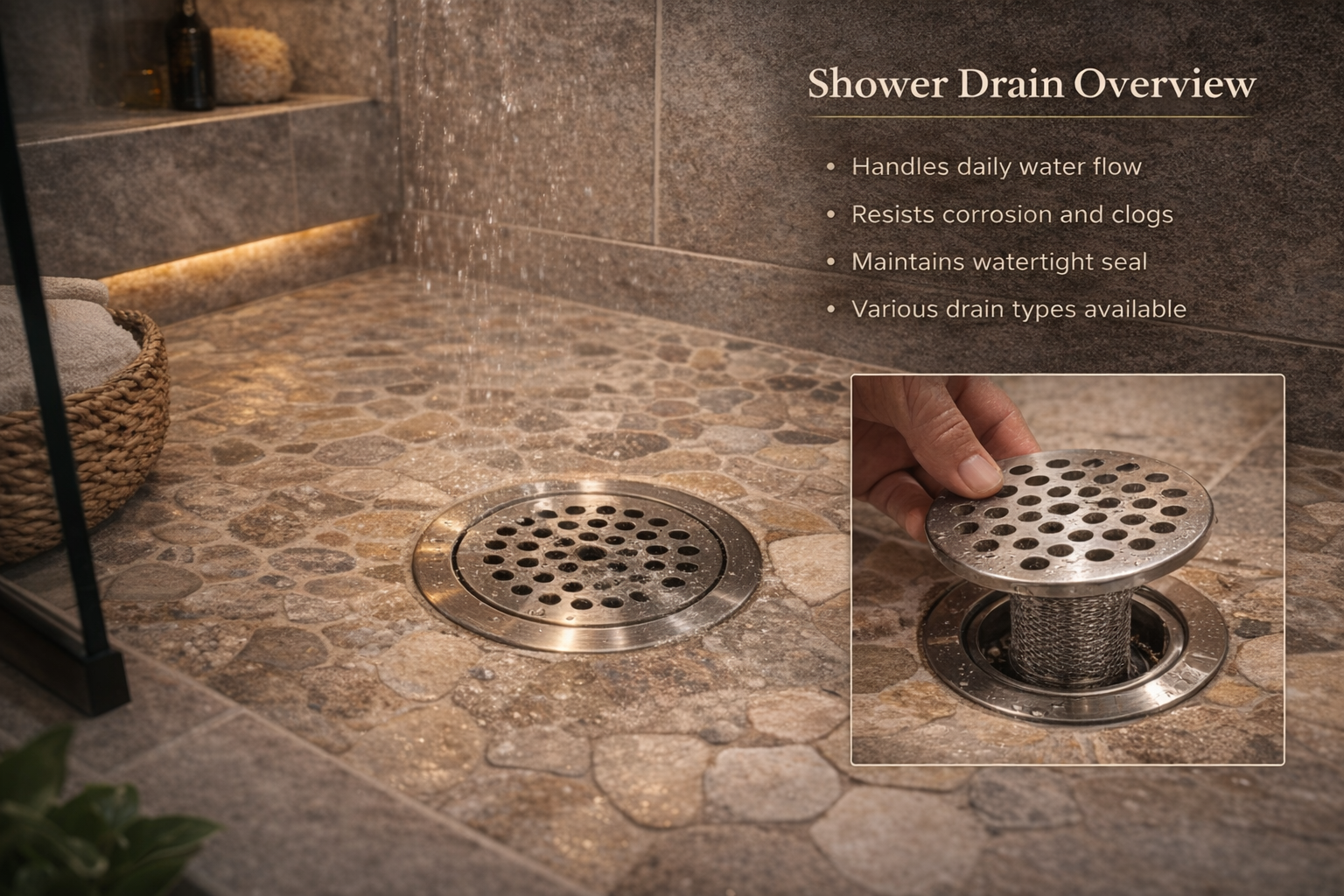
The shower drain is the exit point for water leaving the shower. It connects to the shower pan or floor and routes water into the plumbing drainage system. While it seems like a simple component, the drain must handle daily water flow, resist corrosion, accommodate hair and debris without clogging, and maintain a watertight seal at the shower floor.
Shower drains come in several types: traditional center drains, linear drains along one wall, corner drains, and offset drains positioned away from the center. Each type requires different shower floor slopes and affects the overall shower design. The drain choice must be made early in the planning process because it influences floor slope, tile layout, and waterproofing details.
What Gets Updated During a Shower Drain Project
Replacing a shower drain typically involves removing the old drain assembly, inspecting and possibly replacing the drain pipe connection, installing the new drain with proper sealing, and ensuring the surrounding shower floor material integrates properly with the new drain. In some cases, the waterproofing membrane around the drain must be repaired or replaced.
What Is the Difference Between a Shower Drain and a Shower Drain Assembly
The shower drain is the opening where water exits. The drain assembly includes all the components: the strainer or grate visible on the shower floor, the drain body that connects to the plumbing, the flange or clamping ring that secures waterproofing, and the compression gasket or sealant that creates a watertight connection. When contractors talk about installing a drain, they mean the entire assembly, not just the visible grate.
When Should a Shower Drain Be Replaced
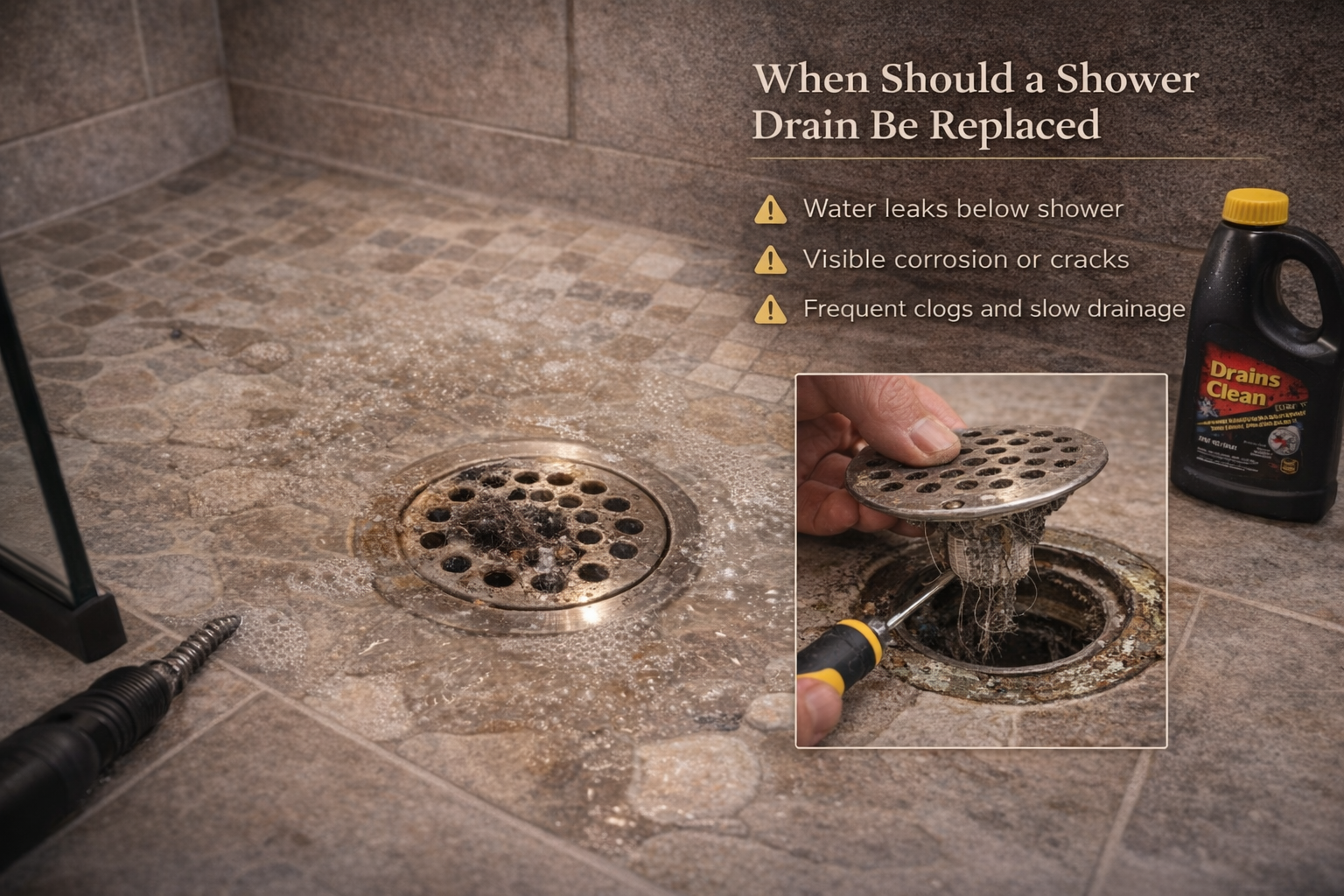
Shower drains should be replaced when they leak, corrode, crack, or fail to drain properly despite cleaning. Signs of drain failure include water leaking from the ceiling below the shower, visible corrosion or cracks in the drain body, loose or wobbly strainers, and persistent clogs that do not respond to snaking or chemical cleaners.
Rust and corrosion are common in older steel or iron drains, especially in areas with hard water. Once corrosion begins, it spreads and compromises the watertight seal. Brass and stainless steel drains resist corrosion better but can still fail after decades of use. If the drain shows significant corrosion, replacement is usually better than repair.
Consider drain replacement during shower remodels, even if the existing drain seems functional. Old drains may not meet current codes or may not integrate well with new waterproofing systems. Replacing the drain during a remodel is much easier than doing it later through finished work. Material selection can also be informed by EPA greener products guidance.
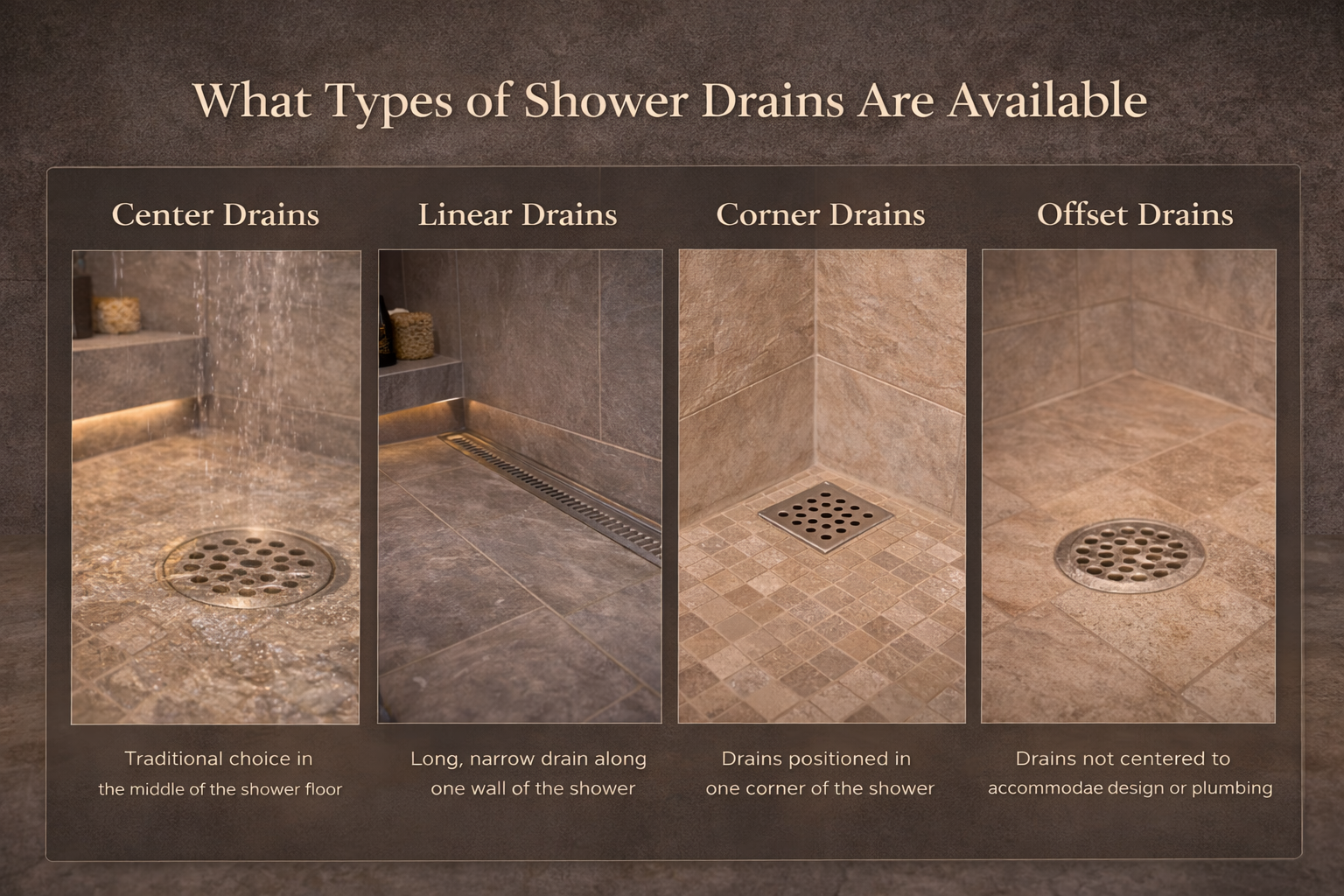
What Types of Shower Drains Are Available
Center Drains
Center drains are the traditional choice, positioned in the middle of the shower floor. They require the floor to slope from all four sides toward the center. This is the most common and often the most economical option. Center drains work well in square or rectangular showers and are compatible with all types of shower floors. For a closer look at this part of the project, homeowners can explore bathroom remodeling.
Linear Drains
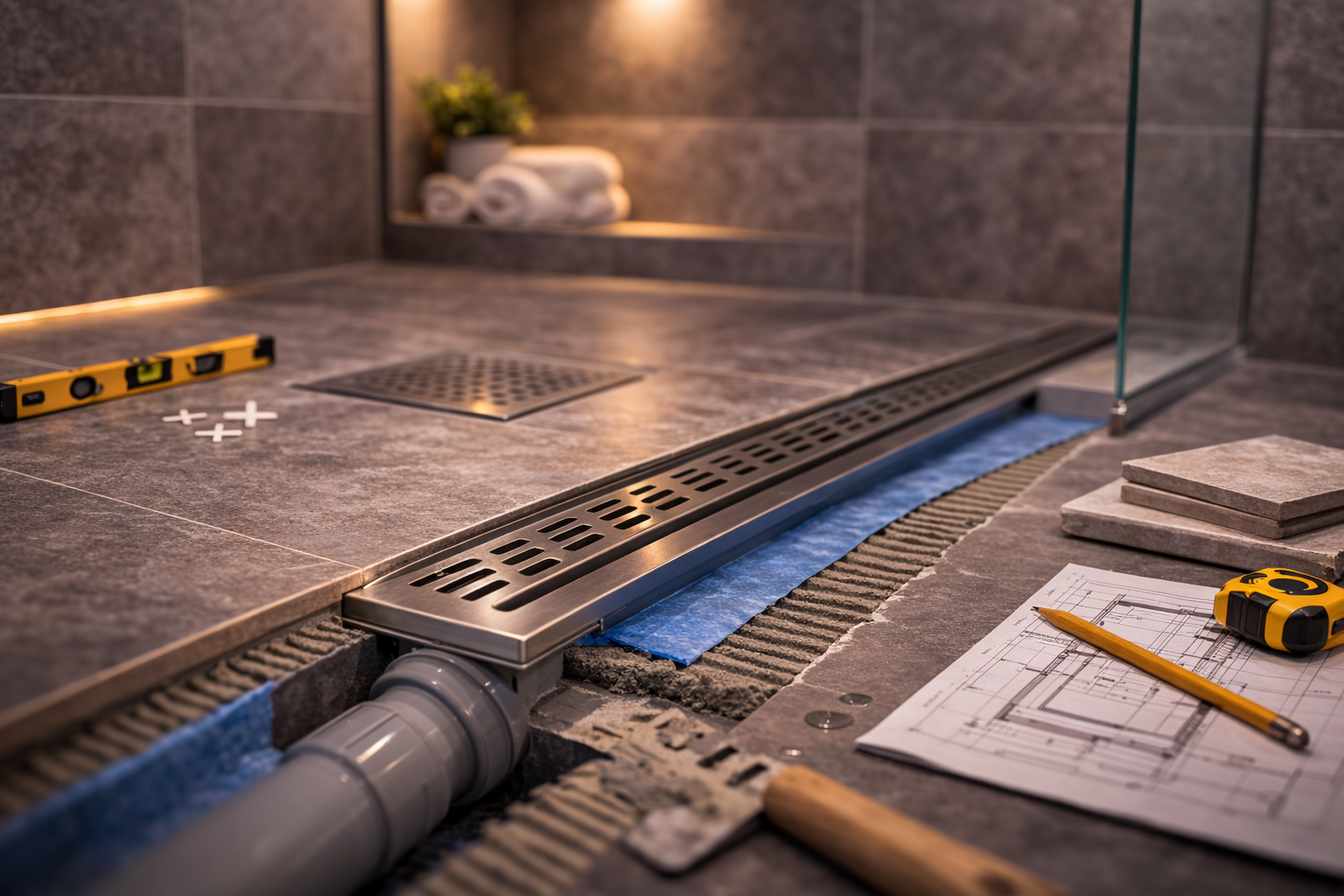
Linear drains are long, narrow drains typically installed along one wall of the shower. They allow for a single-slope floor design, which can create a sleek, modern look and easier cleaning. Linear drains are often used in curbless showers and can handle high water flow rates. They are more expensive than center drains and require more precise installation.
Corner Drains
Corner drains are positioned in one corner of the shower, allowing the floor to slope from two sides. They can be a good compromise in smaller showers where a center drain would be underfoot or where a linear drain would be too expensive. Corner drains are less common but offer design flexibility in specific situations.
Offset Drains
Offset drains are positioned away from the center, often to accommodate existing plumbing or specific design requirements. They allow for creative floor designs and can work around structural obstacles. Offset drains require careful planning to ensure proper slope and drainage across the entire floor.
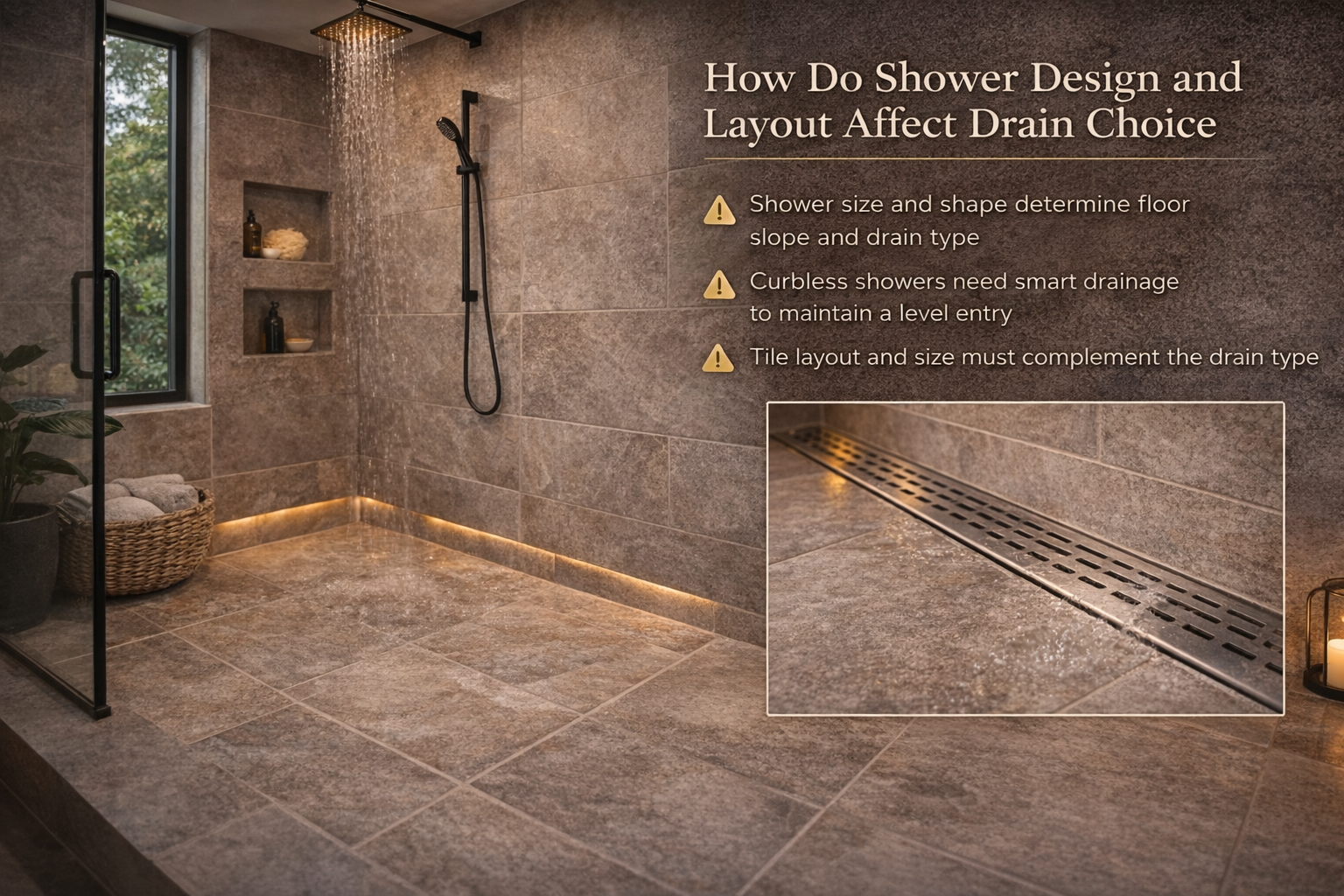
How Do Shower Design and Layout Affect Drain Choice
The shower size, shape, and intended use significantly influence which drain type works best. Small showers may not accommodate linear drains without reducing usable floor space. Large showers may need multiple drains or a linear drain to handle water flow without excessive floor slope. The drain must work with the shower design, not dictate it.
Curbless showers almost always require linear drains or careful engineering of center drains to achieve the zero-threshold design. The drain must handle the water flow while maintaining a level entry point. This often requires dropping the subfloor or raising the bathroom floor to create the necessary slope without a curb.
The tile layout and size affect drain choice. Large-format tiles work better with linear drains because they can follow a single slope direction. Small tiles or mosaics work well with center drains because they conform easily to multi-directional slopes. The drain type should complement the finished floor design.
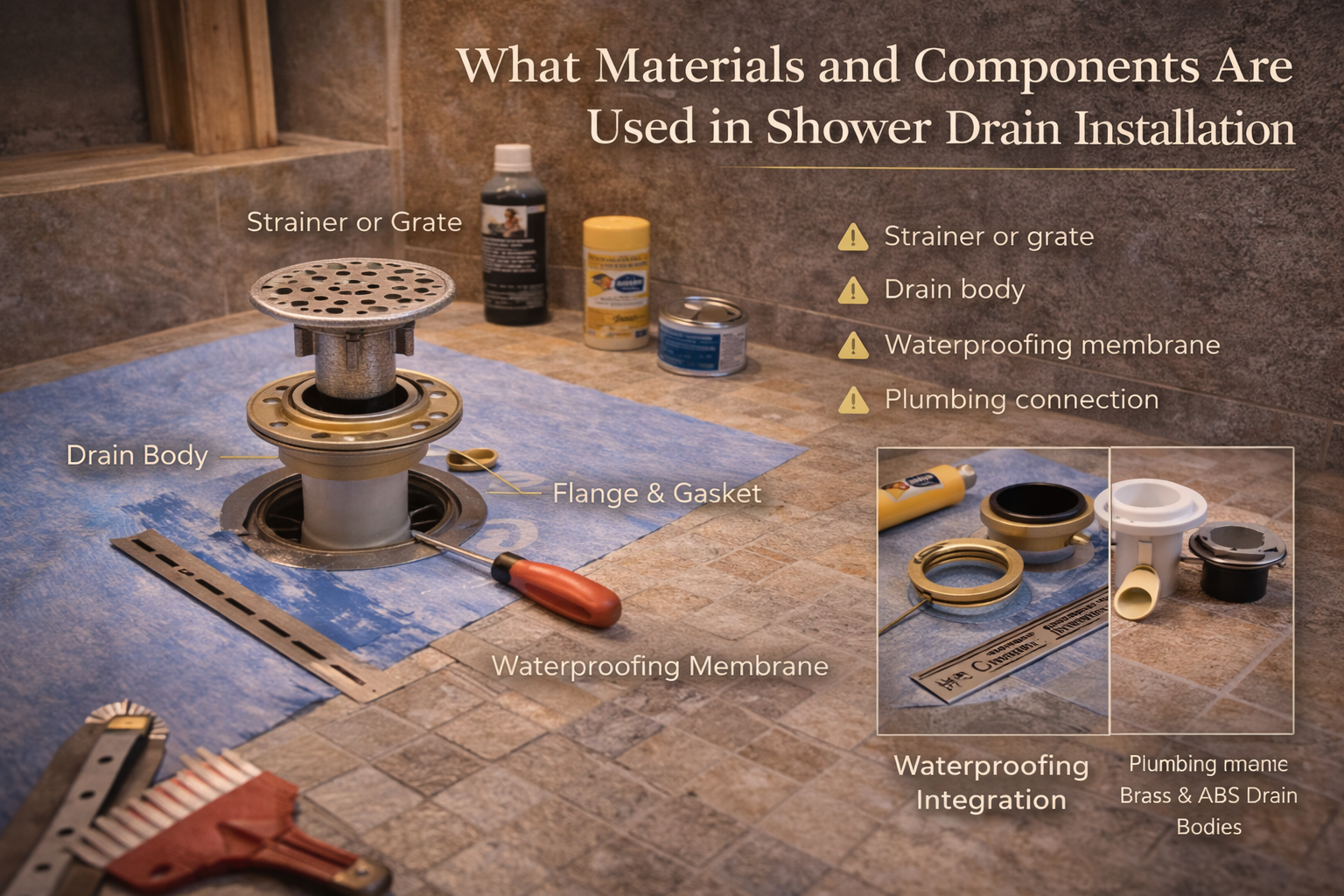
What Materials and Components Are Used in Shower Drain Installation
Shower drain assemblies include several components: the strainer or grate that sits on the shower floor, the drain body that connects to the plumbing pipe, the flange or clamping ring that secures waterproofing membranes, and gaskets or sealants that create watertight connections. Different drain types have different component configurations.
Drain materials matter for durability and corrosion resistance. Brass and stainless steel are common choices for high-quality drains. ABS and PVC drains are used for budget installations but may not last as long. The drain body must match the drain pipe material or use approved transition fittings to prevent galvanic corrosion. During remodeling, it also helps to follow EPA indoor air quality guidance.
Waterproofing integration materials include membrane bonding adhesives, clamping rings for sheet membranes, liquid waterproofing compounds, and flexible flashing materials. These components ensure the drain assembly creates a continuous waterproof seal with the shower floor. Without proper waterproofing integration, even the best drain will leak.
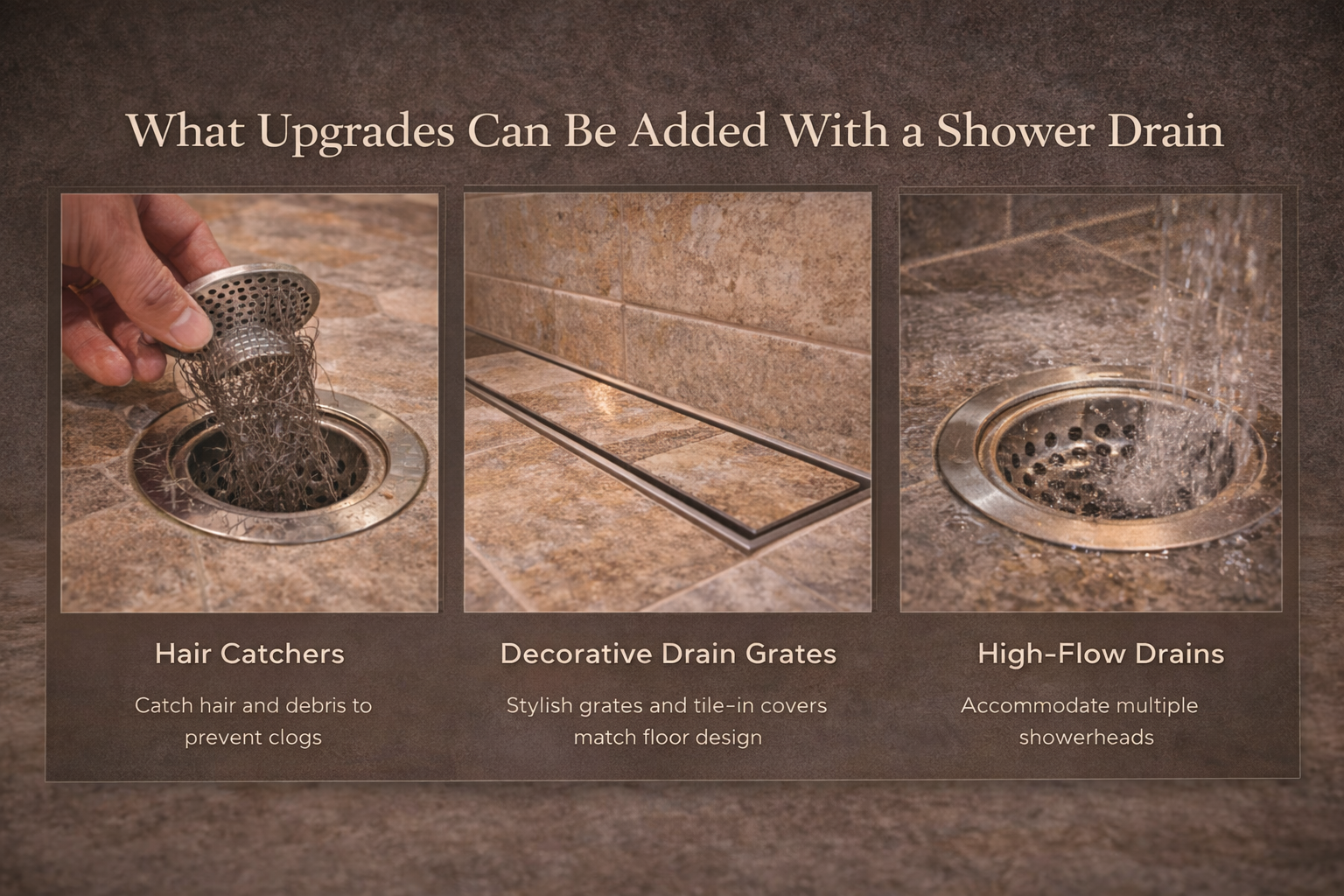
What Upgrades Can Be Added With a Shower Drain
Hair catchers and strainer upgrades prevent clogs by trapping hair and debris before they enter the drain pipe. These simple add-ons sit in or on top of the existing strainer and can be easily removed for cleaning. Some designs use silicone or fine mesh to catch even small particles while allowing water to flow freely.
Decorative drain grates and tile-in drain covers allow the drain to blend with the shower floor design. Tile-in grates accept a piece of matching tile so the drain becomes nearly invisible. Decorative metal grates in various finishes can complement other bathroom fixtures. These upgrades focus on appearance rather than function. This decision often connects directly to shower remodel, especially when the goal is a more complete remodel.
High-flow drain assemblies handle larger water volumes for multiple showerheads or rain-style shower fixtures. Standard drains may not keep up with high-flow fixtures, causing water to pool in the shower. High-flow drains have larger pipe connections and less restrictive grates to move water quickly. These are essential for luxury shower designs.
What Installation Details Matter in Shower Drain Work
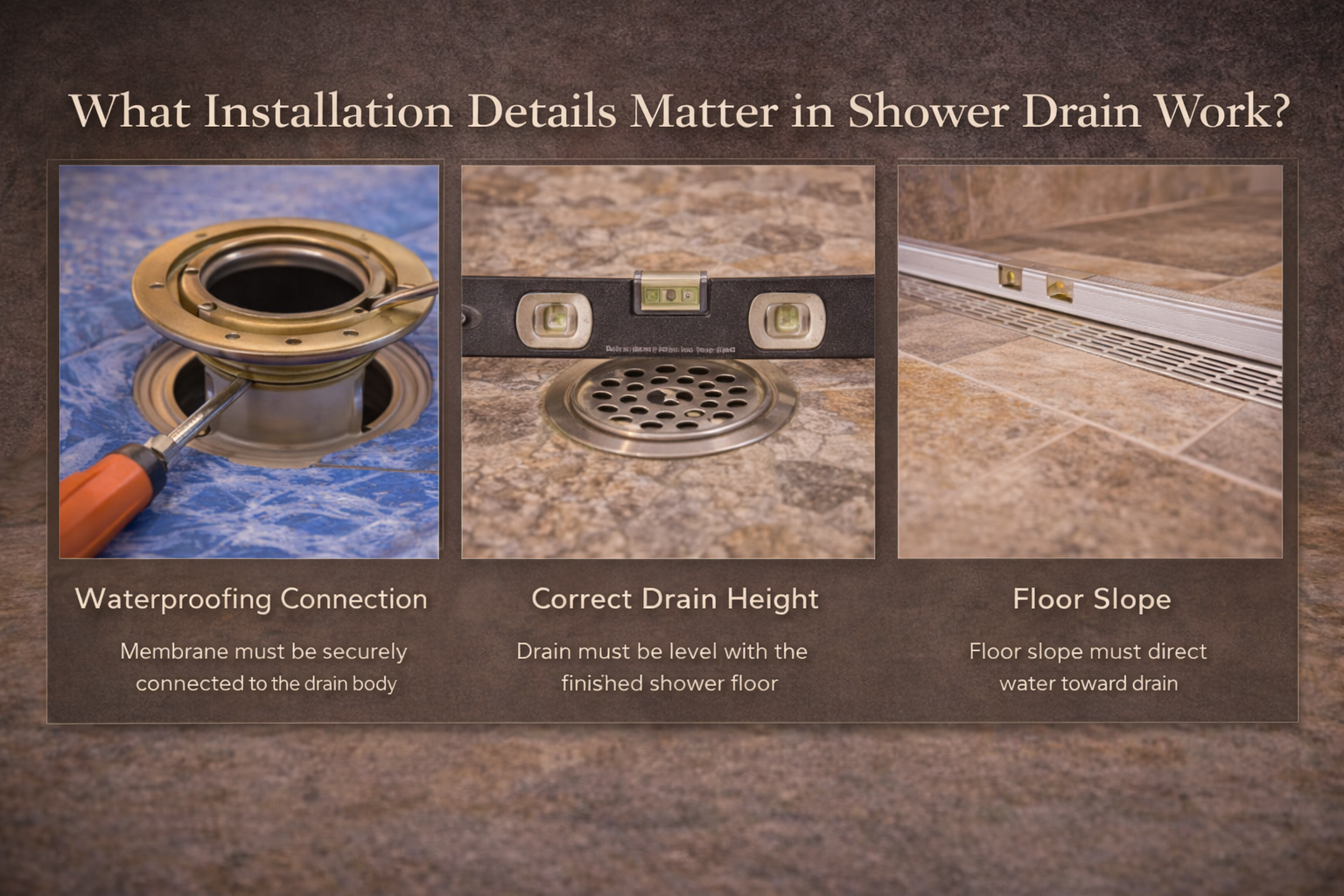
The waterproofing membrane must connect securely to the drain body. For sheet membranes, this means clamping the membrane between the drain body and the clamping ring. For liquid membranes, the drain flange must be primed and coated with the same waterproofing material. This connection is the most critical part of drain installation.
The drain must be set at the correct height relative to the finished floor. Too high and water pools around the drain. Too low and the strainer sits below the floor surface, creating a trip hazard. The drain rough-in height must account for the thickness of the pan material plus the finished floor material.
Floor slope must direct all water toward the drain regardless of drain type. Center drains need four-way slope. Linear drains need single-direction slope. The slope should be consistent without flat spots or reverse grades. Proper slope ensures water drains completely and prevents standing water that breeds mold and mildew.
What Affects Shower Drain Cost
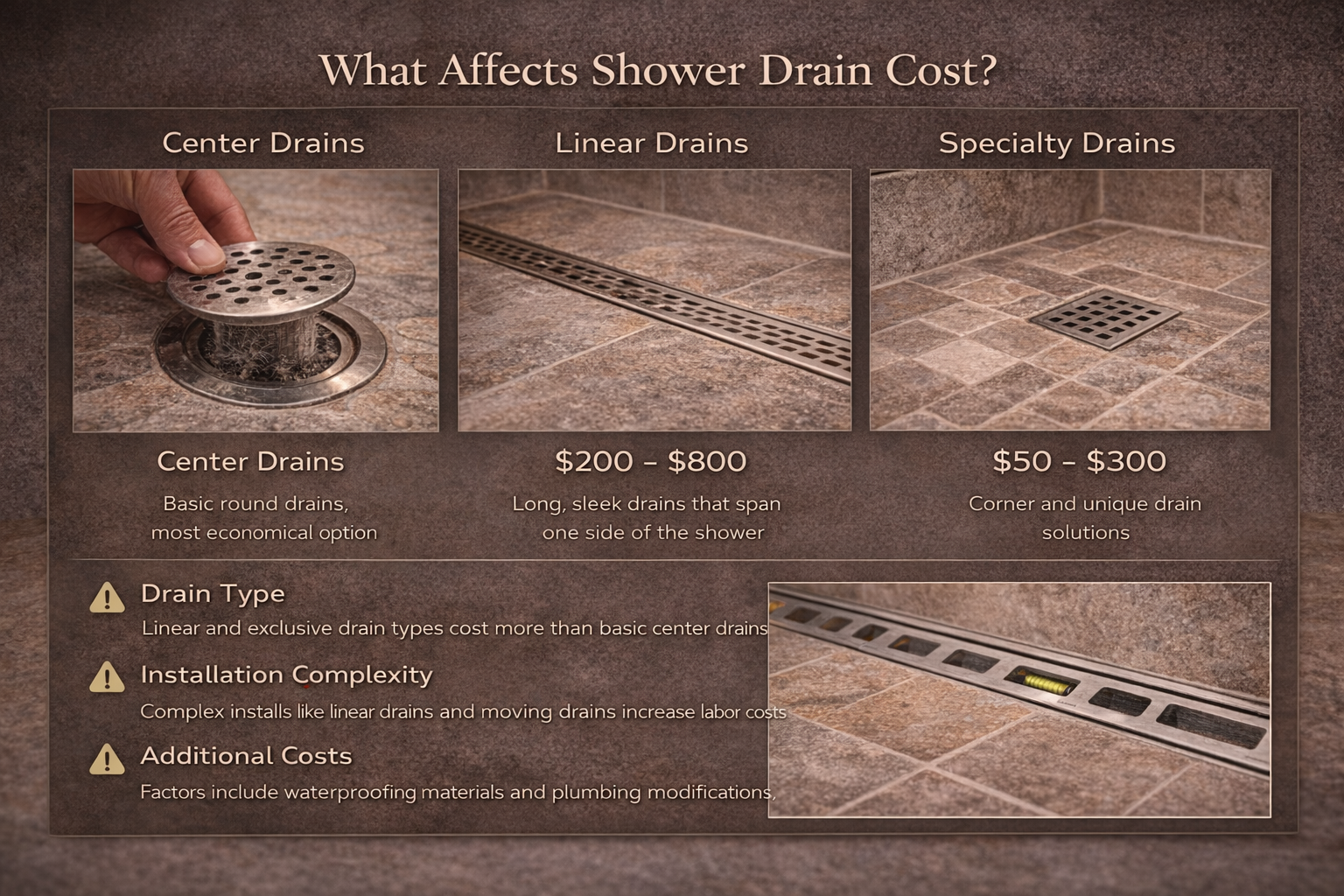
Drain type is the primary cost factor. Basic center drains cost $20 to $50. Linear drains range from $200 to $800 depending on length and finish. Corner and specialty drains fall between these ranges. The drain material also affects cost, with brass and stainless steel costing more than ABS or PVC.
Installation complexity varies based on whether you are replacing an existing drain or installing new. Simple replacements using the same drain type cost less than changing drain types or relocating drains. Moving a drain requires accessing plumbing below the floor and rebuilding the shower pan, significantly increasing costs.
Additional costs include waterproofing materials, professional labor for complex installations, and any necessary plumbing modifications. A straightforward drain replacement might cost $200 to $500 including labor. Complex relocations or linear drain installations can range from $800 to $2,000 or more depending on the scope.
What Mistakes Should Homeowners Avoid With Shower Drains
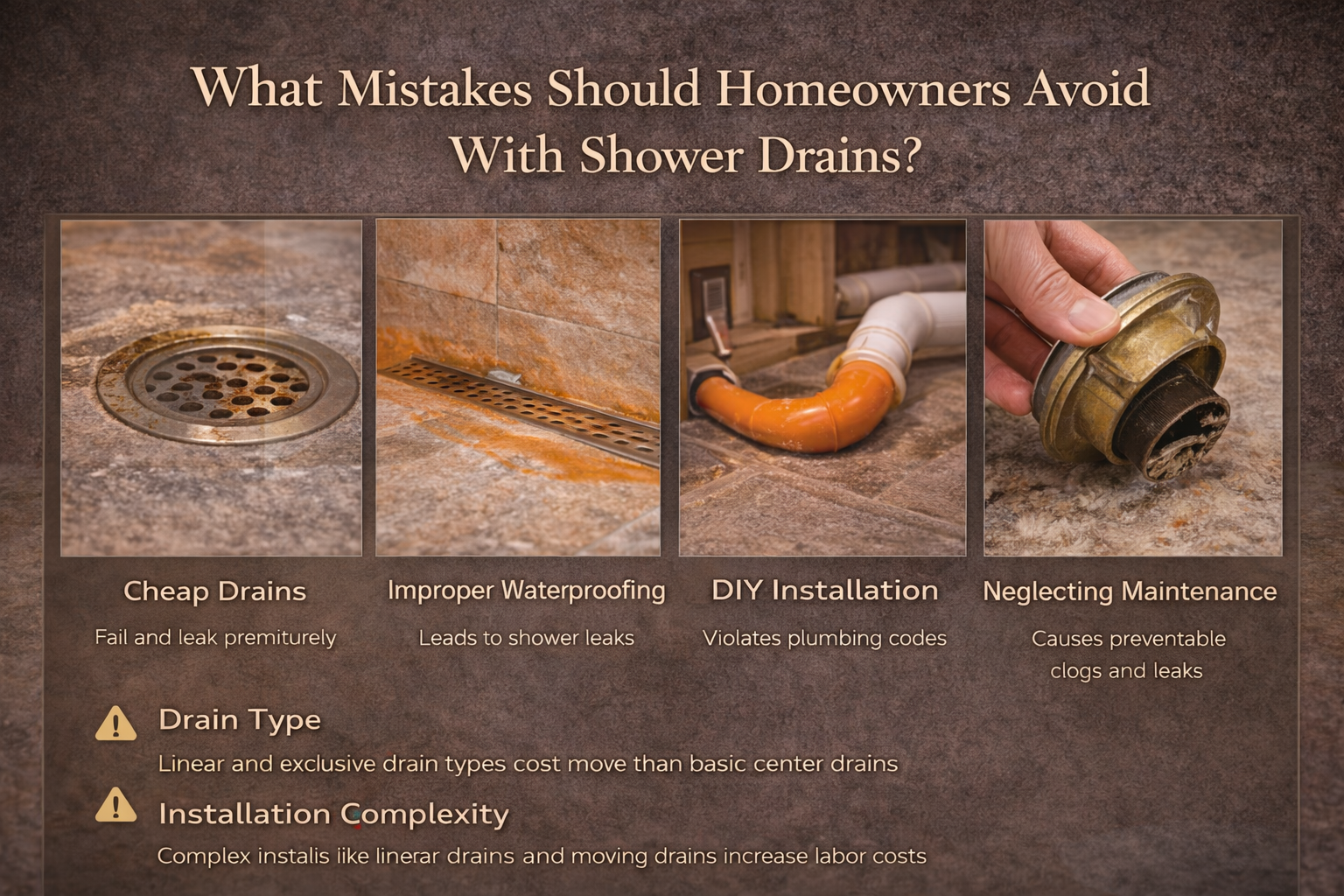
Choosing a drain based only on price without considering quality leads to premature failure. Cheap drains use thin materials that corrode quickly and weak seals that leak. Invest in quality drain assemblies from reputable manufacturers. The cost difference is small compared to the cost of repairing water damage from a failed drain. During remodeling, it also helps to follow EPA indoor air quality best practices.
Improper waterproofing at the drain connection is the most common cause of shower leaks. The membrane must be properly bonded to the drain body following manufacturer instructions. Skipping steps or using incompatible materials guarantees leaks. This detail requires careful attention during installation.
DIY installation without understanding plumbing codes creates problems. Drains must be properly vented, sloped, and connected to the waste system. Improper installation can cause slow drainage, sewer gas odors, or code violations. Professional plumbers understand these requirements and ensure compliance.
Ignoring maintenance allows small problems to become major failures. Clean strainers regularly to prevent clogs. Address slow drainage immediately before complete blockages occur. Replace worn gaskets and seals at the first sign of leakage. Preventive maintenance extends drain life and prevents water damage.
How Should You Plan Shower Drain Installation
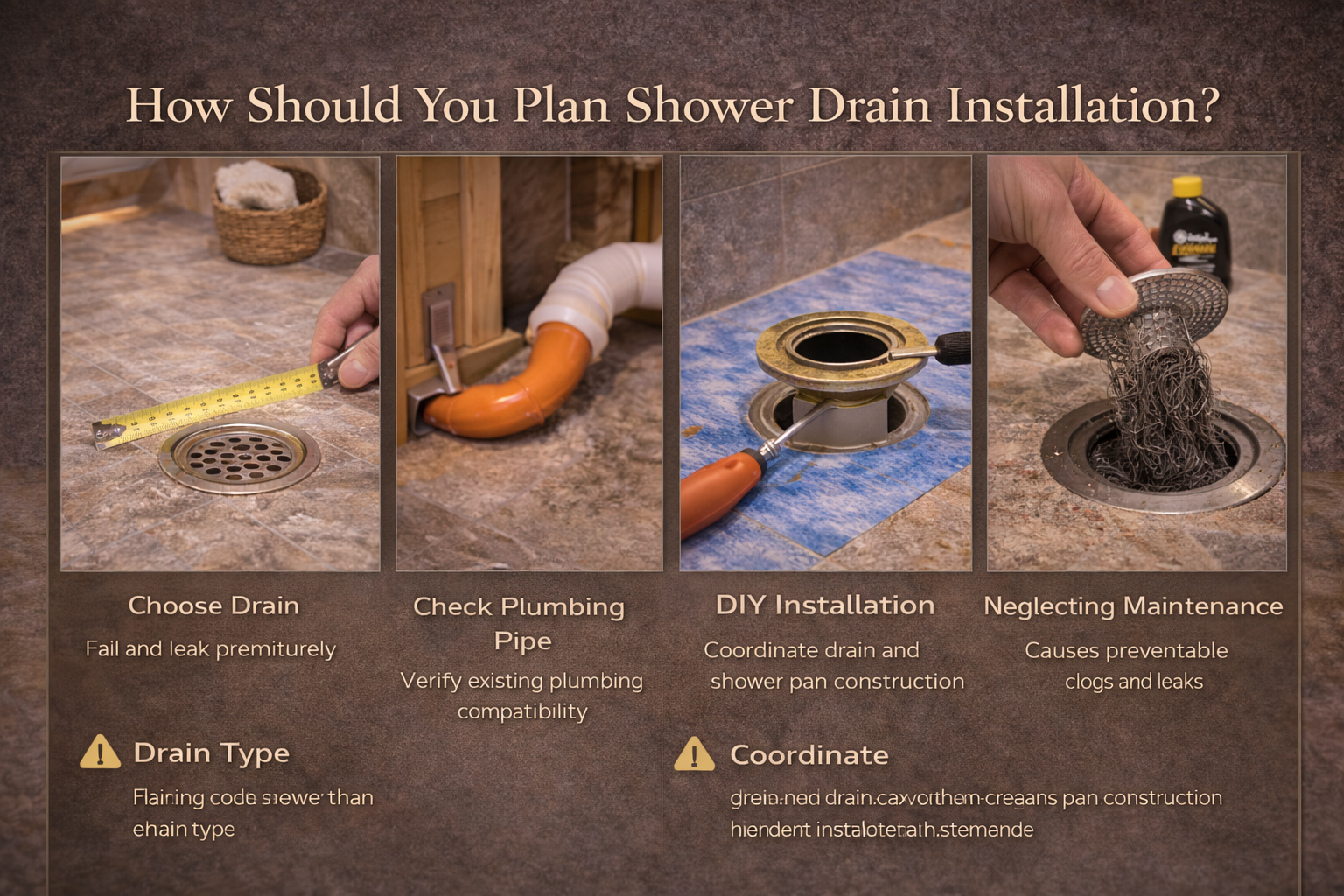
Select the drain type early in the design process. The drain affects floor slope, tile layout, waterproofing details, and overall shower design. Changing the drain type mid-project causes delays and additional costs. Decide on center, linear, or specialty drain before finalizing other shower elements.
Verify existing plumbing compatibility. The drain must connect properly to the existing drain pipe. Check pipe size, material, and location. If the existing plumbing does not match your chosen drain, plan for modifications. Moving drain pipes requires access from below and adds significant cost.
Coordinate drain installation with the shower pan construction. The drain must be installed before the pan is completed. For tile showers, the waterproofing membrane connects to the drain before mortar bed installation. The sequence matters because correcting mistakes after the pan is built requires demolition.
Plan for future maintenance. Choose drain designs that allow easy strainer removal for cleaning. Consider installing access panels if the P-trap is not readily accessible. Think about how you will clean hair from the drain and address any future repairs. Good planning prevents headaches later.
Frequently Asked Questions About Shower Drains
Start by removing the strainer and clearing visible hair and debris. Use a drain snake or zip tool to reach deeper clogs. Try plunging with a cup plunger designed for sinks. For stubborn clogs, use an enzyme-based drain cleaner rather than harsh chemicals. If these methods fail, the clog may be in the P-trap, requiring professional service.
Shower drain odors usually come from biofilm buildup in the drain pipe or dry P-traps allowing sewer gases to escape. Clean the drain with enzyme-based cleaners to break down organic buildup. Run water in unused showers periodically to keep P-traps full. If odors persist, check for damaged pipes or improper venting that may require professional repair.
Yes, but it requires significant work. Changing from center to linear drain requires rebuilding the shower pan to create single-direction slope instead of four-way slope. The drain pipe may need relocation. This is typically done during major shower remodels. Costs range from $1,000 to $3,000 depending on shower size and plumbing modifications needed.
Standard showers require 2-inch drain pipes. High-flow showers with multiple heads or rain shower fixtures may need 3-inch pipes. The drain assembly must match the pipe size. Check local plumbing codes as some jurisdictions have specific requirements. Never reduce pipe size downstream, as this causes drainage problems and code violations.
Install a hair catcher over the drain strainer to trap hair before it enters the pipe. Clean the strainer weekly. Brush hair before showering to reduce loose hair. Use enzyme-based drain cleaners monthly to break down soap scum and biofilm. Never pour grease or oil down the drain. These preventive measures significantly reduce clogging.
Replacing an existing drain with the same type is possible for experienced DIYers with plumbing knowledge. Installing new drains or changing types requires professional skills. The waterproofing connection is critical and difficult to get right. Most jurisdictions require permits for drain work. Mistakes cause leaks that damage your home. Consider hiring a professional for anything beyond simple replacements.
Linear drains are worth the cost for specific situations: curbless showers requiring single-direction slope, large format tiles that cannot accommodate multi-directional slopes, and high-end designs where the drain becomes a visual feature. For standard showers with traditional tile, center drains work well at lower cost. Evaluate whether the benefits justify the expense for your specific project.
Quality shower drains last 15 to 30 years depending on material and water conditions. Brass and stainless steel drains last longest. ABS and PVC drains may need replacement after 10 to 15 years. Hard water accelerates corrosion. Regular maintenance extends drain life. Replace drains showing corrosion, cracks, or persistent leaks rather than attempting repairs.
Pooling water indicates improper floor slope or a clogged drain. Check the strainer for debris first. If the drain is clear, the floor may have insufficient slope toward the drain or flat spots preventing proper drainage. This requires rebuilding the shower pan to correct the slope. Temporary fixes rarely solve the underlying problem.
Most jurisdictions require permits for shower drain replacement because it involves plumbing work affecting the drainage system. Simple strainer replacements may not require permits, but full drain assembly replacement usually does. Check with your local building department. Professional plumbers typically handle permits as part of their service. Unpermitted work may cause issues when selling your home.