

Linear Drain: Design, Installation & Costs
Linear Drain Guide Index
- Linear Drain Overview
- When Should a Linear Drain Be Installed
- What Types of Linear Drains Are Available
- How Do Shower Design and Layout Affect Linear Drain Choice
- What Materials and Components Are Used in Linear Drain Installation
- What Upgrades Can Be Added With a Linear Drain
- What Installation Details Matter in Linear Drain Work
- What Affects Linear Drain Cost
- What Mistakes Should Homeowners Avoid With Linear Drains
- How Should You Plan Linear Drain Installation
- Related Linear Drain Topics
- Frequently Asked Questions About Linear Drains
Linear Drain Overview
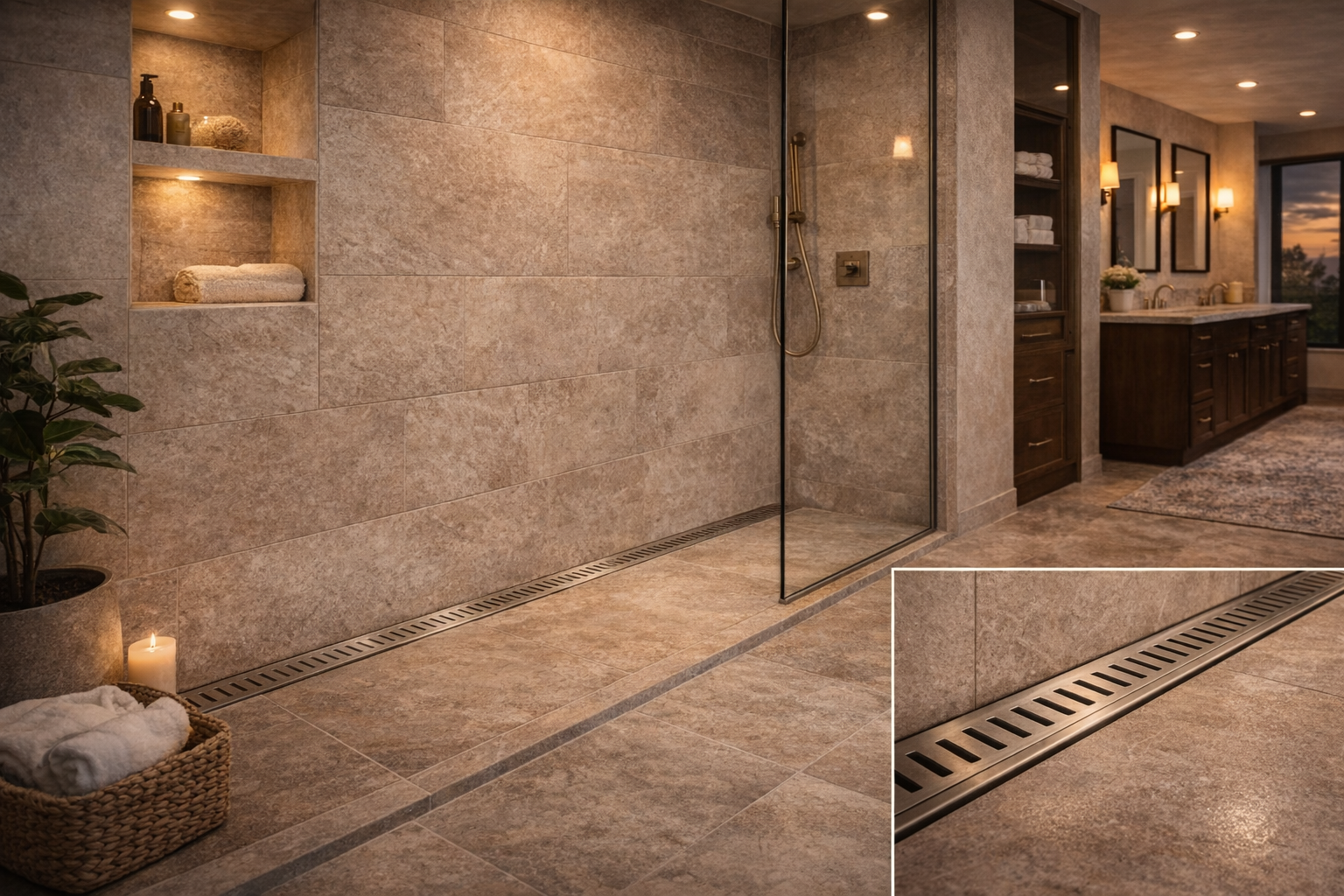
A linear drain is a long, narrow drain channel installed along one wall of the shower instead of a traditional center drain. This design allows the shower floor to slope in a single direction toward the wall rather than requiring four-way slope toward the center. The result is a cleaner look, easier tile installation, and more design flexibility for modern showers.
In practical remodel work, linear drains are chosen when homeowners want curbless showers, large-format tile floors, or a minimalist aesthetic. The drain itself consists of a channel body that connects to the plumbing, a removable grate or cover, and various waterproofing integration components. Linear drains handle the same water volume as center drains but distribute the collection point across the full width of the shower.
What Gets Updated During a Linear Drain Project
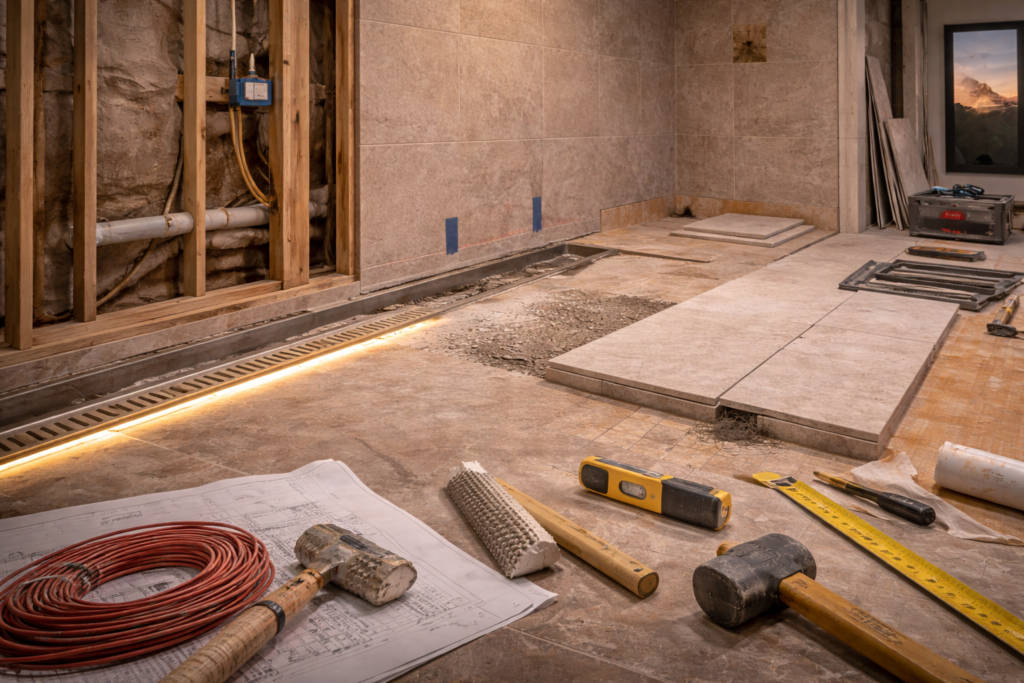
Installing a linear drain typically requires rebuilding the shower pan to create single-direction slope, relocating or extending the drain pipe to the wall position, installing the drain channel with proper waterproofing connections, and finishing with tile that slopes consistently toward the drain. The work affects floor structure, waterproofing, and tile layout.
What Is the Difference Between a Linear Drain and a Center Drain
A center drain sits in the middle of the shower floor and requires the floor to slope from all four sides toward that central point. A linear drain sits along one wall and requires only single-direction slope from the opposite wall. Center drains work with any tile size and are less expensive. Linear drains cost more but enable curbless designs, large-format tiles, and cleaner aesthetics.
When Should a Linear Drain Be Installed
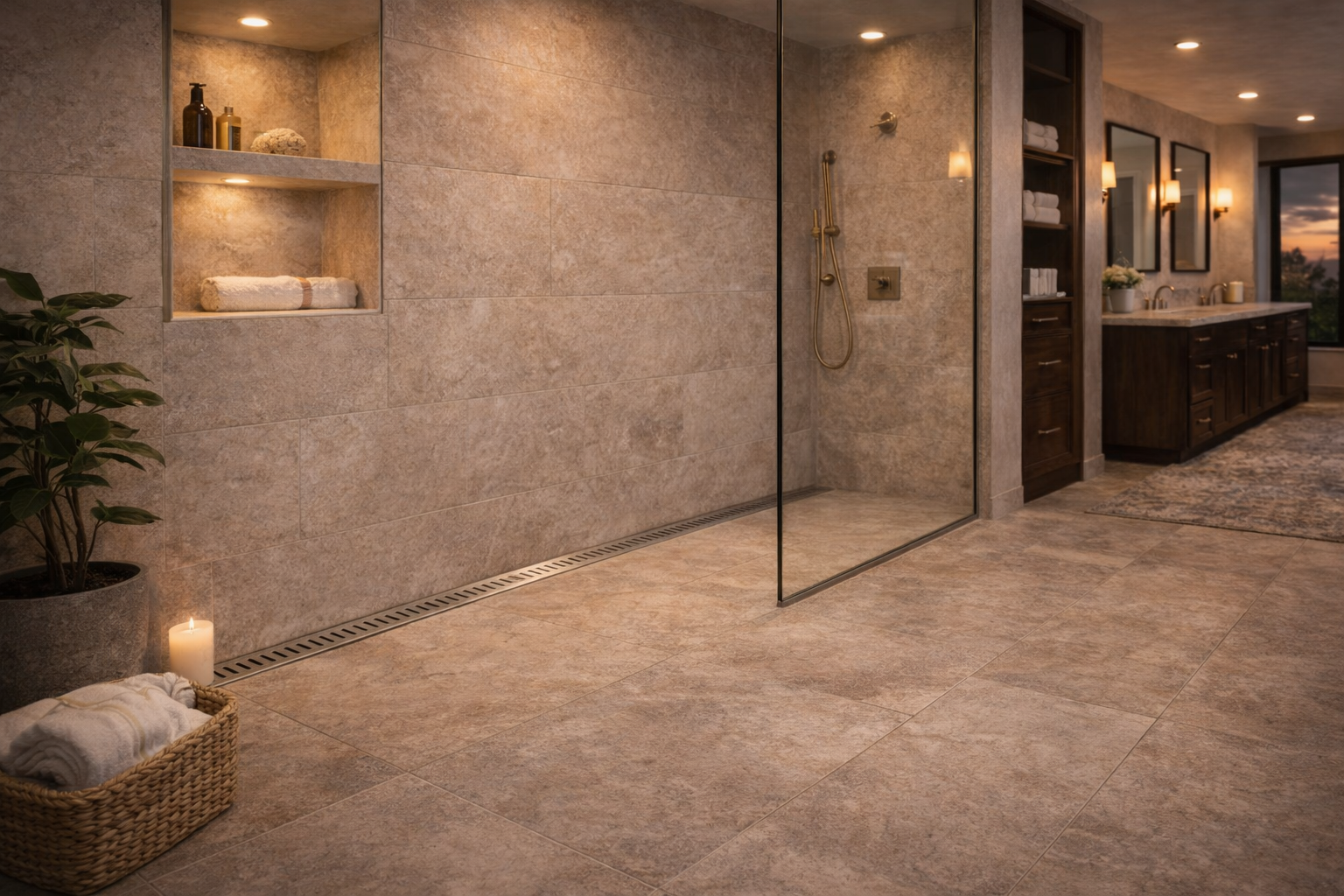
Linear drains make sense when you want a curbless shower with a level entry, when using large-format tiles that cannot accommodate multi-directional slopes, or when seeking a modern minimalist aesthetic. They are also useful in large showers where a center drain would create excessive floor slope or in narrow showers where the drain position affects usable floor space.
Consider a linear drain during major shower remodels when the floor is being rebuilt anyway. Converting from a center drain to a linear drain requires significant work including pan reconstruction and possible plumbing relocation. This is not a surface-level upgrade but a structural change best done during comprehensive shower renovation.
Linear drains work well in accessibility-focused bathrooms where eliminating the shower curb improves wheelchair access and reduces trip hazards. The single-slope floor design maintains drainage while allowing a flush transition from bathroom floor to shower floor. Homeowners comparing options often look at bathroom remodeling as part of the overall plan.
What Types of Linear Drains Are Available
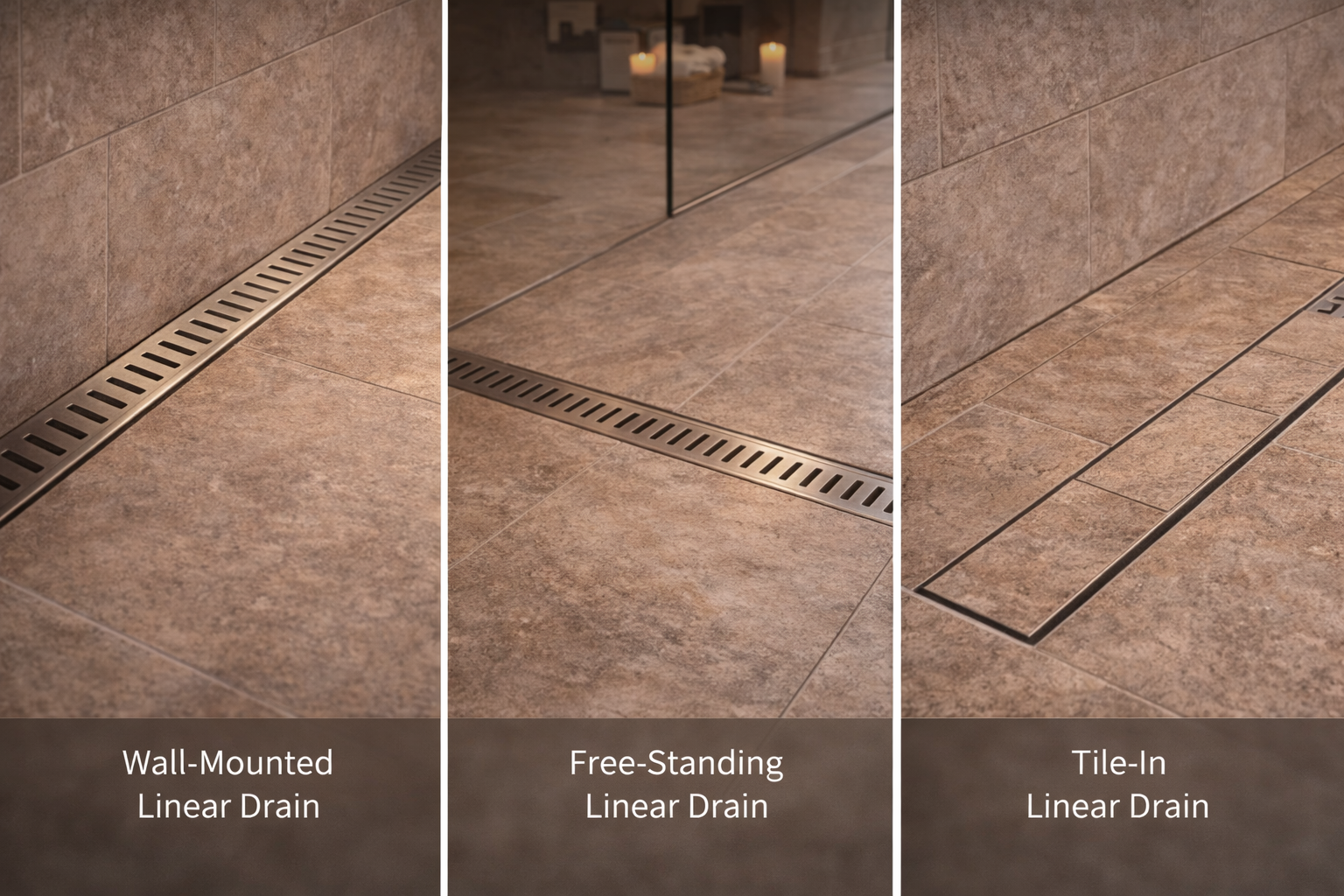
Wall-Mounted Linear Drains
Wall-mounted linear drains install directly against the shower wall, creating the most seamless look. The tile extends to the wall, and the drain grate sits flush with the floor surface. These drains require precise alignment with wall waterproofing and are the most common choice for curbless showers.
Free-Standing Linear Drains
Free-standing linear drains can be positioned away from the wall, offering flexibility in shower layout. They work well when plumbing constraints prevent wall placement or when the design calls for a drain channel in a specific location. These drains require more complex waterproofing at both ends of the channel.
Tile-In Linear Drains
Tile-in linear drains accept a piece of matching floor tile in the grate, making the drain nearly invisible. The tile piece sits in a frame that allows water to flow around it into the channel below. This option provides the cleanest aesthetic but requires careful tile cutting and grate maintenance.
Stainless Steel and Specialty Grates
Linear drains come with various grate finishes including brushed stainless steel, polished chrome, oil-rubbed bronze, and matte black. Some manufacturers offer custom grate patterns or materials. The grate choice significantly affects the shower’s visual appearance. Material selection can also be informed by EPA greener products guidance.
How Do Shower Design and Layout Affect Linear Drain Choice
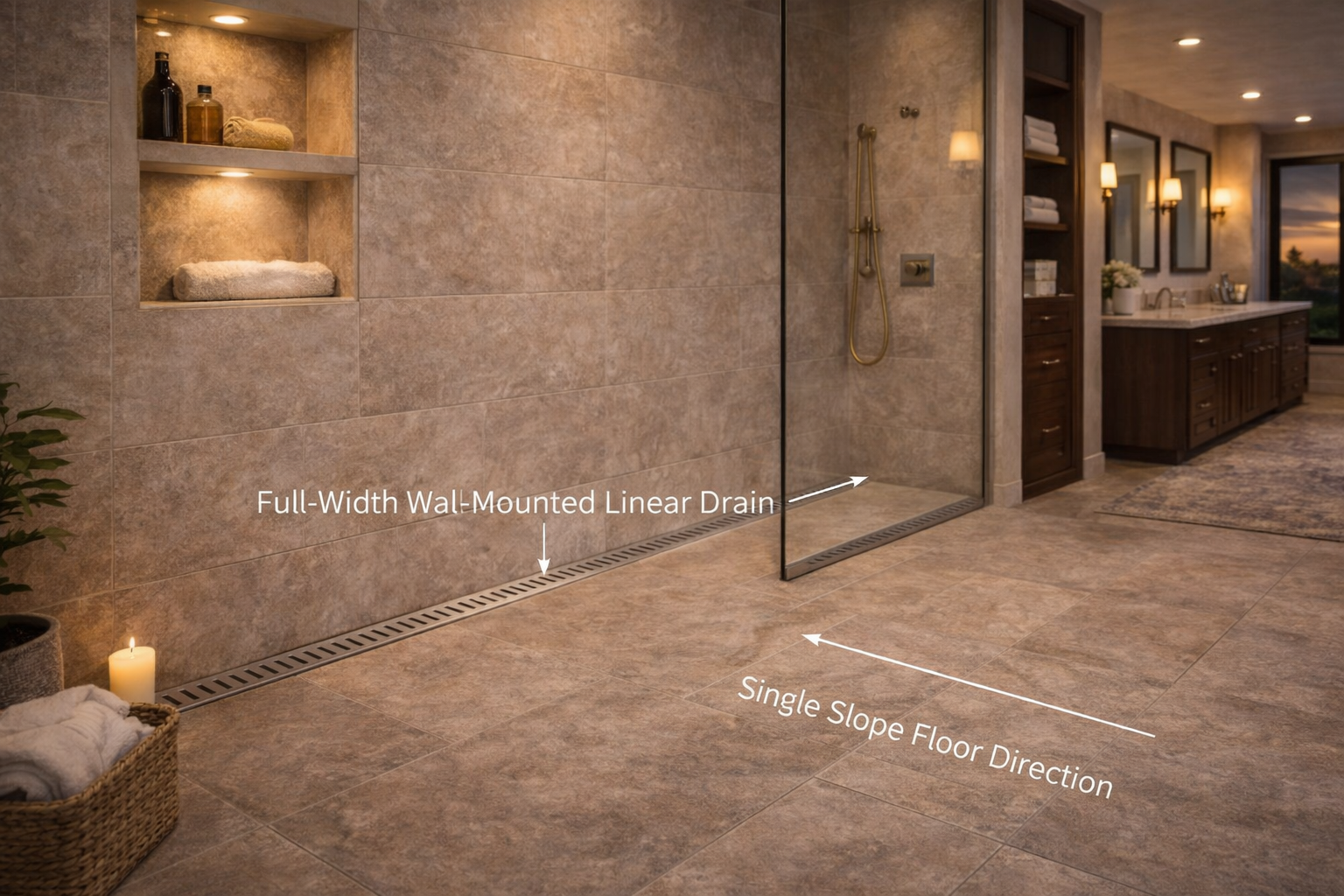
The shower size and shape determine the optimal linear drain length and placement. A drain that spans the full shower width handles water most effectively and creates the cleanest look. Partial-width drains work in smaller showers but require careful floor slope planning to ensure complete drainage.
Curbless showers almost always use linear drains because the single-slope floor design allows the entry point to remain level with the bathroom floor. The drain must be positioned to catch water before it reaches the bathroom floor while maintaining the zero-threshold design. This often requires dropping the subfloor or raising the surrounding bathroom floor.
Large-format tiles work better with linear drains than center drains because they can follow a single slope direction without complex cuts. A 24-inch tile cannot accommodate the four-way slope required for a center drain without lippage issues. Linear drains solve this by allowing the entire floor to slope in one direction.
What Materials and Components Are Used in Linear Drain Installation
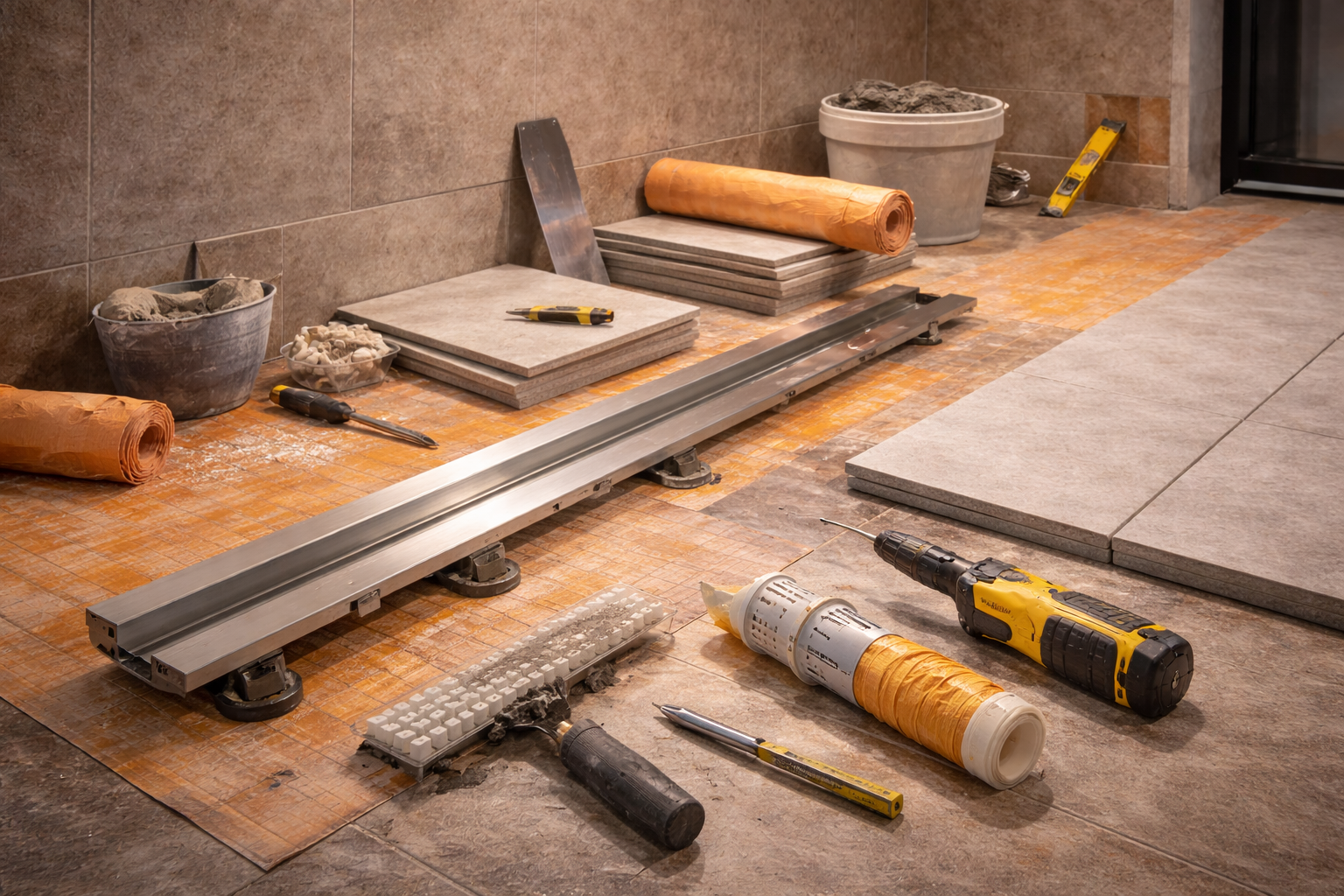
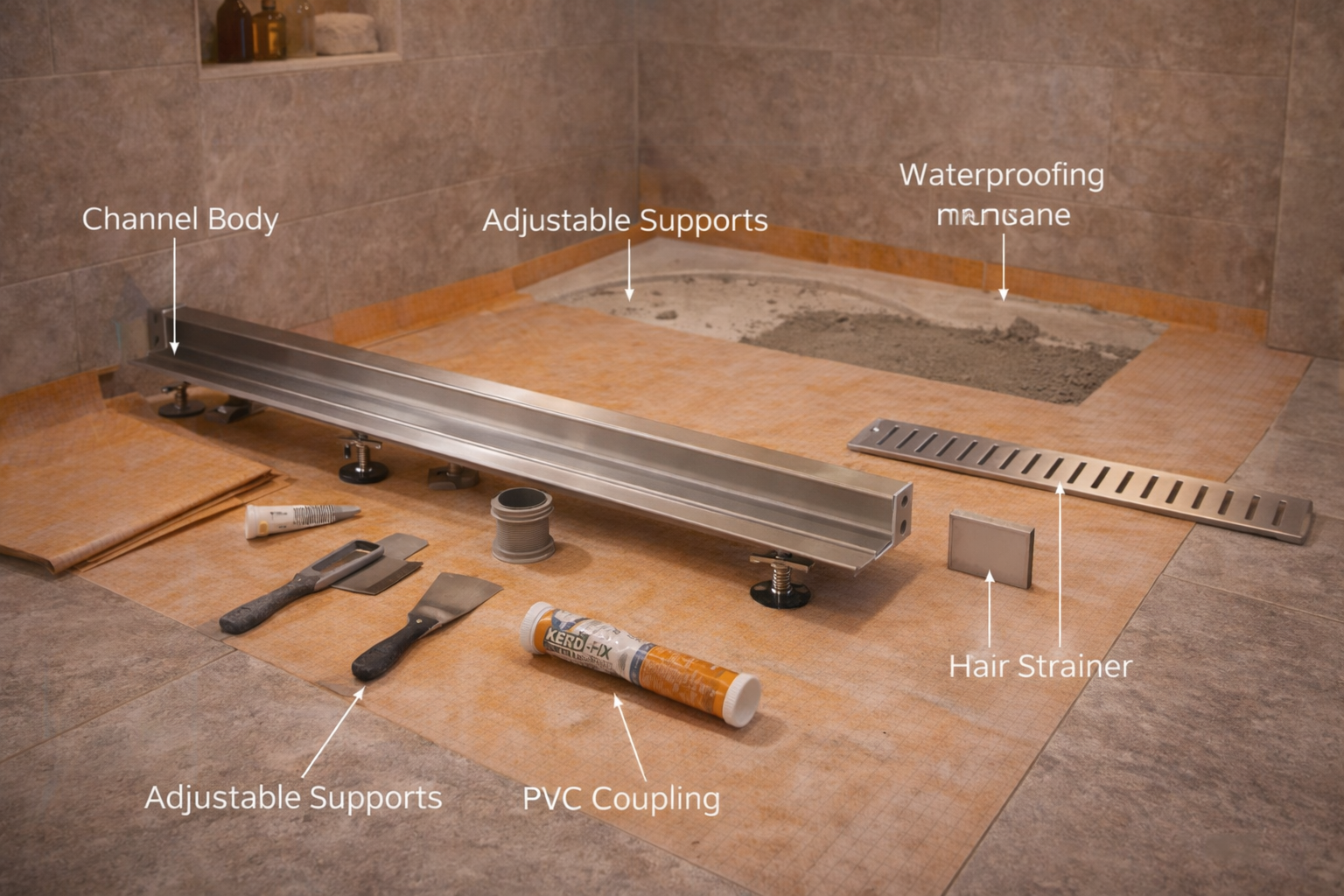
Linear drain assemblies include the channel body, adjustable feet or supports, a waterproofing flange that integrates with the shower membrane, the removable grate or cover, hair strainers or debris traps, and end caps or connection pieces. The channel body is typically stainless steel or PVC depending on the system. In many projects, shower remodel becomes an important part of how the bathroom functions day to day.
Waterproofing integration requires membrane bonding materials, liquid waterproofing compounds, or sheet membrane clamping systems depending on the drain type and waterproofing method. The connection between the drain flange and the shower waterproofing is critical for preventing leaks.
Floor structure modifications may include mortar bed materials, pre-sloped foam pans designed for linear drains, or custom concrete work to create the single-direction slope. The substrate must be stable and properly sloped before tile installation.
What Upgrades Can Be Added With a Linear Drain
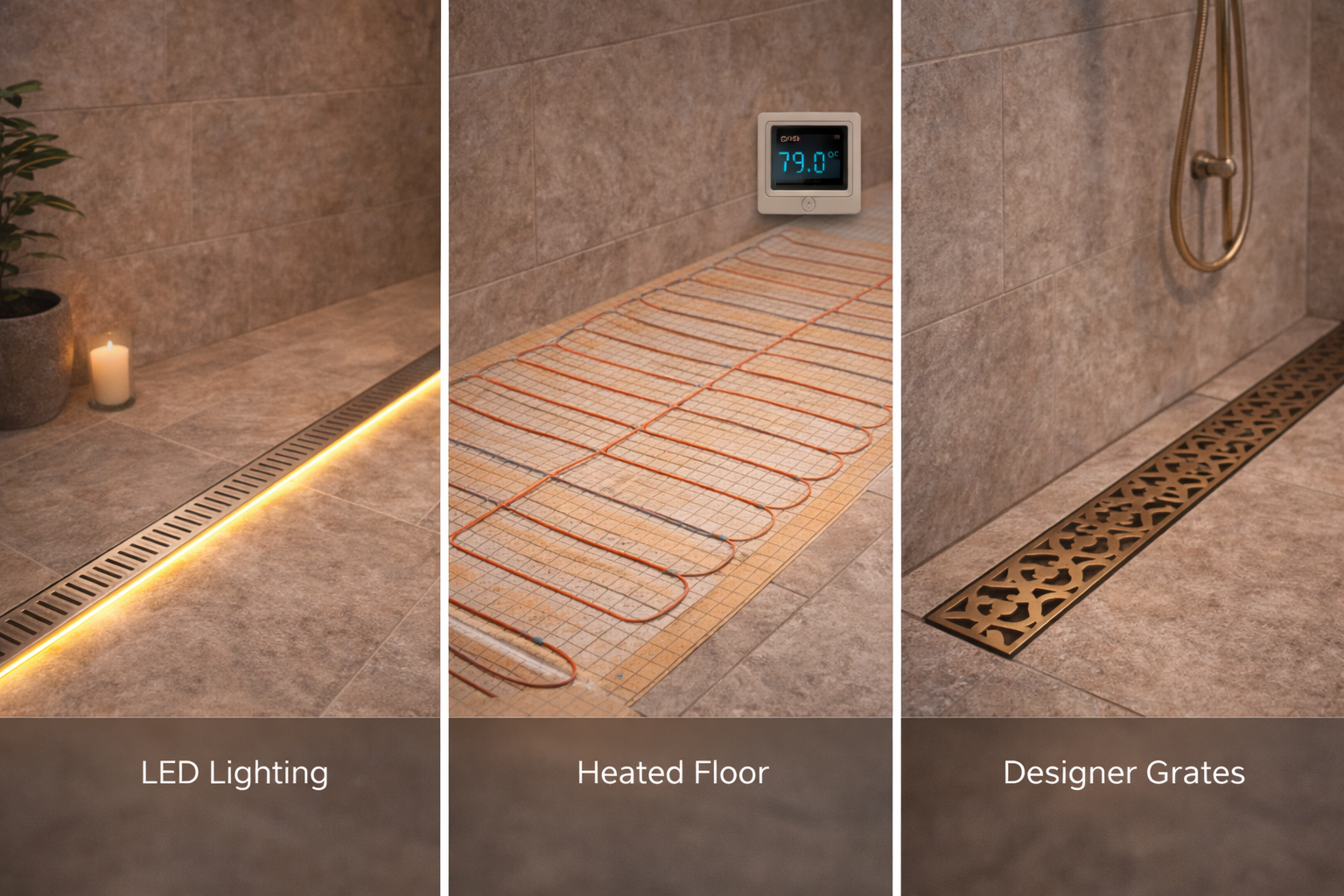
LED lighting can be integrated along the linear drain channel, creating a subtle glow that defines the shower perimeter. Some drain systems offer built-in lighting channels or can be paired with waterproof LED strips installed adjacent to the drain.
Heated floor systems work well with linear drain installations because the single-slope design simplifies heating cable layout. The heating elements can run parallel to the slope direction without complex routing around a center drain. This upgrade adds comfort but requires electrical work and thermostat controls. For layout and clearance planning, many designers reference NKBA planning guidelines.
Premium grate materials and finishes allow the drain to become a design feature rather than a functional necessity. Custom patterns, designer metals, or color-matched finishes can complement other bathroom fixtures. Some manufacturers offer engraved or patterned grates for a personalized touch.
What Installation Details Matter in Linear Drain Work
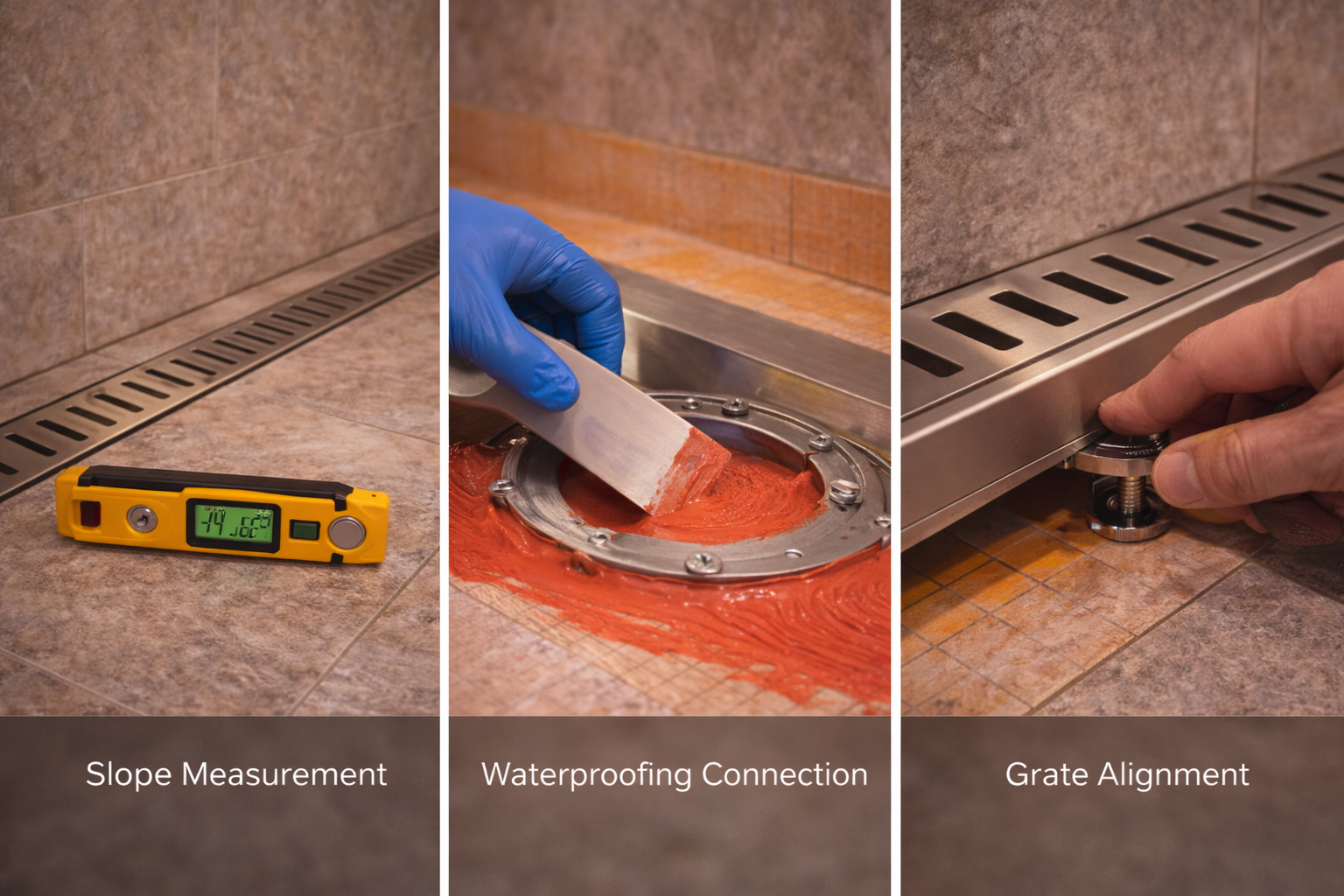
The floor slope must be consistent from the far wall to the drain location without flat spots or reverse grades. Standard slope is 1/4 inch per foot, but this must be maintained uniformly across the entire floor surface. Any deviations create standing water areas that breed mold and mildew.
Waterproofing integration at the drain flange requires careful attention. The membrane must connect to the drain body following manufacturer specifications, using appropriate adhesives, clamping rings, or liquid waterproofing products. This connection is the most leak-prone area and must be done correctly.
Grate height adjustment ensures the drain cover sits flush with the finished tile surface. Most linear drains have adjustable feet or threaded connections that allow fine-tuning of the grate height after tile installation. The grate must be level and aligned with the surrounding tile edges.
Expansion joints and movement accommodation matter because large floor areas expand and contract with temperature changes. The drain installation must allow for this movement without cracking tile or compromising waterproofing.
What Affects Linear Drain Cost
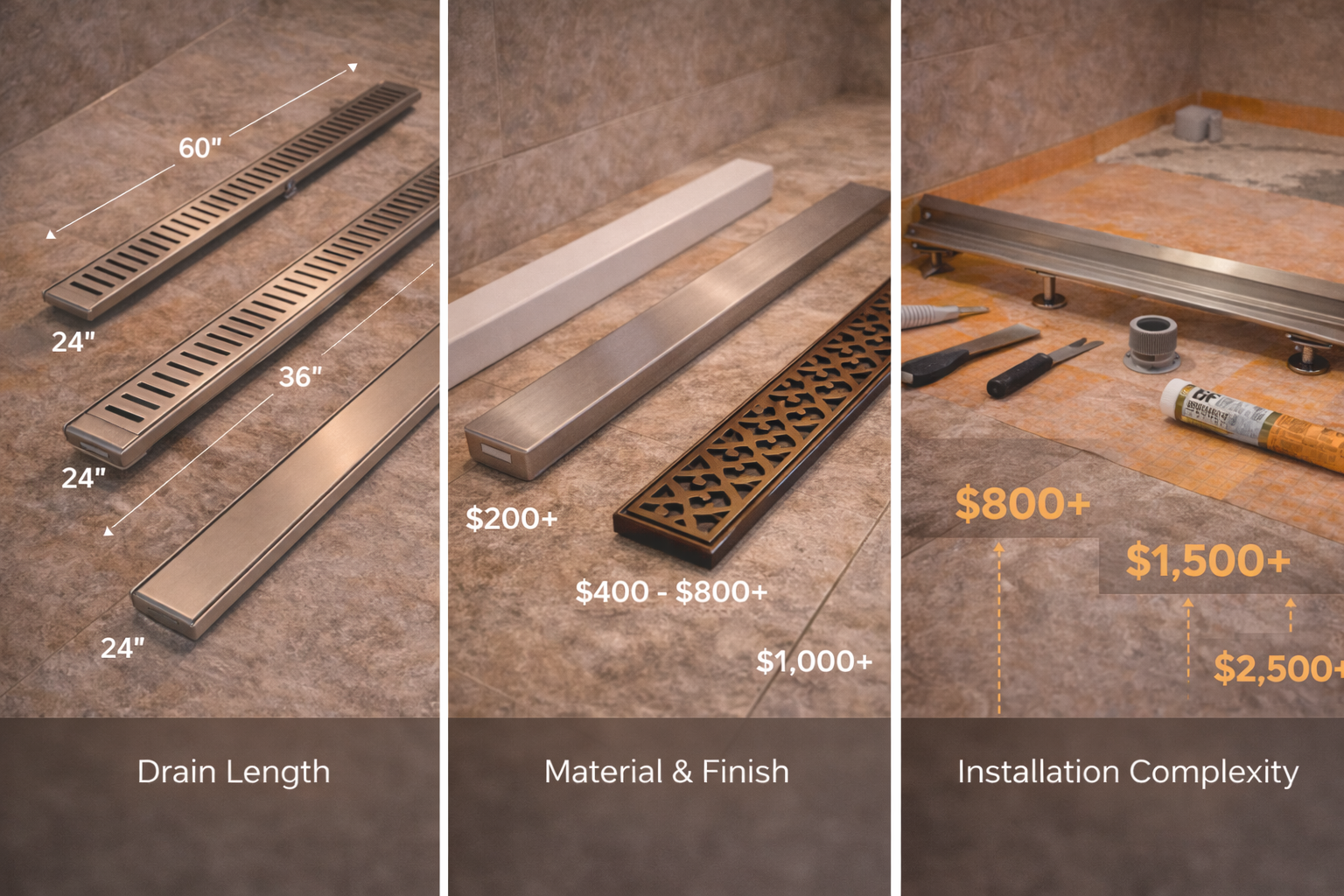
Drain length is a primary cost factor. A 24-inch linear drain costs less than a 60-inch drain covering the full shower width. Standard lengths range from 24 to 72 inches, with custom sizes available at premium prices. Measure your shower width carefully to determine the appropriate drain length.
Material and finish choices affect cost significantly. Basic PVC channel drains start around $200. Stainless steel drains with standard grates range from $400 to $800. Premium drains with designer finishes or tile-in grates can exceed $1,000 for the drain assembly alone. For broader planning considerations, it can help to review Energy Saver design guidance.
Installation complexity drives labor costs. Converting from a center drain requires plumbing relocation, floor reconstruction, and waterproofing work. Simple new installations in new construction cost less than retrofits. Labor for linear drain installation typically ranges from $800 to $2,500 depending on scope.
Additional costs include waterproofing materials, floor substrate modifications, tile work, and any upgrades like heating or lighting. A complete linear drain installation in a remodel typically ranges from $2,000 to $5,000 total.
What Mistakes Should Homeowners Avoid With Linear Drains
Choosing a drain length without measuring the shower width precisely leads to gaps or excessive cutting. The drain should span the full shower width for optimal performance. Partial-width drains require careful slope planning to prevent water bypassing the drain.
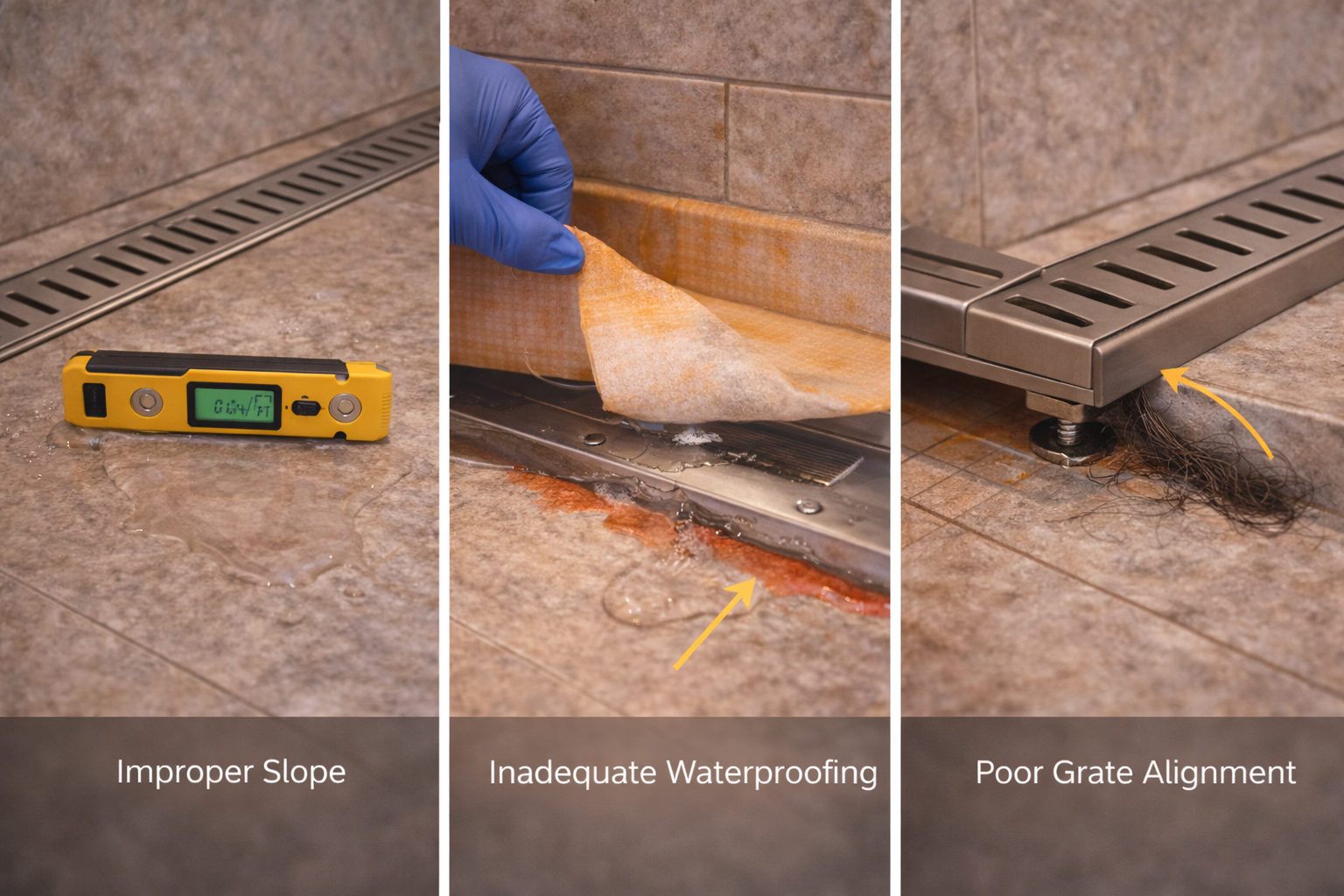
Improper floor slope is the most common installation error. The floor must slope consistently toward the drain across the entire surface. Flat spots or reverse slopes create standing water. Verify slope with a level during installation, not after tile is set.
Skipping professional installation for complex retrofits often causes problems. Converting from center to linear drain involves plumbing, structural, and waterproofing work. DIY installation may void warranties and cause leaks that damage your home.
Neglecting grate maintenance leads to clogs and slow drainage. Linear drains have longer collection areas that can trap more hair and debris. Clean the grate and channel regularly to maintain proper flow.
How Should You Plan Linear Drain Installation
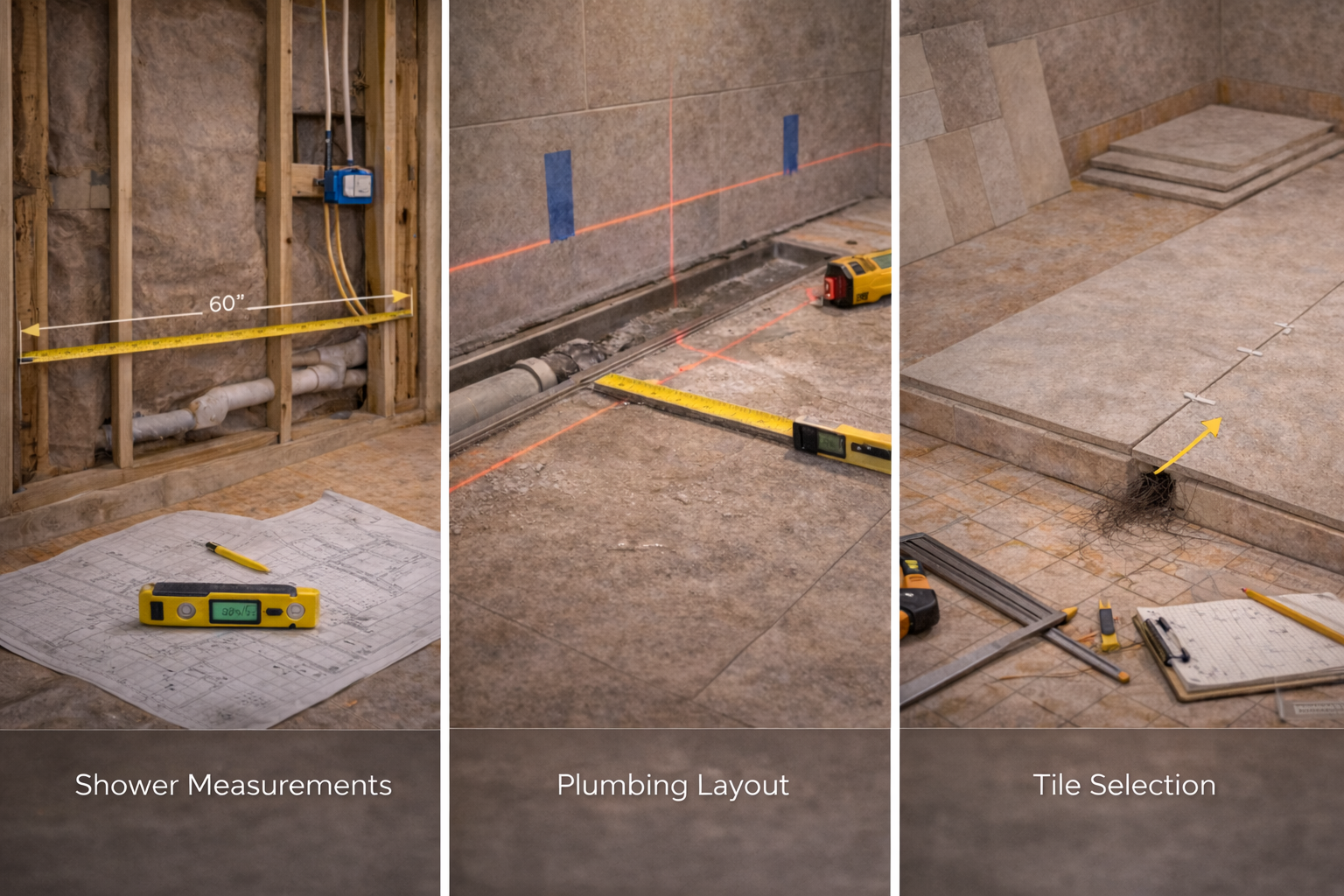
Measure the shower width accurately to determine drain length. The drain should extend wall-to-wall or cover the primary water flow area. Consider door placement and showerhead locations when positioning the drain. Water should flow naturally toward the drain from all shower areas.
Verify plumbing compatibility early. The drain pipe must connect to the linear drain channel, which may require relocating the drain line from the center to the wall. Check access from below and plan for any necessary plumbing modifications. This step affects both cost and project timeline.
Select tile that works with single-direction slope. Large-format tiles are ideal for linear drains. Verify that your chosen tile size can accommodate the slope without lippage. Plan the tile layout to ensure the slope direction aligns with tile placement.
Coordinate with other trades. Linear drain installation affects waterproofing, tile work, and possibly electrical work if adding heated floors or lighting. Plan the sequence of work and ensure all contractors understand the drain requirements.
Frequently Asked Questions About Linear Drains
The main advantage is the ability to create a single-slope floor design that enables curbless showers and works better with large-format tiles. Linear drains also provide a cleaner, more modern aesthetic and can handle high water flow rates from multiple showerheads.
Yes, but it requires significant work. Converting from center to linear drain involves rebuilding the shower pan, relocating the drain pipe to the wall, and reinstalling waterproofing. This is typically done during major shower remodels. Costs range from $2,000 to $5,000 depending on plumbing access and shower size.
Linear drains do not necessarily clog more easily, but they have a longer collection area that can trap more hair and debris. Regular cleaning of the grate and channel prevents clogs. Most linear drains include removable grates and hair strainers for easy maintenance.
The drain should span the full width of the shower or at least the primary wet area. Standard lengths range from 24 to 72 inches. Measure your shower width precisely and choose a drain that covers the water flow path. Partial-width drains work in smaller showers but require careful slope planning.
Yes, linear drains cost more than center drains. A basic center drain costs $20 to $50. Linear drains range from $200 to $1,000 or more depending on length, material, and finish. Installation costs are also higher due to the complexity of floor reconstruction and possible plumbing relocation.
Installing a linear drain in new construction is possible for experienced DIYers with plumbing knowledge. Converting from a center drain requires professional skills. The waterproofing connection, floor slope, and plumbing modifications are critical and difficult to get right. Most jurisdictions require permits for this work.
Linear drains work best with large-format tiles because the single-slope floor design accommodates large tiles without complex cuts. Small tiles and mosaics also work but may not take full advantage of the linear drain’s design benefits. Avoid tiles larger than the slope can accommodate without lippage.
Remove the grate regularly and clear hair and debris from the channel. Use a drain brush or shop vacuum to clean the channel body. Flush with water to ensure proper flow. Clean the grate with mild soap and water. Avoid harsh chemicals that may damage the finish.
Regular grate removal and cleaning prevents clogs. Check the waterproofing seal periodically for signs of leakage. Inspect the grate finish for corrosion or damage. Address any standing water immediately by checking the floor slope. Annual professional inspection ensures long-term performance.
Linear drains are ideal for curbless showers because the single-slope floor design allows the entry point to remain level with the bathroom floor. The drain catches water at the shower perimeter before it reaches the bathroom. This creates a seamless, accessible shower entry without tripping hazards.