

Bathroom Mirrors: Types, Installation, Costs, and Planning
Bathroom Mirrors Guide Index
- Bathroom Mirrors Overview
- When to Replace Bathroom Mirrors
- Types of Bathroom Mirrors
- Bathroom Mirror Sizes and Placement
- Bathroom Mirror Materials and Frames
- Bathroom Mirror Features and Upgrades
- Bathroom Mirror Installation
- Bathroom Mirror Cost Factors
- Common Bathroom Mirror Mistakes
- Bathroom Mirror Planning Checklist
- Related Bathroom Mirror Topics
- Frequently Asked Questions About Bathroom Mirrors
Bathroom Mirrors Overview
Bathroom mirrors serve both practical and decorative purposes in any bathroom remodel. They provide the reflective surface needed for grooming, makeup application, and daily routines while also contributing to the overall style and perceived size of the space. A well-chosen mirror can make a small bathroom feel larger, reflect natural light to brighten the room, and serve as a design focal point above the vanity.
What Bathroom Mirrors Do
Beyond simple reflection, bathroom mirrors influence how the space functions and feels. They expand visual space by reflecting walls and light fixtures, making cramped bathrooms appear more open. Mirrors also distribute light throughout the room, reducing shadows and improving visibility for detailed tasks like shaving or applying makeup. The size, shape, and framing of the mirror set the tone for the bathroom’s design style, whether modern, traditional, or transitional.
Mirror Placement and Integration
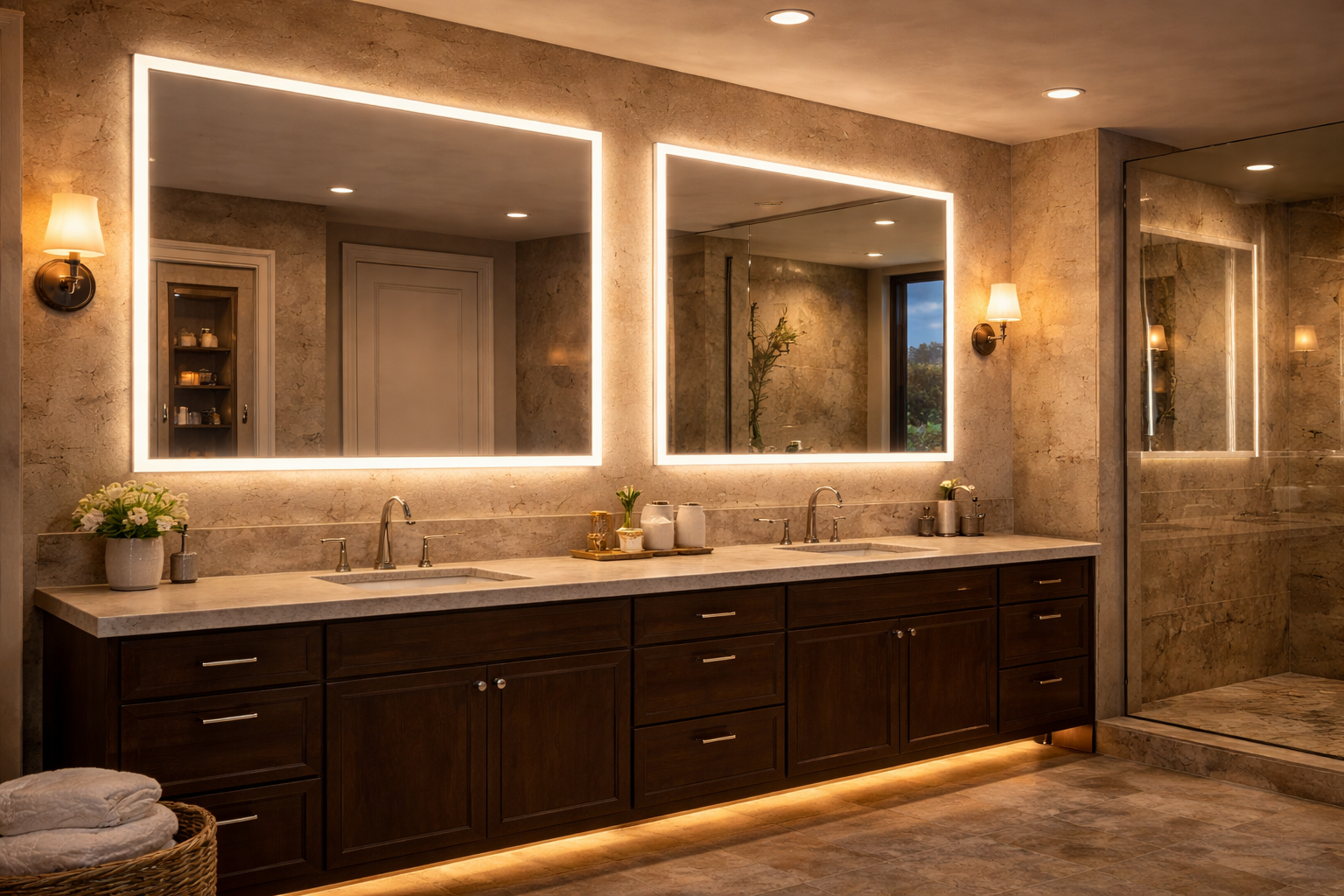
Most bathroom mirrors install above the vanity, positioned at a height that works for the primary users. In bathrooms with double vanities, homeowners often choose either one large mirror spanning both sinks or two separate mirrors for a more defined look. Some remodels incorporate full-wall mirrors, mirrored medicine cabinets for storage, or decorative accent mirrors on secondary walls to enhance the design.
When to Replace Bathroom Mirrors
Homeowners replace bathroom mirrors for both functional and aesthetic reasons. Over time, mirrors can develop wear that affects their appearance and usability. Outdated styles may clash with a newly remodeled bathroom, while damaged mirrors pose safety concerns. Understanding when replacement makes sense helps homeowners plan their remodel budget and timeline effectively.
Signs Your Mirror Needs Replacement
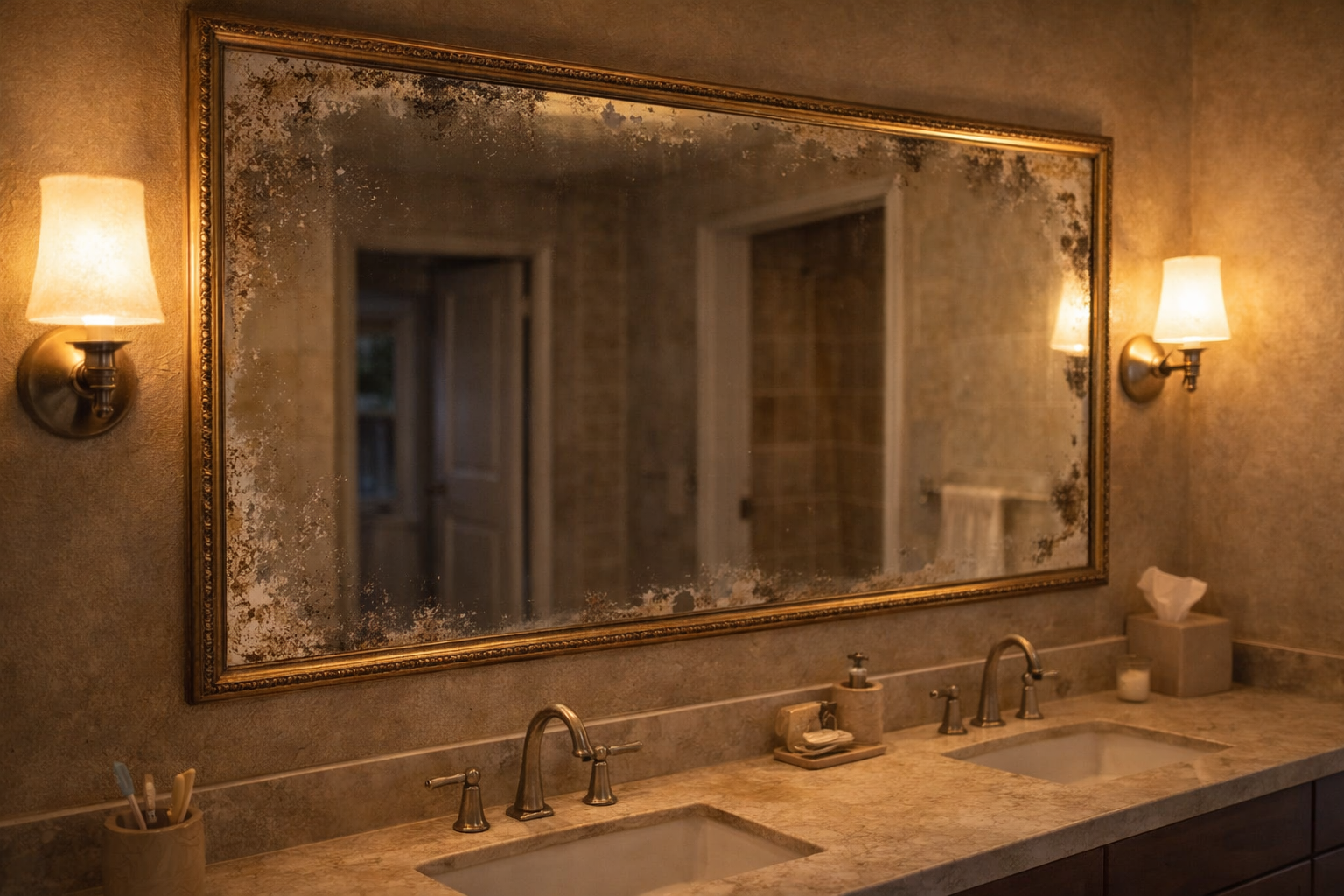
Visible damage is the most obvious reason to replace a bathroom mirror. Silvering deterioration appears as dark spots or black edges where the reflective backing has worn away. Cracks, chips, or scratches compromise both appearance and safety. Mirrors that no longer sit securely on the wall, show signs of moisture damage behind the surface, or have failing mounting hardware should also be replaced. Homeowners comparing performance goals can review Energy Saver ventilation guidance.
Style and Remodel Timing
Many homeowners replace mirrors as part of a larger bathroom renovation. A dated mirror with an ornate frame may not suit a modern design scheme. Similarly, a small mirror can look out of place above a new double vanity. Replacing the mirror during a remodel ensures it coordinates with new lighting, cabinetry, and fixtures for a cohesive finished look.
Types of Bathroom Mirrors
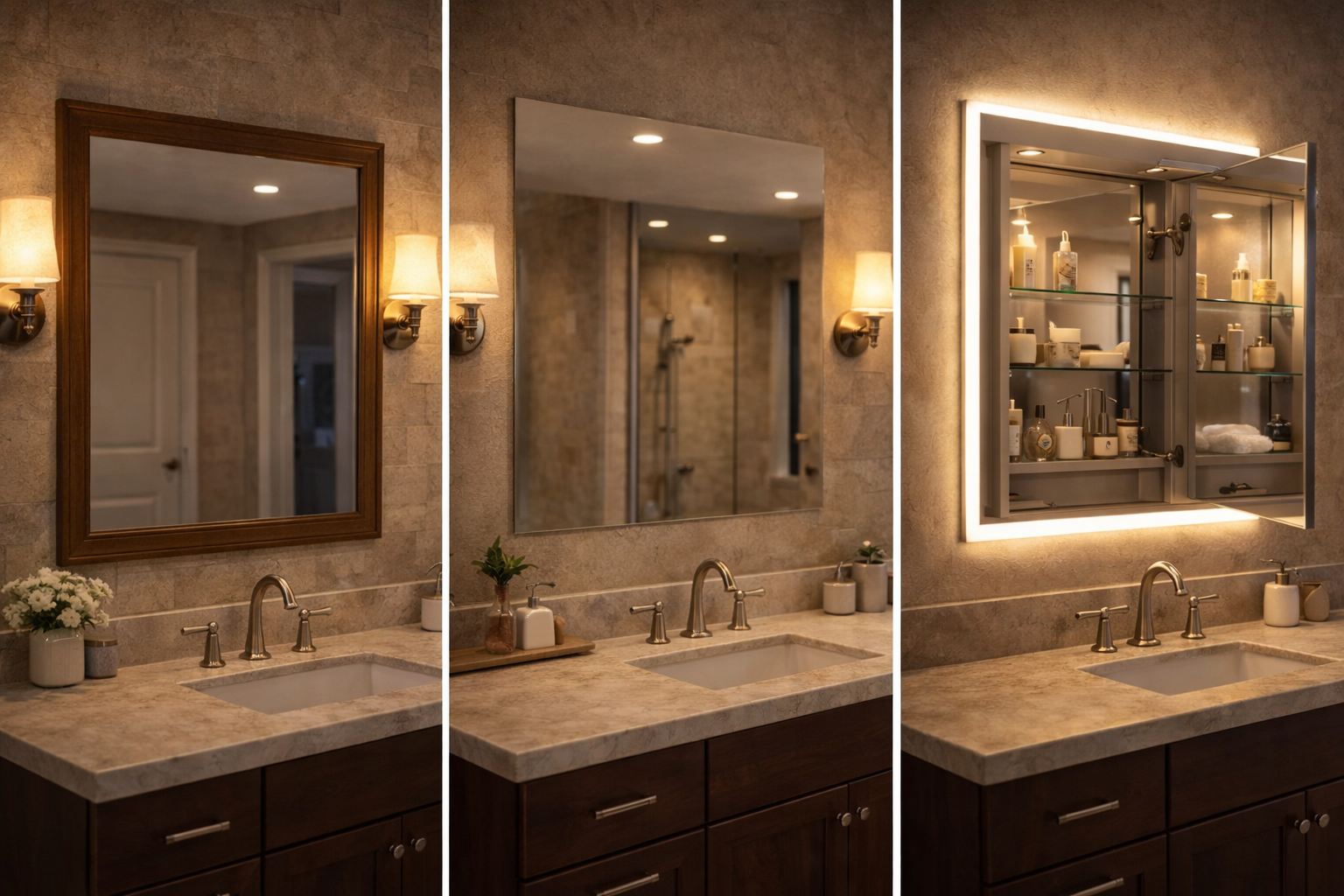
Bathroom mirrors come in several distinct types, each offering different aesthetic and functional benefits. The right choice depends on the bathroom’s design style, available wall space, storage needs, and lighting conditions. Understanding the options helps homeowners select a mirror that fits both their practical requirements and design vision. Mirror size, storage, and lighting all connect back to the broader goals of bathroom remodeling.
Framed and Frameless Mirrors
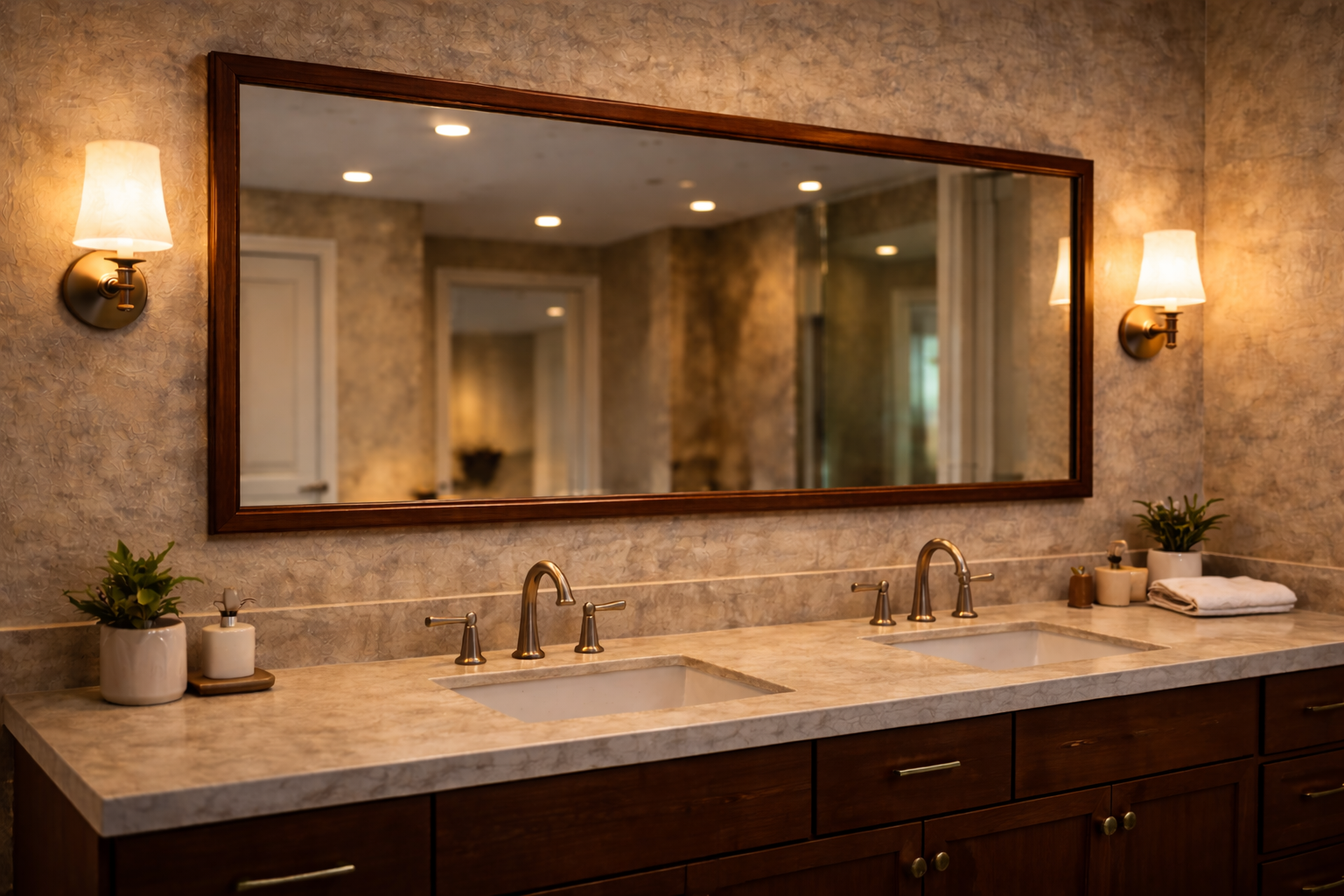
Framed mirrors feature a border made from wood, metal, or synthetic materials that complements the bathroom’s decor. Frames range from simple and modern to ornate and traditional, allowing homeowners to match existing cabinetry or create contrast. Frameless mirrors offer a clean, minimalist look with polished or beveled edges. They work well in contemporary bathrooms and can make the space feel more open by eliminating visual boundaries.
Medicine Cabinets and Lighted Mirrors
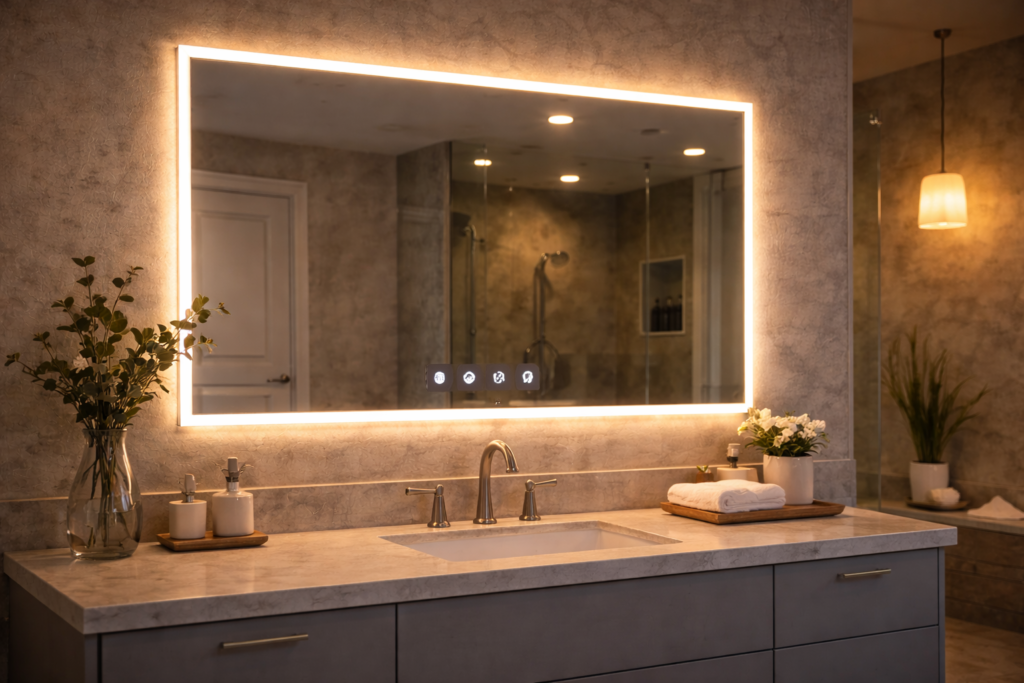
Medicine cabinet mirrors combine reflection with concealed storage behind the mirror surface. Recessed models sit flush with the wall for a streamlined appearance, while surface-mounted versions extend outward and are easier to install. Lighted mirrors incorporate LED illumination around the perimeter or behind the mirror, providing even, shadow-free lighting for grooming tasks. Some models include anti-fog features, dimmable lighting, and touch controls.
Bathroom Mirror Sizes and Placement
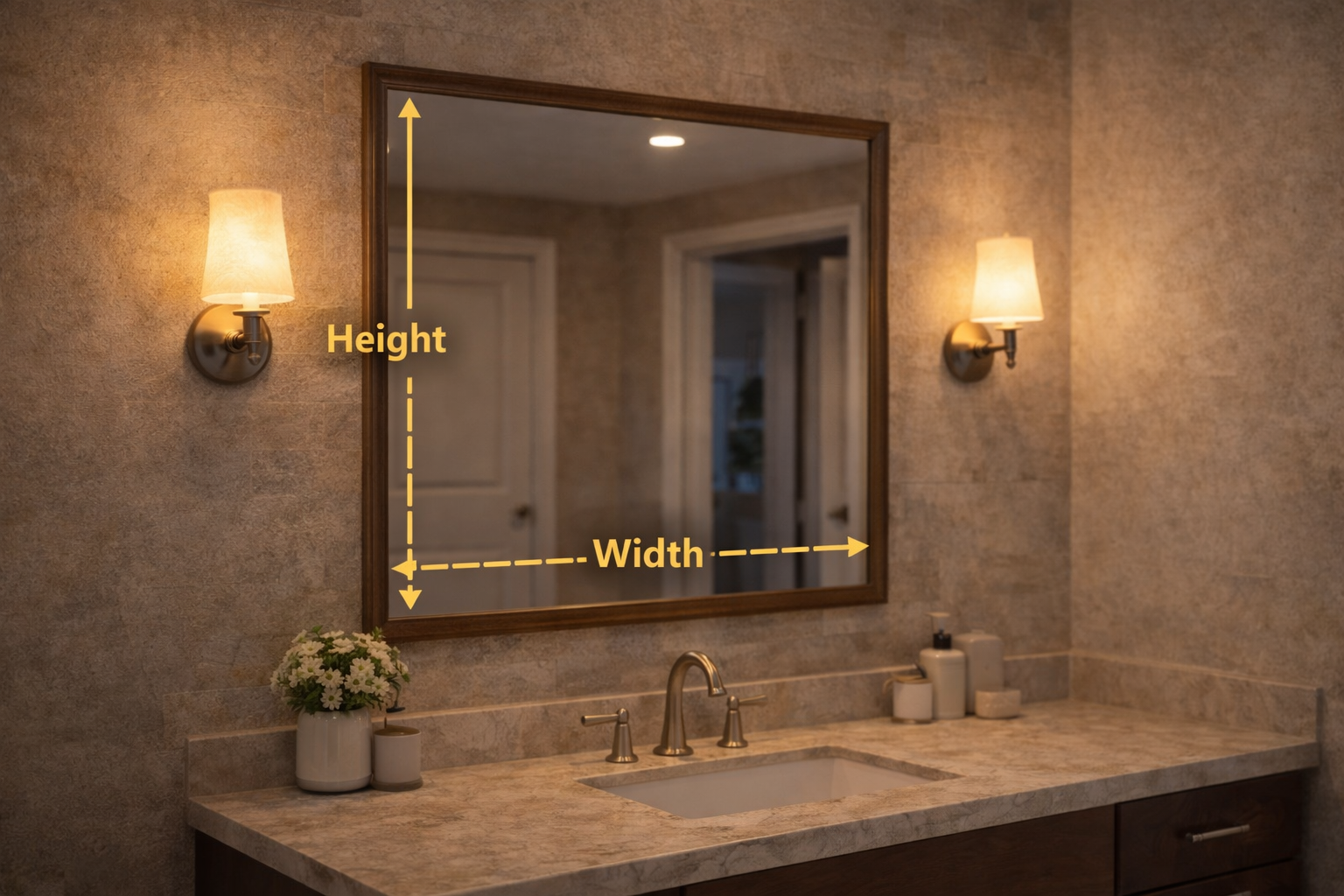
Proper sizing and placement ensure bathroom mirrors function well and look balanced within the space. A mirror that is too small leaves gaps on the sides of the vanity, while one that is too large overwhelms the wall. Height placement affects visibility and comfort for daily use. Getting these measurements right prevents costly adjustments after installation.
Width and Height Guidelines
For single vanities, mirrors typically measure a few inches narrower than the vanity width, leaving balanced spacing on each side. Above double vanities, homeowners can choose one oversized mirror spanning both sinks or two separate mirrors centered above each basin. Mirror height should accommodate the tallest user while positioning the reflective center at average eye level, usually with the bottom edge a few inches above the backsplash or countertop.
Placement Relative to Lighting
Mirror placement should coordinate with lighting fixtures. Sconces mounted on either side of the mirror provide the most flattering, shadow-free illumination. When overhead lighting is the primary source, the mirror should be positioned to avoid casting shadows on the face. For backlit mirrors, ensure adequate wall depth for electrical connections and consider the glow effect on surrounding surfaces.
Bathroom Mirror Materials and Frames
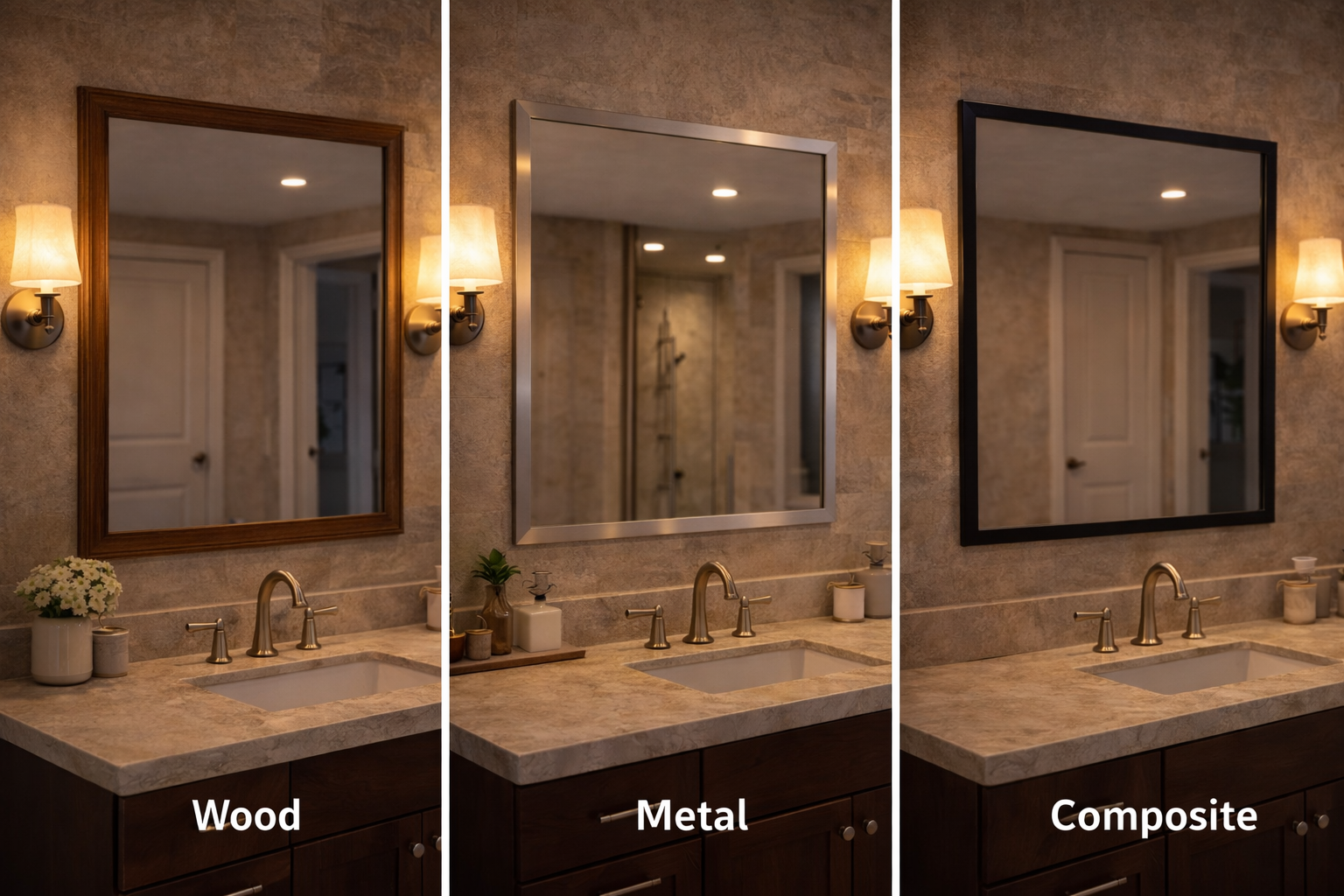
The materials used in bathroom mirrors affect their durability, maintenance requirements, and visual appeal. Frame materials must withstand humid bathroom conditions without warping, rusting, or deteriorating. Mirror glass quality varies in thickness, clarity, and edge finishing. Understanding material options helps homeowners choose mirrors that last and complement their bathroom design.
Frame Materials for Humid Environments
Wood frames add warmth and traditional character but require moisture-resistant finishes to prevent warping in bathroom conditions. Metal frames in chrome, brushed nickel, matte black, or brass offer durability and coordinate easily with plumbing fixtures. Composite and synthetic frames resist moisture damage and come in various colors and textures. Frameless mirrors use polished or beveled glass edges that eliminate framing concerns entirely. For water-use considerations, homeowners can review WaterSense guidance.
Mirror Glass Quality
Standard bathroom mirrors use 4mm or 5mm thick glass with a silvered backing for reflection. Higher-quality mirrors feature thicker glass for stability and copper-free backing that resists corrosion in humid environments. Beveled edges add a decorative touch and smooth finish. Some mirrors include safety backing that holds shattered pieces together if breakage occurs.
Bathroom Mirror Features and Upgrades
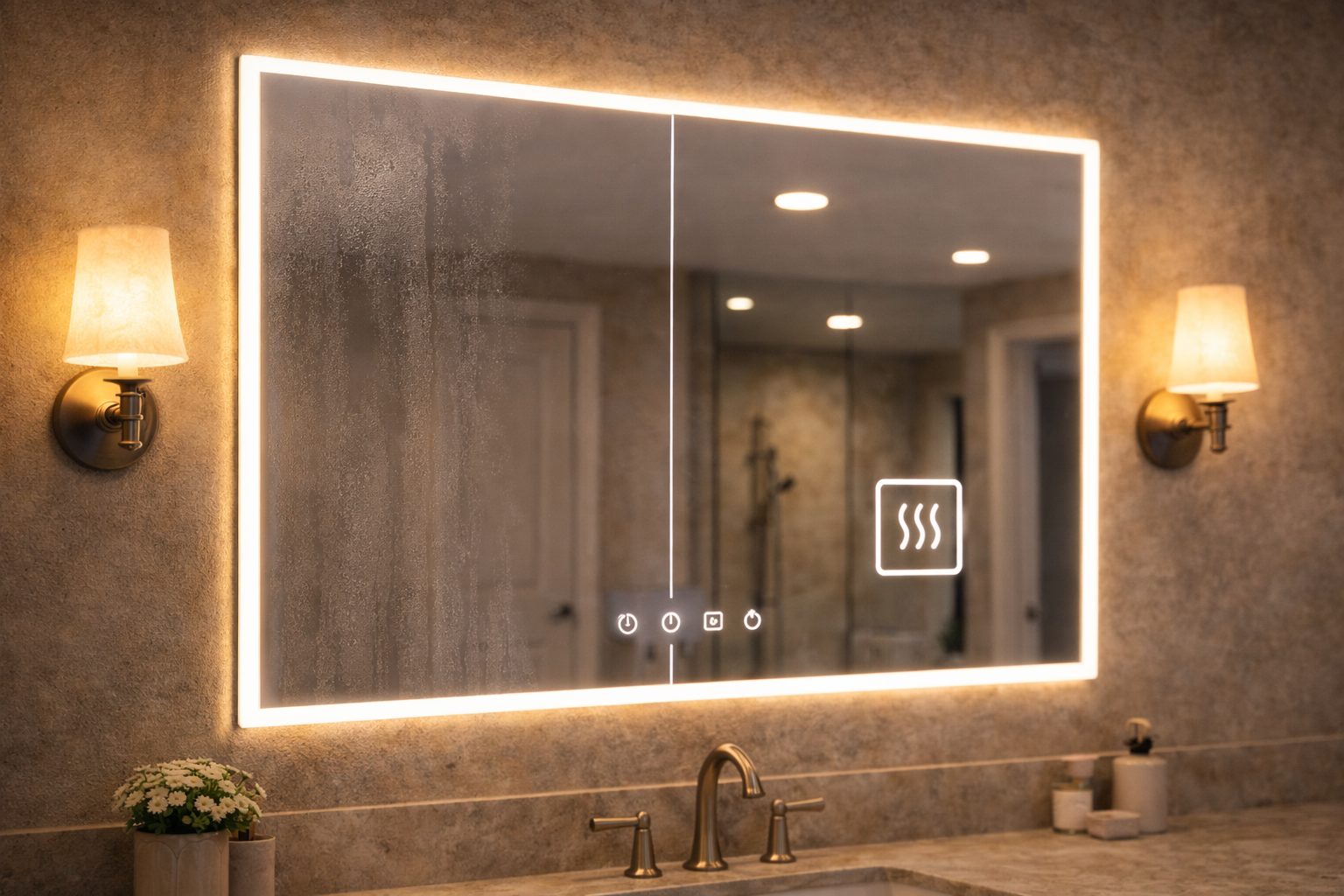
Modern bathroom mirrors offer features that extend beyond basic reflection. These upgrades improve functionality, convenience, and the overall bathroom experience. From integrated lighting to anti-fog technology, these additions transform ordinary mirrors into sophisticated bathroom components.
Lighting and Anti-Fog Features
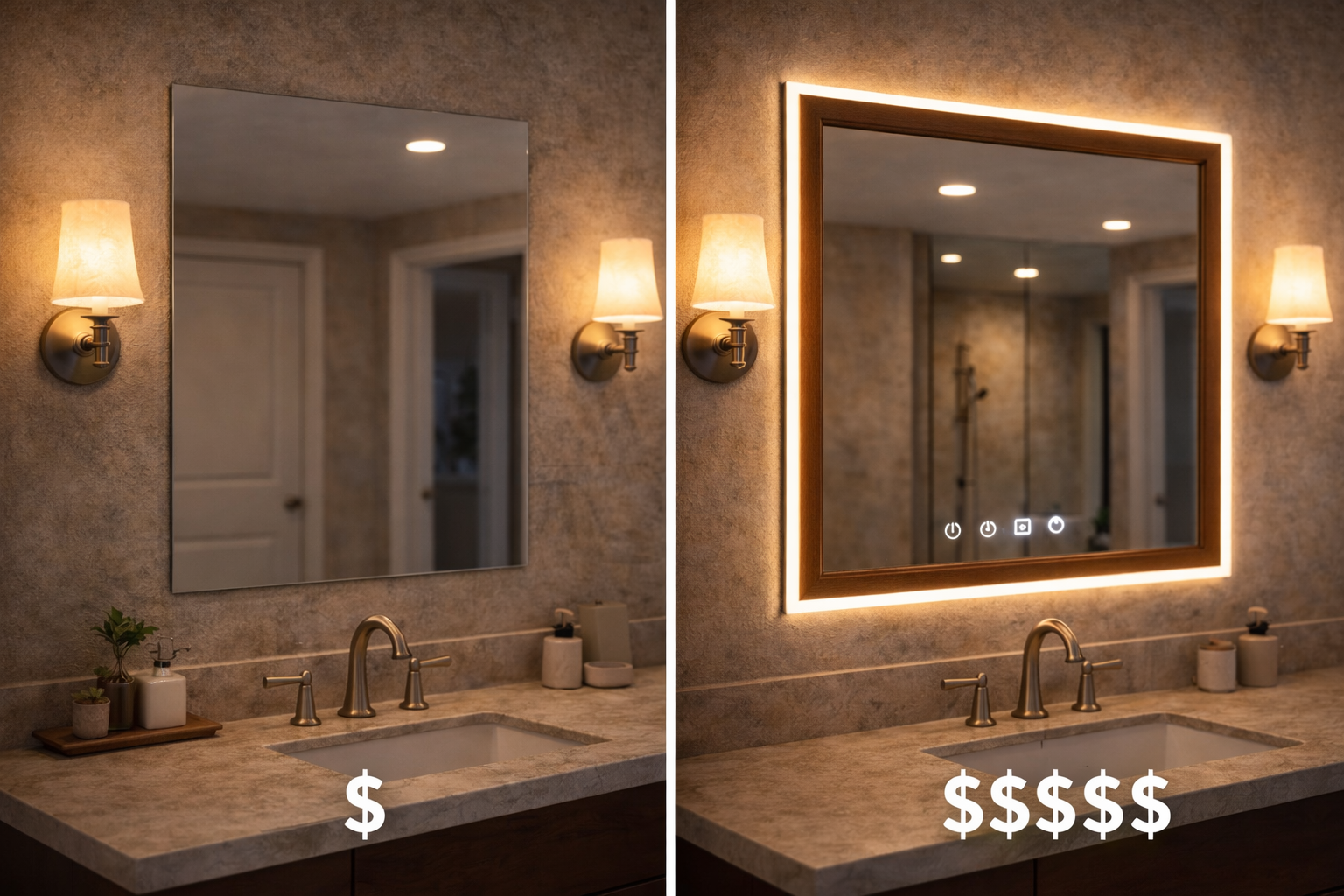
LED-integrated mirrors provide even illumination for grooming tasks without casting harsh shadows. Backlit models create ambient lighting that enhances the bathroom atmosphere. Anti-fog features use heating elements behind the mirror surface to prevent condensation after hot showers, keeping the reflection clear without wiping. Some lighted mirrors offer dimmable settings and color temperature adjustments for different times of day.
Smart Mirror Technology
Smart mirrors incorporate technology such as Bluetooth speakers, digital displays showing time and weather, touch controls, and even voice activation. These features add convenience for morning routines but require electrical connections and may have higher price points. Consider whether the technology justifies the cost and complexity for your specific bathroom needs.
Bathroom Mirror Installation
Installing a bathroom mirror requires proper preparation, appropriate hardware, and attention to wall conditions. The installation method depends on mirror weight, wall material, and whether electrical connections are needed for lighted models. Correct installation ensures the mirror hangs securely and safely for years of use.
Mounting Methods and Hardware
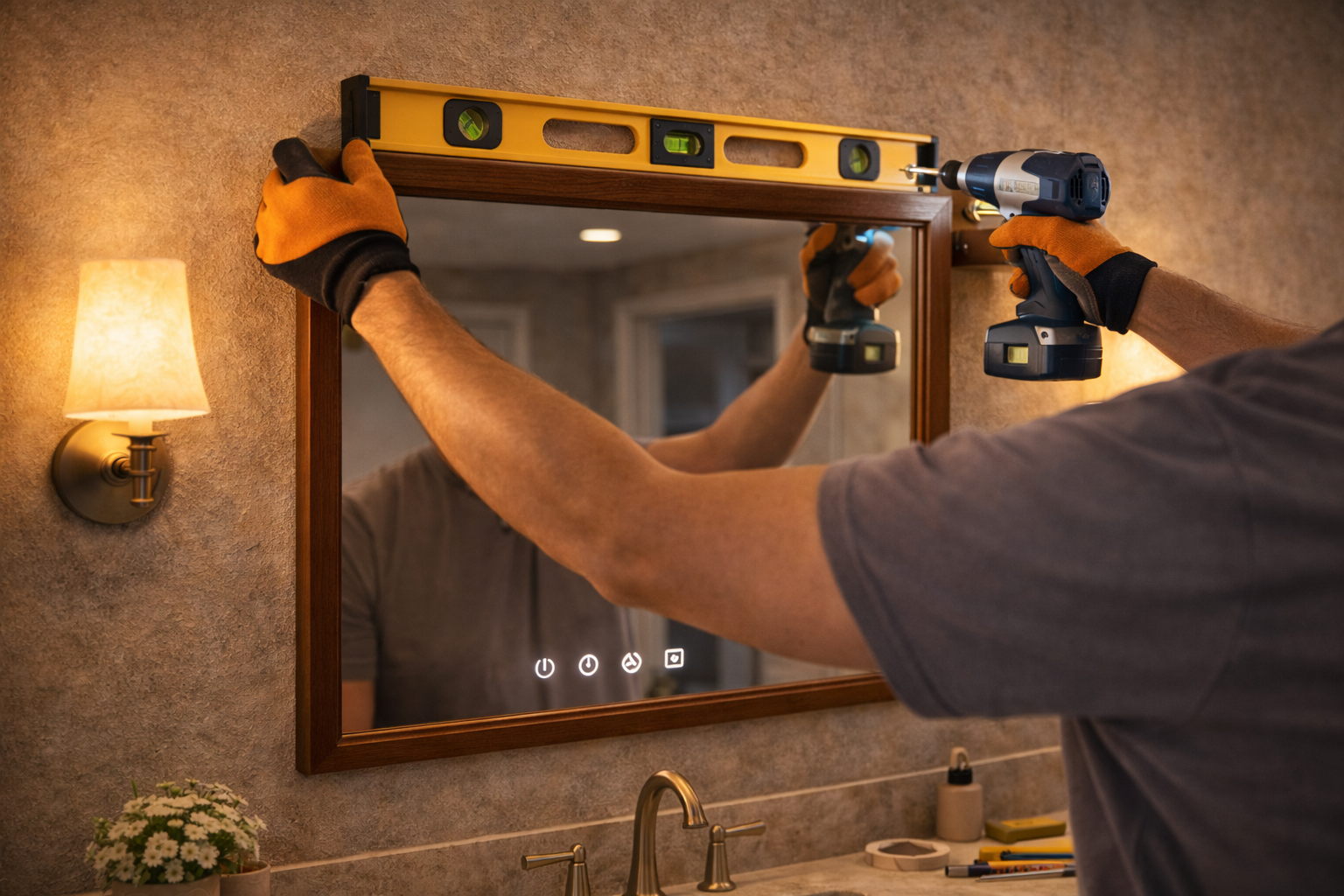
Lightweight mirrors often hang on picture hooks or cleats rated for the mirror’s weight. Heavier mirrors require French cleats, Z-clips, or specialized mirror mounting hardware secured to wall studs. Frameless mirrors typically use mirror clips, adhesive, or a combination of both. For drywall installations without stud access, toggle bolts or hollow-wall anchors provide additional support. Always verify that mounting hardware exceeds the mirror’s actual weight. During remodeling, it also helps to follow EPA indoor air quality guidance.
Electrical Considerations for Lighted Mirrors
Lighted and smart mirrors require electrical connections that may involve new wiring or junction box installation. Hardwired models connect directly to household electrical systems and should be installed by a licensed electrician. Some lighted mirrors offer plug-in options that use existing outlets but may show visible cords. Plan electrical rough-in during the early stages of bathroom remodeling to accommodate these features.
Bathroom Mirror Cost Factors
Bathroom mirror costs vary based on size, materials, features, and installation complexity. Simple replacement mirrors cost relatively little, while large custom pieces with integrated lighting and smart features represent a significant investment. Understanding cost drivers helps homeowners budget appropriately and prioritize features that matter most.
Size and Material Costs
Basic frameless or simple framed mirrors cost the least, with prices increasing for larger dimensions. Premium frame materials such as solid wood, custom metalwork, or artisan finishes add to the cost. Medicine cabinets cost more than flat mirrors due to added storage functionality and more complex construction. Custom-cut mirrors for unusual spaces or specific design requirements carry premium pricing.
Feature and Installation Expenses
LED lighting, anti-fog systems, and smart technology significantly increase mirror costs. These features also add installation complexity, potentially requiring electrical work that increases labor expenses. Recessed medicine cabinets involve more extensive wall modification than surface-mounted options. Professional installation ensures safety and proper function but adds to the overall project cost.
Common Bathroom Mirror Mistakes
Selecting and installing bathroom mirrors involves decisions that affect both appearance and function. Common mistakes range from poor sizing choices to inadequate mounting hardware. Avoiding these errors ensures the mirror enhances the bathroom rather than creating problems down the road.
Sizing and Placement Errors
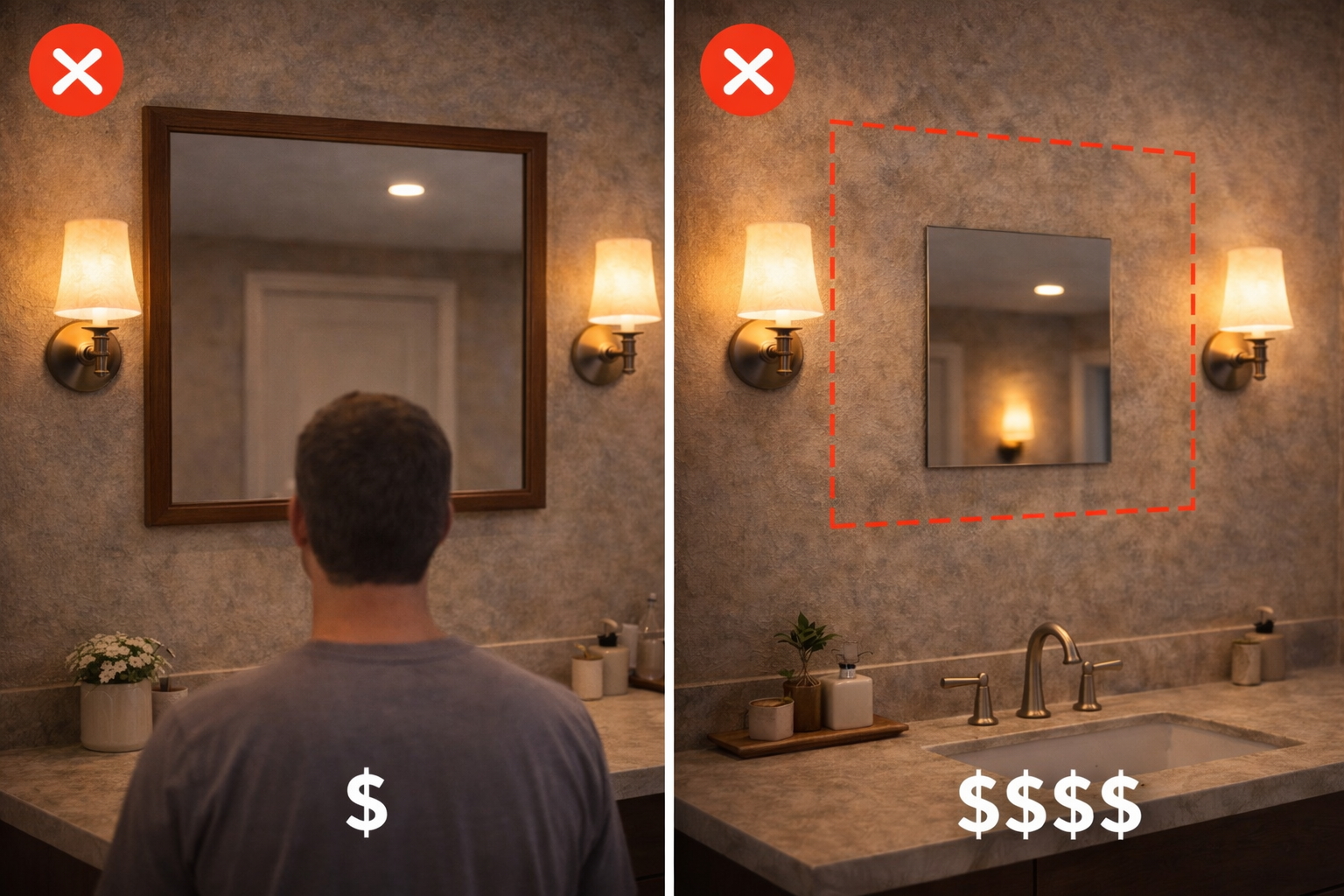
Choosing a mirror that is too small for the vanity leaves awkward wall gaps and limits reflection. Hanging the mirror too high or too low creates uncomfortable viewing angles for daily use. Installing mirrors without considering lighting placement results in shadows and poor visibility. Failing to account for faucet height and backsplash depth can lead to clearance issues or visual imbalance.
Installation and Material Mistakes
Using inadequate mounting hardware risks mirror failure and potential injury. Installing heavy mirrors on drywall without proper anchors or stud support creates safety hazards. Selecting frame materials that cannot withstand bathroom humidity leads to warping, rust, or deterioration. Neglecting to plan electrical rough-in for lighted mirrors during remodeling forces compromises in placement or visible cord solutions.
Bathroom Mirror Planning Checklist
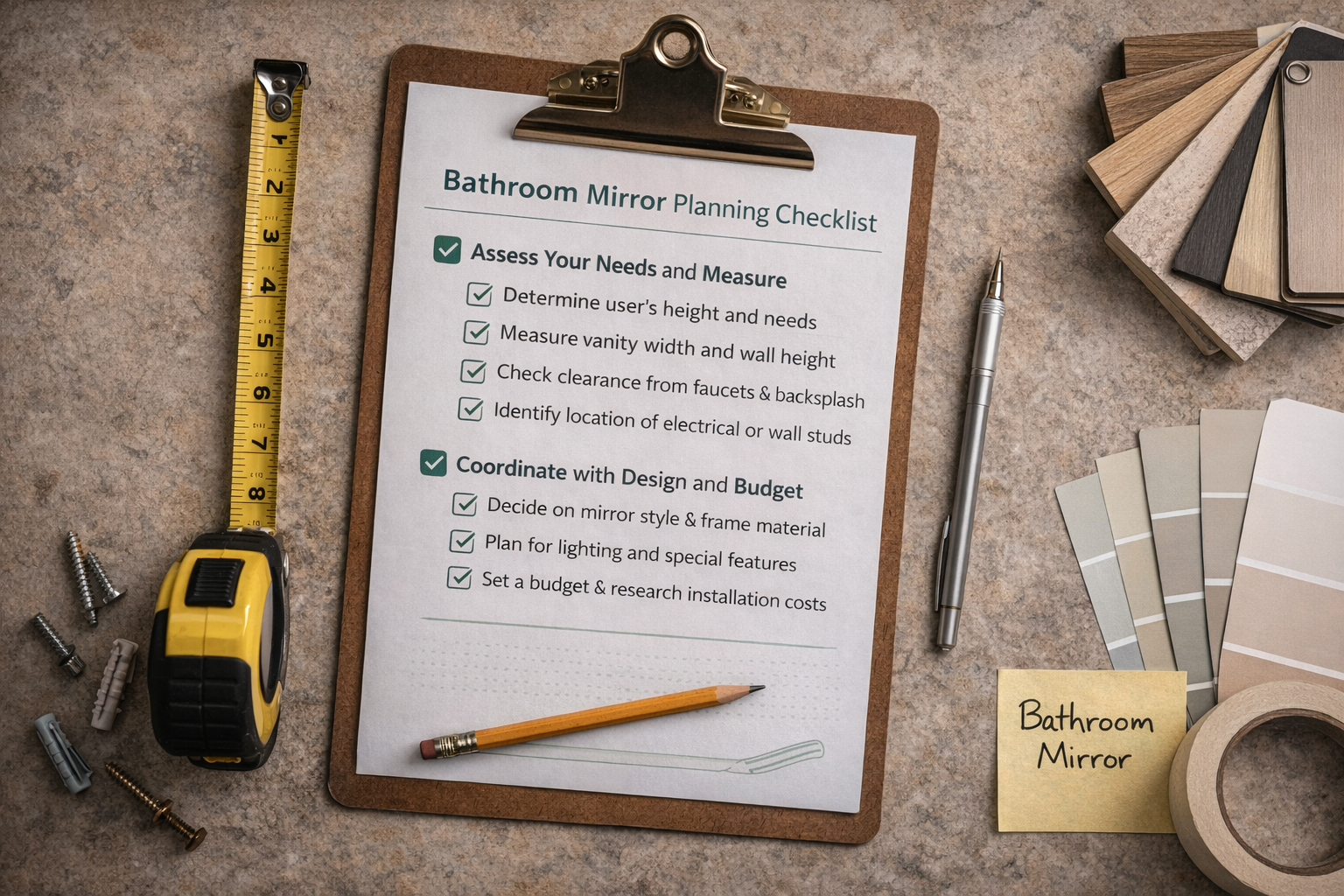
Planning a bathroom mirror replacement or installation involves several steps that ensure the final result meets both functional and design goals. Taking time to evaluate needs, measure accurately, and coordinate with other bathroom elements prevents costly changes and disappointment.
Assess Your Needs and Measure
Begin by determining who uses the bathroom and how they use the mirror. Consider height requirements, storage needs, and lighting preferences. Measure the vanity width, available wall height, and clearance from countertops and fixtures. Note the location of existing electrical if considering lighted mirrors, and identify stud locations for secure mounting of heavier pieces.
Coordinate with Design and Budget
Select mirror style, frame material, and features that complement the overall bathroom design. Decide between single or multiple mirrors for double vanities. Establish a budget that accounts for the mirror, necessary hardware, and professional installation if needed. Order mirrors early in the remodeling timeline to avoid delays during the finishing phase.
Frequently Asked Questions About Bathroom Mirrors
For single vanities, choose a mirror that is a few inches narrower than the vanity width to create balanced spacing on each side. Above double vanities, you can use one large mirror spanning both sinks or two separate mirrors centered above each basin. The mirror height should accommodate your tallest user while positioning the reflective center at average eye level.
The bottom edge of the mirror should typically sit a few inches above the backsplash or countertop, usually around 4 to 6 inches. The center of the mirror should align with average eye level for the primary users, generally around 60 inches from the floor. Adjust based on the height of household members to ensure comfortable viewing.
Lighted mirrors provide even, shadow-free illumination that is ideal for grooming tasks like shaving and makeup application. They eliminate the need for separate vanity lighting and create a modern, streamlined look. If your bathroom lacks good natural light or adequate overhead lighting, the investment in a lighted mirror can significantly improve functionality.
Framed mirrors feature a border made from wood, metal, or synthetic materials that adds decorative style and can coordinate with other bathroom finishes. Frameless mirrors have polished or beveled edges and offer a clean, minimalist appearance that works well in modern bathrooms. Frameless mirrors can make small spaces feel larger by eliminating visual boundaries.
Lightweight mirrors with proper mounting hardware can often be installed by homeowners with basic tools. However, heavy mirrors, recessed medicine cabinets, and lighted mirrors requiring electrical connections should be installed by professionals to ensure safety and proper function. Professional installation also typically includes warranties on the work.
Anti-fog mirrors use heating elements behind the glass to prevent condensation after hot showers. Alternatively, you can apply anti-fog sprays or films to existing mirrors. Improving bathroom ventilation with an exhaust fan also reduces humidity and fogging. Wiping the mirror with a small amount of shaving cream or dish soap can provide temporary fog resistance.
Yes, medicine cabinets can replace flat mirrors to add concealed storage. Recessed models sit flush with the wall for a streamlined look but require cutting into the wall cavity. Surface-mounted medicine cabinets are easier to install and work well when wall depth is limited. Ensure the medicine cabinet dimensions fit your available wall space and vanity width.
Metal frames in chrome, brushed nickel, or matte black resist moisture and coordinate easily with plumbing fixtures. Wood frames should have moisture-resistant finishes to prevent warping. Composite and synthetic frames are designed to withstand humid bathroom conditions. Frameless mirrors eliminate framing concerns entirely and work well in any bathroom environment.
One large mirror creates a seamless, expansive look that can make the bathroom feel larger and allows both users to see each other. Two separate mirrors define individual spaces and provide more design flexibility with framing and lighting. The choice depends on your aesthetic preference, wall space, and whether you want a unified or divided appearance.
Basic bathroom mirrors cost between $50 and $200, while mid-range options with quality frames or larger sizes range from $200 to $500. Premium mirrors with LED lighting, anti-fog features, or smart technology can cost $500 to $1,500 or more. Installation costs vary from $100 for simple hanging to $300 or more for electrical work and complex mounting.