

Bathroom Hardware: Types, Installation, Costs, and Planning
Bathroom Hardware Guide Index
- Bathroom Hardware Overview
- When to Update Bathroom Hardware
- Types of Bathroom Hardware
- Bathroom Hardware Styles and Finishes
- Bathroom Hardware Materials
- Bathroom Hardware Features
- Bathroom Hardware Installation
- Bathroom Hardware Cost Factors
- Common Bathroom Hardware Mistakes
- Bathroom Hardware Planning Checklist
- Frequently Asked Questions About Bathroom Hardware
Bathroom Hardware Overview
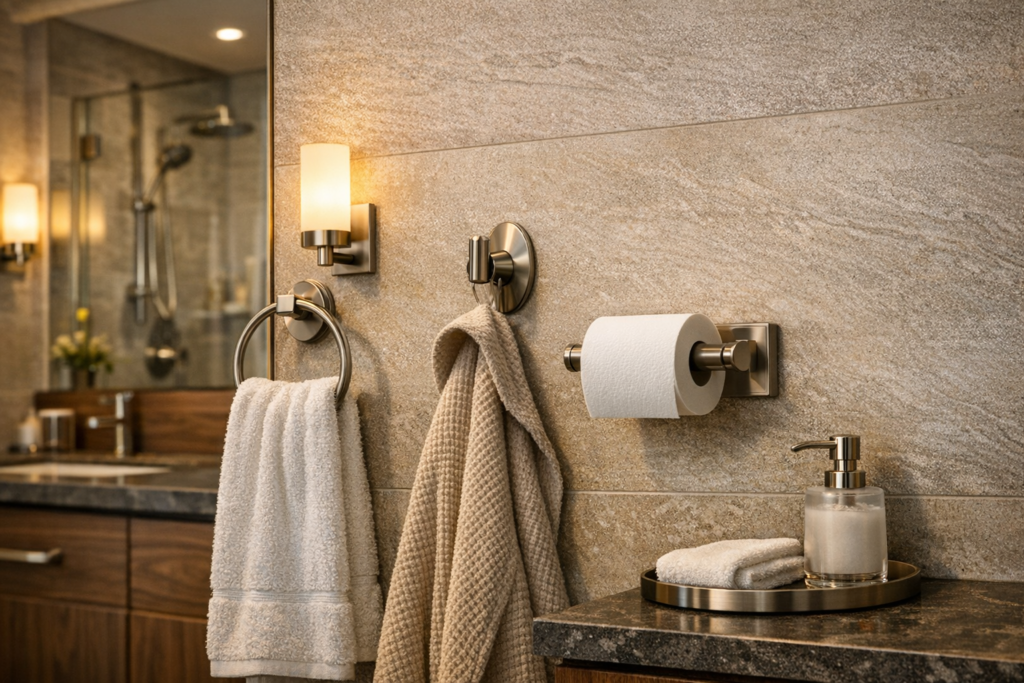
Bathroom hardware refers to the functional metal accessories that complete a bathroom’s design and daily usability. These include towel bars and rings for drying hands and bodies, robe hooks for hanging garments, toilet paper holders for essential convenience, and grab bars for safety and accessibility. While often treated as afterthoughts, hardware selections significantly impact both the bathroom’s visual cohesion and practical functionality.
What Bathroom Hardware Includes
Standard bathroom hardware encompasses several categories of accessories. Towel storage solutions range from single and double towel bars to towel rings and hooks. Robe hooks provide convenient hanging points for clothing and towels. Toilet paper holders come in spring-loaded, pivoting, or free-standing designs. Additional hardware includes soap dishes, toothbrush holders, tissue box covers, and shower caddies. Safety hardware such as grab bars supports aging-in-place and accessibility needs. Each piece serves a practical purpose while contributing to the overall aesthetic.
Hardware’s Role in Bathroom Design
Hardware acts as the jewelry of bathroom design, providing finishing touches that tie together faucets, lighting, and cabinetry. Consistent finish families create visual harmony, while mismatched metals create discord. Hardware placement affects daily convenience, with poorly positioned towel bars or toilet paper holders causing ongoing frustration. Quality hardware feels substantial and operates smoothly, while cheap alternatives loosen, tarnish, and disappoint over time.
When to Update Bathroom Hardware
Homeowners update bathroom hardware during renovations, when existing pieces fail, or to refresh the space without major construction. Hardware updates offer one of the highest-impact, lowest-cost improvements available. Understanding when replacement makes sense helps homeowners plan effective bathroom improvements. Hardware finishes tend to feel more intentional when they are selected as part of complete bathroom remodeling plans.
Signs Your Hardware Needs Replacement
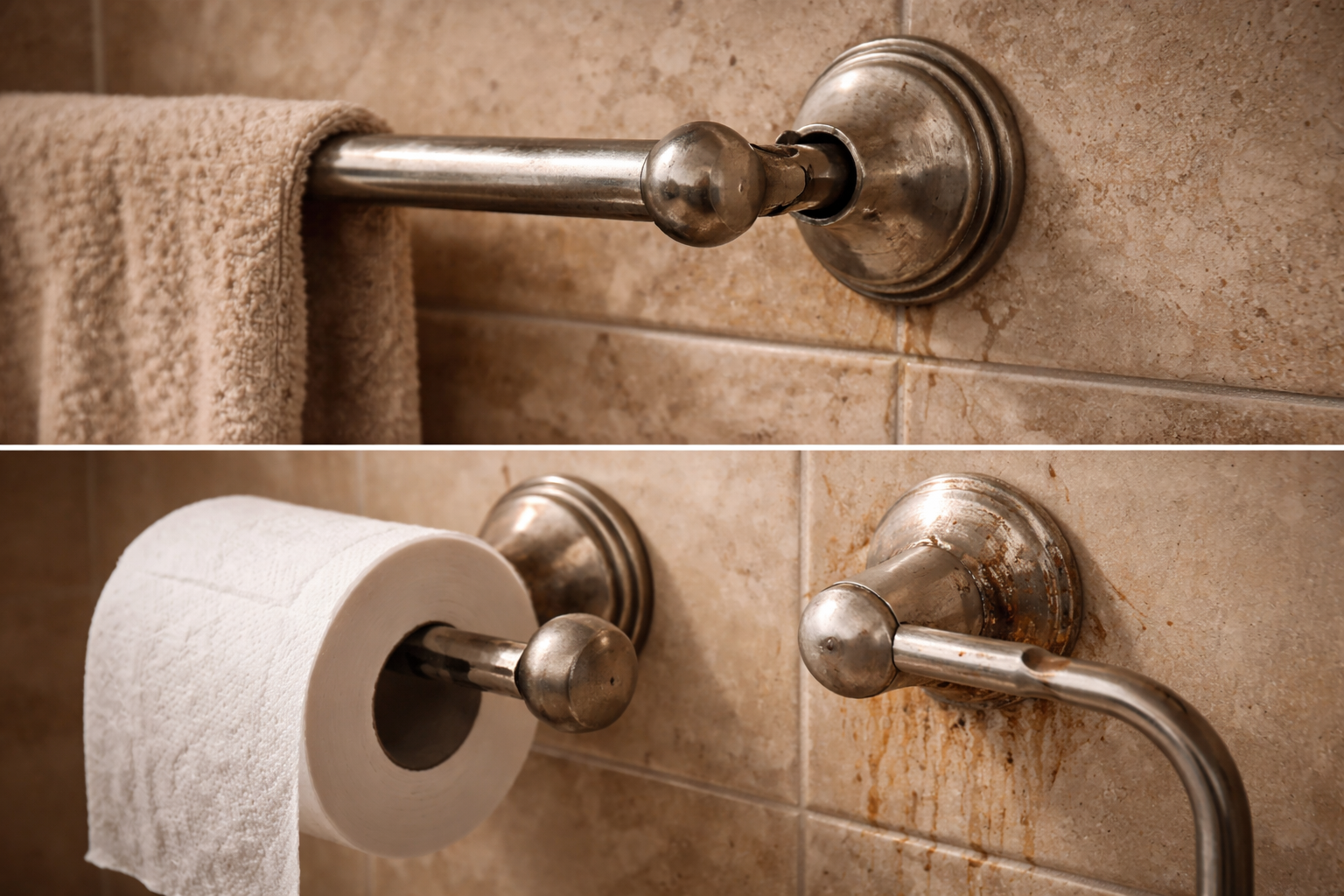
Visible deterioration indicates replacement time. Tarnished, pitted, or peeling finishes look unsightly and signal material failure. Loose mounting that cannot be tightened suggests stripped screws or wall anchor failure. Broken spring mechanisms in toilet paper holders, sagging towel bars, or hooks that no longer support weight all require attention. Rust formation, particularly in humid bathroom environments, indicates poor-quality materials that will continue degrading.
Style Updates and Remodel Timing
Hardware updates often accompany larger bathroom renovations to ensure finish coordination with new faucets, mirrors, and lighting. A shiny chrome towel bar clashes with matte black faucets. Ornate traditional hardware looks out of place in minimalist modern bathrooms. Even without full renovation, updating dated hardware provides a fresh look at minimal expense. Many homeowners replace hardware when moving into a new home to personalize the space and eliminate worn pieces left by previous occupants.
Types of Bathroom Hardware
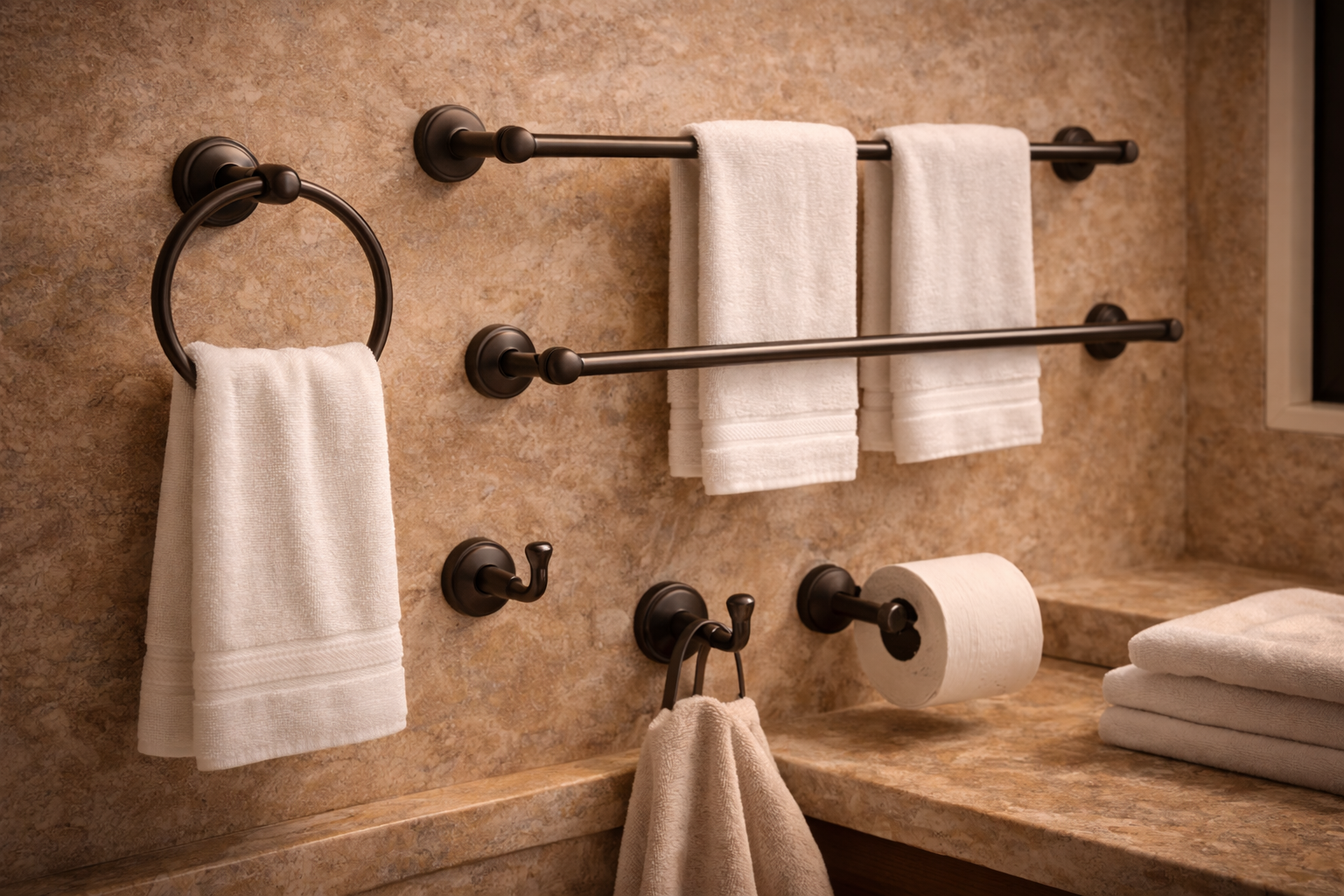
Bathroom hardware categories serve distinct functions while offering design flexibility. Understanding the options helps homeowners select pieces that meet practical needs and complement the bathroom’s style. Each hardware type comes in multiple sizes, styles, and mounting configurations. For layout and clearance planning, many designers reference NKBA planning guidelines.
Towel Storage Hardware
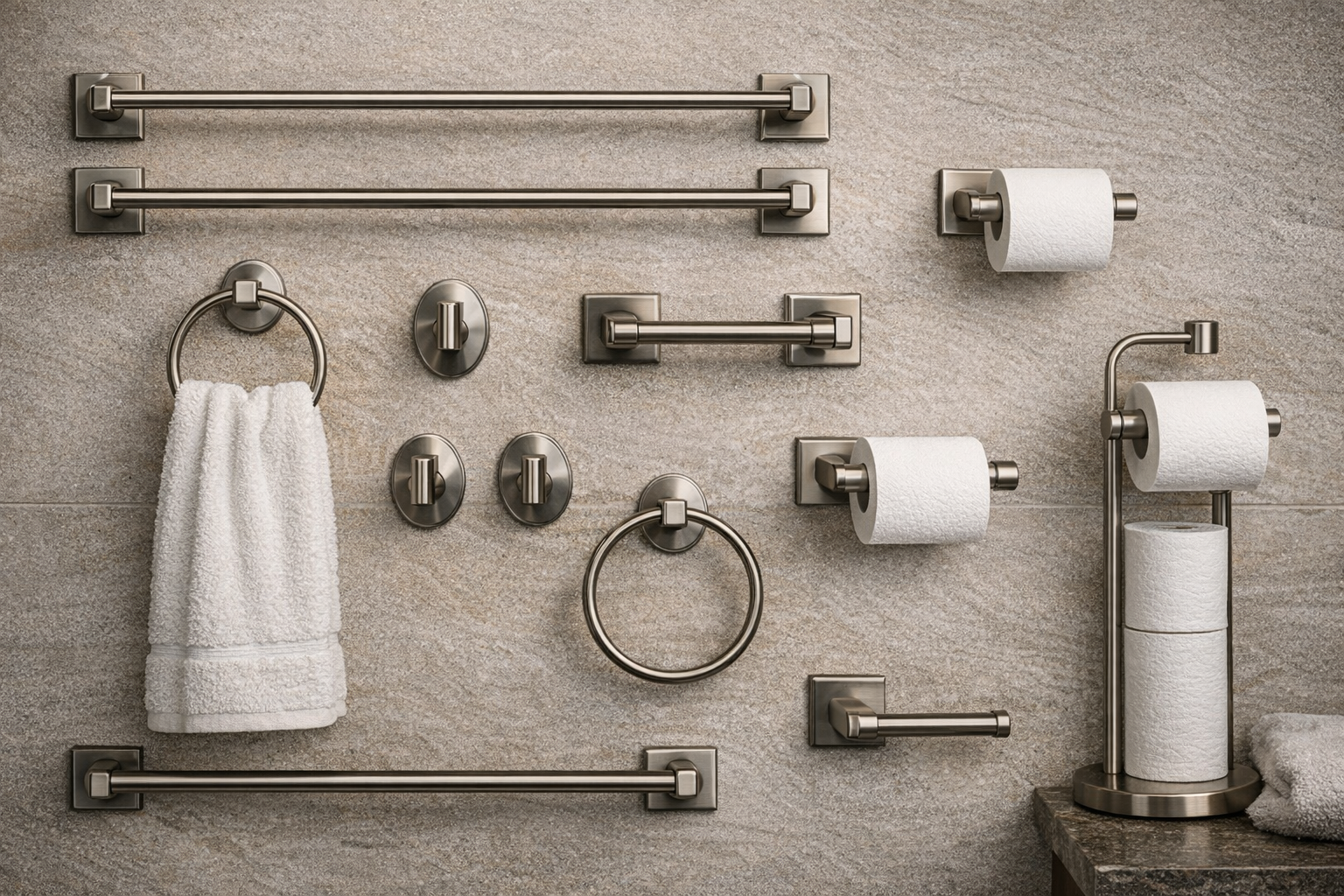
Towel bars provide straight hanging surfaces for bath towels, available in lengths from eighteen to thirty inches. Double towel bars stack two bars vertically, maximizing capacity in limited wall space. Towel rings offer compact hand towel storage near sinks. Towel hooks take minimal space and accommodate multiple towels layered together. Heated towel bars warm towels while drying them faster, requiring electrical connections. The choice depends on available wall space, household size, and personal preference for bar versus hook storage.
Specialty and Safety Hardware
Robe hooks mount on walls or doors, providing convenient hanging for robes, clothing, or towels. Toilet paper holders come in wall-mounted, recessed, or free-standing designs with various spindle mechanisms. Grab bars install near toilets and in showers to support accessibility and aging-in-place needs, requiring secure mounting into wall studs. Shower caddies, soap dishes, and toothbrush holders complete the hardware collection, with options for wall-mounted, suction, or countertop placement.
Bathroom Hardware Styles and Finishes
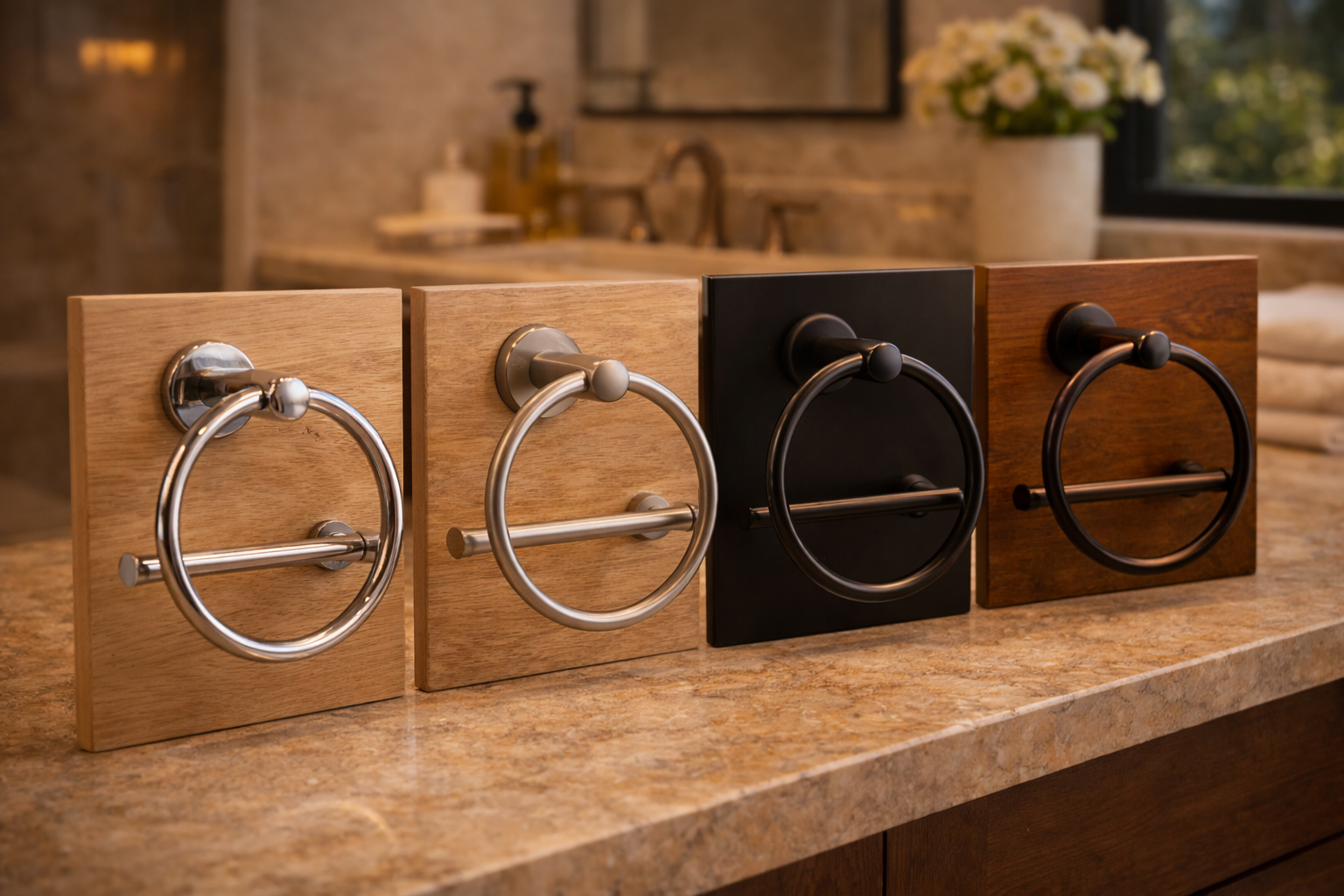
Hardware style and finish significantly impact bathroom aesthetics. The right combination complements faucets, lighting, and cabinetry while expressing personal taste. Consistent finish selection throughout the bathroom creates professional, cohesive appearance.
Design Style Categories
Contemporary hardware features clean lines, geometric shapes, and minimal ornamentation. Traditional styles incorporate curved elements, decorative details, and classic proportions. Transitional designs blend contemporary and traditional elements for versatile appeal. Industrial styles expose mechanical fasteners and use raw, utilitarian forms. Modern farmhouse combines rustic warmth with updated simplicity. Selecting hardware that matches the bathroom’s overall design direction ensures visual harmony rather than stylistic confusion.
Finish Options and Coordination
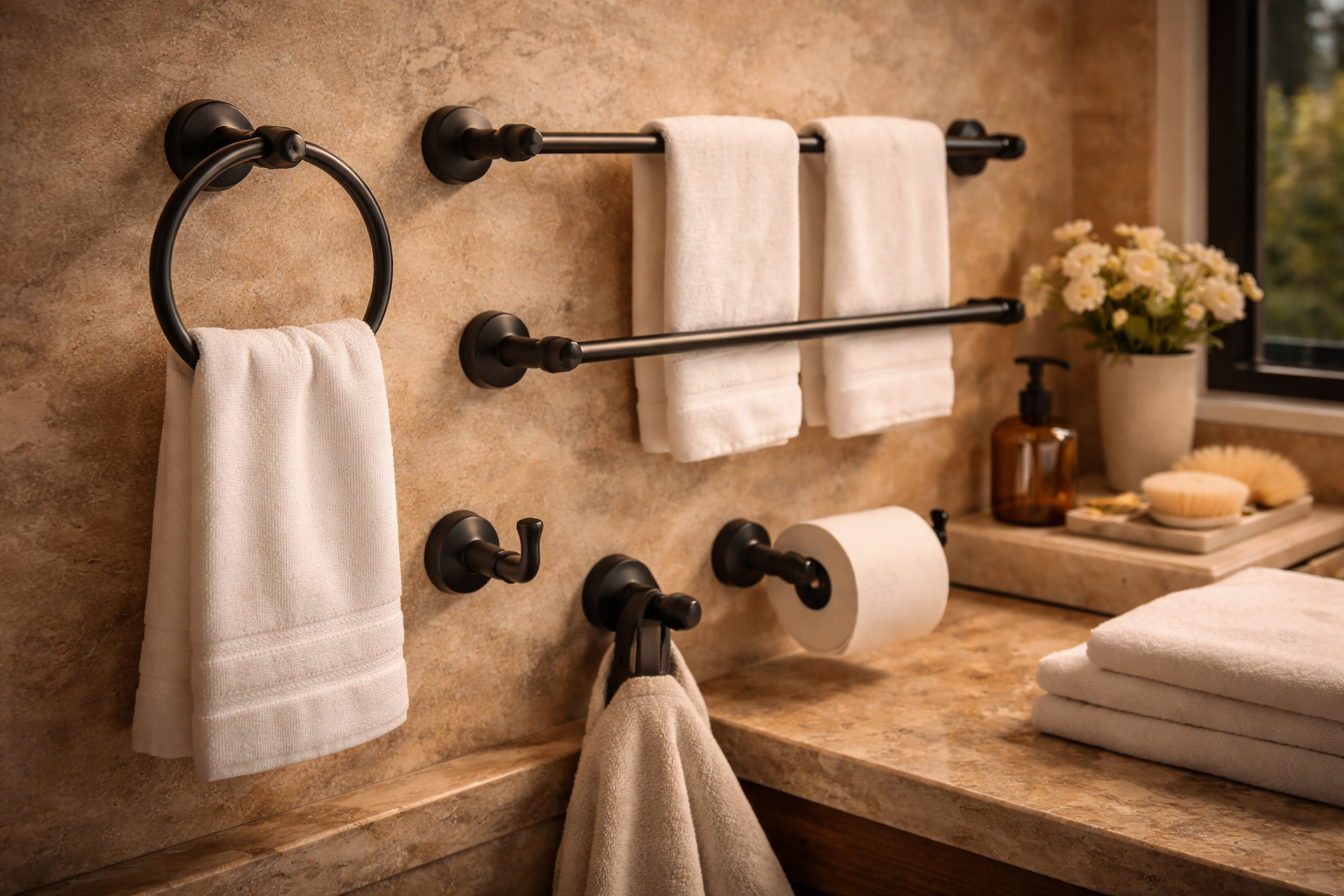
Chrome offers bright, reflective surfaces that suit contemporary spaces and clean easily. Brushed nickel provides warmer, softer appearance that resists water spotting. Matte black creates dramatic contrast and modern sophistication. Oil-rubbed bronze and antique brass add traditional warmth with dark, rich tones. Brushed gold and champagne bronze introduce luxury and elegance. Polished nickel offers chrome’s brightness with warmer undertones. Matching hardware finishes to faucets, shower fixtures, lighting, and cabinet pulls creates unified design. Intentional mixing requires careful consideration to avoid chaotic appearance.
Bathroom Hardware Materials
Hardware material quality determines durability, corrosion resistance, and long-term appearance. Bathroom humidity challenges lesser materials, making construction quality particularly important. Understanding material differences helps homeowners distinguish between budget options and lasting investments.
Premium and Standard Materials
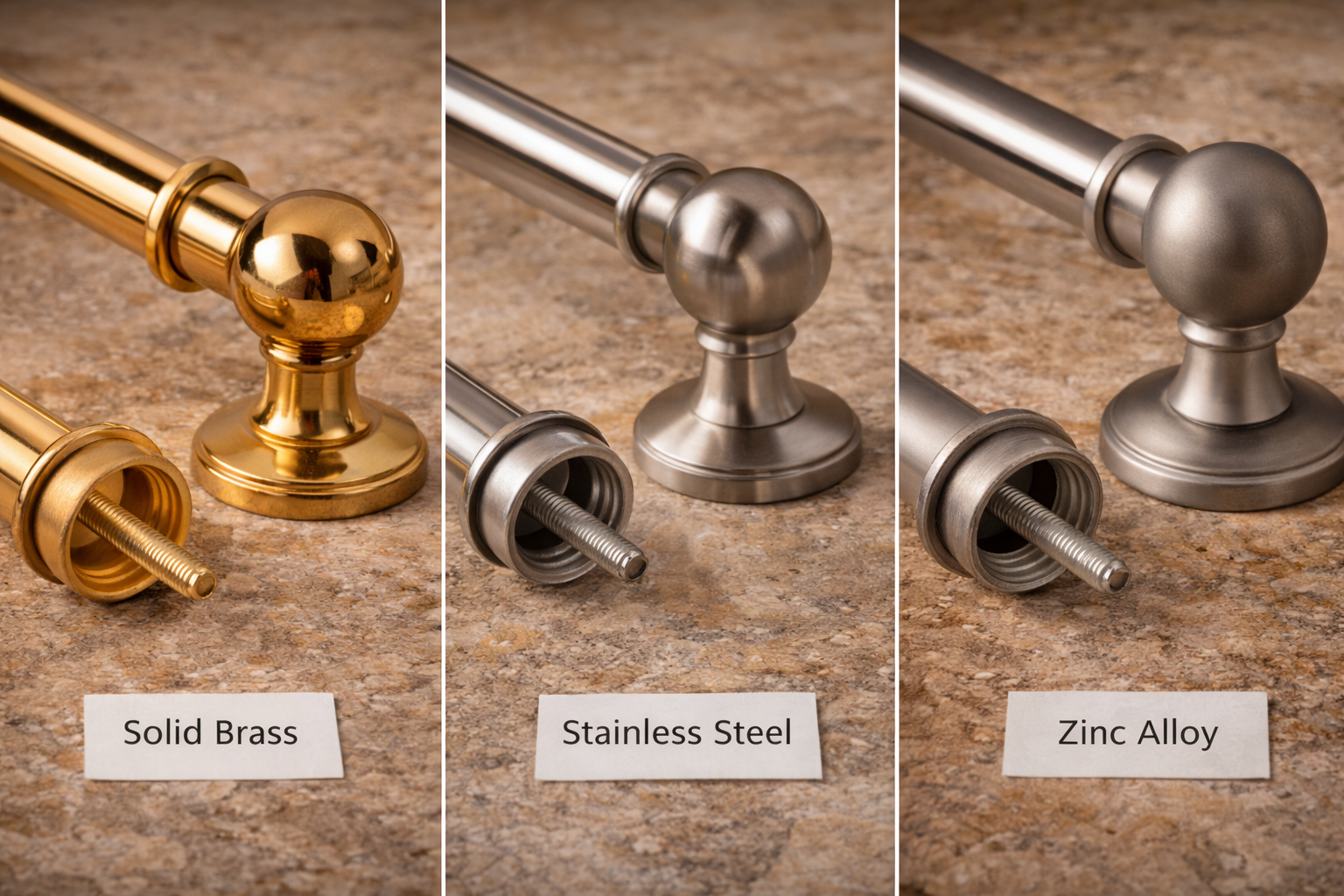
Solid brass represents the premium choice for bathroom hardware, offering exceptional durability, corrosion resistance, and substantial feel. Brass hardware lasts decades and maintains finish integrity. Stainless steel provides excellent corrosion resistance at moderate price points, particularly grades 304 and 316. Zinc alloy offers budget-friendly alternatives though less durable in humid environments. Plastic and aluminum hardware costs least but degrades quickly, showing wear within months of installation.
Finish Durability and Construction
Physical vapor deposition finishes bond molecularly with base metal, providing superior wear resistance compared to plated or painted alternatives. Powder coating offers durable matte finishes that resist chipping. Quality hardware uses solid construction with metal mounting brackets rather than plastic components that crack under stress. Weight indicates material quality, with solid brass pieces feeling substantially heavier than zinc or aluminum equivalents. Check mounting hardware included, quality pieces provide appropriate screws and wall anchors for secure installation.
Bathroom Hardware Features
Beyond basic function, bathroom hardware offers features improving convenience, safety, and user experience. These upgrades address specific needs from accessibility to comfort. Evaluating which features justify additional cost depends on household requirements.
Heated and Smart Hardware
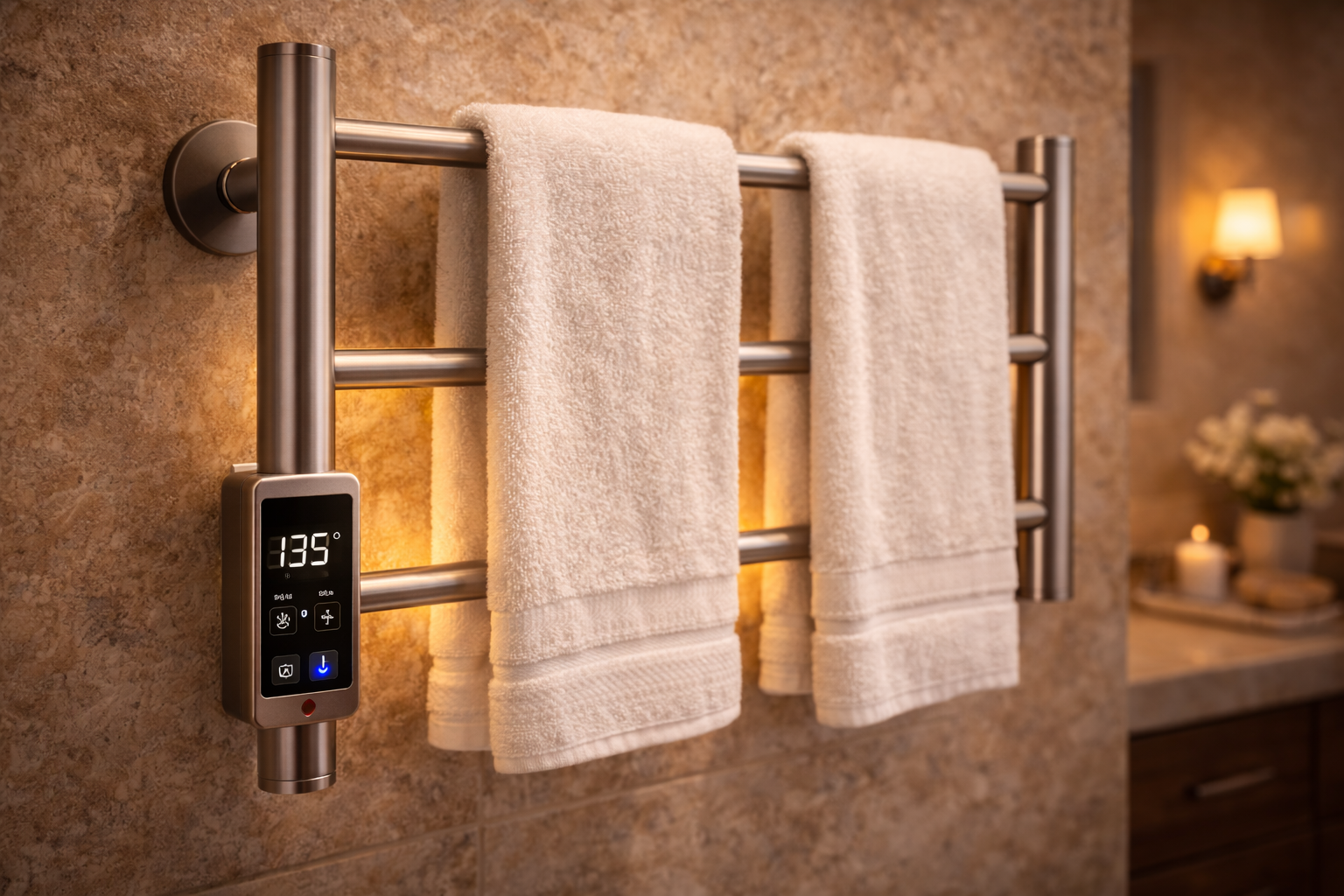
Heated towel bars warm towels while accelerating drying, reducing mildew and adding comfort. Hardwired models provide consistent heat while plug-in versions offer easier installation. Timers and thermostats control energy consumption. Some premium models include WiFi connectivity for smartphone control. Smart toilet paper holders monitor roll levels and alert when replacement needed. These technologies add convenience but increase cost and complexity.
Accessibility Features
Grab bars support safe bathroom use for elderly or mobility-impaired individuals. Quality grab bars support substantial weight when properly installed into studs. Folding or flip-up designs provide support when needed while staying out of the way when not in use. ADA-compliant dimensions ensure appropriate placement and sizing. Textured surfaces improve grip security. Installing grab bars during initial construction or renovation costs less than retrofitting later and supports aging-in-place goals. For layout and clearance planning, many designers reference NKBA planning guidelines.
Bathroom Hardware Installation
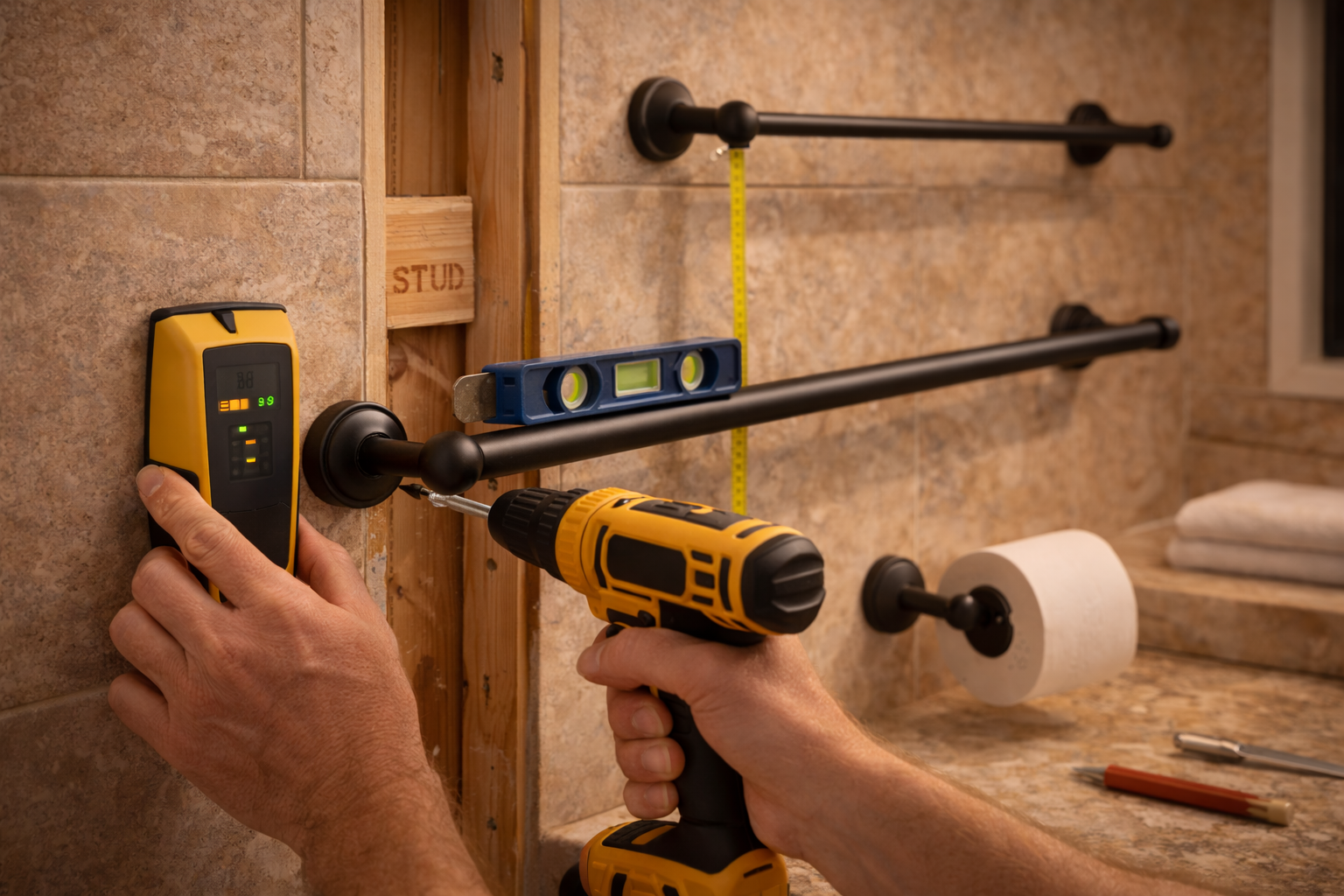
Installing bathroom hardware requires proper tools, accurate measurements, and attention to wall construction. While most homeowners handle basic hardware installation, some situations benefit from professional expertise. Correct installation ensures secure mounting, proper function, and lasting performance.
Mounting Methods and Wall Types
Hardware mounting into wall studs provides the most secure attachment, particularly for grab bars and heavy towel bars. When studs are not available at desired locations, toggle bolts or molly bolts anchor into drywall, though with reduced weight capacity. Tile surfaces require carbide drill bits and patience to avoid cracking. Some hardware includes adhesive mounting options for lightweight items on smooth surfaces, though mechanical fasteners remain more reliable long-term.
Placement Guidelines
Towel bars typically install forty-eight inches from the floor for adults, with lower placement for children. Rings mount slightly lower near sinks for hand towels. Toilet paper holders position twenty-six inches from the floor and slightly forward of the toilet bowl front. Robe hooks place at eye level or slightly above for easy reach. Grab bars require specific ADA placement near toilets and in showers for effective support. Measuring carefully before drilling prevents misplaced holes that are difficult to conceal.
Bathroom Hardware Cost Factors
Bathroom hardware prices range from budget-friendly basics to luxury designer collections. Understanding cost drivers helps homeowners allocate budget effectively across multiple pieces and prioritize where quality matters most.
Price Tiers and Quality Levels
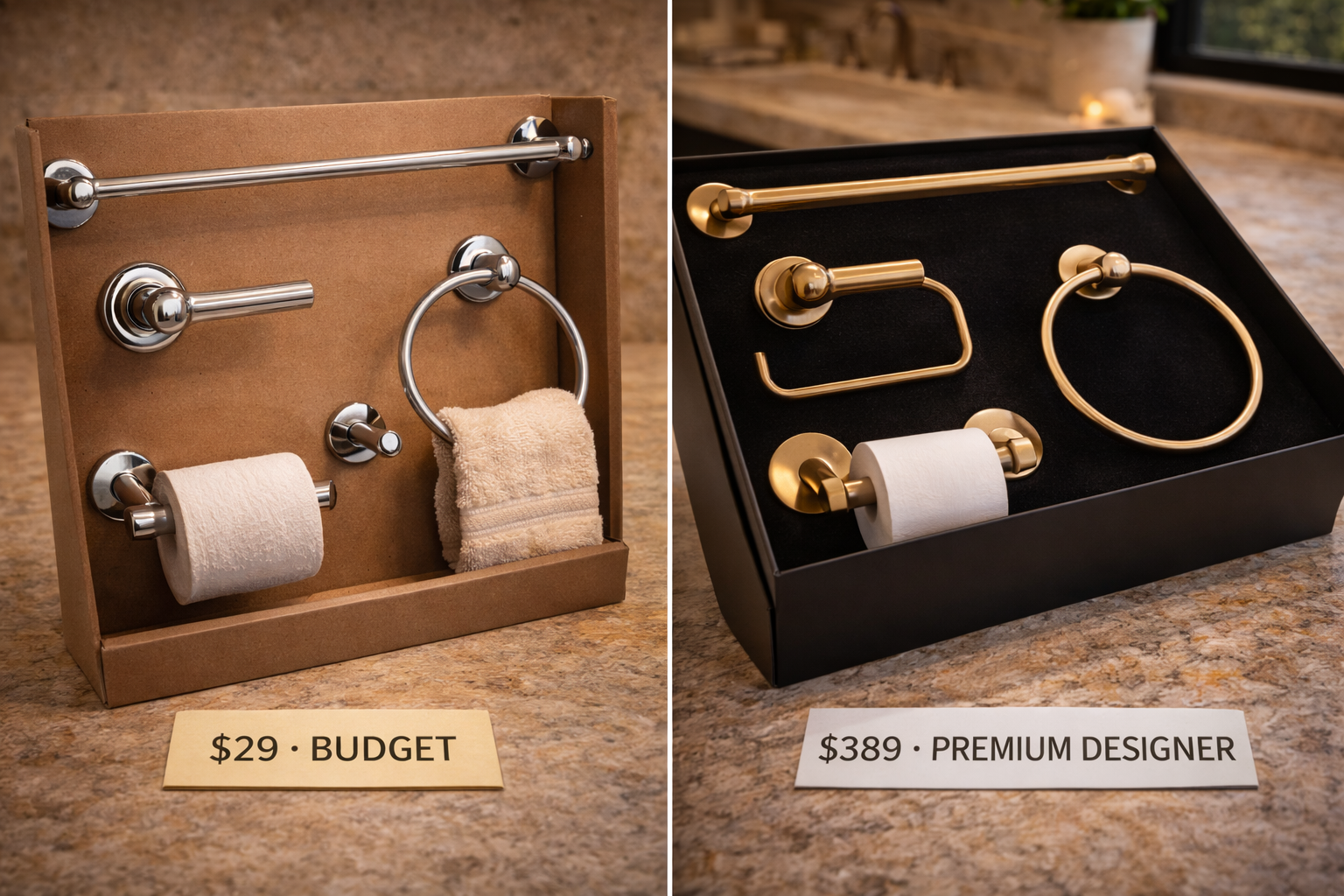
Budget hardware sets cost twenty to fifty dollars, typically using zinc alloy with basic finishes and limited durability. Mid-range options from fifty to one hundred fifty dollars feature better materials, more finish choices, and improved construction. Premium hardware from one hundred fifty to four hundred dollars offers solid brass construction, designer styling, and superior finishes. Luxury collections exceeding four hundred dollars provide exceptional craftsmanship, unique designs, and lifetime warranties. Individual pieces follow similar tiering, with towel bars ranging from ten dollars to two hundred dollars depending on quality.
Set vs Individual Purchasing
Hardware sets including towel bar, ring, robe hook, and toilet paper holder offer convenience and guaranteed coordination at lower cost than individual pieces. However, sets may include items not needed or desired sizes. Purchasing individual pieces allows customization of exactly what you need in preferred sizes and styles. Complete bathroom hardware typically costs between one hundred and five hundred dollars depending on quality level and piece count.
Common Bathroom Hardware Mistakes
Hardware selection and installation errors create functional problems, visual disappointment, and potential safety issues. Avoiding common mistakes ensures satisfaction with both appearance and performance.
Selection and Coordination Errors
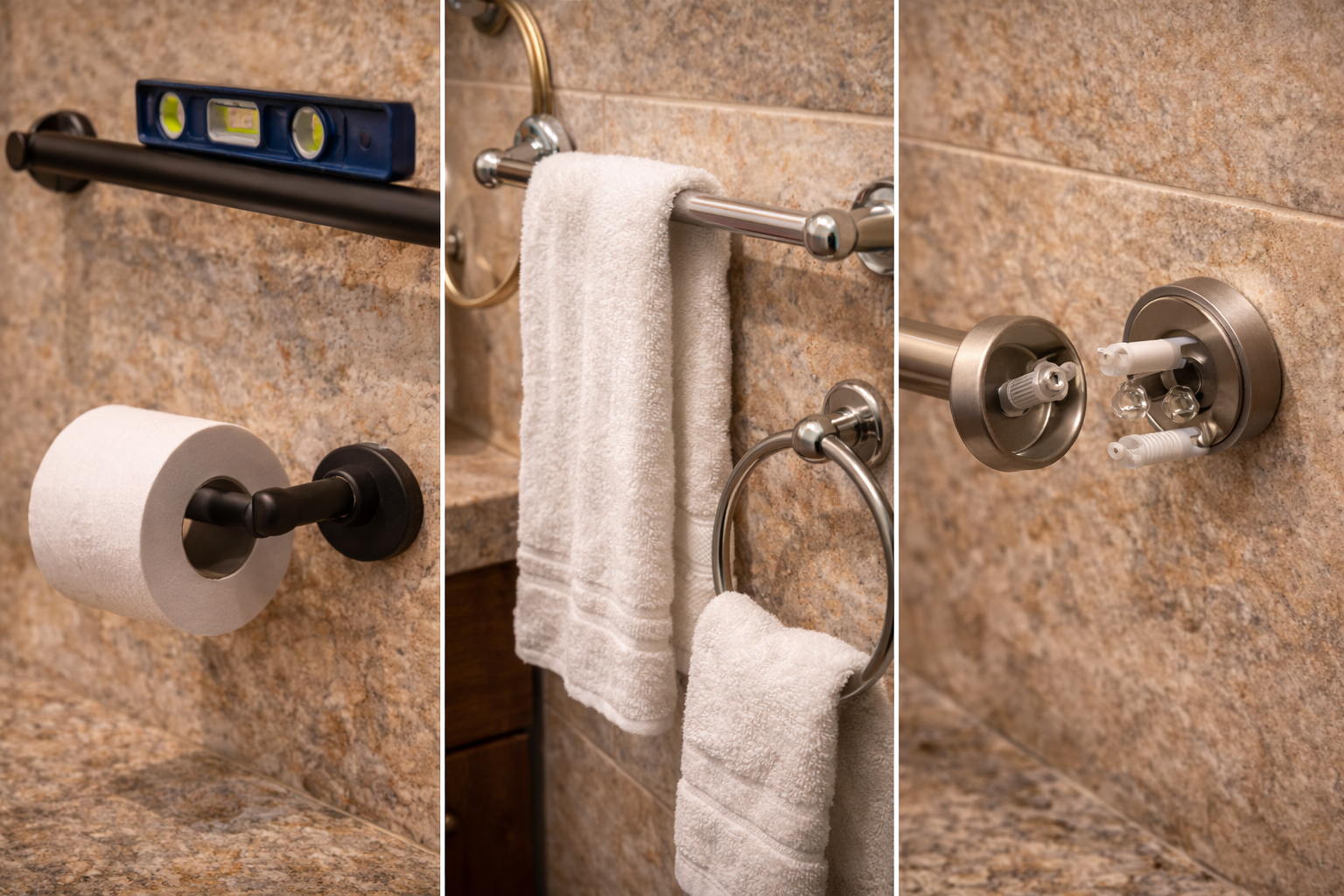
Choosing mismatched finishes creates visual discord that undermines bathroom design. Selecting hardware without considering existing faucets and lighting forces compromise or additional replacement. Ignoring size requirements leads to towel bars too short for bath towels or toilet paper holders that do not accommodate larger rolls. Buying based on price alone often results in hardware that tarnishes, loosens, or fails within months. Efficiency planning may also benefit from ENERGY STAR guidance.
Installation Mistakes
Improper height placement causes daily inconvenience with awkward reaching. Failing to locate studs before drilling results in insecure mounting that loosens over time. Using incorrect drill bits cracks tile or damages drywall. Overtightening screws strips threads or cracks mounting plates. Poor leveling creates visibly crooked hardware that looks amateurish. Inadequate spacing between multiple pieces creates crowded appearance and functional interference.
Bathroom Hardware Planning Checklist
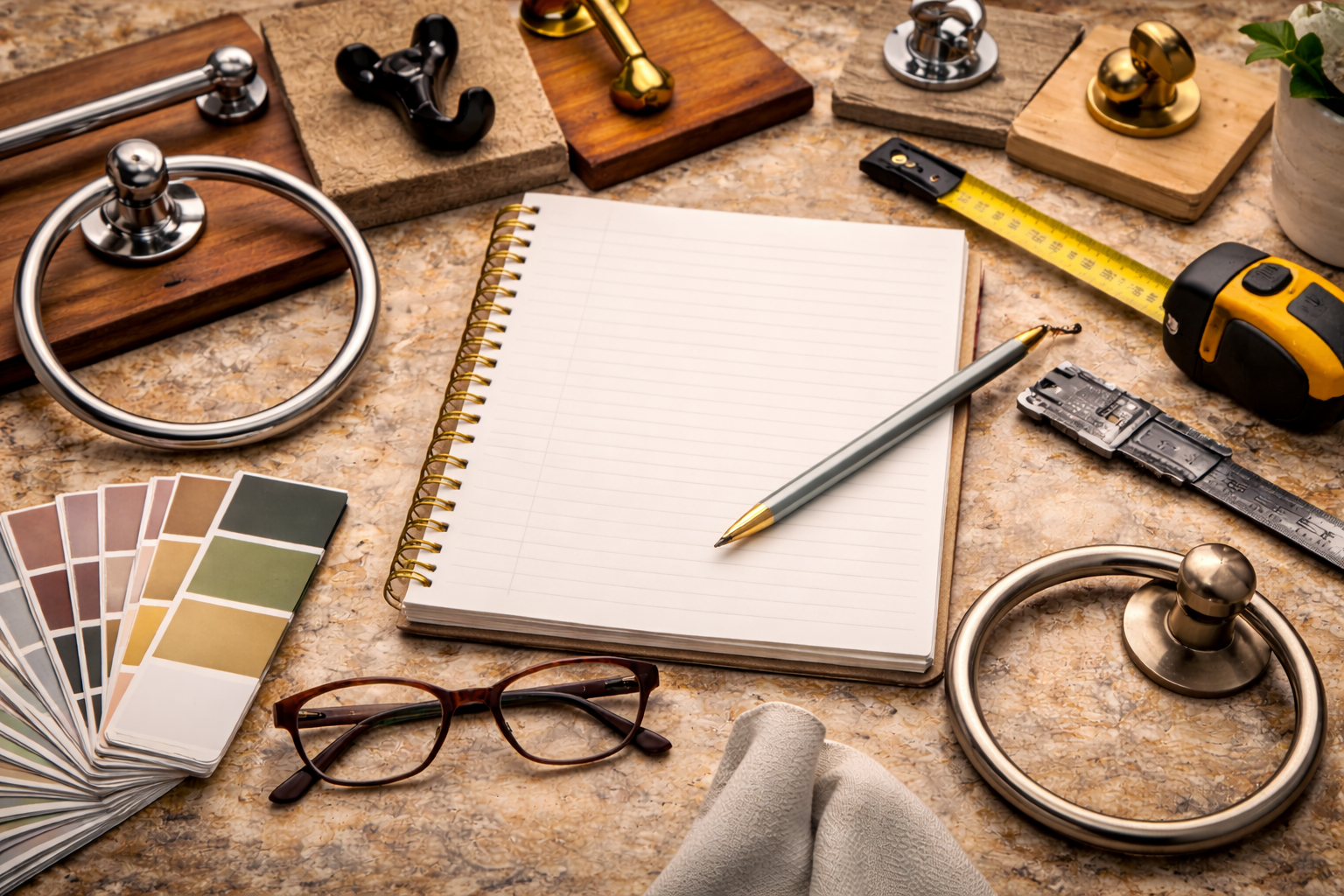
Thoughtful planning ensures your bathroom hardware selection meets functional needs, complements design vision, and fits budget constraints. Working through these considerations before purchasing prevents costly mistakes and disappointment.
Assess Your Needs and Space
Inventory existing hardware and identify what needs replacement versus what can remain. Measure available wall space for each hardware type, noting stud locations for secure mounting. Consider household size and towel usage patterns to determine appropriate bar lengths and hook quantities. Evaluate who uses the bathroom and any accessibility needs requiring grab bars or specialized hardware.
Coordinate Style and Budget
Identify finishes matching existing faucets, shower fixtures, and lighting for cohesive appearance. Choose a hardware style supporting your bathroom’s overall design direction. Establish realistic budgets accounting for quality level and piece count. Decide between convenient coordinated sets or customized individual pieces. Research brands offering appropriate warranty coverage and replacement parts availability for long-term serviceability.
Frequently Asked Questions About Bathroom Hardware
Most bathrooms need at minimum a towel bar or ring for hand drying and a toilet paper holder. Additional pieces depend on space and preferences. Robe hooks add convenience for hanging garments. Extra towel bars accommodate households with multiple users. Soap dishes and toothbrush holders keep countertops organized. Shower caddies manage bathing supplies. Grab bars support accessibility needs. Prioritize essential pieces first, then add accessories as space and budget allow.
Towel bars typically install forty-eight inches from the floor for adult users. Towel rings mount slightly lower, around forty-four inches, for easy hand towel access near sinks. Toilet paper holders position twenty-six inches from the floor and slightly forward of the toilet bowl front. Robe hooks place at eye level or sixty to sixty-six inches for comfortable reach. Adjust heights for children’s bathrooms or specific household needs. Always measure carefully before drilling to avoid misplaced holes.
Sets offer convenience, guaranteed finish matching, and lower cost per piece than buying individually. However, sets may include items you don’t need or wrong sizes for your space. Individual purchasing allows customizing exactly what you need in preferred sizes and styles. If choosing individual pieces, buy from the same manufacturer and finish line to ensure color consistency. Mixing brands even within the same finish name often reveals slight color variations that look mismatched.
Solid brass offers the best durability and corrosion resistance, lasting decades with proper care. Stainless steel provides excellent value with good corrosion resistance at moderate prices. Zinc alloy suits tight budgets but shows wear sooner in humid bathroom environments. Avoid plastic and aluminum hardware regardless of price, these materials degrade quickly and feel insubstantial. For lasting satisfaction, invest in brass or quality stainless steel hardware that maintains appearance and function over time.
Ideally, purchase hardware from the same manufacturer as your faucets using their matching finish designation. Different brands’ interpretations of finish names like brushed nickel vary significantly. If mixing brands, compare physical samples under your bathroom lighting before purchasing. Chrome and matte black show least variation between manufacturers. Brushed nickel and oil-rubbed bronze vary most. When exact matching proves impossible, consider intentional contrast rather than near-match that highlights differences.
Most homeowners handle basic hardware installation with simple tools including a drill, level, screwdriver, and stud finder. The process involves marking locations, drilling pilot holes, inserting wall anchors if needed, and securing mounting brackets. Tile surfaces require carbide drill bits and patience. Grab bars demand stud mounting for safety and may warrant professional installation. If uncomfortable with tools or working on tile, professional installation ensures proper mounting and protects surrounding surfaces from damage.
Loose towel bars usually indicate inadequate wall anchoring. Drywall alone cannot support much weight, mounting into studs provides secure attachment. If studs are unavailable at desired locations, use toggle bolts rated for the expected load rather than plastic wall anchors. Overtightening screws strips threads or cracks mounting plates. Check that mounting brackets remain intact without cracks. Replace deteriorated wall anchors with larger or stronger alternatives. For persistent problems, relocate to a stud location or accept professional installation.
Heated towel bars provide genuine comfort, warming towels while accelerating drying to reduce mildew. They add luxury to daily routines, particularly appreciated in colder climates. Hardwired models offer consistent performance while plug-in versions allow easier installation. Operating costs remain modest, comparable to a few light bulbs. However, they cost significantly more than standard bars and require electrical connections. Evaluate whether the comfort justifies the investment for your household and climate.
Clean regularly with mild soap and water, drying immediately with soft cloths to prevent water spots. Avoid abrasive cleaners, scrub pads, and harsh chemicals that damage finishes. For polished finishes, occasional glass cleaner restores shine. Brushed finishes hide water spots better but still benefit from regular wiping. Address loose mounting promptly before stress damages brackets or wall anchors. Follow manufacturer recommendations for specific finish types, some specialty finishes require particular care products.
Grab bars provide essential safety support for elderly individuals, those with mobility challenges, or anyone recovering from injury. They assist sitting and standing at toilets and provide stability entering and exiting showers. Even if not currently needed, installing blocking behind walls during renovation allows future grab bar installation without tile damage. For existing bathrooms, properly installed grab bars into studs support substantial weight and significantly reduce fall risk. Consider them for guest bathrooms and any household planning to age in place.