

Custom Cabinets Guide: Sizing, Storage, Design, and Cost

Custom Cabinets Guide Index
- Custom Cabinets Overview
- What Are Custom Cabinets
- When Do Custom Cabinets Make the Most Sense
- What Materials and Finishes Are Common
- How Do Custom Cabinets Improve Storage
- What Design Details Can Be Customized
- What Installation Details Matter With Custom Cabinets
- What Affects Custom Cabinet Cost
- What Mistakes Should Homeowners Avoid With Custom Cabinets
- How Should You Plan a Custom Cabinet Remodel
- Frequently Asked Questions About Custom Cabinets

Custom Cabinets Overview
Custom cabinets are built around the kitchen instead of forcing the kitchen to work around standard cabinet sizes. That makes a big difference when a remodel includes unusual wall lengths, tall ceilings, built-in appliances, awkward corners, or storage goals that stock cabinet packages cannot solve cleanly.
Why do homeowners choose custom cabinets?
They choose them when they want more control. That could mean cabinets that run exactly to the ceiling, deeper pantry storage, better drawer layouts, furniture-style island details, or a cleaner fit around windows, beams, and appliances. In a remodel, those details can make the kitchen feel planned instead of pieced together.
What is the practical benefit beyond appearance?
The biggest benefit is fit. Custom cabinets can use space that would otherwise be lost to fillers, dead corners, short upper cabinets, or awkward appliance gaps. They also allow the storage plan to match how the kitchen is actually used, whether that means more drawer space, better pantry access, or dedicated storage for small appliances.
What Are Custom Cabinets
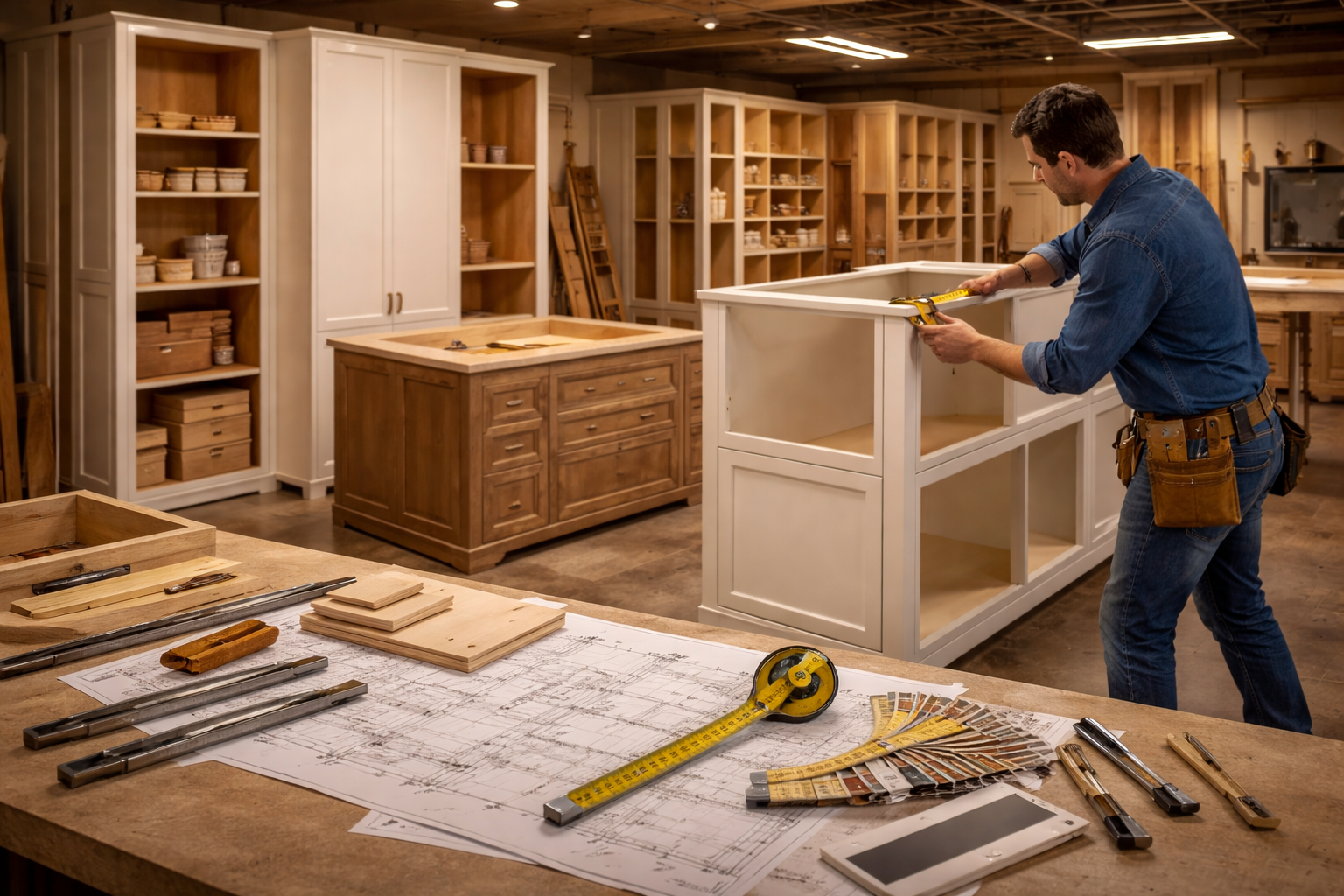
Custom cabinets are cabinets designed and built to project-specific dimensions and specifications. Instead of selecting from a narrow list of standard widths and heights, the cabinet maker or cabinet supplier can adjust cabinet sizes, panel styles, interior configurations, moldings, toe kicks, and finish details to suit the room. For water-use considerations, homeowners can review WaterSense guidance.
How are they different from stock or semi-custom cabinets?
Stock cabinets come in fixed sizes with fewer finish and design options. Semi-custom lines offer more flexibility but still work within set manufacturing limits. Custom cabinets go further, which is useful when the layout needs to be fine-tuned or the kitchen has design conditions that standard boxes do not handle well.
Does custom always mean highly decorative?
No. A custom kitchen can be very simple. In fact, some of the cleanest-looking kitchens use custom cabinets because the lines are controlled so carefully. Flat panel doors, integrated appliance panels, flush filler details, and full-height pantry runs often look better when the cabinet package is built specifically for the room.
When Do Custom Cabinets Make the Most Sense
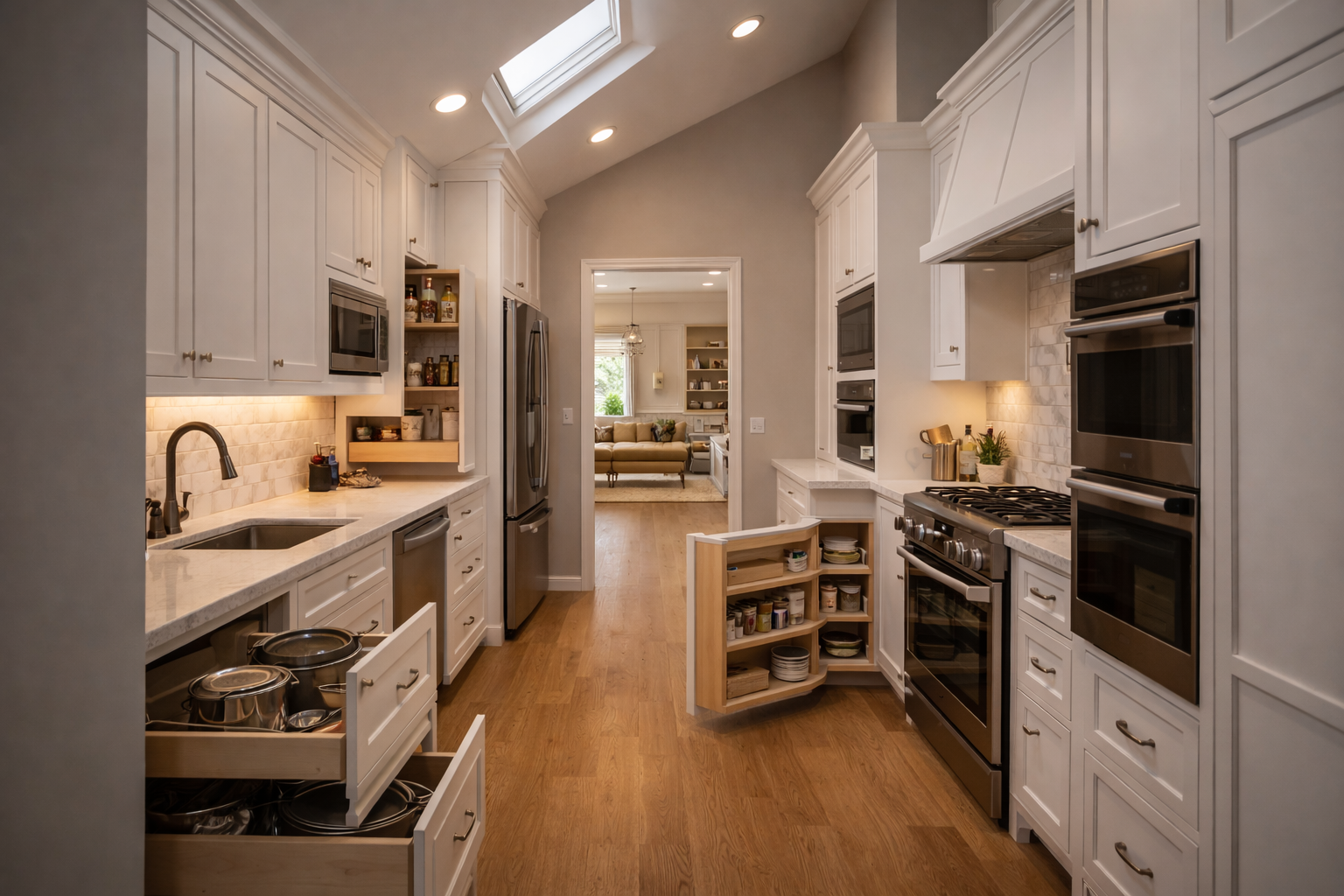
Custom cabinets make the most sense when the remodel needs a better fit than standard products can provide. That might be a kitchen with sloped ceilings, an older house with uneven walls, a narrow galley that needs every inch used well, or an open kitchen where the cabinetry has to look like built-in furniture from the living area. When the remodel includes this feature, kitchen remodeling can help homeowners understand the options in more detail.
Are they useful in small kitchens?
Yes. Small kitchens can benefit a lot because wasted inches matter more when space is tight. A custom plan can adjust cabinet depth, improve corner use, create better drawer storage, and fit appliances without leaving dead areas that a stock package would cover with wide fillers.
When might stock cabinets be enough?
If the kitchen is fairly standard, the layout is staying the same, and the homeowner does not need specialized storage or exact visual detailing, stock or semi-custom cabinets may be a more practical value choice. The right answer depends on how much the remodel needs precision versus simple replacement.
What Materials and Finishes Are Common
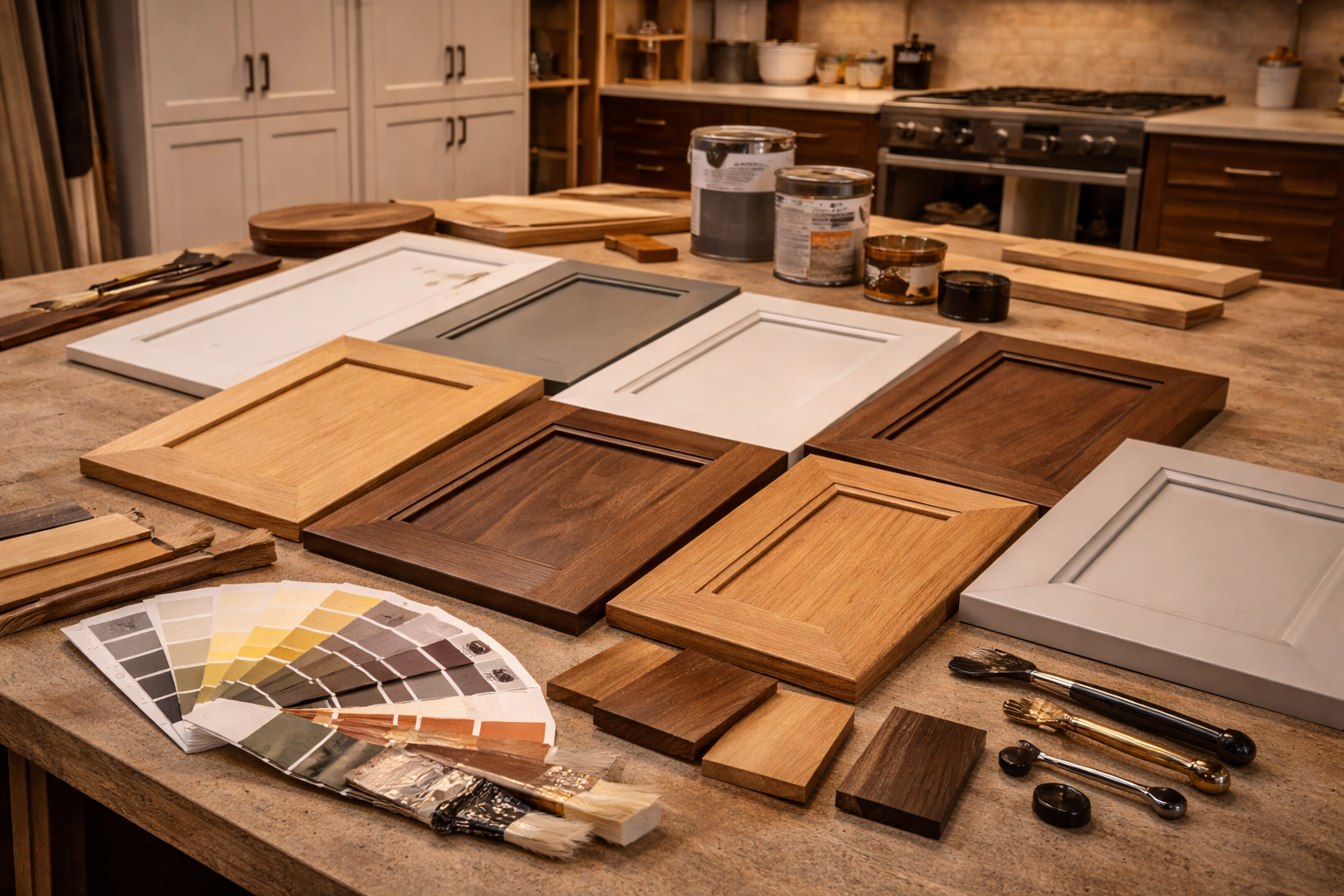
Custom cabinets can be built from several material combinations depending on budget and design goals. Common options include paint-grade hardwoods, maple, oak, walnut, cherry, plywood box construction, MDF door components for painted finishes, and engineered cores with veneer for cleaner grain consistency.
How does finish choice affect the design?
A painted finish gives the kitchen a smoother and often more architectural look, especially on flat panel or simple shaker doors. A stained or clear-finished wood surface highlights grain and makes the cabinetry feel warmer. The finish also affects maintenance, touch-up needs, and how the cabinets interact with flooring, countertops, and lighting. Homeowners comparing performance goals can review Energy Saver ventilation guidance.
What should homeowners ask before choosing materials?
They should ask what material is being used for the cabinet box, door fronts, shelves, and exposed panels; how the finish is applied; and what hardware is included. It also helps to ask how the shop handles moisture exposure around sinks, dishwasher ends, and cleanup areas where cabinet wear shows up first.
How Do Custom Cabinets Improve Storage
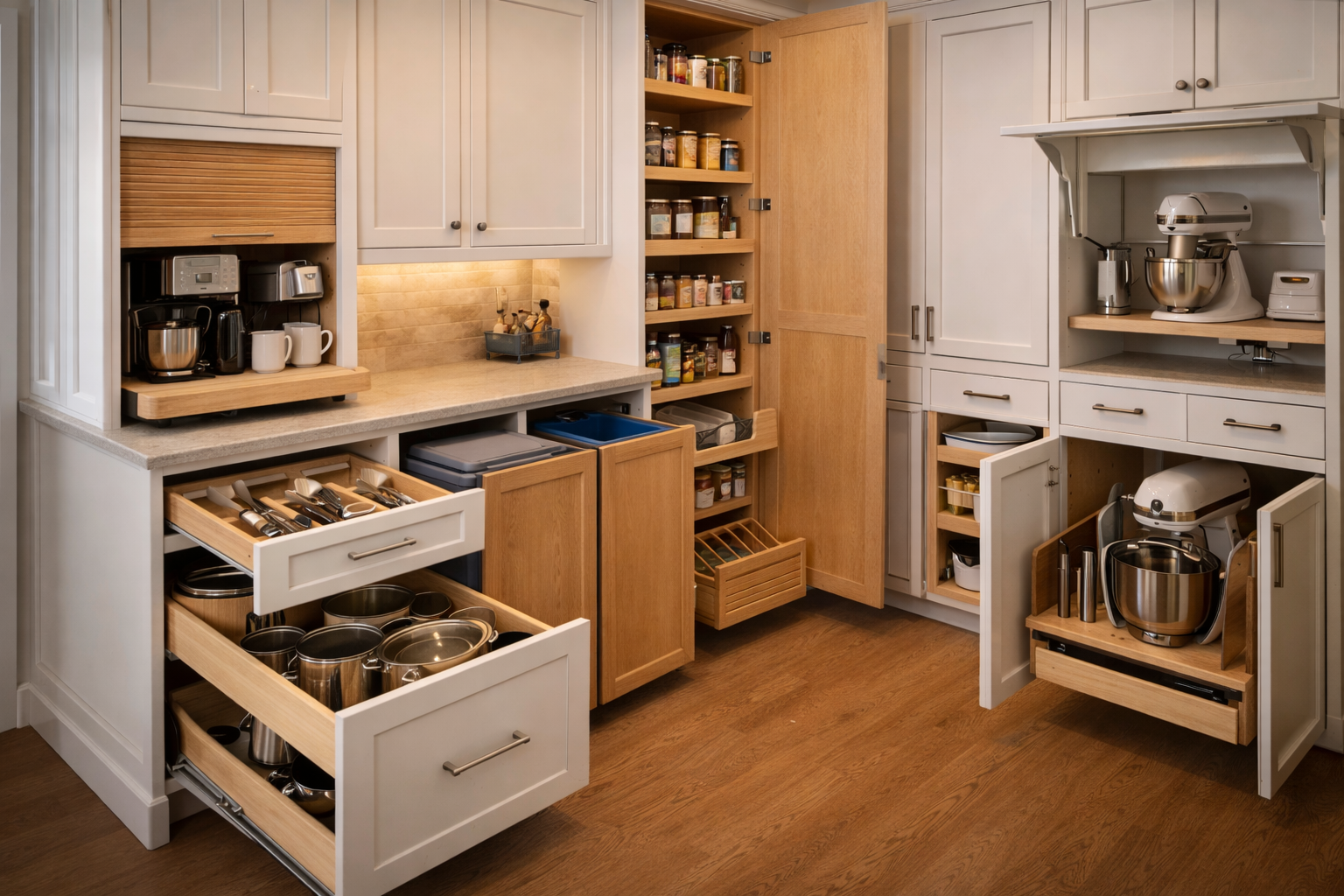
One of the strongest reasons to choose custom cabinets is to improve storage instead of simply replacing old boxes. Because the cabinets are being planned from scratch, the interior layout can be built around real kitchen habits. That means better drawer widths, better pantry use, better access to corners, and fewer wasted spaces.
Which storage upgrades are most useful?
Deep drawers for pots and pans, tray dividers, pull-out spice storage, trash and recycling pull-outs, drawer organizers near prep zones, vertical sheet pan storage, and dedicated mixer or coffee appliance storage are the upgrades homeowners tend to notice every day.
Can custom cabinets help with clutter?
Yes, if the plan is honest about what needs to be stored. A good cabinet design can hide countertop clutter by giving small appliances, food storage containers, cutting boards, and charging devices a specific home. That makes the finished kitchen easier to use and easier to keep looking clean.
What Design Details Can Be Customized
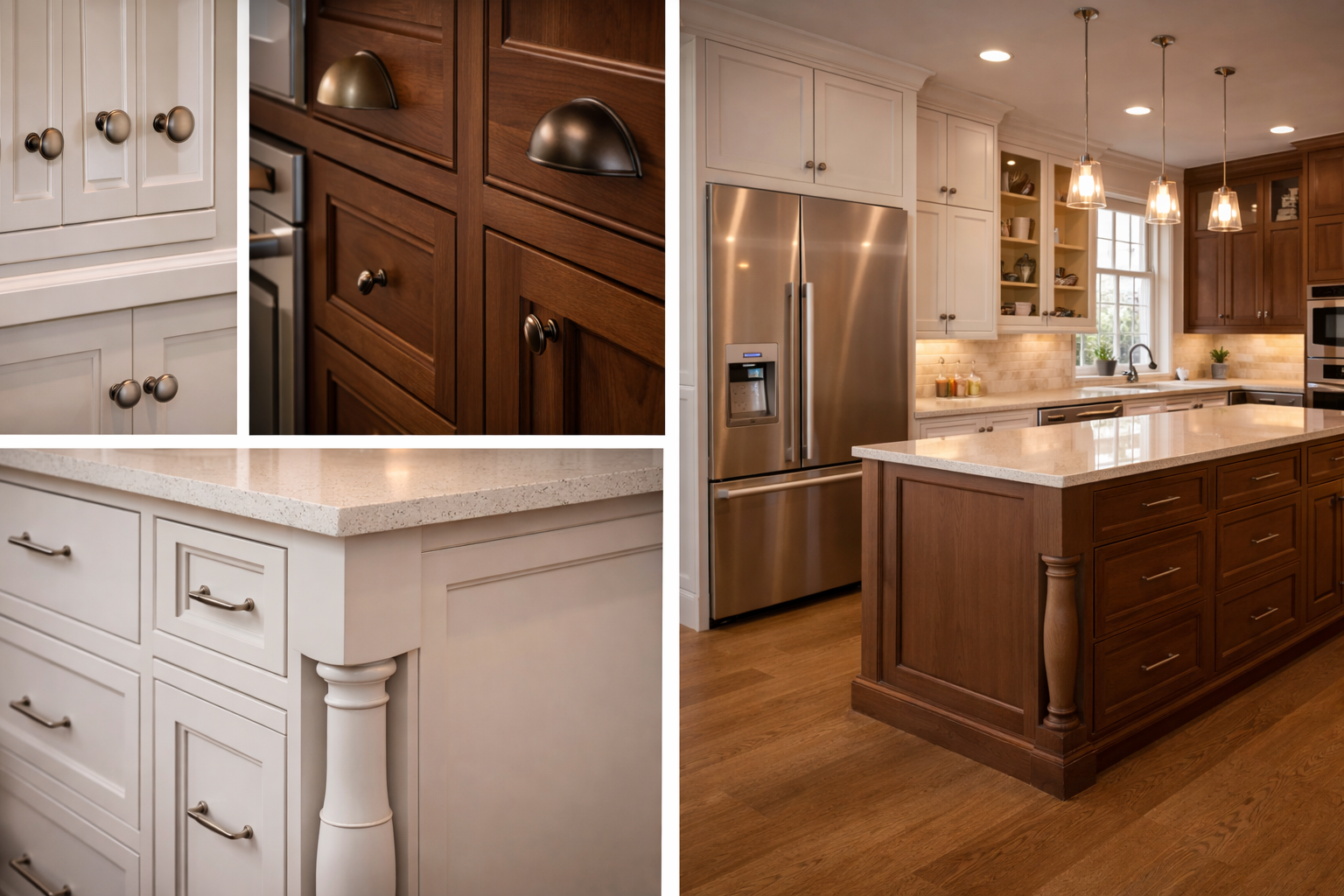
Custom cabinets allow control over more than size. Door style, drawer proportions, hardware placement, panel thickness, island detailing, appliance panels, open shelf dimensions, glass inserts, toe kick height, crown treatment, and end panel design can all be tailored to the kitchen.
Why do these details matter so much?
Because they shape how intentional the kitchen feels once it is finished. A refrigerator panel that aligns with adjacent pantry doors, an island end that matches the scale of the room, or upper cabinets that stop cleanly against a window trim package all make the remodel look more resolved. Projects with related upgrades often include choices around cabinet remodel.
Can custom cabinets be designed for a specific style?
Absolutely. They can support simple flat panel kitchens, classic inset styles, transitional painted kitchens, natural wood contemporary designs, or furniture-style islands with decorative legs and panels. The advantage is that the cabinet package can be designed to fit the whole room rather than forcing the room to fit a preset box catalog.
What Installation Details Matter With Custom Cabinets
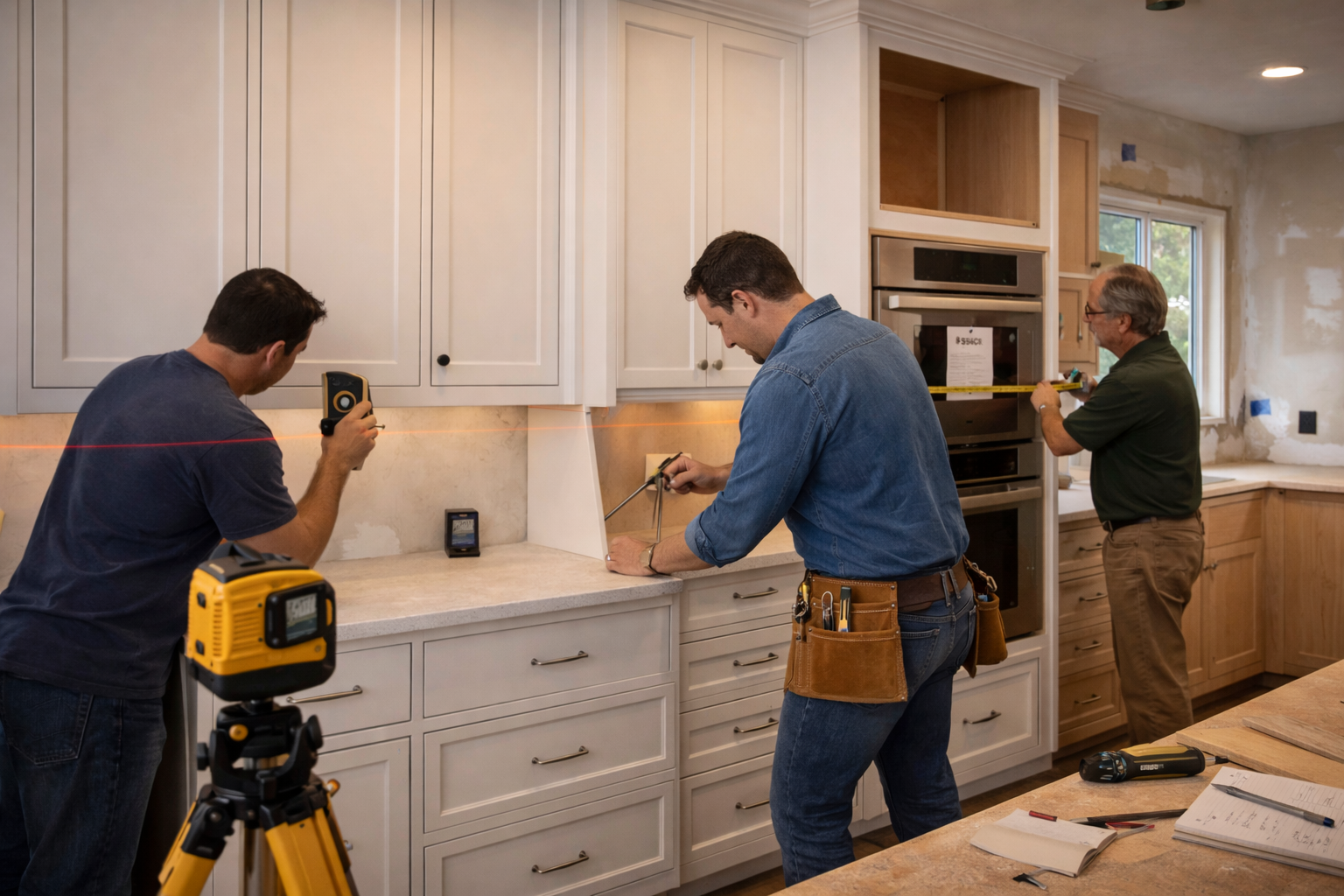
Installation matters just as much as fabrication. Custom cabinets are usually designed with tighter reveals, cleaner alignments, and more built-in visual expectations, so poor installation stands out fast. Floors need to be checked, walls need to be measured honestly, and appliance specifications need to match the final cabinet plan.
What can go wrong during installation?
Panels can land out of plane, appliance openings can be too tight, crown details can break awkwardly, and filler pieces can look like afterthoughts if the field measurements are off. In high-end kitchens, those issues are hard to ignore because the cabinetry is often the main feature in the room.
Why is field verification important?
Because houses are rarely perfectly square or level. A custom cabinet plan should account for that reality before production starts. Good installers also coordinate carefully with countertop fabricators, electricians, plumbers, and flooring crews so the finished kitchen looks intentional instead of patched together.
What Affects Custom Cabinet Cost
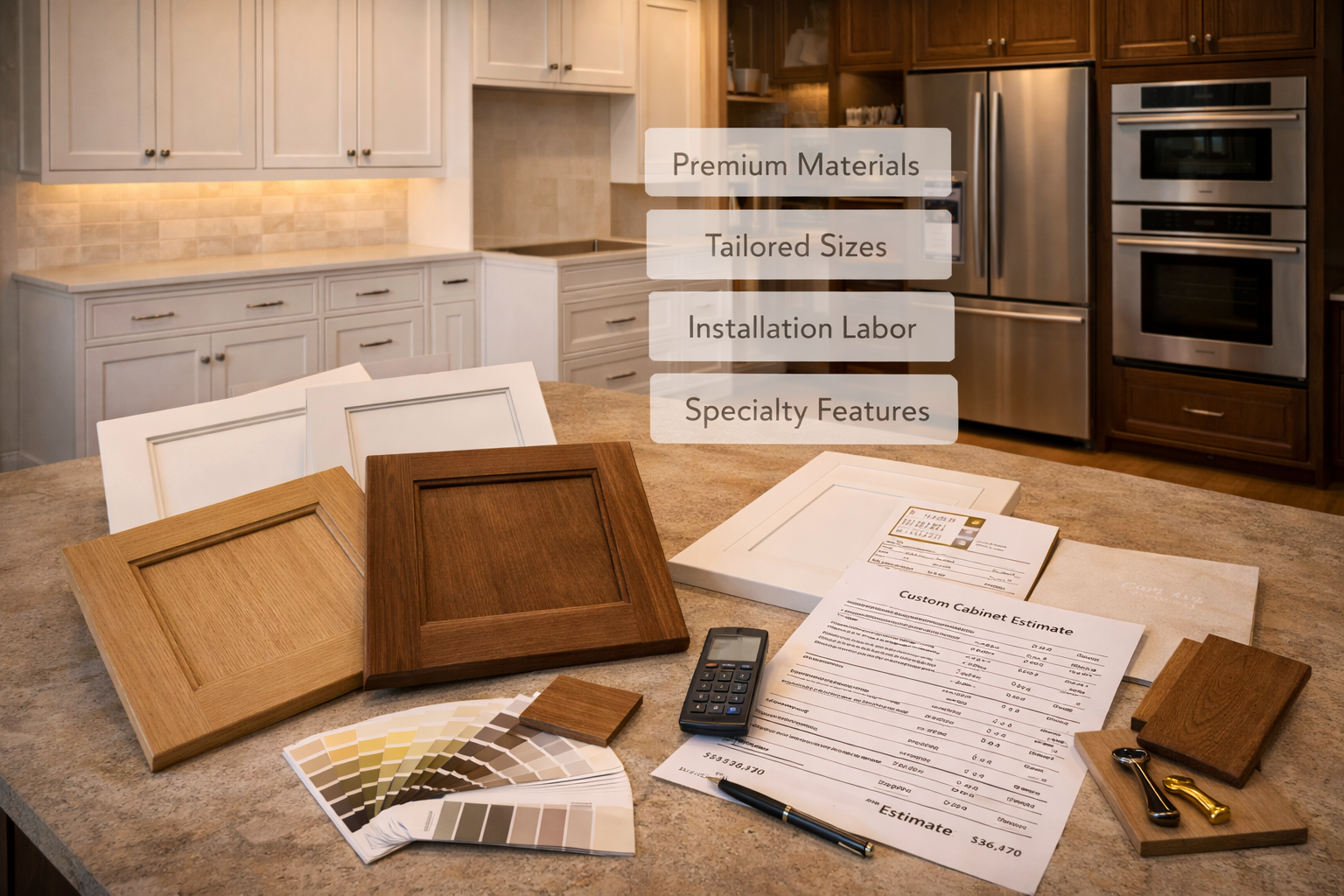
Custom cabinet cost depends on the size of the kitchen, material selection, finish process, hardware quality, interior accessories, design complexity, and installation requirements. A painted custom cabinet package for a simple kitchen will cost less than a full-height walnut veneer install with integrated appliance panels and complex pantry storage. During remodeling, it also helps to follow EPA indoor air quality guidance.
What choices increase cost most quickly?
Premium woods, inset construction, detailed finish work, heavy customization, specialty organizers, appliance integration, and large pantry walls tend to raise the price fastest. So do kitchen layouts that require a lot of site-specific problem solving or unusually careful trim and panel work.
How can homeowners keep the budget under control?
One practical approach is to spend custom dollars where fit matters most. That might mean using custom cabinetry for the island, pantry wall, or an appliance run while simplifying less visible areas. Another approach is to limit specialty inserts to the places where they will actually improve daily use.
What Mistakes Should Homeowners Avoid With Custom Cabinets
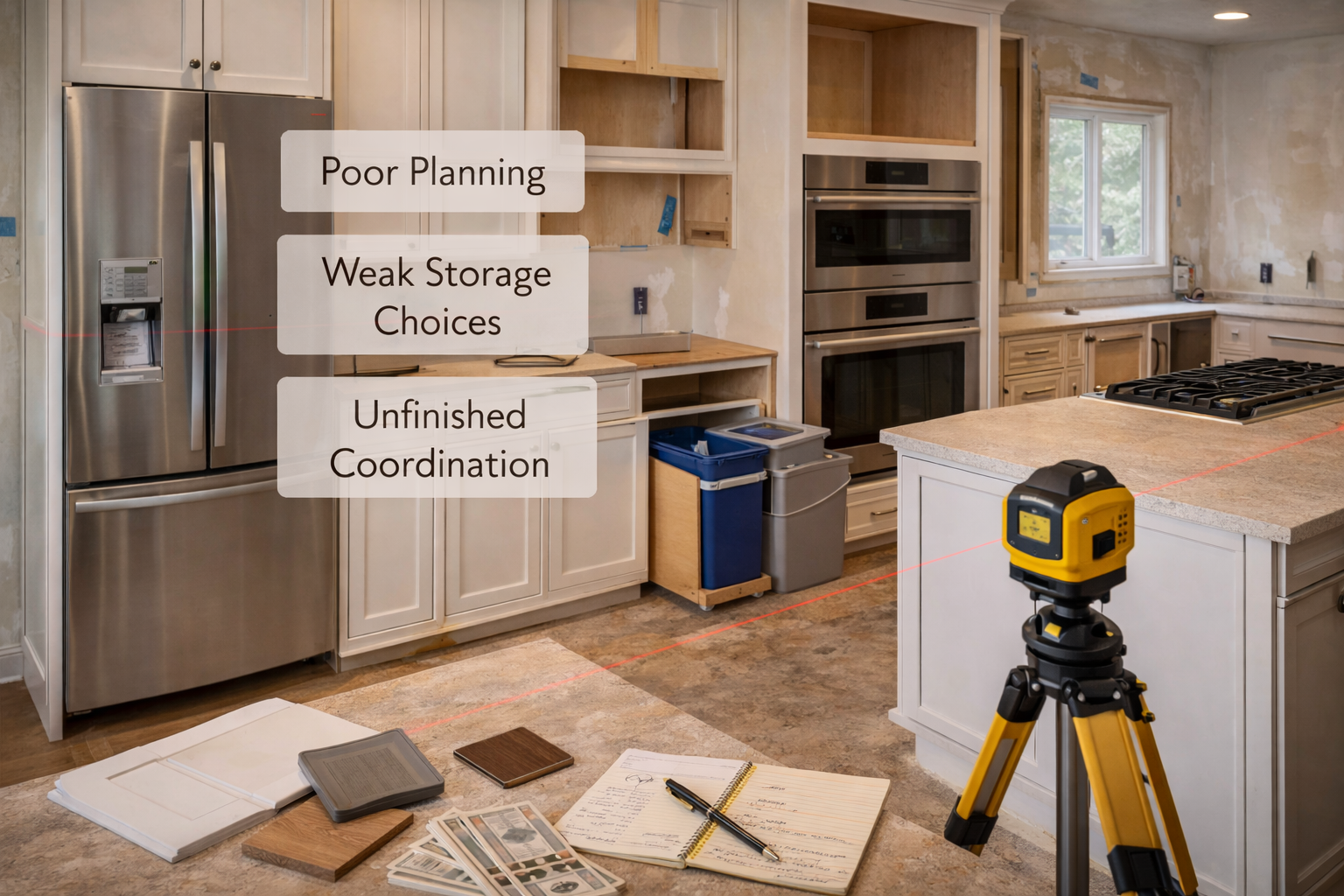
The biggest mistakes usually happen before fabrication starts. Homeowners sometimes focus on door style and finish samples without locking down appliances, storage priorities, traffic flow, or how the cabinets need to work with lighting, countertops, flooring, and trim.
What planning mistakes are common?
Ordering cabinets before appliance specs are final, forgetting about trash pull-out placement, ignoring countertop overhang details, or failing to plan enough drawers are all common mistakes. Another is paying for customization without being specific about what problems the customization is supposed to solve.
What quality checks should happen before approval?
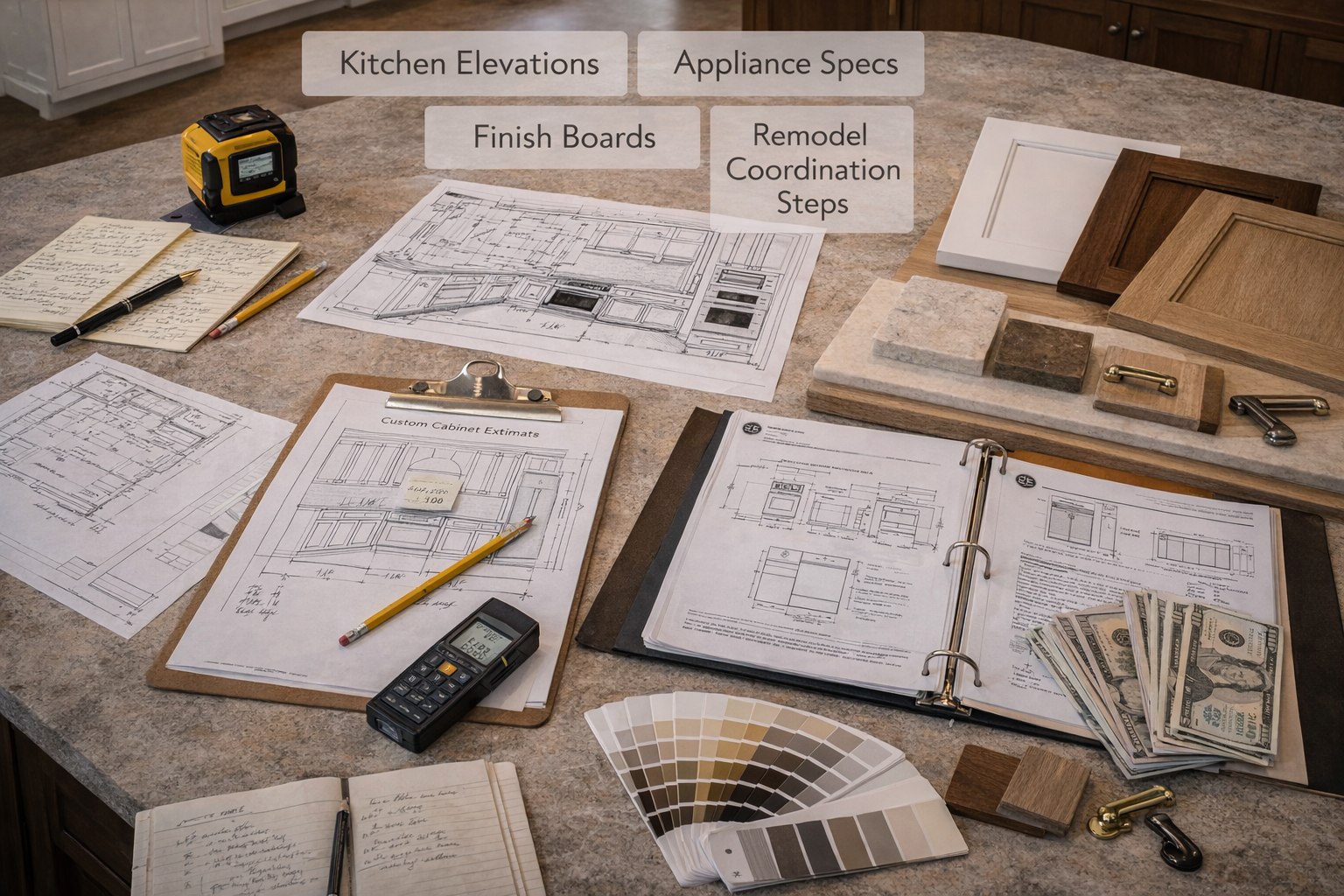
Review elevations, appliance openings, filler sizes, panel locations, shelf counts, drawer depths, and hinge sides before production begins. If the kitchen includes custom panels around a refrigerator, hood, or island seating area, those details should be shown clearly before anything is released to the shop.
How Should You Plan a Custom Cabinet Remodel
Start with the kitchen workflow, not just the cabinet style. Decide how cooking, cleanup, pantry storage, small appliances, and seating need to function. Then measure the room carefully, lock in appliance specifications, review finish direction, and build the cabinet plan around real use patterns and real site conditions.
What should be finalized before the order goes in?
Appliance sizes, sink choice, faucet reach, vent hood plan, countertop thickness, backsplash approach, lighting locations, flooring height, and trim conditions should all be decided. Those choices affect cabinet heights, filler needs, panel dimensions, and how clean the final installation looks.
When is custom cabinetry the right move?
It is the right move when the kitchen needs a better fit, a cleaner built-in look, or storage solutions that standard cabinet packages cannot deliver well. Used thoughtfully, custom cabinets can make a remodel feel more complete because the kitchen is being designed as a system rather than assembled from whatever standard sizes happen to be available.
Frequently Asked Questions About Custom Cabinets
Custom cabinets are built around the kitchen’s exact measurements, design goals, and storage needs instead of being limited to a fixed catalog of standard sizes. That allows more control over widths, heights, depths, interior storage, finish details, and how the cabinets fit unusual walls or appliances.
They can be worth it when the kitchen has awkward dimensions, the layout needs to be optimized, or the homeowner wants a specific look and storage setup that stock lines cannot deliver. In a simple kitchen with standard dimensions, semi-custom or stock cabinets may offer better value.
Yes. That is one of the common reasons homeowners choose custom cabinetry. Full-height cabinets can improve storage, reduce dust collection above upper cabinets, and give the kitchen a more finished built-in appearance.
Common choices include maple, oak, walnut, cherry, paint-grade hardwoods, and engineered cores with wood veneer depending on the finish. The right material depends on whether the goal is painted cabinetry, visible grain, budget control, or a specific stain color.
Custom cabinet lead times are usually longer than stock cabinets because the work includes detailed design, shop drawings, production scheduling, finishing, delivery, and installation coordination. The exact timeline depends on shop capacity, finish type, and overall project scope.
Yes. Custom cabinetry is often chosen specifically for storage upgrades such as spice pull-outs, appliance garages, tray dividers, drawer organizers, pull-out pantry units, trash pull-outs, and built-in charging or coffee stations.
They need careful installation because the project is usually designed with tighter tolerances and more built-in features. Leveling, reveal alignment, appliance clearances, and panel fitting all matter if the finished kitchen is supposed to look seamless.
Sometimes, but not automatically. Quality depends on the cabinet shop, materials, finish process, hardware, joinery, and installation. A well-built custom cabinet package is usually more flexible than a big-box option, but the details still need to be verified.
Yes. That is one of their biggest advantages. They can be sized for oversized refrigerators, built-in coffee systems, tall pantry walls, sloped ceilings, odd corners, and kitchen layouts where standard cabinet widths waste space.
Appliance specs, sink size, vent hood plan, countertop material, lighting layout, flooring transitions, and storage priorities should all be decided early. Those decisions affect cabinet sizing, panel details, clearances, and the overall kitchen workflow.