

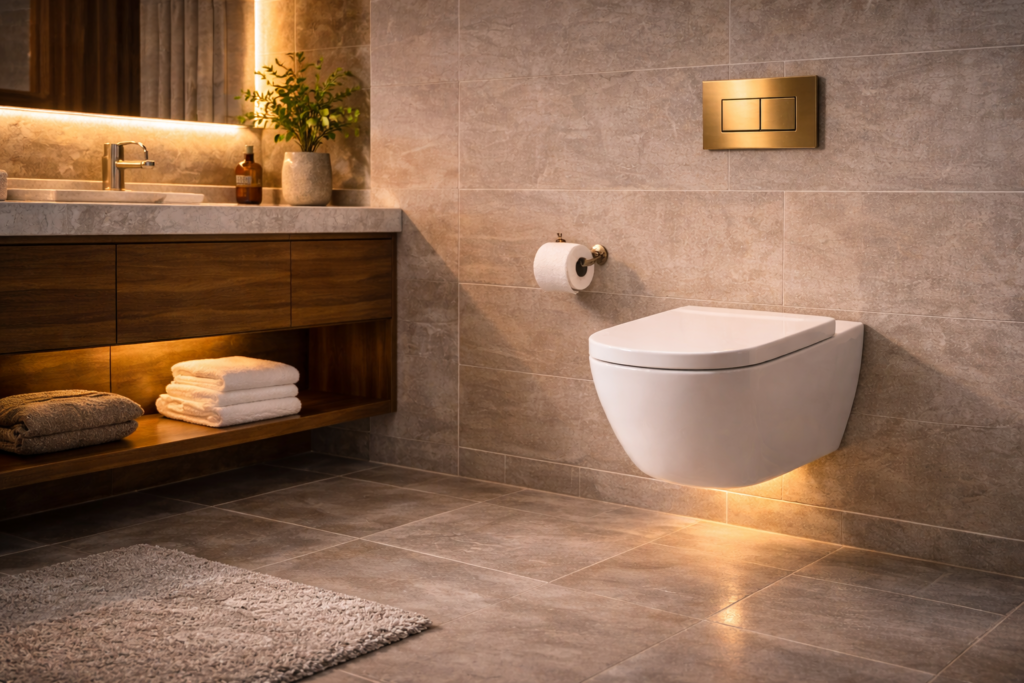
Wall-Mounted Toilet Guide: Design, Installation, Costs, and Planning
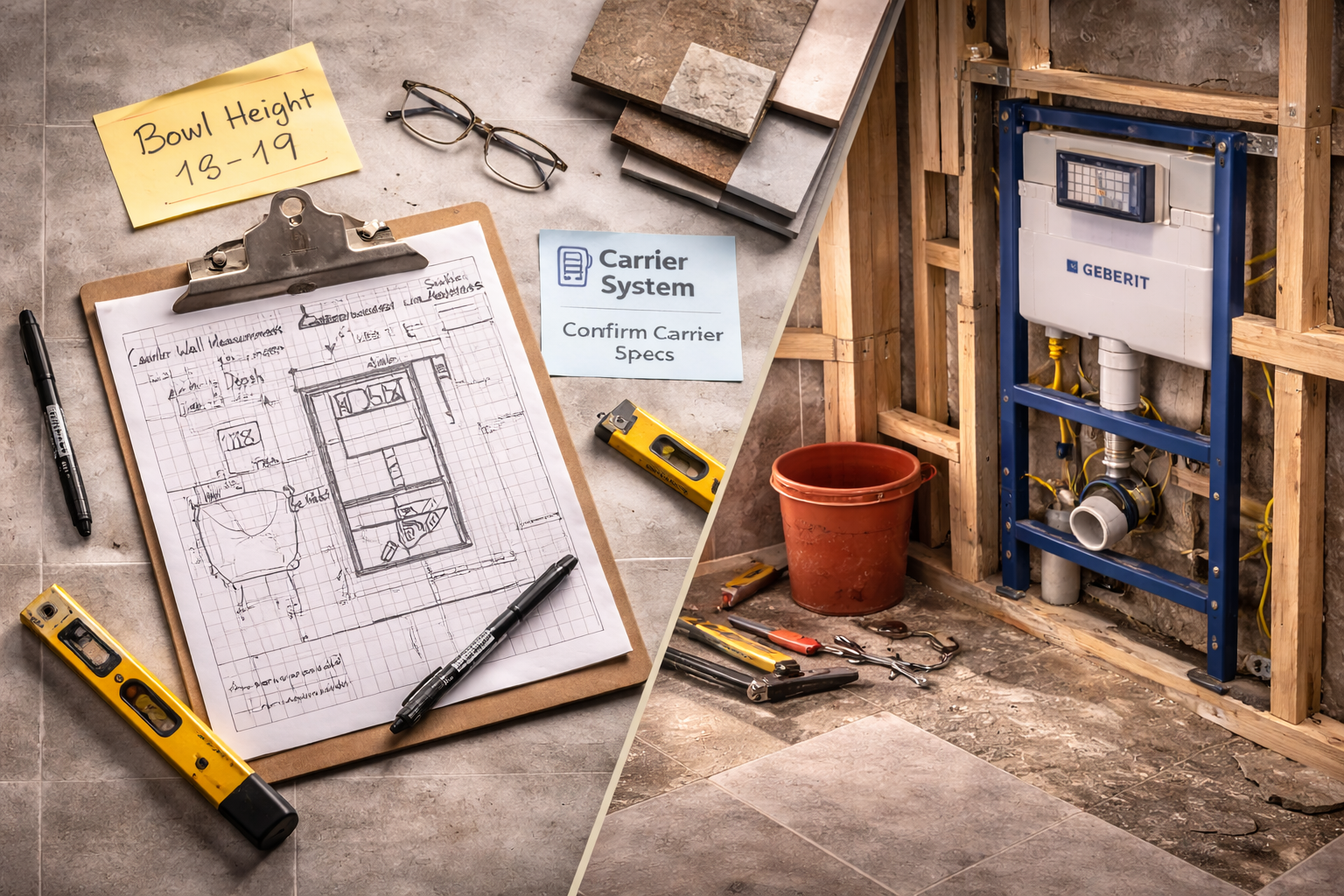
Wall-Mounted Toilet Guide Index
- Wall-Mounted Toilet Overview
- When Does a Wall-Mounted Toilet Make Sense
- What Types of Wall-Mounted Toilets Are Common
- How Do Layout and Room Size Affect a Wall-Mounted Toilet
- What Components Are Used in a Wall-Mounted Toilet Installation
- What Upgrades Can Be Added With a Wall-Mounted Toilet
- What Installation Details Matter With a Wall-Mounted Toilet
- What Affects Wall-Mounted Toilet Cost
- What Mistakes Should Homeowners Avoid With a Wall-Mounted Toilet
- How Should You Plan a Wall-Mounted Toilet
- Related Wall-Mounted Toilet Topics
- Frequently Asked Questions About Wall-Mounted Toilets
Wall-Mounted Toilet Overview
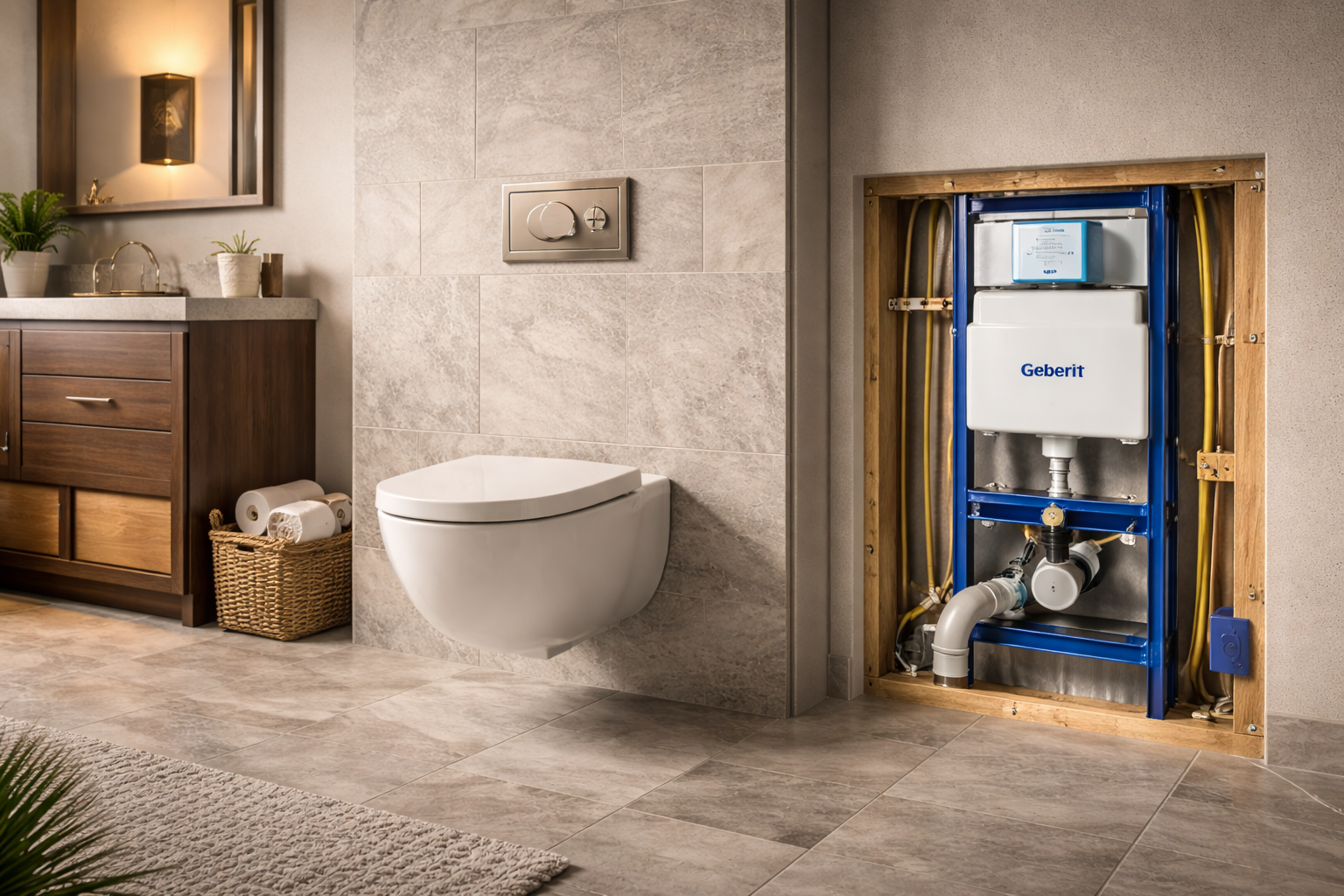
A wall-mounted toilet is a toilet bowl that attaches to a concealed carrier and tank system inside the wall instead of sitting on the floor like a standard toilet. In practical remodel work, installing a wall-mounted toilet usually means opening or rebuilding the wall, planning for the carrier frame, changing the drain and water connections, and coordinating the flush plate, wall finish, and floor detail around the new system. A wall-mounted toilet is as much a framing and plumbing decision as it is a fixture choice.
What Gets Updated During a Wall-Mounted Toilet Project
The work may include the toilet bowl, concealed tank carrier, flush plate, drain connection, wall framing, water supply, shutoff access, and surrounding wall and floor finishes. In some remodels, the toilet location and the room layout also shift because the in-wall system changes the way the space is built.
What Is the Difference Between a Wall-Mounted Toilet and a Standard Toilet
A standard toilet sits on the floor and connects to a visible tank or bowl-mounted system. A wall-mounted toilet hangs from a carrier system inside the wall and usually uses a flush plate on the finished wall surface. That difference changes the look, cleaning access, installation complexity, and service approach.
When Does a Wall-Mounted Toilet Make Sense
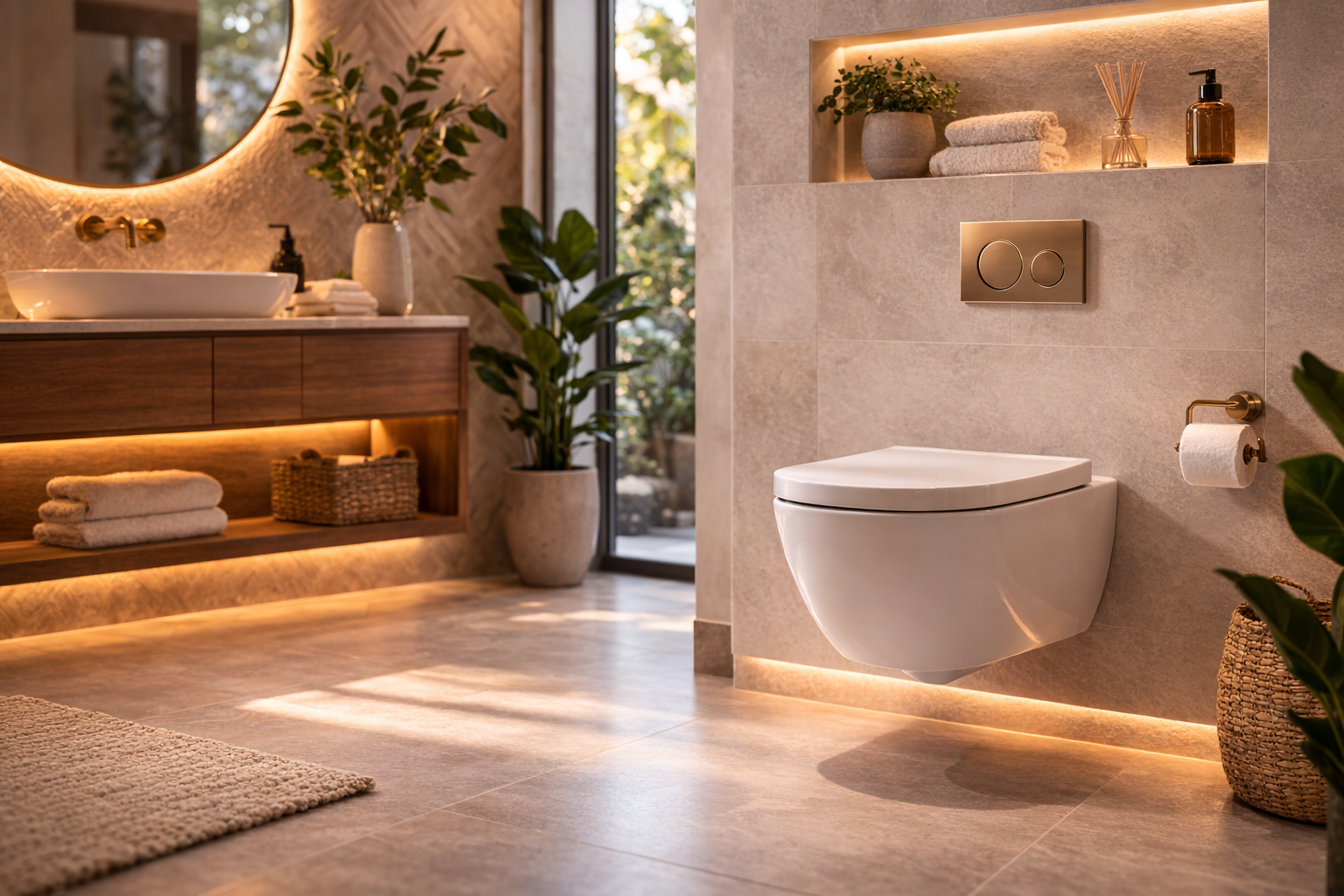
A wall-mounted toilet makes sense when the remodel is already opening the wall, when a cleaner modern look is a goal, or when easier floor cleaning and a more open visual effect matter enough to justify the added construction. It is most common in more design-focused remodels and bathrooms where the wall system can be rebuilt cleanly. During remodeling, it also helps to follow EPA indoor air quality best practices.
What Bathroom Conditions Usually Point to a Wall-Mounted Toilet
Common conditions include a remodel that already involves wall reconstruction, a desire for a more modern and minimal look, and enough planning around the plumbing and wall structure to support the in-wall carrier system. It also makes more sense when the bathroom benefits from the visual openness created by more visible floor area.
When Is a Wall-Mounted Toilet Not the Best Choice
A wall-mounted toilet may not be the best choice when the budget is tight, when the wall should not be opened more than necessary, or when a standard floor-mounted toilet can solve the problem more simply. It is also not the best choice when the remodel needs the easiest possible maintenance access with the least system complexity.
What Types of Wall-Mounted Toilets Are Common
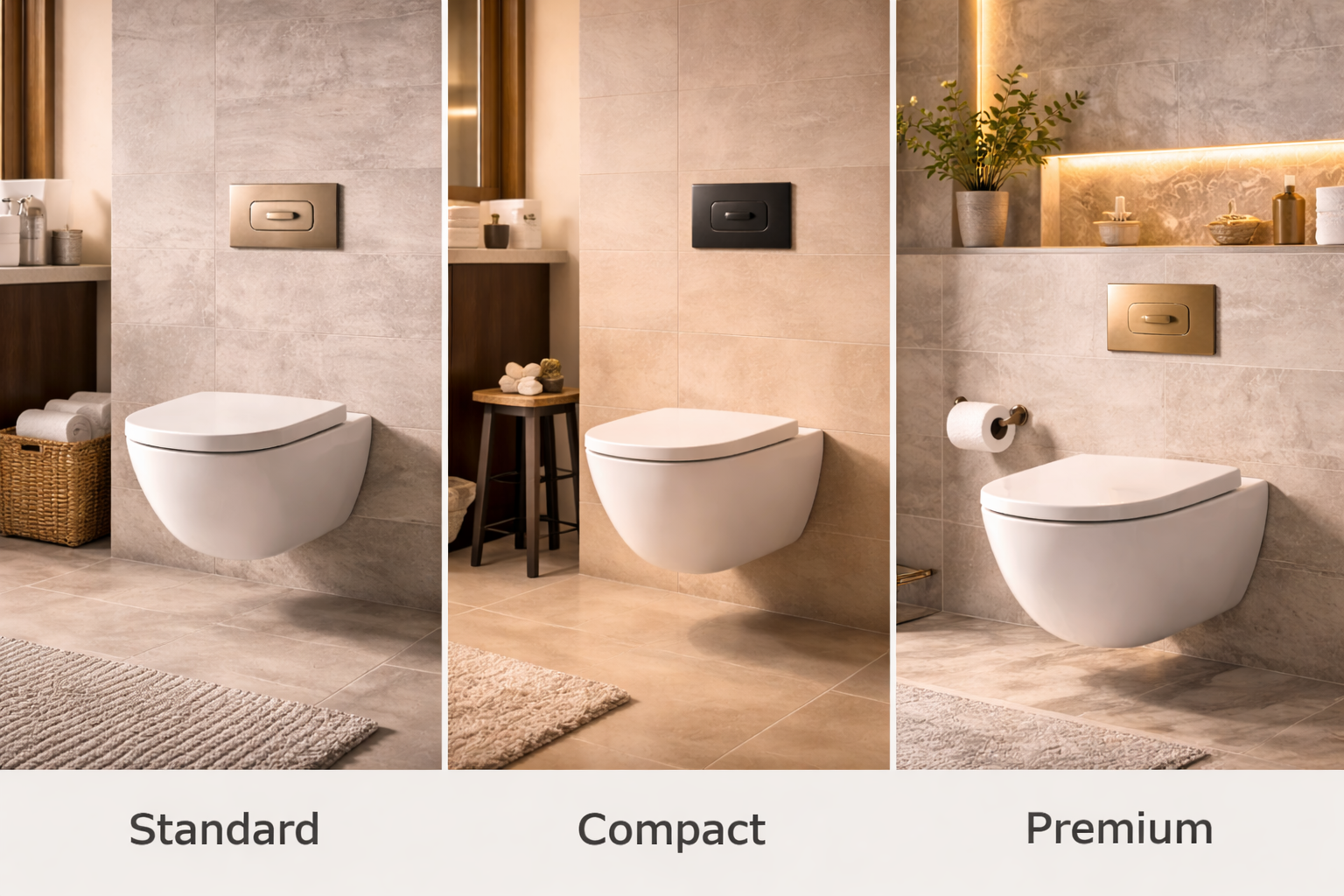
Common wall-mounted toilet types include standard concealed-tank wall-hung toilets, more compact bowl designs for tighter bathrooms, and premium wall-mounted units with more refined flush plate and bowl styling. The right type depends on room size, carrier compatibility, budget, and the design level of the remodel. This decision often connects directly to bathroom remodeling, especially when the goal is a more complete remodel.
What Wall-Mounted Toilet Styles Are Most Common in Remodeling Projects
Clean-lined modern wall-hung toilets with concealed tanks are the most common because they fit the aesthetic most homeowners expect when choosing this type of fixture. Compact bowls are also common when the bathroom needs the wall-mounted look without taking too much projection into the room.
When Does One Wall-Mounted Toilet Type Make More Sense Than Another
A more compact wall-mounted bowl may make more sense in a smaller bathroom where every inch of projection matters. A more premium wall-mounted system may make more sense in a higher-end bathroom where the toilet is part of a broader modern design language and the carrier wall is being rebuilt more extensively.
How Do Layout and Room Size Affect a Wall-Mounted Toilet
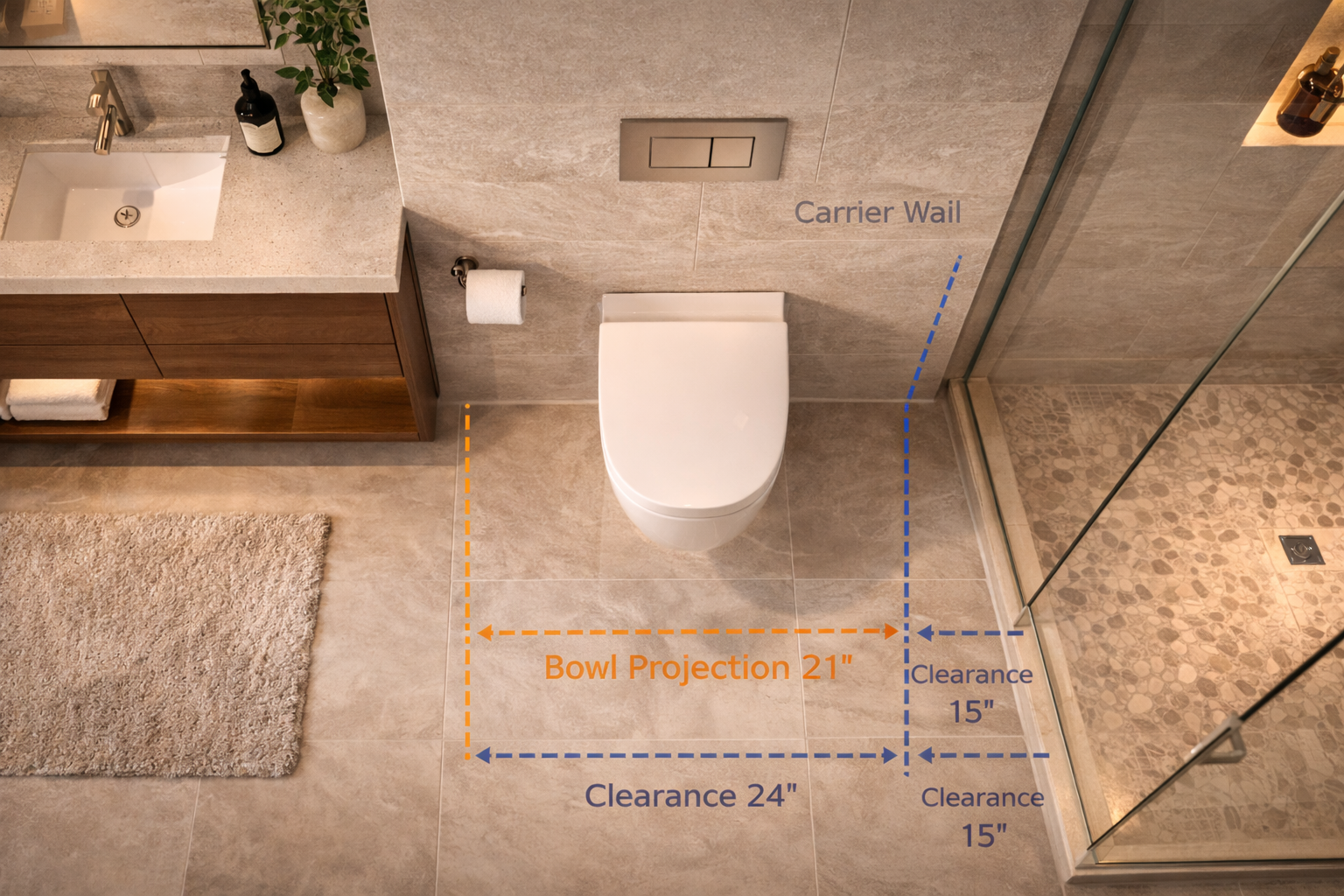
Layout and room size affect whether the wall-mounted toilet improves the bathroom enough to justify the extra work. The bowl projection, the wall thickness needed for the concealed carrier, and the clearances around the toilet all matter because the fixture changes both the wall build and the visible floor space. For broader planning considerations, it can help to review Energy Saver design guidance.
Why Does Bowl Projection and Wall Thickness Matter So Much
The bowl has to project far enough to be comfortable to use, while the in-wall carrier system needs enough depth and structure to work correctly. That balance affects how much room the toilet really saves or changes in the finished bathroom.
How Does Bathroom Size Change the Best Wall-Mounted Toilet Strategy
In a smaller bathroom, a wall-mounted toilet can help the room feel cleaner and more open if the wall build still fits well. In a larger bathroom, the benefit may be more visual than spatial. The best strategy depends on whether the remodel values floor openness, cleaner detailing, and modern styling enough to support the extra build complexity.
What Components Are Used in a Wall-Mounted Toilet Installation
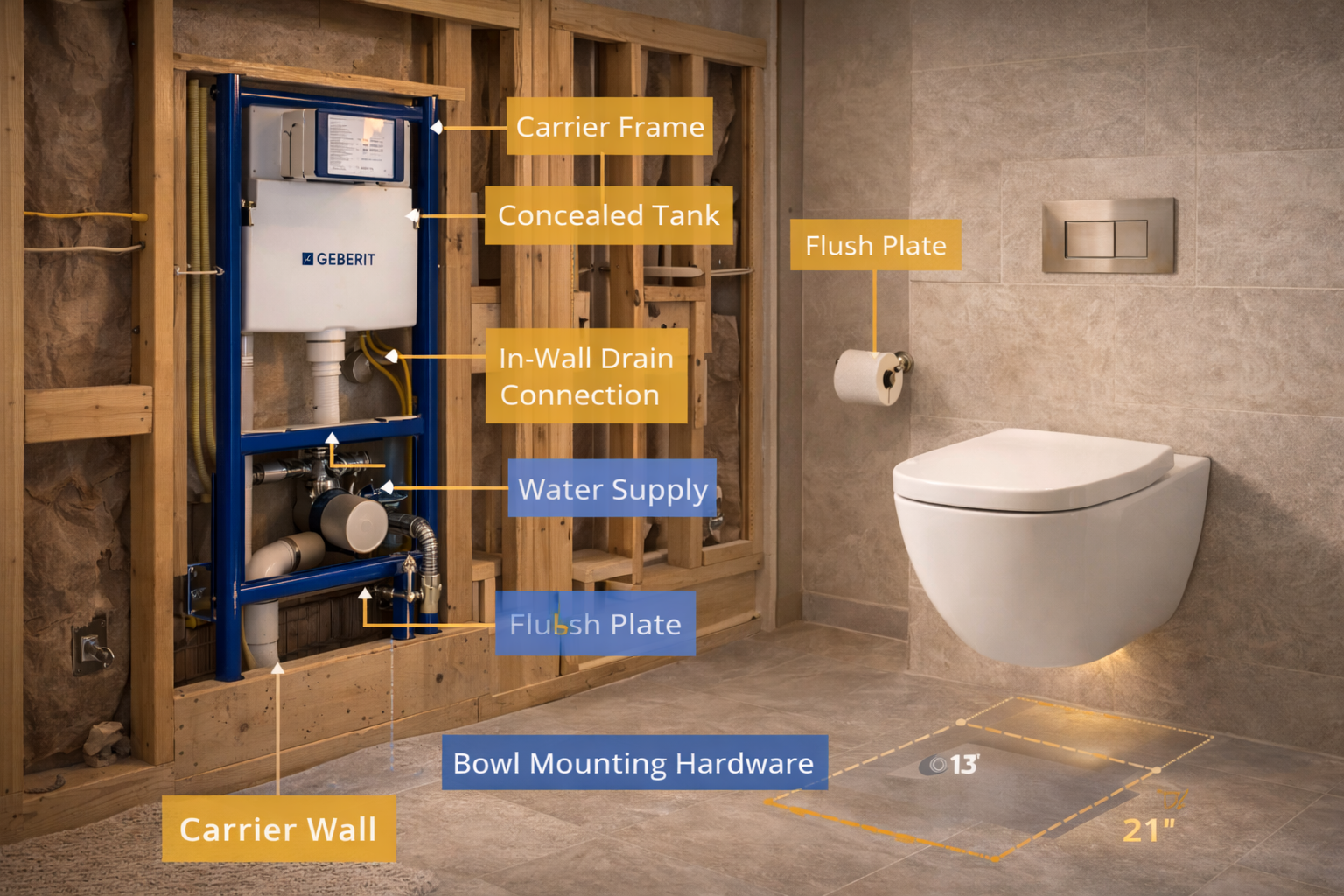
A wall-mounted toilet installation uses more than the bowl itself. The project may involve a concealed tank, carrier frame, in-wall drain connection, water supply, flush plate, support hardware, wall framing changes, and finishing materials around the carrier wall. The visible bowl is only one part of the system.
What Mechanical and Plumbing Components Are Common
Common components include the wall carrier frame, concealed tank, flush actuator plate, bowl mounting hardware, drain and supply connections, and access opening through the flush plate area. These parts work together to support the toilet physically and allow maintenance later.
What Wall and Finish Components Usually Change
Because the carrier sits inside the wall, the remodel often changes framing, drywall or tile buildup, paint or tile finish on the carrier wall, and the floor detail around the suspended bowl. These supporting finish decisions matter because the toilet becomes part of the wall construction itself.
What Upgrades Can Be Added With a Wall-Mounted Toilet
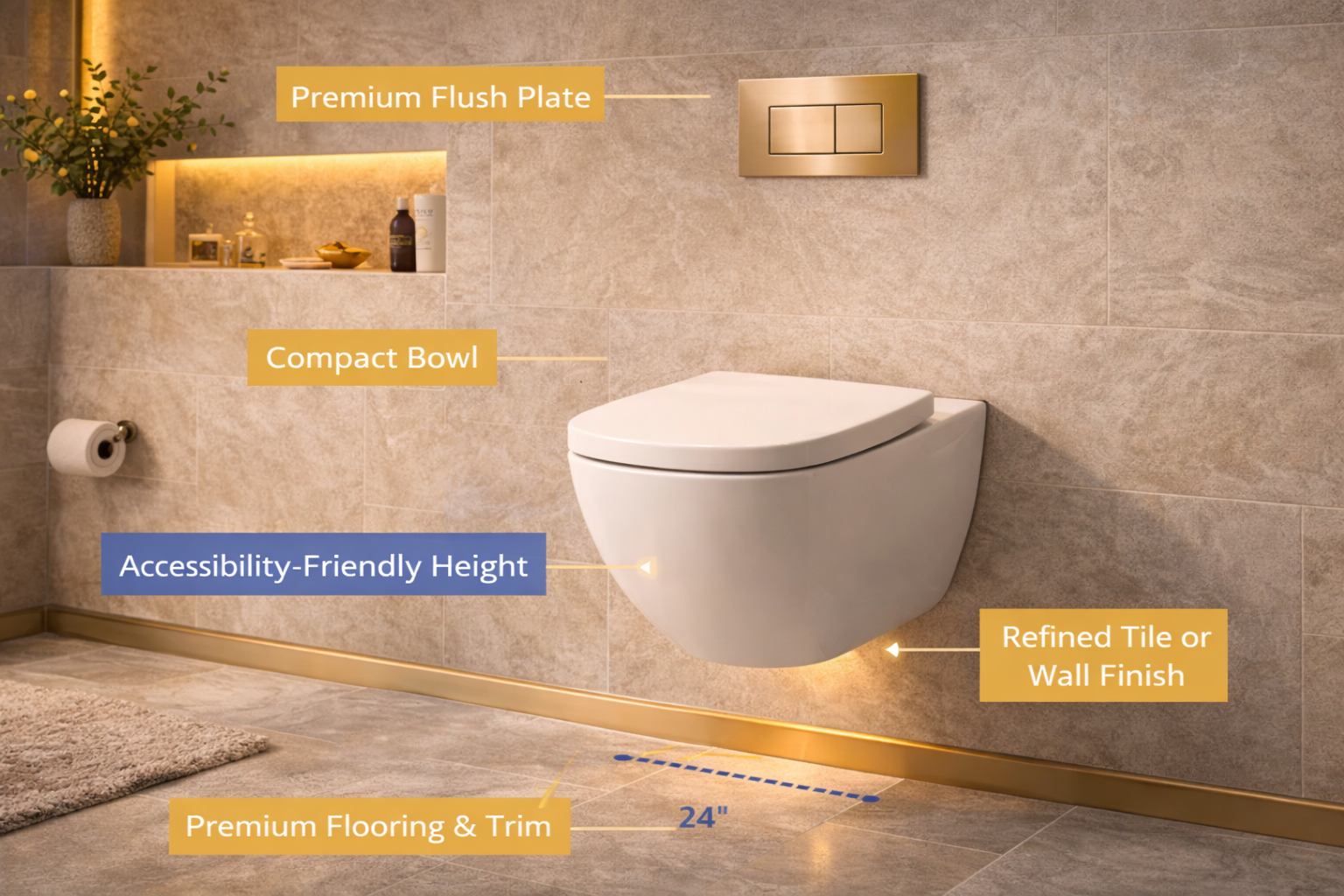
Wall-mounted toilet work is often the best time to add upgrades that reinforce the cleaner modern look of the fixture. Common upgrades include premium flush plates, improved wall finishes, accessibility-friendly seat heights, compact bowl choices, and better coordination with flooring and trim around the toilet area.
What Functional Upgrades Are Most Useful With a Wall-Mounted Toilet
Functional upgrades often include better seat height selection, cleaner floor access below the bowl, stronger water-saving flush systems, and easier-to-clean bowl profiles. These upgrades matter because a wall-mounted toilet is usually chosen to improve both appearance and daily usability.
What Design Upgrades Usually Happen at the Same Time
Wall-mounted toilet projects often include more refined tile or wall finishes, a cleaner flush plate style, upgraded trim details, and a more modern overall toilet area. Once the carrier wall is being rebuilt, the surrounding details usually become part of the design conversation too. For layout and clearance planning, many designers reference NKBA planning guidelines.
What Installation Details Matter With a Wall-Mounted Toilet
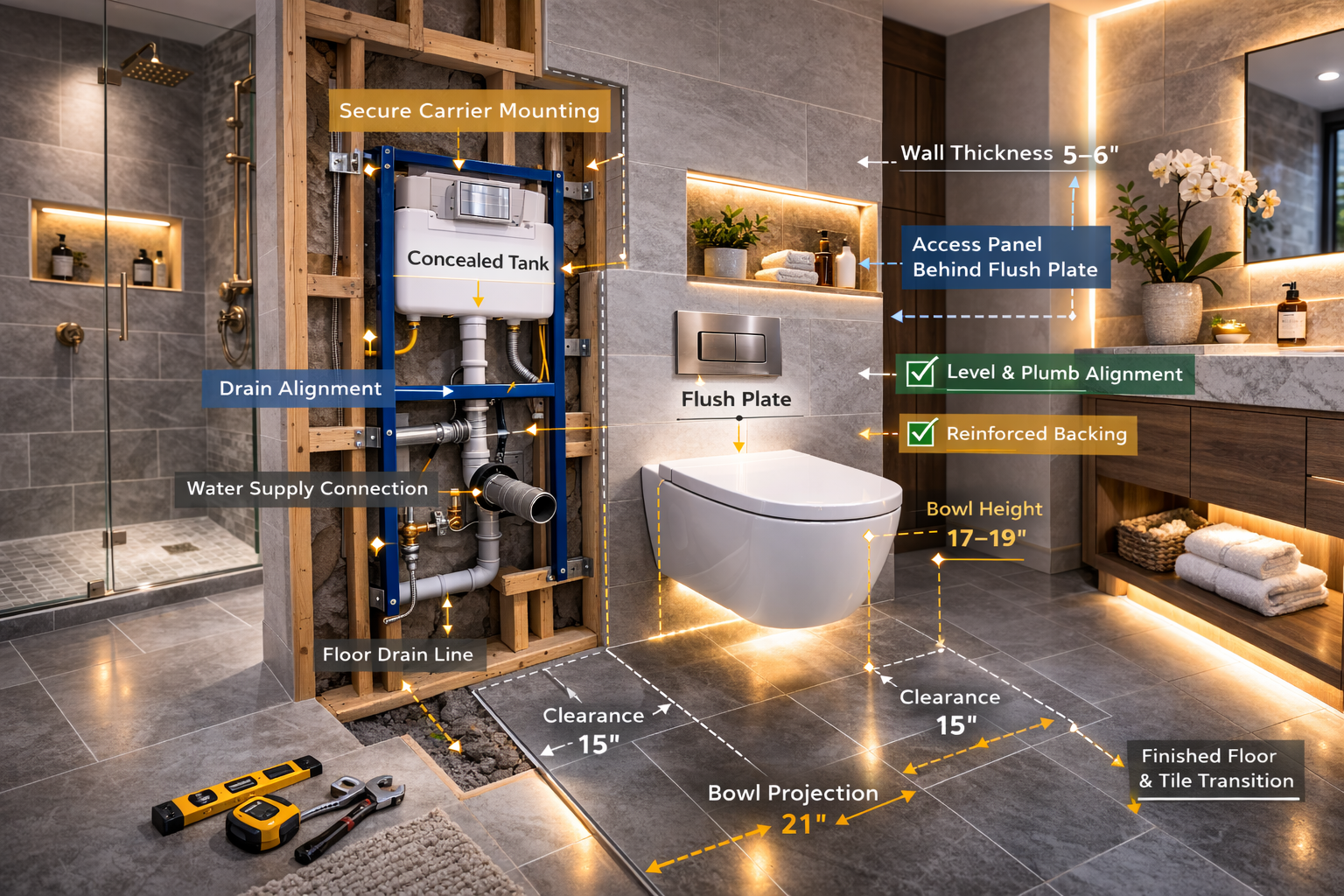
Wall-mounted toilet installation depends on correct carrier mounting, drain alignment, wall framing, bowl height, and how the finished wall is built around the concealed system. These details matter because the toilet depends on the wall structure for both support and function. Another detail worth comparing during planning is toilet remodel.
Why Do Carrier Mounting and Wall Framing Matter So Much
The carrier frame has to be mounted securely and aligned correctly because it supports the user load and the concealed tank system. If the wall framing and support are wrong, the toilet can perform poorly or create long-term problems that are harder to fix after the wall is finished.
What Fit and Access Problems Show Up During Installation
Common issues include wrong bowl height, poor carrier alignment, walls built too tight around the system, and flush plate or access details that were not planned cleanly. These practical build details affect whether the toilet feels like a precise modern upgrade or an overcomplicated installation.
What Affects Wall-Mounted Toilet Cost
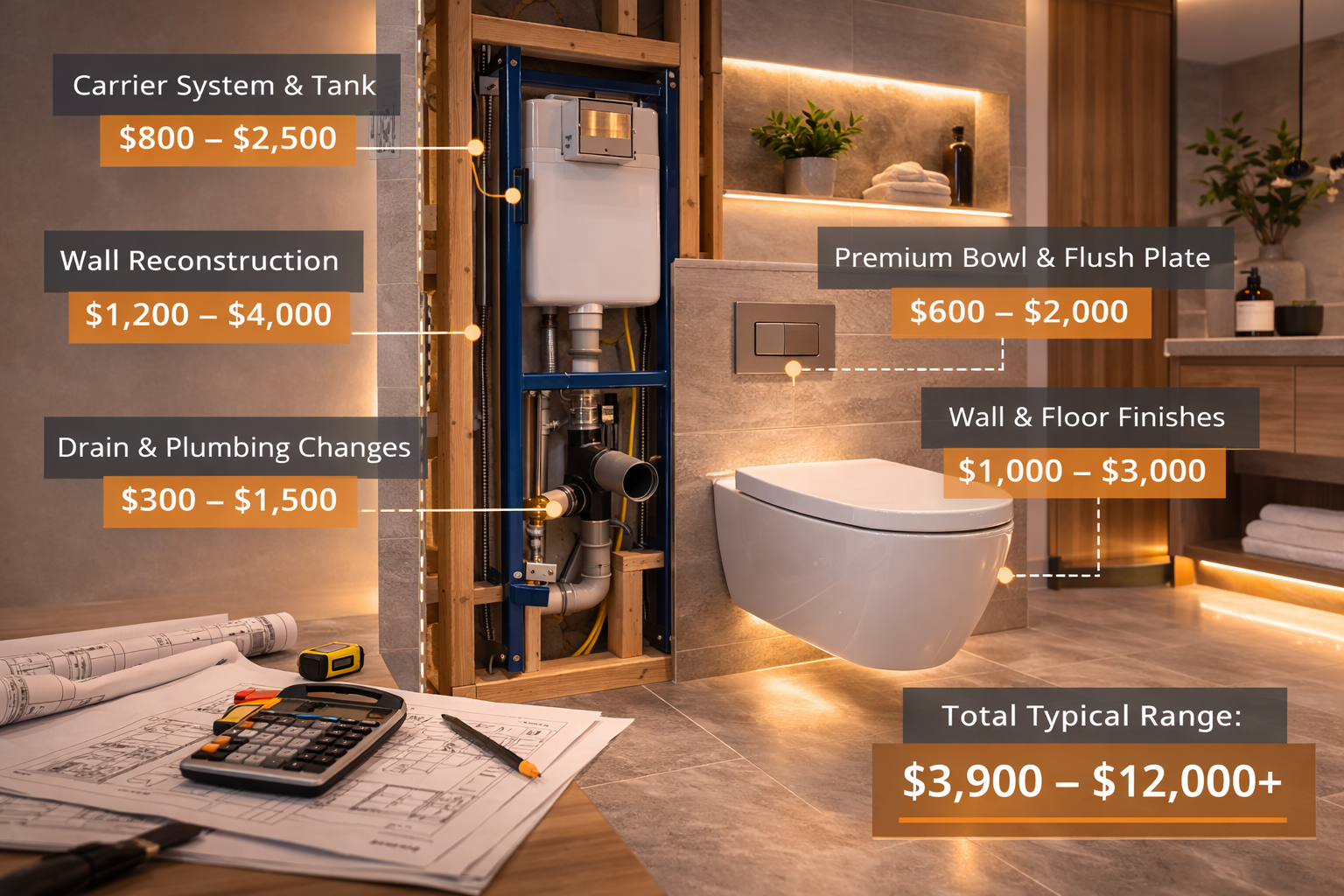
Wall-mounted toilet cost usually depends on the toilet system chosen, the concealed carrier and tank, the amount of wall reconstruction required, and the surrounding finish work. A wall-mounted toilet usually costs more than a standard toilet because the system behind the wall is more complex and the installation affects the room construction more directly.
Which Wall-Mounted Toilet Choices Usually Raise the Cost
Costs usually rise with premium bowl and flush plate designs, higher-end carrier systems, more refined wall finishes, and projects where the toilet area is being fully redesigned around the concealed system. The more custom the installation becomes, the more the cost usually climbs.
How Do Labor and Existing Conditions Change the Budget
Labor costs go up when the wall has to be rebuilt significantly, the drain location needs to change, the surrounding tile or wall finish is more detailed, or the room layout is being adjusted around the new toilet type. Existing conditions matter because the wall-mounted system depends on what is inside the wall, not just what is visible outside it.
What Mistakes Should Homeowners Avoid With a Wall-Mounted Toilet
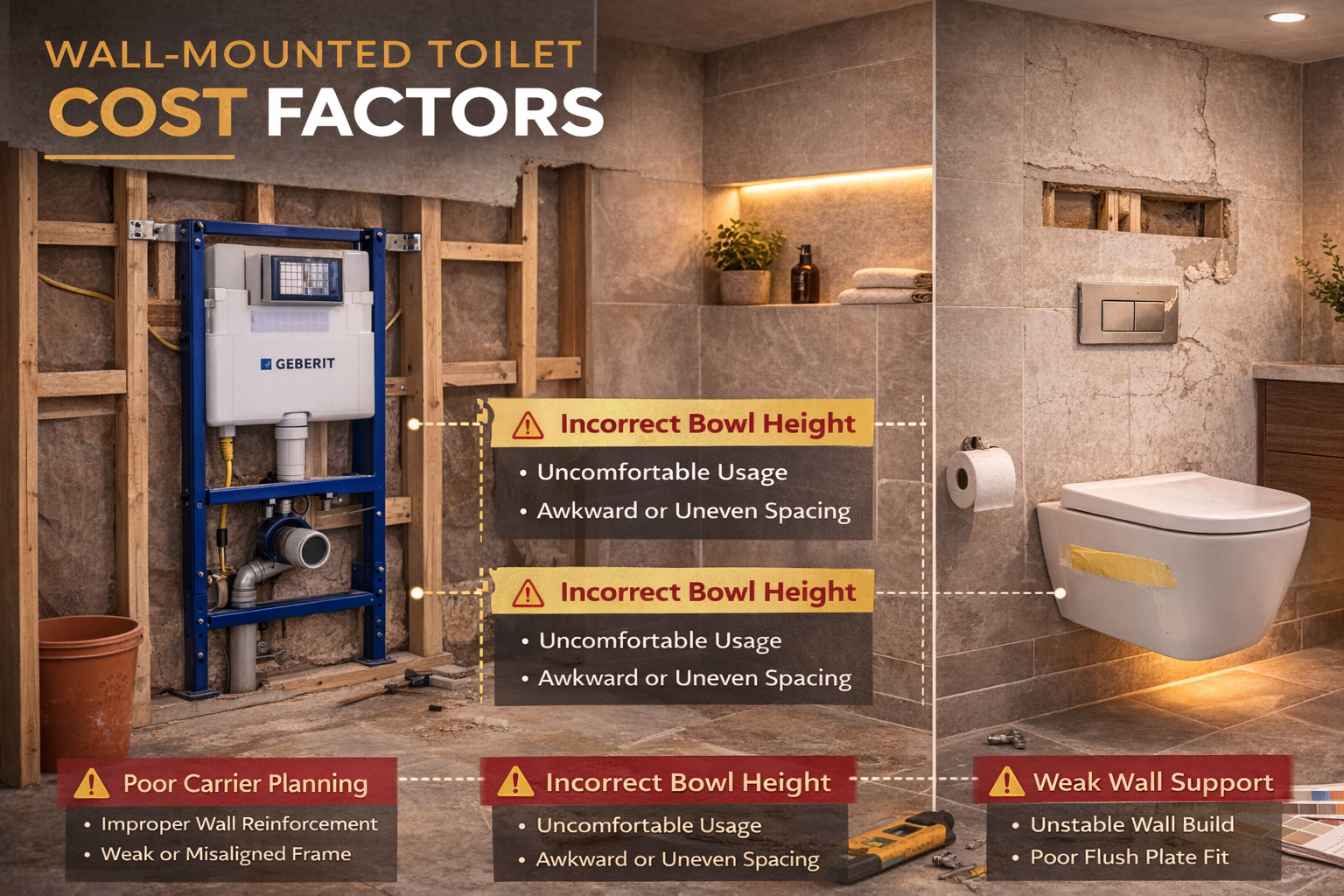
The biggest wall-mounted toilet mistakes usually happen when the look is chosen without respecting the added structural and plumbing requirements that come with the system. A wall-mounted toilet should improve the room, but only if the wall build and the fixture planning are handled correctly.
Why Is It a Problem to Choose a Wall-Mounted Toilet Without Planning the Wall Build
The toilet depends on a concealed carrier system that changes the wall itself. If the wall thickness, framing, or service access are not planned from the start, the installation can become more expensive, harder to maintain, or less cleanly finished than expected.
Why Is It Risky to Ignore Service and Fit Details
The bowl height, flush plate position, access opening, and finished wall build all have to work together. If those details are rushed or improvised, the toilet may still function, but the final result may feel less practical and more difficult to service later.
How Should You Plan a Wall-Mounted Toilet
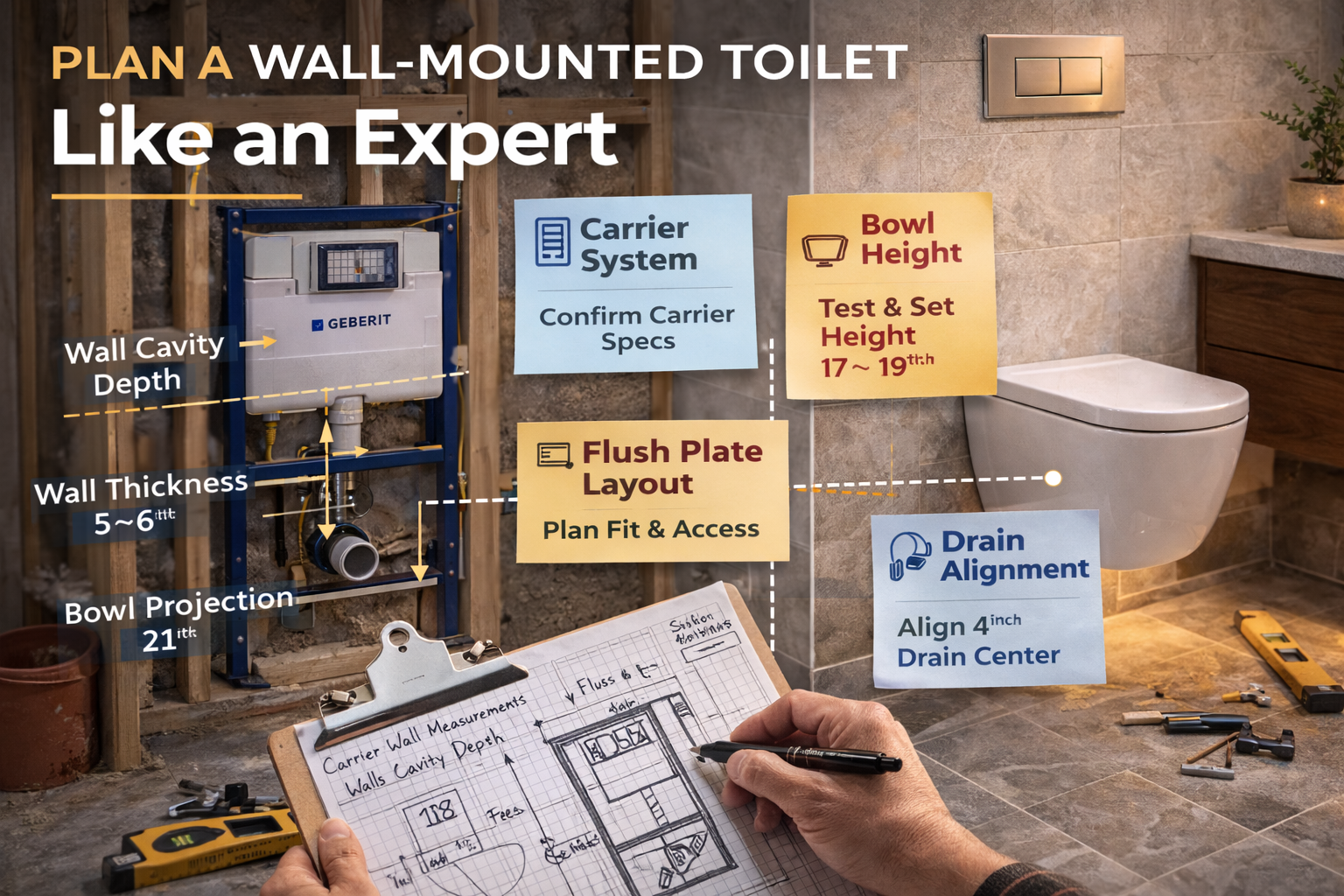
A wall-mounted toilet should be planned by deciding whether the added wall construction is worth the design and cleaning benefits, then checking the room, plumbing, and framing conditions carefully before the system is selected. The best plan balances appearance, structure, service access, and daily usability instead of treating the wall-mounted bowl like a simple toilet swap.
What Should Be Decided Before Wall-Mounted Toilet Work Starts
Before construction starts, it helps to confirm the bowl style, carrier system, wall thickness, drain alignment, flush plate type, bowl height, and surrounding wall or floor finish details. These choices affect the rough framing, plumbing, and final visual result.
How Can a Homeowner Prepare for the Installation Process
Homeowners should be ready for wall opening, framing changes, concealed carrier installation, finish work around the rebuilt wall, and more coordination than a standard toilet replacement would require. Wall-mounted toilet projects usually go best when the whole wall system is planned before the room starts closing back up.
Related Wall-Mounted Toilet Topics
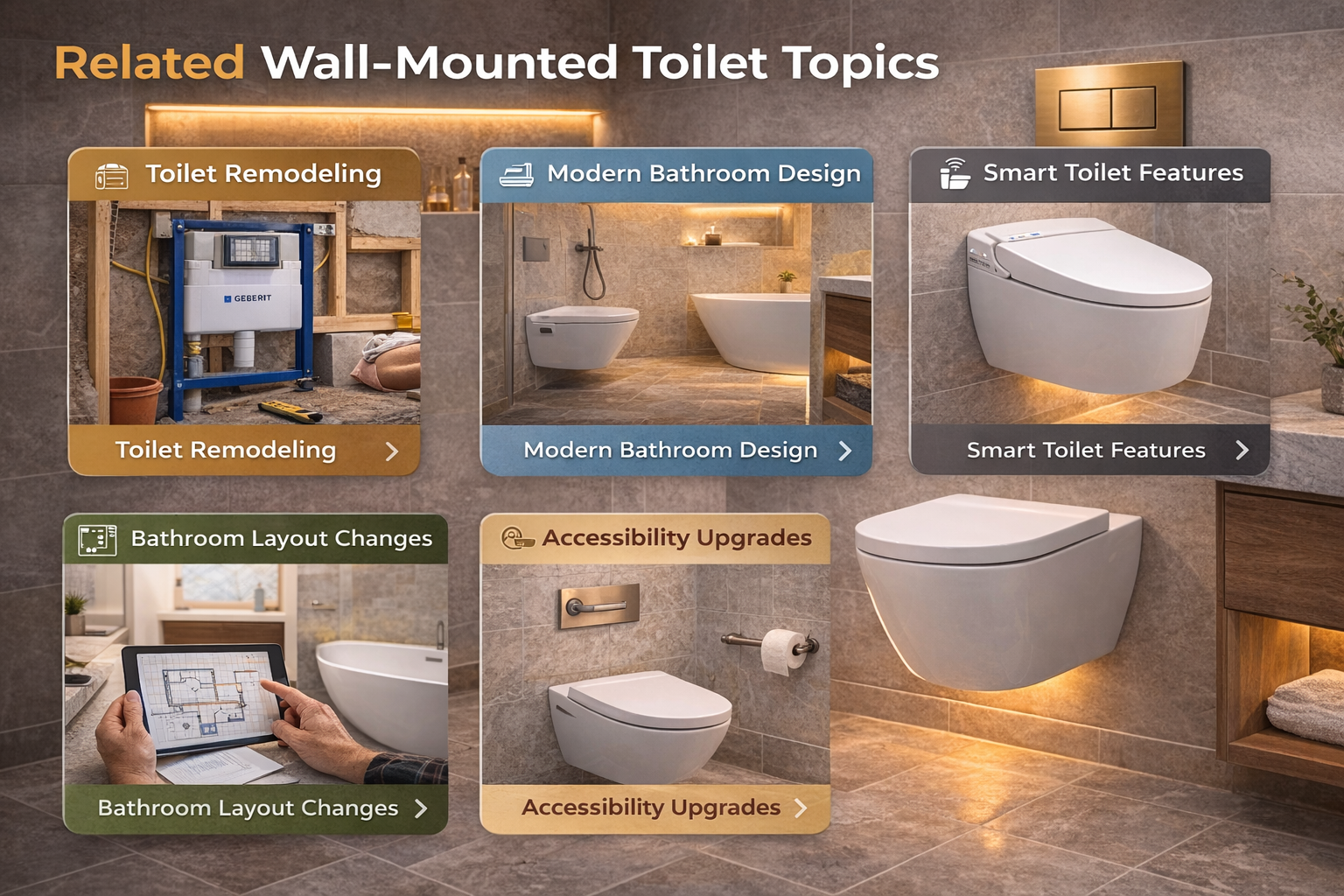
Wall-mounted toilet projects overlap with toilet remodeling, bathroom layout changes, smart toilets, accessibility planning, and modern bathroom design because the fixture affects the wall system, the room layout, and the visual style of the bathroom. Related topics help homeowners compare whether a wall-mounted toilet is the right kind of upgrade for the room.
Which Wall-Mounted Toilet-Related Pages Should Connect to This Topic
Strong related pages include toilet remodels, smart toilets, bathroom layout changes, accessibility upgrades, and premium bathroom fixture topics. Those pages help break down the structure, style, and daily-use decisions that shape whether a wall-mounted toilet is a good fit.
Which Bathroom Remodeling Topics Often Connect to Wall-Mounted Toilet Work
Wall-mounted toilet work often connects to flooring, wall finishes, layout changes, premium fixture upgrades, and full bathroom remodeling. In practical remodels, those pieces overlap because the toilet is changing the wall construction and the finished look of the room.
Frequently Asked Questions About Wall Mounted Toilet
A wall-mounted toilet is a toilet bowl that hangs from a concealed in-wall carrier and tank system instead of sitting on the floor.
They can be worth it when the cleaner modern look, easier floor cleaning, and design goals justify the extra wall construction and system cost.
They can help the room feel more open because more floor remains visible, but the real space impact depends on the wall build and the bowl projection.
Yes, they are usually more involved than standard toilets because they require a concealed carrier system and wall reconstruction.
Not always. The wall and plumbing conditions have to support the carrier system and the installation requirements.
Service access is usually built through the flush plate opening, but the system is more specialized than a standard floor-mounted toilet.
It can, especially when bowl height and floor clearance are planned thoughtfully, but the overall room layout still matters just as much.
The timeline depends on the extent of wall work, plumbing changes, and the finish work needed around the concealed system.
It can improve appeal in the right bathroom, especially in more modern or higher-end remodels where the cleaner design fits the rest of the room.
The first step is deciding whether the bathroom and wall structure support the concealed carrier system and the extra work it requires.