
Custom Vanity Guide: Design, Storage, Costs, and Planning

Custom Vanity Guide Index
- Custom Vanity Overview
- When Does a Custom Vanity Make Sense
- What Types of Custom Vanities Are Common
- How Do Layout and Room Size Affect a Custom Vanity
- What Materials and Components Are Used in a Custom Vanity
- What Upgrades Can Be Added to a Custom Vanity
- What Installation Details Matter in a Custom Vanity
- What Affects Custom Vanity Cost
- What Mistakes Should Homeowners Avoid With a Custom Vanity
- How Should You Plan a Custom Vanity
- Related Custom Vanity Topics
- Frequently Asked Questions About Custom Vanities

Custom Vanity Overview
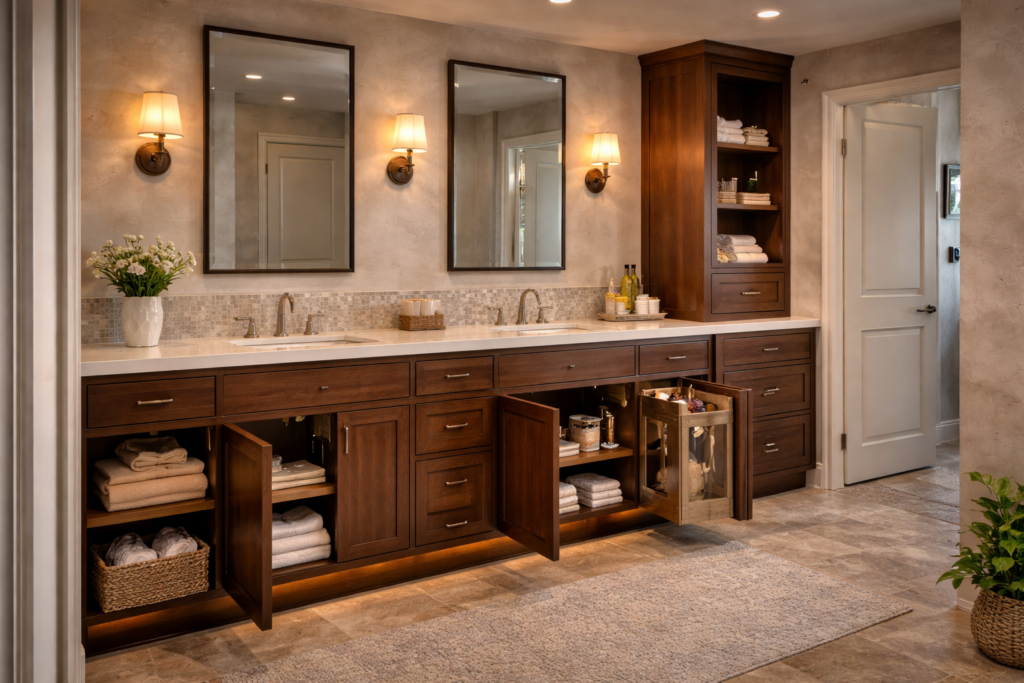
A custom vanity is built to fit the bathroom instead of forcing the room to fit a standard cabinet size. In practical remodel work, that can mean building the vanity to an exact wall width, fitting around plumbing, adding deeper drawers where they help most, matching the height to the people using the bathroom, and coordinating the vanity with the mirror, lighting, and countertop from the start. Custom vanity work usually matters most when the bathroom has layout limits or when standard cabinet sizes leave wasted space.
What Gets Updated During a Custom Vanity Project
The work may include the vanity cabinet layout, drawer sizes, sink count, countertop shape, backsplash details, mirror and lighting alignment, side panels, filler pieces, and storage features inside the vanity. In some remodels, the plumbing position and wall finish around the vanity also change so the custom cabinet can use the available space better.
What Is the Difference Between a Stock Vanity and a Custom Vanity
A stock vanity comes in preset widths, drawer layouts, and cabinet configurations. A custom vanity is built around the room and the homeowner’s storage needs. That makes it easier to solve uneven wall widths, unusual plumbing conditions, shallow rooms, double-sink layouts, and storage needs that standard vanities do not address well.
When Does a Custom Vanity Make Sense
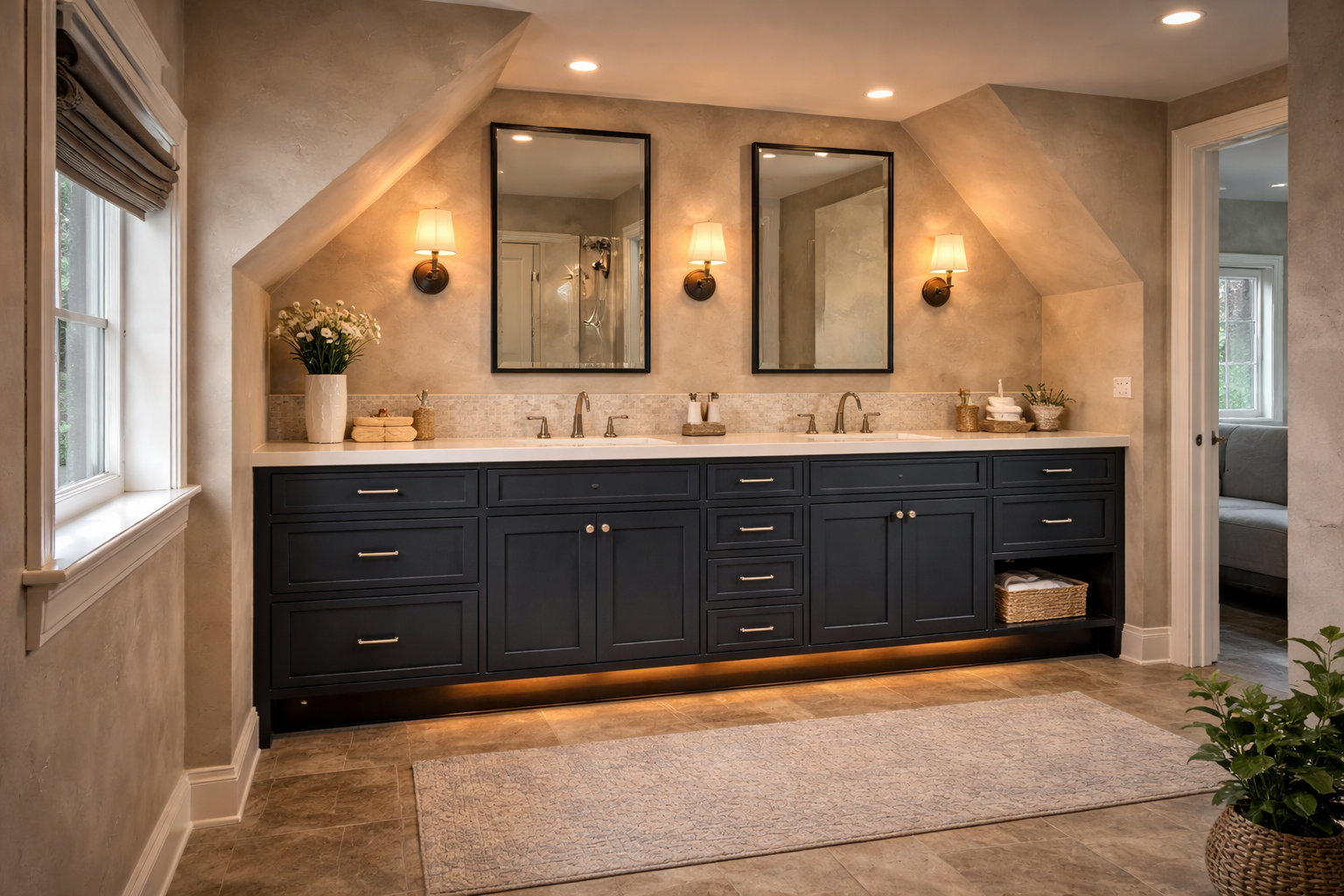
A custom vanity makes sense when the bathroom has unusual dimensions, the storage needs are specific, or the remodel needs a vanity that fills the wall more efficiently than a stock cabinet can. It also makes sense when the homeowner wants a cleaner built-in look rather than a cabinet that feels like it was chosen from the closest standard size. During remodeling, it also helps to follow EPA indoor air quality guidance.
What Bathroom Problems Usually Point to a Custom Vanity
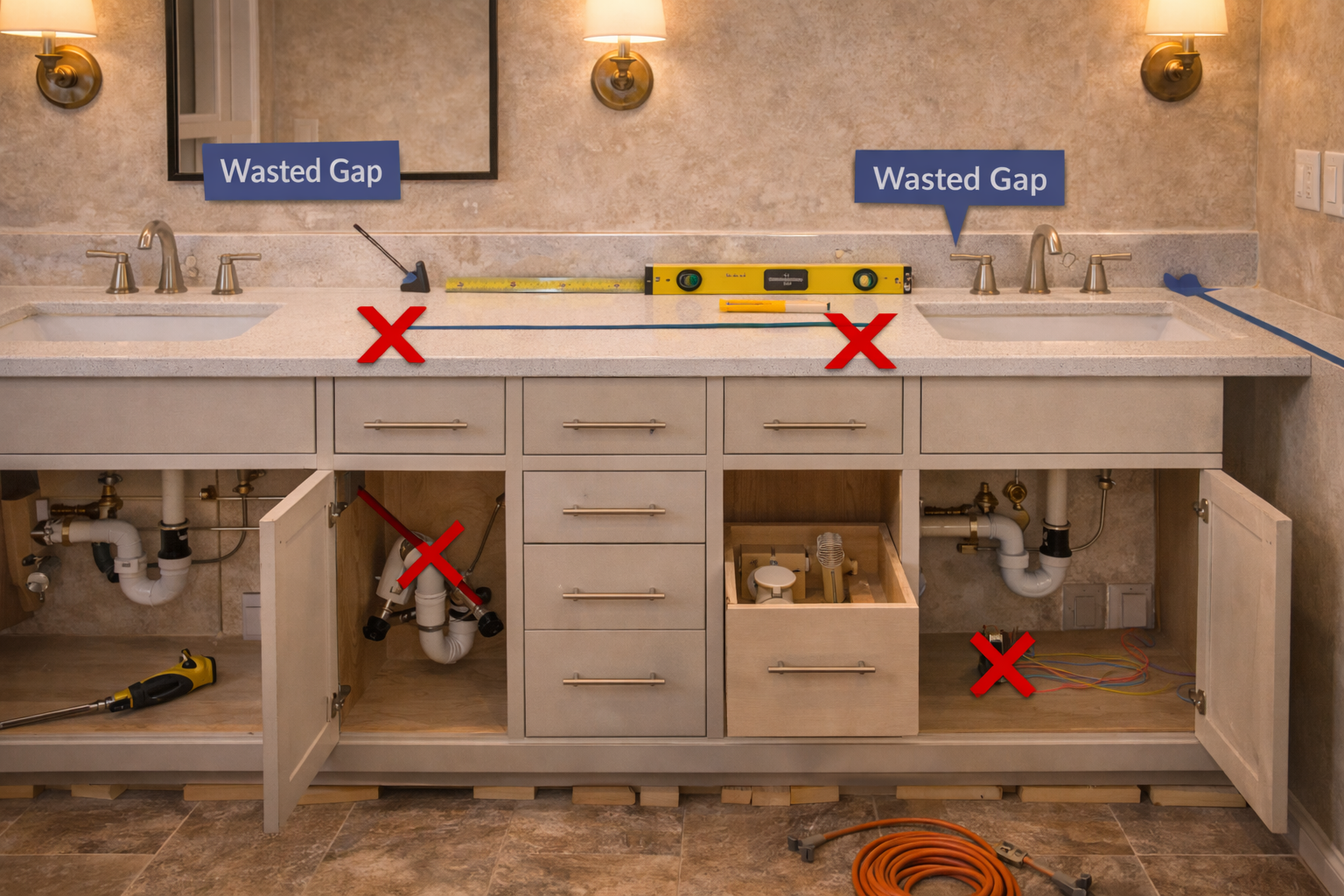
Common problems include wasted gaps at the sides of the vanity, poor drawer storage, awkward plumbing conflicts, low or shallow cabinets, and bathrooms where the vanity wall is too large or too small for standard sizes to fit well. In some rooms, a custom vanity is the best way to add storage without hurting walkway clearance.
What Remodeling Goals Usually Lead to a Custom Vanity
Custom vanities are often chosen when the goal is more organized storage, a double-sink setup built to the exact wall width, a furniture-style vanity that fits the room, or a vanity designed around specific countertop, mirror, and lighting choices. They are also common in primary baths where the vanity is a major visual feature.
What Types of Custom Vanities Are Common
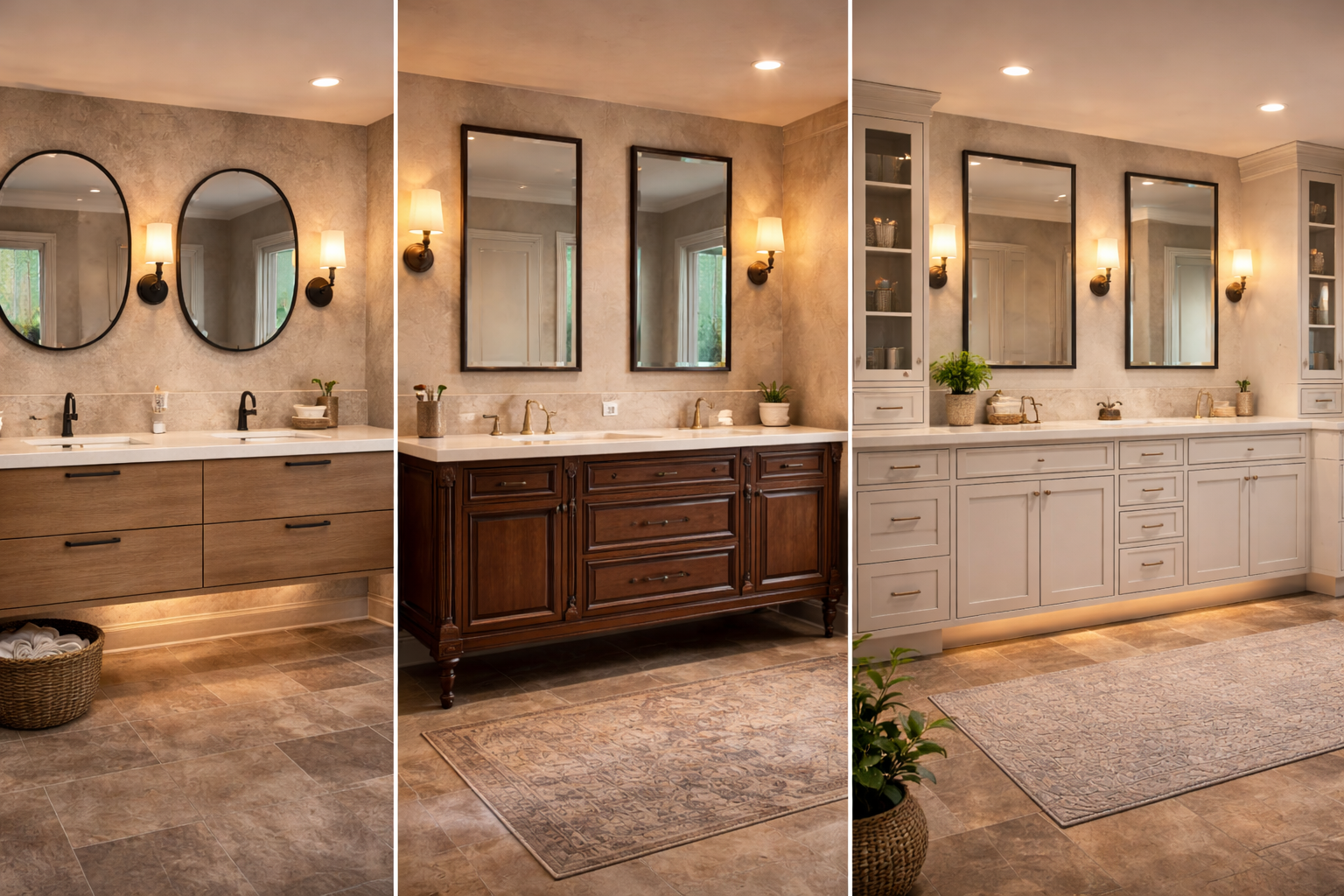
Common custom vanity types include built-in double vanities, floating vanities, furniture-style vanities, tower-connected vanity systems, open-shelf vanity designs, and custom single-sink vanities designed for small bathrooms. The best type depends on room size, wall width, storage goals, and the style of the rest of the bathroom. In many projects, bathroom remodeling becomes an important part of how the bathroom functions day to day.
What Custom Vanity Styles Are Most Common in Remodeling Projects
Built-in double vanities are common in primary bathrooms where more storage and sink space are needed. Floating vanities are popular when the room needs to feel lighter and more open. Furniture-style vanities are often chosen when the remodel leans more decorative or traditional. Each style works best when the room layout supports it instead of just following a trend.
When Does a Fully Built-In Vanity Make the Most Sense
A fully built-in vanity makes the most sense when the wall width needs to be used efficiently, when fillers and side gaps would look sloppy with a stock cabinet, or when the storage layout needs to be planned around specific household use. Built-in vanities are especially useful when the goal is to make the vanity wall feel integrated with the rest of the bathroom.
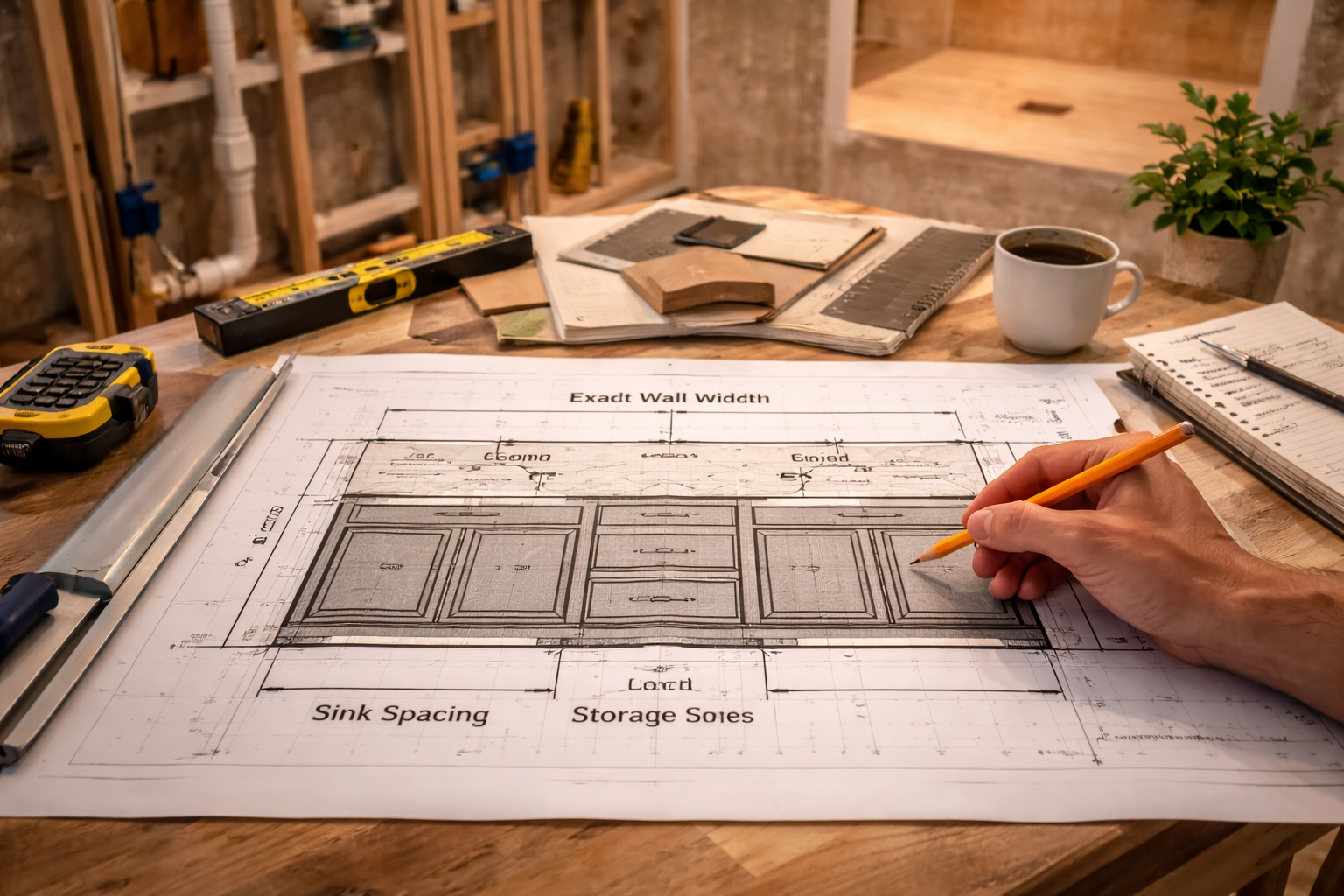
How Do Layout and Room Size Affect a Custom Vanity
Layout and room size control how the custom vanity should be sized, how deep it can be, and whether the vanity can support one sink, two sinks, or special storage zones. A custom vanity only improves the bathroom if it fits the room well and still leaves enough space for door swing, toilet clearance, and comfortable movement through the room.
Why Does Exact Wall Width Matter in a Custom Vanity Design
Exact wall width matters because that is what allows the cabinet to fit cleanly without awkward fillers or wasted gaps. In practical remodel work, wall width also affects whether the vanity can carry symmetrical drawers, centered sinks, balanced mirrors, and matching vanity lighting without looking forced. Homeowners comparing performance goals can review Energy Saver ventilation guidance.
How Does Bathroom Size Change the Best Custom Vanity Strategy
In a smaller bathroom, a custom vanity may focus on maximizing storage in a narrow footprint or using a shallower cabinet that protects walkway space. In a larger bathroom, the vanity may be designed around larger drawer banks, double sinks, a central seating space, or linen-style side storage. The best strategy depends on how the room is actually used.
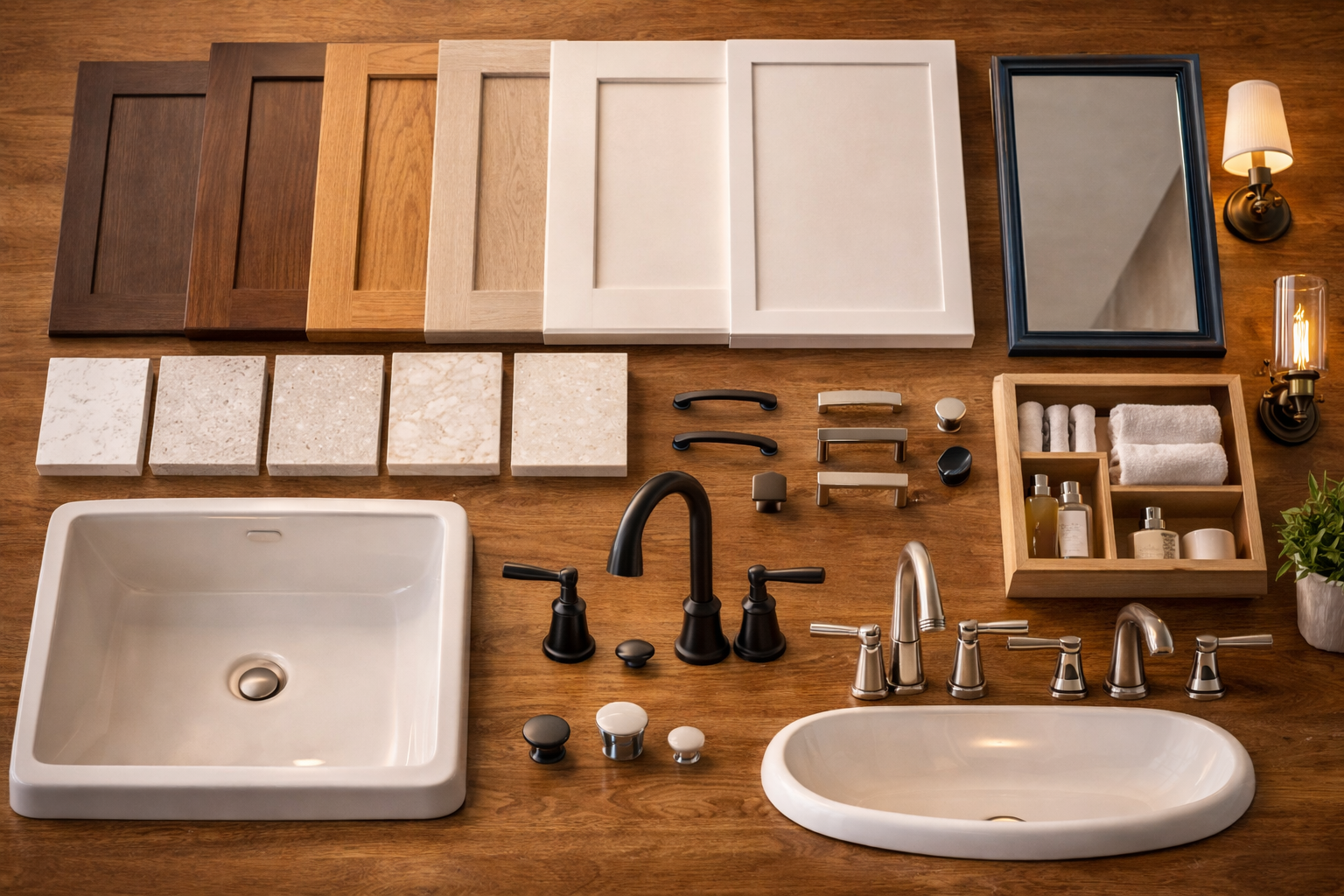
What Materials and Components Are Used in a Custom Vanity
A custom vanity uses cabinet materials, drawer hardware, countertop materials, sink types, faucet layouts, mirror choices, and lighting details that are selected as one coordinated system. Because the vanity is being built to fit the room, the materials chosen affect both appearance and long-term durability in a humid bathroom environment.
What Cabinet and Countertop Materials Are Common in Custom Vanities
Common cabinet materials include plywood boxes, solid wood face frames, engineered panels with durable finishes, and moisture-resistant drawer components. Common countertops include quartz, granite, solid-surface products, and sometimes marble when the owner is comfortable with more maintenance. Quartz is especially common because it performs well in bathrooms and allows cleaner edge and sink details.
What Sink, Faucet, and Storage Components Usually Change
Custom vanity projects often involve undermount sinks, integrated storage dividers, drawer banks around plumbing, custom pullouts, mirrored medicine cabinets, and coordinated faucet placement. Because the cabinet is custom, the internal storage can be built around what actually needs to be stored instead of leaving the homeowner with generic open space.
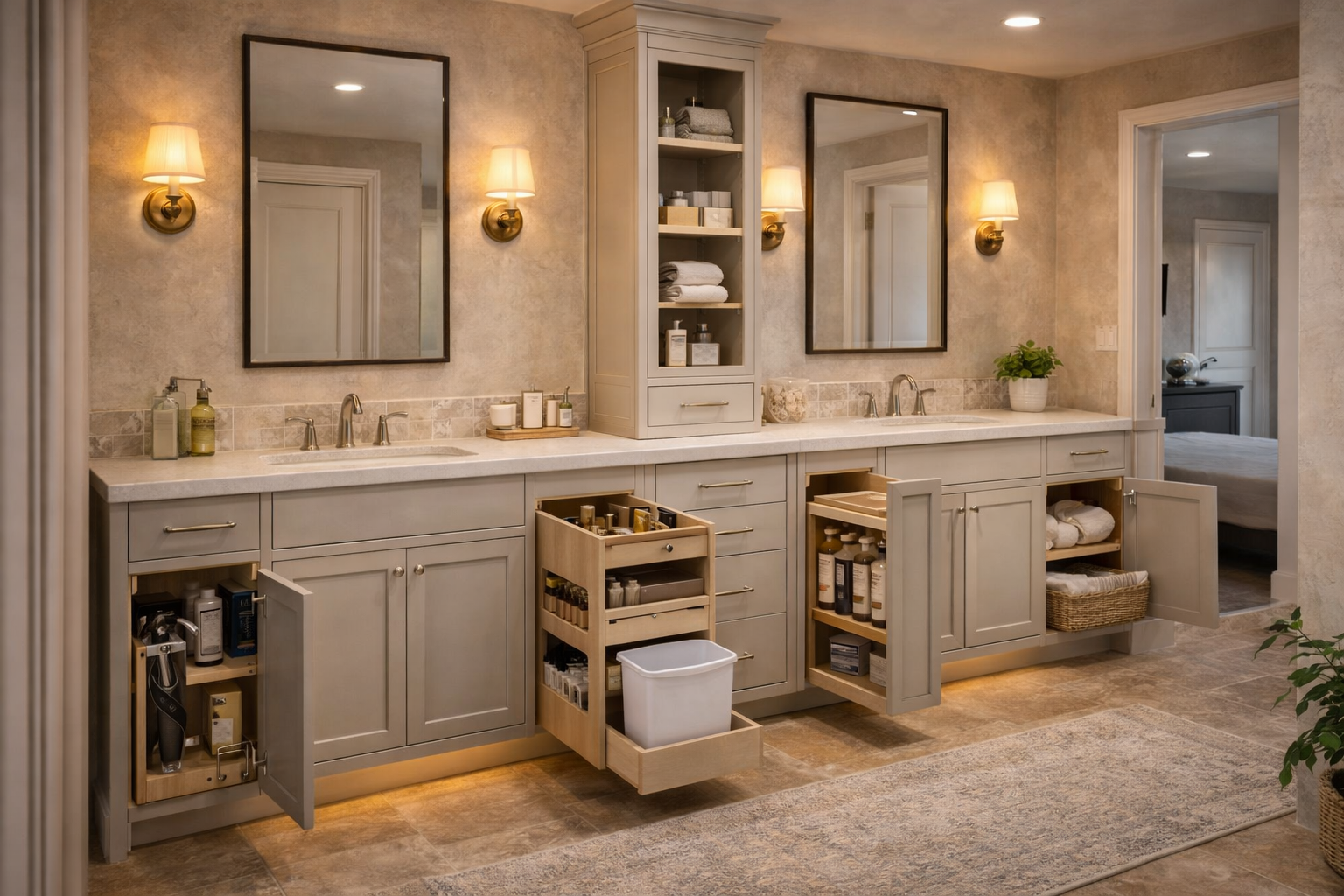
What Upgrades Can Be Added to a Custom Vanity
Custom vanity work is often the best time to add upgrades because the cabinet layout can be designed around them from the start. Common upgrades include drawer dividers, pull-out organizers, hidden outlets where appropriate, makeup storage, double sinks, tower cabinets, furniture legs, and better mirror and lighting coordination.
What Functional Upgrades Are Most Useful in a Custom Vanity
Functional upgrades often include deeper drawers where they are useful, plumbing-aware drawer design, drawer organizers, better trash storage, and sink spacing that actually fits how two people use the bathroom. These upgrades matter because a custom vanity should solve real use problems, not just look more expensive.
What Design Upgrades Usually Happen at the Same Time
Custom vanity projects often include larger mirrors, matching sconces, a more tailored countertop, side storage towers, and improved backsplash or wall finish details. Once the vanity becomes custom, the surrounding finish choices usually become more intentional too. For technical installation guidance, many pros refer to TCNA resources.
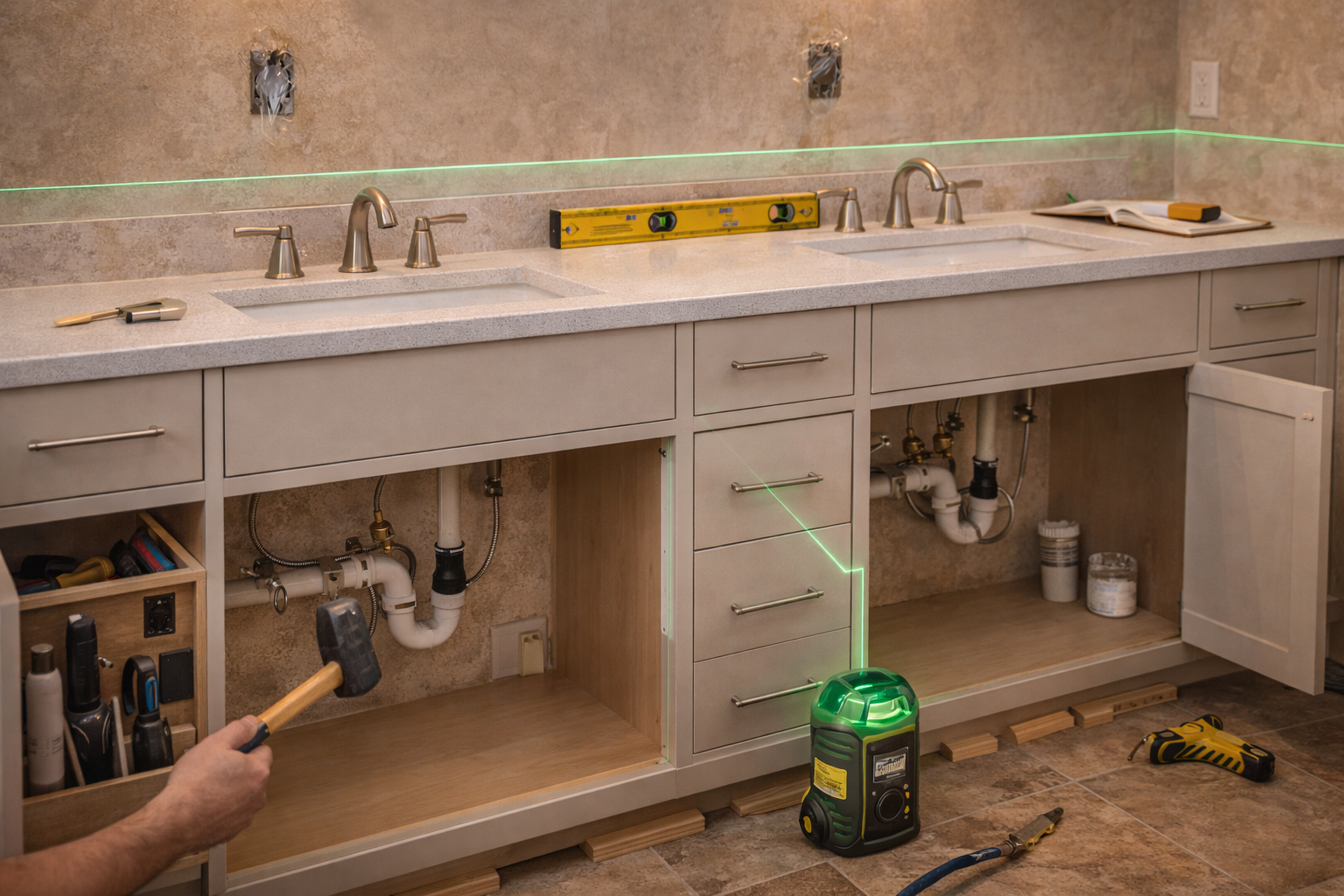
What Installation Details Matter in a Custom Vanity
Custom vanity installation depends on wall flatness, floor level, plumbing location, countertop fit, and how the mirrors and lights line up with the sinks below. Because the vanity is built for the room, small measuring errors or wall irregularities show up quickly if the installation is not handled carefully.
Why Do Measurements and Plumbing Position Matter So Much
Measurements matter because custom cabinets do not have much forgiveness once they are built. Plumbing position matters because the drain and supply lines affect what drawer layouts will actually fit. In practical remodel work, this is where custom vanity planning either pays off or becomes a problem if the field conditions were not checked carefully enough. For a closer look at this part of the project, homeowners can explore vanity remodel.
What Fit and Finish Problems Show Up During Installation
Common issues include walls that are out of square, floors that are out of level, countertops that do not sit tight to the wall, mirrors that do not center on sinks, and drawer layouts that conflict with plumbing. These are the details that determine whether the finished vanity feels built for the space or forced into it.
What Affects Custom Vanity Cost
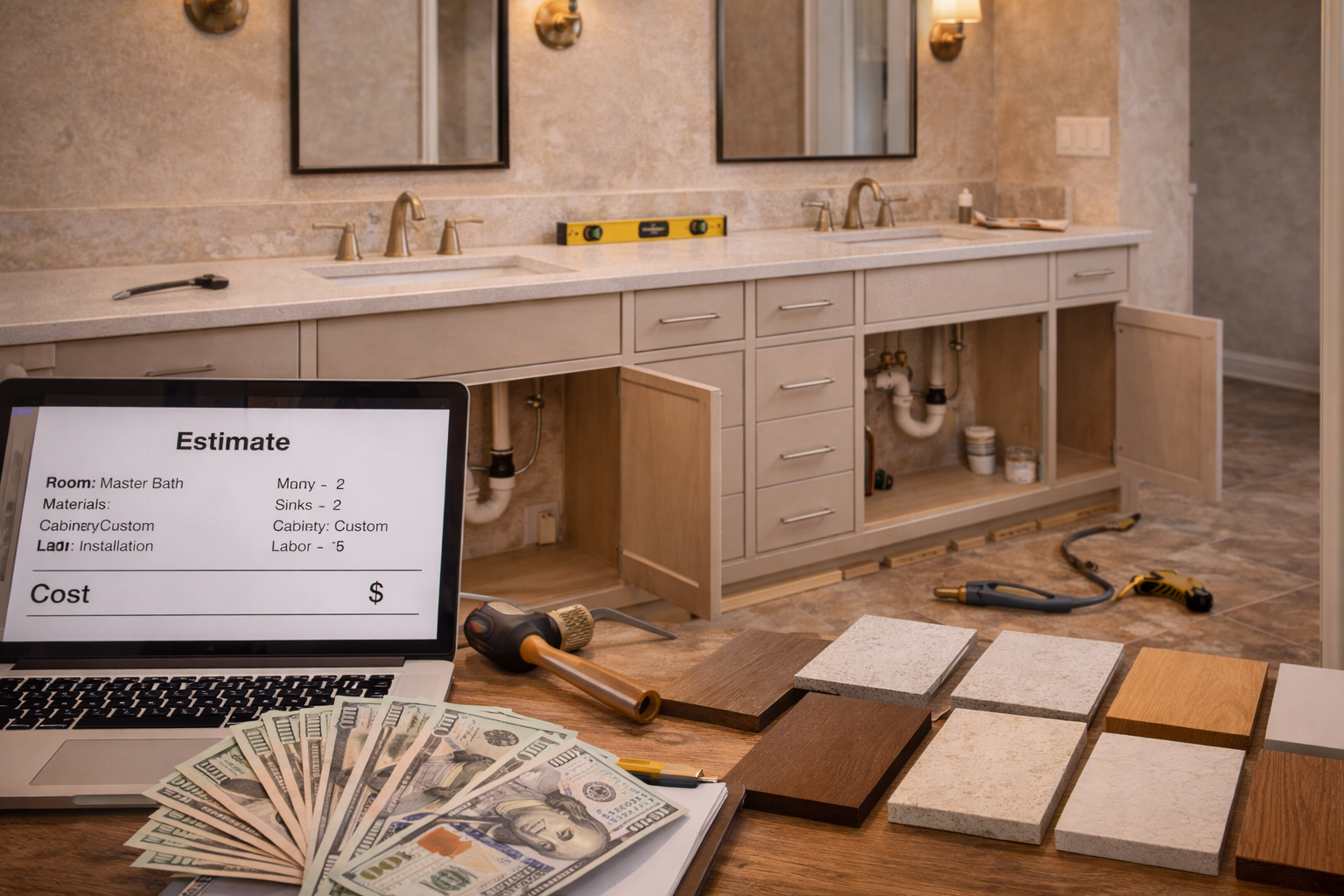
Custom vanity cost usually depends on cabinet size, cabinet complexity, finish level, countertop material, sink count, hardware quality, and how much coordination is needed with plumbing, mirrors, and lighting. A custom vanity costs more than a simple stock replacement because it involves more design, more fabrication, and more installation detail.
Which Custom Vanity Choices Usually Raise the Cost
Costs usually rise with double sinks, specialty finishes, custom drawer organizers, furniture-style details, built-in towers, premium countertops, and matching mirror and lighting upgrades. The more tailored the vanity becomes, the more labor and planning it usually takes to execute cleanly.
How Do Labor and Existing Conditions Change the Budget
Labor costs go up when the wall needs repair, plumbing needs to move, countertop templating is more complex, or the custom vanity is being integrated into a full bathroom remodel with new flooring and lighting. Existing conditions matter because custom work reveals and depends on the true shape and condition of the room.
What Mistakes Should Homeowners Avoid With a Custom Vanity
The biggest custom vanity mistakes usually happen when the project focuses on appearance without checking how the cabinet will actually fit the room and serve the people using it. Custom work only pays off when it solves real space, storage, and layout problems better than a stock vanity would.
Why Is It a Problem to Customize the Vanity Without a Storage Plan
A custom vanity can still waste space if the drawers are not designed around the items being stored or if the plumbing blocks the most useful cabinet zones. Custom should mean smarter storage, not just a cabinet made to a different width.
Why Is It Risky to Ignore Exact Site Conditions
Walls that are out of square, plumbing that is not where it was expected, and floor levels that are off can all create problems for a custom vanity if those conditions are not checked before fabrication. Accurate field measurements are part of what makes custom work successful.
How Should You Plan a Custom Vanity
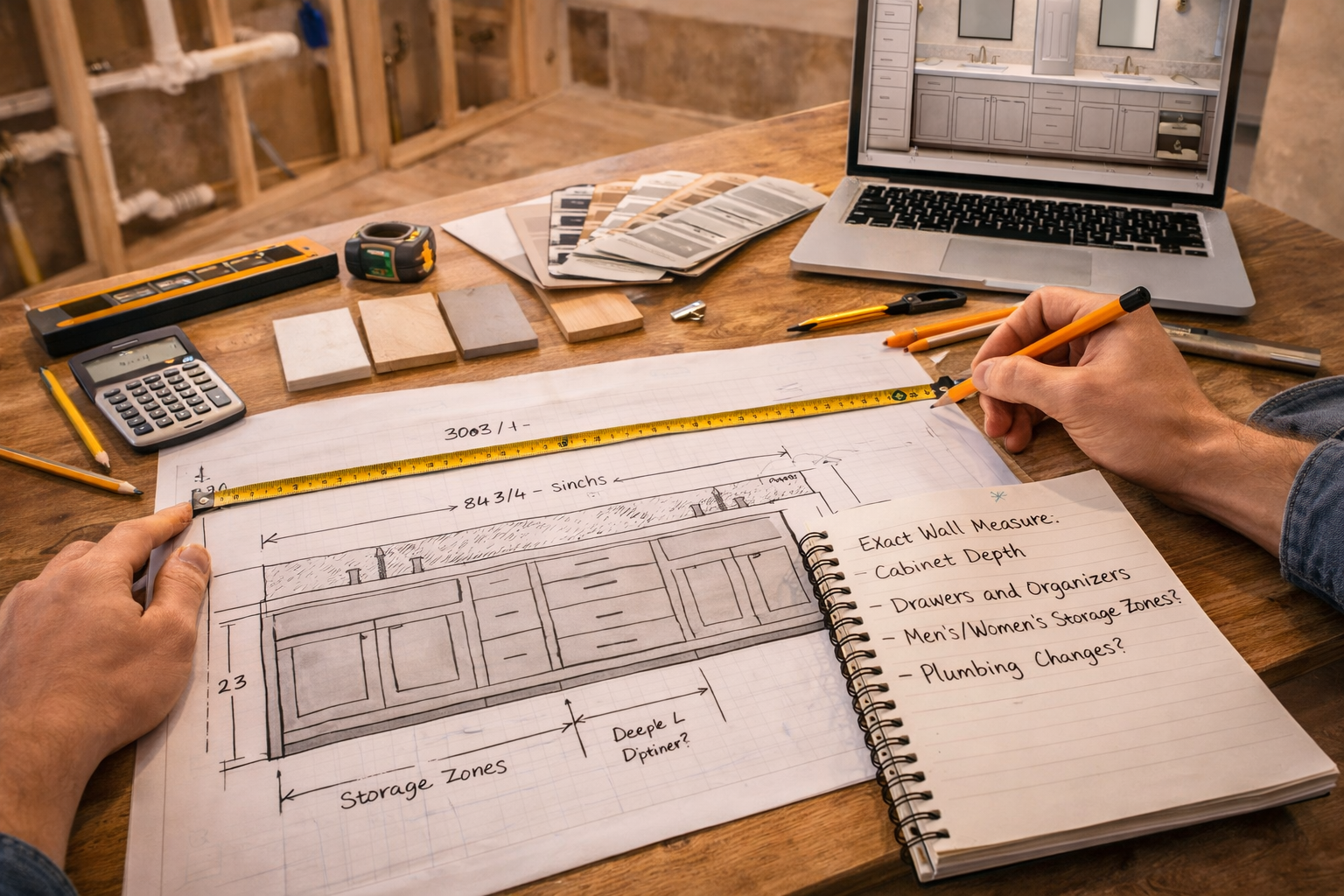
A custom vanity should be planned by measuring the room carefully, deciding what storage and sink layout the bathroom needs, and then designing the cabinet, countertop, mirrors, and lighting as one coordinated system. The best custom vanity plan solves layout, storage, and finish goals at the same time instead of treating the vanity like a stand-alone piece.
What Should Be Decided Before Custom Vanity Work Starts
Before construction starts, it helps to confirm wall width, cabinet depth, sink count, drawer priorities, countertop material, mirror size, lighting type, faucet placement, and whether the plumbing is staying in place or moving. These decisions affect fabrication, installation, and how well the vanity will fit the finished bathroom.
How Can a Homeowner Prepare for the Installation Process
Homeowners should be ready for site measuring, cabinet fabrication lead times, plumbing coordination, countertop templating, and the sequencing of vanity installation with mirrors, lights, and paint or tile finishes. Custom work usually rewards patience because more of the final result is being built specifically for the room.

Related Custom Vanity Topics
Custom vanity projects overlap with vanity remodeling, bathroom storage, bathroom lighting, bathroom layout changes, and countertop selection because all of those parts shape how the vanity wall looks and functions. Related topics help homeowners compare whether they need a fully custom cabinet or a different type of vanity upgrade.
Which Custom Vanity-Related Pages Should Connect to This Topic
Strong related pages include vanity remodels, double vanities, bathroom storage, vanity countertops, bathroom lighting, and medicine cabinets. Those topics help break down the bigger custom vanity project into specific design and function decisions.
Which Bathroom Remodeling Topics Often Connect to Custom Vanity Work
Custom vanity work often connects to flooring, lighting, layout changes, mirror planning, plumbing fixture upgrades, and full bathroom remodeling. In practical remodels, those pieces overlap because the vanity wall is a major feature in the room.
Frequently Asked Questions About Custom Vanity
A custom vanity is a vanity built to fit the bathroom’s exact dimensions, storage needs, and design goals instead of relying on preset stock cabinet sizes.
A custom vanity is often worth it when standard sizes waste space, when storage needs are specific, or when the vanity wall is a major design feature in the remodel.
Yes. A custom vanity can often add more useful storage because the drawer layout and cabinet dimensions are designed around the room and the items that need to be stored.
Usually, yes. They involve more design, fabrication, and installation detail than most stock vanity replacements.
Yes. Custom vanities are often used for double-sink layouts because they can be sized exactly to the wall and the spacing the bathroom allows.
Quartz is a common choice because it is durable and low maintenance, but the best countertop depends on style, budget, and how the bathroom is used.
The timeline depends on design decisions, fabrication lead time, countertop templating, and how much of the bathroom is being remodeled around the vanity.
Not always. A custom vanity can be built around existing plumbing, but some projects move plumbing to improve sink spacing or storage layout.
It can improve bathroom appeal when the vanity looks well integrated, adds useful storage, and fits the quality of the rest of the remodel.
The first step is measuring the wall carefully and deciding how much storage, counter space, and sink capacity the bathroom actually needs.