

Frameless Glass Shower Guide: Design, Installation, Costs, and Planning
Frameless Glass Shower Guide Index
- Frameless Glass Shower Overview
- When Does a Frameless Glass Shower Make Sense
- What Types of Frameless Glass Showers Are Common
- How Do Layout and Room Size Affect a Frameless Glass Shower
- What Materials and Components Are Used in a Frameless Glass Shower
- What Upgrades Can Be Added With a Frameless Glass Shower
- What Installation Details Matter in a Frameless Glass Shower
- What Affects Frameless Glass Shower Cost
- What Mistakes Should Homeowners Avoid With a Frameless Glass Shower
- How Should You Plan a Frameless Glass Shower
- Related Frameless Glass Shower Topics
- Frequently Asked Questions About Frameless Glass Showers
Frameless Glass Shower Overview
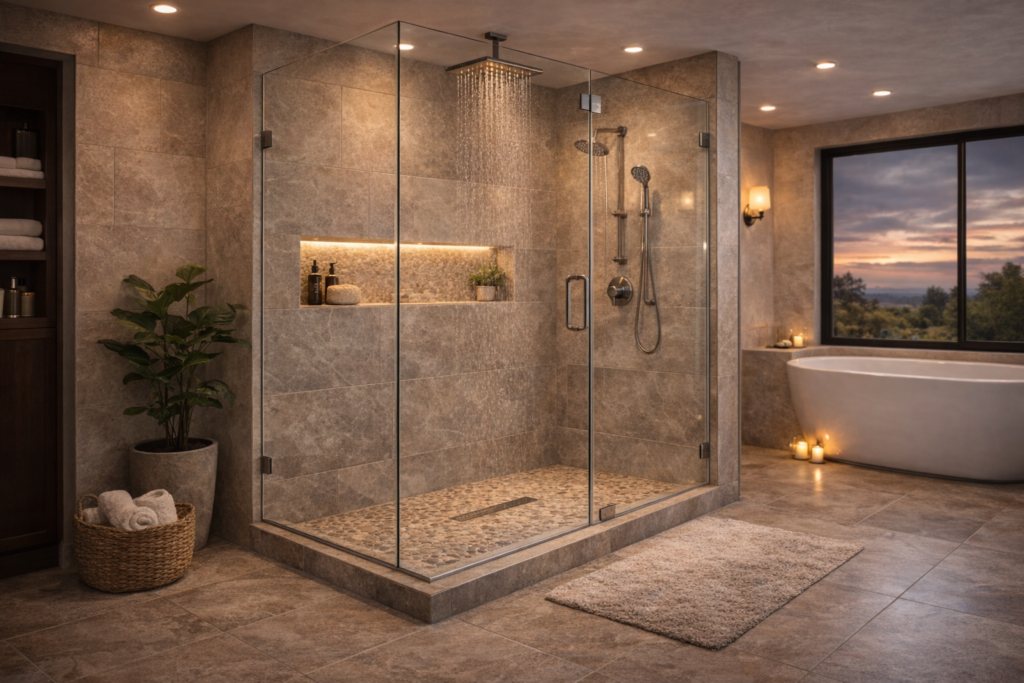
A frameless glass shower uses thick tempered glass panels with minimal visible metal framing so the shower feels more open and less visually heavy. In practical remodel work, that means the tile layout, wall plumb, shower curb or floor slope, and hardware anchoring all have to be more accurate because the glass is not hiding uneven work behind a bulky frame. Frameless glass showers are often chosen when the goal is a cleaner, more modern shower design.
What Gets Updated During a Frameless Glass Shower Project
The work may include the shower glass panels, hinges or clamps, door hardware, handle placement, tile edges, curb details, and supporting wall structure where the hardware anchors. In many remodels, the shower opening and tile layout are also refined so the glass can fit cleanly and the whole enclosure looks balanced.
What Is the Difference Between a Frameless Shower and a Framed Shower
A framed shower uses more visible metal channels and frame pieces to hold the glass panels and door in place. A frameless shower relies more on thicker glass and minimal hardware. That difference changes the appearance, the tolerances required during installation, and often the overall cost.
When Does a Frameless Glass Shower Make Sense
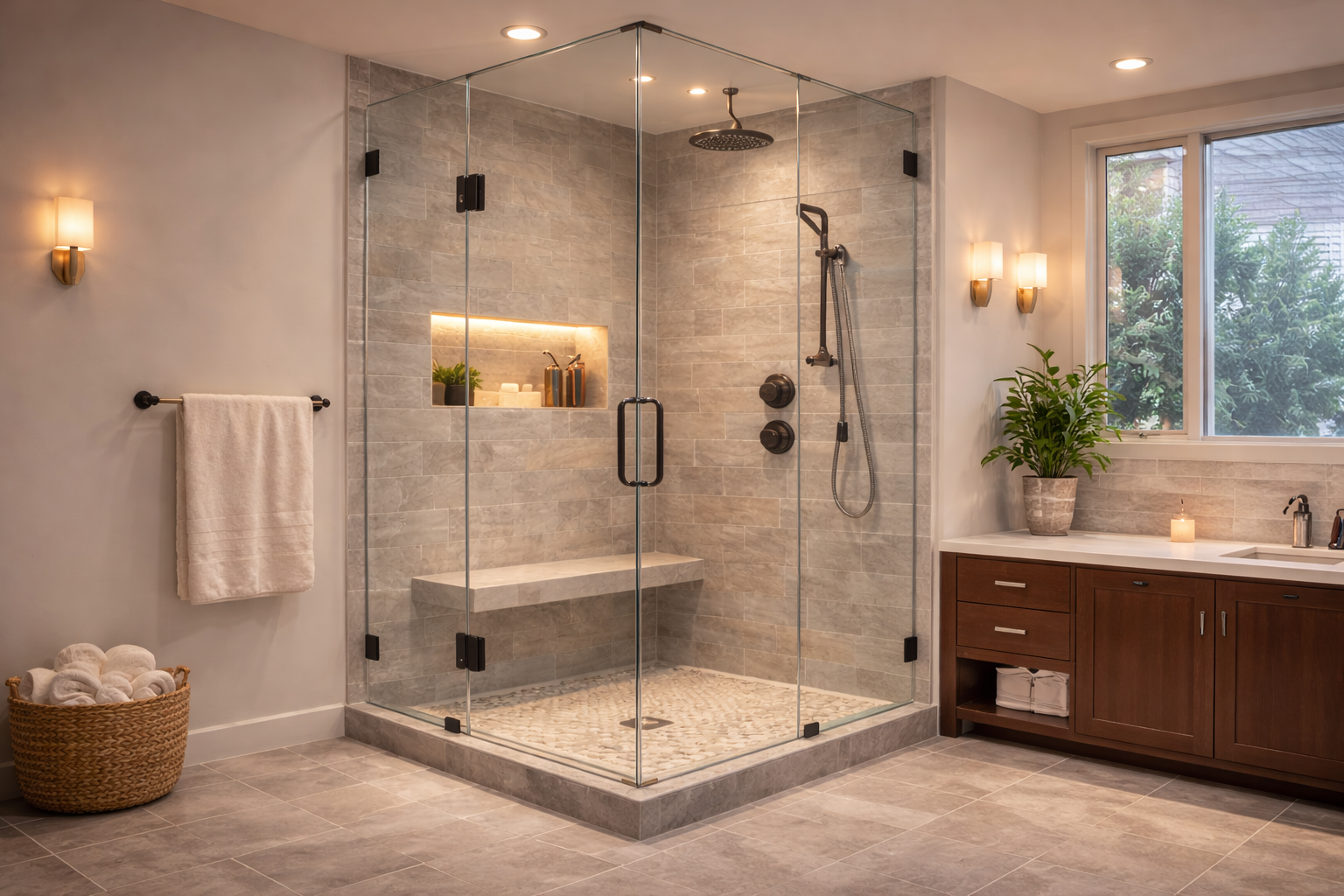
A frameless glass shower makes sense when the bathroom design benefits from a cleaner, more open look and when the shower itself is built well enough to support a more exposed glass installation. It is most common in remodels where the tile, layout, and overall shower design are already being upgraded to a higher finish level. During remodeling, it also helps to follow EPA indoor air quality guidance.
What Bathroom Conditions Usually Point to a Frameless Glass Shower
Common conditions include a newer or newly rebuilt shower, a layout that benefits from visual openness, and a homeowner who wants the tile and shower design to stay more visible instead of being broken up by heavy framing. Frameless glass also makes more sense when the room is trying to feel brighter or larger.
When Is a Frameless Glass Shower Not the Best Choice
A frameless glass shower is usually not the best choice when the shower is out of square, the budget is tight, or the design would work just as well with a simpler framed or semi-frameless system. In some bathrooms, the extra cost is not worth it if the surrounding construction is still basic.
What Types of Frameless Glass Showers Are Common
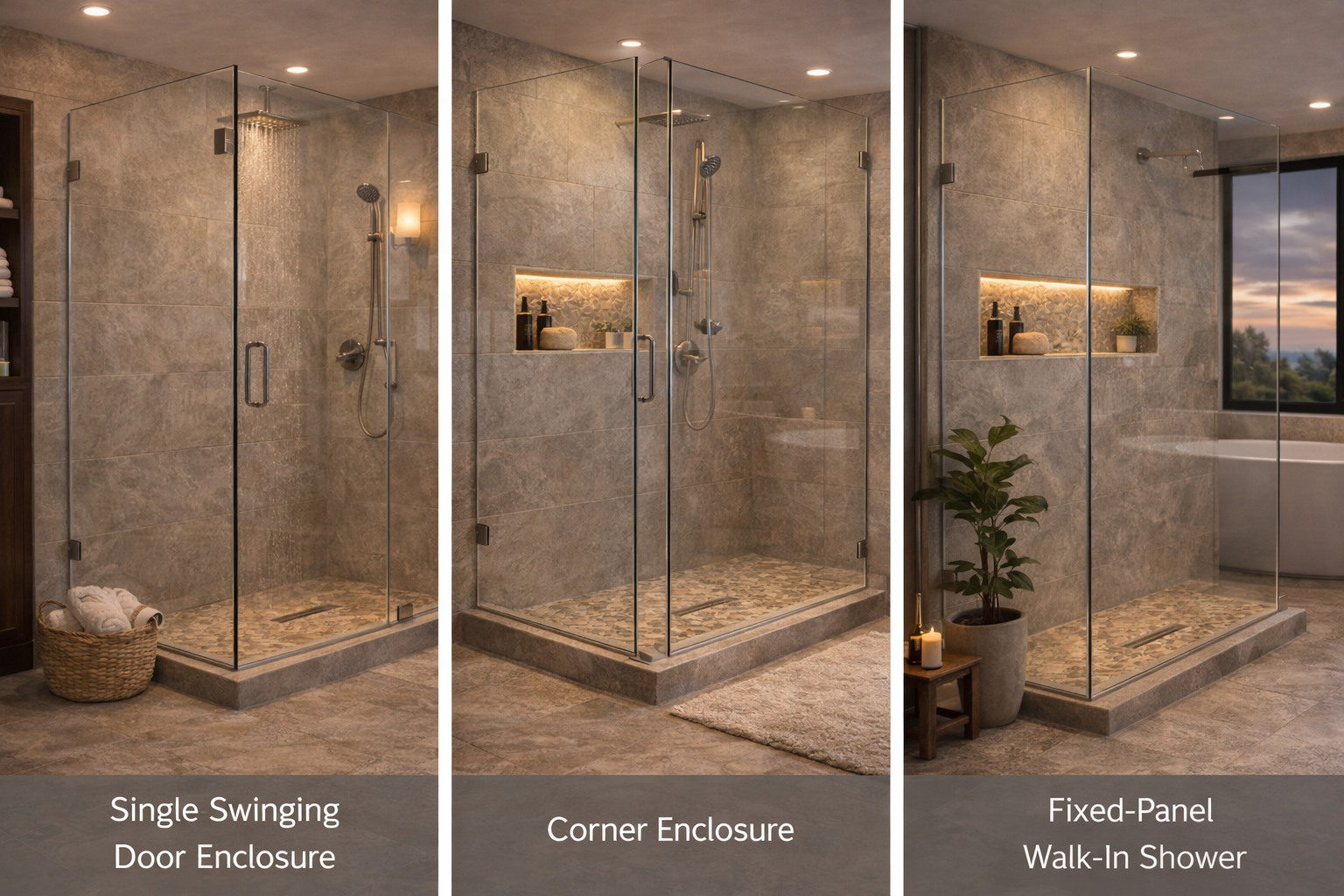
Common frameless glass shower types include single-door enclosures, fixed-panel walk-in showers, inline panel-and-door systems, corner enclosures, and larger multi-panel frameless shower designs. The right type depends on shower size, entry location, and how open or enclosed the shower should feel.
What Frameless Glass Shower Styles Are Most Common in Remodeling Projects
Single swinging door enclosures and fixed-panel walk-in showers are common because they fit many modern bathroom layouts and keep the visual line of the shower simple. Corner enclosures and wider multi-panel systems are common in larger bathrooms or when the shower opening is more complex. Projects with related upgrades often include choices around bathroom remodeling.
When Does One Frameless Glass Layout Make More Sense Than Another
A fixed glass panel may make more sense when the shower works well as an open-entry design and splash control is still adequate. A hinged door system may make more sense when the shower needs more water containment or when the room layout makes a full enclosure more practical. The best layout depends on shower use, not just appearance.
How Do Layout and Room Size Affect a Frameless Glass Shower
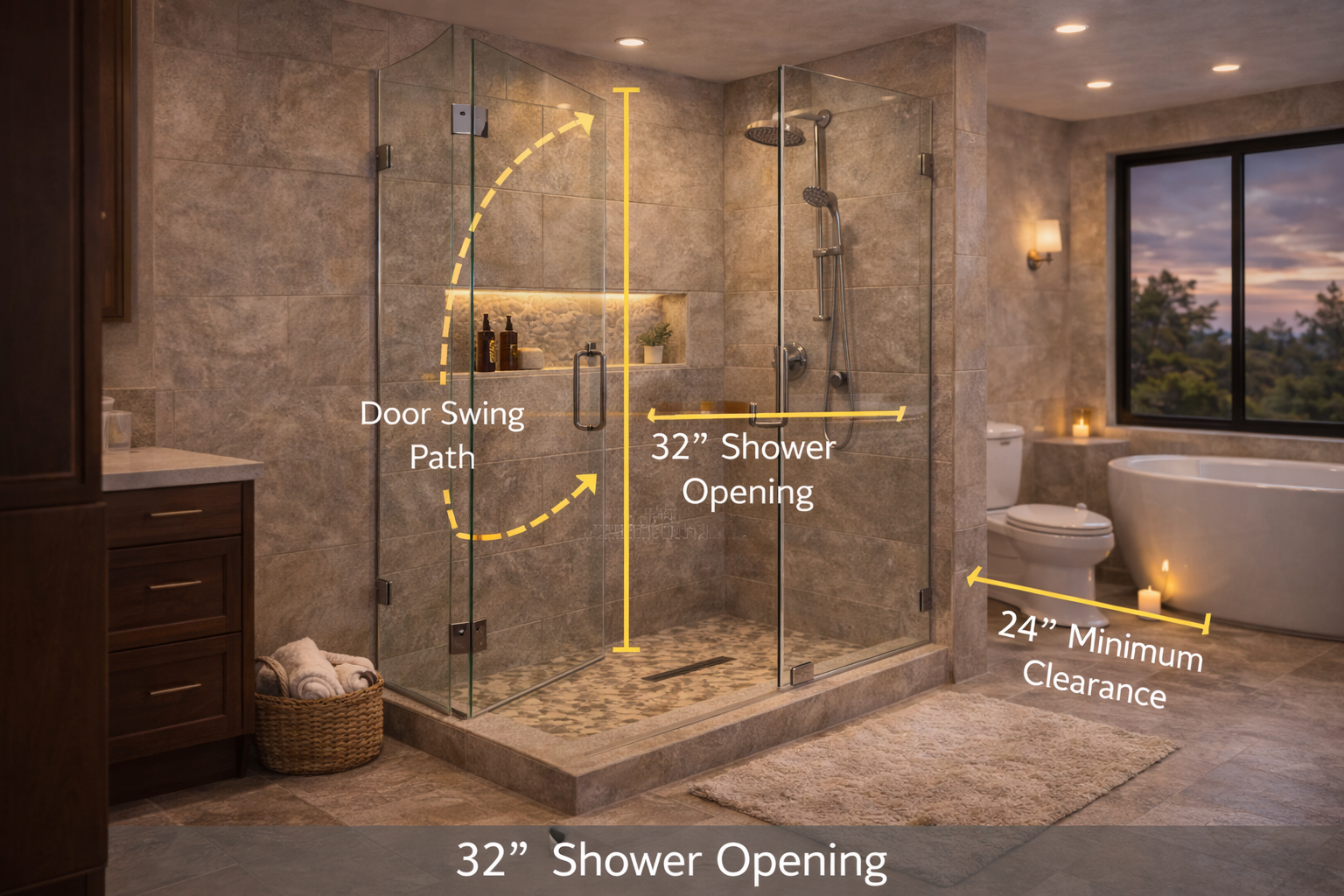
Layout and room size affect how much glass is needed, where the door can swing, and whether the shower should be more open or more enclosed. Frameless glass looks cleanest when the shower opening, curb, wall alignment, and surrounding clearances all work together without forcing the glass into awkward dimensions.
Why Does Door Swing and Shower Opening Size Matter So Much
Door swing matters because the glass door has to open safely without hitting a toilet, vanity, or nearby wall. Shower opening size matters because it affects daily comfort, splash control, and whether the shower can be entered easily. These details should be solved before the glass is measured.
How Does Bathroom Size Change the Best Frameless Glass Strategy
In a smaller bathroom, a single panel or carefully placed hinged door may keep the room feeling open while still controlling water. In a larger bathroom, the design may support wider glass panels, bigger enclosures, and more dramatic frameless layouts. The best strategy depends on the room geometry and the shower design as a whole.
What Materials and Components Are Used in a Frameless Glass Shower
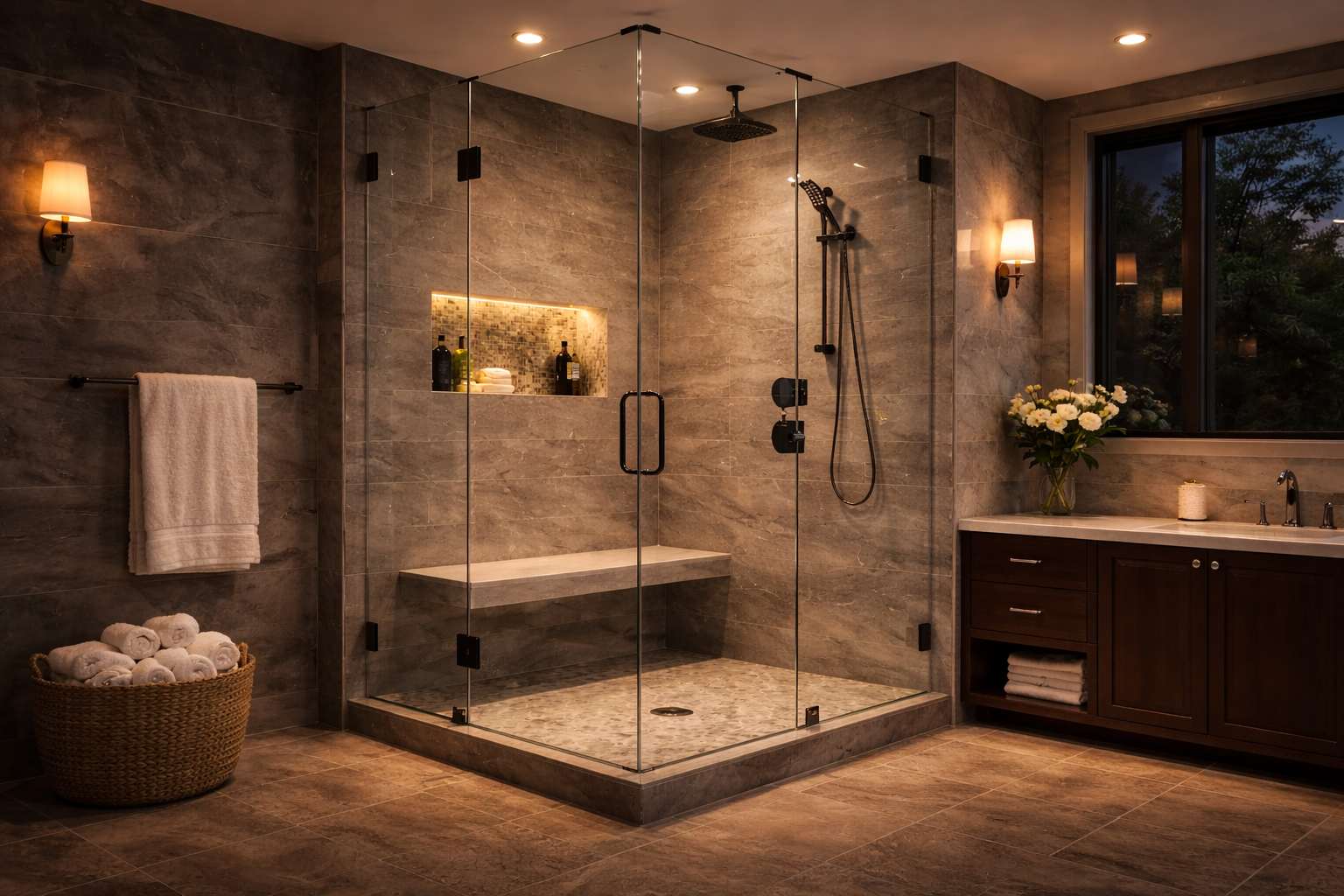
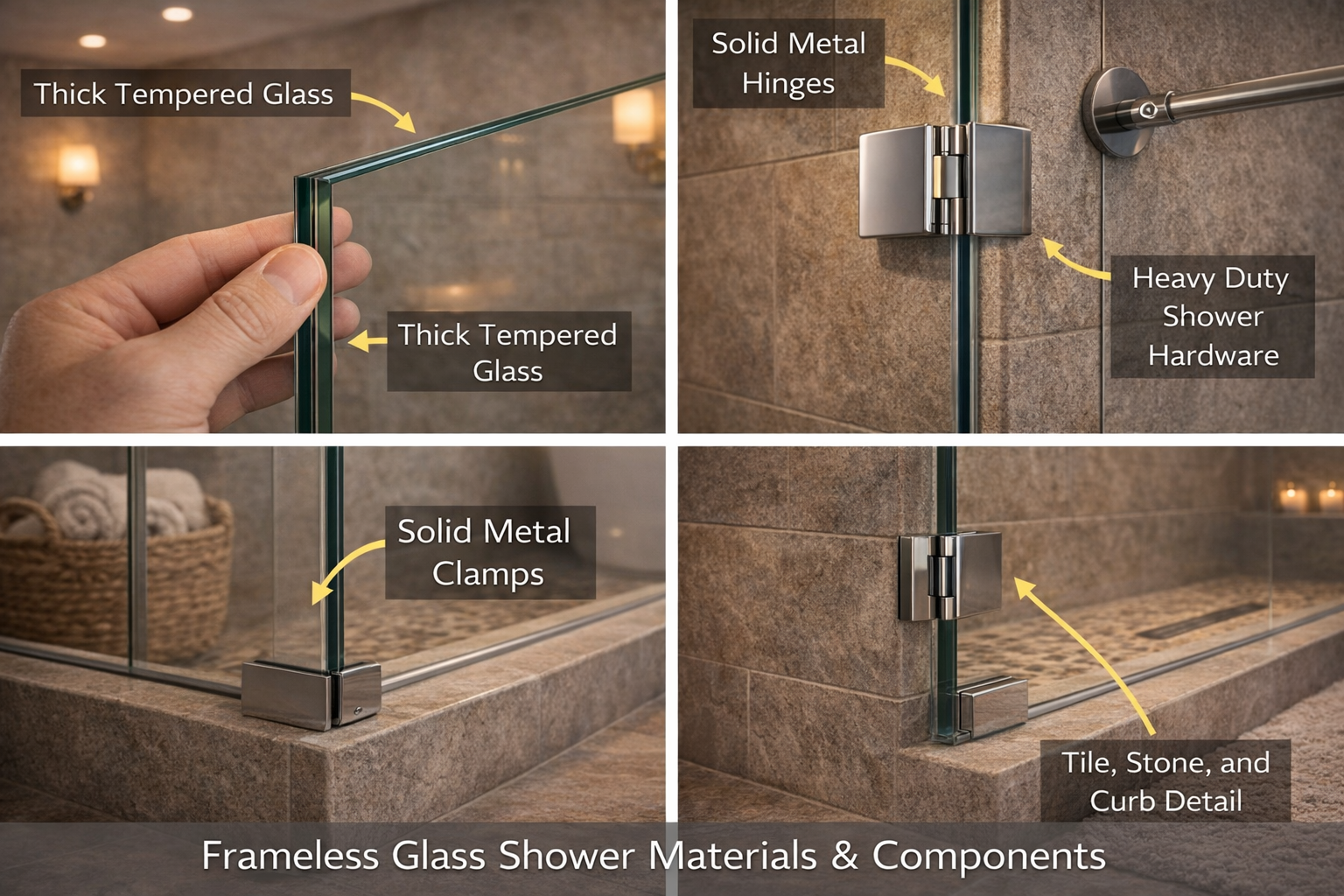
A frameless glass shower uses tempered glass, hinges or clamps, handles, seals, stabilizer bars where needed, and the tile or stone surfaces the hardware anchors into. Because the framing is minimal, the glass and the hardware have to do more of the visible work, which makes material quality important.
What Glass and Hardware Materials Are Common
Thick tempered glass is standard in frameless shower systems because it provides the strength needed without relying on a bulky perimeter frame. Common hardware finishes include chrome, brushed nickel, matte black, and brass so the glass enclosure can coordinate with the shower trim and the rest of the bathroom.
What Supporting Finish Materials Usually Matter Most
Tile edge quality, curb finish, wall flatness, and shower pan or floor detail matter a lot because the glass sits directly against or near these surfaces. A frameless glass enclosure looks best when the surrounding finish work is straight, balanced, and cleanly detailed. For technical installation guidance, many pros refer to TCNA tile standards.
What Upgrades Can Be Added With a Frameless Glass Shower
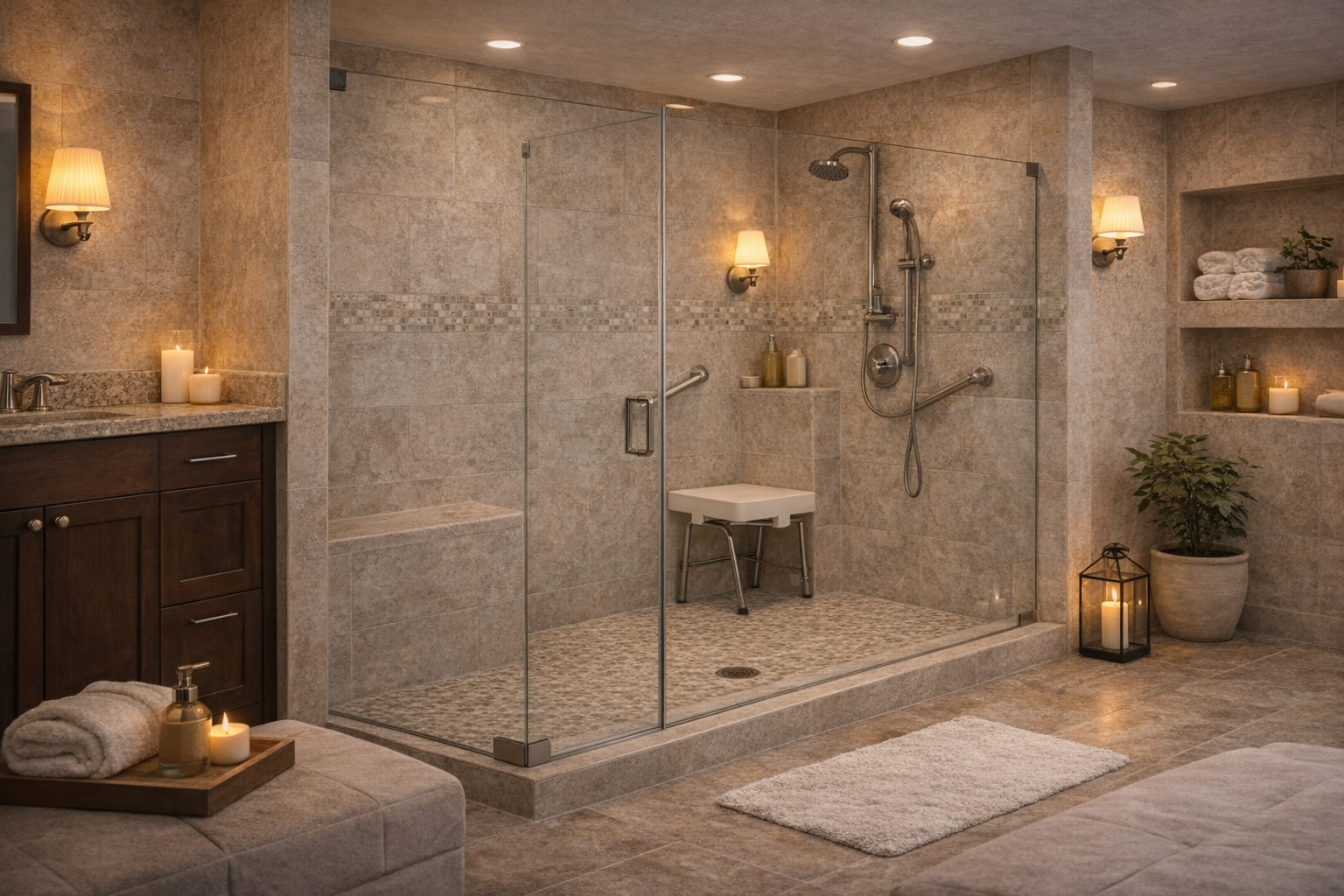
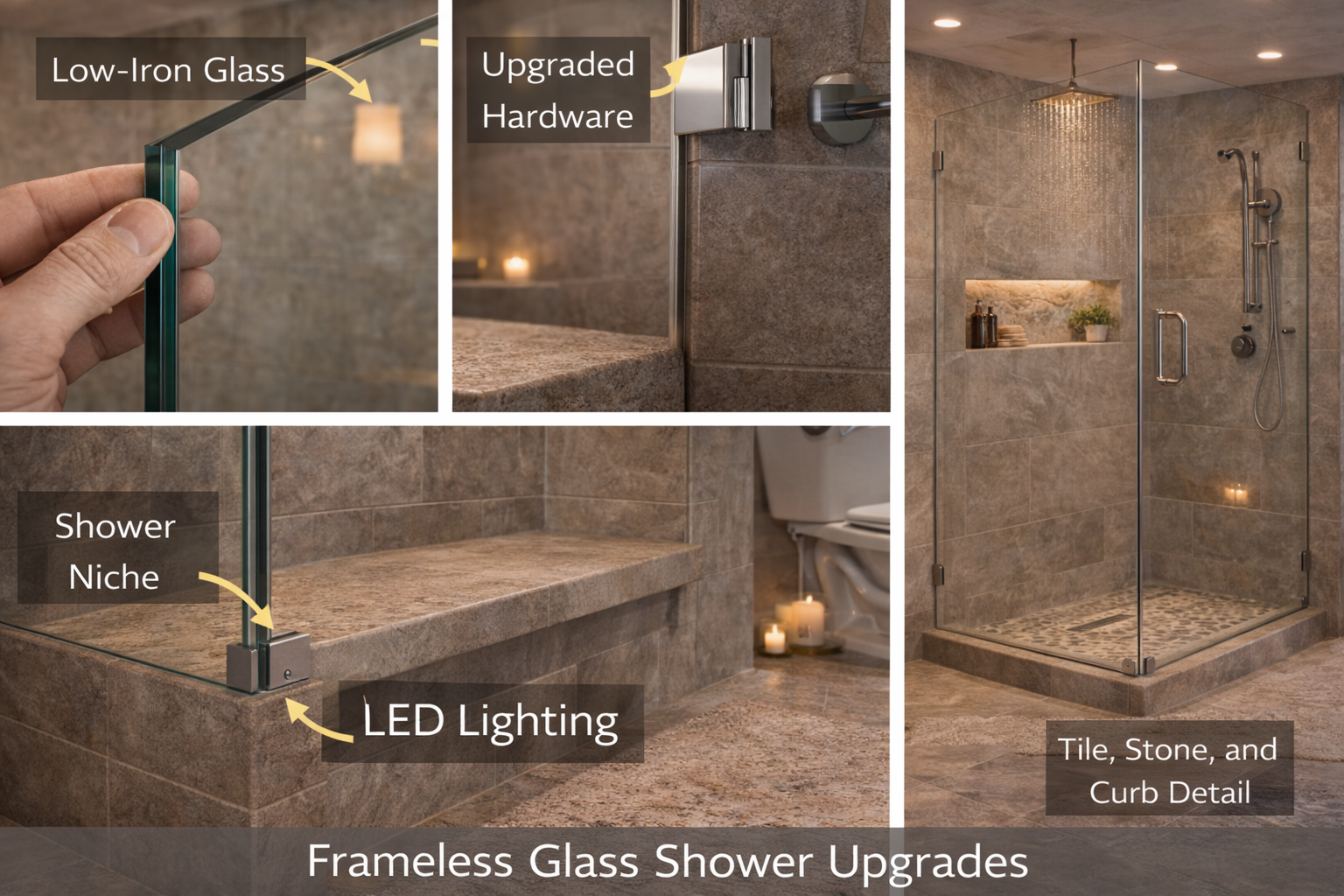
Frameless glass shower work is often the best time to add upgrades that improve both the look and the function of the shower. Common upgrades include premium handles and hinges, low-iron glass, shower niches, bench seating, upgraded tile layouts, cleaner curb details, and better lighting inside or near the shower.
What Functional Upgrades Are Most Useful With Frameless Glass
Functional upgrades often include better water containment planning, easier-clean glass coatings, improved handle placement, and shower layouts that make entry more comfortable without compromising splash control. These upgrades matter because frameless glass should work well in daily use, not just look sharp in photos.
What Design Upgrades Usually Happen at the Same Time
Frameless glass projects often include upgraded tile, larger format wall surfaces, niche details, premium plumbing trim, and more refined lighting. Once the metal frame is removed visually, the quality of everything behind the glass becomes more noticeable.
What Installation Details Matter in a Frameless Glass Shower
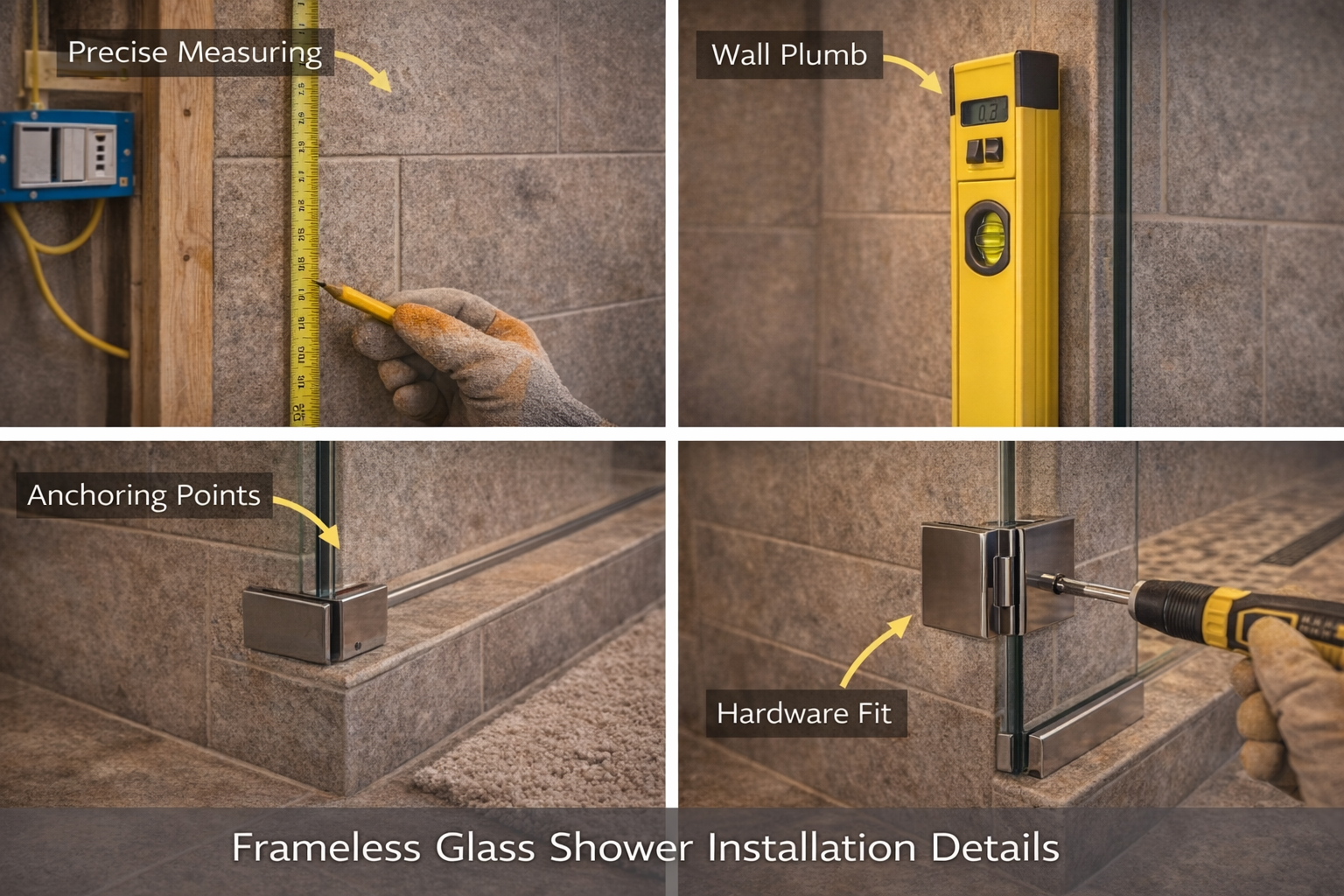
Frameless glass shower installation depends on precise measuring, plumb walls, strong anchoring points, and hardware placement that works with the tile joints and shower layout. Frameless systems leave less room to hide bad measuring or poor wall conditions than framed systems do. Homeowners who want to dig deeper into this feature can review shower remodel.
Why Do Wall Plumb and Hardware Anchoring Matter So Much
If the walls are out of plumb or the anchoring points are poorly planned, the glass may not fit cleanly, the door may not swing properly, and the enclosure can look visibly off. Hardware anchoring matters because the glass and door movement place real load on the mounting points over time.
What Measurement and Fit Problems Show Up During Installation
Common issues include gaps that are too wide, doors that do not align well, panels that do not sit cleanly on the curb or floor, and hardware locations that conflict with grout joints or waterproofing details. These are practical details that shape whether the enclosure feels high-end or improvised.
What Affects Frameless Glass Shower Cost
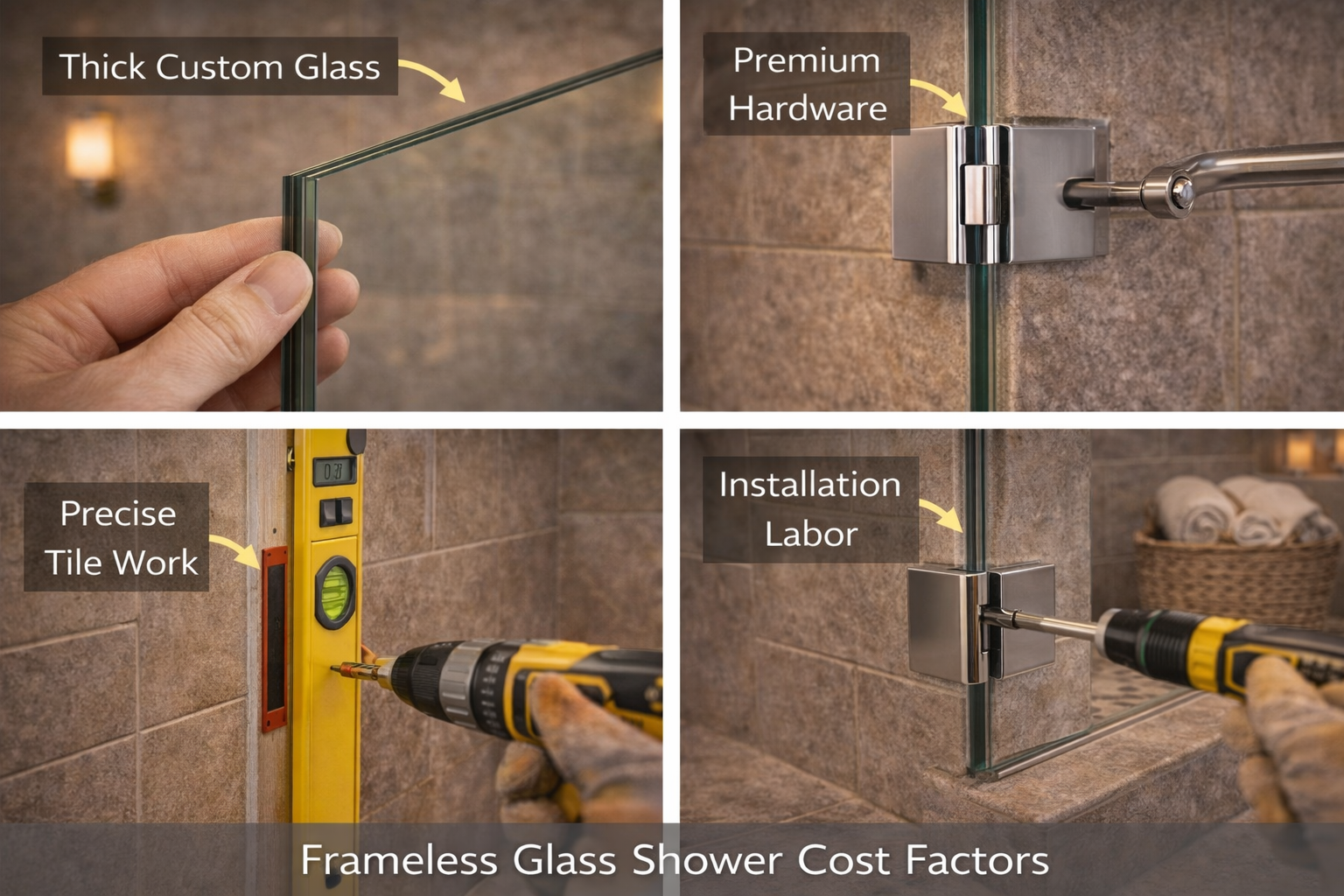
Frameless glass shower cost usually depends on glass thickness, panel count, hardware quality, enclosure size, custom measurements, and how precise the surrounding shower construction needs to be. Frameless systems usually cost more than framed ones because both the glass and the installation demand higher precision.
Which Frameless Glass Choices Usually Raise the Cost
Costs usually rise with larger glass panels, custom shapes, low-iron glass, premium hardware finishes, more complex door systems, and larger enclosures. The more custom the enclosure becomes, the more fabrication and installation detail it usually requires.
How Do Labor and Existing Conditions Change the Budget
Labor costs go up when walls are out of square, tile work needs refinement, anchoring conditions are difficult, or the enclosure design is more complex than a standard single-door system. Existing conditions matter because frameless glass depends heavily on the shower being built accurately.
What Mistakes Should Homeowners Avoid With a Frameless Glass Shower
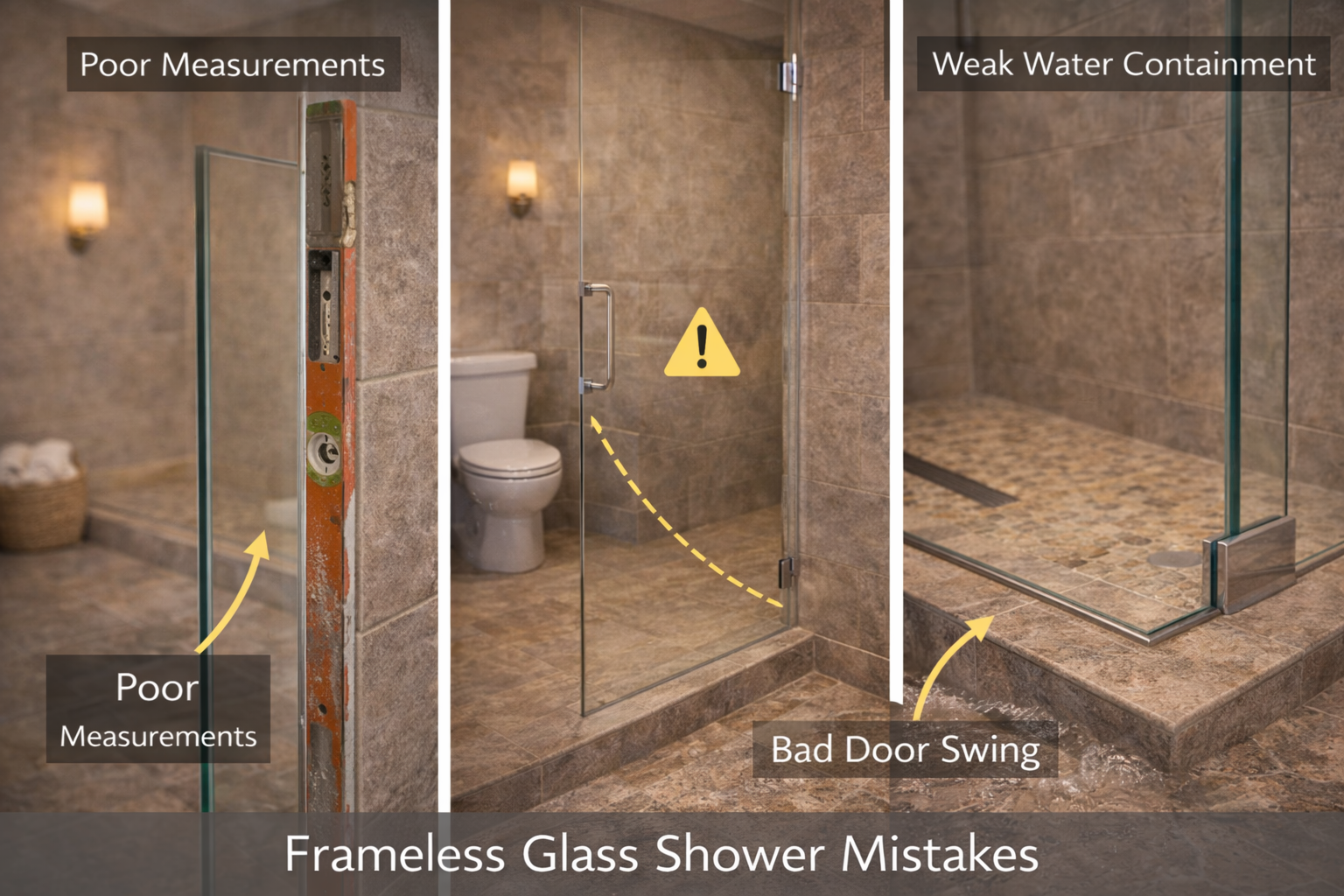
The biggest frameless glass shower mistakes usually happen when the glass is treated like a finishing detail instead of part of the shower design from the start. Frameless glass only works well when the shower layout, tile, hardware support, and water containment are planned together. For layout and clearance planning, many designers reference NKBA planning guidelines.
Why Is It a Problem to Choose Frameless Glass Without Checking the Shower Construction
If the walls, curb, and tile are not built accurately, the glass may expose every problem instead of improving the look of the shower. Frameless glass usually rewards precise construction and makes poor construction more visible.
Why Is It Risky to Ignore Water Containment and Door Function
A frameless enclosure should still contain water and work comfortably every day. If the entry, panel layout, or door swing are poorly planned, the shower may look modern but function badly in normal use.
How Should You Plan a Frameless Glass Shower
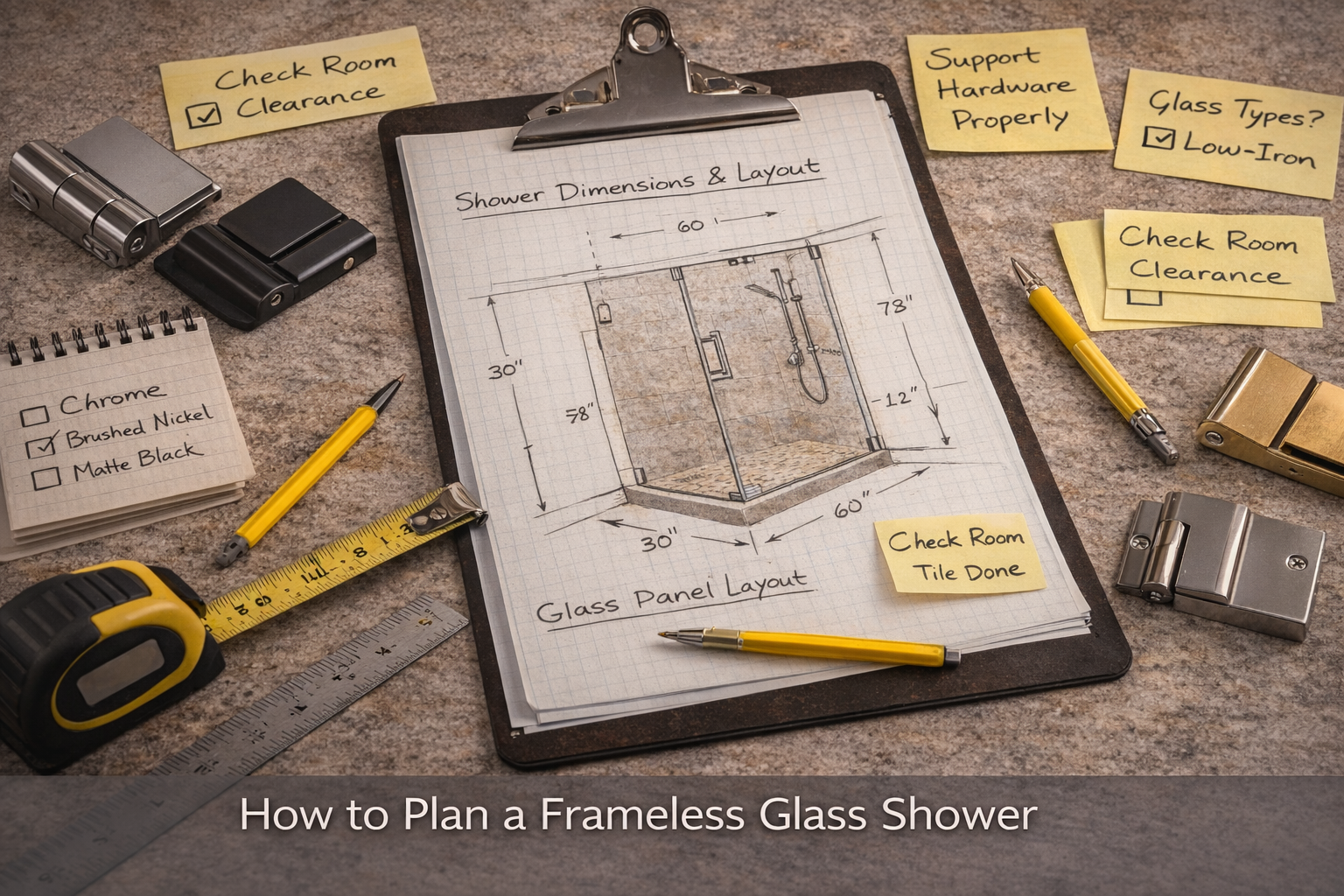
A frameless glass shower should be planned by deciding how open or enclosed the shower needs to be, checking the room clearances, and matching the glass layout to the shower construction before final measurements are taken. The best plan balances design, splash control, hardware location, and daily usability.
What Should Be Decided Before Frameless Glass Work Starts
Before construction starts, it helps to confirm shower opening size, glass layout, door swing, hardware finish, tile edge detail, curb or curbless design, and where the walls will support the hardware properly. These choices affect the whole shower build, not just the glass order at the end.
How Can a Homeowner Prepare for the Installation Process
Homeowners should be ready for precise measurement after the tile and waterproofing work is complete, lead time for custom glass fabrication, and careful coordination between the shower installer, tile installer, and glass installer. Frameless glass projects usually go best when they are treated as part of the full shower design from the beginning.
Related Frameless Glass Shower Topics
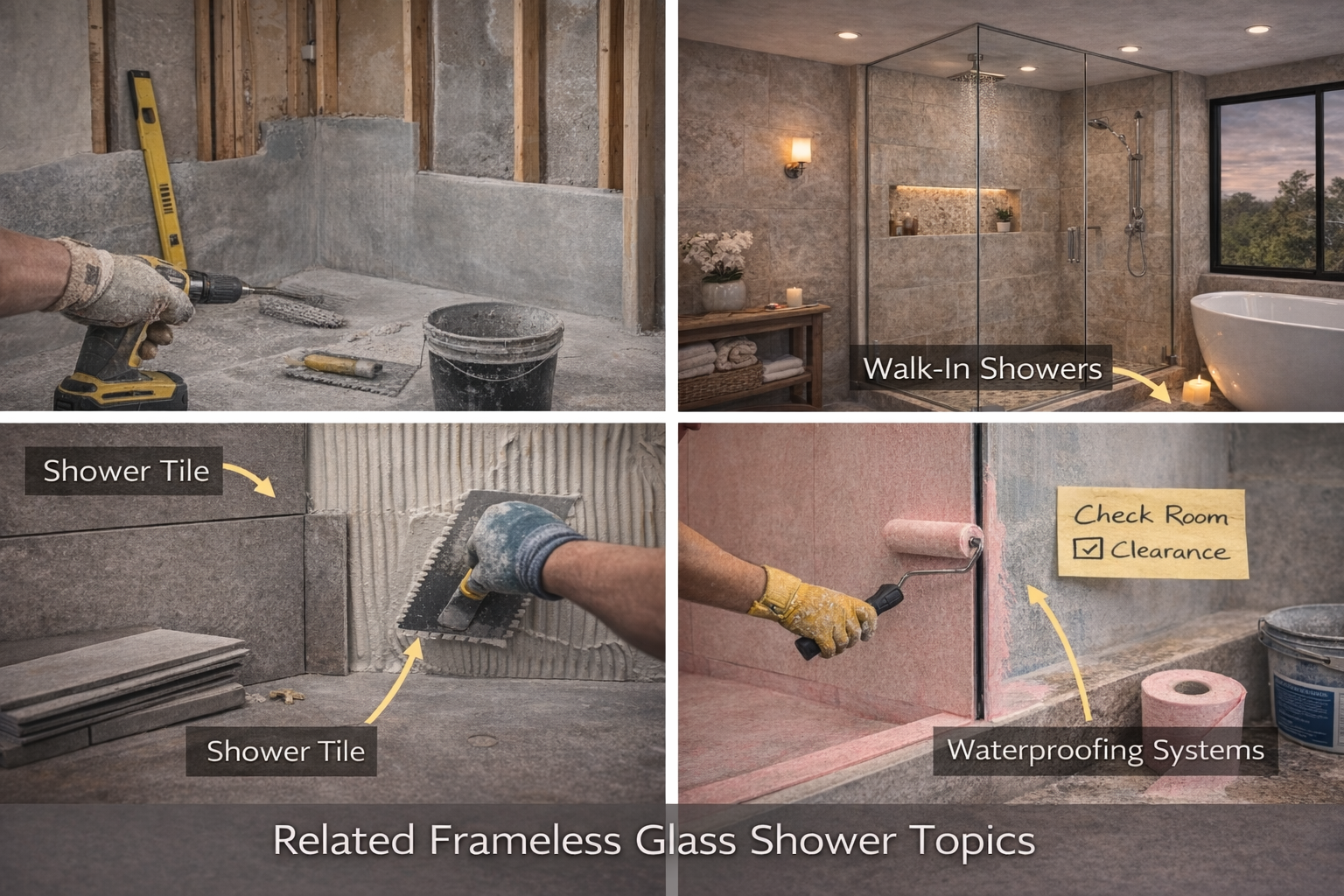
Frameless glass shower projects overlap with shower remodeling, walk-in shower design, shower tile, waterproofing, and bathroom layout planning because the glass enclosure depends on the whole shower being built correctly. Related topics help homeowners compare whether frameless glass is the right enclosure style for the remodel.
Which Frameless Glass Shower-Related Pages Should Connect to This Topic
Strong related pages include shower remodels, walk-in showers, shower tile, shower glass, curbless showers, and waterproofing systems. Those pages help break down the layout, finish, and installation decisions that shape a good frameless enclosure.
Which Bathroom Remodeling Topics Often Connect to Frameless Glass Shower Work
Frameless glass shower work often connects to flooring, lighting, bathroom layout changes, and full bathroom remodeling. In practical remodels, these pieces overlap because the glass enclosure highlights the quality of the whole shower and the room around it.
Frequently Asked Questions About Frameless Glass Showers
A frameless glass shower uses thick tempered glass and minimal hardware instead of a heavy visible frame around the enclosure.
They can be worth it when the bathroom benefits from a cleaner, more open look and the shower construction is accurate enough to support the glass well.
Not necessarily, but water containment depends heavily on the layout, glass design, and shower construction. Good planning matters more than the label alone.
Cleaning needs depend on the glass and the water conditions in the home. Some homeowners find frameless glass easier to keep looking clean because there is less metal framing to collect buildup.
Yes. Frameless glass can work well in small bathrooms because it often helps the room feel more open, as long as the shower layout is planned correctly.
Usually, yes. Frameless systems often cost more because the glass is thicker and the installation requires more precision.
Yes. Frameless glass is commonly paired with curbless showers, but the layout and splash control need to be designed carefully.
The timeline depends on when the glass is measured, fabricated, and installed after the shower construction is complete.
It can improve appeal when it fits the style and quality level of the remodel, especially in bathrooms aiming for a cleaner modern finish.
The first step is deciding how open or enclosed the shower should be, then designing the shower structure and tile layout around the glass plan.