


Kitchen Lighting Guide: Fixture Types, Layout, Costs, and Planning
Kitchen Lighting Guide Index
- Kitchen Lighting Overview
- When Should Kitchen Lighting Be Updated
- What Types of Kitchen Lighting Are Common
- How Do Layout and Kitchen Size Affect Kitchen Lighting
- What Components Are Used in Kitchen Lighting Work
- What Upgrades Can Be Added During a Kitchen Lighting Remodel
- What Installation Details Matter in Kitchen Lighting
- What Affects Kitchen Lighting Cost
- What Mistakes Should Homeowners Avoid With Kitchen Lighting
- How Should You Plan Kitchen Lighting
- Related Kitchen Lighting Topics
Kitchen Lighting Overview
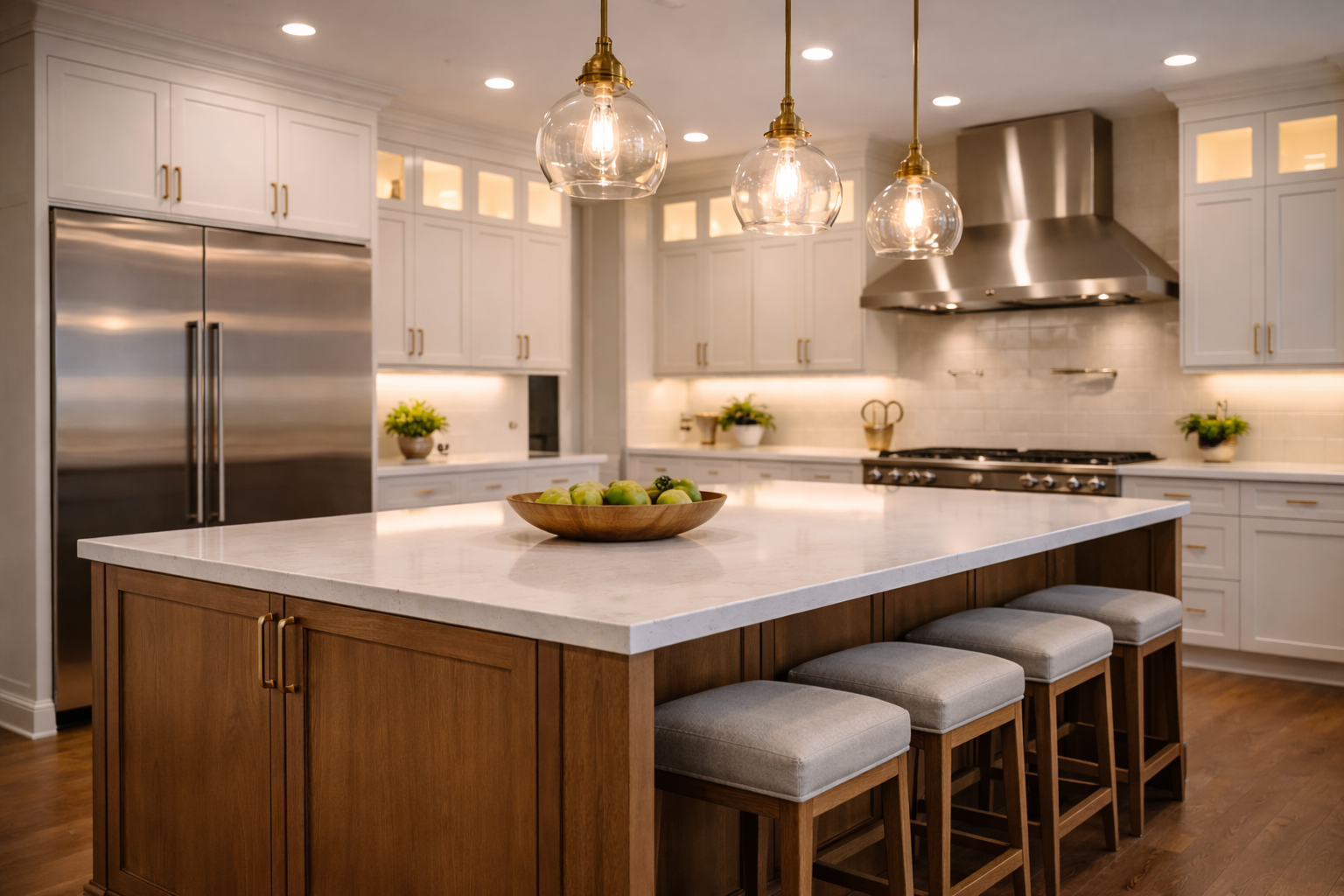
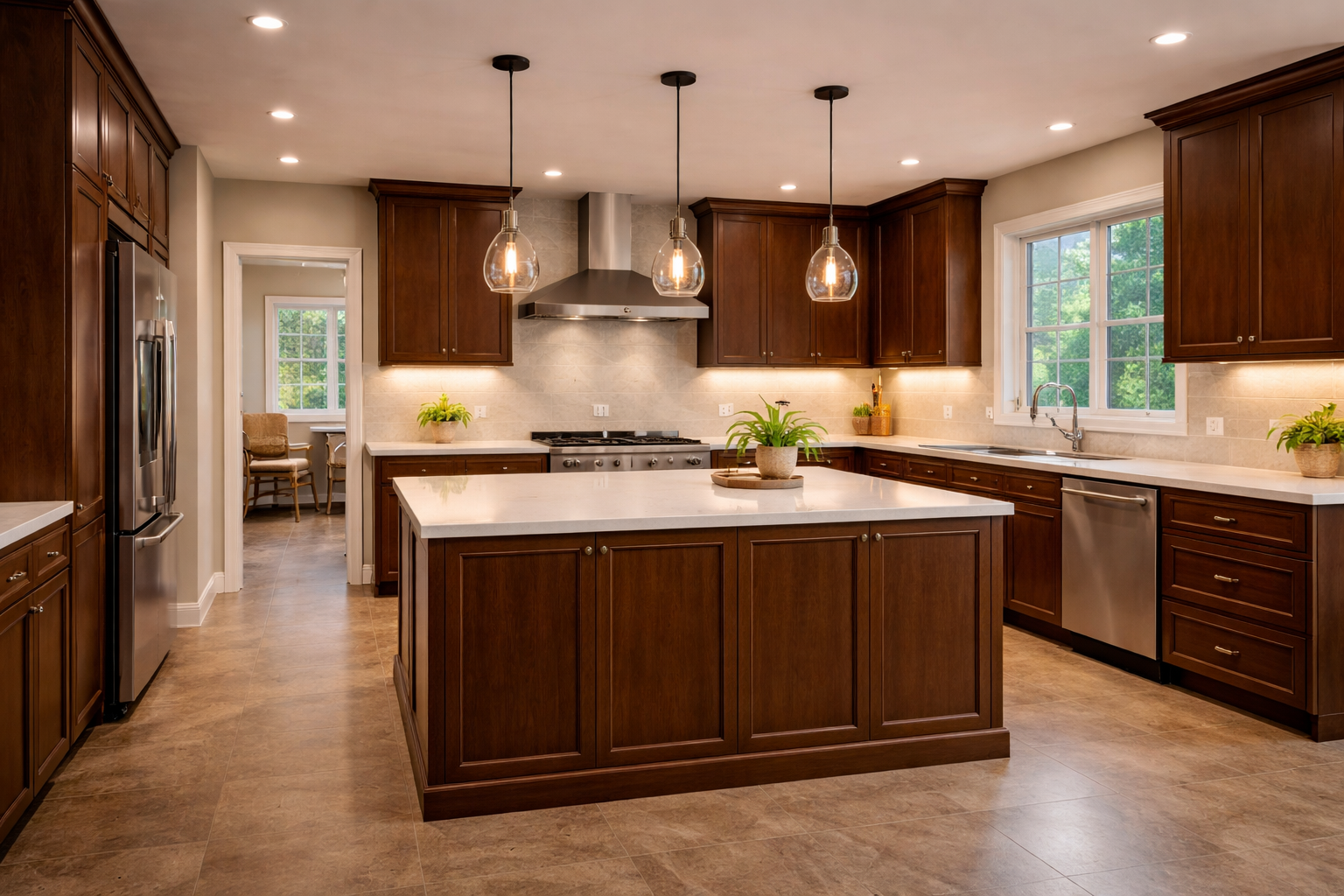
Kitchen lighting affects prep work, cooking visibility, cleanup, and how the whole room feels at different times of day. In practical remodel work, kitchen lighting means more than adding a few ceiling fixtures. It usually involves combining general lighting, task lighting, and accent lighting so the counters, island, sink, and cooking zones are all lit well enough to use safely and comfortably.
What Gets Updated During a Kitchen Lighting Remodel
The work may include recessed ceiling lights, pendant lights, under-cabinet lighting, sink-area lighting, dimmers, switch controls, and in some kitchens upgrades to the electrical layout so the lighting supports the new cabinet and island plan better. In many remodels, lighting changes also improve how the kitchen connects visually to nearby living or dining spaces.
What Is the Difference Between Replacing Fixtures and Reworking Kitchen Lighting
Replacing fixtures updates the look of the lights while keeping the overall lighting plan mostly the same. Reworking kitchen lighting changes how the room is illuminated by adjusting fixture placement, light layering, controls, and task visibility. That broader approach usually improves how the kitchen works much more than fixture style alone.
When Should Kitchen Lighting Be Updated
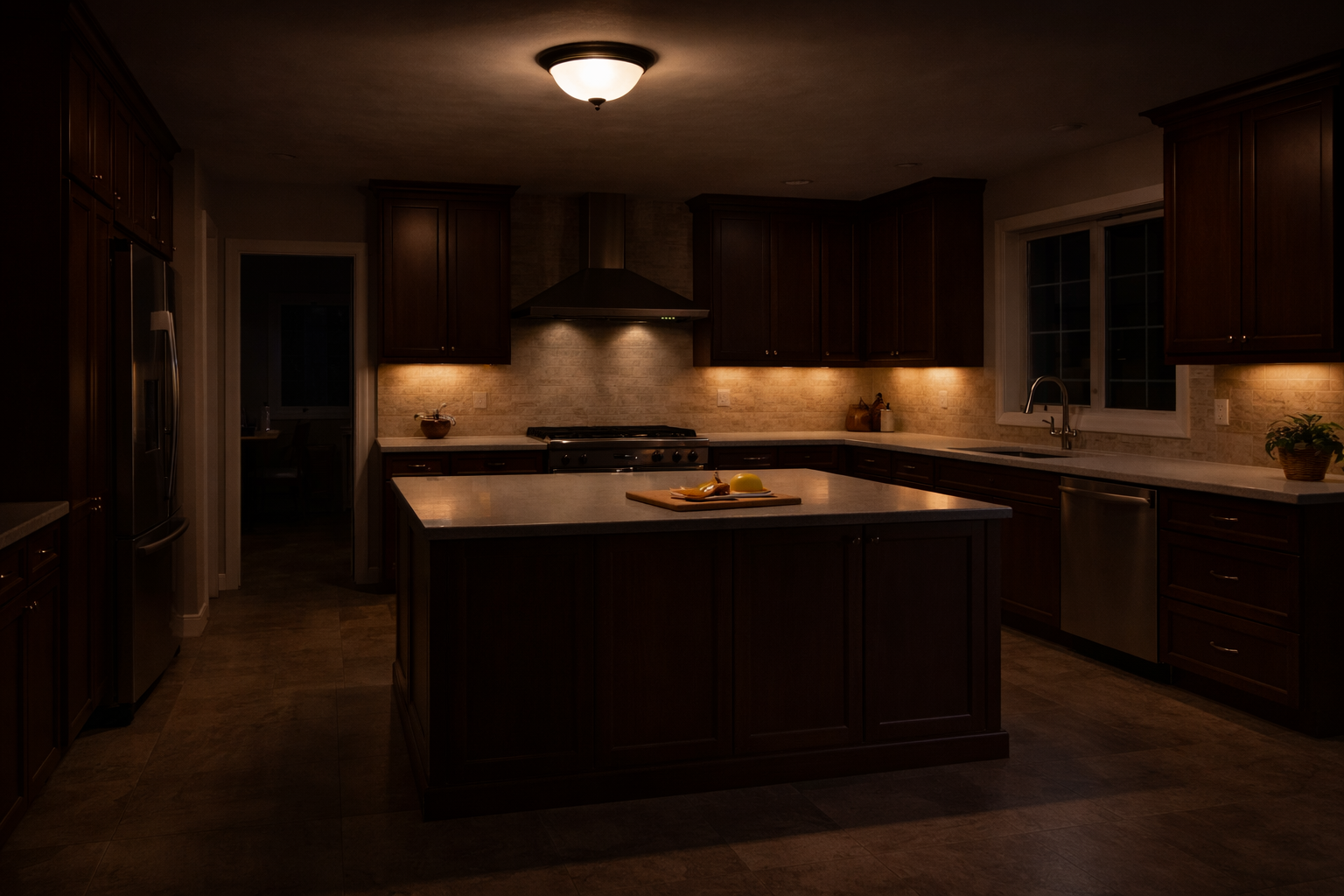
Kitchen lighting should usually be updated when the room feels dim, prep areas are full of shadows, fixtures are outdated, or the lighting no longer fits the kitchens new cabinets, counters, or layout. Common warning signs include dark island seating, poor under-cabinet light, a single center fixture trying to light the whole room, and weak lighting over the sink or range. For layout and clearance planning, many designers reference NKBA planning guidelines.
What Signs Show That Kitchen Lighting Is Not Working Well
Clear signs include dark countertops, glare in the wrong places, poor visibility when cooking, shadows across prep areas, and fixtures that feel too small, too yellow, or too dated for the room. In many kitchens, lighting problems are not obvious until the cabinets or backsplash are improved and the old lighting still leaves the room underpowered.
What Remodeling Goals Usually Lead to Lighting Upgrades
Lighting upgrades are common when homeowners want a brighter kitchen, better task visibility, a stronger island focal point, more useful dimming control, or a cleaner modern finish. They also happen when the kitchen layout changes and the old fixture positions no longer support the new work zones above finished flooring.

What Types of Kitchen Lighting Are Common
Common kitchen remodeling lighting types include recessed ceiling lights, pendant lights over islands, under-cabinet lighting, sink lights, range hood lights, toe-kick accent lighting, and in some kitchens decorative sconces or interior cabinet lighting. The right mix depends on the size of the kitchen, the location of the work zones, and how the room is used beyond cooking.
What Kitchen Lighting Styles Are Most Common in Remodeling Projects
Recessed lights are common because they provide broad general lighting without visually crowding the ceiling. Pendant lights are common over islands where they can add both task light and a stronger design focus. Under-cabinet lighting is especially common because it improves visibility right where prep work happens most.
When Does One Lighting Type Make More Sense Than Another
Recessed lights may make more sense when the room needs strong even coverage. Pendant lighting makes more sense when the island needs more definition and task focus. Under-cabinet lighting makes more sense when the counters are still shadowed even after the ceiling lights are on. The best lighting mix depends on what the kitchen actually needs to do.
How Do Layout and Kitchen Size Affect Kitchen Lighting
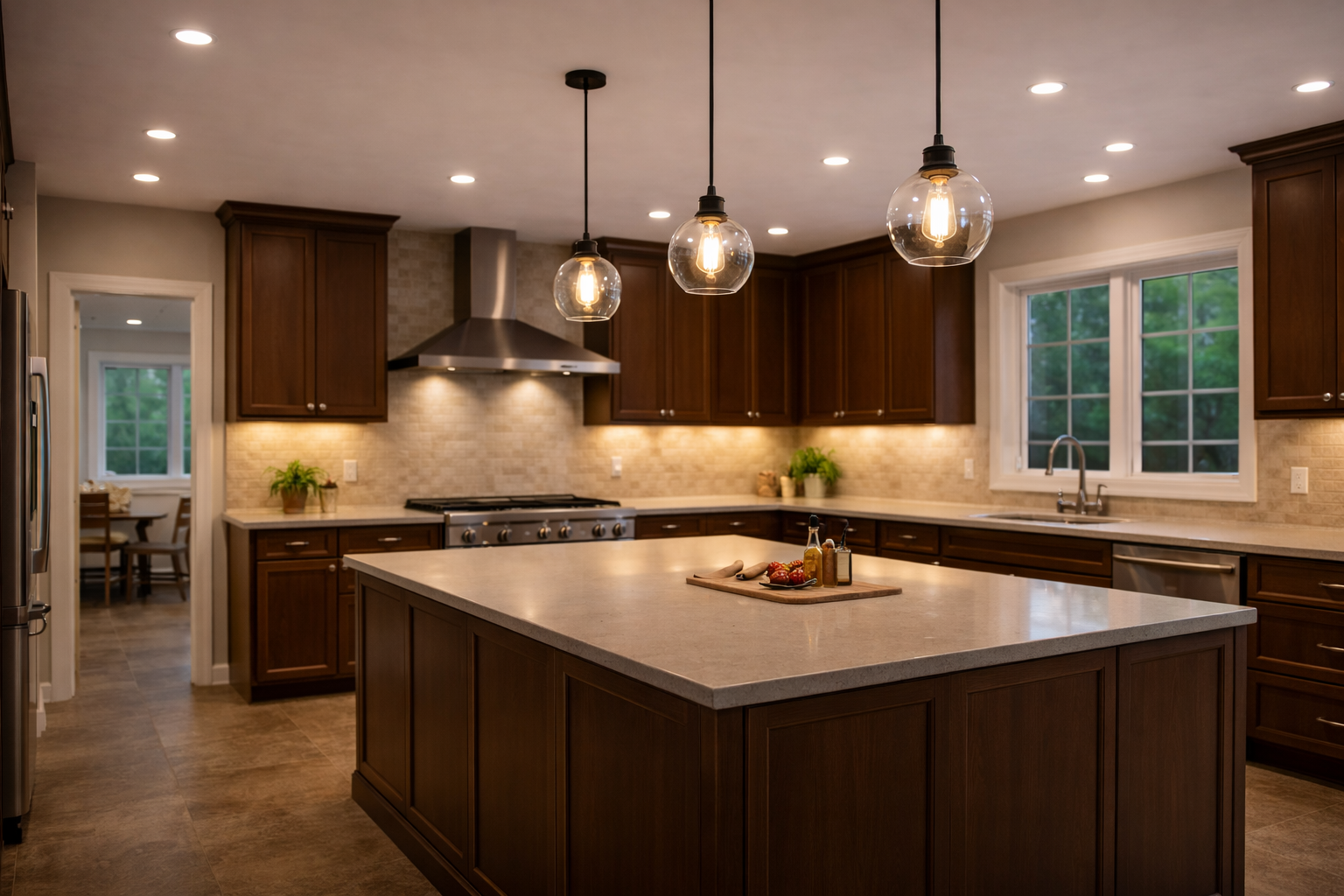
Layout and kitchen size affect how many fixtures are needed, where they should go, and how the lighting should be layered across prep, cooking, seating, and cleanup zones. A lighting plan that works in a small galley kitchen may be completely wrong in a large open kitchen with an island and multiple activity zones. For layout and clearance planning, many designers reference NKBA planning guidelines.
Why Does Fixture Placement Matter So Much in a Kitchen
Fixture placement affects whether the counters are lit clearly, whether the island gets usable task light, whether the sink is shadowed, and whether the range area feels safe to cook at. In practical remodel work, good placement matters more than buying more expensive fixtures.
How Does Kitchen Size Change the Best Lighting Strategy
In a smaller kitchen, the best lighting strategy may focus on efficient ceiling coverage and strong under-cabinet lighting without cluttering the room visually. In a larger kitchen, the remodel may support more layers such as island pendants, separate task zones, and stronger dimming control between work and gathering areas.

What Components Are Used in Kitchen Lighting Work
Kitchen lighting work uses more than the visible fixtures. The project may involve recessed housings or trims, pendants, under-cabinet light strips, dimmers, switches, junction boxes, wiring runs, and smart controls depending on the design. These components all work together to shape how the room is actually lit.
What Electrical and Fixture Components Are Common
Common components include recessed cans or integrated downlights, pendant fixtures, under-cabinet LED systems, dimmer switches, multi-gang switch controls, and sometimes smart lighting controls. The right components depend on how layered and flexible the lighting plan needs to be.
What Cabinet and Finish Components Usually Matter Most
Under-cabinet placement, pendant alignment over islands, switch location, and the relationship between the lighting and the cabinet or hood layout matter because the fixtures have to work with the kitchen, not fight it. These details often determine whether the finished lighting feels intentional.
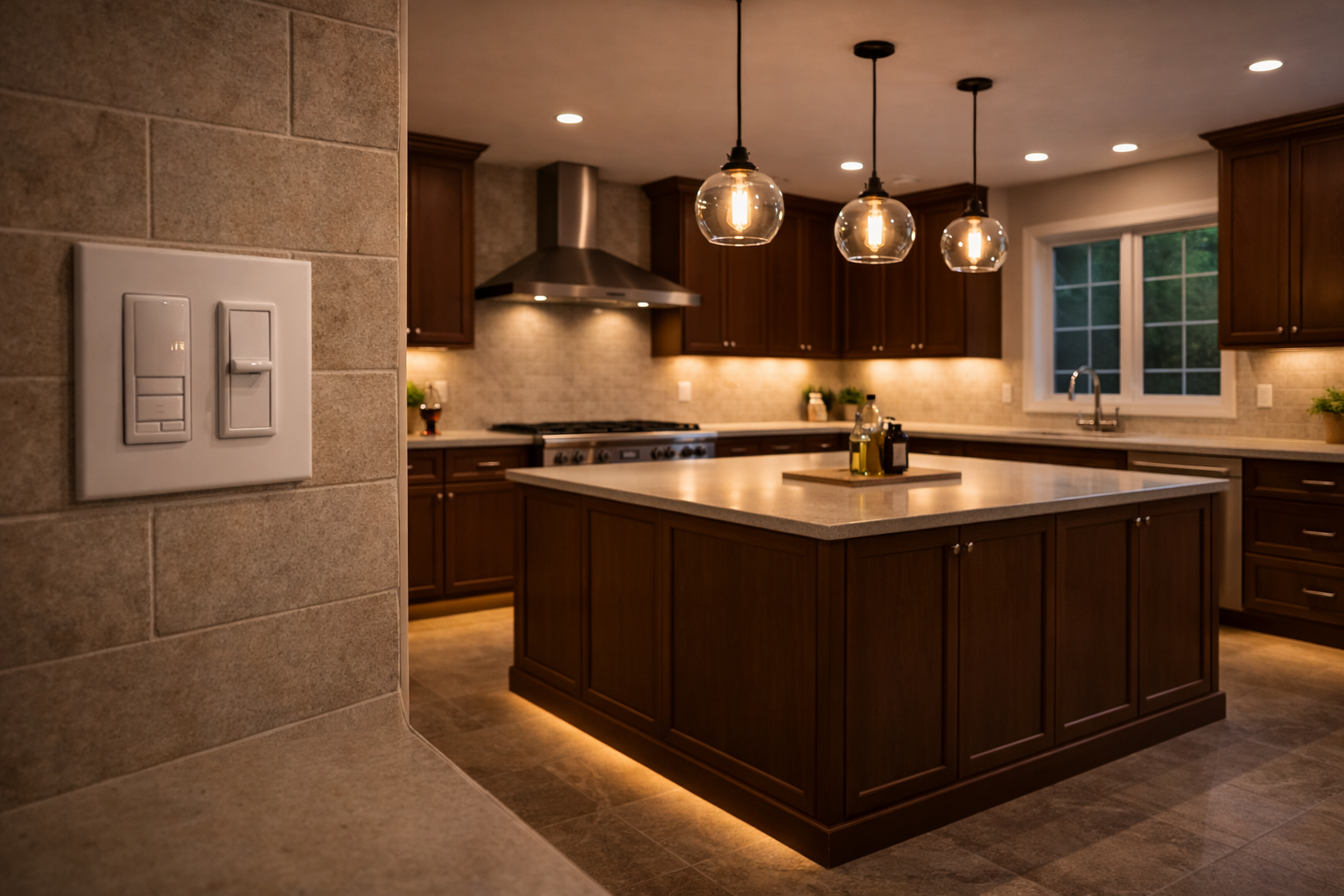
What Upgrades Can Be Added During a Kitchen Lighting Remodel
Lighting work is often the best time to add upgrades that improve both daily function and the overall feel of the kitchen. Common upgrades include dimmers, better under-cabinet lighting, larger island pendants, improved range and sink lighting, toe-kick lighting, and more layered control between work mode and gathering mode. Material selection can also be informed by EPA greener products guidance.
What Functional Upgrades Are Most Useful With Kitchen Lighting
Functional upgrades often include stronger prep lighting, clearer visibility at the sink and range, and better control over how bright the room feels at different times of day. These upgrades matter because the kitchen is both a work space and a living space in many homes.
What Design Upgrades Usually Happen at the Same Time
Kitchen lighting upgrades often include more coordinated pendants, cleaner trim around recessed lights, cabinet and backsplash updates that work better with the new lighting, and a more polished visual hierarchy between ceiling, island, and counter zones.
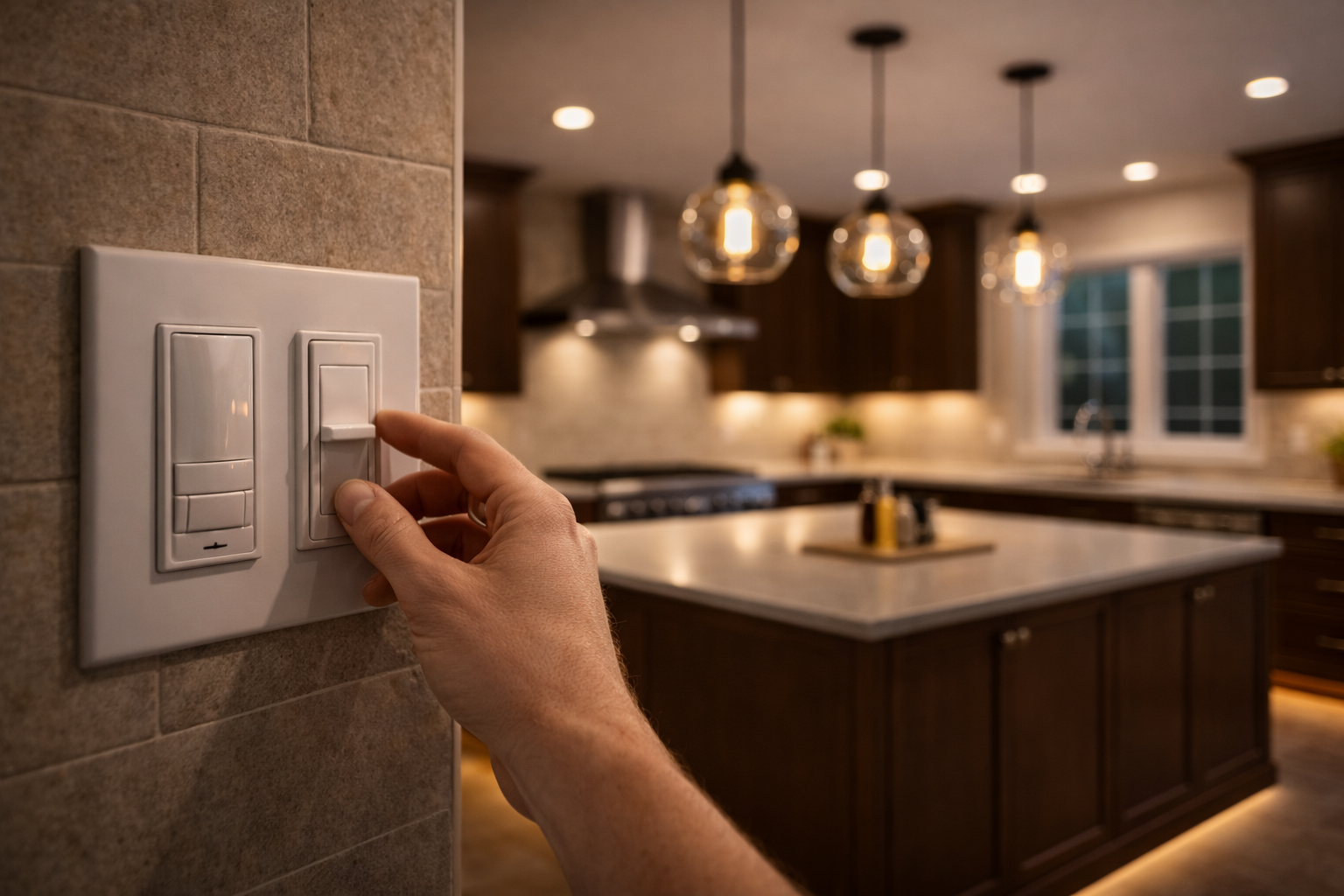
What Installation Details Matter in Kitchen Lighting
Kitchen lighting installation depends on fixture spacing, wiring access, switch grouping, dimmer setup, and how the lights align with the islands, cabinets, sink, and appliances below. Even attractive fixtures can perform badly if they are placed in the wrong spots or grouped under the wrong controls.
Why Do Spacing and Control Layout Matter So Much
Spacing affects how evenly the room is lit and whether the counters are full of dark spots or glare. Control layout matters because homeowners need to manage work lighting, ambient lighting, and accent lighting without a confusing wall of switches. These are practical usability details that strongly affect how the kitchen feels every day.
What Fit and Performance Problems Show Up During Installation
Common issues include pendants that are not centered over the island, recessed lights that land too close to cabinet faces, under-cabinet lights that create bright dots instead of even task light, and switch plans that make the room harder to control than before. These are the details that separate a polished lighting plan from a frustrating one.
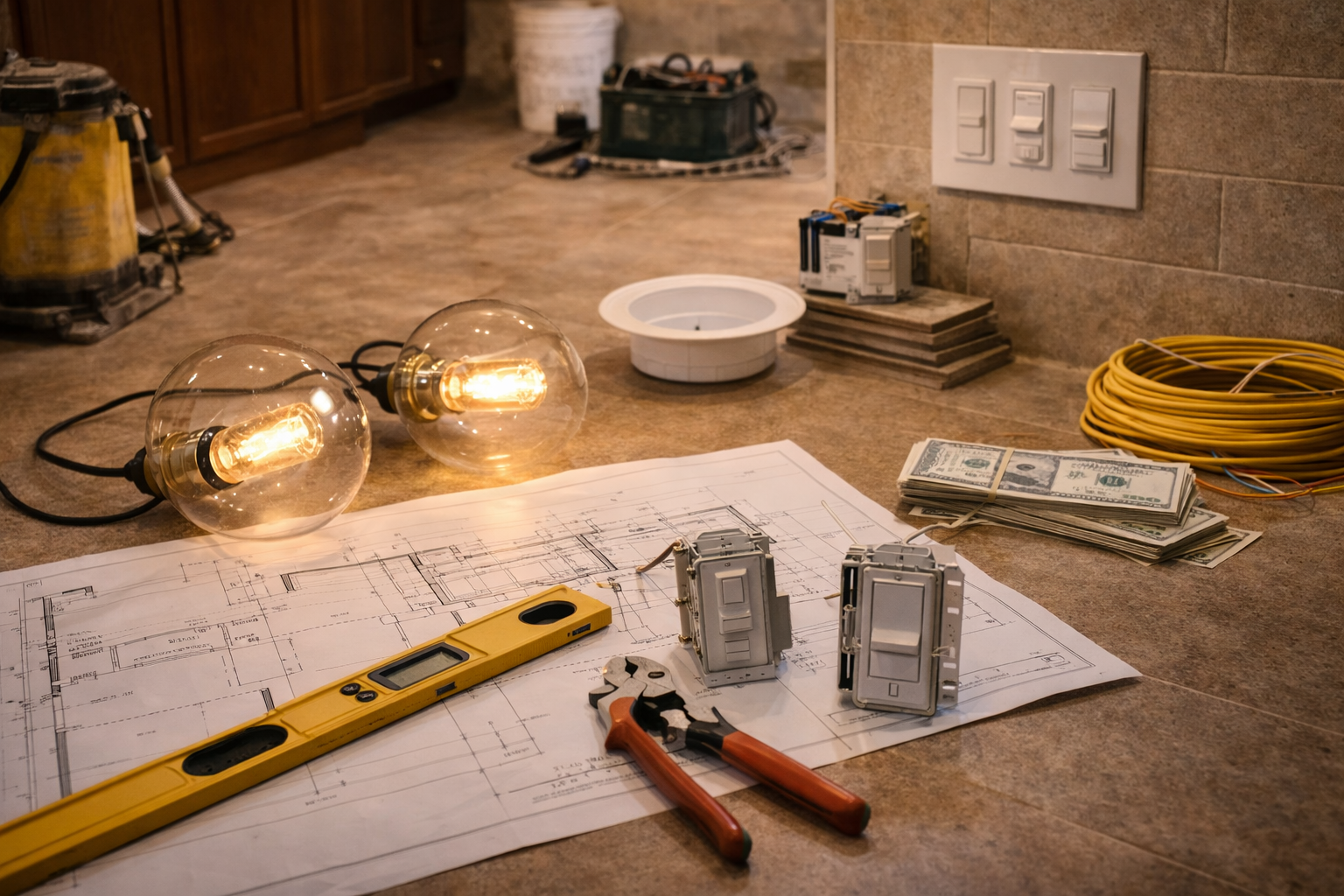
What Affects Kitchen Lighting Cost
Kitchen lighting cost usually depends on the number of fixtures, the fixture type, the amount of wiring or switch work required, and whether the remodel is adding layers of task and accent lighting instead of simply replacing one or two fixtures. A simple fixture refresh costs far less than a full lighting redesign.
Which Kitchen Lighting Choices Usually Raise the Cost
Costs usually rise with larger pendant fixtures, more recessed lights, upgraded under-cabinet systems, more dimmer zones, smart controls, and electrical work that has to be extended or reconfigured to match the new kitchen layout. The more layered the lighting plan becomes, the more the cost usually grows.
How Do Labor and Existing Conditions Change the Budget
Labor costs go up when the old wiring is outdated, the ceiling or wall access is harder, the switch layout needs rebuilding, or the kitchen remodel is moving the island, cabinets, or appliance zones enough to force a new lighting plan. Existing conditions matter because good lighting depends on both fixture choice and where the wiring can realistically go.
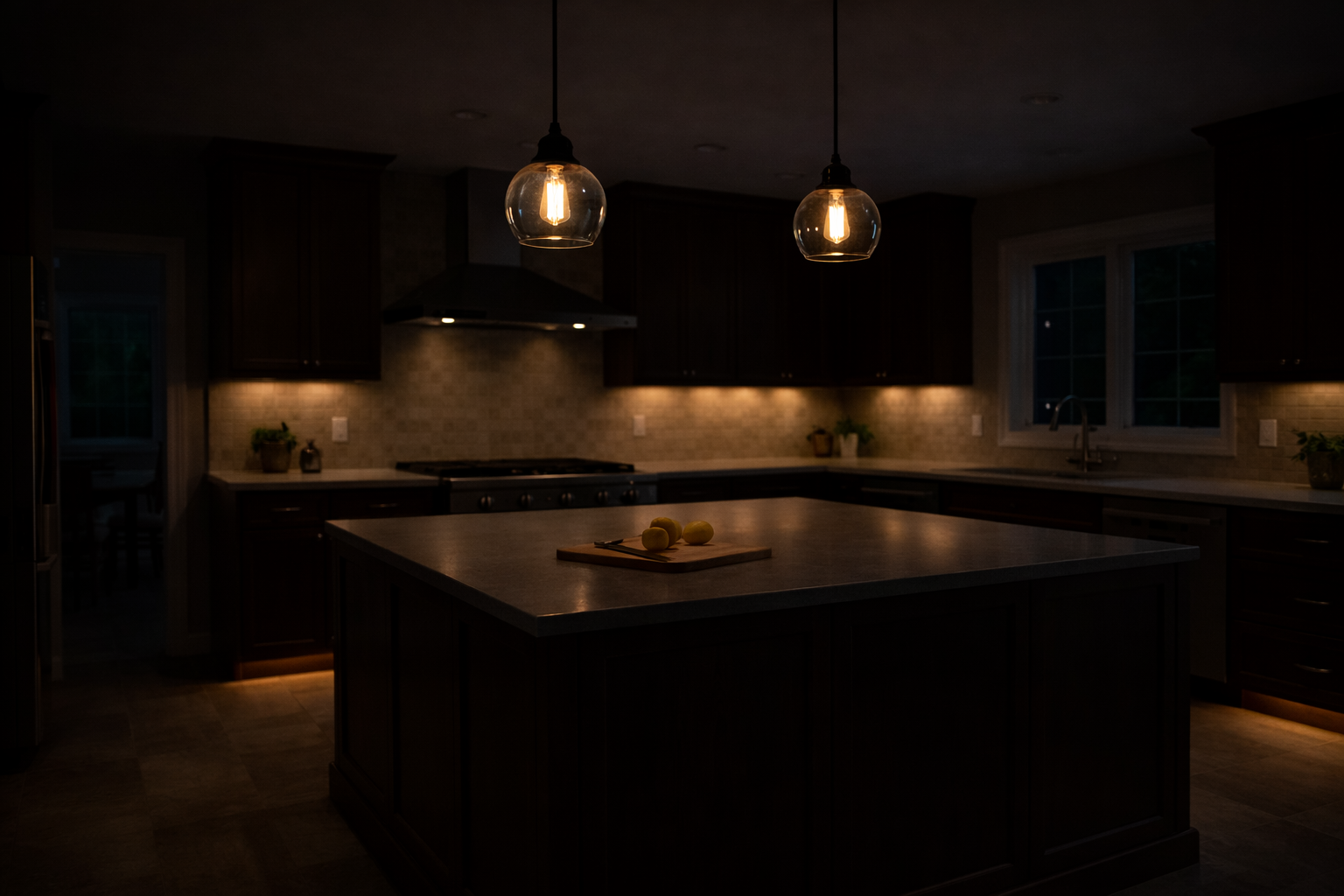
What Mistakes Should Homeowners Avoid With Kitchen Lighting
The biggest kitchen lighting mistakes usually happen when the room is lit for appearance alone instead of for actual kitchen work. A pretty fixture does not help much if the prep areas stay dark, the island creates shadows, or the controls make the room harder to use than before.
Why Is It a Problem to Focus on Fixture Style Before Lighting Function
A decorative pendant or stylish flush mount does not solve weak task lighting or poor counter visibility by itself. In practical remodel work, lighting has to support the cooking, prep, cleanup, and gathering functions of the room before it is judged by appearance.
Why Is It Risky to Ignore Layering and Controls
Kitchens work best with layered light and control flexibility. If all the lights run together on one switch or if the task areas are not lit separately, the room may still feel awkward even after a major remodel.
How Should You Plan Kitchen Lighting
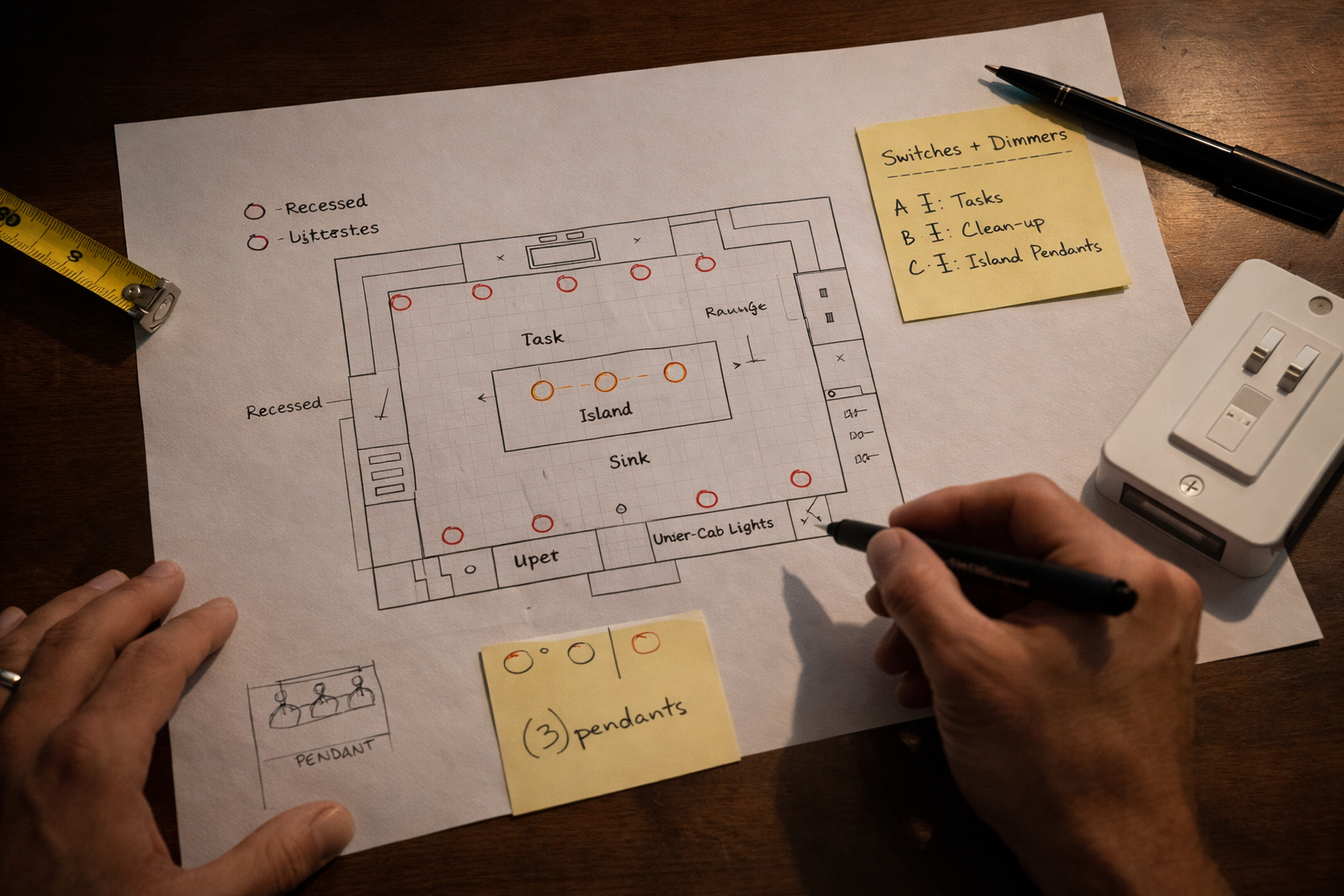
Kitchen lighting should be planned by deciding how the room is used during prep, cooking, cleanup, dining, and gathering, then matching each zone with the right type of light and control. The best plan balances task visibility, ambient comfort, fixture style, and electrical practicality instead of treating the lighting as an afterthought once the cabinets are already in.
What Should Be Decided Before Lighting Work Starts
Before construction starts, it helps to confirm fixture types, pendant placement, recessed layout, under-cabinet lighting runs, switch grouping, dimmer locations, and how the lights should support the sink, island, range, and pantry areas. These choices affect the whole electrical and finish plan.
How Can a Homeowner Prepare for the Installation Process
Homeowners should be ready for wiring updates, ceiling and wall access where needed, switch planning, and coordination between the lighting plan and the cabinet, island, and appliance layout. Kitchen lighting projects usually go best when the fixture layout is resolved before the finish surfaces start closing in.

Related Kitchen Lighting Topics
Kitchen lighting projects overlap with island remodeling, cabinet design, backsplash planning, appliance layout, and full kitchen remodeling because the lights affect how all of those features are seen and used. Related topics help homeowners compare whether they need a lighting-only upgrade or a broader kitchen redesign.
Which Kitchen Lighting-Related Pages Should Connect to This Topic
Strong related pages include kitchen island remodels, kitchen appliances, cabinet remodels, backsplash remodeling, and kitchen layout changes. Those pages help break down the storage, task, and fixture decisions that shape a strong kitchen lighting plan.
Which Kitchen Remodeling Topics Often Connect to Lighting Work
Lighting work often connects to cabinets, counters, islands, appliances, and full kitchen remodeling. In practical remodels, these parts overlap because fixture placement depends heavily on the shape and function of the rest of the kitchen.
Frequently Asked Questions About Kitchen Lighting
The best kitchen lighting usually combines general ceiling light, task lighting, and in many kitchens accent or island lighting so the whole room works well.
Many kitchens benefit from it because under-cabinet lighting helps light the counters where prep work happens most.
Not always, but they are common when the island needs both task lighting and a stronger visual focal point.
The right number depends on the room size, ceiling height, cabinet layout, and how much task light the kitchen needs.
The best choice depends on the style of the kitchen and how the space is used, but the lighting should support both visibility and comfort.
It can improve both function and visual appeal when the lighting makes the kitchen easier to use and more finished overall.
Sometimes, yes. It depends on whether the remodel is only replacing fixtures or also reworking controls, locations, and task-lighting layers.
The timeline depends on the number of fixtures, the amount of rewiring, and how closely the lighting work is tied to cabinet and ceiling changes.
One of the biggest mistakes is relying on a few decorative fixtures without making sure the prep, sink, and cooking zones are lit well enough for daily use.
The first step is deciding how the kitchen needs to function in each work zone, then matching each zone with the right type of light and control.