

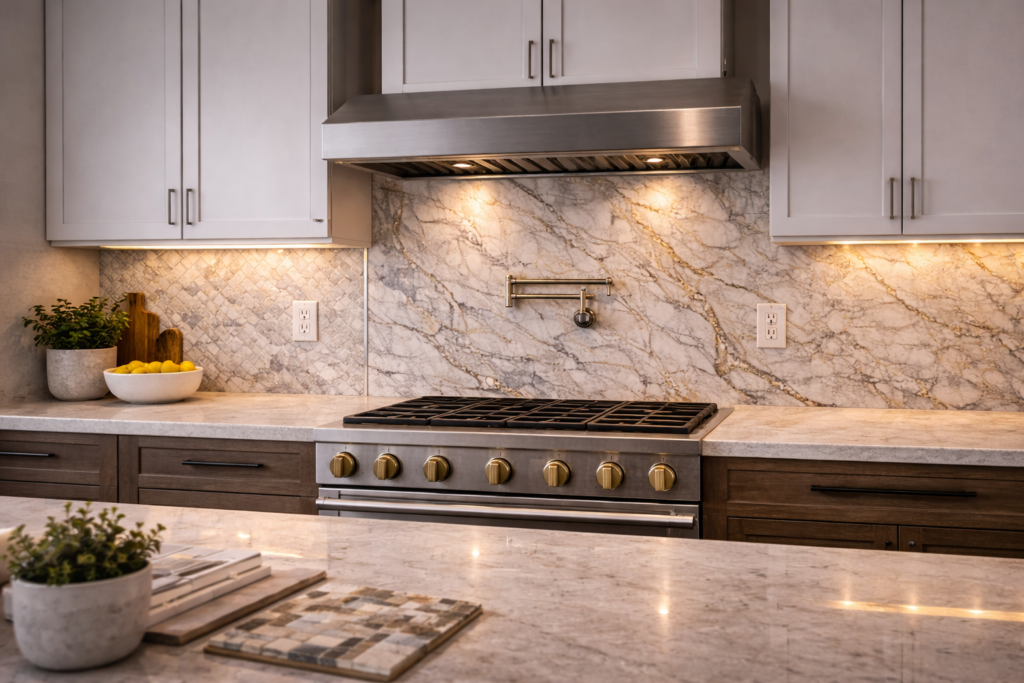
Kitchen Backsplash Guide: Materials, Layout, Costs, and Planning
Kitchen Backsplash Guide Index
- Kitchen Backsplash Overview
- When Should a Kitchen Backsplash Be Updated
- What Types of Kitchen Backsplashes Are Common
- How Do Layout and Kitchen Size Affect a Backsplash
- What Materials and Components Are Used in a Kitchen Backsplash
- What Upgrades Can Be Added During a Backsplash Remodel
- What Installation Details Matter in a Kitchen Backsplash
- What Affects Kitchen Backsplash Cost
- What Mistakes Should Homeowners Avoid With a Kitchen Backsplash
- How Should You Plan a Kitchen Backsplash
- Related Kitchen Backsplash Topics
Kitchen Backsplash Overview
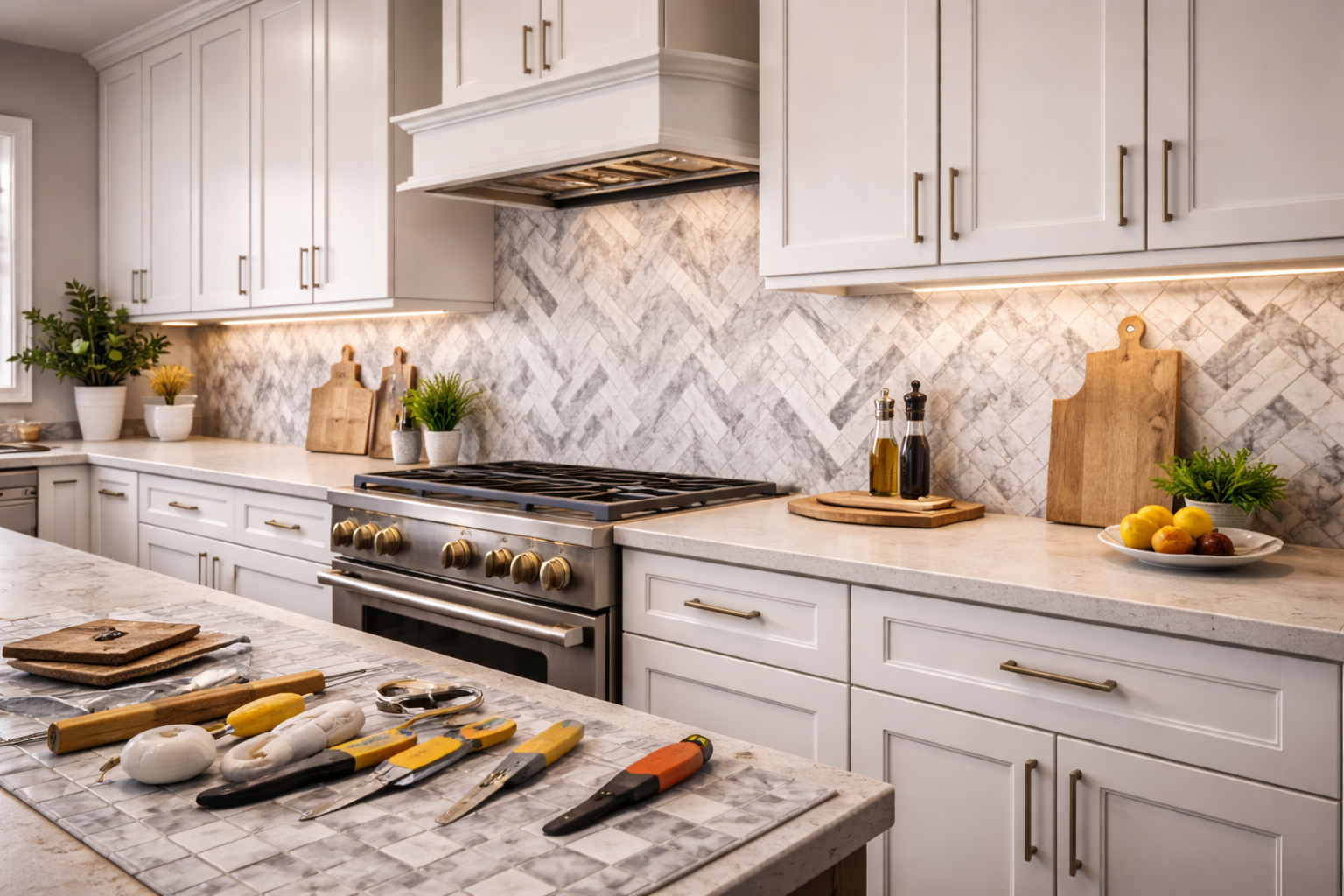
A kitchen backsplash protects the wall behind the countertop from water, food splatter, grease, and daily cleanup while also shaping the look of the whole kitchen. In practical remodel work, a backsplash means more than choosing a tile color. It involves material choice, layout height, outlet cuts, trim details, and how the backsplash ties the cabinets, countertop, range area, and upper wall together.
What Gets Updated During a Kitchen Backsplash Remodel
The work may include the backsplash material itself, thinset or adhesive system, grout, trim, outlet covers, transitions to countertops and cabinets, and the wall prep needed before installation. In some kitchens, the backsplash remodel also includes changes to under-cabinet lighting or range wall details so the finished surface looks more complete.
What Is the Difference Between a Backsplash Update and a Full Surface Redesign
A backsplash update changes the wall finish behind the counters while keeping the rest of the kitchen mostly the same. A full surface redesign may also involve countertop changes, cabinet color changes, lighting updates, and more dramatic wall treatment around the cooking zone. That larger approach can make the backsplash feel more integrated instead of like a separate patch of tile.
When Should a Kitchen Backsplash Be Updated
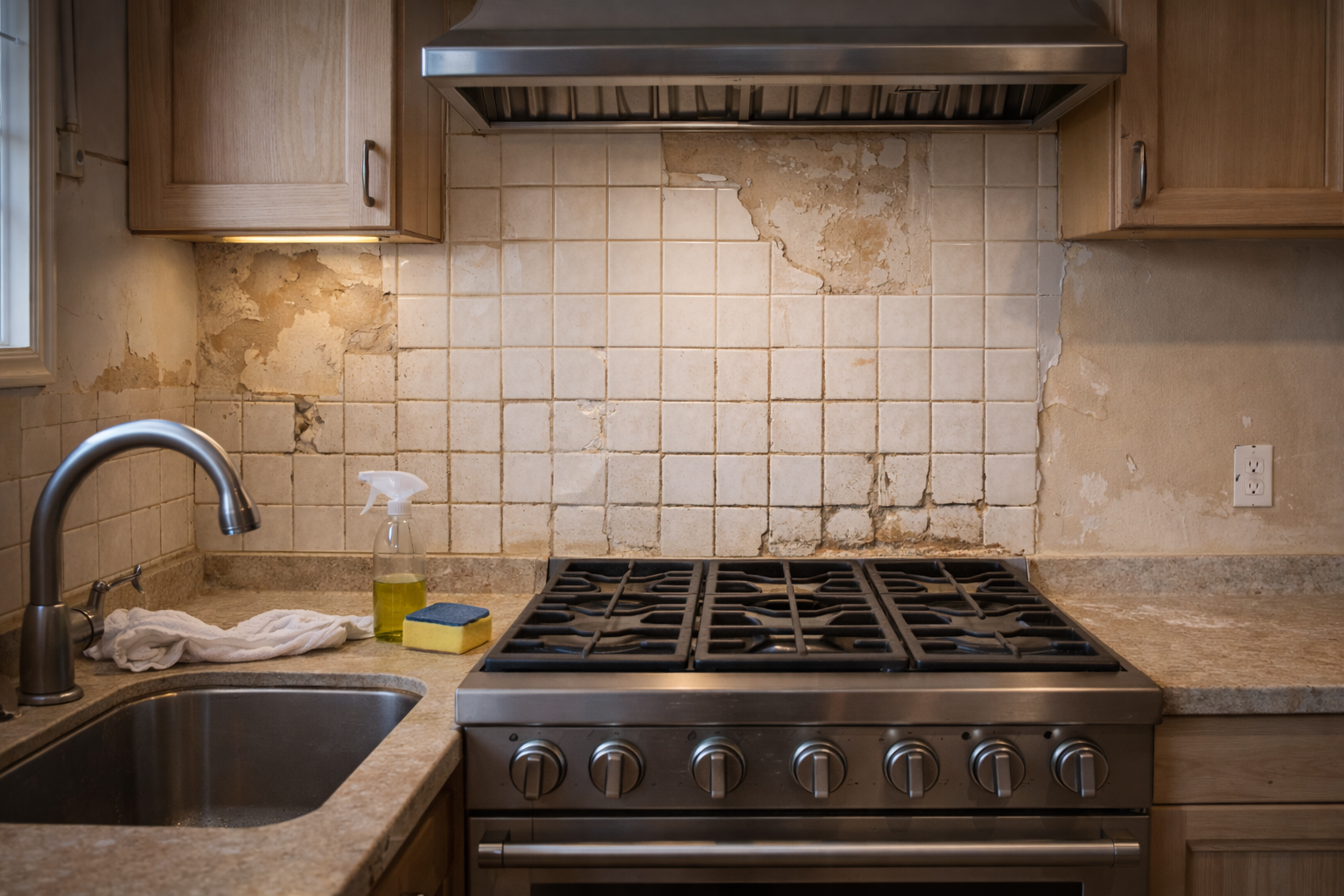
A kitchen backsplash should usually be updated when the existing wall finish is outdated, stained, damaged, difficult to clean, or no longer fits the look of the rest of the kitchen. Common signs include cracked tile, stained grout, peeling wall material behind the range or sink, and a backsplash that makes an otherwise improved kitchen still feel old. In many projects, subway tile backsplash becomes an important part of how the bathroom functions day to day.
What Signs Show That a Backsplash Is Ready for Remodeling
Clear signs include broken tile, missing grout, water stains near the sink wall, backsplash materials that stop awkwardly, and finishes that are difficult to clean around cooking areas. In many kitchens, the backsplash is not failing structurally but still needs updating because it no longer fits the counter, cabinet, or appliance upgrades around it.
What Remodeling Goals Usually Lead to Backsplash Upgrades
Backsplash upgrades are common when homeowners want easier cleanup, a more finished look, a stronger focal wall behind the range, or better coordination with new countertops and cabinets. They also happen when a new kitchen remodel makes the old backsplash the one element still pulling the room backward.
What Types of Kitchen Backsplashes Are Common
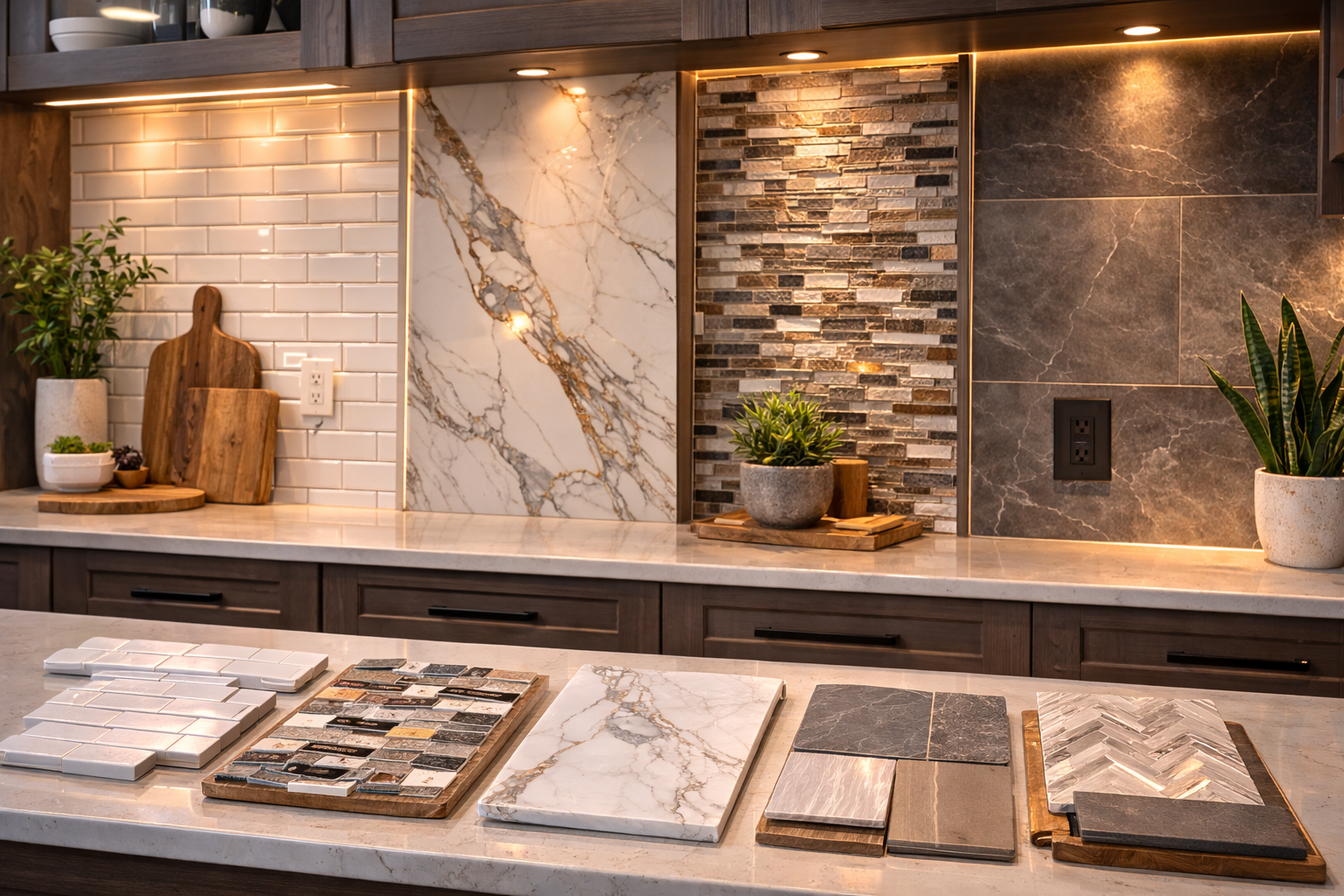
Common kitchen backsplash types include subway tile backsplashes, full-height slab backsplashes, mosaic backsplashes, larger-format tile backsplashes, stone-look panels, and simple painted or lower-profile wall protection in more basic kitchens. The right type depends on maintenance goals, budget, countertop coordination, and how prominent the backsplash should be in the design. For broader planning considerations, it can help to review Energy Saver design guidance.
What Backsplash Styles Are Most Common in Kitchen Remodels
Subway tile remains common because it is familiar, flexible, and fits many cabinet and countertop styles. Full-height slab backsplashes are common when the kitchen wants a cleaner, lower-joint look and stronger coordination with the countertop. Mosaic and patterned tile are often used when the backsplash is meant to act as a more decorative feature.
When Does One Backsplash Type Make More Sense Than Another
A simple tile backsplash may make more sense when the kitchen needs straightforward cleanup and broad design flexibility. A slab backsplash may make more sense when the countertop material is strong enough to continue up the wall cleanly. The best choice depends on the kitchens finish direction and how much maintenance the homeowner wants.
How Do Layout and Kitchen Size Affect a Backsplash
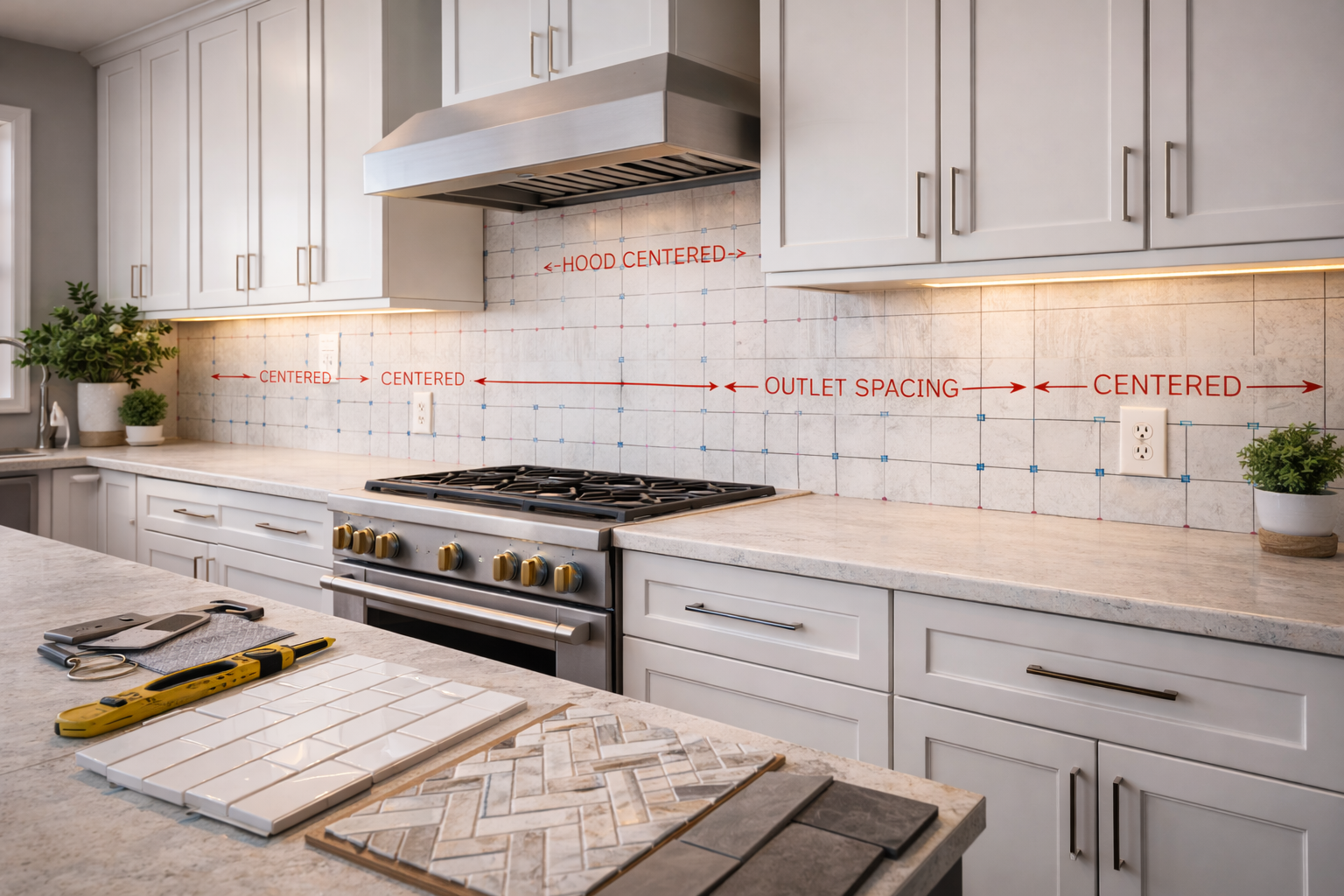
Layout and kitchen size affect where the backsplash starts and stops, how busy the pattern will feel, and how the eye reads the kitchen once the wall finish is in place. A backsplash that works on a short sink wall may behave differently on a large range wall or a long run of counter with many outlets.
Why Does Backsplash Layout Matter So Much in a Kitchen
Backsplash layout affects visual rhythm around outlets, upper cabinets, shelves, and range hoods. It also determines whether the tile or slab feels balanced or full of awkward cuts and broken pattern lines. In practical remodel work, a good layout can make a simpler material look much better. For a closer look at this part of the project, homeowners can explore mosaic tile backsplash.
How Does Kitchen Size Change the Best Backsplash Strategy
In a smaller kitchen, a simpler backsplash often helps the room feel calmer and more open. In a larger kitchen, the remodel may support a more dramatic range wall, larger format material, or stronger pattern without overwhelming the space. The best strategy depends on how much visual movement the kitchen already has from the cabinets, counters, and flooring.
What Materials and Components Are Used in a Kitchen Backsplash
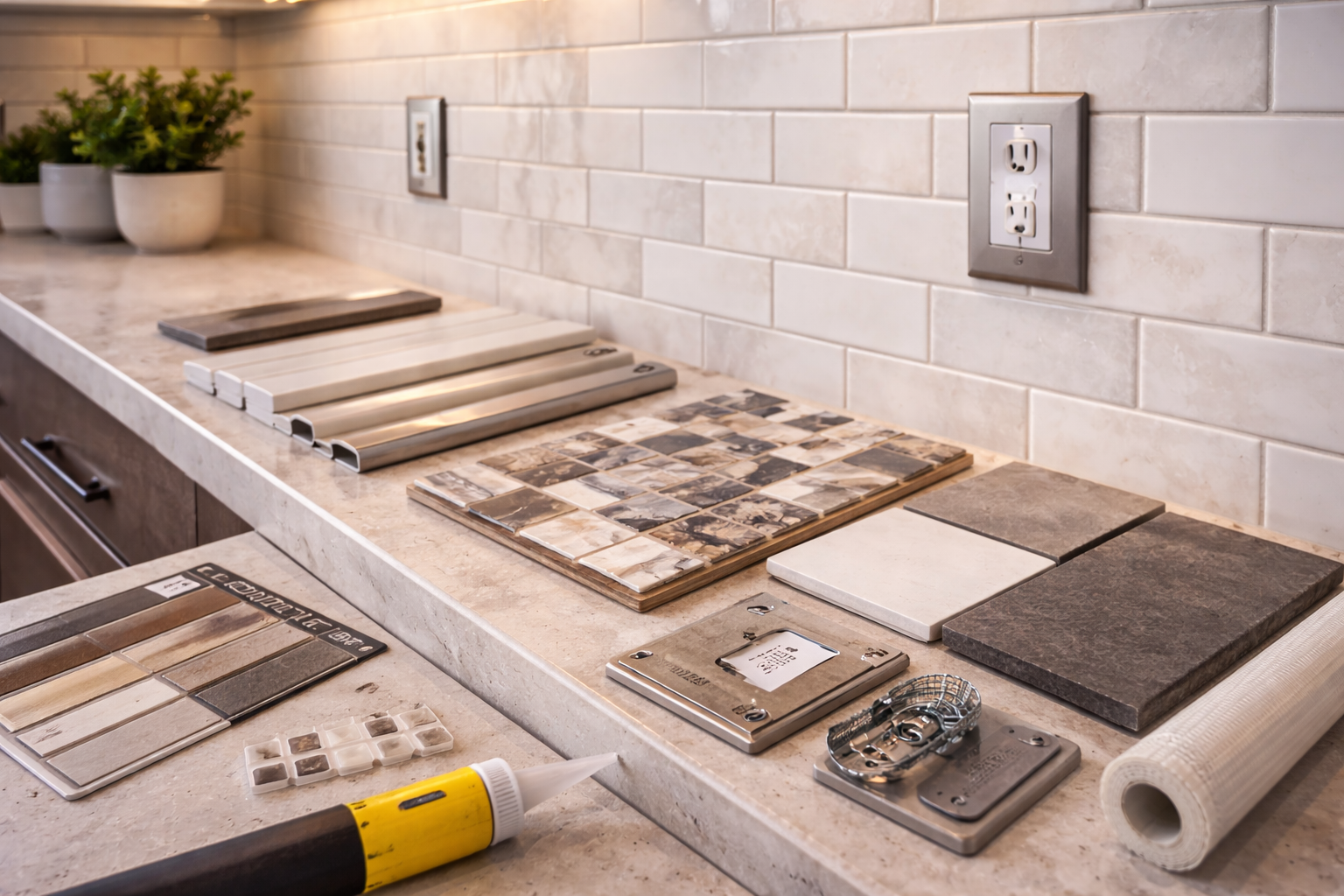
A kitchen backsplash uses more than the visible tile or slab. The project may involve substrate prep, tile or slab material, grout, trim pieces, caulk at key transitions, outlet extension details, and the finish alignment with countertops, cabinets, and hood areas. The visible surface only looks good if the supporting details are handled cleanly. Material selection can also be informed by EPA greener products guidance.
What Backsplash Materials Are Common in Kitchen Projects
Common materials include ceramic tile, porcelain tile, natural stone, quartz or stone slab extensions, mosaic tile, and other wall protection surfaces chosen for kitchens. The best material depends on cleaning preference, visual style, and how much pattern or texture the homeowner wants in the room.
What Trim and Transition Components Usually Matter Most
Tile edge trim, outlet cover alignment, caulk lines where the backsplash meets the counter, and clean finish points near cabinets, windows, and hoods all matter because these details control whether the backsplash feels refined or patched into place.
What Upgrades Can Be Added During a Backsplash Remodel
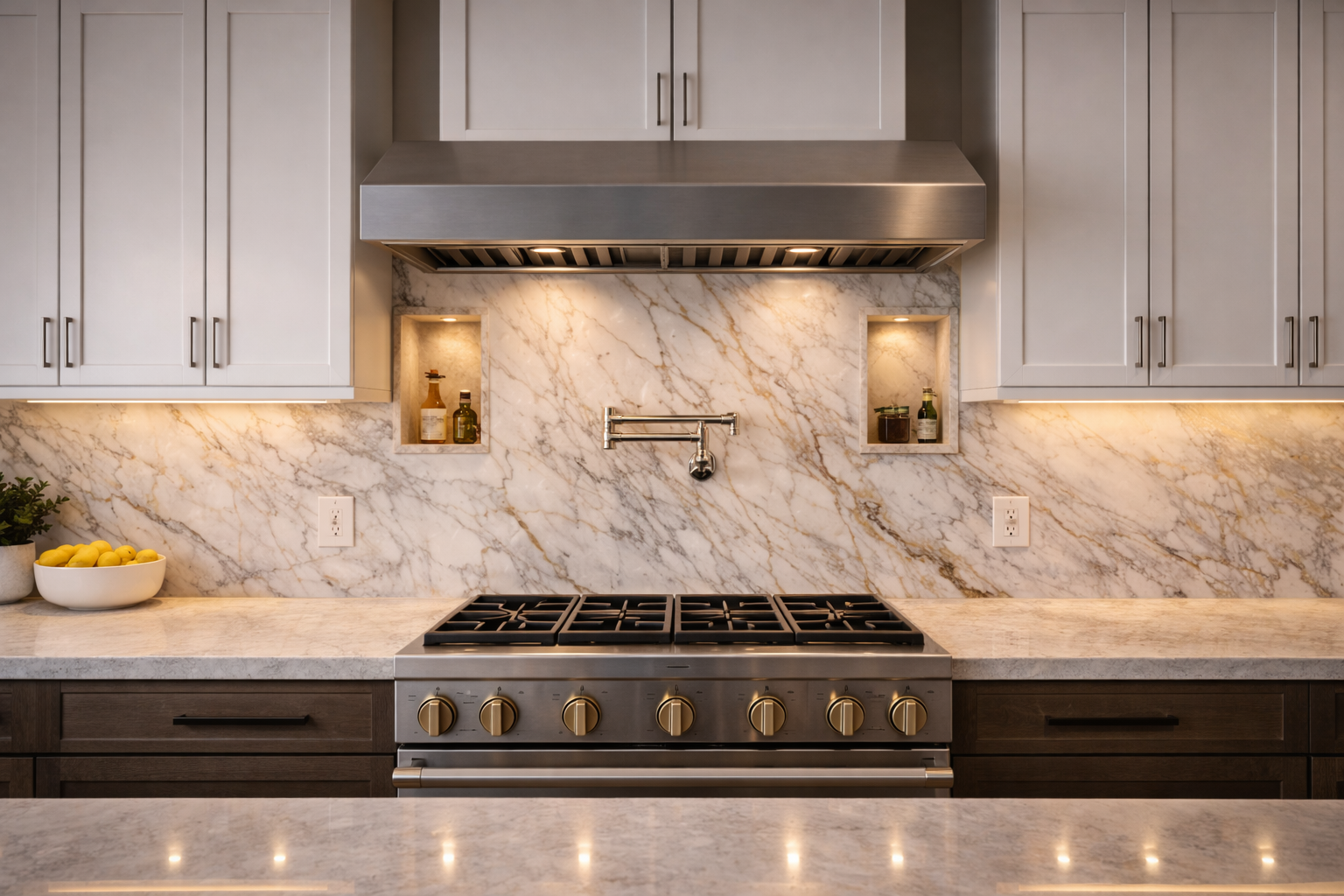
Backsplash work is often the best time to add upgrades that improve both appearance and function. Common upgrades include full-height range walls, better under-cabinet lighting, more coordinated outlet placement, slab backsplash extensions, decorative niche or shelf details, and cleaner trim around the hood and counter transitions.
What Functional Upgrades Are Most Useful With a Backsplash Remodel
Functional upgrades often include easier-clean surfaces, better protection behind cooking areas, more thoughtful outlet cover placement, and stronger connection between the wall finish and the countertop. These upgrades matter because the backsplash is one of the kitchens main splash and grease protection zones.
What Design Upgrades Usually Happen at the Same Time
Backsplash remodels often include upgraded lighting, stronger range-wall design, more refined cabinet-to-wall transitions, better coordination with countertop edge details, and stronger connection to the island. Once the backsplash changes, the surrounding wall details usually become more noticeable too.
What Installation Details Matter in a Kitchen Backsplash
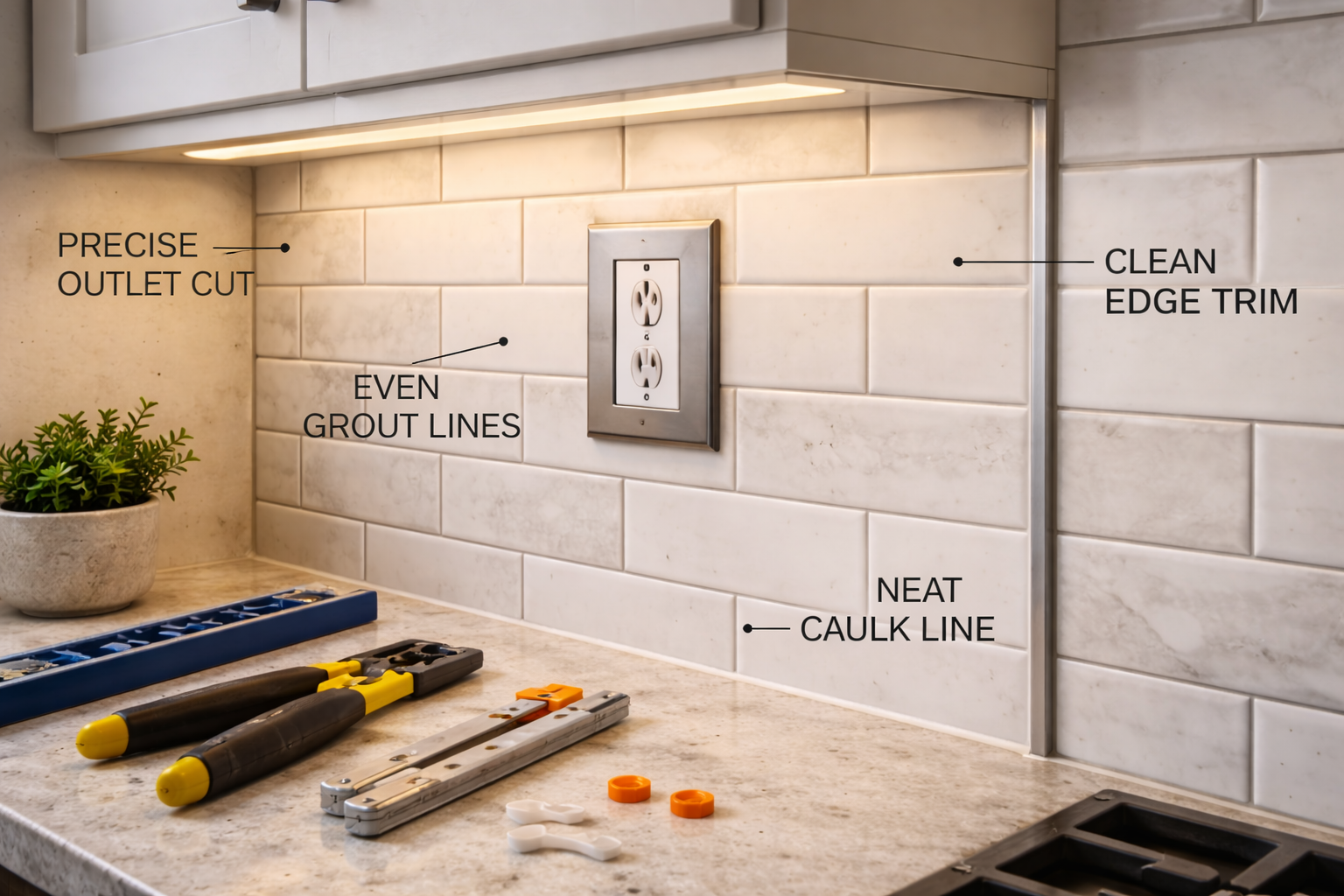
Kitchen backsplash installation depends on wall prep, layout accuracy, outlet cuts, trim details, grout spacing, and the way the backsplash finishes at the counter, cabinets, and hood. Even a good backsplash material can look wrong if the cut lines are awkward or the finish points feel improvised. This decision often connects directly to full slab backsplash, especially when the goal is a more complete remodel.
Why Do Outlet Layout and Finish Lines Matter So Much
Backsplashes usually have to work around multiple outlets, switches, and cabinet edges. If those interruptions are not planned well, the finished wall can feel messy even with expensive material. Clean finish lines are what make the backsplash feel intentional.
What Fit and Finish Problems Show Up During Installation
Common issues include awkward outlet cuts, uneven grout lines, rough trim transitions, backsplash lines that do not align with cabinets, and wall surfaces that were not prepared well enough before the material went on. These details shape whether the backsplash feels clean and complete.
What Affects Kitchen Backsplash Cost
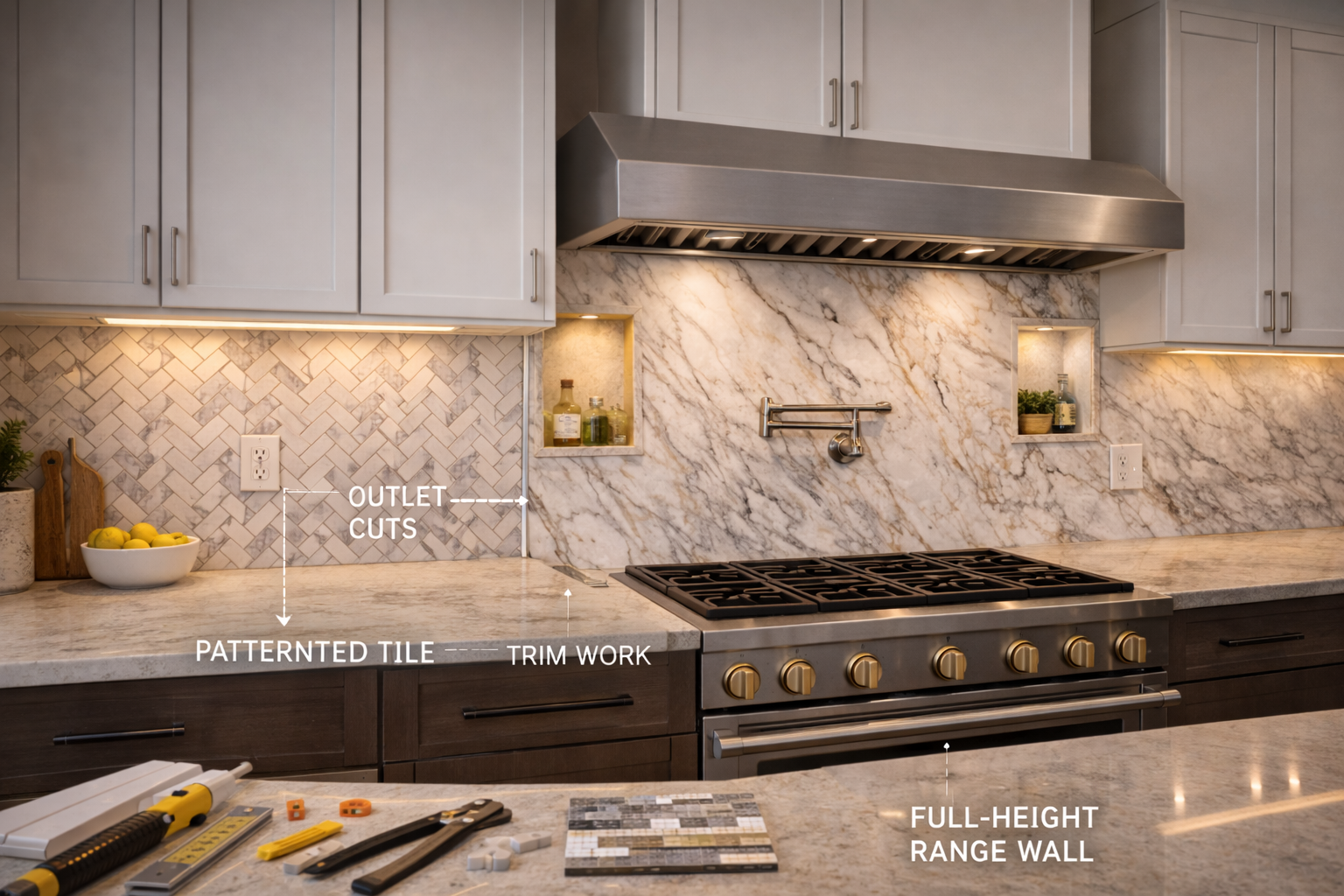
Kitchen backsplash cost usually depends on the material selected, the amount of wall area covered, the number of cuts around outlets and cabinets, trim complexity, and whether the backsplash is a simple tile field or a more custom design element. A short backsplash on one wall is very different from a full-height decorative range wall. Another detail worth comparing during planning is kitchen remodeling.
Which Backsplash Choices Usually Raise the Cost
Costs usually rise with full-height slab or tile runs, patterned layouts, mosaic work, premium trim, more complex outlet and hood-area cutting, and specialty materials. The more the backsplash becomes a design focal point, the more labor and finish detail it usually requires.
How Do Labor and Existing Conditions Change the Budget
Labor costs go up when walls need more prep, outlets need more adjustment, the range wall is more complex, or the backsplash has to align tightly with new countertops and cabinets. Existing conditions matter because a backsplash is only as clean as the wall and finish lines supporting it.
What Mistakes Should Homeowners Avoid With a Kitchen Backsplash
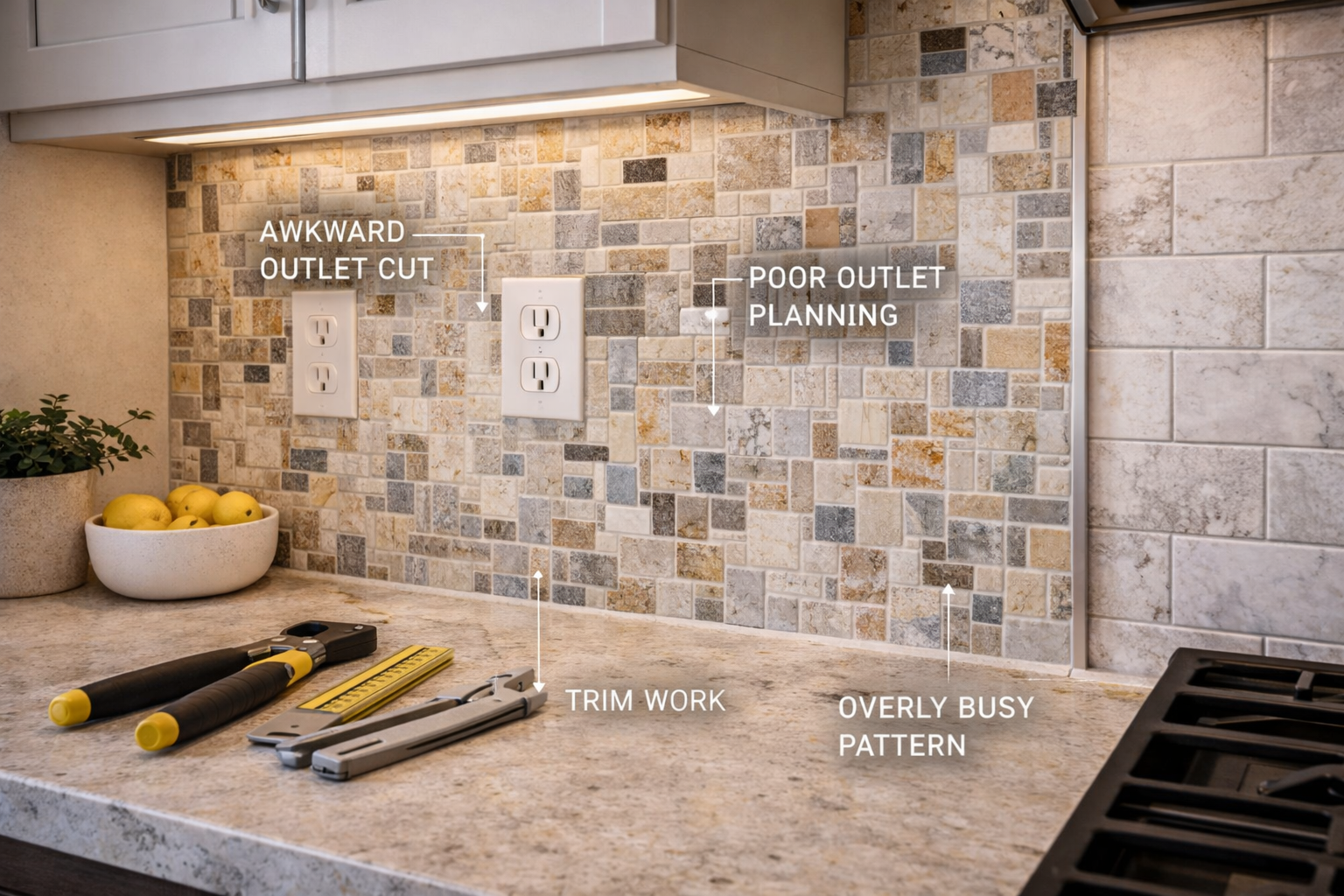
The biggest kitchen backsplash mistakes usually happen when the material is chosen without thinking about the layout, maintenance, and how the backsplash fits the rest of the kitchen. A backsplash should support the kitchen design, not fight with the counters, cabinets, and lighting around it. Homeowners comparing performance goals can review Energy Saver ventilation guidance.
Why Is It a Problem to Choose a Busy Backsplash Without Checking the Rest of the Kitchen
If the countertops, cabinets, and flooring already have a lot of movement, an overly busy backsplash can make the kitchen feel crowded and disorganized. In many remodels, the better choice is a backsplash that supports the rest of the room instead of trying to dominate it.
Why Is It Risky to Ignore the Practical Details Around the Wall
Outlets, trim edges, grout lines, and range-wall cleanup zones all matter. If those practical details are ignored, the backsplash may still be difficult to clean or visually awkward even if the material itself looks good on a sample board.
How Should You Plan a Kitchen Backsplash
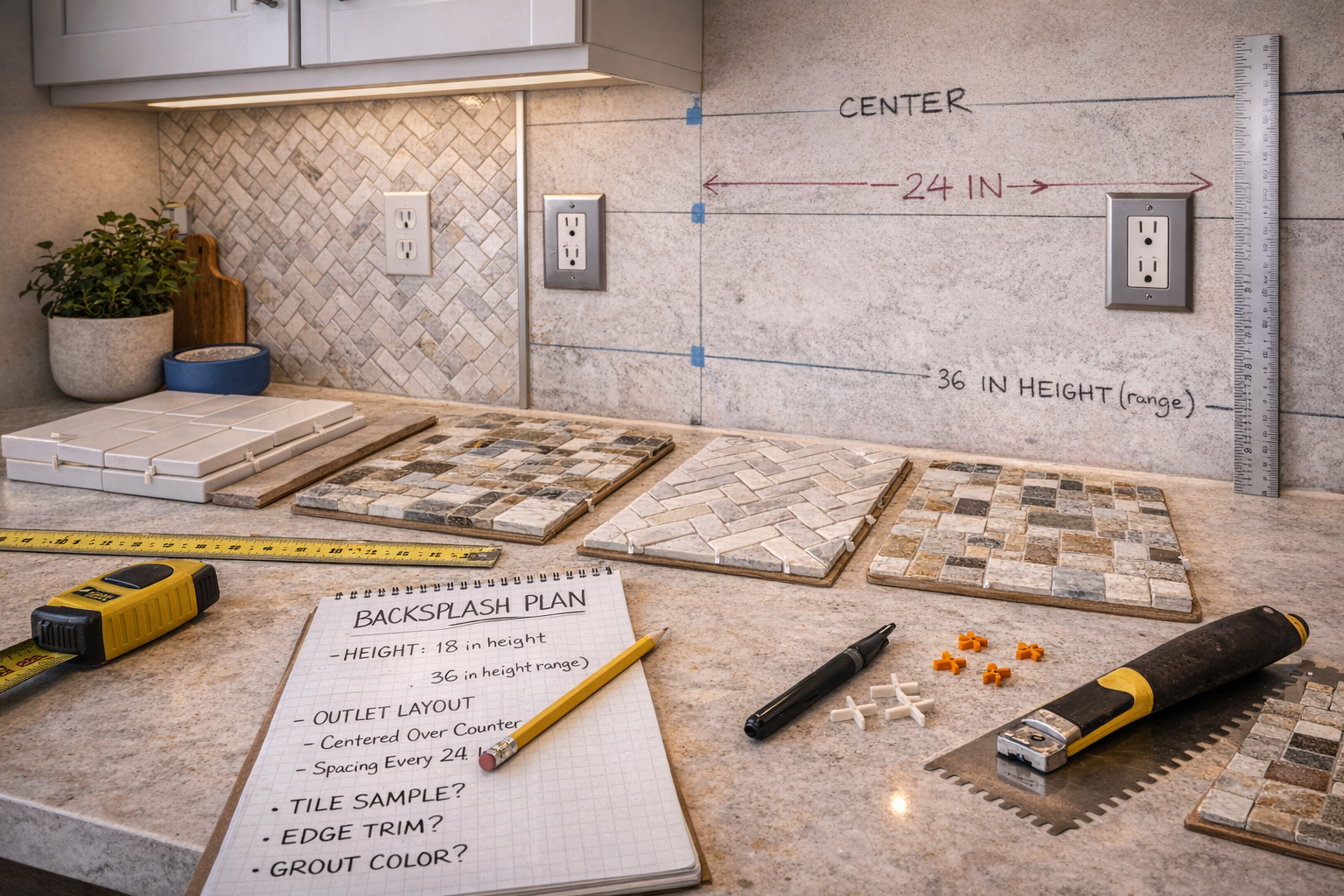
A kitchen backsplash should be planned by looking at the countertop material, cabinet style, wall length, outlet layout, and how much of the wall should be treated as a focal area. The best plan balances cleanup needs, finish style, and installation practicality instead of choosing material in isolation.
What Should Be Decided Before Backsplash Work Starts
Before construction starts, it helps to confirm backsplash material, layout height, outlet plan, edge trim direction, grout style, and whether the range wall should be treated differently from the rest of the kitchen. These decisions affect the whole visual result and the installation approach.
How Can a Homeowner Prepare for the Installation Process
Homeowners should be ready for wall prep, outlet cover removal, layout review, and coordination with countertop edges, cabinet lines, and under-cabinet lighting. Backsplash projects usually go best when the wall design is fully planned before the installer starts setting material.
Related Kitchen Backsplash Topics
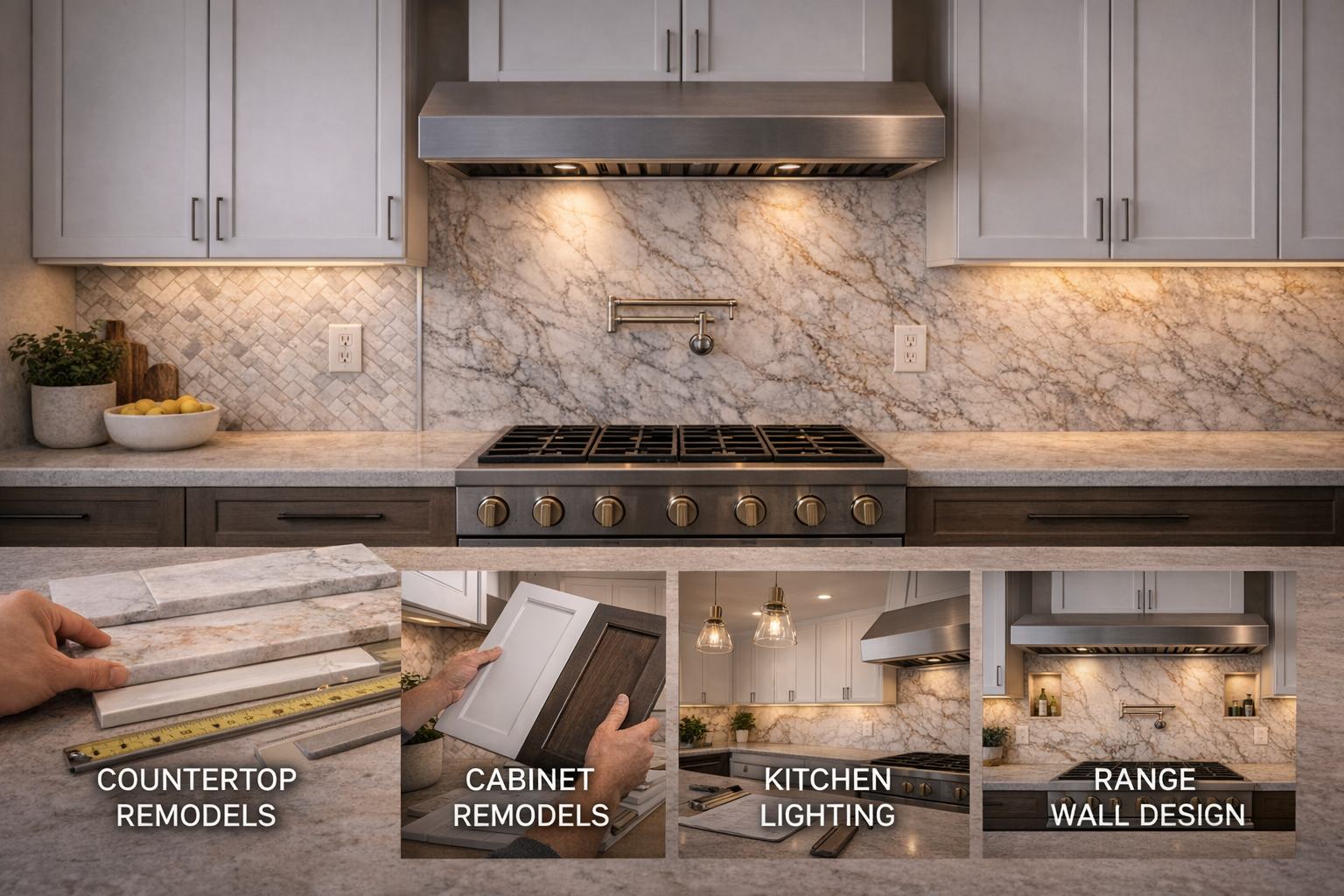
Kitchen backsplash projects overlap with countertop remodeling, cabinet design, kitchen lighting, range-wall planning, and full kitchen remodeling because the backsplash ties those visual and functional surfaces together. Related topics help homeowners compare whether they need a backsplash-only update or a more complete kitchen refresh.
Which Kitchen Backsplash-Related Pages Should Connect to This Topic
Strong related pages include countertop remodels, cabinet remodels, kitchen lighting, range hood design, and kitchen layout changes. Those pages help break down the wall finish, counter, and storage decisions that shape a strong backsplash plan.
Which Kitchen Remodeling Topics Often Connect to Backsplash Work
Backsplash work often connects to countertops, cabinets, lighting, appliances, and full kitchen remodeling. In practical remodels, these pieces overlap because the backsplash sits right where many of the kitchens most visible surfaces meet.
Frequently Asked Questions About Kitchen Backsplashes
A kitchen backsplash protects the wall behind the counters from water, grease, food splatter, and everyday cleanup while also adding visual finish to the kitchen.
A backsplash is often updated when it looks dated, is damaged, is hard to clean, or no longer fits the style of the rest of the kitchen remodel.
Ease of cleaning depends on the material and the number of grout joints. Many homeowners prefer smoother, simpler surfaces when low maintenance is a priority.
Not exactly, but it should coordinate with the countertop so the kitchen feels intentional instead of pieced together from unrelated finishes.
Sometimes. In some kitchens, a standard backsplash height is enough, while in others a full-height range wall or slab extension makes more sense.
Yes. Many backsplash remodels happen independently, although the final result still needs to work visually with the existing countertop.
The timeline depends on wall area, material type, outlet cuts, trim complexity, and whether the backsplash is a simple run or a more detailed feature wall.
It can improve kitchen appeal when the backsplash feels clean, current, and well integrated with the rest of the remodel.
One of the biggest mistakes is choosing a backsplash that competes too heavily with the counters, cabinets, and flooring instead of supporting the overall kitchen design.
The first step is deciding how much wall needs protection and what material and layout will best support the countertop, cabinets, and daily kitchen use.