

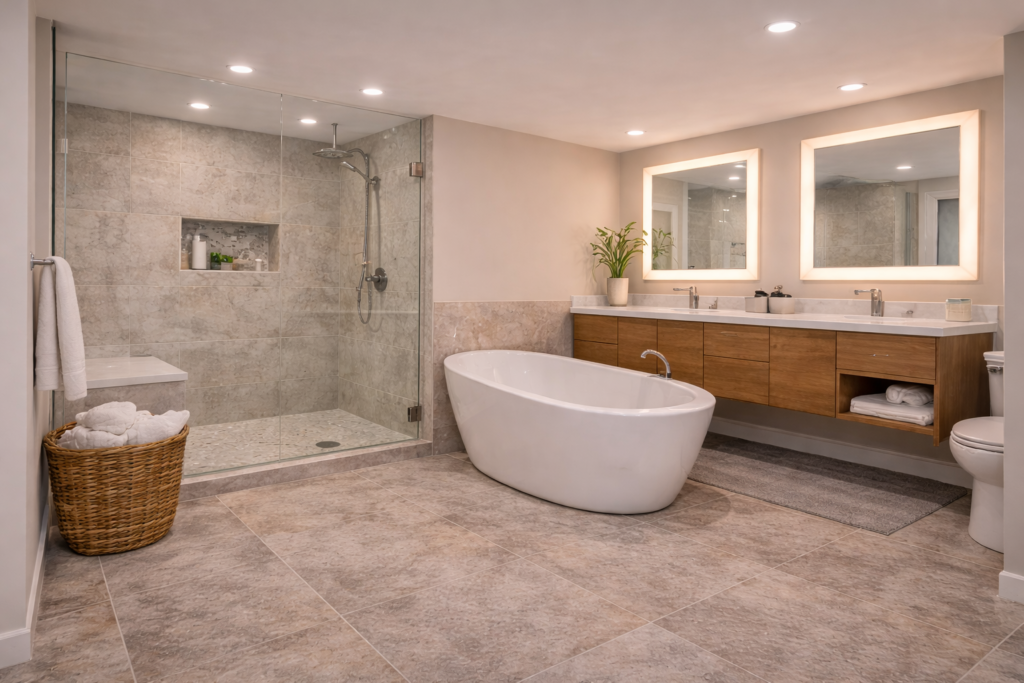
Bathroom Layout Changes Guide: Planning, Construction, Costs, and Design
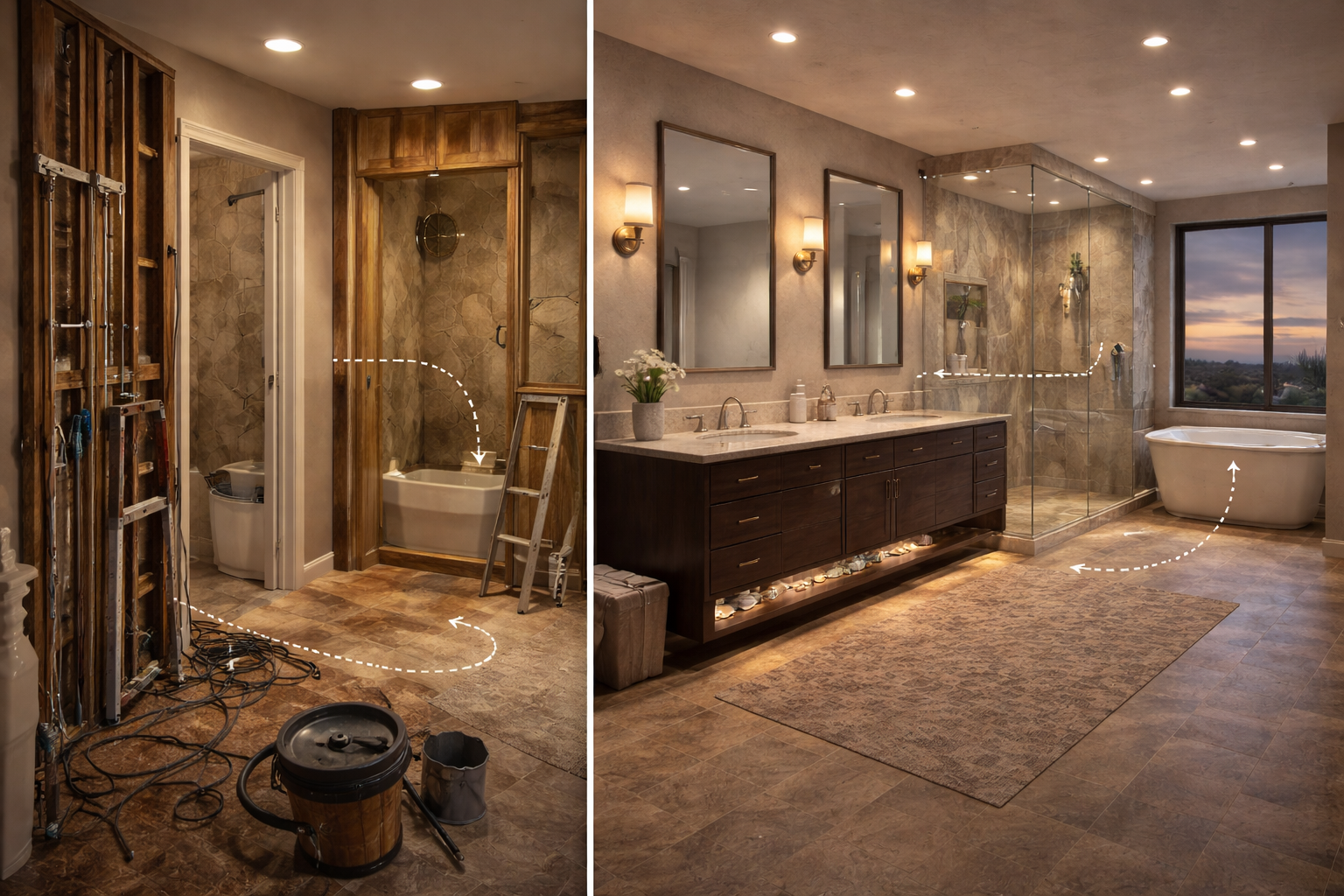
Bathroom Layout Changes Guide Index
- Bathroom Layout Changes Overview
- When Should a Bathroom Layout Be Changed
- What Types of Bathroom Layout Changes Are Common
- How Do Room Size and Existing Plumbing Affect Layout Changes
- What Materials and Components Are Involved in Layout Changes
- What Upgrades Can Be Combined With Bathroom Layout Changes
- What Construction Details Matter in Bathroom Layout Changes
- What Affects Bathroom Layout Change Cost
- What Mistakes Should Homeowners Avoid With Layout Changes
- How Should You Plan Bathroom Layout Changes
- Related Bathroom Layout Topics
Bathroom Layout Changes Overview
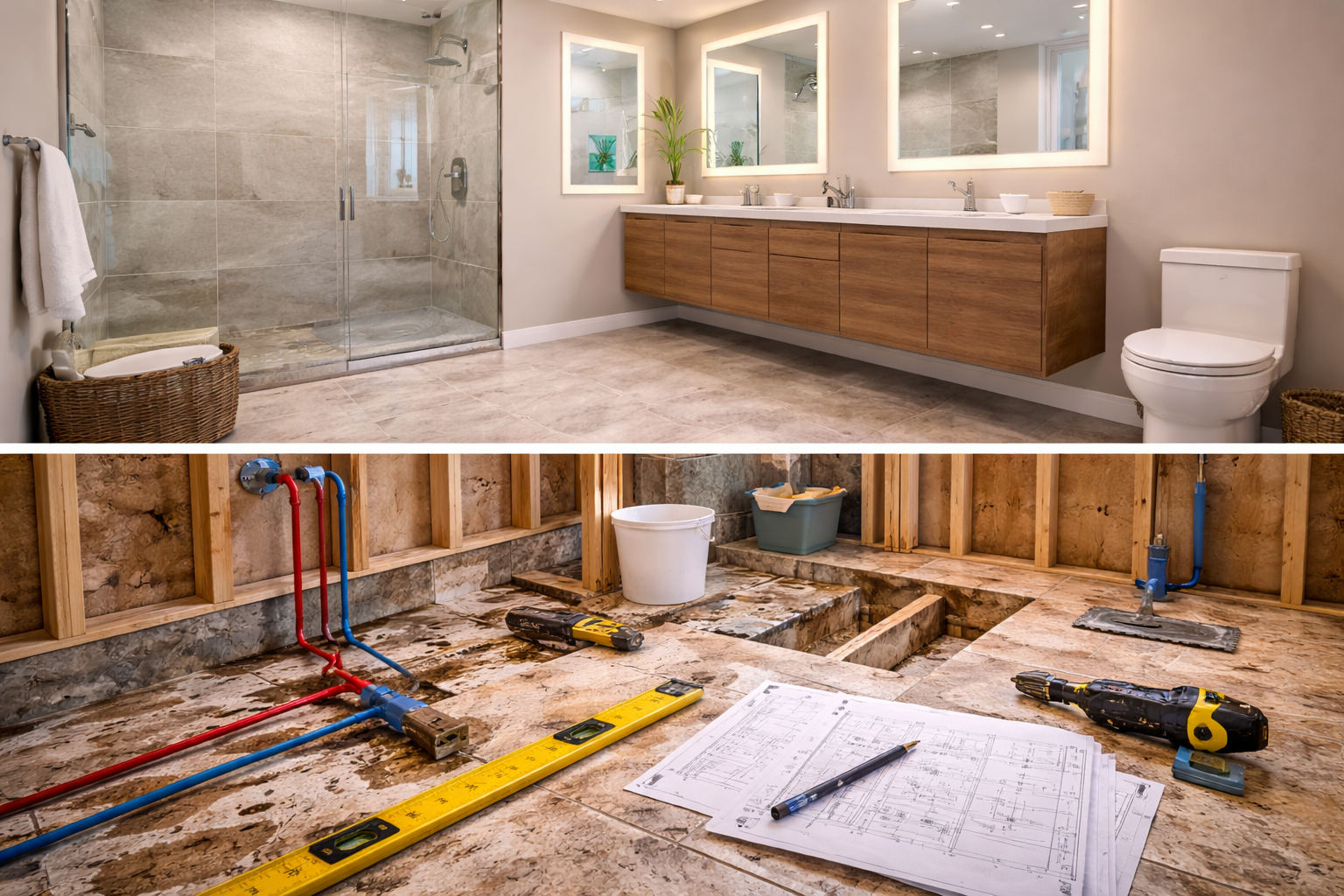
Bathroom layout changes involve moving the main fixtures so the room works better instead of just looking newer. In a real remodel, that can mean relocating the vanity, changing the toilet position, replacing a tub with a shower, widening a walkway, or reworking the room so storage and clearances improve. Layout changes usually affect plumbing, electrical, framing, and finish work at the same time, which is why they need more planning than a basic fixture swap.
What Gets Changed During a Bathroom Layout Remodel
The work may include moving water lines, moving or offsetting the drain, reframing walls, resizing a shower, changing vanity width, relocating lighting, rebuilding flooring, and patching drywall or tile where old fixtures were removed. Even small layout shifts can affect door swing, mirror placement, and how much open floor space the room actually has.
What Is the Difference Between a Cosmetic Update and a Layout Change
A cosmetic update keeps the same basic fixture positions and changes finishes, surfaces, and fixtures in place. A layout change alters where the bathroom works from, which often means changing rough plumbing locations, electrical placement, framing, and the sequence of construction. That deeper work is what makes layout changes more complex and more valuable when the old arrangement does not function well.
When Should a Bathroom Layout Be Changed
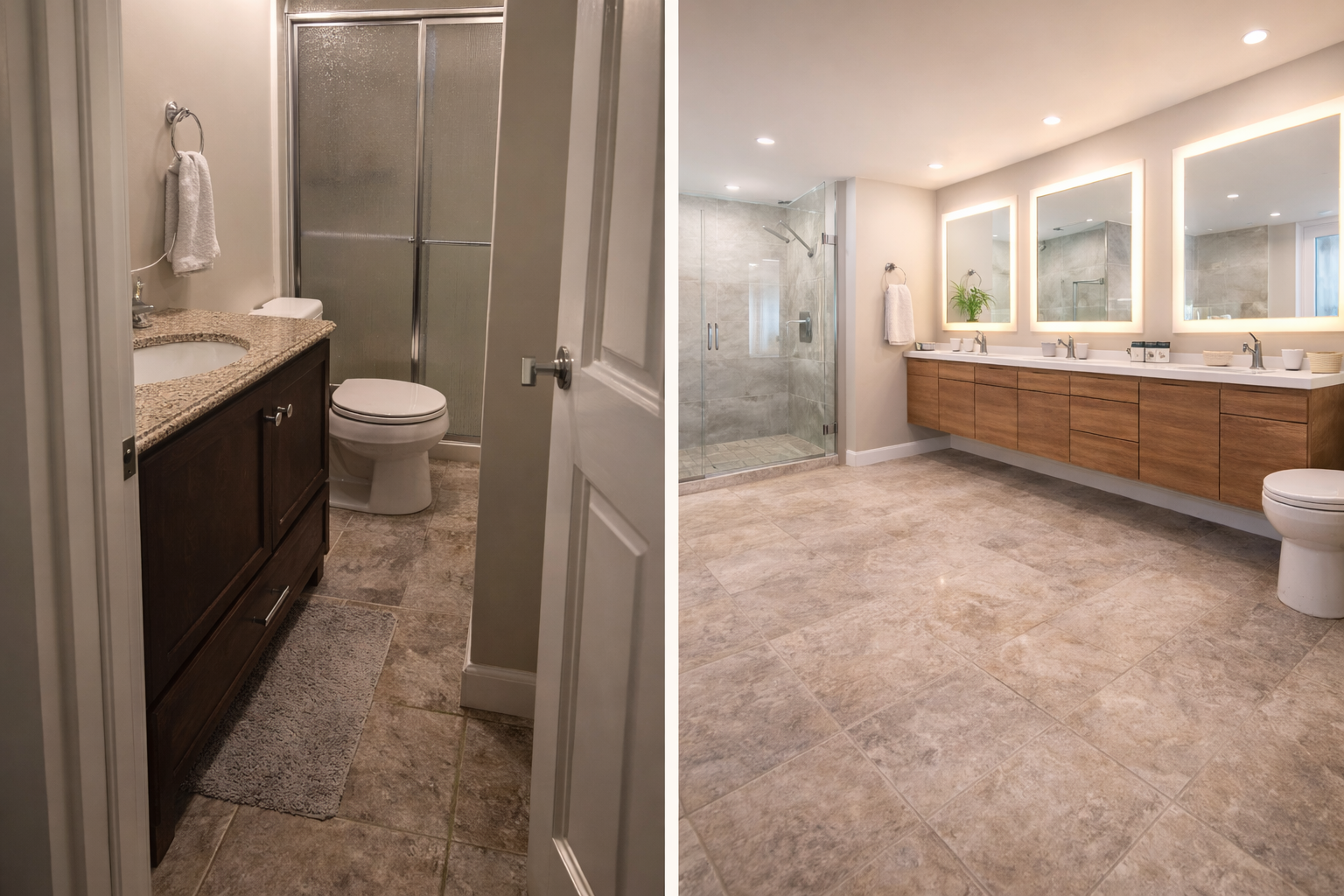
A bathroom layout should usually be changed when the room feels cramped, the fixture spacing is awkward, storage is poor, or the current arrangement blocks better use of the space. Common problems include vanities that crowd the doorway, toilets with poor clearance, tub placements that waste wall space, and layouts that make the room feel smaller than it is. Because layout work affects nearly every fixture in the room, it usually ties back to full bathroom remodeling plans.
What Signs Show That the Current Bathroom Layout Is Not Working
Clear signs include doors hitting fixtures, narrow walk paths, poor vanity lighting because of bad mirror placement, oversized tubs taking up useful floor area, and storage that never seems to fit where it is needed. In some bathrooms, the room has enough square footage but still functions badly because the fixtures were arranged around old plumbing rather than practical use.
What Remodeling Goals Usually Lead to Layout Changes
Layout changes are common when a homeowner wants a larger walk-in shower, a double vanity, better storage, more open floor area, or a more useful bathroom. They also come up when an older bathroom needs accessibility improvements or when a full remodel exposes enough of the room that reworking the layout becomes worth the extra effort.

What Types of Bathroom Layout Changes Are Common
Common bathroom layout changes include moving a vanity to create better counter space, replacing a tub with a larger shower, shifting a toilet for better clearance, or reworking a narrow room so the main fixtures line up more efficiently. Some remodels also steal space from a closet or adjacent room to improve the bathroom footprint.
Which Fixture Moves Are Most Common in Bathroom Remodels
The most common moves involve the vanity and shower because those changes can improve function without always requiring the most extreme plumbing work. Toilets are moved less often because the drain location can be harder to rework, especially on slab construction. Tub-to-shower conversions are also common because they free up usable floor space and improve movement through the room. For water-use considerations, homeowners can review WaterSense guidance.
When Does Expanding the Bathroom Make Sense
Expanding the bathroom makes sense when the existing footprint cannot support the needed shower size, vanity width, or storage. It is more common in primary baths, older hall baths with poor layouts, and remodels where an adjacent closet, bedroom corner, or underused hallway space can be reallocated.
How Do Room Size and Existing Plumbing Affect Layout Changes
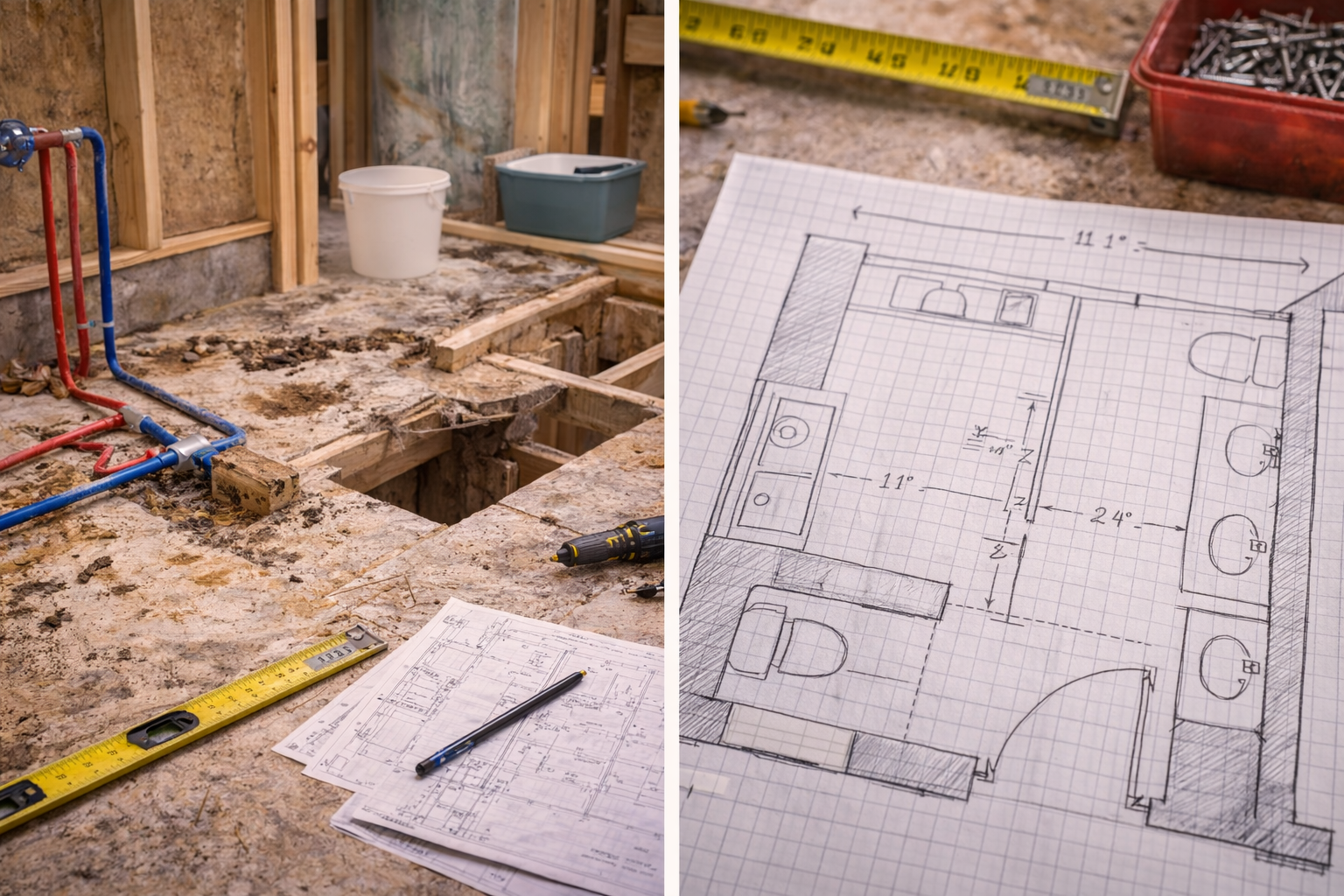
Room size sets the physical limits, but existing plumbing often determines how expensive a layout change will be. A larger bathroom gives more freedom to move fixtures, while a smaller one may need careful planning just to improve clearances. Plumbing location matters because moving a vanity supply line is usually simpler than relocating a toilet drain or shifting the shower drain across the room.
Why Does Existing Plumbing Matter So Much
The current plumbing layout affects labor, demolition, and what has to be opened in the floor or walls. Moving a drain can require cutting into framing or concrete, while moving supply lines may still require drywall and finish repair. The farther the fixture move, the more likely the remodel will involve deeper structural and plumbing work.
How Does Room Shape Affect the New Layout
Room shape matters because long narrow bathrooms, square bathrooms, and corner-entry layouts all behave differently. A narrow room may need fixtures lined up along one wall, while a wider room may support a separate shower and tub zone. The layout has to fit the actual room geometry instead of forcing a design that only worked in a showroom photo.
What Materials and Components Are Involved in Layout Changes
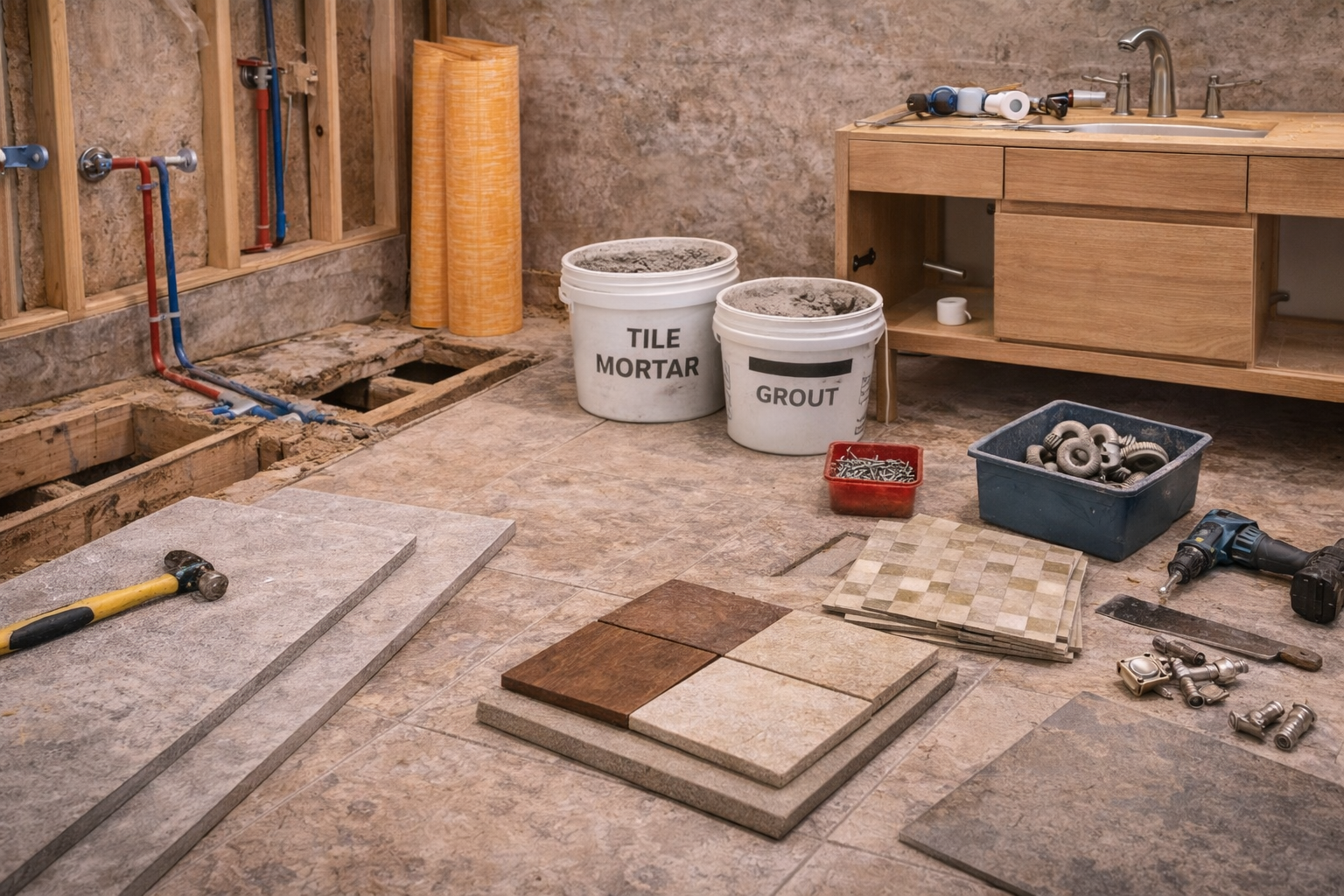
Bathroom layout changes involve more than new fixtures. The remodel may require new plumbing pipe, drains, framing lumber, backer board, waterproofing materials, drywall, tile, vanity components, lighting, flooring, and trim. The finish materials only work if the underlying construction is rebuilt correctly for the new arrangement. For broader planning considerations, it can help to review Energy Saver design guidance.
What Construction Materials Are Common in Layout Change Projects
Common materials include framing lumber, subfloor patch materials, plumbing fittings, new valves, shower waterproofing systems, drywall, tile backer, flooring underlayment, and finish trim. The exact list depends on how far the layout is changing and whether the remodel affects only one wall or most of the room.
What Fixture and Finish Components Usually Change
Vanities, mirrors, lighting, shower glass, tubs, toilets, drains, tile layouts, and door hardware often change during a layout remodel because the old items no longer fit the new plan. Once fixtures move, the surrounding finishes usually need to move with them to keep the room cohesive.
What Upgrades Can Be Combined With Bathroom Layout Changes
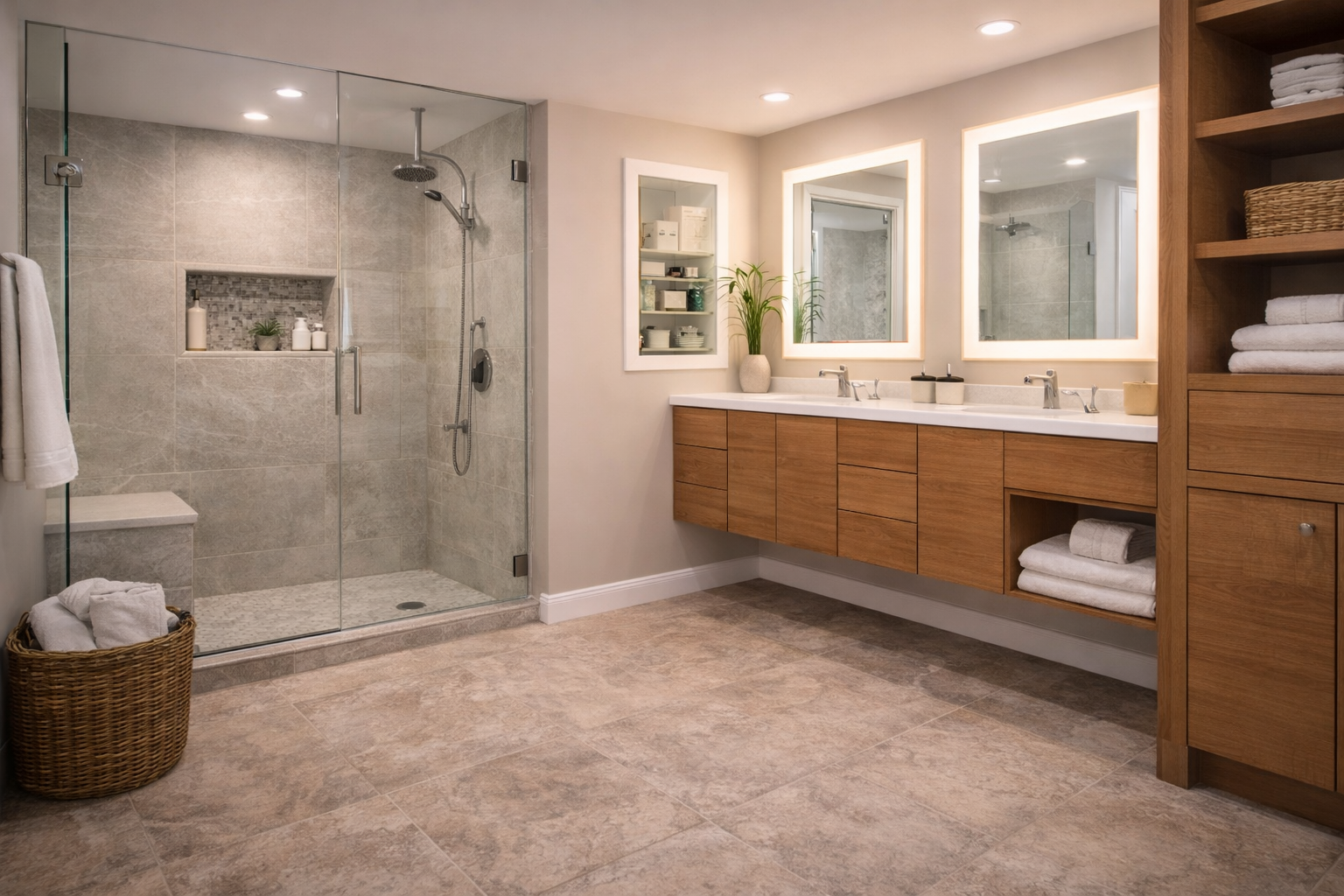
Layout work is often the best time to combine other upgrades because the walls, floor, and plumbing are already being opened. Common upgrades include larger showers, double vanities, better storage cabinets, recessed niches, updated lighting plans, heated floors, and stronger ventilation.
What Functional Upgrades Work Best With Layout Changes
Functional upgrades include bigger shower entries, improved toilet clearances, better vanity storage, and easier paths through the room. These improvements matter because layout changes should solve practical problems, not just create a different floor plan on paper.
What Design Upgrades Usually Happen at the Same Time
Once the layout changes, homeowners often update tile, flooring, mirrors, lighting, vanity style, and plumbing trim so the room looks intentionally rebuilt rather than partially patched. This is also when the remodel can shift from builder-grade to a cleaner and more custom look.
What Construction Details Matter in Bathroom Layout Changes
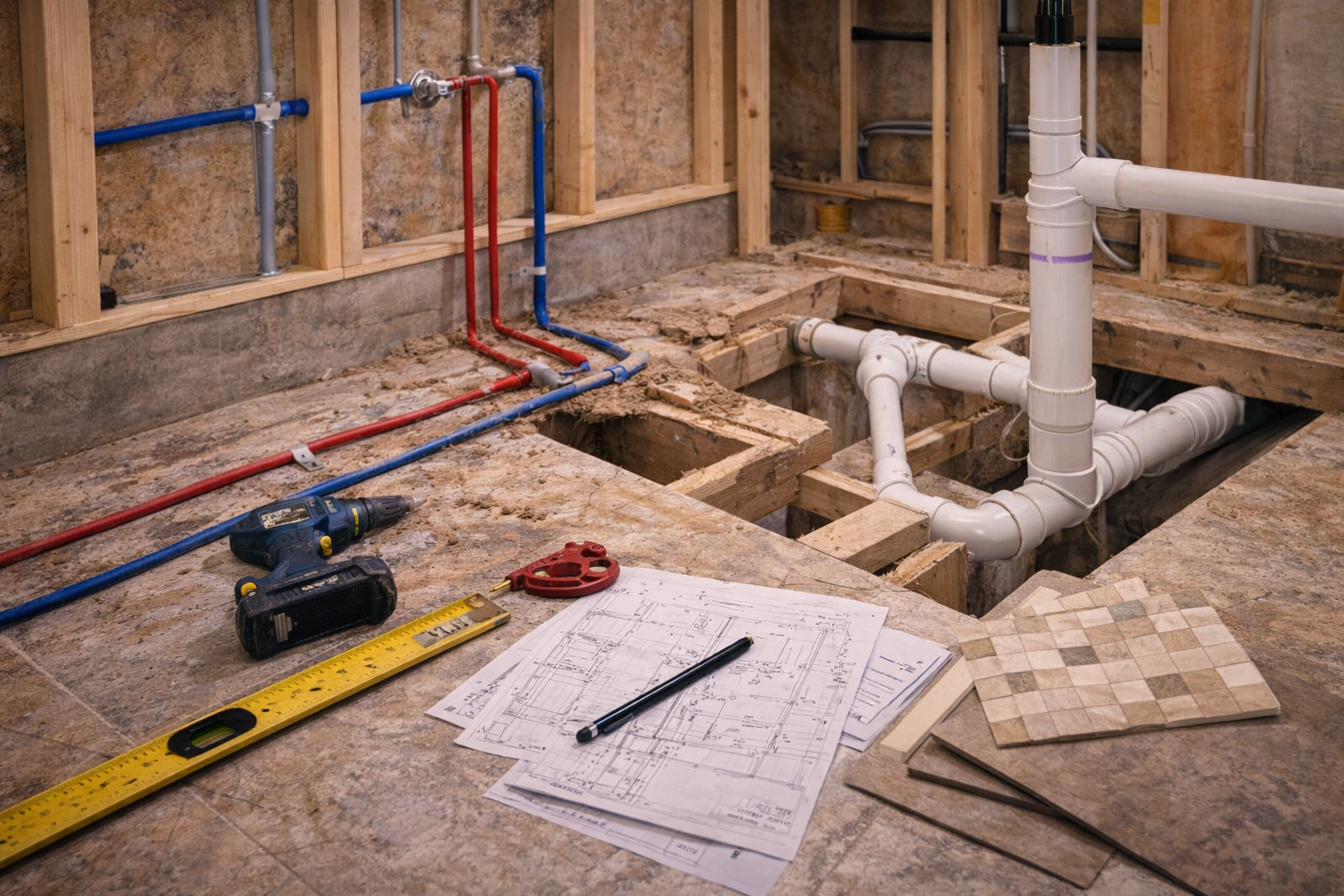
Construction details matter because bathroom layout changes affect the hidden systems first. The remodel has to account for drain slope, venting, framing changes, electrical routing, subfloor repair, waterproofing, and code-required clearances. If those details are handled poorly, the layout may look better but still create future problems.
Why Do Drain and Framing Changes Matter So Much
Drain lines need the right slope and path, and framing changes have to preserve structural strength while making room for plumbing or a new shower opening. In practical remodel work, this is often where layout changes either stay efficient or become much more involved than expected.
What Code and Clearance Issues Need Attention
Clearance around the toilet, vanity, shower door, and walking space all matter. So do electrical spacing, GFCI placement, fan routing, and how wet areas are waterproofed. These are the details that determine whether the new layout is just different or actually better.
What Affects Bathroom Layout Change Cost
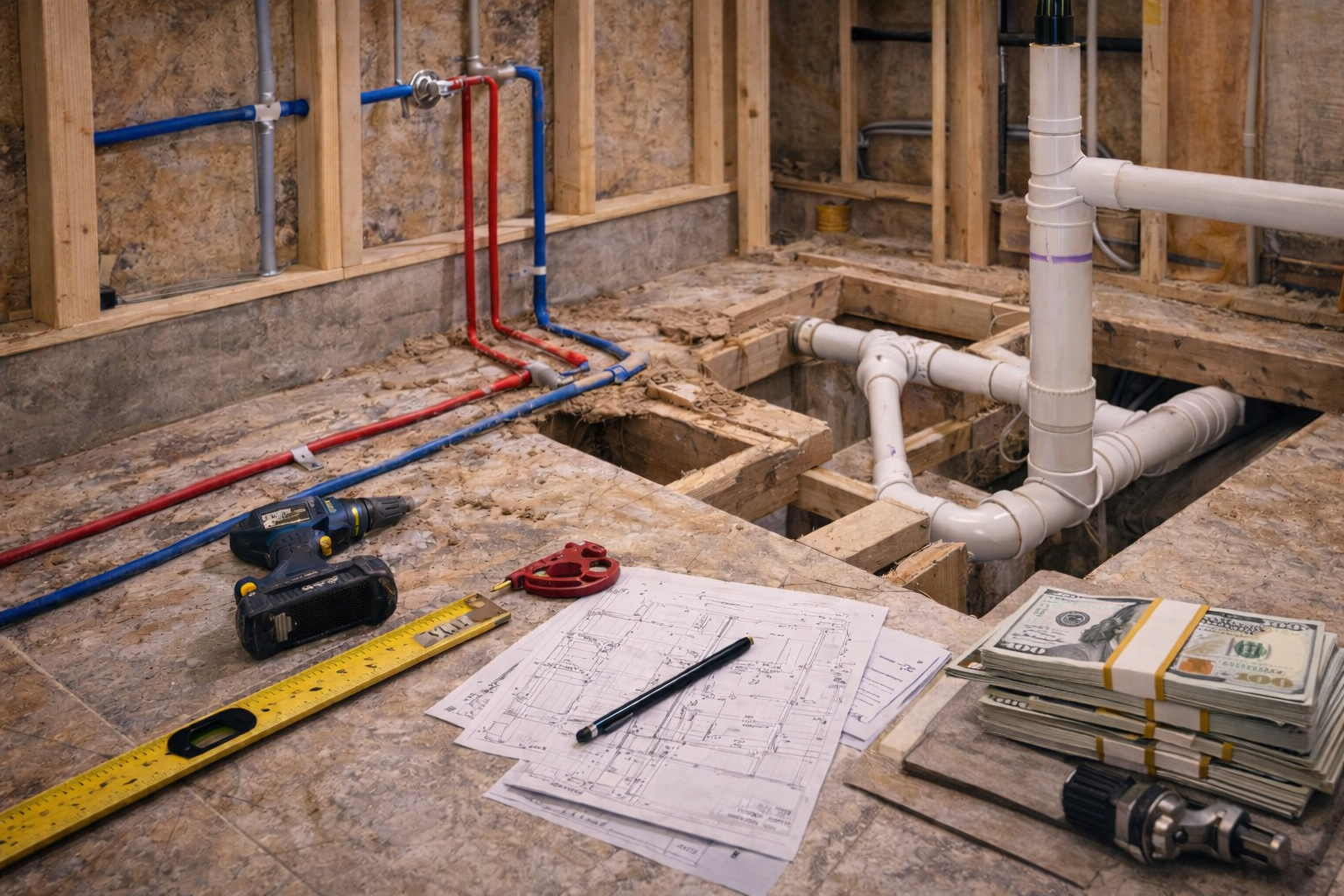
Bathroom layout change cost usually depends on which fixtures move, how far they move, and how much hidden work is required to support the new arrangement. Moving a vanity a short distance is different from relocating a toilet drain, opening concrete, reframing walls, and rebuilding the shower at the same time.
Which Fixture Moves Usually Raise the Cost the Most
Toilet moves, shower drain relocation, and tub relocation usually raise cost the most because they affect drainage, framing, and finish reconstruction. Larger layout changes also raise cost when they require new walls, more tile work, or reworking the electrical plan for lighting and switches. Homeowners weighing long-term operating costs often review Energy Saver guidance.
How Do Hidden Conditions Change the Budget
Hidden water damage, outdated plumbing, framing corrections, and floor repair can all change the budget once demolition starts. Layout changes carry more budget risk than surface updates because they expose and change more of the room at once.
What Mistakes Should Homeowners Avoid With Layout Changes
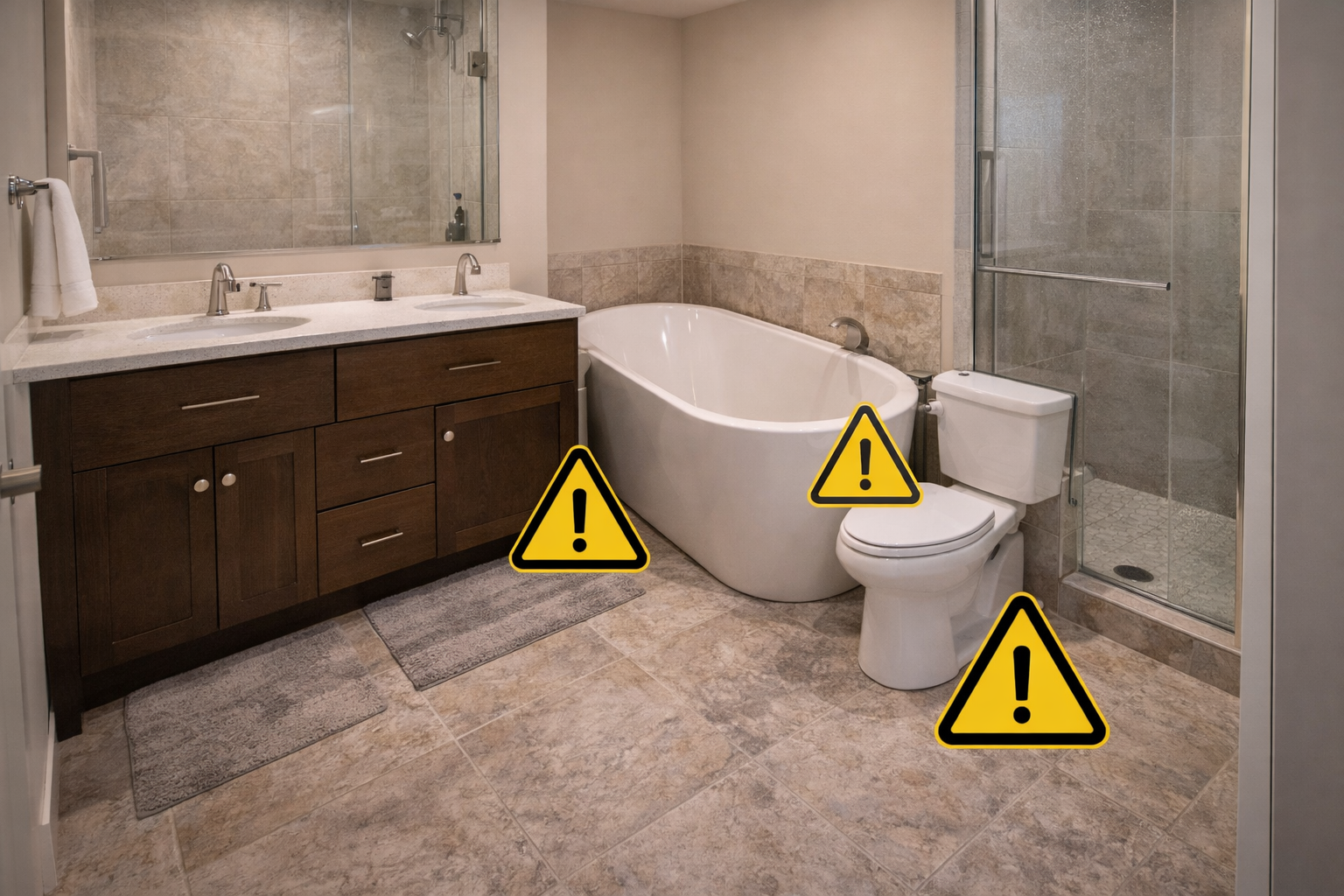
The biggest mistake is changing the floor plan without improving how the bathroom actually works. A layout should solve spacing, storage, and circulation problems. If the remodel only creates a different arrangement without better function, the extra construction may not be worth it.
Why Is It a Problem to Chase Style Without Checking Function
Some layouts look good in inspiration photos but do not fit the room. Oversized vanities, freestanding tubs in tight spaces, and poorly placed shower doors can make the bathroom harder to use even if the finishes are attractive. Real layout planning starts with clearances and use, then works toward the style.
Why Is It Risky to Underestimate the Hidden Work
Moving fixtures often means more demolition, more plumbing, more framing, and more finish repair than homeowners expect at first. If those hidden steps are underestimated, the schedule and budget can drift quickly once the room is opened up.
How Should You Plan Bathroom Layout Changes
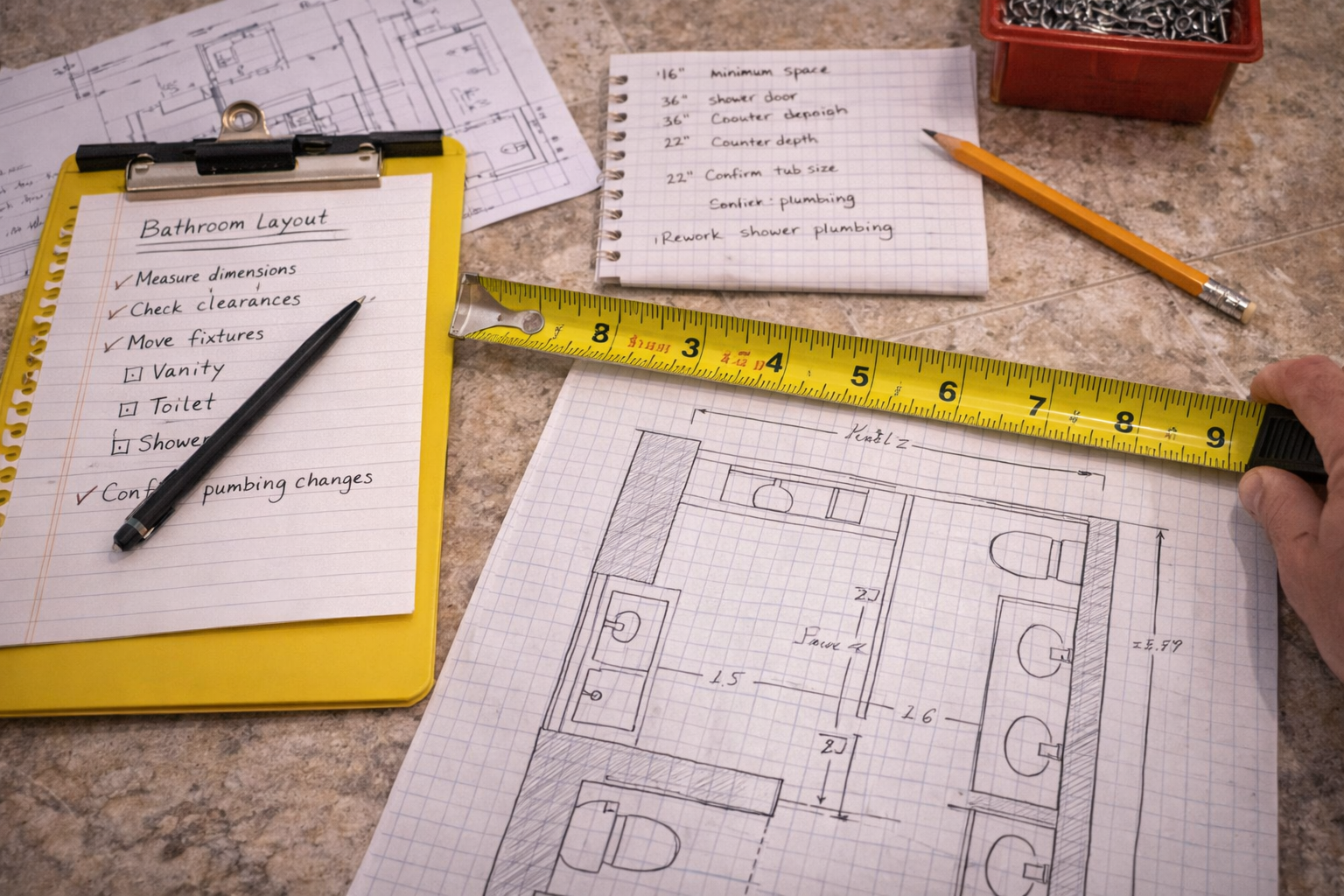
Bathroom layout changes should be planned by measuring the room carefully, identifying what does not work in the current setup, and deciding which fixture moves actually solve those problems. The best plan balances function, plumbing reality, cost, and finish goals instead of focusing on only one of those pieces.
What Should Be Decided Before Layout Work Starts
Before construction starts, it helps to confirm which fixtures are moving, the size of the new shower or tub, vanity width, storage needs, door swing, lighting placement, and whether plumbing and electrical changes are staying within existing walls or moving beyond them.
How Can a Homeowner Prepare for the Construction Process
Homeowners should be ready for demolition, plumbing rough-in work, inspections where required, finish patching, and the possibility of hidden repairs after walls and floors are opened. Layout changes usually create more disruption than a cosmetic refresh because more of the bathroom is being rebuilt at once.
Related Bathroom Layout Topics
Bathroom layout work overlaps with other remodeling topics because fixture placement affects storage, lighting, plumbing, flooring, and shower design. Related topics help homeowners compare whether they need a full layout change or a smaller upgrade that solves the main problem.
Which Layout-Related Pages Should Connect to This Topic
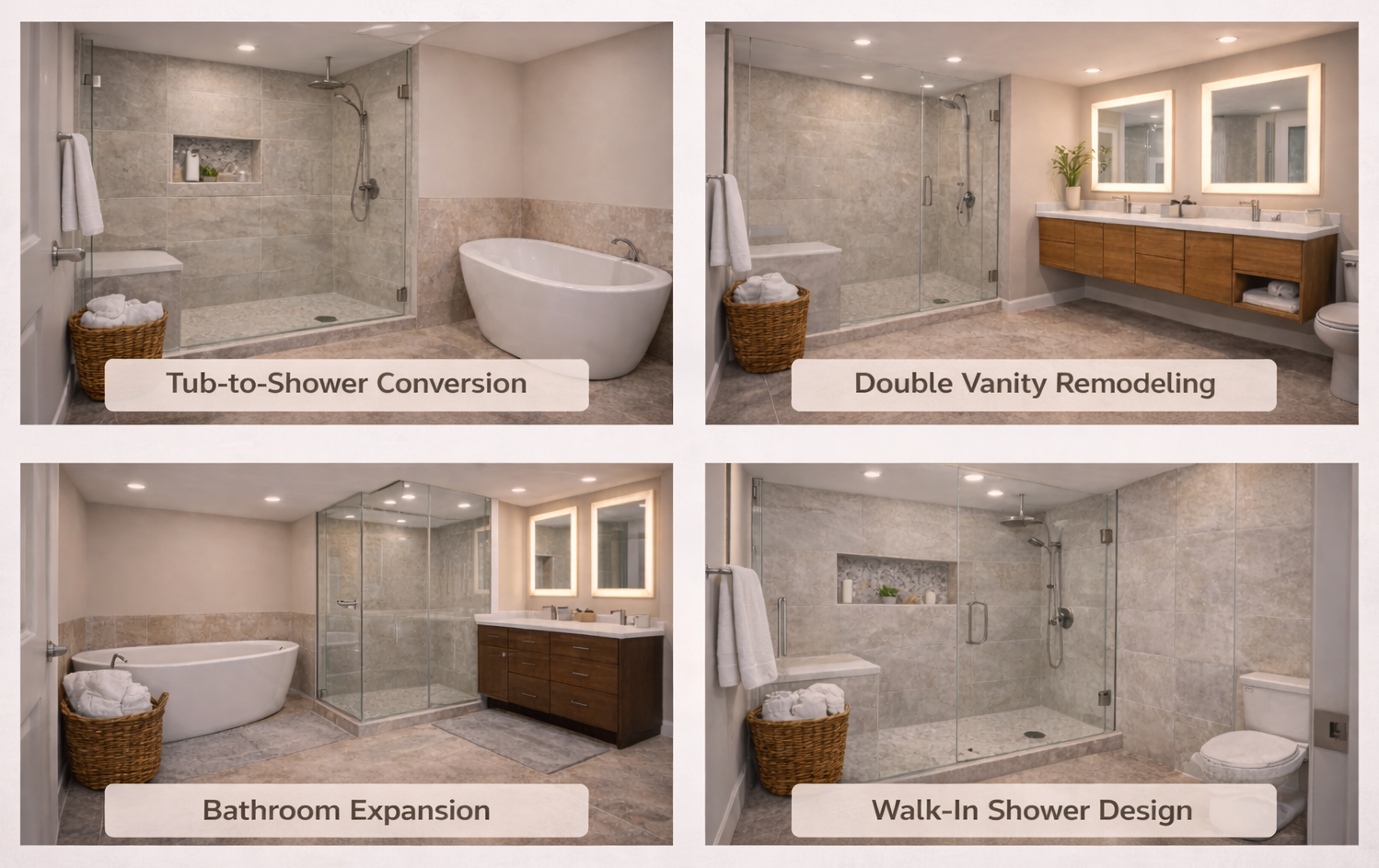
Strong related pages include bathtub remodeling, double vanity remodeling, the main bathroom remodeling hub, walk-in shower design, and bathroom storage planning. Those pages go deeper on the fixture and space decisions that layout changes usually touch.
Which Bathroom Remodeling Topics Often Connect to Layout Work
Layout work often connects to bathroom flooring, lighting, ventilation, vanity remodeling, waterproofing, and full bathroom remodeling. In practical projects, these pieces almost always overlap because moving fixtures changes the whole room around them.
Frequently Asked Questions About Bathroom Layout Changes
It can be, especially when the remodel moves the toilet, shower drain, or major plumbing lines. Small layout improvements usually cost less than full fixture relocations.
Some improvements can be made without major plumbing moves, especially when the vanity or storage changes more than the drain locations. A full layout change usually affects at least some plumbing.
The toilet is often one of the harder fixtures to move because the drain location and venting matter so much. Shower and tub drains can also add complexity depending on the structure below.
It often is when the existing shower is cramped or the tub is rarely used. The value depends on the room size and whether the new layout improves daily use enough to justify the construction.
Yes. A better layout can create room for a wider vanity, linen storage, recessed niches, or more usable wall space.
They often can, especially when plumbing, framing, or electrical work is involved. Local code requirements depend on the scope of the remodel.
Yes. Better fixture placement, a different vanity size, and converting a tub to a shower can improve function without changing the footprint.
The timeline depends on how much plumbing, framing, and finish work is involved. A deeper layout change usually takes longer than a surface-only remodel.
It can when the new layout clearly improves function, storage, and how the room feels. The strongest value usually comes from solving obvious layout problems.
The first step is measuring the room and identifying what is not working in the current plan. That gives the remodel a practical reason for each fixture move.