


Bathroom Storage Guide: Cabinets, Layout, Costs, and Planning

Bathroom Storage Guide Index
- Bathroom Storage Overview
- When Should Bathroom Storage Be Upgraded
- What Types of Bathroom Storage Are Used in Remodeling
- How Do Layout and Room Size Affect Bathroom Storage
- What Materials and Components Are Used for Bathroom Storage
- What Upgrades Can Be Added During a Bathroom Storage Remodel
- What Installation Details Matter in Bathroom Storage Work
- What Affects Bathroom Storage Cost
- What Mistakes Should Homeowners Avoid With Bathroom Storage
- How Should You Plan Bathroom Storage in a Remodel
- Related Bathroom Storage Topics
- Frequently Asked Questions About Bathroom Storage

Bathroom Storage Overview
Bathroom storage is what keeps the room useful once the remodel is finished. In practical terms, storage planning means deciding where towels, cleaning supplies, toiletries, backup paper goods, grooming tools, and daily-use items are going to live. Bathroom storage remodel work can include changing vanity cabinet layouts, adding drawer banks, installing linen cabinets, building recessed niches, adding open shelving, and reworking the room so storage fits without making the bathroom feel crowded.
What Gets Updated During a Bathroom Storage Remodel
The work may include vanity cabinet changes, drawer organizers, mirrored medicine cabinets, recessed wall storage, linen towers, floating shelves, toe-kick changes, and trim or lighting adjustments around the new cabinets. In some bathrooms, storage improvements also involve shifting the layout so the vanity can get wider or a tall cabinet can fit where wasted wall space used to be.
What Is the Difference Between Adding Storage and Replanning Bathroom Storage
Adding storage means inserting one more cabinet, shelf, or medicine cabinet into the existing room. Replanning storage means looking at the whole room and deciding where daily-use items, backup supplies, and shared household items should go. That broader approach often leads to a better vanity setup, better wall use, and a cleaner bathroom overall.
When Should Bathroom Storage Be Upgraded
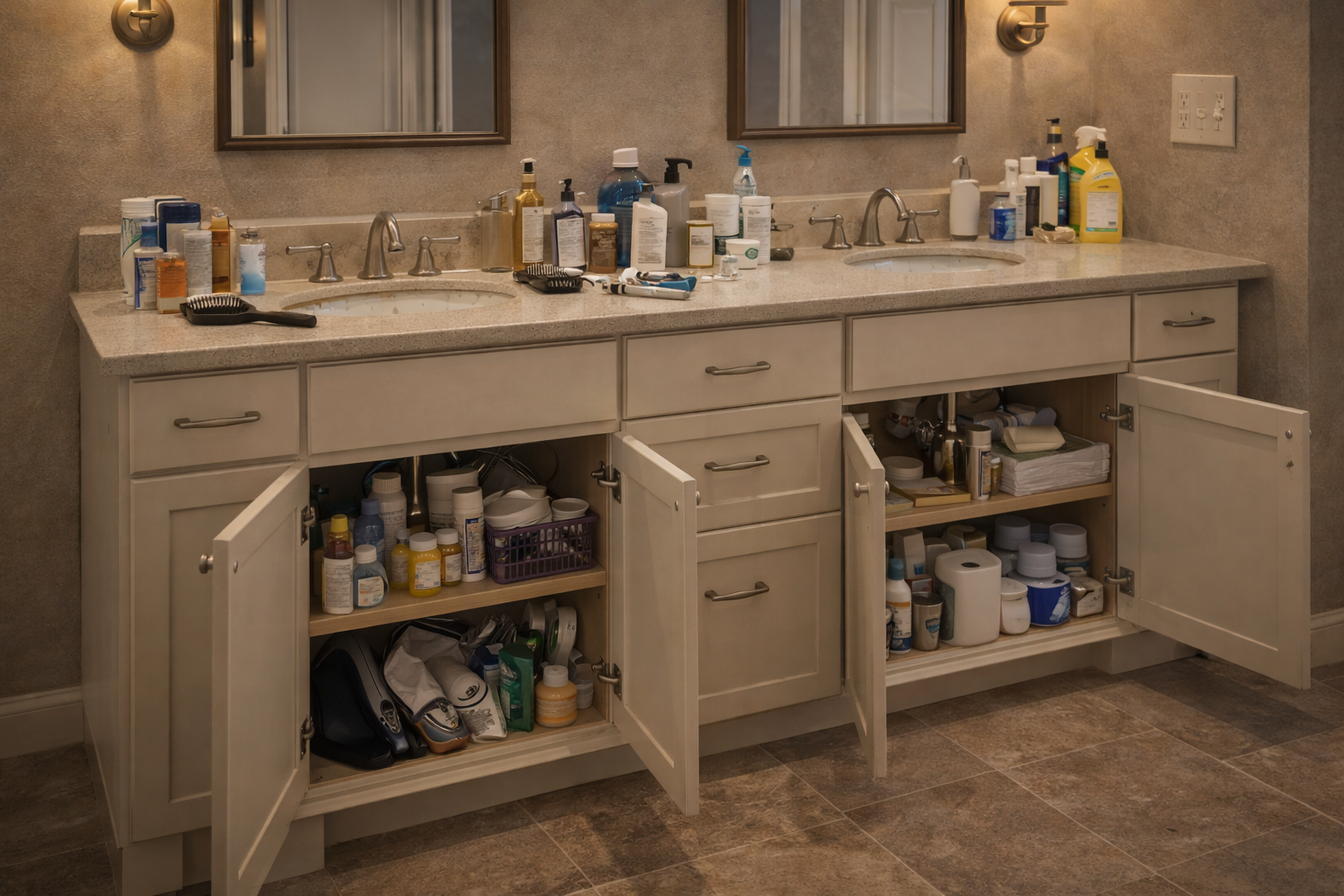
Bathroom storage should usually be upgraded when counters stay cluttered, drawers are too shallow, towels do not have a real home, or the room does not support the number of people using it. Storage problems show up quickly in bathrooms because there are many small items and not much extra space. Storage upgrades often work best when they are considered alongside the full layout in bathroom remodeling.
What Signs Show That Bathroom Storage Is Not Working
Clear signs include toiletries living on the counter, overstuffed vanity cabinets, no place for towels, crowded medicine cabinets, and cleaning supplies being stored somewhere outside the bathroom because they do not fit inside the room. In family bathrooms, poor storage often shows up as daily clutter rather than one obvious cabinet problem.
What Remodeling Goals Usually Lead to Storage Upgrades
Storage upgrades are common when a single vanity becomes a double vanity, when a bathroom is shared by more people, when the room is being modernized, or when a homeowner wants the bathroom to look cleaner and function with less counter clutter. They also come up during accessibility planning when reach and organization matter more.
What Types of Bathroom Storage Are Used in Remodeling
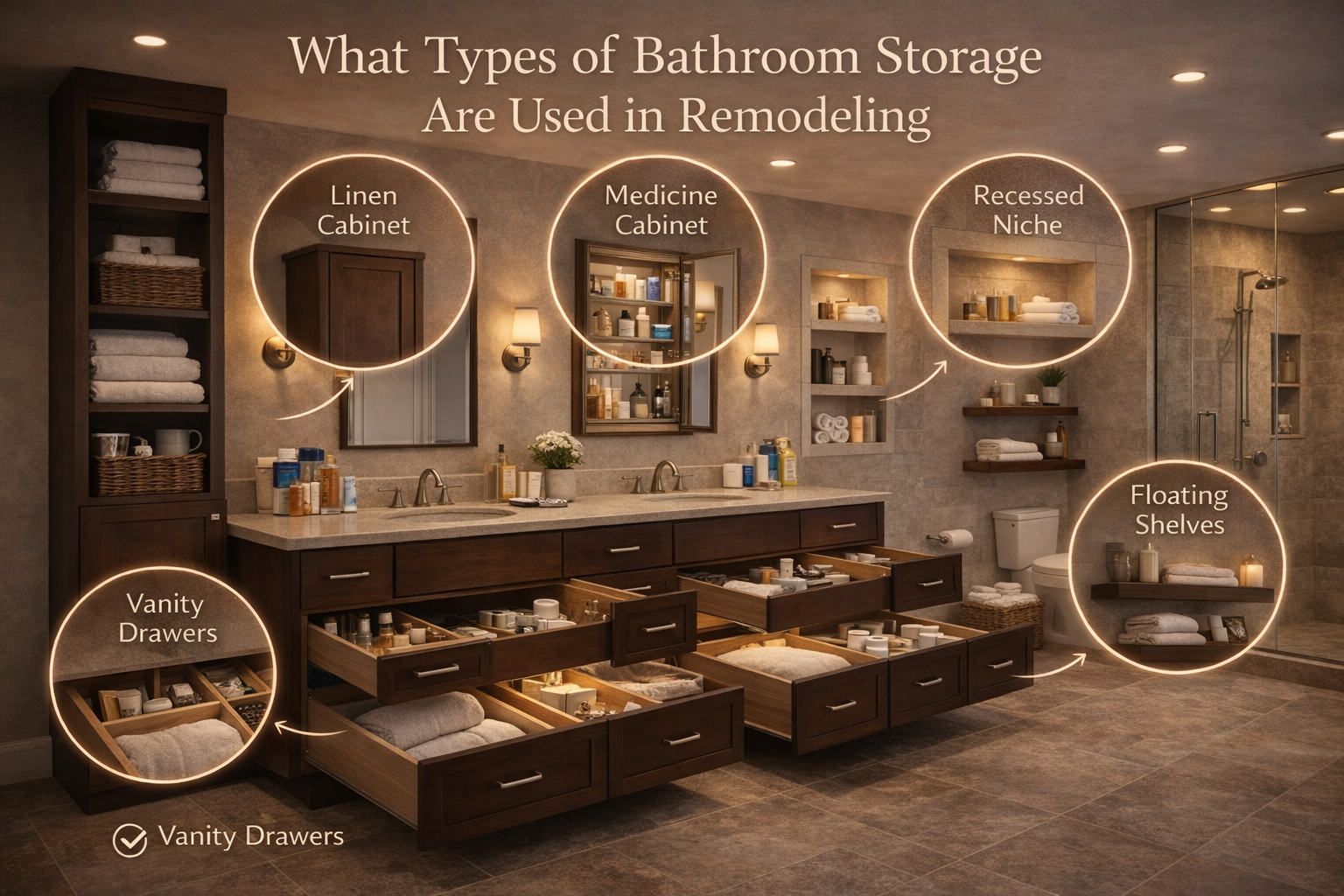
Common bathroom storage options include vanity drawers, under-sink cabinets, medicine cabinets, linen towers, recessed wall niches, floating shelves, over-toilet cabinets, and built-in shelving. The right mix depends on room size, wall space, and how the bathroom is used every day.
What Storage Features Are Most Common in Modern Bathroom Remodels
Vanity drawers are some of the most useful storage features because they organize small daily-use items better than deep open cabinets. Medicine cabinets are still common because they use wall depth efficiently. Linen towers and tall cabinets are useful in larger bathrooms where vertical storage can be added without blocking movement through the room.
When Does Built-In or Recessed Storage Make the Most Sense
Recessed storage makes the most sense when the room is tight and every inch matters. Recessed niches, medicine cabinets, and built-in shelving can add function without pushing farther into the bathroom footprint. That matters in smaller bathrooms where a bulky cabinet can make the room feel cramped.
How Do Layout and Room Size Affect Bathroom Storage
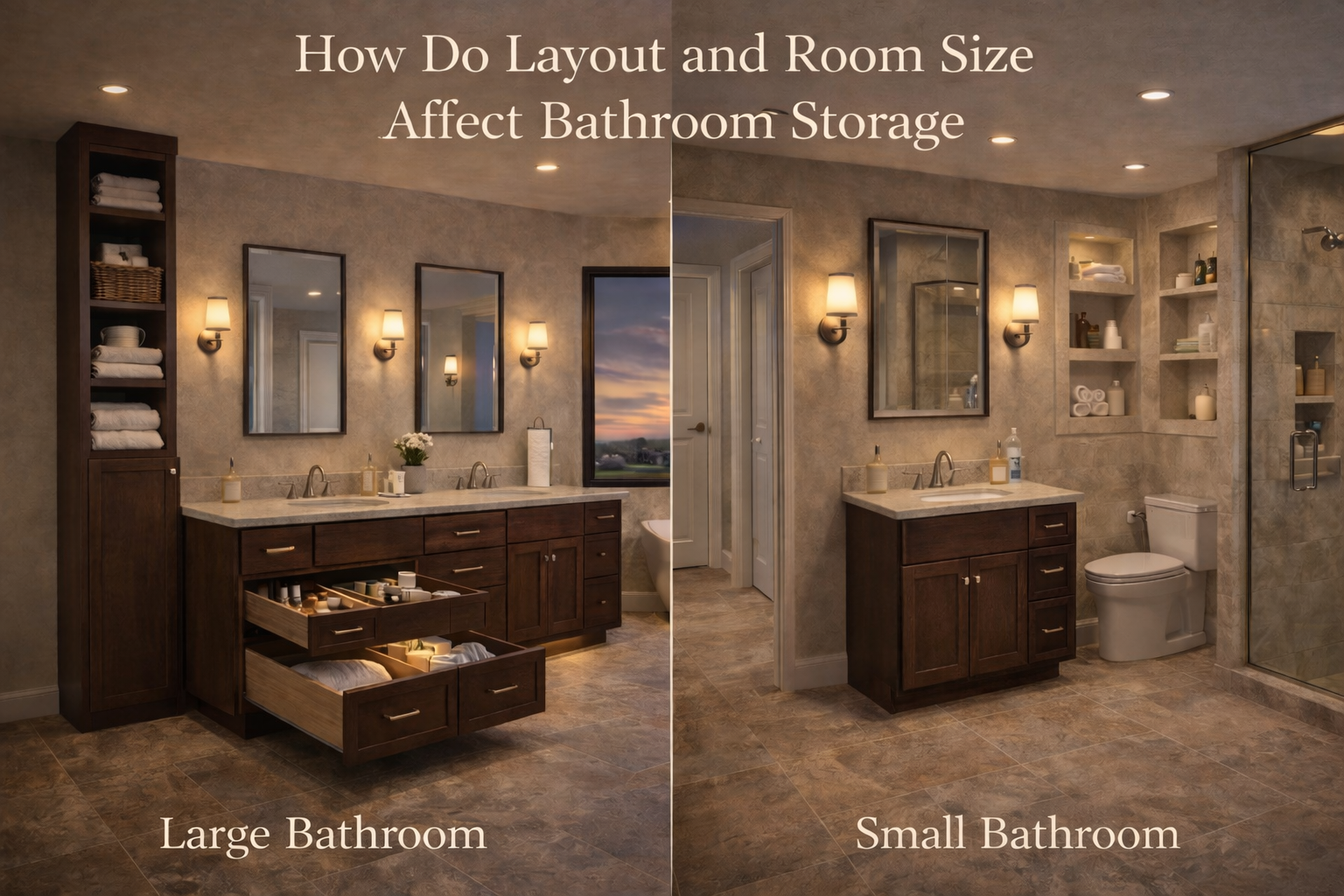
Layout and room size decide how much storage the bathroom can handle without becoming tight and awkward. A larger bathroom may support a double vanity and linen tower, while a smaller room may need shallow storage, recessed cabinets, or a more efficient vanity layout instead of just adding bulk.
Why Does Vanity Placement Affect Storage So Much
The vanity is usually the main storage zone in the bathroom, so its width, drawer layout, and sink placement matter a lot. A poorly planned vanity can waste most of its interior space on plumbing and leave very little room for daily-use items. Good vanity planning usually does more for bathroom storage than random shelves added later. For layout and clearance planning, many designers reference NKBA planning guidelines.
How Does Small Bathroom Size Change the Storage Strategy
In a small bathroom, storage usually needs to go vertical or recessed. That may mean a narrower vanity with better drawer design, a medicine cabinet instead of a plain mirror, or wall niches that use stud depth efficiently. The goal is to add function without blocking movement or crowding the room visually.
What Materials and Components Are Used for Bathroom Storage
Bathroom storage uses cabinet boxes, drawer hardware, shelving materials, mirror cabinets, organizers, and moisture-resistant finishes that can hold up in a humid room. The visible cabinet style matters, but so do the box construction, drawer slides, shelf strength, and finish durability.
What Cabinet and Shelf Materials Are Common in Bathroom Storage
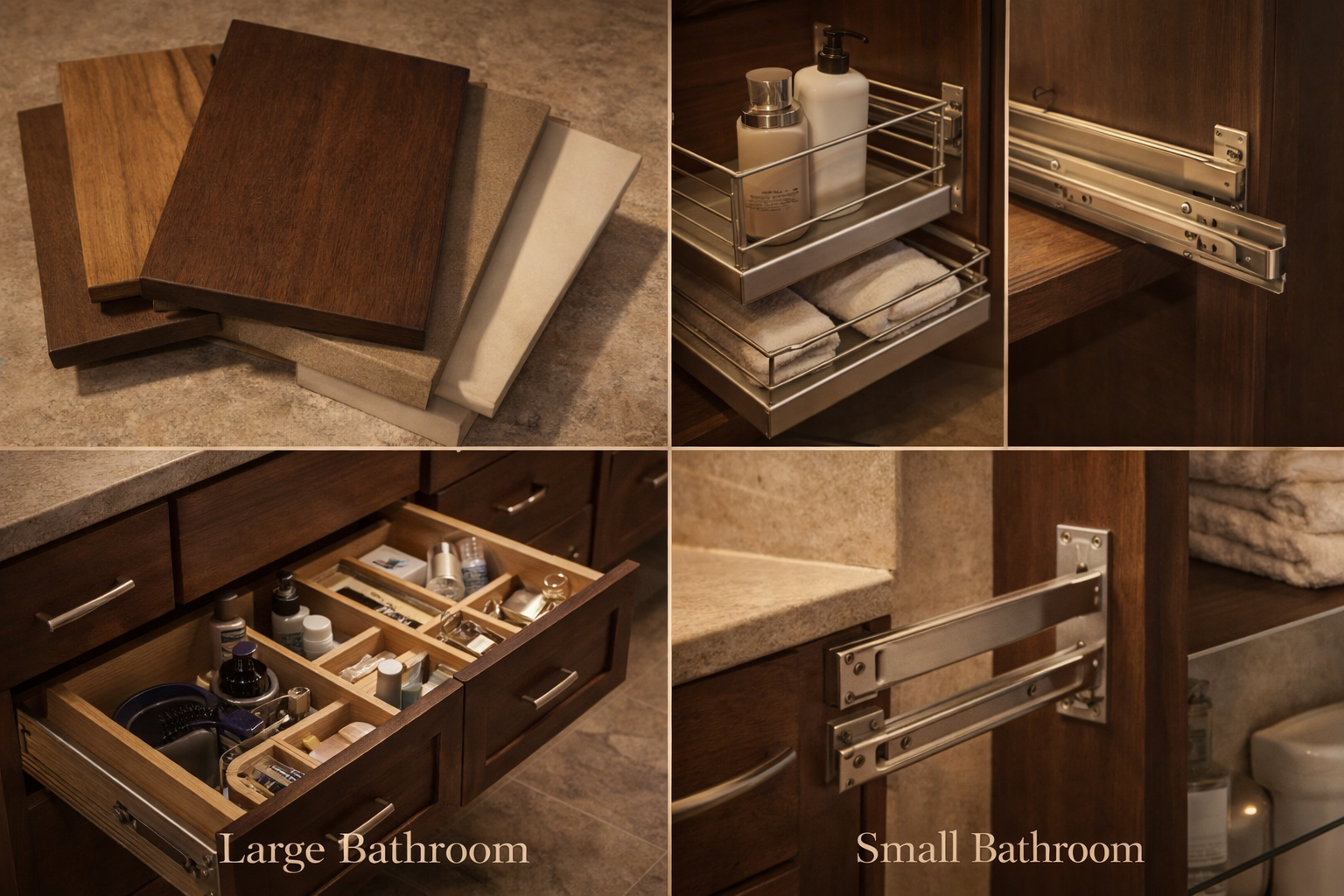
Common materials include plywood cabinet boxes, MDF or engineered panels with moisture-resistant finishes, solid wood face frames, and glass or wood shelving depending on the design. Bathroom storage needs materials that can handle steam and cleaning, especially around sinks and shower-adjacent walls.
What Hardware and Organizer Components Improve Storage Performance
Soft-close drawer slides, pull-out organizers, divided drawers, tilt-out trays, and adjustable shelving all improve real daily use. These components matter because bathroom storage is usually holding many small items, and the right internal setup keeps the room from becoming cluttered again after the remodel.
What Upgrades Can Be Added During a Bathroom Storage Remodel
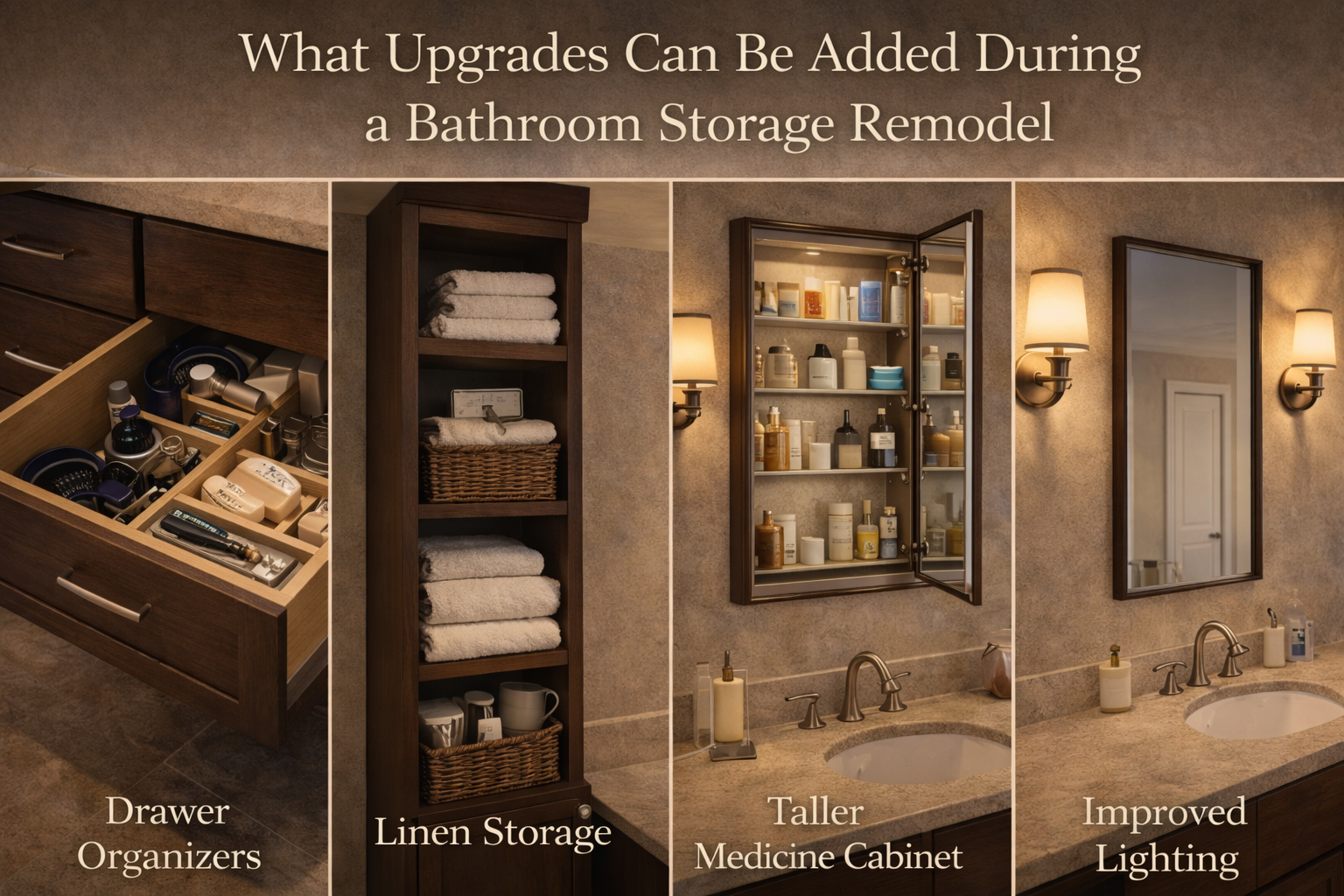
Storage work is often the best time to add upgrades that make the bathroom easier to use every day. Common upgrades include drawer dividers, pull-out organizers, taller medicine cabinets, built-in linen storage, better vanity lighting, and shelves or niches designed around the room instead of added as an afterthought. When comparing stone surfaces, it can help to review Natural Stone Institute guidance.
What Functional Storage Upgrades Are Most Useful
Drawer-based storage, taller vanity cabinets, recessed medicine cabinets, and dedicated towel storage are some of the most useful upgrades because they solve everyday clutter. These upgrades work best when they are sized around what actually needs to be stored instead of following a generic cabinet template.
What Design Upgrades Usually Happen at the Same Time
Storage upgrades often happen alongside vanity replacement, mirror changes, wall tile updates, and lighting improvements. Once the cabinets change, the surrounding finishes usually need to be coordinated so the room looks intentionally rebuilt and not pieced together from separate projects.
What Installation Details Matter in Bathroom Storage Work
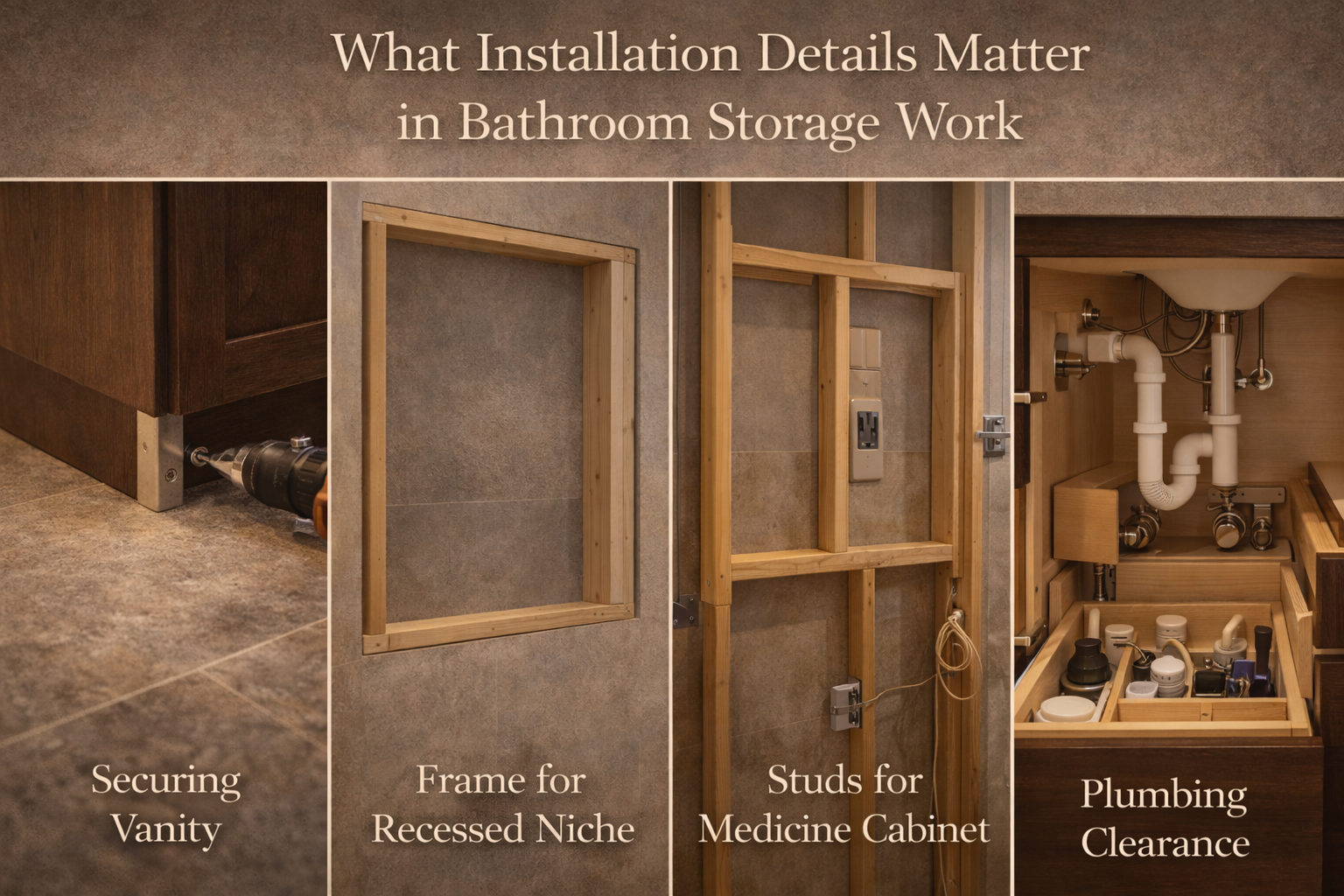
Bathroom storage installation depends on wall condition, stud placement, plumbing location, vanity height, and how the doors and drawers clear nearby fixtures. Good storage has to fit the room physically, not just look right in a product catalog.
Why Do Wall Structure and Plumbing Matter for Storage Installation
Wall structure matters because recessed medicine cabinets and niches need enough cavity depth and clear framing space. Plumbing matters because drain and supply lines can limit drawer depth or cabinet design under the sink. These are the details that determine whether the planned storage actually fits the room.
What Clearance and Placement Problems Show Up During Installation
Common issues include drawers hitting the toilet, cabinet doors crowding the doorway, medicine cabinets conflicting with lighting, and tall cabinets making the room feel narrow. Storage should improve the bathroom, not create new clearance problems around the fixtures.
What Affects Bathroom Storage Cost
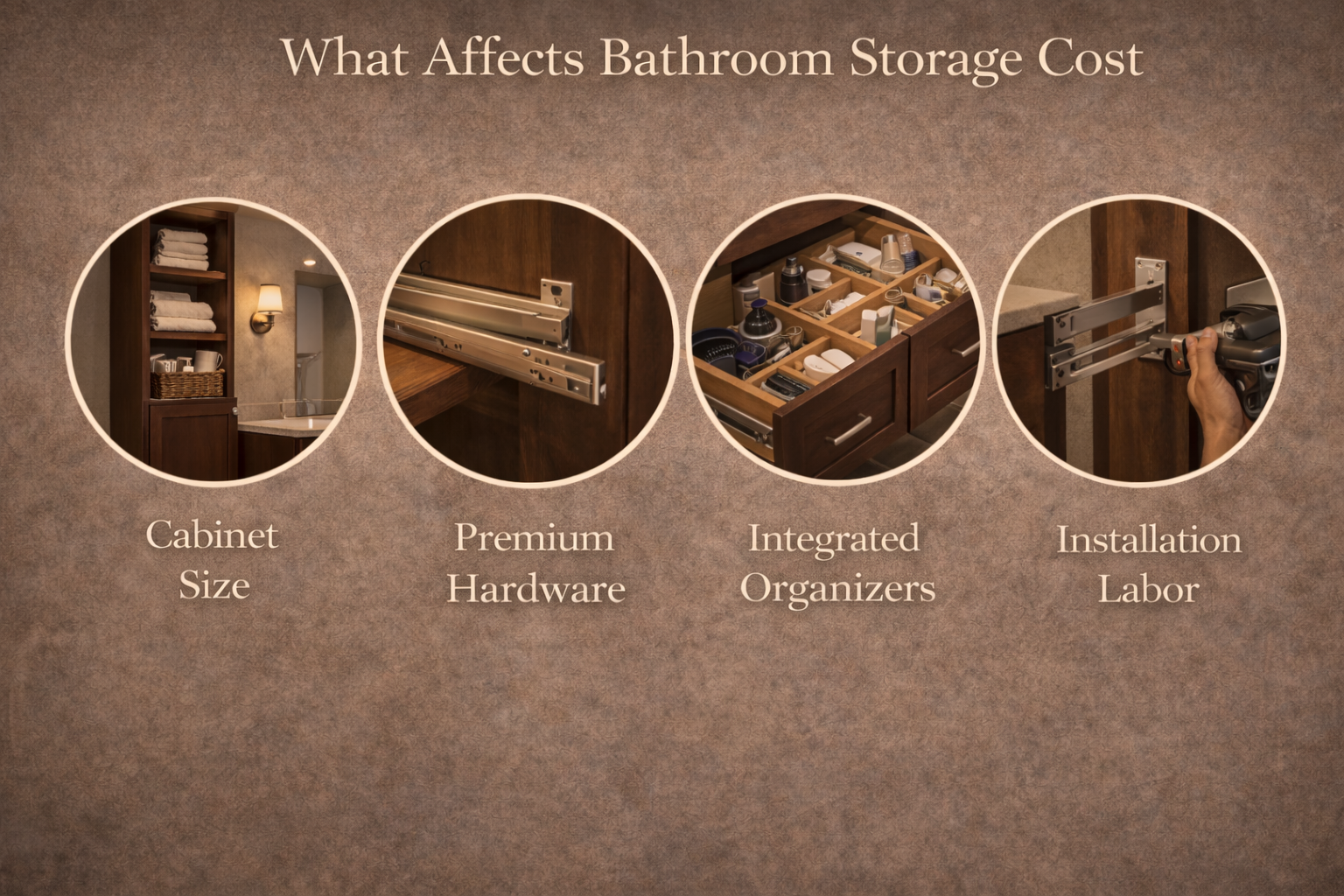
Bathroom storage cost usually depends on cabinet size, cabinet quality, custom work, installation complexity, and whether the storage changes affect the room layout or finishes around them. A simple mirror cabinet replacement is very different from custom vanity storage and a built-in linen tower.
Which Storage Choices Usually Raise the Cost
Costs usually rise with custom cabinetry, tall storage towers, premium drawer hardware, integrated organizers, recessed wall work, and built-ins that require finish patching and trim work. The more custom the storage plan becomes, the more labor and coordination it usually needs.
How Do Installation and Existing Conditions Affect the Budget
Labor costs go up when walls have to be opened, plumbing limits cabinet depth, lighting has to move, or storage work is tied into a full vanity replacement. The budget can also change if the remodel adds tile repair, paint work, or layout changes to make the new storage fit cleanly. Efficiency planning may also benefit from ENERGY STAR guidance.
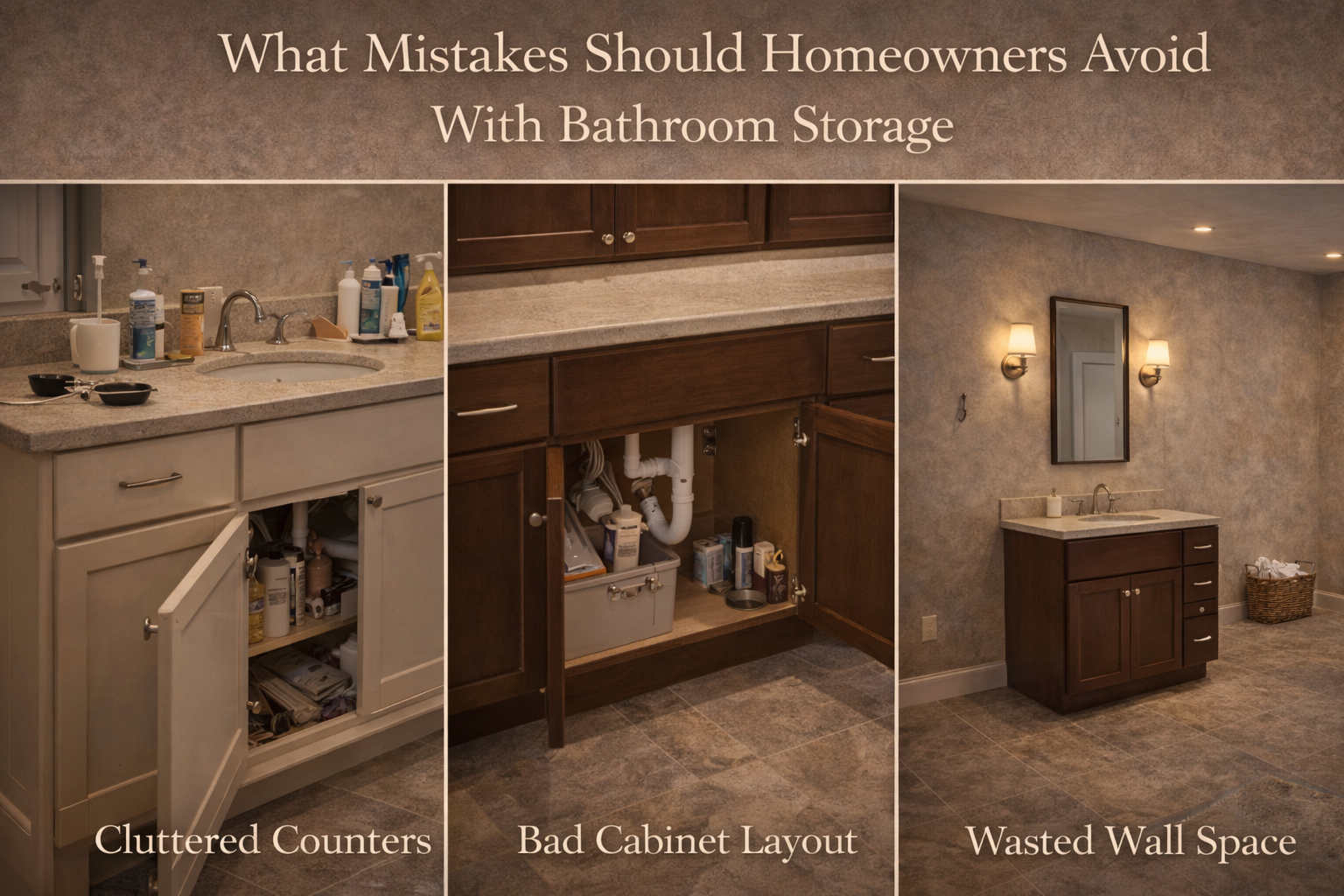
What Mistakes Should Homeowners Avoid With Bathroom Storage
The biggest bathroom storage mistake is adding cabinets without first deciding what actually needs to be stored and where it should go. More storage does not always mean better storage if the drawers are shallow, the doors are awkward, or the shelves are placed where daily-use items are hard to reach.
Why Is It a Problem to Add Storage Without a Real Plan
Random storage additions can create clutter in a different form by filling walls with shelves or cabinets that do not match how the room is used. A better plan groups daily-use items at the vanity, backup supplies in taller storage, and hidden items in organized drawers so the room stays cleaner.
Why Is It Risky to Ignore Clearance and Moisture Conditions
Storage has to survive humidity and has to open properly around the fixtures. If cabinet doors hit the toilet, shelves crowd the sink area, or cheap materials swell near moisture, the storage will become frustrating quickly. Practical bathroom storage should work as well as it looks.
How Should You Plan Bathroom Storage in a Remodel
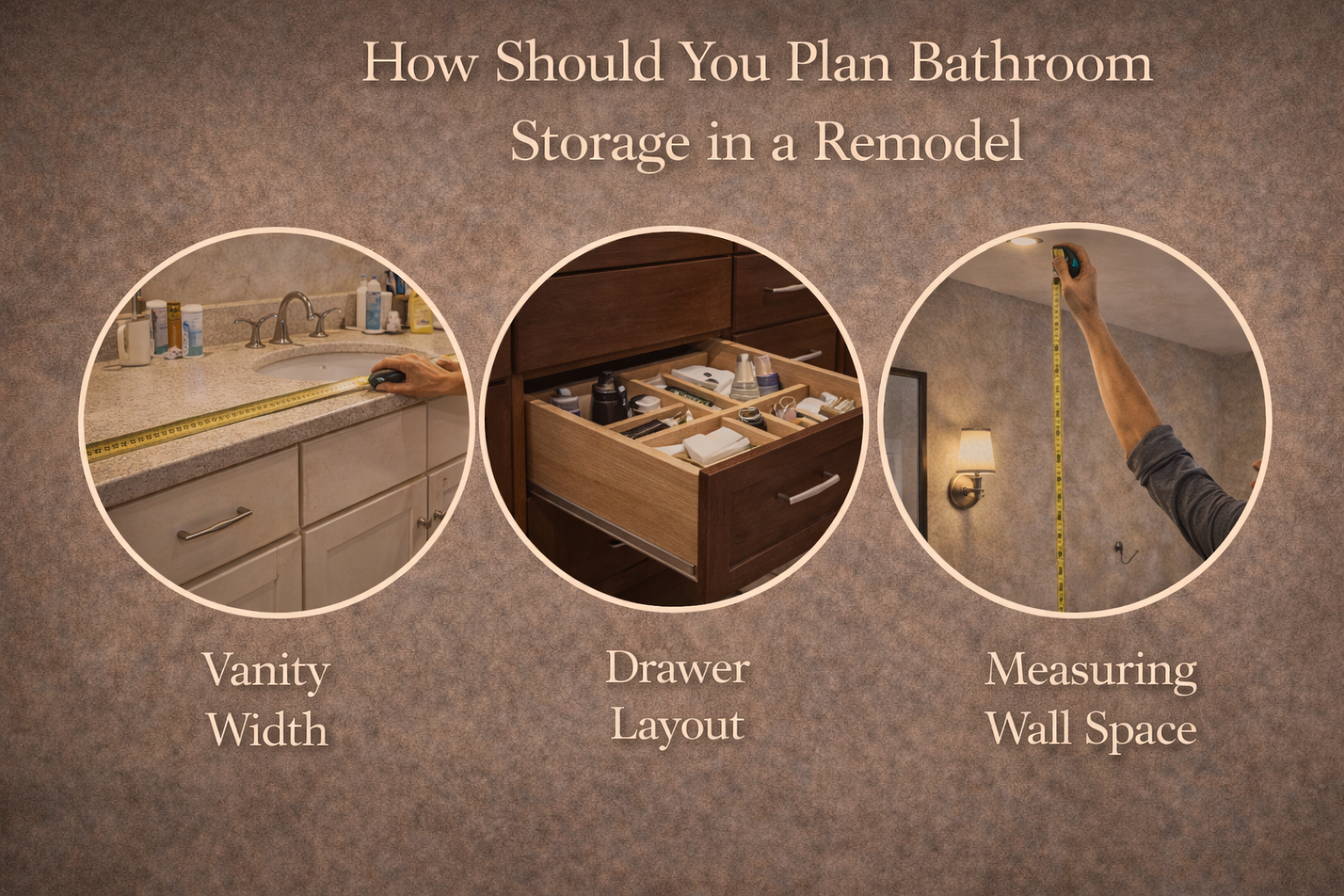
Bathroom storage should be planned by deciding what needs to live in the room first, then matching the cabinets and shelves to those items. The best plan accounts for daily-use items, backup supplies, towels, cleaning products, and who uses the bathroom. Once that is clear, the vanity layout, medicine cabinet size, and tall storage needs are easier to design correctly.
What Should Be Decided Before Storage Work Starts
Before construction starts, it helps to confirm vanity width, number of sinks, drawer vs door preference, medicine cabinet size, towel storage location, linen storage needs, and whether any of the storage should be recessed into the wall. Those decisions affect wall framing, lighting, mirror placement, and the overall room layout.
How Can a Homeowner Prepare for the Installation Process
Homeowners should be ready for cabinet lead times, wall patching, possible plumbing adjustments at the vanity, and the need to coordinate storage with mirrors, lighting, and tile work. If the storage is part of a larger remodel, it helps to sequence the work so the cabinets are protected once they go in.
Related Bathroom Storage Topics
Bathroom storage connects to vanity design, mirror choices, layout changes, and lighting because those elements all share wall space and affect how useful the room feels. Related topics help homeowners compare whether they need more cabinets, a better vanity layout, or a broader bathroom redesign.
Which Storage-Related Pages Should Connect to This Topic
Strong related pages include vanity remodeling, medicine cabinets, linen cabinets, recessed wall niches, bathroom layout changes, and double vanity design. Those topics help break down storage decisions into more specific remodeling choices.
Which Bathroom Remodeling Topics Often Connect to Storage Work
Storage work often connects to bathroom lighting, bathroom flooring, layout changes, vanity installation, and full bathroom remodeling. In real projects, these pieces overlap because cabinet placement, wall finishes, and fixture spacing all have to work together.
Frequently Asked Questions About Bathroom Storage
Recessed storage, medicine cabinets, better vanity drawers, and vertical storage are some of the best ways to add function without crowding the room.
Drawers are often better for organizing small daily-use items because they give easier access than deep open cabinets. The best setup depends on the plumbing layout and what needs to be stored.
It can add useful everyday storage, especially in smaller bathrooms, but it usually works best as part of a broader storage plan rather than the only storage solution.
Daily-use toiletries, grooming tools, and the items used most often at the sink should usually stay near the vanity for easy access.
Open shelving can work well for towels and decorative items, but it is usually less effective for hiding clutter than closed storage.
They can if they are oversized for the room or placed poorly. In the right spot, a tall cabinet can add useful storage without making the room feel crowded.
Yes. Better vanity design, a medicine cabinet, recessed storage, and shelving can all improve storage without moving the main fixtures.
Moisture-resistant cabinet materials, quality finishes, and durable hardware usually hold up best in humid bathroom conditions.
It can, especially when the bathroom feels cleaner, more organized, and easier to use because the storage was planned well.
The first step is deciding what items need to be stored in the room and how often each item is used. That gives the storage plan a practical purpose.