

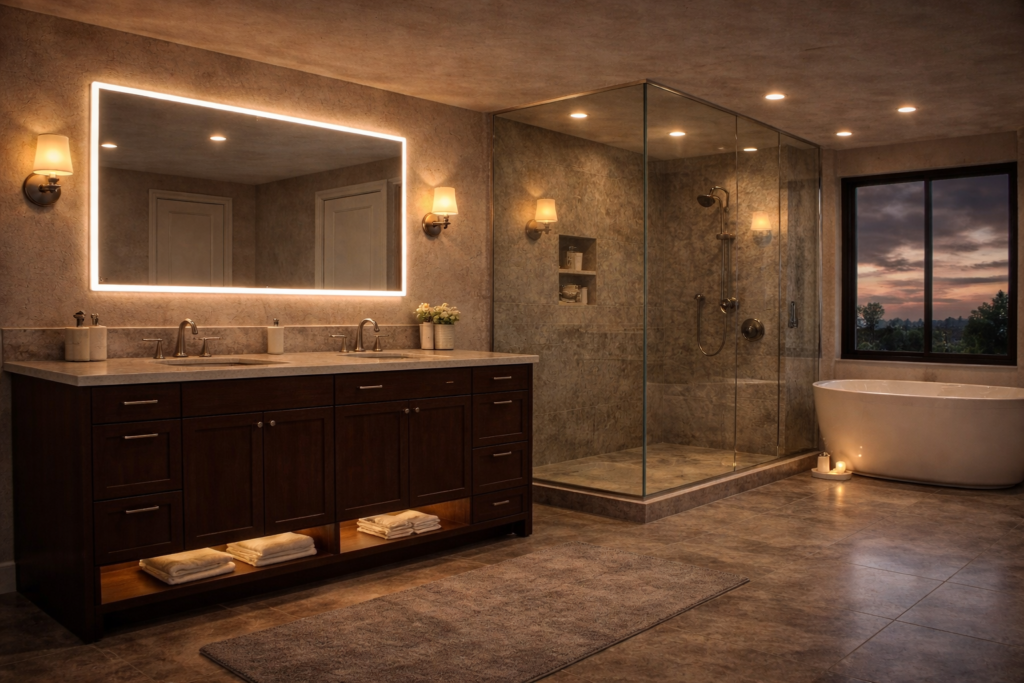
Bathroom Lighting Guide: Fixture Types, Layout, Costs, and Planning
Bathroom Lighting Guide Index
- Bathroom Lighting Overview
- When Should Bathroom Lighting Be Updated
- What Types of Bathroom Lighting Are Used in Remodeling
- How Should Bathroom Lighting Be Laid Out
- What Fixtures and Materials Are Used for Bathroom Lighting
- What Upgrades Can Be Added During a Bathroom Lighting Remodel
- What Installation Details Matter in Bathroom Lighting Work
- What Affects Bathroom Lighting Remodeling Cost
- What Mistakes Should Homeowners Avoid With Bathroom Lighting
- How Should You Plan Bathroom Lighting in a Remodel
- Related Bathroom Lighting Topics
- Frequently Asked Questions About Bathroom Lighting
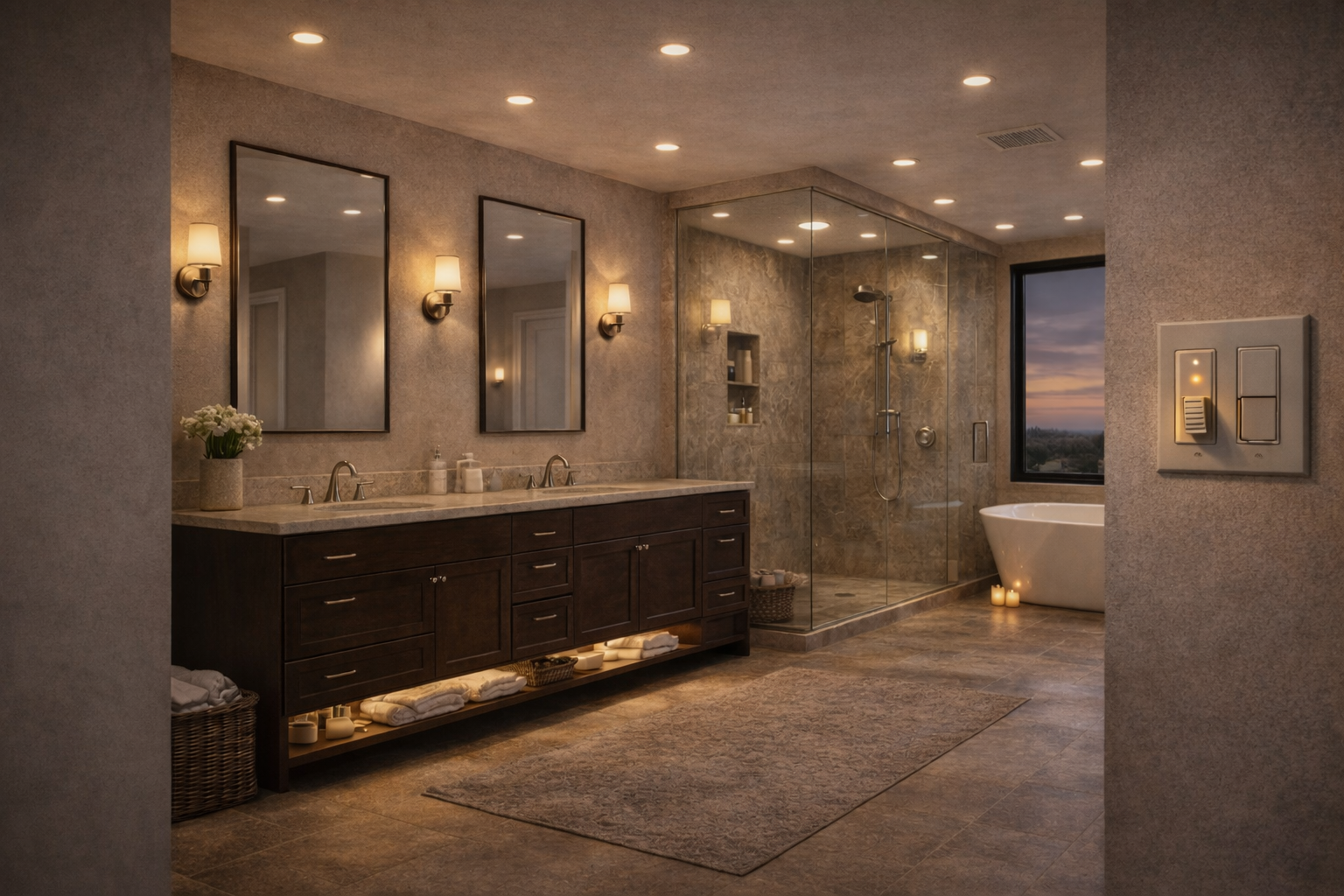
Bathroom Lighting Overview
Bathroom lighting is more than picking a fixture that looks good over the mirror. In a real remodel, the lighting plan affects shaving, makeup use, cleaning, shower visibility, and how the room looks at night and during the day. Bathroom lighting work can include replacing vanity lights, adding recessed ceiling lights, wiring a separate shower light, upgrading the exhaust fan light combo, installing dimmers, and improving switch placement so the room is easier to use.
What Gets Updated During a Bathroom Lighting Remodel
The work may include vanity lights, overhead ceiling fixtures, recessed can lights, shower-rated lights, mirror lighting, switch controls, dimmers, and sometimes the wiring that feeds those fixtures. In some bathrooms, the remodel also includes relocating junction boxes, patching drywall, changing the mirror size so the light fits correctly, or coordinating lighting upgrades with a new vanity, tile, or medicine cabinet.
What Is the Difference Between Replacing Fixtures and Reworking the Lighting Plan
Replacing fixtures means swapping old lights for new ones in the same locations. Reworking the lighting plan means changing where the light comes from and how it is controlled. That may involve adding more fixtures, separating vanity lighting from the main ceiling light, improving side lighting at the mirror, or installing dimmable lighting so the bathroom works better at different times of day.
When Should Bathroom Lighting Be Updated
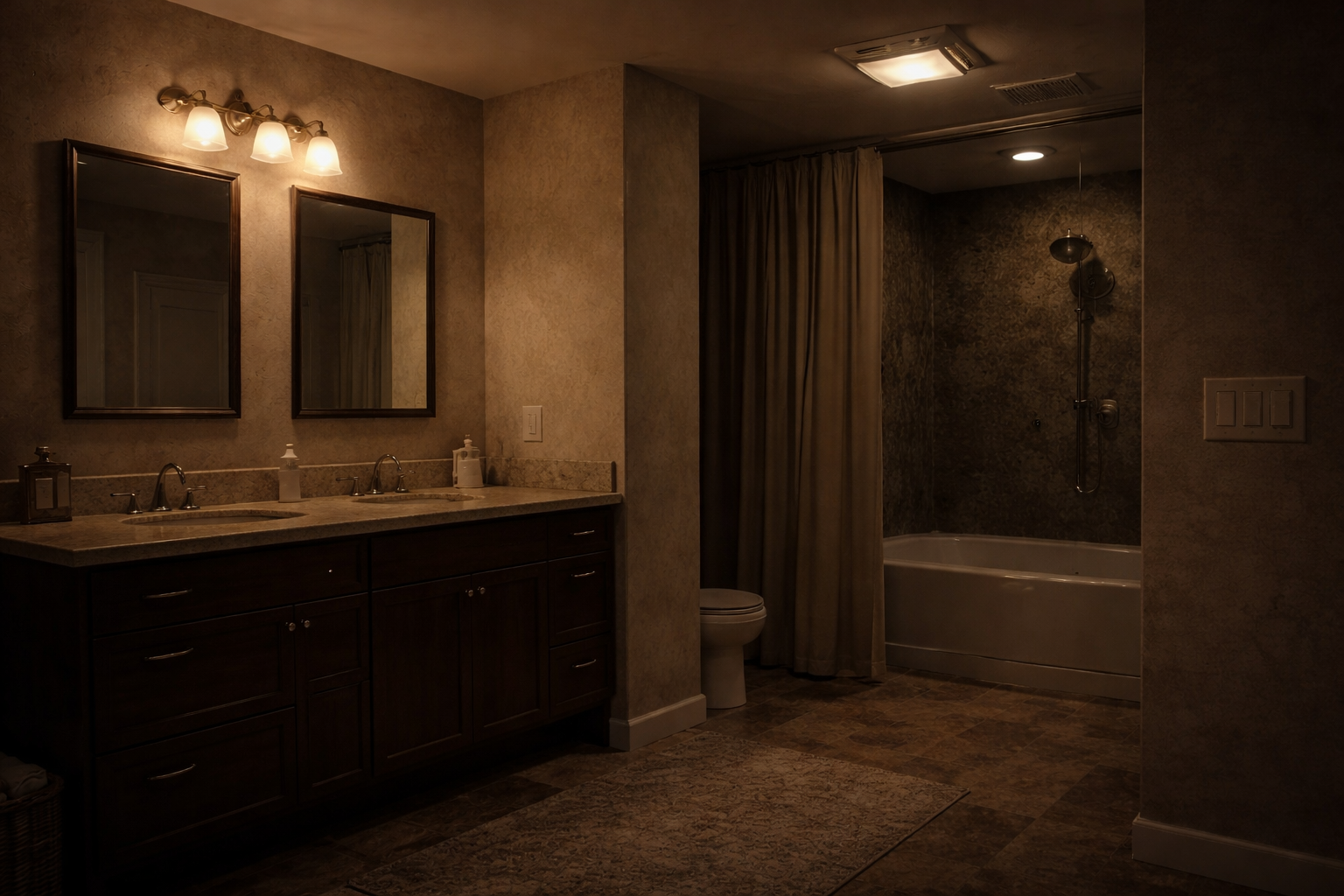
Bathroom lighting should usually be updated when the room feels dim, shadows make the mirror hard to use, fixtures are outdated, or the lighting no longer matches the new bathroom finishes. Poor bathroom lighting often shows up as dark corners, weak mirror lighting, yellow or mismatched color temperature, and a single ceiling fixture trying to light the whole room by itself. Good fixture placement and task lighting usually need to be coordinated with the rest of the bathroom remodeling work.
What Signs Show That Bathroom Lighting Is Not Working Well
Common signs include shadows across the face at the vanity, poor visibility in the shower area, a fan light that is too weak to light the room, and old fixtures that do not match the scale of the vanity or mirror. Lighting also needs attention when bulbs are hard to replace, the fixture throws glare, or the bathroom feels darker than nearby rooms even after repainting or upgrading finishes.
What Remodeling Situations Usually Trigger a Lighting Upgrade
Bathroom lighting is often upgraded during vanity replacement, mirror replacement, ceiling repair, full bathroom remodeling, or when a homeowner wants the bathroom to feel brighter and cleaner without changing the entire layout. It is also a common upgrade when a single sink becomes a double vanity or when a basic builder-grade bathroom is being modernized.
What Types of Bathroom Lighting Are Used in Remodeling
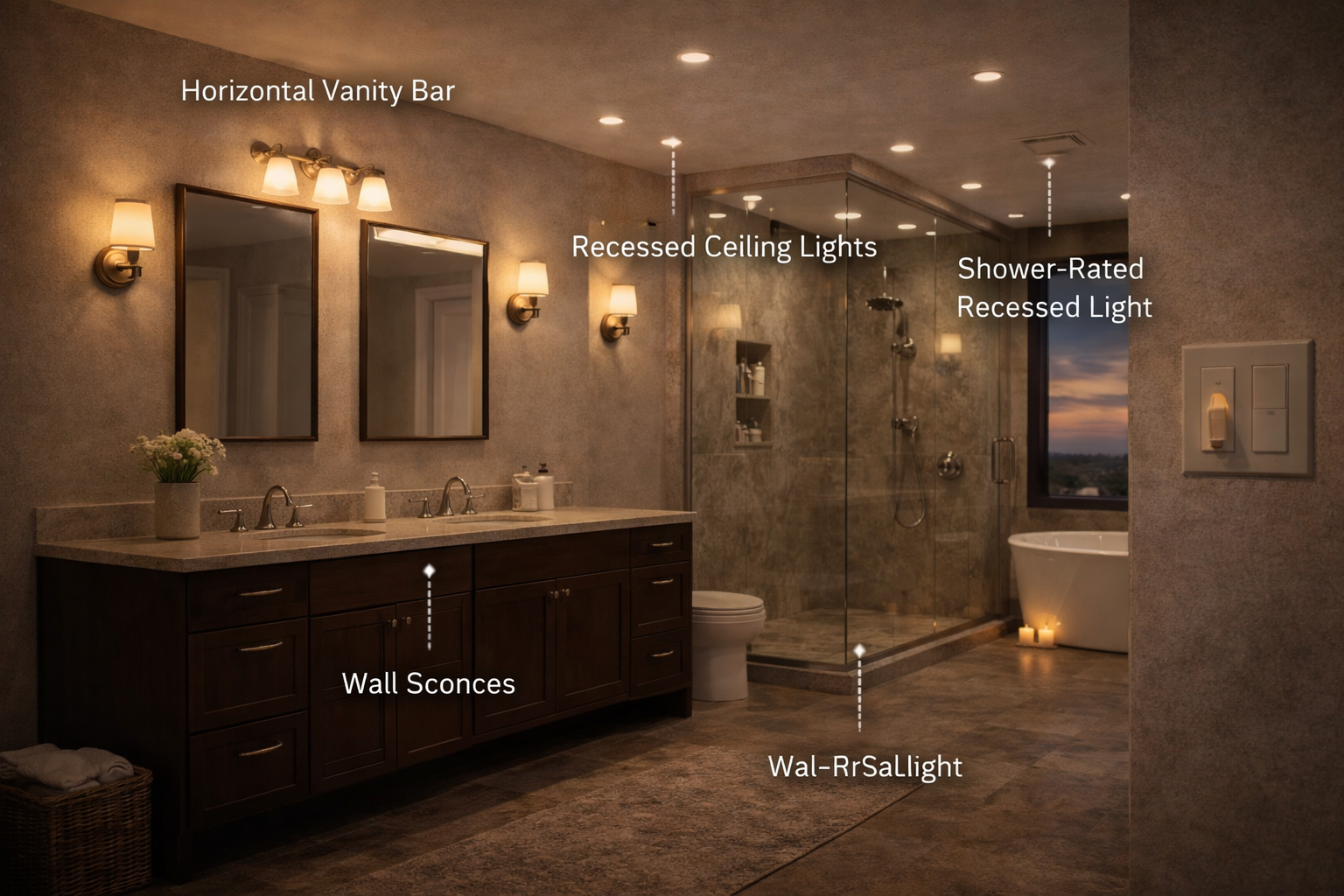
Bathroom remodels usually combine more than one type of light because one fixture rarely does the whole job well. Common lighting types include vanity lights above the mirror, wall sconces beside the mirror, recessed ceiling lights, flush-mount ceiling fixtures, shower-rated recessed lights, and accent lighting for mirrors or niches. Each type serves a different part of the room.
What Fixture Types Are Most Common Over and Around the Vanity
The most common vanity lighting choices are horizontal vanity bars above the mirror and sconces mounted on both sides of the mirror. A vanity bar is often easier when the mirror is centered and the electrical box is already above it. Side sconces can create more even face lighting because they reduce shadows from above, especially in bathrooms used for makeup, shaving, or detailed grooming.
What Ceiling and Shower Lights Are Common in Bathrooms
Recessed ceiling lights are common because they spread light without taking up visual space. Flush-mount fixtures are also used in smaller bathrooms or lower ceilings. Inside the wet area, remodels often use shower-rated recessed lights with trims designed for damp or wet locations. In some layouts, the exhaust fan also includes a light, but that fixture usually works best as support lighting rather than the only source in the room. For layout and clearance planning, many designers reference NKBA planning guidelines.
How Should Bathroom Lighting Be Laid Out
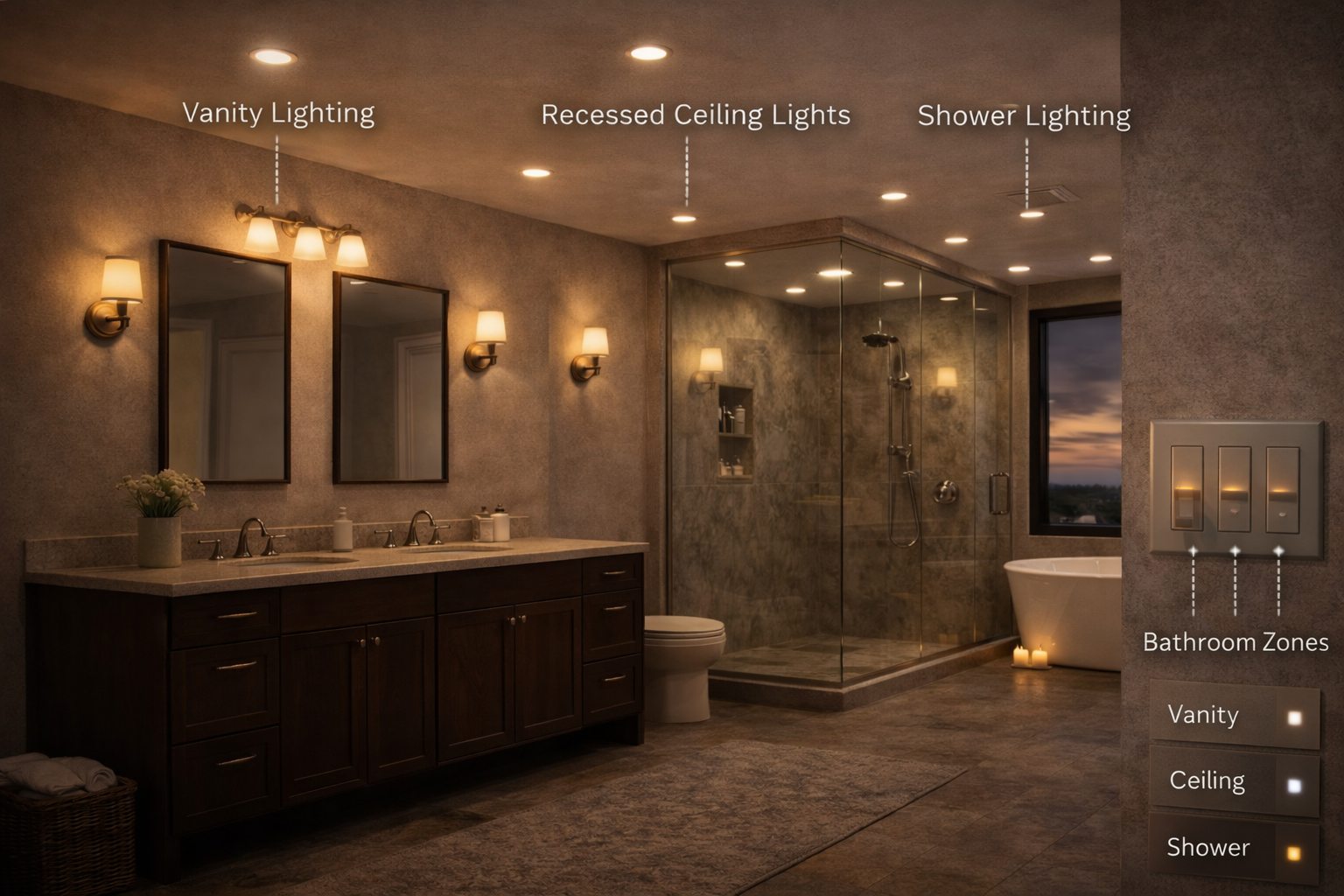
Bathroom lighting should be laid out based on how the room is used, not just where the existing electrical box happens to be. A good layout usually lights the vanity well, provides enough ceiling light for the full room, and adds dedicated light in the shower or tub area when needed. The goal is to reduce shadows, avoid dark corners, and give the bathroom separate lighting zones instead of a single all-or-nothing fixture.
Where Should Vanity Lighting Usually Be Placed
Vanity lighting should usually be centered on the sink or mirror, with fixture size matched to the width of the vanity and mirror. Side sconces should typically be mounted at a height that lights the face evenly rather than shining directly into the eyes. Above-mirror bars should be wide enough to spread light across the sink area instead of creating a bright spot only at the top center.
How Should Ceiling, Shower, and Accent Lighting Be Distributed
Ceiling lights should cover the walking area and general room brightness, while shower lights should be aimed at the wet area without creating glare on glossy tile. Accent lighting can be added at mirrors, niches, or under floating vanities when the remodel calls for layered lighting. Good spacing matters because too few fixtures leave shadows, while too many fixtures can make the room feel harsh and overlit.
What Fixtures and Materials Are Used for Bathroom Lighting
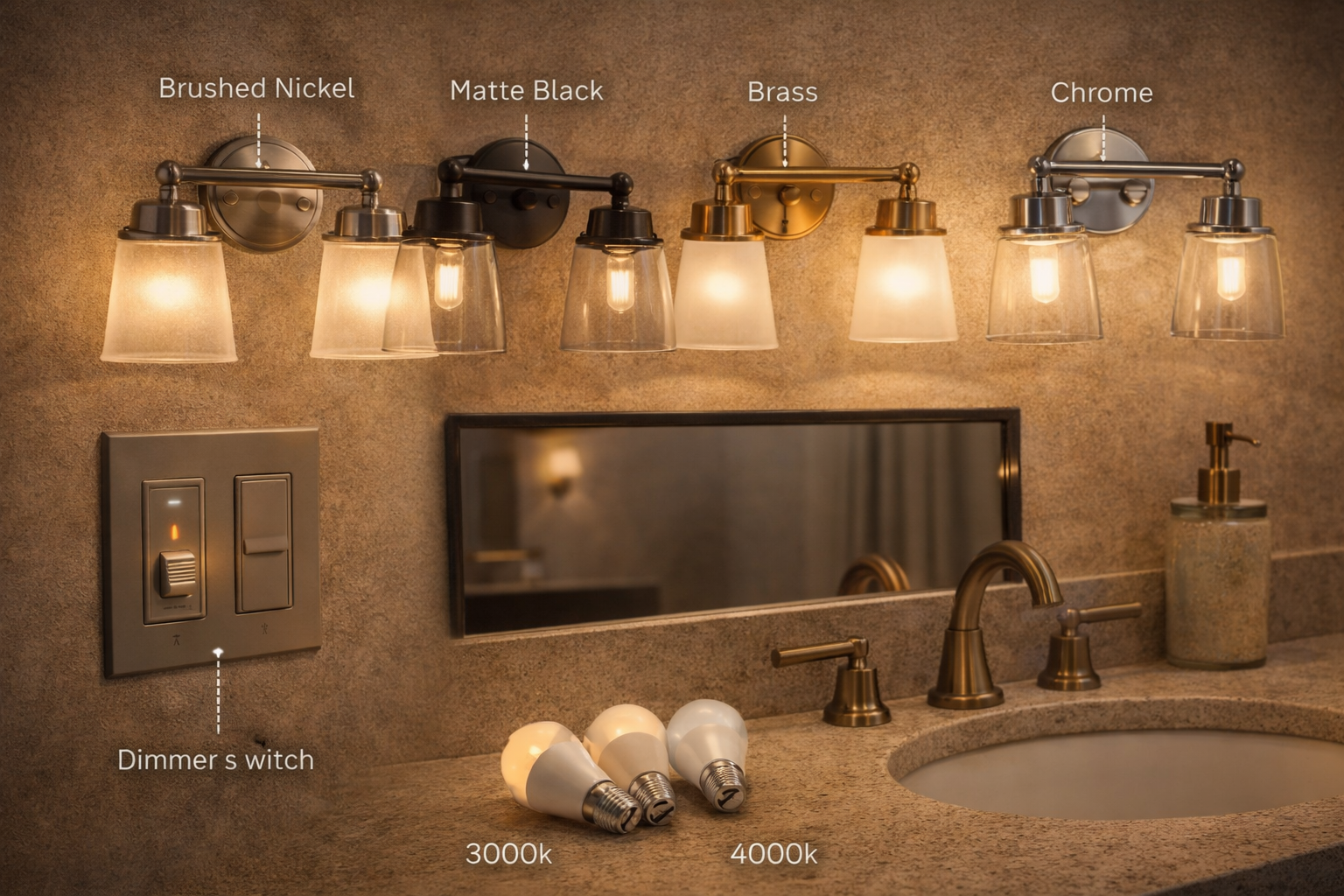
Bathroom lighting choices involve more than fixture shape. Remodels also deal with finishes, shade materials, bulb type, color temperature, damp-location ratings, and trim details that need to fit the rest of the room. Typical fixture finishes include chrome, brushed nickel, matte black, brass, and mixed-metal combinations that coordinate with faucets, mirrors, and hardware.
What Fixture Finishes and Shade Styles Are Common
Chrome and brushed nickel are common in bathrooms because they pair easily with plumbing fixtures and suit both modern and transitional styles. Matte black and brass are often chosen when the vanity hardware and shower trim lean more decorative. Shade styles include frosted glass, clear glass, metal shades, and integrated LED diffusers, each of which changes how the light spreads and whether glare becomes a problem.
What Bulb and Light Output Details Matter in a Bathroom
Important details include brightness, beam spread, and color temperature. A bathroom light that is too warm can make the room feel yellow, while a very cool bulb can make it feel harsh. LED fixtures and LED-compatible bulbs are common because they last longer and give more consistent output. In practical remodeling terms, the right lighting is bright enough to work at the mirror but still comfortable when used early in the morning or late at night.
What Upgrades Can Be Added During a Bathroom Lighting Remodel
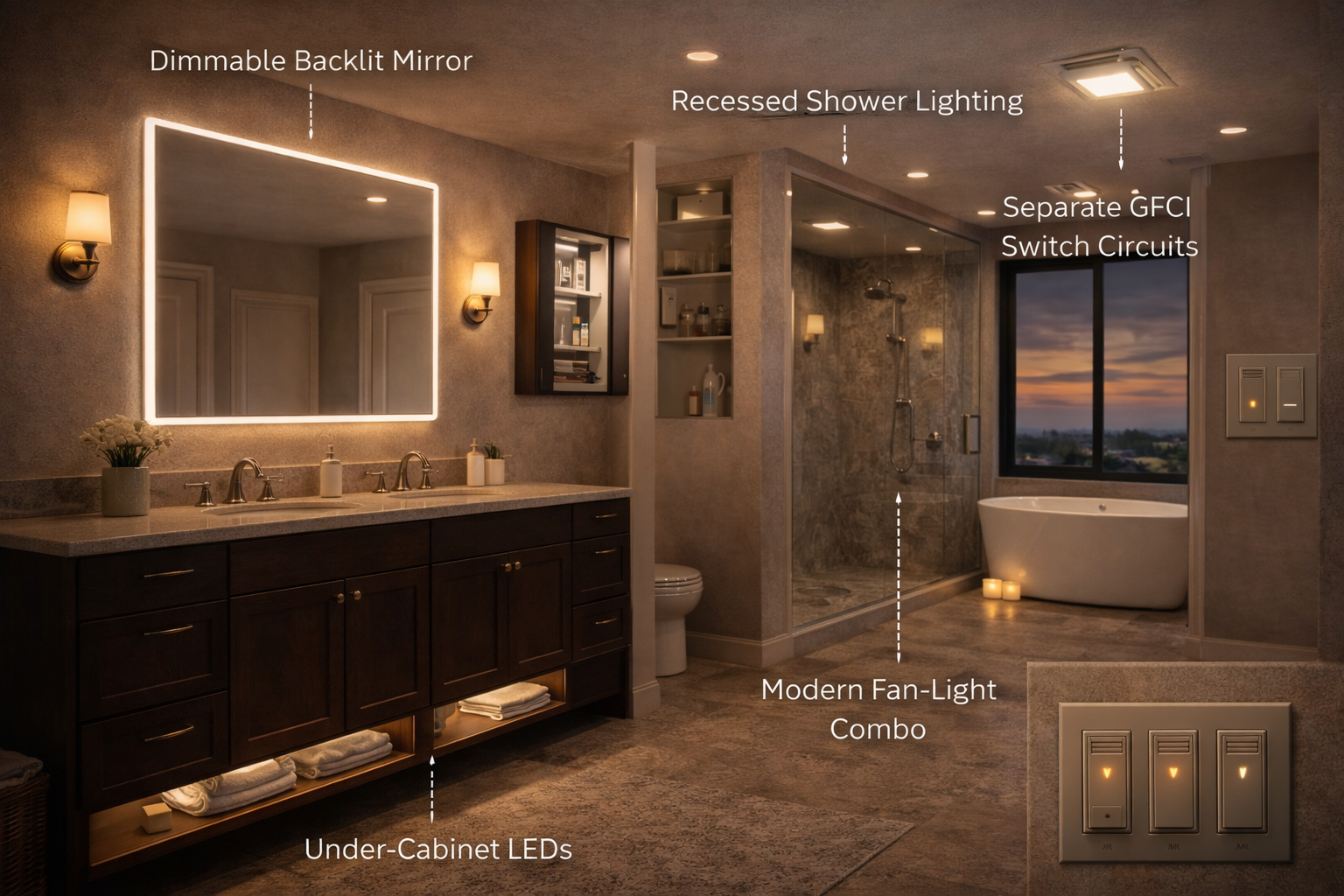
Lighting upgrades are often easiest to add while the bathroom is already under construction because wiring access is better before the walls are fully closed and painted. Common upgrades include dimmers, separate switch legs for vanity and ceiling lights, backlit mirrors, recessed shower lighting, integrated medicine-cabinet lighting, under-vanity lighting, and better fan-light combinations. Homeowners weighing long-term operating costs often review Energy Saver guidance.
What Comfort and Appearance Upgrades Are Common
Popular upgrades include layered lighting that lets the vanity stay bright without making the whole room harsh, dimmable mirror lighting for nighttime use, and better fixture sizing so the lights look proportional to the vanity and mirror. Backlit mirrors and side sconces are also used when the goal is a cleaner modern look with more even face lighting.
What Functional Upgrades Improve Daily Use
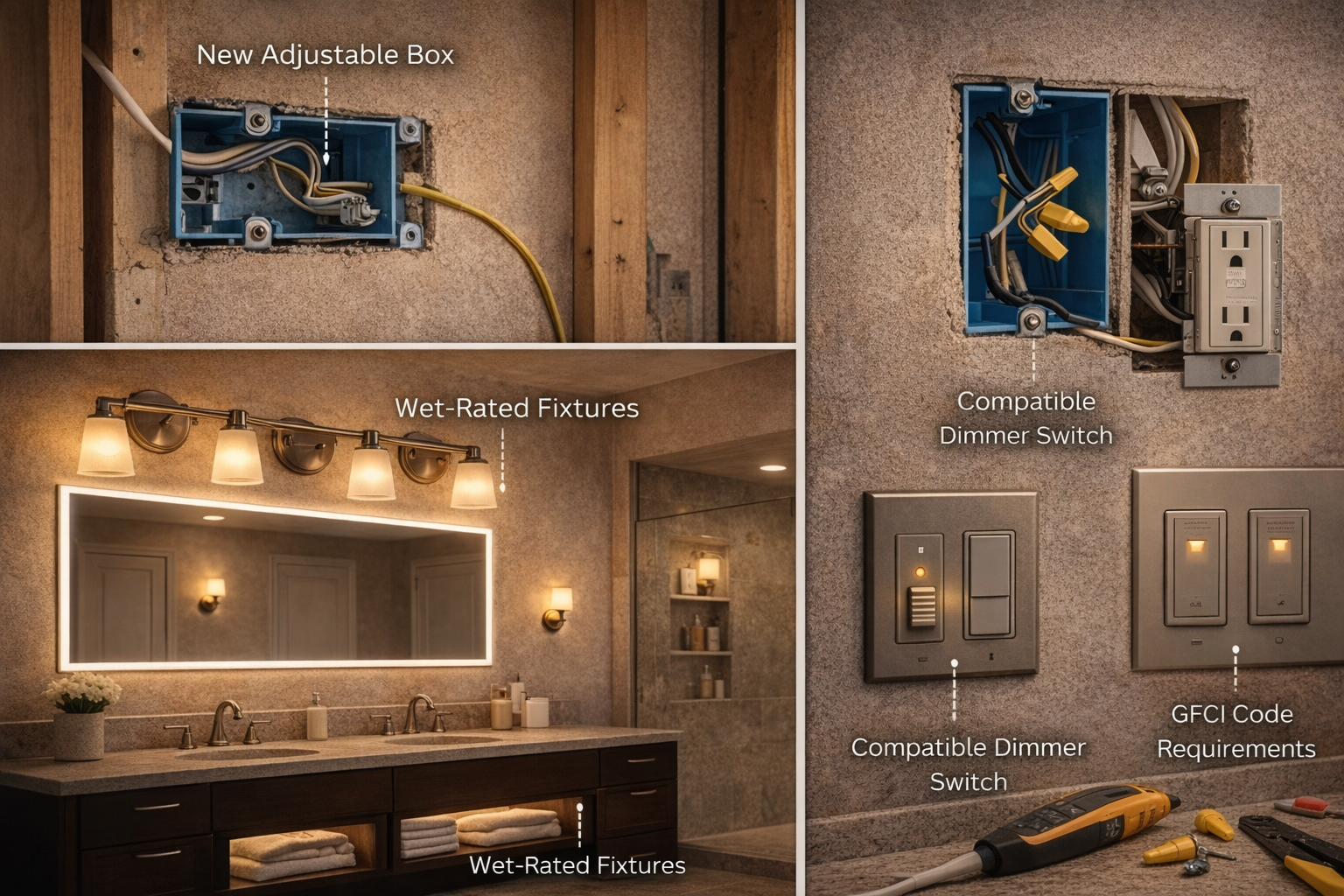
Functional upgrades include adding GFCI-protected circuits where required, improving switch location, installing separate controls for shower and vanity lighting, and using damp-rated or wet-rated fixtures in the right places. These changes make the room easier to use and help the finished bathroom feel planned instead of pieced together.
What Installation Details Matter in Bathroom Lighting Work
Lighting installation in a bathroom has to account for moisture, fixture ratings, switch placement, box location, and how the new lights line up with the vanity and mirror below. Even a good fixture choice can look wrong if the electrical box is too high, the light is off-center, or the fixture is not rated for damp or wet conditions where it is being installed.
Why Do Box Location and Fixture Rating Matter
Box location matters because the light has to align with the mirror, vanity, and sink below it. Fixture rating matters because bathrooms are humid and some areas are directly exposed to moisture. Shower lights and some nearby fixtures need damp-rated or wet-rated components, and ignoring that requirement can shorten fixture life or create code problems.
What Wiring and Control Issues Show Up During Bathroom Lighting Work
Common issues include old junction boxes in the wrong place, undersized vanity lighting, switches grouped awkwardly near the door, and fan-light combinations that do not match how the homeowner wants to use the room. In older bathrooms, electrical updates may also be needed to support new fixture loads, dimmers, or separated lighting zones.
What Affects Bathroom Lighting Remodeling Cost
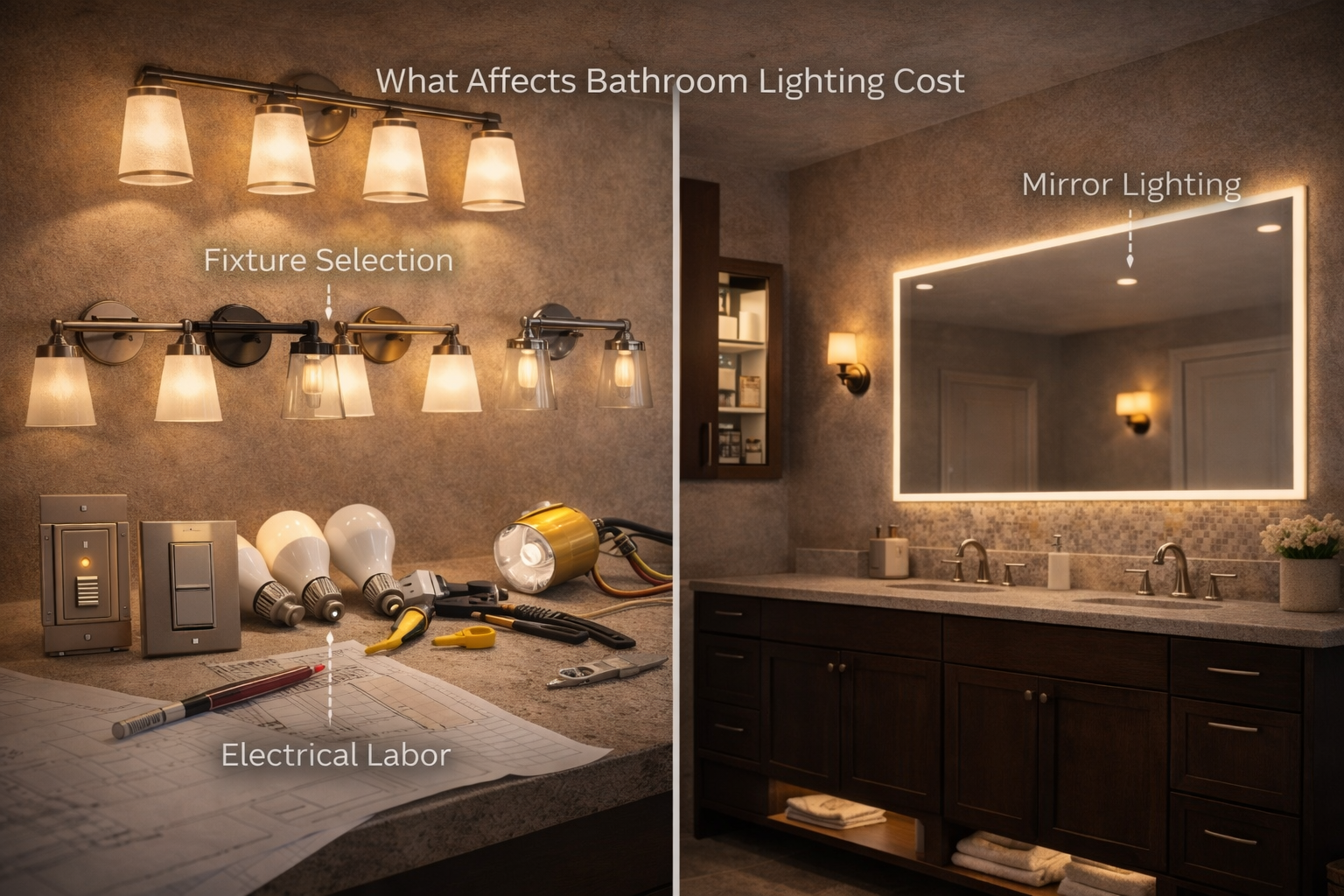
Bathroom lighting cost usually depends on the number of fixtures, the fixture type, how much rewiring is needed, and whether the remodel is just swapping lights or reworking the whole lighting plan. Replacing one vanity light on an existing box is very different from adding recessed lights, moving switch locations, and wiring a separate shower light.
Which Fixture Choices Usually Raise the Cost
Costs usually rise with designer sconces, integrated LED mirrors, multiple recessed lights, specialty finishes, and larger fixture packages for double vanities. The budget also increases when the lighting plan includes dimmers, layered controls, or decorative accent lights that require extra wiring and installation time.
How Do Labor and Existing Conditions Change the Budget
Labor costs go up when walls or ceilings need to be opened, when old wiring has to be corrected, or when new boxes must be relocated for better fixture placement. The budget can also change if the mirror size changes, if tile or drywall repair is needed, or if the lighting work is tied into a larger remodel that changes the vanity and ceiling layout at the same time. During remodeling, it also helps to follow EPA indoor air quality guidance.
What Mistakes Should Homeowners Avoid With Bathroom Lighting
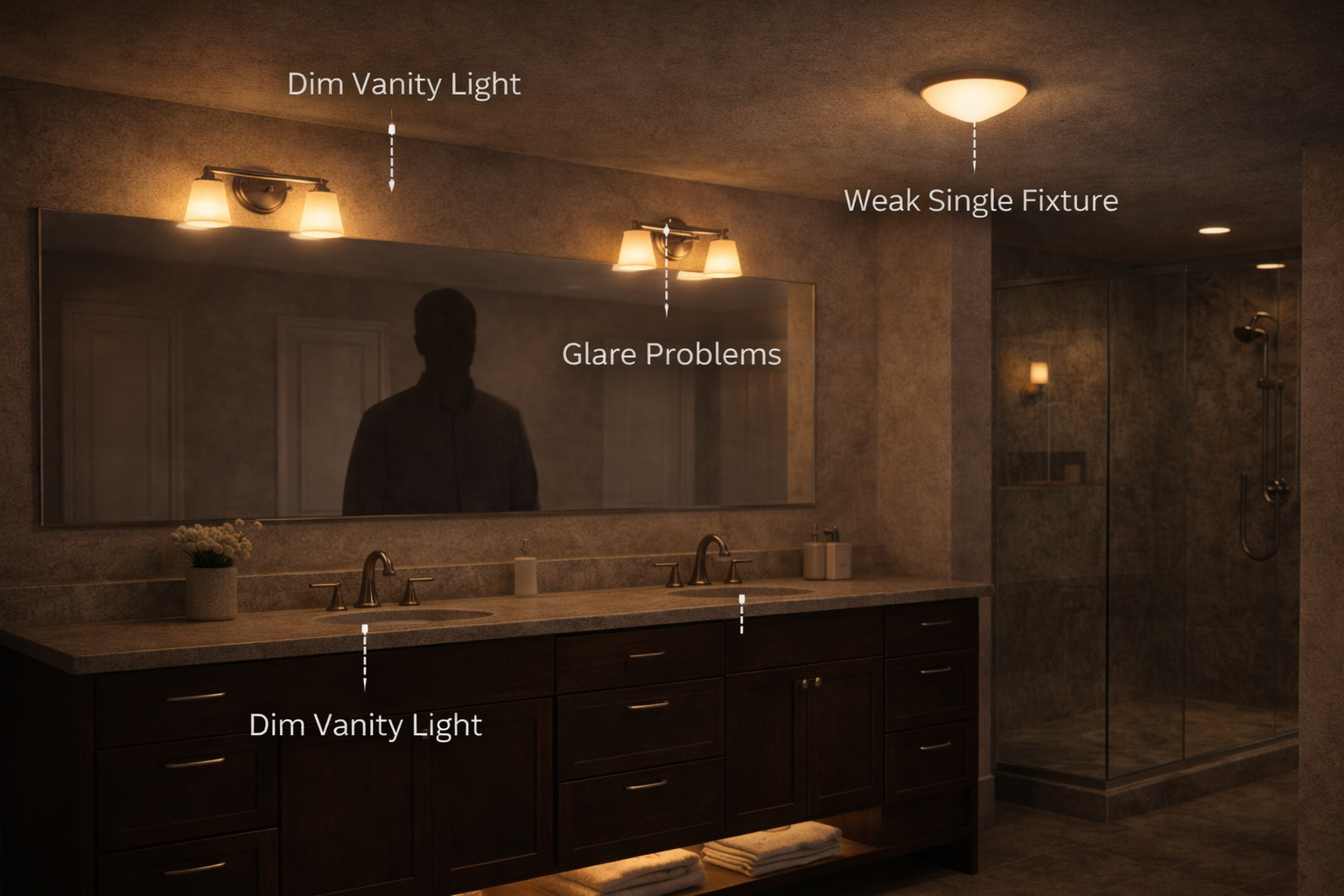
The most common bathroom lighting mistakes happen when fixture style is chosen before light quality and placement are worked out. A bathroom can have expensive fixtures and still feel dim or awkward if the mirror lighting creates shadows, the shower area is dark, or the controls do not match how the room is used.
Why Is a Single Ceiling Light Usually Not Enough
A single ceiling light often leaves the face in shadow at the vanity because the light comes from above and behind the person using the mirror. That setup can work as general room light, but it usually does not provide the even front-facing light needed for shaving, grooming, or makeup.
Why Do Fixture Size and Placement Cause Problems
Small fixtures over a wide mirror can leave the vanity edges dim, while oversized fixtures can create glare and feel out of scale with the sink area. Placement mistakes also show up when the light is not centered on the mirror, the sconces are mounted too high or too low, or the color temperature clashes with the rest of the bathroom lighting.
How Should You Plan Bathroom Lighting in a Remodel
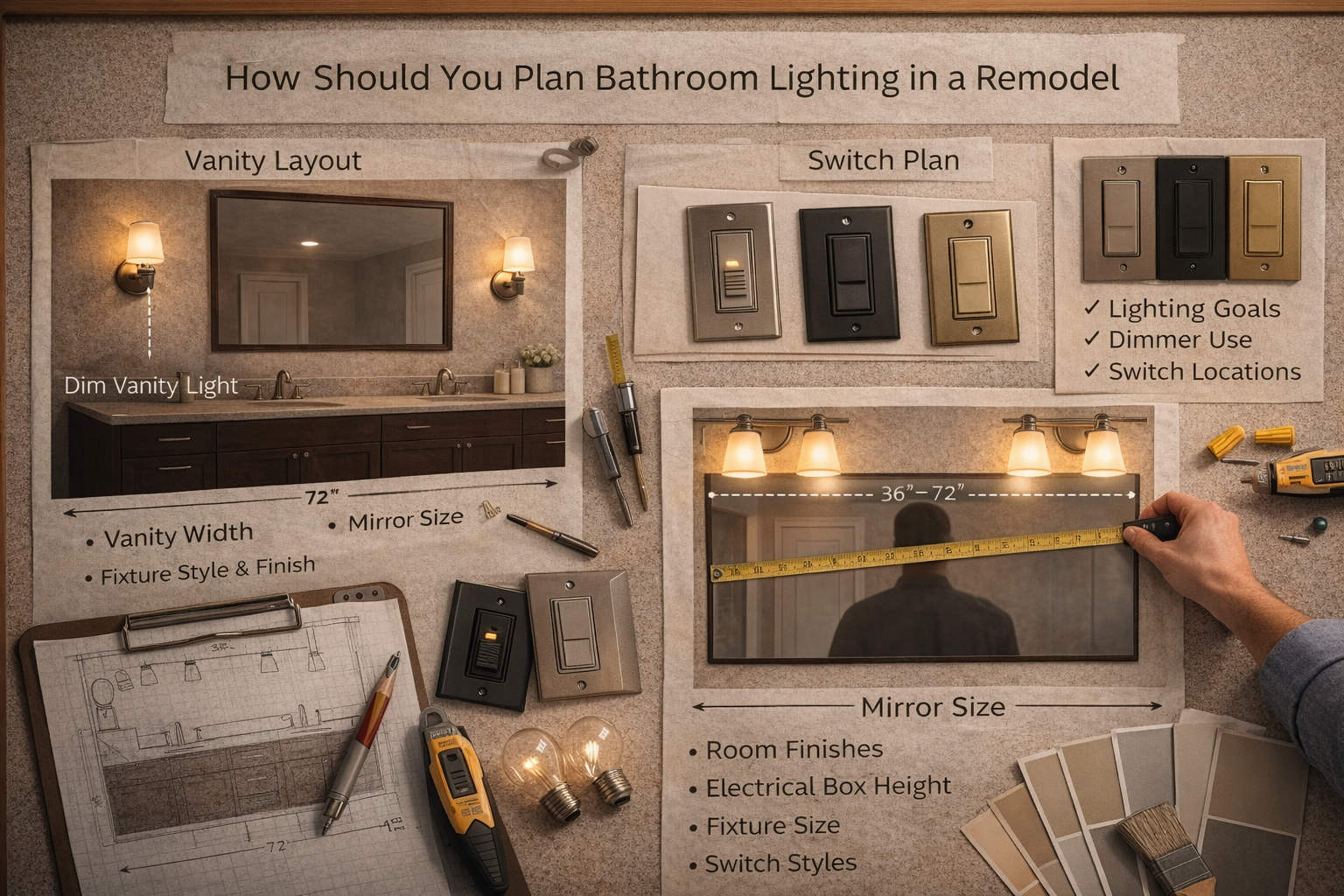
Bathroom lighting should be planned alongside the vanity, mirror, and ceiling layout rather than after those pieces are already selected. The best starting point is deciding what tasks the bathroom lighting needs to support, then matching fixture type, placement, and controls to those tasks. That helps the lighting plan work with the remodel instead of becoming an afterthought.
What Should Be Decided Before Lighting Work Starts
Before the work starts, it helps to confirm vanity width, mirror size, fixture style, finish, brightness target, color temperature, dimmer use, switch grouping, and whether shower or accent lighting will be added. Those decisions affect box placement, wiring routes, and the final appearance of the room.
How Can a Homeowner Prepare for the Installation Process
Homeowners should be ready for possible wall or ceiling patching, switch changes, fixture lead times, and temporary lighting disruption while the work is underway. If the lighting is being upgraded as part of a full bathroom remodel, it also helps to coordinate the plan with the vanity installer, mirror size, tile work, and paint schedule so everything lines up correctly.
Related Bathroom Lighting Topics
Bathroom lighting connects to other parts of the remodel because fixture layout depends on mirror size, vanity width, ceiling condition, and the electrical plan for the room. Related topics help homeowners understand whether the lighting should be updated by itself or tied into a larger bathroom project.
Which Lighting-Related Pages Should Connect to This Topic
Strong related pages include vanity lighting, mirror lighting, recessed bathroom lighting, shower lighting, dimmer controls, exhaust fan lighting, and LED bathroom lighting. Those pages make it easier to cover fixture-specific decisions in more detail without overloading one page.
Which Bathroom Remodeling Topics Often Connect to Lighting Work
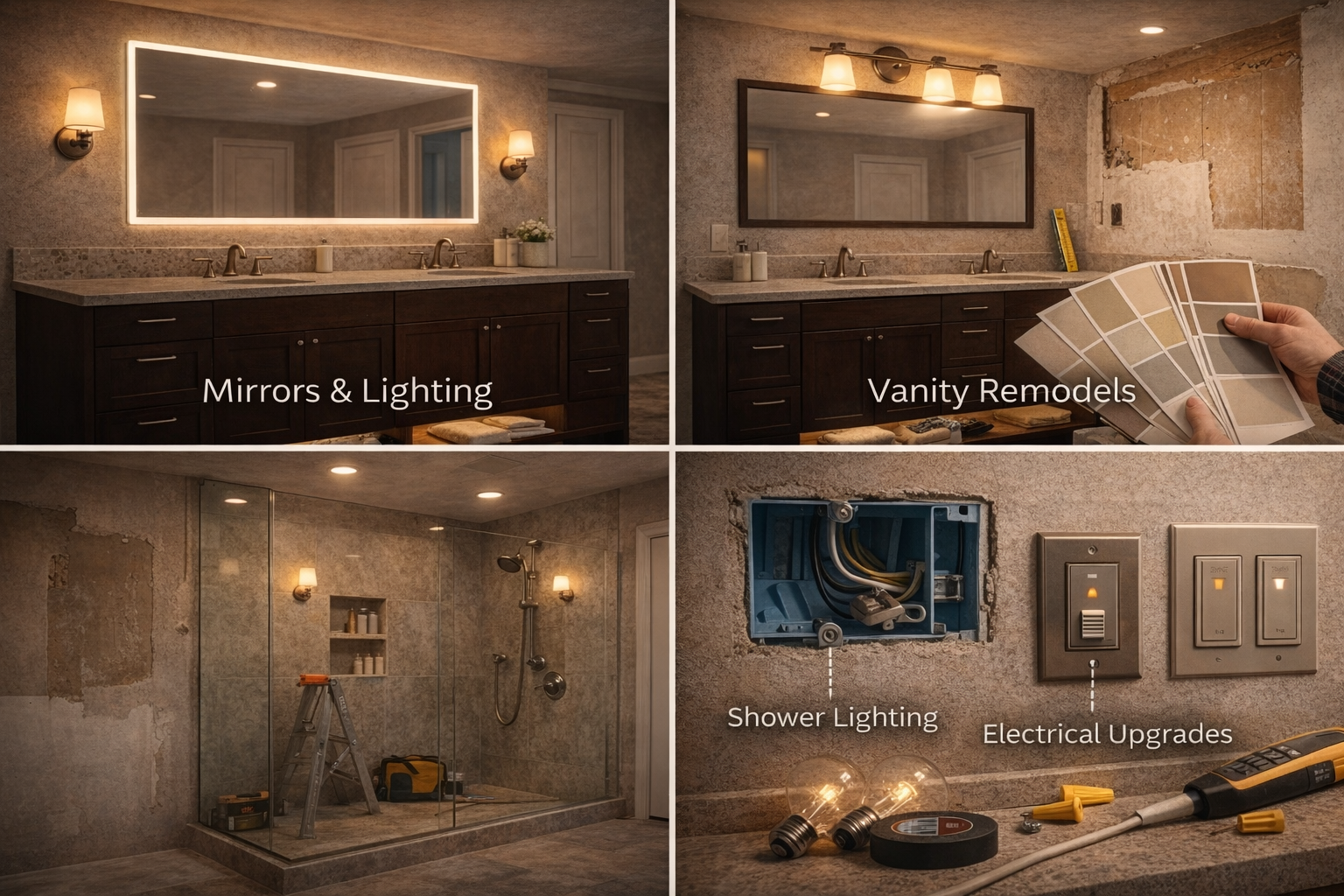
Lighting work often connects to vanity remodeling, mirror replacement, bathroom electrical upgrades, tile and drywall repair, and full bathroom remodeling. In practical jobs, these items overlap because the wall surface, finish materials, and fixture placement all need to line up at the same time.
Frequently Asked Questions About Bathroom Lighting
Vanity bars and side sconces are two of the most common choices. The best option depends on mirror size, sink layout, and whether the goal is a quick fixture replacement or a more balanced lighting plan with less shadow on the face.
The best color temperature usually falls in a range that feels clean and bright without looking harsh. The right choice depends on the bathroom finishes, the natural light in the room, and how the homeowner uses the space for grooming or general use.
Yes, recessed lights are commonly used for general bathroom lighting because they spread light well and keep the ceiling visually clean. They work best when spaced correctly and combined with dedicated vanity lighting rather than replacing it completely.
A separate shower light is often helpful when the shower area is enclosed, tiled dark, or set away from the main vanity light. In many remodels, a shower-rated recessed light improves visibility and makes the whole room feel more evenly lit.
Yes, dimmers are a common upgrade in bathroom remodels. They allow bright light when needed for mirror tasks and softer light at night or early in the morning.
That depends on bathroom size, mirror width, ceiling height, and whether the room includes a separate shower or tub area. Most bathrooms work better with layered lighting instead of relying on one fixture alone.
In damp or wet areas, yes. Fixtures in or near the shower and other moisture-prone zones should be rated for those conditions. Using the right fixture type helps with safety, durability, and code compliance.
Yes, many lighting updates reuse the existing electrical box location. That is the simplest path when the current placement works. If the box is poorly placed or the lighting plan needs improvement, rewiring or relocation may still be worth doing.
One of the biggest mistakes is relying on a single overhead fixture and assuming it will light the mirror well. That usually creates shadows at the vanity and leaves the room less usable than it could be.
Yes. Updated lighting can make new tile, paint, mirrors, and vanity finishes look better and feel more intentional. In many bathrooms, better lighting changes the room more than homeowners expect.