

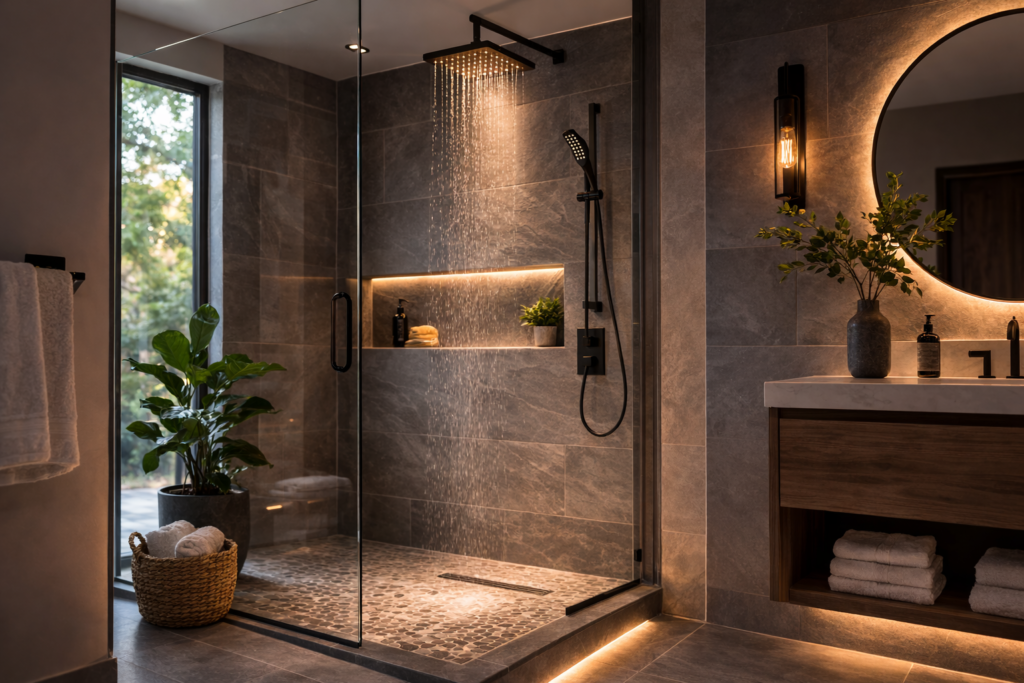
Shower Remodel Guide: Design, Materials, Costs, and Planning
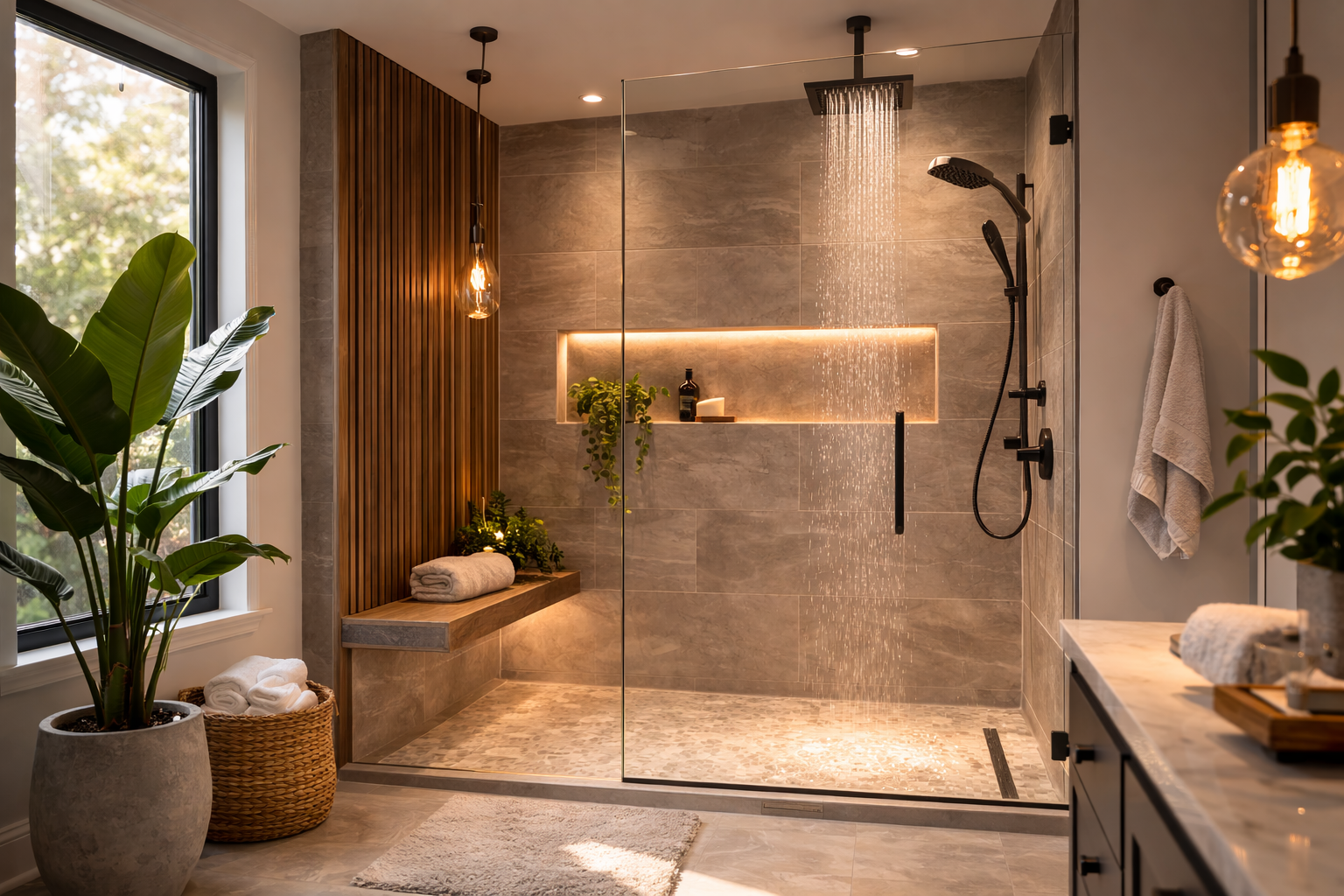
Shower Remodel Guide Index
- Shower Remodel Overview
- When Should a Shower Be Remodeled
- What Types of Shower Remodels Are Common
- How Do Layout and Room Size Affect a Shower Remodel
- What Materials and Components Are Used in a Shower Remodel
- What Upgrades Can Be Added During a Shower Remodel
- What Installation Details Matter in a Shower Remodel
- What Affects Shower Remodel Cost
- What Mistakes Should Homeowners Avoid With a Shower Remodel
- How Should You Plan a Shower Remodel
- Related Shower Remodel Topics
- Frequently Asked Questions About Shower Remodeling
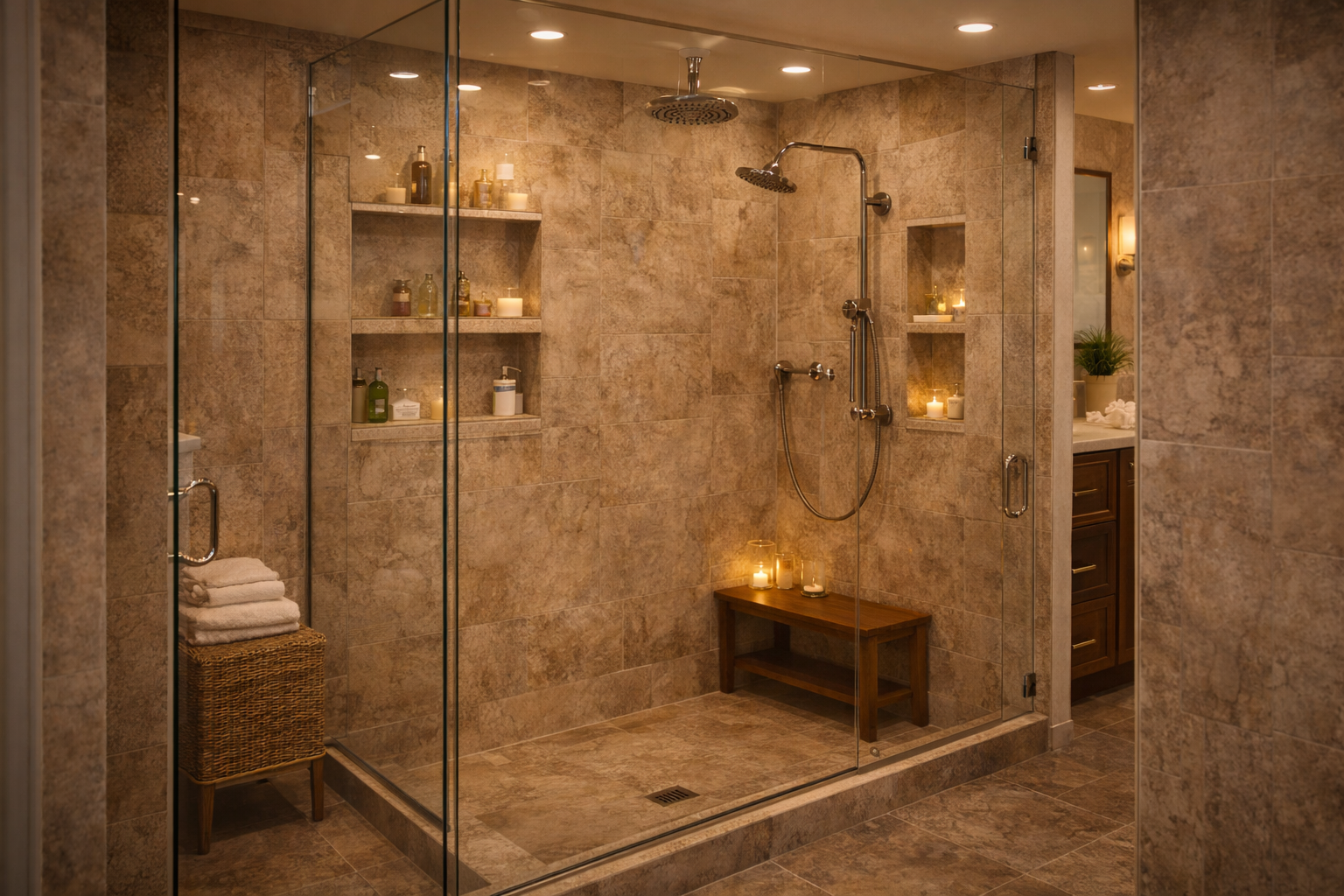
Shower Remodel Overview
A shower remodel updates one of the wettest and most heavily used parts of the bathroom. In practical terms, that can include removing the old shower walls and base, rebuilding waterproofing, changing the valve and trim, installing new tile or wall panels, replacing the glass enclosure, and improving the drain and floor slope. Some shower remodels keep the same footprint, while others expand the shower or replace a tub with a larger walk-in shower.
What Gets Updated During a Shower Remodel
The work may include the shower pan or base, drain, valve, trim, wall tile or panels, waterproofing membrane, backer board, glass enclosure, niches, benches, and lighting around the shower area. In some bathrooms, the remodel also includes framing changes, ventilation upgrades, and nearby flooring or vanity adjustments so the shower area fits the rest of the room.
What Is the Difference Between a Surface Update and a Full Shower Remodel
A surface update changes visible finishes such as tile, trim, or glass while keeping more of the structure in place. A full shower remodel goes deeper and rebuilds the waterproofing, drain setup, backing materials, and sometimes the shower layout itself. That deeper work is what determines whether the shower will stay sound over time.

When Should a Shower Be Remodeled
A shower should usually be remodeled when the walls, pan, or enclosure show wear that points to deeper failure or when the shower no longer fits the needs of the bathroom. Common signs include cracked tile, stained grout, loose trim, leaking around the shower base, outdated fiberglass surrounds, or a layout that feels cramped and hard to use. Homeowners comparing performance goals can review Energy Saver ventilation guidance.
What Signs Show That a Shower Is Ready for Remodeling
Clear signs include repeated caulk failure, soft walls near the shower, water damage outside the shower edge, loose floor tile, old glass doors that no longer close correctly, and mold or mildew that returns even after cleaning. In older bathrooms, the shower may also simply feel undersized or poorly built compared to the rest of the remodel.
What Remodeling Goals Usually Lead to a Shower Upgrade
Shower upgrades are common when a homeowner wants a walk-in shower, larger shower area, easier cleaning, safer entry, updated tile, or stronger resale appeal. They are also common when the old shower has reached the point where patching one more leak or caulk joint no longer makes sense.
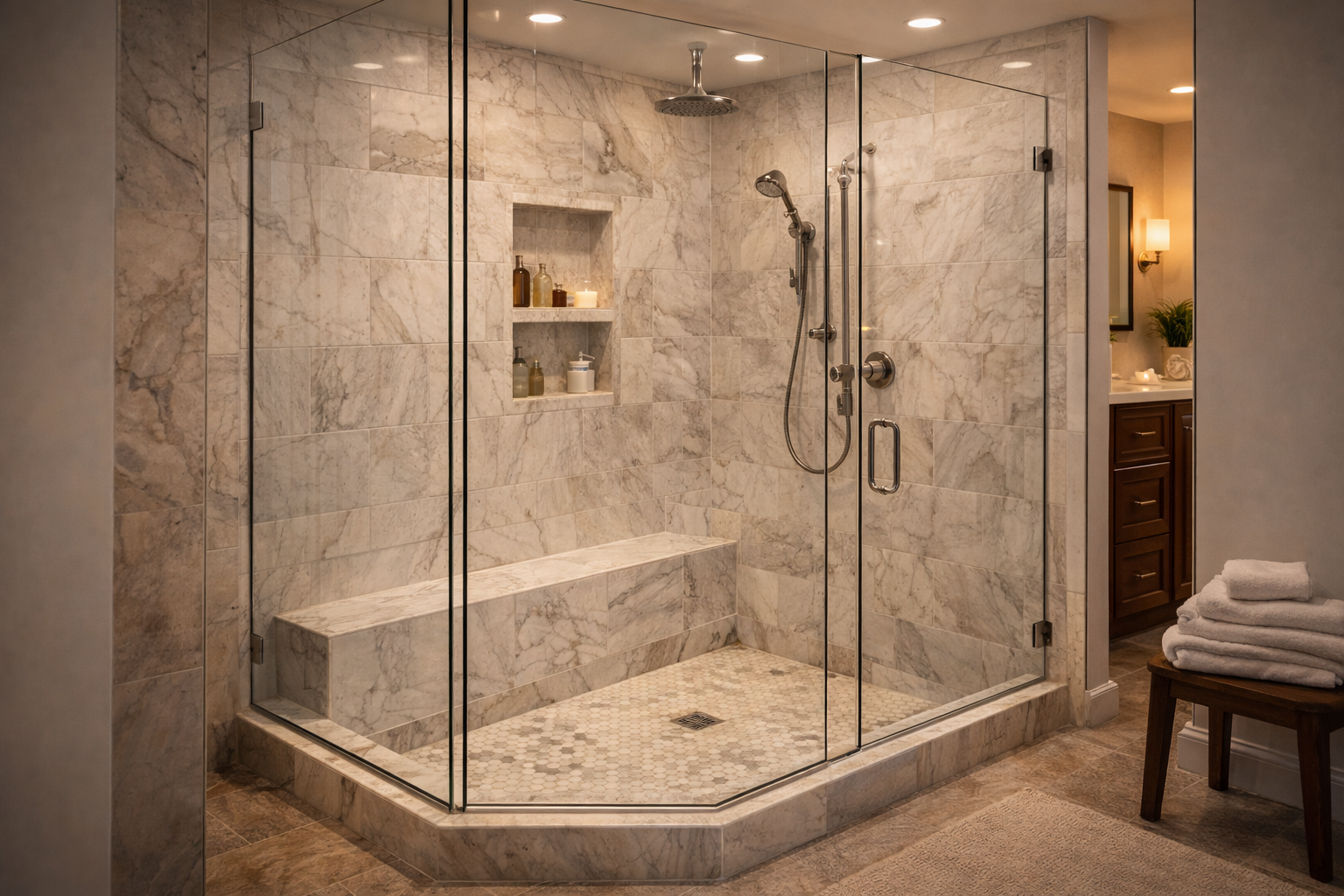
What Types of Shower Remodels Are Common
Common shower remodels include direct shower replacements, walk-in shower remodels, tile shower rebuilds, prefabricated base and wall systems, frameless glass shower upgrades, and tub-to-shower conversions. The right type depends on budget, room size, maintenance goals, and whether the remodel is solving a leak, improving function, or fully redesigning the bathing area.
What Shower Styles Are Most Common in Remodeling Projects
Walk-in showers, alcove showers, corner showers, and larger tile showers with frameless glass are common remodeling styles. Walk-in showers are popular because they feel more open and can improve access. Tile showers remain common where the goal is a more custom look and more control over layout and finish details. When the remodel includes this feature, walk in shower can help homeowners understand the options in more detail.
When Does a Tub-to-Shower Conversion Make Sense
A tub-to-shower conversion makes sense when the household rarely uses the tub, the room needs more open floor area, or the homeowner wants easier shower access. It is especially common in primary bathrooms where a larger shower provides more daily value than keeping a small tub.
How Do Layout and Room Size Affect a Shower Remodel
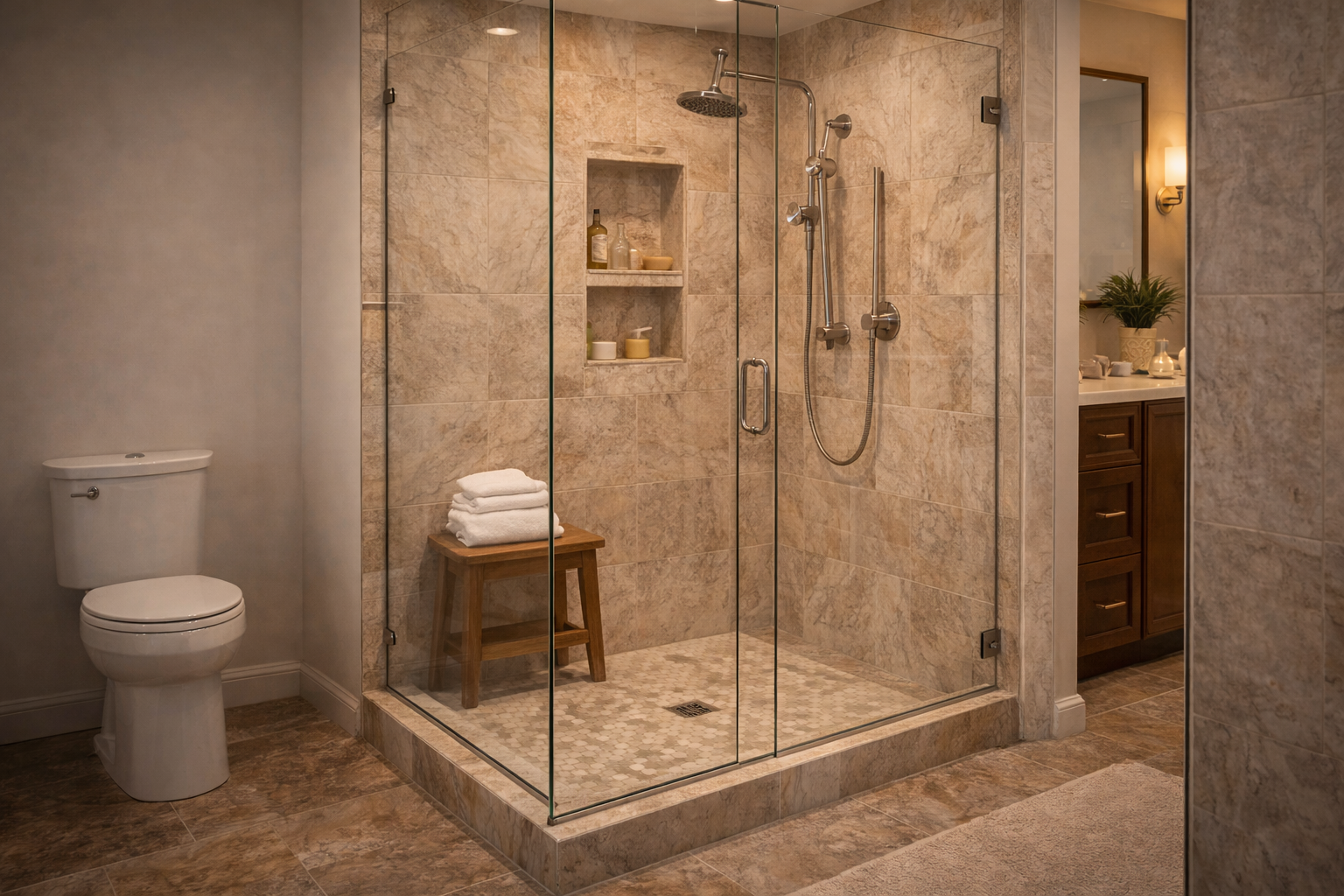
Layout and room size determine how large the shower can be, where the entry should go, whether a bench or niche fits, and how much space remains for the rest of the bathroom. A shower that is too large can crowd the vanity or toilet, while a shower that is too small may leave the remodel feeling unfinished even with new materials. Projects with related upgrades often include choices around steam shower.
Why Does Shower Footprint Matter So Much
The shower footprint affects comfort, cleaning, glass size, drain layout, and how easy the shower is to enter and use. In practical remodel work, the footprint also affects whether the shower can support a bench, niche, multiple spray outlets, or a low-threshold entry without making the room feel tight.
How Does Bathroom Size Change the Best Shower Strategy
In a smaller bathroom, the best shower strategy may be a compact walk-in shower, a corner layout, or a more efficient tub-to-shower conversion. In a larger bathroom, the remodel may support a bigger tile shower, separate drying area, or more custom glass enclosure. The best design is the one that improves use without crowding the rest of the room.
What Materials and Components Are Used in a Shower Remodel
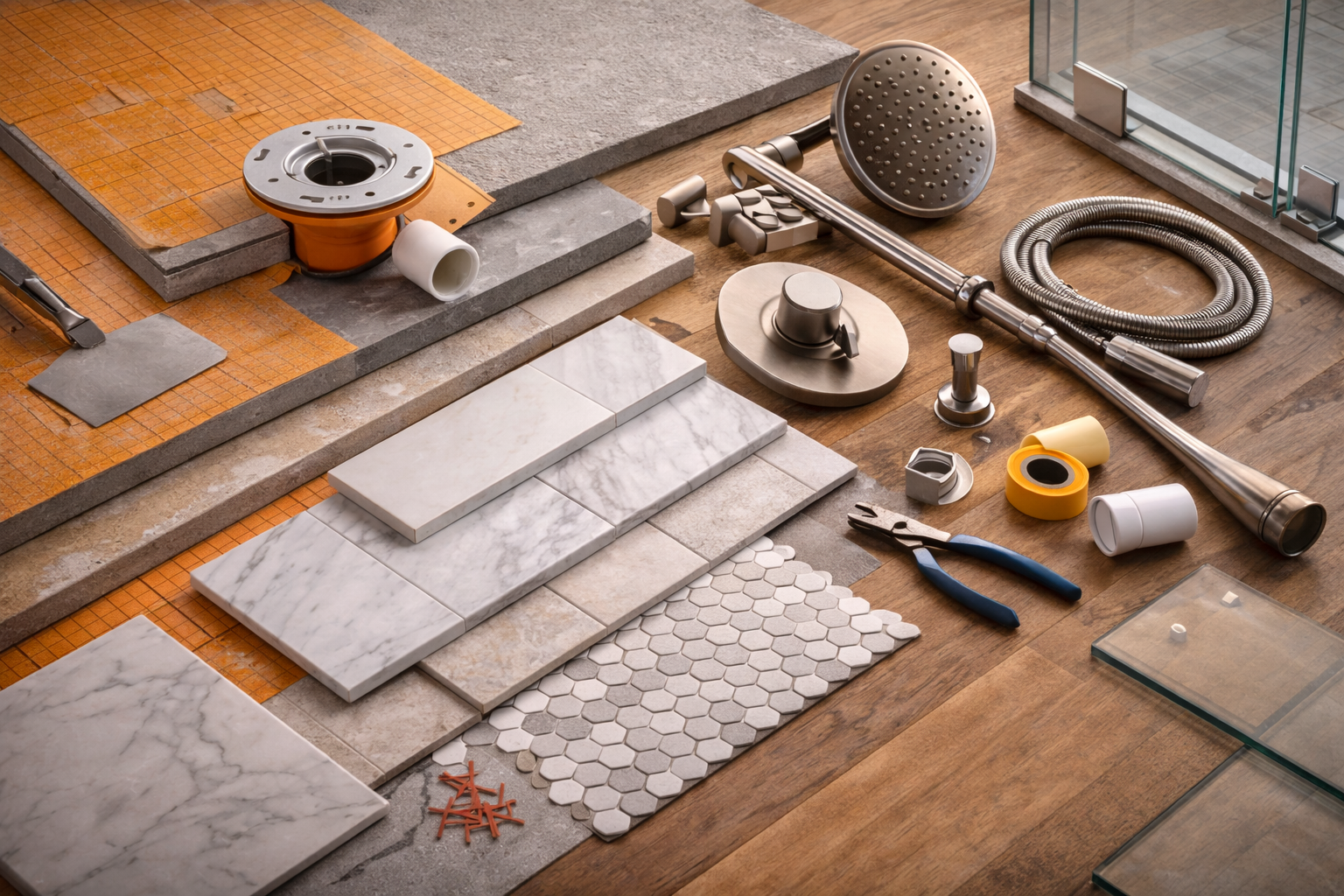
A shower remodel includes waterproofing layers, wall materials, floor materials, drain components, trim parts, and often glass or door hardware. The finished tile or panel is only one part of the system. The hidden waterproofing and drainage details matter just as much as the visible finish. Homeowners who want to dig deeper into this feature can review tub to shower conversion.
What Wall, Floor, and Waterproofing Materials Are Common
Common materials include porcelain tile, ceramic tile, stone-look panels, acrylic wall systems, shower pans, linear drains, point drains, waterproof membranes, backer board, and setting materials. Tile is common when the goal is a more custom look, while panel systems are often chosen for simpler cleaning and faster installation.
What Valve, Trim, and Glass Components Usually Change
Shower valves, trim kits, shower heads, handheld sprayers, glass panels, swing doors, sliding doors, niches, and benches often change during the remodel. These parts need to be planned together because the valve height, glass size, and wall finish all affect one another during installation.

What Upgrades Can Be Added During a Shower Remodel
Shower work is often the best time to add upgrades because the walls and plumbing are already open. Common upgrades include built-in niches, benches, frameless glass, handheld sprayers, rain heads, improved lighting, curbless entries, body sprays, and better ventilation to handle moisture more effectively. Homeowners weighing long-term operating costs often review Energy Saver guidance.
What Functional Upgrades Are Most Useful in a Shower
Niches, handheld shower heads, safer entries, better drainage, and stronger lighting are some of the most useful shower upgrades because they improve how the shower works every day. These upgrades matter more when the household uses the shower heavily or wants easier cleaning and better access.
What Design Upgrades Usually Happen at the Same Time
Shower remodels often include new tile layouts, accent bands, frameless glass, upgraded trim finishes, and changes to nearby flooring or vanity finishes so the shower area feels integrated with the rest of the bathroom. Once the shower changes, the surrounding finishes usually need to keep up visually. When the remodel includes this feature, bathroom remodeling can help homeowners understand the options in more detail.
What Installation Details Matter in a Shower Remodel
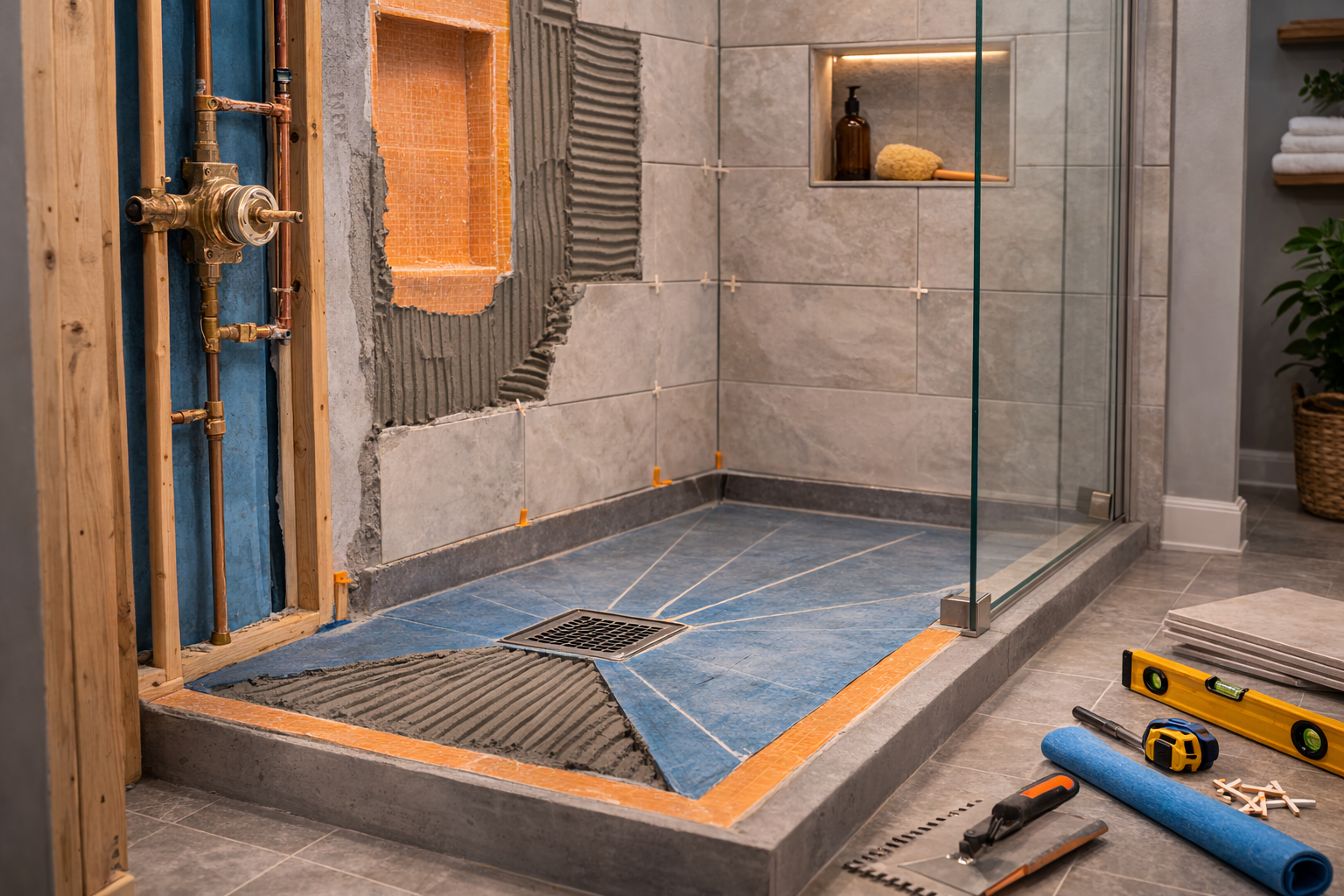
Shower installation depends on waterproofing, pan slope, drain position, framing, valve placement, and how the wall finish meets the shower base or floor. If those details are wrong, the shower may look good for a short time and still fail because water is getting behind the finish materials.
Why Do Waterproofing and Drainage Matter So Much
The shower has to direct water to the drain every day without letting it collect behind tile, under the base, or at the edges of the enclosure. Waterproofing and drainage are what separate a durable shower from one that slowly causes damage inside the walls and floor system. Homeowners comparing options often look at shower tile as part of the overall plan.
What Framing, Valve, and Glass Placement Problems Show Up During Installation
Common issues include walls that are out of plumb, framing that does not support the planned glass, valves placed awkwardly, and shower openings that are too tight for the chosen door style. These details shape how usable the shower feels once the finish work is complete.
What Affects Shower Remodel Cost
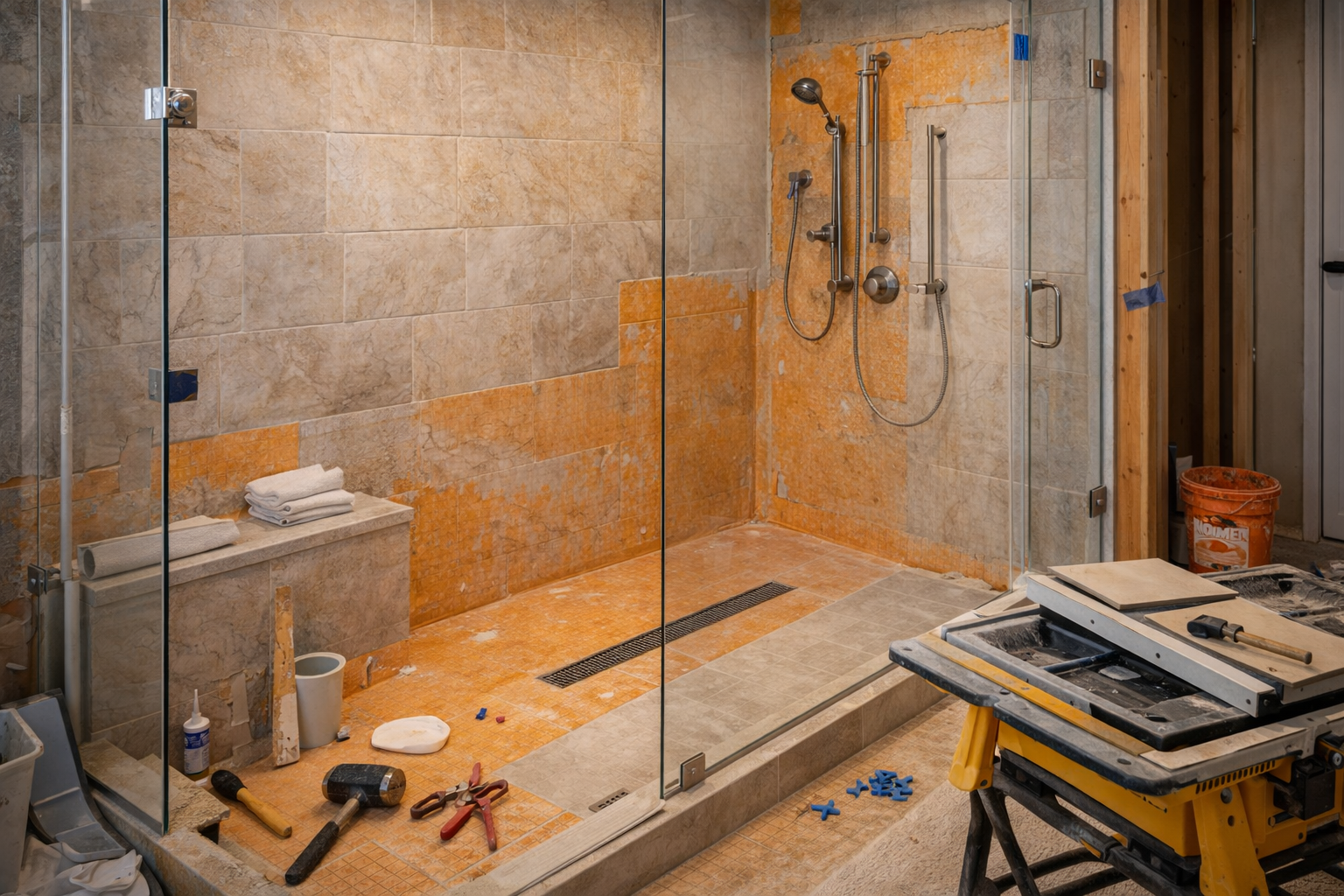
Shower remodel cost usually depends on shower size, wall and floor material, waterproofing method, glass type, plumbing changes, and how much demolition and rebuild work is required. A simple shower replacement is very different from a full tile shower rebuild with custom glass and relocated plumbing. In many projects, shower pan becomes an important part of how the bathroom functions day to day.
Which Shower Choices Usually Raise the Cost
Costs usually rise with custom tile work, frameless glass, multiple plumbing outlets, linear drains, curbless entries, premium valves and trim, and larger shower footprints. The more custom the shower becomes, the more labor and coordination it usually needs.
How Do Labor and Existing Conditions Change the Budget
Labor costs go up when the old shower has hidden water damage, framing problems, outdated plumbing, or a floor system that needs rebuilding before the new shower goes in. Existing conditions matter because showers often hide problems until demolition begins.

What Mistakes Should Homeowners Avoid With a Shower Remodel
The biggest shower remodeling mistakes usually happen when the finish materials get more attention than the waterproofing and drainage underneath them. A beautiful shower does not stay beautiful for long if the pan, drain, and wall waterproofing are not built correctly. For a closer look at this part of the project, homeowners can explore shower drain.
Why Is It a Problem to Focus on Tile Before Waterproofing
Tile and grout are not the waterproof system by themselves. If the backing, membrane, seams, and drain details are wrong, water can still get into the structure behind the shower. Practical shower remodeling starts with the hidden system first and the finish surface second.
Why Is It Risky to Underestimate Shower Entry and Glass Details
Poorly planned glass size, door swing, threshold height, and shower entry width can make a new shower harder to use than expected. These details should be worked out before installation instead of being left to the end when fewer corrections are easy to make.
How Should You Plan a Shower Remodel
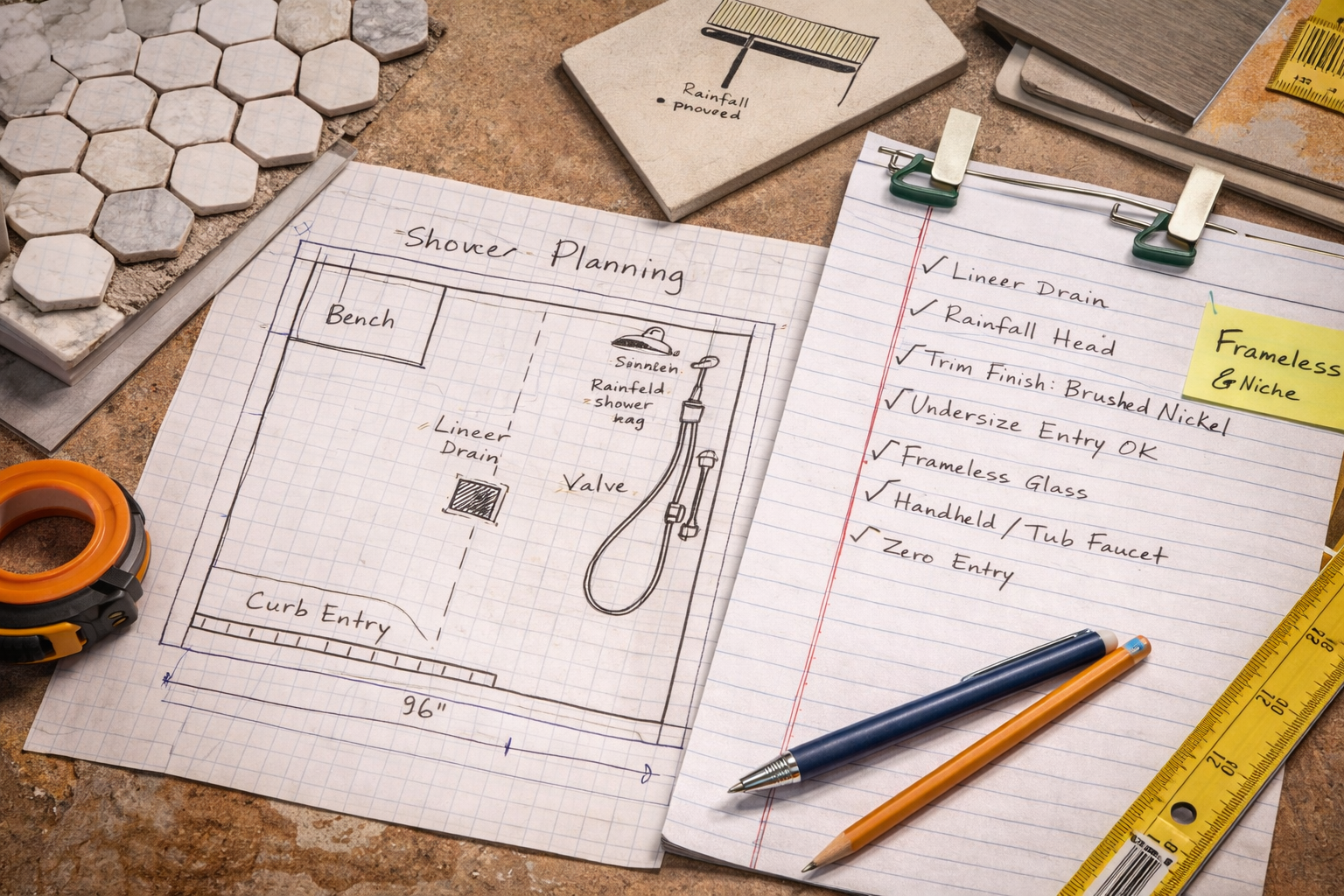
A shower remodel should be planned by deciding what problem the project is solving first, then matching the layout, materials, waterproofing method, glass plan, and plumbing details to that goal. The best plan balances function, maintenance, appearance, and long-term durability instead of treating the shower like a tile display alone. When comparing stone surfaces, it can help to review Natural Stone Institute guidance.
What Should Be Decided Before Shower Work Starts
Before construction starts, it helps to confirm the shower footprint, entry style, drain type, valve and trim package, tile or panel material, niche and bench layout, glass type, and whether plumbing is staying in place or moving. These decisions affect framing, waterproofing, and the whole construction sequence.
How Can a Homeowner Prepare for the Installation Process
Homeowners should be ready for demolition noise, plumbing shutoff, waterproofing work, tile or panel installation, glass measuring, and possible hidden repairs after the old shower comes out. If the shower is part of a larger bathroom remodel, it also helps to coordinate flooring, vanity work, and lighting so the whole room comes together cleanly. Another detail worth comparing during planning is frameless glass shower.
Related Shower Remodel Topics
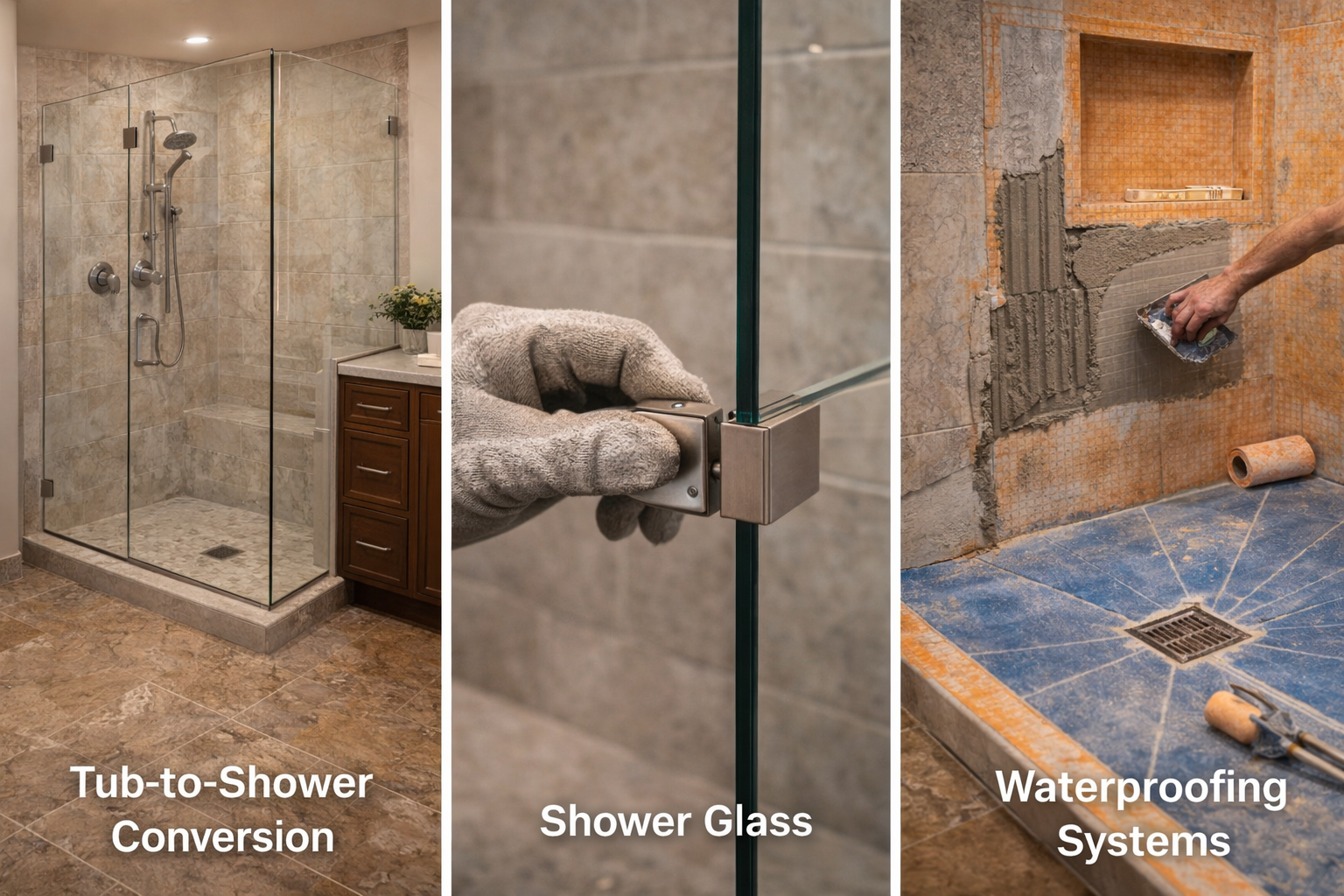
Shower remodeling overlaps with waterproofing, bathroom ventilation, tub-to-shower conversion, shower glass, and bathroom layout because all of those parts affect how the shower performs and how the bathroom feels. Related topics help homeowners compare whether they need a basic rebuild or a larger redesign of the bathing area. This decision often connects directly to linear drain, especially when the goal is a more complete remodel.
Which Shower-Related Pages Should Connect to This Topic
Strong related pages include tub-to-shower conversion, walk-in showers, shower glass, shower tile, curbless showers, and waterproofing systems. Those pages make it easier to go deeper on specific shower decisions without crowding one page.
Which Bathroom Remodeling Topics Often Connect to Shower Work
Shower work often connects to bathroom flooring, bathroom ventilation, bathroom lighting, bathroom layout changes, and full bathroom remodeling. In practical remodels, these items overlap because the shower affects the wet zone and the room around it.
Frequently Asked Questions About Shower Remodeling
A shower remodel can include the shower base or pan, wall materials, waterproofing, drain, valve, trim, glass, niches, benches, and related plumbing or lighting upgrades around the shower area.
Signs include leaks, cracked tile, repeated mold or mildew issues, soft walls, failing caulk, and a shower layout that no longer works well for the bathroom.
Yes. A tub-to-shower conversion is a common remodel when the household wants easier access or a larger usable shower area.
Proper waterproofing and drainage are some of the most important parts because they protect the structure behind the finished materials.
Tile showers offer more design flexibility, while wall panels can reduce grout maintenance and sometimes install faster. The better option depends on the goals of the remodel.
Not always. A simple remodel may keep the valve and drain in place, while a larger redesign may require plumbing relocation.
The timeline depends on whether the project is a direct replacement or a full rebuild with waterproofing, custom tile, and glass installation.
Yes. A shower remodel can improve accessibility through a lower entry, better grab bar planning, handheld sprays, and easier-to-use shower layouts.
It can improve the look, function, and buyer appeal of the bathroom, especially when the old shower was visibly outdated or in poor condition.
The first step is deciding what problem the remodel is solving, such as leaks, poor layout, difficult maintenance, or a need for a larger and better-built shower.