


Full Slab Backsplash Guide: Materials, Layout, Installation, and Cost
Full Slab Backsplash Guide Index
- Full Slab Backsplash Overview
- What Is a Full Slab Backsplash
- When Does a Full Slab Backsplash Make Sense
- What Materials Work Best for a Full Slab Backsplash
- How Do Seams, Height, and Pattern Affect the Finished Look
- What Installation Details Matter Most
- What Are the Pros and Cons of a Full Slab Backsplash
- What Affects Full Slab Backsplash Cost
- What Mistakes Should Homeowners Avoid
- How Should You Plan a Full Slab Backsplash Remodel
- Frequently Asked Questions About Full Slab Backsplashes
Full Slab Backsplash Overview
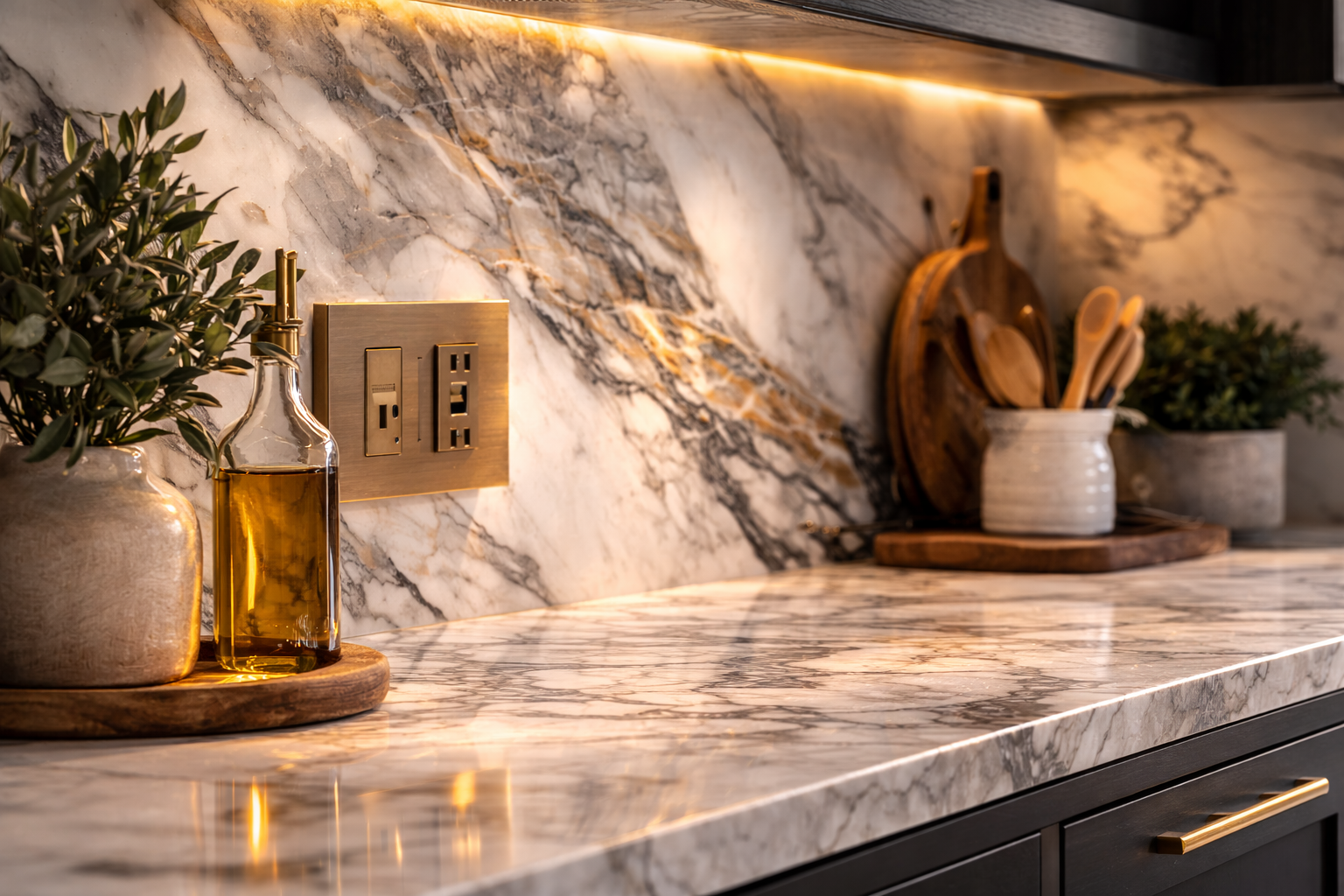
A full slab backsplash uses one large surfacing material on the wall instead of a tiled pattern. In a kitchen remodel, that changes the feel of the room fast. The wall looks cleaner, the grout lines disappear, and the backsplash can become a major design feature instead of a background surface.
Why do homeowners choose a full slab backsplash?
They usually want a cleaner, more custom look. A slab backsplash can make the kitchen feel more architectural and less busy, especially when the countertop, island, or range wall already has strong material choices that deserve a simpler backdrop.
What is the tradeoff compared with tile?
The tradeoff is cost and precision. Slab backsplashes are usually more expensive to fabricate and install, and the measurements have to be right. The finished result can look much more seamless, but it depends on careful planning from the start.

What Is a Full Slab Backsplash
A full slab backsplash is a backsplash made from a single large-format material such as quartz, marble, quartzite, granite, or porcelain slab. Instead of setting many smaller pieces with grout lines between them, the installer mounts one or more large panels for a more continuous wall surface. For water-use considerations, homeowners can review WaterSense guidance.
How is it different from a standard tile backsplash?
The biggest difference is visual continuity. Tile introduces joints, pattern repetition, and often more color breaks. A slab backsplash reduces those interruptions and can either blend into the countertop or make the wall itself the main design statement.
Does it always use the same material as the countertop?
No, but it often does. Matching the countertop and backsplash can create a strong unified look. In other kitchens, the backsplash is chosen as a contrasting slab to give the wall more emphasis than the counters below.
When Does a Full Slab Backsplash Make Sense
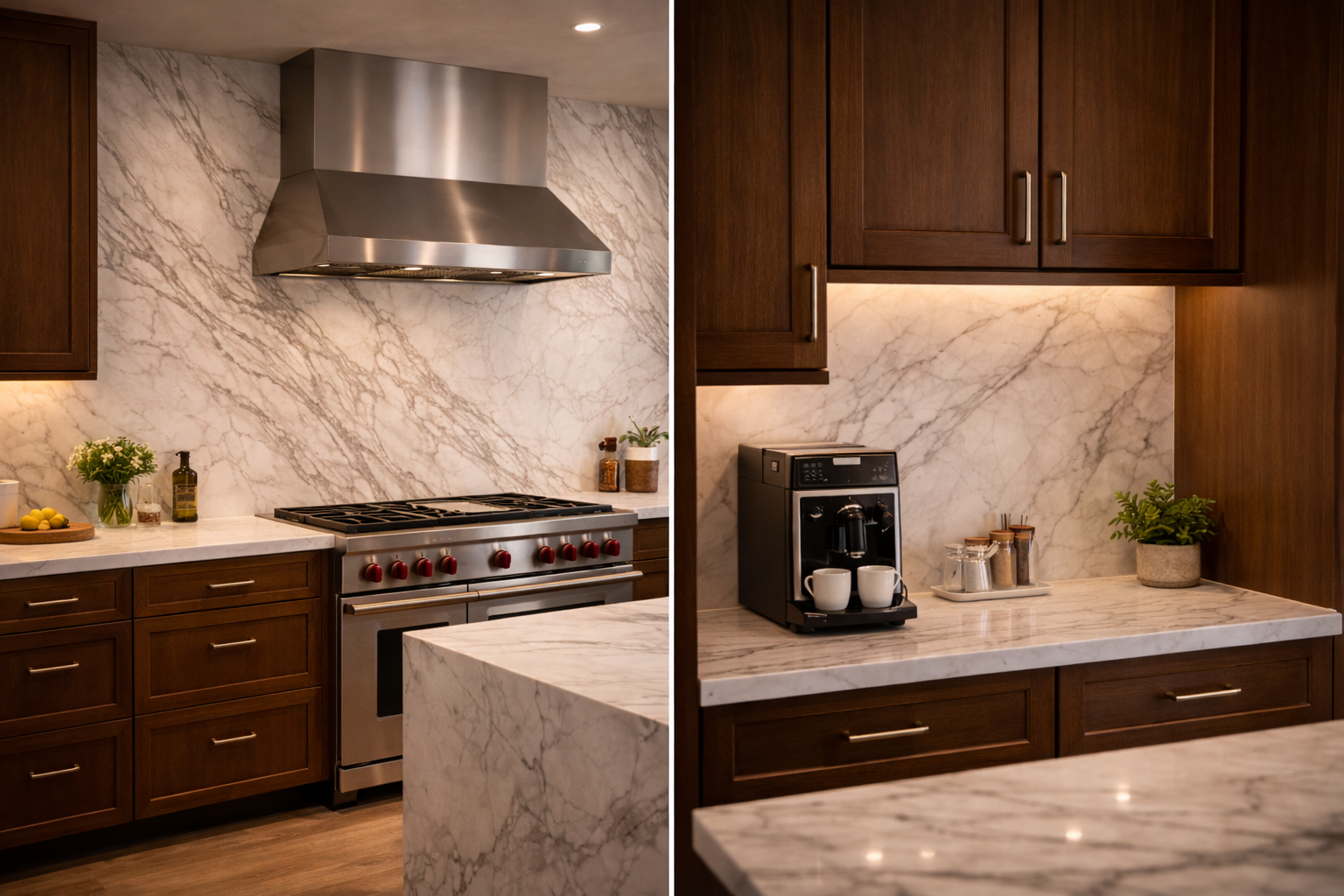
A full slab backsplash makes sense when the remodel wants a cleaner wall treatment, fewer grout lines, and a more upscale finish. It works especially well behind a range, along long countertop runs, in modern kitchens, or in transitional kitchens where the goal is to simplify the wall visually. When the remodel includes this feature, kitchen remodeling can help homeowners understand the options in more detail.
Is it a good choice for open kitchens?
Very often, yes. In open layouts, the backsplash is easier to see from multiple rooms, so a slab treatment can make the whole kitchen feel more refined. It can also tie together the countertop, island, and surrounding finishes more clearly.
When might tile be the better choice?
If the budget is tight, the design needs more texture or pattern, or the kitchen has many small wall interruptions that would make slab fabrication inefficient, tile may be the better fit. Some kitchens simply benefit from the rhythm and detail tile provides.
What Materials Work Best for a Full Slab Backsplash
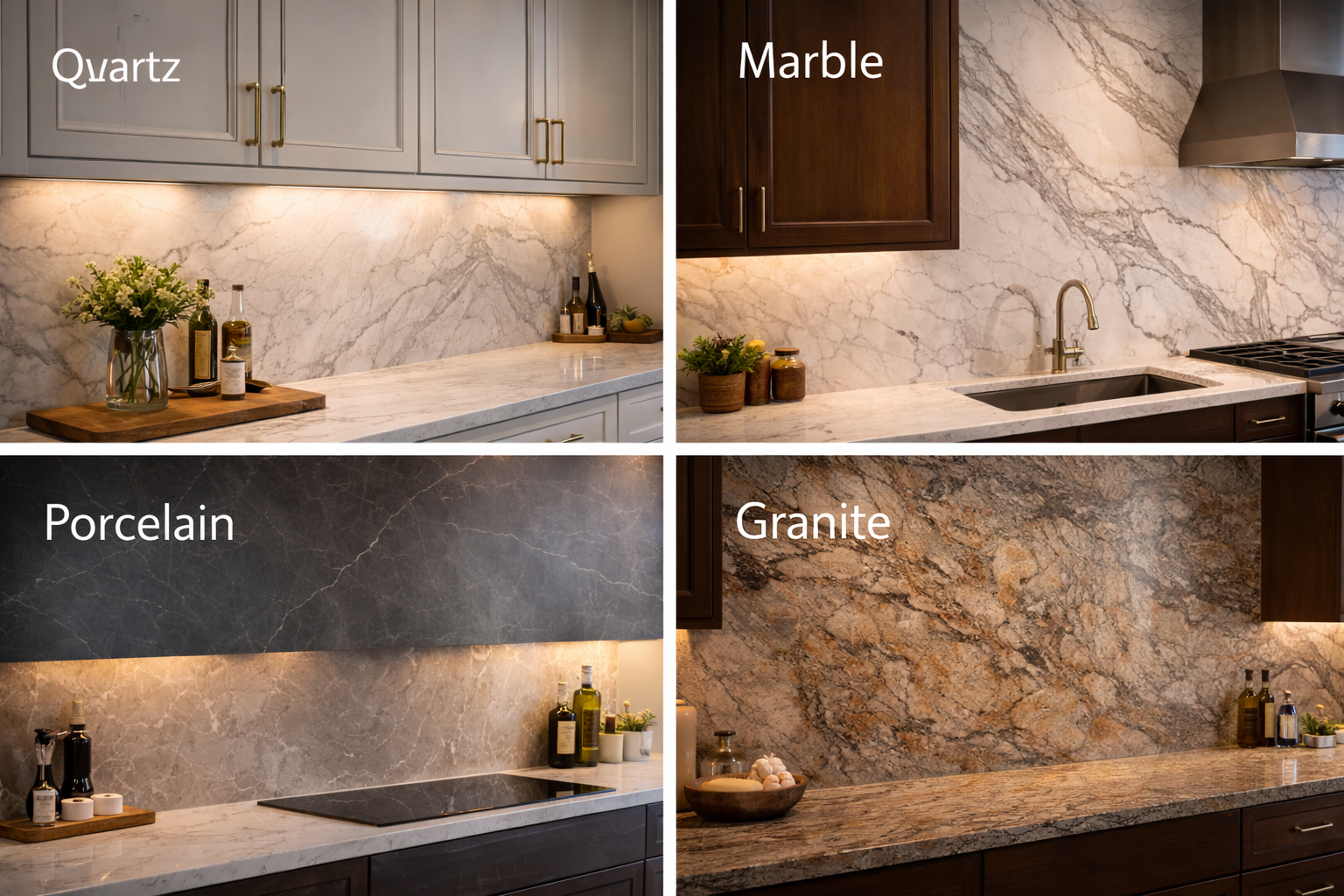
Quartz, quartzite, marble, granite, and porcelain slabs are all common backsplash materials. The best choice depends on the kitchen style, maintenance expectations, wall size, and whether the backsplash is meant to match the countertop exactly or stand out as a separate feature. When comparing stone surfaces, it can help to review Natural Stone Institute guidance.
Why is quartz a common choice?
Quartz is common because it offers many patterns, does not need sealing, and often coordinates easily with quartz countertops. It can create a clean consistent look while keeping maintenance simpler than some natural stones.
When do natural stones or porcelain make more sense?
Natural stones make sense when the remodel wants more organic variation and depth. Porcelain can be a strong choice when a thin large-format panel is preferred or when a modern clean-lined look is the goal. Each material has different fabrication and handling needs, so material choice should be tied to the actual wall application.

How Do Seams, Height, and Pattern Affect the Finished Look
Seams, backsplash height, and slab pattern all have a major effect on the final result. A short backsplash under upper cabinets behaves differently from a full-height range wall. A dramatic veined slab may need careful orientation so the pattern works with the countertop below, while a quieter slab can simplify the room without becoming overpowering. Projects with related upgrades often include choices around kitchen backsplash.
Do seams always ruin the look?
No, but they need to be planned. In some layouts, seams can be placed where they are less noticeable. The goal is not always to eliminate seams completely, but to place them where they support the composition of the wall instead of interrupting it awkwardly.
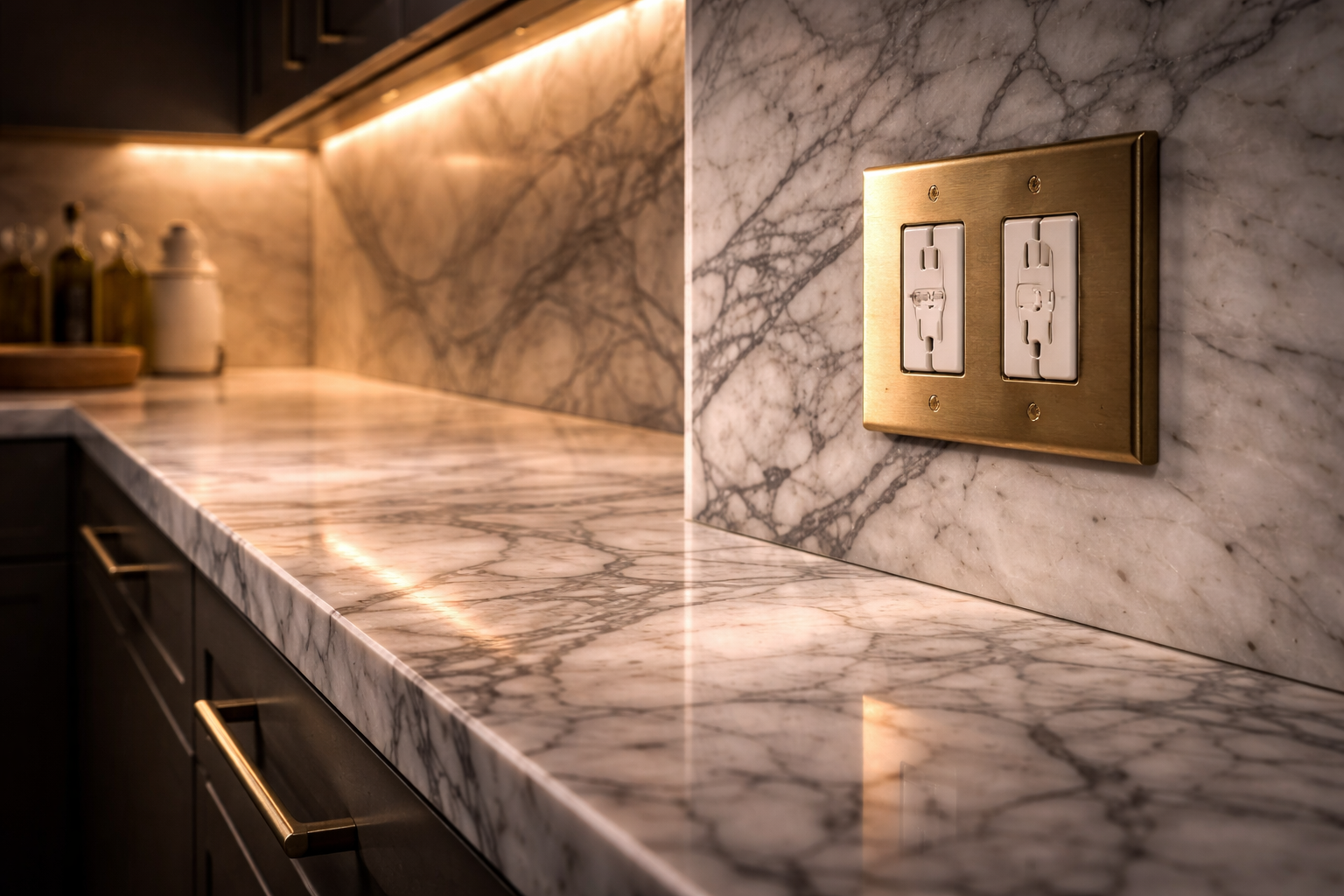
Why do outlets matter so much?
Because every outlet and switch interrupts the slab. If the wall has many outlet locations, the fabricator and installer need accurate measurements so the cuts land cleanly and do not weaken or clutter the finished installation more than necessary.
What Installation Details Matter Most
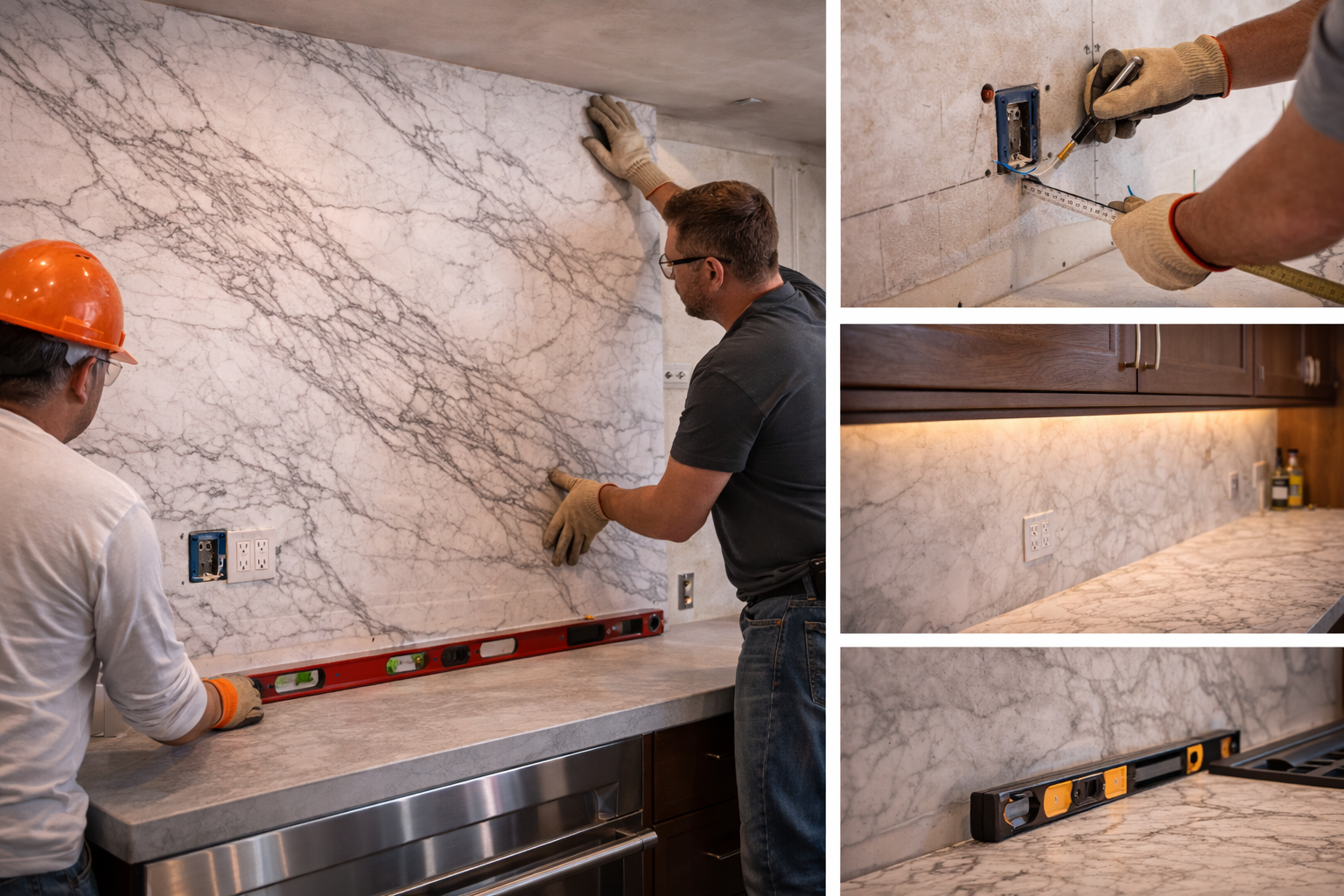
Wall preparation, outlet placement, countertop level, seam layout, and panel handling all matter. Slab backsplash pieces need clean measurements and solid support because mistakes are harder to hide than with small tile. If the countertop or cabinets are out of level, the slab lines can make those problems more obvious. Efficiency planning may also benefit from ENERGY STAR guidance.
What should be confirmed before fabrication?
Countertop installation, final wall dimensions, outlet and switch locations, hood details, cabinet clearances, and the exact backsplash height should all be confirmed before fabrication. Those details determine where cuts happen and how the slab aligns with the rest of the kitchen.
Why does wall condition matter?
Because large-format pieces need a reasonably true surface to install cleanly. If the wall is wavy or damaged, the installer may need to correct that first so the slab sits properly and the finished surface looks intentional.
What Are the Pros and Cons of a Full Slab Backsplash
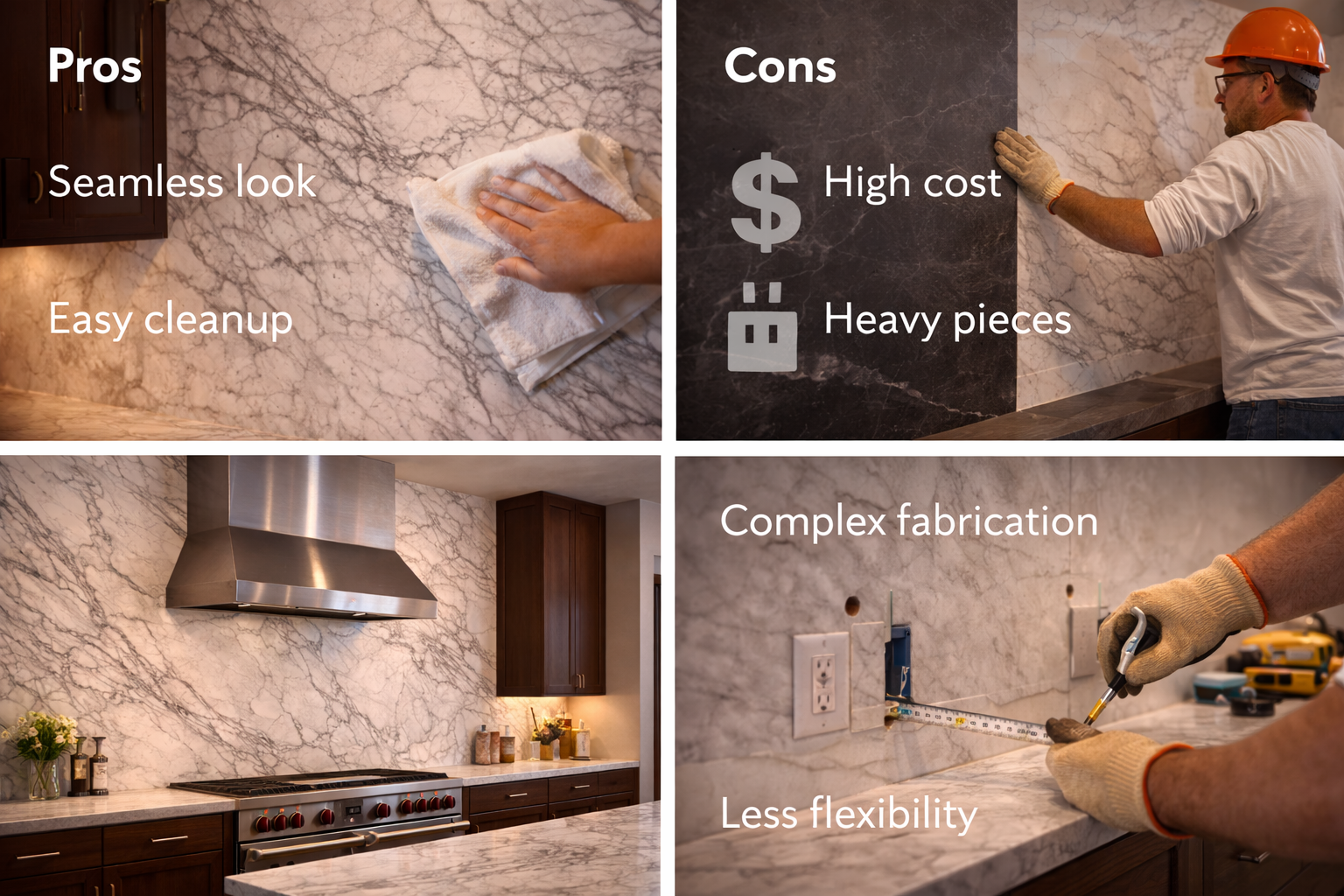
The biggest advantages are a cleaner appearance, easier cleanup, fewer grout lines, and a more custom look. The main drawbacks are higher cost, heavier pieces, more demanding fabrication, and less flexibility for on-the-fly changes during installation.
Who tends to like slab backsplashes most?
Homeowners who want a cleaner and more upscale kitchen aesthetic usually like them most. They are especially appealing when the remodel already includes statement countertops or an island that can visually tie into the wall surface.
Who might prefer tile instead?
Someone who wants more texture, more color variety, lower cost, or a more forgiving installation process may prefer tile. The right answer depends on the design direction and how much of the budget should go into wall finishes.

What Affects Full Slab Backsplash Cost
Cost depends on material choice, wall size, slab thickness, number of seams, outlet and switch cutouts, range wall height, edge finishing, and installation difficulty. A simple under-cabinet quartz backsplash costs less than a full-height natural stone range wall with bookmatched veining and multiple precise cutouts.
What tends to raise cost fastest?
Premium materials, full-height installations, complex pattern matching, multiple outlets, custom hood details, and difficult access for large panels usually push the budget up fastest. The need for careful templating and transport also adds to the overall cost compared with standard tile work.
How can homeowners manage the budget?
Using slab only on a feature wall, simplifying the material choice, or limiting full-height applications to the most visible areas can help. That approach still gives the kitchen a cleaner look without turning every backsplash section into a premium slab install.
What Mistakes Should Homeowners Avoid
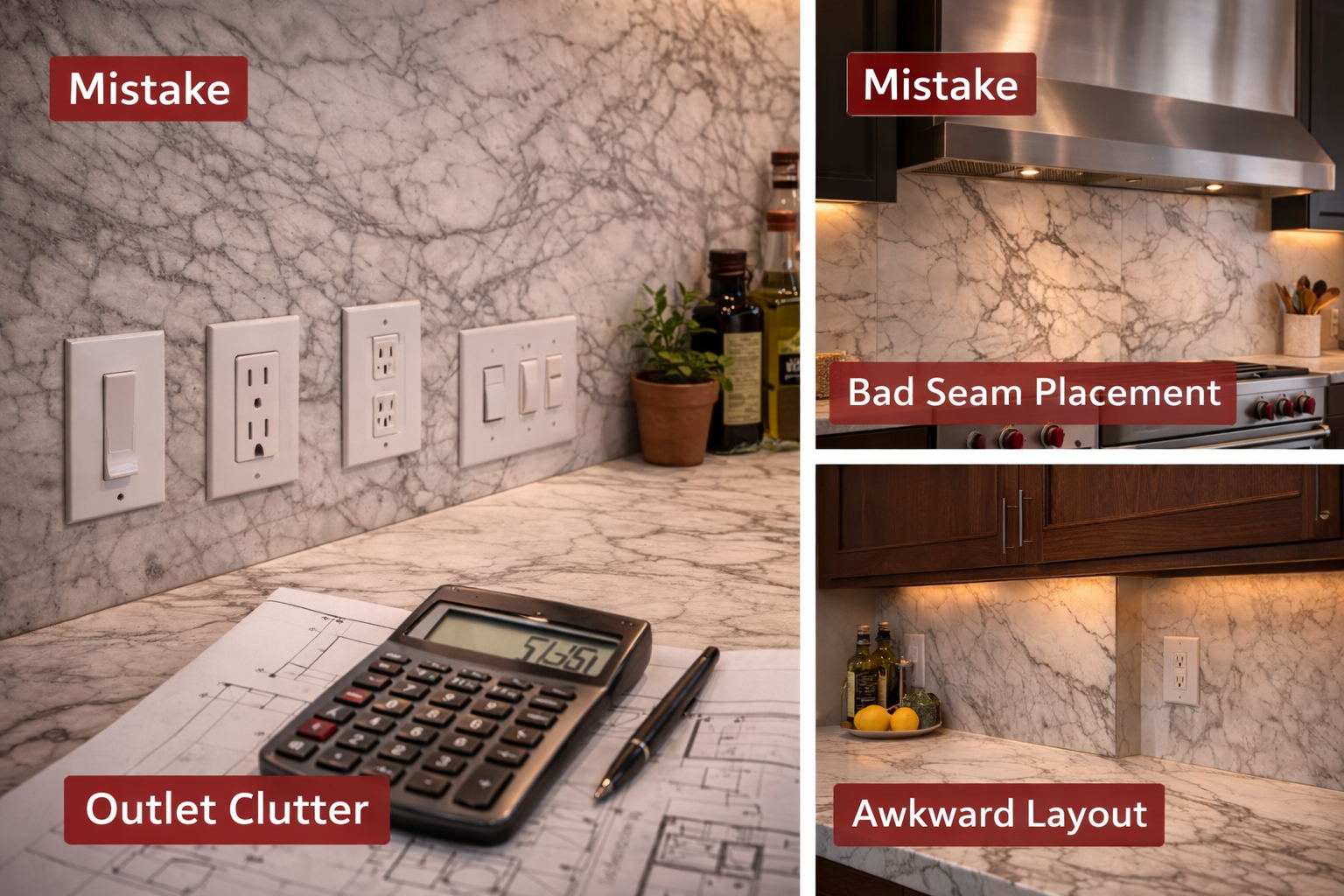
The biggest mistakes usually come from underestimating how precise the installation needs to be. Homeowners sometimes choose a slab backsplash based on inspiration photos without thinking through outlet clutter, wall conditions, hood details, or how the slab pattern will interact with the countertop.
What planning mistakes are common?
Skipping full slab review on dramatic patterns, leaving outlet planning too late, and not deciding the backsplash height early are common mistakes. Another is assuming the slab will automatically look seamless without careful seam and cutout planning.
What design mistakes show up later?
Overly busy material combinations, seams in focal locations, and backsplash heights that stop awkwardly against cabinets or windows can all become obvious after installation. A slab backsplash works best when it is treated as part of the kitchen architecture, not just as a substitute for tile.
How Should You Plan a Full Slab Backsplash Remodel
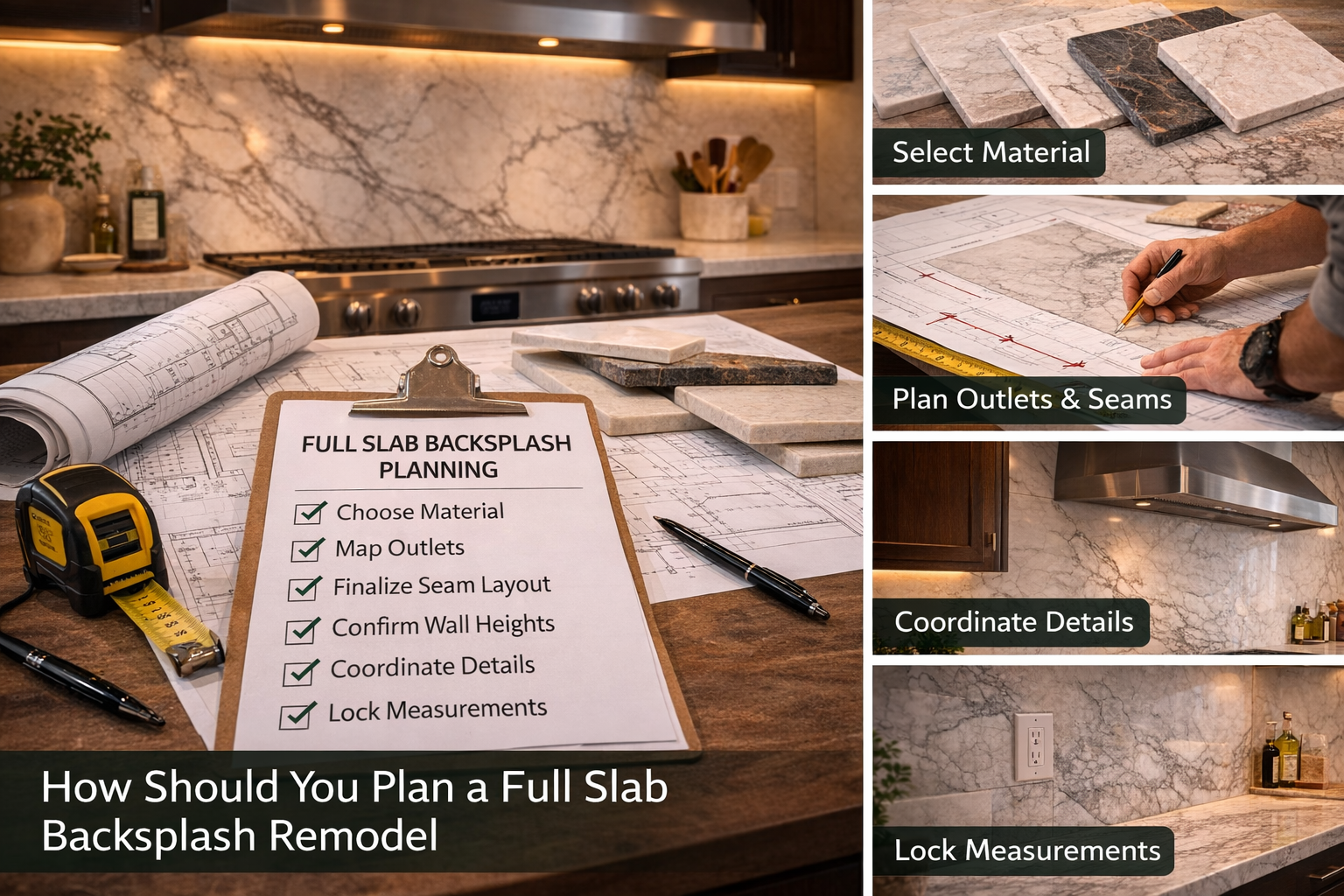
Start by deciding where slab makes the biggest impact in the kitchen. That could be a full range wall, the area under upper cabinets, or a full wall behind open shelving. Then choose the material, confirm wall dimensions, review outlet locations, and coordinate the slab with the countertop, cabinets, and hood design before fabrication begins.
What should be finalized before ordering?
Countertop selection, backsplash height, outlet map, hood details, seam approach, slab pattern direction, and final wall measurements should all be locked in first. Those details affect both cost and how polished the finished wall will look.
When is a full slab backsplash the right move?
It is the right move when the remodel wants a cleaner, more architectural backsplash treatment and the budget can support the added fabrication and installation detail. Used well, it can make the whole kitchen feel more custom with fewer visual interruptions than tile.
Frequently Asked Questions About Full Slab Backsplashes
A full slab backsplash uses one large slab of stone, quartz, porcelain, or similar material on the wall instead of smaller tile pieces. It creates a cleaner, more continuous look with fewer grout lines and a more seamless connection to the countertop.
They usually choose it for the cleaner appearance and easier maintenance. A slab backsplash can make the kitchen feel more custom and less visually busy, especially when paired with a matching countertop or waterfall island.
Quartz, quartzite, marble, granite, porcelain slabs, and other large-format surfacing materials are common. The best choice depends on style, maintenance expectations, wall size, and budget.
Yes, usually. Because there are far fewer grout joints, cleanup is simpler. That is one of the main practical reasons homeowners choose slab backsplashes in active kitchens.
Yes. Many remodels use the same material for both. That approach can create a very unified look, especially in modern or transitional kitchens where the goal is a more continuous wall and counter surface.
They can. Outlet locations need to be measured carefully because the slab will need precise cutouts. Poor planning around outlets is one of the easiest ways to create installation headaches.
Yes. Some designs stop at the bottom of the upper cabinets, while others continue to the ceiling, especially behind a range wall or open-shelf section. The right height depends on the kitchen layout and visual goal.
Usually, yes. Material cost, fabrication, transport, and installation are often higher than standard tile backsplashes. The price difference depends on the slab material and the amount of cutting and seam work required.
Sometimes. Smaller wall sections may use a single piece, but longer runs or taller applications can require seams depending on slab size and layout. Good seam planning matters if the goal is a clean finished look.
Homeowners who want a cleaner, more upscale kitchen look and are comfortable investing more in material and installation are usually a good fit. It works especially well when the backsplash is meant to be a major visual feature instead of just a practical wall covering.