
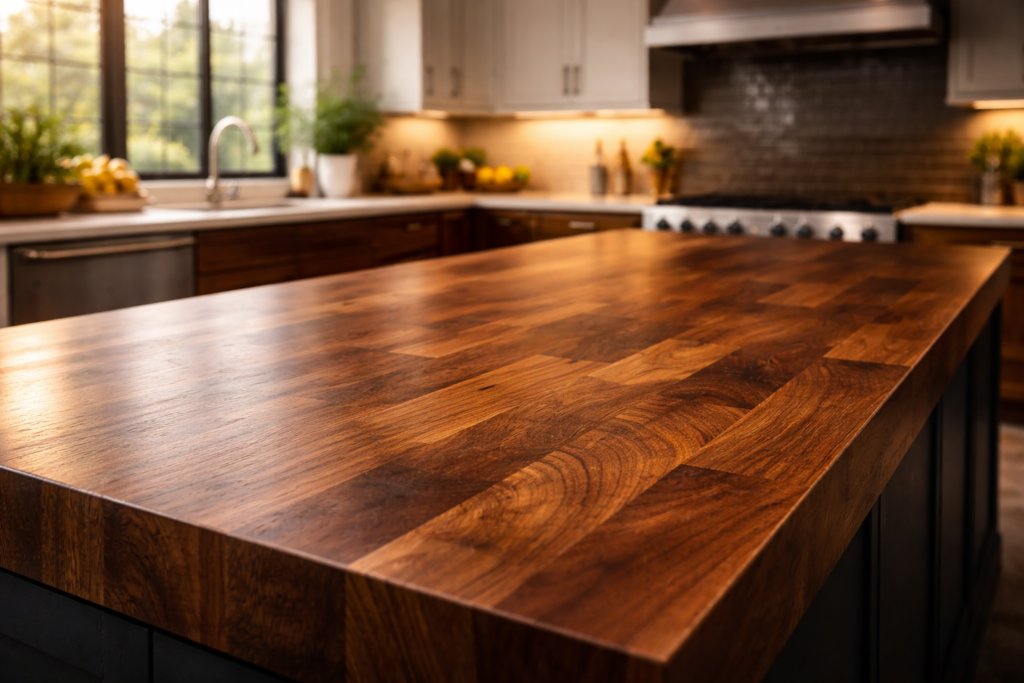
Butcher Block Countertops Guide: Wood Types, Care, Installation, and Cost
Butcher Block Countertops Guide Index
- Butcher Block Countertops Overview
- What Are Butcher Block Countertops
- Where Do Butcher Block Countertops Work Best
- What Wood Species and Construction Options Are Common
- How Should Butcher Block Countertops Be Finished and Maintained
- What Installation Details Matter Most
- What Are the Pros and Cons of Butcher Block Countertops
- What Affects Butcher Block Countertop Cost
- What Mistakes Should Homeowners Avoid
- How Should You Plan a Butcher Block Countertop Remodel
- Frequently Asked Questions About Butcher Block Countertops
Butcher Block Countertops Overview
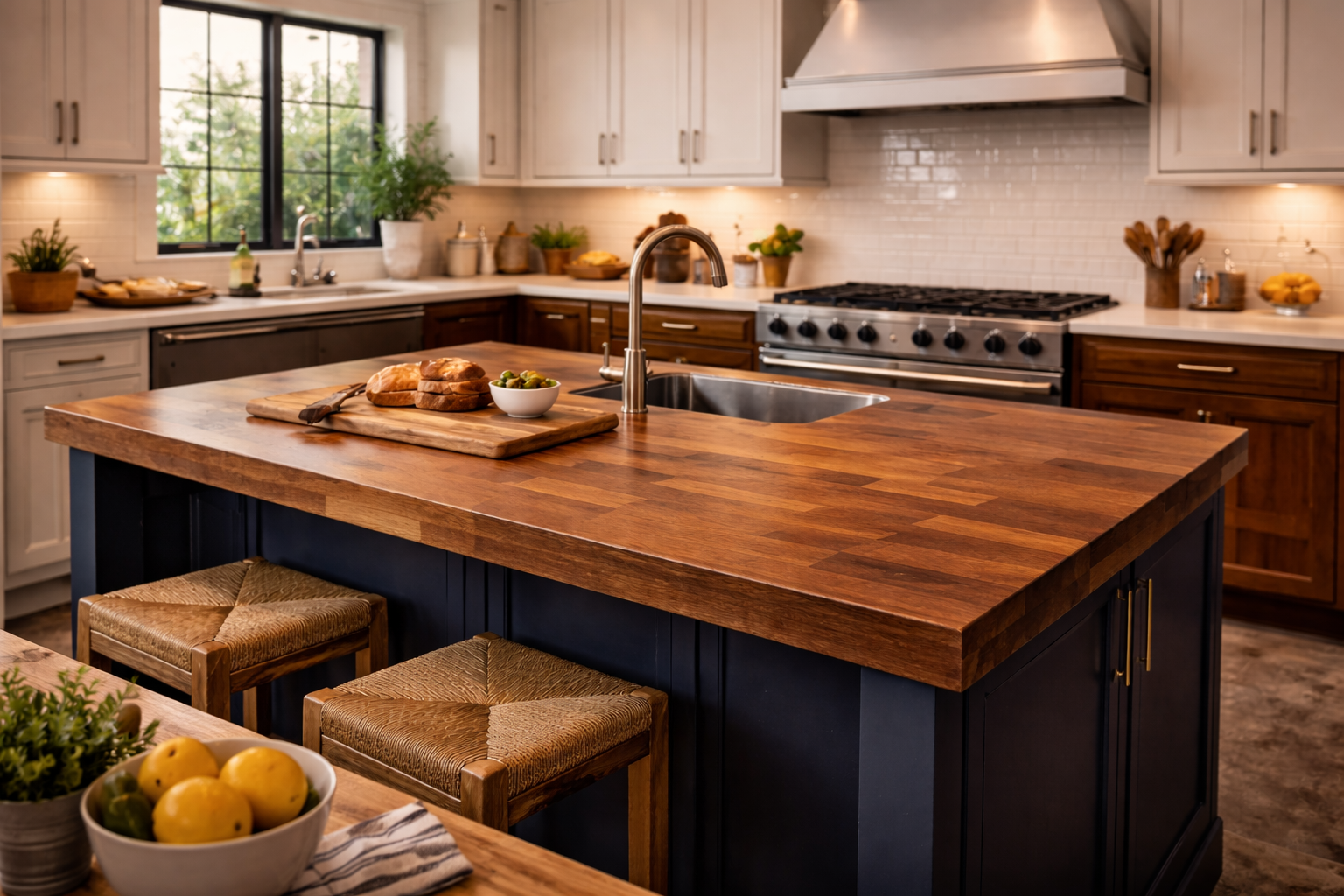
Butcher block countertops bring natural wood texture into a kitchen remodel. They are often chosen when homeowners want the room to feel warmer and less hard-surfaced than an all-stone kitchen. In practical terms, butcher block can work well for islands, prep areas, coffee bars, or full countertop runs depending on how much maintenance the homeowner is willing to take on.
Why do homeowners choose butcher block countertops?
They choose them for warmth, color, and a more furniture-like feel. Wood can soften a kitchen that would otherwise feel dominated by painted cabinets, tile, metal, and stone. It also pairs well with both traditional and modern cabinetry depending on the wood tone and edge profile.
What is the tradeoff compared with stone or quartz?
The tradeoff is maintenance. Wood is softer, more vulnerable to standing water, and more likely to show wear. That does not make it a bad choice, but it does mean the remodel plan needs to match the homeowner’s expectations for upkeep and long-term appearance.
What Are Butcher Block Countertops
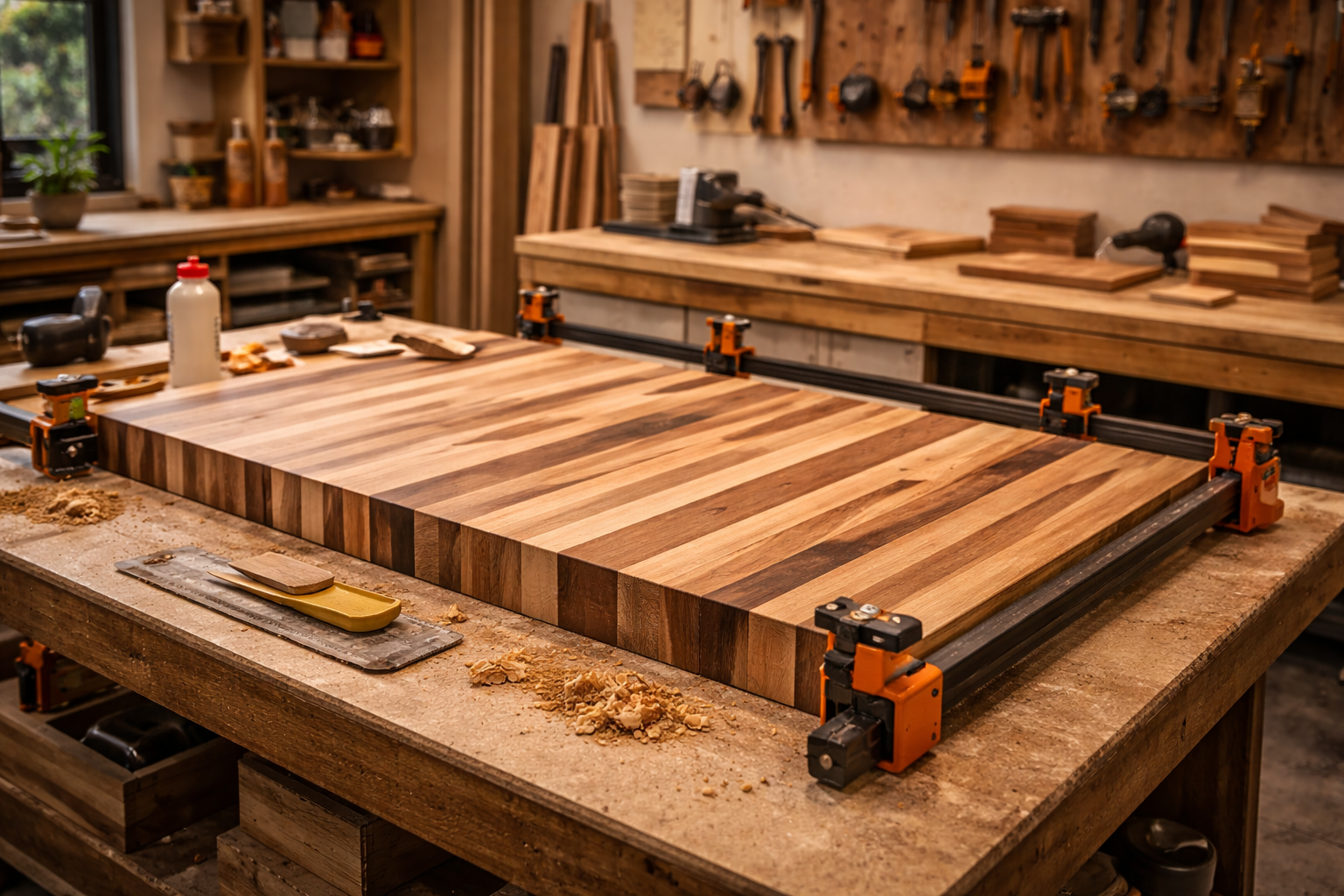
Butcher block countertops are wood countertops made by laminating strips or blocks of wood into a thicker work surface. In kitchen remodeling, most installations use edge grain or face grain construction because those formats work well for countertop runs and islands. End grain styles also exist, but they are heavier, more specialized, and less common for whole-kitchen installs. Homeowners weighing long-term operating costs often review Energy Saver guidance.
How are they different from wood-look counters?
They are real wood, not laminate printed to look like wood. That means the surface has real grain, real movement, and the ability to be sanded or refinished. It also means the countertop responds to moisture and seasonal conditions in ways that stone or quartz does not.
What edge styles are common?
Simple eased edges, slightly rounded edges, and thicker built-up profiles are all common. The best edge depends on the cabinet style and how formal or casual the kitchen is supposed to feel. A simple square or eased edge usually works best when the goal is a cleaner, more current kitchen.
Where Do Butcher Block Countertops Work Best
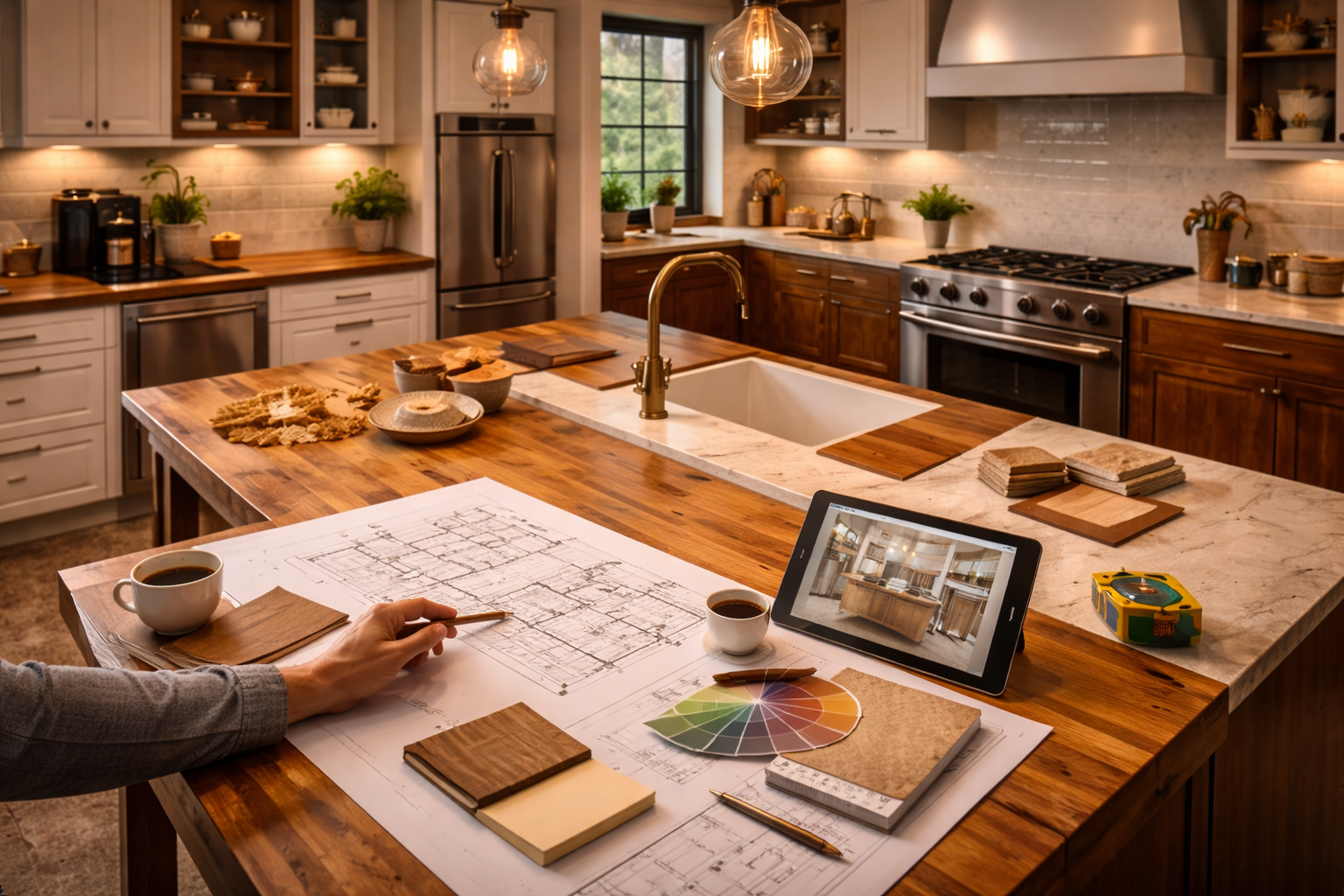
Butcher block works best where the remodel wants visual warmth and where the homeowner is realistic about water, heat, and wear. Islands are one of the most common places because they create a focal point and are less exposed to sink moisture than perimeter counters. They also work well on coffee stations, baking zones, and smaller prep areas.
Can butcher block be used throughout the whole kitchen?
Yes, but that decision should be made carefully. A full-kitchen installation creates a consistent look, but it also means more surface area to maintain. Around sinks and dishwashers especially, sealing and regular care become much more important. Homeowners comparing options often look at kitchen remodeling as part of the overall plan.
Does butcher block work in mixed-material kitchens?
Very well. One practical design approach is to use quartz or stone on the main perimeter runs and butcher block on the island or a smaller feature area. That gives the kitchen some warmth without requiring wood maintenance everywhere.
What Wood Species and Construction Options Are Common
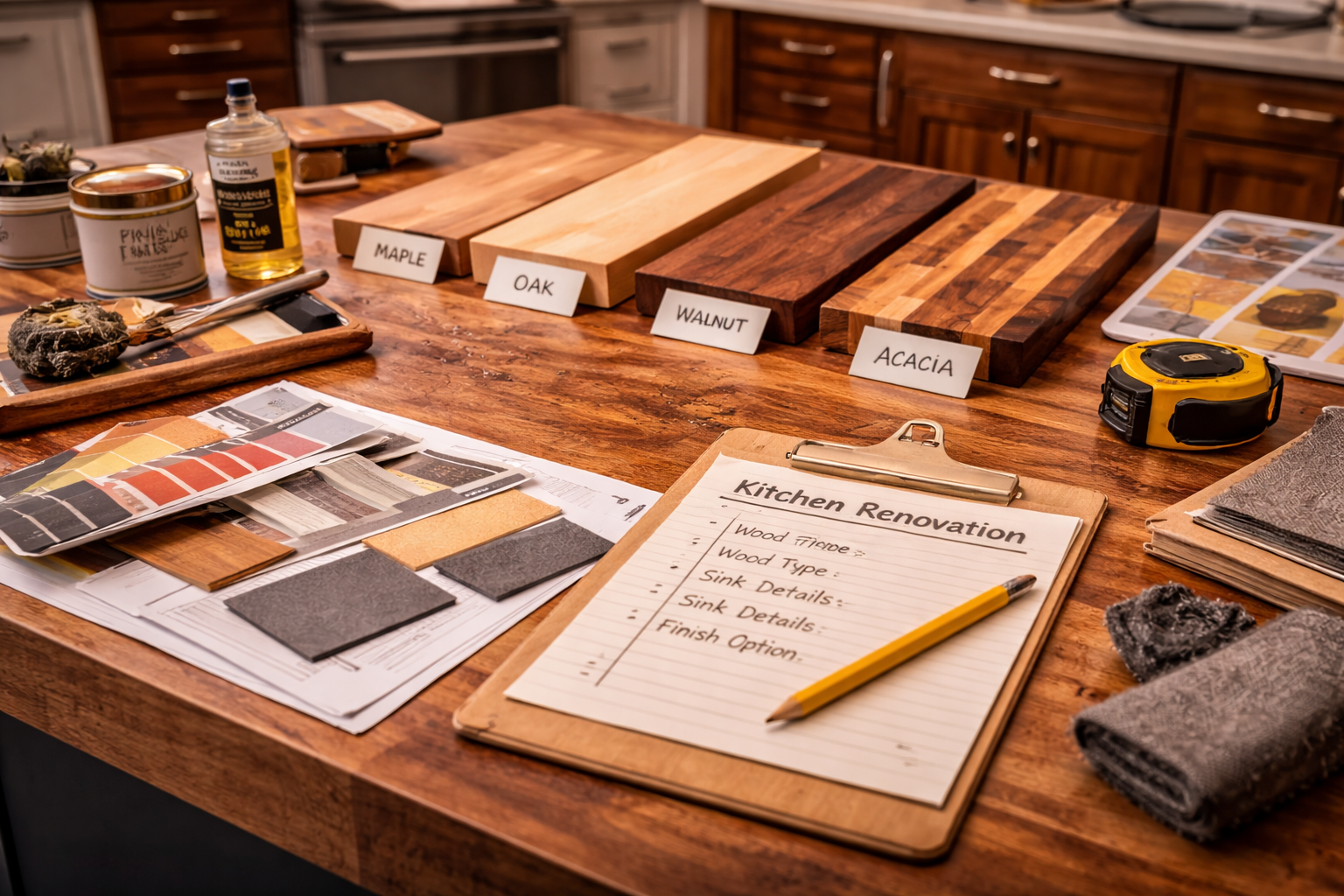
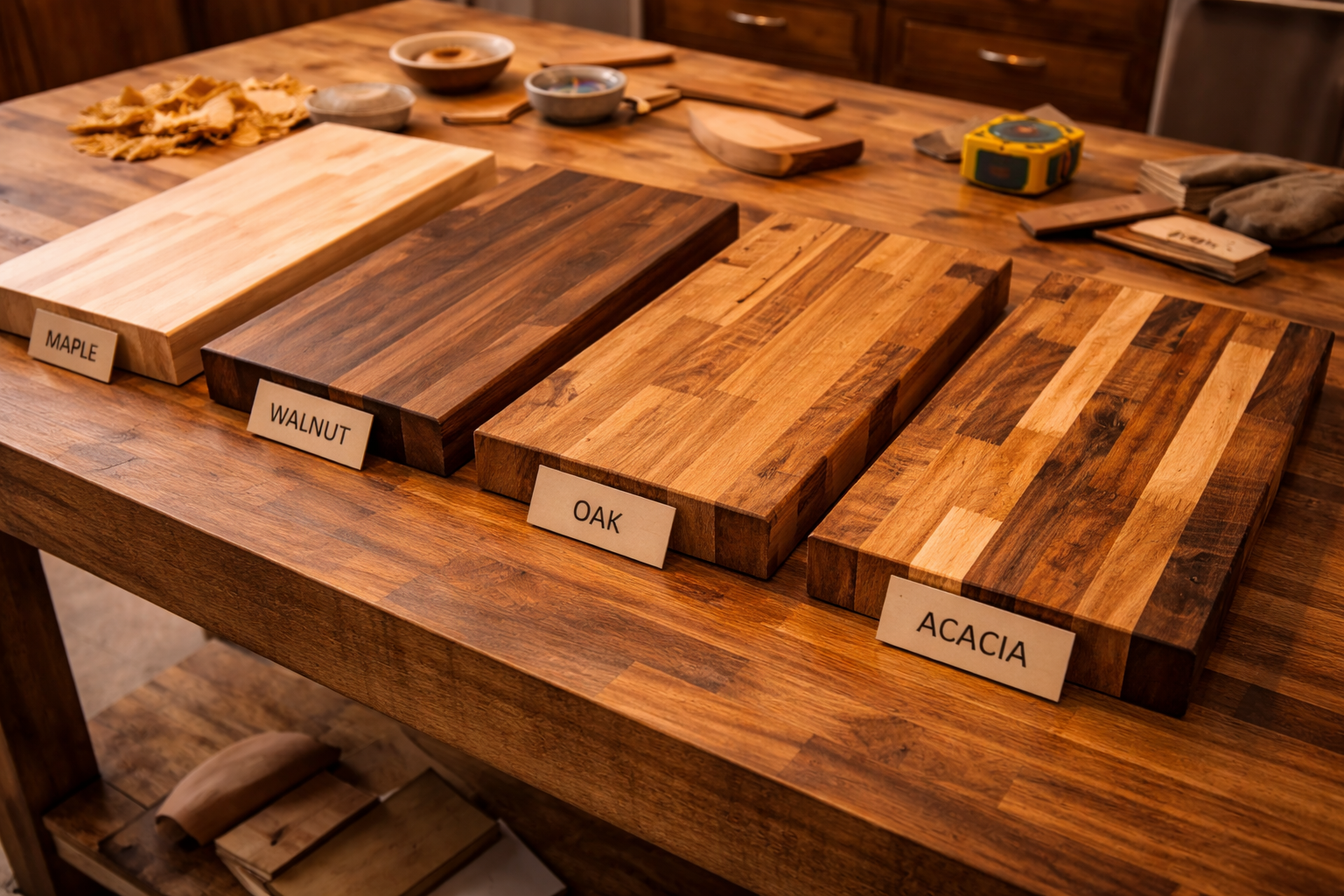
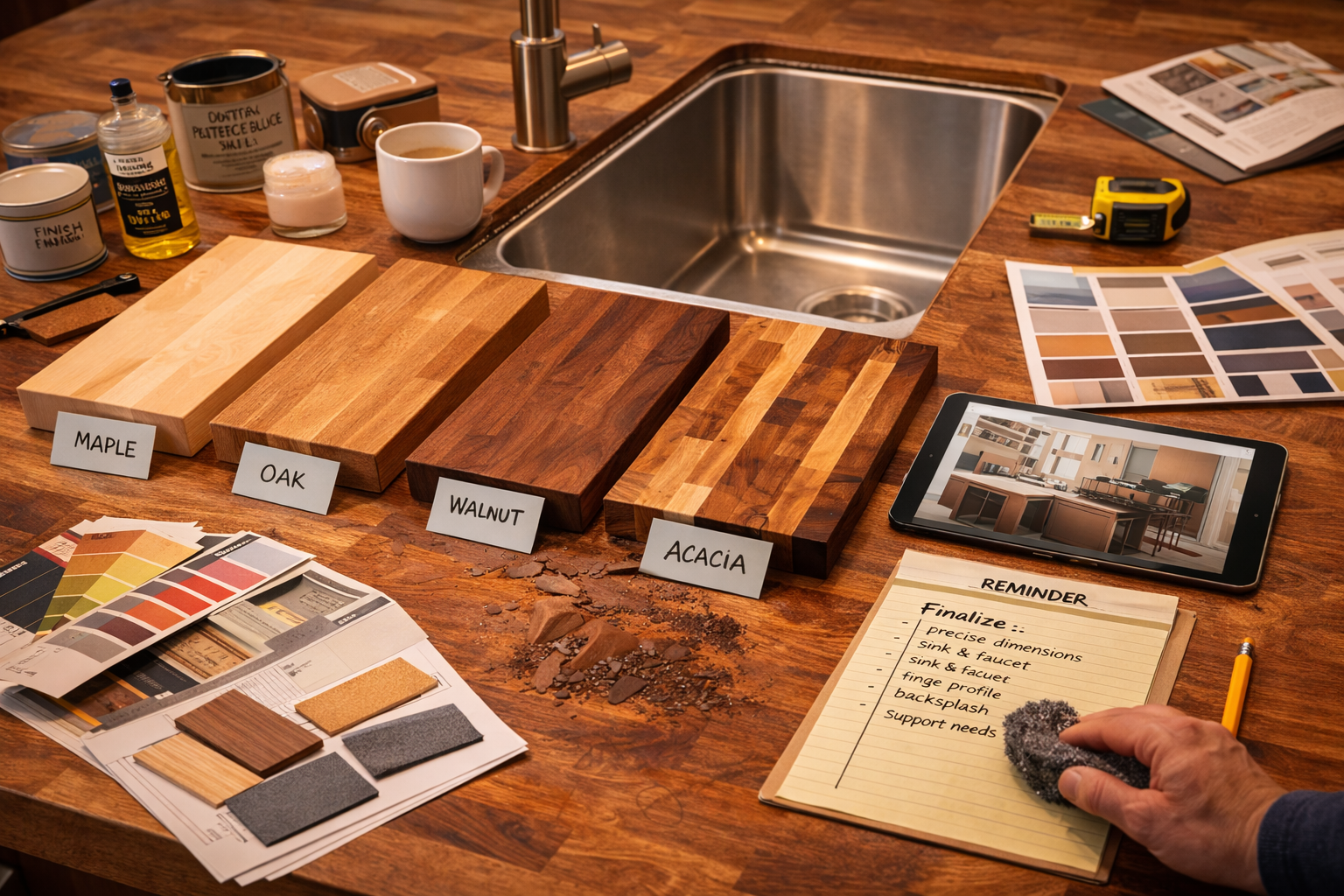
Common butcher block species include maple, walnut, oak, birch, cherry, and acacia. Maple is popular because it is hard, fairly neutral in color, and widely available. Walnut is darker and more premium-looking. Oak has more visible grain. Each species changes the look of the kitchen and the way the countertop wears over time.
What construction options matter most?
Edge grain is common for countertop installs because it gives a clean linear appearance and good durability. Face grain shows broader wood patterns and can feel more furniture-like. End grain is thicker and more specialized, often used more for cutting surfaces than for full kitchen countertop runs.
How should homeowners choose a species?
They should look at hardness, color, grain pattern, maintenance expectations, and how the wood will sit next to cabinet paint, flooring, and backsplash materials. A wood species that looks good on a sample can feel very different once it fills an entire island or long run of countertop. For technical installation guidance, many pros refer to TCNA tile standards.
How Should Butcher Block Countertops Be Finished and Maintained
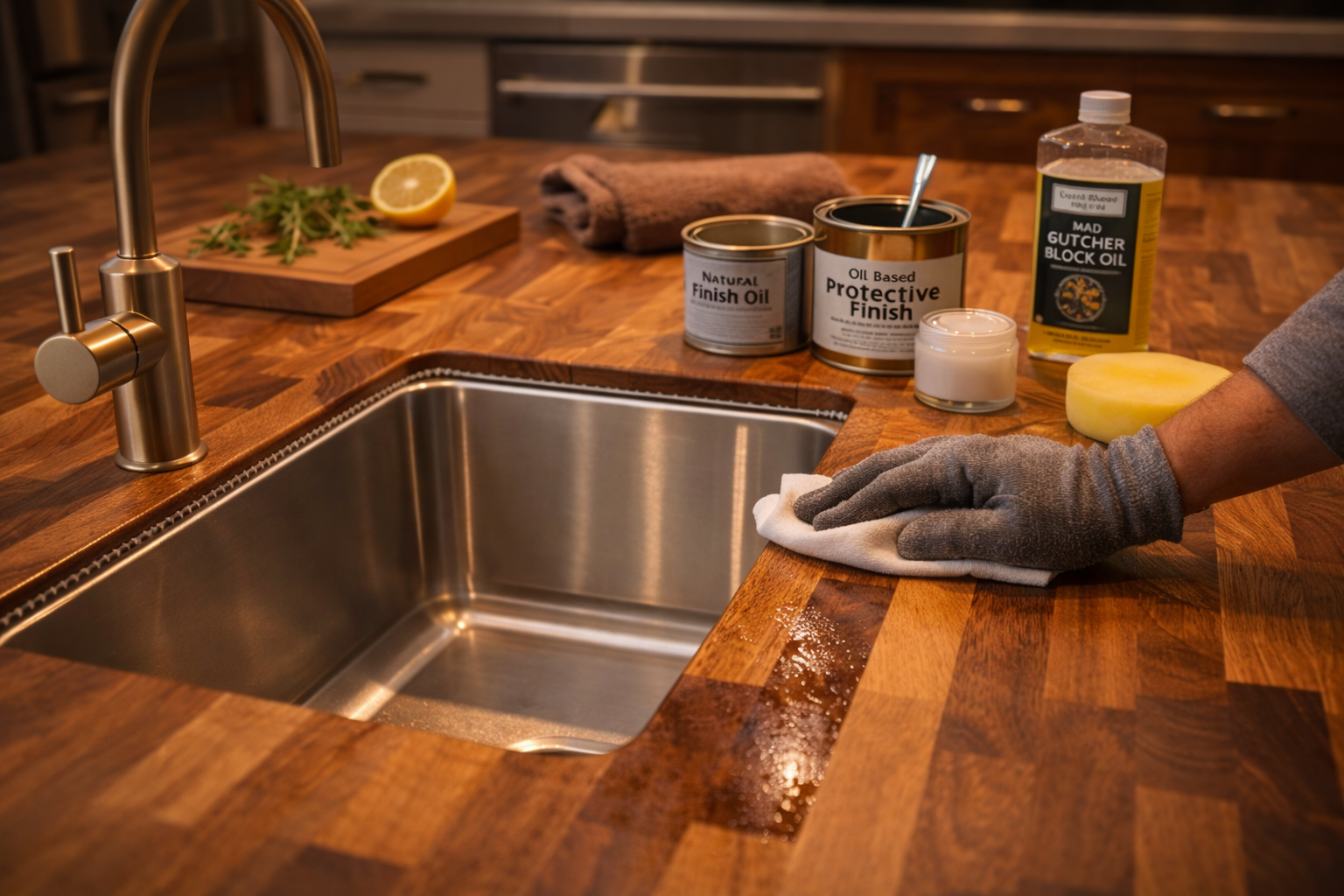
Finish choice changes how a butcher block countertop behaves. Some homeowners want a food-safe oil finish that can be refreshed over time. Others want a harder protective finish that behaves more like a sealed countertop surface. The right answer depends on whether the wood will be used as a cutting surface or primarily as a countertop. In many projects, countertop remodel becomes an important part of how the bathroom functions day to day.
Why does finish planning matter so much?
Because moisture is the main risk. Sink cutouts, faucet penetrations, seams, front edges near dishwashers, and any area where water sits need to be protected carefully. If the finish system is wrong for the use case, the wood can stain, swell, or split at the joints.
What maintenance should homeowners expect?
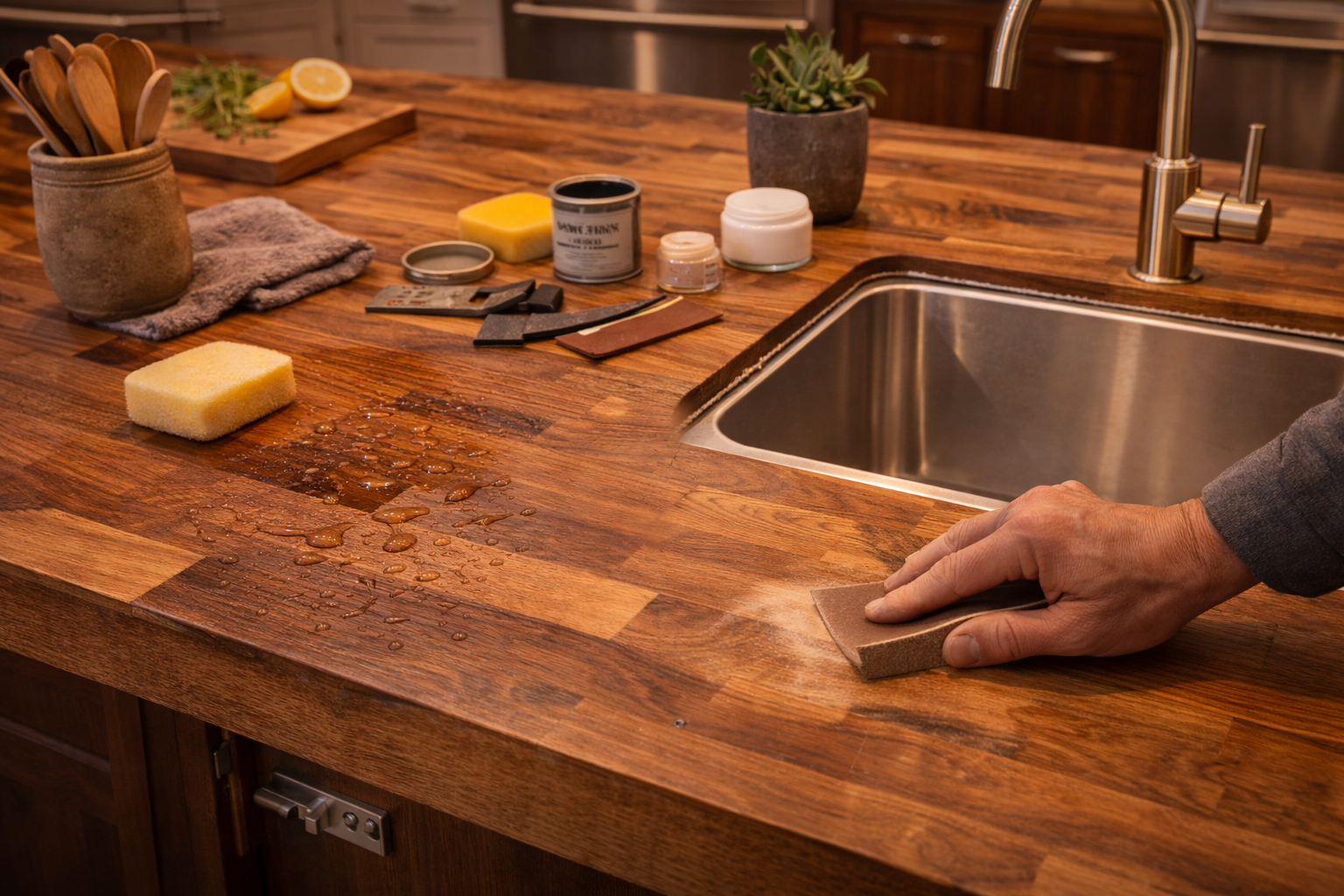
They should expect to wipe spills quickly, avoid leaving wet items on the surface, use cutting boards when appropriate, and refresh the finish as needed. Wood countertops can age well, but they do best when the homeowner is willing to treat them like real wood rather than an indestructible manufactured surface.
What Installation Details Matter Most
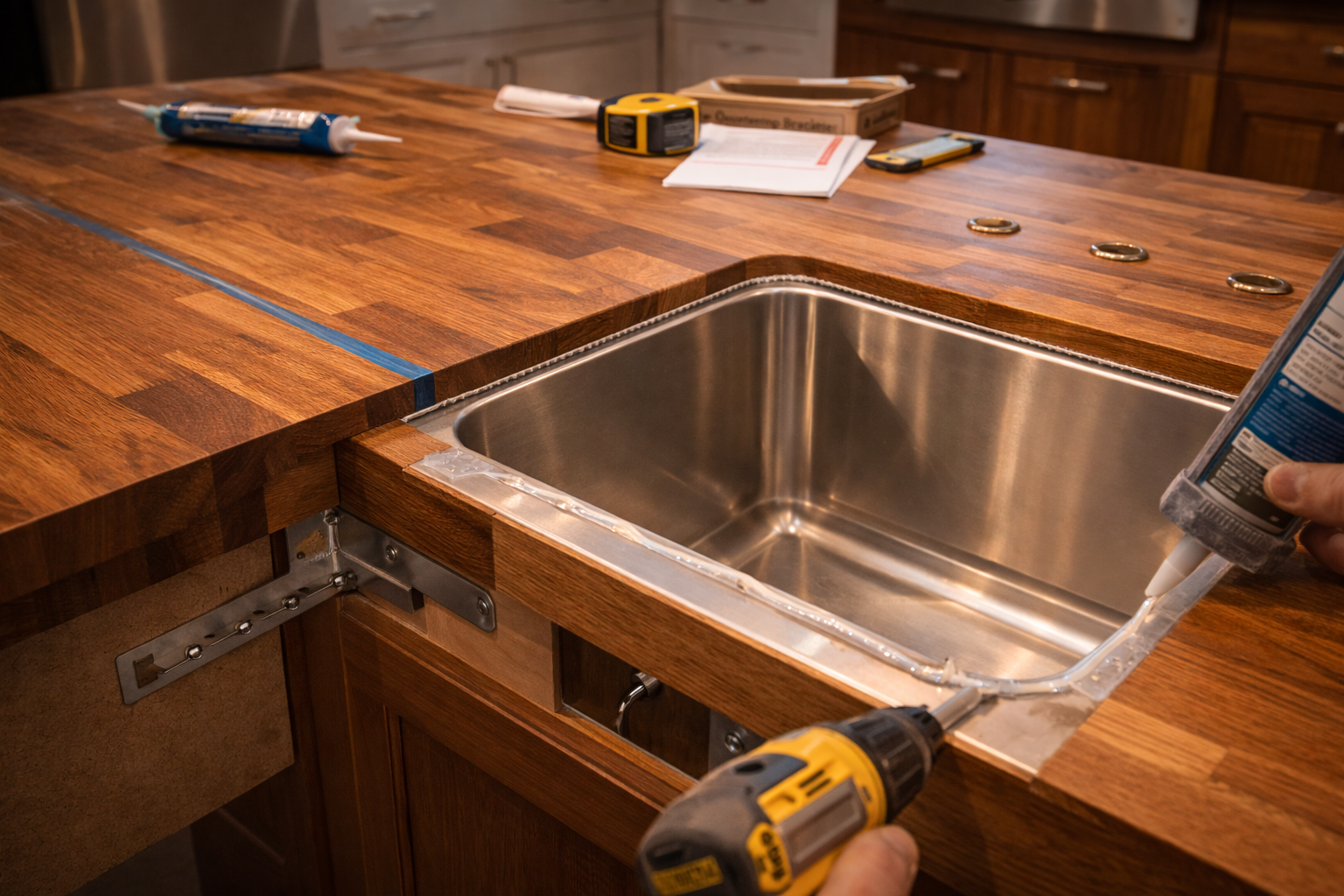
Installation details matter because wood moves. The countertop needs to be secured in a way that allows for seasonal expansion and contraction. Sink cutouts need proper sealing, seam placement needs to be planned carefully, and support conditions need to be checked so the wood stays stable over time.
What should be checked before installation?
Cabinet level, appliance clearances, overhang support, sink type, faucet drilling, and backsplash coordination should all be reviewed before the top is installed. If the remodel includes an undermount sink, that area needs especially careful sealing and edge treatment because water exposure will be constant. For layout and clearance planning, many designers reference NKBA planning guidelines.
Why is sink area planning so important?
Because the sink is the highest-risk location on a wood counter. A poorly sealed cutout or edge can start absorbing moisture quickly. If butcher block is being used around a sink, the remodel plan should treat that as a technical detail, not just a design choice.
What Are the Pros and Cons of Butcher Block Countertops
The biggest advantages are warmth, natural character, repairability, and design flexibility. Wood can make a kitchen feel less cold than an all-stone space, and minor damage can often be sanded or refinished. The main drawbacks are water sensitivity, more maintenance, and a softer surface that can dent or scratch more easily.
Who tends to like butcher block most?
Homeowners who like natural materials and do not mind some patina usually like it most. If a kitchen is meant to feel lived-in and warm, butcher block can age in a way that feels intentional rather than damaged.
Who might be happier with another surface?
Someone who wants the lowest-maintenance option, leaves standing water around the sink, or prefers a surface that resists scratches and stains with minimal upkeep may be better off with quartz, stone, or another more durable countertop material.
What Affects Butcher Block Countertop Cost
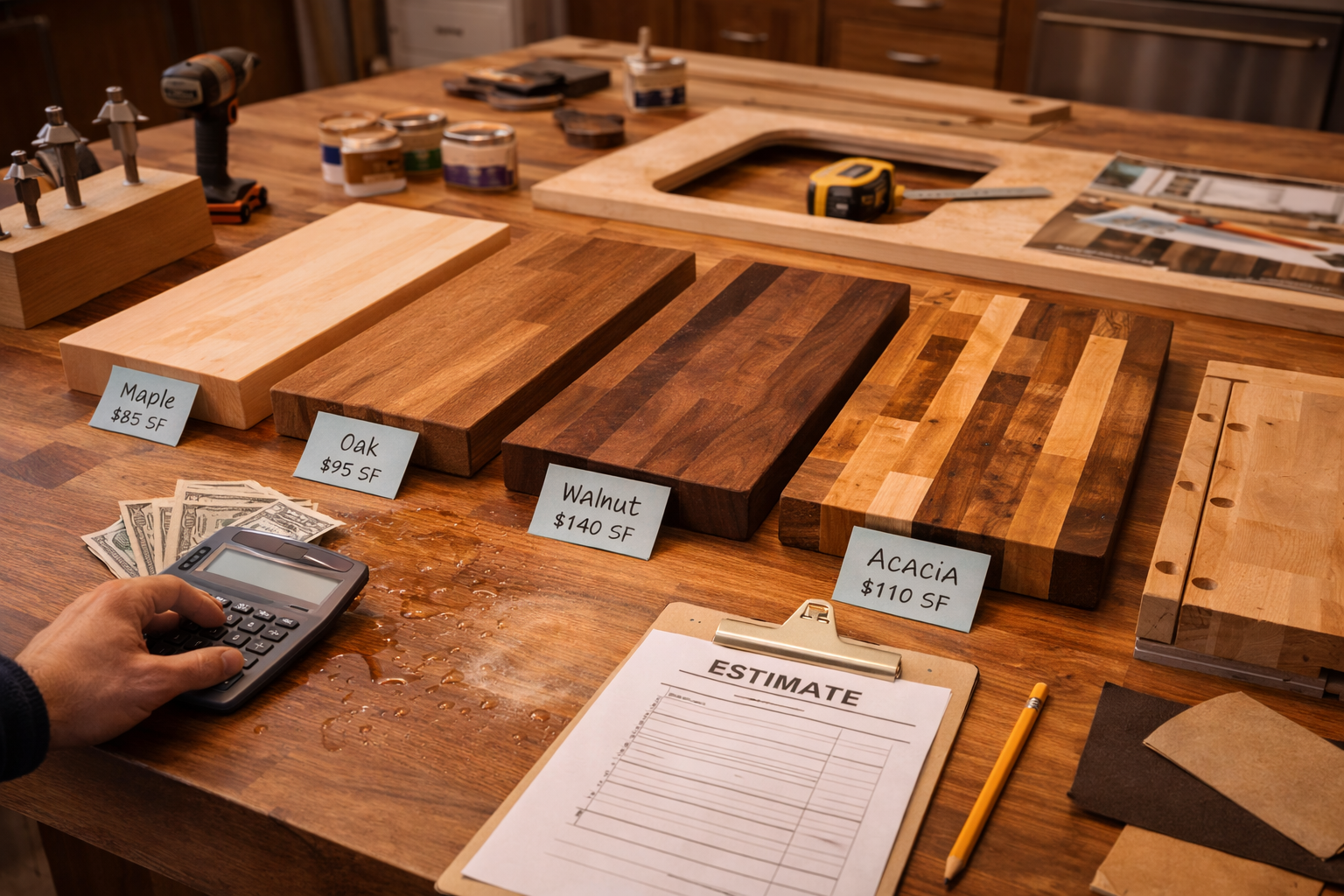
Cost depends on wood species, thickness, slab size, edge profile, finish choice, sink and faucet cutouts, seam complexity, support needs, and installation labor. A straight section of maple butcher block costs less than a large walnut island with a thick profile, multiple cutouts, and custom finishing work.
What choices raise cost fastest?
Premium species, thicker tops, special edge details, larger island pieces, custom stain or finish work, and complicated cutouts usually add cost quickly. If the installation also requires extra support framing or detailed coordination with sinks and appliances, that can raise labor costs too.
How can homeowners control the budget?
Using butcher block in selected areas instead of the entire kitchen is one good way. Another is choosing a more common wood species and a simpler edge profile while spending on proper finishing and installation, which are the details that protect long-term performance.
What Mistakes Should Homeowners Avoid
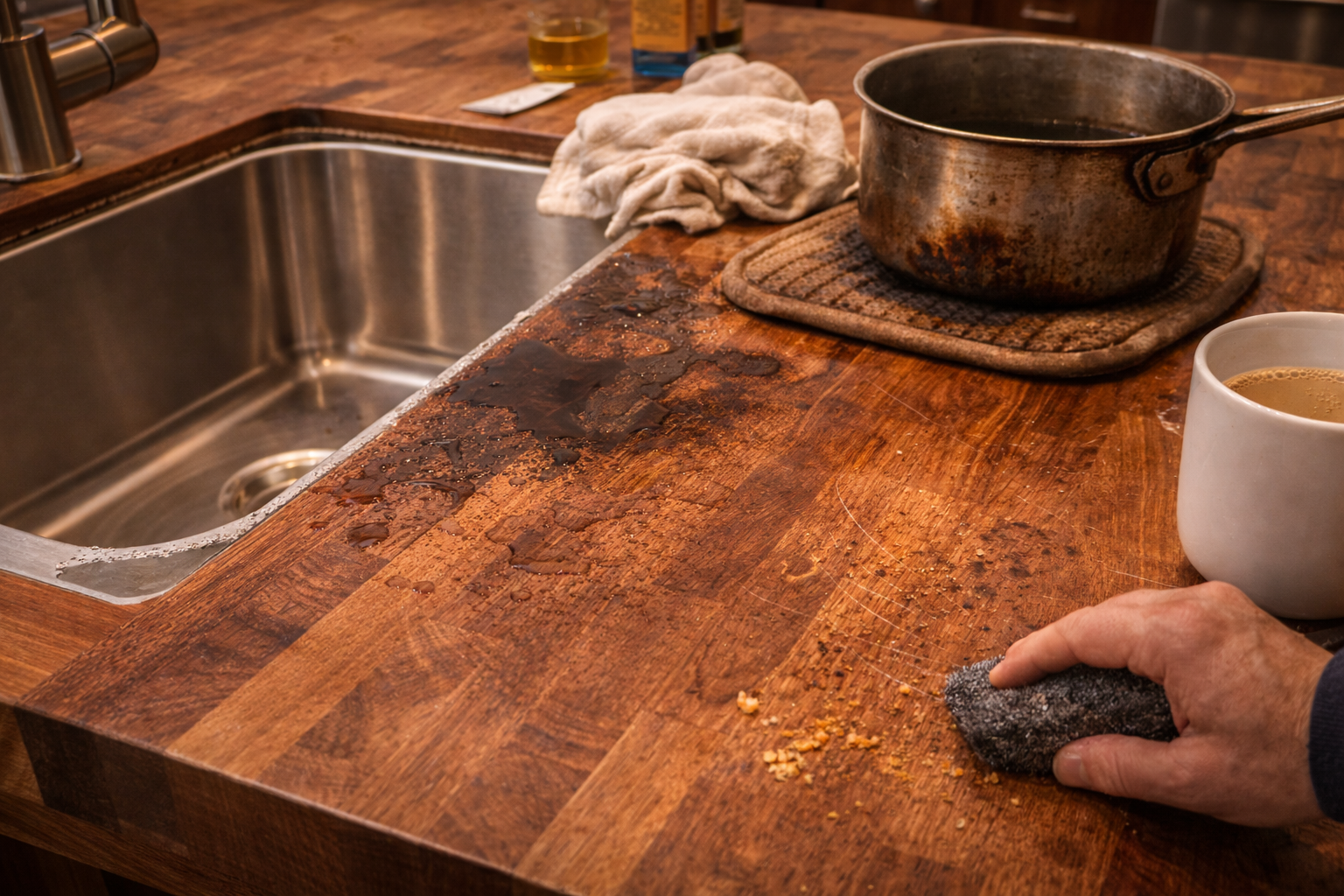
The biggest mistakes usually come from treating butcher block like a maintenance-free product. Homeowners sometimes fall in love with the look and do not think through how the wood will perform around sinks, dishwashers, heavy prep zones, and daily cleanup routines.
What planning mistakes are common?
Using the wrong finish for the application, failing to plan for sink-area sealing, putting hot cookware directly on the surface, or assuming all wood species behave the same are common mistakes. Another is skipping the discussion about how much wear and patina the homeowner is actually comfortable with.
What design mistakes show up later?
Choosing wood tones that fight the floor or cabinet finish, placing butcher block in the wettest part of the kitchen without proper detailing, or using it everywhere when a mixed-material layout would have worked better are all issues that can become obvious after installation.
How Should You Plan a Butcher Block Countertop Remodel
Start by deciding where wood makes the most sense in the kitchen. That could be the island, a prep section, a coffee bar, or the whole room. Then choose the species, construction style, thickness, finish system, edge profile, and sink details before fabrication starts so the countertop is designed for the way the kitchen will really be used.
What should be finalized before ordering?
Cabinet dimensions, sink type, faucet locations, backsplash plan, overhang requirements, support conditions, and the exact finish approach should all be settled before the order is placed. Those details affect fabrication, protection, and long-term durability.
When is butcher block the right move?
It is the right move when the remodel wants natural warmth and the homeowner is comfortable with real wood maintenance. Used thoughtfully, butcher block can bring balance to a kitchen and create surfaces that feel warmer and more lived-in than stone alone.
Frequently Asked Questions About Butcher Block Countertops
They can be a good fit when homeowners want a warmer, more natural surface and understand the maintenance involved. Butcher block works especially well on islands, prep areas, and kitchens where a softer, wood-based look is part of the design plan.
Common options include maple, oak, walnut, birch, cherry, and acacia. Each species looks different and wears differently, so the right choice depends on budget, color preference, hardness, and how the countertop will be used.
Edge grain countertops are made from long wood strips set with the edges facing up, which gives a cleaner linear look and is common in kitchen installations. End grain countertops show the cut ends of the wood blocks, creating a checkerboard appearance that is often thicker, heavier, and more specialized.
Yes. They need to be protected with an appropriate finish or oil depending on how the surface will be used. Around sinks and high-moisture areas, proper sealing matters a lot because water is one of the main causes of staining, swelling, and joint damage.
You can on some finishes, but that does not mean you should everywhere. Many installed butcher block counters are finished more like countertops than cutting boards, so using a separate cutting board is still the safer way to protect the surface and keep it looking better long term.
They need more maintenance than quartz or stone. Homeowners need to pay attention to water around sinks, wipe spills promptly, and refresh the finish when needed. The exact maintenance depends on the finish system chosen during the remodel.
Yes, but that area needs careful planning. Sink cutouts, faucet penetrations, seams, and the front edge near the sink need strong sealing and regular upkeep because standing water can damage wood over time.
They can dent and scratch more easily than stone or quartz, but minor wear is also part of the appeal for some homeowners. One advantage is that wood can often be sanded and refinished if the surface gets worn or damaged.
Cost depends on wood species, thickness, edge profile, countertop size, finish, fabrication details, cutouts, and installation complexity. A simple straight run costs less than a large island with seams, sink cutouts, waterfall treatments, or custom edge work.
They are often especially effective on islands, coffee bars, prep stations, or mixed-material kitchens where wood is paired with quartz or stone elsewhere. Some homeowners use butcher block throughout the kitchen, but that works best when they are comfortable with the maintenance and wear patterns.