
Granite Countertops Guide: Materials, Costs, Installation, and Planning

Granite Countertops Guide Index
- Granite Countertops Overview
- When Do Granite Countertops Make Sense
- What Types of Granite Countertops Are Common
- How Do Layout and Kitchen Size Affect Granite Countertops
- What Materials and Components Are Used With Granite Countertops
- What Upgrades Can Be Added With Granite Countertops
- What Installation Details Matter With Granite Countertops
- What Affects Granite Countertop Cost
- What Mistakes Should Homeowners Avoid With Granite Countertops
- How Should You Plan Granite Countertops
- Related Granite Countertop Topics
- Frequently Asked Questions About Granite Countertops
Granite Countertops Overview
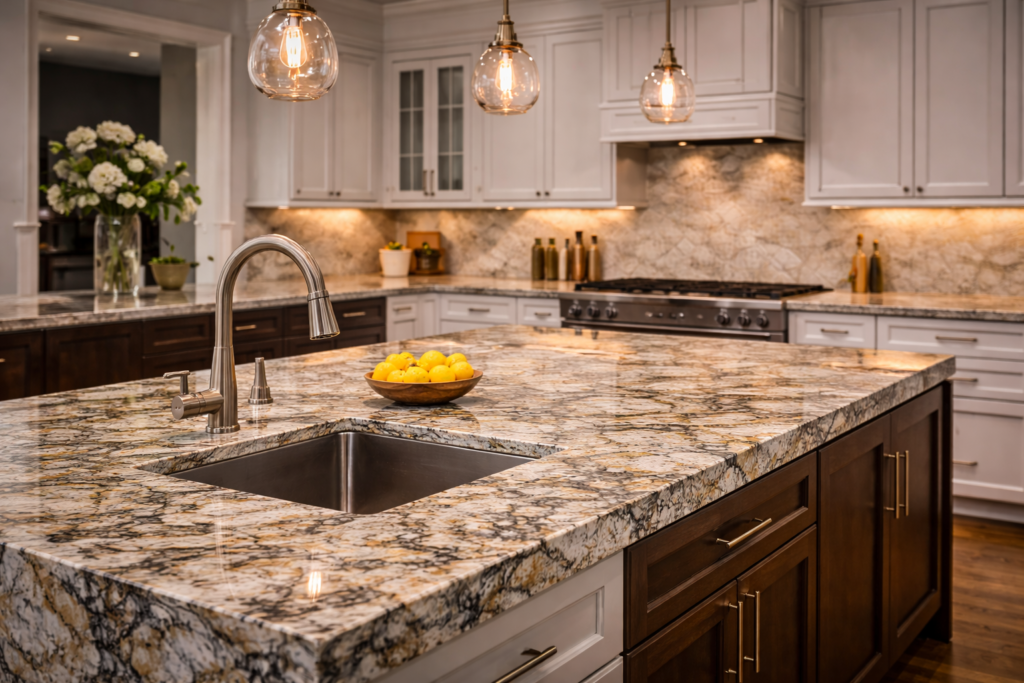
Granite countertops use natural stone slabs to create a durable work surface with visible variation in color, movement, and mineral pattern. In practical remodel work, granite means more than choosing a stone color. It also means planning slab layout, seam placement, sink cutouts, edge profiles, support for overhangs, and how the stone works with the wider countertop remodel plan, and how the natural variation in the stone will look once it is installed across the kitchen.
What Gets Updated During a Granite Countertop Project
The work may include the stone slab selection, templating, seam planning, sink cutouts, faucet holes, edge detail, backsplash transitions, and support details for islands or overhangs. In some kitchens, the project also includes a new sink, updated faucet, or backsplash changes because the new countertop changes the whole work surface system.
What Is the Difference Between Granite and a Standard Countertop Surface
Granite is a natural stone product, which means each slab has its own movement, pattern, and variation. That makes slab selection and seam planning more important than with some more uniform countertop materials. The material also has its own maintenance and sealing considerations that affect long-term performance.
When Do Granite Countertops Make Sense
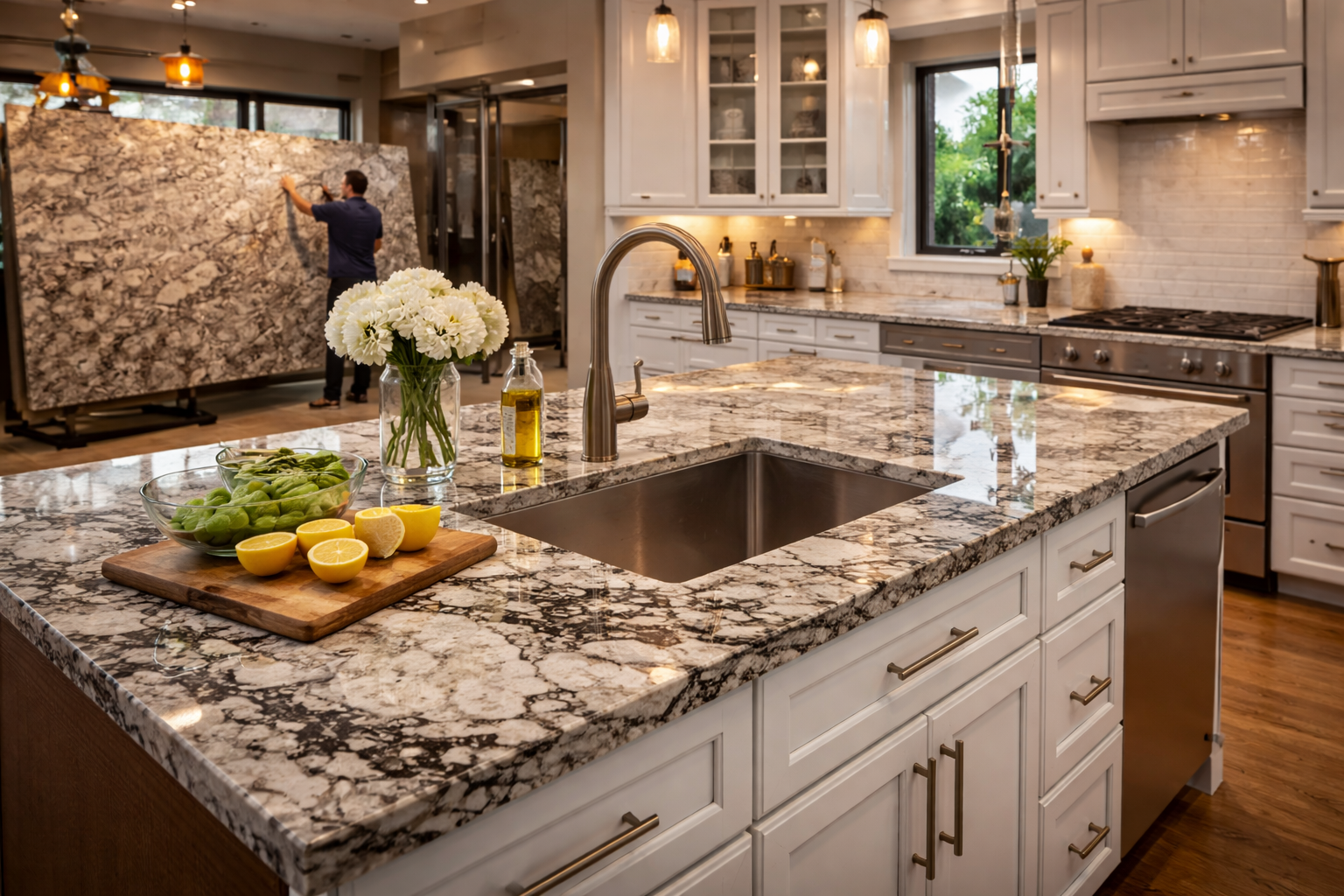
Granite countertops make sense when the homeowner wants a natural stone surface with visible character, strong durability, and a more premium finished look. They are especially common in kitchen remodels where the countertop is expected to be both a work surface and a major design feature. For a closer look at this part of the project, homeowners can explore kitchen remodeling.
What Kitchen Conditions Usually Point to Granite Countertops
Common conditions include a kitchen remodel that is already upgrading cabinets or backsplash finishes, a design plan that benefits from natural stone movement, and a homeowner who wants a durable surface with more visual depth than basic laminate or simpler solid surfaces. Granite also makes sense when the slab variation is seen as a feature instead of a problem.
When Are Granite Countertops Not the Best Choice
Granite may not be the best choice when the homeowner wants a more uniform look, lower-maintenance expectations than natural stone can provide, or a tighter budget that favors other materials. In some kitchens, quartz or another surface may fit the design and maintenance goals better.
What Types of Granite Countertops Are Common
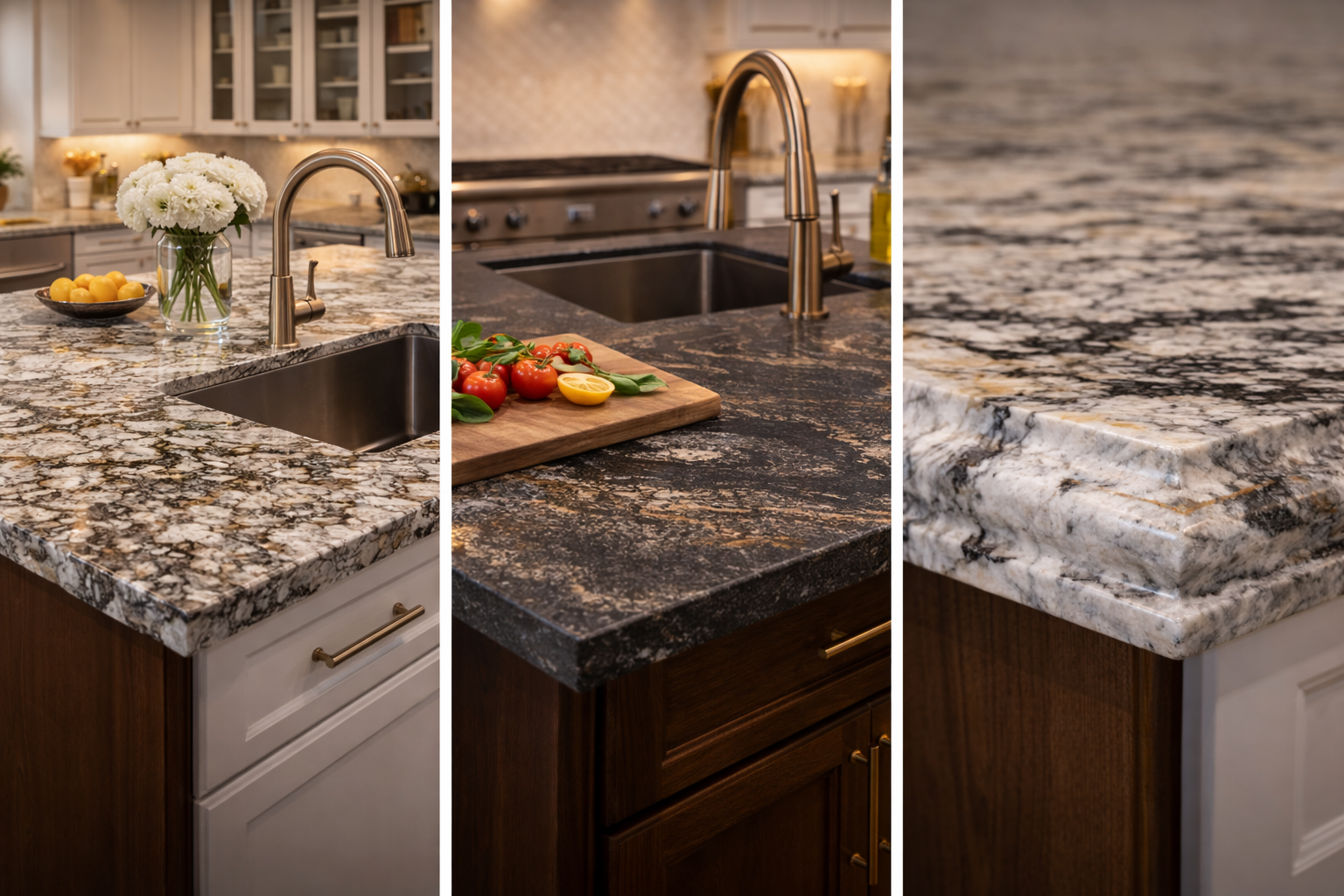
Common granite countertop types include polished granite, honed granite, lighter granite patterns, darker granite patterns, thicker-edge builds, and granite islands with larger slab layouts. The right type depends on the kitchens style, the slab pattern, maintenance expectations, and how much natural movement the homeowner wants to see in the finished surface.
What Granite Countertop Styles Are Most Common in Remodeling Projects
Polished granite remains common because it gives the kitchen a more reflective, finished look and highlights the natural pattern of the stone. Honed granite is used when the homeowner wants a softer, lower-sheen surface. Larger islands often use granite because the stone helps make the island feel like a focal feature.
When Does One Granite Finish Make More Sense Than Another
A polished finish may make more sense when the design wants stronger depth and reflectivity. A honed finish may make more sense when the goal is a quieter, more matte look. The best finish depends on both style and how the homeowner expects the countertop to age and be maintained.
How Do Layout and Kitchen Size Affect Granite Countertops
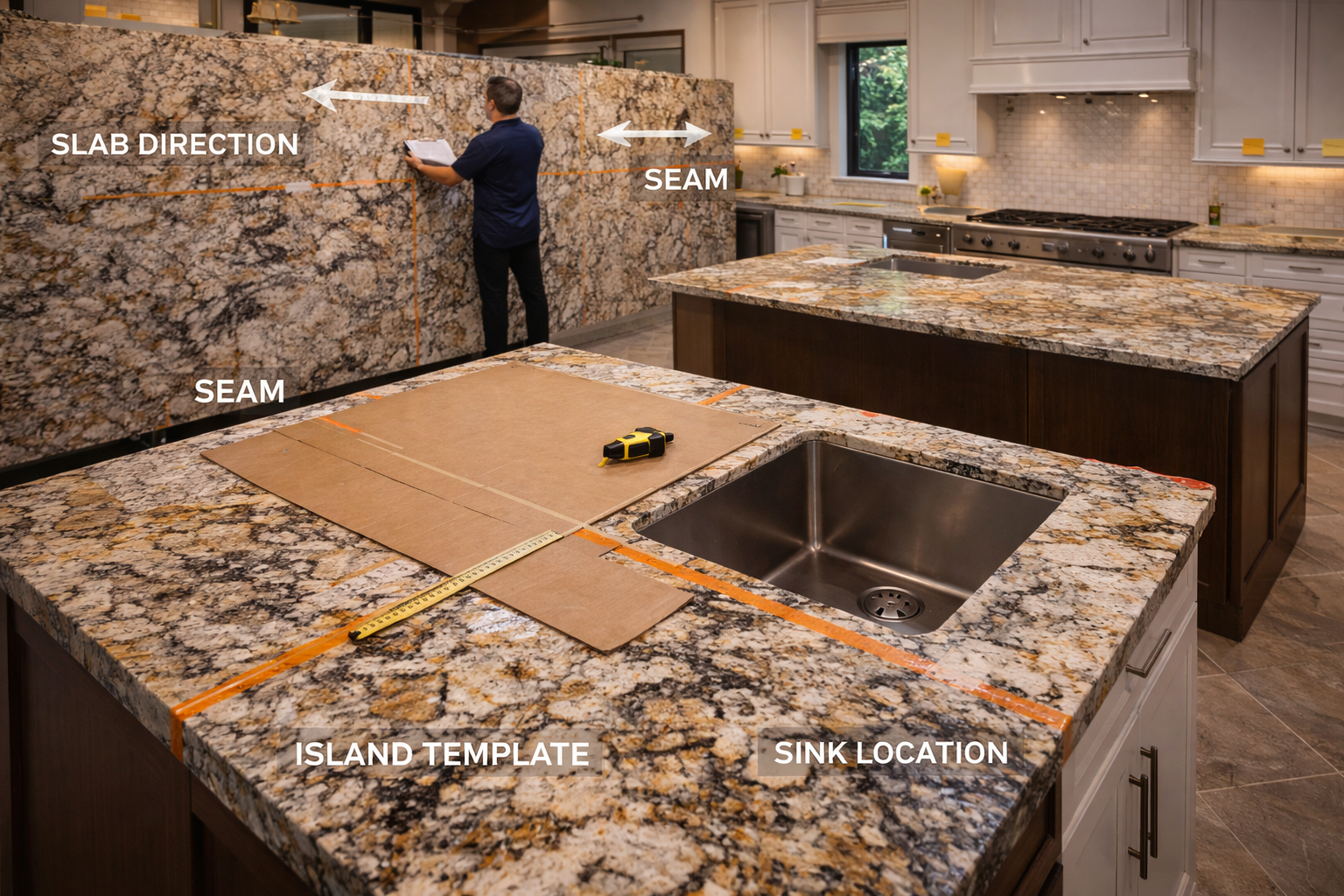
Layout and kitchen size affect how the granite should be templated, where seams need to land, and how the natural movement in the slab will read across the kitchen. In practical remodel work, granite layout is not just about square footage. It is also about which parts of the slab are used on the island, around the sink, and along the main prep zones.
Why Do Slab Layout and Seam Placement Matter So Much
Because granite is a natural stone, the way the slab is cut and installed has a big effect on how the final kitchen looks. Poor seam placement or poor use of the slab pattern can make even expensive stone feel less refined. Good layout planning helps the natural movement look intentional across the whole kitchen. For layout and clearance planning, many designers reference NKBA planning guidelines.
How Does Kitchen Size Change the Best Granite Countertop Strategy
In a smaller kitchen, the best strategy may focus on minimizing seams and keeping the slab pattern from overwhelming the room. In a larger kitchen, the remodel may support a more dramatic island slab, waterfall edge, or broader stone movement across multiple runs. The best strategy depends on how the room and the slab work together.
What Materials and Components Are Used With Granite Countertops
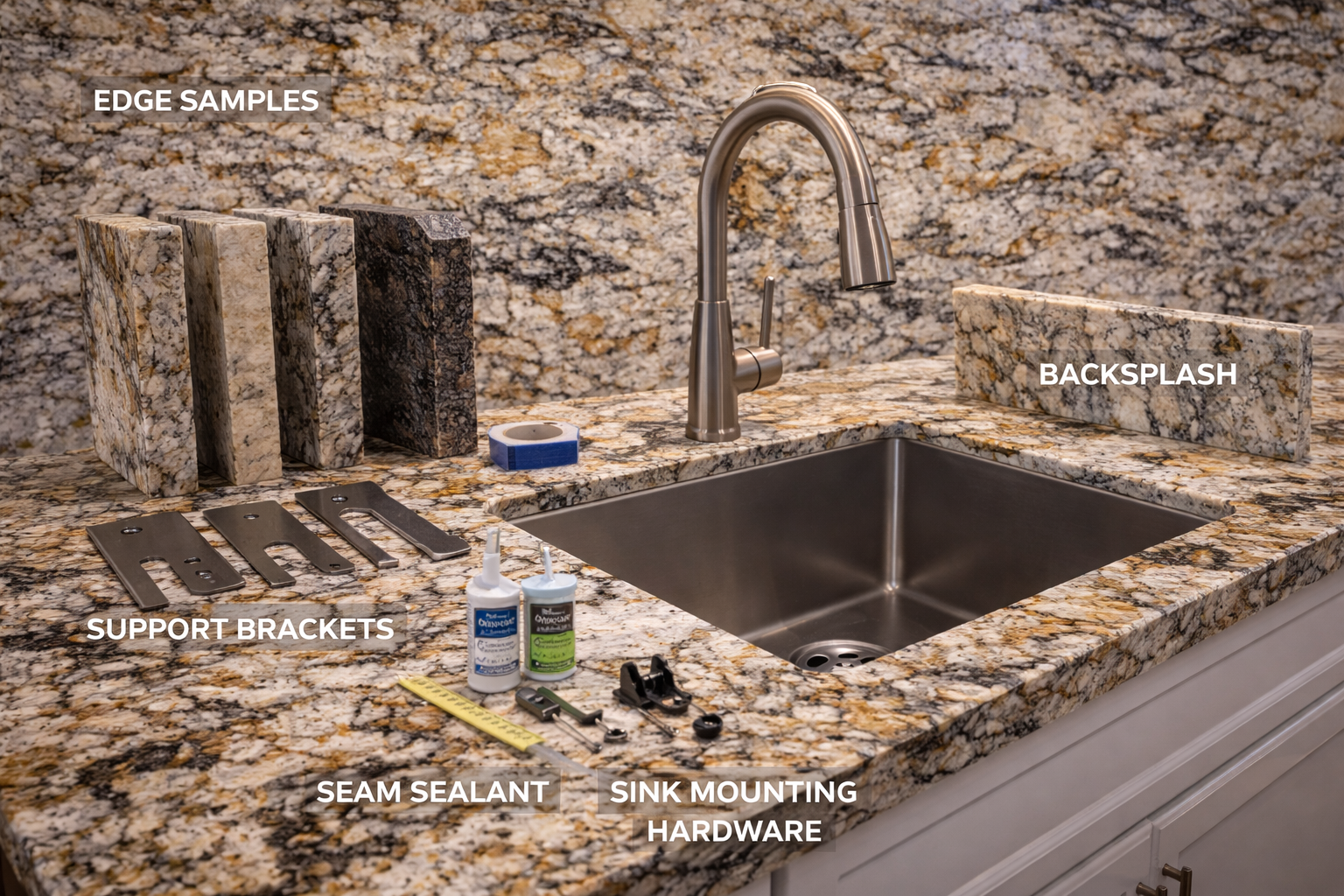
A granite countertop project uses more than the slab alone. The remodel may involve sink cutouts, faucet hole drilling, seam materials, edge fabrication, support brackets, backsplash details, and the cabinet preparation needed to carry the weight of the stone correctly.
What Stone and Finish Components Are Common in Granite Projects
The main material is the granite slab itself, but the finish, edge profile, polish level, and any matching backsplash pieces are also part of the final result. Because granite is heavy and naturally varied, the fabrication details matter almost as much as the slab choice.
What Sink, Edge, and Support Components Usually Change
Granite projects often include undermount sinks, cleaner edge profiles, stronger support for overhangs, and more refined backsplash transitions. These details affect both how the countertop looks and how well it performs around heavy-use areas such as sinks and islands.
What Upgrades Can Be Added With Granite Countertops
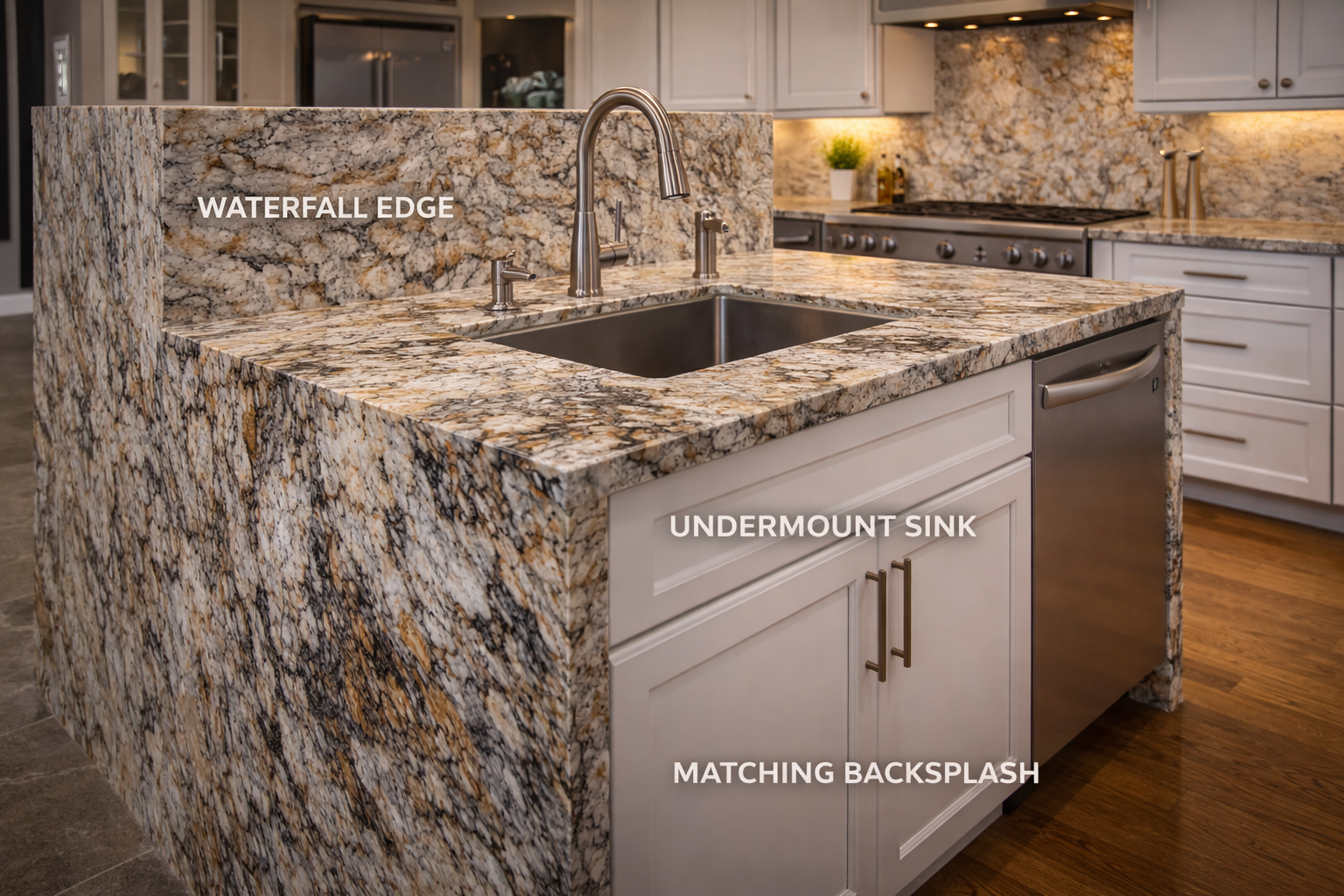
Granite countertop work is often the best time to add upgrades that improve the function and finish level of the kitchen at the same time. Common upgrades include waterfall island edges, updated undermount sinks, matching backsplash sections, better edge profiles, cleaner overhang design, and improved faucet placement. This decision often connects directly to countertop remodel, especially when the goal is a more complete remodel.
What Functional Upgrades Are Most Useful With Granite Countertops
Functional upgrades often include a better sink setup, stronger prep space planning, improved island overhang support, and cleaner transitions around appliances and walls. These upgrades matter because the countertop is one of the kitchens main work surfaces.
What Design Upgrades Usually Happen at the Same Time
Granite projects often include upgraded backsplashes, larger islands, more refined edge details, and stronger coordination with the cabinet color, hardware finish, and nearby flooring. Once the natural stone goes in, the surrounding materials usually need to feel equally intentional.
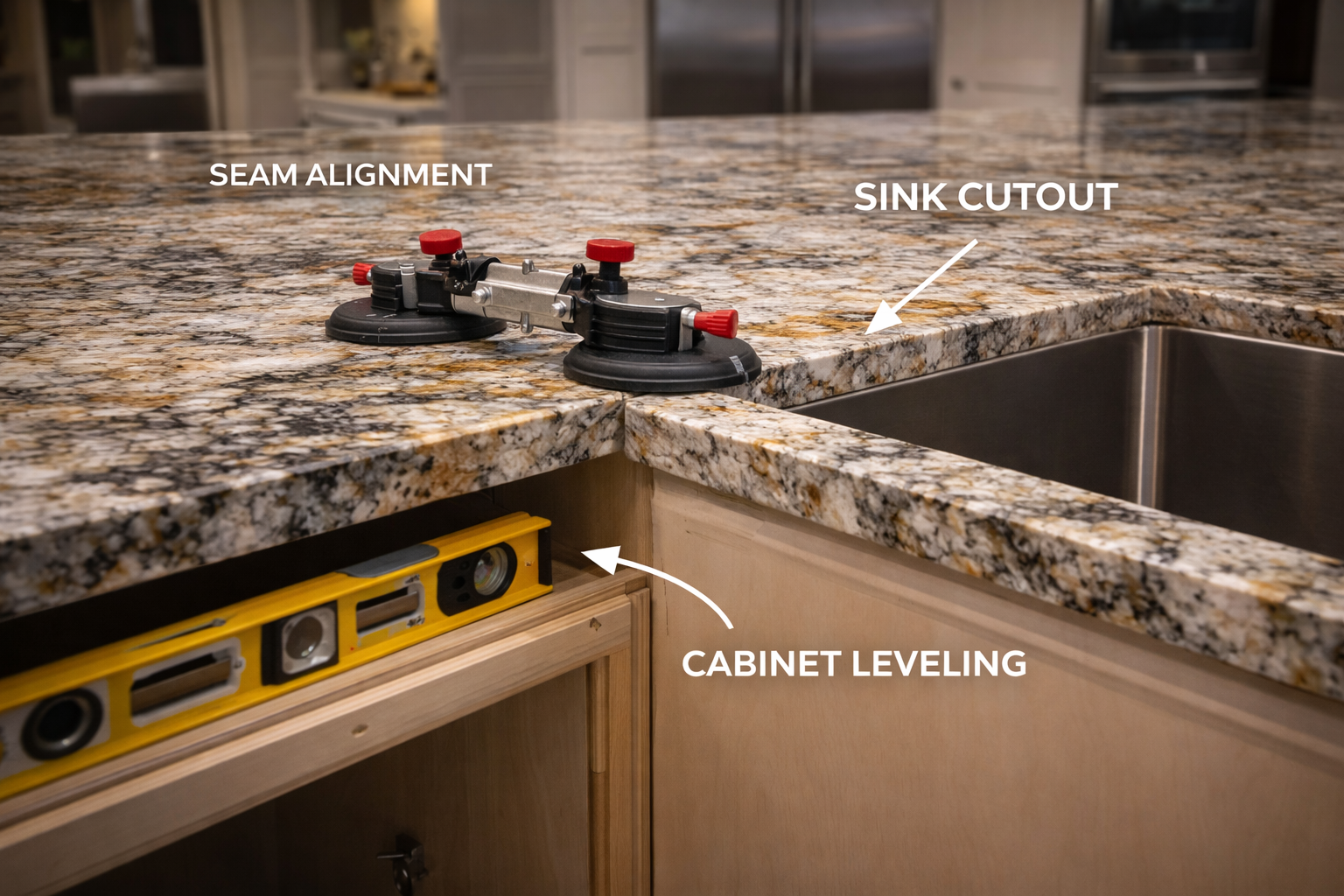
What Installation Details Matter With Granite Countertops
Granite countertop installation depends on cabinet level, slab handling, seam alignment, sink cutouts, edge condition, and how the stone fits the actual wall shape. Granite is durable, but the installation still has to be precise because the material is heavy, rigid, and visually unforgiving when seams or gaps are poorly planned.
Why Do Cabinet Prep and Seam Alignment Matter So Much
Granite sits on the cabinet system below it, so if the cabinets are not level or properly supported, the installation can suffer. Seam alignment matters because the slab pattern and the cut quality have a big effect on whether the finished countertop feels premium.
What Fit and Finish Problems Show Up During Installation
Common issues include awkward seam placement, wall gaps, sink cutouts that are not centered well, unsupported overhangs, and backsplash transitions that look patched together. These practical details shape whether the granite installation feels clean and finished. For technical installation guidance, many pros refer to TCNA tile standards.
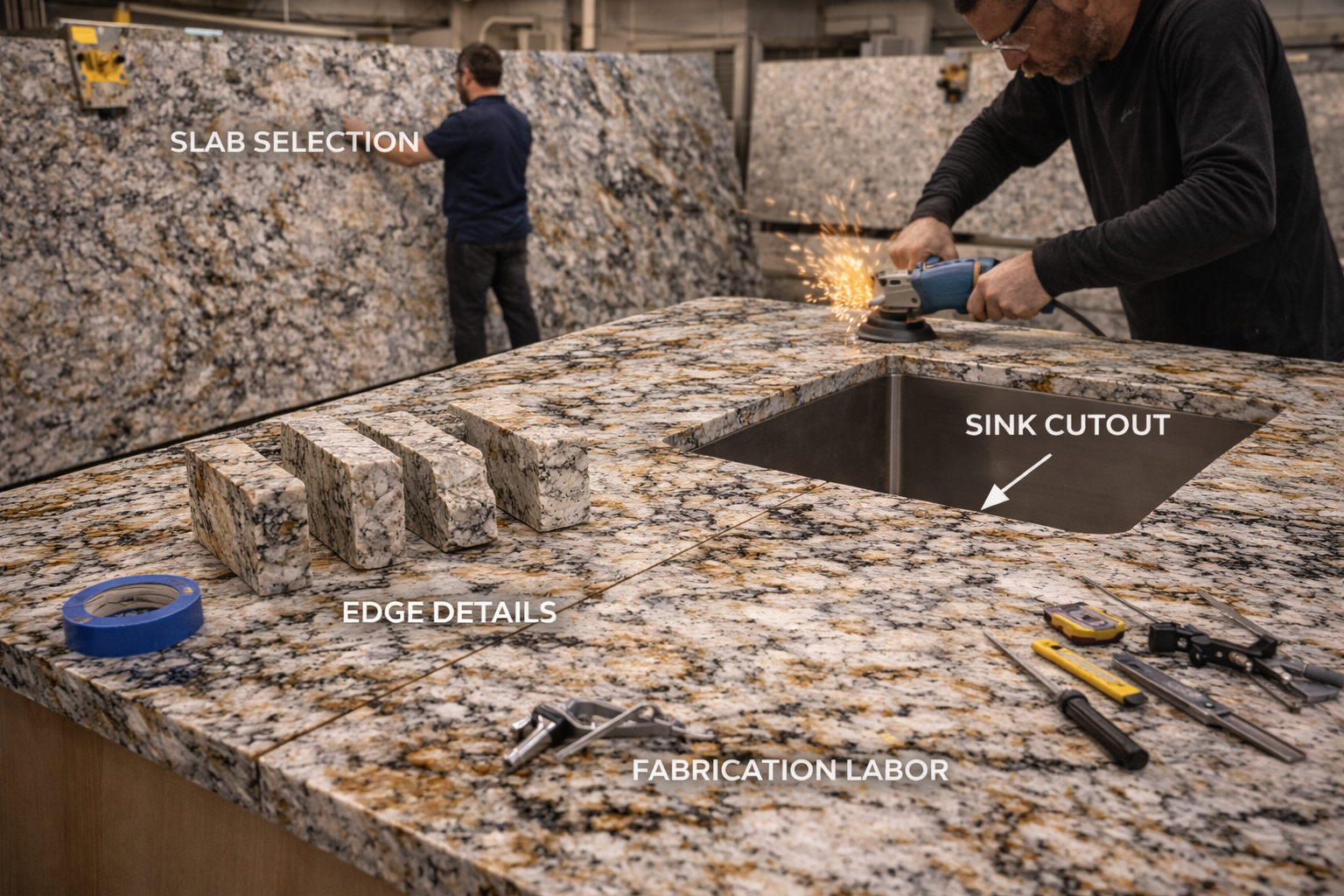
What Affects Granite Countertop Cost
Granite countertop cost usually depends on the slab selected, the amount of material required, edge detail, sink cutouts, seam complexity, and how much fabrication and handling the job requires. The total cost is shaped not only by the stone itself but by how the slab has to be cut, moved, finished, and installed.
Which Granite Countertop Choices Usually Raise the Cost
Costs usually rise with premium slabs, larger islands, more complex seam planning, specialty edge profiles, waterfall details, and more detailed cutouts around sinks or appliances. The more the granite becomes a design centerpiece, the more the project usually costs.
How Do Labor and Existing Conditions Change the Budget
Labor costs go up when cabinets need correction, walls are out of square, the slab handling is more difficult, or the kitchen layout requires more custom fabrication than a standard straight run. Existing conditions matter because granite has to fit the real kitchen precisely.
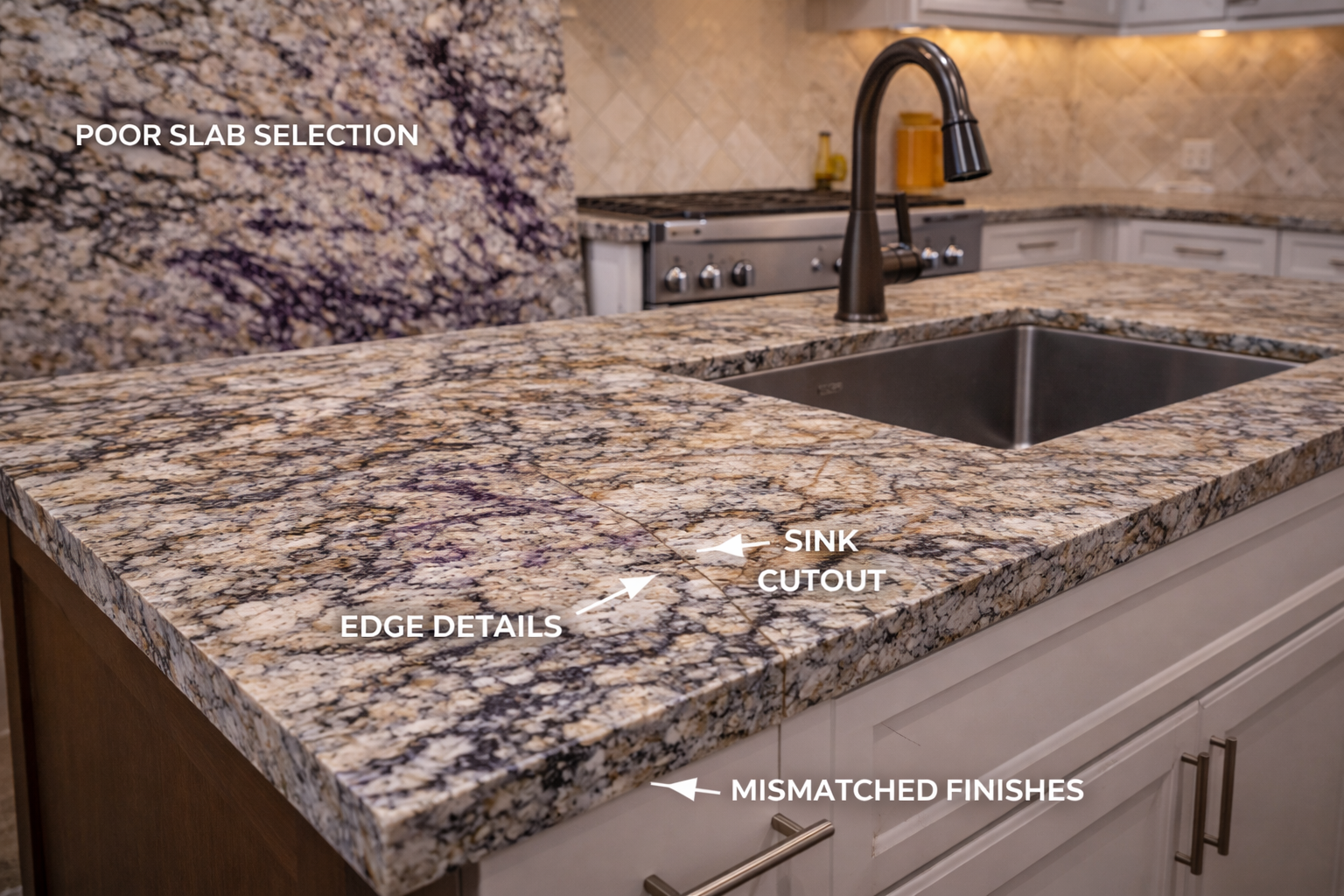
What Mistakes Should Homeowners Avoid With Granite Countertops
The biggest granite countertop mistakes usually happen when the material is chosen by sample alone instead of by the actual slab and the way it will be laid out in the kitchen. Granite is a natural product, so seam planning, pattern movement, and finish coordination matter much more than they do with more uniform surfaces.
Why Is It a Problem to Choose Granite Without Looking at the Actual Slab
A small sample rarely shows how the full stone movement will look across an island or a long kitchen run. Real slab selection matters because the finished kitchen will be built from the actual material, not the sample card.
Why Is It Risky to Ignore the Rest of the Kitchen Finish Plan
Granite can dominate the look of the kitchen if the cabinet finish, backsplash, hardware, and lighting are not coordinated with it. A strong countertop works best when the rest of the remodel supports it instead of competing with it.
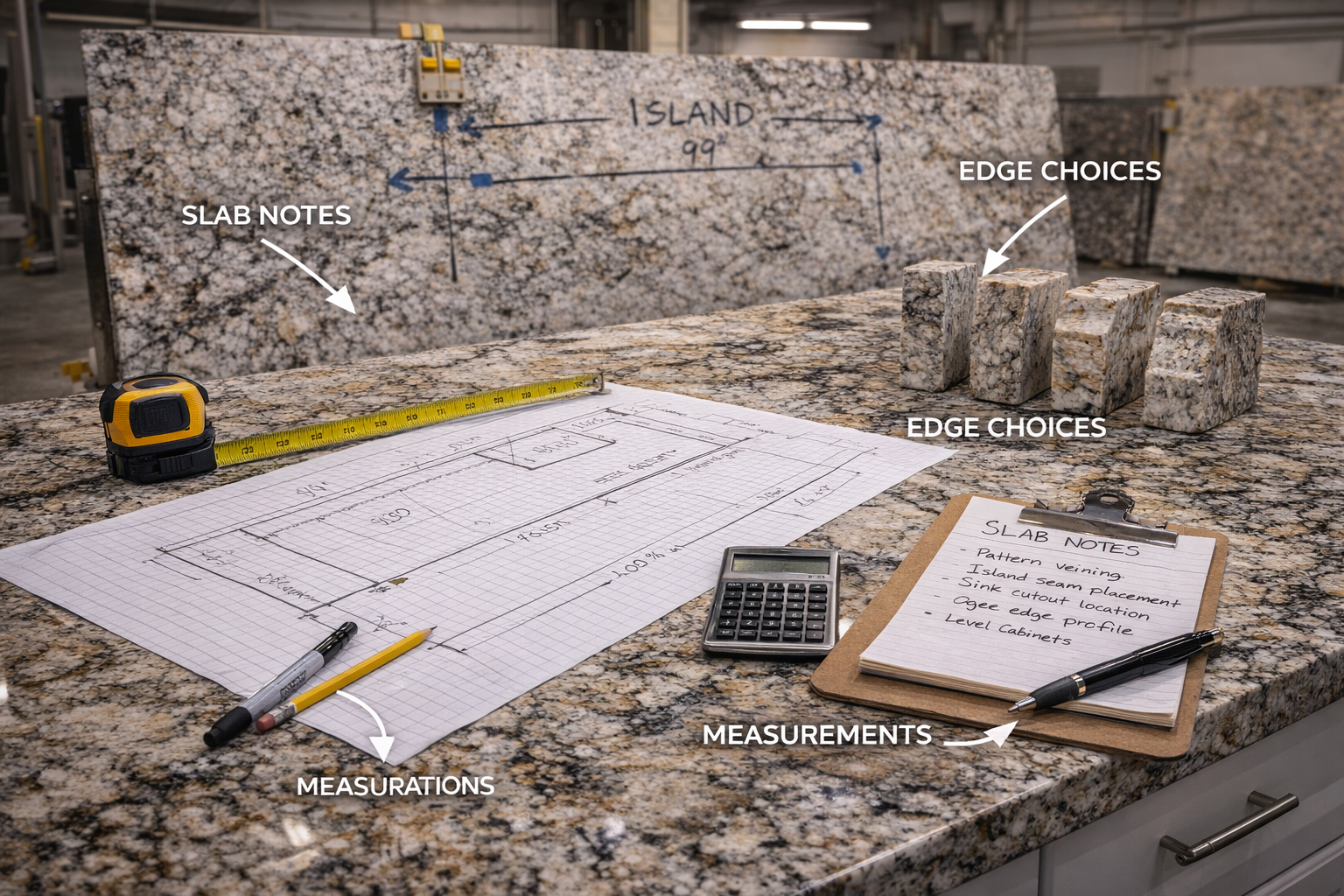
How Should You Plan Granite Countertops
Granite countertops should be planned by deciding how the kitchen work surfaces need to function, then selecting the slab, edge detail, sink layout, and seam strategy that best fit the space. The best plan balances natural stone character, practical prep space, sink function, installation reality, and the rest of the kitchen finish palette.
What Should Be Decided Before Granite Work Starts
Before construction starts, it helps to confirm slab choice, finish level, edge profile, sink plan, backsplash approach, seam priorities, and whether the island or main runs need special visual attention. These decisions affect fabrication, installation, and how well the natural stone works with the whole kitchen.
How Can a Homeowner Prepare for the Installation Process
Homeowners should be ready for slab viewing, templating, cabinet prep, sink and faucet coordination, and final installation sequencing with backsplash and plumbing hookup. Granite projects usually go best when the slab and layout are chosen with the actual kitchen in mind instead of in isolation.
Related Granite Countertop Topics
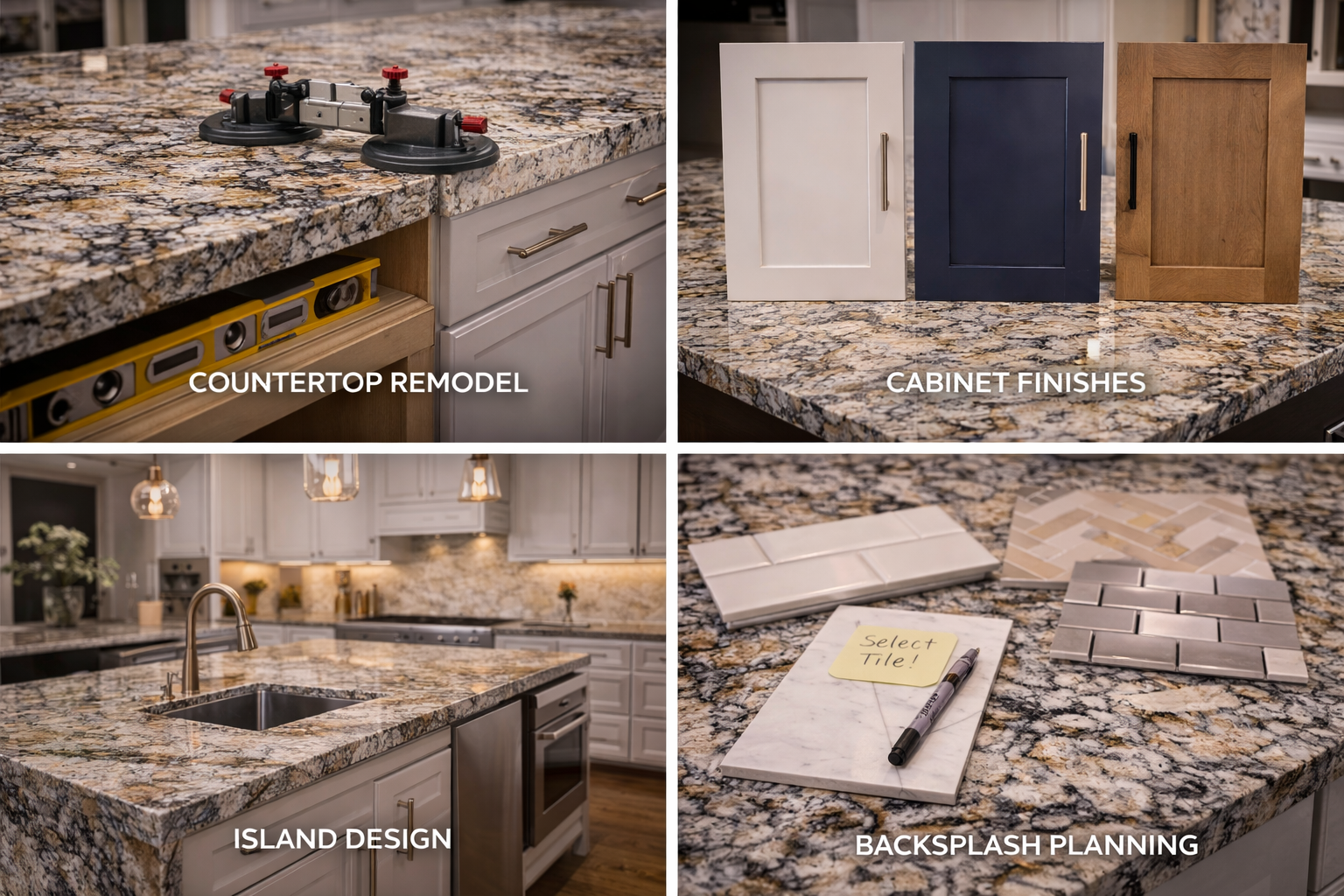
Granite countertop projects overlap with countertop remodeling, cabinet color planning, backsplash design, sink upgrades, and island remodeling because the stone affects how the whole kitchen looks and functions. Related topics help homeowners compare whether granite is the right countertop material for the project. For layout and clearance planning, many designers reference NKBA planning guidelines.
Which Granite Countertop-Related Pages Should Connect to This Topic
Strong related pages include countertop remodels, quartz countertops, backsplash remodeling, sink upgrades, and kitchen island design. Those topics help break down the material, finish, and layout decisions that shape a strong granite project.
Which Kitchen Remodeling Topics Often Connect to Granite Countertop Work
Granite work often connects to cabinets, backsplashes, lighting, flooring, and full kitchen remodeling. In practical remodels, those pieces overlap because the countertop becomes one of the kitchens main visual anchors.
Frequently Asked Questions About Granite Countertops
Granite countertops are kitchen or bathroom work surfaces made from natural stone slabs cut and finished for countertop use.
Yes. Granite is known for strong durability, but like any natural stone it still needs proper installation and appropriate maintenance.
Many granite countertops benefit from sealing, although the exact maintenance depends on the stone and finish selected.
That depends on the project goals. Granite offers natural stone variation, while quartz offers more uniformity and a different maintenance profile.
They can crack if poorly supported, handled badly, or hit hard enough in a weak area such as near a cutout or seam.
They can stain if spills are left too long or if the stone is not maintained properly, although stain resistance varies by slab and finish.
The timeline depends on slab selection, templating, fabrication, installation, and any related sink or backsplash work tied to the countertop project.
They can improve kitchen appeal when the stone fits the quality and style of the rest of the remodel and is installed well.
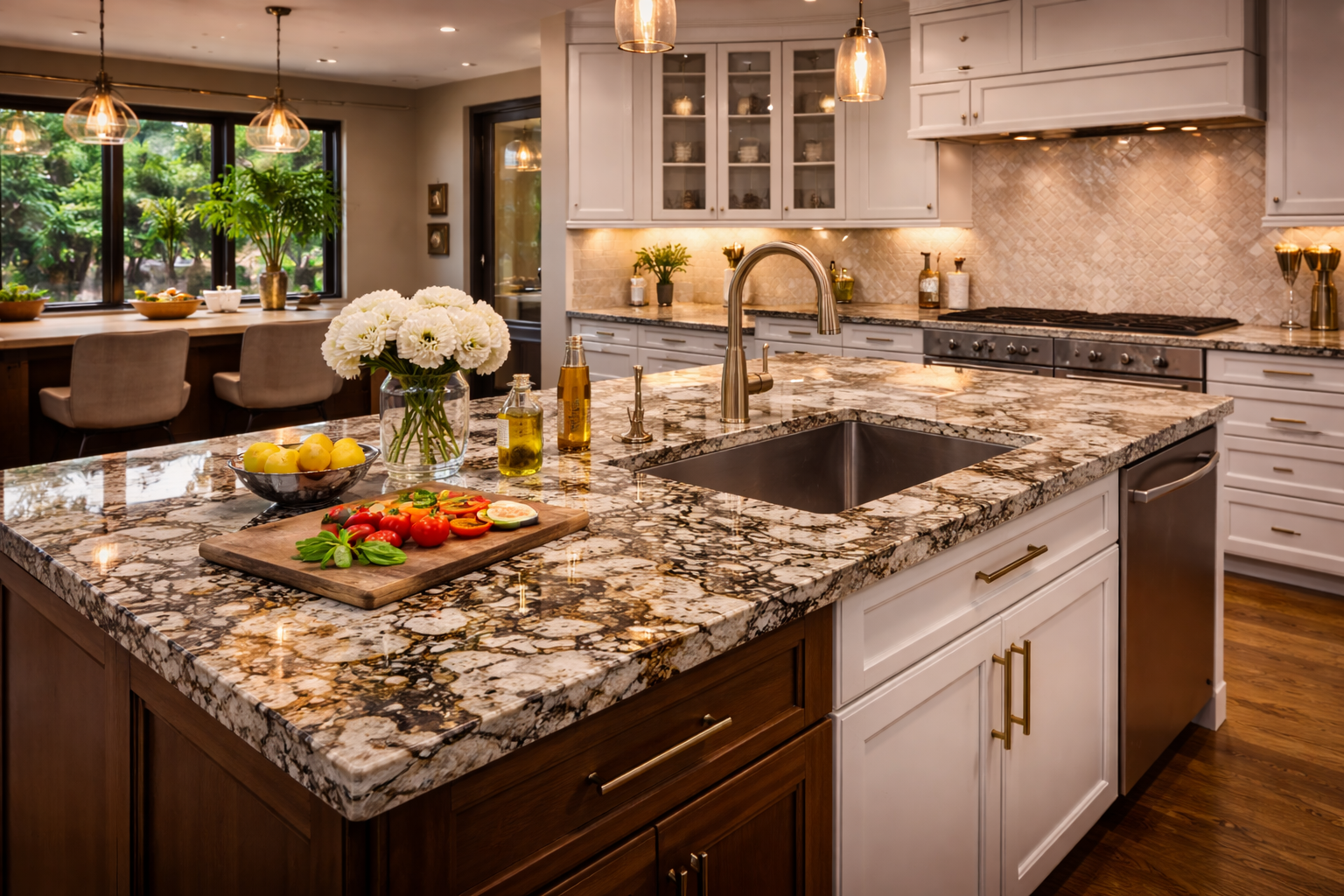
Yes. Granite is commonly used on islands, especially when the island is meant to be a focal point in the kitchen.
The first step is deciding how the countertop needs to function, then selecting the actual slab and layout that best fit the kitchen and the remodel goals.