
Quartz Countertops Guide: Durability, Design, Installation, and Cost

Quartz Countertops Guide Index
- Quartz Countertops Overview
- What Are Quartz Countertops
- Where Do Quartz Countertops Work Best
- What Colors and Patterns Are Common
- How Do Quartz Countertops Perform in Daily Use
- What Installation Details Matter Most
- What Are the Pros and Cons of Quartz Countertops
- What Affects Quartz Countertop Cost
- What Mistakes Should Homeowners Avoid
- How Should You Plan a Quartz Countertop Remodel
- Frequently Asked Questions About Quartz Countertops

Quartz Countertops Overview
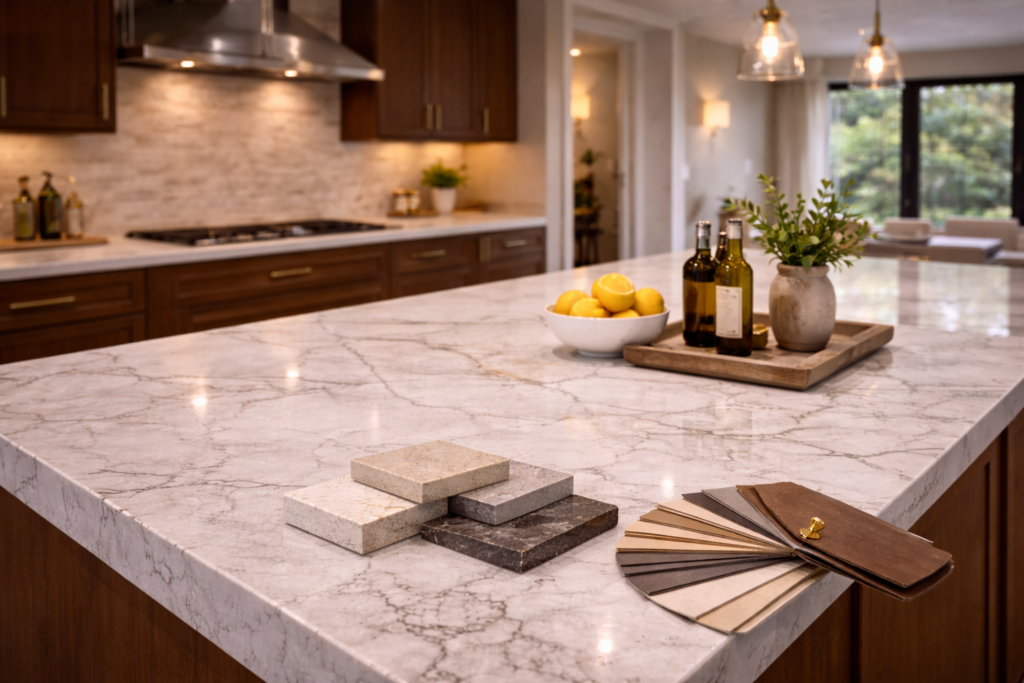
Quartz countertops are one of the most common choices in kitchen remodeling because they balance appearance, durability, and easy maintenance. Homeowners often choose quartz when they want a surface that looks clean and polished but does not require sealing or the same level of care as more sensitive natural stones.
Why do homeowners choose quartz countertops?
They choose quartz because it is practical. It offers a wide range of colors and patterns, resists staining well, and holds up nicely in busy kitchens. It can also mimic natural stone looks while giving a more controlled and consistent finish from slab to slab.
What is the tradeoff compared with natural stone?
The main tradeoff is that quartz has a more manufactured consistency, which some homeowners like and others find less character-rich than real stone. It also handles heat differently, so it is still not a surface that should be treated as indestructible.
What Are Quartz Countertops
Quartz countertops are engineered surfaces made from crushed quartz combined with resins and pigments. That manufacturing process gives the material a controlled look and a non-porous surface. In kitchen remodeling, quartz is often selected for its reliable performance and broad style range.
How are quartz countertops different from granite or marble?
Granite and marble are natural stones with more organic variation from slab to slab. Quartz is engineered, so the appearance is generally more consistent. Quartz usually needs less maintenance than marble and does not require sealing the way some natural stones do.
Does quartz always look artificial?
No. Some quartz patterns are very clean and uniform, while others are designed to resemble marble, concrete, or natural stone. The final look depends heavily on the product line and slab pattern selected for the remodel. For layout and clearance planning, many designers reference NKBA planning guidelines.
Where Do Quartz Countertops Work Best
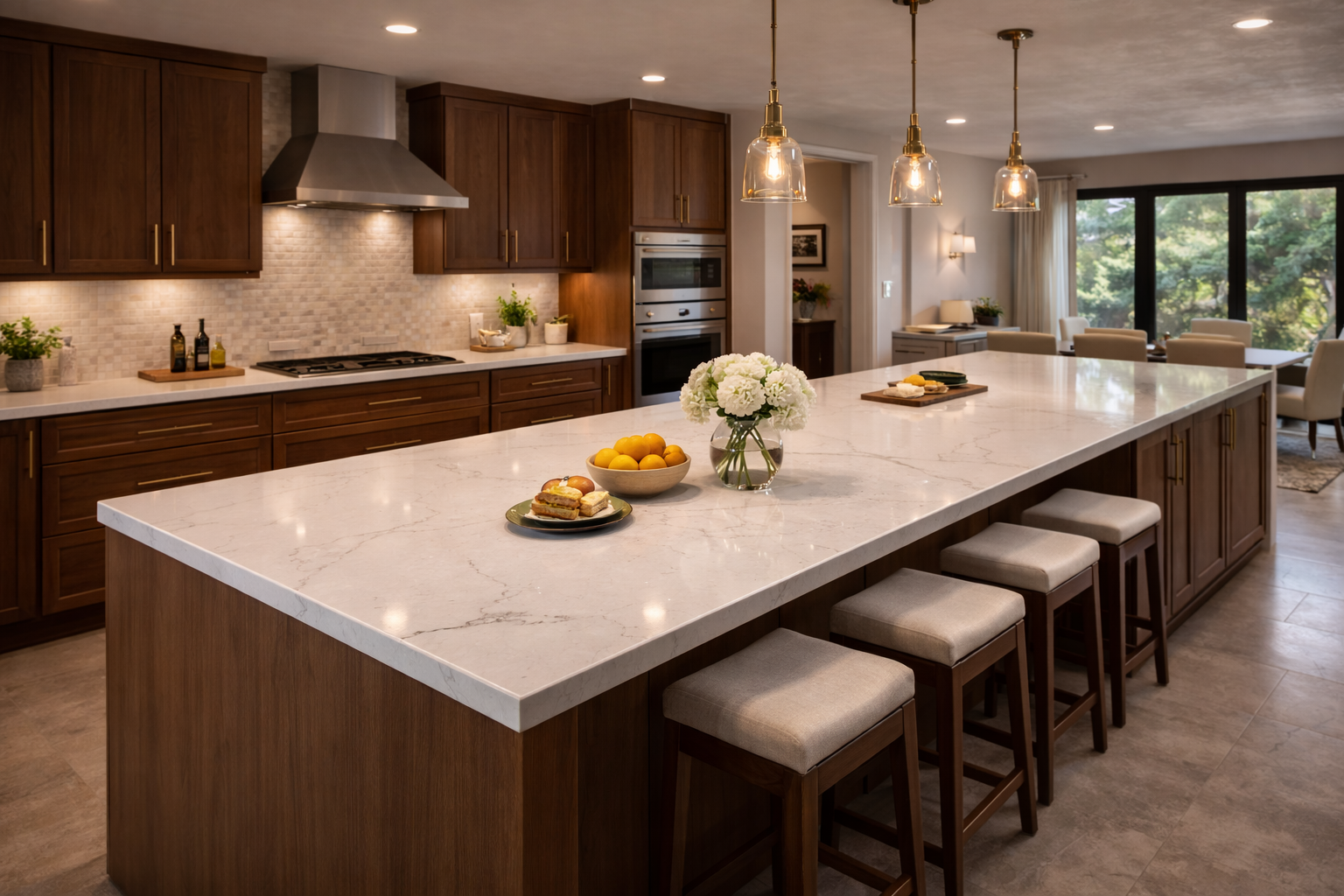
Quartz works well in full kitchens, islands, perimeter counters, family homes, and high-use cooking spaces. It is especially useful where homeowners want simple cleanup and dependable stain resistance. Quartz also fits well in kitchens that need a clean, consistent look across large surface areas. Projects with related upgrades often include choices around kitchen remodeling.
Is quartz a good choice for busy family kitchens?
Very often, yes. It handles spills well, cleans easily, and does not demand the same maintenance routine as some other countertop materials. That makes it a common pick for households that cook often and want a durable work surface without extra upkeep.
Does quartz work in modern and traditional kitchens?
Yes. It comes in enough colors and patterns to fit both. A clean solid color or concrete-look quartz can work in a modern kitchen, while a warmer veined quartz can support a more traditional or transitional design direction.

What Colors and Patterns Are Common
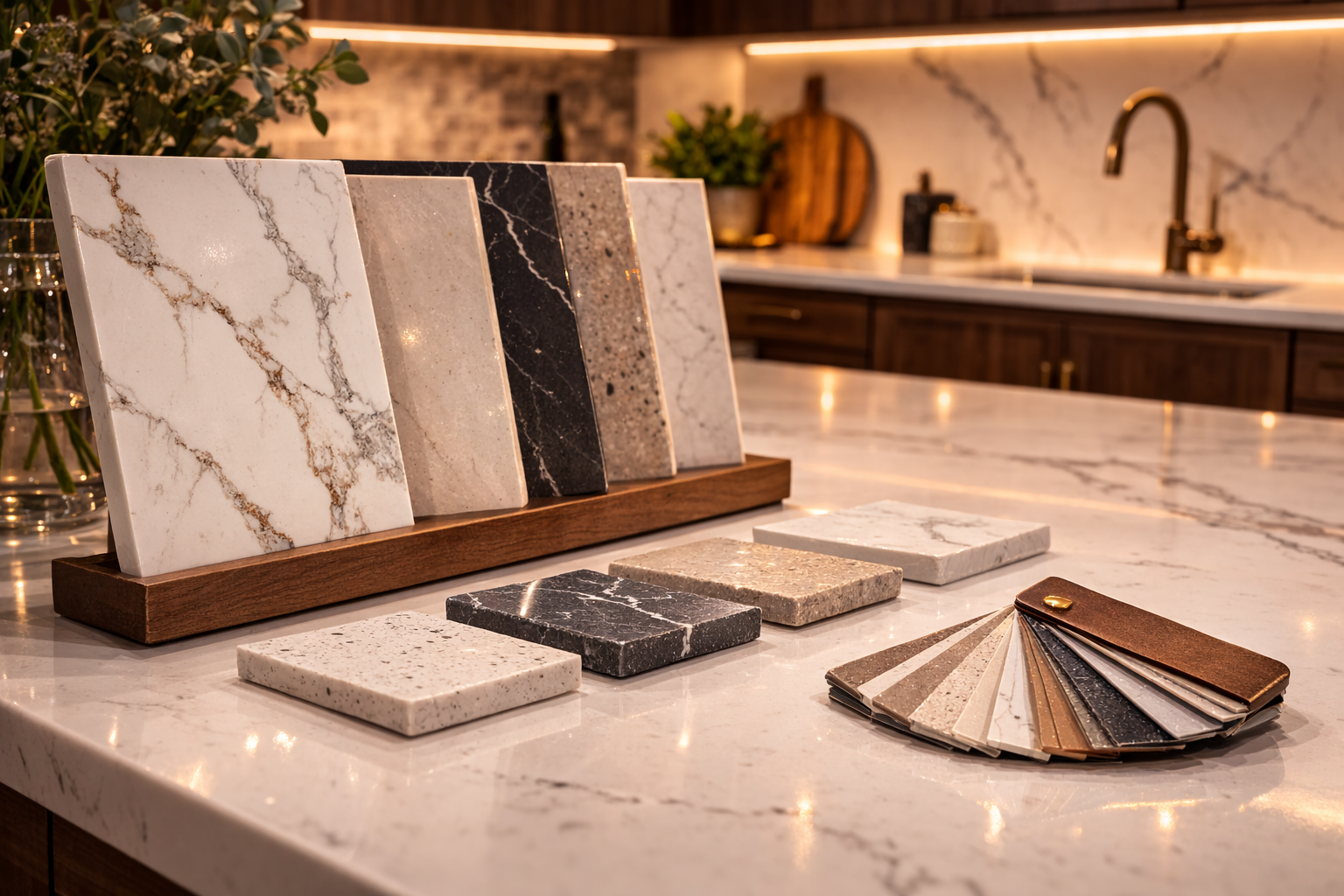
Quartz comes in a wide range of looks, including bright white surfaces, soft gray veining, warm neutrals, concrete-inspired finishes, bold dark tones, and patterns that imitate marble or natural stone. Because it is engineered, quartz can offer a more repeatable look than natural stone, which is useful when the remodel needs visual consistency across large countertops or waterfall island panels.
Can quartz convincingly mimic marble?
In many cases, yes. Some quartz products do a strong job of recreating a marble-inspired look while reducing the maintenance issues that real marble brings. The pattern is usually more controlled, so homeowners should view full slabs or large samples before deciding.
How should homeowners choose the right pattern?
They should consider cabinet color, backsplash style, flooring, lighting, and how busy the rest of the kitchen already feels. A bold veined quartz can become the main statement surface, while a quieter pattern can support more detailed cabinetry or tile. Efficiency planning may also benefit from ENERGY STAR guidance.
How Do Quartz Countertops Perform in Daily Use
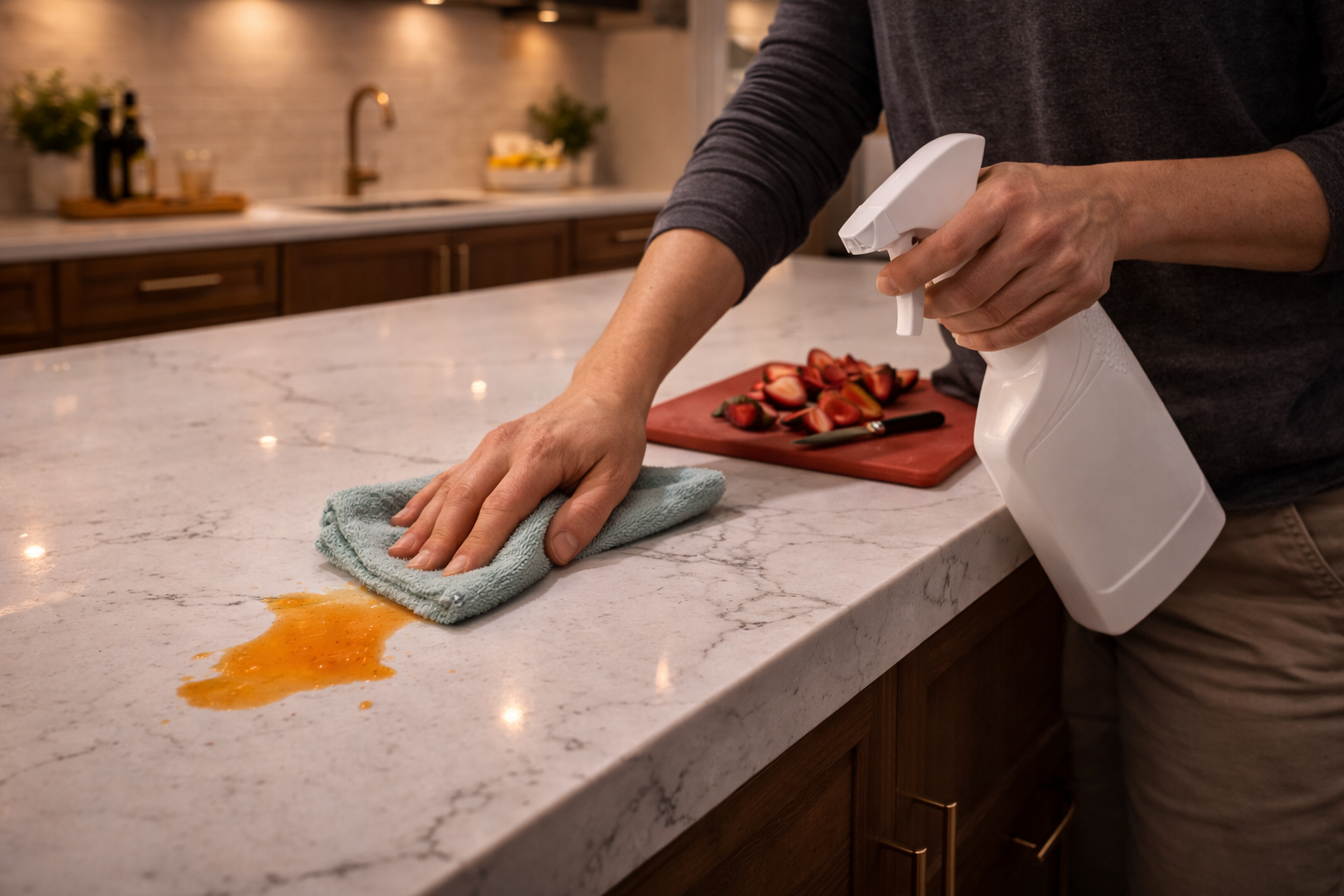
Quartz performs very well in normal kitchen use. It is non-porous, so it resists staining better than many natural stones and does not need sealing. That makes cleanup straightforward for most daily spills, prep work, and general kitchen traffic. Homeowners who want to dig deeper into this feature can review countertop remodel.
What should homeowners still be careful about?
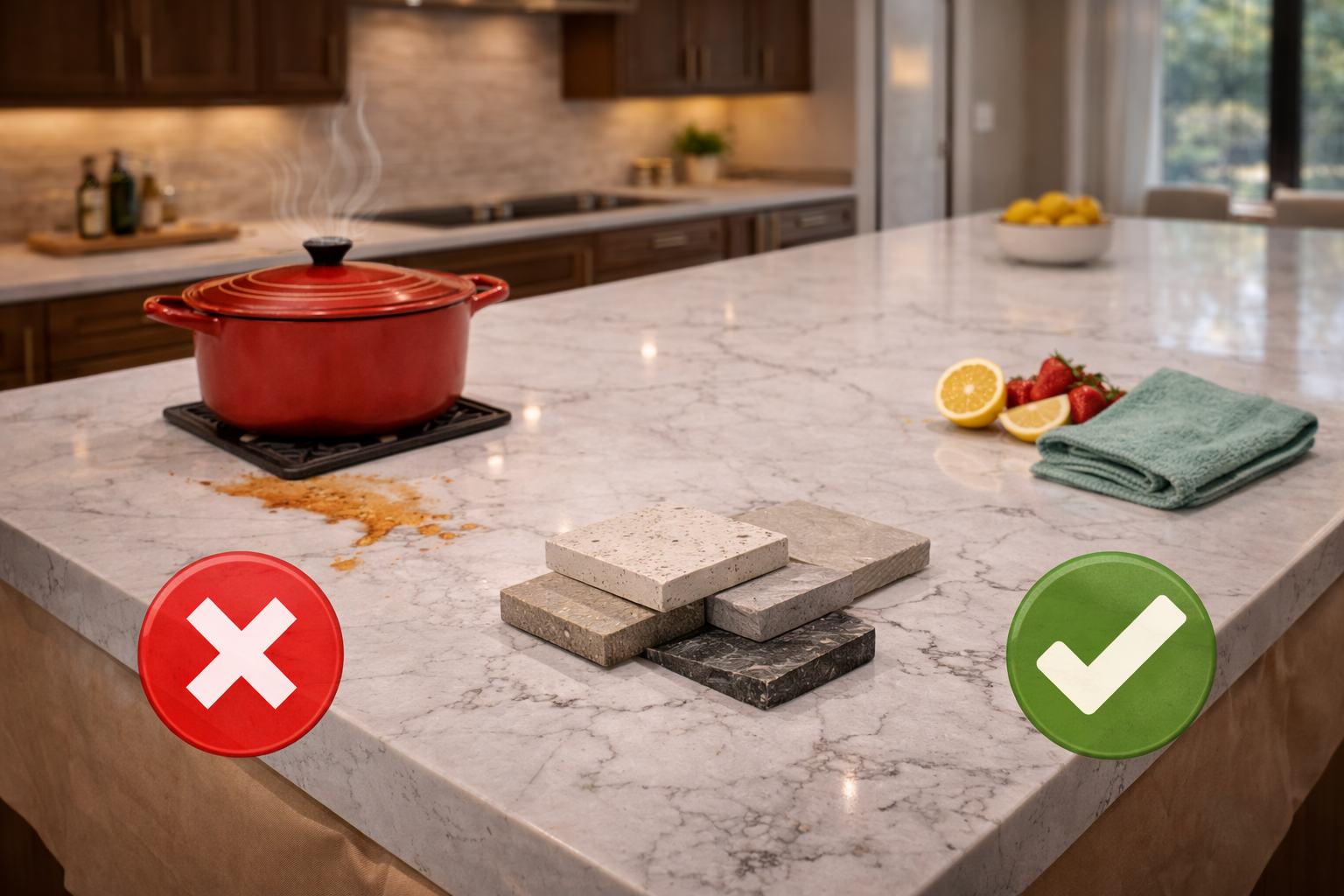
Heat is the big one. Quartz is durable, but direct contact with very hot cookware can damage the resins in the material. It is also still smart to use cutting boards and avoid unnecessary impact at sink cutouts, corners, and overhangs.
Why is quartz considered low maintenance instead of no maintenance?
Because low maintenance does not mean damage-proof. The surface is easier to care for than many alternatives, but it still benefits from good habits and thoughtful daily use. Treating it well helps it stay looking better longer.
What Installation Details Matter Most
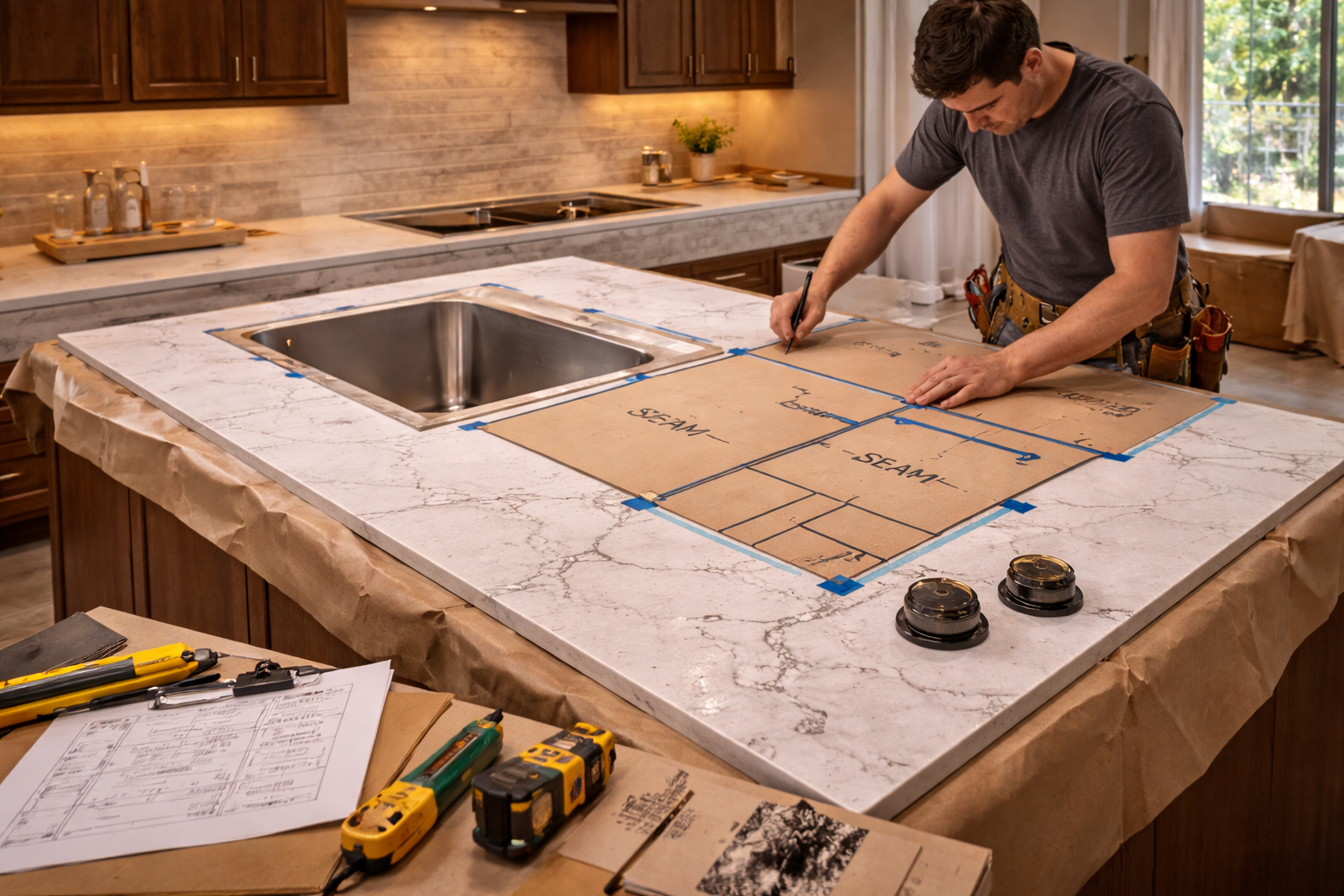
Installation details matter because quartz slabs are heavy, fabricated to exact dimensions, and often used on large islands or long kitchen runs. Seam placement, sink cutouts, overhang support, backsplash integration, and appliance clearances all need to be checked before fabrication begins.
What should be decided before templating?
Cabinet layout, sink selection, faucet locations, edge profile, overhangs, backsplash plan, and any waterfall details should all be settled first. Those decisions affect where seams land and how the finished countertop fits the kitchen.
Why does full slab viewing matter for some quartz patterns?
Because dramatic veining and larger patterns can read differently on a full slab than on a small sample. If the remodel includes an island or waterfall edge, the slab layout should be reviewed so the pattern works with the final design instead of against it. For layout and clearance planning, many designers reference NKBA planning guidelines.
What Are the Pros and Cons of Quartz Countertops
The biggest advantages are stain resistance, easy maintenance, broad design options, and a consistent appearance. The main drawbacks are lower heat tolerance than some natural stone, a more manufactured look in some patterns, and cost that can climb quickly in premium product lines.
Who tends to like quartz most?
Homeowners who want a kitchen that is easy to clean and easy to live with usually like quartz most. It is especially appealing when the remodel needs a dependable work surface that still looks polished and current.
Who might prefer another surface?
Someone who wants a completely natural material with more one-of-a-kind variation may prefer granite, quartzite, or marble. The right choice depends on whether practicality or natural stone character matters more in the finished kitchen.
What Affects Quartz Countertop Cost
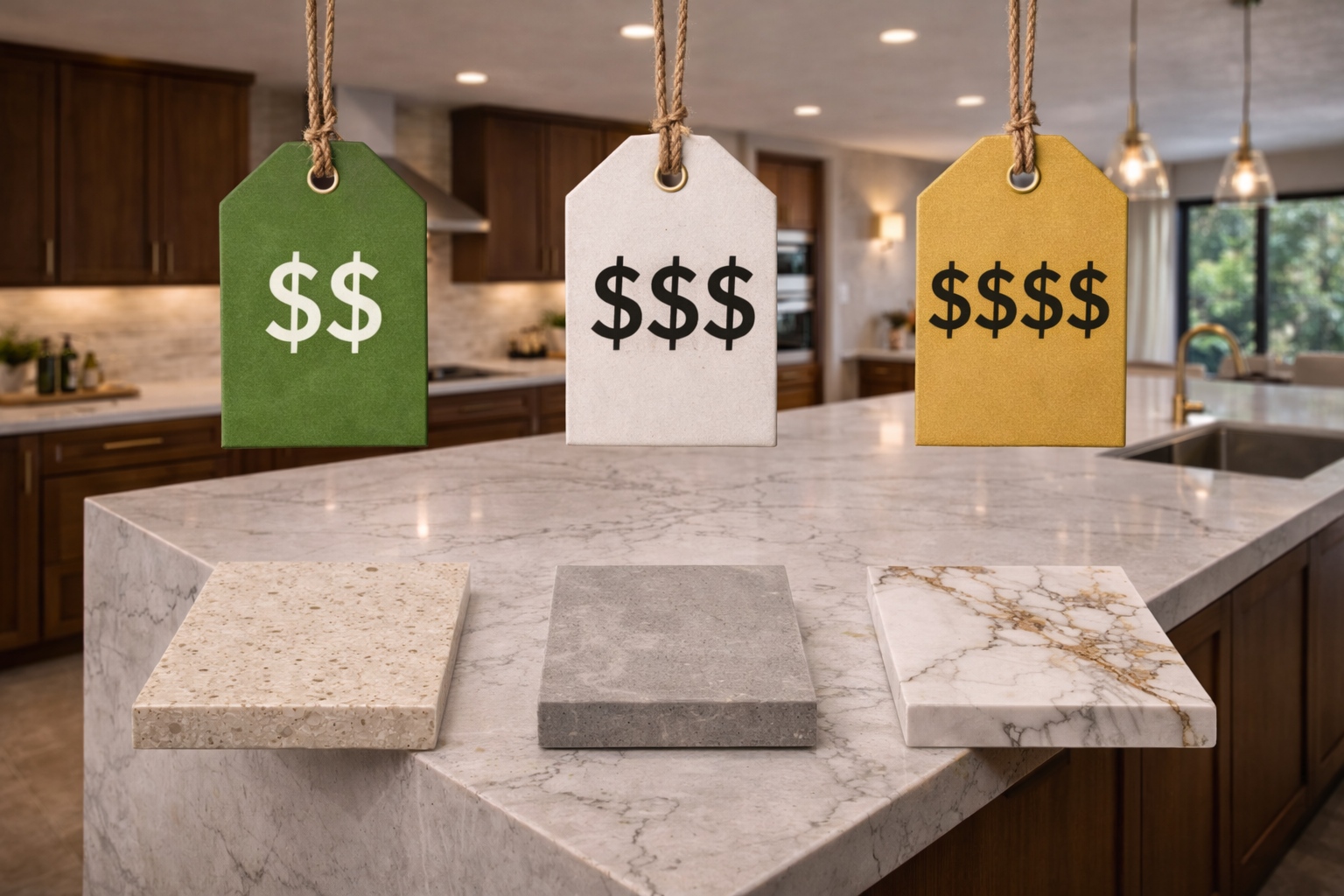
Cost depends on brand, pattern, slab size, thickness, edge profile, cutouts, backsplash scope, island dimensions, and installation complexity. A simple neutral quartz on a standard kitchen run costs less than a large island with premium veining, waterfall edges, and detailed fabrication.
What drives quartz countertop cost up fastest?
Designer patterns, large islands, thick edges, waterfall features, full-height backsplashes, and complicated sink or cooktop cutouts tend to raise the cost quickly. The brand and availability of the selected color can also affect pricing more than homeowners expect.
How can homeowners manage the budget?
Choosing a more straightforward pattern, limiting specialty edge work, and deciding where statement features really matter can help. It is often smarter to spend on the surfaces that will be seen and used most rather than upgrade every detail equally.
What Mistakes Should Homeowners Avoid
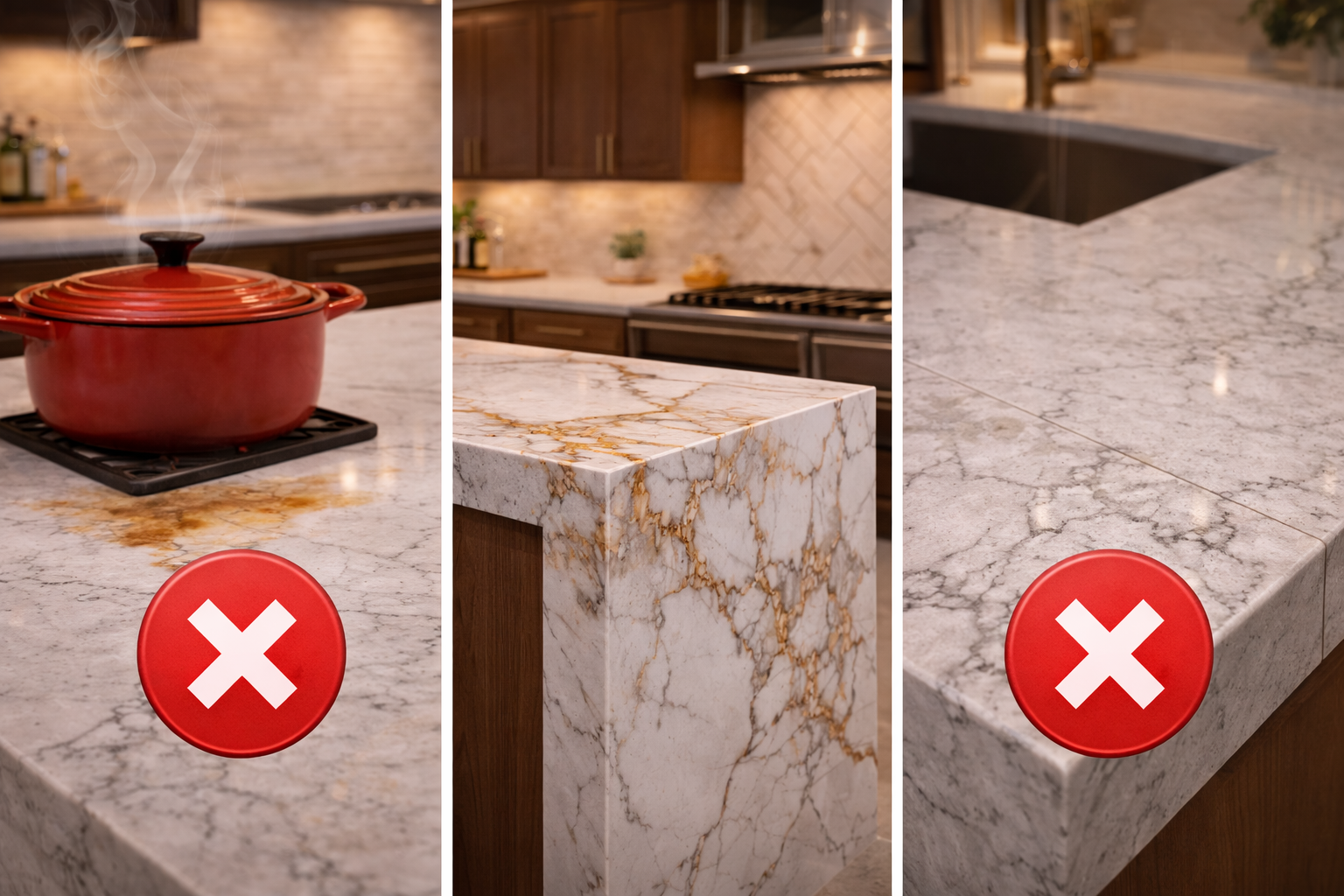
The biggest mistakes usually come from assuming quartz is completely maintenance-free or from choosing a pattern based only on a small sample. Homeowners sometimes overlook how a large slab pattern will read across an island or how the selected tone will work with cabinets, backsplash, and flooring.
What planning mistakes are common?
Ignoring heat limits, skipping full slab review on bold patterns, and not thinking through seam placement are common problems. Another is choosing a surface that looks great in isolation but competes with the rest of the kitchen once everything is installed.
What design mistakes show up later?
Overly busy veining, seams in highly visible locations, and tones that feel colder or warmer than expected under the kitchen’s actual lighting can all become obvious after installation. A good quartz selection supports the whole room instead of dominating it unintentionally.
How Should You Plan a Quartz Countertop Remodel
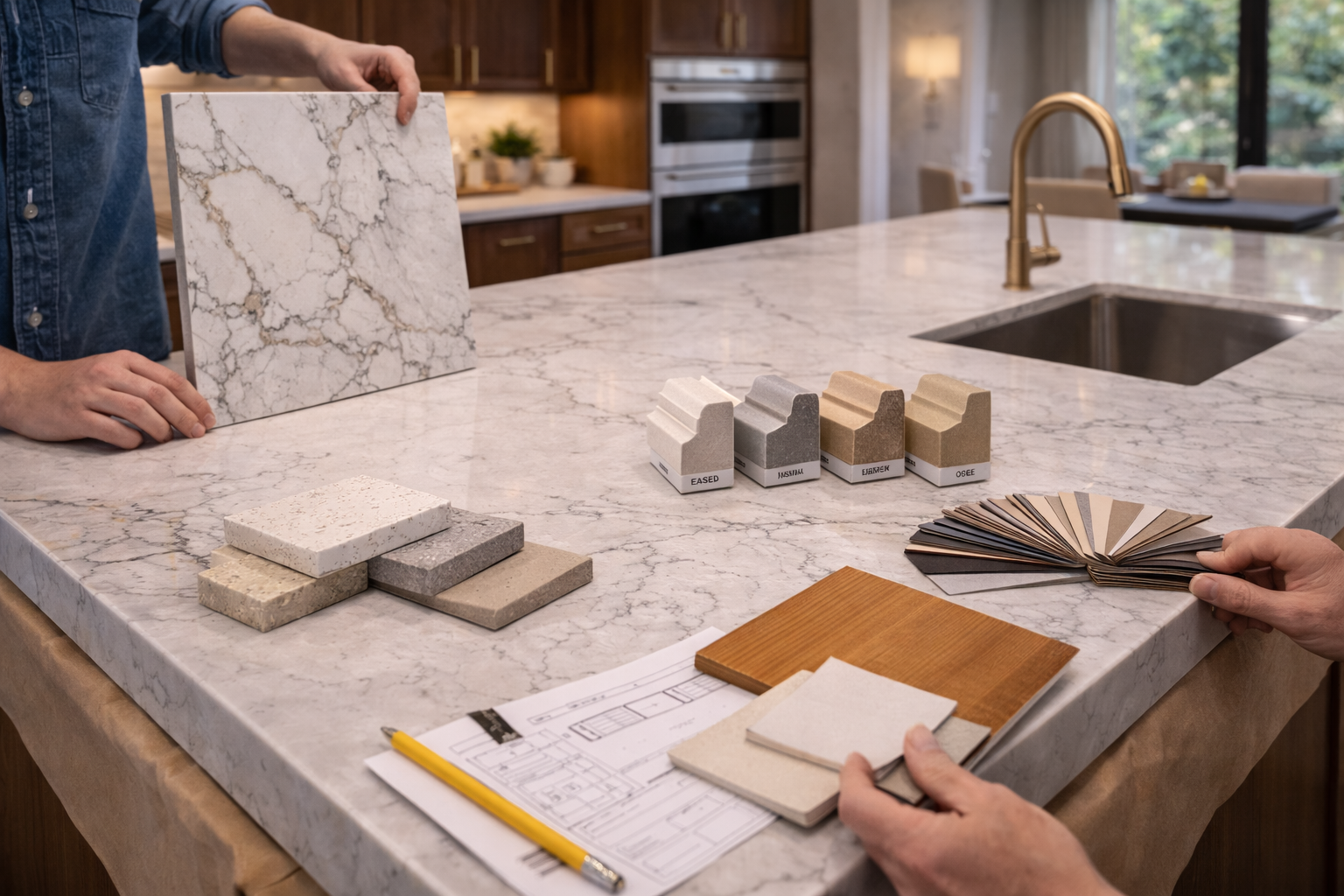
Start by deciding what the countertop needs to do in daily life. If easy cleanup, stain resistance, and a wide range of design options matter most, quartz is often a strong fit. Then narrow down the color family, review larger samples or slabs, and coordinate the material with cabinets, backsplash, flooring, and island details before fabrication begins.
What should be finalized before ordering?
Cabinet dimensions, sink and faucet locations, edge profile, backsplash plan, overhangs, slab pattern direction, and any waterfall or full-height applications should all be decided first. Those details affect both fit and final appearance.
When is quartz the right move?
It is the right move when the remodel wants a practical, attractive countertop that can handle busy kitchen life without much upkeep. Used thoughtfully, quartz gives the kitchen a clean finished look while keeping maintenance simpler than many natural stone alternatives.
Frequently Asked Questions About Quartz Countertops
Yes. Quartz countertops are one of the most common kitchen remodel choices because they combine a consistent appearance with strong stain resistance and relatively low maintenance. They work well for busy kitchens where homeowners want durability without the upkeep of some natural stones.
No. Quartz is a non-porous engineered surface, so it does not need sealing the way many natural stone countertops do. That is one reason homeowners often choose it for everyday kitchen use.
They have some heat resistance, but they are not heatproof. Hot pans can damage the resin binders in engineered quartz, so trivets or hot pads are still important in daily use.
Quartz is an engineered material made from crushed quartz and resins, while quartzite is a natural stone. Quartz usually offers more color consistency and lower maintenance, while quartzite offers natural variation and different performance characteristics.
Yes. Many quartz products are designed to mimic marble, including soft white backgrounds and gray veining. The look can be very convincing, but the pattern is usually more controlled and repeatable than real natural marble.
Quartz is fairly scratch resistant in normal kitchen use, but it is still smart to use cutting boards. Repeated abuse, dragging rough objects, or direct cutting can still damage the surface.
Not automatically. Quartz is often chosen for easier maintenance and more consistent appearance, while granite offers natural variation and better heat tolerance. The better choice depends on design priorities and how the kitchen is used.
Yes. Quartz is commonly used for waterfall islands because it is available in large slabs and in many patterns, including options with dramatic veining. Seam layout and edge treatment still need careful planning for the best result.
Cost depends on brand, pattern, thickness, edge profile, slab size, island dimensions, cutouts, backsplash scope, and installation complexity. Premium designer patterns and large island pieces usually raise the price the fastest.
Quartz is a strong fit for homeowners who want a clean, durable, low-maintenance surface with broad design options. It works especially well for busy kitchens where easy cleanup and predictable performance matter.