
Shaker Cabinets Guide: Style, Construction, Finishes, and Cost

Shaker Cabinets Guide Index
- Shaker Cabinets Overview
- What Are Shaker Cabinets
- Why Do Shaker Cabinets Work in So Many Kitchens
- What Materials and Finishes Are Common for Shaker Cabinets
- How Do Shaker Cabinets Compare to Other Door Styles
- What Storage Upgrades Work Well With Shaker Cabinets
- What Installation Details Matter Most for Shaker Cabinets
- What Affects Shaker Cabinet Cost
- What Mistakes Should Homeowners Avoid With Shaker Cabinets
- How Should You Plan a Shaker Cabinet Remodel
- Frequently Asked Questions About Shaker Cabinets

Shaker Cabinets Overview
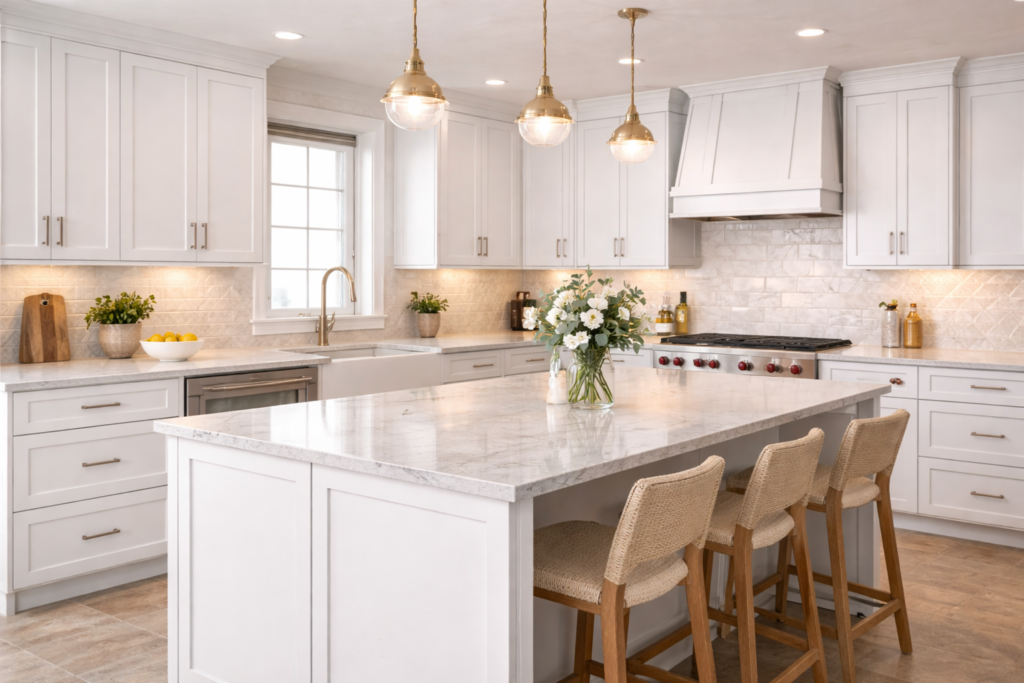
Shaker cabinets are one of the most common cabinet styles used in kitchen remodeling because they strike a middle ground between plain and decorative. The framed door adds shape and shadow lines, but the design is still simple enough to work with a wide range of finishes, countertops, backsplash materials, and hardware styles.
Why do homeowners keep coming back to shaker cabinets?
They work in a lot of kitchens without feeling extreme. A shaker door can fit a bright painted family kitchen, a warm wood transitional remodel, or a cleaner modern space if the frame is narrow and the hardware is simple. That flexibility makes the style easier to live with over time.
What practical advantages do they offer?
The biggest advantage is versatility. Homeowners can update the room with different paint colors, hardware, lighting, and counters without the cabinet style fighting those changes. Shaker cabinets also pair well with both upper-and-lower cabinet layouts and more storage-focused designs with tall pantry units and deep base drawers.
What Are Shaker Cabinets
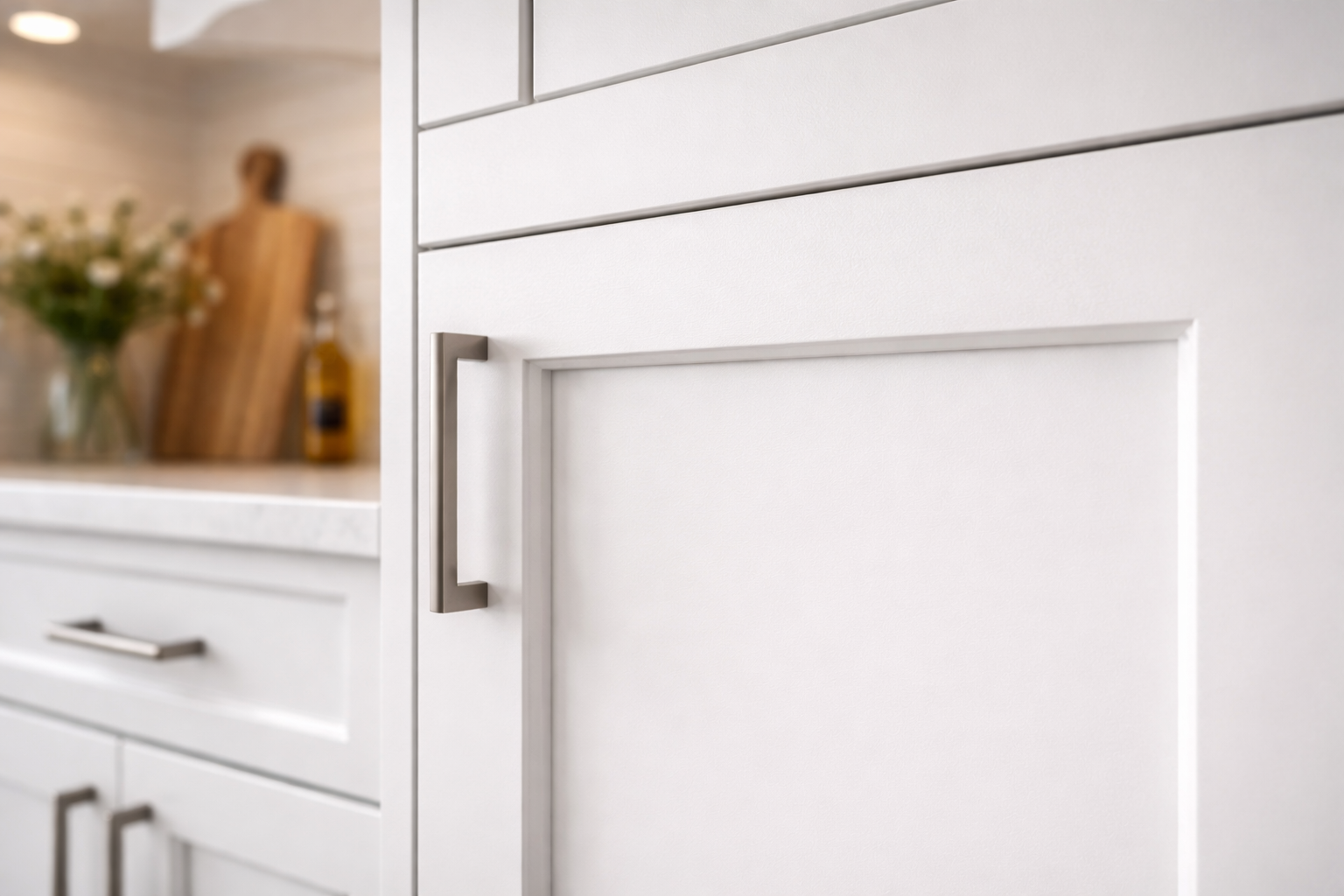
Shaker cabinets are frame-and-panel cabinet doors with a recessed center panel and clean outside edges. The style is simple, but there are still variations in frame width, edge detail, panel depth, and finish approach. Those differences affect whether the cabinets feel more classic, more transitional, or more current.
How are they different from flat panel cabinets?
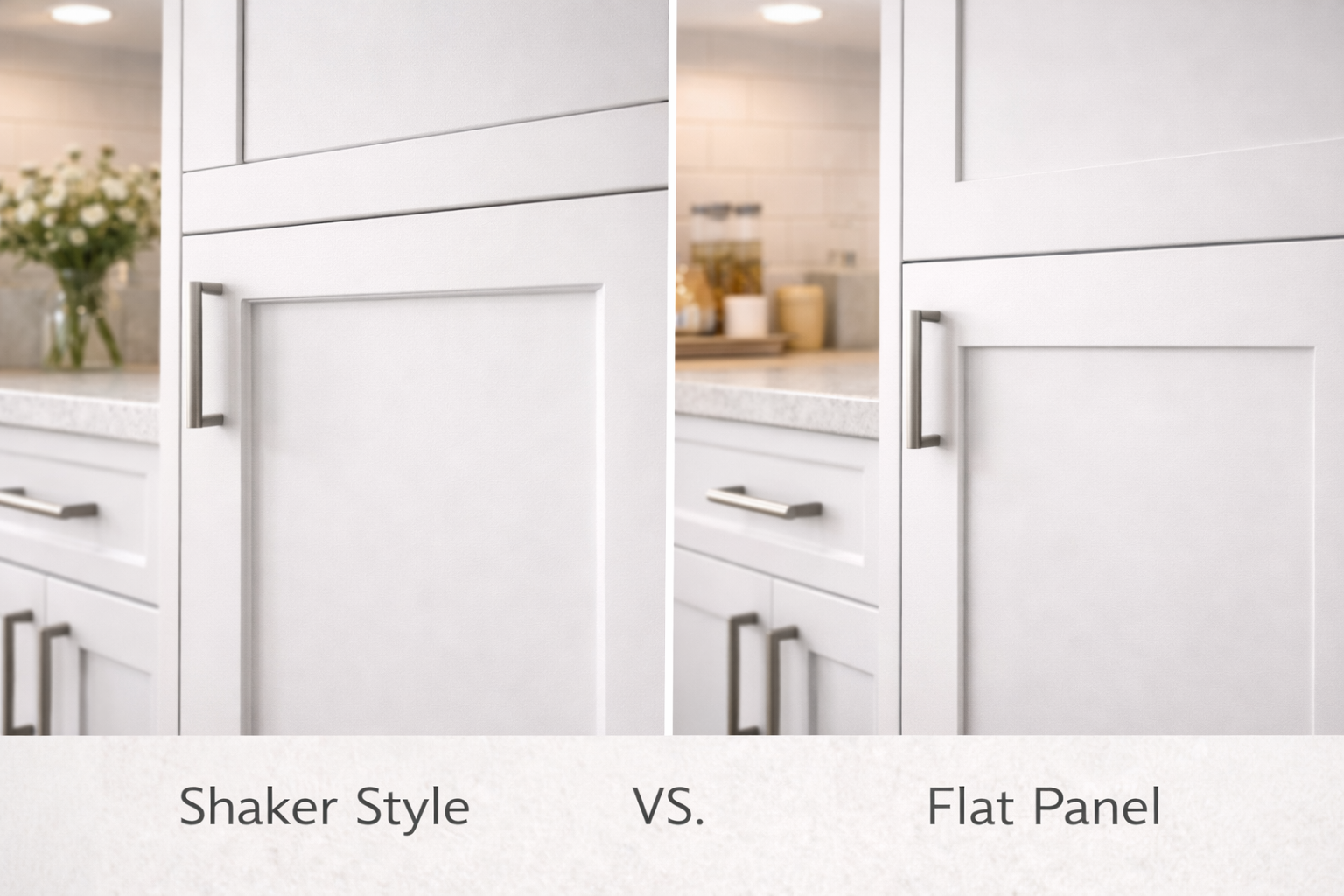
Flat panel cabinets have a smoother face with little or no frame detail. Shaker cabinets add a visible border around the center panel, which creates more shadow lines and a more dimensional look. If you want a kitchen with more definition but not a lot of ornament, shaker cabinets are usually the middle ground. In many projects, kitchen remodeling becomes an important part of how the bathroom functions day to day.
Can shaker cabinets be updated without looking too traditional?
Yes. A slimmer shaker profile, simple slab backsplash, quartz counters, and straight bar pulls can make the kitchen feel current. The style depends on the whole cabinet package, not just the door profile in isolation.
Why Do Shaker Cabinets Work in So Many Kitchens
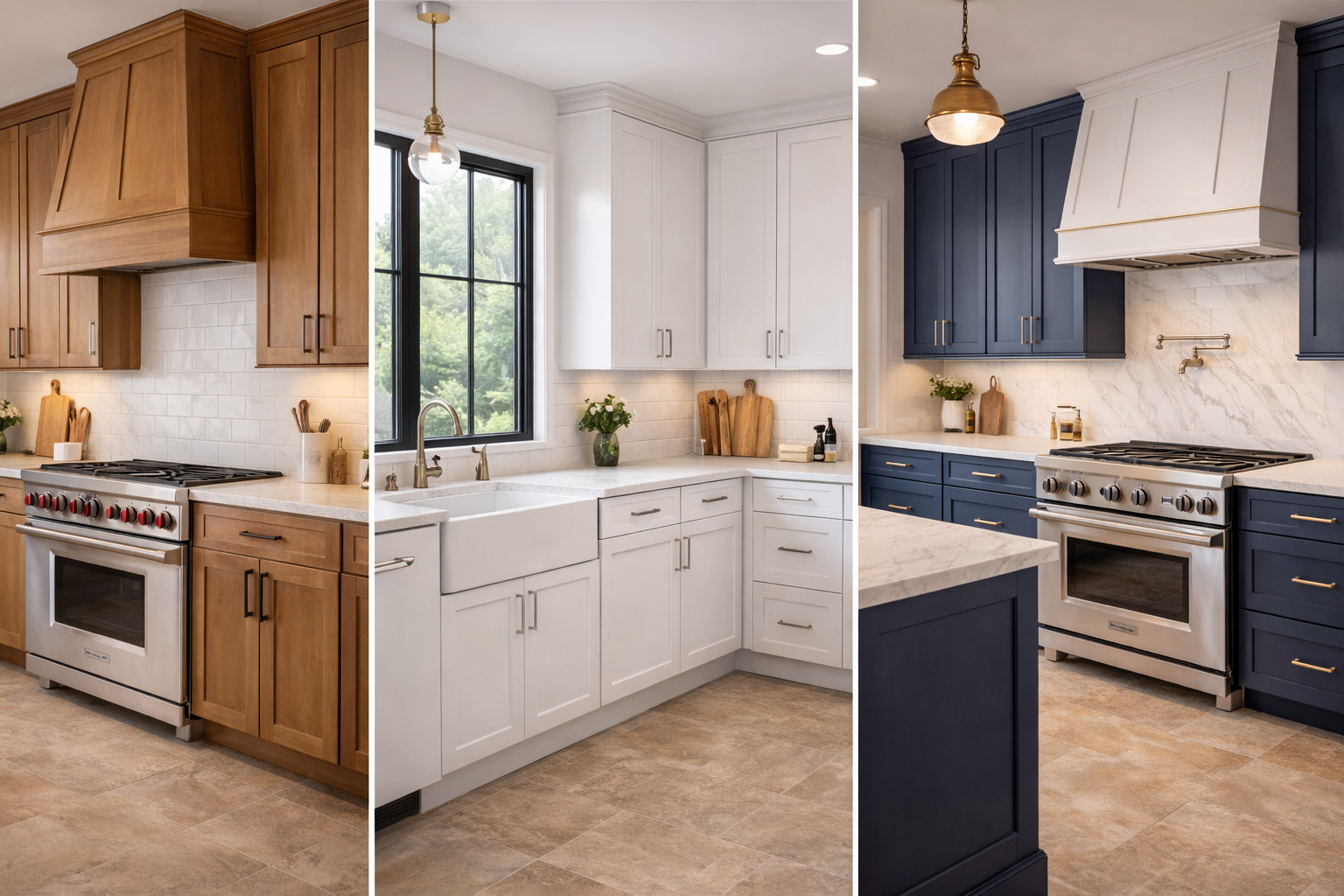
Shaker cabinets work in many kitchens because they are visually flexible. They can handle painted finishes, stained wood, mixed hardware tones, natural stone, simple subway tile, handmade tile, or larger-format backsplashes without looking out of place. That makes them a useful choice when the remodel is balancing resale, personal style, and long-term livability.
Are they a safe choice for a broad audience?
Usually, yes. They are familiar enough that most buyers and homeowners are comfortable with them, but they are not so plain that the kitchen feels unfinished. For many remodels, that balance is exactly the point.
Do they work in smaller kitchens too?
They do, especially if the frame detail is kept clean and the finish is light. In a compact kitchen, a very heavy door profile can make the room feel crowded. A simpler shaker door usually keeps some character in the room without overwhelming the space.
What Materials and Finishes Are Common for Shaker Cabinets
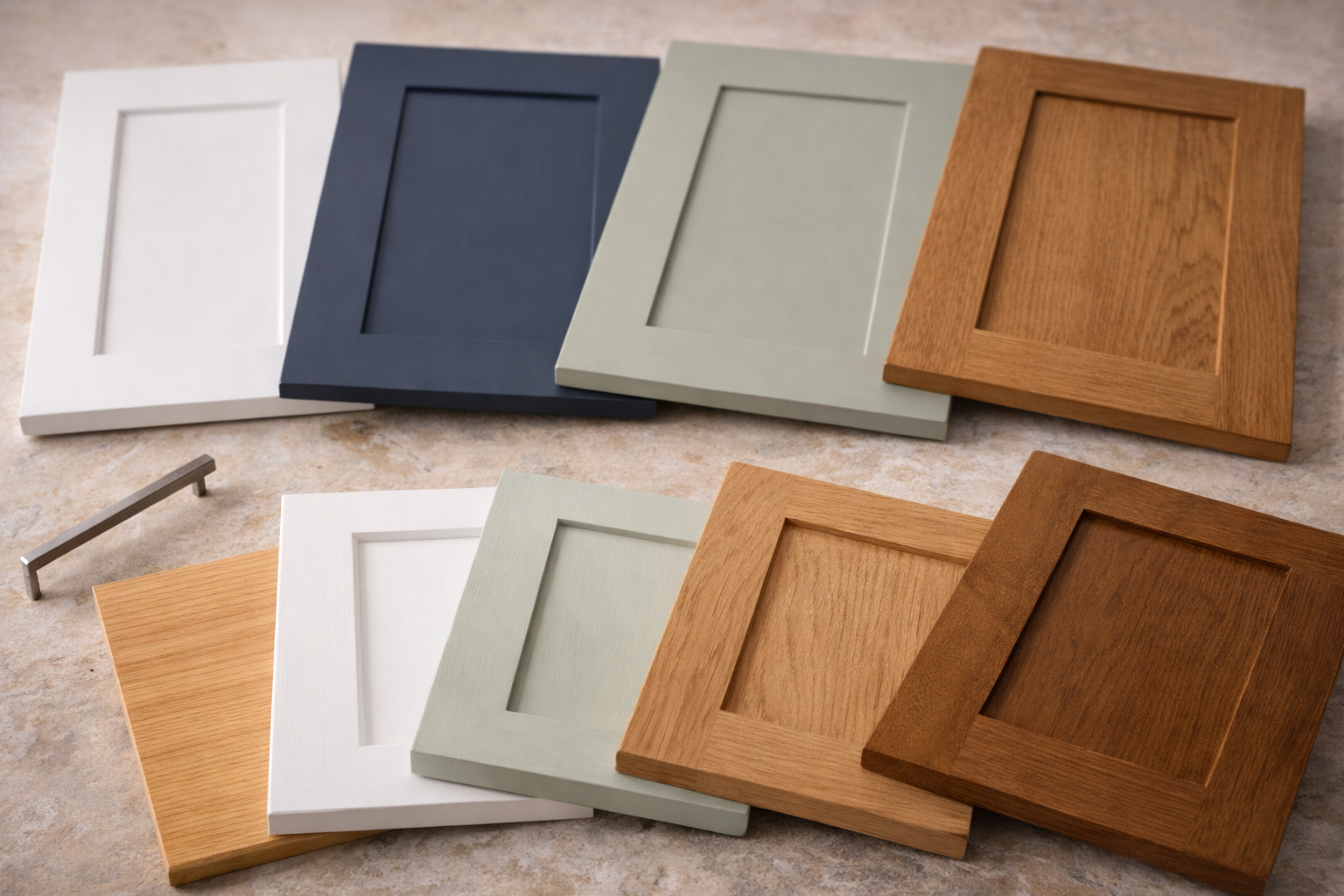
Shaker cabinets can be built with solid wood frames, MDF center panels in painted lines, plywood cabinet boxes, and a wide range of finish systems. White painted shaker cabinets remain common, but warm neutrals, soft greens, navy island accents, and natural oak finishes are also widely used depending on the design direction. For layout and clearance planning, many designers reference NKBA planning guidelines.
What finish choices are most practical?
That depends on the kitchen and how it is used. Painted finishes are popular, but they can show wear at corners and inside profile lines over time. Stained wood can hide some everyday marks better and bring warmth into the room, especially when the remodel uses simpler countertops and backsplash materials.
What should homeowners check before ordering?
Ask what the frames are made from, whether the center panel is solid wood or engineered, how the finish is applied, and what drawer hardware is included. Also check how exposed end panels, refrigerator panels, and filler pieces are finished so the whole kitchen looks consistent after installation.
How Do Shaker Cabinets Compare to Other Door Styles
Compared with flat panel cabinets, shaker cabinets have more visual definition. Compared with raised panel doors, they usually feel cleaner and less formal. That is why they land in the middle for so many homeowners. They give the kitchen shape without pushing the room too far toward either a very modern or very traditional look.
When are shaker cabinets a better fit than flat panels?
They are often a better fit when the kitchen needs a little more character or when the house style leans traditional or transitional. If the room already has simple finishes and straight lines, shaker cabinets can add just enough detail to keep the remodel from feeling flat.
When might another style be better?
If the goal is an ultra-clean contemporary kitchen with minimal lines, flat panel cabinets may fit better. If the house calls for a more formal or furniture-like kitchen, a more detailed door style might make more sense. The right answer depends on the room, not just the popularity of the door style.
What Storage Upgrades Work Well With Shaker Cabinets
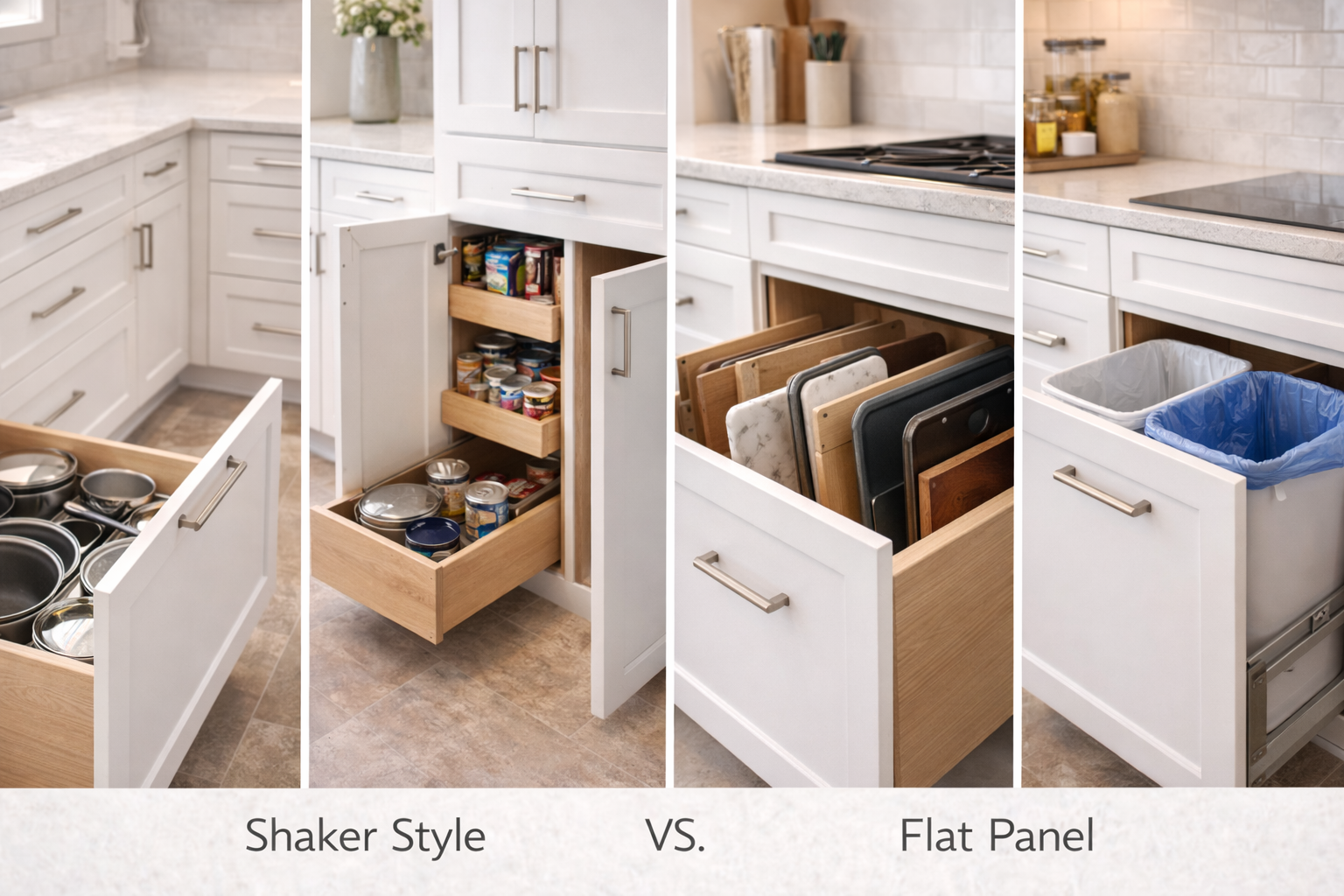
Shaker cabinets work well with almost any practical storage upgrade because the style is neutral enough to support both classic and modern layouts. A remodel can include deep drawers, trash pull-outs, tray dividers, hidden spice storage, full-height pantry cabinets, pull-out shelves, and appliance garages without the cabinet style getting in the way. For a closer look at this part of the project, homeowners can explore cabinet remodel.
Which storage changes improve everyday use the most?
Wide base drawers, rollout trays, corner solutions that are actually reachable, and dedicated waste storage usually make the biggest difference day to day. Those are the upgrades homeowners tend to notice immediately after the remodel is finished.
Can shaker cabinets work with mixed storage layouts?
Yes. They can support a mix of upper cabinets, open shelves, glass doors, tall pantry units, and drawer-heavy base runs. That flexibility is one reason the style stays useful across different kitchen sizes and design directions.
What Installation Details Matter Most for Shaker Cabinets
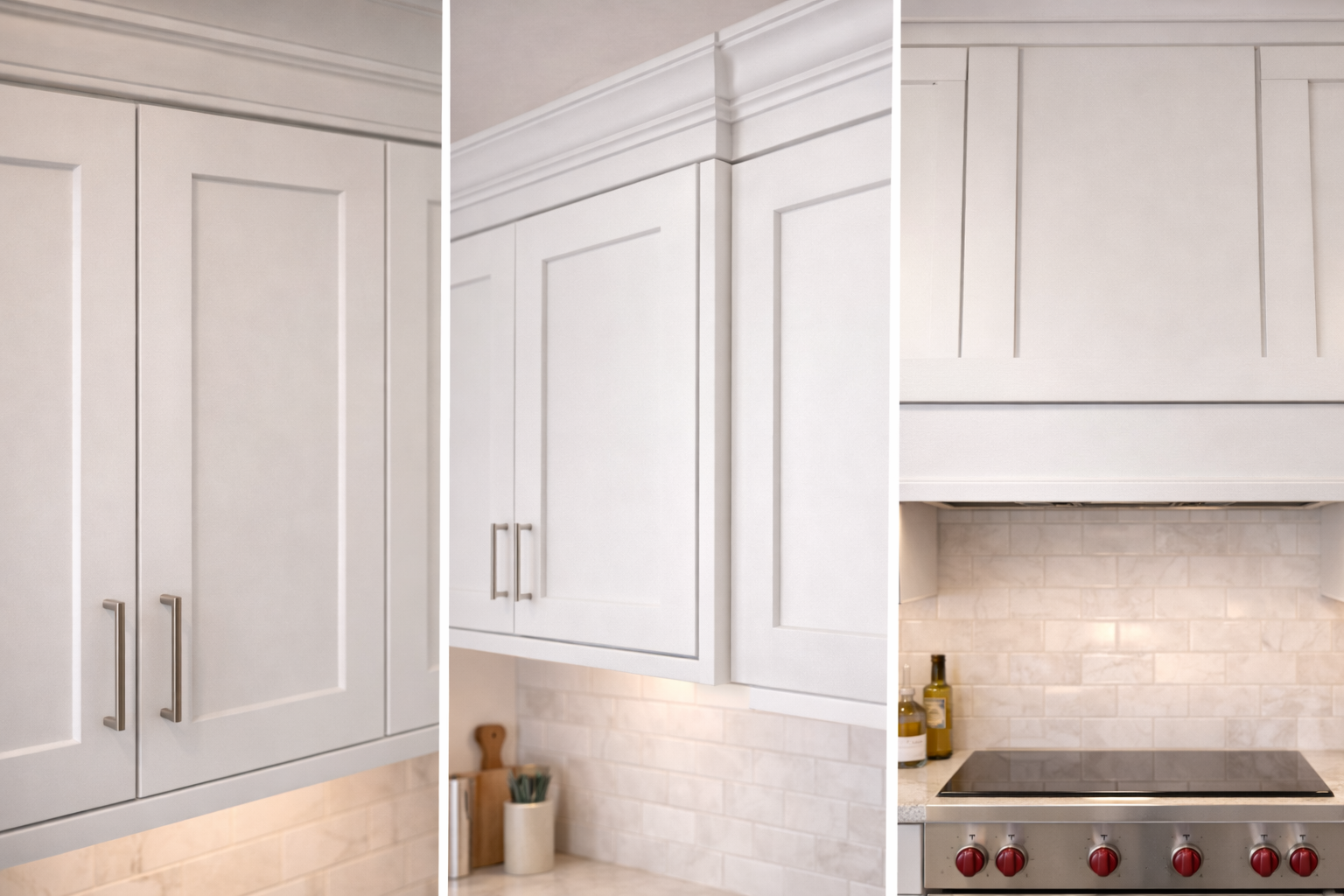
Even though shaker cabinets are more forgiving than ultra-minimal slab doors, installation quality still matters. Door reveals need to stay consistent, cabinet runs need to stay level, and crown details, fillers, and end panels need to look intentional instead of patched together. During remodeling, it also helps to follow EPA indoor air quality best practices.
What mistakes show up fastest after installation?
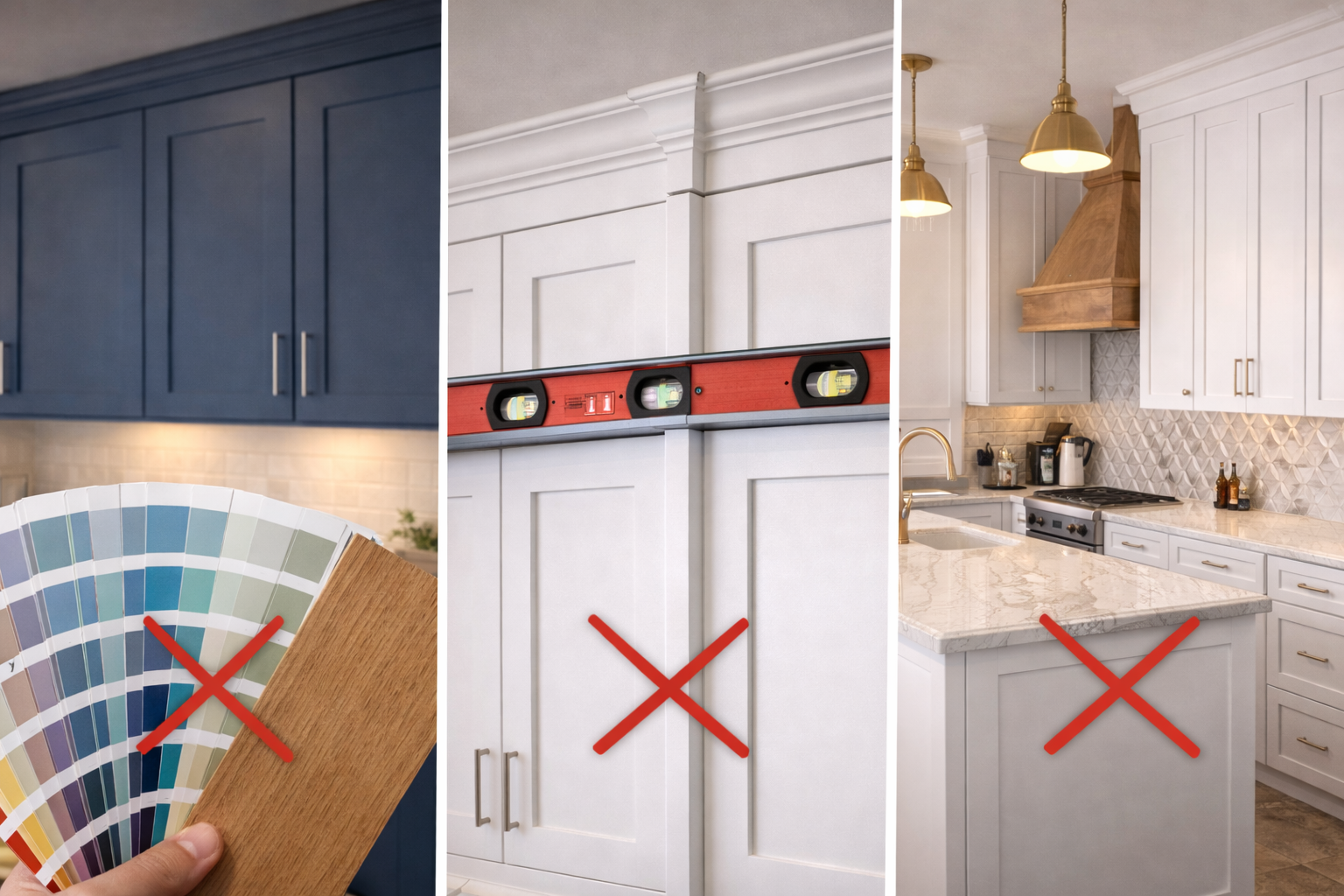
Uneven doors, sloppy filler spacing, crooked crown molding transitions, and appliance openings that look tight or off-center are common problems. Paint wear can also show up sooner at inside corners if the finish quality is weak or the doors were poorly handled during installation.
Why does layout coordination still matter?
Because cabinet design affects countertop templating, appliance clearances, vent hood placement, backsplash layout, and lighting. A shaker kitchen may be a familiar style, but it still needs careful measuring and coordination to look finished and function well.
What Affects Shaker Cabinet Cost
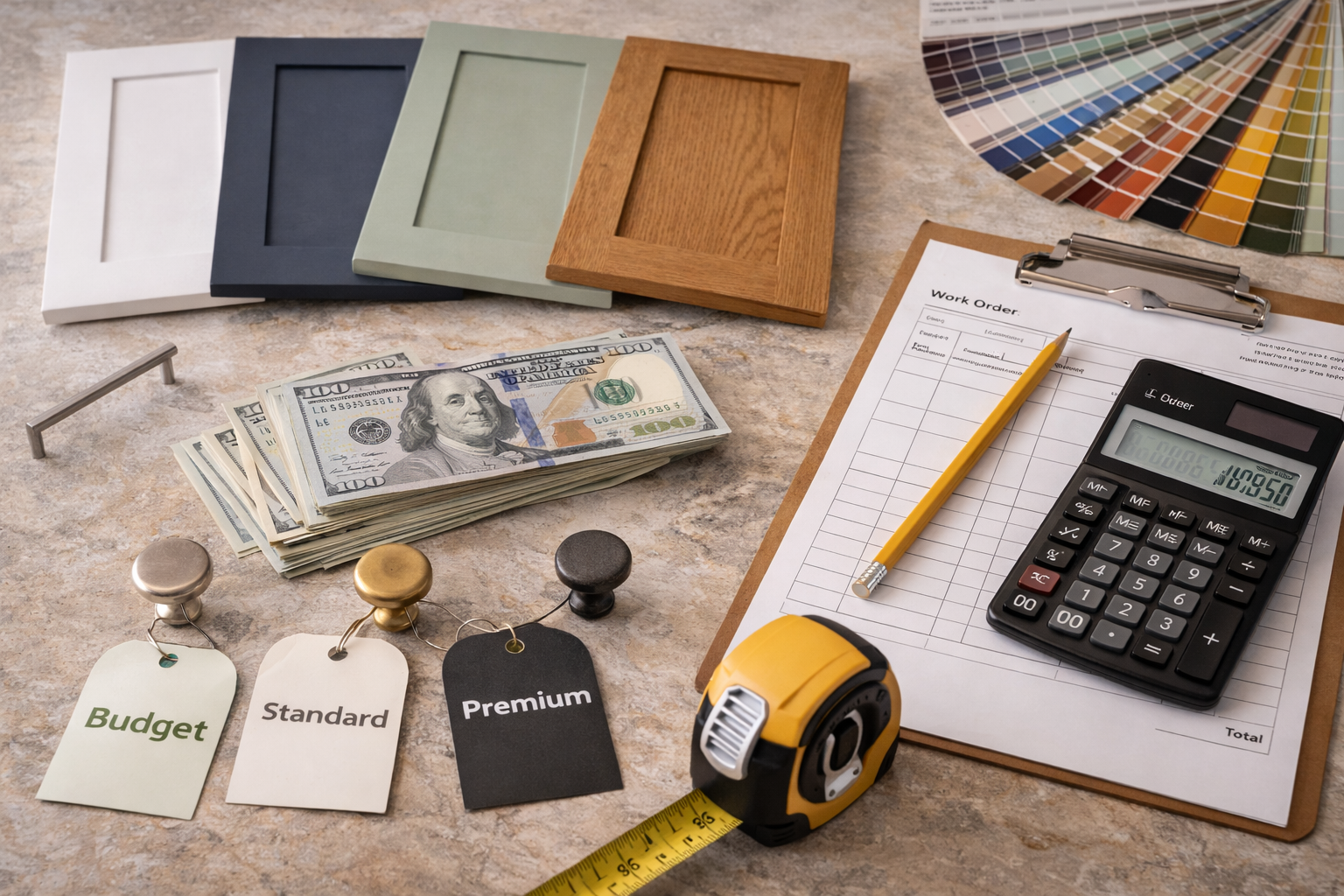
Shaker cabinet cost depends on cabinet line, box construction, finish quality, drawer hardware, storage upgrades, customization, and how much the kitchen layout changes. A stock painted shaker package costs less than a custom inset shaker kitchen with premium wood, appliance panels, and built-in storage throughout.
What tends to increase cost most?
Custom sizing, inset construction, premium finishes, better hardware, interior organizers, and layout changes usually push the budget up quickly. If the remodel also includes electrical, plumbing, flooring, and countertop upgrades, the cabinet cost becomes part of a larger kitchen investment.
How can homeowners keep the budget reasonable?
Keeping the layout close to the existing footprint, using standard cabinet widths where possible, and spending on the storage features that solve real daily problems can help. That approach keeps the style while avoiding extra cost on upgrades that do not improve how the kitchen actually works.
What Mistakes Should Homeowners Avoid With Shaker Cabinets
The biggest mistakes usually come from treating shaker cabinets as a default choice without thinking through the rest of the kitchen. Homeowners sometimes pick the style because it is popular, then fail to consider frame width, finish maintenance, hardware comfort, or how the cabinets will relate to the rest of the room.
What selection mistakes are common?
Choosing a busy shaker profile in a small kitchen, picking a paint color without checking lighting, or mixing too many competing details in the backsplash, hood, and hardware are common mistakes. Another is overlooking how much door and drawer alignment matters once the cabinets are installed.
What planning mistakes cause headaches later?
Not enough drawers, poorly placed trash pull-outs, appliance openings that do not match final specifications, and rushed finish selections are all common. A good cabinet style still needs a good kitchen plan behind it.
How Should You Plan a Shaker Cabinet Remodel
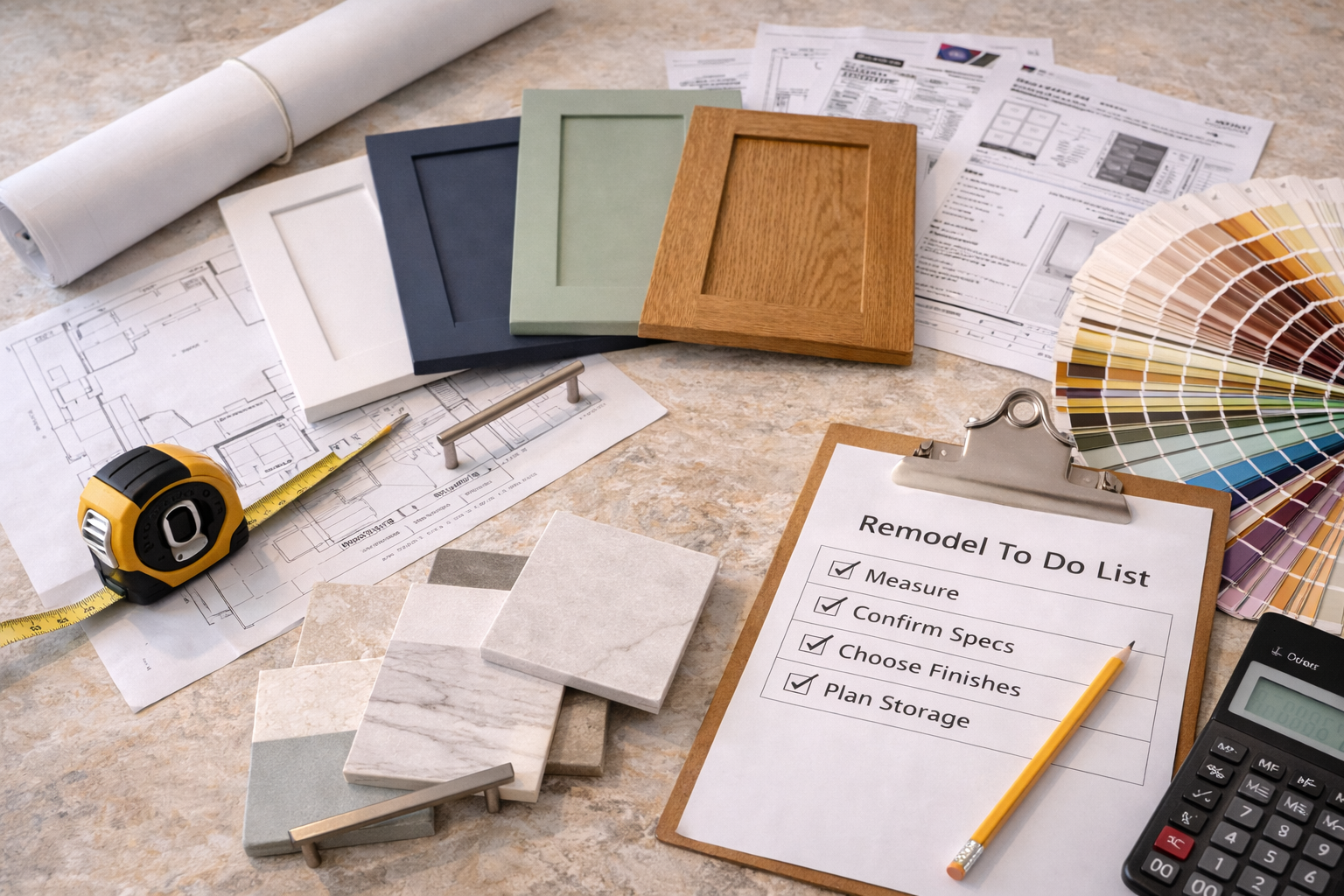
Start by deciding what the remodel needs to improve. That might be storage, appearance, layout efficiency, or overall kitchen durability. From there, measure the room carefully, confirm appliance sizes, narrow down the cabinet finish and frame style, and decide where drawers, pantry storage, and specialty accessories will help most. For layout and clearance planning, many designers reference NKBA planning guidelines.
What should be finalized before cabinets are ordered?
Appliance specs, hood size, countertop thickness, sink location, backsplash direction, lighting layout, and flooring transitions should all be decided before the cabinet order is locked. Those details affect cabinet sizing, filler use, trim alignment, and the overall fit of the finished kitchen.
When are shaker cabinets the right move?
They are the right move when you want a cabinet style with broad design flexibility and a long shelf life. Used well, they can give the kitchen enough character to feel intentional without locking the room into a style that becomes dated too quickly.
Frequently Asked Questions About Shaker Cabinets
Shaker cabinets are cabinet doors with a simple frame-and-panel design, usually a flat recessed center panel surrounded by a clean, square-edged frame. They are popular because they feel classic without being overly ornate and can fit traditional, transitional, and modern kitchens.
They work with a wide range of finishes, hardware styles, countertop materials, and backsplash choices. That flexibility makes them a safe but still attractive choice when homeowners want a cabinet style that feels current without chasing a short-lived trend.
Yes. A narrow-frame shaker door in a smooth painted finish can look very clean and current. The style direction depends on frame width, finish sheen, hardware, and the surrounding design choices, not just the fact that the door is shaker.
Not automatically. Price depends more on cabinet construction, finish quality, material, customization, and hardware than on the door style alone. A custom shaker kitchen can cost more than a stock flat panel package, but the opposite can also be true.
Painted white, warm off-white, gray, greige, navy, black, natural oak, and stained wood finishes are all common. The right finish depends on the amount of natural light, the floor tone, countertop color, and how much maintenance the homeowner wants.
Yes. They are often used in small kitchens because the profile adds some character without making the room feel overly ornate. A slimmer shaker frame and lighter finish usually work best when space is tight.
Cup pulls, simple knobs, bar pulls, and more minimal tab pulls can all work depending on the kitchen style. The best choice balances appearance with comfort, especially on heavier drawers and pantry doors.
Sometimes. If the existing cabinet boxes are in good condition and the layout already works well, refacing may be possible. If storage is poor or the boxes are worn out, full cabinet replacement is usually the better long-term solution.
It helps to watch for inconsistent rail widths, poor paint quality at the inside corners, weak drawer hardware, and awkward filler details at the ends of cabinet runs. Those details affect both appearance and long-term durability.
The timeline depends on whether the project is just replacing cabinets or also includes new countertops, flooring, appliances, plumbing, electrical work, and layout changes. Measuring, ordering, demolition, installation, and countertop templating all have to be coordinated.